The Restive Perspective: Episode 2 with Katrin Kaurov of Frich | Cameron Peake

Katrin Kaurov went from teenage fashion model to CEO of Frich, a social finance app for Gen Z that lets users crowdsource money decisions anonymously. She built the product without a finished MVP, learned from a failed ambassador program, and now monetizes through partnerships with dating apps and lifestyle brands that align with how Gen Z thinks about money.
Chapters
But I think it's necessary to have that level of like adrenaline and stress to like move really fast and make things happen.
I'm going to propose we channel bro energy and we rename it just having conviction.
We just felt that none of the current finance apps really understood how Gen Z was thinking.
Hi, welcome to the Restive Perspective. I'm Cameron Peake, a partner at Restive Ventures, and I'm really excited to have, uh, Katrin Kaurov here today, who's the CEO of Fritsch. Uh, here what we do is we talk about the stories, the backgrounds, and the successes of female CEOs. So Katrin, do you just want to introduce yourself, introduce Fritsch, and then, and then we'll get into more about you?
Awesome. Thank you, Cameron, so much for having me today. I'm really excited to share my insights. So as Cameron mentioned, I'm the co-founder and CEO of Fridge, and Fridge is a social community around money that helps Gen Z achieve their life goals. So I'm originally from Estonia, and I actually started my career at the age of 14 as an international fashion model. And when that happened, I basically had to become financially independent at a really early age and manage my income while my agencies were shipping me around the world every 3 months to a new city. And back then I didn't think of it as passion for fintech or personal finance. I was just thinking how I can figure things out for myself and basically survive in all those big cities as a 14-year-old. And a couple of years later, I noticed that a lot of models were actually struggling with the same issue as everyone's thrown in the industry at such a young age. And I built my first app, which was called Model Club, and it was a social app that helped models save money in big cities. Maybe it was because I was really young and had no idea what I was doing, but the app did incredibly well. We scaled across every major fashion capital within the first year. And for me, that was a huge sign that there is something to be done on a macro level. And so a couple of years later, I built Fridge with one of my best friends back in, like, we'd been best friends for 6, 7 years before. And we always figured out that money had to be something cool, something social. We just felt that none of the current finance apps really understood how Gen Z was thinking. And over time, we started to realize that young people don't really even want to set goals. They just want to make financial decisions and quickly figure out what's the best thing to do with their money. And although we started for just a budgeting app, over time we figured out that people are clueless about every area of money, whether it's how to build credit, it's how to pay back your student loans, how much should you be spending on first date. Like, average person worries about money 6 times a day. So, we were making actually so many financial decisions. And often feel like there's no one to turn to. So at our app, they can have anonymous access into what people exactly like them are doing with their money and then be paired with an actionable solution. So they can come to the app, see how do they compare, make a decision, and basically move on with their life. So very, very action-based solution for Gen Z.
I want to cover a lot more about Fritsch, but first I want to go back to the beginning. I mean, have you always been entrepreneurial? Was that a big part of your childhood? Tell us a little bit about that. About that?
Yeah, so my dad was an entrepreneur, so, and he's very self-made. So I guess I always aspired to be like him, and I had that entrepreneurial itch from the earliest age that I can possibly remember. So I remember being like an 8-year-old and I tried to build what today would be Uber Eats. And like, I had no idea how to cook or drive, but I would like, you know, bicycle around and bring like terrible, terrible meals to people. And I would like print out those little flyers and put them like around our neighborhood. So I don't know, ever since I can remember, I was always doing things like that. So I feel like if you have that entrepreneurial spark, I don't know if it's a blessing or a curse, but you just kind of have it from a really early age onwards. So I kind of never considered getting like a 9-to-5 job. It just always felt like I had to build something on my own.
And what, I mean, obviously you went down the modeling route. I know you worked at some companies, What was that moment when you knew you had to start Fridge?
I think there are a couple of things that were coming together. So, definitely modeling, which people don't always make the obvious connection, actually is like the best boot camp to becoming an entrepreneur, right? Because first, you're building your own personal brand. Every basically 3 months, you're thrown into a new city where you have to build that brand from scratch, which really means that It's almost like taking over new markets or expanding in the startup world. And it's also definitely really intense. You're almost being an athlete, so you have to be very adaptable. You can get a call the night before that tomorrow you're flying to Sydney or Tokyo. So you have to be super adaptable and have a super high stress tolerance. So I think I had those skills that really equipped me to building Fridge. But the moment when I felt we were ready to do it, it was really very much driven from just seeing the need so clearly and knowing that between me and my co-founder, we had all the skills that it took to build a business, or at least that's what we thought back then. I think thinking back now, we knew nothing a couple of years ago. So it was just a very strong sense that now was the right time to do it and we had gotten enough knowledge. And we did take a couple months before actually starting Fridge. We were learning a lot about startups, watching probably every Y Combinator video out there. So that was when we kind of first slowly started. The moment when we went full-time was actually, I think, probably the scariest thing we've ever done in our lives. We basically were thrown into an accelerator with Mastercard very accidentally. We put ourselves out on LinkedIn and AngelList before we actually had anything. We just had the name and some sort of an idea. So I think that was accelerating things a lot for us. And when that accelerator ended, we still actually had no product. We had some sort of a beta that was very primitive, but we just knew that if we want to fundraise, we have to go all in. So we gave ourselves a promise that if we get our first check, we're both going to quit everything else and go full time. And that happened, I think, with the first $25K or $50K check. So back then, now thinking back, I think it's kind of like a very dumb decision. But Aleksandr back then was moving to New York and we had that $25K or $50K in our bank account and we were like, okay, we're going to make this happen. So it was very scary, but I think it's necessary to have that level of adrenaline and stress to move really fast and make things happen.
And I also think startups are inherently so risky, and so it's such an indication of your ability to just lean into the risk and go for it and kind of take that leap. So it sounds like you felt you'd always had this entrepreneurial drive, you studied as much as you could to kind of get to that point, you saw the opportunity, you got your first check, And you just, that was kind of enough. You said, I'm making the leap. I feel confident enough to do it. And you kind of had that conviction.
I think a lot of people get stuck in the idea phase, right? Like people have an idea, they're like making some sort of progress, but maybe they have like another cushy tech job or like they have something else going on. But I really think you can't build anything unless you take the leap. Like, I think you're just, have to go all in and that's the scariest moment that I feel most people are never going to get there. But because I think that's really like, you have to overcome all of your fears to get there. I would say it's this moment going full-time and then actually putting a product out there that are equally terrifying moments because you're like, what if no one likes the product? So I think those were the two really, really huge moments on our end and I'm sure a lot of people share a similar sentiment.
Making the leap to a startup can take its toll kind of in multiple ways. What, what was your mindset there? How did you, how did you ready yourself and kind of steel yourself to, to go through and do that?
Yeah. So I went full-time in May and I remember like when the new year started in January and we had like literally just started with even kind of thinking about Fridge. I told myself that by June I want to go full-time and I set myself a very concrete deadline. I remember even when I mentioned that to my fiancé, he was like, "That's sweet, but maybe you want to be a little more realistic, you don't even have anything yet." So, I think setting a deadline and then realizing that you really got to keep that promise to yourself, I think in a way having a date was really, really helpful for me. And then when we were actually making the leap, It was really scary, I'm not going to sugarcoat it. And I think having a co-founder in a way was great because we were in it together. And in a way, I think we were both keeping each other accountable. And I was like, if I said we should go full-time, I can now just jump off from here. But the second big thing was even during the time we weren't full-time, I really felt I was every day picking up so many new skills. And I was just thinking, what's the worst that will happen if we go all the way and let's say it didn't work out, at least I know that I went all the way and I did everything it takes. And I think the moment you kind of make that switch that this is not a fun project you're working on, this is our livelihood, I think you just go to distances where you would otherwise never go. And I think even when it comes to picking up new skills, you're like, okay, we got to figure out how we're going to project financials of how we're going to make $100 million in 3 years, which I still think it's really silly that investors ask that. I was like, we haven't even launched yet, but I'm like, okay, I'm going to figure this out tonight. I feel like as a founder, I'm a CMO, I'm a CFO. Today I went to storage just to bring some boxes for our events. I'm doing 90 people's job, but at the same time I feel I'm getting every day a new qualification, which is really exciting. And also if I'm thinking in the long run, you're going to be so rich in different skills and experiences.
Can you give listeners examples of, or one example of just what you were like, why did we even try this?
And what were the failures? Oh my God. On the growth side, wow, I don't even know where to— We've had so many things that didn't work out. In the beginning, we were really bullish on the ambassador program, but we didn't really think how that's going to work. So, what I did, I recruited around 100 ambassadors and I had a very simple model in my head how 100 ambassadors will invite 10 friends and those people will invite 10 friends, like a pyramid scheme that seemed to make so much sense on paper. And we recruited those 100 people, which I thought was pretty great, but then only 3 showed up for the first call. And I think the 3 of them all invited a friend. So that was definitely a tough moment for everyone. I was like, what are we going to do? The strategy didn't work. But over time, we pivoted and ambassador You know, strategy is still kind of our bread and butter, but there were just a lot of iterations ahead.
And I think the insight you had around customer feedback is really important because I see a lot of founders say, "Hey, I ran this survey, I talked to some users, I got this feedback, I'm building from here." And so often you only get real, authentic, actionable feedback when users are engaging with a product. And so one, I know you guys are really scrappy at kind of putting stuff out and having high velocity product where you can actually get feedback. But I think that extrapolates to anyone. You get the best feedback through true interaction. So you guys have done a great job of that.
Oh, absolutely. So, one of the things which is really great about growing on campuses is that our ambassadors hear every day, sometimes really brutal feedback about every single thing students don't like or love about onboarding, product, branding, if they think it's lame what we tried saying, if they think it's cool. And they wouldn't tell us directly, the founders, but they feel very liberal telling this to ambassadors and getting all that very raw feedback has gotten us to the product and branding that we have today.
So, I want to go back to fundraising because you spent some time on that. In the spirit of this being a series about female CEOs, I know there's obvious kind of challenges with women in this role fundraising. What clicked for you? When did you feel like people started writing checks?
For me, there was a certain moment, actually it was funny because it was like last summer. So after I had raised the pre-seed, because pre-seed in a way, you can raise it a lot on kind of the hype. And I think we were in a new space that no one had done before. But there was a certain moment when I was like, wow, we really understand our customer. And I recognize that not every VC or investor knows everything. And that was a moment of confidence when I was like, okay, we do that every day. We've done this now for a year full-time. I know exactly what the customers want. And then after that point, the monetization started falling in place as well. And there was just a level of confidence that came with whenever someone was pushing back on our monetization or product roadmap and just having that confidence to push back and say, hey, I genuinely think I'm an expert in this field and I know better than you. And being kind of a little more tough in that front was really helpful. And actually, that's when the checks started coming in as well. So that was a huge learning that you don't always have to agree with investor feedback. You actually get respect when you push back.
Yeah, I think conviction in this field is so important because you're going to get contradictory feedback from every other person you talk to. And like the only thing that's constant is your conviction. And obviously you need to listen to feedback and kind of iterate from there. But I think that's one, super important. And two, I mean, this industry is so hype-driven. And so I really appreciate, especially your effort to say like, this is not true to our brand, this is not true to our customer base and just kind of stick by it. You could have had some easy money, but it would've been caught up in a hype cycle that has now kind of died down.
So. Yeah. And I think actually another thing as well is, Early on, it really is about the founders and the team where people are investing because you're going to go through 90 pivots. So learning what is your superpower, and I have to say, like, like, Resty Ventures really helped me with getting that story right. There were even a lot of things that I didn't think about my past, which actually tie really well into the founder's story. So I would say, let's say if you've been an athlete or a model, you can definitely frame that story in the right way. Coming in general from any other industry, that's not fintech, if you're trying to build in fintech, I think it's a superpower, right? Because you see things differently than someone who's worked in private equity for 20 years can never see, they can't relate with an average customer. So, I would say just learning to really nail down that founder story and really thinking, what are your actual superpowers? What's the real story here? That makes, I think, such a huge difference, especially in the early stage.
Let's dive into that. I mean, tell us about your your 1 or 2 superpowers, kind of how you've used them both, you know, in the early days when you were thinking about making the jump and then through to now and just how you pulled them out.
Yeah, I definitely think one of the superpowers is just thinking differently because everyone in our team is basically, they came either from like TikTok or they came from like branding or like influencer agencies. So, We see things very differently than most fintech founders and fintech teams out there do. We realized from day one how important branding is and making money cool and never using a word even like budgeting or finance, right? Just using, you know, Fridge stands for effing rich. And that's kind of what we preach on campuses. And that's a very easy thing for a college student to understand. So that was definitely one of the things. I would say the second thing is And that's personally from my modeling background. As a model, you have to figure a lot of stuff out. You're thrown as a 15-year-old in Tokyo, you don't speak the local language, you have to meet clients and make them like you and just figure it out. And startup is a lot about figuring things out. There is never a day when I feel like we have it all figured out. Whenever we figure something out, new things come up. And I think as a founder, I see a lot of people who maybe come from a more corporate background. And you're not used to that because you're used to someone handing you the tasks and kind of like a timeline. But as a founder, it's never like that. You have to create your own timeline and create everything from scratch. So I would say just being very resourceful is extremely important. Never thinking of someone being an issue, but always thinking like, how can you test something out for $50? Or if 10 things didn't work, what's the next one? Just being very scrappy and resourceful, I think. Is insanely important. In the early days, me and my co-founder for customer discovery walking around New York campuses and just stopping random students and talking to them for hours. So I think being willing to do things like that, I think is a sign of a good founder instead of doing fancy market research. I think the scrappy things are actually bringing so many more results usually.
And I love, I still remember you talking one time about how you just, stapled QR codes up in Brooklyn. As a wedding gardener, I love it. It's such a good example of just being scrappy and using brand. Right? I think your other— you have this amazing superpower on tenacity too, which I think is often an unsung hero with successful founders. It's just how can you push through walls and keep going even when things feel really hard? I think you've done an amazing job at at leveraging that as well, which probably comes from your childhood roots and seeing your dad do the same thing. Yeah, I imagine it's probably built into you. Well, let's talk about kind of the future of Fritsch. I mean, where do you see the company going? What are you excited to unlock in the future? What should listeners and viewers be on the lookout for with Fritsch in the future?
Yeah, so a couple of things. So as I mentioned, you know, we moved from the element of of, you know, people setting goals with friends to like community as a whole, um, and just being able to have answers to all questions around money with people similar to you. So let's say you're someone who just is about to graduate from NYU, you don't really care what exactly your friends are doing, but you care, let's say, if you're in scholarship, what are other people who are about to graduate from NYU who are on scholarships, like, what are they doing, how are they dealing with their money issues. And so I want to make sure that Bridge can answer all of those questions, both first, like, kind of give that comfort that you're not alone in your money issues and see that there are other people in the same boat with you. And you know, you can see how you stack up to other people, but then also have those community-driven solutions. So let's say if you're a, you know, student just graduated from NYU and you figure out how to pay back your student loans, seeing like what are the products and services that other people were using, like what did they even think about, like what people similar to you think. So it's an honest and open community that's data-driven because I think Gen Z is just really done with all the BS out there and all the advertisers and false influencers. They just really want to know the truth. But on the other side, there's this huge monetization opportunity where most financial institutions have no idea how to acquire that audience. Gen Z and financial institutions live in two totally different worlds. And that's where Fridge can bridge the gap. First, we can give insights how our users actually think, because we know how Gen Z thinks better than they do about money. And then secondly, we're sitting on top of so much data. Right now, we're moving from getting weekly new data points around money from users to getting those daily. So, the system we set up is essentially that users need to share their data to see how they compare to other people. So, we tap into Curiosity to get those data points out from there. And from there, we can package it and share those insights with financial institutions so they can actually understand the demographic and create better offerings for that demographic.
I mean, you've been really successful at partnering with brands that these users really care about. Do you want to talk through that quickly and just what that future might look like too?
Sure. So, as I mentioned before, one of the things we figured out was that money is not just about picking a credit card or paying back a loan. Money is like How much should I spend on flowers for my girlfriend? How much is normal to spend for a haircut? What money should I have saved up at this age? Money is really in all those tiny daily questions that people have. And the advertisers that are suitable for those buckets are actually totally different, and they don't need to be banks. They can be dating apps, right? They can be influencer agencies, like side hustle platforms. They're really unlimited amount of advertisers that we can work with because all of those advertisers are trying to get in front of Gen Zers. So, to bring you an example, we're currently finalizing a really big partnership with a dating app who wants to expand more of their reach for Gen Zers, and we're creating a hub together where basically users can see, like, you know, what's normal to spend on first date, like, who should be the one paying, like, all those awkward money questions, and we partner up with that dating company on that. That helps us to do two things. Obviously, it's a new monetization stream, but I think most important, it keeps the app cool and fun for users. So they see that Fridge is partnering with, I don't know, Alo Yoga, Bumble, apps that are considered really cool, not like, I don't want to name any names, but any kind of bigger corporation out there.
And so just to round things out, what advice do you have for women who may be contemplating going into the CEO seat, maybe contemplating leaving their job, leaving whatever they're doing and doing a startup, what should they know?
I got quite a few ideas actually here. One of the things about if to leave, I would really just in general encourage to make the leap. If you're already working on a project, either go all in or not do it at all. And I would say even if you go all in and it's like, a massive failure. You probably learned more things in a year of running a startup than most people do during 10 years at the corporate job. So I would say going all in and really seeing if you put in your all how far you can get, I think that's definitely one thing about making the leap. But then once it becomes actually being the CEO, and often when they're co-founders, there's also the discussion who's going to be a CEO. One of the things that I didn't know is that a CEO spends so much time actually on dealing with finding capital, then managing investors. I honestly didn't think that this takes such a big part of the job. So I would say being ready for it is really important. It's not just a fancy title, actually are going to carry that massive weight if you're going to make payroll. And I think that comes with a lot of big responsibilities, but also you're going to be the face of the company. So there are both pros and cons. And when it comes to actually fundraising, so Couple of things that I learned. One is I wish that I had a network before I started fundraising. I was really building my network basically from scratch. When I started fundraising, I was literally like, okay, where do I meet investor number 1? So I would say meeting those people before, maybe it's founders who know a lot of investors, or thinking who could be people that you have genuine good relationships who are champions for you before you go out and raise, or before you go and become a full-time founder. And I would say people often see those networking events as very transactional, like, oh, I made an investor, I pitched my app to them. But that's not how it really works. Building genuine relationships is like making favors to other people, right? Like building real friendships, like people who actually believe in you, and that doesn't happen overnight. Then I would say it's never too early to do that. And then I think last piece of advice, when you're actually out there raising is, you just really have to be very confident and almost put like your bro pants on, not being afraid to go all in with like your confidence and conviction. I think that just kind of makes all the difference.
I agree. And I think here I'm going to propose we channel bro energy and we rename it just having conviction. Yeah, I feel like one, it's more accessible, but two, I again, I totally agree how important it is and, and I think having a successful company really starts here with you being really true to yourself and knowing what you want to build, and then it emanates outward. But I don't want the bros to capture that term.
Yeah, no, no, no. That's gonna be strong feminine energy. Yeah, I think my team always makes kind of fun of me because I'm very soft with my team and I'm almost motherly with them. And then when I'm getting on those calls with partners or investors, it's like a total mood change. But yeah, definitely not slow-labeled bro energy. Strong female conviction and energy, I think, is a good way to put it.
Love it. Anything else I didn't ask that you think would be good to communicate?
I kind of just feel like people don't speak enough how tough actually fundraising is. And I feel like when you're doing it, it's like, It's really important to reach out to other founders because probably most of your friends and family, if they haven't done it, they don't really understand how tough it can be. So having people to kind of share what's actually going on, just kind of take some weight off your shoulders, it's really, really important because I had no idea that fundraising will be that tough, that it means speaking to 50, 60, 70 people and it's almost like going on a first date. So I would say having that strong support network of other founders, For me, it has been actually mainly female founders because we have had some similar struggles, similar wins, has been incredibly helpful. I honestly don't think I would've made it through the craziness of last year without that.
Yeah, and I think even outside of funding, I mean, I still maintain that being a founder is probably the loneliest job out there. And even if you have a co-founder that's amazing, I mean, certain days you're going to want to quit and you're not going to want to tell your co-founder and demoralize them, but having that network to just like let loose and say that to, I think is really powerful. Well, Katrin, thank you so much for sharing your story. I know so many people are going to be inspired. So congrats on what you've achieved so far. I look forward to seeing where Fritsche goes in the future.
Awesome. Thank you so much for having me.
Thanks for watching the show today. For more information, go to restive.com/blog. Check out the show notes. And if you'd like to see future episodes, subscribe on YouTube.
Thanks.
More from Katrin
ep34: "female" anything is a self fulfilling prophecy | brown girl unscripted podcast


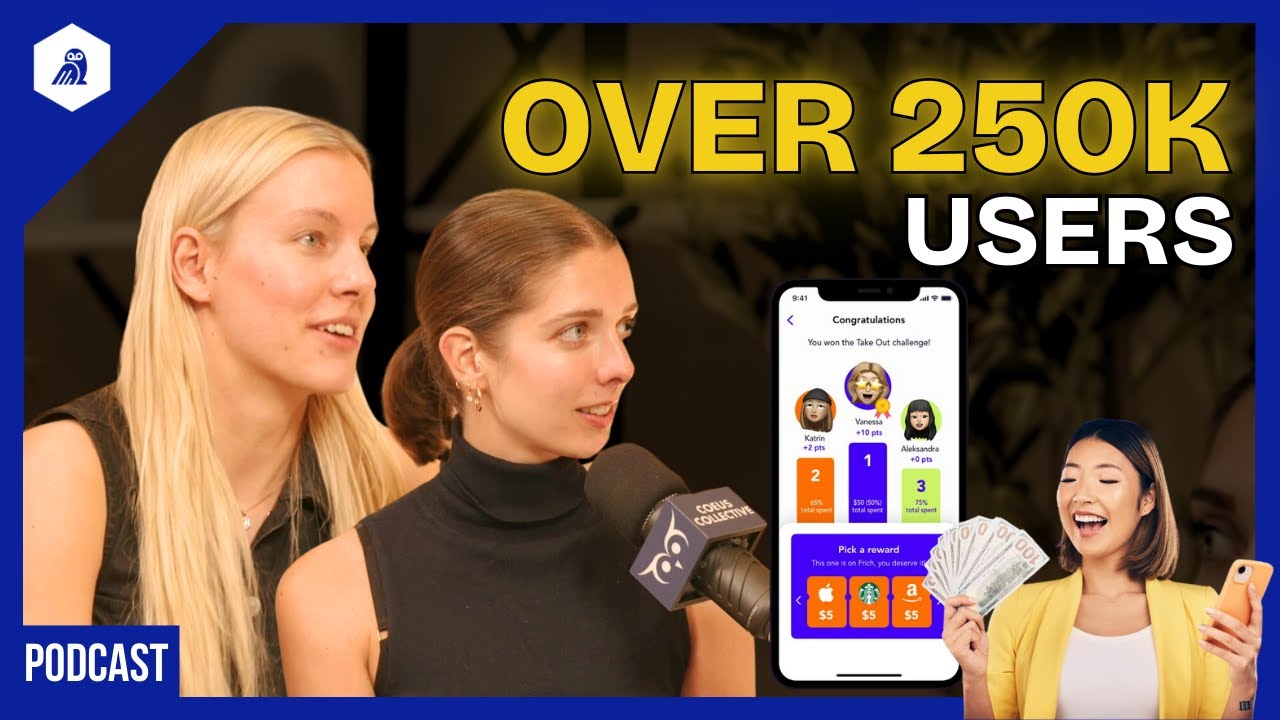
The $2.8M Solution to Unf**k Gen Z’s Finances | Katrin Kaurov and Aleksandra Medina - Frich