The $2.8M Solution to Unf**k Gen Z’s Finances | Katrin Kaurov and Aleksandra Medina - Frich
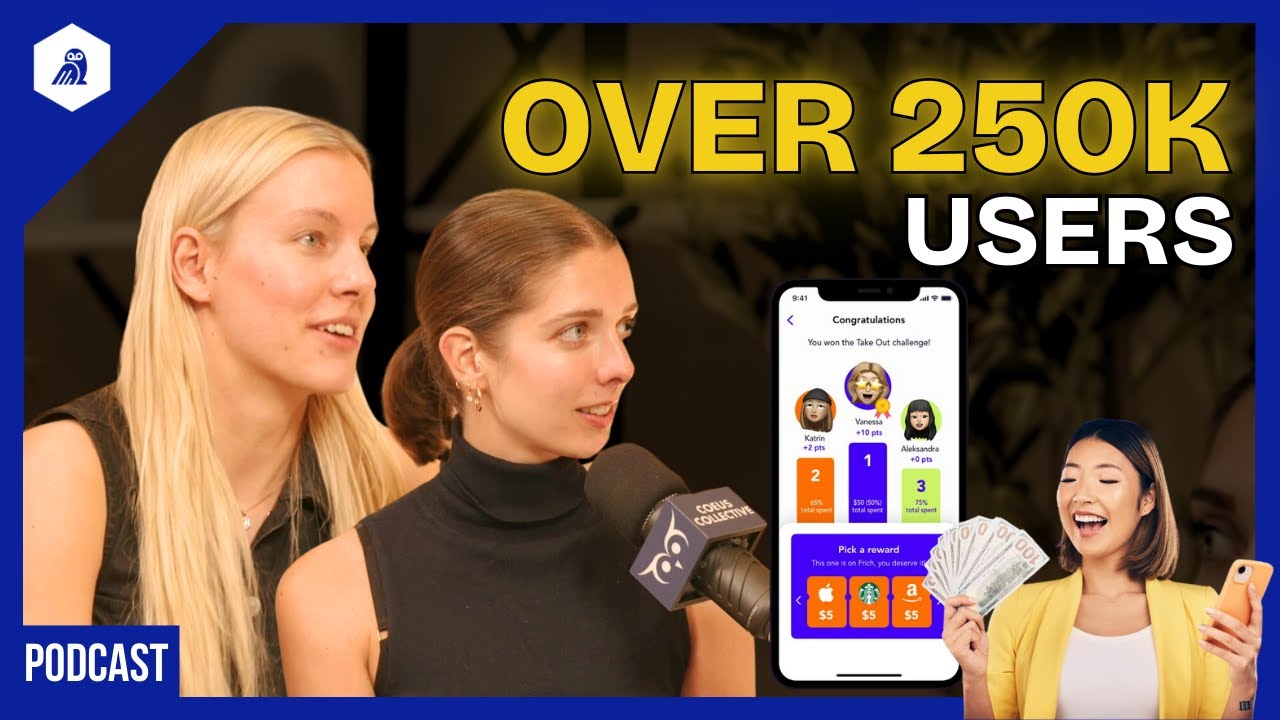
Katrin Kaurov and Aleksandra Medina built Frich, a fintech app for Gen Z, after meeting at NYU Abu Dhabi. They raised $2.8 million and use peer-comparison dashboards and daily questions to make money management social. The founders stress disciplined focus on three priorities: fundraising, revenue, and partnerships.
Chapters
I think like the truth is, how can you build a product for them if you never speak to them?
You can always be busy as a founder, but busy doesn't mean you're making any progress. You can just be busy.
These are the co-founders of Fritsch, Katrin Kaurov and Aleksandra Medina. Katrin, a former runway model, met fellow NYU student Aleksandra in Abu Dhabi, and together they launched Fritsch, short for fucking rich. In this episode, we dive into Gen Z's unique relations with money, explore Fritsch's recent $2.8 million seed round, and uncover how they're helping users become fucking rich.
Thank you.
Thank you for having me.
Oh, we're so glad to have you here. So I think that we're just going to start because we like to teach people about who the founders are before they started their company. I know that both of you have maybe had a bit of a non-traditional path to getting to become a fintech founder. Maybe we can talk about that a little bit.
Sure. Well, I'm originally from Estonia. I kind of always wanted to get out of Estonia and do something big. And this country was very small, and I felt there weren't many opportunities. And for me, modeling was how I got out. So when I was 14, 15 years old, I first moved abroad. And the way the industry works, they like ship you to a new country, whether it's like Milan or Paris or Hong Kong, every 3, 4 months. And when doing that, I had to manage my own money really early on and just be an adult at the age of like 14, 15, which I think definitely kind of, for me, shaped why I wanted to become an entrepreneur and why I saw a problem to be solved. And when I was 20, I met Aleksandra at Abu Dhabi, and that's the rest is history.
Amazing. Aleksandra.
Yeah, maybe I should have gone first. I do have a little bit of an unconventional background, but not as unconventional.
Okay.
I'm also originally not from here. I'm from Latvia, very close to Estonia. So, you know, match made in heaven. But I moved to Abu Dhabi when I was 18 to attend NYU. And I moved there, realized very quickly that the degree I was pursuing, which was engineering, was not for me.
Okay.
I was like, absolutely no way. I cannot do this. And I fought with my family. I was like, I need to get out of here. I need to take a gap year. I don't know what I want to do. And the only way we were going to, or I was going to be able to do this was I was allowed to go on a gap year if I don't come home and I don't ask for money. So I took some time off, I traveled all across, did a bunch of random different jobs, like trying to figure out how do I earn money? How do I rent an apartment? How do I support myself? How do I like do an interview? How do I get a job? Like how do I present myself as someone of value to a company? Hopped around, did a lot of different things and ended up working as a brand strategist.
Okay.
And that's when I like, long story short, I was just building brands for other people over and over and over again. I went back to NYU and met Katrin.
Amazing. Can you be maybe a little bit more specific? So a lot of our listeners are probably in college right now and they're looking to see how they can meet their co-founder. Maybe be a little more specific about, you know, where in Abu Dhabi was it your favorite studying space, a club? It's okay if it wasn't. Maybe you don't want to share. It's all good.
No, actually, I remember it super well because it was like, just like the kind of like freshman week at NYU. Yeah. And I mean, just even though I feel we had both traveled a lot by this point, I don't know, it just felt for me still very foreign. And I remember it was one of the freshman week events, right? I remember seeing Alexandra across the room and we were grouping up to mini groups and I was like, please let me be in the same group with her. When we're in the same group, I'm like, yes. Okay, this is happening. And I feel like we very quickly became really close friends.
Yeah, I think it's maybe like a good clarification. Our relationship started as close, like best friends. Amazing. We're still friends. And it's not like something we didn't meet and immediately we're like, let's start a business. It was like a very slow relationship build. And we went through many things together as two people and eventually became co-founders.
Yeah. And I think also clarification, there were many years when we were just friends first, like Aleksandr mentioned. Right. I feel like the story sounds so corny, but it's like, I swear it's true. Kind of bored during COVID And because we shared a really tiny apartment, I feel like we were like very squeezed together most of the days. And we were like, we literally were like taking a really long walk around New York and decided to start a company, which I feel a lot of people speak about doing that. Right. You know, when people have drinks or have a coffee, they're like, let's have a project together. But I think one of the things that made it different is that we actually pulled through and we like actually went ahead and built it with Back then we were like, we have no skills, no money, no connections, but we're like, okay, we're going to do this.
So let's maybe get into those initial steps then. You know, like you said, perhaps no skills, perhaps no money.
Like definitely no skills, no money. It's not perhaps.
So that's a lot for building any company, but building a fintech company, I think we need to get into what those basic first steps were then after you were friends and after you took those walks.
Yeah, I mean, I think like first and foremost, like ignorance truly is bliss.
Okay.
Like you're there, you're like 20 years old and you're like, yeah, let's do this. Like, let's watch like a Y Combinator video and let's just do it.
Of course.
But that's kind of honestly also what happened.
Yeah.
You know, like we decided that like Katrin was doing a job that she didn't particularly see her career growing into. I was doing an internship that I hated.
Okay.
We were kind of like looking at our future prospects and it was COVID and we're like, What is happening? How can we take control of our lives? Like, how can we reach those goals that we have? And like, starting a company somehow seemed like the easiest solution.
It just seemed very obvious, I thought.
Yeah.
It is crazy though. Like, I feel like in every business I've started, the point of getting to the starting point, you know it is obvious to you when you know. Like, you're thinking about an idea and you let it marinate for a while. But once you start to work on it, you feel like it's been within you for your whole life.
Yeah.
And I think that like, that's the beautiful thing about entrepreneurship is that maybe we were all born to do this. I guess now let's move out of the background though and into what Fridge does. What is Fridge?
So when we first started Fridge, we really started on a premise that most young people have no clue what to do with their money. And we always felt like money shouldn't be like scary. Scary and lonely, but it could be a fun and social things that people do together. It has definitely evolved from the initial idea of like people setting financial goals together with friends to more of like a peer comparison element where Fridge really first shows you how do you compare it to people just like you in all areas of finance, whether it's like what's people like yours credit score, how much are they investing, what are they saving, like what's normal to spend on a first date, like you can anonymously see how do you compare to all those people. And if you're behind, what are the solutions that are going to be really quick and easy for you to apply? So that's kind of like consumer-facing side of the business. On the other side, we are bridging the gap between financial institutions and Gen Z. Like, as you know, most banks are really old and corporate and like do not really resonate with young people. And that's how we're able to keep Fridge free on one side and like monetize it through the other side, through our B2B partners.
So I get that there was a lot of customer discovery that you all had to do at the beginning.
Oh God, yes.
Let's talk first about the consumer discovery, right? Not the partnerships, not the banks.
Yeah.
But in terms of initial customer profile, how did you find out who that was?
Yeah, I mean, I'm happy to talk about this a little bit because you also kind of alluded to it when you asked what are the first things you do when you start a company?
Right.
And for us, the first thing was like, we wanted to solve a problem that we understood, right? And a problem that we ourselves felt. And that for us was always the fact that we, even though we were relatively young, we had had quite a lot of professional and personal experiences where we were like, we knew that having access to money and knowing how to manage money properly can unlock so many opportunities for you early on in life. And there's nothing to be ashamed about for, when you talk about it, but there is this taboo and there is this like really, really weird social like uncomfortableness around money.
Right.
So that was kind of like that pain point that we had unlocked. And the fact that we understood it so personally really helped us. And honestly, the first thing we did was, okay, like if we're experiencing this problem, like I'm sure there's others that are experiencing it.
Of course.
And at the time I was still at NYU, so we went to Washington Square Park, as corny as it sounds. And one tip that I had received was pretend like you're doing this for a school project because you're surrounded by other students who understand when you're forced to do something for class and they're going to be willing to help you. And if your question sucks or your ideas suck, they're going to be like, this is not good. You're going to fail your class. So we went up to random people and we were like, Let's talk about money, right? Like, tell us about how you're feeling. Tell us about your anxieties. And it is really, really hard to get someone to talk about a topic that's taboo, but you just get better and better at it.
And so then you translated those findings into features on a mobile application, perhaps. I mean, Alexandra, I know your role as CPO, Chief Product Officer. I'm fascinated by the concept of a Chief Product Officer. I think that it is so important for especially small mobile apps to understand who their audience is and address it by creating a product that's specifically made for those initial early adopters. Can you walk us through what a CPO is?
Yeah, for sure. I mean, I have a hot take.
Okay, okay, okay.
Wait, wait. I feel like whenever you go out and you raise VC money, they're looking for two things. They're looking for you to have some super solid background, like ex-Uber, ex-whatever, blah, blah, blah.
Okay.
Or you're super technical and we didn't have either.
All right.
My degree is semi-technical, but I'm not going to be the one who's sitting down and writing code for the app. But I do think that actually is a benefit to have a CPO, aka a chief product officer, as one of the co-founders, because what you do is you emotionally connect to your user and your goal is to understand your user and build for them and not just shove cool things down their throats, right? Like, I feel like oftentimes when you have a CTO, and I'm not saying anything bad about it, but people are so technically advanced and talented that all they want to do is challenge themselves technically and create like the most advanced product and the quickest way to do X. But what if like no one needs you to do that, right? Right. So my job, like, it really is to Talk to people. As crazy as it sounds, like my job, and I still do, like years into like running Fretch, like I do that every single day. I talk to our users and I try to understand what's happening with them. I'm trying to understand like, what is stressing you out right now? What are you anxious about? What is keeping you up at night? What is the proudest moment for you in life? What are you dreaming about? Like, how do you think about money? Like, what does money unlock or block for you? And how can we help you have these positive feelings. Because one thing that we identified early on is that for most people, money is a very negative thing. It always brings up very negative feelings. Even if you look at your bank account, everything is always in big, bold red, like money going out, like you're spending too much, like you're under this, like everything is always bad. Everything is like alert, alert, alert. And that forces you to look away and be like, I don't want to look at money. I can't look at it. It's not for me. I'm not a finance major, but for us, we wanted to like figure out how do we turn this around? Like, how can I have these conversations with you and understand how do I position money in a way that makes you feel good about yourself, that makes you feel empowered. And that really is like all that a CPO does, right? Like you learn to speak to your users in a way where you're not shoving down your ideas down their throats, but you're hearing them out. And then of course you have that technical background where you are able to design things and you are able to write specs for your developers and you're able to call out whether or not something is compliant with data regulations or anything else like that.
I think when you're first getting started, the only thing you should do before you make any product move is talk to your users.
Absolutely. And not enough people do that.
Yeah.
I said before, it is innate to know when it is your time to start your company. I think that that's true. But there's a period before then where you should maybe test things out and pretend to be a student. So I think that that's a Really good learning point and also a period of time where you should be friends with your co-founder.
Yeah.
Or maybe play on a Quidditch team with them, right, Leo? That's our story. We'll talk about that another day though.
Speaking of products, can you elaborate more detail about the features within the apps and how potentially how you differentiate yourself from other fintech apps out there?
Yeah, so right now, like what Fridge primarily does is like Katrin Kaurovov alluded to it, like it helps you understand where you are compared to your peers. And for most finance apps out there, that's kind of it, right? It's a finance app. It just talks about money in, money out. How do you make more of it? How do you spend less of it? That's kind of it. But for us, like our entire mission, you also, when you look at our backgrounds, you see that like we never think about money as just like, like from a perspective of a finance major or like from a perspective of like an investor. Like we think that money is something that helps you unlock your life. So primary feature that we have is question of the day. So you come in every day. This is our way to like show you how money really does touch every single aspect of your life. And we ask really spicy, really quirky money questions. For example, how do you split a bill on a first date? Or would you marry someone that doesn't make as much money as you do? Or do you hold a grudge on a friend if they don't pay you back? Like all these things, and you answer anonymously, and then you see how you compare to your peers, and we benchmark you based on where you are, how much money you're making. Yeah, so location, um, and just like other stuff.
Age.
Yeah, thank you.
We use the app, we've downloaded it.
Perfect. And then, and then we go a little bit more, right? Like we start with this fun quirky stuff, and we're like, money is everywhere, but then we go into more details because that helps us show you whether or not you are falling somewhere behind, right? And by touching all these aspects in your life, we show you like, okay, so maybe you are the friend that never pays back, or maybe you spend way too much on first dates. So how do we help you kind of set yourself up financially? So in that context, we start talking about savings accounts, or how do you build your credit score, or how do you like even get into investing? How do you find that job? Um, and that's where you have a bunch of resources, and that's where we partner with financial institutions. So that's kind of like the major flow of that. There's obviously like some other things as well, but the whole idea is that we bring you in by telling you that money touches everything. We let you see how you compare to your peers about things that you would never dare to ask. And then when we do like identify that something is falling a little bit behind, we're like, okay, like based on what we know about you, you really should try this Alexandra, something that you just said is that money helps you unlock your life.
I think that that's a really nice positive approach to money. I mean, for better or for worse, I think that that's the way it is. And once you see it that way, then you can envision your life after you've taken the basic steps with money, and then you all are assisting with those basic steps. So I think that that's a really fascinating concept. How have you gotten these large firms to be able to work with you though, at this current moment? So you have a great user base, and I think that it's interesting to think about now, how do you grow that into a set of partnerships with financial institutions?
Yeah, I think like big thing that we struggled with in the beginning is building credibility as a startup. Right. And I think like every startup does, you don't have to be a fintech startup, goes through that. And I think that was a lot of the groundwork showing that we're like not just like some two random people doing something, but like it's a fintech company and like we know what we're doing. Like, I think like building that credibility was really important. And like a couple, I think, super practical ways to do it is like either you get an advisor on board who comes from that world. So like in our case, for example, having a consultant or like advisor who comes from the financial background, who work— has worked with like banks, for example. Another way is like doing accelerators that are super industry specific. Like we just did accelerated with one of our partners. Like thinking, where can you get press? Like maybe we share some like Gen Z data points, right? And that gets you in front of the banks. Like I think finding credibility is kind of like the hardest part of that because all like banks and financial institutions know that they need younger people. Like they know that and like the data shows that and like they're not, a lot of them are not going to survive if they're not going to figure this out. But they are thinking from like a risk perspective, right? Like they have their cushy job they've been at for like 25 years. Why would they partner with a risky fintech startup? Right. And really mitigating that risk and making them feel more comfortable, I think, is kind of the biggest challenge there. And where a lot of time goes into building those relationships and building that credibility.
Yeah, life is about relationships. Even in a B2B sales context, everyone says you're selling to a business. No, you're actually selling to a person.
Oh, absolutely. With some of our biggest partners, I feel like we really seal the deal when we played beer pong in Vegas. It's not like my favorite city or activity to do, but it's one of those moments when you're like, yeah, I'm just going to do it. And I think it's kind of shocking. I feel like a lot of when it's a tech product, it's like this huge B2B deal. At the end of the day, it comes down to maybe that CFO of a bank is worried if his kids are going to have a good financial future. Or maybe they just love having drinks with you and they're like, okay, it's better than this other fintech startup that's boring. And I think it often comes down to those very humanly normal things. It's not always about like, people obviously want to like back it up with data, but at the end of the day, it's very much a person-to-person thing because those are long partnerships, right? Like if things go right, we're going to be working together for the next like 5 years. So people want to work with people they also like. And I think that's been like a big learning that like, I think relationships are so important, whether it's like with users, like Aleksandra said, or whether it's with big banking clients. Like it's not a big corporation. You're selling to a person there at the end of the day.
Yeah. And people also want to work with people that they trust. Yeah, you know, and honestly, people are only going to play beer pong with somebody that they trust. You know, these days you're not just going into a random, you know, beer pong game. I mean, you're only going to play with somebody you trust. And, you know, in any sense of the word, trust is so important, especially in a relationship with an early-stage company. I am interested in the concept of accelerators. If you could talk to us about that, because I know that there are so many accelerators. People listening to this might be applying to an accelerator currently. You know, what was your accelerator experience like?
I'll give my very honest take. So I think when you're just getting started, for example, when we were just getting started, we kind of accidentally ended up in this accelerator where MasterCard was a partner. And that played a huge role for Fridge of having that first credibility point of going from like 2 people that nobody knows to like 2 people that nobody knows with MasterCard. Okay. Okay. That was like a big pivot. That gets you first press and everything. So I think when you're just starting, I think any accelerator is awesome because ideally you want to obviously aim high for like Y Combinator or anything like that, which we unfortunately didn't get. But like, I feel like you want to aim to the highest one that you can get. But anything in the beginning, it's just going to bring you credibility. I think later down the line, you really want to focus more on like very your industry-specific accelerators because while accelerators in the beginning buy your credibility, they also consume a lot of time, right? And a lot of those workshops, frankly, are not gonna be like game changer. Like, you know, a workshop which most of them have, they're like, oh, we're gonna talk about marketing for an hour. Like, yeah, it's not gonna really add value to you. But what they do come is with access to a lot of like advisors, which kind of goes back to the credibility building part. Or a lot of them also come with cash, and it's a hard market, so, you know, you might as well take the money. So I think Those are like couple good things, but I would just caution like not to over-accelerate your startup.
Right.
Like I feel there have been a couple accelerators that we did that like it ended and we were like, yeah, I don't know if it was really necessary. So I kind of also like really picking and choosing. If you're starting, for sure start with something, but like later down the line, be like very picky if it's worth your time or if it's just like a distraction that's going to take like 10 hours of your week that you could dedicate to like customer discovery or sales.
Yeah, I think that that's a good point, you know, but also like the concept of knowing where you are in the process is also really important. And, you know, Katrin, from what you were just saying, it felt like, you know, you know where you are in the process now, but you also were aware where you were in the process when you were in the MasterCard program. All of these firms, though, do provide you with the ability to connect with advisors. And I am interested in maybe your process for, you know, you guys are a great company, right? You're just getting started. You have a lot of the VC rocket engine is going, rocket fuel is there, the advisor wants to maybe get in on it. How do you kind of manage the kind of process of getting an advisor on board?
The beginning, when we were like two nobodies before MasterCard, we literally reached out to like, I think we pulled some article of like 30 best people in fintech and we like DM'd everyone on LinkedIn. And what we did was like, And we actually got our first advisor, Ken, from there, who's still helping us out.
Wow.
And I think the other 40 didn't respond, but he did. And what we did was be very specific. We were like, we listened to your podcast in 2008, and we love what you said. And people will be so flattered by that, at least they'll take the call. And it really takes in the beginning just 1 or 2 people who are willing to support you. I think with advisors, 2 types, right? Like, like kind of unofficial advisors. So people just want to help you from the goodness of their heart, which you're going to have a lot over time. But those are kind of your champions who are going to help you throughout the years. And then with couple people that you want to make sure they're formal advisors, they will get a piece of the company. It can be like half a percent, or early stage, it's like 1% of the company. And in exchange, they're going to like plug you in with their contacts, they're going to help you, they're going to have like coaching calls. Like, I feel our— without our first advisor, I don't know if we would be here today. He really helped us through everything from incorporation to when we started fundraising. I was like, cool, we started. I'm like, so where do you find investors? I was like, now what? So I think advisors play such a big role, but kind of the same with accelerators. You don't want to over-advise because at some point, I think now we're in a place where we know what we need so specifically. Someone giving general advice is not helpful anymore. Like today I'm like, okay, I want someone who knows about like B2B sales and like early stage fintechs. Like that's the advisory one. In the beginning you just want someone who's been an entrepreneur and knows what, what you have to do at that point.
Right, right. And you know, once again, you know, the concept of knowing where you are, I think that that's important, but you have to be like honest with yourself. Yeah, you know, you can't think that you're further along at the beginning than you really are.
Yeah, I mean, I think just like a very practical tip is like take like a piece of paper and write like all the things I'm good at, all the things I'm not good at. And then you're like, okay, I don't know. Like in the very beginning, it's like, I don't know what a share is. I don't know how to fundraise. I don't know, like, whatever. And then you like start trying to like draw like a persona, like what's the perfect person that could have these skills that could help you with these things, right? And like today, like Katrin said, you know, she could be like Okay, like maybe I don't have 10 years experience selling into credit unions. So maybe I need to find someone who's done this for 2 decades. And for me, maybe it's like, okay, like maybe I've never built my own API before. So maybe I go and find someone who's done this before and can help me. So with time, you know, you find these people who are way more specific, but like just as a starting point, just like write out like, I'm good at this. I need help with this and just like be super honest with yourself.
Yeah, and I would add for like any like aspiring entrepreneurs, like not being afraid to ask. And it can be like, I don't know, it can be through an Instagram DM, it can be a LinkedIn DM until it feels very personal. Like if you come from a very honest perspective, you're like, I like because you did XYZ, like startup community is so supportive. Like if you ask, people mainly will like give, you know, and I think that's super important to like not be afraid to ask for help. Like, why would you spend like a year figuring something out when you can speak to someone who already did the same thing? Right. For example, one of the things we did, which I think is a really good idea, in the beginning we spoke to someone who tried to build something similar like Fridge, but he failed. Oh, wow. And like, talking to him was super helpful. Thinking back, super honestly, like, didn't follow his advice, which he was right. And he was really right about everything he said. We were like, no, we're going to prove it that you're wrong. But like, I think doing that and actually listening is like a pretty good practice that we didn't do. But like for anyone else out there, I think it, it can be pretty useful.
Entrepreneurs supporting entrepreneurs. I mean, that's the theme of this podcast. That's what we want people to understand. I think that, you know, in the vast ocean of entrepreneurs, you know, whether in New York City or you're anywhere in the world through the internet, you have the capability to reach out to people that, you know, can provide you with the information that you want. And if you reach out to enough people, somebody will get back to you.
Yeah. Yeah.
And I do think it's like important to maybe pause on specifically what Katrin said, that I think the most valuable advice you'll get is from someone who tried to build something similar but failed. Because usually when you search out people, you're like, oh, who are the top 10 entrepreneurs right now? Let me talk to, I don't know, the founder of blank. I'm not going to name anything specific, but someone who tried their best and tried every single way and kept failing. They have so many lessons. They have so many warning messages for you.
Right.
And they will share with you things like, I wish I did this, I wish I did that. And here are all the things I tried and I didn't succeed. And that can save you so much time and can be so much more insightful than someone maybe like— because also like entrepreneurship is a lot about right place, right time.
Right.
Right.
And that's so hard to replicate. So someone else's right place, right time might not work for you. But these like kind of messages of how like I went through the trenches and I really truly tried my best in all these ways and it did not work. That's just such incredible advice and that can be a perfect mentor.
That can be a perfect mentor or it could be a perfect podcast. Yeah. Another idea for the Koyos Collective Season 2.
Yeah. Failed Founders. That's great.
Wow. The alliteration.
Yeah. There you go. You're welcome. Welcome to use it. You can cut this out, pretend like I didn't.
We would love to give you the credit on this. We hope to, you know, not invite you though. We hope that this goes as well as possible. Speaking about things going well though, we'd love to talk about where you are currently in fundraising.
Oh, I've been waiting to say this for so long. We just closed our seed round.
Congrats.
So we have closed now $2.8 million in funding.
Wow. Amazing.
And I feel like Aleksandra has heard for way too long of me being like, the round is closing, but it is closed now.
Finally.
That's amazing.
And it was not easy.
It was not easy. If you could get into any of those details. Congratulations. $2.8 million is Amazing. And if you could tell us any of the details, we heard your whole story today so far. We started from you all just meeting, looking across the NYU Abu Dhabi courtyard, and now here we are today announcing a $2.8M raise. Maybe you could just sum it up briefly.
Yeah, kind of what I mentioned before when our first advisor was like, we're going to start fundraising in 2 months. And I was super excited about it. It sounded so glamorous, fundraising. Of course. And when the time had arrived, I was like, well, how do we actually, like, how do we actually do that? And I literally, I remember Googling, I was like, how do I fundraise if I don't know any investors?
Right.
And I think what I didn't know, and I feel like if you are going to raise, like, an average fundraise takes around, like, talking to around 150 investors.
Oh, wow.
And like, if you're raising like a proper round, like, most founders speak to 100, 150 investors, which means that you're going to get like 145 nos. And then like 4 or 5 people will say yes, and that's considered a success. And that's followed by like a TechCrunch article of like, overnight, you know, they raised millions of dollars. But like the amount of grind that goes into it, and like if you schedule a week where you speak to 40 investors and like everyone says no, but you gotta be every day like super hyped about your company, you're like, no, they're all stupid, which they mainly are. But like, you know, like, and you're like, okay, we keep going, like this is gonna be a billion dollar company. I think it's mentally and also physically very hard because you just got to keep yourself going. At the same time, hopefully have a co-founder. I don't know how people do who don't, but the way we would divide it during peak fundraising times, Aleksandr would pretty much run the company and I would just be speaking to investors because it's a full-time job, which was another thing I didn't know. I didn't know the CEO's role basically equals it to chat to investors.
So long story short, CPO does everything.
Yeah, I think that was a big part. I think the big learning, which I wish I did earlier, is like fundraising is also about relationships. Like, people are not going to write you a check overnight. Like, they will later when you have someone in, but in the beginning, you want to like build relationships with other founders because what other founders have, they have investors, right? So if you have like 20 other founders who think that you're the greatest, they're going to introduce you to like 5 investors each, and you're pretty much set, you know? So like those relationships are much more important if you have 20 people who believe in you, right? Rather than like go to networking events and have like shallow 100 investor conversations. So I think having people who can from the beginning follow your progress is huge. And I think second part also keeping people updated, doing monthly or biweekly investor updates during fundraise. So people are like, oh, today we have 0 users. Okay, tomorrow we had 100. Okay, in 2 months we have 1,000. I think getting that momentum, showing everything exciting in the company also builds trust that we spoke about in the beginning.
Right, right. And Spider-Man quote, with great power comes great responsibility. Not that raising VC is great great power. I want to be, I want to be clear on that, actually. I, I think that VC is meant to be the engine for which it gets you to your destination. There is in no way that raising VC should be the destination. I think we can all agree on that.
Yeah.
Um, but nevertheless, with great fundraising, I guess, comes great responsibility. I would like to perhaps have you all walk through your business model a bit and maybe even discuss how you think that's going to change after this fundraising, if, if at all.
Yeah. So one of the things, and we've basically tried it both ways, we came to a conclusion that Gen Z doesn't want to pay and frankly shouldn't pay to be better financially. But on the other side, the banks and financial institutions and, I don't know, the Fidelities of the world, they have huge budgets and they have a hair on fire problem. A lot of especially smaller institutions, if they're not going to get Gen Zers, they're going to go out of business. So for them, it's a very urgent problem and there's a lot of budget for to solve that problem as well. So we fully monetize on the business side. Right now we're charging basically people in a pilot, so they partner with us for 6 months and then later we go to like a more long-term contract. Frankly, we're still figuring out our pricing, and figuring out pricing is also a lot just trial and error, right? Like you put out the number and you see how people react to that.
Yep.
I feel like they're at this level, there isn't it's again very much person-to-person relationship based, right? It's like, how much do those people feel like you're gonna give value to them, right? I think one of the things we've gotten better and better as a company is just not spending too much money. Like, I think why a lot of startups went under is because they raised money and then they spent everything so quickly because they hired a lot and like spent money on stupid stuff. And then they had to go out and raise again and again, again. And then you're kind of in this hamster wheel where suddenly have like 5% of your company and you just spend your time fundraising. And we knew that we don't want to take that path. After this raise, we're like, we do not want to raise again. No. So I feel like also being very cautious with the capital that you get and just not like the fact that you have it doesn't mean that you have to spend it.
And I guess on the concept of roadmapping, right? So you're talking about financially roadmapping for the business, and that's obviously so important. If you are raising VC capital, you should totally roadmap exactly where you want to put those funds. I mean, you're not going to be perfect with it, but at least have of a plan. How would you, would you expect that product, your product roadmap though, to change now that you have raised a round?
I mean, I would say like whenever you raise a round, you raise on a future promise.
Okay.
So you prepare that roadmap before you go out and raise and you're like, with your money, we're going to be doing this. And that's kind of what you said. You need a plan. You need a plan to know how much you're asking for, right? You can't just go up and be like, I want $10 million just because, you need to be like, okay, I need $2.8 million and we're going to spend $1 million on that, $500,000 on that, $300,000 on that. And you have this plan and you have this roadmap and you have this perfect universe in which it meets in the middle and suddenly you start making money with all those ideas and you'll never need capital ever again. So I would say that the roadmap in terms of hiring, in terms of the product, in terms of how you're going to spend money, that all comes before the fundraise. You cannot fundraise without that. And then of course it changes.
Right.
It's a startup. Every single time, every time a quarter passes and you look back and you're like, that was stupid. Like, why did I write that down? And if you don't have those moments where you look back and you're like, that was so ridiculous, right? Then you're not learning quickly enough.
You have to own your cringe. Yeah, that is what Taylor Swift said at the 2022 NYU commencement. Own your cringe. Not, not, not the one that we were at, but the other one for the actual class of '22. Yeah, I guess so, you know, in the context of what's coming next in fintech. So I'm seeing in social finance, there's a couple different ways that the industry can develop. I would probably consider a lot of things to be social finance. Venmo is probably social finance. Reddit, WallStreetBets is a form of social finance. People talking about their finances pretty openly. Where do you think Frisch fits into the future of social finance in that landscape?
I would really think that the biggest differentiator is that we can be kind of the bridge between like banks and Gen Z, and we can like translate the complicated product and complicated financial products to Gen Z, and we can translate how Gen Z speaks and thinks to banks. I think like being kind of that middleman, I think is a very powerful place to be. I think in terms of general fintech, frankly, like there have been so many social apps that kind of came and raised a little, but then like went out of business. I think we're still at the very beginning of figuring out like what that actually means. Like I think there's, so much yet to be done. And I frankly think that there are a lot of perfect solutions that don't exist yet. Like, I think investing is something that's been done pretty well now. Like, you have some place where you can, like, follow other investors' path. You can see how others invest. Like, I think that part is pretty developed, but people are still totally lost about money. Like, if you ask an average college student, like, they don't know anything, which shows that there isn't any mass adoption yet for any products, and there's a lot of room in the market.
Yeah. And, you know, in terms of Fritsche's roadmap, There just seems to be so many different possibilities. I mean, the translator is the gatekeeper of information. And the amount of possibilities are endless. If you could turn Fritsch into something that you think would have the most impact for Gen Z, if you had no barriers, what would be like the dream product that you could build?
I think like the language you choose to like describe is very, very important. I think like you said, when people think about money and financial institutions, they think gatekeepers, right? They think something that's like inaccessible, hard to understand, like scary oftentimes. And I spend a lot of my time talking to people who are just about to graduate and who like, for some strange reason, trust to share their like scariest thoughts about their future with me. And I think where I see Fridge and like I wish and I hope so much that we can reach that is that there are so many financial products out there that enable you to reach whatever goal you want, right? Like it can be you going to get a PhD. It can be traveling around the world, building a business, buying a designer puppy, like whatever your dream is. There is a financial product out there for you, but it is so hard to grasp how these products can help you achieve the thing that matters to you as a person. That most people turn away and they're like, I can't, not now. So if we can be that person or that entity in between that takes your biggest dream and then takes this like financial product that already exists out there and translate it to you. So you're like, this is what you need. This is, this is how someone else that has that puppy that you want and how they afforded to pay $100K to like fly it in from like another country. This is how they did it. Like they reached it in this way and this is how that this is how it works. And I think this is like one of the main questions we hear from our users is like, they're just like, how does this work?
Right?
Like, how do I be an adult?
Right?
Like, what's insurance?
Yeah.
Like, what do I do? And like, if, if we could just make people feel confident about their future so they don't have this anxiety that I'm going to end up on the street, I'm going to end up being unemployed. If you— and that confidence comes from within and like, A lot of it unfortunately comes down to money. Like, can I afford to go to the doctor? Can I afford to get mental health care? Can I afford to have an apartment? If you can get rid of those fears and you have some confidence that you have a grasp on how to, like, cover these basics, then you as a person can be so much more confident to go and pursue dreams that might seem out of reach, like starting your own business, of course, traveling the world, becoming a celebrity, like whatever you want to do, like those things that seem so out of reach. You can now be that more confident version of yourself and you can go out and fundraise and hear. And because like selling yourself is fundraising, right?
Right.
Like you can go and like go for your dream job and you're not going to be discouraged when you hear 500 nos because you have that confidence coming in from you. So if we can like just turn around how people think about money as something that doesn't like block them from pursuing things, but enables them to pursue things. That would be amazing. And I know this sounds very fluffy and whatever, but it's not really like we kind of talked about it in the beginning. It's not describing a product feature. I'm not describing the world's fastest money transfer or the best ACH transfer. It's more about what is that end result for the person using Fridge and whatever way the product changes along the way, whatever that product roadmap is along the way, whatever. Team changes you have along the way, like that's the end goal you want to reach.
If we could shift to the psychological and the trends that we see for Gen Z specifically, there's a stat by Intuit that 3 in every 4 members of Gen Z would rather have a better quality of life and extra money in their bank account. The personal savings rate has dropped from 8.51% in this decade's average to 3.9%. What do you think— is that possible— and industry take of that?
I think a couple things. I think those are almost like two different problems as well. I would say in the first place, I think Gen Z thinks more like Alexander mentioned in terms of like life goals rather than a specific money on the bank account, which I think frankly was very different from millennials or any other generations before. It was rather about having like, I don't know, a specific house or a car or anything like that. I think a lot of the things that Gen Z wants is like, I don't know, freedom to work remotely, right? Right. You know, go for your passion, have just financial freedom in terms of not having to worry about money. So I think just people essentially still want the same things, but in their mind, there's not just a dollar amount there. It's like an actual goal, and money is like a means to get there. Whereas I think other generations never really even thought about those things. I don't know, when I speak to my parents about pursuing your dreams, they're like, this is stupid. They're like, how much are they paying you? So I think that's one of the things. And then I think the second thing, which I find it to be so interesting, is like on one way, like Gen Z is a generation of constant TikTok. Everyone is trying to like sell you something 24/7, like no matter where you go, like whether it's in person, it's like on TikTok, on Instagram. But then at the same time, there's this flip side of like you're trying to think that money is not that important. And I feel like there is very big conflict there, right? Like you're told that money is not important and you should just focus on your dreams, but then someone's trying to sell you something, which probably leads you to having lower savings and then you having anxiety around money. So I think it's kind of this weird circle of like consumerism and then like thinking money doesn't matter. And like, I think a lot of people are stuck in it.
And to follow up on that, how do you use that, your service to provide a solution, not just to address the current needs, but to educate your users for long-term commitments and goals?
I think one of the big things that we learned about Fridge, like in the beginning, we had a lot of like kind of like challenges and like pathways and like, you know, just kind of like very like long processes for users to get something. And we realized that people just often want a quick solution. Like it's not often even about the best product. Like I think insurance is a great example. Like when you're looking for renters insurance, like you're someone graduating, looking to get an apartment, like you don't have time to go out there and like find what's the best thing. Like it's probably just another thing that's stressing you out. If you can come and see like what are your peers at your university using as renters insurance, And if you're like, okay, 60% of them are using it, it can't be that bad.
Right.
Like, that's kind of good enough for you not to be stressed out.
Yeah.
Yeah. No one's going to go out there and spend days like researching like best type of companies. And I think one of the things that happens when you're like in your 20s and you're like at school or graduating or getting your first job, you have so many of those decisions that you got to make, not just around money, about everything in your life. Like interviews, like getting a job, getting an internship, like opening an investment accounts, insurance. Like you have to worry about so much stuff. So if like Fridge can get rid of some of those worries and give you a quick solution, I think that's a major win for Gen Z.
Why do you think though that Gen Z is so difficult to understand for the banks? I mean, the banks, you know, they have data on everything, right? Like they know how much people are spending. They're able to break that up into different demographics. But why do you think that the Gen Z puzzle still hasn't been solved?
I think like the truth is every single new generation is like scary, right? Like they're doing something wrong and like we need to educate them and like, oh no, they're breaking all the rules and they're not doing what we're expecting them to do. And then once these people get older and they get the jobs, then they're like, oh well, duh, right? But like the reason why you don't really— well, you have all these financial institutions out there not understanding Gen Zers because they don't employ Gen Zers. Right. Like, wow, how are you going to— how can you market a savings account to me if you are 40 years old and I'm 17?
Right.
Like, you have no idea what's on my mind. And it doesn't matter if I'm a 17-year-old in 2024, I'm a 17-year-old in 1980. Like, you cannot do that, right? So by the time I am going to be like 27, 28, and I'm going to have that position, I'm going to be like, well, yeah, like, my generation gets it. But like now I'm like, well, what the hell is Gen Alpha doing? I'm so confused. Right? So I just like, I think it's as simple as that. And I don't know why everyone is so like tripping over themselves being like, oh my God, Gen Zers are so weird.
Right?
No, they just want to be happy.
Yeah. Just want to be happy, you know, travel the world, be able to do things that others—
get a job.
Yeah. Others didn't, you know, have the opportunity to do beforehand. And I think it's interesting because it's not just about the big banks having this problem. It's this actually goes back to what we said at the very beginning of the podcast, which is this is about customer segmentation and interviewing customers. And perhaps if some larger companies were to do exactly what you all did as students and walk around a university, they would maybe have a better idea of how to serve the clients that they need to ensure their business survives.
Yeah, no, this is like my PSA, like go out, talk to young people. Like how can you build a product for them if you never speak to them? And there's also a way of asking questions in a way that invites for you to give an honest answer. Or you can ask a question like, is it correct that blank? Or you can be like, well, tell me more how this feels. There's very two different ways of approaching a conversation. And you can't just be like, oh, well, data shows Gen Zers are always on TikTok, so, you know, they don't like going outside.
Like, you need to have more than that. You absolutely need to have more than that. And sometimes I think it shows the power of anecdotal evidence and, you know, understanding that there are people that you're going to need to interview in different parts of a country. And if you're, you know, even especially in the US, you know, from sea to shining sea, everyone is different. And I think that the concept of, you know, especially in finance, fintech specifically, money touches everyone. It's the key to unlocking life. You need to be able to understand people's diverse and different needs throughout the country. I think that that's a fascinating way to approach things. We do have to start wrapping up. And a question that I would have now is, if you can just tell us about a time where maybe things got challenging for Fritsch. I think that would be really helpful.
Like today. Today. Okay, let me pick one of the many of those moments. You know, I think that people often think that launch is hard, but launch is not hard because everyone in the beginning has the excitement of starting something new.
Right.
But then what often happens after launch, you're like, well, we built the wrong product for the wrong person, you know? And like, you gotta like figure out a lot of things. And I think that's when things get hard because you gotta continue that excitement and continue to like be very honest when things are not working and like keep changing things up, right? So I feel like almost there's a lot of hype around the launch, but then that doesn't mean anything. Once you like launch, like nobody cares. Like that's when the real work begins, right? I think like as a founder, you just gotta have like delusional self-confidence, right? That you know that this thing is gonna work. Like if you don't have it, just quit it and do something else. Like, you know, we've had moments when like money is running low and like we had, you know, had to fire some people in the team and like we are like pivoting the product, like you have all those different things when like nothing is stable, right? But like, and it sounds so corny, but like in your heart you got to be like, we're figuring this out and like not giving up. And like, I don't want to make this like stupid and motivational stuff, but I think it's very pragmatical, like being very honest with yourself. Like, do you see a future for this startup? Like yes or no? If it's no, like go do something else immediately. Like way better, easier things that give you more money to do. But if you in your heart are like, this is going to be like like a $100 million company or whatever your end goal is, then you just gotta like sit down and figure it out and like kind of pick out everything that's not working and just find solutions. And a lot of it is grind. Like, I feel we have had times at Fridge when we have like awesome things on LinkedIn, and I know every other startup that I know as well, right? Or like you have cool press and LinkedIn and whatever, but that probably just means you're fundraising at that point, you know, and just pumping that company. That probably means you're actually desperate. And oftentimes the company quiet means that you're actually just working on things. So I think just not being discouraged also by what you see other founders do, because probably they're struggling just like you, and no one talks about it publicly. So I think that would be a big thing. Not be too— TechCrunch articles always say overnight success. It's never overnight success. It's always hard. And just being willing to grind that out, I think, is such an undervalued skill of being a founder.
And conversely, could you maybe share your favorite success story, whether it's with a business partner, individual?
I would say there is obviously along the way so many wins because every day that you're alive is a win.
I agree significantly, 100% for me.
So I can definitely say that I wish looking back that we paused and we celebrated them more properly because when you're in the grind, you're like, oh my God, great, but now better, now 10x it. And that's what what your investors expect from you as well. So I would say like in terms of actual like happiest moments or biggest positive moments in the company, it's always been like within the team. Because like we've talked throughout the entire podcast is building a product means talking to users, raising money means talking to investors, talking to other founders, like getting a partnership, getting a contract in is talking to people. Making your company survive is like making sure your company dynamics are right.
Right.
When the company dynamics inside are right and you feel like comfortable and confident and energized and excited within your team, then you can be like, yay, we survived Tuesday. Like, yeah, thank God we have another day. And like those little wins, I would say feel way more impactful than being like, oh yeah, like there was this article that went out because like, you know, inside of yourself that you're not there yet.
Right.
And also, you know, you can see in a great article or you can see a great partnership. But what you don't see is that maybe like we were like editing that article for like 6 months.
Yeah, right.
And it took so much work and it was so annoying. And we may be like, like a quote that was published, we maybe hated it. And we never agreed on it. And like when you see that result, you see all the, like all of it and it's not as glamorous. But like what actually does feel great, it's like, you know, like it's Tuesday night and you're like, okay, yay, I love my team and it's great. And we actually like did it, you know, another day we did it.
You did it. You came together with your friends and you accomplished something. And there's still a lot more to accomplish too. The last question that we have, it's always end on this question is, If you were to change one thing about your journey, what would it have been, or what would it be?
The fact that I want to say two things brings me to my first point, which is focus. I'm like, God. Um, I think like when you're first building a startup and always, and kind of what you mentioned about us before, you can be pulled in so many different directions. And like as a founder, you do have to think about a lot of things. You think about fundraising and product and team. And does the team think you're having a fun company culture? And merch, and then you're revenue. You have all those different pieces, and it's easy to be pulled in like, oh my God, we could do this. With Fridge, we've had so many moments where we're like, what if we were a media company? What if we're a financial literacy course we sell to universities? And as someone who's very easily excited, I think I've often gotten carried away by those things, as I am answering this question. And I think it's super important to like take a time period and focus, which we started doing like 6 months ago or 9 months ago, which I think has yielded results. Like you pick like 3 months and you're like, okay, now we're like fundraising and this is like all you do. Or then you're like, okay, now we're like scaling revenue, now we're focused on partners. Like, and everyone in the team should be aligned and like know what the biggest goal is, which is very hard to do because there are so many of those. Like someone reaches out for a partnership, like there's so many people who want your time. But like picking what's the main focus and being very good about it. And like, not just you as a singular person, but you as a team.
Right.
I think is like either the biggest win of a startup or the biggest downfall, because you can always be busy as a founder, but busy doesn't mean you're making any progress. You can just be busy with whatever kind of stuff. So I think focus would be something I would change.
Have to be busy about the right things.
Yeah.
Yes. Well, thank you guys for coming. Before we close, do you have anything that you like to plug to the audiences?
Download Frich.
Spell it out.
F-R-I-C-H stands for fucking rich. I was like, am I allowed to say that word?
If you're not, we will bleep it out.
Do not tell our banking partners.
Don't tell any fucking banking partners what Frich stands for. Reach out to us. If you are building a company and you want a piece of our time, reach out to us.
Alexandra, Katrin, thank you so much today. We talked about so many topics. This is going to be a great episode. We really appreciate your time.
Thank you so much.
More from Katrin
ep34: "female" anything is a self fulfilling prophecy | brown girl unscripted podcast




The Restive Perspective: Episode 2 with Katrin Kaurov of Frich | Cameron Peake