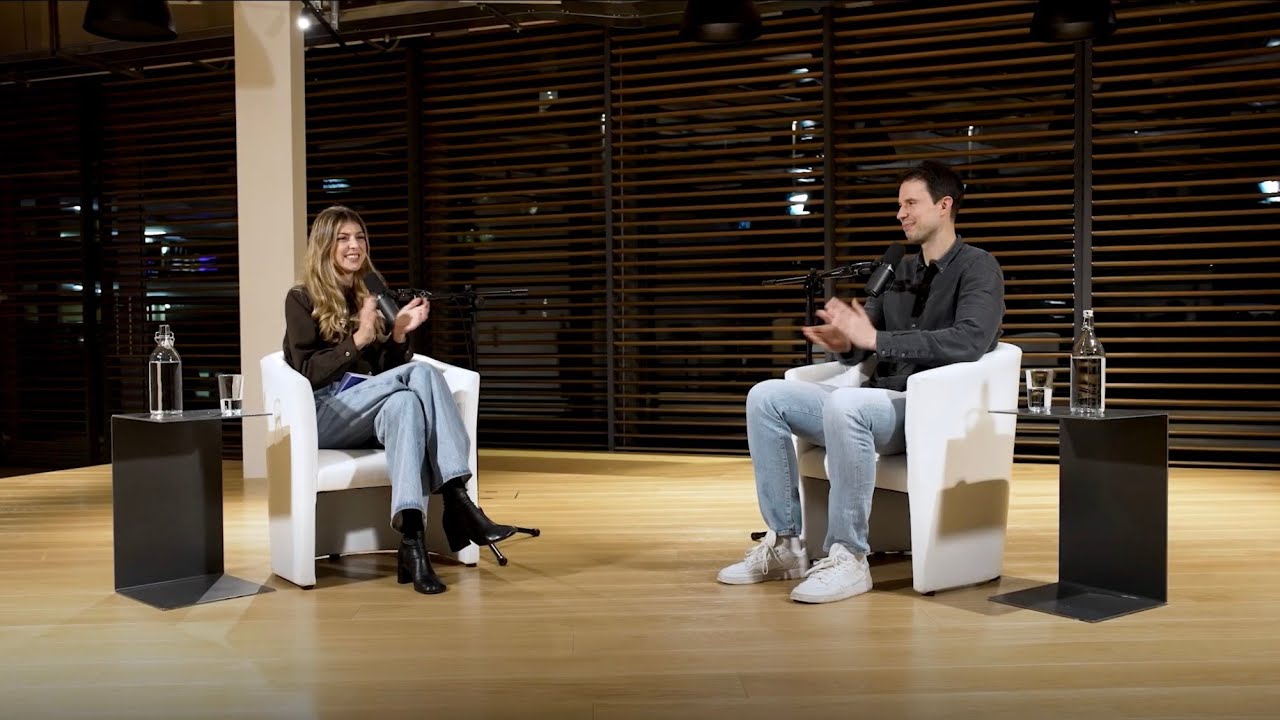
In a Bloomberg Audio Studios interview recorded on July 1, 2026, Luca Ferrari, co‑founder, CEO and chair of Bending Spoons, outlines the company’s unique operating platform, its acquisition‑driven growth engine, monetization approach, stance on data and AI partnerships, and governance as it transitions to a public, controlled‑company structure. Ferrari describes a high‑talent, data‑rich operating system that integrates acquired digital businesses onto a common technological layer, enabling deep transformation of product, organization, and monetization. He notes that only about 2 % of the half‑billion monthly active users currently pay, framing this as a large upside. AI has accelerated revenue per “Spooner” (core transformation team) from $1 M in 2023 to a $4 M run‑rate in Q1 2026. The company rejects selling user data or training third‑party models. Governance is highlighted: founders retain 100 % of Class A shares and ~83 % voting rights, promising to listen to minority shareholders while maintaining long‑term (10‑20 year) focus. Specific acquisition examples include AOL (≈30 M MAU, modest paying base) and the broader portfolio spanning consumer, enterprise, ticketing, and video platforms. Ferrari acknowledges the operational intensity of transformations, noting AI eases but does not eliminate the bottleneck, and he discusses the limited impact of “SaaS‑pocalypse” concerns. The interview concludes with remarks on upcoming earnings and a light‑hearted comment about the World Cup.
Chapters
Bloomberg Audio Studios. Podcasts, radio, news.
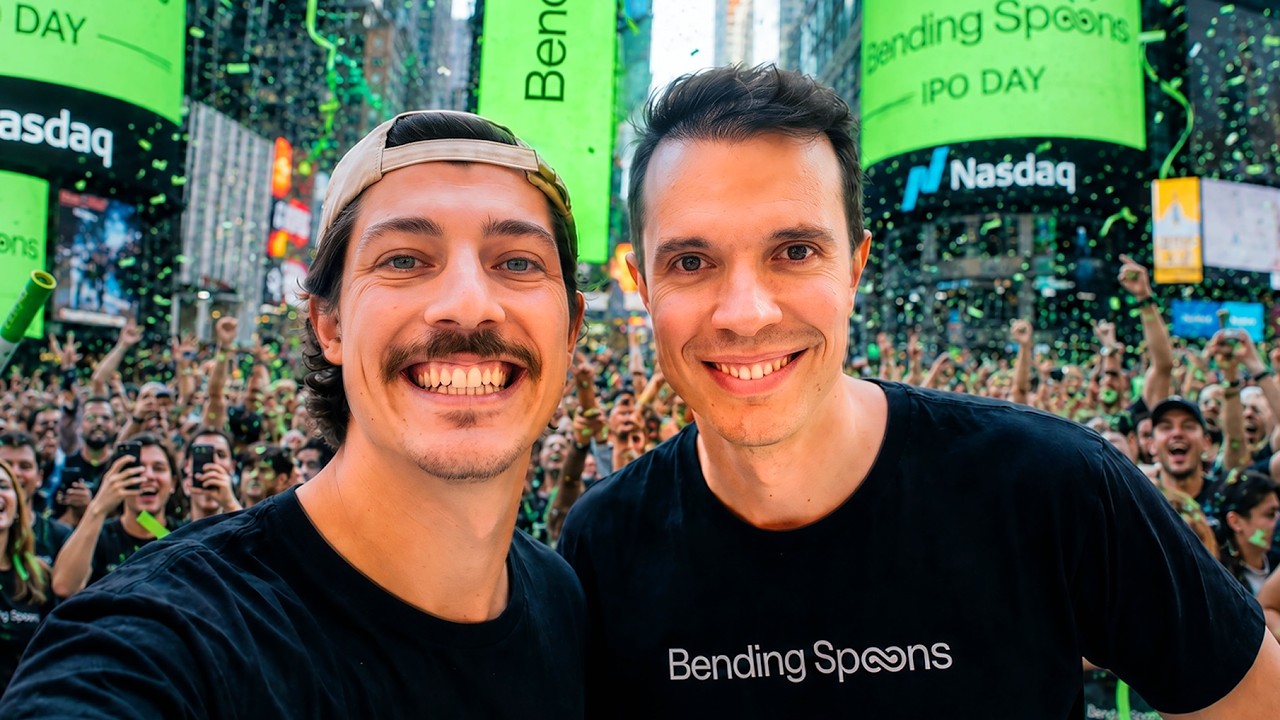
We've got Luca Ferrari, the co-founder, CEO, and chair of Bending Spoons, joining us from the Nasdaq. Also with us, Bailey Lipschultz, Bloomberg News IPO reporter, who joins us here in the studio. Luca, I want to just start with, with what exactly the portfolio is and sort of how you want to communicate to investors what you're going to do with assets that many people remember from the world of Web 1.0.
Thank you for having me. First of all, let me explain how we operate because it's quite unusual, perhaps unique. We've spent the last 13 years building what I consider an exceptional platform of very high talent density, a culture of high performance and rationality. 50+ proprietary technologies, an operating system for running digital businesses as effectively and as efficiently as possible, and a lot of data that helps us make better decisions at the stage of acquisition and then operations. And then what we do with this, with this engine, is we go and acquire digital businesses with unexpressed potential, and we integrate them very deeply onto this platform in a way that I haven't seen anybody do before. They share the entirely the same technological layer. We have a core team that moves fluidly across all our businesses, and we transform them deeply. We rebuild the org, the technology, the monetization. We accelerate innovation, launch new features. So it's a pretty unique model. And as you were describing, we have established over time a portfolio of brands, some of which are very well known and some of which are more dated. We also have bought more up-and-coming companies, but there's a bit of both. We win, we do well, not necessarily when the company we buy is young or old, growing fast or more stagnating, but when we can make that trajectory a lot better. So that's, that's where we try to excel.
Luca, we were talking earlier about this, and I just am interested if you can explain for viewers kind of the path to better monetization. Again, you have about 500,000 monthly active users, but only a small fraction of that are actually deriving value from. What does that mean for the company going forward and how do you grow that?
Yeah, exactly. Half a billion people use our products. Quote unquote, only 9 million people, so roughly 2%, pay for them, which obviously is an opportunity. We also believe that it's important to provide excellent value to our customers, so we're not looking to monetize as much as possible, and we're happy to have a vast population of users who use our products without paying. They, you know, they bring value through word of mouth and And that will probably continue to be the case. But yes, we have an opportunity to monetize better and we have a history of doing that, I think, quite successfully. So yes, going forward, hopefully we can, we can improve the percentage of our users who choose to pay for our products. And Luca, yeah, go ahead, sir.
Luca, no, just thinking through though, kind of what changes when companies go public. Now you have to answer to public investors and obviously that draws the potential towards, you know, partnering with AI companies, letting them train their LLMs off of their data. How are you guys thinking about the potential partnership opportunities? Again, it's no longer a company where you and your friends are running it. Now you have to answer to the public investors. Is there any sense of pressure from them that you would need to better monetize and therefore partner with, say, an OpenAI or Anthropic?
I think Many Spoons hasn't been a company run by friends like that in a long time. And we feel we are a highly professional organization. We've had blue-chip investors on board for many years. Baillie Gifford, Durable Capital have been with us for many years at this point. So we have operated as rigorously and seriously as it gets for as long as I can remember. Obviously, the constituents would be a little bit different as a public company, but we are— well, I don't think we're going to change our views. We're trying to maximize value 10 or 20 years out, and we'll continue doing that. In terms of data, we have never sold any data. We've never enabled any third party to train their models on our data. We don't have any plans to do that. And, you know, I'll let you know if that changes. But right now, that's our stance.
Luca, I'm trying to understand a little bit more, too, about the business model. You guys have identified more than 1,000 digital businesses in Europe and North America that could be attractive acquisitions over the next few years. That's according to your listing document. It feels like— are you just buying your way to growth and masking perhaps a slowdown in retention? Is that the strategy?
I mean, we— yes, we are buying as a key engine of growth. I think there's no difference in putting dollars against marketing-driven growth or R&D-driven growth or M&A-driven growth. They're just different levers you can pull. We found that with our platform, M&A has been by far the most efficient. We have doubled the company, roughly speaking, every year for as long as I can remember. So it's not too shabby. And we've barely raised any equity in the past. Certainly much more efficient than we would have achieved through more conventional means. And having said that, almost every time the companies we have owned, we have improved retention, monetization, organic growth. So we're managing these assets for the long run. We have never sold a company we bought, nor do we plan to. We try to be excellent stewards of these businesses, again, with a 10, 20-year view, as long as we can project out. But yes, we do anticipate that the vast majority of our growth will come from acquisitions. And as long as that's where the highest returns come, we'll take it. We like it a lot.
Luca, the next acquisition. Look, tell us what it'll be. If you can, feel free. If you don't, I'm going to give you a gimme, or you're going to give me a gimme, I guess. What's the theme and the theme that you're looking for?
We're not thematic as an acquirer. If you look at our portfolio, we have enterprise businesses, we have consumer businesses, we've got ticketing, we've got video platforms, a little bit of everything. So what we, what we look for is businesses that we can improve tremendously. Whether it's the product has a loyal customer base, but it's a bit dated, that you could overhaul the user experience, add features, improve the technology, whether it's the monetization isn't efficient, maybe the cost base is bloated, maybe a bunch of these at the same time. And the, let's say, the customer-facing side of things can vary, but those fundamentals have to be, at least one or two of these have to be in place for us to be interested. always looking at a bunch of companies. Hopefully we'll acquire additional companies in the— in the rest— during the rest of the year. But, but yeah, even if I wanted to, I couldn't share anything. We don't think that way.
Yeah, we aren't surprised by that. A good one by Tim, though. Luca, one question, though. When you hear SaaSpocalypse, does that present opportunity or does that present risks? Just thinking through the portfolios of companies, Doesn't seem that difficult to me as someone who's not that smart to replicate some of the portfolio companies using a Claude, for example.
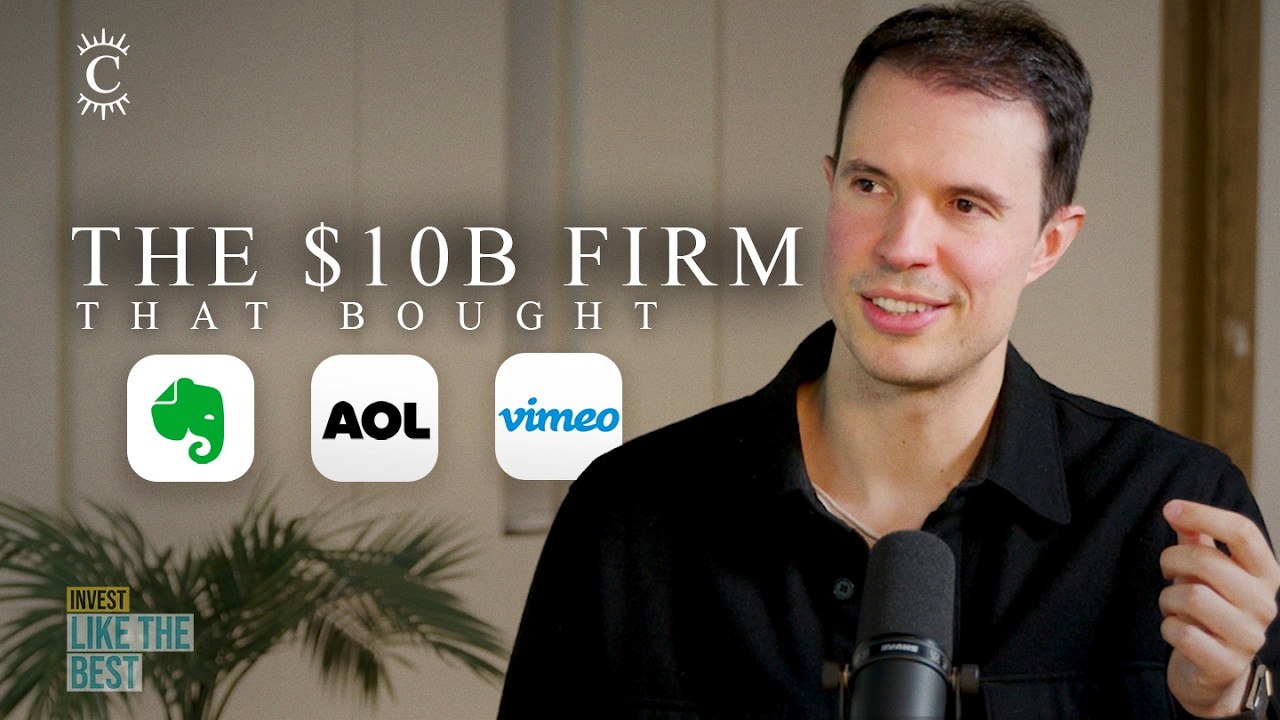
Oh, I totally agree. I mean, it's very easy. I'd say it's been very easy for at least 10, 15 years replicating— take AOL, writing a mobile or desktop email app. You know, there's probably several hundreds of them out there. Eventbrite has been copied a million times. AI doesn't change that. It was already very easy, it makes it even easier, but there's so many clones at this point that it doesn't make any difference. There is a world, not the world that we live in, where building a ticketing platform is impossibly difficult and Eventbrite is the only one to exist and it's maybe worth $1 billion or $50 billion. And now with AI, it becomes easy, and that's bad news. But that's not— again, that's not the world we live in. It's been very easy to replicate a product like Eventbrite for a decade. So any success that these companies are having right now is not based on a lack of technically viable alternatives. They win because they have a brand or network effects or switching costs. And so I don't think that will really change going forward. We haven't seen any degradation whatsoever in any metrics. If anything, AI has been a major tailwind for us.
Really?
Ultimately, the main disadvantage of our model is that it's— these transformations are very operationally intensive. We need a lot of excellent people to work really hard to rebuild, again, the software features monetization, so we can't do a million of these acquisitions per year. Not that AI solves that entirely, but it loosens that bottleneck substantially. Our revenue per Spooner, Spooner is like our core team, people who help us transform the companies.
Right.
Went up from about $1 million in 2023 to a run rate of roughly $4 million in Q1 2026, with AI being clearly the main reason for, for that massive growth. So, yeah.
Well, Luca, we don't have a ton of time left and a few more questions we want to get to. I want to focus in on the AOL part of this. You bought that from Apollo, $1.5 billion approximately last year. AOL, in full disclosure, many years ago I worked at A version of AOL. It's known for still having people who actually pay for it, but it's just a shadow of what it once was. When you say you're trying to get more people to pay for the products and services that you own, how do you get more people to pay for AOL?
So AOL currently has approximately 30 million monthly active users. Only a small percentage of these pay. Others are monetized through advertising, unlike most of our user base where often we don't use ads at all. Unlike people think, actually OL has been growing for several years. I can't really speak as to what happened 10 or 20 years ago, but at least the last 3 or 4 years it's been on a slow growth trajectory. We expect it to continue, maybe accelerate a little bit going forward. There are multiple opportunities to improve this business. As you could imagine, the product— I think the product is better than people think it is. but it's not on par with some of the competition, so we look forward to improving it substantially, both the email client and the web portal.
Yeah.
We believe that there is plenty of opportunity to improve the underlying technological foundations, especially the advertising tech stack and the recommender system that chooses what content you see on the web platform. I think it's one of the most exciting acquisitions we have carried out in recent years.
Hey, listen, you and your co-founders, Luca, hold 100% of the Class A shares and almost 83% of the voting rights. We've seen this with some other tech companies. You're coming to market with a controlled company structure and a highly acquisitive strategy. What decisions, if any, should public minority shareholders realistically expect to influence over time?
I think we will take input to heart. I'd like to think we have a history of intellectual honesty and open-mindedness. These are key values internally and externally for us. Naturally, if someone chooses to invest right now, we'd have to trust that, you know, we'll make the right call. That's what it is with this sort of governance. But I certainly can promise we'll be listening, not necessarily agreeing with everything we're told, but listening for sure. Yeah.
Hey, listen, as you know, it's very different to be a private entity and a publicly held company. What's top of mind, the pressures you think you might feel, though, now as a publicly held company?
I don't know. I haven't done it before. I don't presume to know. I'm sure it's going to suck in many ways. We'll try to do our best not to succumb to the pressure and noise and stay focused on execution. We have a plan for the next 10 or 20 years. It's going to be a challenge. We can't afford to lose focus. So that's the goal here. Stay, you know, head down, work hard, stay rational. We'll see. We're optimistic, but I'm sure we could make mistakes. So we've got to be careful.
Well, I'll just tell you, every quarter, those earnings reports, we love to go over them. So we're looking forward to your first earnings.
Luca, are you going to go check out a World Cup game while you're here?
I'd love to. I don't think I'll have time, but I hear it's been great. People are talking about repeating, you know, again in the States in 4 years. So maybe that time I'll be able to.
I think the folks at FIFA will have something to say about that. Luca, thanks for joining us. Appreciate your time. Luca Ferrari, CEO of Bending Spoons, the company going public today. Luca joining us live from the Nasdaq.