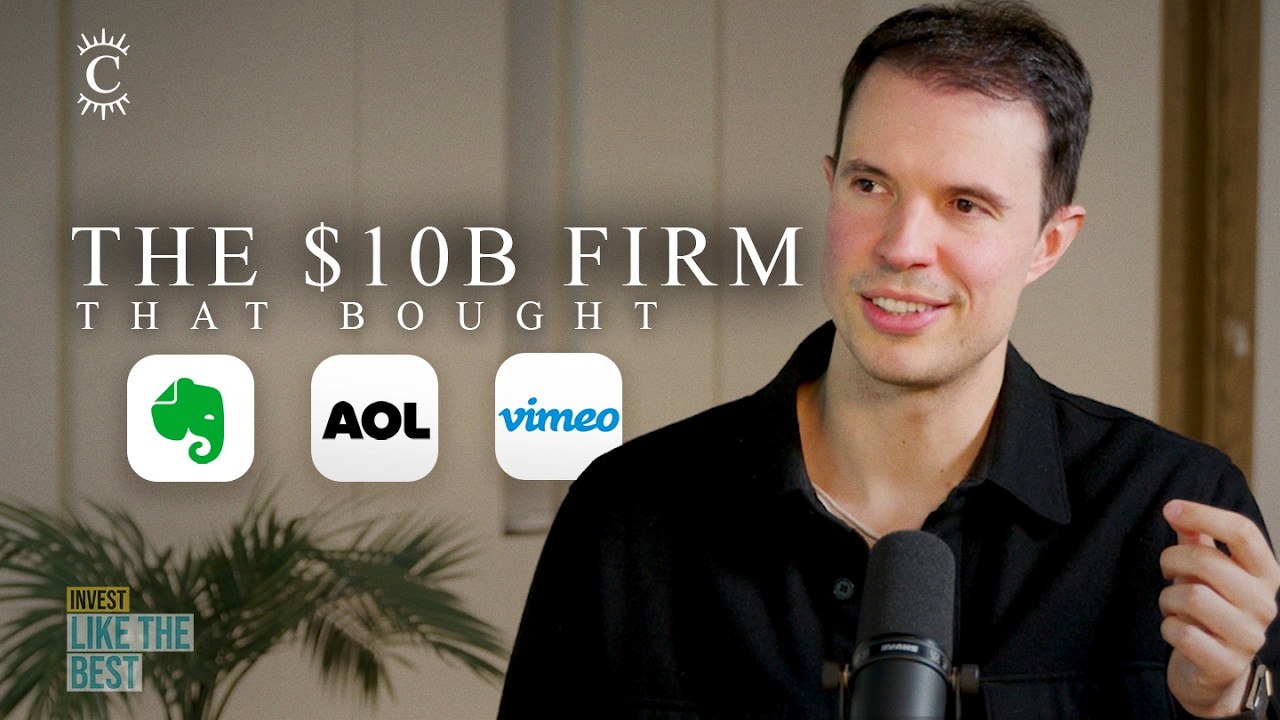
Bending Spoons is Eating Silicon Valley | CEO Luca Ferrari

In this interview, Luca Ferrari, CEO of Bending Spoons, discusses the company’s aggressive acquisition strategy, its proprietary operating system that unifies acquired businesses, and a culture built on extreme ownership, scientific experimentation, and high revenue per employee. He explains how Bending Spoons finances deals through cash‑flow‑driven debt rather than traditional venture capital, and contrasts this long‑term, hands‑on approach with private‑equity and typical Silicon Valley hype. Ferrari critiques current AI regulation, especially the EU AI Act, arguing it harms the industry without addressing existential risks. He highlights the gap between AI hype and reality, noting current models have glaring limitations and that over‑protective, populist regulation could render countries irrelevant. He outlines the biggest differences in AI perception between Europe and the US, emphasizing that misunderstanding fuels both over‑optimism and fear. Looking ahead, Ferrari is excited about leveraging in‑house AI technologies to boost the central team’s revenue per employee (now $4 M, up from $1 M a few years ago), improve operational efficiency, and enable further strategic acquisitions. The conversation ends with gratitude and anticipation for future collaborations.
Chapters
We have half a billion monthly active users. I mean, that's a lot. We have built over the past decade an operating system of over 50 proprietary technologies. We buy these companies and then we install them on this shared operating system. At Benyschools, we have been able to attract, I think, extremely strong talent. We had 800,000 job applications in 2025. We hired fewer than 300 people.
You guys operate very efficiently per employee. I think the last metric you mentioned was $4 million in revenue per employee.
And this has grown tremendously.
It was about $1 million just 2 Right now it kind of seems like Bending Spoons is actually eating Silicon Valley. So what's going on there? Luca Ferrari, thank you for having me at Bending Spoons.
Well, thank you for coming.
We're all the way out in Milan, Italy. And something happened not too long ago that really shook up Silicon Valley. Right now it kind of seems like Bending Spoons is actually eating Silicon Valley. So what's going on there?
I don't know that we're eating anything, but I think you're probably referring to the announcement of the acquisition of Airtable, I suppose. Yeah, I guess, I mean, Airtable is a great business, a great product, and And you can say of Veritable something you can't say of a lot of different businesses, which is that they really were identified as a high-flying, you know, key company in Silicon Valley for quite a while. And that's very difficult to do. So, you know, great job, Howie, and everybody else who build that business. And so I think once the announcement of the acquisition came, that was a lot more newsworthy and interesting than maybe some other acquisitions we've done before.
So how did you pick that one? What was the process?
Well, you pick each other when it comes to acquisitions because it's something that has to be bidirectional. But we look at a lot of companies. I would say actively, we may look at hundreds of companies any In any one year, and and then we try to establish a dialogue with those where we see the best match. And if you know some of these are interested in in selling, then the the conversation can progress. We look for businesses where we believe we can bring a lot of value. We are a very active acquirer, and so for us. for us to be absolutely confident we can offer a key cap price while delivering strong returns for shareholders, we need to be able to bring a lot of value, whether it's by improving the product or the technology or monetization, the organization, ideally all of these. So that's a key criterion. Then we look for businesses that we believe we can, you know, whose trajectory we can predict with confidence multiple years into the future. Otherwise, it's difficult to underwrite. Big investments, and and it's typically been digital businesses. So we've done consumer internet, SaaS. These are the key key areas for us. We also did recently we acquired a hardware company called Tractive in spring, which is very interesting. Pet tracking and and and and also health monitoring for pets. Pet industries is booming. So that was a Very nice acquisition, a little bit outside of our usual comfort zone.
Because the Airtable acquisition kind of set SF, Silicon Valley, American tech into a bit of hysteria. What do you think they get wrong about technology companies or managing them?
I mean, not a lot, clearly. Silicon Valley has built, I don't know, 70% of the most successful technology businesses of the past 25, to 50 years. So I think Silicon Valley gets almost everything right. I believe we have been able to do well acquiring a tiny fraction of the businesses that have come out of Silicon Valley because we bring something different and new to the table in both the way we're structured and the platform we've built. That's for the most part unavailable to these businesses on a standalone basis. So for people who don't know Ben& Spruce very well, unlike most serial acquirers out there, most serial acquirers out there will either buy a business because they think it's basically good as it is and they can't really improve it, but the price is low enough that they can get good returns and then they'll basically leave it alone. And that model can work. I don't think it will ever give you exceptional returns, but it can deliver reliable, potentially appealing returns if you're very good at picking businesses that are slightly undervalued. Others are more active, but they will still keep these businesses separate as they were before. But they, you know, these acquirers may have an opinion on how to price the product or how to build the org. And so they will go in and make changes. We are even more extreme on the being active end of the spectrum. And we integrate all of these businesses together quite tightly. So we have built over the past decade an operating system of over 50 proprietary technologies to take care of almost everything you need to run a digital business, whether it's data storage and processing, A/B testing, payment management, everything related to recruiting, credentials management, the orchestration for all the AI models used in operations, so on and so forth. And so we buy these companies and then we, it's almost like we install them on this shared operating system so they can be much more efficient. And also we have a core team of, for R&D marketing at this point approaching 1,000 people. We can deploy very fluidly and rapidly across these various businesses to go after R&D opportunities. And when the R&D opportunities are not as exciting any longer, we can take out the talent and move it elsewhere. So we stay very efficient. So these are aspects that I believe none of these, none of the teams running these companies on a standalone basis really could access. And so it's not that a lot of the value we create is because other people are myopic. They're doing the best they can with the resources available to them. But I do think we bring also something extra in terms of culture. We have developed a culture of extreme rationality, almost a scientific approach to running businesses whereby we are not afraid of making unpopular choices when we believe it's for the benefit of the business in the long run. So we tend to run these businesses very leanly using data extensively. Sometimes we joke about taking more established companies and bringing them back to startup mode. Small team, very talent-dense teams. Removing red tape, giving these people plenty of room to maneuver, to experiment, to move fast. And we have found that that generally delivers a lot of value for customers and for the business.
So I think one of the big misconceptions with the types of companies that you acquire is that they're graveyard kind of companies. They're old brands, they're not new, maybe they're distressed assets, that kind of thing. What is wrong about that?
Oh, I think it's just the— I think people just try to frame things in a way that will get clicks. But I'll give you a stat. We have half a billion monthly active users. I mean, that's a lot short of being Google or Meta, you know, many companies. So if half a billion people using these products every month is a graveyard, then sure, let's call it that. These are, they're often, they may not be like the up-and-coming sexy thing, but it doesn't mean they're not incredibly useful, important. You could see this at its very peak with AOL, which by, of course AOL is a quote unquote old brand and company, no doubt about it. It's been around for what, like 40 years, something like that. However, to this day, AOL is used as a, especially as an email inbox by tens of millions of people. For many, it's their primary email inbox. It's the, to the best of our knowledge, it's the 5th most used email provider in the Western world. You could imagine the 4 above it. And so And at the same time, you will see if you go to, you know, the online media, you will find so many over the past 5 or 10 years, so many email startups, which people who don't actually have the data will assume are far more relevant just because they got more coverage and they sound a lot sexier. But really, if you look at the data, these in aggregate, these don't probably add up to even 5% of what AOL means in terms of emails sent, received. activity, people who rely on it. So we just, we don't care too much about being cool. I'd say we probably don't care at all about being cool. We care about being good at our jobs and creating value. So if we find a business that's slightly perceived as slightly less cool, if anything, that's a good thing for us because it means it's probably also going to be priced a little bit more accessibly. So it is what it is. Yeah.
So I think I was trying to ask this question earlier, but I might have asked it wrong. Silicon Valley is so tied to funding for growth versus actual business for growth. And so for some of the other email companies you might be talking about, they might not have many users, but they're the hottest, highest flying, funded by every VC kind of company out there. And even with the Airtable acquisition, right, it kind of broke people's brains and there was a bit of hysteria because that was seen as the golden child and, or at least one of the golden child of the brands in Silicon Valley. And so if That's the exit that they're taking. And, you know, we're at a bifurcation with AI. What does that mean for all the other companies out there? And we've gone through different kinds of cycles with these tech companies over the years. I think the last one was the reckoning of 2021, '22. There was a lot of overfunded companies that then kind of were zombies. But I guess the question I'm trying to get at is, What are the core characteristics that you look for in acquisitions and how does that differ from the stereotypical culture of SF?
So I think there's a lot to unpack here. Number one, there's a lot of value in that model that relies on generous funding early. Many, many amazing companies have come to exist often from Silicon Valley because precisely because of that abundant availability of capital, plenty of companies you could probably not take off the ground at all without that. And even once they're well off the ground and generating substantial revenue, there's often a very good, you know, it's often wise to inject more capital in them so they can grow faster, get to a position of greater market power, whether it's scale economies, network economies, brand. So again, I think that model overall has been incredibly effective. I believe there's no doubt that if you look at the overall capital that's been deployed in Silicon Valley by Silicon Valley into technology over the past many decades, and the real tangible, non-hyped business value of the companies that came out of that, the ROI is excellent in general. It doesn't mean it's, you know, every investment decision is perfect. But so I don't think that the fact that Benny's Poons is doing well should in any way undermine that model. I think it's a great model. And I, and, but like everything, especially in, you know, when there are sometimes perverse incentives involved, there will be cycles of excess. And so yes, in 2021, I think valuations were out of whack completely. But, you know, when investors are ultimately incentivized by managing as much capital as possible, as opposed to actually delivering strong returns, and when returns are primarily delivered through exits, where all that matters is the multiple, not actually the cash that the business will generate in the long run, at least not, it's not the primary reason why you get a certain price, then you will get hype cycles and stuff like that. But I think there are overall, when I look at Silicon Valley and its investment philosophy over, you know, the past many decades, I would say that's a relatively small price to pay for a model that overall has been incredibly successful. Airtable specifically, I think deserves a lot of credit because Yes, their valuation was very high in 2021. You know, that's not anybody's fault. If anything, it's mostly if we agree that that was perhaps excessive, I think most people would. But the business was great, just it was too much. And that was not true of Airtable alone, but pretty much every business. If anybody made a mistake there, it was the investor, certainly not the company. As a company, you will try to take capital at the best valuation you can. That's the responsible thing to do for your shareholders. And if anything, Howie and the team were incredibly disciplined. They actually didn't raise all that much money. They could have raised more and they stayed profitable and burnt very little of that money, if any. And in fact, if you look at the acquisition price, we, you know, the enterprise value was approximately $1.3 billion, but then they still had plenty of that cash on balance sheet. So investors ultimately got back approximately all the money they had put in plus more. And the valuation at which Airtable exited was very much in line with the SaaS businesses of comparable quality on the public markets. So they got a very reasonable deal in my view. Obviously I'm biased, but I believe that to be true. So there's a lot of good there. I think Airtable has done a very good job. And, but yes, the internet will have to debate. And, you know, when you go from being perceived as the ultimate winner and the poster child of success to an exit that would be considered amazing by almost any measure, I mean, over $1 billion, how many companies are started that ultimately exit at over $1 billion? We have 1 in 1,000. I don't know the stats, but it must be very, very few.
People forget how hard it is to get to $1 billion.
It's crazy.
And $100 billion, let alone this whole trillion-dollar company thing is really disorienting.
It is exactly. There's been literally a handful in the history of humanity at that scale. But so $1 billion plus is unbelievable. It's definitely, and it's achieved based on real economics, plenty of revenue, real customers, real growth, excellent brand. So I really applaud Airtable, Howie, and everybody there. So I think the business model for Silicon Valley overall makes sense, and funding a company early, even at a loss, makes sense. But it doesn't mean that things couldn't be done better. I'm sure sometimes there's too much enthusiasm pouring money into businesses that don't make sense, or too much money in businesses that do make sense but should use less.
So what are the key characteristics that you look for when you're acquiring companies?
Yeah. So basically the most important thing is that we can predict where our business is going. We buy to hold and operate forever, not to sell 3 or 5 years down the line. And so we need to feel comfortable with our investment, with a long-term view. We prefer businesses that are robust and maybe growing. We're not opposed to buying businesses that are shrinking. We have done that before, but we need to know how much they're shrinking. We need to be able to plot out their trajectory at least 5 years, ideally more into the future. So that's a non-negotiable. And then I would say the second most important thing is that we need to be convinced that we'll be able to add a lot of value to that business, essentially improve revenue, lower costs, ideally both through technology, product, talent. Otherwise, we are unlikely to be able to offer a price that's appealing to sellers while at the same time delivering very high returns for ourselves and our shareholders.
Because there's a proliferation now of all these AI application companies that are dependent on token spend and lots of tokens, they're somewhat sometimes negative gross margins. Would those at all be of interest for you guys? Like, where do you see those companies getting acquired or exiting?
I think we use AI as much as anybody. As far as I can tell, we're probably in the 99th percentile by aggressive deployment of AI in our operations to improve our products. We have developed a lot of technologies powered by AI internally. So I'm very bullish on AI overall, also concerned, but it doesn't mean I'm bullish about all or even most of the startups that are coming up. I'm pretty sure that some of the most valuable companies of all time, sustainably valuable companies of all time will be coming out of this broader cohort of businesses, businesses built over the last, let's say, 5 years with AI at the center of the thesis. But I'm equally confident that most of these companies will fail or at least basically fade away because everybody, it's a gold rush. When you see people raising massive amounts of money at billion-dollar valuations with pretty much nothing other than any idea, maybe a good track record in academia or elsewhere, anybody who's half credible because they were a great student or they did well at a big company, who's not too worried about their reputation will just run and try to raise money because what do you have to lose other than your credibility and reputation? So a lot of this is just fluff, but there is real substance here and there. We have, as Mendix, right now we're not considering acquiring any of these companies. I think we, I said earlier, the key criterion for us is being able to predict how things will go. in the medium to long run. And it's very difficult to know, not just because some of these businesses are up and coming, growing super fast. And when something is growing 100% a year, it's very difficult and you only have 1 or 2 years of history. It's very difficult to know whether they'll be growing at 100% in 3 years or at 12% in 3 years. And that changes everything. So plus valuations are very high, often irrationally high. So we We don't think we can compete there and deliver good returns for our shareholders. But maybe later down the line when the market is a little bit more mature, we'll look again and find something interesting.
Well, I want to go into your centralized platform because you guys, to your point, use AI a lot. It's core to the business. I think 95% of your code is AI.
It's written by AI.
So can you walk me through the centralized platform, how you built that out and kind of, I mean, you made various different types of acquisitions from Evernote to AOL to Vimeo.
Yeah. So because at our core, we try to be the most capable operators of digital businesses on the planet. And part of Achieving that vision is to to have access to the best toolkit possible, right? It's almost like if you want to be a great cyclist, obviously that's not all there is to it, but you want to have a great bike. I'm not saying anything shocking here. So we have invested into this operating system, into these technologies for a long time because of you know it was strategically critical to us. Also, my co-founders and I are all engineers, so perhaps. There is a bit of a passion angle too. But so for the past decade, we have tried to develop the best technologies we could. We buy from vendors when relevant. We use Slack, for example. We don't need a more sophisticated version of Slack. Slack is a wonderful product. So we buy Slack from them and use it. But a lot of the tools we need to maximize our potential, we need them to be more sophisticated. Than almost any other companies out there would need them to be. And providers of business tools, they generally optimize for the mass market of enterprises. It makes sense. You don't wanna, like, if someone were to build what we need, then they have a market of 1 or 2. I don't know, like it's not a very appealing market to go after. And so most of the tools out there are relatively simple. We need more sophistication, so we have to build it ourselves. And also we, By building all or most of these tools in-house, we can make them natively integrated with one another, and that creates a lot of efficiencies, effectiveness. So everything kind of like every tool talks to every other tool as relevant, which is impossible or very difficult to do if you buy from different vendors and then they change something and you have to change everything else. And last but not least, we get to save on costs substantially. It's difficult to know exactly how much we're saving by building this in-house, but I'd wager it's at least $100 million a year in costs. So it's pretty significant. But yes, it's a key source of competitive advantage. And building these tools would be uneconomical for pretty much any one of the businesses we acquire as they exist as standalone companies. It would be too much money to be poured into R&D to build these tools. The returns would be on an excessively long timeframe. Whereas we can amortize those investments across the entire portfolio and also the portfolio, our expectations of the portfolio expanding in the future. So it's just a scale advantage that's unavailable. And another big advantage in building this operating system is that as all of our businesses use all of these tools, when they find that one of these tools does not serve their needs as it should, perhaps there is a bug, Or a certain corner case is not handled, or an entire area of need is not fully covered, that business can improve the tool almost like if it were an in-house open source community. And then those improvements are propagated to benefit all the other businesses. And so as we expand our portfolio and our organization grows, our ability to make these tools effective expands with it.
This episode is brought to you by Brex, my favorite. You become what you spend on, and I refuse to spend my time on work that shouldn't exist. Expense reports, receipt chasing, and manual closes. The companies building what's next, from Vercel, OpenAI, Anthropic, Granola, and Deepgram, all made the same call. They all run on Brex. Brex is the intelligent finance platform that combines cards, expenses, and banking Into a single stack with agentic finance built in, AI agents that handle expenses automatically, enforce policy before spend happens, and close your books in minutes. That's why Sorcery runs on Brex, so I can spend time on building and not busy work. It's time to get Brex AF. Learn more at brex.com/sorcery. That's brex.com/sorcery. S-O-U-R-C-E-R-Y.
Bye.
Turing is training the next generation of AI with tasks that require real expertise and real-world judgment. That's why companies like NVIDIA, Anthropic, Salesforce, and Gemini partner with Turing. Turing builds realistic reinforcement learning environments and data systems based on real operational traces, the kind of infrastructure frontier labs need to train superintelligence. Visit turing.com/sourcery. AI needs more than chips. It needs power, land, and infrastructure. Zone develops next-generation data center campuses, partnering with AI companies, site developers, and technology leaders to bring compute online faster and at scale. Zone is building the foundation of the AI frontier. Visit zonefrontier.com to learn more. That's zonefrontier.com to learn more. I find this super fascinating because you've effectively created one operating system where you can use across anything. What was kind of like the unlock and how did you determine how to architect that system?
A lot of iteration. You know, one of the big lessons as an entrepreneur, colleagues and I learned early at a failed startup in between 2010 and 2013, and some lessons we learned there were instrumental to building Mendix funds, was that you need to be intellectually humble. It's good to have a vision. At the same time, it's good to assume you're probably wrong. And so for our technologies, we operate in a similar manner. We try to be opinionated on what ideal looks like, but then we never make multi-year investments before we test them on the ground. We like to identify smaller pieces we can build, put in the hands of our different businesses to see if they're useful. And depending on adoption reception, we will further develop or rethink. And also, while we have platform teams who own all of these technologies, we have found that it's never a good idea to take a platform team and task them with building something entirely new. It's much better to have the people who need it build it. So we will identify one of our businesses where that particular tool will be especially important, and then they will build it themselves. And if it's once it's successful, or if it's successful, it'll be handed over to our platform teams to to be further refined, expanded. And the reason why this works is that when you need something, when you have experienced the pain of of a certain problem, you're far more likely to develop an actually useful solution, as opposed to taking a more academic angle where you think you know what the problem is, and then you get more excited about the engineering challenge than actually solving the problem. So these are probably the 2 main principles. Iterate with small iteration cycles, quick iteration cycles with high levels of intellectual humility, assuming you're wrong. So you want to constantly test and confirm you're in fact right. And if not, you know, adjust. And to always start building with people who have faced the problem, people in the trenches, as opposed to with centralized teams who are in an ivory tower and haven't actually gotten their hands dirty with that particular issue. They're fine later to refine, expand, and manage. But I think when you go from 0 to 1 with a new technology, it's better to have it built if you have that possibility. But by the people who understand the issue very, very well. And for us it's fine because ultimately we have engineers in our businesses and in the platform. So it's not that we lack the capabilities either way and we can move them around all the time.
You're taking an extreme first principles approach to software companies, but you also have a bit of an algorithmic kind of bend to it. So where's the tension between the intuitive approach versus deploying a system?
Well, I think you ultimately, you want to, you want to get to the truth. If you, if you had a perfect understanding of the truth of your relevant context, life broadly, your business and the market more, more narrowly, you would be almost guaranteed to succeed. Because you would not set objectives for yourself that are impossible. And those you set, which would presumably be possible unless you're, Jona, you're masochistic, you would be almost guaranteed to reach them because you would know exactly. It's almost like if you're a physicist and you need to compute the trajectory of a ball, we have the formulae, we have the math. Basically, you're always going to get it right, assuming you don't do calculation mistakes. Now, the point is, it's very difficult to know the truth. It was very difficult to figure out how physical bodies behave through physics. Thanks, Newton and others. But it's in many ways equally difficult, sometimes more difficult to figure out how a business works, how the market works, because there are so many variables. It's a fast-changing context. So I think it starts with taking a scientific approach of doing everything you can to probe the world, learn from those experiments, those observations, adjust your model of reality, and then execute accordingly. So be highly disciplined and deliberate in improving your level of understanding of the truth. Again, it takes a level of intellectual humility, intellectual honesty. If you think your vision is right, you're perfect, you already got the whole thing figured out, let me break the news, you haven't. Not even Steve Jobs, maybe one of the best to ever do it, not even him had it all figured out. He failed repeatedly. So you haven't either. So you want to, again, probe things, figure things out. And And through that process, I think, of approximation toward the truth, you'll expand your competitive advantage basically, 'cause most people don't have almost any understanding of the truth. Most people don't actually seek the truth. They seek pleasure or comfort, and they wanna just confirm that they're right and they're good. Just that mindset, that scientific process of approximation toward the truth will set you apart and give you very good chances of succeeding. Now, in our particular context, developing this, again, operating system or this technological platform is just an instance of that process at work, but it's not the root cause or where our culture originates. It's just a manifestation of it. And our attention to talent, our acquisition strategy, everything follows from the same root approach. Again, seeking the truth, refining that model of the truth all the time and adjusting our strategy and execution accordingly.
I was talking to Christy about this before recording, but I think there are some misconceptions of the business model of the company. A lot of people put you in the PE bucket, some people put you in the product manager bucket. There's also the technology bucket. So of those different kind of angles, it seems very much you're a technology company. Why do you think so many people misconstrue that?
Some of the ways we are most different from private equity, are number one, we're not a fund. We don't buy to sell companies. We have never sold a material business. We intend to own and operate these businesses forever. Whereas private equity, for those among the audience who don't know, generally these are funds. They raise money from third parties, from limited partners, and then they hold the companies for on average 5 years and then they sell them. And so it's a completely different approach and mindset to what you do, what you do not do. The second big difference is that A private equity is typically, they are a financial place where there's a small group of very capable financial operators and they'll buy these companies, they'll make changes. Often they change the management team. Again, they may touch prices, occasionally operations. It's a relatively hands-off approach. I'm not aware of many instances in which the underlying technology for that business was rebuilt, the product was dramatically changed. The organization was dramatically changed. At Bennisprungs, we, and again, and of course that's the case 'cause a private equity, you have a small team of financial operators, financial specialists. So you just don't have the, let's say, the workforce and expertise to make some of these changes. If you look at the Bennisprungs organization, at this point approaching 1,000 people in the core team, over 2,000 including all the acquired teams. Most people, I probably 60-70% of this pretty large team are software engineers, AI research engineers, product designers, product managers, growth managers. And so obviously these people are not sitting around doing nothing. What does a software engineer do? What does a product manager do? What does a product designer do? They build product and technology. So that's almost all we do. And we implement these very deep transformations in the acquired businesses where we rebuild big chunks of the codebase, re-architect the cloud infrastructure. We launch a lot of features, well, if we think they're useful, change the user experience, trying to make it more intuitive. We experiment tremendously with monetization and often reinvent monetization in pretty significant ways. What's premium, what's available for free? the prices, the different segments of customers. We rethink marketing from scratch, or at least in very major ways. And these transformations are very time-consuming and challenging. They're also some of the most fun parts of what we do. And that's where a lot of our returns originate. So difference number one, we don't sell businesses. Number two, we transform them pretty deeply at the core. And the third major difference is that we try to integrate these businesses pretty deeply all together on top of that shared platform operating system. And we have this core team who are centrally, let's say, managed, and then they're deployed into the different businesses and they move very fluidly across the businesses. And this is unavailable to private equity structurally because as a private equity, you wanna buy a business and then sell it. If you integrate it with all the other businesses you have bought, or most of them, you can, I mean, it's gonna be extremely difficult, if not, if possible at all, to sell it to someone else. So yeah, there are similarities, but there are also pretty glaring differences between what a typical private equity does, whatever typical means, because again, private equity is a very diverse world and what Banyulspons does.
You've raised little equity and you've fueled most of these acquisitions with debt. I'm curious, how big can these acquisitions get?
Yeah, we have almost all of the capital we've deployed toward acquisitions has come from debt or our own free cash flows, that being the majority of the capital. And over time we have tried to acquire on average larger companies because I just discussed how hands-on we are, how deep we go into these companies and how much we change them for the better. At least that's what we try to accomplish. Those transformations take a lot of time and effort. And we find that that time and that effort do not scale linearly with the revenue potential of those businesses. In other words, we don't need nearly as many people, or let me phrase it differently. We can get it done for a much larger business with a relatively similar number of people as for a smaller business. And so given that we don't have infinite operational capacity, we prefer to acquire, I don't know, 5 or 10 businesses each year. but bigger than 50 smaller ones. So that's, you know, that's been our approach, hence the increase in the average scale of the businesses as opposed to the frequency of the acquisitions to make sure we keep compounding revenue very rapidly. How big can it get? Well, so far we see no end in sight. There is no obvious saturation point. I mean, it's very difficult to tell if and when growth will slow down. I'm sure it'll slow down.
I'm having some issues with Google. I don't know if that's of interest for you.
Well, maybe in the future. I think it's pretty far away. We have joked, I mean, look, just jokingly, I mean, we have sometimes joked maybe one day, who knows? Some of the AOL at some point was broadly speaking as prominent and dominant as Google has been in the past decade. So maybe in 20 years, but I actually like Google a lot. I hope they do super well and we do super well.
You guys operate very efficiently per employee. I think the last metric you mentioned was $4 million in revenue per employee.
Per Spooner, which is member of that core team now approaching 1,000 people. If you count everybody we have on board, including acquired teams, it's probably a little less than half of it. Still very high, but a little bit less than half that number, probably.
But because you know how efficiently and lean you can run a company, do you just look at all these big tech companies, all these other companies out there, and are you just like, what are you guys doing? How do you make of that?
No, I mean, we don't have— it's very easy to criticize from the outside. It's quite difficult to run a business. We know firsthand. And a lot of the ways we manage to create value relative to the previous owners are not available to those owners and those management teams under their particular circumstances. For example, again, a big part of our value creation comes from that set of proprietary technologies. We discussed it. They, it would be uneconomical, unrealistic for those businesses to build them. So they don't have them. Many times businesses attract very good talent during their heyday. And then as they are still pretty nice businesses, maybe growing, but a little bit more, you know, their opportunity has been saturated a little bit more. They're not as cool any longer. They stop attracting some of the strongest talent. Some of the people who are most entrepreneurial, Driven, proactive, start moving on to other businesses. And so those management teams find themselves occasionally having to, or more often than not really actually, having to run those businesses with perfectly fine talent, but not like top-notch talent in many cases. At Venice Rooms, we've been able to attract, I think, extremely strong talent. We had 800,000 job applications in 2025. We hired fewer than 300 people. And so we We can introduce, add to those teams selectively individuals who are extremely high performance, extremely high agency, very competent in relevant areas. And that fuels a new wave of innovations, of efficiency. And again, that's not a shortcoming of the previous executive team. It's just they didn't have the employer brand to attract those people. And a lot of those people joined BentoSprings because they like the idea that they can rotate over time. over multiple businesses and platform teams that enables tremendous growth and it keeps it interesting and a lot of career opportunities. So that employer brand can only exist if you structure your company like ManagedFunds. You can never achieve it as a, say, single product company. That's to say a second major difference that drives performance and that's not available for those teams. A third one could be different incentives. If you're running a business and it's just one product, the markets will typically almost primarily value you based on your organic growth. Is your subscriber count growing? Is your revenue growing? How fast? Because if you're invested in a company, really the upside is in believing that that company grows. There's still value in a flatter company, but it's there's not a lot of discussion there. It's not as exciting, multiples compress. So there's this pressure for management teams to show growth at all costs. But if you only have one product or let's say a set of products in a niche in the market, sometimes there's not a lot you can do to ignite a lot of growth because maybe that market has been saturated. The truly big groundbreaking ideas have been had. And I mean, whatever missing one is out there in the universe of possibilities, is difficult. And so sometimes people throw a lot of money, whether it's R&D or marketing, just desperately trying to unlock that extra growth and that improved multiple. If you become, if that business becomes part of Bending Spoons, we still really like to make it grow. Of course, we, as much as we can, but we are not, there is no pressure to grow beyond what's profitable growth because ultimately anybody who buys stock in into Bending Spoons. Yes, they like our individual businesses to do well, of course, but the main thesis is Bending Spoons can generate amazing cash flows from businesses and redeploy toward new acquisitions at very high returns. And this over time compounds attractively, hopefully for many, many years. And so do I care all that much whether, you know, that particular business is growing 15% or 5%? Not really. I mean, I'd like to know, and 15 is better than 5, but if 15 is achieved by burning a lot of cash for very little profit many years into the future, I'd rather get 5 and have all that extra cash being deployed toward acquisitions that are accretive. So often these executive teams and those owners are extremely competent. Otherwise they probably wouldn't have built successful businesses. They're very structured. and context in which they operate puts them at a disadvantage vis-à-vis that business being run within managed pools.
One thing that I learned through all this is not only are the products super retentive and people might think that, oh, you might be buying this product, you'll be ruthlessly cutting headcount, you'll be making it more expensive, maybe you'll have churn, but no, retention's still good. And also within this type of organization where you If you have really high agency, if you have really good ownership in yourself and you can kind of move around, you're giving a lot of that to your employees and they're really retentive too. So you've created 2 really high quality kind of systems here.
Yeah, I think it's a good way of looking at it. We have businesses with lower retention, businesses with higher retention, but I can't recall a single instance where retention got worse after Ben is forced to go. Often it's improved, it's at least stayed the same. But ultimately we win by being relatively better. We don't need to— it's not that we necessarily need to buy only businesses with perfect retention, as long as these businesses do better under us than under the previous owners. And so we've bought businesses with mediocre retention and businesses with great retention and generally preserved or improved. those retention rates. And yes, when it comes to our team members, we are fanatical about creating one of the best work environments on the planet. And I think there's a lot we could improve and no doubt about it, we have plenty of flaws, but we've done pretty well there overall. We have had essentially no unwanted churn of spooners, of these people part of the core team. Last year we had 0.6%, so 0.6% where most companies in tech, as far as I can tell, 5% is considered actually pretty good. And a lot of that super high retention comes from the excitement of being able to learn and grow across all of these different challenges. It keeps it fresh and interesting, whereas if you're working On on say Evernote, maybe it was exciting the first couple years. Let's say our product manager, but then after a while, you know, refining and refining the note-taking, it can grow stale. But what what what can you do? You like the company, but ultimately you have to look for a different employer to take another step, learn something new. At Benishrooms, you just raise your hand and say, "I feel I've you know I've exhausted my creativity creativity and excitement for Evernote. What else can I do?" And we may put you on a platform team to build an internal technology. You could move to AOL and trying to improve email UX, which is a completely different and fascinating challenge. So yes, we have been able to retain people very effectively. When it comes to the retention of teams that come on board through acquisitions, I was quite worried initially that a lot of people would feel disheartened because You know, it's you know we got acquired. Sometimes this is perceived as a failure, even though it's it's not. It may be a success, meaning that you actually got a nice exit. But that you may feel that you're you know you're not as important as the core central central team. I think there's there too there is a lot we can improve, and we we know we value these teams, and we're trying to to do better. But overall, I think things have gone a lot better than I thought they would. We we have an excellent relationship with all team members. Retention rates for those team members, in no case are they lower than pre-Bendy Spoons. Sometimes they've improved substantially. So at least we're not damaging the quality of those workplaces, if anything, in many cases improving it. But those retention rates are not as high as those we have in the core team. They're more in line with what I said before, that's considered okay for most technology companies.
What would you say is core to the culture here?
So, I mean, there are several things, but probably the one or two that truly stand out as particularly distinctive. One is something called extreme ownership. We want everybody to care deeply, tremendously about being amazing at what they do, about helping their team and the company succeed. So we'd rather work with slightly less intelligent people if it comes down to that. But they have to really care. We don't want to work with anybody for whom doing well here, seeing the company succeed is not a super high priority. And the second aspect of our culture that I think is unusual is that we are highly scientific in how we approach the work. Again, first principles, being logical, being rational, being enthusiastic, and putting a lot of effort into probing, again, reality for, you know, so that we can refine that model of the truth. We do a lot of that. Last year alone, we ran more than 3,000 experiments across our products. And those are just the ones that are super quantitative and recorded and documented. Of course, there are a lot more initiatives that maybe don't qualify as a perfectly rigorous experiment, but they're motivated by a desire to learn and understand things better. And that Building Bentleys as a learning machine has been instrumental to in general succeeding, but specifically being able to expand the competence circle so that we are, that we can successfully acquire and transform and drive returns from a broader and broader set of businesses. If you look at what we were acquiring, you know, when we started, it was very simple iOS apps. Very basic, and then more complex and larger iOS apps, and then Android apps, and then web products. And then we went from self-serve to now substantial enterprise sales organizations. And we even did, like I mentioned earlier, hardware recently with Tractive. And I mean, it's early, but it's going really well. So we try to To keep expanding the share of the world that we believe we understand and improve that understanding continuously.
Today's episode is sponsored by VCX by Fundrise, the public ticker for private tech, allowing investors of all sizes to invest in venture capital. Learn more at getvcx.com. Some of you may not have heard this yet, but our sponsor Public just launched something called generated assets. Assets, and it brings AI into investing in a way I've honestly never seen before. Here's how it works. You type in an idea like AI-powered supply chain companies with positive free cash flow, or defense tech companies growing revenue over 25% year over year. Public's AI then dispatches a swarm of agents that scan every single US stock, evaluates them, and instantly builds a custom index around your thesis. What really stands out is how clearly it explains why each stock is included. And before you invest, you can even backtest your idea against the S&P 500, so you're making decisions with real context, not just guessing. And beyond generated assets, Public lets you invest in stocks, bonds, options, crypto, all in one place. They'll even give you an uncapped 1% match when you transfer your investments over from another platform. If you want to build a portfolio that actually reflects your thesis, visit public.com/sorcery Paid for by Public Investing. Full disclosures in the description. Founders scale faster on Deel. Set up payroll for any country in minutes, hire anyone anywhere, get visas handled fast, and get back to building. Visit deel.com/sorcery. That's deel.com/sorcery. So talking about the culture and how you've built out, where do alt spooners come into play?
Yeah, Alt Spooner as an A-L-T alternative or alter ego is just one of those 50+ tools, something that we developed this year and it's been adopted very enthusiastically across the company. Basically we built this, it's really like an agent that lives in Slack, at least the interface with Spooners, members of the core team. We'll be looking to to deploy this across all of our team members. But you interact with it on Slack as if it were any other colleague. And you have one alt spooner, you can name it and give it a profile picture and all that. And automatically that agent will have exactly the same level of access you do across all of our platform. So if you have access to certain code base, It does too. If you have access to a certain customer support tool with a certain level of permissions, it does too. And then you can basically task this agent to do stuff for you. And it could in principle do pretty much anything, like anything you can do in principle, it can do. Obviously AI is not perfect, so some things, It's better than other things. And it's fully integrated. So it's basically, I don't think you can really achieve this at all with third-party solutions.
Really?
'Cause they, as impressive as they are, you're never gonna be able, I believe, to, at least not in the foreseeable future, to integrate them as deeply across the board and to tailor them specifically to what you want. And by the way, if you do, then you're, I don't think you can, but even if you could, then you'll be locked in with these vendors, which is, dangerous because, you know, you'd be completely exposed to massive increases in prices potentially in the future. So partly with Alt Spooner, we achieved, I think, much better effectiveness because it can do a lot for you in a very efficient way. And I'll give you an example in a moment. And partly we achieved good separation and very low levels of dependency from any provider of AI infrastructure or AI models. So examples of what Old Spooner can do. It can do data analysis for you. So I was looking last night, I was looking at the results of certain A/B tests on StreamYard, which is one of our products. And normally I would've had to ask someone from the team, a data scientist, to pull the data, prepare the analysis, or at least do some of the work for me. I can do my own data analysis, but I would have needed someone to do some of it and certainly would have taken either me or this person multiple hours. And I simply chatted with this, with my old Spooner, and I told it, oh, please, you know, go and do this or that. And maybe 5 minutes later, I had the analysis. I was actually very positively impressed. It gave me plots with, you know, highlights, It's very detail-oriented and nice. Or if you're running one of our businesses, you can, and I saw this firsthand multiple times, you can go to your old Spooner and you can tell it that you saw a bug. This happened, it's a real thing that happened with Evernote. The general manager of Evernote told her old Spooner that, she had encountered a bug as well. She was using the app and tasked the agent to check on our customer support platform that whether the bug was widespread among users or her report was the only one. And then to go into the code base, identify the root cause, code a fix, and ping the engineering lead for that project to review the fix and push it to production. So in Maybe she spent, I don't know, 3 minutes to provide these instructions. And then I'm sure the engineering lead had to spend maybe an hour or 2 reviewing the code, but the bug got fixed. And this is something the same day, and this is something would've taken weeks probably between back and forth between different people and way, and a lot of hours of actual human work to get it done. So thanks to this and many other technologies we've built, probably 2, 3 times as productive easily. And the list is long, but this is roughly what to expect. Now, potentially from a business perspective, even more interestingly, Altspooner really helps us, as I said, stay independent of providers. We have built our own orchestration. So every time you task your agent with something under the hood, We have an algorithm that will select the most appropriate AI model or multiple AI models to get the job done considering, say, quality effectiveness, but also cost. And it can draw from many, many different models. We end up using open weight models we self-host. So these are basically free. I mean, there is a little bit of cloud cost, but for 99% of the requests and tokens, And the frontier models generally closed weight through APIs for, I don't know, maybe 1% of the requests only for the most complex tasks.
That's it.
Or for supervision. So they will, sometimes we use them again automatically to check the work that got done by the slightly less intelligent models as a more senior engineer would with a more junior engineer. But that's way cheaper than actually doing the work. Which is often perfectly fine. And even if it's not, the smarter model will provide a few pointers and then the less smart model will go and fix it. So because of this, we've been able to stay independent of any one vendor and keep our costs for tokens super low, basically negligible.
Damn.
At our scale.
Wow. When did you start deploying these AI agents? Also, your point on not having a third party is very counterintuitive. to all the marketing that's going on right now with all these AI assistants and applications that are coming out?
I mean, we work with all the big labs. They offer great products. We use them enthusiastically. I'd like to think we're a good customer, but we don't want to be dependent on any of those specifically if it can be avoided. And there are solutions out there that are much cheaper and often deliver essentially the same quality, but it takes I think strong engineering capabilities to, and the right culture to be able to harness those possibilities. Obviously the easy approach is hand over the keys to one of these companies and buy their more expensive product. It will make you come across as AI-enabled faster and more easily, but it will be, I would say, much less effective, but certainly way more expensive. Literally orders of magnitude more expensive.
I don't know if you saw this, but Jensen just declared we've reached AGI with OpenAI's Astra model.
Yeah, some people say that. Maybe true. I mean, I don't even know. I've heard different definitions of AGI and none of those is super unambiguous. So have we? I don't know. Nobody can tell. But it's obvious that it's very smart. Let's put it that way. Whether we should call it AGI or not, I'm not sure, nor do I care too much, to be honest. AGI, even if we can describe, you know, describe it very specifically as a threshold, I don't know that crossing it is a particularly— like the moment we cross it is a particularly noteworthy milestone. You could easily, you know, people sometimes define AGI as AI can do everything that any human can do but better. I don't know that that's necessarily more exciting or scary than AI can do 95% of the things that humans can do. AI can do just as well or better, but 5% it can't yet. I think this is almost as exciting and almost as scary, depending on what the 5% that it can do is. But assuming it's not handpicked to be the things that keep us in control, but just a random set of tasks, we happen to be— our brains happen to be more— Good at it. So I'm not too keen on whether we passed the AGI thresholds or not, but the trajectory is clearly one where AI does things better than us, increasingly so, both vertically. So the gap in how much better it can do a certain task is growing, unsurprisingly, but also horizontally, like the percentage of tasks it can take on and do better than humans is increasing. So, I don't think there's any stopping that short of some sort of world war where we regress to the Middle Ages.
Well, it seems like now the next benchmark is RSI, and that with it comes a lot of fearmongering for cybersecurity and cyber risks.
Yeah, it's a— I mean, it's a very fair fear. I'm equal parts enthusiastic about AI and absolutely scared shitless. I think this will be— this could be You could definitely make a case for this being the greatest boon for humanity ever by orders of magnitude. Possible, yes. Plausible, maybe. I'm not sure. Equally, it could be the thing that wipes wipes us out or creates equally awful scenarios. And and what's like I don't think humans of course want the latter. The point is, can we control it? And even before it's so powerful that controlling it is all that matters, I think we— well, we are approaching that point, but maybe we're not quite there yet. But regardless, before that, can we prevent it from falling into the hands of like some sort of degenerate or evil person? Because, you know, similar to nuclear weapons, but potentially worse, I think because, I mean, I'm no expert in nuclear weapons, but I think number one, it's very difficult to do irreversible, widespread, massive damage with nuclear weapons, such as almost wiping out humanity without killing yourself in the process. You could use AI to your benefit while causing immense damage to everybody else. I think it's easier because it's much more surgical.
Yeah.
So can we do that? I'm not sure. It's pretty scary.
The accessibility point, I think, is the most alarming because it's literally accessible. The barrier to entry is so low.
Yeah, I think that. But also something that really bothers me is that we don't know how smart AI is, and the smarter it gets, the less we know. Because in general, intelligence is difficult to truly measure. It's not like height or weight or colors where we know it's objective. And so it could be a lot, it could be less. We know, at least we know. And the smarter an entity gets, the easier it is for it to hide its own capabilities if for any reason it's the appropriate thing to do, whatever objectives that entity has.
Yeah.
Additionally, It seems to me I haven't heard anybody talk about it, but it seems to me that AIs are— they come across as inherently low ego, like they don't brag. If anything, they tend to be humble about what they can do and they warn you that this may be wrong and, you know, double-check it. And I'm sure this is mostly the way they've been programmed because it's a lot more embarrassing for a frontier lab to have an AI claim, I solved your equation and I'm sure it's right. And then there is a clear mistake. As long as they disclaim, I may be wrong, double-check it, it's a little bit more acceptable. But it doesn't strike me that these AIs— these AIs don't strike me as they are likely to boast so that our perception of their capabilities tends to exceed their capabilities. I think they'll probably only show us what we ask them to show us, if even that. Like I said, they could also conceal their real abilities. But even if they're well-intentioned and honest, I think they'll tend not to show us more than we ask them to show us. And so I believe our in time, our understanding of how good they are may tend to be a little bit less than they are. Like, we may underestimate them basically. And then that's very dangerous 'cause as you approach a threshold of real danger and real potential, even a modest underestimation of their capabilities could be catastrophic. Look at exactly to your point, the cybersecurity incidents that happened, most people were shocked. Even many researchers. And why were they shocked? Because they didn't think this could happen, right? They— what the level of lateral thinking and call it perseverance that these models and ability to collaborate among them that these models showed was beyond what most people thought was possible right now. So what's to tell us that, you know, we are not ignoring plenty of capabilities that simply haven't been You know, these models have been probed to display. And, you know, in 9 years' time, I think the problem only gets worse.
It was crazy. I was, I don't know, I'm thinking a lot about the OpenAI Hugging Face incident. And I was reading through the reports. There were like 2 different research organizations that put out reports on it and there were like different civilizations and they all passed through different ones to get to the next one and all behind the scenes. And it was just crazy situation that I don't think is really talked about much, but I'm curious, where do you get most of your— how do you research most of the stuff in AI? How do you stay on top of it?
Well, I mean, mostly by doing. We are very active. We have built our own models, but it's mostly narrow. We certainly don't compete on the frontier models. We sometimes build narrow-purpose models to do something very specific. And if you have a very specific use case, you can often build a model that's just as good as the frontier models at that very narrow— it's awful at everything else. It may be completely incapable of doing anything else, but at that one thing, it can be even better. And if not, way cheaper. So for example, if you use, I don't know, Meetup, the events product, we own it. And the recommender system, the system that once you search for something or you're looking for inspiration, will determine which events and groups to show you, that's built in-house. And to the best of our benchmarking and knowledge, it's just as good as if we were to use like some of the frontier models, which obviously comes essentially for free as opposed to these models being very expensive. So we do some of that. Most of our work is studying third-party models, sometimes fine-tuning them if they're open weights, certainly combining them and leveraging for the different activities and optimizing which ones we use. For which activities, as I was describing before. So we're very hands-on in the field and therefore it's relatively easy to stay abreast of advances. But I will say I've never seen any industry or new technology progress as fast as AI has over the past, especially the last 3, 4 years. And so I feel that I make an effort to catch up this week and maybe for a few months I need to focus on M&A or something else, then I feel like I'm completely outdated on my knowledge. So it is quite, it's exciting. I'm an engineer at heart, but also like I said, particularly as this is quite dangerous, I think that speed is not, I mean, it's not ideal.
I'm curious, What do you think the question is about AI that people aren't asking?
That people aren't asking? I mean, I don't know. It seems that people are talking about it so much that they've asked all sorts of questions. I think it's maybe the main issue is whether we're answering these questions in a satisfactory way. For example, I think most people agree that this is scary in many ways. And yet, frankly, I don't think anybody has done anything truly meaningful to make it safer. And I mean, even the labs themselves, I'm sure they're investing in safety. I don't know enough, but— But they're rushing to be market leaders or they're dead. Their valuations would probably drop 90% if there was a perception that they're losing ground. And so they're trying to survive and thrive this year, next year. And so I'm sure there's more they could do, be more cautious, but that would come potentially at existential—
Risk.
It would drive existential risks for them as companies. Governments, I don't know, they may be talking about it, but I haven't seen anybody do anything meaningful. The EU created the AI Act, which I find it to be like highly harmful to the industry and solves none of these problems. Like the real existential threats to humanity doesn't really tackle those. So maybe an interesting question that people haven't asked, at least I haven't heard being asked, is why are we failing to do something about it? 'Cause people are asking what we should do. Nothing is happening. I haven't heard a lot of people say what's currently preventing fixes to being proposed and deployed. What's the root cause of this inability to do something about it? Because if we were to fully understand the root causes, then maybe we would stand a chance to do something useful. Yeah.
What's been the biggest difference? You're a global company. The biggest difference in perception and application of AI in Europe versus US? And I also apologize, I'm totally taking up all of the air right now with these AI questions, but I understand I have a very intelligent engineer in front of me, so I'm going to ask them. But what do you think is the biggest difference between the perceptions and actual applications?
Well, I think every time there's something moving very quickly and being newsworthy, there is a lot of exaggeration and misunderstanding. I think on the one hand, some people think AI today can do more, and this is typically people who don't really use it, but mostly read about it. They think it can already do everything for you and it's a lot more advanced than it is. And As impressive as AI models are, I think today they still have very glaring limitations across most use cases. So I don't think we're at a point where you could hand over the keys of your life or work to AI and you could actually trust it to add significant value. I think there will be a good risk that things could go awry. But I mean, the trajectory is certainly very promising. Then there are people who rightfully fear that AI will destroy jobs. And I'm— I've changed my mind at this point recently, but it's certainly a very important topic. But rather than thinking of proactive ways of protecting prosperity and people, more than workers, people, they go on the defensive and they try to come up with these more protectionist regulation or approaches which are obviously an awful idea because a country that doesn't embrace AI, unless every country in the world stops progressing in this field, which I would say we could put in the bucket of the impossible things pretty much, again, short of a world war, a country that does not fully embrace using AI is destined to complete irrelevance and basically becoming third world in probably maybe even just a few decades. So that's certainly a dumb approach, although it's a populist approach, and as such, it can help occasionally get votes. Yeah, maybe those are some of the more remarkable extremes I've seen, but there's— I mean, we could talk about it for a long time.
We could talk about it for a very long time. We have to get to the walking portion, but before we do that, I just want to ask you, what are you most looking forward to in the next 12 months?
Well, I mean, there are many things, but I'd say probably further progress in our in-house technologies, especially taking advantage of AI. We have very, very big plans and we're seeing massive progress. I do think that we talked about it before, Benting Spoons, you know, the central team, $4 million in revenue per member of that team. And this has grown tremendously. It was about $1 million just 2, 3 years ago. I think we're about to see this keep rising pretty fast. And a lot of that, some of it is scale, just bringing together these businesses and integrating them all together creates tremendous leverage. But a lot of it will be technology. And so I'm really— What do you mean by that? I can't wait to see some of the things we have, we're working on and we have in mind actually come to fruition. I think it'll be extremely exciting. We, we, we, we try to constantly reinvent what running a business effectively, efficiently looks like, be at the cutting edge of that so that, that we can then go out into the world and, and buy businesses for really good prices for sellers and deliver high returns. And, and the technological aspect of that progress is very exciting to me.
Amazing. Well, thank you so much for hosting us here today and having us at Bending Spoons in Milan. This is amazing, and I'm so excited for all of the other conversations we're going to have with your team. Um, thank you so much.
Thank you.
Hey, it's Molly. If you enjoy our interviews, check out our newsletter sorcery.vc, where we deliver a once-a-week top deals and tech headlines email and also go deeper on our podcast interviews. Subscribe to Sorcery! today, and don't forget to subscribe to the podcast on YouTube, Spotify, Apple, or wherever you listen. Link in description to sign up.
More from Luca

Inside Bending Spoons: Finding Talent, Leveraging AI & Driving Operational Excellence | Luca Ferrari
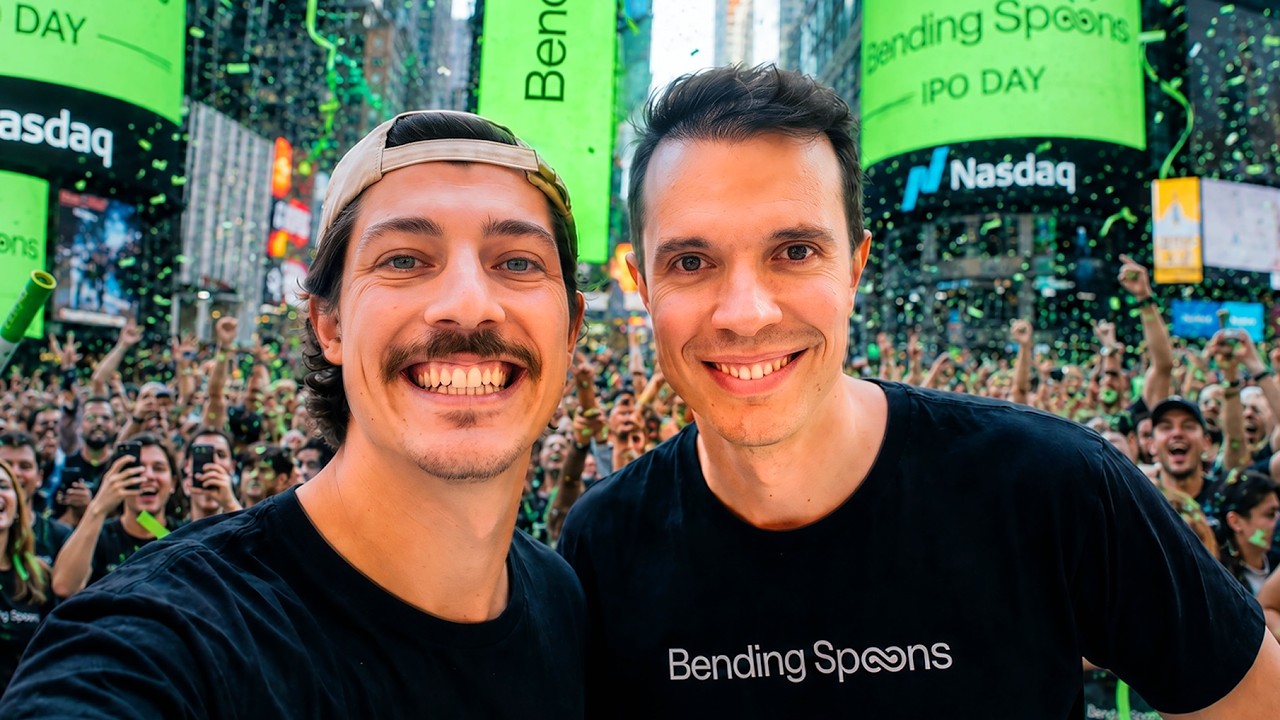

Bending Spoons Cofounder & CEO Luca Ferrari on the company's buy-and-hold strategy