In this interview, Luca Ferrari, CEO of Milan‑based Bending Spoons, explains the company’s aggressive acquisition and transformation strategy. Bending Spoons has bought high‑profile digital businesses such as Eventbrite ($500 M), AOL ($1.5 B), Vimeo, and Evernote. Ferrari argues that these targets are not “digital graveyard” relics but market leaders with large user bases that can be dramatically improved using AI and the firm’s proprietary technology platform. He details how AI boosts both productivity (doing more with fewer resources) and product experience (new features). The Evernote case study shows a 40 % revenue increase, record retention, and over 200 new features aimed at professional users, even as the product’s free tier was narrowed. Ferrari outlines a “radical” transformation playbook: rewriting large portions of code, re‑architecting cloud infrastructure, redesigning UI, adding features, and optimizing monetisation and marketing. The firm’s acquisition criteria focus on three pillars – scale, predictability of long‑term cash flows, and clear opportunities for improvement – allowing it to pay premium prices while still delivering high returns. Bending Spoons positions itself as a Berkshire‑Hathaway‑style holding company that never intends to sell its assets, preferring a few deep, hands‑on transformations over many shallow ones. When asked about a potential IPO, Ferrari gives a non‑committal answer, emphasizing execution over speculation and noting that the timing of a public listing is not critical to the long‑term strategy. Throughout, the conversation frames AI as an enabler rather than a replacement for the core business model.
Chapters
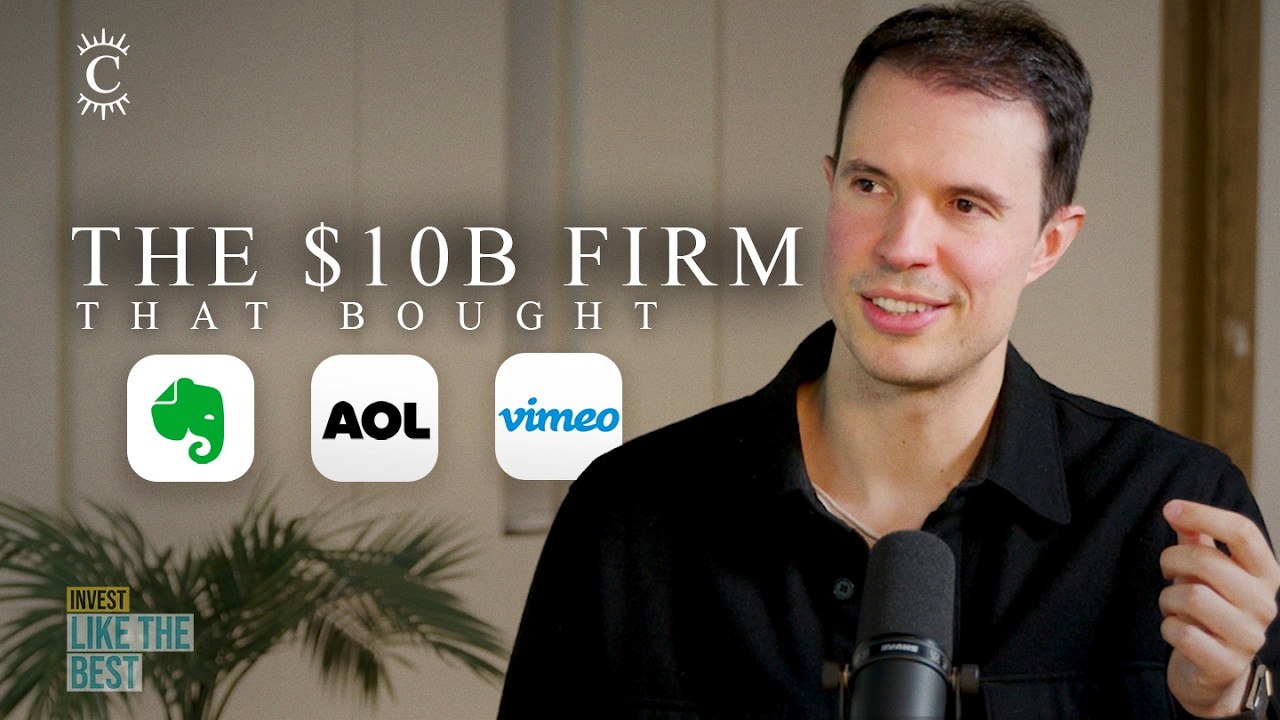
Milan-based tech company Bending Spoons announced it will buy ticketing platform Eventbrite in a deal worth $500 million. It has closed a number of deals with some well-known tech names this year, including AOL for $1.5 billion, as well as video streaming platform Vimeo. Luca Ferrari is the CEO of Bending Spoons and joins us now. Luca, thank you very much for joining us. We've had so many conversations with tech companies about AI and just how disruptive the technology is. There was a terrific article that the FT was running on your company in recent times saying the Bending Spoons raids the digital graveyard for paranormal returns, which is fascinating because it feels as though you're going in the opposite direction, scooping up these old legacy companies in the technology sector. Why are they useful when we talk about disruptive technologies that are AI-native companies?
Hi. Good morning. Thank you for having me. It's a pleasure to be here. I would say that the graveyard metaphor is quite inaccurate if you look at our acquisitions. In most cases, these are leaders in their segments. They may not have been founded 3 years ago, and as such, they may not come across as the, you know, the new cool thing in town, but they are healthy businesses with massive user bases and, you know, solid fundamentals. So That part I don't know that I agree with, but I, we do believe that we bring a lot of improvements to, to these businesses. And AI is certainly an enabler of, of improvement, both on the productivity side of things where we can do much more with less, and on the, say, product experience side of things where we can bring more features, better features to our users and customers that were not possible up until somewhat recently.
The, the storytelling and the metaphor about these being older businesses and the use of that graveyard term, it would suggest that you're almost getting these companies at a discount, but you are paying fairly significant premiums for these businesses, which again goes back to the point. If you take Vimeo, for instance, what is its future when you've got these companies that are very much disrupting AI video? How does a company like that have a future?
Well, most of the disruption right now that we see in video is on the video generation side of things. So tools to create content. And Vimeo actually is not about creating content. It provides tools to enterprises and consumers alike to showcase their content, to share their content, to stream their content on all platforms. So it's more of an infrastructural set of tools and technologies than something focused on video creation. So if anything, I'd like to, to think that in a world where video is more abundant, it's cheaper to create awesome video. Vimeo wins. So while I, I do see that in many niches or segments of the broader markets, there will be some displacement of existing incumbents. I think we are actually well positioned to take advantage of that transition, not suffer from it.
Luca, let me ask you about another one of the assets that you've acquired, and that's Evernote. I have been a longtime user of Evernote, but the model has changed in the last couple of years. It went from being free to requiring you to pay for various features. And I have to say, once you had to pay for those features, I looked elsewhere to find other options within existing platforms that I was already using. So I'm curious how that business is, is performing and what kind of changes You've made for the better. How is the asset doing?
Sorry to hear you. You left us. The Evernote is doing incredibly well, by far the best it's done ever in its history. Revenue is up close to 40% since we acquired it, which was already the highest point in the business's history. It's very profitable. Retention is the highest it's ever been to. The number of active users went down when we decided to, as you correctly noted, focus more on advanced use cases and more professional users, serving them with an incredibly powerful tool. At this point, we added more than 200 new features and major product enhancements over the past couple of years alone, which is to focus on those people who use it many hours per day for core professional use cases, or even if it's for personal use cases, they really base their lives on it. And For those use cases, it's still incredibly cheap. Most of our customers tell us that Evernote is worth thousands of dollars or euros for them each year in productivity gains, and it's priced depending on what plan you choose, you know, €100 or €200 a year. So, but yes, in order to do that and focus on those core customers, we certainly made the, the offer for those with more, let's say, you know, with simpler or more superficial needs less compelling. And that was a strategic choice we were pretty clear about.
Yeah.
Really, really interesting. And thank you for the clarity on the sort of strategy, because we're sort of seeing and hearing similar revelations come from some of the AI heavyweights. OpenAI, for example, now with their latest chat model, seem to be focusing now on the enterprise user, which is a real change from their earlier strategy and their strategy to date of, you know, looking at the consumer. But clearly, that's where the money is. That's where many think the money is. When you look at Anthropic, now OpenAI, and based on what you're saying, with that in mind, when you look across the landscape, the spectrum here in terms of available assets, how do you determine which assets you want and which ones have the kind of potential that you think is worth going for?
Right. So maybe a quick step back to explain how we operate, because that's necessary to understand my answer here. So what we do is we acquire and transform digital technology businesses. Like the ones you mentioned. And we're pretty radical in our transformations. We often rewrite big chunks of the code base, we re-architect cloud infrastructure, we typically redesign the UI, we generally make massive investments in upgrading the product, adding lots of features and enhancements, optimize monetization and marketing. And we just discussed even changing sometimes completely the angle through which we look at the business and we restructure organizations for maximum long-term performance. Never sell, never sold, Never will, as far as I can tell. We're not a we're not a fund. We're more of a Berkshire Hathaway in that way that we we buy to hold and operate forever. So through that lens, it's absolutely critical for us to find businesses where we see major opportunity for improvement as we leverage our platform of proprietary technology expertise, access to talent, and generally speaking, the the structural advantages we have by by bringing these businesses under the same roof. And so that's a key one that, you know, when that's in place, we're likely to be able to offer a price that's incredibly appealing to the sellers and at the same time enables us to deliver really high returns. You correctly noted that we paid very high premium premiums for, for the businesses we acquired, and that's only been possible because of our platform and the unique competitive advantages we enjoy. Another important criterion is scale. We are approach is very hands-on, time-consuming. Like I said, we go through radical transformations, very deep. Most of us, essentially, you know, the vast majority of our team are engineers, researchers, designers, product managers. So we really go into the details and try to help improve every little aspect of a product and business. And that takes time. So we, you know, we'd rather do it on relatively few large acquisitions than many very small ones. And the third criterion is predictability. We need to be confident that we know where the business is going, that We can project revenue and profits out for many years, or else we will not be confident in deploying our capital.
Luca, I guess the question which I must ask is, are you going to try an IPO next year?
No comment on that one. I've seen every time I make even the slightest comment and it gets magnified tenfold. So I'd rather just say we'll see.
Wouldn't it make sense to IPO next year, though, given the fact that SpaceX, Anthropic, OpenAI, Some of the valuations they're looking for look quite extraordinary. Surely Bending Spoons would be a beneficiary of IPOing in 2026.
Look, I, I'm not in the business of speculating on what other companies will do with their listings or what valuation we'll be getting. We'll just try to execute our strategy. It's enabled us to, to grow massively over a decade. We've been compounding on a per-share basis at 80% per year for a very long time now. We'll probably double again next year. You know, we're pretty convinced that we're doing the right thing here and that in time, you know, markets will reward us for it one way or another. So, you know, whether we IPO in '26, '27, or '28, I think looking at it through the lens of the next decade or 20 years, it will not be too critical of a decision for us.
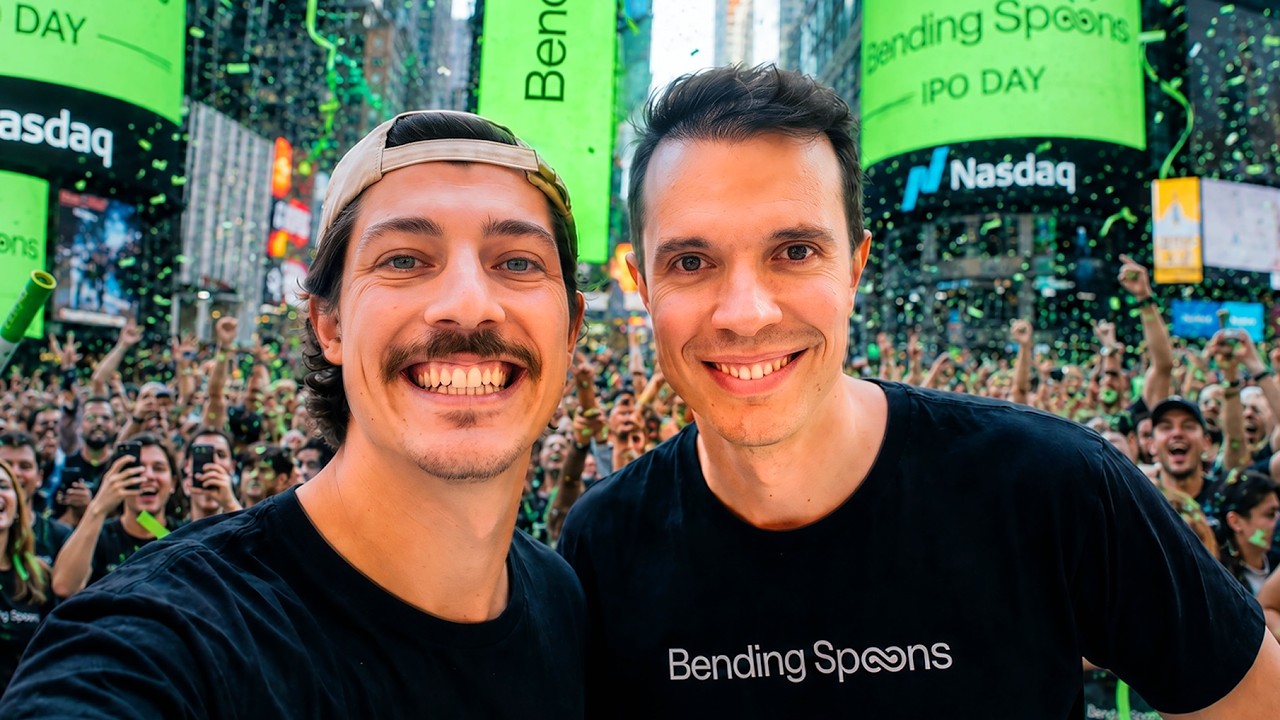
Fair enough, Luca. I'll ask one more different kind of question. In a hypothetical world, if a company like Bending Spoons were to IPO, They'd be mad to do it in Milan rather than New York, wouldn't they?
I think if we were to go, to go public, it would be probably on either NASDAQ or the New York Stock Exchange. Yes, I believe so.