Your questions, answered | Luca Ferrari talks with Inès from Made IT
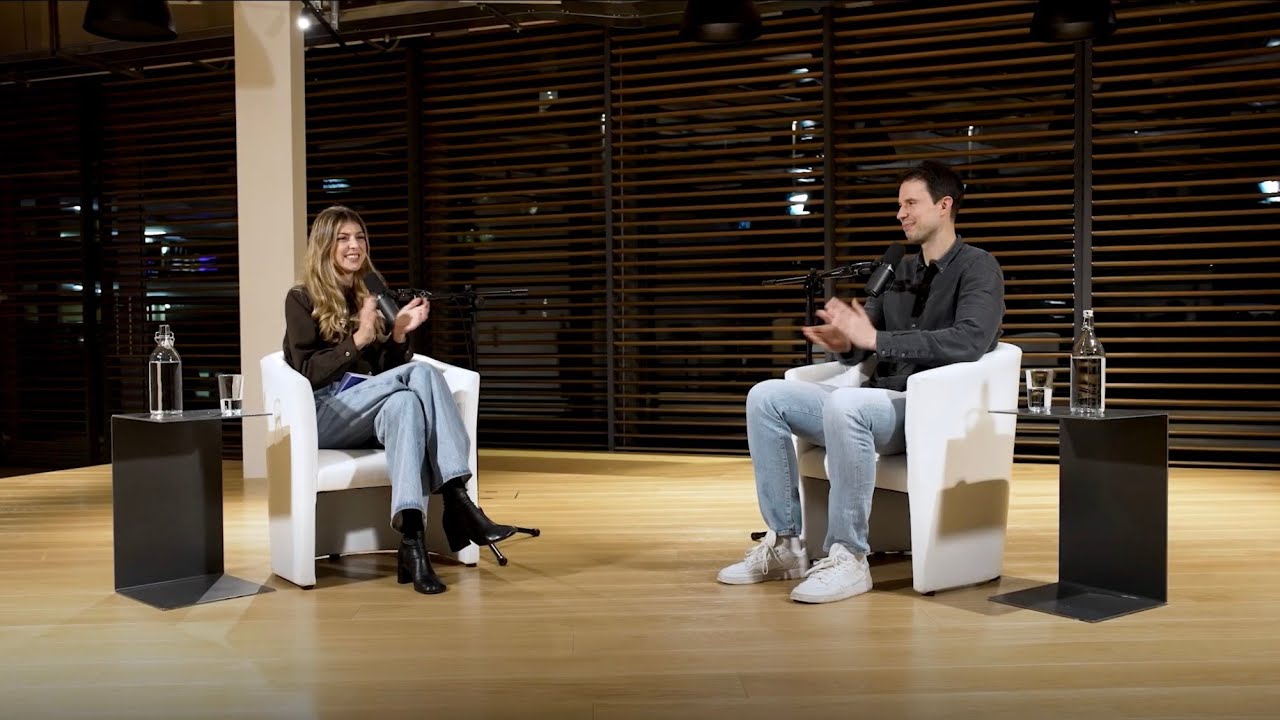
In this YouTube Q&A, Luca Ferrari moderates a series of audience questions answered by a senior Bending Spoons executive (Speaker B). The discussion covers how Bending Spoons attracts talent by treating jobs as its core product, the company’s meritocratic culture, the profile of an ideal employee, and the importance of talent density. The executive explains early‑stage challenges such as finding product‑market fit, the role of luck, and the shift from a services model to acquiring and transforming apps. They detail the firm’s aggressive M&A strategy, acknowledging the controversial layoff practice but emphasizing generous severance, transparent communication, and the long‑term focus on product improvement. The conversation also touches on scaling difficulties as the company grew from a handful of apps to a global decacorn, myths about destroying acquired products, work intensity versus sustainability, the impact of Italian bureaucracy on their decision to stay in Italy, and the mindset of thinking big. Throughout, the executive stresses rapid learning, high responsibility, and a culture that rewards fast, high‑quality work while maintaining low voluntary churn.
Chapters
Filippo asks, what is the best way to attract talent?
I think it starts with realizing that the jobs you offer are probably your most important product. At Benny's Spoons, we look at the jobs we offer as the core product, and we're fanatical about making that product the best it can be. And so, I mean, different companies will have different means and opportunities, but If you make it the best it can be, you're already quite likely to be fairly successful. And then if you do that well, word of mouth will help you. Obviously, you can accelerate that by promoting your company. You can do recruiting events. We do many of those advertising. You can reach out to candidates. But ultimately, people— I find most people will do their research and they'll maybe call someone who works at the company. And so if you— ideally, your colleagues should be your strongest evangelists. I think if you asked 10 people who work here, I wouldn't be surprised to learn that 9 would tell you that this is probably the best company they could possibly work at. I really believe it to be the case. And when someone asks and hears that answer, it's the biggest accolade you can hope to have. They'll probably accept an offer if you make one and it's competitive and all that.
And then Julia asks, what does your ideal employee look like?
We don't really have a precise archetype in mind. We've hired people from all walks of life, introverts, extroverts, people who are precise, people who are a little bit less attentive to details, and people from— who studied philosophy as well as engineering. We just look for people who learn quickly and who are really driven to excel, to be the best. And then we know we have now proven it, I think over 12 years, that we can We can put them on a very steep ramp toward absolute awesomeness through different means. We will surround them with amazing colleagues. It turns out that the quality of the people you work with is, at least that's what we have found, the number one factor in determining your growth, other than of course your talent and desire to learn and grow. And we can provide that. And by the way, it's a virtuous cycle. As we increase talent density, people improve faster. We are even more attractive for talent. We can give you a lot more responsibility than would be considered even reasonable at most companies. For example, the, the woman who leads both Evernote and Harvest, she's only 27 or 28, and she joined us when she was probably 21 or 22, still a bachelor's student at Bocconi. Initially as an intern, she did marketing, business development, growth, and she She essentially replaced the Evernote CEO, the person who was leading the company when we acquired it, who was probably 55 years old. A great professional, by the way, but it's just to say that this is a place where exceptional individuals get exceptional opportunity.
It's a meritocratic place.
Radically so. Radically so. Nobody, for better or worse, again, if you are someone who's looking to hopefully get a job and I can just lean back and relax and I never have to earn my spot, this is really not a company for you. I would not recommend applying. But if you are competitive and you want to be driven to, to reach new heights all the time and work with the best, then it's going to be like Disneyland. I mean, it's, it's— I don't know if it's unique. It's probably not unique. I don't— I haven't worked at many companies, but it's certainly very rare. And that's incredibly appealing for a certain type of person.
made me think that there's actually nothing more unmotivating than seeing somebody at a company— I used to have a corporate life before— that doesn't deserve to be there, doesn't deserve the promotion. There's nothing more demotivating for a person working in that company, and most big companies are filled with those people.
Yeah, I empathize with that. And, and you know the funny thing, when, uh, sometimes when we, when we tell, say, some investors or, you know, the general public stories like the one I just mentioned, that is This woman is called Florinda. They ask you, they ask me or whoever told them, how did you succeed despite having to make do with such inexperienced talent? And my answer is we succeeded because of it, because she's brilliant and driven.
Asia asks, what challenges remain despite the startup's evolution, both as an early-stage founder and as a decacorn founder now?
When we started the— and I think that's kind of the same for every startup— we had 2 key challenges. One was coming up with an idea that worked. By far the most difficult thing to do, I think, when building a business, which is also why we have chosen and found that it's very efficient to acquire businesses that have already established product-market fit. That's what— it's so difficult and there is such an element of luck in it. Even people who are brilliant and had a huge success, when they try to repeat, they often fail. It's very, very difficult. Luck is a huge— because the system is so complex, there are so many variables that even if you're very, very smart, It's very difficult to get it all right and the timing. And so that's certainly a challenge that today we don't have because at least that part we figured out. Although there are times as you evolve with a company that you need to reinvent yourself. So in a way, you have to find product-market fit again, but not at the moment at least. And then you have to persuade someone. Ideally, you want to persuade someone who shouldn't be persuaded to work with you to do so. And certainly that was a big challenge. I remember calling hundreds of people, cold calling new graduates from some of Italy's best universities, and most just never actually picked up. Most of the others hung up on me. But it turns out that if you have a reasonably interesting idea and you're persistent and you do make sense when you talk, some of the good people will listen and maybe you'll convince a few. And then of course there's capital, depending on whether you need capital. We had an idea that we thought could be self-financed and it was, and it has been really for most most of our history, but in other cases you may need to fundraise too. So that was a challenge we had with the startup that failed. But as you scale, most of these things, again, probably not the product-market fit part, but everything else continues to be a problem. Like it would be very easy for us today to hire 3 exceptional people, but unfortunately today we need 300. So, and it's a lot more difficult. And, you know, financing, it would be very easy today to raise $1 million, but today it's more helpful if we raise $5 billion. So yes, we're much better at it. We have more resources, but we need to do immensely better. It's a bit like someone who won, say, a regional tennis tournament, and that's all good. And now they want to win Wimbledon. It's still tennis, but it's going to be way more challenging. And so relatively speaking, they're just as terrified and just as likely to fail.
Luca asks, Bending Spoons is becoming an increasingly active global player in M&A, but it has also developed a reputation as a headcount In the short term, this perception could create friction with acquisition targets and lead to challenges in integrating acquired companies. What strategies do you have in place to mitigate this negative brand perception? Have you already encountered similar issues, and if so, have the mitigation actions you implemented been effective?
Yeah, we have a very polarizing model because it often involves substantial layoffs, which is a very controversial topic. So we are well aware of the The world is really divided between big fans and people who are really against us, which is fair and square. And it's true. Again, we have generally parted ways with, with a majority of an acquired team. And that's very likely, I would say certainly the, emotionally speaking, the most difficult part of our job. Ultimately, we are uncompromising in setting up the businesses we run for maximum long-term success. We most definitely do not enjoy laying off people. That's clearly quite painful, especially for those impacted, but also those who implement the layoffs. It's not any, you know, definitely not a pleasant thing to do. And again, like Luca says, it's controversial and attracts criticism rightfully.
Yeah.
I think that there are 2 issues. Luca is asking whether this has caused or may cause problems. I think there are 2 main potential problems. One is with sellers. Are we getting a look at all the possible opportunities or is someone not willing to sell to us because they know we are likely to cut part of the team? And then the relationship with the acquired teams.
Yeah. Because they must be like, oh my God, now Bending Spoons acquired us, they're going to fire us.
Absolutely. That's what—
There might be a bit of resistance in the—
Totally. Yeah. So the former, it's not been a problem and I don't think it will be for a couple of reasons. For all sellers, price is critical and we have typically paid the best price. For some sellers, especially founders, it's also important that They feel often we buy from founders who maybe have been managing their business for 10, 20 years, and they don't like the idea that they are selling it, say, to a private equity, which will be selling it again in 4 years and then again in 5 years. And then you basically, you feel you lose completely, you lose control of where your baby really— because these are often things these founders— I can empathize, of course, I've built Bending Spoons— they care about tremendously. It feels like you lose control of where it's going. And one of the good things about selling to Bending Spoons is that we don't We've never sold a business. So of course it's like it's not impossible. We've never sold one. We don't plan to. And so you feel that you know where the business is going. Another big advantage of selling to us is that we are at heart a product and technology company. 80% of the time we spend building and refining technologies, user experiences. Most people here are engineers, researchers, product designers. And so when founders sell to us, they know that we're likely in our track record speak for itself in that regard. We're likely to make the products more modern, add features, improve performance. And for them, that's, you know, it feels good. It adds to their legacy if that's what they care about, that the brands thrive and then the business is profitable and successful 5 years down the line or whatever. The team part remains as a sticking point. However, arguably, when a company is sold, In the vast majority of cases, a substantial layoff occurs. And at least what a seller knows with us is that we offer top-of-market, very generous separation packages, lots of flexibility. And so ultimately, we have never had a problem, I'd say, convincing someone to sell to us. Quite the opposite. We have often been the preferred acquirer. With the teams, absolutely, it creates anxiety and it doesn't help the relationship. On the bright side, with the parts of the teams we have retained, we have typically developed an excellent relationship. We— if you look at, for example, churn rates for team members post-acquisition and post-reorganization, they're actually generally as low or even lower, as low as or lower than they were before, because ultimately these people see us implement these difficult things which suck. But also they see you are empathetic, supportive, and you're honest about it. Like we don't, we don't play games. And so they, you know, they come to respect you for it. So yes, it's not ideal. We'd much rather be able to do what we do without that part. We try to mitigate the bad that's in it, and it's not been a huge issue. I don't think it'll become a huge issue, but it's certainly something to keep an eye on.
Matteo and Livia asked similar questions, so we kind of grouped them. In the early days of Bending Spoons, how did you manage to go from zero resources and a few apps to building a replicable and scalable model that allowed you to grow rapidly? Were there any moments or decisions that made the difference between surviving and failing in the early months?
Essentially, when we started, we had this idea of acquiring and transforming businesses, but we thought that probably that would take a lot of capital and maybe we didn't know what we were doing. And so we should start by working for third parties, write software for them, and only after securing a steady revenue stream from that, invest a substantial percentage of our time on the execution of the core idea. And it turns out we spent the first probably 6 or 9 months, certainly 6 months, I'd say almost full-time working on trying to get clients who needed us to write some software for them. And we failed miserably. I remember Francesco and I, one of the 2 founders, we sent thousands of emails, had so many calls, and not a single person hired us. It was so disheartening. And then interestingly, then at some point, some point Matteo said, you know, why don't we actually start acquiring companies? And so we said, why not? And we bought an app for €10,000. And then that was a big success. And we dropped the very temporary idea that was supposed to help us get the core idea going by actually working on the core idea. That was pretty lame in hindsight. But So in a way, we were at risk of failing by not doing the thing we wanted to do, which I feel sort of weird, but it's quite real at the same time. So I guess we were saved by Matteo telling us to do what we were meant to be doing, basically.
I love that it actually started like that and it wasn't all planned out and big strategy around it. Arnaldo asks, what would you like people to understand about Bending Spoons that they Well, there are many myths about Bending Spoons.
Some are actually quite funny. At the beginning, we were hurt reading the stuff online, then it's become like an internal meme. But one that I think is perhaps also— it's important enough that's worth touching upon is— I don't know if it's a lot of people, but certainly enough people think that we We kind of destroy the products we acquire, which in theory shouldn't make any sense because we don't even sell them. Like, why would we want to destroy them if we— if that's all we've got? We put our money up, you know, when we buy them. But, but it couldn't be further from the truth. I mean, we generally speaking, there are a few exceptions, but in almost every case, if you look at the rate of product enhancements after an acquisition by us, It's much higher than before, sometimes dramatically so. And again, in almost every case, all of the, let's say, health indicators of a business we have acquired have at least remained stable, if not improved, as we went through our transformations. When you do well and you're very profitable, I think that immediately people think you must not be investing. Quote unquote secret sauce is in, in having really small teams of truly exceptional people work with almost no managerial layers, full autonomy. It really unleashes kind of a startup-like mentality and, and incredible things happen. A lot more stuff gets done. And when you add to that mix a pretty powerful set of technologies, you know, the playbook we have developed over time that helps them avoid some mistakes, make better decisions on average, move faster, be more efficient. It's pretty quickly you create that gap in performance. But yeah, we buy these products, we never sell them. So we have all the incentives to make sure that they are as successful as they can be.
Nicolas asks, we know that the quality of time worked matters more than quantity. At the same time, looking at companies like Bending Spoons, I find it hard to imagine that they could be built by working 40 to 50 hours a week. For a founder, this trade-off is clear and often chosen. For those who are not founders, however, it is much more complex, especially when the benefits are not immediately tangible. What do you think? Where do you think the line is between the intensity needed to create something extraordinary and long-term sustainability?
It's very personal. I think, first of all, what's sustainable in the long run is really quite different from person to person. People are different in what they can tolerate. People are different in their ambitions. So that's again, very subjective. There's no right and wrong. You should decide what you want to do with your life right now in general. And then people are different in the alternatives. Some people have— they have more or better things they could be doing. Other people don't have these. So I don't think there is an answer. What I know for a fact is that in any competitive arena, whether it's business or academia or sports, you're very unlikely to reach the top unless you work your ass off. You could. I mean, theoretically, luck plays a role. But given that there are a lot of people out there who are talented and at least some of them will work really hard, you don't really stand a real chance unless you work really hard. But now, whether you should be working really hard depends on you. Does it cost you much? Do you really want to be one of the best? You don't have to. I mean, it's not immoral not to. Like, it's really up to each individual. So. I love what I do. I find fulfillment and it's in the challenge in working with the people I work with and trying to build a great company. And ultimately, when I think about what I'd be doing if I had a lot more free time, I don't find it all that inspiring. You know, it would be kind of quote unquote normal life. It's perfectly fine. It's not just for me, but, but yeah, it's just me. Other people should make, you know, make their own decisions.
I think knowing the person who has this question, the question is The founders, of course, they work so hard. It's their vision. It's their dream, right? But obviously, I think, I mean, we can assume that people working for Bending Spoons are not 9 to 5, right? They are people working—
It varies a lot. We do have some people who do 9 to 6 with a long lunch break.
Okay.
Yeah, yeah. It's probably— we probably— frankly, I don't know. We don't really— You don't count hours? We don't have a check-in, check-out, so we don't know how many hours people work. But I do suspect we work more than average. But I think people would be surprised. It's not like investment banking or anything like that. For most people, it seems to me it's a sustainable lifestyle, again, working a little bit harder than elsewhere. But how hard is, again, a very subjective choice, and we don't impose it on anyone. It's up to each individual.
I think maybe he was thinking that people here work as investment bankers, like really long hours, and how you motivate them to do that.
No, no, they don't. I mean, look, compensation is, as far as I can tell, excellent. Colleagues are great. Opportunities for growth are great. Projects tend to be very interesting. Lots of perks, lots of flexibility. So yes, there is a strong incentive to work hard to, yeah, kind of earn your spot in a way, I guess, and get the most out of the opportunity. But it's not a company where people don't sleep or something like that. It's, you know, we have essentially zero voluntary churn of team members. If this entire— we've got almost 600 people, I think to date in 2025, we've lost 2 or 3 we wanted to retain. So if it was such a tough environment, we would have at least market average departures. Almost nobody leaves. Just go on to Glassdoor and read the reviews. I haven't done so in a year, but I suspect they're similar as they were a year ago. They used to be super enthusiastic. So it's not like investment banking or anything like that. But yeah, we work harder than I suppose most companies.
Well, that's pretty incredible. And I hope that everybody listening to this interview that has employees can kind of get inspired by what you guys do here to create an amazing work environment that gets people to thrive and do their best. Maria Chiara asks, how does a company of this size relate to Italian bureaucracy and culture? What made you decide to stay here?
Well, actually, it's exactly in a way Italian bureaucracy and culture who pushed us to move the company here because we started in Denmark. Where my co-founders and I completed our studies. We had this idea of trying to build a great company, a legendary company, and that was really from day one, even with Avertail, which was a failure. And we thought that if we were to succeed, at least to some extent on that journey, it would have been much more impactful to do so from a place that had a lot of potential but hadn't seen a lot of success, because supposedly that would Again, improve the culture, accelerate an improvement in the regulation, and generally speaking, all the boundary conditions that facilitate a prosperous economy. And so we chose to move the company to Italy and build it. It's an international company. We have over 2,000 people, lots in the US and the UK, but with our roots here and now more and more across Europe, precisely for that reason, because Italy, with its many wonderful things, absolutely sucks at regulation. And we do hope that, you know, we can kind of shake it up a little bit. We'll see.
Final question. This is a big one.
Okay.
How can one— from Tiziano, actually— how can one think so big? And you don't have to be humble here.
No, I don't mean to be humble, but I would actually answer with a question. Why would anyone not think so big? What's the advantage in thinking small? sounds more boring to me and you only get to do one thing really at any given time. So I'd rather do something that if we do well, it's a bigger win.
Couldn't have ended on a better note. Thank you so much, Luca. Thank you, everyone. This is actually the last question.
More from Luca


Inside Bending Spoons: Finding Talent, Leveraging AI & Driving Operational Excellence | Luca Ferrari
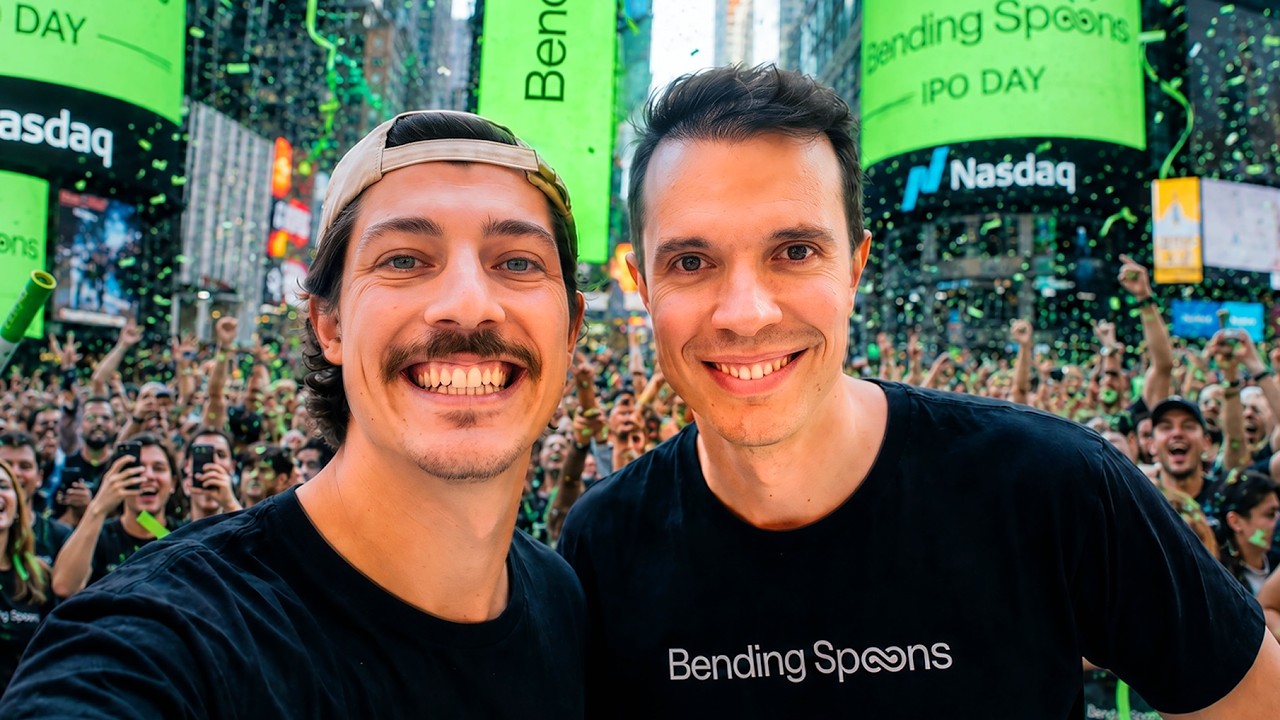

Bending Spoons Cofounder & CEO Luca Ferrari on the company's buy-and-hold strategy