The #1 Mechanism That Fixes Chronic Injuries

Mark Ottobre and a neuroscience expert explain why muscles aren't simply switched on or off. Movement is controlled by three neural levels working through coordinated excitation and inhibition. Understanding the nervous system, not isolated muscles, is how you actually fix chronic injuries.
Chapters
'Cause something I wanna talk about is, you hear it a lot online, switching on and switching off muscles.
Yep.
You can't switch off a muscle, you can't turn on a muscle. And I watched one of your videos and you had a beautiful explanation about how the nervous system works. What do most people get wrong about this?
This is where I would say probably the education system has failed to teach people the foundational understanding of neurology and physiology.
Right. So can I just pause for one sec, right? And the reason why I wanna pause is because the point that you're about to make, people understand like PTs and physios, And I feel like bodybuilders fall in this category as well.
Yeah.
Is they understand muscle, right? It's like I do a bicep curl.
Yeah.
Cool, my arm hurt. Yeah. And then they're like, well, I'm gonna go to failure on a bicep curl. And they take that mentality and they're like, I'm gonna fail on a deadlift, I'm gonna fail on a bench press. And they, what they miss and they don't understand is where I think powerlifters are much better programmers than bodybuilders.
Yeah.
Because powerlifters understand the impact of exercise and movements on the nervous system. You can't be an exceptional powerlifter unless you understand how those lifts interact with your nervous system. For example, you can be a bodybuilder, do 28 sets at 10 reps, huge volume, and then train the next day, right? And you know, you've done like maybe a couple hundred reps or something and no problem, you've got sore muscles, train the next day, no problem, right? Whereas you go to a powerlifting event, the guys lift 9 times, 9 times.
Yeah.
The next day they're all depressed.
Yeah.
Why? Their nervous system has been completely fried. And what I find in terms of the point, I just want to frame it before we get into it.
Yeah.
Is it's the misunderstanding of how the nervous system operates with muscle.
Yeah.
I just want to give that to our listeners.
So, all right, let's start, let's start with the science first, right? So let's start with, um, a theory called Panjabi's Neutral Zone Theory, right? It's, it's not necessarily just a theory, it's, it's a fact presented that is accepted within the field of physiology and neurology. What passive, active, and neural within that Neutral Zone Theory means we have Passive tissues, which is our bone, connective tissues like your tendons and your ligaments, or your discs in between your vertebrae. You have your active structure, which is you can voluntarily contract, which is your muscles. Then you have the N, which is the neurology, the nervous system. Without the N, the P and A, they're useless. They're just floating in space looking for instructions. That's why when you see a quadriplegic person, the reason they— their legs haven't completely rotted off It's still alive, it's there, but the reason they cannot move is because the nervous system cannot communicate with those musculature to give them instructions to do what they want to do. They don't get the sensory feedback. You can cut their leg and they're not going to feel anything because there's a complete dissociation between, or disruption between, the nervous system and then the passive and the active.
It's like having a phone which hasn't had a software update that you can't press the But it doesn't have any connection, right? No Wi-Fi.
There's no— there's nothing there. Like, there's nothing— there's no vessel for it to get that message across to the other side. So the principle is neurology is what drives movement. How that happens, it happens at 3 different levels. You have your spinal level, which is your spinal cord and your bundle of nerves. We don't really have a spinal cord from, you know, lumbar 1. It's like a bundle of nerves. It's called the cauda equina. It basically means bundle of nerves. Right, so from L1 onwards or L2 onwards, it's just a bunch of nerves. They're kind of like bundled together within the cavity. And then you have your supraspinal, which is your M1 motor cortex, right? That's your conscious brain that is doing a lot of the micromanagement stuff. Then you also have your peripheral nervous system, which is all your sensory feedback, right? If you touch something really, really hot, your hand has, you know, temperature senses that will sense that high temperature beyond tolerable level, detects a threat, sends information through the peripheral to the spinal. It doesn't need to go to the M1 motor cortex. You're just going to have a quick reflex, which is you're going to flex your bicep because the nervous system detected a threat and sent instructions to the biceps to contract to move your arm away. So the whole thing happened because of these 3 levels of the nervous system, which is Managing this, all the things that we want to do. You want to be a— you want to write, you want to, you know, you know, ride bicycle, whatever that is you want to do, it's all being managed and controlled by the nervous system at 3 different levels, right? Okay, so now comes the point of switching on and switching off. Now I understand sometimes clinicians, when they're working with their clients, they have to use very layman's terms because their client probably running a multi-billion dollar business, they don't have any interest in learning neurology. So the best way to get that message across is that I'm trying to switch this on so you can do this. That's not publishing an academic paper, or that's not presenting an educational seminar, right? If that's what gets the message across to the person to do what they need to do, that is okay. But as long as you, as a coach or a clinician, understand what that switching on and off actually means, right? So we're not saying the muscle is completely switched off like a light switch, or you're just gonna do something and then it's gonna switch the muscle back On and it's alive again and it's gonna do things. That's not what it means. So your nervous system, all 3 parts of it, has one job. It doesn't care about your PBs, it doesn't care about your feelings, it doesn't care about Instagram comments. It cares about survival, and it's going to organize and sequence all those muscles' contraction at different level, at different sequences, to do what is necessary to do whatever task that you're trying to do with the least amount of threat.
Okay.
So in doing so, the nervous system will need To inhibit things, to excite other things. What does that mean? It means, simple example, we used bicep curl. If I want to curl my biceps, I have to contract my biceps. So the thought has gone to my supraspinal level, it's going to send information back to my biceps to contract. I am activating my biceps. What does that mean? It means I am dialing up the neural drive to the bicep muscles. To lift, let's say, ten kilos of dumbbell. For that to happen, I need to inhibit something. What's that going to be? My opposing muscle, which is my triceps. The triceps are not switching off. You have interneurons that will decide how much suppression needs to happen to that tricep drive for that biceps to happen smoothly. So that's a form of inhibition. It was discovered by Lord Sherrington hundred something years ago. He won a Nobel Prize and a lordship for his contribution in the field of neurology, which is still being taught in the field of. Neuroscience and physiology. I do not know how this disconnect happened from that to, you know, in our field, which is clinicians and, you know, coaches, right? So inhibition is just as important as activation. In other fields, it's, you know, considered excitation, basically trying to say the same thing, right? So we're not switching something on and off. It's like a dimmer switch with your light. You're turning this one up, so you need to turn this one down for this to happen. However, if you're trying to do something, for an example, with your counterbalance squat, right? You need to have both of those switches on in this area to maintain that spinal rigidity so I can do the squat with the most perfect technique for that purpose. So in your spinal level, you're switching everything on at a segmental level to create stability. Now that stability gives us a very good anchor for the hips, or in case of bench press, your shoulders and your pecs and your biceps and your triceps to push against it to create the force it needs to create. I think Poliquin said that, you know, like you can't shoot a cannon out of a canoe, right?
Yeah.
So, you have to build a frigate to build that stable platform so you can shoot against it, right? So, this is again, it's another form of way of saying I'm activating certain things and I'm inhibiting certain things to accommodate for smooth movement. Now, that happens naturally. However, like I said, the nervous system's job is to detect threat for its survival. That's its primary— the reason we feel hungry, it's because it's a survival mechanism. We need to eat to have the calories so we can function, right? So in certain cases, what can happen is the neural drive may not be enough to certain muscles, creating certain functions to perform a task. In those cases, we need to separate that joint and that muscle, but just not the muscle but the muscle's function to do a task. Let's say lock land to do some abduction and external rotation of the gluteal muscle group to create excitation to those muscles. In other words, we're using that term activation so I can put that into my practice. of squatting where abduction and external rotation is necessary in the descending phase, right? So, and again, going back to assessment, that's what we are assessing. Where is the breakdown? What's happening within that movement that is not allowing that person to do what they wanna do? They may have the perfect technique, but they just don't have the same drive that they need within those muscles to be able to create that optimal function that they need to create. In case of squat or deadlift, let's say hip abduction, external rotation.
Well, you make an excellent point. I think that's— thank you for the explanation. That's one of the best long explanations in terms of—
I tend to give very long answers to short questions.
The deep question. No, but it's, it's well thought out, it's mapped out, it gives the history, it gives the context and what to do. And one of the things I think we're both exposing right now is the massive disconnect between the lay coach, the lay trainer, even physiotherapists, and the understanding of how the nervous system wraps the whole thing and you can't just— let's not talk about the nervous system.
Yes, yes.
And when we talk about activations, the thing that people miss the whole time is they go, oh, well, you're just activating the muscle. Kind of. What we're doing is actually activating the nervous system to activate the muscle, but people again—
To perform a certain task.
But people look at it the way, oh, but, you know, alcohol— he's an alcoholic because he drinks too much. You know, the muscle's working because it's too weak. Well, thanks. You know, that doesn't tell us anything that we didn't know. We know the muscle's weak. We are activating it, we are getting blood supply, we are getting neurology into this area to then create a pattern that is going to help us with what we're trying to achieve.
Yeah.
It's such a disconnect.
Yeah, yeah. And that's what I mean by, you know, like you don't understand it if you haven't learned it. So, the only interpretation you have is that I am switching something on and off like a light switch. And then the argument is like, if you can stand up, then your glutes are not dead. Well, no one's saying that your glutes are dead. But whenever you're trying to squat, which you're trying to create hip and knee extension to move the maximum amount of weight for that particular, you know, set or rep you're trying to do, they need to do a certain amount of task. If it's not doing that, I have to do something. And the principle is called post-activation potentiation. What it means, the contraction of a muscle is, is influenced by the contractile history of that muscle. So if I have done some abduction and external rotation, it will influence my abduction and external rotation in the following task, which is necessary for squatting, right? So, and the other, you know, you know, the generally the people who would say that they're switching on and off, they would also say, probably a lot of them will say, technique doesn't matter. Like, logically, that doesn't make sense.
As a scientist, you're, you're, you're, you know, technique doesn't matter. Yeah. Well, for me, the way I look at that is when technique doesn't matter, that means you've got a variable that you're you're constantly changing. So if technique doesn't matter, how do I, how do I create a stabilized environment where variables aren't always changing? The only way I can do that is to make technique matter.
Yeah.
So the way you perform bench press today and that rep and that set, it needs to be the same every day because if you change your technique, then we are changing a variable, a very important variable that next time we go and do it, well, did we do bench press today or did we do pause bench press? Did we do wide grip bench press? Did we bench press this much from our chest or did we touch our chest? Oh, wait a minute, 5 inches off our chest. What's your 5 inches? Is it this big or is it this big? Like, yeah, you know, this is— you need to have a conversation to have any intelligent conversation about a comparison. And to get our objective out, we need to objectify the shit out of the variables and go, this is what we are measuring. So technique, it is important just as a means of— and again, I agree, it doesn't make sense to me either because how do you measure that? And it's often people who say that, I find they're unscientific Because how else do you arrive at that conclusion? Because if you were scientific about it, you would understand that this is just a measurement of a task.
Yep, yep. Well, and generally you'll get that technique doesn't matter from this group is because then that gives them some kind of justification, like, well, the technique doesn't matter. I don't understand what's the point of abduction and external rotation. You can lift it any way you want.
Well, sure, until you get injured.
Well, you know, that's the thing. That's the idea of the movement optimist, you know, the body will adapt no matter what. Well, if you consider injury an adaptation, great, it will adapt that way, right?
And that's what I was talking before about, like having the floor and the ceiling of lifts.
Yeah.
But I mean, when we talk about that logically, right, if you've had an injury, you know, and you go do a bench press, let's say you tore your rotator cuff, the way you bench the first couple of weeks, it's— your body's going to protect it. When you— if you have the surgery and then you try and go back and bench, the bench is going to be mangled because you're going to be benching like, oh, I can't do Well, there's a name for it.
It's called arthrogenic neuromuscular inhibition. Whenever the body detects a threat in a joint, it will over-facilitate certain muscle groups to inhibit movement as a protective mechanism. So whenever we say this muscle is tight, or I have pain in that area and I can't get the range, like I don't have enough external or internal rotation—
That's even though the muscle is healthy?
Yeah, yeah, there's no tissue damage. It's just the body is detecting A threat. So what it's going to do, it's going to create a natural splint, and it's going to do so by overdriving the neural activity in certain areas to stiffen up that joint as a protective mechanism. Because like I said, the primary function of the nervous system is survival. If I detect a threat, the only way I can survive is if I can remove most of the movement out of it. And it's, again, it's, it's not even a concept, autogenic neuromuscular inhibition. If you talk to Any neurologist or any neuroscientist, they know what that is. That's one of the things they learn in first-year university.
I feel like there's almost you know the we're on the cusp, or maybe we're entering it now, which is there's two types of coaches in the world and two types of practitioners. It's those who understand how the nervous system functions, and those that don't. Yeah. And the ones that don't, they look at the world as oh, it has to be this muscle, and let's blame the muscle and technique and all this kind of stuff. And it's like well. You do realize there's a layer that wraps around the whole thing that's called the nervous system that governs everything that we do, that no one escapes. And the reason for these things happening is actually because this, and you can actually influence what's happening with the nervous system.
And the sad thing is the science is already there, you know, it's already been established. Just because some poorly designed biased research paper said something, that does not make something wrong. Well, I just wanted to finish with One thing with this idea of technique, right? So let's let's use squat, right? Since we started with squat, right? What we are trying to do with squat and the concept that technique doesn't matter, like how fault that is. Let's use powerlifting as a sport, right? That's the optimal expression of strength when it comes to squatting. Okay, my knee has one function. It's this. That's the only thing it can do, right? It's a corkscrew joint. Means my tibia with a bunch of meniscus, like a wine cork. Sits at the bottom and the femur on top of it rotates a little bit to accommodate where the hip is going to tell the knee where to go. So what that means, if the knee only has this function, then the hip is dictating where that knee is going to go. From there, from the bottom position, I am working against gravity, right? Which is the total weight of my upper body that I'm going to push and the weight on my back. It's a vertical, it's a force vector, it goes in a straight line. So I want to produce the maximum amount of force. going up that way. Any deviation from that forward or backward in that sagittal plane, or side to side where the knee is caving in or the knee is caving out too much and it's just pushing out, it's an energy leak. So I'm not expressing my strength correctly. What do I need to do? I need to make sure that my hips are strong. Whatever muscles I need to strengthen to make that happen is hold that line, so as I'm pushing up, I can push up in a straight line Knee and hip extension, so the maximum amount of force is going up.
Okay.
And I like to work top down. If a technique is good enough for the, the best expression, ideally I would like to teach that technique to everybody else. It's the same way the motor industry, you know, motor car industry has evolved. The technique and a lot of the technology gets developed at the highest level, let's say Formula 1, and it trickles down to your Toyota Corollas or, you know, like whatever car you're Kia, whatever you're driving, you know, you can't just say like, oh, the only the Formula 1, they, they need traction control, the, the normal cars don't need traction control. That's a very poor way of saying that. So if I know this is the best technique and the safest technique to do this task at the highest level, well, I will do my best to teach my client who's 60 years old, who's struggling to get off the toilet seat, the same technique, because strength is relative to that person. For them, that's the maximum amount task they want to perform. Why would I choose something different? And for that to happen, if I see there is a breakdown happening— the most common breakdown is your knees caving in. That means your hips are not doing a very good job of maintaining that isometric external rotation to express that linear strength against gravity. Well, then I'm going to do some activation work to strengthen that function, and then I'm going to immediately put that into the complex task that I'm trying to perform. So activation alone doesn't mean anything. This comes down to your assessment. You assess where the breakdown is happening. This is where the breakdown is happening. Okay, let me isolate that. Let me strengthen that function. But I have to put that together into a complex task which is relevant to the goal of the person that they have told me. Otherwise, then the argument is true. Activation doesn't matter. Yeah, it doesn't matter if that's all you're doing, just activation for the sake of activation, because that's something you've seen on social media. It's the cool thing to do.
You remind me, or this is a good segue to what I wanted to talk about, which is the assessment piece, right?
Yeah.
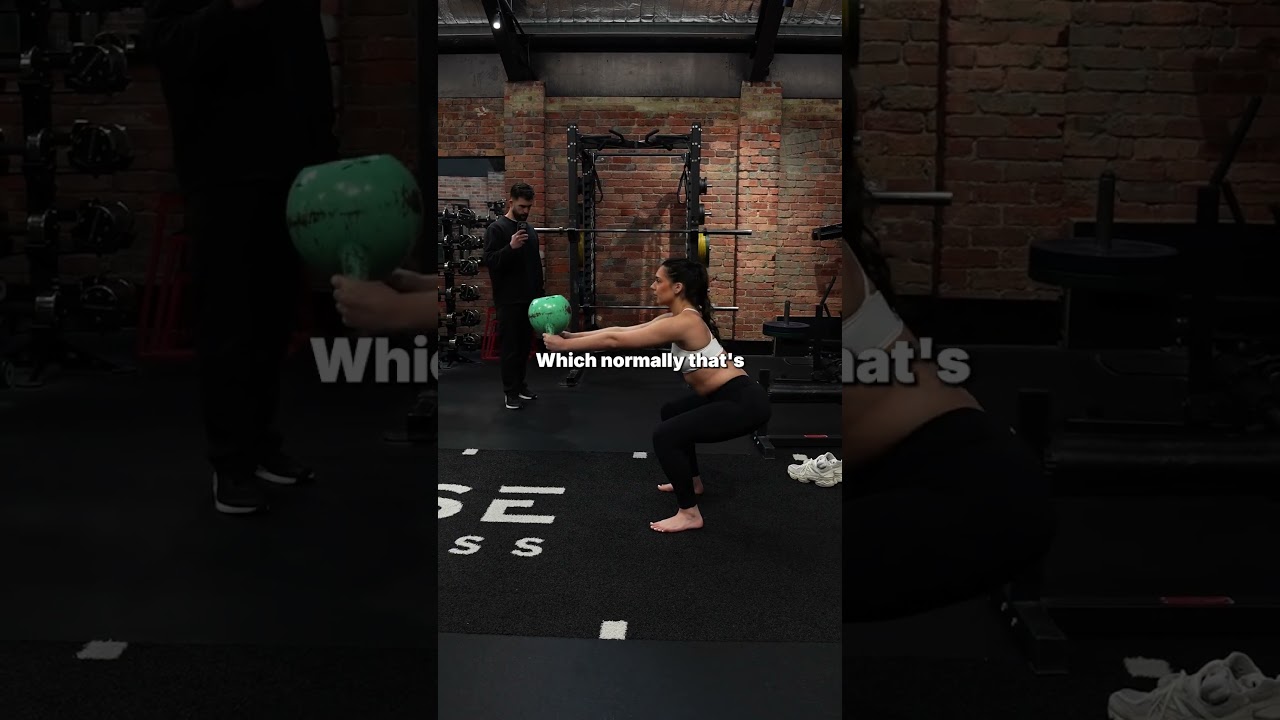
So, you know, a lot of the pushback with assessment piece, what I do in a lot of my assessments is the overhead squat, right? Which for the viewers at home, you know, we're here coming all the way back up. People go, oh, but most people can't do that. Yeah, most people can't do that. And most people, they're gonna maybe lean forward and fine, it's information that I want to see, but it doesn't change what you spoke about. You start with the top is what is the ideal that I want to see a person be able to perform. And because they can't do that from the ideal, I map backward and then understand here are the exercises that would be able to make this person, based on their constraints, be able to do this the way I would like them to do that based off the ideal.
Yeah.
So, it's never a case, and this is always, it's like people are so attached to low standards and to make themselves maybe feel a certain way or feel better about themselves of, well, I can't do that, no one can do that, it's kind of impossible. Well, why should anyone try? Well, it is achievable. It's just that your limited understanding of where someone is starting to where you could take them and the route of how to get there, you don't understand the route of how to get there. But don't stop the people who do. You know, we know, we know how to get there. And yes, it's going to take some time, no denying. But there is a sequence of exercises that we can do starting today that over the next couple of months, even years maybe, we will be able to get you moving and performing To the ideal, but let's not throw away the ideal. Let's keep our standards high because that's what makes for better athletes. That's what makes for better trainers. That's what makes for better everyone.
Human movement.
Having high standards. Yeah. Lower your standard.
Yep.