Fertility Expert: How to Increase Your Chances of Getting Pregnant Naturally | Flora Crichton
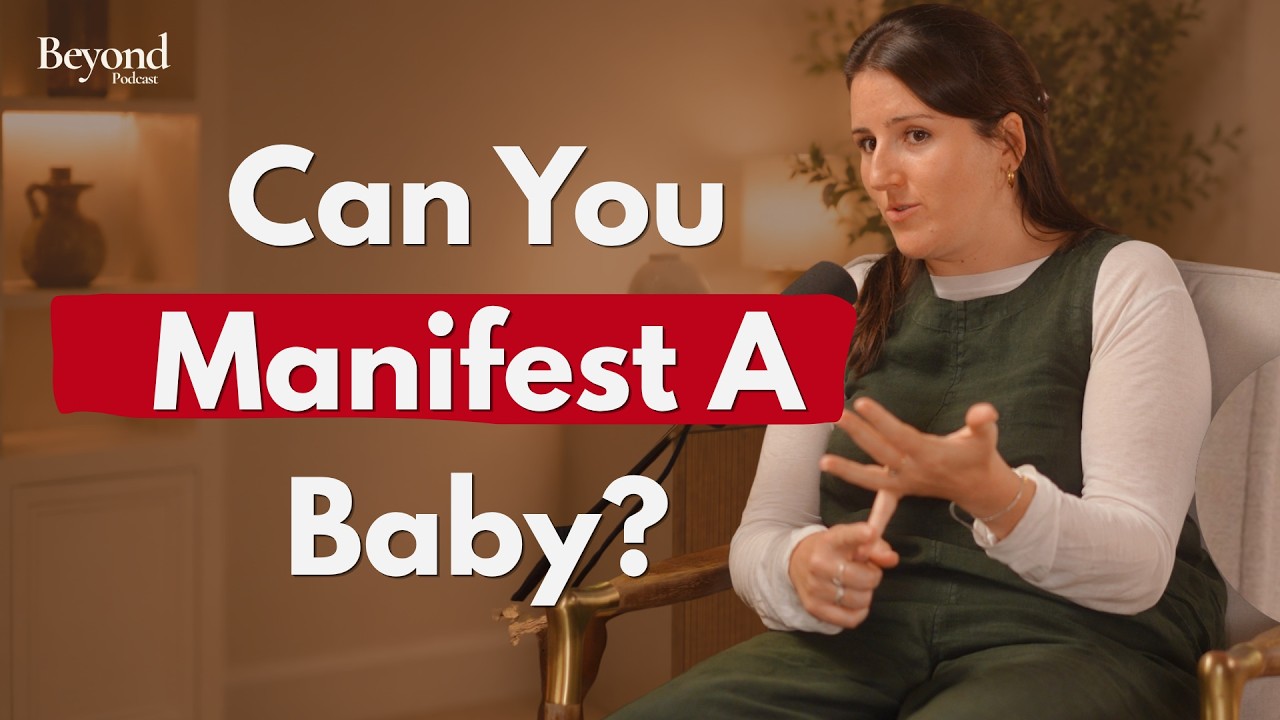
In this YouTube interview, host Matt Cooke and co‑host Cora‑Sanne sit down with nutritional therapist and fertility specialist Flora Crichton to discuss how to improve natural conception chances. The conversation begins with the importance of mind‑body coherence, stressing that high stress and over‑thinking can inhibit the body’s ability to nurture a pregnancy and even affect breast‑milk production. They then move to miscarriage, explaining that in the UK three losses are required for investigation, and introducing the concept of microchimerism—how fetal cells can remain in a mother after loss, potentially aiding healing. Flora outlines major miscarriage causes: sperm and egg quality, immune system imbalances, gut microbiome health, blood clotting issues, and poor circulation, recommending movement, specific supplements, and comprehensive testing (blood, stool, uterine/vaginal). The discussion shifts to the role of love, peace, and a low‑resistance mindset, suggesting that couples embody a frequency of unconditional love to create a welcoming environment for a baby. They explore the paradox of wanting versus letting go, and how this mental state influences fertility outcomes. When natural methods fail, they discuss IVF, clarifying what a blastocyst is, and when to transition to assisted reproduction—typically after thorough testing, especially for women in their late 30s or with a “worry mindset.” Flora emphasizes that pre‑work improves IVF success and that natural conception yields healthier babies when possible. The interview concludes with Flora’s “go beyond” mantra—encouraging clients to transcend societal and self‑imposed limits, trust the body’s innate healing, and pursue holistic health. Practical details are provided: Flora’s website and Instagram, typical client program length (4‑6 months with tri‑weekly sessions), and her referral network across the UK, Europe, the US, and Australia.
Chapters
In my 20s, I was experiencing really difficult symptoms associated with my periods. Very painful periods that became severe. So I was going to hospital quite a lot with pain.
Wow.
Yeah, difficult. But a lot of women experience this as well. I went to various specialists, specialists in endometriosis, and they said, just take the pill, everything looks fine. I just had this kind of innate frustration. I was like, why am I experiencing this pain? Didn't want to take the oral contraceptive pill. And I just wanted to try and find the natural route. And 7 or 8 years later, I've been able to completely resolve it, which is fantastic.
Wow.
If you aren't getting pregnant, I think 1 in 10 women statistically have endometriosis. So that could be a sign of silent endometriosis. The light bulb for me and for clients, I would say, is that the uterus, the pelvis, all the reproductive organs have a microbiome. And we always see infections Imbalance in bacteria, that is the main driver forward of the endometriosis. So
there's a microbiome in the reproductive organs too?
Exactly.
Basically, you've got bugs everywhere.
Yeah.
Right? And some are good and some are bad.
100%. When there's a really positive community of bugs that make up your body, the fertility outcomes are just way, way better.
That is life-changing for so many people to hear. I
know.
Because you would never think that the two could be connected.
Never. And I didn't either for a long time.
What I'm really getting here, which I think is so powerful, is that you're saying your body has got to go through an enormous amount to grow this baby. You've got to prep it for what's to come. It's almost like you wouldn't run a marathon without doing any training.
100%. You want to be in this kind of in abundance. You want to have enough calories, you want to be rested, slept, and you want to have enough nutrients because your vitamins and minerals will go into the baby and deplete your own.
Can I just on that share, I think, a story that we've never shared before about how we got pregnant, that no one knows this, but I think it's the right conversation to share it on.
Wow.
Yeah.
That is mental.
Flora, welcome to Beyond. It is great to have you with us.
Oh, thank you so much for having me. I'm so grateful to be here.
We're really excited to have this conversation. Before we dive into it, Flora, in your own words, how would you describe to anyone tuning in, you know, we always say that we have people from all over the world. And the great thing with this topic is it doesn't matter who you are, it's going to resonate with everyone around the world. How would you describe what it is that you do?
So I am a nutritional therapist and I specialize in fertility. So I work very much with people experiencing difficulty conceiving, which can obviously be really heartbreaking for couples. Often they've had a diagnosis of unexplained infertility, which can be, again, really hard because they're not sure why they're not getting pregnant. And often the medical system perhaps aren't giving them the answers they need.
Yeah.
I work as well with a lot of couples who've had miscarriage, sometimes multiple miscarriages. And I have a specialist interest in endometriosis. I don't know if you've heard of endometriosis.
I'm excited to learn more about it so we can dive into that.
Yeah, all those things. But from personal experience, I had endometriosis and I've been able to really recover from the symptoms and the difficult symptoms. So obviously, naturally, I want to help others with the condition as well.
I love that. And yeah, Cora-Sanne and I are really excited. And I will say, people might be tuning in and finding even me and Cora-Sanne for the first time as well as you, Flora. And obviously, when it comes to manifestation, you and I go a little back. We've known each other for a few years, haven't we? Yes. When it comes to this work. But the reason we were so excited to have you on the podcast and have this conversation is, as you can imagine, obviously people are looking to manifest all sorts of things in their life. And doing this work now myself for 7 years and working with many different clients, the one thing that's always up there at the very top is manifesting love, manifesting a relationship. And obviously what naturally tends to come with that for a lot of people is then getting pregnant. And I've worked with people looking to manifest getting pregnant too.
Interesting. Yeah.
And, you know, the work that I have now is I know through everything, and it doesn't matter what you're looking to manifest, we need to try and increase as well as the— and we'll get into visualization and everything else, but we need to increase the probability, the probabilistic landscape of what people can do in addition with all the work we teach. And that's why wanted to get you on, didn't we?
Yes.
Amazing. Do you work with a lot of people trying to manifest?
Yeah. So I've been coaching personally since 2022. And yeah, it's up there. The 2 biggest are always money and business, and relationships, love, and pregnancy. They're always the big ones. And I know we've got a story on it too, but it really is Quite big. And then we can get into the whole, you know, if I look at the people I work with, there's the whole fear around not getting pregnant, biological clock, and helping people really overcome the fear around societal expectations. And—
It's so huge.
I've got to meet someone as quickly as I can because my clock's ticking.
Yep.
Is a huge one. Is that what you get?
For sure. Manifesting a baby is particularly difficult, I think, because Particularly with couples that may have not met someone or you may be trying each month that goes by, the pain that you experience and the frustration, you do become— the mental health can become compromised and you can feel desperate, which is why it's so hard to flip it on the switch and trust in the outcome and trust in the universe and trust that the body is going to give you what you want. So it's particularly hard, but it's particularly valuable to be able to—
Yeah.
work on the body, the mind, and the spirit so that it aligns at the right time.
Exactly.
And then the baby actually comes.
Yeah. And I'd love to know, Flora, I'd love to, you know, you talked about obviously your battle with endometriosis, but I'd love you to like go right the way back. Yes. And talk us through, Flora, maybe before this was even anything that you did as a business and as a career, what led you to think, this is my passion and this is, you the kind of torch that I want to carry for people.
Often the case with nutritional therapists or healers, I think, is you experience the symptoms and then you are able to overcome them and then you want to help others soften the way. So similarly, I, yeah, in my 20s, I was experiencing really difficult symptoms associated with my periods. So very painful periods that became severe, severe pain, really, really bad. So I was going to hospital quite a lot with pain.
Wow.
Yeah, difficult. But a lot of women experience this as A lot of pain. And sort of halfway through the cycle, I know you all know Corisand, after you ovulate, you can then start experiencing quite bad symptoms of PMS. Some women do. And I was getting sort of 2 weeks of the month, every month, just feeling incredibly depressed and low. And I knew it was something to do with my hormones, but of course, had no idea what I could do. And I went to various specialists, specialists in endometriosis, and they said— just take the pill, everything looks fine. But obviously, I just had this kind of innate frustration. I was like, why am I experiencing this pain when my sister's fine and my friends are fine? So yeah, I had this kind of— didn't want to take the oral contraceptive pill, and I just wanted to try and find the natural route. And 7 or 8 years later, I've been able to completely resolve it, which is fantastic. But yeah, that's really what led me to study. nutritional therapy. So I did 4 years of study in Sydney, Australia.
Did you?
Yeah. And then transferred back here. So yeah, that's pretty much my story. But yeah, understanding that I did have endometriosis, but I've been, I mean, I believe I've kind of resolved the condition.
And what is that? Sorry, through this whole episode, for people tuning in, we're going to talk about people or couples that might be planning to one day have a baby that might be a few years out, people that are naturally struggling now, maybe people that are thinking about it. We really want this to land for anyone, or perhaps you're well past that and you've got your own kids, but you think that perhaps your children might find this conversation valuable. I'd really love to make this fully rounded. That word you keep using there, firstly, what is that?
Individually.
Yeah. So I don't want to mess that up. What is that?
So it refers to tissue from the woman's uterus, so the uterine lining. That's where the period bleed will shed from. The belief, the understanding now is that the tissue will reflux backwards. So obviously, it's supposed to leave the body as your period. But the belief is that some tissue will reflux backwards along the fallopian tubes and end up in the pelvic cavity, the pelvis area.
Right. Okay.
But this happens across all women. So All women are supposed to experience this, but in women with endometriosis, their body, their immune system doesn't detect that tissue because it tends to be overwhelmed with a lot of other underlying factors that the immune system is dealing with. So the other factors we can maybe get into, but ultimately their immune system is triggered by lots of stuff and it fails to detect that tissue and remove it. And then the tissue that might be in the pelvis, Can be anywhere in the body actually, can grow each month in response to her hormones. So you end up getting— it can be quite, you know, it can be stage 1 to 4 endometriosis where there's a lot of tissue growing. And then the tissue bleeds each month. So it can cause a lot of pain.
Hence the heavy periods. And right. And that obviously, does that affect women then that are naturally trying to conceive as well? Is that—
Yeah. So you can have endometriosis on the ovary itself. The ovaries are what release the follicles. And the endometriosis on the ovary can affect the ovarian reserve, so the amount of follicles the woman puts forward. But also, it's really the underlying drivers to the condition is what tends to make the uterus an inhospitable environment to implant and to grow the baby. So there's many factors. Got it. But a lot of women can have silent endometriosis.
Right.
And a lot of women will know they have endometriosis, and that's when You tend to have a lot of pain.
Okay.
And a lot of heavy periods and flooding, etc.
And you having had it yourself, did you find— because I hear a really common theme, actually. I know people that have got it or had it or are going through it right now.
It's so common.
That it's really, really difficult to detect, but also there's not a lot of information about it.
100%. It's really difficult to detect because if it's not Because it's refluxed into the body. Does that make sense?
Yes, it does.
It's therefore very hard to detect on an ultrasound because the ultrasound is looking at the uterus itself. If there's endometriosis on the ovary or in the uterus, then it can be detected. It also depends on the person performing the ultrasound and their tech. So sometimes it can be missed. But other professionals, like a sonologist, they'll have the best tech. They tend to be able to see signs of it. That's why it tends to be— it can be detected by an MRI of the body or laparoscopy, which is when you go in, actually go into the body.
And what are the early warning signs for women to sort of look out for? What were yours? Was it just heavy bleeding? What was that?
It is difficult. That's why it's difficult to detect. But I would say, if you have abnormally painful periods or heavy periods, It's likely a sign there might be some. But then endometriosis also has a sister condition, sorry to confuse you more, called adenomyosis. They often come together and that's in the uterus itself. And a woman will experience a lot of pelvic pain, kind of almost burning pain on their period, which is not nice, but it's a telltale sign.
Wow. Oh, okay. So anyone listening that could, might resonate with any of that, what would your advice be? Just go and get tested for what that could be? You said you had it and then you began to reverse it. Reverse it yourself naturally because you didn't want to take this pill?
Yeah. I mean, the thought out there, the general thought is that we cannot treat it.
Of course.
Yeah, exactly. Nothing you can do. But I do see it reduce and almost go into remission ultimately and shrink in practice. And I know colleagues and mentors I've worked with can see it completely go into remission, which is quite cool.
Fascinating.
Yeah. But I would say one thing is, If you aren't getting pregnant, I think 1 in 10 women statistically have endometriosis. So that could be a sign there's silent endometriosis. And therefore, worth getting— I always say after 6 to 8 months of trying might be a good time to get checked out, if that makes sense.
I know it sounds stupid, but why can't you get pregnant if you've got that? What's the—
Don't worry, it's confusing. It can be all sorts, but it's technically the underlying drivers to the condition. Which we'll get into, we can get into detail, but I talk a lot about the microbiome.
Yes, we're going to get into that for sure.
It's kind of like the underlying drivers prevent implantation because there's a lot of inflammation in the body and within the uterus.
Oh, okay. Does that make sense? Yeah, completely. So you having it and then going off to Sydney and studying that, what did you discover? Because I'd imagine they possibly have a— they adopt it in maybe a slightly different way. I don't know. What did you find going over there and studying? Was there like a, oh my goodness, like I'm learning this and I need to— we need to— this needs to be brought over to—
Yeah. I mean, to be honest, I learned more when I came home, but it was a fantastic place to study. But because it's such a complex condition, I've really grasped it in the past couple of years because it's so hard to understand. But yeah, I would say the light bulb for me and for clients, I would say, is that their microbiome, so the good and the bad bugs in the gut, Most of us know the gut microbiome. Most of us don't realize the uterus, the pelvis, all the reproductive organs have a microbiome. And we always see infections, imbalance in bacteria. That is the main driver forward of the endometriosis progressing, if that makes sense. So we've got to look for infections. We've got to clear them up.
So I really want to go into all of that and even play dumb with the microbiome and everything. I think it's so important. But initially you said you studied to be a nutritional therapist, which I wouldn't expect that to be then tied to fertility. So nutritional therapist, what is that? Let's start there.
It's complex. I suppose we're looking at the body on a more comprehensive level. So we can do more comprehensive things like blood testing, microbiome testing, genetic testing. And we're starting to get some— sorry, piece the puzzle together as to why that person might have come to me with symptoms. And then we are using natural medicine like food, diet, supplements, vitamins and minerals.
Got it.
Prebiotics, probiotics to, I don't know if correct the body, but optimize the health of the body. And then you tend to see the person's symptoms resolve or improve. Obviously, the mindset and the spiritual side is important as well. Something I sometimes think I lack, But the, yeah, it's the mind and the body and the spirit.
Bringing the balance essentially.
Exactly.
Could you walk us through then? This is fascinating. And perhaps like a journey of a couple that might come to you for the first time. Are they struggling? Are they having miscarriages? And at the same time, if that's the case, I'd love to imagine tagging along a couple that aren't struggling, but would love to get the wisdom from what you're essentially saying. Like if I was starting out and this was something I'm doing, this is what I'd recommend you do. What is that from that first inquiry? What is someone, a couple, what are they? Is there an average? Talk us through that. What's that journey like?
It tends to be the woman that reaches out in the first place.
Does it? Okay.
But it's okay. And I find a lot of men are amazing and they're very keen to get on board. But I do like to work with both partners because yes, one's health can be different to the partner's, but you live together, you eat together, you tend to have similar kind of lifestyle exposures.
Sure. Absolutely.
So we will hold an initial consultation. So then I'm really trying to get to grips with— I'm trying to pinpoint some red flags that might be. Mm-hmm. So say this couple has come— have come to me with undiagnosed infertility, so, or unexplained infertility. They maybe haven't been able to get pregnant for a year. They're a little bit lost. So they come to me and I am trying to find out as much as I can about the symptoms they're experiencing at the moment. Anything abnormal, anything from bloating to migraines, inflammation, UTIs, anything that's sort of— I'm thinking the body is not in optimal health. Because with fertility, egg and sperm quality, it really reflects the entire health of the body.
Interesting.
Yeah, it really does. So I always sort of think, okay, that's a bit of a red flag there, a bit of a red flag there. I get to know their diet. Any medication, et cetera, et cetera. And then I will send off for fairly comprehensive testing because really you just want as much data as you can at the beginning, I think. So couples feel, ah, she knows what she's talking about and she can see already that there's some problems or some red flags. So I send off for comprehensive blood testing. So that's really testing about 60 or 70 markers. I don't know if you've ever done comprehensive blood testing.
Yes. I mean, I don't know how comprehensive it was, but Tim Spector has what's called ZOE, which is where I really started to first understand more about the gut microbiome and sending off different bloods to understand, but not the level of markers that probably are as comprehensive as what you do. So you basically, you're doing an MOT.
Pretty much, exactly.
I don't know if our American friends say MOT, but an audit basically. On your couple's body, even if the woman comes forward, it's the man too.
Yeah, we've got to do both.
Got to do both. Okay. So you're really studying all those sort of—
Yeah. So bloods, but often what the NHS, they might look at your bloods and say, oh, everything's fine. But because I'm sort of more functional medicine trained, I suppose, I'm looking for optimal. So comprehensive bloods, then I get everyone to do a stool test. We're looking at their gut microbiome. So I don't know if you want me to explain it.
Yeah, let's talk about a gut microbiome. What is that?
Cool. So I suppose at the most basic level, it is the levels of bacteria or bugs that we have within our digestive tract. Okay. So actually a lot of our body is made up of these microscopic bugs. So when you understand that, you understand that they drive our health to a large degree because they can drive our health in a good way or a bad way. But we have the microbiome in the mouth, Throughout the gut and then the reproductive organs. So
there's a microbiome in the reproductive organs too?
Exactly. So
just basically, basically you've got bugs everywhere. Yeah. Right? And some are good and some are bad.
100%. So you want, when there's a really positive community of bugs that make up your body, the fertility outcomes are just way, way better. We always see inflammation in the body reduces. So let's take you through the male. He has the seminal microbiome. So that is what the sperm swim in is a microbiome.
Wow. Fascinating.
I know. Most people don't know. And your microbiome, his microbiome will reflect his gut microbiome. Okay.
Because it's all sort of connected, I would imagine.
Yeah. But then the mouth. So interestingly, a lot of, not a lot, but miscarriage and infertility can be traced back to poor oral health. So poor dental hygiene and things. I mean, you may have heard of the connection with oral hygiene and brain health. And I don't know if you've heard of the connection to things like Parkinson's and Alzheimer's, the mouth microbiome.
Very. Not in detail.
Yeah. Well, it's so simple if you think about it because there's bacteria there. So if you are not flossing, and loads of people are guilty of not going to the hygienist, there are infections there. I mean, I've been there too. We've all been there.
Thank you, Matt.
That's another story.
It's such a fact though. Anyway. The plaque is, of course, bacteria. And then you swallow that and you see literally in a woman's uterine microbiome, so that's the uterus, the microbiome, or the seminal microbiome in the man, you see the strains that have come from the mouth that are directly correlative to miscarriage, which is crazy.
Oh my goodness. That is life-changing for so many people to hear.
I know.
Because you would never think that the two could be connected.
Never. And I didn't either for a long time.
But it makes a lot of sense though, doesn't it?
100%. Because the body Yeah, the body works as a whole. But yeah, the uterine microbiome. So I get women to test the vaginal microbiome and then the uterine microbiome, which is a sample of their menstrual blood.
Okay.
And so if you think about conception, the sperm and the egg meets in the uterus and implants into the uterus. There needs to be a friendly environment, a safe— does that make sense? Yeah, of course. So we tend to find infectious or unwanted bacteria in her microbiome if she is experiencing infertility. It's highly correlative to more of a—
So they might get pregnant initially, but then the miscarriage is essentially— am I right in thinking that the bugs aren't getting on? Basically, right? They're causing a
lot of
inflammation. They're attacking each other because they're not coherent.
Pretty much.
But I imagine also someone living in chronic stress, living in a highly stressful environment.
100%. Exactly. You've got to always take a step back and think, why is the microbiome out? And at the most simple level, it's chronic stress, lack of sleep, probably lack of fiber in the diet. So the best thing you can do for your microbiome, I'm sure you know, but the diversity in the diet is key. And diversity, I'm meaning herbs, spices, nuts, seeds, fruits, veg, always trying to have different ones on your plate. And I mean, I always get clients to have raw organic honey. It's fantastic for the microbiome. Beneficial species.
Let's talk about that actually. No, no, this is really interesting. Let's talk about the food because I think if we're on the microbiome, we obviously want it to be optimal. So, you know, go to the hygienist first. Yeah, exactly. Make sure you're flossing, make sure you clean your teeth. I will just say, because we just joked there, for anyone wondering, Corisande and I haven't got fluoride because we're trying to get pregnant again.
Oh my goodness.
We have got a story we'll share in a bit. No. No, we're happy with one. But no, just for anyone that's trying to put two and two together. You know, Cora-san doesn't need to go to the hygienist because we're struggling with the second. Sorry.
Um, don't worry, honestly, so many people are the same, so you're not the only one.
But,
um, what is it, it's an hour?
No, Cora-san will go and have her teeth whitened and then not have the hygienist at the same time.
I'm like nagging me as we speak.
They are. And I'm just like, why will you not have the—
I had an email today actually about going. I don't—
anyway, but going back to the food, I have clients that are terrified of going to the
No, I'm not scared. It's just, it's so bad. It's time.
Let's go back to the food because I think this is really important.
Yes, this is really important.
So firstly, I think it's important to understand with your experience, obviously we all like a treat now and again, right? Exactly. There must be some sort of balance, but what, for a couple that might be looking to try, this is important, even if they're not sort of experiencing miscarriage or anything else.
But also optimal health. I think I'm hearing that from you and I really feel that's such an important word. Sure. Optimal health, yeah. What are you—
What are you helping people with when it comes to the food they eat then?
Yeah. As you say, you don't want to put too much stress on yourself. But what is important to understand, I think, is your health preconception. It doesn't just determine the pregnancy, it determines the wife's experience through pregnancy and then the health of the child. So you can really have so much power over giving your child a healthy Yeah. In reflection of you and your partner's health. But anyway, so just do what you can to live as healthily as you can within reason. Some clients really find it hard to give up drinking because it takes the stress away at the end of the week. So a couple glasses is fine, but try not to overdrink, overconsume. But yeah, anything you can do with Whole foods, just getting back to basics. I mean, we all know it really. It's quite simple. If you can afford organic, get organic. It tends to be higher in nutrients. Okay. And it tends to be, if you're getting organic fruit and veg, tends to have actually beneficial species from the soil. So the soil has a microbiome as well. Then you're getting more species for your own gut. But yeah, organic if you can. If not, just Focusing on whole foods, fiber, and then specific things like the raw honey is fantastic. Organic olive oil, cold-pressed olive oil is fantastic as well. Anything that feeds the good bugs.
So you're taking in the microbiome from the source. You're bringing in good bugs as well, aren't you, by eating whole food? You're feeding the good bugs because I'd imagine the bad bugs are feeding on chemicals and sugar, I'd imagine. So essentially you're trying to increase the population of good versus Yeah.
Because if you think about a pregnancy, it wants to happen in a safe space. Does that make sense? Yes, it does. You don't want the body to be an inhospitable environment. So if there's bad bugs and infections, and you might have heard of things like Candida or thrush, or even parasites and things, it's very triggering to the female's immune system to grow this beautiful baby in that environment. And so of course, it is associated with higher risk of pregnancy issues. So yeah, you just want to feed the good bugs and ideally reduce the bad bugs. But sometimes this involves treatment and I often sometimes have to use antibiotics, sometimes have to use herbs to really get rid of that infection, particularly if there's bad bugs around the reproductive tract.
So there's ways you can do it through— But
I'm really feeling like you're saying, what I'm really getting here, which I think is so powerful, Is that you're saying your body has got to go through an enormous amount to grow this baby.
Yes, it has.
And you've got to prep it for what's to come. It's almost like you wouldn't run a marathon without doing any training.
100%. Like, I always think a cycle in itself, like the menstrual cycle, it gets taken away from you if you are not rest— you know, in extreme situations, if you're not eating enough, if you're overtired. But it's the same with pregnancy.
Yeah.
In a sense, you want to be in this kind of abundance. You want to have enough calories. It's easier said than done, but you want to be rested, slept, and you want to have enough nutrients because your vitamins and minerals will go into the baby and deplete your own. And I think the statistics is like 50% of a woman's nutrient reserves are depleted from having a baby and then up to 75% if you breastfeed. And so, That's why you can feel very exhausted after giving birth because you've given everything to the baby. But the prep before, if you're able to give your body what it needs, and supplements do play quite a big role for me, then you're not going to feel so depleted. And the baby obviously receives those nutrients as well.
That is fascinating. And not that I'm affiliated with it in any way, and I'm sure you do your own testing, but for anyone wondering, when I did Zoe, which is Tim Spector's, and you send off your stool, your bloods, and everything else. What was really interesting for me and for you, 'cause you did it too, is it actually told me exactly the bugs that were in my microbiome.
Cool.
Good and bad. And it told me, which I thought was brilliant, and we've still got the app and the membership, when you scan food, so Corisande and I could scan the same food and it would actually tell me and Corisande on a score of 0 to 100, whether that particular food, like honey, for example, or nuts, what score I would get in comparison to Corisande. So it was helping me build up my own microbiome. So Corisande and I would scan the same thing and hers would be lower than mine, meaning that it was good for me and not necessarily great for her.
That's so interesting.
And then after 3 months, you'd send off another test and then you'd get your bugs back again. And it was really great to see—
It's quite like it's a reward. Not a reward. Yeah, it was. Nice to have the data and nice to see that you're changing things.
Yeah. And from your own results, you've got recipes. recipes that could help increase your good bugs. And it was really, really interesting. And I think for anyone, perhaps someone's listening who's not even thinking of having kids, it would be worth just taking that from this conversation as well, wouldn't it?
100%.
Looking after your microbiome.
Any microbiome test is probably better than not. Because often we have species in the gut that you really need to be there to support the whole microbiome. You wouldn't know that without doing the test. And lack of these species can lead to infertility, which is quite a hard concept to get our head around. But
it is. It is. And I, you know what, I was just thinking as you were saying that, when Matt and I decided that we were going to try for a baby, I remember, and I don't know whether this was just like a kind of almost like a subliminal message or just things that were just coming in because I was aware of it. But when I hit my 30s, And we weren't— it wasn't like a thing that we were trying at that point. I noticed that there were so many comments directed towards me as a woman of like, when are you going to? Like the bloody clock thing, the interviews with people saying, you know, it starts to decline in your 30s.
So tough.
What are your thoughts on like the fact that now as well, like you can't shut off to that messaging? Like it is everywhere. People are going on about it. As Matt and I know, that's— if that becomes your belief system,
100%.
That is really your— that becomes your subconscious belief, and that becomes what you're embodying.
100%.
What are your thoughts on that being so now, like, thrown around as a comment to women?
It's so difficult. I think Instagram in particular as well. There's so much media around equality and, yeah, your time is running out, which it just has that huge negative impact on the mind. And it's not true as well. I mean, It's true to an extent, but I think you have to realize the innate ability of the body to heal.
Exactly.
Yeah. And I talked to Matt the other day about the concept of longevity. That is something that we know more and more about now in that you're actually really able to improve your health and slow down the aging process. So we do have the power to do that. And that is a lot of the work that I do is helping clients to just For the slowdown of that body clock. And that's really reassuring to hear, I think, because otherwise you just think time's running out. And yeah, it just really affects your health. So very hard to shut away from that. But just really tune into your intuition and know that your body is capable of a lot more than you think. And it is able to heal if it's given the right tools. I always say that.
Oh, I love
that. I would say with the work we do too, for anyone listening, we've just got back from a Dr. Joe Dispenza retreat. And interestingly, with the work that I do and he does, you know, we know intention, which is visualization, can modify probability. And the one thing he said, he said, you know, a lot of scientists are, you know, question the work he does or used to. They can't now because he says the science is the proof. But he said the one thing even material scientists don't understand is how a cut heals. Interesting. And now, can you believe that 2 days later in our hotel room, we knocked over a glass lamp and it smashed and I severely cut myself.
That looks quite bad.
And it was really bad actually. And what was so interesting is he said that and it just stuck. And I was like, oh my God. And then 2 days later, I severely cut myself and the flesh was hanging off. And the hotel was saying, we need to send you for stitches. And I said no, because I wanted to actually watch it heal. And isn't that fascinating that I had flesh hanging off? I know that sounds gruesome. But within— we got back from Switzerland not even a week ago. This wasn't even a week ago. It's completely started to heal. What is the intelligence that knows to heal? It's the same intelligence that knows how to get a baby. It's the same intelligence that knows how to get a baby. But if we genuinely for a moment, because manifestation is like probability, yeah, okay. It makes sense that if you're in your early 20s, the probabilistic chance of getting pregnant each cycle is probably higher than if you're in your 30s. Am I right? Are there some stats around that? Is that like, do they say like there's more chance if you're younger?
Yeah. You know, often people get, everyone says, why do all these people get pregnant so easily? And it's often because they're 20 to 30. So yes, easier. But there's no like exact drop off a cliff, like a lot of people say. But yes, of course, it tends to be the more inflammation you run into, if that makes sense, the more imbalanced the body is, That causes the aging. Right. Interesting.
Which with age, you take on more stress and—
Exactly.
And I would say then if the probability reduces, let's say someone's thinking, oh my God, my biological clock, I'm getting older, my chances are reducing. So if probability is decreasing, well, we know, which we'll get into, if you accept and surrender to the belief that you're getting older and that biological clock, well, that's intent. And if intention modifies probability, then that's actually helping that belief. But actually, if you say, no, I'm going to listen to Flora, we can slow down aging. And I know that actually, if I see myself pregnant and visualize that I'm doing all this work, actually, according to the science that I'm studying, we can increase probability back in our favor.
I mean, you know, the power of manifestation, meditation, it improves your immune system, like it improves your microbiome. Exactly. So there, it would improve. I'm sure it would improve egg quality, although it's hard maybe to study that, but it improves your health.
So, and egg quality.
Yeah, let's go on to
that because I'm imagining, I'm visualising like going down the supermarket and literally seeing a little thing of eggs. And what eggs are you getting, Corisande? I'm getting these. She's going for those ones.
She's going for the ones that are like purple or whatever they are, you know.
So what, when you're talking about egg quality, So women obviously have all these eggs. What do you mean when you say quality? What is that? Is there a good quality and bad quality?
That's a really good question.
Have some of them expired?
Yeah. No. Well, each month, your ovaries will sort of put out anywhere between 5 to 15 follicles in each ovary. And then one of them matures and becomes the dominant one, which is supposedly the best optimal quality. But yeah, I would say, It really, egg quality reflects your health, which is hard to— it's very complex in that sense. So the nutrients you take in, the microbiome, because the eggs are bathed in a microbiome as well. So the follicular fluid around the eggs has a microbiome. Exercise, all the basics is going to be sleep, exercise, and positive mindset. But when it really gets down to the nitty-gritty of the quality of the DNA within the eggs, So can you imagine a genetic strand? I don't know if you can imagine what it looks like. Yeah. Like that kind of ladder, maybe?
Yes.
That hugely correlates to nutrients, so vitamins and minerals. And that's where you can get into testing if you really want to improve egg quality. And potentially, if age is more of a concern, then we can do testing called methylation testing, which really allows you to give the nutrients that your egg needs. But when you take a step back, it's really just Improving your health. And it's the basics. It's sleep, stress, nutrients, exercise.
And on egg quality, I'm only going to say this because of the people I've worked with. I've worked with people who haven't even tried to have a baby because they haven't met someone yet. And some of these people I've worked with are in their late 30s, and they are very much aware of the biological clock. And they say to me, should I freeze the eggs?
It's a good question.
Because you could have someone now listening who's like, Flora, I'm gonna do, I'm in. I'm eating the best foods, I'm working on my mindset, but hold on, I've gotta manifest someone first, you know?
It's really hard. I feel for them.
And, you know, I've just worked with someone in Australia who is 60. Wow. And has had a first child.
No way.
Yeah, through IVF.
That's insane.
But worked with me with manifestation and is now going for a second.
Wow.
And it's only because she met her husband later in life.
That's incredible.
And she froze her eggs.
Interesting.
But she's always been very positive in terms of mindset and everything else. So if you've got someone listening now who is in— where do you sit when it comes to when a woman should freeze her eggs?
Yeah, it's definitely a difficult question. And I think I will give a few different answers.
Just a quick one. I find it amazing how many people are totally unaware that Corisande and I have our own manifestation community called the Beyond Community. We launched it in early 2026, and it is by far one of the best apps that I personally use every single day. And I know if you've got a dream, you are going to love this community. I'm not here to sell you the resources. But just know that if you want to be in the best place to help you get towards whatever it is that you're seeking to manifest, you're going to absolutely love everything that's in this community, all the resources and all the people. So if you just look in the show notes below, you're going to see a link to a 7-day free trial. Just come on in, check us out, check out everything that we have to offer. And if for whatever reason this community isn't for you, no hard feelings. You can leave anytime within that 7 days. But if you have got a dream and you'd love all the help to get you there, you're going to absolutely love it. And with that said, back to the episode.
You know, there's never the right time, I think women often think. And I agree because I'm 33. I haven't frozen my eggs, so I'm single. So I think I have this innate belief in the body.
Yeah.
And they're like trusting the timing of the universe. But of course, I have those feelings that potentially before 35, I would freeze my eggs. So I think probably before 35 is ideal. But then again, it really comes down to the health of the body before you freeze the eggs. So often—
Yes.
I work with women for 4 months, say, before they freeze the eggs. Because I think the statistics, and it is, I think people don't realise actually, if you freeze 10 eggs, it's a 1 in 10 chance that you'll then that egg will actually implant into the uterus. So it's still good, but it's 1 in 10 is not a huge probability.
No, 10% chance. Yeah.
Then it depends on her health, her microbiome.
Because you're freezing the microbiome, I'd imagine, as well, aren't you?
For sure. But it's also what is going back into her uterus. So is her uterus hospitable? So it tends to come back to the health of the body.
Sure.
But yeah, I think if you have the finances, Do it. But I urge people to prep the body and cut out alcohol for it, ideally for 3 months before. Do everything you can because then you've got a stronger chance in terms of those eggs actually being healthy eggs.
Got it. Such good advice.
Thank you. But it's really hard. And I think, yeah, just believing, just trying to trust that you will have the baby at the right time is easier said than done.
No, I think I'm no expert in this, but when it comes back to the work I do, and some people ask me, they actually say, Matt, what do you think I should do? And I'm like, You know what? Cover all bases. My belief is that I think with the right coherence, I think it all comes down to balance. I think that's the key word of the universe. Like it's trying to balance itself. So that starts with the body. Yeah. So absolutely balance the body. Like you say, balance the eggs. Yeah, okay, you've gotta go manifest your soulmate first. But look, if freezing the eggs gives you a level of ease, then I would do it. Because if there is a worry playing on your mind that I still haven't met him, then you need to freeze the eggs. If you can live with it— no, I'm sure it's going to happen, then I would say do it.
I love that. But I've heard quite a few stories recently of women that freeze their eggs and then they meet their husband the day after because they're free to receive.
They've let go. Yes.
I've literally heard this so many times. So yeah, I think if you can't get through that, the anxiety and the worry and feel that time's running out, then freeze your eggs. But if you're maybe more in tune spiritually and accepting divine timing, then yeah, see what happens.
And I'm also hearing like the— I'm also imagining as you're saying it about the body and the chakras and how like there are so many meditations that focus on healing each chakra. And now when you think about the uterus, like, it's its own chakra, it's its own, like, void.
100%.
And I think, you know, like, I think there's not enough people talking about the level of importance of that prep work and really going through each one like a tick list. Okay, like, how is my uterus? Like, yeah, is it optimal health? How does my stomach feel? Like, how does each— like, are there any, are there any standout You know, any standout situations that really stick out for you where you've kind of seen people carry themselves through that beginning to end, and you've almost watched— I suppose it's someone stepping into a new version of themselves, really, and then it happening?
Well, I'll talk— I mean, I don't think my sister will mind me talking about her because she was struggling with secondary infertility. So they had their first child and then couldn't conceive the second child for over a year. And she is the sort of love it to bits, but she loves to be in control. So loves to have everything mapped out. So obviously it's so hard for her not being able to conceive. So I started working with them in January and then luckily they're pregnant now. I think they're about 5 months pregnant.
Oh,
wow. Oh, thank you.
How old is she, your sister?
She is 2 years older than me, so she's 35.
Wow. Natural pregnancy?
Yeah. Yeah, cool. All very healthy. Her and her husband, it's so funny because I don't think they necessarily believed in what I did. They were slightly resistant, and I understand. And I think they would've done IVF if it wasn't for me being their sister. But slowly, as we worked together, you could see them relax and you could see his data on his sperm would get a lot better. And she just suddenly started feeling healthy and the pregnancy weight from her previous pregnancy dropped off, her periods got much better. And she suddenly said, you know what, I just feel so much better. And now I know I'm going to get pregnant. And then she got pregnant the next month. And I just do think— Yes.
Thank you for sharing that. Such an amazing story.
Yeah, thank you to your sister.
It's just nice to feel— I think it's nice to feel that you are in the best space. And when your body feels healthy, naturally, the body will want to conceive. So, yeah.
Hey, can we talk before we share, I think, a story that we've never shared before about how we got pregnant? that no one knows this, but I think it's the right conversation to share it on. Obviously, with the work we do, especially if someone's listening to this cold who might be finding us all for the first time, I don't think until you do this work, because you're not taught at school, that if 95% of who we are is subconsciously programmed, we're so blind to our own thoughts and our own beliefs and how we even talk about ourselves. And, you know, that's where I started this work, to become aware that you are the observer of your behavior, your thoughts, your attitude. What— when you work— and I'll talk about why that's important for this story— but when you work with clients for the first time who perhaps aren't spiritual, do you also see how negative they are as well? Like, do you notice that?
There's definitely the standouts. I mean, definitely the ones, and They're often actually the hardest cases, I often find.
I'm not surprised.
Yeah. And it's almost like some people don't want to change, and I understand because it can be incredibly hard. You don't want to have to change just so you can have a baby. Why should you? But it's often the ones that have the most kind of resistance. Maybe they have insomnia, they have a lot of anxiety. It's always the ones that are hardest, I think, to change. And the ones that are slightly more happy-go-lucky, slightly more in tune, and do tend to find things easier. And actually, what's interesting is the problem is if you have this mindset, which is— I completely understand why— of fear when it's going to happen, and you can't sort of move through it, even when you do conceive, then that woman tends to fear the worst. Yes. And she tends to worry that the pregnancy is not going to work out. Which can be a really hard thing to cope with. And I think you're pretty aware of the idea that it's going to continue to come back to test us if we're not brave enough to work through that. Absolutely.
Really powerful. So, I mean, I always say when it comes to a story, let me tee it up because—
Do we need you to tee it up, Matt?
Well, we like the details because I actually think If we hadn't have worked on this, I know, I genuinely know with the work that I do, we wouldn't have got pregnant because it was so, so important. I
so believe you.
So in 2017, just go right back first, we got married. And at that wedding, we, you go, because it was out of our parish. And you, we were getting married at this beautiful country house, and it had a church on the grounds. And because it was out of parish, we, in order to get married at the church, we used to have to go every month to just honour the church. And every month there were other couples who were gonna get married at the same place going as well. So, we became friends with this couple. And long story short, they ended up coming to our wedding in November, and they were getting married 2 weeks later, and they invited us to theirs. And what was really nice about that is they got to first, like, experience the venue before they got married, and we got to experience it again 2 weeks later, just being a guest. It was really, really nice. And we knew no one at their wedding apart from them, the couple.
Yeah.
And we were sat on this table. There were 100 people there. And just so people know, we weren't spiritual at that point at all. My mum had only recently passed, so I hadn't even connected with her. And we were sat on this table, and I was sat next to this, uh, woman called Vicki, who in Coruscant was opposite. And She turned to me and she said, and I'd never met her at all in my life before, but she said, Matt, she said, are you open-minded? And I said, yeah. And she said, would it make sense to you? She said, look, I'm, I think, a designer, but my mother's a medium, my grandmother's a medium. Wow. So I've got the gift. And I said, right. And she said, would it make sense if I told you that your mother has been in this room before.
Wow.
My mother passed away in July, and she didn't know this. And I said, well, look, my mum died in July, but what you don't know is we got married here 2 weeks ago. She said, well, your mum was here. And she said mind-blowing things. Like she said, I'm seeing a globe spinning and stopping on Iceland. Why is it
stopping on Iceland? Was she a psychic herself?
She inherited the gift from her mother-in-law.
I was actually very closed off to that.
Charisma's opposite. I
was incredibly like, I was so skeptical and so suspicious of things like that. And I had this really closed-off energy, which I've worked on so much, but my natural state then would be to shut down because I would never have given too much of myself away. That's the type of person I was back then. I think a protection element, a barrier would come up. And she turned and said to me, you know, she was trying to tell me a few things, and I didn't want to hear it. I think of this fear of, like, superstition. My family are very superstitious, and it would've been like, nobody needs to— you don't need to talk about these things.
Salute if you see a bird.
Yeah, like, all this rubbish. Don't stand on the cracks. Like, oh, this is ridiculous. So, I've had to, like, you know, untick all of these things that are, like, in my brain. And, uh, she said, you know, about— she'd mentioned something to me about children, and I shut her down and said, I don't, you know, I don't want— she said, look, she just put her hand on me and she said, it won't be easy.
Wow.
And I ended the conversation there and turned to carry on talking to someone. Now, this is 2017. And this thought manifested in my— I kind of sort of forgot it really, but in that moment, it manifested itself as a conversation that I freeze-framed in my mind and stored somewhere in my subconscious. And cut to years later.
2020, Christmas 2023. I know the exact date.
Everything, the stars were aligned and we were like, you know, it's probably time to think about You know, we were like, you know, I think it's probably now or never, really. Like, let's just do this. The timing felt right. But this, like, I was about to be sick, this thought and this belief came up to me of remembering this conversation.
Yeah.
And I couldn't help but every time I would think of testing, I would have this belief of like, I wonder if I am pregnant. Yeah, it would cut across of, it's not going to be easy, Corisande.
Oh my gosh.
And that thought was replaying over and over and over and over and over again, to the point that it was louder than anything in the room.
And we actually hadn't— we had actually not got pregnant for a few months as well.
I knew that it was really hardwired because I actually used to vocalize it to Matt on a regular basis, and I used to say to him, You know, I'm so frustrated that I never challenged that, you know?
Yeah.
And, you know, why, why is it so ingrained in me, and why is it printed in my brain? Anyway, we'd had a few months of, of trying, and there was nothing. And I started to believe this, and I started to say, obviously she was right. Obviously it is going to be really difficult. Obviously there was something, truth in what she was saying.
So we're mentioning Vicki now for the first time since 2017.
Yeah.
And this is now the 23rd of December, 2023. And she said, if I could have a conversation with Vicki right now, I would. And what happened on Christmas Eve?
Christmas Eve, we're out somewhere in Cornwall having a meal. Bearing in mind, this wedding went on 5 hours away.
In Herefordshire.
Somewhere miles away.
In 2017.
10 miles away.
We're in Cornwall, it's Christmas Eve. And, you know, and I'm saying this, and the following day is Christmas Day, and we're going out for for lunch, which we never do, but Matt and I just were like, throw caution to the wind, we're living in Cornwall, let's just go out.
Oh yeah, it was Christmas Day, wasn't it?
It was Christmas Day, we sat on a table, we're in a, you know, this really nice restaurant, but it's obviously just in the middle of nowhere in Cornwall. And I happened to look across and she sat there on a table with her husband.
That is mental.
Wow. And she's looking at me and I'm looking at her and I'm thinking, I
get shivers.
My heart is almost out of my chest because there she is, the woman that, in my head, basically cemented this belief.
Yeah.
Anyway.
Good and bad.
We carried on our meal, and there was a point at which we ended up going to have some drinks in like the kind of bar area. She was sat there.
Oh my Lord.
And she walked over to Matt and she said, oh my goodness, Matt, I love your work. I can't believe you're here. Followed me on Instagram, just forgot who
I was. And I'm sat
there thinking, Like, she doesn't know, she doesn't remember us or know who we are.
Well, I had glasses at this point.
I'd changed a lot. And I just said to her, do you remember us? And she could see her brain thinking, well, I follow Matt on Instagram. And she said, oh my goodness, so-and-so's wedding. Oh my goodness, yes. And she just turned to me and she said, are you pregnant yet? And I said to her, you know, you said something to me, and I regurgitated the belief of what I thought the conversation was that we had. I realised in that moment, I had heard what I wanted to hear in that moment. What I hadn't heard is what she actually said, which was, it's not gonna be easy in terms of your journey, but to keep going.
Wow.
It was nothing to do with getting pregnant. I never let her finish. It was to do with our journey of getting to where we were at that point, It was hard, it was difficult, but we got there and it was that challenge. And she just put her hand on me and she said, you'll be pregnant by next month.
Oh my Lord.
And it'd be a boy.
All the belief—
I can't.
Melted away in that moment. And by the following month, I was pregnant with
a boy. Unreal. It literally just shows.
So the moral really of that story is that I had carried a belief system around with me for the best part of 6 and a half years.
That is unreal.
And it was always there in the back of my mind. And I think that so many women hold a belief that they've either been told, either maybe their parents have said, you know, we— this is something that runs in the family, or this is an issue. And I think what's so important about what you're saying is that you're your body is your temple, and it's your own temple.
Yeah.
And you almost have to be like, you would do a survey on a property when you're going to buy it. Like, how is this going to be? How can I be the best version of myself in order to carry this baby?
Exactly.
If I'm being honest, Flora, you know, if I think about my body at that point, it was at optimal health. I'd worked so hard on creating this temple.
Yeah.
because I knew what was ahead of me mentally, physically, spiritually. I had to be on my A-game.
We'd done Zoe by that point as well.
Yeah, yeah, yeah, yeah. She's amazing.
But I, I think it's what's so interesting is that you're saying, like, you know, it's a huge job, a huge responsibility for your body to carry.
100%. And we are just led to— everything is outwardly.
Absolutely.
Like conventional medicine, IVF, medication. Even my work is supplements and data, but we always forget the innate ability of the body to heal if we're kind to it as well.
Yeah.
If we treat it kindly and with love. And it just shows your story.
And I think, like we say, if Cora hadn't have worked on that belief— I knew, I had a theory that she didn't mean that all along. I had a theory because everyone hears it differently, hence a jury. And I thought she meant that it won't be easy in terms of quitting our jobs and doing this. Cora-Sanne was convinced that it was to do with getting pregnant. And I was saying to Cora-Sanne, I think you're going to really need to work on that. And she was like, I'm finding this really hard. This belief is cemented. And you know— So we manifested the chance to have another conversation with her and undo it. And perhaps anyone listening who's got a belief could question the belief and challenge it. And see where that may have originated from.
Yeah.
I mean, your 60-year-old client who got pregnant is proof. And I know people in their 40s and 50s that have got pregnant and had a healthy baby.
Wow. So we wanted to share that with you because we thought it might resonate. But we've talked about sperm obviously as well. Sperm quality, I'd imagine, must be another major factor. Yeah.
I mean, I think it's the same. It's hugely related to the nutrient status of the gut health, of course. The obvious is the exercise and the sleep and the mental health. But what's quite important is that couples do share. I talk about the microbiome all the time, but they share the microbiome via being intimate. So you might find something really obvious to understand is you could understand a sexually transmitted infection that is going to cause an inhospitable environment to conceive. Yes. But just like that, you exchange bacteria via being intimate. And so that is why it's so helpful to test and treat both partners because of that shared microbiome. And you literally see the jump in improvement in the sperm parameters because as a male, you can get a semen analysis. So you can get a bit of data. You see the jump in the semen parameters typically when the microbiome is really optimal. So I keep on coming back to the microbiome, but it just is so huge, I think.
Can I just on that, I'm just trying to think of a viewer. Thinking, what advice would you give? Now, I don't want to categorise, this could be man or woman who is taking everything in, but saying, I'm just not going to get my partner to be able to change their eating habits, mindset. Like, that's absolutely going to happen, isn't it? Because I see it with my work. Oh God, I'm trying to do all this, but my partner's so negative.
Interesting. Super hard. It can be a block, I think, particularly for men, because I think it can be a pride thing to understand. And there's a lot of shame, I think, if your sperm and your testosterone isn't as optimal. So it's really hard. But I suppose lead the way, lead the way by example and do what you can. If you are eating healthily, then the partner might be eating healthily. Men do like data though. So one thing that tends to move the needle is when they have a semen analysis, which you can get for free on the NHS.
Okay.
It's just going to give you some data around whether he needs to support himself. Men tend to like data, but it can be really hard, I think.
Yeah.
And one thing I was just thinking about what you were just saying there is like—
Advice.
We've kind of covered that optimal health through having your baby. But obviously, what we haven't covered is you carry your baby. And let's just say everything goes a little bit to pot during that pregnancy because you have cravings and you maybe only want to eat beige food and you really struggle because everything's sapped from you.
Yeah.
What about the after? Like, is there a way of like almost taking that control back after you've had your baby with like really thinking about the optimal health and what you put back into your body? body after you've had your baby?
Yeah, I think give yourself a break in the sense that when you've had the baby, of course, there's going to be like the excess weight and your hormones are going to be up the spout ultimately.
Yeah.
Yeah,
we know.
Yeah. So often women experience really difficult, painful periods again, and it can feel like that is your reality, but they tend to always ease out. So just know that it is temporary, I think. But it's really hard. I think obviously where you can sleep and naps. I mean, you would know napping is very important.
But also going back to the mentality of being in your mind again at the end of giving yourself that space and—
100%. Yeah. Anytime that you can take time to yourself because ultimately you've got this toddler that's probably crying and not sleeping. So, 15 minutes a day. If you can do blood tests because it will just give you an understanding of What nutrients you've likely depleted, whether it's iron, you can feel very tired from low iron, B vitamins, you can feel very tired. Just get yourself back on track. But just give yourself time because it tends to take a while for the body to recalibrate ultimately, particularly if you breastfeed as well. Did you breastfeed? I did.
Yeah, I did for a few weeks and then I was like, literally, this is— yeah. I had so much difficulty with that. Yeah. Very little support.
Yeah, I hear it all the time.
Here you go. And like, you know, like, I don't know, 3 hours and it'd be like, he's had like a teaspoonful.
But also, you know, I wanted to help too. And I felt like I could help, couldn't I, with, you know,
the bottle feeding. Yeah, it was incredible. I found that incredibly hard.
Yeah, no doubt. I mean, so many women have the same story. So don't feel—
It's frightening, isn't it?
It sometimes just dries up the breast milk if you're not feeling too good anyway.
Yeah, well, yeah, it's interesting. Well, you forget as well that it's a, Just like with getting pregnant, it's almost like a switch that you've got to— you forget that it's like meditating. You've actually got to be in a really great internal state for it to come through you, which I've only found out after.
Yeah. Oh, you're actually teaching me something that's so fascinating.
And someone said about like, you know, when you wanted to conceive for a baby, you've almost got to like your womb and your brain and heart coherence and everything has all got to be connected in order for that to To take place. And it's literally like, you've got— for the milk to come through, you've got to be able to be in that state.
So interesting.
Which, when someone told me, if you're in like a high, you know, you're in that kind of like really, you know, everything's really stressed and you're, you know, really trying to overthink it, it's really almost impossible for your body to release.
Yeah, that's when the breast milk dries up as well. Yeah, exactly. Someone may have had a traumatic birth and no wonder. So you have to be kind to yourself. And understand the mechanics of the body. It's going to dry up if you've been through a lot of stress. So don't put that pressure on yourself.
Laura, what have we not asked you about nutrition and fertility that perhaps we need to talk about? Is there anything else that—
Maybe we could touch on miscarriage. I know it's a bit heavy, but—
No, let's do, because I think a lot of women want to.
Yeah. Okay, nice. So I suppose in the UK, women have to have had 3 miscarriages to be investigated. Which can also, sorry, obviously be such a huge amount of pain to have to wait for 3 miscarriages. So I think really after 2, if you can get investigated, do.
Okay.
A nice kind of thing for women that have experienced loss, you may have heard, but there's a concept called microchimerism, which is if you conceive even just very early on and then you lose the baby, you actually— cells from the baby will stay within the mother forever, which I think is rather lovely. And they often go to a place of healing or inflammation that the mother needs to— Yeah. So it's a pretty beautiful thing. I think that baby will be a part of you forever.
I love that.
I know. It's quite nice, isn't it?
Yeah.
But yeah, causes. There's a lot of causes, but the most obvious is going to be— it can be sperm quality, it can be egg quality. And the immune system of the mother and the microbiome is a huge cause for miscarriage, which is why it's so good to optimize the health before. Blood clotting can be a risk. So if you haven't got good blood flow, there are specific supplements that really help, but movement is important, exercise, just to make sure the blood is flowing because blood's going to bring the nutrients to the baby, if that makes sense. Yes. Why it's so important to— but supplements, there are some fantastic supplements out there. But yeah, I would say those are the main causes, but always get investigated and just know that There are people that will be able to help you.
Okay. Now, there's one thing that I want to ask you. Did you wear green for a reason today?
You know what? I didn't, but I was listening to your podcast yesterday on the lady that came on to talk about color. And I thought this is actually really suitable for me because it's quite grounding.
Exactly.
And I think Cora-san told me what it represents.
Do you remember? Green is Like love.
Yeah. So we asked Kate— Like mother, like nature.
Yeah, nature and nurture. And we said to Kate, the color expert that we had on, if someone's looking to manifest love, what color? Now most people would think red, and she said green. But the reason— Really? Yeah, she said green. But the, the— Matt.
Yeah. Yeah.
Hello.
People don't know who you are.
The reason I wanted to bring that up is because we mentioned something on our chat, like before the cameras were turned on, about the frequency of love. Do you want to expand on that and how that fits into your work?
Yeah, I think if you think about the frequency of a baby, it is unconditional love and peace and happiness. So I think, and understandably so, the couples are often so in this— they're so far from that frequency, I suppose, in the fertility journey. So far from love and peace and kindness. And so, in a sense, if you want the baby to come into the body and grow within the body, it would be lovely to make your body a place of love and a place of kind of acceptance for where you're at in the journey. Mm-hmm. That will make it easier, I think, for the baby to come in. It's a bit of a spiritual concept, but Yeah, I think it makes sense. The baby would want to come into a place of love rather than resistance and challenge and stress.
Well, I think on that, through the work I do, I say we don't attract what we want, we attract who we are. And talking and just unpacking so much value and wisdom that you've shared, really what you're saying, correct me if I'm wrong, but both man and woman, they have to get to the point where they're in love with their body, you know, and their body loves them, you know, and creating that coherence and that balance. And you're absolutely right, like, that is the frequency of, of love. But also, you spoke about resistance. The amount of people that I've also met who got pregnant through, let's say, IVF, then the moment they let go and stopped trying, they then got pregnant. And I think that is conceptually easy to understand, but hard to do in practice because when you really want something, it's hard to let it go. But before we sort of wrap up this conversation, I'd love to know for you, because I think we've covered a lot, but at what point do you start saying to your clients, just let go of the need of wanting and trying? Because I think that must have some sort of— I know through the work I do, wanting it is the very thing of resistance, isn't it? I know. Whereas you have to relax into it. What are your thoughts there?
I think I try from the beginning of working with clients to just have this consistently positive and calm presence that things will work out as they should and constantly remind themselves of that because things can get desperate. And often things aren't looking great and then suddenly things turn. So I have confidence, I suppose, in the work I do, but just to guide them back to, yeah, it's going to work out. Sometimes IVF can be helpful because it does skip a few steps in the process and it gives the clients the relief that, okay, fine, we've got those blastocysts, which is the egg and the sperm. So IVF can be helpful in clients that are really struggling, I think, mentally with the challenge of going naturally each month. It can give them a bit more assurance that actually, okay, we've got 5 blastocysts and—
And what's a blastocyst? Sorry.
Sorry, it's really confusing. It's when the sperm and egg fertilize and they mature. So often it's day 5, day 6, matures to that level, and then it's ready to be implanted within the uterus or frozen.
Wow. And on that, because I think we haven't spoken about IVF, at what point is there a point where you recommend IVF? I'd imagine once they've gone through all your testing and trying to change, at what point do you say go for IVF?
Yeah, I think you always see, and not in an arrogant way, but you always see the IVF responses a lot better when they've sort of done the pre-work.
Yeah.
Particularly if they're getting some quite good comprehensive tests in. I think if you're potentially late 30s, early 40s, and you definitely have the worry mindset, then go for it, I think. Okay. But I really believe if you're kind of 37 or less,
Yeah. Do it naturally.
Your body can really heal and it has the capacity to heal. So go naturally if you can, because it's always the result is that the baby will be healthier when you are healthier. So try and come back to that because everyone's so desperate to get the pregnancy, the positive pregnancy, which I totally understand. But we've got to think about the health of the baby as well. And the female's health through the pregnancy is so important as well.
This, I mean, I can only imagine if I was listening to this.
Oh my goodness, yeah.
And perhaps I've been struggling, I would be like, I'd love to manifest at some point in the future, someone's going to drop a comment here to say, I listened to this podcast, Flora was so valuable, and we got pregnant. Like, that's, that will happen. I'm sure we'll help.
Oh, that's so nice.
And if we can help one couple, it was worth it.
It was. And I think what you do so well is you create such a, I think this is such a It's a very personal topic. And I think what you do so well is you create such a beautiful space where you feel very, like, you feel very nurturing, actually. And I think I can only imagine how amazing it is for your clients to work with you and how lucky they are, actually, to be in your space, because I think you have such a lovely energy.
That's so kind. Thank you.
And I think that's really important, though, for this, because there's so many— it's a difficult topic. And it's also a level of admitting that you need help.
100%.
Sometimes it's really hard.
It really is. People don't want to, and I understand.
And people are on the defensive, I think. And I think, but what you do so well is it's just so easy and effortless.
Thank you. That's so kind of you to say.
We, um, before we talk about how people can find you, we always have a question.
We do.
And that, that, that we ask people at the end. Obviously, this podcast is called Beyond. And in your own words, what does it mean to you to go beyond?
So I would say for my lovely clients or for my potential clients,
Yeah.
Anyone struggling with conception, try to go beyond maybe the limits that society has placed upon you, maybe conventional medicine has placed upon you about your age, about the endometriosis is going to make it really hard to conceive. Try to go beyond the limits that you've maybe created for yourself and trust in the innate ability for the body to heal. I always say that, but I think it's It's such a true term. So go beyond there. There's amazing things you can do for the health of the body. Yeah.
Wow. Love that, Flora. Now, where can people find you? What work do you offer? Like, talk us through that.
Sure, sure. So just my website is Flora Crichton Nutrition. And my Instagram is the same. But yeah, I tend to work with clients for anywhere from 4 to 6 months, sometimes longer if the process, if the couple are more complex. But yeah, we work quite closely together, seeing each other every 3 weeks over the period of 3 or 4 months. So yeah.
And clients from just the UK, or would you work with clients overseas? How does that work for you?
I would say I'd probably have a lot of referrals for nutritionists in A lot of my colleagues, just because of the testing.
But
Europe, definitely. And then obviously the UK. But yeah, I can definitely help refer out to the US or Australia if clients need.
Okay, great. Well, we'll pop all the details in the show notes below. But I think you've been really— well, I don't think, I know you've been really valuable. And I just want to say thank you.
Yeah, thank you, Flora.
Thank you for having me.
Thank you.
More from Matt
Burnout Expert: How to Stop Overworking Without Giving Up Success | Tamu Thomas

We Were Invited to Sit Front Row At A Dr Joe Dispenza Retreat — Here's What Happened


BBC & Sky Broadcaster: The Secret Mindset Behind the World’s Top Achievers | Gavin Ramjaun


Colour Expert: What Your Clothes Are Subconsciously Attracting | Kate Harrison