12 Years of Lead Generation Knowledge In 24 Minutes
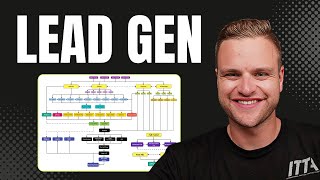
Matthew Larson presents a step-by-step B2B lead-generation funnel distilled from 12 years of experience. He frames growth as solving four recurring constraints — insufficient traffic, poor lead capture/nurture, over-reliance on referrals, and no way to monetize unqualified leads — and prescribes a complete system: fire on four traffic channels (paid ads, content, outreach, partnerships), capture leads with multiple lead magnets and a 30-day email flow, qualify prospects via VSLs/newsletters/appointment setting, and monetize every lead with tiered offers (services, intro offers, courses, digital products, referrals/affiliates). The talk is practical, tactical, and oriented toward B2B/service businesses in 2025.
Chapters
Hey everybody. In this video I'm going to dispel about 12 years of lead generation and business knowledge into hopefully a way that's very easy to understand and to follow. So this is all the stuff that I think they should be teaching in university. This is all of the stuff that you should be learning at your first job. And if you don't, well, this video can kind of solve that problem for you. So without further ado, let's get started. So this is the funnel that every single B2B business or any business that sells services simply must create in 2025 and beyond. The reason for that is that markets are becoming more competitive, they're becoming more sophisticated and more saturated. And the one off gimmicky tactics and gimmicks don't really work anymore. You need to have a complete marketing funnel that allows you to generate traffic and capture leads and qualified leads and have offers to entice them to buy. This wasn't always the case when you could kind of get away with that. Like at the start of Facebook ads or the very start of content, or the very start of cold email, you can kind of just do whatever you want and it succeed. Not really the case anymore. So in this video I'm going to show you how to build this entire lead generation funnel. It's the ideal B2B lead generation funnel and works for any niche, any country with any service on earth. I'm going to explain the funnel to you, the problems that it solves. I'm going to go over the top of the funnel, the middle of the funnel, the bottom of the funnel, the website, the sales process and the offers. And this is meant to be very casual classroom style content and I estimate that'll be 45 to 60 minutes. So don't pause or leave the video. It's going to be worth 10 years of university education on its own. It's going. It's basically the video that I wish I had when I first started in. What would that be at this point? 2012. So this again is the funnel. At the very top we have our paid ads, our content, our outreach, our partnerships. Those drive traffic which flows down into different lead magnets. When they download the lead magnet by filling out a form, they'll be redirected to the thank you page where it shows our offer. They'll also be added to the email flows where we'll begin to nurture. Then we can use a combination of VSLs, newsletters and communities and appointment setting to determine who's qualified and who's not. And when we have the information on who's qualified and who's not, we can send the qualified people to our website to book a sales call with us where we could sell them either a one time intro offer or a recurring service. If they are very unqualified, we can refer them to someone who can do it cheaper and collect a fee. We could sell them a course, we could sell them a program, we could send them a digital product that's $100 or less. Or if all EL fills, they may click on the affiliate links in our lead magnets and email flows, sign up for the software and then they will basically start to give us MRR because we're going to get recurring affiliate commissions. So this funnel is meant to solve the four problems that stop every service business from growing. This is very business to business, B2B focused, but it applies the exact same to any business that sells service. Whether that's consumer, whether that's brick and mortar, whatever. The four problems are not enough traffic, you don't have enough leads, all of your clients come from referrals and you have no way to monetize unqualified leads. So if you have ever hit a plateau in your business and you're not growing, one or more of these is going to be the problem. And after you solve this problem, you'll experience the next phase of growth and that's really all there is to it. I have helped over 550 businesses implement that exact funnel in their business. And in my opinion it has raised the bar in the entire industry. So as I help more and more businesses implement this, I predict that the market is going to experience like very big deal of rapid change. And if you don't have something like this and you just post on Twitter, or you just only send cold emails, or you just run Facebook ads and you don't have the entire funnel, I find it very hard that you're gonna even generate leads in comparison to the thousands of people I'm gonna help implement this. Whether if you just have one piece of the puzzle versus they have all 50 pieces or however many it breaks down to, it's gonna be very very difficult for you to compete. So pay close attention to this video if you've never watched one of my videos before. My name is Matthew Larson and I run two different programs that help business owners with their lead generation. The first is A is for any business owner that does more than 10k per month in revenue and the other is 10k per month agency, which is specific for agency Owners who want to build an agency from 0 or under 10k per month to pass that threshold. Our clients do 375 million per year in combined annual revenue. And I've also been a part of three agency exits myself. One in 2017, 2019 and 2023. The videos I make are meant to be as useful as possible and to have no fluff or editing or any visual effects or anything like that. I really enjoy making these videos and I plan to make 300 or more in 2025. And I want to release my lead generation book, which is currently in progress in 2025 as well. So let's get right into the four problems that stop every service business from scaling. I went over them before, but they're not enough traffic, not enough leads. All the clients come from referrals and there's no way to monetize unqualified leads. So like I said before, if you hit a plateau in your business, one or more of these is the constraint or the problem or the thing that's holding you back. And after we solve it, we're going to experience the next phase of growth. So the first one I talked about is not enough traffic, and this one is fairly obvious about not having enough traffic as a problem. And we solve this by running paid ads, by creating and posting content, by doing outreach and forming partnerships. So for your paid ads, that's stuff like Facebook ads, or YouTube ads, or Google Ads, or TikTok ads, or if there's some sort of directory or content site that is very relevant to your niche, those kind of ads in terms of content, it's going to be your Instagrams, Your Twitters, your YouTubes, your TikTok, your LinkedIn, your Facebook, your blog, that kind of stuff. For outreach, it's going to be cold emails and cold DMS and prospecting and cold calls, that kind of stuff. And for partnerships, it's going to be white label referral media partnerships. So like you speak at an event or go on a YouTube channel or a podcast, that type of thing, and then joint ventures. So the problem with, and the reason why this is such a massive, massive problem in anybody's business is that if people don't know about you, they can't buy from you. And this is the root of most problems in service businesses. People simply do not not know who you are at the degree or the scale that they need to. If you just doubled the amount of people who knew who you were, you would likely double your revenue. So the four main ways to get people to know about you, which I went over 20 seconds ago, are paid ads our content, our outreach, and partnerships. And each of these things are important because we are essentially trying to do the same thing with each of them. They're just different methods to achieve the same goal, which is to get more people to find out about us. They each have their pros and cons. For example, paid ads are very scalable and have massive, massive reach, but they cost money. Content is very, very good for building authority and building a following, and it's free, but takes a lot of time to produce. Outreach is very cheap to contact as many people as possible, but it's also the least authoritative. It's going to be the hardest to close, and it's also very time consuming to reply and go back and forth. Partnerships are probably the hardest to form, but they're also going to be very scalable and very profitable for you. So to recap, each of these have one goal, and that is to get more people to find out about you. But the methods that we do that are different. The thing that I think that people need to realize is that we need to do all four of them, not just one, not just two. Some of the worst advice you can possibly get, in my opinion, and a lot of people give this advice, is to stick to one channel and master it. If that one channel changes, you are absolutely screwed. And that happens all the time. If it stops working, if you get banned, if the algorithm change, if the channel gets saturated, whatever, you're essentially screwed and starting at zero. So you also want to have all four of these because each of them is going to make the other ones more effective. What do I mean by that? So, for example, if someone has seen your ads and content before, they're much more likely to respond to your outreach if they were to get a cold email from you. For example, if someone clicks on your ad and you have a ton of content on your profile, they're much more likely to click on your link or take whatever action you want in your ads in comparison to if your profile was bare and dead with no posts. If someone is looking for a partnership with someone, they're much more likely to choose you if you have a ton of content. They see your ads everywhere. They got outreach for you in the past because it's just less risky for them in their point of view. You know, you're everywhere, you're not going anywhere, you're on the way up, they want to associate with you, that kind of stuff. There are many examples of how these four traffic Drivers interact with each other way beyond these three. And it is important to create and grow and systemize all four of these. So we want to be firing on all cylinders, if you ever heard that term before. Our outreach, our partnerships, our content, and our ads. Let's go to the next part here. The second problem is that we don't have enough leads, and businesses typically don't capture leads and nurture them properly. And this problem is very closely linked to the problem of not having enough traffic. But it's not exactly the same. It doesn't matter how much traffic you drive if it's not the right type of traffic. And it doesn't matter how much traffic you drive if you don't have assets and a system in order to capture, capture and nurture it. So if you were selling agency services and you just drove a bunch of traffic for saying something ridiculous and you got basically canceled, like, that's not really the right traffic, has to be the right traffic from your target audience as well. So in the first problem, we talked about firing on all cylinders with our content, our paid ads, our outreach, etc. In this part, we want to build different lead magnets and different assets that we can trade in order to for them to give us their name, email, phone number, website. Once they submit the form and we have that information, they'll begin to receive our email flows. They'll see our offer on our thank you page, and they'll be pushed further down the funnel. So the three main tools we want here are the multiple lead magnets, typically going to be 6 to 12, an email flow that's 30 days in length, and a thank you page that shows our offers. So if you don't know the term lead magnets, I think most people do at this point. But they're things that deliver value for free, typically documents, PDFs, checklists, these mural boards that I'm currently showing you could be thought of as lead magnets as well. And we trade that for their contact information, their name, their website, their phone number, their email, their revenue, whatever. They go to the form with that information, they fill it out, and then now all of their stuff is inside our CRM, which is our customer relations manager, and we can begin to market and sell to them. Like I said, once they filled out the form, they'll be automatically added to our email flow and we will start nurturing them automatically over time. So on day one, they'll get email one, day two, email two, three, etc. And finally, once the form is submitted, they'll be automatically redirected over to our thank you page. It's just a setting you can put in every form, and that is where we'll show them our offer. So we want to think of these lead magnets as many courses or guides that completely solve one problem each. And we want to break down our service into categories to find these lead magnet ideas. So here is a good example. If we had a YouTube agency, the categories could be ideas. They could be scripts, titles, thumbnails, editing, camera setup, microphone setup, speaking on camera properly, analytics, funnels, and so on. So these are 10 examples of all of the things that make up success on YouTube. And that is how we want to think of our lead magnets. They're the different problems, steps, objections that have to do with our service. We want to have multiple lead magnets for two main reasons, at least two reasons. And these are the main ones. If we just had one lead magnet, for example, if we just had a thumbnail lead magnet, there's always going to be a percentage of our target market who simply does not have that problem. They already know how to make thumbnails in this case, or they don't know that they even need to. And if we just had a thumbnail lead magnet and nothing else, we wouldn't capture that segment of the market in terms of leads. They just wouldn't be interested and they wouldn't download and they would just move on and forget about us. The second reason is that each and every one of the steps of our service represent a problem in the mind of our leads. And if we don't have something to completely address and overcome and ease their concerns about that problem, that is a reason to not buy from us. If they don't know what to do for ideas, if they don't know what to do for scripts or how to make titles or thumbnails, these are all things that would prevent them from buying our YouTube service. So in that specific situation, it doesn't even matter if we have, you know, all of these nine here. If they don't know how to create a funnel and they don't know how to capture the leads from the YouTube videos, they're just going to think it's a waste of time and they're not going to buy from us. We need to have one lead magnet for absolutely every problem. The next thing we want to do, and we can build off this with our email flows. Just like we thought of the different steps and thought of pieces of value that we need to produce with our lead magnets, the ideal Way to think about our email flows is to brainstorm 30 different FAQs or objections and then address them one at a time, one email each over the course of 30 days. So we brainstorm the 30 FAQs, create an email, send one per day. We can use different stories, examples, case studies, how to to mix it up and keep it fresh if we want. So some of these things are what, like a good faq, what makes up a good thumbnail? Or where do I start with script writing? Or how do I write a good hook? Or what are the best settings to set up my channel? Something like that. And there's going to be 30 of these that represent the most important ones. And because you know your service, you know it's the service you're selling. After all, you will probably know these very quickly. And if not, you could always use ChatGPT. The goal of the email flow is to address and overcome one objection at a time until there are none left. And when there are none left, they're just going to book a call with you. That's just how it works. And to wrap this entire stuff up, we'll introduce our offer for the first time on our thank you page. So on our thank you page we'll have a sales letter answering all the questions and building on what we did here, a VSL showing our face. And then we'll have a button where they can book a call. So basically we have driven our traffic through the funnel. Let's just say we're using paid ads and content for this, let's just say Instagram content. They have downloaded a couple of our lead magnets here. They are redirected to the thank you page by submitting the form and they're also added to the email flows by submitting the form. Then over time, you know, we have their information. Our appointment setter will reach out. They might join our community, if we have one, they might watch our vsl. And because they're on our email list, they're going to get our email newsletters, right? Very, very, very good. And throughout this process, basically there's going to be two main ways that we can qualify them. The more they interact with us and because we collected their website, their revenue, that kind of stuff on the form, we're going to be able to kind of determine who's qualified and who's not qualified ourselves. But through our content, you know, through our VSL and newsletter and email flows and lead magnets and communities and stuff like that, they're also going to self qualify quite a bit and they're going to go to our website and they're going to go through our process and they're going to book a call where we can sell them. Very, very, very important. The next step and the next problem is that all of the leads and all of the clients come from referrals or the network. And don't get me wrong by when I say that referrals and having a great network are very, very good, means you're doing something right, you're delivering a great service, you're very personable, you make friends easily. But we don't want to rely only on networking and referrals because they're out of our control. When we rely on these things, we're essentially relying on other people to grow our business for us. You cannot scale referrals. You can't just go, oh, let me go pick up some referrals. They're unpredictable. Great, but unpredictable. When we rely only on referrals, we will never have the consistency of lead flow to be fully confident, and we will live in a constant state of anxiety and wondering where our next client comes from. We're not going to be able to reinvest in our business or hire more people just because we're not going to be confident enough to do so. The nice thing is that if you solve problem number one and two in the sense that you're now driving traffic and you're now generating leads, you are no longer only getting clients from referrals. That just is no longer true. So the solution to this problem is a byproduct of problems number one and problem number two, you are driving traffic, you're capturing and nurturing and qualifying leads. Now you're no longer relying on referrals. It's just very, very good. The next problem, and the final of the four, is that 99% of leads are unqualified and you have nothing to offer them. Of the people who see your ads and see your content and receive your outreach and, you know, are sent to you by your partner, 99% of them are going to be unqualified. 99 out of 100, no position to buy your service. This is for a variety of reasons, but most commonly it's going to be price or need or fit. Maybe they can't afford it, maybe they're already working with someone else or have an internal team. Maybe it's just not relevant to them. Right? It doesn't matter the reason. This is going to be true in every niche and in every industry, and it's normal. There's nothing that you or I or anyone is going to do to change the fact that 99% of people are going to be unqualified. It is like gravity. You know, it's a law of the universe. We do not solve gravity by thinking of ways to overcome it. We solve it indirectly, such as with the creation of an airplane or temporarily using enough energy with a spaceship. Very, very similar here. We solve this problem by not trying to make our leads more qualified. We solve this problem by creating different offer so that we have something for everyone. We want to have something for all levels of the market so we can monetize absolutely everyone who comes into contact with us. And these offers are going to be our service, our intro offer, our referral partnerships, our course, our program, our affiliate links, and our digital products. So if they are qualified with price, with fit, with need, they can buy our recurring service or our intro offer. So that is, you know, right here, they've gone through the entire process. We've determined they're qualified, and now they're going to buy on the sales call. Simple enough. If they are barely unqualified, meaning they just can't quite afford it, or they just don't need it yet, or they want to learn to do it themselves, they can buy your course or program, or you can collect a referral fee for someone who can do it for them cheaper. If they're very unqualified and just like not even close, they can buy your digital products or sign up for your software using your affiliate links. And when you do it like this, and when you have all of these different offers, you'll find that you will actually double your revenue, but it's more like three to five times your profit. So if we think about that from a logical standpoint, digital products, affiliate commissions, referral fee, courses, programs, those are going to be nearly 100% margin outside of some payment processor fees and software. So if you were at $1 million in revenue and a 25% margin, which is respectable, that is a $250,000 in profit. But if we got another million dollars in revenue through our digital product, through our affiliates, through our courses programs, referral fees, that's another million in revenue, but it's nearly 100% profit. So instead of 250,000 now, you would have 1.25 million in profit just by having this kind of stuff. These offers are very time consuming to set up originally. Like it's not a quick thing to make a course or develop referral partnerships or make a program or do digital products or start promoting your affiliate links. But once you do, it's going to be kind of on autopilot. They're just going to exist and they're people are automatically going to go to your digital products or your courses or stuff like that. And if, you know, if these things didn't exist, it would be more like they're unqualified and they just have nowhere to go and you're just wasting them. That's the situation for most businesses. So one of these four problems is always going to be the biggest for you at any given time and it's going to be the constraint that stops you from growing. Like I've said many times throughout this video, once you solve it, you'll experience the next phase of growth in your business until you peak with your current setup and then another one becomes the biggest problem. Then you solve that one and you experience the next phase of growth and really all lead generation and growing a service based business is is solving the most pressing of these four problems over and over. So maybe right now it's the traffic that's the biggest problem, but now you start posting ads, content, doing outreach, that kind of stuff. And now the biggest problem is you have no way to monetize the unqualified leads. And then you solve that again and now it's you don't have a good lead capture and nurturing system. And then you solve that and now it' back to traffic being the constraint. So to solve each of these, there's only a few things you can really do to get more traffic. You can increase ad spend, make the ads more effective. You could post more content or make the content more effective. You could do more outreach or do it more effectively. You could form more partnerships or increase the value of each partnership. Like these are the really the only eight things you can do to drive more traffic. Everything else is going to be basically a subset of these eight things. To solve problem number two, the only real options are to make more lead magnets, make those lead magnets better, make better email flows, or make a better thank you page. That's it. Outside of that, there's not much you can really be doing. Problem number three is solved by problem number two. So to solve problem number three, you do these better. And to solve problem number four like the only real options are to make sure every offer is created. We could improve the value of each offer or do a better job marketing each offer. There's not much that can be done for any of these things and that is a blessing and a curse because it will bring you clarity. You'll know what you need to do. So, with that being said, good luck, and let's get started.
More from Matthew







Everything I Would Change About This Ecom Email Marketing Agency (3 HOUR LIVE AUDIT)

Everything I Would Change About This Meta Ads Training Business (3 HOUR LIVE AUDIT)


