Everything I Would Change About This Meta Ads Training Business (3 HOUR LIVE AUDIT)

Matthew Larsen audits the Meta ads training company Where Are You, praising the creative messaging but flagging that the offer appears too late (should be within 15 seconds) and proof within 5 seconds. He walks through each social platform, finding sparse branding and missing activation points like newsletters and webinars, then lists five concrete fixes to tighten the funnel.
Chapters
So I was on Instagram and I was scrolling a little bit and I saw this ad for this company who essentially teaches small business owners to run their own ads so that they don't have to hire or pay an agency. And the company that's selling this training appears to be spending quite heavily on their own Facebook ads. So I kind of just wanted to see what their own ads and funnel look like. And naturally one thing led to another. And out popped a 3-hour live business audit. And me personally, at least, like, I don't really like most YouTube business audits. I find them either full of surface-level garbage where like not much is really learned or not much value to be had, or it's just more like, look at how much better or smarter I am than you type kind of stuff. So this one is going to be different. In this one, I'm essentially going to share my screen for 3 hours. We're going to go over, you know, their industry, their ICP, their offer, their messaging, their funnel, their paid ads, their content, and some other stuff in truly like excruciating, painstaking detail. So I find the best way to learn is to look at businesses in the real world. So with that being said, let's get started. So the focus of today's audit is going to be on a company called Where Are You. They're Australian-based and have operations in the United States as well. And we'll get into it, but basically they sell 2-day in-person live workshops to teach you how to run your own Facebook ads if you're a small business. So this is the founder, his name is Brandon, and this is basically what we're going to be doing today. So before we get started, I always make an introduction and disclaimer. I'm auditing this business using publicly available information only. I have no inside or background information on this business, and I'm not revealing anything that you, you can't go and find yourself. This includes the industry they serve, the ICP, the offer, the messaging, the ads, the content, the funnel, and anything else that we find. And I'm doing this for purely educational purposes. I'm not looking to roast or offend anyone. I have no motive or incentive besides making educational content. 99% of the time when I do these audits, I don't even know the person. I just picked them because I saw their ads in my Instagram feed. And again, this is my information, or this is my opinion only, and it's based on incomplete information. We cannot see what's happening behind the scenes. We don't really know what their true intentions are. And every audit on this channel follows the same checklist. All the frameworks used are mine and are based on my opinion and experience. It's recorded live in one sitting with no preparation beyond gathering the necessary links. And again, this audit is designed to be completed within a reasonable amount of time. My conclusions could change if I sat down for 10 or 25 or 50 or 100 hours and looked through this. So about the video that you're going to watch here. This is ultra long form, and I think that ultra long form is very important because you just cannot learn that much from a 10-minute highly produced YouTube video yelling at you to do X, Y, and Z. You need to see the full picture, including the real-time analysis, because a lot of success with this kind of stuff is based on nuance and circumstances. And the reason that most people make these 10-minute slop edited videos is because they just don't know enough to make a long-form Ultra long-form video, and they would just embarrass themselves if they did. It sounds scripted. We're gonna be going through a checklist and using that as our guide, but everything is unscripted and unedited without any prior research or information. We don't hide behind an editor or a teleprompter on this channel. Business is not a TV show or a YouTube video or an Instagram post where everything is perfectly edited and put together. And that is the kind of environment I wanna try to recreate with these audits. This is based on a real-world business. Theory is one thing, reality is another. And you'll find that a lot of things that we're going to go over today aren't a matter of, you know, right or wrong, or only a matter of right or wrong, but they're also on a spectrum, right? You know, this is not— it's not, are your ads good or not? It's how good are your ads, right? Some people are great at one thing and bad at another, and you'll see that a lot of the time in these audits. And some people are doing a great job at one thing, but even if they like are doing a great job, they could still be making 5, 10, 15% improvements that could take their profitability to the next level. Again, this is imperfect information that we're working with. It's public-facing only. We're only able to see what's publicly available to us, like their offer, their ads, their content, their funnel. We can't see anything on their back end such as their outreach, partnership, sales, fulfillment. And we don't really know what their true intentions are or their full intentions are rather. I've laid out the audit checklist in what I would view as the most logical order, but everything in a business and this audit is so intertwined that we're going to be bouncing back and forth a lot. And we're going to make it easy to try to like follow, but, you know, keep up at the same time. And then this is going to be a very long video. It's timestamped. If you want to look at it in multiple sittings, you're also going to be able to download this completed document in the link in the description and the pinned comment. So the things that we are going to cover today: industry, ICP, offers, funnel, messaging, proof, paid ads, content, search results, activation points, and then we'll finish it up with top 5 action steps and recommendations. What we're not going to cover today are their outreach because we just can't see their cold call or their cold email, right? That doesn't make any sense. Same with their thing with their partnerships, their email flows. You know, a lot of the time that takes days or weeks or even months to fully go through it. Not really practical for this video. We're not going to look at their lead magnets if they have any. We're not going to judge their appointment setting just because I don't want to put my phone number in and get spammed on all these videos so many times. We obviously are not going to get on a sales call with them and judge them. We obviously can't see their operations and fulfillment or onboarding. So basically, we're going to be looking at their full marketing client acquisition system, or at least the parts that we can see. This is an example of what an ideal system would look like. So we can see their ads, we can see their content, we can see their activation points, their conversion mechanisms here. We can see their offer and their website and stuff. This is an alternative view of what we're going to be looking at. Basically, their paid ads and their content drive traffic to their sales page, which has an application form which either qualifies them or doesn't qualify them. Then they can book a call. When they book a call, you'll be redirected to their thank you page, and then so on. So it's just a different view of what we might be looking at. So we need to learn a little bit about the business. In this case, it is called Where Are You? So we are basically going to be making a best guess. A lot of the things will be obvious, but some of them will be judged based on, you know, what we are going to infer. And before we like get into, you know, the ads, everything, We kind of got to see the full picture. We got to go and like see, and I have a bunch of links here, their website, all of their stuff, all of their content, all that kind of stuff to get a full picture of the business. We're going to dive into each of these parts individually, of course, in painstaking detail. So don't you worry about that. But we kind of got to get it all first because we want to basically try to accurately describe their industry, their ICP. Their offers, and then we're going to try to find their price link. But a lot of the time that's not publicly available. So this is the website here first, and I'm going to go to a different view when I do this. So when I am on the document here, I'll be on this view. I'll try to change back and forth efficiently, but when we're going through the stuff, we'll be on this view. So I'll be in the corner of your screen. I'll try to center myself, but we, we need it like this because we need to see the whole thing a lot of the time. So this is kind of funny. This is our website. There's only 2 types of people who come here. We only send traffic from our ads. So we can expect this to be a very ad-heavy business. You want to come to an Aussie workshop or an American one, or you're a competitor, right? So not too much on the website. So not too— probably not going to go over this website too much, right? So this is going to be their sales page.
That—
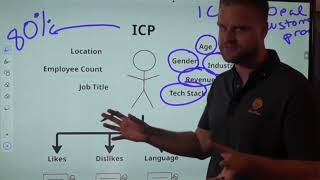
let's just see, this is where it goes. And I believe in my prep work that their ads went to this page too. So the unfair advantage for business owners who want consistent leads is their headline. And then their page— this is the Australian version, but the American version is the exact same, just with American stuff. So we give a good example. Looks like they have quite a bit of proof. Now that is a monster amount of proof, which we'll get to later, but that's— this is what everybody should strive to essentially recreate. Look at it. Oh, they must be doing some serious numbers. So very good. So this is their page still. This is their call booked page if you go through their application, and this is their thank you page. I have successfully Funnel hacked them for this video. Sorry to them. This is the founder's Instagram, and this is where he posts content. And this is the page that he runs the ads from. This is the Facebook page where it looks like he posts and runs ads from. This is his YouTube channel. This is the LinkedIn. I couldn't find a Twitter account if there was one. That would be my bad. This is the search results when you search up the founder. And this is the search results when you search up the business. So if we look at his stuff, we're basically going to infer that, you know, his industry is basically all business owners, but probably small business owners, right? Because, you know, people are flocking to build their own ads. And, you know, this to me implies there's like the information on this page, like if you're getting over-the-shoulder support and that kind of stuff, It implies that your business, you have enough profitability to run ads, but you're not necessarily an elite business that will have a huge marketing team, right? So to me, this industry is small business owners, and that's very clear. I don't think anybody would really argue with that. And then we're going to put USA plus Australia, which is not really like relevant. This is just any small business owner in the countries they target. They could probably very easily go in the UK, Canada, Germany if they translated their page, or most Germans speak English, but Anyway, as far as their ICP goes, like realistically, ICP and industry are hopelessly intertwined. You can't separate them, but they're not really the exact same thing either. All right, so small business owners, a lot of people would consider that the ICP, but that to me is the industry. Your ICP is like the actual type of person who you'd talk to on a sales call, and that's like their job title. That's, you know, their age, if that's relevant, their gender, if that's relevant. Like their tech stack. So to me, like, this is small business owners. If you look at a lot of the ads that he's running, it's very like, you know, you need to fire your agency, your agency never gets any results for you, basically, right? So it's business— the ICP is like business owners who, you know, want to run ads. I would say like, this is going to be like $1 million per year revenue type thing.
Yeah.
Because to me at least, you know, they're not going to be, you know, who like pay agencies, you know, about $3K per month. Like this is who I would, with imperfect information, like this is who I would consider the ICP to be. And we'll go over this in detail later, but this is very important for context. So like it would kind of be like this, right? Where You know, let's just say you have a roofing company or a financial advisor company and you're doing a decent amount of revenue. You might have enough marketing budget for $5K, $10K per month, but when you pay someone $3K per month within your $5K budget, that obviously, even if they did a good job, which they probably won't, like that's going to eat a significant part of your budget. Like it's for people who are thinking about running ads. So I would say like under $1 million on average, at least, probably not. So I'd say like that is the ICP. And if we look at the work, like the offer, this is a 2-day in-person workshop to learn how to run your own paid ads, right? And I would say like this is an example of it's kind of obvious of what their stuff is. And if you go to basically Their ads, it's very similar. Like, this is to me, you know, thousands of Australian-based business owners have realized that marketing agencies are taking advantage of you. So like, that is exactly who it's for, and I think it's well done, right? So let's see if we can try to find the price of this. So I usually put it in Google, and Google can tell you A lot of time it's pretty good on Reddit. A lot of the time this is also quite outdated. I block Reddit on my computer so we can't go and look at it, but like, we're not going to judge it based on this really, and we can't really find it on their website or funnel as far as I know. To me, like you can't really find on their funnel. So we're going to leave the price blank. So the first thing we're going to do, because we kind of, in my opinion, have got the lay of the land here. You know, he's got a marketing agency award. His business is called F Your Agency. Like you got it right. So now let's get into the principles. Let's get into the industry first. And this is kind of important and something that. Like, in my opinion, people really need to pay more attention to and really need to know. Your industry is much more important than your offer. Like, you could say that your offer is your second most important thing. A lot of people don't talk about how important your industry is. And an example of this, let's say that you just— let's just say you, you do Facebook ads to generate leads, right? That is the same service, that's the same offer, et cetera. But who do you think you would have a more successful business serving in terms of industry? Wealth managers or dog walkers, right? One can just pay you so much more and will likely become such a better client that it really matters a lot. Like your LTV matters in as a business, of course, LTV, LTV, LTV. Everybody loves that, right? But to some degree that your clients or your industry's LTV matters just as much, if not more. I don't know how much dog walking services are. I'm sure it varies. But let's say you— it costs $100 and then someone pays, let's just say they pay $300 lifetime. By the time you, you know, the labor involved, the time you pay for all the ads, like they're probably breaking even at best on their ads. Versus a wealth manager who, you know, they have a $50K, $100K LTV for the same work, the same offer, the same team. It's just, you know, just wanted something to think about. And to me, like the ways that we evaluate an industry are how high is their LTV, not your LTV, their LTV, how easy are they to reach, not only in theory, but how is it easy to get someone a call? Like an example of that is outreaching Shopify stores, very easy, right? But very difficult to get them on an actual call. Is the market large or how big is it? Are the problems extremely painful? What is their spending power and is the market growing or not? So let's go into this industry audit here. So basically this is a framework that I made to evaluate an industry. I'm not saying it's the framework or the best thing, but it's useful to give tangible criteria or like A tangible way to evaluate an industry that's standardized and fair. And there are 6 questions and you can score them 1 to 5. So basically their customer LTV, this would range like very widely. You know, if they did it for a roofing company, you know, a roof is probably $8K to $10K in gross LTV. They do a financial advisor, you know, it could be up to $50K. If they do a restaurant, But on average, I would say that because this is a wide-ranging kind of ICP, I would say that this is probably going to be in the 3 stars when you account for the people who have an ultra-high LTV and then a low LTV. I don't see how it could probably get into the 4-star. I don't think people would have on average $20,000 LTV as a small business, but $1,000 to $5,000 is going to be like dragged up in my opinion, by the people who have an ultra-high LTV. So I'm going to put a 3. And next is, are they easy to reach? And like, you can— there's a few ways to generate customers, right? There's 4 main ways: paid ads, content outreach, and partnerships. And then like how easy it is to build accurate lists. So like number 1, they can only be reached through one or easily identified. That's not true. Like you could use paid ads like these doing. You could probably do it with content. You could do with outreach partnerships. I would say a bit awkward. You probably could, but I would say it would be a bit awkward. So to me, they can be reached through at least three, and then you could probably build an accurate prospect list. So I would say that these are four, and there's just so many of them that. It'd be easy 4 out of 5 in my opinion. But I would say that partnerships and outreach— partnerships is iffy, outreach is maybe like a 7 out of 10 versus paid ads and content would be a 10 out of 10. So I would give this a 4. What is the market size? So like, to me, like, we don't know the nature of this audience, we don't know his intentions. So like, I basically do this like, how many customers do you need Like, or what percentage of the market do you need to hit your goal? And if we don't know the goal, which we won't, we're going to put 10 million. To me, like, this is going to be 5 stars. There's so many small businesses, so much revenue. Like, the market size is an easy 5 out of 5 in this case to me. Oh, I had to do a little pause and fix it. The template wasn't correct. So the 4th is significant pain. This is how painful or urgent is the main problem experienced by customers in this industry? The first is, you know, 5-star, it would be legally required, immediately urgent, or losing money every day. You know, auto insurance, legally required to drive a car. You know, compliance, you're getting fined every day, right? Not really in that category. Expensive, recognized problem with an existing budget. It's definitely not a 1. It's definitely not a 2 because people need customers. It's not necessarily that they need a Facebook ads workshop, but they need customers, right? So they need to be able to generate it. And Facebook ads workshop will teach them to do that. Real problem, but they can wait. Expensive recognized problem. I would say this is probably going to be an expensive recognized problem with an existing budget because a lot of his marketing, for example, and the ICP in general, they've like, I've been paying an agency to screw it up for them, right? So they know they need this. It's a recognized problem and they already have money for it, but it's just a matter of getting them to do it based on his workshop themselves instead of hiring an agency. In terms of spending power, can the average qualified customer comfortably afford the normal price of solving the problem? And for B2B, compare the price with annual gross profit. And for B2C, compare the price with annual household income. So this is B2B. So let's just say the ICP is about a million dollars. I'm doing this math on my phone here, and let's just say they have an eighty percent gross margin. So that's eight hundred thousand dollars. Let's just say I don't even know. Like his workshop said three thousand a month there. It's unreliable. But even if his workshop was eight thousand dollars, like this is five stars here because if they had a million dollars in revenue estimated and eighty percent growth part. Profit, like that is 80%, $800,000. And if it even— it's $8K. So I think it might probably be less than $8K. So that's a 5 out of 5 for me. For market direction, is the industry growing, remaining stable, or declining? Use the average annual market growth over the previous 3 years. Choose the American one. Let's just say Is the American small business market growing? By what percentage per year? And my phone is not loading. So it says the total number of operational small businesses in the United States grew at a modest rate of 0.28% to 1% per year. I don't know. We're gonna give this a 3-star, like total businesses, because it's gonna be tough to see like how many businesses there are around the $1 million ICP range. Like just tough. We're gonna put it as a 3. So 3, 5— or sorry, 3, 8, 12, 17, 21, 24. So to me, yeah, this is kind of what I would say too. This is a good industry in my opinion, at least a good industry when you take into account the offer and the ICP of the 1 million too. Like if I would say this would be a bad industry if you're targeting people who like are desperate and can't get any, like, you know, they're basically going out of business, but for the ICP, the offer, and the industry, I would say it's definitely good, 24 out of 30. And like, to— this is what I mean, like, these are separate things, but they're forever intertwined and you can't really look at them separate. So to me, like, for industry notes and scores, like, I would say this is a good industry plus IC plea plus offer combination. Like, this could also be a very bad one if If you didn't match these properly, which he did. So I would say to me, for his industry, like to me, everything is important, is in place, executed at a high level. So I'm going to give the industry score of 5 out of 5 here. He's doing everything right as far as he's— well, there's not much to do. There's so much to do, right? But like this short version is he's matched the industry to the ICB, to the offer very well and scored at a good level. So very good though. Next is the ICP principles. And we've kind of gone through it. But there are a lot of— there are different ICPs, avatars, target market level of customers in the same industry, right? So like, I could be selling roofing leads as my— I could have a lead generation agency for roofing companies. I would have a lot different result if I sold, made my messaging, made my offers to like solo owner-upper roof solo owner-operator roofers, you know, one, one person, maybe a couple of members in like one crew versus a multi-state professional roofing conglomerate, private equity backed, you know. So like very different type of thing. And industries can be good or bad based on the ICP. We evaluate them separately, but they are intertwined. And a large part of success in basically any you know, business is creating offers, messaging, funnel, and ads that appeal to your ICP and only your ICP, like not other levels in the same industry. And to a large degree, this is not true for everybody, but I would say 80% of the time, maybe more, like you scale your business by scaling the ICP, not by just getting a billion customers. Like this is an example where he probably would get like a lot of customers. And if you have an e-commerce brand, for example, you have to get a lot of customers. But if you do any like skilled service work, like it's much better to grow your marketing agency by continuously leveling up and leveling up until you get to Fortune 500 companies. It's much better to grow your roofing company by doing, you know, larger and larger and larger homes. It's much better to grow your landscaping company doing luxury landscaping other than just a billion front lawns, right? Not really the case here, funny enough, but moving on. So the first thing that we want to do is we want to see if we can narrow down the ICP by characteristics. So this part 1 is one that we're probably going to try to do on our own, and then part 2, or action step 2, is what we're going to do based on what he has done. So for age, like, I don't think it's that relevant, but I would say that this skews older. Like if I was going to do something, I would probably say 35 to 54 type thing. Under 35, I think they would either be less likely to have a business, especially a successful one, and over 54, probably too old. And this, remember, ICP is average. ICP should be like, your ICP characteristics should make up about 80% of your customers. There will always be extremes on either end. This should make up the average. So on average, I would say 35 to 54. On gender, I would say it's not really relevant, male or female. Annual revenue, kind of like I said, well, we're going to get United States or Australia currently, because this is an in-person workshop. So for annual revenue, like to me, it, you, it really has to, like, it's gotta be about in the $1 million range, like $1 million to, you know, $3 million range, right? If it's more than that, very high likelihood they already have ads figured out or can indeed just hire a really good agency. Less than that, I would say in my view, at least, you know, they just probably don't have enough money. to do ads, or they're just on average, of course, I would say like this is going to be about the $1 million per year range. For job title at that level, they probably don't have anyone else they'd be sending. So it's going to be the founder and the owner. Employee account, I would say is not necessarily relevant here. Tech stack, also not necessarily relevant. So I would say like Age, revenue, and job title. I would probably say like business type too would be a service business to generate leads because I believe they say that on the site or in the ads maybe. I don't think like plumber, finance broker, like these are not e-commerce companies basically is what I'm saying. So like we're gonna go business type, service business, service-based business. So I think on the application form it disqualifies you if you have a software and it disqualifies you if you have an e-commerce store. So service business. So 35 to 54 service businesses, annual revenue in the United States or Australia, and they're probably going to be the founder or owner on average, at least 80% of these. And this is important because this is really going to be useful and important for our messaging later and in the next step. But like also like when you're exporting an outreach list, we're not going to do that in this video, or you're actually targeting your ads in the platform. Like, you can, like, you can put 35 to 54 in there. You can put United States or Australia in there. You can't put revenue range, you can't put business type, but like, you do not want to be advertising to people 34 or younger or 55 or younger because on average, remember, that's probably not going to be what you need. So basically, let's get these shared characteristics. So Age 35 to 54, United States or Australia, service-based business, founder or owner, about $1 million per year range. So one, one like kind of thing that is— can be useful for the revenue. Like, if I really wanted to get granular and export a cold email list, which we won't— like, a lot of the revenue range when you have it in your exporting list isn't very relevant, but employee count is a good proxy for revenue level. Like, if you have 10 employees, 10 company email addresses, you probably are in this range, right? So ICP score and notes, like I think that he has done a good job, to be honest. I would give him a 5 out of 5 in terms of how perfect his marketing is for this ICP. We're going to go over that soon, but I think it's very well done. So the next thing we're going to go over is the offer. And basically what we're going to do here is we need to know a lot of these principles first because there's a lot of principles in making a good offer. So the first thing that you really want to understand is that the offer is only good or bad in the context of the ICP, right? Like if he was saying that, you know, like if his messaging, if his all of his marketing was targeting Fortune 500 companies, this would be a terrible offer, right? If he was talking about all his messaging like, you know, don't go, you know, is your business about to fail? Use Facebook ads to save it. It would be a terrible offer because, you know, their spending power would be down. You know, their painful problem, but they can't afford it would be bad. So like this offer to me, like does it make sense for this ICP and only this ICP? I would say yes, like it does, and I would say that's great. The next thing as an important principle is like is what they're selling already universally understood? You don't want to have or You could, I guess, but you don't want to necessarily have to educate the entire market about your services. You want to already sell something that's already understood. So Facebook ads and how they relate are understood, especially in that ICP. A lot of his marketing is about agencies. Like, they're literally hiring, you know, someone to do it and failing, and they're mad about it. So yes. Is what they're selling already in demand? Yes, they're like literally already, like I just said, hiring someone and failing and they're very upset about it. So yes. And do people have to buy this? Have to buy this? Basically, legally they don't have to. You know, functionally they could get away without it, but like they have to get leads, right? They don't necessarily have to buy this, but they have to get leads. And in the context of You know, they've already hired an agency which is always marketing and filled. It could be. I would say they don't have to buy this in the same way that they have to buy compliance or auto insurance or something like that, but I would be definitely torn whether to check this off or not. I'm going to leave it unchecked for now. So basically, let's go into an offer audit a little bit. So The first check that I usually do, like, is this built for cold traffic? There's a lot of offers that, you know, don't really make sense to someone who doesn't know or trust you. And they just need a lot of education, a lot of content, and a lot of stuff like that to basically understand what you sell and why they should want it. Cold traffic is like you're running ads to it, which he is, or you're doing outreach. Like, they don't need to know, like, and trust you for it to be appealing. And this is one of them. Like, to me, this is immediately understandable and desirable within seconds, like, especially in the context of the ICP who's probably hired a lot of agencies before and failed. Okay, yeah, I should just do it myself. You know, that makes sense to me. Like, it is between a 4 and a 5 just because the details around it, but I would say this is gonna be a 5. How badly does your ICP want or need the result? Like the strongest offers solve urgent, important, expensive problems connected to something the customer already wants. To me, like it's not necessarily a four because there's nothing making them doing it, and it's not really a measurable result. Like he can't say you're gonna come to our thing and guarantee that you're gonna get customers. This is a very strong 4 in my opinion. It solves a real valuable problem, but they can wait. In the context of the ICP, who's probably already like needs to expand, I don't think they can. It's definitely not a 1, it's definitely not a 2. I would say it's definitely not a 5 on second thought because it doesn't produce a measurable result and it's not legally required. I'm probably gonna give this a four, to be honest. Like in the context of the ICP, it's a four. Maybe generally it's a three, but it's an expensive problem. You know, like they're like think of the ICP. They have this ten k a month marketing budget. For example, in our scenario, they're spending three four k of it on an agency who's getting no results and they need leads, right? They probably at this point have staff. They need to get people work. Like, so I would say this is a four. Check three is does it create obvious value? Does it make them more money or save them time or reduce costs or reduce risk or increase speed or multiple? So let's just say this: this makes them more money. Don't really think it saves them time. I think it reduces costs because now they don't have to pay an agency. It probably increases speed because they don't have to wait. It definitely doesn't reduce risk in my opinion. So it does 3 of these things. So it does create obvious value, right? So I wouldn't say it's guaranteed to make them more money though, like if they botch it. But the implication is it makes them more money. I would say this is a very strong 4. I don't know if I would say it's a 5 because I wouldn't say it's implied it's going to make more money. It's not, you know, guaranteed to make them more money. Definitely saves time because— or no, it definitely doesn't save time because now they have more work. Definitely reduces costs and it Probably debatably increases speed. I give this a very strong 4, but I don't think that's a 5 out of 5. For perceived likelihood of achievement, like, if we look at their shit, like, that has got to be some of the most, like, video testimonials I've ever seen. Like, I could scroll down, or I could scroll down on the client win screenshot. Like, this has got to be I'm scrolling very fast and very aggressively, and look at how long that took. If you were scrolling on your phone and kind of actually like reading, you could functionally scroll these forever. We'll get back to this in our proof process later, but this is, you know, a 5 out of 5. It's very nicely done. So the clear result or deliverable— does the customer know what they're buying and receiving? Ideally they sell a result, but if you don't control the final result, set a clear deliverable because they don't really control the final results. So their deliverable is this 2-day workshop. So it's definitely not 1. It's definitely not 2. Let's see.
3.
It's definitely a clear timeline, I would say. But the problem with it is the timeline is, you know, quite a ways in the future, as well as the fact that you also have to make preparations and arrangements to do it. To me, this is not a 5. It's not a 2, or it's not a 1. It'd be in between a 3 and a 4. To me, this is a 4. Like, it's a specific result. You're gonna learn to do it yourself, and like, the deliverable is the thing. For time to first value, how quickly does the customer receive their first meaningful result or benefit? Not necessarily the complete result, but it's the first moment receiving that they know the offer is working. To me, this is going to be quite a weakness here. You could kind of simplify the onboarding, get them kind of quick wins in the meantime before the workshop takes place, and— or between the time the sale happens, the workshop takes place. This is a part where we're working on imperfect information. We don't really know, right? So let's see. Let's try to go to their American one as well. Well, this is an Australian one, so they're advertising it's August. So if they go to the Brisbane one, so it's August 21st at the time I'm recording this, literally. So what is that? So 9 days, 17 days. So this is to me a clear 3 out of 5. Customer effort and sacrifice. Like, the offer is definitely not a 5, like, definitely not a 4 to me. Like, the customer, as is the nature of a done-with-you offer, like, the customer must do almost everything. And like, the whole point of this is so you can do your ads yourself. Combining that and compounding that with the fact that you might have to fly and like take time off your day, like, or 2 days, like this is a 1 out of 5. It's just kind of the nature of the offer. Does the— does it cover the acquisition and fulfillment cost? So this is a very, very important one. Like, realistically, so here's the math on this, right? Let's just say that someone gets $200 per call booked. Like, we're working with imperfect information. Let's just say he's getting $200 per call booked. And then let's say, like, and this is call booked per who actually, like, made it through his form, right? And let's say on cold traffic, 60% showed, right? So $200 divided by 60%. So that's $333 per show. And let's just say he has a 20% close rate. That is $1,666 for his customer acquisition cost. And let's just say this is true. We literally have no idea. This is part of the imperfect information. And let's just say his gross margins are 80%, right? Which is a very good goal, but like he would have to rent out, you know, he'd have to pay his employees. He would have to pay, like, rent the room where this workshop happens. Let's just say it's at 80%. So let's just say his— and I don't know the price of his thing, but let's just give it arbitrarily $6,000. So $6,000 times 0.8, which is 80%, minus $1,666. Equals $3,143 in profit, right? So basically what we would do here is, does the price— so $6,000 divided by 2 equals $3,000. So in this situation, again, we're working with imperfect information, but to me, like, this is a 5-star offer. It covers the cost of acquisition It covers the cost of fulfillment, so probably doesn't lose money. I don't see how that would be possible if he's advertising at like this scale with that amount of proof. You know, it doesn't— definitely doesn't do only a small— like, I would say that he has good advertising, he has a good offer, he has a lot of proof, probably does more than break even. So I would say honestly, like, this is going to be a 5 out of 5 and very, very scalable without knowing. And I just made these numbers up based on a Very educated guess, but very very good stuff. I would say like like honestly this is probably the same workshop every time. It's going to be fully standardized, becomes better, better faster and more profitable. Five out of five. Is there a strong risk reversal? I didn't see one, and I don't think he should have a risk reversal. I think that would be very bizarre. I'd say that there is a one for this. Is it going to be relevant in five years? I think that this is always going to be a problem. This is not temporary trend or tactic. Think of how long Facebook has been around for. Unlikely to be not there in a year. Like, is there likely to be business owners and Facebook ads in a year, two years, three years? Yeah. A long-term problem that will continue to exist. I'd say that this is evergreen personally. And then does it naturally lead to the main offer? And this is a question mark, and we might just actually delete this one or not score it, not include it in the total because it's not clear what the main offer would be. It's teaching you how to do it themselves. I don't see how there would be a main offer unless you're going to get into an advanced one, but we don't have information on this, so we are going to put This is not applicable. So our total score is out of 60, but now it's out of 55. So 5, 6, 11, 16, 17, 20, 24, 29, 33, 37, 42. Or 52, sorry. So 52 out of 55, I would say that's going to be an exceptional offer. So realistically, yes, I would say that he gets 5 stars for this. It's an exceptional offer, uh, for the ICP in the industry. Just very, very good job, right? So we are not evaluating the main offer upsell part because it is not clear to us. Either way, like, this is a very strong offer for his ICP that is perfect for the ICP and industry, but again, would be bad if you didn't have this exact ICP. And that's why it's so important. So now we're going to get into the messaging. Like, up to this point, it's been very theoretical and high level. Now it's kind of getting tactical. Like the offer, the messaging is only good or bad as it relates to the ICP. Your messaging does more targeting for you based on the algorithms than any setting you could possibly do inside your ad accounts. All targeting shows up to the person based on the messaging, so that's why it's really important to get right. And if you apply that to content, the topic of the content decides the targeting, determines the audience. So it's very important when you do ads to have the creative be on point from your messaging, and then when you make content, the content be on point. And that's why messaging research is very important. I would say that messaging is a lot of the time where this goes wrong. A lot of people intentionally screw up or unintentionally screw up their ads, content, and funnel because they create messaging that appeals to usually a lower-level ICP in their industry than the one they're trying to target. And we need to kind of intentionally create the messaging before we make any ads, content, or funnel. The easiest way to think or go about creating messaging is just thinking, what are the different problems my ICP has? What are the different circumstances there? What are the outcomes they desire? And then over time, we want to have diverse messaging, which basically means more than one angle that works, because not everyone in— even in the same ICP has the same problems is in the same circumstances and wants the same things, right? So if we only describe our messaging in one way, we're just not appealing to a large percentage of the target market. And overall, we want to do a lot of research in here, either in our own sales call transcripts or, you know, on the internet or, you know, talking to our customers, because we want to use the exact language that our target market uses to describe their problems, circumstances, and desired outcomes. Because that will make it resonate a lot more. Like we don't just want to say the problem, we want to use the exact same language that they would want to describe it, how they would describe it or better than they could describe it. So what elite messaging looks like. So let's go side by side here. This is just an example. So this is an example for, I said it before, but a roofing company who wants to sell leads to, or a roofing marketing agency who wants to sell leads. To roofing companies, right? So a lot of people will like, what is wrong? Like, what do I mean by they make it too low level? They'll say like, are you struggling to get leads? You know, roofing, roofing companies, are you struggling to get leads? Roofing companies, are you sick of the phone not ringing? Roofing companies, are you sick of the roofer down the street taking all your jobs? Like, who do you think that appeals to? Like a very solo, unsuccessful roofing company versus roofing companies. Do you need more lead flow to fill your sales team calendar? If they have a sales team, that implies they're a big roofing company who can buy a lot of leads. Roofing companies, are you in danger of missing your quarterly revenue targets? Small roofing companies or businesses in general don't have quarterly revenue targets. And if they, if they have these, they're big, right? Roofing companies, are you looking to diversify your lead sources away from X? You know, only a large company would even know what that means, let alone want to do it. Someone with no leads doesn't need to diversify their lead sources away from something that doesn't exist, right? So like, this is how, you know, it's all about getting leads to roofing companies, but these are different problems, circumstances, and outcomes, and different levels in the target market or the ICP or the different levels of the industry, different ICPs within that industry very much do have different problems, different circumstances, different outcomes. If I was doing an agency example, someone who was just starting their agency and gets their first client has a lot different problems, circumstances, and outcomes than someone who's trying to sell their agency. Still same industry, right? Same. They're all agency owners, but very different. So let's see what we come up with here. And we're going to look mostly in the ad account for this. So what we're going to do is we're going to do main funnel messaging. So let's click on some of his ads quickly. So let's click on this ad and we're just kind of seeing if there's multiple landing pages basically. Oh, I have a tab limiter on, so let's just put that up. So to me, like, kind of the same landing page. And who knows if he's A/B testing this behind the scenes, right? But for me at least, when I'm— oops, we actually have to change our view, my mistake. But this is at least the landing page I'm being served. Like, you could have some A/B testing software that has different headlines, who knows, but this is realistically the one that I'm being served. So that's the one we're gonna go with. So, the unfair advantage for business owners who want leads. So that's his main funnel messaging. Don't need to make it that big. And then what is his subheadline? So main funnel, and let's go ads. So what we're looking for here a lot of the time is messaging is congruency between the funnel and the ads, meaning it says kind of the same thing. A lot of the time the people will put like in messaging, you know, we help roofing companies get qualified sales calls, and then the landing page says grow your business, right? Very, uh, that'd be an example of incongruent. So let's see here. Let's go to the ads now. So you'll get far better results than your agency because no one understands the customers the way you do.
Very good.
I love that. So these, let's just play some of these.
We get better results than your agency because one, they don't know your customer like you do. That's why you get quality leads. They won't move as fast as you do. That's why when you ask them to make changes, it takes days to firstly respond to your email, then they do.
Okay, so I would say that's, we get better results and you can move faster. Let's go find some other ones.
Oh, good evening. Another cold, cold winter for agencies. Not me, however, as you can see by the fireplace, because business owners all over the country are still coming to the realization that no one will send a customer anywhere but agency. That's why they're fourth, fifth. No one's going to care about—
same one.
No one's going to care about generating leads like you. If they're getting an agency for $1,500 a month for the junior account manager I would say that's a bit different. You're starting a service-based business because you're really good at what you do. Because you're really good at what you do. First couple customers were like word of mouth referrals, but you hit this ceiling.
Okay, that's good. You hit a ceiling with word of mouth and now you need, now you need to generate leads. So basically do that with ads, right?
There's no reason why anyone shouldn't be able to do this course. I was too scared.
So basically testimonial saying that, you know, the owner does a good job, so he must be able to teach you. Makes sense.
You need leads desperately in your business.
So basically, you've tried Facebook ads before and it was too complicated. See how these are very different problems, right? This is someone who's tried it before, someone who has an agency. Someone who, like, it's very good diversity of creative in here.
No one knows the customer better than I do. I even said that me getting pay cuts—
Don't really know how to qualify that one. I would say that's slightly different. No, no, that's to me you could get better results from your agency. Sorry.
A lot of the business owners that come to our workshops are a little bit hesitant at first because they know they need more leads for their business. They think they're not tech savvy. You think I'm tech savvy?
These are funny. You get 50 calls a week, which means a ton of support. It's interesting, the all the support you get up from the up leading up to it versus after. So he scored super well in the offer, but the time delay might, depending if we had full context. Be faster. So this one, direct offer plus you make more money.
Everyone should understand how to run their own business.
Everyone should know how to run their own ads. We'll do maybe a few more because it seems like there's a bit more down here. I just want to see how many different messaging angles that we can possibly get.
We've got more workshops coming up so that you can divorce your lead gen agency.
It's a recurring theme in the messaging that must work really well.
My name is Nikki, and I—
I could see, like, I could see the ICP saying that, like, I don't want to rely on agency, no one knows the customer better than I do. So it's very good.
An online coaching, nutrition coaching business for busy moms. So we focus on losing weight in a sustainable way. What was the problem that you had that made you want to reach out originally? Getting leads. I literally had one client when I first came on board, and I had been posting on Instagram and socials.
I would say they just, they just need more leads, not necessarily Not necessarily. It's not different enough, my opinion.
It felt like cheating even now a year later. I think I looked up store leads yesterday and the phone pinged and the client actually wasn't here with you. So my name is Basil and this is called Space Virtual Support. So you got an agency, but it's working, you don't know why. Or it's not working, you don't know what to do. It's because you blindly delegated the system. You have no understanding.
You blindly delegated a system you have no understanding of.
To a service-based business owner known as the customer. And now we've won.
I would honestly— it shows up enough burned Through third or fourth or fifth agency with no results, I would say I wouldn't necessarily consider that to be the same thing, and it shows up enough where it's worth considering it.
Overall, about seven thousand dollars on different agencies over the first kind of eighteen months, and I got zero from them. I'm Kerry. I own and operate a same. No one's going to move as fast as you to grow their business and generate qualified leads, certainly not your 30 or 40. You need leads for the business, so you looked in the Facebook Ads Manager or you looked in the Google Ads Manager and saw the interface and went, nah, I'm a business owner. So you post content to get leads, and then you get a bunch of leads in, and then you get some customers in, and then you're like, oh, I've got a pipeline strike. So you go through the same whirlwind where you start posting a bunch of content again, You get a bunch of customers and you go through this ebbs and flows inside.
Paid ads are more stable than the ebbs and flows of content. See, like, this is a good example. Not everybody, or I would say most people, 99% of people don't post content, but this is very relatable to that very— that part of the ICP that does, right? This is a good addition. He wouldn't want that as his Only thing, but it's a good addition as part of his stack.
So I'm saying, this is going to be one piece of mine of the puzzle that's actually really helpful. As a service-based business owner, you've probably come to the realization that if you want something done right, you're going to do it.
If you want something done right, ads, you have to do it yourself. I can literally hear someone saying that, especially that about a million dollar ICP.
Sounds like I was really worried that this— well, we've got another workshop coming up so you can divorce your legion agency, get qualified leads.
I think that's enough of that. So we have, to me, at least 12 ad angles. What you're really trying to do is find like, like you could really build a big advertising and therefore company if you have 4 angles that work, plus like your direct offer angle. If you just have one angle that works, like a lot of people will just literally have one angle, and that's obviously better than no angles, but when you You know, it limits how much you could scale. When you have 4 angles, and that's always the goal to me, it's almost unlimited for how much you can scale in that individual, like, paid ad campaign because you have so much. It's like more stability, more people, it appeals to more people, and so on. So, like, do they have the correct core messaging for their ICP? Yes. Do they have multiple forms of messaging for their ICP? Yes. Do they create messaging using their language that their ICP uses? Yep. Does it accurately describe or include the problems their ICP has? So it passes all 4. And as far as like side-by-side comparison, like we do see a direct offer. He talks about his workshop. We do see many angles, but at least 4+ angles. And like I could see the people Like I can see the ICP saying almost exactly what he says in some cases. Like I know the customer better. If you have to do something right, you want to do it yourself. So I would say that this is very, very well done. Everything is in place and done at a high level. And I'd give it a 5. So it's very, very good. Very, very important stuff. So now we're going to get into literally stuff that you can see on the screen. Would that be amazing or what? So now we're going to take a look at his funnel. So like, we're going to actually go bits and pieces of it this time. Let's exit some of this stuff. Keep his ads open. You can't see that stuff, but I assure you it's on my tabs. So 80% of your funnel results are going to be due to your offer. It's your offer that does the heavy lifting, but you can and you should be paying a lot of attention because you can get tremendous gains by executing the actual funnel at a high level. We're gonna go a little bit autistic on it. So we're gonna decide, is this the right funnel for this offer? We're gonna look at this funnel and say, do I immediately know the ICP and offer, like immediately within half a second? Number 2 is, is the offer— is what they're selling already usefully under— universally understood in demand? In which we kind of checked that off, but I have it here again. And then we're gonna look at congruency. Does the ad match the landing page? Does the landing page match the VSL? Does the VSL match the application? Does the booking page continue the same promise? Does the thank you page prepare them to have the same sales conversation? Then we obviously aren't gonna be able to judge their pre-call flow or their on-call or their follow-up, 'cause, you know, we know we're not gonna go through this process, but we really want to see a lot of this stuff. So there's a few different pages that we're gonna go over. We're gonna go after their sales page, we're gonna go after their application and call booking page, and then their thank you page. We're not gonna go over their opt-in page or anything like that if they have one, but we're gonna get to it. So basically the first thing we're gonna talk about is their sales page, and their sales page is this in this example. Basically it's the page where all the traffic goes to. So this is the page that their ads go to. So we're gonna take a look at 3 things. Is the above the fold section optimized? Which is basically the, if you were to take your phone and you look, you load the page like without scrolling, is that optimized? Does the headline and first impression match the ads or traffic source? So that's congruency. And then does it follow proper visual hierarchy? So if you look at the screen and you just read this, like just look at this. So like, this is an example of visual hierarchy that every landing page or every sales page should have. And again, like, your offer is going to do 80% of the lifting, but if you just really nail your page, like, the increased level of conversion, the increased level of profitability can put you in that order of magnitude better. Because it's like, when you have a big business, a 10% gain or 10% more call bookings or 20% more call bookings is absolutely math-changing. So it is very important that we kind of take a look. So this on your screen, like, this is what an elite sales page above-the-fold section looks like. We're going to focus a lot on the above-the-fold and then get into the rest of the sales page. We're not going to have any kind of example because there's so many ways to make like the rest of the sales page, and none of them is necessarily better than the other. But the— basically, the above-the-fold section should look like— this will be what an elite one looks like. So if we go to his page, and we'll compare them side by side after, but this is his page versus what I would consider to be an elite above-the-fold section. And just pretend this is a VSL, which it is, but you can't see that. So like, this page has proper visual hierarchy. If you go, you headline first and then subheadline. And then call to action, and then up here after. So get your first five ads for class or your money back. Done with your program? Book a call. Oh, okay. It's for agency owners. This happens in the fraction of a second. The branding on the top matches the page that it actually comes from, which is an underrated part of being a congruent. You click on Matthew Larson, or you click on Lead Generation Academy, and then it goes Matthew Larson, right? These star ratings up here act as a very instantaneous, subtle form of social proof. The ICP is clearly called out. There is a clear and easily understood offer and result in the headline, and the subheadline basically expands a bit about how they will achieve the result promised in the button. The VSL and the button are both above the fold, right? So if we go back to our principles, like easy— immediately understand the ICP and the offer for agency owners. First 5 clients or your money back. Immediately understand that it is a done-with-you program, right? So that's an example of something that I would say is an elite one. As far as this one goes, I would say that there's a lot of room for improvement, but we're going to audit it. So does the banner of the— does the banner, or is there one that matches the above the fold? There is no banner at all. I would definitely put Brandon Willingham just in a banner there. So no. Does it have social proof above the fold? It also does not. Do I see a callout? Like, I'd say business owners, but I would definitely prefer to see another callout more similar to this where it makes the ICP clear, because just business owners is— it's quite the, quite the vagueness, right? Is the headline congruent with the paid ad and content messaging? So the unfair advantage business owners for business owners that want consistent leads. I would say it's not great, to be honest, for congruency.
Like, good branding, good branding. I should delegate my lead gen to the experts. Yeah, but the agencies are just experts. They're not experts to your customer.
Oh, but they don't have time to manage all the ad spend.
Fucking none of them is doing so. The done-for-you lead gen agency system's broken. That's why I've grown so quickly over the last couple of months. You don't need an agency if you just sit down with us on one of our workshops for 2 days.
Like, I would prefer personally to have the offer or the desired result in the headline. And then this would, the subheadline would explain how to get the offer. It's like, I would prefer to see something like learn, learn to run your own Meta ads so you can fire your agency here as a better one personally. And then the, you know, this 2-day live workshop will teach, will, you know, be, because he uses the messaging, we're gonna stand over your shoulder and do it. I would have it kind of like that instead. This headline in terms of visual hierarchy is also, I would consider to be very off. It's just way too big. I don't think you need this below thing here. So do I immediately understand based on the headline? I personally don't. Do I immediately understand more about how that result will occur based on the subheadline? I do. 2-day live, 2-day workshop. It's bolded to build their own ads. So I would say yes, I would definitely take away this part. This is kind of just like another headline in my opinion. So yes, I do. I see a VSL. Does that VSL have a thumbnail? The VSL with the thumbnail is kind of like a YouTube thumbnail where it just makes you want to click it more. I would say it doesn't based on that. To be honest. And do I see a CTA button? I don't. Even though his application is here, we'd still like to see a CTA button you can click on it and it would scroll down. But anyway, so I would say like he's probably doing tremendous volume because his ads are so strong and he has that much proof. And like it's very important that people understand like the difference between because of and because— and in spite of. He's doing all this volume because his offer is so good, in spite of his sales page above the fold being extremely poor, in my opinion. So if we want to see them side by side, like, this is what they look like side by side. And I've spent a lot of time, like, with this comparison here. So let's make them the same size. So if we— okay, so the same size, right? Like there's no match. There's no confirmation that this is coming from Brandon Willing— Wellington, which is— yeah, Brandon Lee Ads, Brandon Lee Ads. I don't know, whatever you want to call it. There's no confirmation there. And that is a subtle form of drop-off. Very real. There's no real easy to recognize social proof. Maybe business owners are flocking across the country, but I would say that's incredibly vague. I would hardly call that social proof. There's no callout on the ICP. Like, business owners, sure. Like, sure, I guess, but it's not very good. The headline doesn't match the ads at all, in my opinion. Doesn't— like, that want consistent leads, I guess, is a— that's like the problem regardless of world events.
I don't—
unless I'm missing something, I don't know why that's in there taking up so much space and complicating it. VSL. This is unnecessary. You could put— and if he made this kind of smaller, like, learn to run Facebook ads, learn to run Meta ads so you can fire your agency. I bet you that would fit on 3 lines. Our 2— we have a 2-day in-person live workshop where we'll literally point over your shoulder and then you'll have 15 support calls for 5 months. Like, a lot of people would have a much better page if they just said what it was. You know, like my favorite, one of my favorite quotes, like that sometimes the best way, the best copy to sell a horse is horse for sale. Like most people, I would split test this if I was him and make it more like this. I don't think, especially because he has so much proof and I like that. I do. If you can't, might not be able to see it, but it has a background of him like speaking to people. I do love that. Um, But I think he could probably get a 25% lift on this section. And this section is the most important part in your entire funnel because it is your first impression. And I don't think that, considering how good his ads are, considering how much proof he has, because like he just has so many reviews, like he could— he's capable of doing a lot better job than this. To me, Like as a score, I would say major. He has a VSL. He has like I would say not a five for sure, not a four. Like I would say this is going to be a two out of five personally based on our universal scaling system. Like he has a headline. He has a VSL. VSL doesn't have, um, thumbnail. I don't think this is very good in comparison to what he's clearly amazing at, his ads, and we'll go over those later. So basically needs— what does it need? Needs banner matching traffic name, needs subtle star rating. Or equivalent social proof. Like, business owners is fine as a callout even though it is in the headline, but a proper callout banner would identify the ICP faster. The headline should be more like, learn to run your Meta ads yourself so you can fire your agency. Subheadline should be more like, attend our 2-day in-person Meta Ads workshop where we will walk you through it step by step, then give you 50 support calls per week for 6 months after. That's a bit wordy, that's a bit of a mouthful, but it should be something like that. To be honest, like if you because I come from a conversion rate optimization background and this is all I do all day. Like this is your first impression, but if you look at a heat map, which is a heat map software, it'll show you what percentage of people scroll past this section, and it's just a software. I'm not going to explain it. Like you'll find that 70% of people don't scroll past this section at all. I will admit, like the people who are probably becoming your customers do scroll back, but you should like everything they need to know. Should be in this section without any further explanation, to be honest. So I would say that's a 2 out of 5. So let's go to the rest of the sales page. So basically, as far as the rest of the sales page goes, like a few things, right? So they're like, this is just his above-the-fold section. There's still a big sales page. So the length of the page should be matched to the ICP type. Essentially what that means, like if you're targeting ultra rich people or ultra successful business, they're like used to taking risk. They're busy. Time is of the essence. Just get to the point, right? Whereas if you're targeting beginners or like you sell a biz op or something, there's a lot of self-limiting beliefs there. They probably have less disposable income. It has to work. So the page needs to be longer. Same with the service type. If it's done for you, like they're presumably doing done for you to save time versus it's a done with you offer like this, you should explain to them more about how it works. Like there are many ways to make this sales page and none of them— there's not necessarily a standard, but you'd always want to start as basic as possible, in my opinion, with most of your information being in the VSL. And then if that doesn't work, like your VSL has a low consumption rate, or you just have a low call booked rate, then you want to expand the page. We were looking for, is there at least 3 different forms of proof or types of proof like testimonials, written reviews, screenshots, for example? Is there an overwhelming amount of proof? And then is it easy to consume this proof? So an example of when it's not easy to consume this proof, like, let's just say like, this is good. You know, an example of it not being easy would be I have to watch this video where I can see his name, what he does, and You know, at least a headline. That's an example of it being well done. Here's an example of, you know, this is not well done. So like even on the same page, like to be honest, like this I would say is not that well done. Like I would just put at the top the name, the business, and a headline in all of these, and then they can read it if they want to. But you got to remember, if he's primary traffic source, there's a lot of cold traffic in here. And they're like vaguely interested, right? They don't know, like, and trust you yet. And like, they don't want to put in a bunch of effort into reading what is admittedly sometimes very small text. So it's just like something to consider. I see 3 types of proof. I see an overwhelming amount of proof. To me, I would like to see a little bit more information. Like a lot of it probably is in the VSL. But for the people who don't want to watch a VSL, because we want to have everyone consumes it differently, right? Like, you have how it works, you have the ongoing support. If you just put, you know, a timeline in here and then an FAQ, I think it would be better, especially when it's done with you. This, it should be a bit longer in my opinion, but it definitely has started as basic as possible, sort of easy to consume the proof. So let's go into the actual audit. How many logos do they have currently? As far as I know, they have zero logos. It's very easy and very valuable just to have spinning logos underneath the call to action button here that doesn't exist right now. It's very, very good and very easy to have that. How many written testimonials do they have? I would say they have none. The FAQ's down here, but okay, like this founder bio thing and this FAQ, like it's here, but especially when you consider the paid cold traffic, like who is going to scroll down there? Very few percentage of people. I would put those up here. Like those things matter and those things are good. They're just in the wrong order on the page. I honestly don't see any written testimonials. Like, there's so many that you could say that these are written testimonials. I would consider these to be screenshots more so than testimonials, but we're gonna say yes because there's so many. They have an insane amount. Like, how many logos do they have?
Zero.
How many written testimonials do they have? Dozens. How many video testimonials? Let's count these. So there are 2 across. It's a fuckload. 1, 2, 3— let's not count them actually. They have hundreds. How many formalized written case studies do they have? I would say zero. Is there a written FAQ? Yes, but it's improperly placed. And is there written how it works? Yes, but could be better with timeline. Like, like, this is how it works. I would just put more information on there personally, but we haven't watched the VSL yet. But to me, for like this kind of audit, you shouldn't have to watch the VSL because just like a large percentage of the market just doesn't watch the VSL. And it's just so— it should be like scrollable, scannable like this. So to me, like move, move the founder bio up. Alongside the FAQ, expand a little bit to how, you know, on the how it works should be, you know, be 4 to 6 steps. You could do how it works after your call, between the time the workshop takes place what happens on workshop days, then go over the workshop, then the 6 months support. Like, it could be more steps. In my opinion, would be better. I'd probably add a timeline from sales call to end of offer. I'd probably do written testimonials in a new section. In kind of a Trustpilot-y design. I would write a one-liner for each screenshot so they don't have to zoom in to read the result. I would create 6 to 12 written one-pager case studies that they can one-click download. I think that would be very strong for the people who want a little bit more information. To me, like, this is a 3. I would say it's executed good because there's such an overwhelming amount of proof, but a lot of things are not executed. There's several meaningful gaps in my opinion. I don't have a side-by-side comparison for the rest of the sales page just because there's so many different ways to do it. Nothing is really like it needs to be designed like this. So let's go to the VSL part. Let's watch his VSL. So in my view, half of a V— half the value of the VSL is that it shows your face and lets them hear your voice, and you're not just some anonymous person. Your VSL should be viewed as your 24/7, 365 salesperson. You'd have a great VSL if all you did was show proof and answer FAQs. And your VSL should also be matched towards the service and the ICP types, just like the length of the page. So this is a screenshot of what Elite VSL looks like. Obviously, this is a screenshot because this is a document, you can't see it. But basically, like, what does Elite VSL look like? It has subtitles that— so basically if it's played on mute, you can still understand. It has a thumbnail for the same reason a YouTube or you have a thumbnail or a scroll stopper on your ads, just to pique interest. The person in the VSL has like— looks very professional and like they know what they're talking about, and that's well matched to the kind of ICP. The hook or the first line matches the page headline, very important. There's proof within the first 5 seconds, and then the offer is fully explained in within 15 seconds. After the offer is fully explained, just go back and forth between stacking proof and answering objections. Like, that's really what makes a big VSL. So let's do the audit here. So does the first line match the congruency of the ads?
Exodus hap— there's a mass exodus happening Australia-wide of service-based business owners that are finally deserting their lead generation because they realize they can do a better job.
Yes, it does, and it does a much better job than the headline does. Like, this is actually showing like congruent with the ads. Great job. Does it have a thumbnail? I would say it doesn't. Does it have VSLs below the chin or subtitles? Well, they're not necessarily below the chin, but they're there, so perfect. I like to do it below the chin because that's where it lets them read the— read things while looking at your face a lot better than it being down there. Is the offer and ICP clear in 1 second? This might be a little bit harsh for this because he— they've seen it in the ads before. But like, if you use a lot— if you abuse static image ads, you have to do a lot better job with your VSL and be more strict with it. But he does a lot of video ads, so you can get away a lot with a lot more. But I would like to see, you know, and I would give this no because he also doesn't have it good enough up here. Like, a lot of times, like I'm gonna put in brackets if they don't do a good job on above-the-fold design. Like, because he doesn't call it out here, and because I would say this headline and this is suboptimal at best— again, my opinion, I said at the start I'm not here to shit on anyone— but he doesn't do a good enough job in that context, so I'm going to say no. Not within 1 second, at least. Does it show proof within 5 seconds? No, but not in 5 seconds, but within the first 10 seconds, yes. Like, for example, within five seconds, what I would like to see him do, like I would like him to see do the page, the headline, so he doesn't have to call it out as fast.
But there's a mass exodus happening Australia-wide service-based business owners that are finally concerning in lead generation.
Like when here, when he says there's a mass exodus of service-based business owners, I would like to see him edit him up on a stage talking. Because he has it on the background here, but him on a stage talking to people or him going through the workshops like very quickly would be a better form of proof in my opinion.
Finally deserting their lead generation agencies because they realize they can do a better job themselves. Just like all the members that are flashing up on the screen, all the members that have been burnt by agencies in the past, they went for their second, their third, their fourth, their fourth Like this, exactly like this here to me is this would be good to be like this is in the first ten seconds.
If he basically in the first five seconds switched on like this, even a better shot than this of him talking on the stage perhaps. That would be within five seconds, and then his pop-ups of all those people would be like within the first fifteen seconds. So we'd have two types of very, very valuable proof within fifteen seconds, which is a very, very important part of our VSL.
Up until three years ago, we just He looks serious and professional.
Again, like, is the offer fully explained within 15 seconds? And these aren't like random numbers that I have here, like 15-second average consumption of ESL is quite typical. And just like the above the fold, right, where we have this, like, I completely agree, the people who end up buying are going to scroll past this. You know, completely agree. But we want to design it for the lowest effort common denominator because that is what's going to like put out those percentage points and help us scale to $100K, $200K per day in spend. If we like, that's our goal. And to me, like this offer, depending on how much they watch the ad, but again, like, like the VSL really is viewed in context of your ads. If you have ads that are basically a VSL, it's not as important. But Like I see the ICP, I see all of this stuff, but I just like don't see the offer. You know, if it just did.
There's a mass next to this happening Australia-wide. Service-based business owners that are quietly discerning in lead generation agencies.
Because they've come to our paid ad workshop and they've understood it, right?
Realized.
Let's see.
That's the pointiest grade community. We respond. If you need, let's bring behind as we close.
Like a lot of this stuff looks like everything I've said. He just needs to put it on the page too, because some people just don't want to watch the VSL.
Just gonna see, click, build landing pages. That's actually been the pickup record so far on day 3 is—
like this, it would be perfect for the first 5 seconds. I'd like to see him add chapters here too with each of the FAQs because I'm struggling to find them. That would just make it very easy. But I would say, like, based on what I've seen, it probably does. So if we see a side-by-side comparison, right? Like, it just— I wouldn't— like, I like this VSL quite a bit, other than my, like, changes that I'd make to it. But you just need to— he looks professional. Like, I think this is good. Like, I think this VSL is good. If he changed the editing a bit and put a thumbnail on it and got to the offer faster, I think it would be even better. But I think it is good. So basically, at around 5 seconds, edit in Footage of you teaching. Explain the entire offer within 15 seconds. Like, especially like there's this—he kind of says the same thing in his headline. So everyone's flocking. Like there's a big exodus of people who—and then he just says it again in the VSL. And like yes. That's congruent, I suppose, but we don't need to say it twice when it interrupts you getting the offer in, basically. So put chapters on VSL, or timestamps, or whatever they're called, for each main objection to make it easy to see or easy to find. Put a lot of the stuff from your VSL onto the page. Some people just don't want To watch VSLs. Put a thumbnail on your VSL. I'd say like, because the page doesn't do a great job, you need to get ICP plus offer clear. Immediately, as far as how it's understood. To me, I would give this a very strong 3. I'd want to give it a 4. No, I would give it a 4, actually. Looks very good. The next is the call booking principle. So this really means like their application and their call booking form. So we want the application form in there to help us filter out low-quality people. Like, we don't want to talk to people who can't afford it or have no intention. But that also, because he's doing ads, if we just let those people through and they're counted as a conversion, that's going to go back into our pixel and Facebook is going to get more idiots, which is what we don't want. We want at least 3 DQ questions in our application form. To me, that's the magic number because people can lie or misrepresent one. But if you do 3, you're really getting these people out. And then like, it's good if we have 3 questions that would help us in the sales process. We also on the call booking want to limit the window to 72 hours in the future because calls like just really go terrible after that from no-show rate. We also want them to be able to book a call as fast as possible. Like right now, and I'm saying this sentence, it is August 21st, 3:01 PM. Can I book a call at 3:30 PM, for example? Then we want to have as many options as possible within that 72-hour info or window. And then if possible, adding some genuine, not fake-looking urgency or scarcity when we can. So let's go. Let's see what we have here. So this is it. Let's refresh. Where do most of your leads come from? So that's one that's good in the sales process. What kind of business are you? I think this is a DQ one because events, SaaS, and e-commerce, I think, probably would DQ me. What kind of service do you provide? This is good for the sales process, so that's 2. Average monthly revenue is probably going to be a DQ question, so 2 and 2. How do you typically learn something? Like, I could probably see that this is a DQ question. I feel frustrated if results don't come quickly and might move on. Let's just say that Google— yeah, see, I bet you that is a DQ question. So let's answer it as if I was super qualified. And now we're going to our page here. So does it dequeue bad prospects? Yes, yes, yes. It is short enough to complete? Yes. So I— to me, it passes all of it. So let's see what their booking window is. We allow bookings up to 5 days out, but here it says not 5 days out, so it looks like it passes there. What's the earliest I can book a call? Oh, this is 5 days out. Oh, but there's a weekend, so 1, 2, 3, 4. So there is a weekend. Uh, it's tough. I would have preferred if we saw it on this date, but I can't book a call today, which is unfortunate. It's also unfortunate when he has this much proof and that kind of stuff that he doesn't get at least some closers to do it on the weekend. Business owners are busy, right? Looks like he has ample booking space, but he doesn't have a lot of booking time. On this one, this is Australian time zone too, so we got to keep that in mind. What is the Australian time zone? Doesn't have very many late bookings available, which is unfortunate too because like some business owners are busy during the day. I would say that's not necessarily like I can't book very early. I would say quite a few slots are open in the next 72 hours, like 1, 2, 3, 4, 5, 6, 7, 8, or 1, 2, 3, 4, 5, 6, 7, 8, 9, 10. Say enough. And then I really like this. Not, we only allow booking up to 5 days out in our calendars. I like, this is what I mean by genuine. Like this is probably too true. And this is like a subtle flex in form of urgency or scarcity. It's very, very well done. But I don't like that I have to wait till Monday on a business of this, what I presume, scale. And there's not that many slots open in terms of just like total diverse number. So like, I would really like to be able to book on a weekend with this many ads running. I would really like to see more slots open later in the day. I think 5 days is too long for this, but because so much volume, you know, perhaps, perhaps. To me, this is like a— if you take into account both of them, probably a 4. It's definitely not a 2, definitely not a 1, definitely not a 5.
I'd say a 4.
So the next thing we're gonna look at is the thank you page. So the thank you page, very, very important page. I would say probably the most underutilized page by most people. So we want it to do a few things. We want to use this page to pre-frame them for the call. We don't just want to sit there and be like, oh my God, thank you for calling, right? Or thank you for booking, and then that's it. We want to put a lot of stuff on it. Number 2, we want to prompt them to go into their email and accept the email invitation because a lot of the times people don't, and if they don't accept the email invitation, their chance of showing up is basically zero. And then the third one is we want to force-feed them as much information as possible and answer every single objection or question they may have instead of having to do it on the call. That will make them more likely to show up. That will make them more likely to— it'll be a different call. That'll be much further in the sales process. So this is what an elite thank you page looks like. Remember, so basically The headline basically confirms that their call was booked. You're in. They're prompted to watch the VSL. This is a screenshot, but it is a video. The VSL answers all of their most important questions, and they're kind of prompted here to do that. And then they're prompted more to scroll down. So after this video, there are 3 steps to finish below. So like, there's many ways to do this. This is how I prefer, and this is the example I have. And then when they scroll down, And get like, I have like this white space here. This white space is kind of exaggerated just to show you that they're different stuff. Like you'd be able in this one, you'd be able to see that it's like attached to this and then so on. But step 1, for example, reply to our confirmation text, it'll show you who it's coming from your closer. If they respond to that very, very good sign, you can gauge their real intentions. And it confirms that their phone number is actually them. Number 2 is like, you know, a lot of the time Google especially will say like, you don't know the sender, and then it'll prompt them to go into their email and do it like that. And then the final one, watch our top 5 FAQ videos. There's always going to be those FAQs that are objections that you get the most. So have like 2 to 5 minute videos on here, each with a thumbnail answering the FAQs. And like, if you just had these 3 things and then as much proof as possible, Very, very good thank you page. So let's do— let's see what Where You Brandon has. So this is the thank you page. So if we look at the above the fold section, okay, well done, you're booked in. Very good. So basically it tells them what to do. The VSL is not above the fold in my opinion. I think that is a missed area of opportunity. But watch the video. How did you see— like, this is what I'm looking for for the homepage headline. Like, what is with the homepage headline when the VSL, the ads, and this are basically like— literally, didn't I just say that? Learn how to generate qualified leads without an agency with, with ads, I guess. But like, this is that homepage headline. Hopefully that's an A/B test, or it's not. That's really weird. So let's see. As you probably experienced with yourself, the most annoying customers were the worst leads to deal with. If you're annoying during your application process, we'll just delete your application so we don't have to deal with you. That's, that's hilarious. Um, to me, that's a very nice form of maintaining the frame. Very good. So let's see this VSL.
And so there's a suite of support you can access.
Without watching the full thing, yes, I would say so. I don't see anything with the prompting them to respond to the SMS or the invite anywhere. We have the FAQs again in the proper place now, and then more proof, and it looks probably the same proof as before, so we don't need to look at it again. See, it's just, it's just the sales page. Like, he clearly can do it properly. I just don't know why, uh, the sales page is not proper. There's more proof. Does he have those FAQ videos? Well, there we have them right here. Most common question, what's covered? So yes, we do. And then there's something— there must be a negative Reddit thread about them. So this can be a good thing to do. Ideally, you don't have negative stuff about you, but this is the real world. So this is kind of like an FAQ video on its own, where he's overcoming a lot of trust FAQs. That's a good one too. But yes, like, this is what we're looking to see, like, in terms of he does. Perfectly in terms of the actual, like, he does it perfectly in terms of the actual, like, what's on there other than the prompting them to find it. But it's just like, we, we need to fix our above the folds pretty badly. And again, like a lot of people, not that I'm like trying to roast or criticize, but a lot of people will say stuff like, well, it's working, so who cares? And To some extent, I completely agree, but to another extent, you know, there's things work in spite of something, not because of it. Like he's working because in spite of this, not because of it. And if you want to have that sales letter, it's great. You just have it right here. I really like how he frames that though. That's funny. That's good. So nothing here, nothing there for his FAQ videos. Basically the same thing. Very good. I think you probably could have thumbnails and that instead of having this kind of stuff, you have thumbnails kind of like this, but very good. Let's see where we are. Where are we? So no reply text, no accept the invitation. Missed opportunity in my view. So we see these side by side. I would say missed opportunity for this. Pretty good, I would say. Like, the only difference, you probably would have the headlines, but no serious, um, kind of difference. So like, for the notes redesign the above the fold here, just like the sales page, to maintain proper hierarchy and a very good impression. Add the calendar prompt, the invitation. Add the— what am I trying to say? Would it add the Reply to our text prompt, because I believe everybody should have that. So nearly everything is in place and executed competently, but it's still a few gaps. Some important pieces are in place. To me, this is a 3. He needs to have that prompt system. He needs to have a different above-the-fold design. Now we're going to get into proof. And like I said, proof is a spectrum. It's not, do you have proof? Well, it is, do you have proof? But also how much? Everything gets easier in direct proportion to how much proof you have. We want to create an endless scroll of proof on the page and have different types of proof and have proof from different levels of the ICP. And not, not really levels, but like, for example, he's doing business owners. We want to have tons of different proof from different types of business owners. We don't want them all to be roofers, for example, unless we're a roofing offer. And then we want to have a summary of our proof so it's easy to scan. We want to have multiple forms of third-party proof that are harder or impossible to fake. And ideally in our proof, we want it to like overcome objections, right? And for elite proof, like here's kind of what the logos look like. You know, there's many logos, show me how many customers you want. We have these screenshots, they're the screenshots in their native form, but they're a lot bigger than what he has. But even I could have a one-liner here in like this example. There's hundreds of client wins of all different types, which compound as proof. Then you have— I have it scrolling here, this is a bad screenshot, but you have client testimonials that are very clear and very like in the design of third-party websites and maybe even linking to the third-party websites, which makes them more powerful. There's 200 testimonials here. Video proof, like I think I put a screenshot of him in there where like this is what it should look like. So he's the example there. And then third-party proof. If you go onto— there's an agency called ClientBoost. If you go onto like 5 different review websites, there is, you know, 400 reviews, 122 on some other ones. I saw 200, 300. There's so many client reviews and testimonials on third-party sites, which makes them more trustworthy. And there's just such a high volume of them that it becomes an overwhelming form of compounding proof. So how many testimonials can we find? Let's go— I think this proof is relatively similar on every page. So testimonials, we can find zero logos. So zero, zero case studies. Third-party reviews. Don't really see any third-party reviews. I am in Dubai right now, so it's kind of like I might not be the correct search engine to show up, but— so he has some reviews on Reddit here. I wouldn't really count.
No.
That from what we're looking here, I would say unless I'm seriously missing something, no third-party reviews. How many screenshots can I find? Hundreds. How many testimonials can we find? Hundreds. We kind of went over that before, but I like this test here in an audit. How long does it take me to scroll through their proof at a reasonable pace on mobile? So let's just start a timer here. Okay, so I've started— oh, I have not started the timer. I'm cooked. I took a picture for some reason. Such a boomer. So I started the timer. Let's go at a reasonable pace. It's going to take an insane amount of time. Let's go at a fast pace and then we'll multiply it by 2. Honestly, I think we get the point. Let's just say several minutes. He has the testimonials from like literally every kind of business. It looks like we go back there, you know, financial broker, plumber, fat loss health coach. We're gonna say effectively everybody there. And then how many different objections. I put the ad up within 10 to 15 minutes. I start with a few thousand dollars. That's literally had leads the same day. We're using an agency from knowing absolutely nothing. Like, I would say, you know, all of them. So he does a great job here. To me, like, we don't see any logo proof. We see a bunch of screenshot proof. Like, just having all the logos of these businesses would be very strong. You could have like an infinite scroll of logos again. So screenshot proof, we'll take this picture, and then let's go up here, we'll get the testimonial proof. Anyone would be fine. We also don't see any case studies. We don't see any third-party review type thing. So, so image, let's add this here. So we see this. Actually, let's go to the top there. And then I'm going to use this as an example for future ones because it's just so good. But we don't see any third-party results or proof. Like, I would assume that there's no third-party results because the fulfillment is hard to control. Like, you're relying on people. To do it. And a lot of the time they have better, but no case studies, no third-party reviews. Add everyone's logo in an infinite scroll and it will look sick at the top. And then I would say put, you know, small snippets on the screenshots so they don't have to scroll in. So it's like an overwhelming amount of proof. It's almost so overwhelming that it's a 5, but because there's missing a few things, it has to be a 4. It's just like one of the most overwhelming amounts of reviews and case study— or reviews and testimonials I've ever seen, which is great. It's perfect. So now we're going to get into the paid ads. We've looked at a lot of them, especially when we were doing the messaging, but we didn't really— like, now we're— we gotta, we gotta figure out our ads, right? So some principles that, you know, we gotta really be keeping in mind is that always ads are going to perform worse, basically less efficient as you scale, because your ads are going to larger and larger audiences that become less and less qualified. So the performance dips. So when you scale your ads, they need to be better. If you want to go from $1,000 a day to $10,000 a day, your ad's got to be like 5 times better. Trust me. Second one is people need to see your ad multiple times before they click. That's why diversity of creative in terms of messaging, but just even more creative saying the same thing, is important. Like, the end goal is you want to have at least 4 different angles that have a lot of creatives that can handle some serious spend, because That is how you scale becomes very stable. It's also very effective if there's something about you or your ads that make you stand out and memorable. We also want to talk about in-market versus out-of-market. So in-market means like in this case, there's going to be people who want to learn to do paid ads themselves already and they're looking for a solution. That's where those direct offer ads really work. But there's only so many people in any market that like is like that, right? You eventually, you can't scale infinitely on that because Eventually you will be— your ads will show to everybody who's currently looking for this exact solution. And then you got to go out of market, which is the problems, the circumstances, and agencies. Oh, it's people who hate their agency, but they're not necessarily looking for this, but they see that in the ad and now like you got their attention. And then in terms of ad quality, for me, like to me, like the ads qualities have to do with the scroll stopper. Do I immediately know the offer and ICP within 1 second? Do I see proof within the first 5 seconds? And then do I see proof within the first 15 seconds, a second form? So like a large part of success with B2B ads is making the offer clear as quickly as possible and then just stacking on proof. Like this is not e-commerce where you have to have a lot of good stuff. Just proof, proof, proof, proof. Make it clear and then proof. Is the entire offer clear within the first 15 seconds? And then does the language they use the same as their ICP? You're gonna— this is gonna kind of be a little bit of a repetitive section from the messaging part, but we're gonna really dive deep into at least their top 5 ads in terms of number of impressions. So this is what I would consider an elite static image ad looks like. So just like you don't need any sick designs, you don't need any production value, especially on static image ads. Like, so the ICP is called out at the top, the offer and ICP are immediately clear. Exclusive annuities leads sync directly to your CRM. It's very difficult to incorporate proof effectively into these type of ads, and I definitely probably wouldn't even try. It's usually better not to try, but, but the proof and all of that kind of stuff is going to have to be prioritized on the landing page because you can't do it in here. And remember what I said before, in static image ads— I'm going to add this as a principle— for static image ads, you will need your VSL and sales page to do more work. For video ads, you can get away with being less optimized because your video ad is basically like a VSL. It's very important to note. Because if you don't match them up properly, then, you know, you just copy your competitor or some shit and you don't match it up properly, you're going to be messed up. So basically the top 3 objections are handled as simply as possible. Like the top objection around this, we don't know how to sync it to our CRM. You know, the leads are going to take too long. And what about fake and dead leads, right? Like, That is basically answered as simple as possible. And the value in this is obviously you get people to click, but objection handling acts as a very, very specific form of proof when you do it properly or when you do it preemptively. Because if you know the objections and you just know to say it like that, you must do this all the time, right? You must be experienced. The next is the video ads. This is a screenshot, so we're just going to pretend it's a video. But if you don't know any better, like, this is a very, very good way to do your ads. You just talk to the camera, you call out your ICP at the top, the desired result or whatever the problem is underneath, and the subtitles are on the chin. Very, very easy to just slam out hundreds of these ads per day. So get your proof in the first 5 seconds here, and you can't see it, but there is. And then get the offer clear within the first 15 seconds. And then just literally put your video testimonials in the ad after that. So the ad starts, ICP and offer, 1 second, everything's fully explained within 15 seconds. And starting at 15 seconds, it's just literally, you know, real video testimonials one after the other. And then if you want to keep your ad going after that, just start hammering away at different objections, but it's up to you. Very, very easy to do it this way. So for the paid ads audit, we're going to look at 5 image ads and 5 video ads in this just for the sake of time. We looked at all of them, it would take us 3 years to do. So how fast do I know the ICP and offer? How fast do I see the proof or the result? How many different forms of proof do I see within the first 15 seconds? Is the offer fully explained within 15 seconds? How well does their hook or messaging fit to the ICP? How well does their hook and messaging use the language they use? How well does it address the different problems? And how many different types of messaging do they have? So we're going to go over all of this for each. Actually, let's change this to the top 4 just for the sake of time. And then we're going to put a table in here. You can just put the ads like that, you know, ad number 1. Oops. There we go. We're doing some on-the-fly surgery. We're doing audit checklist surgery, and we're gonna rank these by number of impressions, but we're gonna use a little bit of common sense because Facebook Ad Library is usually sorted by impressions high to low. But at the same time, so we're gonna do this one here. So link, if at some point you get these things and the links are dead or the ads are turned off, nothing we can do about that one. As I'm doing this, like, he is kind of like abrasive in his ads. He swears a lot and is like very blunt. That is— it certainly can be bad, but that is an example, like him saying the F a lot in the ads, right? And him doing all of this stuff. and him like being in a robe by a fireplace. Like, this is a perfect example of there's something about him that sticks out. Might not be everyone's cup of tea, so to speak, but a very, very strong example. I don't really see too many image ads here. Um, I don't really like carousel ads personally, and I'm not gonna talk about them, so we're just gonna do the video ads. Carousel ads have their disadvantages with placements, but everyone has their own opinion. So in this case, we're not going to do that because they don't have it, but we are going to look at these videos. So let's open up these, then I'm going to take a screenshot. See, like look at him. He looks you know ridiculous, and that's a benefit, not a drawback.
No one's gonna care about growing business like you. No one's gonna care about generating leads like you.
They're getting an I like that ad a lot. Okay, let's let's get these the same size. It's not really the most flattering place to take a screenshot of them, but. We'll be fine for now.
You need at least desperately a new business.
I really like how he always has different— his hair is memorable, let's just say that too. I like how he is shooting in a lot of different places and a lot of different styles, because remember, people are going to need to see your ad many different times. So it's really good diversification on his part, not even about the messaging, but also just like the overall Creative. So let's watch these. So remember our checklist: How fast do I know the offer?
Another cold, cold winter for agencies.
I don't like this at all for how fast do I know the offer.
However, as you can see by the fireplace, because business owners all over the country still come to the realization that no one understands the customer any better.
To me, like, again, this might be getting a lot of spend and it very well might be successful, but, um, it's not, it's not really what I would want. Let's see. Who knows? Like, there's so many times where you go and like, it's their best ad, you know? So like, no one really knows, or like, don't take my word for it. But again, to me, like, some of this stuff is in spite of something, not because of it. And then on top of that, your offer does 80% of the work.
So.
He has a good offer, so basically anything will work. So, oh, good morning. It does. How fast do I know the offer? The ICP? Not very fast at all. How fast do I see proof? No. How many different forms of proof? No. Is it fully explained? I could just— I don't prefer that ad.
No one's gonna care about it.
See, there we go. No one's going to care about growing your business like you. Well, I know the ICP very fast, business owner. Okay, so very good. Perfect, perfect. No, no, no. Okay, I know it in one second. We do.
First couple customers were like word of mouth referrals, but you hit this ceiling. It might have been 20K, might have been 30K. Some of you, it's probably 10K. Where you just couldn't break past. And the other thing was it was super inconsistent. Someone's was 3K, the other one was 10K. You're like, I need consistent quality leads. So your knee-jerk reaction?
I know it immediately. No proof. Like, this is perfect. This is perfect. Like, he— He has it very perfect. Like, he has his messaging done absolutely perfect. Like, even more so than most people I've ever seen. Like, it's just perfect. It's just, just the order of operations. Like, and I'm not saying it doesn't work. It clearly works. He's doing like some of the most proof I've ever seen. It's just like if I was running his ad team right now, this is what I would be looking at, and this is the audit I'd be doing. It's nothing like saying it doesn't work. Say yes, perfect. It's more of the same. So like, yes, perfect, perfect. So to me, like, you don't see any side-by-side. Like, the big problem is I don't know what the offer is very fast, and I don't know the proof very fast. Like, very well, I'm sure that these actually do address and overcome the objections, but the vast majority of people to me click away. And obviously people are clicking and he's selling a lot of these, but again, if I was his creative director or whatever you want to call it, this is what I would be saying. I don't see any of this proof in a reasonable amount of time, at least. See, it's like 40 seconds without even knowing the offer. So he could be— yeah, I'm just gonna move on from that. For paid ads, Need to get to the offer within 15 seconds. Need proof within 5 seconds. Need a new form of proof within 15 seconds. Try and add where you get to the point and then just non-stop edit video testimonials in. To me, like, he has all the bits and pieces. His messaging is so dialed. And that's probably why it's performing so well, but he could get an even better result with this. I would say it's a 4 out of 5 because everything is perfect in terms of the quality, in terms of him speaking on camera, in terms of his messaging. He just is missing some proof. So let's go to the content strategy principles. Because we want to take a look at their content as a whole before we go into each piece and each platform individually, because like everything, everything is interconnected here. So we're basically looking for positioning and clarity— who the offer for, or what is the offer and who's it for— setup and branding— does this person look like they know what they're doing— their mix of content. So the 7-11-4 rule, like Google put out a research paper that suggests, and obviously this is directionally correct rather than literally, but people need 7 hours of time with you, 11 touchpoints, and 4 different platforms before they'll buy. You know, no way to judge if that's true or not literally, but directionally that's true. So do they have a mix of long content on— do they have a mix of a lot of platforms and do they post consistently? Is this person creating fans, not followers? Do they post hardcore business content that resonates in their niche or surface-level garbage. Do they create a bingeable series of content? In other words, are they very, very focused on consistent topics, and does each piece of content live up to the same standard? Basically, you want people, if they come in on one video or one post, to see the next one and it's just as good and solves a different problem. And just, you know, they consume 10 of these things at once, basically. Is their funnel unified on every platform? So can I go back to that landing page from every platform regardless of which when I find them on? And do you own a word in the target market? Like when someone thinks of their service, do they think of Brandon Willington? Obviously a big service, Facebook ads, so probably not yet. But we really want to own that word. So an elite content strategy, you know, you have one consistent, unified, really professional looking brand, you make 2 1-hour plus YouTube videos per week, you have a daily newsletter, you post 3 times per day on all the platforms with a mix of Carousels and images and long-form and video. And then every piece of content passes the $5 test. Basically, we'll get into that. If I watch this content, would I pay $5 for it? Like, that would be a short, like a reel. If I watch this YouTube, would I pay $50 for it? You can have a sliding scale. So for our audit, do they post on every platform? So I've found everything but Twitter. We're gonna just— so they post on Instagram, I'm actually following this person. They post on YouTube. That's their ads. They post on Facebook. Looks like identical content. And then they sort of post on LinkedIn. Not as much. Do they look like they know what they're doing? I would say limited from this profile picture and first impression, but he certainly does here. He certainly does here. He certainly does here. Probably get a slightly better profile picture. Him on a stage would be perfect. Him talking to his people would be much better. Like this, except you can see his face and you have maybe a microphone. Yeah, like that. Maybe you do up the buttons a bit, but that— like, this cover photo, like, is perfect. He should edit in like an overlay that says Facebook, like, learn to do Facebook ads and stuff, but we'll get to that in a point. But if we could take this, maybe do up his shirt a little bit, and we want to have it unified on every platform. So if someone sees him and goes and— like, someone sees him on Instagram, they look at him on YouTube, they know it's the same person, and it makes a difference. Like, do they post ultra long form? 12 hours. There's a good one. 48 minutes. Close enough. The other ones are a little bit shorter. Let's say half point for that. Do they post business-only content? And then instead of trying to chase views? Yes. Yes. Uh, Cloud Fable. I'll say yes. Given the benefit of the doubt. Yes and yes. So very nice. I would say yes, visually, first impression. And then do they stay focused on solving the problem? And this is where people's content strategy really falls apart. So we need to only post content about our topic, nothing else ever. And we need to do that for at least 3 reasons. Number one, the— when you post different shit all the time, the algorithm doesn't know how to— who to deliver your content to. He does it all in meta ads here, Facebook ads, a landing page I guess, but that's great. YouTube knows exactly what he posts and who to deliver it to and match it. You post Facebook ads, then you post Google ads, then you post email marketing posts up. Algorithm becomes very, very confused on every platform. The second one is it really has expectations. Like they watch this full Facebook ads course, they're going to expect every video if they subscribe to be about Facebook ads. And if it's not, they're going to unsubscribe, right? And that's just, or never come back either or. And then we eventually want to own the word. We want him to post so much and such value for such a long period of time. He is Facebook ads, right? In Australia. And then I guess he's trying to go to America. He is Facebook ads. He's the embodiment of Facebook ads. So I think that he does a pretty good job of staying on track. So I would say that this is going to be a strong 4. So we'll look at these. Unify the profile picture and branding. So it is identical on each post. More long-form content. So now let's look directly at his Instagram. Do I know what he does? But just by looking at it, is the content focused? Can I easily promote it? Like, very similar, right? So if we look at it, so this is what an elite Instagram looks like. So we have a professional profile picture at the top. We have a blue check mark. We have a high follower count. We have a very impressive above-the-fold section. Look at how branded that looks. You have something where you explain what you're doing in here, first line. Then second line is DM me something to get started. And then the third line is usually a lead magnet. And then you have very, very good highlights here that are professional, not just the garbage that most people do. Very good to Put testimonials here. Very good to explain how it works. Very good to just have like 60 different reels about FAQs and just go through them. And then you have 3 pinned profile pictures with professional covers. And covers is like the thumbnail. Either those are your best performing content or they're like meant to say something to them. So let's go through it. So basically, as far as Instagram goes, we're going to audit their above the fold, their profile, their pinned posts, and then their content. We're gonna look through a few, most of their recent posts. So looking at it, do I immediately know what the offer is? Let's actually go out on mobile too. Do I immediately know what the thing is? I honestly don't personally. Like, DM invite to come to a workshop and generate your own leads. That's the 3rd line. I probably wouldn't have zoned in on that first. I would put like Brandon Willington Facebook Ads Workshops in brackets or something, or put the Facebook Workshop here instead of CEO and Founder. Chadvertiser is funny, but I probably wouldn't have that, to be honest, because then this, this is like a very core thing and it's cut off. You have to hit more. So I would say no to this cover photo. There's no uncover photo for the profile picture. It's good, but on the stage would be better. He has that bio, kind of. We're gonna put yes. DM me to do this, but it's cut off. We're gonna give him half points for bio plus this. And then the highlights, I don't know what that is. I have a blocker that prevents me from this, like a Chrome extension. But no, not a good use of this here, to be honest. We could have all of his overwhelming forms of screenshot Screenshots, testimonials, FAQs, how it works. So, but he has the blue checkmark, he has the follower count. So honestly, we're gonna give him his checkmarks here. 3 pinned posts. Obviously, this is very important to him. Like, this is a very good form of credibility. He won an award, very good. His book coming out, very good. I would just put personally, like a carousel here of nothing but testimonials that are specifically designed for this, and I put a cover image. But I'd say it's pretty good. Like, his things don't really explain the offer or show any proof. Well, they show proof, the reward and stuff, but they don't really answer any FAQs. I think it's a bit of a missed opportunity there, especially above the fold. So let's take a look at 5 of his posts. Let's just— 5 most recent posts, or not this one. So this one, let's see, that's kind of an example of not staying on track in my opinion, but it's not egregious. So do they post consistently? Yes, they do. Does their content appear to be getting better over time? Scroll back a bit. Let's scroll back to maybe like 6 months ago. Probably only gonna go through the content on Instagram because it looks like it's kind of the same content on Facebook and he doesn't post as much on The other ones, so it's hard to judge. It's at least getting the same. Like for this, I don't know. Like I don't really believe in posting that kind of stuff on like personal stuff on these because you want the algorithm. And you want to own a word and set expectations. But if you have fans like on here, then it actually does work pretty good. To me, I say he looks much more professional recently. I would say yes. So let's take a look at some of this content. Let's go 1 second at a time. Let's do the test. Do I know what this content is going to be about before I even watch it? Like, what I mean here is 2 reasons to avoid AI-generated content. Everything should be like that in your feed. So I would say like partially, I would say we're gonna give it to them because it's better than nothing. So now we're going to go through my favorite tests, like would I pay $5 to watch this or consume it? Is there something actionable I can do within 24 hours? And is this the ideal content type for this platform? Because to me, like, just give value, bro, right? Like, that is extremely vague versus would I pay $5 to consume this is an objective standardized version of Does this provide value? And then when you combine that with is this something actionable I can do within 24 hours? To me, and as far as content goes, that's what creates value. So let's take a look.
If you only run still image ads, what's going to happen is, sure, it will work for this segment of the audience, and all the other people that perhaps will not never respond to a still image ad, but are far less likely to respond to a different type of content. And so this is what Andrew refers to as creative diversity. Different people just respond to different types of ads. And so you want to have as many different options for the algorithm to choose from. And if you just go all in on still images, or you just go all in on videos, then you ignore the rest of the content. This is a pop—
Yeah, that passes the test. So let's go here. I think that's pretty good. So yeah, to me that's actionable too. You can go and change the different format types. So which one was this?
7 different offers. Everything was tailored and customized. And because I was trying to hire people to do all these different things that we sold, I was like, man, this is not going well. And so I basically just used the Australian Taxation Office as an interest-free line of credit just to kick the can down the road with this thing. The process to get out of that debt was actually— it sounds super counterintuitive— doing less. So the basic math was we were doing about $100,000 a month revenue. Maybe $20,000 a month. We had this program called Winty. Winty was doing about $25,000 a month. So it was 25% of our revenue. It was the only thing that was popping. I did the math and just basically calculated, all right, this thing which is 25% of your revenue, you should only sell this thing and ignore the other 75% of your business and stop selling. The math that happened after that, after we just sell this one thing, we just advertise this one thing, we just deliver this one thing, I'd say this is generally good advice.
So this is a carousel. I ran, I ran a split test I forgot about and it found it doubled the conversion. All I did was change the background. It was me speaking to a room of 12 people. We've seen that on a site. That one small change can easily double your conversions. My upcoming book goes through this. Most people just use a solid Yeah, you could do that. Doubling conversions—it's aggressive claim.
Like comments at workshops where they're like, yeah, first I thought you might be a scam, but then I realized, oh wait, they're doing like all these in-person workshops. Surely they would have been fucking right by now because I had a call with one of my mentors, Jeremy Haynes. I said, yeah, thinking about launching the U.S., and I think I want to do with with you Express, which is just that online early version. He basically just told me. And just said, hey, I think you just need to accept that you're going to have to make some long flights, hire some team members in different countries, different time zones. Yeah, I think you're right. Yeah, it would have been easier to just launch in the US.
To me, like, there's nothing wrong with this, but this is an example of keeping it very focused on the problems for those 3 reasons. To me, that doesn't really pass. And if you are trying to scale, like, he's— his primary source is paid ads. So in some degree, like, he's not trying to get a lot of views with these. So it doesn't really matter, I guess, as much. But if you were like really trying to smash new records with Instagram organic or whatever platform, you'd wanna do that.
Run just AI-generated video content, I think Meta will penalize you with much higher CPMs than if you use real organic human content. It's in Meta's best interest. Interests to keep AI slot off of its platform because it creates a worse user experience. The other thing, as an extension to that, AI is a little bit too perfect. It's kind of like how I tell you not to film videos with word-for-word scripts. You can tell when someone's reading a script because it's a little bit too perfect. And so I think when you use AI-generated content that doesn't have It says good, but nothing actual.
Like, yeah, this matters a lot more. And maybe I should put that in the content strategy going— or the content principles going forward. If you're just paid ads and you're just using your content as basically to nurture, and it's such a small percentage of your traffic, it doesn't matter as much. But I think he Probably does a strong 3 here. So let's go back and let's take a picture. So we see, like, especially in this profile setup, we see a lot of the right things. Like, we really like what we see. It's just the pinned posts could have a thumbnail, could be more, and then the highlights, I'd say. And then getting this Chadvertiser out of there, it's just my opinion, of course. So get the highlights with stuff like your overwhelming Number of testimonials, reviews, screenshots, etc., plus at least 60 or every possible FAQ as a reel. Get rid of Chatvertiser in the bio even though it is funny because it makes your actual offer get cut off. Follow the $5 and actionable within 24-hour rule, and don't deviate to non-value content as much. That's what I would say. It's gonna say this is gonna be a strong 4, actually, because he set his profile up almost like 4. Nearly everything is in place, but there's still a few gaps. That's exactly how I would describe it. So for Facebook, like, I'm not gonna read some of this again just because, like, he's posting the same content on Facebook. It's a bit repetitive. So let's look at his Facebook. So this is what an elite Facebook looks like. It's the best one I could find. It's from Hormozi. He has a good cover image. He has his links, all his call to actions, and he has a lead magnet in there and his Instagram linked. Basically all you want. So let's go to his Facebook, especially on mobile. Like, this is good. I'd have an overlay saying what it is. You need the description and the bio and the link here. Call to action button should be click, not message. And then you should have that other profile picture. I think it's the same content. He said he only posts this so he can run ads. In 2022, it's probably time for an update. But yeah, so I would say this is not very well done, and it looks to me like it's an identical Instagram post, so it's just— we don't need to review it again. So if we look like this is a very big point of weakness, and it's crazy to me, like I'm gonna put this in principles. Like so many people neglect their Facebook, but you know if you don't, I don't know if like it looks to me like he's advertising on Facebook. If you don't. Restricted, about 33% of your ad budget is on Facebook, and people click on your profile from your ads all the time. You need your profile to be good even if you don't prioritize Facebook as much as things like Instagram, YouTube, LinkedIn, etc. It's like crazy to me. So the audit, he kind of has a good cover photo, but that's, that's about it. So look at it. Facebook Hermosi there side by side. He should have that thing there, even though that's pretty good. Has no bio, has a link, kind of needs learn more, needs his information, needs to link his Instagram. But I would say that this is honestly zero. Well, two. We're gonna put it as a two. Need to fix profile. Need to edit in offer into cover photo.
Like pretty bad.
So LinkedIn next, and the principles are the same. And this is what a LinkedIn elite LinkedIn looks like. You have a cover photo at the top that makes the ICP and the offer clear right away. You have basically the COVID photo at the top also has logos to show clients. I think that's a good one that applies on Facebook and Twitter too. You have a professional profile picture and the description says what you do, and then you show social proof. And then the about thing before it gets cut off shows some results you've gotten or some more proof. So as far as their LinkedIn— as LinkedIn goes, let's delete— let's get rid of some of these now. As far as the LinkedIn goes, even if you don't use it, because so many people will see your ad, they won't click, they'll go straight to Google, search your name, see your LinkedIn pop up. That's the platform that they like to use, and then they'll look at it. Like profile picture is better here, needs to do the logo and the offer and stuff here. He needs to fill out his bio, he needs to fill out the About Me section. It doesn't even look like it's up there. And then he would need to fill out his, his posts too, like his pinned posts or his featured posts, which doesn't look like it's set up. If you have your featured posts, you can really have a nice set of call to actions here. You could have one. Yeah, it's not just not set up. And I think this is a shame because so many people will see your ad, not click on it, Google you, click on whatever platform they prefer to use, and judge you based on that. So you really have to, in my opinion, you got to keep— you got to be on top of every platform, even if you don't think it's necessarily that important. Like, if we were to compare these, you know what she does right away. You see some proof here. You have the bio with all the background and more forms of proof. You have the About section, and then her featured posts are down there. So like, just need to fill out profile, need to use featured posts. Need to fill out about section. Need to post consistently. To me, this is a 1. And again, probably not a tremendous part of his business or content strategy. Doesn't really look like he even uses it. But for the people who are going to see your paid ad, click on Google, which is like 25-30%, instead of clicking and search LinkedIn, which I'll admit is like 5% of people, it's important. So for Twitter, this is what an elite Twitter looks like. You could even make this Twitter better by doing the same thing in the previous example where you edit in the offer into the COVID image. But you have a professional cover photo, you have the profile, the ICP is immediately clear, you have some results in the bio, you have a DM me to do X, Y, or Z in the bio, and then you have a pinned post which is helpful to the target audience. There is no Twitter here, so we're just gonna put 0, I guess. No real notes because there isn't anything. I guess we're gonna put 1 because we don't have 0. For YouTube, now basically, so on YouTube, your ultimate goal in my opinion is to get 4 videos that do well enough and begin to rank in search So you begin to get search traffic and consistent YouTube traffic forever. Other than that, like, everything about YouTube content is very much the same in terms of principles. We just want to look for ultra long-form content that has a good chance to get ranked. So like an elite YouTube profile, so you immediately like the COVID photo at the top is a great place. I help generate businesses generate sales, views, and leads from YouTube. Can't get more clear than that. ICP and offer. Social proof makes it clear what he does, or the profile picture— he's holding up the YouTube plaque and banner. That's kind of a use case that's specific to this platform. But the description tells you what the offer and the main result is, and then every video is about the same topic. You know what this channel is about in one second. So for the YouTube audit, we're going to check out their branding. So we have them here. So right away, he basically has no branding. Like, he could have a cover photo that looks really good. You could just literally do exactly like this and then him talking on stage, and it would look much better. His profile picture could be him talking on stage too. Video consistently looks good. I'm on a mission to help service-based business owners generate their own leads so they can stop— I would just put help service because then agencies wouldn't get cut off. But other than that, looks pretty good. And then does he have those long-form courses, right? So thumbnail consistency, I don't know. Channel links, yep. Let's go, let's just go into the desktop version. So yep, pinned comment. Yep. So all of his links are great. Perfect. No cover image. He has this long-form course, which is great, and he should put a thumbnail on it because it already got 121K views and it's 12 hours. And, you know, he's making thumbnails for other ones, so he like— it's clearly not going to the low effort, I don't really care thumbnail style. Which is valid. Like, I'd like to see him make new course, lead generation course, marketing course, and then just, just paid ads course, right? You could like kind of make them all and they might be the same thing, but they all have a chance to rank in search and get his 4 videos. I would really like that. So his 4 most searched videos, he only has 5.
This video.
See, look, there you put proof in 5 seconds in the YouTube video. You know, just let's get it on the ad and the VSL now. So you're serious. I know what I'm talking about here. We just need to be consistent. Look at, look at 2 times the proof in 15 seconds in the YouTube course and look at how many views it got. Add that to the, to the videos and to the paid ads and the VSL. Yes, like to me there's got to be something. I'm not going to watch the entire thing, but I know that what the content is about. I know here, too early to say if it gets better over time, too early to say if they post consistently. Depends what you define consistently. Say yes for now. They have one long form that could rank in search, and yes, it's the ideal content type for this platform. So side-by-side comparison. Oh my God, we're getting mogged right now. So we're gonna have to do it like this then. What is with this bad cropping over here? So we can kind of see like what he's really— everything's good, I'd say, but he's just missing the COVID photo, which is a great chance for them to instantly know what they're doing, right? So for YouTube notes, everything like get a thumbnail on that course and ASAP. Get a cover image that shows ICP plus offer ASAP, and then make more long-form courses that could rank, such as marketing course, lead generation course, advertising course, etc., even if they're very similar. So for YouTube, nearly everything is in place to me and executed competently, but there is a few gaps. So we're kind of into the final couple of parts. The first one is going to be about activation points. Some people call these conversion mechanisms, some people call them whatever. A ton of people, especially when you're running ads or running traffic at volume, they'll just essentially become stuck in your funnel. You know, they're vaguely interested, but they're just not to the point where they even book a call. And we need activation points to move them along. So basically, if we have multiple acquisition points, it's also like multiple ad angles or multiple types of messaging. It gives them multiple paths to convert because not everyone responds to the same thing. So if you had an elite activation point, so you have your long-form YouTube, you have podcasts, you have a book, you do a weekly webinar, you have a free community, like you have an appointment setter, you have a lead magnet, you're developing frameworks that they use and remember, you know, you have a checklist, they apply your advice, and they experience some results. Like, all of these things can push people towards either booking a call, or if they've already been on a call, to actually reactivating and converting. And the more that you have, the better. So do they have a newsletter? We're not really able to see that, but there's no reference one. Do they have a community? Again, we're not able to see that, but there's no reference. Do they have an appointment setter? Very, very likely, but we just didn't do that part. So I'm going to say almost certainly. Do they have a book? No, but it looks like September 25th. Long-form podcasts? Doesn't seem like it. YouTube? And then all of this kind of— he kind of has— I would say that he sort of has frameworks on his thing, but it's not really formal— formulated. So like he could basically Like we have an appointment setter and we have a long-form course. So just think about it, like either I know about this guy and I have a book to call, what, what could I go on his website and see, which is not much on the main website, or like what could I do to push them along, right? Looking, he's going to get his book, but we don't have that much. So he should have to me like at a minimum monthly live webinar. And then like, I like to stack a free community that goes— that has lead magnets or has action steps and frameworks inside. So you get both of them at the same time, and it's kind of like the reason for them to join. And then a long-form lead magnet, which is like the written version of the course. And then we can't see it, but like if they don't, if he doesn't already, not already, 5 times per week newsletter to his entire list because he's probably getting so many people on his list and newsletter is the ultimate way to convert people. So to me, like, it's a 2. The next thing is search results. So many people, like I've said, will see your ads, they'll see your content, they'll see your outreach too. Not that we're doing that in this audit. They're not going to do what they want you tell them to do. They're going to go to Google and see what you find, and that's why it's so important to have all of our profiles set up, even if we don't necessarily use them a lot. So are the first page results negative, positive, or nonexistent? Negative is obviously bad, but nonexistent is not good either. Trust me. And basically, they should be able to go to search results, choose which platform they want, and continue the funnel regardless. So let's do the personal audit here. So do they have content on their personal social medias? Yep. Do they have their own website with their name? Like, to me, I didn't see one. You should always have your own name because people want to search you, you can control it, and a lot of people will have your name and then they'll cook you, you know. So LinkedIn, what's the first results? LinkedIn, YouTube, several YouTubes, entrepreneur.com. Where are we here? Forbes Australia. The next is that Reddit thread. Is that the one where he went through on thank you page? I believe so. I'm gonna put a question mark. Addicted to Success. So we're just gonna put blog posts because that's not really a— like, that's what's on the first page. And then he has a bunch of YouTube videos, looks like podcasts, 4 podcasts. Where he is a guest. To me, like, these aren't necessarily the— like, so these aren't necessarily positive or negative. This is not his actual YouTube either. I didn't see this one. It's kind of like inactive, but he needs to do a better job of getting his real YouTube in there, or his current YouTube, his Instagram, preferably some third-party search results, because there's— it's not a lot to go off of. Like, the savvy business owner is gonna know that The Entrepreneur and the Forbes Australia are probably going to be press, like PR, like paid for. But anyway, company audit. Let's go the company one. It's a kind of an awkward name to try to rank. Like, where are you? Australia. Okay, so the first thing that shows up is website, but it has nothing on it really, which to me, like, that website would be a great place to put all that proof and that other activation points. Company LinkedIn. Company Instagram. So basically, do they have third-party review results showing up? I'd say no. And like on their social media, like they don't have a YouTube, they don't have anything. Like this is a great place to just put FAQs, and it looks like they are doing this. They should just get a better job of having the FAQ consistent with the COVID photo and put client results.
I'd say it's a decent job.
You should do that on LinkedIn, on Instagram, and on YouTube. I don't see them on YouTube, at least. See the LinkedIn? They need to do it on LinkedIn and YouTube. So This is kind of a bad page. Like, I'll do that later. We're not going to do this side by side for now. But so, need FAQs and testimonials on company LinkedIn, Instagram, Facebook, Twitter, and YouTube. They should all try to show up. Need third-party reviews. Like, I think this would really help him. It's maybe control the narrative, maybe not, but I think it would really help him. So I would give this a— I'd honestly like give this a 2, to be honest. So top 5 action steps. This is what we're going to really— we're going to go through the entire thing. We're going to do a quick review and then see what the top 5 things that we think he could do to really do this here, like really improve. And then we're going to finish it off with what to keep doing, just a small list. So let's go and do that quick. So top 5 action steps. So to me, like, the first is sharpen the above-the-fold section, especially, well, especially on sales page, sales plus thank you page. The second is unify branding across— Greenify branding and posting across all platforms. The third to me is Get third-party reviews in general. The fourth to me is get activation points. At minimum, newsletter, webinar, lead magnet, community, 4+ frameworks, 4+ action steps. Probably the the fifth one is on the paid ads. Get proof plus offer within five to fifteen seconds. Get proof faster within five seconds plus offer within fifteen. Like to me, like these are the things that he should have to bet, and whether it's working or not, which it clearly is. That's besides the point. So to me, the headline doesn't really match or make sense, and the design is very poor in visual hierarchy. Why it matters: congruency is one of the most important things. They clicked on your ad because they liked The topic, and then that topic is nowhere to be found. The first impression is messy. What order should that change? Like fix design, then fix headline, you know. Anyway. We don't need to do that last part. Like, I usually do that, but don't— you know, he's a successful business owner. He can figure it out. As far as— so you don't look very professional. On some, and it is hard to tell exactly what you do immediately. People need to be able to see the same branding on every platform for consistently— consistency and instantly register what you do in their mind. What is wrong? Nothing shows up at all. No matter what, some people will not trust the stuff on your website. What is wrong? I am guessing the CRM has tens of thousands of sort of interested leads that have not booked or not paid. The activation points could help you win back millions in dollars, basically. What is wrong? It takes too long to get to the offer where A large percentage of people will click away by then. Of course, the people who click on it are the people who resonate. Like, they— of course they're watching the full thing, but the average person, not. It takes too long to click away, and a lot of the time there is no proof until well past someone would have stopped watching. So like, that's what I would do for his action steps. And to me, like, what to keep doing: you do a great job of standing out in the ads, it's perfect. Your messaging is super dialed, I love that. It is a perfect offer for the industry and ICP. Keep on collecting those absurd amounts of proof, because that is truly some of the most proof I've ever seen. One more thing, what should he keep doing? Keep making ultra long-form searchable content on YouTube. So to me, like, Brandon Willington, Meta Ads for You, that is the end of the audit.
More from Matthew







Everything I Would Change About This Ecom Email Marketing Agency (3 HOUR LIVE AUDIT)