If You Want To Get Clients With Content, Watch This Video
In this 30‑minute training Matthew Larsen explains how a well‑designed content strategy fuels every stage of his "HyperOptimal" marketing funnel and turns a modest YouTube audience into multi‑million‑dollar revenue. He starts by mapping content to the top, middle and bottom of the funnel, then stresses that the key to success is a laser‑focused Ideal Customer Profile (ICP). Using the (unverified) 7‑4‑11 rule, he argues that prospects need roughly seven hours of relevant content, eleven brand interactions, and exposure on four platforms before they buy. He prioritises long‑form assets (YouTube videos, podcasts, books) to deliver the bulk of those hours, while short‑form posts serve as touchpoints and traffic drivers. A repeatable creation process is outlined: gather FAQs from the ICP, apply a Problem‑Example‑Action framework, run the content through a UAR (Useful, Actionable, Readable) test, then use AI (Claude) and a transcription tool to instantly repurpose the script into platform‑specific formats. He also highlights secondary benefits of content such as higher client buy‑in, more leeway on performance, reduced refund risk, better hiring, and exponential opportunity generation. Throughout, he stresses that "likes aren’t cash" and that true fans—roughly a thousand high‑value ICP members—are the real revenue engine.
Chapters
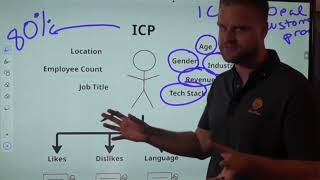
Today, we are going to be talking about content strategy. It is one of the most important parts of your entire business, but it's estimated by the platforms themselves that less than 1% of users are actively posting content. And of those 1%, most of them do a very bad job. Let's just say. So on the screen here, we have the most powerful marketing system in existence, the HyperOptimal marketing funnel. At the bottom, in the foundation, we have all of our different offers. Wrong click here. We have all of our different offers. We have our sales process. Then we have our bottom of funnel to nurture and qualify our leads. We have our middle of funnel to capture the leads and the top of the funnel to drive the traffic. So in this one, the first thing we're gonna ask ourselves is inside this extremely powerful funnel, where does the content strategy actually live? Right? So let's get on our board perfectly for a second. The content strategy lives in multiple pieces in the funnel. It lives at the very top of the funnel to drive traffic. For example, this YouTube video that you are watching right now, this is the first time that you've ever seen me. That's an example of content driving attention. So on YouTube, you might go into my bio or pinned comment and you might download my trainings. If that was the case, you'd start to receive my emails, you'd start to see my lead magnet, and you might learn a bit more about me. That is an example in the real world, in real time, that might be happening to you depending on what kind of actions you take here. But that's an example of getting someone into your funnel through content, getting them into the middle of the funnel through a lead magnet, which is also content. And now you're in the middle here. Content is so powerful in comparison to even other stuff such paid ads, outreach, partnerships. Because although those are great and probably the, some of the best things to be at the top to actually drive the traffic and drive the attention, content's so powerful because it actually works with the other things too. For example, if you are running paid ads on, let's just say Instagram, choose a platform, and someone clicks on your profile and they see a bunch of nice, helpful, useful, valuable content on there. They're much more likely to follow, much more likely to click, much more likely to take whatever action you want them to take than if it was bare. Same thing, you know, you're doing outreach to someone, let's call it cold email, and they've seen your content before and recognized your name, much more likely to respond to you than if you were just some anonymous figure on the internet. Content is also very powerful because it actually works in the middle and the bottom of the funnel too. Maybe you came into this funnel like I described with the YouTube into the downloading my trainings in my bio, and now you're getting my email. My emails promote my future content. Also, the algorithm might be more likely to recommend you. And although this might be your first time, by the time you watch 2, 5, 10, 20 videos, who knows, you might determine that, yes, I want Matt's help. And you'll go, you'll determine that this is for you. You'll go to my website, might watch my VSL on my offer. Book a call, get on the sales call, and then I'll try to sell you some of the offers. But that's not all, is it? Because content actually helps even after your people and your viewers become clients. And it does so in a few different ways, doesn't it? So the first way it makes your clients become a lot more bought in. It is truly amazing how many people or how many clients I've ever had that, you know, they buy from me, they end up becoming a true client instead of a prospect, and all of a sudden they're quoting everything I ever said in a YouTube video or in a newsletter. Have you ever heard the phrase that you need to pay to pay attention? This is a good example. They've paid, they're trying to justify themselves, and now they're going to watch more and more content and be more and more bought in. The second is more leeway. Because they came in or they're nurtured by your content and they view you as the expert, if they're not getting results, a lot of the time, it's good. You're going to think it's because of them. After all, you're this expert who makes all of this amazing content and you clearly can make it work and you've made it work for other people. So you're going to get a lot more leeway. People are going to churn. They're still going to churn. This is not going to prevent, but they're going to go slower than they might have otherwise. And the third one is we're going to call it risk. And what this means is that there's a big difference in the fact that you are working with someone who has a personal brand and has public content versus not, right? So like a few of the ways that difference is they're not going to be as insane to you. They're not going to ask for refunds or charge back at the same rate if that's a problem for you. Because if you're big on social media, there becomes, you know, an actual risk of acting insane to you. You could tell everybody that how awful they are, you could poison their reputation. And as such, people typically will behave a lot better towards you when your content— the content to me really improves every part of the entire process. Funnel and every part of the entire business. And I think that's why it's so important. And that brings me to the, the point. The content helps the other areas, of course. So let's just write them over here. So number 1, let's just put it here, traffic. Number 2, capture, as in lead capture. Number 3, lead nurture. Number 4, show plus close rate. Number 5, we'll call it client success. And then number 6, we're also going to say hiring. I've hired some of the best people that I've hired ever as viewers of this YouTube channel. And it really makes a big difference when you have a personal brand and they can know about you. You actually get the best of the best applying instead of just people who need a job somewhere. I'm sure Alex Formosi, for example, gets like the pick of the pick because he has the biggest personal brand in the business space. But you'd be amazed at how many, even with a small YouTube channel like mine, how many great clients and great, um, You know, higher as you can get. And then the 7th one is, I'm gonna call it opportunities. So I'm gonna tell you a story about this. I had a video and you can see it on my channel. It was a case study about how I went from $0 to $900K per month in 11 months. And This is what I call opportunities. I got invited to speak at hundreds of places. Literally, I got so many opportunities. I got so many investment deal flow opportunities out of that. I got so many rev share opportunities and I was the exact same person before and after posting that video. Like, let's just say I made the video. I don't know, it was sometime in February, February 15th. I posted on February 19th, the exact same person. Exact same skills, mindset, capabilities, etc. on February 15th versus February 19th, but the opportunities because of the content, you know, literally 100x overnight. Although of course I had to make an agency that, you know, was able to go to $0 to $900K per month to have that case study, and I had to articulate it and build a good presentation. The amount of opportunities having that versus not are so important. So let's get to the next part. And it's something that we will call— it's a rule from Google and it's called the 7-4-11 rule. So this picture is a little blurry, but it says basically what it says is before a customer buys, they need 7 hours of your content. They need 11 interactions with your brand. And they need 4 different touchpoints or platforms. So is this true or not? I have no idea. I don't know if personally, if you can kind of isolate it to something like that, but if anyone knows, it would be Google, wouldn't it? And regardless if it's 7114 or 258610 or 1, 3, 5, or whatever, it's directionally accurate. It would only make logical sense that the more times, and you know, someone interacts with you, whether that's digitally through content, in person, whatever, the more likely they are gonna buy. Right? So it's very, very important. So 7 hours, so 11 touch or interactions is what they call it at least. And then 4 different touchpoints or platforms. So that would be, you know, YouTube, Instagram, LinkedIn, Twitter, for example. And all of our content strategy, partially, at least 1/3 of our content strategy in terms of, you know, the big plan, how we format things should be to be with this rule. Whether it's 7-4-11 or not, doesn't really matter. It's directionally correct. We want to have different ways for people to interact with us. We want to get them to interact with us as much as possible, and we want them to spend as much time with us as humanly possible, right? Of course. So the next thing we need to understand if we really want to have success here, and maybe I could zoom in a little bit. Are we need to understand the concept of ICP, and we need to understand the concept that the type of content or the topic of the content is going to determine the audience through two different ways, which we'll start. So ICP, if you don't know what it is, ICP equals ideal customer profile. Some people would call that avatar. Some people would call that your target market. I call it ICP. Call, call it whatever you want. And we're going to zoom in a little bit here so we can see it better. So what you're going to want to do with your ICP here is you're going to want to look through your customer list. You know, the last 6 months is fine. Last 3 months is fine. You know, you don't need to do it 3 years or something, 'cause a lot can change in 3 years, but you need to try to find a list of attributes that 80% of your customers will fit into. You're not ever gonna really get 100% in there. There's always going to be edge cases. There's always gonna be outliers, but you can almost always find 80%. So what are some like different attributes? So a lot of the times you might do age and gender. You know, this is a women's fitness coaching for women over 50 years old. That's a good one, right? Might be industry. Historically, I've served insurance agencies and agency owners. The revenue, you know, if you're targeting 8-figure e-commerce stores, for example, if it's a consumer-based offer, switch revenue with net worth or household income. Again, an e-commerce example, TechStack. If you serve e-commerce owners, them being on Shopify is a pretty safe bet. If you had a HubSpot agency, of course they have to use HubSpot or want to use HubSpot. Job title, you know, usually the founder, usually the CEO, but one of my biggest clients ever, his title was the executive— executive or senior vice president of demand generation. So But narrow it down to the job titles. Employee count can be good, uh, kind of as a proxy for revenue when you're exporting a list. And location, of course, sometimes it matters, sometimes it doesn't. Some other ones, you know, sometimes you have race depending on it. Sometimes you have sexuality depending on it. Like if you have all that kind of stuff, like I'm not going to go any further than that, but there's always going to be a few things. That your ICP can go into or be like grouped into. And it's very, very important that we find all of this. It's very important that we find all of this because the content topics need to be dialed into this ICP, or you're not really going to get any sales from this. Once we have the ICP, and let's do an example here. So let's do— what should we do? We do an agency owner example or an insurance agency. So let's just do an auto insurance one. So auto insurance, which has historically been one of my biggest businesses and niches, auto insurance, and we'll go over here. I'll get out of the way. So I'll just give you the niche here. It's people aged 25 to 60. Who are homeowners, and the reason for that is home insurance is usually bundled with auto insurance, and people who have 2+ cars. So that means they're, you know, essentially married. Married homeowners aged 25 to 60 is an example of the ICP here, right? But that's not really one where we're probably going to do an insane content strategy around. That's a good example of an ICP. Because we need to understand like the reasoning behind it. But for me, I'm going to do an agency owner ICP because I think that's a better example. So agency owners for me, 25 to 34 years old, male, and they do $500K to $5 million per year. That is my ICP with one of my agency owner consulting programs and with my actual main service these days. The reason that we're going to want to narrow it down that specific, well, it's not really, you know, in this case, the 25 to 34 year old and the male might be factual and it might be useful, but that's more useful from the signs of like, if we're doing this ad strategy, right? Because if we were doing a Meta ad, for example, we could actually put that age range and that gender in and do it. But it's not like we're going to make content here just for a certain age or a certain, you know, gender. If I was making, if we're doing an example of this is a, you know, Fitness coaching for women who are post-menopause, you know, we might actually like that. That is something that would really impact the type of content we made versus just general fitness training, but that's not really the case in here. But what is the case here is this $500K to $5 million range, because what we're going to do here is we're going to basically do our content strategy by finding the likes The dislikes, the language they use to describe their— describe it. And then we're going to look for the different problems that people face, the different circumstances they find themselves in. Oops. And eventually the different outcomes they desire, right? And this 3 or these 3 things are going to be the basis of our content strategy. And I think that, you know, we could really— should be able to see, assuming we have any degree of IQ, that the problem circumstances and outcomes of someone who is, you know, just trying to start their agency versus someone who is $500K to $5 million per year are going to be vastly different. And remember what we said, that the topic of the content is going to determine who sees it, right? I would never, for example, make a video if I was trying to target this target market, you know, about how to, you know, I would never. So let's go over here. Let's go bad. And over here, let's go good. I would never make a video about, you know, how to start an agency, you know, how to make an LLC, how to get Stripe, you name it. I wouldn't do how to get to $10K per month. But I would do, you know, how to scale your ads. I would do how to scale your content strategy. Also, it posts like case studies of people getting to you know, $5 mil a year. I wouldn't post case studies about people getting to $10K a month because, not that I hate these people, but that would be an example of attracting the wrong audience. And the thing that we need to understand is that this is what most people actually do. So we have the 99% of people don't post, the 1% that post and they don't really get any clients from it. Like, this is what they're doing. And I'm not hating on them. It's almost always accidental because they don't know any better, but this is what's happening. They're posting the right content for, in theory, the right industry, but not the right level in that industry, right? These platforms such as YouTube, for example, we'll just use that, are so powerful that they know who your content's for and who to show it to you. And then two things happen. Let's go in a little bit. Two things happen to make this true. Number one is the algorithm makes it true. They track so much of your, you know, life in it. They probably know more about you than anyone else besides you know about you. So the algorithm, you know, YouTube will transcribe your video, then it will analyze it, and then it will put it in front of people who it determines that who that video are for, but also the people who resonate the most with it are gonna click on it, right? So it's kind of a double whammy. Two things happen there. And then when we do this algo, like, we need to ensure that essentially what we're speaking is, you know, the topic and the— we'll go level of content— are both 100% consistent. And this consistency is extremely important for two reasons. Number one, you know, someone resonates with your content, they click subscribe. You know, what we really want to happen is they consume a lot more content on whatever platform that is. So that's number one. It resonated with them originally. So we want to kind of have the same type of content. So it continues to resonate with them and they keep consuming and then eventually they buy. But also we need to have this here for the algorithm, because just think of it this way. Let's say you post a video about content strategy. Let's take me right now. And then I post a video, day in the life of an agency owner. And then I post a video. How to do XYZ with Claude Code, and then I do a case study video, and then I do, you know, how to set up a Stripe LLC. Of course, like, that's completely different audiences and ICPs. That's not going to resonate. But now the algo is extremely fucking confused, and as such, it doesn't really know who it's going to put your, like, it doesn't know with full confidence what YouTube video in that situation's next. So instead of just guessing, you know, you kind of, in a little, you know, some sort of way, it's not really accurate, but you shadow ban yourself because you haven't given the algorithm confidence. You see like a lot of these AI YouTubers now, like who get thousands of views, you know, they're doing a good job of that, hundreds of thousands of views. Because people are very interested and it resonates with them, you know, Claude Code. But then all they do is, you know, how to do X, Y, and Z with Claude Code, how to do X, Y, Z with AI. Every video is consistent, you know, they post 30 videos in a row about how to do something with AI, algorithm is very confident video 31 is going to be there too. And as such, it pushes it much harder than it would. So we need to know what what the ICP is, both for the type of content and what will resonate with them, but also so the algorithm can group it properly. The next thing I want to talk about is very, very important. And this is what might separate this training from a lot of the other stuff. So if we take me, for example, me. I get, you know, I have 19,000 subscribers at the time of this video, 19.7 thousand maybe. I can barely scratch, you know, 1,000 views per video, but I have made upwards, well, actually more than $8 million from this exact YouTube channel that you're watching since 2024. It's currently April 2026. I am in a lot of these group chats. Uh, a lot of masterminds have a lot of courses for people who are not YouTubers, but they're business owners who use YouTube to get sales, one of the best platforms to get sales. And I know so many examples of people who have 300,000, 500,000, a million, 2 million subscribers. That me with my shit YouTube channel, 19,000 subscribers, can't even scratch 1,000 views unless I have a pretty good performer. I make so much more money than them because I am focusing on sales, not views. This is why this ICP is very important, right? We need to know who our ICP is. Remember, my ICP for this channel, at least, Agency owners between $500K and $5 million per year. So it's estimated that 4% of businesses get over $1 million in revenue in the United States. And basically 0.1% get over $10 million. These are all US dollar figures. So let's just say my average agency owner is $1 million a year who follows us, which pretty accurate, to be honest. That basically means that if I was to do all agency owners and not just the content for this, let's just say completely mass market, I would be excluding these, you know, like 4.1%. What a lot of people do is they're making content for the 95.9%, and I'm making content for the 4.1%. It's, you know, stands to reason that I'm going to get much or far fewer views doing to these people than the 95.9%. But that's okay, isn't it? Because these are the people who have the money and who are actually going to pay. This is my ICP. These who are the videos are for, for my 1,000 views in this ICP. These are just, you know, the masses, right? Where you might get videos or you might get views, you might get likes, you might get followers, you might get subscribers, but these almost always, you know, do not translate into this at the same rate. There are some golden zones, for example, but if we go back to that AI Automation one where they're making all those videos and doing that, like a lot of these people Really, they have 400,000, 600,000, you know, 800,000 subscribers. They're getting millions of views per month and they're doing $200K versus me who can't even get really 30,000 views in a month, making significantly more than that. So the thing is, and one of my favorite taglines from this one guy on Twitter who had a ghostwriting agency. Is that likes ain't cash, right? Views ain't cash. Your content strategy, if you're going to do this, you're not a professional YouTuber, you're a business owner, and you're a business owner because you want to make sales, is to nail your ICP with as much content as possible. Hopefully your ICP is higher level because doing so, even if you don't get a lot of views, is what actually makes money. And the thing that I think everyone should be thinking about is we want to accumulate and build true fans. We do not want to whine, you know, and focus on building followers. Followers are fickle. They'll abandon you, abandon you at any given time. But if you have a true fan, you have someone who really buys into your line of thinking. Those true fans can become, you know, clients on their own. They're also going to refer people to you. They're also going to, you know, buy, you know, everything you put out. They're going to, you know, give you more opportunities one way or the other versus the fans who, you know, the mass market views on YouTube, for example, don't really do anything. This book is literally called A Thousand True Fans, like John Longhurst. It's not really applied to me. This is more like a, it's more like, um, for like artists, singers, musicians, that kind of stuff. But I think the principle in it, because technically if you're creating content, you are a creator, is very valuable. So this 1,000 true fans are in my ICP, and the question is, How can I literally make content to solve every problem they face? How can I help them get out of the negative circumstances they're in? How can I help them achieve the outcomes they desire? And if you can think of this way and think of through this process that even if you don't get the views, even if you don't get the likes, you, what you are is creating fans who will literally consume everything that you could possibly do. Buy everything that you possibly can. And as such, in your ICP, you are going to make a lot of money. It might sound hard to believe for people who have never experienced it before, but very, very easy if you do what I'm saying here, you know, make a couple million dollars from services or consulting from YouTube. It's sick in a way. It should be the case and people are working a job they hate for all that money or so little money, but it's just very, very good leverage. You know, you create a piece of content, this video, for example, once a few hundred, maybe a thousand, maybe 2,000 people see it. It's not like you had to fly to a thousand True Fans places, right? You'd have to go all the way over the country and explain to them their content in person. That's the thing that you create the content once and you can distribute it to all of the fans all over the world. No problem. Let's get to the next part, which is what I truly believe to be the goal of what you should be doing. What you're trying to do with your content on any platform— YouTube, TikTok, LinkedIn, Instagram, you name it— is you're trying to build a series of bingeable content. Because remember, if we go over here, that 7 hours in the 7-4-11 rule is going to be by far the hardest part of that. It's fairly straightforward to get 11 touchpoints. You know, they come into your video, they see your lead magnet, they get some email flows, your appointment setter might reach out to them. It's kind of straightforward. Also straightforward to repurpose the content to different platforms. But for most people, I would say it's the 7 hours that really gets people. So this is going to go into kind of really focused on the long-form stuff, right? Where if you have a series of bingeable content, and it doesn't have to be as straightforward as this lead generation 1, 2, 3, and this is actually video 4 in the series. So go and watch these if you haven't. Doesn't have to be that straightforward and under-optimized, but it definitely could. Someone comes in at video number 2, messaging. Oh, that's pretty good. What the hell was video number 1? Wow. So we're part of a full system. I can expect a lot of stuff here. Okay. Okay. What's next? Offer. Oh, okay. And now you're watching content strategy. This is why you need to really have such a clear ICP, because if you don't, You're not gonna know the problems, the outcomes, and the circumstances to where the point that you actually even are capable of making the bingeable content like this. Only with a deep understanding of your ICP are you ever gonna be able to know something like this. And then you just keep going, keep going, keep going. The algorithm knows this is what this person goes about. The expectations are there. Every video resonates, every post resonates, every newsletter resonates. And you create this series of bingeable content and just become part of their routine. And that is how you get to these 7 hours in the most efficient way possible. We're going to talk here about long form versus short form. And I am a long form man, but I'm not a short form hater in any case, right? The 7 hours is obviously going to be the long form. But the interactions and the different touchpoints, most of those are going to be short form on different platforms. The way I view it is that the number one purpose of getting like short form content, whether that's short form video or just individual posts, is to get people to, you know, know about you, like you, and then consume a long form piece of content. I just want to show you though, like the math, right? Because if we're trying to get 7 hours worth, 7 hours here, you know, a 60-minute YouTube video, you know, not all of them are 60 minutes. Some could be less, but let's just say 60-minute YouTube video or a podcast or something like that. If we did have this, we would basically need them to watch 7 videos before buying. And this is eerily similar to, you know, when I track my buyer journeys, you know, people do watch between 7 and 10 videos. So maybe this whole 7 hours before they buy is truly a thing. But if you didn't do long form, whether that's YouTube, podcast, you know, any form of lead magnet, any form of book, you know, long form newsletter, you know, you name it. If we're only doing the 60-second version, whether that's a video or just like a post, you know, you have the reels, but doesn't really take more than 60 seconds to read a Twitter post either. To basically get that 7 hours, you would need to— they would need to consume 420 times, like 420 pieces of content versus 7. Now, of course, there's a lower barrier to entry. It's easier to get someone to, you know, consume a 60-second piece of content versus an hour, but it sure as hell is not 60 times easier. Or 60 times harder, whichever way you think about it. So you have these things. We want to do it because we, we want to get interactions. We want to get people to find out, but then we swing it over, you know, the YouTube Short links to the YouTube video. You know, your, what would be your automatic responder on Twitter and on LinkedIn, link to your YouTube channel, you know, your Instagram bio links to your podcast, like you name it, right? You're on all your platforms, you're selling a book, which should be a very good way to spend a lot of time with you. So these do work together. But if you, in my view, if you're going to be one of those people who wants to do one thing and focus on it, would definitely be this long-form content by far. So what are the most important types of content? And you're probably going to know there's no real points for guessing at this point, cuz kind of been harping on it the whole time. But the 3 most important types of content in my view that someone could make are YouTube videos, a podcast, and then a book. And the reason is we need to get those 7 hours as fast and efficiently as possible, right? But this is one we haven't talked about yet, and it's a book. Really, there's nothing better that could happen for your bottom line than you writing a book and someone reading it. Or these, we were talking about the examples, hour-long YouTube videos, hour-long podcasts. But someone reads a book, that's pretty much going to take the 7 hours, you know, to begin with. Someone likes your book, it's a good book, and someone reads it. So these 3 types of content, you got to have at least one. If you really want to print, you have 3. So I have my YouTube. I wrote a couple of books in the past. They just don't reflect my best work. You know, there was when I was younger, so I'm actually writing another one. And I'm going to have that as one of my funnels. And then I am scouting ideas to, and novel concepts to make a new podcast around. So I'm actively doing this in my content strategy, but for now it's just YouTube. You want all of these because all of them present a very different side of you and a very different opportunity than the other ones. YouTube, a lot of cases, very prerecorded. I know that I'm fairly awkward on camera. I'm very nowhere near as personable as I actually am in real life. And then the book is, you know, a very intimate, a very steady stream of thoughts from your consciousness to theirs. It's a kind of a different experiment. This book, you know, you could also replace this with a very long-form lead magnet. You could also replace it with, you know, multiple newsletters, kind of like a daily newsletter. But these 3 are by far the ones that you want to focus on. So now we have the strategy and we kind of have like why we want to do it in what way. But now, like when we're actually making our strategy, like what do we post? Like we know what we should post. We know that we have to see our ICP. We know all this stuff, but what do we actually post and how do we make that work? What you want to do is take whatever solution you have. This is your product or service. And what you want to do is you want to break it down into categories. And you can think of these categories as just steps of your service. So this is the funnel we've been talking about. What are the different steps? We have our paid ads. We have our content. In content, we have a few different buckets. We could probably just do, you know, long form versus short form. We have our outreach. We have our partnerships. We have lead magnets. We have multiple email flows. We have our funnel pages. We have our conversion mechanisms here. We have our sales process. And then we have our offers. So what I've done down here is I've broken it down into these things. And normally, whatever you're selling, there's usually like 6 to 12 different categories. Rarely ever Lower than that, rarely ever higher than that. You don't need to just make new categories just for the sake of it, right? So like, there we have it. We have our messaging, which is kind of our ICP that encapsulates the whole thing. Then we have our paid ads, our content, our outreach, our partnerships. And then we have the funnel and the email flows. Then we have the conversion mechanisms, the sales and the offers, and then we're going to finish it off with training and with hiring. Because this is a system. One person's not going to do it on their own. We need to basically hire and train people to help us run it, don't we? Of course. So if you like break down your service right now, you are going to have the same thing. You know, if it's a YouTube agency, for example, what might you have? You might have the video ideas, the, the title, the thumbnails, the production value, the filming, the editing. The posting, the uploading, the optimization, the, you know, funnel part, the business part, but there's always going to be those things. And what you do from here is you think of different FAQs, different questions, different problems, different circumstances, different outcomes for each of the category. And, you know, let's take partnerships here. There's so many different ones. Like, what are the 4 types of partnerships that you can use? And you referral, white label, media, and joint venture. Uh, okay. Which, what is an example of a media partnership? Speaking at their events, speaking at their YouTube channel, you know, being interviewed, uh, guest post on their blog. And whatever there is, you can usually get 20+ FAQs for each. And let's say you have 10 different, you know, categories. That's 200 content ideas you could make. 7, 8 content ideas a day, every day, and never run out. And when you do, you can just recycle them. So there's going to, you know, your categories become tons and tons of things. I usually put these in a spreadsheet. What you really can do is you need to make sure here again that I don't have the drawing, but you need to make sure that these FAQs are from that ICP, like everything in here. Everything in your entire life. You need to learn to love the words ICP, because if you don't, you're going to make content that doesn't resonate and the algorithm reads it and delivers it to the wrong person. And then we're fucked, aren't we? We're never going to get clients like that. So we need to have that ICP. What I usually do is I'll have a spreadsheet for this. And what I usually like to do is, well, I know my ICP pretty well at this point, but if you ask AI, for 75 different FAQs for each category. It'll give you a bunch. Most of them will suck, but you very easily can narrow down that 75 into 20 good ones and save yourself a lot of time. Other things to use, you know, Reddit, Trustpilot reviews, you know, your own brain, Quora.com, whatever you want, but that's really what we need to do. And then we're going to get into The fun part. Now we're going to make content because most people, you know, you suggest they make content and they shit their pants, right? They think it's very scary. They don't want to be on camera, you know, whatever the problem, there are many. So what we want to do is we want to have a framework, an easy enough framework, but one that's very, very powerful and very effective. And I typically, I'm going to use the Problem Example Action framework. So if you haven't noticed, I've typically started each of these different sections as this, you know, most problem, most people don't know what to do and they shit their pants. Example, you know, and I'm going to get into that. And then the action steps, I'm going to get into that. So it's one that I use and it just flows very nicely. You can just repeat this. I've followed this exact framework for every different point of this training so far. So an example here, like what would I do? So, you know, an agency owner wants to do this system, but they don't have enough time. Okay, so I was talking to an agency owner who didn't have enough time, and whether that's cope or not, you know, that might have been true. What do I recommend he do? I recommend he do this exercise. It's called the Rule of Three by Brian Tracy. So I told him on Sunday night at 4 PM. Block off his calendar, skip family dinner, whatever the hell he needs to do, go through his calendar and narrow down the 3 most valuable things that he did. Because the rule of 3, Brian Tracy says that 3 actions will lead to 90% of the value. Then I told him to make a list on the left, those actions, and on the right, the other ones. Make a training or a Loom video of how he did the other, or how to do all the ones that don't make the top 3. And then Monday, get his VA to get with a meeting and do nothing but train the VA on Monday so that you don't have to do these things. That's a very long-winded example of this, but the FAQ is going to turn into the problem. You're probably going to give an example. You could also give a story or a case study, and then you're going to tell them what to do. And basically all you need to do is repeat this over and over until you do all of those FAQs, 200+ of them, and then you can just kind of start over because no one will remember. Again, we need to relate these things into the ICP. Most of the people watching this are agency owners, my ICP, and that's why I've used so many of these examples that have to do with agency owners. All right. But the problem action framework. So now we know what to do, but how do we ensure it's not terrible? How do we ensure that our ICP doesn't completely ignore it or mock us or think we're a an idiot, right? Again, there's that problem in that framework. We need to do what I call the UAR test, and this is done after every time you have created something. As you get better, hopefully you have a plan that's going to make it pass this test before you do it, because it's a big waste of time when you don't. But the UAR is: is this content useful? Is this content actionable? And is this content readable, or is it listenable, or is it consumable? Watchable, whatever able that you want. If you actually do an honest review yourself, you say yes, then you should post it. If you, if it's a no, then you need to scrap it or remake. A good example of something that fails this is for whatever reason, you know, there's a lot of agency owners who will post stuff like, I can't believe that my niche does this. They are so stupid. And like, that sounds weird, but that is a very common thing to see have happened. Like, How does roasting your niche, how is that useful? Is that useful? No, it's not. And you have so many of these posts. That's kind of an extreme but common example still, but they're just like kind of slop. And the funniest thing to me is a quote that I heard from someone. I think his name was Will Green. It's this guy I know, I used to know him a lot better, but lost touch where he said, if you think that a AI copywriter's bad. Just wait till you hire a human copywriter. And I laughed so hard, I almost pissed myself because yes, the amount of garbage that is just kind of pointless that people post and wonder why they don't get clients is, you know, extremely shocking. That goes for video, that goes for LinkedIn, newsletter, every platform. There's no shortage of this. So is this useful test? You're gonna— should be able to exercise your judgment and be honest with yourself. But for those who are less self-aware and have bigger egos, I'd probably ask your friends. And let's go into how we're going to actually create this because, you know, even on these platforms, 1, 2, 3, 4, 5, 6, 7, holy shit, am I really going to do this? And let's zoom in here. So this is the strategy that you're going to use, like the actual way that you're going to create content. So let me get my phone here. You're going to get your phone. It's going to be, you know, this is a phone. I hope we all agree. You're going to use a transcription app. I will use typically use something called Whisperflow. And you're going to either go for a walk, you know, maybe you do treadmill for 20 minutes when you wake up, maybe you go outside, you're not like me and I'm stuck in a snow blizzard right now. And you're going to basically go outside. It can be for 10 minutes, but I like to do it for an hour. And you're going to have these FAQs on your phone. You're going to speak into your phone and you're going to follow the problem, example, action steps to, you know, get the source material in Whisper Flow. That's going to be in a Google Doc. That's going to be in Apple Notes. It's going to be in literally whatever the hell you want. And what you're going to do is you're going to spend, you know, 1 hour tops in your insanely busy schedule, I know, to make a Claude project. And this Claude project is going to basically take your source material that you talked into your phone. So when you talk, there's a few benefits. It's going to feel more natural to you. It's going to, you're going to just, you can talk way faster than you can type. And you're going to combine that with the Claude project. To make native content for every platform. So for Twitter, you know, an example, you know, take this source material in 280 characters or less. YouTube, you know, turn this into a title plus intro plus outline. You know, for this short-form video script. For Instagram, a carousel. For Beehive or newsletter, you know, 1,000 words. And then you name it and it's going to do that. It's going to take your source material and it's going to repurpose it. And it's not going to sound bad. It's not going to sound like AI because again, it's your words straight from your mouth, not even typed. And it's going to give your ideas that sounds like you and it's going to output in every content or every platform. And then all of this stuff is going to be in a Google Doc and you're going to hire a $1K a month, or maybe you have someone on your team. VA to post it on every platform. And then you're going to have native content to every platform that sounds like you, has your ideas and all. So when we have this content strategy, and I'm going to go over the actual posting part in the next training. When we have all of this, what's going to happen? Remember, you know, our ICP is going to be targeted with the algo. And it's going to resonate on every platform to hit those 7 hours plus 11 interactions and 4 platforms. And those people are going to turn into big dollars for us. Oh my God, it's so amazing. So if you like this video, feel free to subscribe and stay tuned for more in my lead generation series.
More from Matthew







Everything I Would Change About This Ecom Email Marketing Agency (3 HOUR LIVE AUDIT)

Everything I Would Change About This Meta Ads Training Business (3 HOUR LIVE AUDIT)


