Beginner Facebook Ads Tutorial (FULL COURSE)

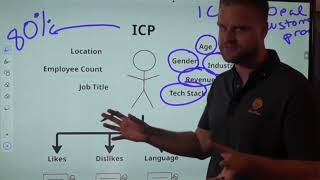
Matthew Larsen teaches how to acquire your first ten paid clients using Facebook ads, spending $16,000 per day. He breaks lead generation into four phases: clicks, calls, shows, closes. Success requires the Core 7 framework (industry, ideal client, offer, unit economics, big idea, messaging, proof) working together, not just running ads.
Chapters
So I have averaged $16,000 per day in ad spend over the past 3 years to book calls for my agency. And this is not going to be a piece of crap button clicker course that only shows you how to set up a Facebook ad campaign like all the other ones you've probably watched. You will learn everything that you need to know and even the things that you didn't know you needed to know. And I'm going to focus on showing you how to get your first 10 clients from Facebook ads. Including the offer, the funnels, the sales process, and then the ads themselves. 10 is very important in my opinion because 1 or 2 clients could be a fluke, but if you can get 10, that means you're really onto something. So if your business hasn't got 10 clients from paid ads yet, this course is really going to be for you. So the 4 stages of Facebook ads are as follows. Your first 10 clients, which I'd be considered the beginner stage, early stage scaling, which I would say is intermediate, and then transitory and mature scaling, which I would consider to be advanced. And this course is all about stage 1, which is getting your first 10 clients specifically from paid ads, not just first 10 clients ever. But there's a lot of businesses that are even in the $1, $2, $5, $10 million per year range who've never actually got 10 clients from paid ads yet. They just have other sources. I would guess that about 99.9% of businesses are in this stage currently, and I'm going to have other courses that cover the other stages. Don't worry about them now. Just like in school, you go to kindergarten, then grade 1, grade 2, grade 3 before you get to high school and college, because there's a lot of stuff that you need to know. So don't worry about these other 3 stages right now. If you haven't gotten 10 clients from paid ads, let's just do this course here. So let's get started with the number 1 thing that you must understand, and that is Facebook ads are just one part of the process. In lead generation. This is the most important thing that basically every course doesn't focus on, or no one ever tells you, and that's why this course is going to help you and everything else hasn't. There's 4 phases if you want to get a client. There's clicks, there's calls, there's shows, and then there's closes. The Facebook ad takes care of the click. It gets people into the process, but they still need to book a call, show up, and buy. And if any of the phases fall apart, you don't get the client, right? So phase number 1 is clicks, usually with paid ads and content. You could get clicks with outreach and partnerships, but they don't usually follow the same kind of funnel. The second is the calls where they go to your sales page with your VSL, they fill out an application and they can book a call. The third is the shows where you have your pre-call processes to actually get them to show up to the appointment they booked. And then you have your closes, which is your sales call plan, your sales process, your close, your onboarding, and that kind of stuff. And the important thing to understand is these are all Facebook ads, right? You hear people whining, or you just maybe you think to yourself, why don't my Facebook ads work? When in reality, like, that is a huge question that could mean tons and tons of different things. Is the creative bad? Is the landing page bad? Is the VSL bad? Is the explanation bad? Is the offer bad? Do you have these pre-call processes? Is your application form too strict? Do you have enough calendar availability? Like, are you botching the sales call? Like, do they understand the— like, there's so many different things. So when a lot of people just say like, my ads don't work, or ads don't work for my business, it's probably true what they're saying because they haven't got the full picture. So people just get so scared of doing ads, just which is basically just uploading ads and clicking the right button that they put all of this stuff off for years. But the whole process is going to be much more difficult than just creating an image ad. So that's not exactly inspiring, but it's the truth. And that's the purpose of this course. So let's get over the 5 most important lessons when we're talking about success with Facebook ads. We already went to the most important thing you need to understand, but here are some lessons. They're like, these things are just going to save you so much pain, time, and money. It's kind of ridiculous. And the first is you need to understand that cold traffic is much different than warm traffic. Warm traffic, referrals, networking, a lot of time partnerships, a lot of time content, because if they watch your YouTube for like 20 hours before a sales call, they're pretty warm. This is cold traffic. When we use Facebook ads, we're basically reaching strangers who do not know, like, or trust us. And as you can imagine, converting those people are going to be much more difficult than if you're talking to a referral, your network, or leads from content. So like when someone's watched your YouTube videos for 10 hours and they know, like, or trust you, like they don't really even need an offer. Like they just want to buy something or want to work with you, right? And this is not the case with Facebook ads at all. And this can be a shock to the system for sales reps who are accustomed to much warmer leads. Like if someone has basically watched 10 hours of my YouTube videos, my sales rep can really just show up, answer a couple of questions, and then send the payment link and that's it. So whatever you're doing to get clients right now probably is not going to cut it from Facebook ads. And that is really the purpose of this course. We're gonna set ourselves and our sales reps Or ourselves if we're still taking the call up as well as possible, but it's not going to be anywhere as easy. The next is that you need the right people to click. A lot of people will just kind of obsess over like, what's your cost per click? A $1 cost per click of the wrong people is worse than a $15 cost per click of the right person, right? So more than anything else that we can really do with our ads, we need to focus on the messaging and the words we use in our ads and the problems we propose to solve in our ads, because that is going to do targeting more than anything we could possibly do in our ad account or landing page. The ads are one part of the process, right? The clicks, the close, the book, or the shows and— or the clicks, the books, the shows, and the closes. But if we don't get the right people to click in the first phase, I think we're not going to do any of those, right? So ads are very, very important. in that step. And to like kind of get an example for you of what I mean, you know, like if I target agency owners with my ads, an agency owner trying to get their first client versus an agency owner who's trying to get out of sales, like those are 2 different forms of messaging that we would put in our ads. If I had an ad like, I'll help you get your first agency client when my offer is for agencies that are doing $3 million a year, probably wouldn't work, right? So we very, very much need to do this. And I would say that a lot of the time, this is where people go wrong. They're trying to target high-level businesses, but they're talking about beginner problems. And then they just complain that they get nothing but crap leads. This here is probably the most meta, like the best thing that's going to make your ads easier. And it's to sell something that people must buy. This is, of course, has to do with your offer. But trying to sell stuff that needs an in-depth explanation, trying to sell stuff that needs— is new or they haven't heard of before, even if it's really good and would solve their problem, it's always going to be much harder in ads. And when someone already understands what you sell and it's inherently desirable or valuable, then basically all you need to do is spend your time showing them why they should buy it from you, i.e., your ads and sales process. Like there's 3 main versions or there's 3 levels of this, you know, legally must buy, they're required to have it, something like auto insurance or tax help or whatever. They functionally must buy it. Like there's no law, but they really, really need it. Let's just say food is a good example, water, shelter, but also stuff like mortgage insurance, cuz they're not gonna be able to get a mortgage without it. And then competitively must buy, like something like That's not necessarily legally or they don't really have to do it. But for example, e-commerce email marketing services, like ad prices are so high and everything's so competitive these days that you don't necessarily have to do it, I guess, but you're not going to succeed or you're not going to be able to compete without it. Lead generation services are also good in there. Like they're not really legally or functionally required. I guess they could just not generate leads and just not grow their business, right? But if they really want to, then they're going to need those kinds of services. And the closer you get to one of these things, you know, the less education, the less convincing you need to do. They still need to believe that you or your company is the person to do it, but this is going to make selling in your ads so much easier than you just selling something that people don't really have to have. The next part is we want to maintain congruency between our ad above the fold and the first 15 seconds of our VSL. We want to treat these as one unit. A lot of people will have these completely disconnected. So what we want to do is we want to use our ad and the above-the-fold section of our landing page to make it immediately clear the ICP and the offer. That's all they need to do from there. And then when we do that, the first 15 seconds of the VSL doesn't have to do that, and it can just show proof right away and explain the offer. So we want to look at these things together, right? Does it basically work in this case? So in this case, we'll generate exclusive and qualified annuities leads and sync them directly to your CRM. Qualified exclusive annuities leads synced to your CRM. All these financial advisors you see on screen, and it's flipping through it, are in different states, have different teams, and have different amounts of assets under management. But they have all have one thing in common, they bought leads from us. Like that is an example of how 3 of them work together. We need to maintain proper congruency throughout. A lot of people will have an ad like this, we'll generate exclusive qualified annuities leads for you. For example, someone will click on it, they'll get to the page and it'll say scale your business as the headline. And it's just like, like what? What? And like, it is kind of important, right? For a couple of reasons. Incongruency feels kind of weird. Like it's just an icky feeling in your stomach, usually subconscious, and it makes people less likely to continue. But also on a practical level, they clicked on your ad because it was interesting to them. So we should probably continue that same messaging that was interesting to them on the page and in the VSL, right? Very important to maintain congruency. The next one is that you need to do all of this yourself. One thing that really gets my blood boiling is when people expect someone else to figure this out for them. This is founder-level Shit, right? Or CMO-level shit. But most people don't have a CMO. You can do the media buying yourself. There's no real advantage in media buying anymore. It's pretty standardized as long as you don't make mistakes. You are also the one who needs to take the calls. Even if you have sales reps from other lead sources like content or referrals or outreach, it's not necessarily the same thing. You are the owner and you need to know how this works. So you want to review the recordings, pay attention, and optimize your sales process like that. People will just literally unironically say things like, I paid this agency $2,500 a month for 3 months and they couldn't figure out my ads. Like, why would they figure out your ads for $2,500 a month? If you really were able to just do it on demand like that and get a big agency or, you know, get all your clients insane results, you'd be a billionaire. Realistically, you wouldn't be charging $2,500 a month. I had a conversation with someone. We hired this marketing intern and she couldn't figure out our ads. Like, why would she be able to figure out your ads? You need to be able to do this as the founder, literally 4 hours per day, time blocked. It's the highest leverage thing you can do in your business anyway. It's not like you're going to be sacrificing, but you need to figure this out yourself. So let's go over Facebook ads a bit because it's important to know a little bit about how they work. So you can greater understand what you need to do. So we're going to look at, you know, basically a few things, how Facebook decides who sees your ads, how it learns and optimizes, why your performance changes over time. You basically want to start understanding a lot of these things as much as possible. The first thing that you need to understand is Facebook really does know what it's doing. You know, it's a $1.5 trillion market cap or more, and advertising is a huge part of that business. Especially at the early stages, we need to really come with the mindset that we are not equal to Facebook. So just let it do its thing. That doesn't mean they're never wrong. But especially when we are getting our first 10 clients, we're probably a beginner there, and we should treat it as such. We don't want to be arrogant or anything like that. Everything in life here is either cope or a skill issue. And if you're an extremely experienced advertiser, and you just know that this should work or Facebook doesn't really make sense, be my guest, but we shouldn't expect that as a starting point. The next thing we want to understand is the style of marketing. A lot of people will call this different things, but the one I like to call it, and it's pretty commonly used, is called interruption marketing. So you got to understand that someone is scrolling through Facebook or Instagram and your ad interrupts them, right? They're not looking for you, your business, your solution, et cetera. And that is a lot different than Google Ads, for example, where someone's going into Google and actively searching for your solution. So basically you are trying to get them interested in something that they probably weren't even thinking about a second ago. And realistically, most people will just keep scrolling, right? So that is why the ad needs to make sense immediately. A lot of people really dick around in their ads and It's just going to cause people to scroll away. Like, who's it for? What can they get? Why should they care? If they have to sit there and go figure all of this stuff out, they're just going to keep scrolling, right? So back to we need the right people to click. We need to get the right people a reason to stop and watch at least the first couple of seconds of our ads, hook them in that couple of seconds, and then go on and want to click. And then our sales page and our VSL can explain it more in detail. But really, We're getting— trying to get them to stop and click in our ad. The next thing we want to understand is that Facebook is a prediction machine. Its job is to predict based on all of its, let's say, trillions of data points, who knows how many, which one of its users is most likely to see your ad, stop, watch it, consume it, and then take the action you want. And this is, you know, probably one of the most sophisticated systems in all of human history. So what you do is you indicate the action that you want Facebook to kind of optimize for, or the people, or I don't know how you describe it, but you're trying, you tell Facebook what you want by the conversion event you choose. You know, some of them are purchase, submit applications, schedule, complete registration, app downloads, you know, whatever. Like that matters a lot more than people think. So for example, me, if I'm on Instagram or Facebook, I rarely see e-commerce ads. Like for products or anything, because I don't really have a history of buying products off of Instagram. But I do see a ton of offers, a ton of book a call ads, because I have booked ads from Facebook before, either because I'm interested or because I'm looking at someone else's funnel or whatever. So we really need to keep in mind that this is what it's going to do. And the more data, the more history we have, the greater it is going to be at predicting. The next we have to understand is the Facebook auction. So we're not going to be the only ones doing Facebook ads, right? They have billions of dollars in revenue. And what we're going to be doing is we're going to be bidding against other advertisers who are trying to get in front of the same people that we are. So supply and demand really matters here. And you're going to pay more for a, you know, wealthier or a business-focused audience than you would for a mass market audience. And that's not necessarily good or bad because they have more money to compensate, but it's just how it is. It's really important to understand that the highest bidder doesn't automatically win. Facebook actually considers 3 things: your bid, how likely it thinks the person is to take action, and then the quality of your ad. You have to kind of think in terms of Facebook's interest, right? Facebook want— makes money by people staying on Facebook and Instagram. So it does not really want to show ads that users are like going to be disgusted by, like eyesore ads that are absolutely terrible, or just stuff that is a bad customer experience. So if you have ads and your CPM, which is how you measure how much Facebook is charging you, is astronomically high, that's usually a sign that your ads are pretty trash. And You know, it's fine if those ads convert because at the end of the day, the only thing that really matters is your cost per acquisition. But if your ads aren't working and your CPM is super high, like, you probably should rethink them. Now we need to learn about what's called the learning phase. So when you launch an ad set, Facebook needs to figure out basically who it should show it to. It's going to use all of that background information, it's going to use your pixel history But still it optimizes even in every individual ad set. So as the conversions come in, Facebook gets more information about who's taking the action. And then that first conversion gives it some more information. It takes all of the, let's say, traits or all of the data points on the person who converted and goes to look for more people like them. So let's say there's 100 million people in your audience and they got that first conversion. Maybe it narrows it down to 25 million, for example. Then the second one makes it even more narrow and more targeted than the fifth and the tenth and so on, and then it gets really really good. So one of the things that we really need to pay attention to is who is actually converting here, right? So imagine that we spent a thousand dollars on our ads and booked ten calls, but six are unqualified and four are qualified, right? We might think like. Oh, that's good. That's still $250 per qualified call. But, you know, I like that, right? You might think that, and a lot of people, especially at this phase, will think that. The problem is that a booked call event, usually schedule, tells Facebook that someone booked a call, right? And someone booking a call is a lot different than someone becoming a high-ticket client. So if even in this case, even though our cost per qualified call is $250, and that's pretty good, Facebook still has 60% of those conversions are unqualified. So on average, it's going to narrow it down to more— it has more data on people who are unqualified, who it thinks are doing good, than it does on qualified. So that 60% unqualified will go to 65% and then 70% and then 80%. And all of a sudden, all of your leads are trash. We solve this problem primarily by having an application form in our funnel. And it's not a perfect system, but it'll at least get 90-95% of the people being qualified. I really love Facebook ads because it is one of the few things in business that you can really like be 100x or more better than someone else. Like Google ads, you can't really be 100 times better. Sales, like your close rate only goes up to 100%. Fulfillment. You can't probably really be better, 100 times better at fulfillment than someone else. Like finances still, but one person really can be 100x or more better than another person at Facebook ads. It's literally one of the highest skill cap things possible in business, and that is why it's so worth putting a lot of time into. We want to, as we go, make a lot of ad creatives because that's the main differentiator in the at least the ads part, and we need to understand that our ads are what is considered a power law, and the results are extremely uneven. You will often find that a small number of your ads receive almost all of the budget, and then the rest receive very little. So Facebook is trying to allocate spend towards the ads it predicts will get you the most selected result. And a lot of people are tripped up by this at this stage. Like, don't assume anything's broken, or don't You know, to me at this stage, a lot of people will tell you to put one ad per ad set so you can test them all. I don't like that at low spend. Maybe in the intermediate course, you would do that, but not now. If we make 100 ads, like one of them, two of them, three of them, maybe five of them will actually work, so to speak. And that is why it's a power law. The, you know, one, two, three, four, five ads that work and get us so many booked calls are worth the effort of all of the ones that failed. And we really need to bring our mindset into that. And then we want to know that our creative does the targeting more so than anything else we can actually toggle or do in the ad account, the creative and the messaging inside of it determines who sees our ads and so on. And this is a triple whammy. So Facebook basically automatically transcribes the script or automatically analyze it with AI. And uses what it's about and the script to determine who to show it to. That's the first part. Then the people who it resonates with are more likely to click on it, apply, and book. So that is conversions, right? And then that data feeds back into the system and finds more people likely to take that same action. So it's a triple whammy. If your messaging appeals to the wrong people, this loop is going to work against you instead of for you. So you don't really need any kind of, you know, fancy ad strategy or fancy media buying strategy. You need to do broad targeting, and you need to actually make messaging that works in this stage. We also need to know that in Facebook, your performance will get worse as you scale. This is not really going to come into play in the first part of, you know, this beginner how to get your 10 clients course. But when you go into the intermediate and the advanced course, we really need to understand it. So it's Basically, I want to keep— I want to bring it up now. So once you increase your budget, you don't automatically get the same amount of good opportunities in a linear scale. So when you spend, let's just say, $100 per day, Facebook is showing that all of that $100 per day budget to the group of people that it thinks are the most likely to convert. If we increased that to a $1,000 per day, it would still show that first $100 to the people who are most likely to convert. And then, but the other $900 would show to the second tier of people who are just ever so slightly less likely to convert. And then if you went to $1,000 to $10,000, it would be the third tier of people and then the fourth tier and so on. So essentially what we really need to do here and what we really want to know is that as we increase our budget, we need to improve our ads, our funnel, our business, our sales process, etc., to get the same results that we got previously, the same cost per acquisition. So we need to improve to get the same results as we scale. And then one of the final things I want to talk about before we really get into it and start making our ads is the concept of ad fatigue. In this course, don't ever even think the words ad fatigue. When you're first getting your 10, like first 10 clients, this is not going to be your problem. Ad fatigue is when people see the same advertisement too many times and they've already seen it, so engagement drops and cost rises. When someone's ads stop working, this is often the first thing they blame, and I would definitely recommend doing that because a lot of people confuse ad fatigue with their ads simply being absolute shit. And those are 2 different problems. And a lot of people have no, you know, not a shred of personal responsibility or self-awareness. And they just say, oh, it's fatiguing, or it's seasonality, or it's glitched, or it's the economy, or it's just fatiguing, bro. And this plays on the last part, right? If your ads are running at $100 per day and then you put it to $500 per day, Yeah, people are probably going to see them more, but it's not that they're fatiguing, it's that they are not good enough to convert anyone else other than the people who are most likely to buy. As far as this course goes, like, that is going to be your problem when you get to probably 5 figures in ad spend per day. We'll talk about ad fatigue in the, in the advanced course, but really, if next time you hear someone say the word ad fatigue, ask them how much they're spending. If it's less than $10,000 per day, You'll just know in your head that you can mentally— that this person's ads suck. And it's just one of those things. So before we get started, which we're going to do right now, we need to set expectations. You're probably going to be really, really bad at this at first. It is what it is. You're terrible at everything that you are good at now at some point, right? Like, think of it when you were a baby, you were terrible at walking. You constantly fell over, but you didn't give up and Now you can probably walk just fine, right? And this is no different. So what I would do is if you're not comfortable with spending at least $6,000 per month on your ads without, you know, with like no expectation of results or getting a client, you're probably not ready. And I don't know, like it's, this is up to you, right? But you're also going to be the one taking the calls, reviewing the recordings, doing all the work. I really have no idea how long your first clients, 10 clients, will take. A lot of the time it takes some people I know a week or 2 weeks. Sometimes people are at it for months or years. And most people, really similar to the ad fatigue, they give up too soon and blame their offer when the problem is in their execution. So don't immediately blame your offer if it's not working right away. Give yourself time to actually learn how to do this and do exactly what I do in this course. So let's quickly talk about the Core 7. This is an interesting section of the course because at this point we don't really need to do anything here and we can mostly ignore all of this. But as we get to the intermediate scaling and the advanced scaling, this is so important that it's almost ridiculous. When we're first getting our 10 clients, like, really, we just need someone to buy And the primary benefit of getting our first 10 clients is developing skills, but more so even, I would say the most beneficial part of our first 10 clients of this course is smashing our previously held self-limiting beliefs around ads. But if we wanna scale our ads after we get our 10, this stuff becomes incredibly, incredibly important. So it's called the Core 7. Right now we really only need to talk about the offer part, which is one of the 7. And then in a different course, we can talk about the rest. But the core 7 are your industry, your ICP, your offer, your unit economics, your big idea, your messaging, and your proof. All 7 of these things are inseparably connected. We're going to talk about them separately, but each of these things are only good or bad as they relate to each other. You're only really as good as your weakest link, and that applies here. Most people will focus so much on their offer, offer, offer, and it is true, your offer is extremely important. But it's only one of these 7 core 7 things. And ironically, we're only going to talk about the offer in this. So that's kind of funny. But when you get to a high level, Facebook ads is prime— like scaling your Facebook ads is primarily about scaling your core 7. So people kind of the iceberg meme or the iceberg analogy, right? You know, I would say that your core 7 is going to be about 80% of your success or failure. And then about 20% is going to be about your funnel, your ads, and your sales, and so on. And so many people will obsess over their click-through rates, their ad creatives, their landing page, their VSL, all that kind of stuff. And it's very important. I'm not saying that we could botch our execution, but a lot of the problems in our ad funnels and our business are a result of very poor elements of a core 7. So a lot of people, why don't my ads work? And just think about it. If we kind of believe that our core 7 are 80% of our success and our funnel and ads are 20%, like, how important is the actual ad itself, right? So if our funnel and ads are 20%, remember there's 4 phases in our funnel and our ads only have to do with one of them. So if really, if 20% times 25%, we can honestly say that the actual ad is probably going to be about 5%. of our overall success. And people are kind of dumbfounded that their ads don't work when in reality they have a horrible industry, a horrible ICP, you know, their offer is not good, their unit economics don't make sense, they have no big idea, their messaging is all off, and they really have limited or no proof, right? And then they wonder why their ads don't work. So the industry is the overall market you serve. Like, so many people focus on only their offer, but The industry that you run your ads to makes a lot bigger difference than most people realize. Like, imagine you have a lead generation agency, right? You do Facebook ads, you build the funnel, you do appointment setting, the client has to close. Who do you think could pay you more, wealth managers or dog walkers, right? You basically have the same team, the same process, the same offer. Like, your offer is basically identical. Yeah. But the value of the result is completely different, right? Wealth managers are going to pay you exponentially more than a dog walker, even if you've got the same amount of leads, same amount of calls, same amount of clients. And that's why it's so important. The other major reason that we want to have an industry is fulfillment. We want to have an industry where the customers have similar businesses that we can basically copy and paste results between. And that is why it's very difficult to scale ads for ecommerce-focused businesses like ecommerce agencies. Let's say that we have an ecommerce agency that does Facebook ads for brands. If we find a winning ad for collagen, that doesn't really necessarily mean we can just take that ad and recreate it for apparel or home goods. They're just completely different. All the clients are the same, or all the clients are completely different, right? Like, whereas we are running ads for roofers, if we have a successful ad, a 6x full campaign, like we could just basically clone that result, change the name and logo and client, and then basically publish it, and we'll very much get the same result. It's not really the same thing in broad categories like e-commerce. The next is going to be the ICP, and a lot of people will lump their ICP and their industry together and call it their niche. I don't necessarily think that's a great idea. Your industry is the overall market, and the ICP is the specific customer inside it, right? So our industry, let's say it's roofing. Our ICP could either be a solo roofer with a couple of helpers, or it could be a private equity-backed roofing company operating across multiple states. Like, those are the same industry, they're very different customers, they're very different ICPs. So to understand your ICP, we want to find the characteristics that they share, such as location, revenue, job title, that kind of stuff. But even more importantly, the different problems, circumstances, and outcomes that they find themselves in. So as we scale our ad campaigns, we basically want to scale our ICP and go after larger and larger and larger businesses. But we'll talk about that in a different course. The offer is extremely important. And when we talk about this course, we basically mean the offer is whatever that you're selling them in Facebook ads. It's Like you could have an intro offer or some special offer and then upsell them to your recurring service, but it's very the offer in ads. And for someone to buy our offer, like 3 things must happen. They must understand the offer, they must believe it's the solution to their problem, and they must believe that you are the person to do it, right? And that's why we, going back to the beginning, selling something that people must buy is much easier. If we sell something people must buy, Then we basically just can apply Alex Hormozi's value formula, the desired result times the perceived likelihood of achievement divided by the time delay times effort and sacrifice. And we can really get a great offer very quickly, assuming we're selling something people must buy. We also want to have a couple of checks here because we don't want to get our first 10 clients from ads and then realize that our offer sucks or it's not good for us and completely start over. Then we have to go through this entire process again. Right? We want to have an offer that we could reasonably build around in the future, even if our circumstances aren't ideal, even if we don't have anything figured out, even if we are a beginner at Facebook ads. We should have something that is standardized and repeatable. It will be relevant, you know, 5 years to the future as best we can tell anyways. It should have economics that can work even if they're not the best right now. Improve them over time. And then if we have a main offer, it should lead to that, right? If our main service is, you know, we're managing their email marketing campaigns, we wouldn't have an offer in our Facebook ads like, I'll help you with your ads, or I'll help you with SEO. That wouldn't make any sense. The unit economics of, I would argue, are the most important part about scaling your ad campaigns. Like especially the time when you get the cash. And this is very, very important because a lot of people will sell something like, oh, I got a $30,000 sale, right? But it's not really $30,000, it's $2,500 a month for 12 months. So the problem with that, especially in your ads, is you have to pay that ad spend upfront and you have to fulfill or start to fulfill upfront. So a lot of people don't put too much effort on the unit economics. And you don't need perfect economics to start and begin learning, but you really wanna keep this in mind when you create your initial offer. The big idea is the core unifying concept that everything in your marketing comes back to, especially your ads. And without one, like your marketing feels disconnected. You just have different ads, content, messaging angles, but there's nothing that really ties them all together. And with a big idea, you basically are saying the core thing in 100 different ways, right? So your ads become easier to write. Your offer becomes easier to explain, and all over time. And then over time, as you do enough ads, you do enough content, etc., people start associating this big idea with you. This is not something that we really care about right now. Right now we're just going to do a straightforward direct offer to people who already want what we sell, but it is something to keep in mind over time. Your messaging is incredibly important because Probably the most common problem in Facebook ads is people accidentally speaking to the wrong level of customer in their industry. We've touched on this before, but an agency owner doing $1 million per year does not think about the same things as someone trying to get their first client. So if we mess people— mess this up, and our messaging is usually going to be too low level, we are going to attract beginners, basically. And this is the problem that most people have. This is unintentional, of course, but we really want to build our offer and do the messaging around it targeting the people who are in our ICP here. It's probably one of the most important parts. And then proof, like this is the evidence that we can actually do this. And over time, we want to build a lot of proof. For now, do whatever you have, like use whatever proof you have. And as we get our first 10 clients, we'll get more proof over time and then we can have it in there. So let's get into the actual Facebook ads setup. Like, we really need to do a few things. We need to get our profiles right. We need to have our tracking right, our conversions right. And that's what we're going to do here. So I am not going to sit here and just like build or, you know, sign up for a Business Manager or create an ad account or create a pixel or create a Facebook page or Instagram page from scratch. If you need to do this, like, you can pause the video right now and go find, you know, just go do this or watch another YouTube video to do it. I'm not really interested in, you know, spending 30 minutes or more doing this. So you should have this already done. If not, you can come back to it. But what we're going to do is we're going to set this up together right now. So what we need to do at this phase is we want to create the thank you page, we want to install the pixel on our website, And then we want to set up the conversion event from Events Manager. Eventually, you should probably sign up for the Facebook CAPI or the Facebook Conversion API. Usually, you're going to hire someone on Upwork or Fiverr to do that. It's really stupid to learn. It's a $10 an hour task, not worth your time. And for now, the pixel is sufficient anyway. So the first step we want to do is to make our thank you page. And we're going to set this thank you page up later when we talk about the funnel, but we just need the URL right now. So basically anything works. So I'm going to go into my project here. I'm going to get my thank you page here. And then I'm going to get a link. So basically I have my link right here. There you go. You can't really see it on the screen right now, but trust me, my link is right there. So we need that because we're basically going to trigger it. So if someone gets to this page, they're basically redirected to this page. That is what counts as a conversion. No way is perfect for tracking, but this is probably the best one. So like if someone books a call in our Calendly, they'll be redirected to like whatever your domain is, slash thank you, usually what you can do. And that's what counts as a schedule. The next thing is we're going to install the pixel on our website. So I'm going to do this with the point of view of I'm using Webflow. Like, whatever you're using it, if you're vibe coding it, just tell it to put in the pixel on the website and it, it'll basically sort itself out. So let me look for my pixel here. So if you don't know, I'm in something called Events Manager here. So you basically will go into your settings. You could go business.facebook.com, and then you'll eventually get here. It's Events Manager on the side here. So you click that, and then you're going to find your pixel. So this is basically my pixel right here. Actually, let's get to Events Manager because I'm not even in Events Manager. Funny. So let's go to Events Manager. Oh, I was just on the wrong screen. So now I'm in Events Manager and you're going to see your pixel. I— everything will have an ID. Sometimes it'll be called a data set depending on when you made it, but I have so many pixels here. Basically got to find the one I want. So I'm on that one called Lead Generation Academy. So what we're going to do here is we are going to set up the pixel. So we're going to basically click Manage Integrations here. It should pop up similar to what we have there. And then we'll click Manage and we'll click Install Pixel on a New Website. If you use the Conversions API, you'll usually do it with Google Tag Manager. We're not going to do that in this just because it's really annoying to try to do yourself if you don't know how. We're going to click See More. Or see other ways, I guess. And a lot of the time this will— a lot of the time they'll change this UI, trust me. Add MetaPixel code to the website yourself, and then we'll— it'll show something like this. We'll copy it and then we'll paste it. And we make sure before you do that, or after, doesn't really matter, but we click turn on automatic advanced matching and make sure everything is turned on. So what we're going to do is we're going to go to our website So we're going to go into— usually it'll be our site settings. If you're vibe coding it, just tell it that you're vibe coding it and make sure it's in the head. So add code at the end of the head. I've already done this, so— but if I didn't, you would take that, like, you take that copy and pasting thing from, from here, copy this base pixel code, and you'll do it. Make sure you hit save, make sure you hit publish, and now you've done your pixel to your website. So if you were, if you were starting from scratch, like you basically see nothing here, but after you do this, eventually an hour, 2 hours, 3 hours, you'll have something here. If that's not the case for you and it's just still blank, you either did it wrong and didn't put it in the head somehow, or you just gotta wait. If you know you've done it correctly and you kind of still don't see anything. Um, just keep waiting, but eventually it will show like this. If it's not showing like this right now, which it won't be if you just added it, that's a bad thing and you just got to keep waiting. Trust me. But come back to the video, I guess. Eventually, once you have data here, because it's not going to work unless there's data here, you'll hit Manage Integrations again. You'll click Manage, but you're going to go to Open Event Setup Tool here. And this is where you would put that, that link in. So that's why you needed to create the link or nothing would happen. And you put the link in here and then you put add events. And if it doesn't— if this doesn't show up on the page, like something is wrong and it means you did it incorrectly, you have some Chrome extension that's blocking it, uh, something of that nature, but it's not done correctly if something like this doesn't show up. If it doesn't show up, a good way to do it is go to the Chrome Web Store and put like Meta Pixel Helper. I think they changed it. I think it's called the Meta Ads Data Advisor now. But so sure, um, but this is the one. So you would add it. I have already added it, so we're not going to do that. But what you can do is when you add it over here the Meta Pixel Data Advisor, it'll show you if it's on there. So on this page, like, the Meta Pixel is on this page, um, basically, and we see a page view event. So the page view event should show on every page, but this event that we're going to add here should only show on the thank you page. So for what our purposes, we're going to do schedule, as in schedule event. Don't include any value for now, like, whatever. There's a lot of different options, and we're going to do schedule event because that's what we want to do here. But like in this situation that you would do something else, there's submit application, there's, you know, lead, there's purchase. We're trying to get schedules, so we do that. It's very important that no matter what you do, you need— when we set up the ads, we want to choose the matching one that we did. If we put schedule here and submit application in our ad campaign, it wouldn't track. So it has to match whatever it is. So then we click confirm. And then essentially, it will show like this. And then if we— it will know it's right if it shows basically like this. And then page view event, if we click setup events here. There we go. Like, that's basically it. And then eventually, it's not showing here right now for some reason. But if you were like to go and do a test through your thing, like let's say I went to my landing page, I submit an application, I did my Calendly, and I was redirected to this page, that schedule should show up here. It's not showing up here right now for some reason, but we're going to move on. So that is the pixel, and that was the conversion event. I just kind of put them together. And then what we really want to do is like our, our ads are going to deliver from our actual Instagram and Facebook profiles. We usually want to do our personal profiles, not our company ones. It usually gets the best results. So we really want our Instagram to show up really well, you know, if we can get the blue checkmark, if we can a professional profile picture. If we can, of course, large follower count, we obviously have to do a good job, but we want to have our bio and our highlights done properly that they look good. And then even some pinned posts if we can. And then same on the Facebook, because a lot of people will not do anything with their Facebook and it will look like complete ass. But unless you specifically don't choose not to deliver your ads on Facebook, something like 30 to 40% of your budget in most cases, especially and even more if your, if your audience skews older, will be on Facebook. So we don't want to have a trash profile. Similar kind of things here. We want to have our bio, our link, our link here, learn more link, our Instagram account linked, and then a cover photo. We also should, at least while we're doing this, put some effort into all the other platforms because a lot of people will, you know, look at our ad, go to our profile, back out, go to Google, search us, and then a lot of time they'll go to LinkedIn, Twitter, YouTube. They usually go to whatever platform they prefer. So what we want to have happen is they should be able to continue through our ad funnel at every platform. So just not going to go over these, but we're going to do it now. And same thing with our search results. If they go out and Google us, we want some good stuff to come up. We want company profiles on high authority websites. We want to post our FAQ videos and testimonials on our social profiles. We'll get to those FAQ videos soon. We want to have a live website under our own names. I have matthewblarsen.com. Matthew Larsen is kind of a common name. And then we want to make sure our company has third-party review sites. One thing we can do to make sure our tracking is very good is we can take whatever Calendly or whatever we use to book calls and then duplicate it and then just put /fb or /facebookads. And then we'll embed that in our landing page, which we'll set up shortly. And then if we know that, like, if it's booked from this, we can be very confident that it's coming from Facebook ads, right? It's not a perfect system. Someone could see our ad, Google us, and book through another link. But we know, relatively speaking, with very high confidence, that if someone books through this link, they're coming to us through Facebook ads, because this is the only time they'd ever have— the only time they'd ever see this calendar. is through our ads. So it's kind of like a decent bare-bones attribution system. The next is we want to set up a Slack notification and an SMS to our phone whenever someone books a call. We want this to happen because we're going to talk about appointment setting and that kind of stuff later in the course. But we want this to happen so that we can contact them and send them some stuff as fast as possible. We'll talk about that in a sec. So let's talk about the ad creatives. What we're going to do is we're going to talk about our ad creatives, then we're going to talk about media buying, and we're going to talk about our funnel. And then we're going to talk about, you know, how to set it, how to set it all up and launch it. So for our ad creatives, like really, we're probably going to have a lot of self-limiting beliefs at this stage and probably lack the skills and resources and ability to make high-quality video ads. And that's fine because we're going to keep it simple. All we're going to do is create direct offer static image ads because these will be easy for us, cheap to produce, and they'll be more than enough to get us our first 10 clients. So when we're creating our ads and when we're creating our funnel, we have to realize that the perception of our ad and our funnel are basically the reality. We want to look at it through the point of view of people who clicked on our ad or who are seeing our ad, right? And the reason I bring this up is a lot of the time people will have a pretty good offer and they'll know everything about it, but what All the parts of their offer are not kind of obvious, or they're not promoting it well enough. And someone's seeing your ad or landing page for the first time. Like they don't know all of this, right? They can't read your mind. They, they don't know how good or bad your product is until after they buy it. So if your product gets results quickly, like does all the work for them, is very valuable, or it has great proof, we need to really say that in our ad and in our landing page, or they're not gonna know. Right? This sounds obvious, but the amount of people who don't do this properly is so high that it's worth bringing this up. So the step 1 we're gonna do is we are going to do 5 versions of ad copy. And because we are, you know, I'm gonna try to like demonstrate this for you. We need to choose something. And as such, we are going to use the same type of business as we did when we talked about congruency. And that is that marketing agency, that lead generation agency for financial advisors selling them annuities leads. So the ICP is financial advisors. Sometimes they call them annuity producers, but we'll just say financial advisors here. Our offer is annuity leads. So what we want to do here is, you know, the example was qualified exclusive annuity leads delivered straight to your CRM. Like, that is the offer, and that's what we're selling. But, you know, there's lots of different ways that we could phrase that offer. And we want to do that because, you know, we don't know what people are going to resonate with. So get annuities leads without paying agency retainers or for ad spend, get annuity leads that actually answer the phone, stop competing with other advisors for the same annuity leads, consistent, affordable annuities leads on a pay-per-call basis. basis or pay-per-lead basis, right? Like, this is all the exact same offer. This is really, let's say, basic way to say it. But these are all slightly different things. They might, they're going to appeal to the same ICP, but maybe some might appeal more than others. And we don't really know which one is going to do it because we have, you know, limited or no history of what works and what doesn't. So we kind of got to throw some stuff out there and see what sticks. The second part is we're going to get a few different designs. I like to do at least 3 designs. So this was our original here, and that's pretty simple, but our second design is a bit different, and then our third design is going to be a bit different still, right? So what we want to do here is we're going to apply the 5 different ways to do it times the 3 different designs to ultimately make 15 different ads for ourselves. We want to make the ICP and the offer instantly clear. So financial advisors, annuity leads, financial advisors, annuity leads, same thing here. We want it to be high contrast and readable text. So when they're scrolling Instagram, it kind of stands out. And then we want to address roughly 3 important objections or 3 pieces of detail. In this one, of course, not really, but in this one and this one too. And then we want a very clear CTA. And again, this one not really, but different designs. So when we basically attach the 5 different ways to say it times the 3 designs, we're going to get basically 15 different ads here. And we're going to basically upload some of those later and so on. Remember, we have to look at the finished ads alongside your above-the-fold section and your VRSO. We're doing these first, so that kind of applies later, but we make sure that they all are congruent and all work as part of the same unit. So that is all we have to do for the actual ad itself. Those may work for us right away. Those may not work for us right away. We're going to get to how to test and how to decide and our decision-making later in the course. But now is media buying. And really we're going to do 2 things and we're going to do this in Facebook Ad Manager. For some reason, people get really bent out of shape about media buying. And that is very strange because in the past few years, it matters less and less. And really it's more about avoiding mistakes than it is actually doing something impressive, especially at this phase when we're trying to get our first 10 clients. Do not give your $3,000 or $5,000 a month away to an agency. They're literally not doing anything more than what I'm telling you here. Figuring out your ads is much more about figuring out your offer than even further your core 7, and then building a good funnel and good enough ads to go alongside it. Not about media buying, just avoid mistakes. So the first thing we want to do is we want to set up our columns and we want to set up all of the data that we're actually going to look at. And a lot of people really never get this done properly. So I'll explain all of this stuff as we're going through it. We're going to go over to Facebook ads right here. So I have zoomed in quite a bit just so you can see what each thing is. I usually like to zoom out quite a bit and not do it like this, but really what we're going to do here is we're going to go to this thing here, and this is called columns. Normally you're able to see it and it shows on a full screen, but my screen is a little condensed because my face is on the left. But what we're going to do is we are going to go customize columns because there really is no good default column for what we're trying to do. So customize columns, and it's going to show something like this. What we can do right now is let's just delete all of them and then we can build it from scratch. So first thing we want to do is name. So let's go name, add, add, add set name. Let's do it like that. Then we want to go delivery, and that's good there. And then we want to go outbound click, and we'll go outbound click-through rate, outbound CTR, outbound clicks, and then cost per outbound click. Some people will like to do unique instead. We're going to be pretty close to the same, especially at low spend. Next, we want to do result, results, and then cost per result. That will be whatever we optimize for. In this case, this will be schedules and cost per scheduled which is basically booked call. Then we want to do some custom metrics because these ones don't exist. We want to do application rate, booked call rate. So essentially what that means is we've got to go over here to custom, your application rate, and we'll call it application rate here and make sure it's as a percentage. This will basically be, um, submitted applications or applications submitted divided by outbound clicks. And that is what we want to measure. Then we're going to click create and add another. And then we're going to go call booked rate. And we're also going to make sure it's a percentage here. And then we're going to go scheduled appointment scheduled divided by outbound clicks. So this will basically give us a really good basis for, you know, our metric tracking later. So it's just basically a percentage. What percentage of people who click on your ad actually end up submitting an application and then ultimately booking a call? The next thing we want to have is hook rate and through-play rate. So these don't exist either. So what we want to do is we want to do hook rate here. This basically will mean, you know, what percentage of people who see your ads watch the video for at least 3 seconds. Now in the case of our static image ad, this is not really going to apply. But when we're doing video ads later, it will. And this is just like, okay, it's a good measurement for you. Like, really, what percentage of people actually stop and watch the first few seconds? The next is going to be through-play rate. So a through-play, as divided— like, as kind of done by Facebook, is either 15 seconds of the video consumed, or if the video is less than 15 seconds, it's The whole video. So we're going to add those there. Those are very good to, um, they're very good to diagnose kind of where your ad's going wrong. And it seems like our delivery got messed up here, so I don't know what the hell went on with that. Our order has got messed up here. What the heck? We're gonna have to call Zuckerberg for that one. So what we're gonna do here is— oops— then we're gonna do amount spent, should be obvious enough. Budget should be obvious enough. And then rankings, we're gonna do these. So these are rankings that Facebook and Facebook's algorithm will kind of assign to your ad based on performance. So conversion rate is how well your ads are converting compared to similar advertisers, engagement, how much engagement they're getting, and then quality is basically how Facebook is judging your ad. These are all algorithm-based. It's not like someone is going in there watching every ad and ranking it. And a lot of time these are subjective or not that important, especially in this phase. But if you have an ad that has like 500 CPM and it's clear that it's a low quality experience in the auctions, a lot of the time it will be and will show up that you have a bad quality rank. So it's just something to note. So what we want to do here is at the bottom we want to save a copy and customize name. So we'll just call it columns, call it whatever you want. And then what we want to do is we want to bookmark this page right here because we— if we bookmark it, let's go to— let's put today and then we want to bookmark it like that because that will basically open up with your columns here and then today so you don't have to click at all. But you can kind of see what's going on here. We have our campaign name, we have our delivery, our outbound clicks, and that kind of stuff. And this is very, very important to me to gauge what my ads are doing because like I said, there's no real columns that are any good, in my opinion. So this is the campaign level, this is the ad set level, and this is the ads level. Should be noted that the quality rank, engagement rate rank, and conversion rate rank will only be able to be seen on the ad level because they're assigned to each ad. So realistically, a lot of the decisions that you do and a lot of the budgeting is going to be at the ad set level. The campaign level kind of matters, especially if you use campaign budget optimization, but we'll get onto all of that. So we should have our columns set up. The next thing we'll do is set up a campaign together. So there's 3 parts, the campaign level, and I'll go over everything in detail. Then there's the ad set level, and then there's the ad level. So just do whatever I do on the screen, but these are the things that we're going to really talk about and focus on, but I'll explain it all as I'm doing it. So we're going to go to create, right? So we're always going to choose leads here. We're never going to choose engagement, traffic awareness— like, never say never, but you're never going to do it in, in this phase of ads. If you're not going to do app either, because we're not doing an app, and then sales is really good for e-commerce, but If we're doing book of calls, always leads. So now we are in our campaign. We are going to call it campaign number 1 here. So we're gonna do the buying type auction, never a reservation. I don't even know what that is, to be honest. Campaign spending limit, none here. This is where it trips a lot of people up. And I swear to God, people wonder if they should do campaign budget optimization or ad set budget more than actually any of the core 7, the 4 phases, or anything they can do. It's so ridiculous how tripped up people get about this stuff. Basically, the main difference is if you do campaign and you have a bunch of ad sets, Facebook is just going to push spend to whichever one it thinks is best. If you do ad set, it's going to be set at the ad level. So if we zoom out here and let's just say we have a campaign, so this is our major campaign and we have one ad set in it right now, but let's just say we have 10 ad sets. Right? If we have 10 ad sets and each of it gets $100 each, for example, let's just say that happened. If we did campaign budget, we would just delegate $1,000 to the campaign, and then the campaign or Facebook would do that spend between these ad sets as it sees fit, basically. Versus if we did an ad set budget of $100 each, each ad set would get $100. So a lot of the time when you're at huge scale, a lot of the campaign budget makes a lot of sense, right? Because if you just have a bunch of proven ad sets and proven ads that are going to work, it kind of makes a lot of sense to do campaign budget optimization because then it's just going to work, right? But when you're testing, especially ad budget makes a lot of sense because like I said, with the power law, A lot of time you put 10 different ads in an ad set, 1, maybe 2 are going to get most of the ad spend. Those other 8 or 9 may have worked, may have not. Facebook certainly doesn't seem to think so. But there's a lot of the time where 1 ad is just so obviously better that it gets all of the spend. But that doesn't mean the other 9 or the other however many are there aren't any good. It's just that 1 ad was the most. The thing that we need to make a decision of, and the thing that we need to know at this phase is typically when we go back to that learning phase that we talked about earlier, the learning phase basically means Facebook wants to get 50 conversions over the course of a week to exit the learning phase or satisfy the learning phase. Like, this is just a guideline, and it is to me, to me, it helps a lot if you hit those metrics. It's like 75%, like this is a good idea. 25%, in my opinion at least, Facebook wants you to spend more, and so they say you've got to get 50 conversions. But there are pros and cons to each, and you would use each in different situations. So in this case, to me, if you're starting at $100 per day or $200 per day and 15 ads, for example, Like you could do either one realistically. We're going to do ad set budget here, but you, as a rule of thumb, you don't want— you like want as few ad sets as possible. Because if I have that $1,000 budget and I have to get 50 conversions per ad set per week, right? I don't necessarily want 15 different ad sets because with that budget, there's basically no chance of me getting that. So we do want as few ad sets as possible. In general, no matter what. So let's— now that I've probably explained that, hopefully that you can understand, let's go back here and choose ad set budget. This one down here, if you are in like selling a financial product or an employment offer or something of this nature, or anything to do with real estate or housing or social issues, a lot of the time you're not going to be able to get your ads approved without selecting these. So if your ads get rejected, a lot of the time they'll just make you select one of these and then it'll be kind of there. There are differences to when you do these versus not. For this annuities offer, it's a type of insurance. I probably would have to select this if I was generally going to run this campaign. I'm not going to turn it on right now just, um, because I want to show you different settings. When you turn these on, basically the difference it makes, and it can be a substantial difference, is usually like these are anti-discrimination type things. Usually like this is kind of, this is like legal stuff and that's why they do it here. So when you have these on, a lot of the time you can't change between genders. Like you just have to do it to both genders and you can't select the age range. This actually can pose a lot of problems for you, especially the age range. 'Cause if you're selling auto insurance, for example, and you're not allowed to select the age range, a lot of the time Facebook will just show this to 70-year-olds and 80-year-olds. And realistically, those people aren't really driving that much and those people aren't as likely to convert. So you'd always not wanna have this on if you can get away with it. But anyways, let's go to the ad set. So we'll only set up one ad set here. So ad set number 1, you can name 'em whatever you like. A lot of people would put a lot of time in some naming convention, but that is not going to make your ads convert. So conversion location, it should be on a website only. A lot of the time it will default to website and instant forms, and it won't make a lot of sense. Make sure it's website only. For our purposes right now, we're going to do maximize the number of leads. We are going to create the data set I don't know why it's not linking it. I'm going to pause the video and come back to this quick. I actually decided to unpause the video because this is a good learning thing, because a lot of people will deal with some bullshit like this. If you're setting up your campaign and like the pixel isn't here, it should be here, it's usually because it's not going to be, um, assigned to your ad account properly. So that's the case for me here. So I have a lot of ad accounts here. Do do do do do. Oh my goodness! I'm gonna go pause it again. So I just spent 20 minutes fixing it up, but that was some that was some bullshit right there. So. If it's not working and it's not looking like this, then it's not connected to your ad account properly. It's a very frustrating thing to deal with, and I'm not gonna make you watch all of that. But now let's— we're back in business here. So ad set 1, we're gonna do website only. We're going to maximize the number of leads. We're going to select our data set, and then we are going to make schedule. A lot of the time this will say this if we don't have any conversions yet. That's fine, we can just ignore that right now. We're going to do highest volume, standard attribution. We're going to go daily budget. This will be depending on what budget we want, but let's just say I want to spend $200 per day and I'm going to do 3 total ad sets eventually. You would just do that at $66, whatever the Typically what you're going to want to do is you're going to want to schedule, um, you're going to want to schedule like the start date for whatever the next day is at midnight, because if you— it's just very clean, it won't waste your budget for the rest of the day and so on. This is where we are here. So locations, United States, for example, that's Good enough for me. What we want to do here is we'll usually— because it's going to be 18 to 65 by default, but 65+ could also mean 80-year-olds. Unless we have like some real reason, we should always cap it at 59 because just people 60 and older are not likely to convert, or as likely. If that's— if you have a good reason to do it, be my guest. But in general, 8— 59. 59. A lot of the time, don't do in general 25 to 59 unless you have some good reason. But if you do have some good reason, be my guest, right? This is where knowing your ICP is extremely important as well, because for example, in my agency program, over 91% of my people are males ages 25 to 54 or 34. 34. Right? Is there something stopping females from doing it or anything stopping from anybody out of that range? No, but if you have that data and you know your customers, and this is why this is actually very important to go through your ICP and you are able to target like this and you know it, that's very good to do. So let's just go 18 to 59 here, just as a, just 'cause for the financial advisors, Probably not. But like when we do, if, 'cause I'll probably, I would probably have to have this financial product and service on. If that was the case, let me just put it as the case here, which is really a bitch, to be honest. And it's not really something you wanna do or not. You like, see, now it's blanked out. You're not allowed to choose. And that can be a big disadvantage, especially if you sell to predominantly men or you sell predominantly to women or you sell to an age range. Huge bitch. Like you don't want that to have happened to you, but you really have no choice if it does. So lucky you. So what you want to do here is in your audience, we always want to do further limit the reach of our ads, in my opinion, because you're not going to see it look like this unless you do that. And then when you do your 18 259. Always turn use as a suggestion off. It's going to try to fuck you and turn this on by default. Don't let it. And then if you do a gender, for example, it'll always do that and try to turn it on. And we always want to search because this is going to be like no language. We always want to search English and all, assuming we're doing it in English. If you're doing it in some other language, that's fine. Like, this is very good, um, You know, kind of like in America, English is the language, but a lot of people speak Spanish, right? And if our ads and everything are in English and they don't speak English, like, big problem, right? But in a lot of countries where, you know, everybody speaks the same language, not really that big of benefit. But United States, 18 to 59, you have a location that you want to do, like you do it a city-based one or you do a state-based. Let's say you're only licensed in New York State, for example, you can do that as well, whatever you want. You could also do dropping a pin is a good one. You could also add locations in bulk via zip code. Like, there's a lot of different options, but you can also exclude— like, if you, if you only want to do New York City, for example, and then you want to exclude anywhere outside of New York City just because there's not perfect targeting, you can do that. But for most people, it's just going to be fairly broad like that. For now at least, we don't want to do any detailed targeting. We just want to do broad. I always do broad. I never do detailed targeting because I think it's completely flawed. The reason for that is not only is it not that accurate anymore— it used to be very accurate before an update called iOS 14 with Apple. This is in 2021, so it hasn't really been great for 5+ years at this point. But since this update happened in 2021, you can Google it if you want. Apple especially restricts a lot of— and Google as well restricts a lot of the data that can come back to Facebook. And it really, really tanked Facebook ads for a while back then. Before this, like Facebook collected exponentially more data on people and The detailed targeting kind of made sense there, but since then broad is far superior. And let me give you an example. This is a very probably oversimplified example, but let's say you targeted people who liked Ford trucks, Ford Motor Company. 33% of the people who are tagged as liking that will actually like these cars. You know, 33% of them will be tagged because they, all they do is hate and comment negatively on Ford trucks, but they're interested in them technically according to Facebook. And then 33% will be mistagged. So realistically, and it's a bit of an oversimplification, but when you do this targeting, in my opinion at least, you're actually narrowing your audience more than you're doing anything else. To me, and some people disagree with what I'm saying here, but to me, you are making it worse, not better. So I always do broad targeting, and this is very important down here. Um, we're gonna go show more settings right here. Kind of try to hide it on you. We're gonna click platforms and we're gonna make sure everything is unchecked except for Facebook and Instagram. What we're also gonna do is we're gonna go to the placements and make sure everything is off except for Reels, Stories, and Feeds. So we're gonna uncheck Marketplace, we're gonna uncheck some of this other crap. Anything to do with feeds is okay, and a lot of the time, to be fair, it's not going to deliver on marketplace, but we don't want it to. What will happen with a lot of people is when they don't do this, 99% of their ad spend or 99% of their clicks are going to be on audience network, which is complete garbage, and they're going to think that their ads are doing well when they're actually not. It's just like a very, very common thing to have happen if you don't cap your your age here and you don't turn off Audience Network, is this going to look like you have a 20% click-through rate. You're getting clicks for 1 cent each and you're going to be like, wow, I'm the greatest ever, I love Facebook ads, when 99% of those clicks are wasted on Audience Network and old people, which neither are ever going to convert anything. So it's very important that we do this. Also, don't allow it— this on. Anytime you see a check mark Never do it. Okay. But this is an incredibly important step. Uh, and they hide it on you because they just want to scam you basically, in my opinion. So make sure you do this and don't forget. So that is the ad set. If we wanted multiple ad sets, the best idea is to just set it up like you have here and then duplicate it. We will do that eventually. And then we're going to go to the ad level here. So the first thing we want to do is we'll just do ad number 1 here. What we want to do is we want to set it up perfectly and then we can just easily duplicate it. Make sure it's going from whatever Facebook page and Instagram profile you want. What we'll have here, and like we shouldn't be seeing this, it would say browser add-ons Instant Form. Just click none. And then we will just kind of look a little bit and see what we can do here is a lot of the time we're going to want UTM parameters or URL parameters. We can build it here. You can really just select whichever one you want. Just something that differentiates the ads here is going to be pretty good. So let's just go campaign, ad, ad set, ad idea, placement. So what this does is, number one, it helps your tracking because every ad click is going to have this UTM on there, and that feeds back to Facebook a bit better. And then you could also sort in your CRM by UTM and see which exactly which ad led to the result if you would like. So now we have that there. What else do we have to do? So call to action, you're usually going to want to have usually learn more. Doesn't really matter that much, to be honest. So let's go here. It might auto-select something and you can just kind of click off of it, but let's do it here. So what I'm going to do here is I'm going to go to my ad in Canva. I'm going to download it and then I'm going to upload it here. I'm only going to do one of these here just because I don't think you need to watch me do a lot of them. So we're going to see a bunch of bullshit here. Just ignore this and go to media. What we're going to do is we're going to upload this thing here that we just did. And we're going to click Next. Then we have to decide what to do here. The description is pretty pointless, you don't need to do it. The headline is only going to show on Facebook, so make sure you understand that at least. And then the call to action does not matter that much. So what I usually do, and you can do this if you, uh, don't really— it doesn't really matter that much because all of the, all of the alpha, all of the results are going to be about your creative itself. A lot of the time I will just copy and paste my identical ad copy in here and just do something like that. Really doesn't matter that much. So financial advisors, let's just see. And then this one here, annuity leads exclusive qualified. What is my thing? What does my landing page say? What does my ad say? Exclusive qualified annuity leads, we'll just say. So like, this is basically what it's going to look like. And we don't— definitely don't ever click any of this crap. So it's going to look like that. And then let's just go on to it. Don't do any of this crap. Always say no. If it's on, click off. Always make sure all of this crap is off. And then don't do this unless you have a reason to translate it. But really, like, this is what it's going to look like in the feed. Financial advisors. You could also put a question there, but see, it's going to translate it and it's not going to translate the creative. It's only going to translate this. We don't want that. And then we're going to click Done. So be able to see it here too. So see, exclusive qualified annuities leads. Financial advisors will generate exclusive— like, this really doesn't matter. You could honestly put this up so you can start to read it on one line. That might be a good idea. Financial advisors, we will generate exclusive and qualified— there, we can read it all now. But really, like, that's not going to move the needle too much. But see how nice our ad stands out and the contrasting colors on the feed? I can imagine myself stopping at that, and I made the ad, so I guess I should do that. But we're basically done. So we— if we basically got to remember, what do we— what do we have to remember here? So we have to do like the difference between CBO and ABO. Realistically, at this stage, it doesn't matter that much. But anyway, does not really matter that much. Use ABO. We got to set up that ad level. We got to remember especially to do the proper conversion event and to do the age and platform and placements targeting off because that's going to screw us. And then here we got to upload the ad format. Uh, the creative is going to do most of the work, turn every— all the bullshit off and then make sure it looks good. But really what we do here is now if we wanted to do this, let's just say, um, let's just say we want it— we have the wheel, we have the 3 versions of the ad, right? So basically what I would do is I would copy and I would duplicate it once and duplicate it twice. So what are the 3 things? Let's actually name them. Add. So I'll call this the underline add, and then we'll call this the cloud add. Remember in our, in our examples, I don't have the other ones on me right now, but this is the thing here. And we'll call this one the big letter ad. You can do a naming convention if you like, but underline ad, cloud ad, big letter ad. So we would have those there and then we put them accordingly, right? That's going to be useful because if we want to do another ad set, let's just say ad set 1, we wanted to do Qualified exclusive. And then let's just say ad set 2, we wanted to do leads that actually pick up the phone. And then this one— oh my god, Facebook really lays it on thick with the leads without retainers or spend. A very common thing would be to sort, like to test by angle in each ad set. You could also test by ad type. You could also test by all that kind of stuff, but whatever you do, it would be something like this, right? You can name it whatever you like. I'm just doing it for demonstration purposes. So remember what we want to do here is we want to, so each of these are going to do $66. So that's going to be $200 total like this. And basically it's going to be tomorrow at midnight. You notice in here I told you to do 3 times 5, so you would upload 3 ad sets with each, each here, or 5 ad sets with 3 in each, and then just test it. So that's basically all we need to do here. What we do after is we would basically make sure that our landing page link is properly in here. Where is it? So we make sure it's going to the proper page, wouldn't we? Of course. And that's it. So once we do that, we can basically really just click publish. You might have to click publish again at the top right. It's a big blue button. It's cut off on my screen right now, but you just take my word for it. And then we'll publish it. And when it's done, we should see no errors. And then we should see scheduled. Basically, that's what we should see. So we'll see scheduled. Uh, may have to refresh there. We should see the ad in there. We should see all of our columns, remember? So we have all of our columns there. Generally speaking, it looks pretty good, I would say. So good for us. So Now we have to get to the next part, which is, well, we put our link in there and we probably do this one first. In reality, I was just wanting to do the media buying and the, the ad creative because this is a Facebook ad course. But we do need to set up our funnel because like we said, the Facebook ad is only one of 4 phases. So that was the click phase, at least for our purposes. Now we need to do the other phases. So the books The shows and the closes. So that is what we're going to work on now. So let's get into it. The kind of unfortunate part about this being a beginner Facebook ad course is how little, you know, the Facebook ads themselves have to do with our success, right? Our core 7 are very important, and then our funnel is still more important than our ads. So Remember that of the 4 phases, the Facebook ads are just the, the first, which is the clicks, but we still have these 3 phases. So what we're gonna do here is we're gonna go through the minimum viable funnel that you need to build, because without it, your ads cannot hope to succeed. So we did those 3 variations of those direct offer static image ads, high contrast, ICP headline, you know, top 3 bullet points, call to action. You should be able to make those very quickly on your own, even in Canva. So I want to repeat myself again here, just like in our ad, perception does equal reality. Like, we know everything about our offer, but someone seeing our ad and landing page the first time does not, and they can't read our mind. So if we get results quickly, we do everything for them, it's just insanely valuable, we have great proof, we need to say it over the course of it, right? We cannot Assume it's obvious. So before we even get started, I want you to write down your 6 to 12 biggest FAQs and objections that you commonly hear from your offer if you're running the same one. So you'll either just know this off the top of your head, or you can go back through customer conversations, recordings, research, all of that kind of stuff. And then what we want to do is we want to rank them by how often they come up and then how much they affect the decision to buy, because we're going to use all these answers throughout our VSL, our thank you page, our pre-call emails, our sales process, and so on. And we want to rank them in order of importance. There's always going to be 6 to 12 like main ones, and then there'll be a lot of niche ones. So at a minimum, get these 6 to 12 ones, and then you can think of the other ones as well. So the first thing we'll do is do phase 2, which is the calls. So we're going to talk about 5 things. We're going to talk about our sales page above the fold. We're going to talk about the VSL. We're going to talk about the application, the call booking, and then the rest of the sales page. So first thing we're going to do is the sales page above the fold, and this could be arguably the most important part of our entire funnel. So let's really pay attention here. This is so important for at least 2 reasons. So if you don't know, your sales page above the fold, if we can go and, uh, we can go and take a look at it. Again, let's, uh, get rid of this quick. Our sales page above the fold is like essentially this. It's the thing that they can see above the fold without scrolling down. This is an old newspaper term, you know, the content you can see before the newspaper folds, but it's applied here, let's just say. So this area here. So it's extremely important for 2 main reasons. The first is You know, this is cold traffic, right? This in a lot of cases is gonna be your first real true impression of your business. So we need to make a good first impression 'cause those are hard to change. And then secondly, I come from a CRO background, which stands for conversion rate optimization. So I'm well-versed in this subject, but if you use a heat map tool, so like Microsoft Clarity, Hotjar, and there's a lot of them, but you'll quickly learn that about 70% of people in my experience, never scroll down at all. They just like— this is what they load is what they get. And that's, I would say, extremely hard to believe for a lot of people, but it is very true. And because of this, we want to have everything above the fold so they can easily understand. If you're not looking at the screen and you're just listening, I want you to look at the screen now because it's very important. We need to have proper visual hierarchy. So you need to read this. I'm going to give you— I'm going to count to 10 in my head while you read it. This is so important because this is how our sales page needs to be designed. You will read this first, and then you will read that, and then this one, and then you'll read this last. That is just how people read things, and our sales page needs to follow that framework. So realistically, at the top, we want our matching brand or logo. We want a star rating or some sort of social proof. We want a high contrast ICP callout. Then we want the headline that goes over the desired result specifically. The subheadline should elaborate a little bit on how they would get that result. The VSL with a thumbnail and then the CTA button. And it really will look something like this where your headline is the desired result. The subheadline elaborates a little bit and helps them understand. And then you have the rest on there as an example. The next is the VSL, and that is the video sales letter that explains your offer and gives people enough information to decide whether they want to book at all, to quickly show proof, explain the offer, and then answer all of the FAQs. Because remember, someone coming from paid ads most likely never has heard of you before, and they're going to need a lot of information. So the framework that we really want— and this, remember, we got to combine this with our ad and above the fold. If we don't do that right, we're not going to be able to use this framework. When our ad and our above the fold tell them the ICP and the offer, we can start really fast with proof. Then we can get the full offer and a second form of proof within 15 seconds, and then we could just answer every FAQ possible. If we did nothing but have this, and then also we can have chapters on our VSL that are linked to each FAQ so they can just sort and find it, we would have a very, very successful, very good quality VSL. They don't have to be complicated or high production value. Something like this as an example makes you really want to click on it. The next is the application form, and this is very important because this is going to help filter off people from Reaching your calendar. Like, there should be at least 4 questions that disqualify people, usually around budget, authority, need, and timing. And then they can also collect a lot of good information from the sales call. And that matters because, number one, talking to people who aren't qualified is a waste of time. We're going to talk about that a bit later, one situation where it's not. And 2, remember when we did that learning phase, our Facebook ads? We don't want unqualified people to be able to book because Facebook is going to go look for more of those people. So very, very bad. Realistically, you're going to have something of this nature. What is your budget? Are you the decision maker? What do you need help with? Like what kind of result you want? And then when do you want to start? Usually you're going to disqualify people who say they're just looking or 90-day start date or don't have the budget or don't have the revenue level. And then a lot of the time you can collect some good questions here that will help your sales rep. Usually that will be you at this phase. Close the deal. And then if they are qualified, they go to the book a call page. If not, they just go to some disqualification pathway. And your application may look something like this. A lot of time it will be on Typeform and they'll have one question at a time, which is what usually what I prefer, to be honest. The next is the rest of the sales page. So we did the above the fold section already, but the rest of the sales page is important as well. The number one rule to me for the rest of the sales page is that someone— like, the rest of the sales page needs to have enough detail that someone can fully understand your offer and why it's valuable without even watching the VSL for one microsecond. And a lot of people don't abide by this rule. You know, some people want to watch the video, some want to read in depth, some want to just skim information, some want to do a combination of them. So the written version of the page needs to explain what they get, how it works, and why they should believe it will help them. Because if all of the information is only in the VSL, some people just don't want to watch VSLs and they're not going to know how it works and they're not going to book a call. All in all though, there's so many different ways to build the rest of your sales page, or the above-the-fold section is usually standardized how we did it before, and one way is not necessarily better than all of the other ways. The framework will really be something of this nature. You'll have your above the fold like we did. You'll usually have some sort of logos or social proof. You'll have what we call sales material, and like exactly what you put here will be really dependent on your offer. Like if you did like personal training, before versus after images would be like a core piece of the sales material. If you did like agency consulting, probably not, right? So You really have to kind of know or judge for yourself there. And then you're usually going to have proof and then a call to action at the very bottom again. The next is the call booking page. And this is usually like once they get through that application, they're redirected here either to the Calendly link or that Calendly link might be embedded on a page or whatever. And they choose a suitable time to speak with you. You want to have as many available slots as soon as possible. And at this stage, at least a booking window of no more than 72 hours in the future. So it'll usually look something like this. You'll have something like this. What I mean by like fast as possible, like as I'm recording this, at least it's 8:11 PM. Can I book a call at 8:15 PM? Like that would be what I mean by as fast as possible. And the better you have this, or the faster they can, usually the better it is. There is a counterargument in this point because we're going to talk about nurture flows and all of that kind of stuff soon. And like sometimes to some degree you want a little bit of time to nurture them first, but it's probably beyond the scope of this video. So there's an example. And then that is wrapping up for phase number 2, which is calls. In phase number 3, we're going to do shows. And we're just going to do the pre-call flow, the one-pager in Loom, the selfie video, and then the Calendly email and SMS reminders. So the first thing is going to be our thank you page. Forgot to put it there, my mistake. Thank you page, kind of a very important part. So that's going to be right here in the process. So the thank you page is when someone gets to your application, they book a call in Calendly or whatever form you're using, they'll get redirected to the thank you page. If you remember when we set up that thank you page result earlier, Which I believe— let's just go to it over here. Bringing it full circle here, can you imagine? So remember this page, our thank you page here, the one with our— let's see if, uh, let's see if the MetaPixel Data Advisor is on there now. Oh, oh, oh, see, MetaPixel Data Advisor on it. We're really going full circle here. So schedule's on it. So this is that thank you page. And this is important because number one, that's where your conversion is going to trigger. But what we really want to do on this page is force feed them information and tell them what to do before the meeting. So that usually means accept the calendar invitation, like reply to the text, which we're going to go over later and watch some material because just booking a call doesn't mean they're going to show up or the metric of show rate wouldn't exist. Right. So this page helps them basically confirm the appointment and gives them something useful to do and basically a chance to educate themselves within the frame that you want to do. So your framework is usually going to look like this. Your headline will confirm their call. You're going to have one big FAQ VSL video that tells them what to do and then goes over those 6 to 12 FAQs. You're gonna have a section to reply to your text to accept the calendar invite. And then the most important VSLs, the 1, 2, 3, maybe 4 or 5 of them, you'll have individual videos going over, and then we'll have more proof. So this is what an example of what it might look like. So you have a— the headline saying, you're in, watch the video, 6 to 12. We'll just pretend this is a video. And then after the video, there are 3 steps below. Like, this is the one where you reply to the text. We need to get them to accept the invitation because if they don't, they're definitely not showing. And then the individual videos to watch. These, you know, there's a lot of white space in these screenshots. That's just to get a clean screenshot. But these sections would all roll together basically. The next is the pre-call email and SMS reminders. These are the automated appointment setters, like reminders sent by Calendly or whatever booking tool you use. Turn them on 24 hours before, 4 hours before, and 1 hour before. Both SMS and email. Realistically, these are just going to remind them that it's happening and then give them the link. There's very little to figure it out, just turn on the standardized ones. So it's going to be something like this as a framework. So the pre-call flow is different. This is also an email flow, but this is not the reminders. This will be an automated email sequence that someone receives between the time they book and the time They attend, we're basically gonna send them as many emails as possible in this window and force feed them as much information and answer as many FAQs and objections as possible. And this keeps them learning before the call so that they show up to the call more likely. And then if they do show up to the call, which is more likely, they'll know way more about our service. And what we can do is then we don't have to spend so much time explaining it to them and we can spend more time closing the deal. So really what you're going to do is send them an email every 4 hours between the time the call is booked and it takes place. So that is based on 18 emails in that 72-hour window. If they book 24 hours in the future, they'll get 6. If they book 8 hours, they'll get 2. They book, uh, 48 hours, they'll get 12, and so on. And that is why it's very important to put these in the proper order, because a lot of the time if they book sooner, they're only going to get a few emails. They're not going to get all of them. So we really need to put as many as we can. A lot of people will miss very— they're misguided folks, and they'll refer to this as spam. These emails will get 60, 70, 80% open rate as long as you don't make them terrible. You're actually doing them a favor. They booked a call because they want this information. Send it to them. You're not spamming them. You're helping them make a decision. It's not spam. A lot of the time it'll look something like this. So you'll see I have my email here, and then every 4 hours, just to show you that I actually do what I'm telling you to do. And then next is going to be the selfie video. So the selfie video, and then the following one is going to be the one-pager and Loom, and then the appointment setting text. These all get sent out via the appointment setting text, but technically separate things. So we're viewing them as such. The selfie video is a short personal video that literally is a selfie, like you're going to take your phone and just Record it like this, and then you're going to send it via text when they book a call. This will help you put them— put a face to a name, let them hear your voice and connect with you a little bit. And there'll be a greater chance that they show up and there'll be much more rapport when they do, because it will feel very familiar. So this'll be 60 seconds or less. A lot of the time you'll want to do this 30 seconds or less, because a lot of the time, if they don't have an iPhone and it's not on iMessage, 30 seconds will be the limit depending on what type of phone. You want to film it in a way that could plausibly seem like you just made it specifically for them. Although don't, you know, deceive them too much. And this is going to be sent in the appointment setting reach out. So a lot of the time it'll be like, hey there, it's Matt from Lead Generation Academy. I saw that you booked a call with me. I am just reaching out to put a face to a name and let you know I'm excited for our call. I sent you a link to check out between now and then. We'll talk to you soon and feel free to text me if you have any questions in the meantime. Bet you that was under 30 seconds, and that's exactly something that you would do. You're going to do this in the appointment setting reach out alongside your one-pager. This is basically when someone books a call, you're going to get that email and SMS notification that we sent out. Remember, we're taking all this full circle. In the setup, we said put that SMS and slack notification. As soon as you see that, you're going to text them because their number is going to be there. You're going to send them that selfie video. You're going to send them this text, and this text will usually include the one-pager as well. So the point of this is they're more likely to show up. You're giving them more information. You're giving them a two-way communication kind of thing, and sometimes you can just get them to do the call right now, which guarantees they show. So the framework: make sure you say your name and the company name in the text, and refer reference the call they booked so it's not weird. Don't just be like hi. Because they're not going to know what the hell you're talking about or who it is. And basically 100% of the information should be in the original text. You don't say, hey, they reply, and then you send it. That is just weird and creepy. When we send our name with the text, it'll show up like maybe Matthew Larsen instead of nothing. And if you want to call them, call them twice because that will get through a lot of do not disturbs. So it'll look something like this. And I found that the best message here, assuming you don't run into character limits, is, hey, it is— hey name, it is Matthew Larsen from Lead Generation Academy. I saw you booked a call. We have 3 options. One, we can do the call at the time you booked. 2, I can phone you in insert time whenever your next slot is available. Or 3, we could text back and forth. Let me know which work is best. And then on top of this, you'd send the one-pager and the Loom as well, which we'll talk about in the next step. So that is here now. So your one-pager should be an explanation of your offer that you send to someone alongside the Loom walking through it. One-pager, like the name suggests, is one page. If you can't screenshot it and see it all, like you have to scroll, then it's not a one-pager. Your one-pager should just be jam-packed with everything you need to know inside it, designed usually in Google Slides, and you can send it as a screenshot or the link. And then the Loom is like a 3 to 12 minute Loom that goes over the one-pager. So we'll basically send both of these with a shortened link in that appointment setting text. It'll look something like this, you know, one-pager, your offer, how it works, proof, next step, you know, something of this nature. And then your Loom will be 3 to 12 minutes why it works. And you'll just add it like this to the end of your stuff. Now we're going to go in the close phase. So the pre-call research, the sales call plan, the sales call presentation, and the follow-up. So the pre-call research is before the sales call. You want to spend 5 to 15 minutes looking through their website, profiles, anything else they told you, their application before the call. It looks so unprofessional when someone has explained their situation and you've not read it, and you're going to waste a lot of time on your sales call basically asking them. So we basically want to write down 2, 3, 4, 5 things to investigate. And the best situation is like if we have a financial advisor book a call and we, we should bring financial advisor screenshots or case studies or something to the call because that's for them, right? The bar is set so low here in 2026 and beyond. Even a few minutes of preparation can make it obvious that you care enough to understand before you're trying to sell them and it'll make your quality of your calls so much better. So usually have the information from the application, sometimes the previous calls. You'll usually find their business and website. You'll find some relevant proof, and then you'll have 2 to 3 observations or questions or whatever to investigate with them on the call. It works something like this. This is not perfect, but this is an automated version. So generates approximately $80,000 a month in revenue, primarily works with professional services. Okay, perfect. The next is the sales call, and the sales call plan is the structure or process you follow during the conversation, from introduction to questions to demonstration, objections, and close. So this is not necessarily a script per se, but this is a plan, a process, right? So what we want, like, we're the founder and we're going to be taking these calls. But we still want this sales call plan for 2 reasons. The first reason is it'll form some sort of consistency, and then we have a plan that we follow and we can see where the bottleneck in the plan is and we can improve it over time. And then the second is when you're the founder, it's tempting to not have this because you just know everything and you probably could wing it, to be honest. But if you ever want to get a closer for this, you are going to have to have some sort of system. Where they can, you can plug them in because you're not going to get anywhere in life letting all of your closers do whatever they want. Trust me. And then when you do have the script and you have multiple closers, because everybody's doing the same thing, you can compare between the two. So usually a sales call plan will go like an introduction, 5 or so questions, a demonstration, objection handling, and then the close, and then you follow up. So here's kind of an example. I'll usually have this on one side of my screen in Google Docs, and here are the different things, and then I just kind of go through it. Like on this side of the screen, I'll have the plan and on this side of the screen where my screen is, I'll have their Zoom, you know, and you'll just go through it and make sure you don't forget anything. The next is the presentation. And this is like when you share your screen and you go through something, this is it usually on a 30-minute call, not more than 5 to 7 minutes. And we really want to answer the following questions. Like, what are we trying to do? How is it done today? And what are the limitations? What is different about our approach? Like a lot of the time they'll have tried something like this before and it failed. Why is ours going to do it? What is the benefit or why does this matter to them? What are the risks? How much will it cost? How long will it take? What are the midterm and final checks for success? If you build your sales presentation around these 8 slides, you will very much have a good one. And then what we want to do in these is preemptively answer those 6 to 12 FAQs so that they don't even bring them up. Because I already know the answer. And this one is the follow-up flow. So most people are not going to buy like on the call or, you know, 1 minute after the call, right? So we need to follow up and upwards of 2 to 3 or upwards of 66 to 80% of your sales are going to be in this follow-up flow. And a lot of people don't do this consistently enough. So if you know that you're not gonna do it, do it automated. If you know that you are gonna do it, do it manual. Usually what you're gonna do is follow a framework like the first 3 days, 1 email per day, case study 1, case study 2, an industry insight. The following week, Monday, Wednesday, Friday, the top 3 FAQs. And then for 12 weeks or 10 weeks after, plus the first 2 weeks, so 12 weeks total, alternate Monday and Thursday between case study and industry insight. This usually is the best follow-up framework. For people at this stage. And you'll just have something like this. And then the final piece of the puzzle is the one-pager, the contract, and the payment. You probably know what this is. It's a one-pager with the expectations of what they're getting and what happens after payment, including the timeline and what you need from them. The contract is the agreement in writing, and then the payment or invoice basically lets them pay. We need to have all of these prepared so basically we can duplicate and send to them immediately. The litmus test is if you can't send this to them within five minutes, it's not standardized and good enough. So you'll have all of this one pager. You know what's included? Getting started first ninety days with different benchmarks. What's the contract? What's the payment? And then you'll send it all in one email and one text like this to them. So mine looks something like this, for example, and I'll send them on both text and I'll send it on. Email as well. So that is the funnel. I purposely gave you the high level and the minimum viable funnel, but I think it was good framework. You can pause it and examples, and you could probably build it out yourself. But you really need all of that, like, if you want any chance of succeeding. Once we have our offer and our ads and our media buying setup and our funnel, Now we're going to talk about launching this. So I told you how important that application is, right? And it's so important because we don't want unqualified people to book a call. However, this is the one exception, and we're going full circle because I said there was one exception earlier. And that is when you're like first doing this, let's just say not even your first 10 clients, but your first 10 calls. A lot of the time it's good to remove the application Because even if you're talking to completely retarded, unqualified people, the experience and seeing the questions I ask and seeing how it's going to go is often quite valuable. So in this situation, a lot of the time we will remove our application for even the first 10 calls, let alone clients, and then after add it back. And you don't have to do this, but it kind of is recommended just so you can see how it is and what you should do. So something to consider. The next is we want to have a spreadsheet with metrics tracking because we're going to need to see if it actually works or not. So spreadsheet with the columns ad spend, outbound clicks, calls booked, calls attended, qualified calls attended, clients acquired, and then cash collected. And then you can do the cost per click, cost per booked call, show rate, close rate, cost per client, etc., with formulas. So basically we're gonna use all these numbers in the decision-making process. So you gotta make sure you have the spreadsheet. And then we want a learnings document. So after each call, review the recording and update like who is booking and who is buying? What do they actually want? What do they understand or what do they misunderstand about the offer? What questions and objections keep coming up? Why did they buy? Why did they not buy? What needs to change in the ads? What needs to change in the funnel? What change— what needs to change in the sales process? And this learning document will be very, very important, and you should be updating the same page over and over after every call. If people keep misunderstanding something, like, change how you explain it. And if the same objection keeps coming up, you know, make an email around it, put it in your sales presentation, answer it in your VSL, etc. The point, especially in this, is to learn as fast as possible. The next is to make sure that your funnel that we just went through is set up. Your ad above the fold VSL all match. Your rest of sales page is good. Your booking is good. Your availability is good. And then your confirmation is good. The show is like your thank you page confirms the booking and tells them to accept, reply to your text. Your pre-call reminders are going 24 hours, 4 hours, and 1 hour. Your pre-call flow is going. Your selfie video is dialed. Your Loom and one-pager are there. And then your appointment setting message with that notification goes out very quick. And then your closes, right? Your pre-call research, your sales plan, your sales call presentation, your follow-up flow, your contract, and then your call recordings are set up. So like that, we just want to make sure we have all this stuff and then we want to schedule that campaign. So we already did that, but going back now, like realistically, we just went through the funnel, we built the funnel, and now our campaigns are ready. And they're there. We'll start at either 100 or 200, and then we'll basically go live. And that is where we have the decision-making. So our campaigns are now live. Congratulations. Now we have to figure out what we have to do when they are live, which is going to take up a few more minutes, but the rest of this course. So right away, 24 hours to 72 hours after launching, Like depending on what you wanna do, you need to make sure that you didn't fuck it all up, right? You need to check gender, check age, check per platform, check location, all that kind of stuff if relevant. You should never see 59+ for age and you should not see any Messenger or Audience Network or platforms or anything. So in my ad manager, if I click where that columns was, if I go to the next one, which is called breakdown, and I go to age, for example, let's go to— let's just find a different campaign here. So like if I was here, New York City Newsletter 1, and I'm doing 25 to 59, I should never see anything under 25 in this case. Okay, one click, that doesn't really count. I should never, and if you do 59, it's going to say 55 to 64, but you should never see 65 plus, for example. In this one, there is both genders, so that's not bad, but let's just do it anyway. It's picking an amazing time to lag and ruin my life. Mamma mia. But female and male, sure. Let's go to platform now. I should never see here, I should only see Facebook and Instagram, which I do basically. I should never see anything besides those. Where are we here? Yeah, I should never see anything besides Facebook or Instagram. If you see Messenger here, you see Audience Network here, that's no good. We can't have that. So then you fucked it all up. Once you've done it, we want to refine our information after each call. We already went over this in the learnings, but this is going to be an ongoing process because every call we take, we want the next one to be better and better and better. Obviously, after your first 5 qualified shown calls or your first close, if you want to, you can increase the budget. You don't have to. But as soon as you get your first close, this is working at least to some degree, or if you just haven't got your close yet because there's a sales cycle and you want to kind of speed things up, you got 5 qualified shown calls. I think that's a good sign too. I don't really necessarily think it's necessary to increase the budget before this. If it's not going to work at $100 or $200 per day, it's not going to work at $500 per day or $1,000. It only gets worse over time. So here is some data and benchmarks for you, and this will be the basis of your decision-making when you're doing this. The only thing that matters is if your CPA, your cost per acquisition, or your customer acquisition cost is acceptable. If your CPA is acceptable, nothing else matters. Every other metric can be absolute shit, but if your CPA is not good, then we would use these metrics to troubleshoot. So if our benchmarks for our clicks phase, we look in our ad account for these, we want anywhere between $25 and $70 CPM. If we're in an exceptionally crowded niche, you know, something like $125 maybe might be acceptable. But if it's like $250 or $300, for example, something's probably wrong. Just like if it was a $4 CPM, like something is probably wrong. Our outbound click-through rate should be 1 to 2% here. Obviously, if it's higher, it's better, but anything under 1%, a lot of the time your ads aren't resonating enough. And anything over 2% usually is a function of your CPM being very high because the higher your CPM, the higher your outbound click-through rate is. It's just because your CPM is higher, so it's only going to the most qualified possible people. So your CTR is naturally higher. So if we want to improve that, you know, better hooks, better bodies, like with this direct offer static image ad, it would be better, like one-liner, better bodies, like more proof, clearer, better ad design, cleaner visual hierarchy. For our calls phase, we want to compare these numbers to our outbound clicks in Facebook. We're going to want a 6 to 10% application rate if we didn't take the application out or when we put it back in. Under 6% usually is a sign that either your form is too strict or your ads aren't attracting the right type of person. Over 10% usually means you have an opportunity to tighten up your form. You know, it's not a bad thing, but you could make your form more strict and get more qualified people and have Facebook optimize on that. There's going to be some drop-off between your application and your booked call rate, but 3 to 5% is generally what you'd like to see. The higher the better, of course, but the booked call rate is going to be really a function of your application rate too. It's always going to be lower. A lot of the time it'll be 50 to 70% of whatever your application rate is. And then on this, we also probably want an 80 to 90% qualified rate on this. We'll never be perfect. There's not really such thing as that, but anything less than that at this phase, probably not good. So we can get a better above the fold, better VSL, better congruency, more calendar spots, more calendar spots sooner. For show rate, we want to compare the shown calls to the calls booked. 50 to 70% is really what we want here. We have a better selfie video, a shorter maximum booking time, better pre-call email, and so on. Like, if it was 100%, that'd be phenomenal, but 70% is very realistic. Under 50%, usually means you should improve somewhere. That being said, a lot of B2C and mass market offers typically will skew lower, but 50 to 70% is what you're going to aim for. And then at this stage in the closes, let's compare our closed calls to calls booked. When you have a sales team, you're usually going to put the close rate as live calls to actually judge their sales ability. But at this— because if you do Close compared to calls booked. That also incorporates the show rate. But since you're going to be the one doing all these calls and you want to get your show rate up anyways, we'll do this. And it's 15 to 30%. It's less than 15%. We really got to fix something and we have some possible improvements, better show rate, better pre-call framing, better intro, all that kind of stuff. If it's more than 30%, that's great, right? But that's a sign you're not charging enough. You never really want your close rate to be more than 30% because you just need to increase your prices and make more margin if that is the case. As far as if this, then that, we're typically going to go somewhere like if your CPM is over $100 without you being in a very, very competitive niche, and then maybe $150, you probably need to completely redo or rethink your ads because they probably have a terrible quality ranking. If your outbound CTR is less than 1%, kind of the same thing. If your cost per outbound click is over $10, it's not necessarily a deal breaker if you're getting calls booked, right? But if your cost per outbound click is like $15, $20, and you're not getting any calls booked, it really is unlikely to work and you should probably review it. If your application rate is under 6%, we need to first rework the above the fold and VSL, and then make sure the ads have the right messaging to bring in the relevant people. If your application rate is over 10%, tighten it and add some friction. If your close rate is under 15%, you really want to check show rate first and then review the pre-call framing, the sales call, and follow-up. If your close rate is over 30%, increase your price. If your unqualified calls are, you know, over 50%, but realistically, like even over 20%, we really should tighten up that application and change the messaging in our ads. And then if our show rate is not good enough, like I said, the pre-call flow, the reminders, and the speed to lead. If every single metric across the board is bad and it's just an uphill battle and a fight every single time, it's probably that your offer's bad. If you spent a few thousand dollars and you really, really tried, it might be worth revisiting this. That is kind of subjective, and I would say most people give up too soon and blame the offer when the problem is the execution. But sometimes the offer just isn't good and we might need to try a new one. So realistically, we're just going to keep doing this, learning every time, adjusting stuff until we have 10 clients. I don't know how long that'll take. Could be 1 week, 1 month, 2 months, 20 years. Who knows? Just keep learning, taking the calls, learning from the recordings, making more ads, improving your funnel. And improving your sales process. And that's really all it takes to get your first 10 clients from Meta ads.
More from Matthew






Everything I Would Change About This Ecom Email Marketing Agency (3 HOUR LIVE AUDIT)

Everything I Would Change About This Meta Ads Training Business (3 HOUR LIVE AUDIT)