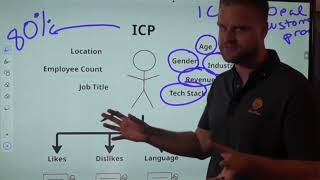
How To Build A Funnel That Converts Like Crazy (FULL COURSE)

Matthew Larsen breaks down a complete sales funnel from ad click to win-back sequence. He covers reminder emails at 24, 4, and 1 hour before calls to boost show-up rates, pre-call FAQ emails, and a selfie video to humanize the upcoming conversation. The funnel includes post-call follow-ups, 90/180/365-day win-back flows, and a content ecosystem of YouTube courses, newsletters, and webinars to keep prospects moving through.
Chapters
Over the last 3 years, I've spent on average $480,000 per month on my own funnel to book calls for my agency. And I've also helped about 1,800 businesses build funnels of their own. So the purpose of this course is to teach you how to build a funnel from scratch. And I really want you to go into this with the mindset that you're going to build this funnel specifically for Facebook ads. Even if you don't currently run Facebook ads. This is important because cold traffic Facebook ads are the, basically the hardest form of traffic to convert. So if the funnel you build works for Facebook ads, it'll work for YouTube, Instagram, other organic referrals, networking, and so on. But the opposite is not true. So even if you already have a funnel, cross-reference it against this course to make sure it's the best that it can possibly be. And let's get right into it. So what we really have to understand here is that when we talk about funnels, marketing funnels, sales funnel, funnel, you know, customer journey, multiple ways to describe it, what we're really talking about is 4 separate phases. And if you don't view it as 4 separate phases, it can kind of just become one big thing and you just kind of lose sight of what you are trying to do all along. So my only goal with this course is to teach you how to build a proper funnel, specifically one that will work with ads. You know, a Facebook ad funnel is basically the hardest form of funnel to create— converting people from Facebook ads. If you make a funnel that can convert people from Facebook ads, it will work on your other stuff such as outreach, content, networking, referrals, etc. The opposite is not necessarily true. Facebook ad funnel is the big leagues. However, like that being said, I'm not necessarily going to, you know, spend an hour talking about offers or the ads themselves or content or sales. Those things are all part of this. And those things you need to be successful with in order to get this to succeed. But those are and should be separate courses on their own. So the thing is, the 4 phases that we want to think about are getting clicks, getting calls, getting shows, and getting closes. And the thing that we really need to understand, and the thing that I think is really hard for a lot of people, is that any of these phases fall apart, we're not going to get the client. A lot of people are very scared to do their Facebook ads, for example. But realistically, the Facebook ad is just step 1, the click, and there's still 3 complete steps after that have nothing to do with the ad themselves that we have to take care of. So these are going to be called the Core 7, and these are kind of what I would assign as the fundamentals of your business. So a lot of the time, like, people will really dial in on the offer, and the offer is very important, but the— there's 7 pieces in the Core 7. It's not called the Core 1, right? There's the industry, there's the ICP, there's There's the offer. That's what everybody talks about. The unit economics, the big idea, the messaging, and then the proof. All of these things are kind of— you design them when you're starting out, or you can redesign them anytime. And then it's also a flywheel, right? As you get more proof, you go upmarket in your industry and ICP. As you go upmarket, you get a better and better offer, which you charge more for the same thing. That improves your unit economics, et cetera. So When we're talking about this, this is a funnel course, but similar to everything else, like success with your funnel and then the ads and the content that is running to the funnel, like those things cannot be separated from your business fundamentals, which is the core 7. So we need to really get right the industry, the ICP, the offers, the unit economics, the big idea, the messaging, and the proof. I have an entire separate course on this. It's 3 hours on my channel. It's called How to Create an Amazing Offer that talks about all these. So if you want more information on this other than just the theory involved, you can go watch that. It's important to understand that none of the core 7 are good or bad on their own in isolation. They're only good or bad as they relate to each other, and especially the ICP, right? So 2 situations. Let's just say I have a— I make an offer for agency owners to get their first client. Let's just say I made that offer. If I— if my ICP is agency owners between $1 and $3 million a year, Like, that'd be probably one of the worst offers you could possibly do, right? They're like, they already got their first client. It doesn't even make any sense. Versus I have an offer that helps agencies, you know, grow and scale a sales team. That would be a terrible offer for someone who hasn't even got their first client yet. What would they need a sales team for? But if you actually mix and match those properly, those would probably be 2 good offers, right? And it's just one of those things. The industry to me is actually even more important than the offer for the simple reason, like, let's just say you have an agency that runs Facebook ads and does appointment setting, and you basically, you generate leads for companies. You could have the exact same service, the exact same team, the exact same messaging to a large degree, the exact same amounts of proof, but who do you think would be able to pay you more and be a better client? Wealth managers or dog walkers, right? You're doing Facebook ad-based lead gen for both of them with the same team, the same service, Basically the same thing, but one is going to have to pay you or be able to pay you 10x, 50x, maybe even 100 times more because they are in a better industry. The Core 7 is more important than the funnel. And if I had to put a number on it, your Core 7 will represent about 80% of your success and your funnel will represent about 20% of your success. And people will spend hours and hours fucking around with their funnel. And trying to optimize this and that and A/B testing this and that, when really they are in a terrible industry with their ICP sucks, their offer sucks, their unit economics make absolutely no sense. They have no proof, they have the wrong messaging. And of course, this is a funnel course and I don't want to discourage you and make you stop watching, but this is very important stuff because I'm actually going to tell you what you need to know, like what— not what you think you need to know or not what someone else who Doesn't understand anything about funnels, forgets to tell you. So like when people come in and they're like, why don't my ads work? Right? So let's think about this for a sec. Let's go back to the core 7 versus the ad in the funnel. Like, why don't my ads work? Your core 7 is 80% of your success and your funnel is 20%, right? And remember, there's 4 phases in that funnel. There's clicks, there's calls, there's shows, and then there's closes. And so you could kind of think that clicks, which is what your ads are, is only one of the 4 phases. So like, what does that equal out to? 80% times 20% times 25%, which means like dividing by the 4 phases is 5%. Your actual ad itself in a very real way. And this is more, these numbers are more for like educational and illustrative purposes than something you could actually measure, but in a very real way. Your actual ad creative is like 5% of your success. So when you're like putting all that time on it and it's like, why doesn't it work? It's because you haven't done any of the other stuff. Right. But it's just one of those things. Like people are dumbfounded when this happens and then they spent so many time on ads. They spent so much money. They've done so many different creatives and then it still doesn't work. And this is the reason, regardless of what your funnel is. Now, like we can't, even if we had an amazing core 7, right, we can't just absolutely botch our funnel either. Like that is, I'm not, I don't want to give you that impression at all. You know, if you have an 80% of your core 7 and 0% funnel, it's still not going to work either. And one of the most important things that we're going to really focus on a lot and that we need to keep in the back of our mind in our funnel is called congruency. And this is very, very important that our funnel is congruent through all 4 phases. So Essentially the definition of congruency is that it's a unified, like makes sense, it's consistent from the time they click to the time they ultimately close. Everything is built around the same stuff. A lot of people will, who don't understand congruency or don't like even know it's a thing, like you accidentally, but they will make the most insanely non-congruent funnels that you've ever seen. And then there's tremendous drop-off. So there's 2 reasons that congruency is so important. The first is that when things aren't congruent, like a lot of the time in this example, you'd see someone have an ad. Let's just say they have this exact ad. I have an example. Financial advisors will generate exclusive and qualified annuity leads and sync them to your CRM. Like, let's just say that was their ad. And then they'll run that and then their landing page will— headline will be scale your business. Like completely unironically, they just don't know any better. And when things are non-congruent, 2 things are wrong with that. Like, number one, it just feels weird. It feels icky. It doesn't feel, for lack of a better word, congruent, right? It's kind of like on an extreme real-life example, and I'm a Christian here, but it's like when someone does nothing but preach the Bible and then they go and commit every sin in the book, right? Obviously, that's a more extreme example, but when you have a bunch of different things and every part of your funnel says something different, That is the same effect that happens to you. The second reason is a lot more surface level. It's like, to a large extent, someone clicked on your ad because they're interested in your ad and that messaging. And then if they're interested, you should have it here because they're still going to be interested, right? So it is something that we need to talk about throughout our entire funnel, but we really want to especially Focus on our congruency in our ad, the above-the-fold section on our sales page, which is this section that you can see without scrolling on mobile, and then the first 15 seconds of our VSL. Everything needs to be congruent, but especially these 3 things need to be congruent together and work as like a single unit. I call it the trifecta in our in-house SOPs. The thing that we also need to understand about our offer is that perception very much equals reality. A lot of people will usually have a better offer than they present within their funnel. And remember, like, people don't know what is in your offer or how good or bad your offer is until after they buy it from you. They literally have no idea. It's kind of like a situation, you know, you'll see this a lot in like pizza shops, like the world's best pizza. Right. Well, on one hand, it probably isn't the world's best pizza because statistically there can only be one best pizza. And then if every shop says that, probably not true statistically. But secondly, like even if it was true, that means nothing to me because I have not tried your pizza yet. And a lot of people will do exactly that with their thing. They'll be, oh, our service is just the best, right? Or, but people don't know that. And if you don't put in extreme detail in your VSL, on your landing page, you know, the timeline, what's required of them, answers to the objections, all of your proof, like the result that you're going to get them in clear, explicit terms, it might as well not exist. You see this a lot of time. A good example is I work with someone who they have a YouTube offer and they basically get X, Y, and Z result over the course of a year. And when you're looking at that, especially if you clicked on an ad and you're vaguely aware of this company, like years, that's a, that's a long time, right? Do I really want to commit to that? Do I even want to book a call? Like a year, I don't even know. But they always get their first, you know, they get the recording set up and all their stuff ordered within 24 hours. That's a quick win. Then they get their first YouTube video up within 7 days. Like that's a big win. So really, Like the time delay here on the offer is like 24 hours, but they don't say this on there. So in the eyes of someone who clicked on the ad in the funnel, perception equals reality. It's like, wow, I got to do this for a year before I get any results. And this is a very, very true concept. It might sound hard to believe, but you got to keep in mind that people coming from ads and are cold traffic and they don't know, like, or trust you yet. They're vaguely aware. They vaguely like know what you do. They don't really care, and they're just going to click away if you don't explicitly put at every step of your funnel what they're going to get. So let's go into phase 1. This, for at least the video, this course is going to be the shortest of the 4 phases because a lot of it would be like me explaining to you how to do ads and content for several hours. And that is not the purpose of this course. So I'm just basically going to give you the high level at this stage. So let's get into it. This, at least for the context of what we're talking about here, is your paid ads and your content. There's 4 ways to basically get clicks: paid ads, content, outreach, and partnerships. However, the outreach and the partnerships don't really go to a sales page or an application form. They kind of come in down here really at the book a call phase if you do it right. So we're not really going to include those in this video. We're just going to talk about paid ads and content. The different basically funnel pieces inside the clicks portion are going to be your actual paid ads, Facebook ads in this case, your content, your Instagram profile, your Facebook page, because your Instagram and Facebook profile are where your content might come from, and then where you show proof, your other profiles such as LinkedIn, YouTube, Twitter, and then your search results a lot of the time. So this is where that congruency comes in again. We need to have it in here. So this would be in this phase, at least it would be the ad itself. As far as why content and why search results matter, you'd be amazed at the percentage of the time that people will click on your— like, they'll view your ad. They'll either click on your profile and see what they can see, or they won't click on your profile at all. They'll go back out to Google and search it, and they'll continue on LinkedIn or YouTube or your website or whatever platform they choose. And it's so bizarre, but like, if you could see a recording of every single person who watched your ad, you'd be absolutely stunned by how much this happens. So we do want to optimize our LinkedIn, our YouTube, our Twitter, and our search results just in case this happens. We also want to put special attention and effort into our Instagram profile to make it as good as possible, as well as our Facebook page. And we want to do that because these are, you know, where our ads are delivering from, right? So we want to have that blue check mark, that very nice bio, that very nice branding, and all of that kind of stuff And don't kind of undersell or overlook Facebook page, 'cause unless you just have turned Facebook off in your ads, 33%, sometimes even more of your budget is going to be on Facebook. And it's truly insane to me how many people are running a lot of ad spend and their Facebook profile looks garbage and dead. It's just crazy to me. And then you are going to want to make sure that your LinkedIn, your Twitter, your YouTube, that kind of stuff looks good as well, just in case they, you know, follow you or go back, go to search results and they go through these. You want them to be able to continue the same funnel on these ones as well if they wanted to. As far as the search results go, there's a few situations. Like the first situation is the ideal situation. That's great stuff shows up about you, right? The worst situation is negative shows up, stuff shows up about you. And then like, I would say another negative situation is nothing shows up about you at all, right? Both on a personal level and on your business stuff. So obviously nothing showing up is not quite as bad as like, I was scammed by this person. Like that would be very bad. And that happens to a lot of people on Reddit, Trustpilot, that kind of stuff. But not having anything at all is not great either. Makes you just look like an anonymous scammer. So what we want to do is we want to sign up for high domain authority websites for our company. All the review sites, like any relevant sites in our niche, make it more likely that we show up. And then on our company profiles, because a lot of people will just post their content, run their ads from their personal one, on our company profiles We want to put like FAQ videos, testimonials, case studies, that kind of stuff. So if someone does search our company, they'll at least see that. And because now when we post that, we'll have content on our company profiles. Those are more likely to essentially rank. And then we also want to make sure that we have some version of our name as a website. So my name's kind of common, Matthew Larsen. I have matthewblarsen.com. And if you search that, Matthew B. Larsen or Matthew Larsen Marketing, that's usually the first thing that shows up. It's very, very important. So essentially, like once you have all this set up, your paid ads will be right here. We're going to mostly focus on this in the, in the context of Meta Facebook ads for this course, but it can come from YouTube, Google, LinkedIn, Twitter, somewhere else, whatever. Most of the time they're going to go to your sales page. Some people will send it to an opt-in page before the sales page. Both can work, and we're going to talk about that soon. Then your content also comes in, usually in your content, in your bio or wherever, pinned post, depending on the platform, whatever. You'll have 2 links, one to your sales page and one to your opt-in page, which will basically allow them to download your lead magnet. We are going to differentiate in here versus your funnel opt-in page, which would be the page that you send your paid ads to. Versus your lead magnet opt-in page, which is where you get— give them your lead magnet, as the name suggests, and that's where your content would be too. So just keep in mind, we're going to specifically differentiate between those things. And like I said, because we're not going to teach you how to do paid ads from scratch or content from scratch in here, we are going to make phase 1 relatively short. And now phase 2, phase 3, and phase 4 are going to be the full phases. So this phase 2 is going to be in this area. So basically from the opt-in page to the sales page, to the VSL, to the welcome flow, application form, call booked, like that's really what we're doing. It's called calls for a reason because we're trying to book calls. So the pieces here are the funnel opt-in page, the lead magnet opt-in page, the lead magnet itself, the welcome flow, the sales page above the fold section specifically, The VSL, the application form, the rest of the sales page, the DQ page, the call booking page, and then what we're going to call the application recovery flow. And we'll talk about each of these one at a time. As far as KPIs go, like these are really going to be general good place to start because I know a lot of the time you see courses like this and then you just have no idea what a good anything is. So in the context specifically of a book-a-call funnel, when you're offering some sort of like, let's say skilled white-collar service like marketing or accounting or legal or, you know, something like that, some real like white-collar, somewhat high-priced service, like here's what are going to be. So your lead magnet opt-in rate should really be 50% or more of visitors, and that is going to be carried largely by the fact that they're coming from your content. So if someone's following you on YouTube for a long time, or you're like, you're watching this video, you can go to the link in my bio and get my lead magnet right now if you wanted. It's like, this is an example that I actually do it. So it's going to be 50% or higher. If it's not, like probably either a bad lead magnet or you completely botched the page. And I'm going to show you how to make the page. The ones that we really want to focus on are your application rate, your booked call rate, and your qualified rate. So your application rate would be like, of the, like, if there was 100 people who came to your, who clicked on your ads and came to your page, between 6 and 10 of these should submit an application. So if it's less than 6%, usually it's going to be a case of your, it's either getting the wrong traffic, and you need to change your ads or your landing page or sales page is really bad and you need to fix it, or your form might be too tight. Usually not the case that your form is too strict. If it's above 10%, like that's a great sign that a lot of people are applying. But if it's above 10%, to me, it's an opportunity to make the form more strict and make it harder to book a call with you. So you get more qualified calls, relatively speaking, and then your Facebook pixel is now optimizing and learning on only the most qualified people. Not everybody who submits an application is going to book a call. And that's what that application recovery flow is for. But realistically, about 3 to 5% of people who come to your page from ads should be booking a call. That incorporates the people who don't book after applying and everything. And then as far as if you're doing something right, as far as your qualified rate goes, like if you get 100 calls, 90 or more of them should be qualified. If that's not the case, then your form is seriously messed up. There can be a lot of cases for high-level people that, like, we're thinking of the top 1% where it makes sense to have a lower qualified rate. But for 99.9% of people watching this video, if it's not 90% qualified, your form probably has either not enough qualification questions or the wrong ones. And when we're kind of viewing these stats here, these are all working targets specifically from Facebook ads. Like if you had Google ads, these would be completely different. And that's why it's important to differentiate it. And if you do end up having this funnel, you build up everything you see here and you have different traffic sources, we need to measure all of these rates separately because if we mix them together, it's going to give us the wrong idea. So again, like here's a chance to go back to congruency. This is the last time we're specifically gonna have a congruency slide in this course, but we need to match our above the fold and the first 15 seconds of our VSL to our ad, specifically in this phase of the funnel. So the first is we're gonna talk about a funnel opt-in page. So your funnel opt-in page is essentially a page that you send your ad traffic to. That stands in between, you know, your ad click and then your actual real sales page. And the main reason that we would have this funnel opt-in page here is because we can collect their name, email, phone number, and, you know, phone them, text them, email, nurture them, even if they leave the page without booking a call. Because remember, a 3 to 5%, you know, book call rate is very Like, it's a good range for benchmarks. But if you kind of think about it, that's 95 to 97% of people are leaving the page without booking a call. So that is why, like, some people will prefer to use this page because then even if they leave, or which most people will, then you can still contact them. I typically prefer sending my Facebook ad traffic directly to the sales page over having an opt-in page. But I don't think one's necessarily better than the others. It's all a matter of just like most things in life that it depends, right? But I will say like the higher level the ICP, meaning the wealthy they are as an individual, if it's B2C or the bigger the business and like position, if it's B2B, the more I prefer sending directly to the sales page. And the reason for that is more successful people are busier, right? Time is of the essence to them and they already are used to taking big risks and all of that kind of stuff. They just really usually will want to get to the point and that is why I would send it right to it. So the trade-off is that you are going like, on the other hand, to me it's more acceptable or more likely to have the opt-in page there when the opposite is true, when you're talking to beginners, let's just say less successful people, beginner, like smaller businesses who don't have as much disposable income or revenue or capital, and they have a lot of self-limiting beliefs and the sales process generally takes longer, it can make a lot more sense to have that opt-in page. Typically, whether you'd like, you could try both, it doesn't really matter, but typically the decision you're gonna come to whether to have this funnel opt-in page or not is you are going to basically get a higher priced booked call than if you don't have this page, right? Because more people are just going to drop off because they don't want to fill out the opt-in. So let's just say that, let's just say that your opt-in, like your conversion rate goes up 25% because you have their name, email, phone number, and can nurture them, right? If your cost per booked call went up by 40% there, and your conversion rate only went up by 25%, that's not worth it, right? You would take out the opt-in page because that is just mathematically making it worse. But if your conversion rate went up by 30%, and the cost per booked call went up by 10%, this opt-in page was a huge success, and you would keep it. So it's really like you need to understand the difference and who is most likely based on like what kind of funnel and who your ICP is. And then you could really just test this. One way is not necessarily better than the others, but as a rule of thumb, the higher level your ICP, the less likely you are to have this. So like the objectives with this page are basically to capture the contact information so you can follow up even if they don't book, then get those people redirected once they fill out this kind of form to the sales page. And then we need this to basically Produce enough additional conversion rate or qualified calls to justify this in our funnel. So basically, like, you have to decide, should you use the opt-in page or send the traffic directly to the sales page? Like, is your ICP willing to submit that information before they even see the full offer? And does that basically conversion rate, or does the additional business justify the increase in booked calls? Like your framework for this page will look something like this, where you're going to have, you know, your banner, the star rating, your ICP, like your offer basically right here, and then your how they're going to get that. And then a lot of people will either have this embedded in the page or they'll just click the button and it will pop up. So an example, like this is a page where it generally looks like this, but it has the call to action button. And then if you It'll pop up and you'll have to fill it out here. Like that's a very common way to do it and what you would see. If you are trying to, like, let's say you have this opt-in page and you're trying to improve it. Normally the ways you are gonna improve it are by having a stronger headline that like plays on the desired result or offer better, having more relevant proof, or just having a better and easier form completion are the 3 biggest focuses if you are going to try to improve it. The next is going to be the lead magnet opt-in page, and that is the same spot in the funnel, but it's where the content is coming from. Like, this page is not a sales page. This page is basically to grow your email list. So let's just say you watch my video, like this funnel video, you eventually decide I'm pretty smart. I tell you to go to the pinned comment right now or the description and get this exact document that I'm going through. Hint, hint. Then you basically go to my page, you'll see like, give me your name, email, phone number in exchange for this. Now you're on my email list and I can start nurturing you with emails, right? It's like, that is the purpose of it. And then eventually, like, I will try to pitch you on my service and so on, but it doesn't serve the exact same purpose as the sales page. So like, the objectives of this are usually in content to convert people who view your content into people on your email list, right? And the choice of your lead magnet matters a lot because similar to an offer, we want our lead magnet to appeal to our ICP and only our ICP. Like going back to that example of the agency owners, the, you know, sales team, like if I made a lead magnet around that, that would appeal to people between $1 and $3 million a year, and that would actively unappeal or unattract people who are just starting, for example, and that's what we want. So essentially the decision for your lead magnet opt-in page, like what resource are you offering and what result does that have to get? There's only really one decision. And the lead magnet opt-in page is going to be very similar to the funnel opt-in page, but it serves a different purpose. Instead of, you know, the offer or the result, you just basically talk about the lead magnet, you know, get your 12 free trainings, get your free, like, whatever. And then a little sneak peek of what's inside. And like, this will be a very, very common lead magnet page. With your lead magnet opt-in page, because you're primarily using content as the source and content people know, like, and trust you, unlike Facebook ads, you can really get away with almost anything here. Like, it does not really need to be good. It's your content that they've consumed a lot of that is going to sell them instead of really your page design. You could really get away with just the most basic thing possible. This is literally mine as an example, and I know that this has a 73% opt-in rate with YouTube being the primary traffic source. So it's just a good example of what you probably should do if you're trying to improve this page. Usually the way you're going to improve it is by having a better, like, lead magnet that is more desirable to your target audience, like that is going to be a stronger improvement than any other thing put together. But normally like good congruency, like in my bio, get this free funnel course, like then my headline should say that same thing, which wouldn't just say something completely different. And then you can put proof on this page. It's not even that necessary, but it is possible. The next phase is going to be the lead magnet itself, which is right here in the funnel. So your lead magnet is a free resource that someone gives, or like that you give someone in exchange for their contact information. And usually like your lead magnet is going to be some super long-form course or something like that, and it should help your ICP solve a problem and then give them a useful sample, a big dose, a big fat dose sometimes of how you think. So someone should be able to go through your lead magnet, they should understand something that they did not understand before, and ideally they would use your lead magnet to make some sort of tangible, concrete improvement or action step in their business. And that is what gives them reason to take your paid offer seriously, because again, people don't know if your offer is good or bad, like we said before, before they buy it, right? So in a very real way, they're going to judge you based on the quality of your lead magnet and your content. So as far as a lead magnet goes, I typically like laying out my service in terms of the different steps or the different parts that it takes to be successful. And that really makes the resource useful on its own and helps someone understand the work involved. So I'll go into the framework later. But if you were to help someone with YouTube, for example, like there's separate ideas and parts of that, such as the The idea, the title, the thumbnail, and so on. So if we explained those parts properly, we'll show them what goes into getting the result, and that will set us up as kind of an authority in their mind. So like the lead magnet typically follows what I usually refer to as the VAR formula or the VAR rule, like valuable, actionable, and readable. So like, even though you're giving it away for free, Would you honestly pay $100 for it? That is how— because value is really very annoying. It's like, just add value, bro. It's like, okay, thanks, bro. But like, it's hard to measure, right? So if you wouldn't feel comfortable selling your lead magnet for $100, like, it's not good enough. And value, that $100 usually will come from the usefulness of the information, the examples, the frameworks. And then actionable means there's something inside of it or something even inside each part or each idea of the lead magnet that they can just take and implement within 24 hours and get a real improvement. So explaining the stuff in terms of like the value part's not enough. We also need to explain the action steps because the biggest form of possible proof in your business is not screenshots or logos or case studies. The biggest form of proof that you could possibly get is someone taking an idea you have, implementing it into their business and it working like that is the number one form of proof that you could have. And then readable basically means the material is easy to understand and move through. So I usually like to have one idea and one image per slide. That image could be examples, frameworks, like you name it. And basically when you have these things all together, your lead magnet becomes basically the basis of a long-form course. And the long-form course is good. Like, you could have it as the lead magnet itself, you could charge for it if it's really that good. You could have a YouTube video like I'm recording now. Like, this is literally me recording one of my lead magnets right now for proof of concept. And then if you do it properly, your lead magnet really doubles as internal training and SOPs for your own company. So doing this really in addition to just being part of your funnel, solves a lot of really strong purposes. So the objectives of the lead magnet is to get your ICP to make one concrete improvement using what you teach, or more than that, and gives them basically personalized proof that your ideas work. And those become a reason to consider buying your help. As far as like the decisions you need to make here, it's basically the, the most meta, the most macro decision is is like, what is your lead magnet going to be about? A lot of the time, the easiest way is just make it like a course based off your full service. And then it like goes into like what steps or what part of your service need to be explained. And then what are the examples or actions will help someone apply each part. So the lead magnet framework will look something like this, like you lay out part 1, part 2, part 3, all the way to, you You know, whatever, how many ever parts there are. And then every slide has one idea. The whole lead magnet is valuable, actionable, and readable. And each slide has the theory, the examples, the action steps, and the image involved. Like, that's really what you're trying to do. And then, like I said it before, I touched on it, but if I was to make a YouTube lead magnet, the idea, the title, the thumbnail, the 30-second intro, the speaking on camera, the making the assets or the slideshow, making the script. Doing the editing, the lighting, the camera, the microphone, uploading it to YouTube, analytics, how to improve. Like all of these things are different steps and you can make a very big lead magnet based on these things. If you're ever trying to improve your lead magnet, you basically will want to increase the, the value. Very annoying, but the value of the material, then you could always make it better with more examples and clearer action steps that you could just go bang, bang, bang, bang, bang. and then making it more readable. So similar to the VAR formula is how you'd improve it. And now we'll talk about the welcome flow, which is right here. So the welcome flow will be triggered in 2 different situations. It's gonna be triggered basically if someone opts in for your lead magnet, and it will also be triggered if someone submits your application but doesn't book a call. If they do book a call, they will be picked up in the pre-call flow, which we'll talk about later. Slightly different thing. So the lead magnet or the welcome flow is the automated email sequence someone receives after opting in. It will deliver the lead magnet, it will introduce your company, it'll explain what you do, and then it will tell them or hard pitch them on booking a call. And this is basically for the most part, the first opportunity to continue the conversation directly after they've given you their information while they still remember who you are and what interested them. Like someone downloading your lead magnet doesn't really mean they're interested in your offer. But if they applied, like that is where this really comes into place. The welcome flow basically makes the connection clear from your lead magnet to your offer. And then it also nurtures the people who submit the application and don't book a call. And that's kind of like, this is also connected in the You know, the funnel opt-in page versus just the sales page. Like if they opt into the funnel opt-in page, this will deliver too. So the framework for the welcome flow is 4 emails in the first 3 hours. A lot of people will really be scared about that. They'll be like, but Matt, I'm not gonna spam them. Oh my God, they're gonna unsubscribe. But we just gotta like think of it. No, like when is the moment that someone is most likely to Book a call with you, or when is the moment their interest is the highest? It's right after they opt in or apply. Like their level of interest is never going to be higher than that exact moment, and as such, we need to make the most of it. And that means sending them as many emails as possible, as fast as possible, within reason. Right? So the order of this information matters too. Someone needs to understand like what. We can help them accomplish or what the point of our offer is before, like, the details of that offer or process mean anything to them. And they also need reason enough to believe us before we ask them to take the next step, which will usually be booking the call. So after we basically slam them with those 4 emails, if that doesn't work, what we're gonna do is we're gonna send them 1 email per day for 30 days. And the contents of those email is always gonna be 1 objection or 1 FAQ. So one FAQ email slash objection email every day for 30 days. So if we wait, like normally, if you look at your sales call recordings, you'll have 6 to 12 like primary objections that you'll hear over and over again. And then you'll just have a bunch of niche and random ones, right? And those ones still matter because it doesn't matter if, you know, let's just say there's 10 things that people need to know before buying, just as an example. Doesn't matter if they have nine things. If they don't have that tenth thing, they're not booking a call. They're not buying. So we send these one email per day for thirty days. Every possible objection, because normally people will just have like one or two objections. They receive the email that overcomes that one. Boom! They're ready to book a call, and that's how it works. And that is why this flow exists. So as far as the objectives, like the first is to deliver the lead magnet, and then basically the second is to turn the opt-ins or applicants into qualified book calls by helping them understand and believe the offer. Because there was something at, you know, at the original stage that got in their way of booking. And that's what this welcome flow will do. So basically, the things we need to ask ourselves and the decisions we need to make, like, really, what does someone need to understand or believe before they'll book a call with me? Because believe it or not, like, the objections you hear on a call are not the most important objections to overcome. Usually those represent a very small fraction of the overall objections. The objections that prevent people from booking a call, basically just seeing your page, leaving and never coming back, are the objections that slam your business and prevent you from succeeding way more so than the ones you'd actually hear in a sales process. So this is something of a philosophical question that you need to ask yourself, like, what does someone need to understand and/or believe before they're going to book a call. And that is where your offer can really do a lot of the heavy lifting here. But this is not an offer course. And then really, after you've determined that, like, what are the FAQs? What are the objections that you should address in this welcome flow? And then in what order? Because yes, there's going to be 30 basically emails here, but preferably we're going to put the ones that come up the most and are the most important ones first, right? And then if we have different proof, different case studies, different screenshots that basically support our answer to those FAQs or objections. We also want to organize them and put those in the emails as well. This is basically the framework of the first 3 hours. You're going to deliver the lead magnet in the sense that in the case that they opted in, or if they applied, you're going to change this to basically what amounts to an application confirmation email. 1 hour later, what we do. 2 hours later, how we do it. And then 3 hours later, hard pitch, just slam them with the offer. And hope for the best. So this is kind of like a welcome flow. This is the one I send immediately, basically what it is. And then you can see on the side, there's all of these over here. If you're trying to improve your welcome flow, to be honest, like this is going to apply for most of the flows we're talking about here. The number one thing to improve your welcome flow is not anything we talked about so far. It's better email deliverability. Get more emails into their inbox instead of their spam, junk, or promotions tab. Secondly, we could get better subject lines and preview text, because if they don't open the email, the email is not really important. And then we really just can have a better order of the FAQs and objections, nail down the ones that are the biggest pain points and spend more time on those faster. And that's really what we would do. The next part is the sales page above the fold. And this is probably one of the top 3 most important parts in this entire funnel course. So pay extra attention if you're just listening. to this, you should probably watch the screen for this one. And this is going to be the sales page with VSL. This is going to be right here. There's going to be a lot of different things in this. There's going to be the above the fold, then the application, then the VSL, then the call book, and then the rest of the sales page. Like these are all going to be at this step in the funnel. So the sales page above the fold section is essentially if you opened your phone right now and you went to any website, It is the area that you could see without scrolling anywhere. So let me just load a website and then on my phone quick. It's a great time for my phone to be loading slowly. But if you just go to literally any website— this is killing me here. So if you go to any website and you load it, like, this is the above the fold. I didn't touch the screen, it's just what I can see. This is like an old newspaper advertising I believe it's above the fold means like the front page, you know, because the newspaper is folded without you having to open it up. Believe it's something like that. But regardless, this part is the most important, like top three most important things in your funnel. Probably the single most important, like individual piece of the funnel if I have to really think about it. And it's so important because this is. Usually people's first proper look at your business. You know, they saw your ad, they saw something that was interesting enough to click, and now this is kind of the fork in the road where they're going to decide whether you are worth their time or not. So a couple of things matter here. The first is that you cannot even assume someone will scroll down and, you know, look for the information they need. It needs to be very readily apparent I have a CRO background, which stands for conversion rate optimization. I grew and sold a CRO agency, and there's something in CRO called a heat map. So like Microsoft Clarity, Hotjar, I'm sure there's a lot of them. But basically, if you have one of these on your sites, it will show you like to what depth someone scrolls to on average. Like 50% of people scroll to this section, you know, 22% of people click on this element. Like the reason I'm telling you this is if you Have a ton of data and like a CR agency would, you will quickly learn that 70% of people don't scroll down at all. Like they don't even, they can just pretend that they're not even touching the page. And that is quite an alarming statistic because if you don't have everything above the fold that they need to basically evaluate to make a decision, chances are they're not gonna see it. Right. And I will admit that the people who probably are going to book a call will scroll down and be more inquisitive and try to learn more, but we need to set ourselves up to succeed the best. So remember, this is part where we need that congruency with our paid ad. This is the middle of the 3 in the trifecta. So we're going to go through the framework, but we need the name and the branding at the top. We need an ICP callout. We need a headline, a subheadline, a VSL, and then a call to action button. In almost every case, the headline needs to communicate the result that they want, basically your offer, in the exact language that they use and understand. That might sound obvious, but a lot of the time a headline will be technically accurate, but it will be either too complicated or too generic. Like, a lot of the time people arrive to this page with very little context, right? They just clicked on your ad and They're vaguely interested, maybe not. You need to write for that type of person, someone who doesn't give a single fuck about you, rather than assuming that, you know, wow, they find— this is a person who, wow, I finally found them. I love Matthew Larsen, right? They don't even know Matthew Larsen exists 99% of the time. So you need to write for the person who doesn't know you, doesn't like you, and doesn't trust you, and just assume that they are actively skeptical. And write your headline and subheadline for that person. So your headline is the— basically should be the desired result. The subheadline should elaborate a little bit on how they would get that result. The headline without a subheadline, and a lot of people don't have the subheadline, headline is just a claim. And claims without supporting evidence, even if the claim's not outrageous, you know, are not as believable. So they are kind of a one-two punch: desired result, how they will achieve it. Headline, subheadline. Then you want your VSL. Then you want your proof, all of that kind of stuff. We'll go through that in a sec. So the objective of this is basically get the right visitor, basically your ICP, to immediately understand it's for them and to take an interest in the offer and to learn more and to read more. With basically what we want them to do is to hit the button and apply, fill out an application, or at the very least, continue learning through watching the VSL or scrolling through the page. The decisions basically here are what should the headline be? Like, what result should I be promising in my headline? Because a lot of the time, even in the same offer, there's, you know, there's more than one way you could just describe your offer. So to me, I'll usually match this headline to whatever my top performing ads are, because you could have a bunch of different ads that essentially say the same thing in 100 different ways. Use the language of the most successful ad. Then basically, like, what can I put in a subheadline? And you should keep in mind that, like, this headline and the subheadline can't just be infinite length. They have— usually are going to be 3 lines or less headline, you know, 7 to 10 words subheadline, 10 to 20 words max. Like, what proof can we show immediately? And then how will everything fit on this screen? Because this right here is a core, you know, piece that you need to understand. So if you're just listening along, look at the screen right now and read this. I'll give you 10 seconds. Like, this is extremely true. If you do this, you are going to read This part first, which is representative of the headline. This part second, which is representative of the subheadline. This part third, which is representative of the call to action button. And this part last, last, which is like the social proof. This is the, um, I don't know, like how else would you do the social proof, the ICP callout, like all that kind of stuff. And this will be really happens in a fraction of a second. How they are going to perceive the page. It's called visual hierarchy usually. So like, this is the framework that we really want to be doing on this page. So we're going to have the matching brand, like your company logo, like usually a banner, some sort of star rating here or other form of social proof, a very clear callout of the ICP. We don't want them to guess. The desired result headline, how they're going to get that result headline, the thumbnail with the VSL so it looks cool. And then their call to action button. Like, this is what it will look like, and it has to look like this if you want to fit every— like, there's so many different ways to create the rest of the sales page, and we're literally going to go over that. And there's so many different ways to do everything in marketing except this, really. To me, you have to make your above-the-fold section of your sales page exactly like this. It's the only way to basically fulfill all of the things that you need to fulfill and have it make it look good and make sense. So like, this is kind of how it might look, right? So this is on mobile. I didn't touch anything. So let's just go. Get your first 5 clients from ads or your money back. Okay, clear enough. Okay, look, it's a done-with-you program that'll teach you ads, funnels. Okay, perfect. Who's— okay, book a call. Okay, who's this for? Okay, for agency owners. Oh, $550. Proper visual hierarchy. That happens very, very quickly. Very, very quickly. So we need it to look essentially just like this, and that's one of the very few things that's non-negotiable. Most things, like, it depends, right? This does not depend. It needs to look very much like this. If you want to make improvements to your sales page, if it's not performing properly, normally you're going to start with a different headline. To me, the headline is about 80-90% of the battle here. If that doesn't work, you know, more proof, better proof above the fold if you can. And then you're usually going to try to match this visual hierarchy even more clearly, but it has to look like this. This is one of the only hills that I'll actually die on because most things in marketing and most things in life are, you know, it depends. And there's nuance when there's basically no nuance here. The next part we'll talk about is our VSL, which stands for video sales letter. That's right here. If we basically think of our VSL as a prerecorded version of that kind of awkward phase of a sales call where you say, mind if I share my screen and give you this presentation? And they say yes, like that's really what we wanna be doing in our VSL. So basically your VSL is what's going to do a lot of the work in convincing someone who clicked your ad and sees your page to take the next step and book a call with you because the person who's coming from the paid ads very much so will never have heard of us before and have no context on our track record, how our offer works, like all that kind of stuff. So the video is what is going to do it. Huge mistake here. There's 2 big mistakes. We'll talk about one now. The first big mistake is only having your VSL on the page. 'Cause not everybody wants to watch a VSL and you still need to design the rest of your page to, you know, where they can get all the information if they don't even watch 1 second. That's the one that we'll talk about later. But the second one is we don't want to ever assume that people are going to watch our whole VSL. We really want to assume that we have 15 seconds. If they watch the rest, great. That's good for them. But when we're making it our VSL, we need to assume that we have 15 seconds because if you have enough data, you're going to quickly see like that is going to be the average time you have. And of course, the people who end up converting will watch more, just like they'll scroll down on our page, of course. But still, bear with me here. This is also why that congruency matters so much. If you remember, it was the paid ad, the above the fold, and the VSL. We want the paid ad and above the fold to work together to instantly and totally resonate with them as to what it's for and what the offer is. With the paid ad and with the above the fold, they should know what, at least very, very generally speaking, what it is and who it's for. If we achieve those 2 things, we can get right into proof with our VSL. If we just view all of these things as, you know, completely disconnected and we just basically start from scratch all the time like most people do, we're gonna have to spend too much time explaining what the offer is and the VSL, and then we're not even gonna be able to show proof in this 15-second window. So basically we wanna show proof within the first 5 seconds. We wanna have the full offer explained within 15 seconds and then a second form of proof Starting at 15 seconds. Hopefully you're able to follow that. So basically we have that 15-second window to show proof and explain everything. And then what we want to do in the rest of the VSL, regardless of how long it is, is show more proof, address FAQ or objection, show more proof, address FAQ. If we did nothing but explain the offer in 15 seconds and then answered all of the FAQs in the order that they came up, We would have a very successful VSL. It's very, very important. We also want to kind of match the length and the bluntness of our VSL to our ICP. So basically, the richer or the more successful someone is, again, the more time is of the essence to them. And the more you should just get to the point. A lot of the time, if you have a very high-level wealthy audience, your VSL will be 2 minutes, 3 minutes, 5 minutes, versus On the complete opposite side, if you have a biz up or you're selling to beginners or you're selling to kind of, let's just say poor people, they need this to work. They're gonna have a lot more reservations, skepticism, self-limiting beliefs. Sometimes those VSLs go 15, 30, sometimes an hour, and it still makes a lot of sense cuz you just have to overcome so much more stuff. So the, basically the objective of the VSL is, you know, make them understand and believe the offer. And then basically answer the questions stopping them from applying and then booking a call. As far as the decisions go, you need to basically answer how long should my VSL be based on that ICP. You'll also have to answer what proof will you show in the opening, and then basically which FAQs and objections should you answer, and then in what order. Very similar to like, like you're gonna— when you answer these FAQs and stuff, very similar to every step. I think we went over it in the welcome flow, like when, which order and stuff. You use that same order here. So the framework, basically, before they play, we need the thumbnail. First 5 seconds, proof, literally edit it on the screen. Like, within 15 seconds, the full offer is explained and the second form of proof begins. And then you just kind of question, answer, relevant proof, repeat over and over and over and over until You know, you've got those 6 to 12 questions answered. This is a great VSL thumbnail example. We can't play it on the screen because it's a screenshot, but very interesting is like, I want to watch this VSL type thing. If you're trying to improve your VSL, you always start by making the first 15 seconds stronger. Secondarily, you can make a better thumbnail. And then third, better FAQs, objections, like bookmarks or chapters to where the specific FAQ happens so they can kind of sort just by the ones that they do. Very strong way to make this VSL. So now we are going to go deeper into the funnel, and this is the application part. Basically everything we've done up to this point in this phase has been getting them to do this, right? They need to fill out an application, then they need to book a call, and then we go on to the next phase after that. So the application form is right here. So see our paid ads, our content, eventually get to our sales page with our VSL. The above the fold, the VSL, then the rest of the page, and hopefully they're going to apply. So again, this is going to be a 6 to 10% target application rate, and we need this application primarily to make sure that people who are not qualified are unable to book a call. There's at least 2 good reasons to do this. The first is it's just kind of a waste of time to talk to someone who Either can't afford or has no intention of paying your price, which is kind of a waste of time. The only caveat of that, to be honest, is if you're first getting started with paid ads for like the first like 10 or 20 calls, maybe you would take this out because one could argue that even if you're talking to unqualified people, like the experience and just finding out how the call is going to go is very valuable. But after that, you would always have this application. So that's number one, making sure we don't talk to unqualified people because it's a waste of time. The second is related to the first, but it's even more important because if we're running paid ads, for example, and we let unqualified people book a call, Facebook is going to track that conversion. It's going to take all of those data points having to do with that person, like the billions of data points it probably has on them, and it's going to look for more unqualified people. It's going to optimize on unqualified people, and we can't have that. That is exactly how you end up in a position where you get nothing but trash leads from Facebook. So typically I'll have at least 4 disqualification questions on my form. A lot of them will be, you know, some of them will be harder than others. Usually it's going to be budget, authority, need, and start date. So budget is going to tell you, you know, whether they intend to pay this. Like a lot of the time I'll just say this costs $10,000. Do you have a problem with this? Or is this okay to you? Yes or no? DQ. Or you could also change revenue or budget to a revenue if it's a company or something of that nature. The authority basically means like, are you the business owner type thing? Basically, the need section is like, how much do they want this? And you can really have a lot of different questions that will tell you this. There's no real standard way to do it. But then The final one is start date. A lot of the time, if they're not willing to start or not looking to start within the next 30 days, I just dequeue them and it just is what it is. Like the wording on these questions really matters a lot. It should be specific because a vague question can get you kind of a vague result, right? And a lot of the time, if you don't ask the questions properly, and I'm not trying to make it sound scary, it's very like basic bare bones. but a lot of people do it wrong. Then a lot of people who aren't qualified get through. The second thing I'll usually want on my form is at least 4 questions that help with the sales process. You know, why are they looking for help? Like a good example, when I'm selling leads, you know, what, do you have a CRM? And which one do you use? Because that's good for, we have to set it up for them if they convert. How many sales reps do you have? How, what is your Like sales call process look like? Do you have a Facebook page, an Instagram account, right? It's not necessarily things that will DQ, but that will be useful for you or your salesperson on the call. And then of course, the name, email, phone number, and website. So it's very important on your application that you don't just make up a bunch of garbage just to have more things. Every question should serve a purpose, but don't shy away from asking a lot of questions because the more questions someone fills out, The higher intent they are. And there's almost some way, I don't know how to describe it in maybe human nature, you call it loss aversion or sunk cost, I don't know. But if someone fills out, you know, 1, 2, 3, 4 questions, eh, that's not a big time commitment, but they fill out in decent amount of detail, 12, 15, 20 questions, they're much more likely to show and like be responsive. because they've already put all of the time in there. And it's a very, very real thing, especially in B2B, less so in B2C, but it's just something to take of note. So the only 2 objectives with the application are give access to book a call to people who are actually qualified and then collect information to make the call more useful. So the questions are the decisions that you'd have to make. It's like you really should think about it, what is qualified and what is not? And I would really kind of Put a little bit more effort into this than if they're over a million a year, they're qualified versus if they're not, they're not. Like a lot of people, their decision-making at this step will basically just come down to that. And a lot of the time, pure budget is not what makes— or pure budget, pure revenue level is not really what makes people unqualified. Like, for example, I sell a ton of lead generation, like a lot of leads. And what we do is we track people who get to at least the 3rd order, like to become a real client where we would consider them like a client, they have to buy at least 3 orders of leads from us. So they got to buy 3 times because you just pay X amount for Y leads, right? So a lot of people, like, no matter what, about 70% of people never buy a second time, and then there's more drop-off there. But of the people who buy a third time, we really consider those to be activated. And 91% of people who've bought a first— like, about the third time, this is the last 6 months on our form data— 91% of those people have indicated on the form that they bought leads before, with— before, like, working with us. So literally only 9% of people who never bought leads before actually bought a third time. So that's like a huge data point. It's not necessarily going to disqualify someone if they've not bought leads before, right? But it's just a helpful example. I think at least that's why I'm bringing it up to show you that it's not really just about pure budget or pure revenue. And are they the business owner or not? You have to use your brain a lot here and think of the things that like you really could ask on the form. And a lot of these things will only be obvious looking back when you can connect the dots, but really think about it and really think about your best clients that you've gotten so far and what they have in common. And then put that on here. And then we have to decide like, what other questions should we have? What really, what information could help us and prepare for the call and get us a better close rate? And you'd put that on the form. And then you, you know, where does someone go if they don't qualify? If they just like, if you don't have a downsell, they basically can just go to your newsletter or your YouTube channel or just have a thing saying, sorry, you're not qualified, but it is what it is. So the framework— and again, you can change it to like whatever details and whatever questions you want, but usually I'll have the DQ questions at the top here. I'll always try to do on the form as much as possible to have like dropdowns or multiple choice or something they can select on the DQ questions. And then on the actual sales-related questions, sometimes they'll just be A yes or no. Sometimes it'll be a range. Sometimes very rarely I'll have like a short answer or a long answer just because I want to get as much information as possible, but I also don't want to make it, you know, needlessly amount of friction. So a lot of the time, like how many sales reps do you have? 1 to 3, 4 to 6. Like it'll be a range type thing, but you'll just have something like this. And this is just on one page. A lot of the time it will be Typeform and these will be individual questions. It all depends. It's just a framework for you to follow. Then you'll have something like this is what it will look like in reality. Can be multiple steps, all of that kind of stuff. And then if you're ever trying to improve your application, because there's a lot of time where your application rate or your book call rate are kind of low, and you kind of have to measure like how— like you have to— if you're gonna have to measure if that's a function of your form being too strict or your landing page kind of sucking, because they'll both show up in the same place, right? So you would track like how many people started your form versus how many outbound clicks to track, like, is it my landing page? But then if you have a very, very high disqualification rate and barely anyone gets through the form, you probably do some of these, like better qualification criteria, nothing needless, nothing, you know, this should be based more on your actual learnings, very clear questions, like less ambiguity, more specific, all that kind of stuff. And then better sales-related questions. The next thing we're going to go to is the rest of the sales page. So basically above the fold, VSL, then the button, we go to the application. Now we're at the rest of the sales page. So even on the chart, it's a step backwards. It still makes sense to me. The rest of the sales page is anything not in the above the fold section that we talked so much about earlier. And to me, there's so many different ways to build the rest of the sales page. That I don't really even have a framework for you. I do have one, but you don't— like, this is one framework where you could take with a grain of salt. If you have 1,000 different companies, especially in B2B services, you could have 1,000 different sales pages, and they would all have a shot at working. The thing that is most important to me is that your sales page needs to have enough information and it needs to explain the offer where they could continue through the funnel without watching a single millisecond of your VSL. Not everybody wants to do that. Some people like to watch VSLs, some people would rather read, some people would just kind of rather skim. And you need to have your sales page set up where all 3 of those possibilities are available. And I say this because a lot of people will have their landing page and it will just be a VSL with a button And their purpose is like they want people to watch the VSL and they don't want to distract them, but just not everybody likes that and not everybody wants to do it that way. So it needs to basically take your VSL and like use your brain a little bit, of course, but how would I design my VSL on this page to make it in-depth but also skimmable? And that's of course multiple different goals at once, but the best sales pages will have this. Secondarily, on your sales page, the concept we went earlier of perception is reality. And if you don't— like, a lot of people have a great offer, but they don't literally spell it out for them. You really need to do this on your sales page in both an in-depth and a scale— or a skimmable way, rather. And then we want to basically finish it off with a bunch of different forms of proof. Like the objectives of this are basically give someone everything they need to apply and book a call without watching the VSL. And then the second is make the full value of the offer clear and believable. And you do that, you know, by literally spelling it out for them and then applying proof. For your decisions for this phase, like the primary decision is how long and in-depth should the sales page be? Like a lot of the time, like I've said before, is the higher level ICP, you just kind of want to get to the point and just spell it out very obviously for them. If you have a lower level ICP, you usually go into more depth, big long sales letters, different sections, etc. And you also need to basically determine what format best explains the offer. And this will be very whether your offer is very easy to understand versus it's more complicated versus it's, you know, visual versus it's not like How it works sections, sales letters, before versus after pictures. You know, like an agency program, you can't really have a before or after picture. If you're a fitness person, that would be your core asset, or you're a home service person, that's like a really core way to format it. You know, a timeline is very important, etc. And then we really want to design our page like in a common sense way, similar to how those FAQs work, the most important stuff at the top. Because we have to take in mind that everyone's going to see the above the fold. Like, that's a given. It's just going to load for them. You're kind of forced to see it if they click on the ad. 70% of people are not going to scroll past that, and then it's just going to keep going down and down more as they view the page. So we really have to decide what's the most important stuff that they want to see, and we have to have that first. So like, if you were a remodeler, like a home kitchen remodeler, before versus after would be a crucial thing. If it was a, you know, new kind of software, you probably have a sales letter to determine how— or to show them how it works and what the value is. So it all depends, and you need to make that decision yourself. Realistically, there's so many different ways to do this sales page, but really, like, this is the framework. Above the fold, usually you're going to have some logos spinning as proof. Just right away. Then you're going to have your sales material. That is where in many ways, like I just have some example sections on there, but in that, like you have to decide what you have in there and there's no set way to do it. In my opinion, you really just have to use common sense and then you're going to have proof at the bottom and then a call to action at the bottom. So the sales material part, infinite amount of possibilities, but as an overall framework, It will be your above the fold, then your logos, then your sales material, then the rest of your proof, and then your call to action. If you really wanted to improve your sales page, like it's just not doing well for whatever reason, and you've determined that it is the sales page portion that is making it not good, the first place that I start with is trying to make the offer clearer. And that is not what most people do, but a lot of the time people would do it. They will get a much better result if they literally just said what the offer was, put bullet points of what they get, and then said how to get started. People will go so fancy with all of this crap when they really should be doing that. And that the importance of doing that literally just scales up with the ICP. Just what are the facts, right? And a lot of people will think they are some kind of world-class copywriter when they don't need to for this part. The next is stronger, better placed proof. Like if there are a few core objections, you need to design sections around those and then have proof of other people who had that concern. Like what is, I'm not sure if the price is worth it. Okay. You have a section which goes ROI. And then in that section, you have a bunch of screenshots of people who had that concern and then their results. For example. And then the third place is usually the better order of information. A lot of the time people will have like generally the right sections, but like I said, they're gonna order them improperly. Like the very important section, it's like a lot of people, for example, they're a fitness trainer for, if you just like use this example and all their before and after images, they gotta scroll down for 30 seconds to see them when that would be a, a very core sales asset on this page. So you just have the wrong order. So these are the improvements, the top 3 that I would make, and I would try first if my sales page was doing bad. This one is something we're not going to talk about too much. On the application form, I said one of the decisions is where do they go if they're unqualified? If you have a downsell, like, you can make a downsell page and kind of run a parallel funnel in a way, but most people don't have that. So I would just DQ them. Like, for example, mine go to my newsletter. And then if they opt into my newsletter, they go to my YouTube channel. Like that is my downsell path. I don't have a downsell. Some people will. And then you just kind of build out a parallel funnel here, just with literally everything else we're going to talk about, but we're not going to spend any time on this because the process is just the same. The next is the call booking page. And that is going to be, if they are qualified, they get redirected automatically here. So your call booking page is your Calendly, right? Or your iClosed or your schedule once or whatever it is. And you could either have this as like, you could either just redirect them to the Calendly link, or you could embed them in the Calendly in your funnel page. I would say that embedding it in your funnel page is going to be slightly better to maintain your like UTM codes and your attribution properly. So I would start there, but it'll, at a small scale, it doesn't necessarily matter. What we want here is to have as many slots available as possible, as soon as possible, but basically no more than 72 hours in the future. More than 72 hours in the future, for most people, your no-show rate is going to skyrocket. At massive scale, like a lot of time, you will extend that to 7 or 14 days, but for 99.9% of people, building this funnel. Like, the priority is to keep your booking window as kind of short into the future as possible while having enough slots. So being available is probably going to be the most important part. So a lot of different time slots, not just like a couple a day, but also like, how soon can I do it? So as I'm talking right now, I'm filming, this is 6 6:34 PM, can I book a call at 6:45 PM or 7 PM with you? It's kind of an unfortunate example, like, but if I was filming this at 12:10 PM, so during the workday, during noon, can I book at 12:15 PM? Like, that is what I mean by as soon as possible in terms of availability, because people are never going to have a higher show rate and more likely to get on the call and move forward as the very time they are interested the most. And similar to our welcome flow, the longer typically that they go between booking a call and the call taking place, like their interest goes down exponentially, or the likelihood they go into the call goes down exponentially. With when you are at massive scale, and you have a really amazing pre-call process, like you can mitigate a lot of that. But that is like 1 in 1,000 businesses. And it's definitely not standard practice. But I know There are a lot of people who do $50 to $100 million a year, sometimes more off Facebook ads who watch my videos. So just want to put that caveat in there for them, but it's definitely not good. The objectives of the call booking page are pretty much what you would expect to get those qualified calls, but also to get them as soon as possible. The decisions you're gonna have to make are how far ahead will you allow someone to book? I'll probably pretty much make that decision for you unless you have some really strong reason not to. It should be 72 hours. And then you have to decide like which hours can you or your team cover? It's obviously ideal in that situation if I was— if it was 12:10 to be able to book at 12:15, but someone has to be available, right? But a lot of people do a very, very poor job. They'll put 24 hours, 36 hours into the future. Versus, you know, at minimum, they should be able to book like 4 hours. That gives you and your team plenty of time, in my opinion. And then we also need to really go through like, how soon can someone book a call? Do you have that sales rep there? Are you available? And all of that kind of stuff. And you really need to do this as your person. It'll look something like that. You have a 3-day booking window. Like If this was on Friday, you'd have basically only Monday to book if you don't take it on the weekend. But this is really what it will look like. Something like that could even make it better by having more slots, like every 15 minutes here and later and earlier. But we all work with the resources that we have. So if it's just you taking the calls, you got to make it work with your business. Have something like this, a real-world version. And then there's not very many ways to improve the page. Like you're going to basically improve this by having more available slots and then earlier appointments. And then even shorter booking window. But other than that, like, that's kind of just what we already talked about so far. The next is the application recovery flow. This will actually, I believe, I guess we'll find out in a minute, but this is going to be the last part of this phase. And this basically happens to the fraction of people or the percentage of people who are qualified and fill out the form and like they are, have the chance to book a call, but they don't. There's always going to be drop-off at this stage. A lot of the time people have 50% drop-off, and that's not good at all. You're really looking, to me at least, for about 70 to 80% of people who fill out that application actually book a call. More than 80%, to me, especially at scale, is not realistic. But under 70%, it's a situation where you can probably do something about it. So like the application recovery flow is a manual process. A lot— well, you just call this appointment setting to some degree too. And it's to people who completed that qualified application but didn't book because they've shown enough interest, they're qualified, but they just didn't book a call for whatever reason. Maybe they're not that interested, maybe they're busy, maybe they have to check something, maybe, you know, their house is on fire, like who knows. Right? There could be an infinite amount of reasons they didn't book. But the surprising thing, even with big businesses, is how many people don't actually do anything with them. It's just like, okay, they didn't book a call, so they didn't book a call, and that's it, right? And you'd be amazed how many people do this. Your welcome flow is going to pick up these people in kind of the automated nurture sense. But we want this manual, concrete, application recovery flow process. So like the marketing emails are going to be able to tell our marketing emails, but here what we want to do is we want to send manually an SMS, an email every day, and then double call them for at least 7 days because this recovery flow process is 7 days, at least the way I'm going to present it here. So the things that matter here are like the quality of the message. How fast you do it. A lot of people will call that speed to lead. And then I guess on a very macro level, trying to find out why they didn't book a call. And you kind of have to pry to this so that they can— you can use that information to help reduce this problem in the future. So like the only problem here, or the only objective here is to basically win back these people and get them to book a call. It's very simple. So like the thing that you need to decide here is who is responsible for contacting these applicants. A lot of the time, this is going to be appointment setter that you're— or an SDR, depending on what you refer to them. It's the same thing. You're going to do how basically quickly you can do this. A lot of the time, if you have an SDR and someone actually doing this, it should be within 5 minutes. That's the commonly cited thing, but literally it's as fast as possible. If you do it in 1 minute, that would be even better, right? And then you have to apply, like basically decide how long is this process? So for me, the way I teach it, this is 7-day process. And if they don't do it within 7 days, you kind of, the juice is not worth the squeeze anymore and you're going to do it in their welcome flow anyway, but we're going to do something like this. So if they don't have a book, like they apply and they don't book, it's just be like, what we usually do is just, hi, thanks for applications. Any questions before you book? And then you have the booking link. And then you double call them. Usually you'll put your name in here, like put Matthew Larsen, for example. So then when you call them, it'll show up maybe Matthew Larsen instead of an unknown number. You call them twice in a row usually because that gets through a lot of do not disturb settings on people's phones. But you really need to do this as fast as possible. And it's not really practical. And it's kind of like a $15 to $25 an hour task for— and not something a business owner should be doing. So you are going to hire an appointment setter For this? You really hire an appointment setter for this if you even get like 5 to 8 leads per day, because remember, like, not all of these are going to book. And on top of the 5 to 8 leads they are doing today and calling and texting, they have to do the 5 to 8 leads yesterday and then the day before. So if you just like really do it, 7 days is my framework. And even if they get 5 per day, they're going to be following up with 35 people every day. And It's enough to keep them busy. Let's just say, and you're going to do something kind of like this. Like, hey, it's Derek from Volt Outbound. I received your application, but it looks like you haven't booked a time yet. Any questions? And then if none of those times work, let me know what does. It's a very common style of SMS you're going to send it to. And then if you need to improve this, by far the most high-level way is literally just doing it faster. Just taking it from like 1 hour to like 5 minutes is going to have a better kind of result than every other way you can try to improve it combined. If you, your speed to lead is good, cuz that's usually how someone will refer to that, then you can work on better messages, conversations. A lot of time you can send them a sales asset like a Loom or a one-pager or something, and then just more consistent follow-up. Is very good too. So that is the end of phase 2. And now we're going to go on to phase 3, which is shows. So this phase starts when someone is booking a call. And really, the whole phase goes over what happens tactically between the time the call is booked and the time the call takes place. So a lot of this will happen, you know, if they book a call, 4 hours out, this will happen very fast. They book a call 72 hours out, it'll happen the same speed, but more of it will happen, I guess. And to me, like the, for high-level people who are watching this, there is kind of an argument for, and this is for high-level people only, for like make forcing them to book at least 24 hours out, cuz then it gives you time to frame them with this process. And you'd have to test that because I've certainly tested it so much over the years. If the benefit of them going through at least 24 hours of this process is more than the benefit of just getting them on the call faster. And that is something that you are going to have to learn through experience. For everybody else, you know, this process is just going to be standardized and what you would do for the whole time. Let's get deep into it now. So the shows phase is going to be right here where I've circled. It's going to encapsulate the thank you page, the pre-call flow, appointment setting, retargeting, and much, much more than that. Basically how I've broken it down: thank you page, your main preparation video on your thank you page, your individual FAQ videos, your pre-call email flow, your selfie video, your appointment setting, your Loom and one-pager, your retargeting ads, and then your no-show flow. So we're going to talk about each of these in detail. As far as KPIs at this stage, the 2 really that you want to track the most, I would say, are going to be your speed to lead, basically how fast the time from booking a call to the first time you personally reach out, you or your closer that's taking the call. And then your show rate. Like, there are a lot of situations where you might have like 30, 40, 50% show rate. And if you're advanced, like that can work. But if you're not already in the top, you know, 0.1% of your funnels, you're really looking to get between 50 to 70% show rate, especially in B2B. I would say in B2C, your show rate is typically going to be lower than B2B. But that's really the range that we're going to try to get. So the first thing we'll talk about is the thank you page. And this is one of the most important parts here, but they're all important. And the thank you page is the thing that, like, when they book a call, they should be automatically redirected to this thank you page. A lot of the time, this is what your pixel will actually fire on too. And basically, the problem of this whole phase, the show phase, is just because someone has booked a call, Does not mean they're gonna show up. And that could be for a variety of reasons, right? They're busy, they forgot about it, they didn't accept the invitation, they found some information that made them lose interest, they thought about it a little bit, like whatever. And depending on how well you've basically built your funnel up to this point, and then how, you know, to some degree how much they've read your landing page, your sales page, or how much of the VSL they consumed, They're going to have a big, like, a big range, a big varying degree to how much they understand your offer. They kind of just saw the ad and maybe watched a few seconds of your VSL and just booked. They might have a very, like, you know, pretty bad understanding of your offer versus they watched a whole 15-minute VSL. They might know quite a bit about it, but we kind of want to assume that they don't know much of our offer. And the thank you page is where it all starts, basically giving them this information. So we're— we want to achieve a few things on this page. We want to like lay out the process for them. We want to get them to reply to us when we text or email or phone them between the time they book and then the call happens. We want to get them to accept the calendar invite, because if they don't accept the calendar invite, there's little to no chance this call is happening. And then we want to give them as much information as we can, answer FAQs before the call, so that by the time the call happens, we, you know, they know basically everything. We can just basically answer some questions and then hopefully close instead of having to explain everything to them from scratch. So your thank you page is the first step of this process, but Every part of the flow is very important. So what we're trying to do here is increase the percentage of people who booked that actually attend and get them to arrive to the call with their biggest questions already answered. So essentially, the decisions you have to make are what should they do immediately after booking? Like, what do you want them to actually do between the time they book and the time the call takes place? You know, normally that will be very standard is get Like X, Y, and Z information, but you need to like figure out what this information is. Then you need to basically kind of come up with these 6 to 12 main FAQs to answer in your main video. And then you also need to come up with which questions deserve their own short video, which we'll do down the page. And then what kind of proof can I do that supports these answers? Not just like a big wall of proof, but Like what specifically can I put on this? And hopefully it's different than your VSL proof. Hopefully it's different than your sales page proof, but not necessarily required. So essentially your thank you page will look something like this, where it's gonna be very similar above the fold to your like sales page and the other page, 'cause that's just proper visual hierarchy. But you're going to have one big kind of VSL telling them the next steps and answering 6 to 12 objections and FAQs. You're gonna have a section that's like reply to our text with the image of your text or what you're gonna send, accept the calendar invite, and you're gonna have a section with different thank you or FAQ videos, and then you'll have some more proof. So I have examples of each section here. Like this is really what the top would look like. And then we'll just pretend this is the VSL when it's a screenshot. So it'll say, you know, we're confirming it. Watch this VSL for more information below. And then 6 to 12 questions, our founder is answering them all. And then after the video, there are 3 steps to finish. And then we're going down. I seems like my things here are mislabeled, but the white space in here, like all of this would run together. The white space in here is just to get a nice clean image, but it'd be like reply to our confirmation text with exactly what they should say. Accept the invite. So if it's in Google, it should be like that. And then you have your videos with the biggest objections, right? With the thumbnail should answer in, and then they can just choose which one they want to watch on their own. If you're trying to improve your thank you page, like realistically, the most way you do it is by clearly like putting out the steps. Like, hello sir, step 1, reply here, watch this video. Step 2, like you gotta like really make it jump off the page at them. And then the second way is like the better order of FAQs and stronger and more relevant proof. Because like a lot of the ways you improve these pages is the same whether it's the thank you page, the sales page, or another page. The next is the pre-call email and SMS reminders. These are really the ones that are like built into whatever tool you're using. So they're built into Calendly, they're built into iClose are built into whatever. We want both email and SMS. These are going to be very, very standardized with not real opportunity for customization or anything like that. So essentially, those are the automated appointment reminders. And these are important because people can forget when the call is like they might have booked 3 days ago, move on with their life, barely thought about it. And by the time the appointment comes around, like the original confirmation email is probably buried or they deleted it at this point. So to me, I always send 3 reminders in this fashion, 24 hours before, 4 hours before, and 1 hour before. I just use the default ones. I might add in like a one-pager link and a Loom link, but it's kind of unlikely they're gonna even see it. That's why we manually reach out. But I like 24 hours, 4 hours, and 1 hour. A lot of people will like send these 5 minutes before or 15 minutes before, but like, I just always visualize myself like, I'm at the barber and I forgot this thing. If I get a text 5 minutes before, am I really just gonna like leap outta my chair and go back? Or if, if I'm just on a call, am I just gonna quit that call and go? Like, that's why I love to do it 24 hours before, 4 hours before, and 1 hour before. Cuz 1 hour before still gives them time to, you know, do whatever they're doing and get home or finish up something before the call. So really the only 2 objectives are increase the percentage of booked prospects who attend, which is going to be an objective for pretty much everything in this part of the— or this phase. And then also just make sure they remember it and like they have the link right in front of them because the link should be in all of these pretty much automatically as well. So there's not really any decisions to be made at this part. And I guess you could mess around with the time, but this is kind of what we want to do. So 24 hours before, default Calendly template. Email and SMS, and then we're just sending it basically. You just go in there, it'll be a setting to turn on. And then I don't have any examples, just— it's fine. There's not really any ways to improve this. So the next is the pre-call flow, and this is an email flow, but not to be confused with the pre-call email reminders. This is an actual automated flow, and we're gonna send them a lot of emails between the time the call is booked and the time the call takes place, because we want to force-feed them information. We want to force-feed them the answers to their questions. We want to basically send them so much information so quickly that they just know everything before the call. So this will be a sliding scale on how many emails you send them. You want to send them an email every hour or every 4 hours before the call. So if it's 24 hours in the future, that's 6. If it's 48, that's 12. And if it's 72 hours in the future, that's 18. And a lot of people will really start crying when you suggest this and they don't want to— you're going to be spamming them. But think about it like this. They booked a call because they're presumably interested to spend a lot of money with you. Like you are doing them a favor as long as these emails aren't complete garbage, right? And you will see when you do this properly and you don't have a complete fit and start crying about spamming people, that these email open rates will be 60, 70, 80%. And of course you're going to get someone who's, oh my God, stop spamming me. I'm not interested anymore. This is literally going to be 1 in 100 people, 1 in every 200 people. And you can tell them really good riddance. That would have— if they're getting annoyed by more information on something they booked a call for, then that'll show you what kind of client they would have been. And you're doing yourself a favor. So not only does this get people to show up, it makes the calls go more smoothly because they know all the information, and it weeds out idiots who are going to whine about you emailing them too much. Sounds like 3 really big benefits to me. So as always, it's increase the percentage of booked prospects who show up, but also to pre-frame them so they understand the offer and have all of their main questions answered before the call even happens. Very, very important second step there. So the decisions that you would make for this are like, what are the FAQs and objections that basically make them believe the offer and want to attend? These are largely gonna be the same ones that we've gone over multiple times already in your welcome flow, on your pages, in your VSL. But you gotta keep in mind that, how would you say this? Like, This could be 18 emails, but it could be 6. Like, if it could be 2 emails if they book 8 hours in the future, right? So you really have to get the order right here because a lot of the time, unlike the welcome flow, like if the call happens, this, they're going to be taken out of this flow and they won't see that information, right? So like, if you're ever going to have to really get the FAQs and objections in the proper order, it's going to be here. So what do they need to understand first? And then you also need to just like, it's not like if the appointment gets moved or gets canceled, what happens to your flow? Like that is really mostly a tech issue, but you really just got to decide what you want to do. Does the flow restart? Does it, you know, whatever, right? Because a lot of the time people, especially the people who move the call, like they just move it to the next day. Like, are they re-added to the flow? Are they like, you know what I mean? If they're canceling it, we're going to do the no-show flow in a minute. So that's not as big a deal, but if it's moved into the future, what should happen? You got to decide that for yourself. So really you're going to do booking a call. You're going to be doing up to 18 FAQ emails, assuming you do every 4 hours for that maximum 72-hour window. Very few people are going to get all 18. A lot of people will get 6. A lot of people might get 12. But 18 total. And then when the call happens, this should basically stop. So what you're going to really want to do is find your top 18 FAQs and put them in the order of importance, and then write a very useful, direct email explaining each. I really like in these emails to always link to some sort of asset. Could be a YouTube video, could be a lead magnet, anything that will further demonstrate your expertise that they can consume before the call. Very, very strong here. So here's one, like you see my thing there every 4 hours over here. You know, the top FAQ question for this one was how this actually works. And then who is this program first? And what's— why is this approach different? There's very competitive niche in this example. So like, how is it different than anything else? So it's just very good. Like all of our email flows, the number one lever is better email deliverability. If it doesn't land in their inbox, it doesn't really exist. Second is going to be the subject line. If they don't open it, this is pretty pointless as well. And then just properly identifying the order of the FAQs and the objections. Those are the 3 lever points. So those are gonna be pretty consistent as you've seen and as you will see with all of our email flows. The next is going to be a selfie video. And that is gonna be right here in this process. So this is basically a video, like you really hold up your phone and you just record a short natural person or a short natural video from you or your sales rep, and you send it to the person that you're going to meet with before the appointment. And basically, it's kind of like putting a face to a name, like your sales page and VSL explain the offer, but this has a more personal job. It's just like, Now I know exactly the closer that I'm going to be talking to, and just that ahead of time, regardless of really what you say in this selfie video, increases the show rate so much that it's kind of insane. And essentially, this should be from the person who they're actually going to talk to, and it should be manually sent. Really, what you want to do Is film it in a way that could theoretically be like you made it just for them. A lot of the time it won't be unless you have a really, really, you know, amazing closer or you're doing it all yourself, but you should film it in a natural way, really just an introduction to yourself and then talk about the call. Well, we have a framework and all of that kind of stuff. But this really is a good step towards the actual process of getting them on the phone. We're going to send this alongside our reach-out message, which we'll talk about very quickly as well. But this is one of the most powerful show rate techniques for us, at least that we've tried in the past 3 years. So the essentially the objectives are make them familiar with the person they're going to meet, which will get them to show up and be better rapport. And then basically make it easy for them to reply and begin a conversation before the appointment, because you're going to send this via text. And if you're texting back and forth with the closer before, also more likely to show up and the call is going to go a lot smoother. So the only real decision is, are you going to do a reusable or is it going to be just a one-time thing? Or is it going to be like filmed over and over for the same person. I definitely recommend reusable unless you are very high energy and you're going to just do this individually for everybody. If you do do it individually for everybody, it's going to be more effective, but it's a trade-off for time and effort. So really, 60 seconds less, like film it as a natural video, introduce yourself and the company, reference the call they booked, let them know you're looking forward to it. And then also say that I'm sending over, you know, XYZ, like a one-pager, all of that kind of stuff. So really it should be like, hey there, it's Matthew Larsen from Lead Generation Academy. I saw you booked a call with me. I'm just reaching out to put a face to a name and to let you know that I'm excited for our call. I sent you a link to check out between now and then. I'll talk to you soon and feel free to text me at this number if you have any questions in the meantime. And you have a link. I send a one-pager in this one-pager, also has a Loom inside. So it's just one of those things. If you really want to improve this, you, it's more about saying, or like pointing them to the right information in this and then actually making it sound more conversational. Because the way I just read it off there, that probably sounds not conversational at all. But when you're doing it, like pretend you're talking to that person on your phone and then speed to lead is a big thing too. The next is, you know, when you're going to send that selfie video. So you're going to send that selfie video for this, and that is your appointment setting reach out. This is basically when someone books a call, you want to usually reach out by email, SMS, and phone number. If they booked a call, sometimes the phone is unnecessary, but text message and email for sure. And this is where you are going to really focus on your speed to lead. And you're really going to just give them an introduction so they don't have to wait all the way for the call. So really put your name, put your company, and then the reason for contacting them. Don't like hide this. Don't just text them, hey, I saw you booked a call with no context or who it was. And one of the best things that you can do, or like one of the goals you can have in this, is to bring the call forward. Like let's say they booked 2 days from now and you have the next hour open, you text them like, I can do this right now if you want, because the faster they do the call, the more professional you seem and the higher the show rate and close rate will be. There's no guarantee they're going to show up 2 days from now, right? So I will usually like in this message to just keep it simple, but also include a one-pager with a Loom alongside my selfie video that references that. And I think that's the best setup that we have ever tried. So the objectives: establish direct contact and then bring the conversation forward if they are available. So essentially, who is responsible for the first reach out? This should be coming from the closer at this phase. It's already a booked call, so it not necessarily come from the appointment setter. How will that person see the new bookings? The best way to me, every time a closer or you get a call booked, you could just send them a Zapier or any built-in notification that sends them a text message with the name, email, phone number of that person. And then they just have a canned message that they save somewhere so they can basically see the text message, click the phone number and click send message and then copy and paste the notification or the canned message. It's the best one you could possibly do. As far as another reason that this should be like manually done, or it has to be manually done, like if you are the closer, for example, you're going to have to know, like, are you available in the next 10 minutes? You can't just copy and paste. You want to bring the call the next 10 minutes? So it's just one of those things. This to me is something that closers should do manually. I don't really, and I've never really found a way to centralize this. This is just something that should be done by the closer. But really, you're going to just kind of do exactly what I said. It'll look something like this. To me, this is the best appointment setting message that we've ever done, assuming you don't run into character limits, which you shouldn't if it's a manual, especially on iMessage. So like, hey John, it's Matt from 1000X Leads. I saw you booked a call. We have 3 options. We can do the call at the time you booked. I can phone you in 15 minutes. That's the part where you would change. And then, or we can text back, we can text back and forth right here. Let me know which works best. Matthew Larsen. P.S., here's a one-pager with everything else. And also I would send the selfie video. Like this is the best example of what you do it for me. Make sure you put your full name in it so it will show like this, maybe Matthew Larsen or maybe your name instead of just a random number that will make them much more likely to respond. So for this, if you wanna improve it, it's really faster speed to lead. Clear first message. And then if you can, opportunities to speak quicker and more availability, like that's really what you're trying to achieve here. The next is the Loom plus the one pager. And we just referenced it a few times, but really what you want to have made is a one pager. And when you say one pager, people will just like make what is essentially like a 5 pager. It has to be a one-pager. Like, as the name suggests, should be one page. Like, if you can open up on your phone, or like if you send a screenshot to someone, that is a one-pager. It has to all fit in a screenshot. If you have to send multiple screenshots or multiple pages, that is not a one-pager. But sending a one-pager alongside your selfie video and that text of something that they can just read and get literally all the information in a screenshot. is one of the best things that you could possibly do right now. A lot of the time you can send this, like it doesn't have to be a screenshot. If you send it as a link, you can put the Loom inside it. But selfie video plus text message plus one-page screenshot plus Loom is quite a lot of text to send to someone. Does work though. But you really want to put these together. The Loom should really go over your one-pager. If you need to top it just 3 minutes, 4 minutes, 5 minutes, Not really more than that, but just talking through your one-pager and giving them all of the information that they know, need to know. Like this will very much be very similar to your pre-call flow, your one-pager, just all on one page. But we really want, cause just like in the VSL section, like not everybody wants to do a video. Some people want to read, some people want to skim what we're doing here in our pre-call flow. Thank you page, our pre-call emails. This, our appointment setting, our selfie. We're just giving them so many different options to consume really what essentially amounts to the same information, but this is all information they need to do. So there's a little bit redundancy and they can just consume it in whatever way they want to. So really the goal of this is to help them fully understand the offer and why it makes sense, and then give them enough confidence and interest to basically attend ready to have a useful conversation where they know a lot beforehand. The decisions will be like really what you're going to put on your one-pager because it is just has to be available in a screenshot. And then what you're going to say and which parts you're going to go over in your Loom because your Loom should not be infinite length here. And then basically how does the walkthrough need to be for your ICP? What are the things they care about the most? Like all of this kind of stuff. So really, it's going to be like your one-pager, your offer, how it works, like proof, like you can really put whatever you want on here. And then your Loom, 3, 4, 5, 6, 7, 10, 12 minutes. And then you both would just include this in the manual reach out. So that, that thing above before, like 3 options, and then you would have those in the bottom just like that. So really, I Made so much money with this exact Loom. It's 11 minutes in this case. It's for one of my lead generation verticals. And really it explains everything about the offer and why it'll work when it failed. Because the way the thing I sell in this one, like so many people have failed them in the past that the real hurdle to get over is like why I'm not going to fail when basically everyone else failed doing basically the same thing as I am. So that is a longer loom, and that's the most important for that ICP. For example, if you want to improve this, really just clear explanation, more proof, and then a stronger loom explanation. Those are very vague, but the stronger loom explanation specifically with the objection, like why this is going to work, especially if they've tried something similar and it's failed in the past, should be the primary focus of that loom. And then we get retargeting ads. And this to me, like, you're not really going to do this until you're advertising at a huge scale because you need upwards of, I think it's 100 conversions for to have any chance of Facebook ads showing. A lot of the time it will be 1,000 conversions for retargeting ads. And that's not even counting the fact that not all conversions are tracked. So you really need like 1,300, 1,500, 2,000 conversions before this makes a lot of sense. But it does work when you actually get to kind of that volume. So we shouldn't ignore it, we're gonna go over it still. So the retargeting ads will usually be shown to anyone who's booked a call, or a lot of the time, if you don't have enough people who've booked a call for these ads to deliver, because a lot of the time, It's either depending on your ad account, it's either 100 conversions or 1,000 conversions to make a custom audience depending on what era of ad account you have. So usually it'll be 1,000. If you don't have 1,000 calls booked or conversions tracked, it's very hard to run these retargeting ads because they're not going to deliver, right? So this is kind of an advanced kind of thing if you want to kind of do this and open it up. You could go to anyone who submitted application even more so, but even then, you know, that you're still going to need a substantial amount for this to do. So what you do in these ads is essentially you can think up to 100 different FAQs and you make 60-second videos answering them. So the value in doing this is it's just like another form of the pre-call flow. It's another form of the thank you page. It's another form of everything. Like everything we really do in this pre-call flow, like it is the exact same content trying to achieve the same goals, but it's just a different delivery mechanism. So especially when people book from ads, like they booked a call from because they saw your Facebook and Instagram, they're very likely to see these. And if you have video ads especially, then they're going to know what you look like from the original time they booked, and then they're going to see you over and over again. And your goal really is to get them to watch as many of these as possible in the time between the call being booked and the time the call happening. And you don't have to spend much money on this because there's going to be so few people in the kind of sample size, and they're only going to be in the sample size, or they're only going to be in this audience between the time the call is booked and the time the call is taking place, right? So like 2, 3 days probably. So until you have a huge audience, this is probably not available to most people. But it's very, very strong to basically keep people who booked a call, see your stuff, interested enough to attend. And you want them to see like 10, 15, 20, 25, 30, 50 of these ads in that 2-day or 3-day window, as many as possible realistically. And then maybe also if they watch these ads, it's going to answer remaining objections, FAQs, and strengthen their confidence in the offer, and the show rate will be better as well. So really, it's the same question and the same decision as everything is what, which of the FAQs or questions most affect whether they're going to attend the call. And you're basically going to just do something like this, you know, write down all of your FAQs, film different videos, you can also like just have, you know, 6, 12, 15, 25 core FAQs and just kind of change the questions slightly and to make more if you want, because a lot of people will answer or, you know, think about the question the same way. Some people are like, how much does this cost? Some is, what is the price? The other one's, what is the investment? Like, that's an— like, how does the payment work? Like, these are all kind of 4 different versions of the same question. So you can make a lot of these videos, but you're always going to have the same core FAQs as your welcome flow, your pre-call flow, that kind of stuff. And this is a very good example. This is not necessarily in the ad library, but this is someone who's posted all of their versions of these retargeting ads onto their Instagram and their Facebook and their YouTube for their company. Because most of the time you run your ads and you run your, uh, post your content on your personal page, and then your company pages are just kind of blank. Amazing to post these on your actual company page. So someone Googles your company and not you. And then they can get basically every answer to their question. Also, you can put these in your Instagram highlights. On Twitter, for example, you can just make them all replies to your pinned post. Um, yeah, basically like that as well. So to improve these, basically you just get better questions and stronger answers. They don't have to be too crazy. Like, you literally just have the question on your phone, you'll pretend to read it, and then you'll look at the camera and answer it and edit in this top thing at the top so they know what the question is. And when you do this, you could also do the same questions, the same, you know, 15, 30 questions, 5 different times in 5 different outfits, locations, etc. So it looks like a different ad and it's filmed on a different day. That's also a very good option for you as well. So the next is going to be the no-show flow. And really this happens if they didn't book a call. Or if they booked a call but they didn't show up, rather. And this is an interesting one because they were obviously interested enough to book a call, but for some reason they didn't do it, right? That could be they just decided they're not interested. That could be they're busy. It could be they forgot, you know, their house could be on fire. Like, whatever the reason, we want to have this no-show flow. To kind of pick them up as much as possible. And the— just like a big decision we have to make here, which we'll get into, is how is this triggered? So a lot of the time you'll again trigger it manually, like you change the status in your CRM to no-show or some equivalent of that, and it triggers. I like to do it at a big scale where I have 75 sales reps and a lot of people are like, you just, you're going to lose a lot of people just because for being inconsistent, the sales reps. Of changing the status. I'll usually trigger this if call recording is less than 12 minutes, because basically our sales calls are 45 minutes. In our case, our sales team and myself are mandated to wait 10 minutes for them and then leave, basically. So if the call recording is less than 12 minutes, it's basically going to count as a no-show. So what you want to do here is You want to reference the missed appointment, then you want to kind of do a combination of the welcome flow and the pre-call flow. Because a lot of the time, especially if they book really quick, like let's just say they book 4 or 8 hours, they'll get 1 or 2 emails. Like, okay, I got these emails, but there's like X, Y, and Z, and they just don't have the confidence or they just don't think it's valuable enough to show up. Snowshow flow will give them more information across 8 weeks and can change their mind. That's like the one thing. Where, like, when it works, it's usually because of that. Because a lot of time this won't actually do much or anything at all, but you should do it anyway because they're just not interested, right? And it is what it is. But a lot of time when it works, when you win back these people in the no-show flow, it's because you basically hit their one or two objections or FAQs in these emails and kind of got basically convinced them. So the only really job of this is to get people who missed their call to rebook and then attend. And we really just have to go with the same decision as we have in every part of the pre-call phase, which is which questions and proof are the most important and which ones should we do first. And as far as something kind of as an example, it's gonna be really like, hey, you had booked a call with me today. We didn't get to connect. No problem at all. Like try to be relatable to them. And then you just answer some FAQs there. And then at the very bottom, Give them a link to do it again. It's basically how you do this most of the time. If you're trying to improve this, it's very similar to improving something on any email. Better deliverability, hitting their inbox more often is going to be the highest lever and then better subject lines and preview text. So that is it for that phase of getting them to show. And now we're going to be in our final phase, which is close. So to recap, they've clicked on our ads or our content. We've seen our landing page via sell, you know, went through our application. They're qualified. They booked a call. We've done everything that we could possibly do. You know, really, I can't really think of anything else to get them to show. And now this basically starts when the call happens. And now we got to finish the deal. Now we really got to close them. So this is the final phase, and it's over here circled in red. Really, the pieces that I view as core to this are going to be your pre-call research, your sales call plan, your sales call presentation, your follow-up flow, your one-pagers plus contract plus payment, which is basically the onboarding, and then the win-back flows. And we'll talk about each of them. In detail. Really, as far as KPIs go, 15 to 30% close rate as a percentage of live calls is really what we're trying to do here. As you grow your sales team, and especially as you— especially if you have more than one offer, revenue per lead or revenue per call often will matter more. But for this Purpose here, we will just do the close rate. Less than 15%, I would say something is seriously wrong. And more than 30% to me is good, but that is an indication that you're not charging enough. So you should raise your price, get paid the more money for the same amount of work, or make the same money for less work type thing, because you'll have less clients. So really, especially when you're doing close rate, You can measure close rate as a percentage of booked calls, which I actually really like to do when I'm at scale, just because it makes it a bit easier to me to try to project this. Or you could do it as a percentage of your actual like shown live calls. Doesn't really matter what you do it, you just have to measure consistently throughout the funnel. You know, you can't measure live calls here in one metric and then put booked calls here in another one, for example. And that's obvious, but people will do that. I do like, especially, I do like in general to do cost per close rate on the live calls to judge people's actual sales talent and sales ability. Because when you do close rate on booked calls, that will factor in the show rate, right? So like if your show rate's 50%, 50% of their close rate is gone right away. So it's just one of those things. So the first is pre-call research. And this is literally— it doesn't seem like most people do any research or literally give 2 shits before a sales call. You should spend at least 5 to 15 minutes reading their application, reviewing their previous conversations, looking at all their stuff and so on. Like, this will make you actually seem like you care and like a genius when you know basic information about people. The bar is extremely low and it will actually make your sales call more efficient. You don't have to spend almost any time like actually asking them for information. You can start the call really with, so I did a little research on you and is this accurate? And then you just go bullet points and they'll be very pleased. They'll say yes. And then you can really shave off like 5 to 7 minutes of your call and you'll be more efficient as a salesperson. And then your sales team will be more efficient too. Which will give them more free time to follow up. But really, you will get a bulk of the information if you've done your application properly, especially those 4 things that I said we have them on to help our sales team. Like, that is where this will come into play a lot of the time. But you should also, if this is a follow-up call, review the previous calls and then also their website, their social media, try to get as like much detail and much context on this person, of course, and the business as possible. So what you're really gonna do here as far as the objectives are understand enough and then prepare the questions and the proof that will help you. And what I mean specifically by that is let's do the proof one. Like if you know that this person is a financial advisor, like look through your bank of case studies. Do I have financial advisor case studies or screenshots or wins and have those ready for the call? Like specifically, it's not, doesn't, it's not like you're, Making the call specific to them, but we really want to draw up specific proof for sure. And if there's questions that aren't just general that you would be curious about them, we also want to have those too. So really what you're going to be doing for yourself or your sales team is like what what do they need to know before joining the call? And you're going to make an SOP that they have to do, just kind of a one pager type thing. We like. We also made a very important kind of set of decisions for this in our application, because if we have like 4 or so questions that help them, that is really going to show up here. Right. And then what we want to really ask is like, when we have our one-pager, what research can be gathered automatically and what must the closer go find? Because a lot of time you can just make a scraper that'll text the closer like a summary. It's better than nothing to me, but I do think intention and like awareness and just you manually doing it matters. You recording your like transactions every day and your macros every day and your time every day is a lot different than just exporting something from your bank account. And that's like a personal analogy, but it's the same thing here. You are going to find more. There's gonna be a lot more nuance if they do it themselves. But again, if your closers or you are slammed and you literally go from one call to the next, automatic might be good. You really are going to want to have like sort of a brief like this. So you'll have your information from your application. You'll have something from previous conversations if that's applicable. You'll do your best to do their offer, their ICP, and their positioning or something of that. This is just a framework. Then you'll have some things that you noted before the call, the relevant case studies, and then you'll have your questions to ask. So it's going to be something of that nature. So this is essentially an example of an automated version. I don't think that— to me, you can't really get these to be that perfect. I've tried maybe 200 hours of my own time trying to get these perfect for all my sales reps, and it never actually Does. To me, it's better to generate like a Google document or like a Google Slides or something like this that will get what it can, and then they have to go and figure out the rest. But that's just my opinion. So what you really want to do for the pre-call research, like the macro, the high-level step is doing it at all. Like that would be your biggest lever point. The next is going to be an easier to read brief, cuz remember, Like you don't want to write a, like a book or a wall of text, you, 'cause you're going to have this probably on one side of your screen when you're closing and on the other side is going to be them. So we got to be able to like do it in a glance without being obvious. And then better preparation, a better asset bank. For example, like I said in that, you know, you have a financial advisor case study, you know, you should have like a spreadsheet of every form of proof labeled by like job title, business type, whatever. So you can have that especially valuable when you have a sales team, because then everybody can just draw from it. And then just, it's not really to do with the pre-call research, but better application questions. As you, you know, sell more people, you're going to do a lot more learnings. And then you could, you know, change the application questions to get more useful information. The next is the sales call plan. And this is Very, very, very important part. Probably the most important part of the sales. It is a plan. It's not necessarily a script, right? I would say a sales call plan is a repeatable process that you follow during the conversations. So my framework usually is introduction, questions, demonstrations, objections, close, and then you know whatever happens in between, right? And having this plan is. Not necessarily a script. You don't— to me, at least, I don't think it's good to do every word. If to me, if you have to teach your sales reps a script and every word to follow, like that is a sign they are not smart and you should get ones that can think for themselves, A-players. But really, for those who are watching this, who do all the sales themselves, like founder-led sales, it's very easy. And I did this for a long time when I was younger. Like, I don't need a sales plan. I just know everything. I have all the authority. Yeah. Like no one knows this better than me, and that is it's very true, right? I thought that for a long time, right? But what you learn when you are going to hire your first, second, third closer, like that is not possible for them in the same way. And you know, even if you spend hundreds of hours training them, that is a huge time sink. It's much better to dial in this sales call plan and process that you can plug someone into because you're not going to get anywhere. If every closer is doing whatever they want, right? So a couple of things really happen with the sales call plan. Number one, like you can actually measure and see the different parts of it, like the phases, and you can see which one is the biggest constraint and the weakest performing, and you can improve it in kind of a systematic way. And then 2, because everybody's following the same plan, you can easily compare your sales reps to each other. They're all doing something different. There's no improvement and then there's no comparison. So let's get into it. The purpose of the sales call plan, the objectives are basically to close people, but the plan is more even, it's to have the plan that gets the greatest likelihood to close, of course. But it's like I said, it's for your closers to have a consistent process that you can review and improve. And if you put, you know, a dozen closers over time, thousands of calls, You can really get this insanely dialed, like more so than you think, where they've already done a good job before the call warming them up. And then on the call, everything is dialed in. It's just seamless. And it's just basically the cashier chick, like cha-chinging over and over again. The decisions that you want are like, what must you learn about them before you can recommend the offer? I like to ask about 5 questions that will get that information. 3 might be too little. You know, we don't need to do 7 or 12. Like, this isn't a police interrogation, but what 5 questions? And I have some standardized ones that I'll include. So the next is what should be included in the demo? Because on a standard, like, 30-minute call, you're going to have maybe 5 to 7 minutes to do a demo. Like, you could obviously, if your call's 45 minutes or 60 minutes, you can expand the timeframe. But you want to be tight in it. You want to preemptively answer all of the questions in the demo, and then that makes your objection handling phase easier. In your objection handling phase, there's always going to be like 6 or 12 objections, and you're just going to— you'll find out what they are very quickly. You'll have them all there on your sales call plan, all 6 to 12, and then just like at least 3 different ways to overcome them. You know, let's just say a story, an example, a metaphor, and then maybe just the answer. That'd be 4 ways, but at least 3 ways. And when you do that, because if you just have one way to answer every question and they don't like the context of the call, just like isn't perfect for that. It just sounds like you're being a robot NPC versus if you have different options, you can just very quickly, and it comes with practice and it comes with repetition, just instantly know which one you should use. That's very, very important. We're also going to know like how we close, like what are the approaches that we're going to use? And then what is the next step when someone does not immediately buy? So the framework that I will typically do is going to look something like this. And you would literally kind of just like your pre-call research, you could either combine the two, but you'd have them on this side of your screen. And then on this side of your screen, it's hard for you to see, is like the actual call, for example. And then you can really just kind of checkmark them off. So I'll always do a highlight reel introduction. It's basically 30 minutes talking about how great I am as fast as possible. To basically set the tone and maintain frame for the call. If it's a sales rep, I will do my best to trans— like make the plan to transfer some of my authority as best as possible to them and elevate them as much as possible. Because especially if you are a personal brand heavy company, this is even more important, trying to get the authority and the results of the founder and put it to you. The next is the 5 questions. So really for me, it's always going to be like, what are we trying to do? You know what, like, why can't we do this right now? But like, like, why can't you already do it? So like, what are we trying to do? We're trying to do our ads. Why can't we do this right now? I don't know. I've tried and failed. Like, okay, why now? Like, what's the— needs to happen now? My sales team doesn't have enough volume, like, to do X, Y, and Z. Right. And then you can— those are the 3 I'll always ask. And then the other ones, like the 4th and 5th, the 5th one is usually— the 4th one's gonna be dependent on what the offer is, but the 5th one is always going to be like, our solutions cost between X and Y. Like before we get started, do you have any problems with those numbers? And they'll say no, cuz they should already should have seen it in the pre-call process and on the application form. So. It's just to get them to say it out loud. Basically, those 5 questions, if you do it right, are going to be very good for your information collection. But a lot of time the answer is going to sound very similar from client to client. It's more to get them to admit it to them out loud, like to themselves. You know, what are we trying to do? Trying to get our paid ads to work. Okay. And why can't you already do this? I've tried so many times and failed. Right? Admitting it out loud to themselves helps sell themselves in the sales process. Why do you like— why book a call now? You know, you sounds like you've had this problem for a while. You know, if I don't get some lead flow going, I'm gonna have to lay off my closers, right? It's good information for you, of course, but it's more so to get themselves. Then the objection handling is, like I said, the 3 ways to overcome it. And then the close. A lot of people will, you know, have their favorite close. I like to do quite the low-pressure closes. And you just kind of want to have 3 different ones. And there's— it'd be a disservice to try to tell you which ones to do here, because everything just depends so much. There's dozens or hundreds of closes. And then if they do close, we want to have our contract and payment ready. If they signify that they're not going to Close, like, and it should be pretty obvious if they're literally not send it over, let's pay right now as the benchmark. You want to book another meeting from this meeting. You don't want to just let them go because a lot of people will do that. And then if they don't want to book another call, you have your answer. Realistically, the— they're not interested and they're just trying to let you go nicely. And you want to send this payment and contract within 2 minutes or less. And I'll do that in the next step. So typically, like, my plan will look something like this. So I'll have each of my tabs with the different questions. And, you know, the questions really, like, what are we trying to do? Why can't you do this today? Why now? A really good 4th one, if you can't think of anything, is like, what do you believe? Like, what is it about our solution or our company that you believe will help you get there? Like, let's just go back. You know, what are we trying to do today? We're trying to get our Facebook ads to work. Why can't you do this yourself? Like, why why why can't you already do this? I've tried so many times and failed. Why now? If I don't get lead flow, I'll have to lay everybody off. Okay, then next, and like that is why that question works. Okay, so what what is it about us that makes you think that we can do it for you when you failed? Oh, because you are so amazing at X Y and Z. Again, good information gets a. Gets you to like learn about what they're thinking, but also is selling themselves more than anything else. For your sales call plan, the best thing to me is always those five questions. That's the highest leverage point. Getting them and phrasing them in the way that leads them to say the right thing again to themselves. Very, very good and very, very talent. Like that's where the talent is in sales, in my opinion. The second biggest one is, you know, you have a better demo and you have better objection handling. And then the third is really just more consistent execution because your sales reps, if you have them, will love to not follow this plan and process all the time. And you'll probably love to do that yourself a lot. So just follow the plan. It's there for a reason. The next is the presentation. And this is the thing that we're actually going to tell them in that demo. That 5 to 7 minute demo in a 30 minute call. So really, this is where you're going to be like, okay, well, I asked those 5 questions. Like, let's just go question number 5 there. You know, this costs $5,000 to $10,000. Are you okay with that? Sure. Yes. Okay. Well, do you mind if I share my screen and run you through a little 5 minute presentation? Sure. Do that. And then this is where you do that. So really what we want to do is answer All of the objections that we know they're gonna have, or all the questions that they know we're gonna have as part of this, preemptively overcoming it. Really, in your presentation, just keep it as simple and plain as possible with 2 objectives, in my opinion. Number one, preemptively answer those 6 to 12 FAQs. And number 2, just give them the who, what, when, where, why, how. There might be some overlap between them, but at this phase, they should know a lot about your offer. Through the pre-call stuff and through the sales presentation and all that kind of stuff. Literally just give them the facts. Be clear about the risk, be clear about the cost, the timing. I'm going to add a third thing in there. So the who, what, when, where, why, how, the 6 to 12 objections, and then setting expectations properly, because that's going to— it's not really part of your funnel, but that's going to save you from a lot of headache, a lot of refunds, maybe even a lot of chargebacks, maybe even. By not setting the correct expectations. So really what we want to do here is give them all of the information they need as quickly as possible. We do not want to drag this on. Like, to me, even if it is a 60-minute call, like 5 to 7 minutes, you don't— you still don't want to drag it on too much longer than that. Like I said, who, what, when, where, why, how, and then answer preemptively, overcome the top 6 to 12 objections. And I don't— didn't have it on here. I'm going to add it after this. Video, but set expectations properly in this as well. So really what you're going to need is to make the decisions like what results matter to this person? What do they need to understand about the approach? What are those 6 to 12 objections? They're going to be the same things we've talked about repeatedly here. What is the best form of proof and what are the costs, timeline, risks, and milestones needed? And, or like, what are those for? And you should make those explicit. Your presentation may look something like this. You know, what are we trying to do? Desired outcome. Like, how are you currently doing it today? And what are the limitations of that? Why our approach is different, why this matters. Like, what are the risks? How much will it cost? How long will it take? What are the kind of milestones for success? And a very, very good to have just something like this. These could represent different slides. And then you can bake in the answers to a lot of the objections and FAQs into this, right? Like, what are the risks? You could definitely put them in there. How our approach is different, overcome there. How long will it take is almost always a— how much will it cost? How much? What are the risks and how long will it take are almost always going to be in those 6 to 12. So there's full slides for them, but something just like that. I don't have an example for you here because it's just going to be a long thing. As far as the sales presentation improvements go, clarity is going to be the best thing, more relevant proof, and just better coverage of the FAQs that they actually need. Now is the follow-up flow, and this will be the flow that we send to people after the call, assuming they don't, you know, pay in full within 5 minutes, which most people statistically won't. So this is going to be an email sequence and you really need kind of to make a decision here because the decision is manual versus automated. And the answer, or the thing to think about, is manual is always better. There's almost no circumstance where manual is not better than automatic, but Automatic is much, much, much, much better than not doing it at all. So if you know that you're not going to do it, or if you know your closers are not going to do it, automated is very important. You know, to some degree, you know, you shouldn't let your closers get away with not doing it, and they should be fired for wasting your leads. But this is the real world, it's not theory, right? So the thing to keep in mind about this flow, especially in comparison to the other flows, Is this should really sound more like an email that you actually would write to someone, like you would actually type out manually, very much shorter, much more direct, like actual has like human-to-human language versus the, you know, pre-call flow, welcome flow. Those will sound a bit more marketing and like direct response and salesy. This should just be like, if you couldn't, when you're writing this flow, if you couldn't literally hear yourself say these words, you probably shouldn't send it. So the objectives here is basically just to get people who didn't buy to actually buy, of course. And then the primary is going to be, is this going to be manual or automated? And then if it's automated, a new decision that it can be kind of tricky is like, okay, if they reply and stuff, How are we going to route it? Or who's going to be responsible for this? And it's not, it's not that hard, but you just got to think about that, right? And then you got to do like, what did you promise to send after the call? You're gonna have to send that as part of this. Usually gonna be some follow-up information in addition to the contract and stuff. And then here, like, it's not really a decision that you make in the moment, but over time. Like you're going to see which emails people receive and like their timing after the call to buy. And then you can make a lot of good decisions on what information you should do to try to condense that sales cycle a bit. So usually the framework that I'll do is day 1 case study, day 2 case study, but you know, case study 1 is gonna be the dollar value case study, your biggest actual growth. And then Case study 2 will be the percentage improvement. So like 5,000% improvement, even if they started small, for example. Then your best tip, your biggest industry insight. The following week, FAQs, Monday, Wednesday, Friday, and then just for 10 weeks. So this will be like 12 weeks total. Monday case study, Thursday industry insight, 10 of each. And you'll just do this. And then essentially this will be 3 months of follow-up. If they don't buy in that time, we're just going to basically recycle them to marketing. They'll still see our ads. They'll still get our daily newsletter, which we'll talk about later. They'll still get, you know, see our content and maybe they'll come back. Maybe they won't, probably not. But so this is something like that. Following up on our call, I wanted to send you one example while the conversation is still fresh. Anchor Roofing Company had never run outbound before. The owner figured cold email wouldn't work. And then there's just a case study. It's very, very good. You can bake the main objections into your case studies to make it even more powerful. For your improvement, probably going to be sick of it at this time, but this is an email flow. Better deliverability is going to make all the difference. And if you're doing it manually, consistently executing it, and then better subject lines, preview text, and more relevant content. This is the one-pager, the contract, and the template. This is what you send to people like to sign and pay. Basically, the one-pager is the missing link for a lot of people. To me, a lot of people will sign the contract and the payment link or the invoice, but the one-pager will basically take your entire sales presentation and take everything that you've told them up to this point and put it, as the name suggests, on a one-pager again. And just like the other one-pager we talked about, if you can't screenshot it, It's not a one-pager, right? So things like milestones, timeline, description, guarantee, deliverables, expectations, all of this should be very specifically designed in basically a screenshot that you can text and email to them. The other part that I think is insane is how long a lot of people wait to send the contract and payment. I basically was going to buy this thing. like $30,000 and I was ready to buy it before the call even happened. This is recent. I did the sales call on a Friday, not even at the end of the day, like Friday around noon. And bro didn't send me the contract and the payment link until like midday Monday. And then I just didn't buy it when I literally had my card out ready to buy it. And that is an extreme example, but this happens all the time. If you can't really get this one-pager contract and payment to them in 2 minutes, well, just Say 5 minutes to be generous, then your process isn't good enough. You need to have a more standardized contract and payment that you can quickly duplicate and send. So the objectives of this are like, this is really pretty important, right? This is how they pay and actually become a customer. And then the one-pager is especially to create and maintain those clear expectations about what happens after payment. And about what they're getting as a whole. The decisions, basically, we need to— and this is going back to our offer, like what exactly did we agree to provide and what we were going to do in the contract? You have your lawyer or really think about it because it's just one of those things. And then what amount and payment arrangement did you agree to? Because again, we need this contracted payment to match the people. And you'd be amazed how many people will duplicate or send the wrong payment link and stuff. On the one-pager, like, what milestones can the customer expect in the first 28, 48 hours, 7 days, and beyond? I love to do milestones in the first 24, 48, and 7 days because that just makes the time to— or the perceived time to first value so much lower. And then basically, what information or actions do you need from them to begin? After they pay, they should be redirected to an onboarding form anyway. And that's where you're going to collect this. But then who is going to be the one who checks the completion of this and handles, you know, the handoff into the onboarding phase? Usually this is going to be your closer. But on super high volume, especially mass market offers, you'll have someone usually who's doing this. But for now, like you or your closer will probably do this unless there's a very, very insane reason not to. Usually it's going to be like a one-pager or something of this nature that you're going to have your standardized contract that should be pre-filled on your end, and then your payment link or invoice. You're going to send it via email and text in basically a standardized canned template where it has the links. So it's very, very easy. And then they basically complete it and are redirected to onboarding. So this is something about like what I say here. And this is what it will look like. You know, hey John, it's Matt again. Here's everything we went over the call, one pager, contract, payment link. Once payment clears, we'll start your onboarding process right away. You could text me here if you need anything. So I'll email him there and then I'll also text him just like that. And that's basically how a good example. If you want to improve this, you usually just do a faster delivery of this. Like 2 minutes is to me A very realistic and proper goal. The next is going to be greater consistency and greater congruency versus like what you said on the call and this. Nothing to me is a bigger hidden killer of deals than you or your reps saying something because it's not gonna be perfectly consistent. And then there being inconsistencies with what they perceived on the call or what they were told versus what is on here. That immediately nukes all trust, and you just you need it to be very consistent and clear. And then a third one is like better expectations on the one pager, better milestones, better time to first value, etc. The next is going to be 90, 180 day, and 365 day win back flows. These are for basically dead leads because so many people will have. Tons of people in their CRM that didn't close, but you know, things might've changed 90 days, 180 days, 365 days in the future. It might've changed with both you and them, right? And a lot of people just never kind of touch these again. So these are 3 separate flows technically here. I'm just going to go over it once because they're all going to be almost identical other than when you send them. And I don't think we just need to say the same thing 3 times, do we? Of course we don't. So what we want to do here is you'll usually, how would you say, you usually trigger this like when someone books a call. So if someone books a call on my calendar, they're added to the pre-call flow, but they're also added to these flows. There would just be a 90-day, 180-day, and 365-day delay that will make it so they're in these flows no matter what. And then you'll have another automation where Like they pay, they become a client, whatever you use for that, like the payment processing or your database. If they become a client in there, it should search for their name in your email tool and remove them from these. And that's to me the best way that you would set it up. So really what we want to be doing here is reintroducing our company, reintroducing us, and then making a direct offer with a nice clear call to action. Usually after that, you're going to follow up with a combination of case studies and unique useful insights, just like You know, you did on the follow-up flow. But the only thing that's different between these 2 flows is we need to basically tell them, and I'll just do it in a minute. So we basically need them to close here. So what we're going to do here is what changed in your offer or proof since the previous conversation? If these are automated, which they should, you should update them kind of frequently. What context will help them remember why they're interested in the first place? What is a new or a fresh or like any reason to put in here that they can basically give them to consider the offer? Like it should have a reason. A lot of time you'd be amazed. The reason doesn't even have to be good or make sense. It just has to be some reason, right? And then the decisions like who should be excluded because they bought or already in an active sales conversation. That's a big— you see that shit a lot of the time too. Where you're like texting a sales rep and then their marketing team is sending you flows and it just—it's not a big deal, but it doesn't seem good. So maybe you also have something that if they are in a deal stage actively, then they don't get these. But realistically, what you're going to do is reintroduce the company, reintroduce yourself, offer, and then alternate between case studies and industry insights. And what you're going to do it is like the only difference between these things really. Is especially in the very, very first email. Like, we had a call 90 days ago, we had a call 6 months ago, we had a call about a year ago. Like, you really only need to do that in the first email of each of these flows, but you should do it to kind of give them context about you and your company as fast as possible. You want to improve this? I don't even know if you want to hear me say this anymore, but better email deliverability, better subject lines and preview text. And then the third is a stronger reason to reconsider. And then basically the last phase that I didn't talk about is conversions. And this phase is very important because a big problem is that a huge amount of people will essentially get stuck somewhere in your funnel, either in the calls, the shows, or the closes phase. They're genuinely interested, but they're just, just stuck. Right? So like a lot of people will know about you, be on your email list, but they just don't have enough from you or enough reason to book a call. A lot of people booked a call, but they just didn't have enough reason to show. A lot of people showed, but they just couldn't cross the finish line. They're essentially stuck at varying phases. And this is where we want to have different assets and conversion systems in place. So really, we want to have a few different things. We want to get people to spend time with us, understand what we do, and see that we actually know what we're talking about, right? And this takes a lot more work than just running an ad or building pages. Typically, let's go through all of the best things. These are the best things for your bank, best bang for your buck. You want to make a long-form YouTube course that teaches what you do in enough detail so they can understand it and just know everything about it. You know, 3, 4, 5 hours. What you're watching is a good example of me doing a long-form course. And believe it or not, I don't really make these videos. To, you know, sell consulting or get famous or anything. These videos primarily are to help nurture people who come in through my paid ads. You also do a long-form audit, which is basically like a course, but you're just applying it to a real business. I have those in my channel if you want to check them out. And then having a very, very strong lead magnet, like giving away this document that I'm reading off of is what I'm going to do. And that is a lead magnet. Then you want to have a daily newsletter that basically emails everyone on your list. You want to have a weekly live webinar or a monthly live webinar if your list is not that big. You want to have a free community where they can join and spend or get a little bit more access to you. And what we want to do in our email flows is we want to link all of these different things very frequently. When I talk about linking an asset and stuff, this is really what I mean. So in your welcome flow, every email you can be linking to this video, this audit, this masterclass, this lead magnet. They're going to receive your email newsletter over time. In your pre-call flow, same thing. Your appointment setter could even do it manually, retargeting ads, etc. And this will really, really help you convert a lot of people who are stuck in your funnel. And to me, this is like, if you really have the first 4 phases kind of like dialed in and going on, this can literally double, triple, 4x your sales just because you're helping people get stuck, especially if you're at a large scale where you kind of have a large backlog of people who are stuck. This is really what you're going to need and want to do. So basically the objectives of this are to give prospects enough evidence of our knowledge and our work to take us seriously. And then to further help them understand our approach and experience from the useful results from the material that we do. And that's really the 2 objectives. Essentially, like, what assets do you already have? What should you build? Who is going to maintain the ongoing format, such as the newsletters, the webinars, and the community? And where should you put each asset in the funnel? Like, these are the decisions that you're going to have to make. Really, like what I like to do, a long-form course of 4 hours, a long-form audit, a long-form, you know, watch me build this, or this is how I build a $10 million per year Facebook ad agency. I think I have that video on my channel. A very long lead magnet, and then a daily newsletter, a weekly or a monthly live webinar, and then a free community. Like that's really, if you have these 7 things, you are going to make insane amount of conversions. Through this process. If you want to improve these things, basically more different stuff, stronger demonstrations and examples, and then better use inside your funnel. But that is really it. Your funnel has 4 jobs: get the right people to click, get them to book a call, get them to show up, and help them become customers. And everything we talked about is going to do one or more of those things. So before sending traffic, especially Facebook ads, make sure you have everything yourself, make sure it works. And thank you for taking the time to watch this course, and I'll see you in the next one.
More from Matthew






Everything I Would Change About This Ecom Email Marketing Agency (3 HOUR LIVE AUDIT)

Everything I Would Change About This Meta Ads Training Business (3 HOUR LIVE AUDIT)