20 Minutes of The Best Email Marketing Training For Agencies
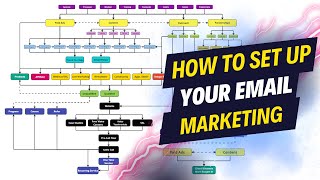
Matthew Larson (20-minute YouTube tutorial) explains how agencies should build email flows for B2B/service businesses. He divides sequences into two parts: a day-one flow that repeatedly (6+ times in ~20 minutes) communicates core messaging—what the problem is, why it matters, and how to solve it—and introduces the offer; and a day-2-to-120 flow of frequent (daily) emails that provide short, actionable "activation points," promote long-form videos, and answer FAQs/objections. Emphasis is on readable copy (strong hooks, short paragraphs), believable messaging, and using repetition (mere-exposure) to make prospects accept the claim that the status quo is untenable.
Chapters
This video is going to show you how you actually make a good email flow or email flows for your agency, for any B2B business. Because they're not quite the same as an e commerce email flow which get those kind of get a lot more attention in the market. So if we have the 1000x leads funnel here, email flows are right in the middle. We have our top of funnel traffic, our paid ads, our content, our outreach, our partnerships, and we have our middle of funnel lead magnets, thank you, page and email flows, and then our bottom of funnel, sales call stuff, conversion mechanisms, et cetera. So I've made videos about paid ads, content, outreach, partnerships, lead magnets, conversion mechanisms, but now kind of been missing this one, the email flows. So how do we do that? What do they do? What's the best way to do it? What kind of content should I write? How do I structure them? These are all questions that will be answered in this video. So let's get right into it. The importance of email flows are this. Probably nothing is going to convert leads into customers more than your email flow. Email flows help nurture your whole list at once. So it's a very efficient way. And email flows help you get people to take the next step. Because people don't just buy services impulsively. You don't just go to a stripe link and buy Facebook ads for $7,000. There's a sales cycle. It's not a product, it's a service. There's a sales cycle, do I trust this person? Do I need this, is now the right time, et cetera. And without email flows, you can drive a lot of traffic in your top of funnel. If you want, you can capture a lot of leads, but without email flows, there's nothing to get the leads that you capture to take the next step. That's very important. People need information and people need time. And your email flows can basically give them more information and keep in touch with them over time. So it's kind of solves both problems there. So I typically sort my email flows into two parts. I have two different ones. One is the day one email flow and the second type is day two to 100, day two to day 120. And both of these, the primary goal, if you want to boil it down into one second, is to convince people that the status quo is not an option. Because a lot of people don't do this properly. They tell them about their service, they tell them what they need to do. But it might even sound good in theory to the person reading it. But you have to create the emails with the idea in mind that we have to convince them that the status quo is not an option because then that will make them much more likely to convert into clients and both need to be extremely readable. What do I mean by that? There's a lot of people who write emails and it's just like a big, it's like a book. You need headlines, you need line breaks, images, different sections should be very, very easy to read because if it's not easy to read, the content is meaningless. So very important, before we make our email flows, we got to do something very important and that is messaging. What do we want to get them to think? Because remember, we have to get them to essentially think that the status quo is not an option. And obviously to do that, we have to convince them why it has to make sense, it has to be all that stuff. So our messaging should be things that we can actually do, are already a part of our service, logical and believable and we should not sound like an idiot. So very, very important here. So I did an example here. So the example is an E commerce email marketing brand targeting brands that are doing between 1 and 5 million dollars a year revenue. And the messaging is how to set up your email to set them up to get to 10 to 20 million dollars a year revenue. So three things that you could do A B testing your welcome flow twice per month because that will lower your customer acquisition costs and allow you to scale your ad spend. Rating emails so good people open based on the sender, not the subject line. Like if my, if my emails were so good to you watching it. Because I know a lot of people on these videos are on my email list. If they were so good that you just open them because it's from me, Matthew Larson, the subject line, the preview text, all irrelevant. That's what I mean here. And then putting 90% of the emphasis on the hook, the first sentence to get people to read the rest. These things in my opinion are very believable and logical. You don't sound like an idiot and they're things that are possible for an email marketing agency. So let's go to the don't sound like an idiot part. This is a perfect example of how to sound like an idiot. So you don't. A lot of people will go on Twitter, go on LinkedIn for go on Instagram for five minutes, look at some bios and you'll see probably 10 things like this. I help E commerce brands grow my grow with my three step conversion matrix. System stupid, sound like an idiot. No one who's actually been in business is going to be impressed by that. It's confusing, it's stupid. Versus you have something like this that's logical and believable. You help E commerce brands doing 1 to 5 million a year get to 10 to 20 million with these three steps and you just explain the three steps. Anybody who's doing 1 to 5 million dollars a year would agree that these are believable and logical. There's no crazy claims, there's no, you know, stupid stuff like this. They are believable, they are logical and they probably would help. So that's what I mean by messaging. And this messaging is going to be the core of, for all of the rest of the entire video. So it's kind of important that we go through it right now because it's going to be hard to show you an example of the rest of the video without it. So let's go over here because this is, this is the messaging that I do for 1000x leads. If I can convince people their problems are no one knows who they are, not enough leads, all their clients come from referrals and 99% of leads are unqualified. That would be my messaging. If people believe these are true and the status quo is not acceptable, they're much more likely to buy the 1000x leads program and should be like noted that we're not lying. Two or more things can be true at the same time. You could be making money from if they buy from you. And these things could actually be their problem. And in this case they are. If no one knows who you are, they're not buying from you. You don't get enough leads, you have no one to sell to. If all your clients come from referrals, you're putting too much reliance on others and you can't scale. And 99% of your leads are unqualified, you're wasting a lot of money. So two or more things can be true at the same time. It's kind of the day you realize that is the day you become an adult in my opinion. And not too many people are adults out there. So let's go to the day one. Email flows. What should this look like? There's three. Three objectives, let's call them. One, you want to pound your core messaging six plus times. You want to tell them what, why and how. Like what the problem is, why they need to solve it, how to solve it. That was kind of an easy way to think about it. And then Introduce your offer and then you've told them the problem six times. You've told them why they need to solve it and how to solve it. And wow, there you are with your offer. That's specifically design to solve it. What a coincidence. So this is a flowchart of what this would look like. And to understand some of these terms we got to go to the mirror exposure effect. So this is a psychological phenomenon as it describes it in Wikipedia, by which if people, if you, you hear something over and over, you become more familiar with them and you're just more likely to view them as true that a lot of people have heard the phrase. Probably people have to see something seven plus times before they buy it. I would say that's either a lazy application of this or an oversimplification at best. But the concept is very true. Once you start telling people over and over again that these are their main problems here or the example, they start to believe it over and over and over. It's the basis of propaganda repetition. We can use our propaganda for good in this case because we are trying to help them and we're going to make them more money. But that is the basis of it. So what does this actually look like? And I'm going to show you some of what I do. So we have an opt in. On an opt in page right here you see the four main problems businesses have. They My messaging is on this opt in page. We want to. Once they opt in, we need to repeat this message as many times as possible in the first 20 minutes after they opt in. Because for 20 minutes you truly have almost their undivided attention. After 20 minutes their attention starts to wane and they're never going to be as engaged with you ever again as they are in this first 20 minutes. That is the basis of the mirror exposure effect. We want to repeat our point six plus times within 20 minutes. And because we do this or when we do this, it becomes very difficult for them to challenge what we're saying because they've seen it over and over. They've registered in their brain very, very quickly too. And even over time, as they kind of digest it, they see it more, they think about it for themselves. It's going to become even more of a problem. So like how does this actually work? So we're running from paid ads or content to an opt in page and let's go through it in mine. The first thing they would see is they would see that those four points in the ad I'm not going to show you my ads. But you can take my word for it. They would see these four things in my ad. They would see it on the original opt in page like I showed you. So here's the opt in page. That's twice already. They would see it on the thank you page. So this is my thank you page. It's the sixth or the sixth slide right here. They would see it in the lead magnet delivery email. Where should I open one of those? I did not open one. Apologies. Just bear with me for 10 seconds here. Yeah, it's in the, it's in the lead magnet delivery email. I can't open it right now. It's inside the actual lead magnet. So if we open one of my lead magnets. Oops, that's the wrong one. Got to be more prepared here. But if we open one of the lead magnets, it's very close to the top. My computer is just going crazy here. Yeah, right here, very close to the top. We're just having a meltdown here. So it's inside the I don't collect sms. So in this case it's not. But then it's also going to be in three emails called the what, the why and the how email. Because I reference, you want to tell them what, why and how. So these three emails. So here's mine, here's the what's their problem? You know the top four things that will kill your agency right at the top. Why these four things will kill your agency right at the top again and then why you need to solve them. And then the how email. How to solve these four agency killers right at the top again and then how to solve it. So these are all of the ways that I get them to see the message over and over again in the first 20 minutes. We want to get them to read it at least six times in that time frame. So keep repeating the main point within 20 minutes. And the point here is I say six plus times but there's actually nine opportunities for them to see it. Maybe eight if you don't collect the phone number. So this is good because what if they don't open the lead magnet delivery email? They won't see it in the lead magnet. Still six times that they're going to see it. Or let's say they do open those but they don't open one of or two of the emails. That's still the same thing. They're going to see it in the original ad and on the opt in page. It's not really possible not to, but we want to Plan for some extra in case they don't see some and they're not going to unsubscribe or get offended. If these are actually good, valuable emails, like, these are very, this is good information. They might not even know what their problem is. They just know they have a problem that diagnoses it. They need to learn why they need to solve these problems and what's happened if they don't and then how. Like it's not really spamming them. If it's good information, it's very important to understand that. So that kind of wraps up the day one email stuff because we've sent them, Wait, we've sent them more than enough emails for day one. We've got all of our, all of our, we got our messaging across. We have, we've told them what, why and how. We've introduced our offer. We have, you know, repeated it six plus times to try and get them to remember it. And now we have to go to our day two to 120 emails. So this is the difference. So you'd have two, like, you can think of them as two completely separate things. They're in the same email account, same email address. But when we're constructing them, we want to think of them as two separate things. So what do these emails do and why? 120 days. If we send them an email every day for 120 days and they don't buy, they're not buying. That's basically it. Like. But it's better to send them more emails than less. One email per day is not gonna, you know, offend them, especially if it's good and we can kind of try to help them get in a habit of opening these emails and listening to our advice. So these emails should all do three things. Give actionable advice with an exact plan, promote video content, and then answer FAQs and objections. And that's it. This is a very easy way to create an email that doesn't take hours and hours or an ex. An extraordinate amount of creativity. So we want to give actionable advice. What, why and how promote our video content. Because video content is the most important for getting clients. And we want to answer FAQs and objections because people don't buy until every objection is taken care of. So the first thing we want to get to an activation point. We're just going to put it AP because it's hard to write in a marker. So an activation point. This is the actionable advice here. So let's go. Actionable advice, activation points. So an activation point is a certain thing that someone does that makes them more likely to buy, for example, and a thousand X leads. If someone set up their CRM and they set up their ad account, they set up their newsletter, much more likely to buy 1000x leads than someone who has not done any of those things. So in your email flow, if you get people to do those things one at a time, they're ever closer to buying from you. So very important, certain things people need to do. If you get them to do these things via email, much more likely to buy. Keep it short, but tell them what, why and how. You're sending them emails every day. They don't have to be, you know, a thousand words each. They could, but they don't have to be. Get them quick, easy wins in each email and make it readable and desirable. What I mean by desirable, like when you're telling them what to do, focus on the result or the benefit they're going to get. Don't just tell them what to do, you need to. If you tell them to sign up for a CRM or something, if they don't have one, you know, you tell them why in the context of this is going to help you make more money by X, Y and Z. That's what I mean by activation points. The second one is consume your videos. Always link to a long form video of yours. And of course this implies that you have long form videos and you should. And that's just that I'm not going to make any excuses. I'm not going to tell you that you don't have to do it, you do have to do it. And if you don't, you're going to be missing out on like crazy. Imagine like these are my long form videos that you're watching now. If I didn't have these, I'd probably convert 10% of the people that I do now and then answer FAQs. So we want to make an, we want to make like kind of a spreadsheet of we can put our actionable tips or activation points and our FAQs in here. So what we want to do is brainstorm all of the objections brains. Like we want to get the categories so in mind. There's stuff like paid ads, there's content, there's outreach, there's partnerships, there's website offers. Like basically all of the main categories that people need to know about before they buy a thousand X leads. What we want to do is brainstorm 20 to 50 objections or FAQs for each. We'll narrow that down to maybe the 120 most important ones of our list. And we put it in here, we would answer one objection or FAQ per email and eventually when we answer enough, they will buy. And that's just how it is. People have different objections. Usually they just have a few. If you send them an email every day for 120 days answering objections, getting inside their head, it's a very good signal to them that you understand their pain points, you are working to overcome them and it just makes them trust you and willing to get started a lot more. So this is kind of what the email template would look like. You might have tried this idea today. You know you need to have an SMS number in your CRM because you can text clients and texting clients, there's a 90% open rate within 10 minutes for text and there's a 30% for email. So you need to go into close.com right now and apply for a phone number. Simple enough, actionable tip of the day, top links, put your video here, FAQ answer, overcome objections here and then a call to action and that's it. See what I mean by it's very readable? There's dividers, there's headlines, all of that kind of stuff and you just go all the way down. I'm actually currently making this for myself right now, so it was a good time for the video, but this is all you would do. So emails very important. I wouldn't say extremely complex if you know what you're doing, but I guess if you didn't know that it's important, you do it into two parts. How to make your messaging, you know, how your day one flow should look like and your day, if you didn't know that, I guess it is complicated. So hopefully this video kind of simplified that Email marketing, very, very important. You're going to close a lot more clients than if you didn't do this or you did a poor job. Hope this video was helpful and I'll see you in the next one.
More from Matthew







Everything I Would Change About This Ecom Email Marketing Agency (3 HOUR LIVE AUDIT)

Everything I Would Change About This Meta Ads Training Business (3 HOUR LIVE AUDIT)


