32 minutes of the best content strategy to get clients
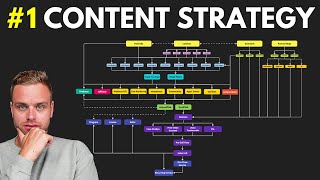
A 32-minute YouTube tutorial teaching a repeatable content strategy to attract clients for service businesses, using a "Twitter-first" workflow. The speaker frames content as serving three funnel roles (awareness, conversion, client retention), recommends building topical buckets (example: 9 YouTube-related objections), and prescribes generating 20–40 FAQs per bucket via your brain, ChatGPT, and Quora. Tactical rules include a daily Twitter cadence (multiple single tweets, one video/week, daily promo), recycling top-performing tweets into Instagram/LinkedIn carousels, short-form videos (Reels/TikTok/Shorts), newsletters, and long-form YouTube, with emphasis on consistency and hiring cheap help to scale.
Chapters
Be a very, very long YouTube video on exactly how you would make content for your personal brand in service of your business. So how to get clients with it. It's not going to be a video on how to make prank videos or make viral shorts. This is how you would make content if you have a service based business to attract clients to it. So before we get started, I also have some trainings and stuff in the description. So if you think this is a good video, you're probably going to like those trainings. So just check out those links. So we got to take a look at our big picture here, our entire marketing funnel. So this is our entire marketing funnel, or it would be if you are in the 1000x leads program and content is right at the top as one of the four main ways you can get clients. So we can kind of think of content as important for three different things. You could of course drive traffic and get awareness, make people know who you are with content. It's very important as well to, you know, as a conversion tool. There's people who might know about you but are on the fence or undecided and then they watch or read a bunch of your content and they eventually take the leap and they buy whatever it is you're selling. And then third, it's also important for your current clients. This is one that not a lot of people realize. Posting content with your current clients, they're going to see it. If they follow you, they're going to begin to understand why you're doing what you're doing. They're going to become more bought in, so to speak, give you less attitude, doubt you less, less likely to churn. So it's important for three different parts of our entire marketing funnel if we want to talk about it like that. So let's go down here. It's going to be very, very important to become that go to guy or go to girl in whatever niche you're in. If you're not going to post content, it's going to be hard to be the leader in that. It's just the way it is. We don't need to debate it or fight it. It's just like gravity. If you throw something in the air, it's going to come down. Same thing here. If you want to be the best, if you want to be the go to person, you're going to have to post content. And content is very important because whoever in large part posts the best content, builds the best personal brand, will make the most money. While people who don't do that will fight for the scraps. So hopefully that is a compelling enough reason. Content is very important to post as well because it makes the other client acquisition methods more effective. For example, if you posted on Twitter, Instagram, YouTube, TikTok, LinkedIn for a year and then you cold emailed someone and they were a follower of yours or something like that, much more likely you're going to get a response in general and much, much, much more likely that response is going to be a positive one as opposed to just if you didn't have any content, you just started cold emailing people. Similar to that, if you're running paid ads and they see your ad, click on your profile and it's bare, much less likely to trust you, follow you become an email subscriber than if you have a bunch of stuff on your profile. So it's important to get the eyeballs, get the attention, convert people, retain your clients and then I guess it also makes the other ones more effective. So that's four compelling reasons to do this in my opinion. So I'm going to show you the exact content strategy to use to actually get all of this done every single day, every single week, every single month, every single year in 30 minutes, maybe an hour. And how to actually do it properly. Before we do that, it's very important to understand that business to business, selling services, just a much smaller market, people aren't going to view that kind of stuff the same way they're going to view a Mr. Beast video video. No one is going to be scrolling through their phone at 3am and watch a 45 minute extremely in depth technical video about how to do something with web development. Like they're good people don't just, they just don't do that, right? They're going to be watching cat videos or some other shit. So getting one high quality B2B view is like similar to getting 500 or a thousand be used for like that are purely entertainment videos or prank videos or something like that. So the point of this is to understand that so you don't get discouraged. If you're not getting you know, 15 million views on a YouTube video you made and you're only getting a hundred, the right people are going to find it. Just focus on making good content for Instagram, Twitter, YouTube, TikTok and LinkedIn first and foremost. And if you focus on that and you don't get discouraged and you do it for a very extended period of time, the right people are going to find you. You just have to be confident in that. So let's get into it because it's a two part situation here. First, I'm going to do how to actually come up with these ideas that are not only, you know, volume of ideas you need to post every day to keep up, but also to like, what to post about, because those are two very important things to get right. And then after that, I'm going to show you how to speed up this process and ensure you post on every single platform. So let's scroll over and let's get to the very start. It all starts with Twitter. Twitter is great for business. It's a great place to post and just figure out what works and what's not and practice your writing skills and network. If you're not on there, I think you should, because there's lots of people on there that are, are in business. So for this video, because we got to pick something, we're going to choose a YouTube growth agency as the example. So this hypothetical growth agency will do things like editing and, and promoting and growing your YouTube channel or someone's YouTube channel. Maybe they're, whatever, it doesn't really matter. Right? So how do we grow this YouTube channel agency with content? So essentially what we want to do is make content that attracts people to hire our agency, presumably for them to make more money with their business by making YouTube videos and attracting clients. So it all starts with Twitter. Let's get right into it now. It all starts with Twitter. And here is what you are going to do. You're going to post three single tweets per day. And a single tweet is probably what you would expect when you are thinking about Twitter or you hear Twitter or whatever a thread is. If you don't know it's like a collection of single tweets. You can only post 280 characters per tweet. But if you want to do more than that, you can like schedule them all at once together to make what's called a thread. You're going to be doing three of these per week. You're going to make three pictures or images or stuff. To clarify your point, like this would be, you don't have to do something like that. But like, this is a very good image. This would be an example of a graphic for our Twitter strategy or this even. You're going to do one video per week and post it on Twitter and you're going to do one promotional post per day. So promotional post is like actually plugging your service or like saying, you know, we don't just want, if we just Keep tweeting valuable stuff. That's great. That'll get us followers. But we need to sell those people because we pay for our bills, our mortgage, our rent, our cars, our food, our family with money, not with followers, right? So it's very important. So what we want to do and the basis of our content strategy is we want to take our main service.
In this case, this YouTube growth agency.
We want to break it down into a bunch of subcategories that are basically the big objections or hurdles or problems with our service. So I'm going to do this and show you what it means. So to succeed on YouTube, you have to have a great idea, you have to have good thumbnail, you have to have a script, right? Presumably, you have to do editing. You have to set up your camera plus lighting, plus mic properly, you have to set channel, set up your channel properly. You have to learn how to write a title, you need to learn how to write a description, and you need to learn how to do YouTube SEO, because the better your YouTube search engine optimization is, the more views you will naturally get. So these categories, there's nine of them in this example, probably represent the nine biggest hurdles or objections that have to do with starting a YouTube channel. So let me just pull it up on my screen here. I got some other stuff right here. So when someone's starting a YouTube channel, like in the example we're doing, let's wait for this to load. Like, these are the problems with starting it. How do I set up the camera? How do I make good titles? How do I make good thumbnails? How do I do SEO? Is this set up right? Is it a good description? I don't have any ideas, et cetera. Right? So the thing that we need to keep in mind is these are all very real objections that if every single one of them isn't solved, not just one or two, like, they're not buying your YouTube service, so they think it's hard. You are the expert in this case. Like, you are the one who operates this hypothetical YouTube growth agency. You know how to solve all these problems. So we need to make content and lead magnets that kind of overcome and address all of the objections and problems and things they need to know. So that when we do this properly, when we do a good enough job, hiring us just becomes natural. If we just focus on, like in this example, creating a lead magnet, writing content that, you know, how do I, we might have solved the how do I set up the camera and lighting and microphone problem. But these problems all still exist. And therefore they're not hiring us. They're wondering who could help them with all of these other problems they still have. In this case, they probably won't even remember our name. They're going to just go to someone else. How do you do all these things? It's easy, they can show you. So we need to really keep in mind like this is how it works. Unless we do all, unless we overcome and address and help them with every single one of these problems, they're not going to hire us. And it's not so much like people with this kind of get concerned, if you will. Like if I give all the answers away, they don't need to hire me. And that's definitely not true almost whatsoever in most cases, like they're running their business, they don't have time to do all of this stuff. They don't want to do it themselves. They just want to know that you know how to do it yourself. And if you can prove that like this, they might as well just hire you. I might as well just hire this guy or this girl. So let's get back to it. So that is what we are really doing with all of this content. And I'm just going to put some arrows here so we know what we're doing. You know you love some organization. So all of our content should be about like solving these objections. So unless you're like this thing, this sounds fine, right? But unless you're a real professional, full time content creator, like this seems like a lot. So how do you do this? The number one way to do this is going to be you have the categories, that's the number one thing. But then now we have the categories. Brainstorm 20 to 40 ideas or let's go FAQs to do with each category.
So let's move this over because I'm.
Gonna do something else thereafter. But we want to brainstorm 20 to 40 FAQs like with for each of these nine categories in this case. Because what we'll do there is like that is essentially how we're going to solve the objections. There's going to be the same few subcategories of the subcategory, like how do I come up with ideas, how do I know if an idea is good? Etc. And we just want to answer that FAQ if you will, with as many different ways as possible. So to brainstorm all of these FAQs we want to do three different things here. So let me just organize it a bit. We want to first use our brain and A common sense like that is crazy. I know, but that's going to be the first thing we want to do. The second we want to do is use chat GPT, which I'll show you how to do that. And the third thing we want to do is go on Quora, because Quora is a basically like a website where people can answer or ask questions and answer them. So instead of trying to brainstorm all of these, we can just go to the source and, you know, find out the answers for ourselves. So for our brain, of course. And we probably want to get these in like a Google Doc. So you'd have a Google Doc of. Let's go all of these subcategories. So let's call it FAQs here. So FAQs. And let's make that S smaller. Just because. Just because. Because I don't need to explain myself to you. Just because. So what we want to do here is we have our subcategories. Let's maybe get a little checkbox action going on. So idea, script, lighting, mic, camera. What were the other ones? SEO title, description, setup or the other ones? I'm already forgetting editing and SEO editing. So how many is that? That's missing one. I believe we're missing one thumbnail. So we have our categories here. Now, like, let's keep it bold. But let's also. So we want to do. Let's see, what is that? That is 8, 9, 10, 11, 12, 13, 14, 15, 16, 17, 18, 19, 20. So we want to basically have it like this, where we can have space for all of these FAQs. I just ruined it. Completely classic. So you'd have to do these one at a time. But we'll have, you know, actually brainstorm FAQs. Like we have nine categories here times 20 FAQs. I don't need a calculator for that. I'm just showing you improving it. But that's 180 ideas for content. And that's like you could post all of those, you know, five to seven of those for a month. Let's just say six per day on average, 180 ideas, that's your content for an entire month. And then you can just recycle that same ideas because people aren't going to see it. People aren't going to remember. And if they do see it and they do remember, repetition is still important. So let's go here. So let's just do a couple with our brain. How do I come up with content ideas that would be like an FAQ that this Video solves. How do I know if an idea is good? Should I copy my competitors ideas? Let's unbold this. If that's a word, what be another one? Should I post the same idea multiple times? How do I know what my ideal clients want to see? That is an example of your brain. How long should a script be? How strictly should I stick to the script? How can I be reading this script while looking natural at the same time? Kind of teleprompter action going on there. So these are examples of using your brain to actually do this and definitely use your brain first and come up with as many ideas as you possibly can. Here's like, what type of light should I get, what type of microphone should I get, what type of camera should I I get, how do I set these three things up, etc. Right. So now I'm not gonna spend any more time doing this. This is to show you an example. But what I'm going to do is go into ChatGPT and kind of do it. Like what are some FAQs that have to do with writing a YouTube script? Could ask for 50, you could ask for 100, you could not ask for any and it will should have been more specific. Let's go. What are 50 FAQs? Don't explain them, just show me the FAQ.
There we go.
There we go. Like here's another way to get it. We could get tons and tons and tons of stuff just like this. A good thing to ask. And it kind of depends on like what you're doing. But you can ask it for certain, certain categories, certain objections. That kind of stuff is like it's very good to ask it. What are some self limiting beliefs that have to do with whatever the category is? It doesn't work all the time but it can be very, very good. So let's just wait for it to go here and then we'll ask it the self limiting beliefs to see if we are doing it. So this is like pretty decent. I'm not creative enough to write an engaging script. That's a very real objection. Very real thing that you need to convince them they are. You might make an entire Twitter thread about that or a video about that. No one will find my content interesting. My ideas are too basic and common. I'm not funny or entertaining enough. My script writing is too slow. I can't write well under pressure within deadlines like these are. This is a situation where these self limiting beliefs do get a very, very strong, you know, outputs from chat GPT with very Little effort. So there we go. Now let's go to Quora, YouTube. Let's just go YouTube just to show you. So instead of, you know, ask relying on ChatGPT or using your own brain, you could just actually go on to quora, type in YouTube script. Because to stay in line with what we are currently talking about in this example, wait for it to load. That's weird, kind of ruining my video here. But let's just go back to YouTube and say, like, here are some of the. Here are some of, like these are questions that people are asking and these are like huge, like 1500 answers, let alone how many views, let alone how many, etc. So these are very real answers that you could take. Like you can use these questions that people are actively asking and use them for your video. That's. So those are the three ways that we'll really get, you know, all of these stuff. So we want to brainstorm and make a document 20 to 40 different, 20 to 40 different FAQs. And then our entire content strategy just becomes answering these FAQs. So we do, you know, five to seven tweets per day when you include the single tweet, the promotional tweet, the video, the graphics and threads. And that is going to be like how we come up with ideas for content, how we post content and that kind of stuff. So I'm going to go to my Hype Fury here, which is the tool I use to schedule Twitter posts, and I'm going to show you like, these are my posts that go out every day. So my categories, my main objections are paid ads, content outreach, partnerships, lead magnets, conversion mechanism, offers and websites. And I have my 20, 40, 100, however many tweets scheduled based on all of the FAQs. So you see 20 tweets posted for all of these, and some or less, I work on it every day, and these will go out at that time. And you want all of your tweets to go out on the same day to keep in line with the same subjects. Like two scenarios for someone sees my paid ad tweet, they're very interested in. I don't want to wait until the next day to post a paid ad tweet. I want to just keep hammering the paid ad tweets that day because they're more likely to see my posts with the algorithm they're interested in that they might have followed me and be on my profile. So they want to see more of the same thing versus if I said, like every day I'm going To do one paid ad, one content, one outreach, one partnership, one lead magnet, one one conversion mechanism, one offer, one website. So that's just something Hype Fury is this tool. If you want to use it, it's pretty good. So let's go down here, you know, 20 to 40 FAQs for each. Let's just make some lines here. I won't make all the lines. Maybe I will make all the lines just to keep it nice and keep it kind of like a step by step situation we got going on here. So you make 20 to 40 FAQs about the how to come up with ideas, how to come up with like how to do thumbnails, how to do scripts, how to do editing, how to do like set up your camera, lighting stuff, how to set up your channel, title description, SEO. Hopefully at this point you get the gist of that. So 20 to 40 FAQs for each and every make content. Answering all the FAQs. Now you don't have to, you don't have to do this like literally like put the FAQ at the top of your tweet and then answer it. You can just, you know, have a little finesse or just, you know, use different tactics like storytelling, like that kind of stuff. So you're going to be doing, you know, there's going to be 20 or what is that? 180 to 360 FAQs and you can reuse, recycle and then repurpose. Those kind of might sound like the same thing. But this is my video and I will call them what I want. So that's what we're going to do. So like let's recap here. We're making a hypothetical YouTube growth agency. We've come up with some ideas here. We can just have tons of different ideas with chat GPT if we really wanted to. So these are the script ones. So let me just, let me just delete this quick just to show you like you don't really have to use your brain at all if you don't want to. That's copy and pasted a little big in there. But that's okay. I will un unbolt it to make it not bold, whatever you want to call it. So here are all of my FAQs now. So now I could just literally go through this list if I wanted to and just. Okay, I made a tweet. Oh, check off. I made that tweet. Check off, check off, check off. But you do this for all of these things on the particular day, right? So Now I would consider like how we're going to come up with ideas and the strategy we're going to use in terms of our subcategories and answering the FAQs. I would feel like I've done a good job of explaining those so far, but now I'm going to get into the second half of the video. How do you, how would you like repurpose this? How would you speed this up? Because we don't want to. This, this could take a decent amount of time. We don't want to be doing that for every single platform. Right. So let's get back to it. So we've, we're at content, We've, you know, Instagram, Twitter, YouTube, tick tock and LinkedIn. We want to post on all of these platforms. But we just went over Twitter for now. So let's go Twitter posts 5 to 7 per day with a combination of our single tweets, our video, our promotional, our graphics and our threads. So 5 to 7 tweets per day. So what we're going to do is take these exact tweets and we're going to turn them into carousels to post on Instagram and LinkedIn because carousels are the most popular type of format on those platforms. And we can get better bang for our buck if we post in the most popular format. Why would we make it hard on ourselves? Right then we're going to go into our hype fury or whatever and we're going to go to our analytics. And we're going to sort all of our tweets by number of likes and then we're going to make, we're going to take the, the best.
Like the.
Best tweets, the tweets that get the most likes, slash, engagement, etc, and we're going to use those as the basis for our short form content, our reels, our TikTok and our YouTube shorts. So we might post once. If we're posting five to seven per day on Twitter and then LinkedIn and Instagram with the carousels, we might take the best performing one of the day and turn it into a short form video and post it on reels, TikTok and YouTube shorts. So we, this would take some time, maybe 30 minutes per day. But we can hire a very cheap virtual assistant or someone on Fiverr to do this for probably $5 a day, maybe less. And we'll have that covered once we know what the subject that people want to hear is like. We can film this video in 5 minutes or less and post it ourselves and Then we're going to also do the same thing we did there with the best performers and we're going to turn that into a newsletter. So a newsletter like your email list, what you send to people, long form written content. So we want to do that as well because the more we send a newsletter, the more clients we're going to get. Email marketing is the number one most effective tool to. Ads and your outreach and stuff like that. But once they're on the list, email marketing newsletter is the most valuable one. And then we're going to use that newsletter as the basis of a script for a long form YouTube video. So as you can see, this might have taken 30 minutes, but we can hire someone to do this. And for $5 a day, maybe less, we take the best idea that we have the most engagement, what people are responding to, instead of guessing and turn that into a 60 second or less video. Not going to take very long. And then we use the best thing to and write a 400, maybe 500, 1000 word newsletter based on that. Shouldn't take too long if you are an expert in what you're selling. And then we're going to use that as that newsletter as the basis, as the basis for a script on our YouTube video. So you can post all of these in 30 minutes to an hour per day. And you just gotta like three things. Do it consistently. Don't get discouraged based on likes or view count, it doesn't really matter for B2B. Like if you get 500 views on a YouTube video, you're gonna get a client or two. And then the third is get health.
Like if you are, if you're turning.
All of these into carousels yourself, either use a software or get some help. Like you could get some help writing the outline of the newsletter and then you can do it like that's going to cost another $5 a day. And then you know, use an app to edit the short form like subtitles. Don't we have to focus on making great content first and foremost, not editing tools. Until you've posted like a thousand short form videos and written like a thousand tweets, never hire or even get help. You got to learn to do this yourself. And editing is going to mask like, if you're using editing to increase watch time and engagement and retention on this kind of stuff, which are usually what people refer to those as like, as like the metrics. You are developing sloppy habits. People should be watching and reading your content because it's good and it solves a problem for them not because of some editing hacks that have taken over their goldfish brain. So to recap, because this video is going to be over in just a couple minutes, content is very important to get new people to learn about us, to convert people who already know about.
Us, to retain clients because they'll be more bought in.
And then it makes paid ads, outreach.
And partnerships more effective. It's very important. You're gonna have a very hard time.
Becoming the guy or the girl in.
Your niche if you don't post content.
The person who posts the best content.
Is going to make the majority of the money, while everybody who doesn't is going to be fighting for scraps.
It all starts with Twitter.
Want to post based on the schedule every day and every week you want to come up with the six to nine subcategories which represent the major objections. Groups of objections. So in this hypothetical YouTube growth agency, coming up with ideas, the thumbnail, writing, a script, editing, camera, lighting, channel setup, title description, SEO are going to be the main groups. Buckets of objections. Then we're going to use our brain, ChatGPT and Quora to come up with 20 to 40 FAQs for each. And our entire content strategy is to.
Make content answering the FAQs until there's no more FAQs, there's no more objections. They're just going to hire us.
And this could take one day, 30 days, 60 days a year, doesn't matter. You just got to stay consistent. And then we want to reuse, recycle and repurpose all of these things we post on Twitter to other platforms so we don't have to make original content for every single platform. Turn our tweets into carousels for Instagram and LinkedIn.
Take the tweet that got the most.
Likes and make it short form content about it.
Take the tweet that got most likes.
And make a newsletter about it. And then use that newsletter as a.
A newsletter of course, but also the.
Script for a long form YouTube video.
So if you made it to this.
Point video, I'm glad. Congratulations.
You want to subscribe to me, obviously.
Want to check out the description to.
See all of the downloads that are.
In there and you can download and take advantage of them.
And if you are looking to generate.
More leads and looking to hire someone to help you do so, check out my company 1000xleads.com and I will see you in the next one. Thank you.
More from Matthew







Everything I Would Change About This Ecom Email Marketing Agency (3 HOUR LIVE AUDIT)

Everything I Would Change About This Meta Ads Training Business (3 HOUR LIVE AUDIT)


