41 Minutes of The Best Cold Email Training to Help You Get Clients
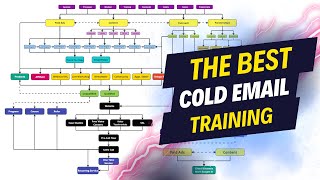
A 41-minute YouTube tutorial by Matthew Larson explaining how to run effective cold email outreach to acquire clients, using a hypothetical e-commerce email-marketing agency targeting Shopify stores earning $1–3M/year. He outlines four core pillars—offer, list, script, and non-outreach gains—and walks through practical tactics: building and cleaning a targeted list (Apollo/ListKit + email verifier), crafting high-value offers (embedded Loom videos or an automated "unique value mechanism" that delivers deliverables), concise scripts (50–75 words, natural language, embedded thumbnails, spintax for variation), and preparing external trust signals (redirects, content, PR). He also covers subsequences (automated follow-up triggers), key metrics (emails-per-lead/call and response time), and operational tips (domains, teams for 24/7 responses).
Chapters
Hello. This is going to be a cold email training video. So how do you do cold email? How do you actually make it effective? How do you get clients with it? Because I'm not going to go over how to set it up. You can look for videos like that on your own. That's the easy part. If you can't do that, you're probably, it's probably over for you. But this is how you actually do the difficult part and actually get clients for it. And to give you the full value, I really needed to choose an example to do and I chose a hypothetical E commerce email marketing agency targeting E commerce stores between 1 to 3 million dollars per year in revenue. Because without choosing something like that, a lot of you're not going to get the full picture because some of this stuff you just have to have something to show in the example. So outreach and cold email are part of the overall 1000x leads funnel here. So it's the outreach is the main category and cold email is the subcategory. And when you're doing cold email there's four things that are very important. So there's four parts that you've got to focus on. And this does not include like the actual sales call. This is mostly a video on how to get people interested in your offer, not really how to get them on the phone, how to do the traditional follow up, how to do the traditional sales call. That's not going to be in this video. Nor is anything about setting it up going to be part of this video. It's meant to be a high level tutorial that is somewhere in between, you know, beginner and you know, enterprise sales team or something like that. So nothing about setting up, nothing about taking the actual calls, but everything in between is going to be here. So there's four things that I view as very, very important for cold email. One is the offer, what you're offering in the cold email. Not a lot of people think about that, but that's by far the highest leverage. The most important part, number two is the list. Obviously if you need a targeted and relevant list and if the list is wrong or not part of your ideal clients, it doesn't matter how good the rest is because you're targeting the wrong people. The script. I always center my scripts around a loom or a unique mechanism and I'll go into both later in this video and the script in my view is very important. But it's less so than number one and number two, which is offer and list. If you're emailing the right people and you have an amazing offer to give to them. You can almost say anything you want in the script as long as you avoid a few key things that I talk about in this video. And then I have one called non outreach related gains. So that's what I'm referring to it as this. But a lot of the time when you do cold email or anything, they don't actually reply to your cold email. They'll put you into Google or something like this and see what comes up. And if nothing comes up, you know, good website, good search results, personal brand, that's going to decrease the effectiveness of your cold emails. I always say, you know, this is why ads, this is why content are so important for cold email, even though they have nothing to do with it, because they both make cold email more effective. If they Google you or your website and you have a thousand videos or 100 podcasts or 15 articles about you, much more likely to respond, much more likely to respond positively than if they Google you and you basically don't exist. So this has absolutely nothing to do with the cold email. This is the peripheral stuff for. Because I can't think of a better word, this is the stuff that has nothing to do with it but makes an impact. So your offer is obviously very important because better offer equals more replies. And the number one thing that people go wrong, especially if they've built their business on networking and referrals, is the messaging. Like what you say to referrals is not going to work on people who are cold traffic, who don't know you, who haven't come from a referral or an introduction, who you never met in real life at an event, it will never work. And that's why a lot of people who've built their business through referrals and there's nothing wrong with that, I'm not trying to bash them too hard, indicates you're doing a great job, of course. But what works on referrals will never work in cold email. You really got to step up your game like 10 times. And I'll show you how to do that in this video. Obviously the list needs to be targeted and relevant. If the list is wrong, we're screwed here. So let's get into it. We really like before we do this. And I'm. It's very surprising that to me that more people don't just, you know, do some actual math. Because here's some actual math. If I, and I'm not going to, this is an example, I'm not going to Say you should be getting one call per thousand emails. I have no idea. It's going to depend on your skills, your market, whatever. But if you got one call per thousand emails and you closed 20% of them, one in five, you would need to send 5,000 emails per client. If you wanted 10 clients per month, you need to send 50,000 cold emails per month. If you want to send 50,000 cold emails PER month, and I have that twice, there's 20 business days in a month, Monday to Friday, that means you got to send 2,500 per day. You can send 50 emails per domain per day. So you need 50 domains. It is that simple. And that's why I personally like cold email. Because it's very linear. If you determine you can get one call per thousand emails based on some results and you just want to get to 100 calls a week, you can basically just buy that many more domains and start emailing. It's very linear. That is nice for predictability and for stability, but obviously if you're looking for exponential gains, probably not what you're after, but stability is underrated. The only two numbers that matter in cold email are your email to lead or email to call ratio, whichever you choose. For example, I need to send 500 emails to get a lead, or I need to send a thousand emails to get a call. Like you can do either one. If you do lead, you just gotta kind of decipher how many, like what percentage of leads turn into calls. And obviously the lower the better if you got one email. If you could get a call for every cold email you send, that would be ideal, not realistic. Probably 500 to 1,000 emails sent and the time to respond. So what this means is you're cold emailing someone, they respond, the time that you take to respond is going to make or break you. You really like. Seriously though, need to respond immediately or within five minutes. And the, the data on this is just so clear, the faster you respond, especially within five minutes, the more likely you are to close them as a client. And it just goes, it just craters from there. So you, for every hour you take, it goes down every two hours, three hours, four hours, and then eventually it goes down to basically zero. Anything besides these two numbers are vanity metrics at best. In my opinion. Open rate doesn't matter. It actually I don't track open rate at all because it hurts deliverability with the, with the little image it adds. Don't care about reply rate, not really. Don't even care about positive reply rate, really, it's Are they going to get on the call with us or not? And anything else is just secondary. So to work on your positive or work on your time to response, you either need appointment setters or inbox managers as like team members for you. At my previous agency I had three of them. I had one in Colombia, one in South Africa and one Philippines. So 24 7, you know those time zones don't overlap. There's someone there to respond. But if you, if that's not in the cards for you, maybe you're can't afford it yet or maybe you just don't want to do that. You're probably going to have to use subsequences which I will go over after. So let's actually make a title here called subsequences. I'm going to get to that probably after but let's just put something there for now just to remind myself because I did not put that in there in preparation for this. So let's get into the actual example because it's a E Comm email marketing agency targeting stores between 1 to 3 million per year and this is the part where we actually need to choose something to do as an example. So it all starts with our messaging. This should be three things. Number one, things you can actually do or are already part of your service, what you do. These things should be believable and logical and we don't want to sound like an idiot and that's a very, very important. And you know, sounding like an idiot can have two different things because if you misapply this and you say I help ecom brands grow with my four part email acquisition matrix or something stupid like that, some something you're trying to make sound smart when you just sound stupid is a great example of misapplying this. So it needs to be believable and logical. Things you actually do and you know, don't sound like an idiot. Talk like a real person, you're not sick. You know your 14 step closing system like that's stupid. Okay, that's an example of something stupid. So here are three points that I made for this video. Like these are three things that are probably part of what you already do, are believable and logical and they don't sound like an idiot. So for e commerce brands who want to increase their email marketing like these are three things they can do. They can a b test their welcome flow two times per month because the welcome flow is something everyone would see and it will help them lower their cost per acquisition. They rate emails so good. Based on like people open based on the sender, not the subject line. Like let's say for myself, Matthew Larson is my name. If I wrote emails to you, if you're on my email list so good that you just eventually you'll just start to open them because they're from Matthew Larson me. You don't even care about the subject line. It doesn't matter, just whatever. You just open it because it's me. And that's like what you could do for a brand. Like that's how you could pitch them. And then putting 90% of the emphasis on the hook the first sentence of the email to get people to read the rest. I'm not going to argue with anybody in this video on if these three things are amazing or the things that ecom brands need in their email. I think they're pretty good. I think they're all believable and logical. But if you're going to do this and it's already part of what you do, don't call this your three step email marketing master system or something stupid, just say these are the three things that we do. Okay? It's very important because if you don't do this and you're targeting people who aren't 20 year old kids, you're gonna get people, they're just gonna shake their head at it type thing. And I think we've all seen enough people do this or hopefully that you know what I'm talking about or you've received bad cold emails in the past that just have crazy claims or you sound stupid or you just whatever. So hopefully there's four parts, right? We went up over here so list building, making the offer, writing the script and the non outreach related gains. And then I'm going to go over subsequences after because subsequences is going to probably be what most people use. Let's get into list building for this example. So first thing we've got to do when you're building a list is we've got to figure out who is the correct audience. So you'd use Apollo or List Kit and you go in there, Apollo IO here is what I'm using and you go to search because we are targeting and we got to use our brain here because we're targeting E commerce brands, probably Shopify stores. Let's just go to Shopify. And because we are targeting Shopify stores in the 1 to 3 million dollar range, we would have to use our background knowledge of E commerce to know that Shopify plus is probably not like they have to do quite a bit of revenue to make that worth it. And it might not be our target audience, so we could include that, but we might exclude it. So that's the first step. Second step is in my view, you only want to target the United States just because presumably you speak English, presumably you might live there. You know, some countries, Canada, uk, Europe have a lot stricter laws and regulations about cold email and we don't need to get in trouble coach countries like Canada have a, or Australia or New Zealand have a really tough exchange rate when you're selling in US dollars. So that's another reason we want to do like we got to use our brain when we're doing this. Because I'm from an E commerce background, both agency and brand and I know that for example we want to use the employees thing because a lot of like a lot of people will have used revenue. But in my view this revenue thing is a guess at the very best the private versus public company is useful if you want to target public companies. But to actually put in, you know, an amount here is a guess by Apollo or whatever tool you're using at best. Typically how this actually works is they'll use their like monthly page views like using similar web or whatever technology they scrape it with. They'll multiply it by an industry average conversion rate and multiply it by an industry average average order value. So hopefully you can see that that's probably not going to be accurate. But I know for a fact because I'm from E commerce background that you can build a pretty good sized E commerce store with just a few people. If you have a c. If you have a third party logistics center to ship your items and you you don't manufacture like the 3 to 10 employee range is going to be good. Anything under than 3 anything under 3 sorry, can't speak properly. It might be too small. Anything over than 10 would probably have someone doing their email marketing. So I think this would be a great example for what we're doing here. And then job titles is what the final one I would use here. Like obviously the founder, the CEO types. Maybe co founder. Let's go director of marketing, maybe cmo, maybe marketing director. I'm not going to put any more job titles here. You could really get just put anything you think of here. But the I'm not going to go any further into that. So technology, Shopify, founder, CEO marketing ones, three to 10 employees and United States in our Apollo. I like to use Apollo or list kit. It's my two favorite tools. So the thing we want to do here is. We want. Because it's going to. You see right here, there's 18,237 people in this category. It'll show you, you know, their number of employees, their brand, like their title. The thing we want to do here is. We want to. There's. You see 1 to 25. There's going to be 25 on a page. We want to open up all of these. I'm not going to do that for this, for this video, but I'll just open up a few. And we want to actually manually go through these, like this duplicate website there. But we'd want to manually go through all 25. And we want to see. Because there's a degree of. If. If you go through these 25, and in my opinion, let's say 80% are good, then you'd export it. Export the entire list. It's kind of like you're playing the odds here. If 80 are good, that's probably good enough for you. And then you'd export the entire list. If at least 20 out of the 25 art, who you would guess or infer that are in your target audience. Like I would probably say these are definitely in the 1 to 3 million dollars range. If I had to guess, then you would change the targeting. It's very important. If 80% or more are good, then you're good. If not, you probably need to mess with the targeting a bit. So what you do is you would select all people or select your entire list or save it and you'd export it. Not going to go over that in this video because if I went over all of this little stuff, it would just be four hours long. So what you do after is you clean it in million verifier or whatever you want to use. So once you export it, you would get a CSV file which that's obviously an important step. You'd upload the CSV file and I'm not going to do this for this video, but just do what I'm doing. So you'd upload a CSV file and it would go here and you would click clean it. Then it would give you something like this where. Because the thing like the reason you have to do this is because not all of these are going to be active anymore. Like there was the bokeh one. Like bokeh flower here. See the get to the site easily. You see that bokeh one like this store is gone now. Probably the email is gone. So that's what I mean here. That's why you have to do what's called cleaning the email list because it's not updated every hour in real time. I'm not sure how often it's updated or whatever. Just in some degree, like they probably can't even detect this. Right? So you need to clean your emails because we don't want our emails to bounce because bouncing will, will hurt our deliverability. Bouncing is when it doesn't exist. When you upload your CSV file here, it's going to show you something like this. It's going to show you a good report, a risky report and a bad report. Obviously the good report's good, the bad report's bad. Never do that one. The risky one. If you don't know exactly what you're doing and you be the judge of that, I'd probably not do the risky one. If you do know what you're doing and you know how to verify this and you're actually like a very good cold emailer who knows this kind of technology, then it's up to you. But if you are watching this, just do the good one. Just keep it simple. So it's important that we got our, we got our list now in this case and it should be pretty targeted. We found the correct audience, 80% look good and we've cleaned the list. So now we got to go into making the offer which will be our highest leverage point. And we kind of got to do it in this order because we need our list, of course, because our offer is going to be determined on who we are targeting. So the offer here. So a lot of like this is going to be the highest leverage point with cold email. And it's, this is what I'm mainly what I'm referring to when I say what works with referrals and network traffic and stuff like that is never going to work with cold. And this, I mostly mean, you know, offer needs to be 100x better here. And I'm going to show you a couple of examples. So we need to lead with value. We don't want to just say let's get on a call because that doesn't work. We've all done cold email or we've all received cold emails at the very least. And we know how bad most of them are and most of them say let's get on a call. Very big commitment, Big commitment. Asking a lot of them. Remember, they don't know you, they don't give a about you. Big, big ask. We need to because most people do that we need to differentiate ourselves with our offer and make it easy for them to say yes. And typically I will try either a loom or a unique value mechanism and I'm going to show you both of these in the context of a hypothetical E commerce email marketing agency. So the loom is good because it will show your face, it will let them hear your voice and you can kind of explain it a lot better than you would be able to over text. The important thing is to when you're writing your campaigns here you want to embed the loom into the email so they can see your face and they can it's like a thumbnail on YouTube instead of just like instead of just having a loom.com link like this you can embed it. So it just embeds it into the email and shows like your face and a thumbnail and that's just makes them way more likely to open it type thing. So that's just of everything. And then see face without clicking link is the note I had. So an example here is you know something I'm instead of asking for a call I've made a loom about the top three most important things e commerce brands doing 1 to 3 million have to do to get to 10 to 20 million with their email. Like these were the three things you'd be referencing and it doesn't have to be three things. Could be one thing, could be probably not 20 things. That might be a bit much, a bit excessive but you get the point. Or you could do a unique value mechanism. I'm going to go through that now. So here's like something like what your script might look like because we want our script and this probably would be better over here. But yeah, let's just go over that now. So the second thing we could do is what's called a unique value mechanism. And this is something because I just randomly called it this one day. Like no real thought in it doesn't mean anything hidden. It's unique, it's value, it's a mechanism. So it's not really too philosophical. Something that is over the top valuable can be fulfilled with AI very quickly naturally leads to your one time service. So for context and to like help you visualize a bit better if you're having trouble visualizing is we can go back to our thousand x leads funnel diagram. Let's delete this stuff just to make it clean. Basically what you be doing here and what we are doing we're not like and a lot of people are going like this is what a lot of people try to do. They go cold email to sales call. And we all know how that works because we probably get tons of cold emails per week and don't respond to any of them. So for the loom strategy, it's more. Would be much more similar to the loom is like your pseudo lead magnet here versus the unique mechanism is mostly it's kind of like a. Takes the place of a conversion mechanism because it's just so it's the same function so valuable and then they would you decide if they're qualified or unqualified based on what they say. Whereas the lead magnet will typically, you know, go to. It's not a perfect diagram. But when you send them the loom and they say yes, usually in the second email, which I'll go over later, you would send okay, by the way, I'm doing a. A live workshop or here's my training webinar like for this which goes into more depth. So it's not a perfect illustration on the actual funnel here, but that's like kind of what you'd be thinking about. So here is what I mean. Let's say like this is an actual. Let's go to open the ducks. Look at how unprepared I am. So this is an example of something that I have done. I have seen my friend made this with me or he probably made most of it. To be honest, I didn't do much except tell him what to do. So like this is an example because very briefly I sold cold email setups because I had a bunch of cold email domains that were basically doing nothing when I sold my old agency and very brief period, I was like, I will set up your cold email for $3,000 for you. So basically, instead of just trying to say that instead of oh, I'll sell this, you know, put your I'll sell this for you. Just get on a call with me and pay me, right? What I did was I made a unique value mechanism. So this is all chatgpt OpenAI in make.com. if you know APIs, you know, Python, stuff like that, you could do that instead. But I just don't know that. So I did make dot com. So basically if they fill out a form, they would get all of their domain names they need for their cold email. They get all the DNS records and you get all the setup guides. And then it would automatically base build five cold email scripts based on what I think works or what I've had success with in the Past formulate it all into a Google document and then email it to them. And as you could probably imagine, I will write you six or I will write your entire cold email system free. And then if you like it, you can decide whether you want to pay me or not. Performs a lot better than let's get on a call. So this is like the example of what all with AI not involved in it whatsoever. But this is exactly what would come of it. They'd have their setup guides, they'd have my affiliate links in it, they'd have Here are the a hundred cold outreach domains that you can buy. Here's exactly how to add the DNS records with a with a loom or a video showing doesn't have to be a loom, the DMARC record, the spf, the dkim and here are your cold email scripts and subject lines to test. As you can imagine, like much more impressive to someone who you're cold emailing the first time than trying to get on a call. This is an example of an amazing offer in your cold email. They don't need to know that it's automated. They might have their suspicions. They might even not, because trust me, this provides an amazing output that like just as good as any human I've ever seen would do. And you need to take time to kind of mess with the inputs, of course, but if you want to make a lot of money, you got to put time and effort. That's just the way of the world. So for this one, this hypothetical e commerce email marketing agency, I said we will write you six flows. Six email flows. Because in e commerce if you don't know, there's the welcome flow, the post purchase flow, the abandoned cart flow, the browse abandonment flow, the win back flow, and then I was thinking a sunset flow. So if you built this thing like this, but it just made all their flows for them much more compelling offer than I do email marketing. Please get on a call with me. This is what I mean by high leverage offer. So what you want to do is choose one of the two. Probably start with a loom because it'll take you time to build the unique value mechanism. If they reply yes, they want you to send over and I'll get to the script after you want to reply within 5 minutes either manually or subsequences. If you're doing a loom, it's very good to just like send the loom and then say hey, I'll write your. You'll do your stuff after with a unique value mechanism or you could just go right for it with the unique value mechanism. In this example, we'll write these six flows for you. If you like these flows and you want to try them, we will turn them into beautifully designed emails for you because you're just writing the text. We'll design these emails, put them in your account for just $2,500. Like that's an example of what I say where it's over the top valuable, can be filled with AI very quickly or instantly and it naturally leads to your one time service. You know, if you like these flows that I wrote for you, why not design them? And if they love the flows, then you know, you pitch them on your main recurring service. So this is an example of an offer that's actually good as opposed to get on a call with me please, where they get 100 or 200 of those a week, especially in E commerce. So that is what I mean. You would have to determine what's right for you. But value offer leverage. Yeah, let's move on. So when you write the script, do I sound, and I mean that quite literally. People use. People start using random words that they would never say in real life. Like our bespoke, you know, marketing system. Never heard someone use the term bespoke unironically in my life. I don't know about you, but don't just write it like you're talking to someone normally. Don't use some weird words. Comprehensive bespoke. No one says stuff like that in real life. Talk to them like they're a normal person. Okay, so we want to make our initial script F50 words or less. And we want to do that because sending a huge wall of text will actually destroy us. No one reads big walls of text whether it's cold, email or otherwise. So just keep it 50 words or less. We want to get our propaganda, those top three things across in 50 words or less. We want to call out and frame it for your icp. The call to action will be the loom or the unique value mechanism. And don't just send it preemptively. Number one, when you send links in your cold email, it much more likely to go to spam. And two, no one likes unsolicited stuff, even if it's good. Once they reply to you, you're kind of in their trusted sender list so you don't have to worry about going to spam. And you have their blessing. They want it, they're expecting it from you. So it's very important. So this is how you might do it. I've made a loom about the top three most important things. Email. Email marketing, related things that can help brands in the 1 to 5 million revenue range should have said 1 to 3 million to get to 10 million. The three things are AB testing, welcome flow two times per month. Writing emails. So good focusing on the hook. Do you mind if I send this over? Like, let's count. Let's see how many words this is here. You might need to. And 50 is just to get the point across that it's not 500 or something. You could definitely see this is 56 words. For example, would I change it just because it's 56? No. But not 500 words. Short and sweet. And obviously there'd be more words because you know, I put etc. Here. You know that's. But just bear with me here. You just want to make it short, readable, to the point. Don't do any fake personalization that insults their intelligence. Don't write a huge or any intro on yourself. Just be. Be cool. Be cool. Remember, do you talk like this in real life? 50 words or less. We'll change it to 75 words or less just to be nice to you. Gets the propaganda across frames. It asks for permission. The delivery of this is very important. We need to embed our loom with thumbnail. Like I said before, if they reply, we need to follow up within five minutes or less. And if you are choosing the loom route and you reply, you say, you know, this is the loom, by the way. You know, I do a webinar every Thursday. Here's the link if you want to sign up. And the bonus points if the conversion mechanism is a natural continuation of the loom. For example, you know, I made a video of these top three things, by the way. I do a webinar every Tuesday or Thursday or whatever. You know, really showing you examples of how these things work. Very good, very good. So here's an example of one of mine. This stuff at the top here, like random. And then there's a bunch of different things. This is called spintax. So basically it will choose at random, hence the term random. One of these things. And the reason you'd add this is to make your emails more unique. If you have a bunch of different versions plus their first name, there's almost zero chance that every single email will be. There's almost zero chance that any two emails will ever be the same versus if you just send the same thing every time. And that's just important for Spam filters. You, you know Google Gmail sees that you're sending the same email a million times, you're probably going to get screwed. But all these emails would be unique if you use this, you know good ways to do it. Your like sign off thing or your name, your company, you know and then this hello and then keep the rest the same because the rest is kind of important but very important to do that. So we've gone through the list building the making the offer, writing the scripts now the the non outreach related gains. I'm going to go through this quick and then I'm going to go through subsequences and then the video will probably be over over. So the things that we need are we got to make sure all our cold email domains are redirecting to our main site. So for example this is an old account but I have a thousand x leads boost, a thousand x leads demo, a thousand x leads growth, a thousand x leads help. Very important that in your godaddy or wherever these domains are you automatically redirect them to the actual domain. So a thousand x leads. And the reason for that is if they google a thousand xboost.com where they put it in their search bar like it does like nothing, nothing's going to show up, right? That looks sketchy. Let's just go with that. We also want to have like stuff in Google and I'm working on this myself personally but if they Google a thousand x leads and nothing shows up like also looks sketchy, right? So trustpilot, you know I don't know why it says 4.2. It should said 6. They're all all five star but you know your site, your content, stuff like that. All good if you can pay for PR like if you're featured in Forbes or something. Also very good. You want to have content in all your social media profiles. It's going to look very strange let's say if you are if someone's searching for you and they click on your. Let's go with Twitter and you have no content or it's going to look a lot better if you do have content than not because they might look through it and you don't want your profile to be bare. You want to have a VSL on the website, a video sales letter so you know something at the top that shows your face, gives them some value maybe presumably should be good. Of course case studies, free videos on your site, video testimonials, PR at Google, all of that stuff is going to contribute to the non Outreach related gains department. So those are the four things here very important. So we want to build our list properly, we want to make our offer really good. We want to write a script that makes sense, doesn't sound stupid, is short enough and then we want to set ourselves up success with all these non outreach related games. Now the final thing I want to talk about is subsequences. So subsequences if you have and I'm just in instantly here be the same with everything. But you see you have your sequences which is your email flows but you have your subsequences. So let's go to add new here. So the thing that's important is the triggers here. That's like step number one. Because triggers you'll typically the, the, the pros of, the pros of this are you know, very fast slash instant response time because the response time matters so much. But there, there's nothing is all pros in Life right? It's 100% reliant on trigger properly working. So typically there's going to be two types of triggers. One is going to be you know based on their tag so in instantly and it will work the same for pretty much every software. You know, if AI tags interested trigger trigger fires let's say subsequence starts. The drawback of this is you know, if AI doesn't tag properly or mistakes the wrong thing is going to happen. So obviously if you're a human, you got to pay them, they got to be watching it. But this is not going to do it incorrectly because they're going to use their human judgment. But if you're using subsequences it's based on technology, it's based on AI let's say based on the response it doesn't tag them as interested, it just doesn't tag them at all or it tags them as not interested. Those people are not going to receive it and you're not gonna know that because you're thinking it's working properly. The other option is replying with text. Like you could say like based on yes, based on please based on sure. Based on send it the, you know, based on. Based on words in reply. Obviously this is good because in general like the you know, good way and I would use both by the way good way to make sure it fires. But at the same time the drawbacks of this are the drawbacks are you have to make sure every possible response is accounted for. And the second drawback is sometimes it misrecognizes it. An example of this too if you don't, because that's kind of vague. I would say, you know, yes, yes please, they want it versus you know, please stop emailing me. If the trigger was the word please like it could, it would trigger for both. And one is obviously good, one is obviously bad. So if you're going to do it like instead of please you'd say please send it over or yes please. Like you can't just got to be a little bit more specific and you got to build a list of words that and I guess you divide it by semicolon and instantly my mistake, not comma. But you got to really take the time and effort if you're going to do it like this to kind of drill down to every possible scenario. So that is basically the what we need to do. So typically we want to go through a loom or a unique value mechanism. The four things we really need are good offer, the right list, a script that just doesn't shoot ourselves in the foot. It doesn't have to be amazing because the offer and the list are more important and then none outreach related gains because when they Google us or go to our site we need to be a great first impression, easy to run the numbers of cold email and project what you need. Only two numbers that matter are your lead to call ratio or email to lead slash call ratio and time to response. Those are the two leverage points. Everything else is just noise. We've gone through the like. Our example here was an e commerce email marketing firm. We've built the list for this, we've made the offer for this, we've wrote the script for this and we've done our non outreach related gains and I've gone into subsequences and the pros and cons of what you're doing there. And if you can't get a full time employee to do this, I would recommend using subsequences. So I hope this video was valuable and I'll see you in the next one.
More from Matthew







Everything I Would Change About This Ecom Email Marketing Agency (3 HOUR LIVE AUDIT)

Everything I Would Change About This Meta Ads Training Business (3 HOUR LIVE AUDIT)


