42 minutes of the best paid ads training to help you get clients
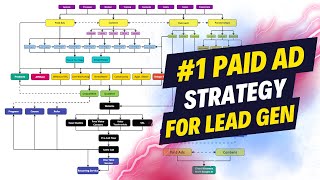
A long-form paid-ads training by Matt (valued-canopus) that teaches a complete funnel for lead generation for service businesses (especially B2B). Covers four common business problems, four starter funnel types (webinar, newsletter, group/community, paid product), the role of lead magnets, thank-you pages, email flows, appointment setters/SDRs, and how to handle qualified vs unqualified leads with low-ticket products/referrals and pre-call flows.
Chapters
Hello. There it is, Matt. With a thousand X leads. And this video is gonna be probably a pretty long paid ad training video. Exactly how to run paid ads and to make it actually work. Because there's lots of content and there's lots of people who talk about it, but doesn't really work for them. So this is not gonna be an E commerce video. This is strictly gonna be legion for any kind of service. Mostly focused on B2B services. But this will work for absolutely everyone. So let's get into the video. In every kind of business there's, there's going to be four main problems and then maybe sometimes a fifth bonus problem. No one knows who you are or not enough people know who you are. You don't generate enough leads. You don't or all of your clients are from referrals, meaning you don't generate any of your own clients. You just kind of sit there and wait for people to give you clients. Referrals are good, but relying on only referrals is dangerous, let's just say. And then 99% of leads are unqualified. So that means they can't afford it. They're not a good fit. So if you generate a hundred leads through paid ads, 99 are unqualified. So I'll show you how to fix this problem. So this is what our marketing funnel should look like. And paid ads are at the very top. Let's get a color here. Paid ads are at the very top as one of our top of funnel ways to drive traffic, if you've ever heard that term, with content, outreach and partnerships being the other ones. So it's very important that we're running paid ads, that we have a complete funnel. If we're missing like this is kind of how it goes. Our top of funnel drives traffic, our middle of funnel lead magnets capture leads. And then our bottom of funnel conversion mechanisms schedule calls to where they are going to buy or not buy. So this is kind of how it works here. We have our top of funnel paid ads purposes to drive traffic. Middle of funnel, we have our lead magnets and their purpose is to overcome objections and capture leads. Our thank you page and our email flows promote our offer and bridge the gap between the top of funnel and the bottom of funnel. And then at bottom of funnel we have our different conversion mechanisms, we have our webinars, our live workshops, our newsletters, our community, our appointment center and so on. So the purpose of these are to enrich the data. I'll talk about that later, qualify the leads and book calls. And then people are, when they go through this stuff, they're going to be either qualified or unqualified and they're going to get on a sales call. And that's basically how it works. If we want to split it into top of funnel, middle of funnel and bottom of the funnel, very important that we have all of those like I said or it just is not going to work. So let's go up here. Paid ads. Where do our paid ads go? It looks like our paid ads have two directions. So I'm going to go over the four main types of funnels that you really can make in Legion. This is an example of what does not work. Like lots of people. Like it sounds ridiculous because no one will see a paid ad and buy recurring Facebook monthly Facebook management for $7,000 off like a stripe checkout link. It just doesn't happen. But a lot of people will run their ads as if it does happen like that. And if that's you, I'm sure you can tell it's not working. And I guess that's why you're on this video. So there's four main types of funnels that are kind of out of the, out of, like off the shelf, out of the box, you know, very easy frameworks to follow and understand. And these are the four types of funnels that a beginner would probably start with. And when I say beginner, like beginner at paid ads, you can be successful. You can do like lots of revenue. But if you're not getting clients consistently each month through paid ads, you are a beginner at paid ads. And you just have to put the ego aside. That's people's biggest problem. They think they're too smart to learn even if they're successful in other areas of marketing and client acquisition. If you are not getting clients right now through paid ads, you are a beginner and that's fine. Just treat yourself as such because then you can learn. So we have a webinar funnel is the first one. And this is a very good type of funnel where if you have a specific training or case study or presentation that you show them to convince them to buy from you, a webinar funnel is a great bet. A newsletter funnel, if you have a very high priced service with a long sales cycle, like let's say you sell something that costs like 100,000 or 200,000 or even more. Takes like the decision making process includes multiple people a long time. So you might send them, get them on a newsletter, send them a newsletter three to five Times per week. Keep educating them, keep building a relationship with them through this newsletter until the point where they feel comfortable to buy from you. Another like another instance where a newsletter funnel might make sense is let's say you're like a plumber or a personal injury lawyer where something that they only like contact you in an emergency situation like when they need it. No one, just no one is going to join a plumbing group or watch a plumbing VSL or webinar or something like that. Right? So if like you admit if you're a plumber, you might make a newsletter about your city or something and your promotion and your name and face and phone number is in every issue. So three months down the line or six months or 12 months or five years or 10 years down the line, they've read your newsletter so many times they know you are the plumber that they should contact. So instead of asking, asking for someone who if they know anyone or going to Google, they just know and remember that you are a plumber. Like that's another situation where this would be pretty good a group funnel is, this is a good one where like let's say you're a sales trainer or something where someone like you sell a sales training for 10k hypothetically. This is like a group funnel is very good where they need to see some results for themselves before they're fully trusting you. So you might get them into a group, offer them feedback. Feedback, offer them like tips that they can try in their sales job or whatever they do. And then when they see those work like then they'll trust you like this is a good type of funnel to turn that like for that situation. And then there's a paid product funnel. And this is the one that I always recommend beginners start with. And that could be like you're just starting your business or you're a beginner at paid ads. Remember ego thing. And I'd recommend this because it's the most less nuanced, the less technical one where this is a lot like selling an E commerce product where you have a digital product ranges from ten to a hundred dollars. You run an ad to it, they buy it and then you try. You might have other digital products that are an upsell. So we want to get over $100 AOV which stands for average order value, which is like the average checkout like value. So the key here is of course like if you have your service, you want to have a front end or info product or low ticket product. This goes by many names. That is a natural relation to your main service. In a previous agency that I had, I sold landing pages, right? That was my main service or main services. So my front end product was a hundred landing page templates for $97. So I would, you know, that's appealing to everybody from a beginner to even a established brand founder might buy that because it's just good value where those are built in Canva and Figma where they could just edit them themselves. So that would be an example of something that kind of naturally goes together. And then the point of this is you. It's going to be hard to sell $7,000 a month Facebook ads off an ad, right? That doesn't make sense. It doesn't work like that. But you could sell, you know, a hundred templates and then they're happy. You reach out to them because you know, they have a credit card, they're willing to spend money, you know their name and phone number and stuff. And then you can reach out to them to try to sell them your main product or service later. So that's like how that would work. So let's go into, let's go back to this because you'll notice that the type of funnels here are all here Webinar vsl A live workshop is the same as a webinar, just live instead of prerecorded. You have the newsletter funnel and a community which is the group funnel. And then you have an appointment setter which I will talk about later. So basically what we need to talk about before we move on is our lead magnets. How do we get from here down to here? Right, it's going through the lead magnets, it's going through the thank you page and email flows. If you remember, we, we, we talked about the types of funnels which are mostly going to be the bottom of funnel and we talked about top of funnel paid ads that drive traffic. But we need to put the middle of the funnel here. Or so it would be like building a skyscraper that's 100 stories. You build the first 35, 33 stories and then the last 33 stories. That doesn't make sense, right? That wouldn't work because you need the 33 stories in between. So lead magnets here. And I drew some pictures down here for them. So your lead magnets, what you should do is you want to brainstorm the top 6, 9, 12, however many problems or objections that there are with your service. Then you want to make lead magnets, which are free checklists, guides, tutorials, masterclass, any PDF free value that Teaches them to solve these problems. Let's go. An example that I made here is a hypothetical YouTube editing agency where, you know, you edit videos to get people more views and more views makes them more money. Like, that's the problem. That's the gist of it. There's very real problems with starting a YouTube channel. They have to know how to set up their lights and camera and microphone. How do they make good titles? How do I make good thumbnails? How do I do YouTube, SEO, maximize watch time, blah, blah, blah, blah, blah, blah, blah. How do I, you know, make good scripts? How do I come up with ideas? I don't like, how I talk, sound and talk. It's very difficult for them, right? It's hard. So that is like the objections, the resistance they have to starting a YouTube and channel in general and by extension, buying your service. Now, you as the person, like, presumably, you know how to solve all these problems. You should be good at what you're selling, right? You know how to solve all of these things. So what you'd want to do is make a lead magnet, a type of free value, let's just call it PDF for this, for our purposes here, that solves every single one of these problems for them. You can think of it as overcoming objections at scale, because when you only have one or two leads a week or a month, you can talk to them, like, solve these objections. But when you're doing hundreds of leads a week, or thousands of leads a week, or however, tens of thousands, you don't have time to just go back and forth anymore. So you have to overcome objections at scale automatically using your lead magnets. So we want to make a lead magnet for every single one so that eventually, just then, all of their fears, all of their objections, all of their problems, all of their worries are solved. So it just becomes natural. Okay, I might as well just hire this guy or girl. They've already solved all my problems. I. A lot of people will think, like, when you make these lead magnets you want, you're like, if. If you give them all the answers, they have no reason to hire you. When in reality, like, that is the opposite of how it works. A business owner, let's just call them an agency owner, does not have time or desire to make titles or thumbnails or come up with scripts or come up with good videos or set up their stuff or learn. They're busy. Like, they just want to know that you know what you're doing. And if you can convince them that you know what you're doing with all these lead magnets, and then they will hire you. And that is how it works in reality. So if that was kind of a thought or worry you had, hopefully that puts that worry to rest. And then you'll notice like that we have tons of different lead magnets here. Why would we need tons of different lead magnets? Because if we only make one lead magnet, like a lot of people do, we solve the first problem. But all of these other problems still exist. And because these problems still exist, you know they are not buying your service. They're wondering who can help them solve these other problems. You're not going to get any goodwill or respect if you just solve one of their problems. And when they download one lead magnet from you, they're probably not even going to remember your name. They're just going to see it and move on. But if they download all of these lead magnets and they solve and you solve all of their problems like that, you can bet that they're going to remember you and probably hire you. So that is the danger of only making one lead magnet. And why that's not good enough. The second kind of sub reason with this is let's say you made this lead magnet that helped them solve up their like or set up their camera and their microphone and their lighting. There's also going to be a certain percentage of the market who does not struggle with this. They already have that covered. They either know how to do that or they watched a video or someone showed them already. So if you're only advertising this lead magnet, you're missing a large percentage of the target market who does not struggle with this problem, if that makes sense. So they're just not going to download it. You're not going to capture those leads when you do it like this and you only have one lead magnet, they're wondering, who can help me with this. They're going to look for someone else, your competitor, and your competitor is going to do what you should have done and help them solve all of their problems. So let's go back to the top because hopefully that makes sense for what to do with these lead magnets and why we need them. And if you're wondering, like, okay, that's great, what do I put in it? We want to follow three rules. A formula, var value, actionable, readable. So when you make your lead magnet, it's going to be free. But it should be so good that if you ask yourself, would you pay $50 for this lead magnet? Or maybe you ask some friends and hopefully you have some honest friends. The answer should be yes. If it's not, we might want to make it better. In each lead magnet, we also should have a plan for them to implement some sort of, you know, tip or plan or value within the first 24 hours, like we have to, in many ways. Like, we want them to implement a little advice, even if it's just a small amount from each one, because that's gonna get them some quick wins and prove to them that we know what we're talking about and that makes them more likely to hire us and then readable. Doesn't matter how valuable or how actionable it is if it's just a wall of text, not readable at all. So we want to have one idea per slide and one image per slide. Or you could replace the word slide with headline. So an example of this is one of my lead magnets here. Like you can see, in each and every single one, there is a one. One headline, one idea and one image. There's not five different ideas and five different images in each slide. It's very much more readable. The difference in readability is like a thousand to one. And again, it doesn't matter how valuable or actionable it is if they're not reading it. So keep this in mind when you are creating these lead magnets. So let's go back to the top because we have our. We know what lead magnets are, we know what our conversion mechanisms. We know the purpose of this is to, you know, see who's qualified and who's not and to make money. And we know our funnels, and we've kind of seen where these funnels can be in the grand scheme of things. We kind of looked at our middle of funnel and know what we need to do for our lead magnets. So let's put this into action with your webinar, with your live workshop, with your newsletter, with your community funnels. Your ads will always be to. To lead magnets on your front end. So let me just draw this just so we all are looking at the same thing here. Try to draw it a little faster. So your ads are all to lead magnets. So I've opened a few of my own lead magnets here just to show you. So I have, you know, a bunch of lead magnets and such for my. My offer, my service and my service. You can check it out in the description. There's going to be, you know, you can download some trainings. You can see the first month of my program free. Here's how you can learn about it and buy if you want to give me money to help you. And then here's, you can see the first month for free. So this is just my service. So my lead magnets around the service solve the problems and objections with buying the service, which. So I'm promoting my service because I like money and I want you to buy it. But I'm also showing you like, because all my lead magnets are around that service. So I have my landing page for each that gets an email. So let me just put my own. Let's put a fake email in here just because I don't want to receive my own emails. So they've clicked my ad, they've got through my lead magnet. So we can signify this. And this would be my thank you page if you'll notice. Like the thank you page promotes my webinar. We could go webinar slash live workshop depending on what I do here. And my email flows would do that as well. So this is the type of funnel I'm using and the type of funnel that you are in right now as a proof of concept. You might have got here from ads, but you might have seen my Instagram or Twitter or YouTube content or TikTok or LinkedIn in content and you might be in it that way. This, the nice thing about it is with paid ads and content, the flow is the same. So by building your paid ad lead magnets and flow, you're kind of building your content flow by default. So this is likely the path you have taken. Like right now, let's say YouTube to lead magnet to thank you page to email flow. And then you are, you know, here, right now, if you're watching this on a webinar, you might be watching this on YouTube and then, you know, you know, you go somewhere else, that's fine. But I'm just showing you like how this works in reality. But I might also be running a, let's go over here. I might be running a different funnel. I might be running a community or group funnel and it would look something like this. And I'm going to show you all of these things in like real examples of how they work in the real world. So you're not just thinking that I'm making this up or I'm just doing some random stuff on a screen. Maybe I go through a different lead magnet and now I'm in the newsletter funnel. Like there's all different choices. Or maybe and this is an example of like those three, those three funnels go through Lead magnets. Your paid ad funnel will not go through a lead magnet. It will go over here through to your products. But the important thing is like this process is just not to create work for ourselves or just random. Like this process eventually is going to determine who's qualified and who's not to purchase our service. So there's different methods to get there. Webinar product, live workshop, newsletter, community slash group. But the end results, like the end goal is the same. It's how do we determine who's qualified or not qualified to buy our stuff. So let's go through some examples of how this actually works in the real world. So I've shown you the webinar and the live workshop one. So I'm not going to do that again. But let's do a newsletter one here. So this is a pretty good sized marketing agency, 180 people, which probably like I don't know how much revenue but to be able to afford 180 people, quite a bit. So they use a newsletter funnel. This agency owns direct to consumer newsletter, which is a pretty big newsletter in the Ecom D2C space. So they'll run ads to get you to sign up for this. And in each newsletter they promote the the company. Right. So people like their newsletter, like to receive their newsletter, get value from it, read it, and then a percentage of them, if are qualified, are going to submit a form or schedule a call or whatever. So that's an example of how that one works. Let's go to some other ones. Here, here's one where it's Taylor Welch. If you are in the online marketing space, you might know him. I wouldn't say he's probably mainstream famous, but he's pretty well known in the online marketing space. So if you click on his ad, you know, you download his lead magnet. Now you're on his, you know, give me access to the group. So let me just go through this just to show you how it works. I'm not going to use, you know, sorry to whose ever phone number this is. And now you are in his Facebook group. And then just like I said with that earlier, like you're on like webinar, you download lead Magnet, you're on the thank you page, you sign up for the webinar newsletter, you go to the thank you page, make them aware of your offer. Three to five newsletters per week. The group, you're in the group now. You post content, you have people reaching out to people in the group. You run retargeting ads, email flows all to eventually get them on a sales call like that. That's the point. The paid product is you sell them the product, make them aware of your offer and then you eventually get them on a call. So these are all examples of like how it works in the real world. And then let me show you some good examples that I don't know if they're doing this, but it could be a good, you know, good product or funnel to run. Like this is a, an example of if your main service was like you do custom notion implementations for companies to. Notion is like a, like a content app where you have all your files and stuff that companies use. So if you basically had that as a service, you might do a low ticket, a templated version of a notion where they buy it, you break even on the front end as your intro offer and then upsell them to the full service later. Here's another one where it's kind of like these people do CRO, which stands for conversion rate optimization. So that's like an 8 to 15k a month service. Very difficult or impossible to sell in ads, right? But if they have, they're selling a $7 like checklist. Here are some pre made tests to run. And if they buy this and they find good experience with that and it works, they might hire them to do it for them. Right? So those are examples of paid products and how they work. So let's do a few things because for this to fully make sense, you know, like the three problems here. So the ads will kind of solve no one knowing who we are. Our lead magnets will capture the leads. You know, kind of a byproduct of these two things. Means you're going to get clients from cold traffic. But what about the, you know, what about this one? Because that's not obvious. So let's go to that right here because we're kind of at a stage now where we've gone through all of this, showed you some examples, but now we're at qualified versus unqualified. And the problem that lots of people face is if they get 100 leads or 100 subscribers with paid ads, 99% are unqualified. And kind of like I said before, there's nothing that you or I or anyone else can do to change this. It's like gravity. You know, we can't change gravity, we can't fight against gravity. We're not going to solve this problem. But what we can do is make stuff around this problem that indirectly solves it. See in this funnel, the proper funnel that I Help people make. And I have for myself. If people are unqualified, they can go to, we can sell them products. We could refer them to someone who could do it for cheaper. We could sell them a course, we could sell them a program. Like these are all things that we can do with this, these 99 out of 100 people. But the problem that most people face is like, you know, this stuff just doesn't exist for them. Like people who are unqualified, 99 of 100 people just stop here and that's the end for them. And the one person who's qualified goes through the rest like normal. Like this is a very big problem for people and this is why, like they suffer from this problem. It's not that this is a problem per se, like it's just a fact of life. It's more of a, of a matter of they're not set up to handle this problem. They don't have, they are not able to refer to someone who can do it for cheaper and they can collect a fee. They cannot. They don't have a course to sell them. They don't have a program to help them through it. They don't have these low ticket front end digital products. So if you don't have these, this is a big problem. But if you do have them, like it's not really a problem at all. You still have four other ways to make money, let's say. And these are very, very profitable. Like you could argue with products and course and referrals and program. Like, the only real cost is the payment processing fees. So let's just call it 95% margin. If you sell a thousand digital products for a hundred dollars over the course of a year this way, that's almost $100,000 profit. If you refer 100 people a year and you get $1,000 each on average, it's another 100,000, right? If you sell a hundred copies of your course that costs a thousand dollars, that's another a hundred thousand. If you sell 25, you know, coaching programs that are, you know, 25 of them, $4,000 each, that's another hundred thousand dollars per year. Like you could see how this would add up. And $400,000 a year profit is a lot. You would, it's not like your services where you got to hire people to do them. These are kind of automatic and passive. But just, just imagine like, and it's not too hard to imagine because 99% of businesses don't. Maybe more like it doesn't exist. The difference between These offers existing and not is the difference between solving this problem and a lot of the cases. The difference between these existing and not is whether or not you are successful with paid ads. Like, you have to have this stuff if you're going to run paid ads at in any kind of serious volume. So what do we do now? Like, we have solved all of these problems. Basically, people are finding out who we are with paid ads. We're getting leads. We're as a byproduct of these things. We are, you know, all of our clients are not coming from referrals anymore. And by having these offers, we have solved the unqualified problem. But where do we go from here? Like, we still have to do a few things. So, you know, next is going to our website. But before we do that, I really want to talk about the email flows and the appointment center. Because these two things in addition to everything else, like, they're all pieces of the puzzle. And if we don't have pieces, every piece of the puzzle, we cannot complete the puzzle. Imagine having a. Even if we have, let's just say there's a hundred pieces of a Formula One car, even if one piece is missing and we have 99, that car is not going to work properly. It's the same thing here. If you have 99% of it, it's not 99% as effective. It's like 20% as effective. So we got to go through this appointment setter or a sales development rep, an sdr, like all names for the same thing, is usually an employee or a contractor who's going to reach out to all of these people manually. Much greater percent chance you're going to qualify them. And then if they are qualified, get them on a call if you have an appointment setter. So then the thing we want to do and like a very key part to our, you know, conversion mechanisms because up here when we're doing it, we just want to get as many people on our email list as possible into our flows and learn about us. So we only ask for the email subscribe. Right. But that's not exactly useful. Useful. You don't have enough information to call them. You don't have their phone number, you don't have their name, their website. So part of the thing you want to do with the conversion mechanisms is not only do that, like get them on it, but ask for more information. For example, to sign up for my webinar, you now, you don't just have to put your email, you got to put your name, last name, phone Number website. So now my appointment setter has a lot more information. Now they can call them, email them, reach out, you know, reference their website, et cetera, score them from 1 to 10 on how likely they are versus if we didn't have, you know, ask for this information in our conversion mechanisms that wouldn't be available. And then furthermore, if we don't have an appointment setter, we're just gonna miss out on a lot of potential business because people might just not even. It sounds crazy but a lot of time people don't even know your offer when you download this. And even if they go through the whole thing, they just don't know. So your appointment setter like reaches out to them, calls them, texts them and kind of shows them your offer if they don't know and like get pushes them along, moves them along to down the process where they are going to go here. So let's talk about the email flows because this is a very like, it's not obvious to a lot of people what to do here. And it's the difference between having this done right and not done right can be the difference between success and failure. So let's go over here. To start out we have to get what is our messaging right. We have to like essentially view ourselves as spewing some propaganda if you want to talk about it like that. And that might sound a little grotesque, but we don't have to lie or manipulate. But one of the things in propaganda is repetition. We got to repeat our message many, many times as quickly as possible so they believe it as true. And that is called the mere exposure effect, also called the familiarity principle. The more someone hears something, the harder it becomes for them to disagree with it. Like one man's beliefs is another man's sales copy is unfortunately a very true thing in the world. So you like when you hear people say like, oh, it takes seven times for someone to see something before they buy. That's kind of like a lazily applied idea from the mere exposure effect. So when we're doing this we don't, we're not lying to people, right? It's things that we can do or already do as part of our service. They should be believable and perfectly logical because if they're not, we are going to sound like an idiot. And that is going to be sounding like an idiot is counterproductive to selling our service. So here's an example of an E commerce email marketing agency that serves, let's just say stores that do a million a year in revenue to $5 million a year. So what you do and position yourself, you know, for E Comm stores who do 1 to 5 million a year, who want to do 10 to 20 million a year, these are the three things you need to do with your email marketing. Because email is not new, it's not sexy, it's 40 years old. Everybody doing a million to 5 million a year is going to have email set up. So we can't sell them on the idea they need email. They know that they have that. So we got to sell them on one to four things. Like what do we want them to believe that they have to do with email marketing? And then we position our service as solving a lot of these things. So for example, if, because this is what I'm doing to you in some degree or people who join my stuff, I want them to believe and it's not like I'm lying because this is actually like true. I want them to believe. The top four problems that everyone has is, you know, no one knows who they are. They don't get enough leads. All their clients come from referrals and 99% of leads are unqualified. If I get you to believe this, 1000x leads, my program is the natural solution to this. And that is a good example of what we're trying to do. We're trying to get them to believe three things and let's not lie to them. We don't. This doesn't necessarily mean you do have to lie to them or manipulate them. They should be true and again, believable and logical. So if we get them to believe these three things, then position ourselves as our email marketing service does all these three things, very likely to hire us, right? And we do that through this flow. So when they opt in and we've done that before, I'm not going to go back, but they opt in for a lead magnet. We have about 20 minutes of their full attention. Like they're never going to be more engaged with us or pay more attention to us than in these 20 minutes. We want to take advantage of the mirror exposure effect as much as we can and get them to read our point or our thing. We're trying to get them to believe six plus times in this 20 minutes because that makes it very difficult for them to challenge this. If they hear it over and over, it makes it's believable, makes logical sense, like why wouldn't they believe it? Right? So our paid ad goes to our opt in and I'm going to show you that I do all of this. So you're not just thinking that I'm randomly making this up because that is always my biggest. Not fear but biggest thing I keep in mind with these videos. I don't want you anyone to think I just am like one of those guys who says stuff but doesn't actually do it. So on our thank you page is the first time. Let's go back. You're going to see it in the ad. I know that you're not going to see my ads and I'm not going to show you because I don't want to get copied. But you'll see it in the ad. You'll just take my word for it. You'll see it on the original opt in page down here. These are the four main problems. You'll see it on the thank you page once you download that. Here's my webinar by the way. Here are the four main problems you you'll see it in my lead magnet delivery email like which is, you know. Here are your 12 trainings by the way. P.S. here are the top four problems businesses face. So we have it there. You'll see it, you'll see it in the what email. So who, what when, where, why, how you know, who, when, where. Those are kind of self explanatory. Who you when, now where at your desk. So we don't need to have any email but we should have a what email? A why email. A how email email. So in my case, what are these four main problems businesses have? Expanding on that a little bit. That's my right here. What are these problems? We have our why like why we need to solve these problems. Another email here. Why you need to solve problem 1, 2, 3, 4, etc. And then how, how do we solve problem 1, 2, 3S, 4, etc. So there we go here in this case I don't have, I don't collect their email address or their phone number here. So I don't send them an sms. But you'll see it in the original ad and you'll see it inside the lead magnet. So top four problems all agencies have. So there I've proven to you that I actually do this stuff and you would apply all of this in the first 20 minutes. You know, you'll see the thank you page immediately. You'll get that email immediately. The what email comes after five minutes. Then why 10 minutes? Then how 20 minutes when they, when they open the lead magnet, they'll see it again. They've already seen it in the ad before. And the landing page before they even started this process. So we want to build in, you know, six times in the first 20 minutes. We want to plan for a little bit extra. So we have nine here in case, you know, they don't. Maybe they don't open the lead magnet, they don't have our phone number and they don't or they don't open this email, therefore they don't open the lead magnet. Then we still have six ways that they do it. So it's little redundancy and a lot of people are going to be something along the line of oh, I'm going to annoy them or they're going to unsubscribe one. If they're unsubscribed or annoyed, they're not going to buy your service anyways. And these emails like, and all this stuff should be good. Like it should be like these aren't annoying spam emails. These are good informational educational emails that really tell them what problem they have, why and how to solve it. And the lead magnets are good as well. Like we're not bothering them if these are good. We're spewing our propaganda and taking exposure of the taking, taking advantage of the mere exposure effect while actually improving their lives and business. It's not, you know, we're not lying to them, we're not spamming them. We are doing them a favor but doing it for our purposes of course. So that is the email flows. Where are we here? Back to the main picture. So the email flows taken care of now. So I'm going to wrap this video up maybe five, ten more minutes. I have no idea with what do we do with people are qualified. They're going to hit our website and we need to have a vsl, a video sales letter showing our face and us talking video testimonials of clients, free content and case studies of clients on our website. No one is really going to do deeply into this. Like no one's going to watch all these case studies and stuff in my opinion. But it's kind of like a passport when you travel the just by having them implies like implies you've gone undergone a background check in your passport. Just by having this stuff implies that you have gotten results for clients and you have got clients in the past and you're not just some random person. That's basically the value of this. The difference in amount of clients you'll get and calls you'll booked. Having these things where it's not having them is like 100 to 1. So it's I don't mean to gloss over it, it's a very important part in this process but I'm going to leave it at that. And then our pre call flow, so our pre call flow, I have something for it. Our pre call flow. Like they're in a calendly, they schedule a call, they get a confirmation. We need to kind of educate them and send them a lot of content and stuff about ourselves and our offer and service we provide. So they're like kind of sold by the time they get on the call and they know exactly what we do. So we should tell them the price in my opinion, ask them how familiar they are with us and make it clear what we do in like the calendly questions there. Because we don't want to spend any time on our call like explaining ourselves or introducing ourselves or telling them what we want to do. We're there to make sales. And it's very important when you go through, when just they've gone through this so they kind of trust you already and this will show them like what exactly you're offering, what you're talking about. And we want them to be sold by the time they get on the sales call. Not we have to, you know, introduce ourselves and going through our entire background. So that's very important on a sales call. Like an example in a previous agency I had like that example I showed you wasn't my agency with the CRO stuff but I sold the same service where 8 to 15k a month, 6 months minimum contract. Very difficult to sell someone especially first time meeting them on that. Like it's just even if they've gone through this, it's a lot of money and a lot of commitment and therefore like a lot of risk. So I sold them one time projects $2,500 landing pages where it's kind of like a miniature or a lesser version of that where if this worked, you know, much easier to sell them, they already saw it with their own eyes that I could get the result thereafter. So why wouldn't I be able to do it in the recurring service? So it's always a good idea, especially when running paid ads to have this one time service and then if we find out on the sales call like they are qualified but they want to learn to do it themselves. Maybe send them to your course they are qualified but they want to, you know, work with you, maybe a program, maybe they don't need the service that you provide, but they're qualified. You might refer them to someone else and get A fee or let's say they're qualified but they're too big or too small for you. You know, refer them to someone bigger or smaller and get a fee. So that is how like the entire thing works together versus just, you know, just this, which is like a lot of what people have. This will never work. This will work every single time. It's just a matter of building it. So let's, you know, review a little bit, just go through this maybe again our top of funnel, the purpose is to drive traffic. We drive the traffic and we capture leads and email addresses and email subscribers and overcome objections with our lead magnets. Our thank you page and our email flows are going to promote the offer that we're trying to do, whether that's webinar, live workshop, newsletter, community, etc. And they bridge the gap between the top of the funnel and the bottom of funnel. And a lot of people, when you don't do this right, this doesn't work. You have to have the middle of funnel. Obviously we're going to choose which one works best for us like live workshop, webinar, newsletter, community and your appointment setter. We're going to enrich our data, get their name, email, phone number, website, et cetera, qualify the leads and get calls booked. And those calls, or let's back up, they're going to be unqualified or qualified. If they're qualified, we put send them to a sales call. If they're unqualified, we send them to the other stuff. And that's how it works. You need absolutely all of this, without all of this, it's not going to work properly as you can see here. And a lot of people say, oh, paid ads don't work. And this is their, this is their paid ad setup. So if you want some help with this, you can go into the description, see free trainings or join my program, whatever you want to do. But this is how you do paid ads for service based businesses. I hope it was helpful. And I'm going to be posting more content like this all the time. So subscribe and I'll see you in the next one.
More from Matthew







Everything I Would Change About This Ecom Email Marketing Agency (3 HOUR LIVE AUDIT)

Everything I Would Change About This Meta Ads Training Business (3 HOUR LIVE AUDIT)


