Business Systems #1: Hiring
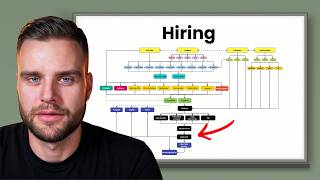
Matthew Larsen walks through a hiring system for service businesses: pay 25% above market to attract top performers, use a Typeform with a video problem-solving test to filter aggressively, then move fast through interviews and paid test assignments. The goal is to buy back your time by hiring one A-player instead of multiple mediocre hires.
Chapters
Today we are going to talk about how to make a real hiring process and a hiring system, because hiring is obviously a very, very important part of every service-based business. Because in any service-based business, what you're really doing is you are arbitraging how much the client pays you and then how much you pay your employees to do the work. Realistically, we are going to want to have 80% or higher gross margins in our service company. And that is not going to be possible without having a steady stream of qualified employees that we can hire, train, manage, and then ultimately do the work. So this training today is going to be about how to hire anyone who's not an executive. Because an executive, that's really a different process. You're paying executives to think, you're paying everyone else to do. So if you wanted to hire executives, you can click off now. You're going to have to recruit and poach those transparently, but this is how to hire anyone else, especially people who are going to be in the fulfillment and client work process. So this is going to be the flow we're going to go after. And let's get started on the first part. The first part is you need to have an understanding about what the hiring process and what hiring is all about. This is a great book for this from Dan Martell called Buy Back Your Time. If you've never read it, what basically the best line or the most memorable line for me in that business is you do not hire people to grow your business. You hire people to buy back your time. And a lot of people, it They don't even know if you ask them why they're hiring someone, they just hire them because I need them or because, you know, I got to grow my business. But realistically, what you need to do is you need to hire people to buy back your time. And this is where I think one of the most common mistakes, especially from people who have, you know, been in business for a lot less time, or they just don't really know what they're doing. It's basically, here's a good example here. Let's take our overall marketing funnel. In this, there's a lot of things here. You know, someone has to run paid ads. Someone has to run content. Someone has to run outreach. Someone has to run partnerships. Someone has to do all of the admin work here. And then people have to actually sell and close the deal. If you ask a lot of people, they just hire people. It almost seems kind of randomly. And what happens is the number one mistake in my view, when you're hiring for non-executive roles, is hiring someone before you fully figure it out yourself. And this is a perfect, perfect example. And people, you don't need to be hiring to grow your business. You need to hire to buy back your time. Basically, you're going to figure out every part of the marketing funnel. You're going to figure out sales. You're going to figure out how to do client fulfillment and then Eventually you're gonna be working so many hours in the day, you can't possibly do more, and you're gonna hire people to take off the workload of something that's already working. We don't hire non-executive people to figure something out. They just don't get paid enough. They just don't have enough experience. They just don't have the brainpower. Realistically, we hire people to take an already working process, off our plate so we can go to other or higher leverage activities. The first people you're always gonna hire are always almost gonna be the fulfillment side of things because that is the easiest to figure out, to systematize, and then to delegate and train for. So a very important thing that I think people should really focus on is we want to get these things and we want to turn them into workflows because every business at its core is just a collection of different workflows. And we can hire someone to take, you know, 1, 2, 3, 4 workflows off our plate. And we can get a lot of different types of people to do that. So what are some examples? Let's just take in marketing. There's going to be an appointment setting workflow. There's going to be a sales workflow. There's going to be a workflow to do— collect case studies and testimonials. There's going to be a workflow to set up the live workshop, to do the newsletter and run the community. There's going to be a workflow to respond to cold emails and to cold call. There's going to be a workflow to come up with Instagram, Twitter, YouTube, TikTok, LinkedIn, Facebook ideas. There's going to be a workflow to come up with paid ads and write scripts. And then there's going to be an editing workflow. And there's gonna be a posting workflow of paid ads and content and uploading workflow. So what we really need to do is we need to know that we are going to not hire to grow our business. We're gonna hire to buy back our time. And what that means is they're gonna take these workflows over from us to free up our time. We don't have the workflow figured out, systematized. Hiring is going to be a disaster for us. It's going to be a complete waste of time and money. And end in failure. And I think that we don't, we can just make up statistics all we want, but it seems to me like 19 out of 20 businesses, 95%, do not even understand up to this point in this training. So if you, if you'd have got nothing from this and you're in one of those 95%, except the first 3 things I've talked about, this is probably going to be well worth your time. But now let's go to the next part. The next part we want to do is we always want to pay 25% over market. The reason for that is we're going to attract much better talent, the so-called A-players that people all set out to hire. Because we're paying so much more, we're going to get more total volume of applications. We're going to get more quality people for those applications, and we're going to be the place to work at as opposed to not. We're also going to churn less employees because we're going to only have A-players. Because we're going to have our pick of the stuff. We're not going to have any B and C players dragging them down. And one good hire can do the work of 2, 3, 4, 5 bad hires. So although this might sound like a lot of money and a lot scary notion to a lot of people, it's actually going to be cheaper. So let's just say we paid, you know, someone, let's say the market rate to keep things simple is $100K per year. We might have to pay this person $125K per year. To do the same work as, let's just be generous, 2 employees at $100K per year. So although it seems scary, it's actually $75K per year cheaper in this example to do it. And a lot of the time, the A-players can do even more than 2 persons' work. You often hear the cliché saying that A-players leave because they're sick of the B and C players. Although that's cliché in the most generic business quote and advice you can possibly get, very much is true. And then the final thing is we need to be ready to move. I feel like a lot of people go into the hiring process, just kind of like, you know, I'm maybe I'll hire someone, they post their stuff on all the platforms and they just, nah, and then they forget about it. The thing that we need to understand is that A-players can get a job basically wherever they want. And we need them a lot more than they need us. There are a finite number of A players. Let's just say A players are 5% of the market, the top 5%. These people are going to have lots of job offers. These people are going to be limited in supply. It's very rare that A players aren't going to already have a job. So if we're post our stuff, we need to move as fast as possible in order to Basically hit the window where we can hire these people. If you are not ready to hire instantly, meaning you have your workflow fully optimized or fully like they can do it, you're not willing to pay 25% over market and you're not ready to move. There's really no point in hiring, in my opinion. We just need to be doing that. The next thing is that we need to make our job description. So our job description will look something like this. We're going to have the details, you know. English speaking, location if it's relevant, hours if it's relevant, you know, what their title is, whatever. We're going to take a look at the 3 to 5 KPIs that they're going to own and what they should be. We're going to look at the OKRs and the roadmap and like what they're going to be responsible for within the next quarter. We're going to do the workflows that they will be responsible for. That'll usually be 1 to 5. And then we need to get to the point where we have that mindset shift. We need to really understand that these, that we need these A-players a lot more than they need us. A lot of people, oh, it's a pleasure to work here, you know, it's, you know, your reward is you get to work here, like, and they have a really weird mindset about it. But realistically, we have our company, there are probably hundreds of competitors, and A-players could get a job at any one of them. Very easily. So in our job description, we almost need like a sales letter about why they should even work for us. We need to convince them. They don't need to convince us in a lot of cases. The next thing we need to do is we need to lay out kind of what essentially is a roadmap to what their career projection is going to look like. Because the reason most A-players quit is because of idiots that they have to deal with and work with. The second most common reason is there's no career projection— progression. That includes raises, but also just more responsibility, better resume building, more experience, more knowledge, more skill gathering. And then of course, 25% over market. The final thing we want to do is we want to learn how to apply here. We want to put— make it clear. So what we want to do is, to me, and I'll set this all up, is we want to have a Typeform or some form that we apply. We'll post the job description everywhere, but we want to apply in a Typeform so that there's basically one unified place where everybody applies to. That just saves us a lot of time and effort. Next thing is we're going to do a video. And I got this, I think, from Elon Musk. One, like several years ago in just one of his short-form video clips that someone else posted of him. And it's the thing that we want to do is we want to get a 2 to 5 minute video. I'm sure he's not talking about a Loom video, but 2 to 5 minute video about how they solved a hard problem. And this does a few things. It gives you a kind of insight into their world on what they think a hard problem is. You know, some people like, oh, hard problem. And it's like the most basic shit that you've ever heard in your life. And that's probably not great, but it also acts as kind of a filter to, you know, their understanding and their contribution to that problem. Because it's very hard to fake. I noticed in my own hiring, and I probably hired, I would say around 250 to 300 people in my life. A lot of people will have a, like a nice resume or they'll be on a team that solved a hard problem, but Most people at a company don't really do anything if you hadn't noticed, and very, even fewer actually contribute in a meaningful way. So this is almost like a filter on what their participation is in that, because if they can really explain the hard problem in depth, they don't need to put into like some, you know, NDA details or something. But if they can really explain it in depth, but simple enough, it really gives a great filter an insight into their level of thinking. The final thing is it also is like a general filter, because if they're not going to put in the effort of doing a 2 to 5 minute video, that will give you, like, tell you all you need to know about what kind of employee they're going to get, or they would be. Lazy. Let's just say that. Don't really want the job. So when we do this, we'll have the Typeform for the unified thing. The video will be a good filter because they can't complete the Typeform without doing the video. And then the video will give you a very good insight to kind of the level that they're at in terms of thinking, in terms of their actual contribution, and so on and so forth. The next thing we want to do is we want to post it on all of the sites. So we have, you know, Fiverr, Upwork, Indeed, Glassdoor, LinkedIn Jobs. Any other relevant things that are, you know, to your industry or target audience. A very good thing in my experience is to post this on your social media platforms. Because your social media platforms, people admire you already. They're familiar with how you do things, your service, and it leads to a lot of good quality candidates. I had a lot of great quality candidates of people who actually watch my YouTube channel. Again, I touched on it earlier, but we really want this to go to the Typeform. And that's going to save us having to monitor all of these different things. And it's going to be another filter for someone who can actually follow some instructions and who's not mass applying to everything. A lot of the time, like sometimes they prevent you from doing this, for example, but a lot of the time you can put the job description as a Google Doc and the Typeform in, in there, and that will effectively get around that. So in the Typeform, what we really want to do here And we wouldn't say this publicly because that might get into some labor laws, but we want to DQ 90% of people based on the answers to the Typeform. So of course they can't apply without doing this 2 to 5 minute video. Then we want, might want people who also, that video is going to give you a good understanding to them about their level of English speaking or whatever language that you're going to be doing it, especially if that's important. But to me, someone who can't speak English, even if they're not client-facing, really destroys the morale of the team or whatever language you're like hiring for. Then it could also, you know, based on their location, based on any attributes like experience, based on, you know, age, if that's relevant, based on gender, if that's relevant. Sometimes you're just going to want to hire a woman for like a customer-facing role, or sometimes you're going to want to hire a man for whatever reason. Again, we wouldn't say that in the application. That's going to really get us into trouble. But sometimes you might just do that and then they can do their resume or a portfolio if that's accurate. A lot of the times it is in design jobs or anything to do with visual, like they come with their portfolio of ads, content editing, design, et cetera. The goal here is after our 90% disqualification, we want to get at least 100 applicants. That is, they passed all the Typeform, they have the 2 to 5 minute videos, etc. This is going to be a very good number to basically have, you know, your VA or your assistant, or you can do it yourself if that's, you know, these are early hires or someone, recruiter, you know, HR. It's like a good sample size to go through. And narrow it down to 10 people, the top 10 people. What I typically do is I'll get my executive assistant to go through these and just do a quick filter. Like, is there— basically I filter based on the job. Like, does this person speak English? You know, watch the first 30 seconds on, you know, 2x speed. Is this a serious video? Essentially what you're doing. And then if it is a serious video, I will typically watch them myself. Usually this 100 will drop to 30 or 40. Is this a serious video? And then I will choose 10 myself. This is more of an art, this phase, than a science, but you're going to want to filter like through their language they speak, how difficult the problem or what their idea of a hard problem is, and then how much detail they go into solving it. So we want to interview 10 candidates in total, in my opinion. What we want to do when we interview these 10, we want to interview them in like rapid succession because then that is going to be fresh in our memory. If we do 10 people, we really are going to under— like really know who knows what they're talking about and who doesn't, like very quickly. All you really need to do is 10 people. A lot of time, like you're going to see what the standard is like. Where the market's at, et cetera, with just 10. To me, I like to filter. I can't remember who I heard this advice from, but I like to filter off like, what did you learn? Did you learn anything from them in the interview? If not, like sometimes it doesn't really matter. I, especially for this, especially for non-executive hiring, I don't really buy into like, you should hire people smarter than you. Like, why would someone? Not smarter than you, who's not an executive, like, no. When you're getting into executives, like, basically there's people who have so much more experience, so much knowledge, so much, you know, they're so far ahead of you, you couldn't possibly catch up or it couldn't, or you practically couldn't catch up. And that's why you hire them. Like, that's why you hire someone who's an executive. But for here, if you can learn anything from them about their narrow job role or the workflows that they're meant to take over, That's a great sign. And you're going to want to do that. I interviewed 10 people and then I will always do narrow it down to 3 that I want to do a paid assignment. And again, you don't want to necessarily, cause there could be more than 3 here and you don't want to like say, oh, we chose our 3, fuck off to the rest. Right. But we want to choose 3 people who we think are going to be the best. And we want them to do paid assignments because people need to prove it, especially with ChatGPT, especially with all of that kind of stuff. You know, it's easier than ever to fake stuff, and that's why the video is so good. But we also need them to prove their skills because there are some seriously good pathological liars out there that, you know, without them actually doing the paid assignment, you don't know it's possible. So basically what we want to do here is have candidate number 1 doing a paid assignment. Candidate number 2 doing a paid assignment and candidate 3 doing a paid assignment. If for at any point, like, they don't want to do a paid assignment, that tells you all they need to know about what kind of employee. Then you replace them with others. If you can't find 3 good candidates, you can even go back here and start running ads on these platforms to get more people. But anyway, what you— this— the keyword here is also paid assignment. So you would pay them, you know, 4-hour assignment is kind of the standard, times like their hourly rate that they would be getting. So if they're getting $50 an hour times 4, you pay them $200. $200 times 3. Much cheaper than a recruiter, much cheaper than them screwing up your entire business and churning all your clients for you. It's just the cost of doing business. So for example, at my landing page agency that I sold, our paid assignment was we need you to do— design the above the fold of the landing page. So we need you to do the offer. We need you to do the design and we need you to do the copywriting, just the above the fold section. So the above the fold, if you don't know, that's like basically the section. If you're on your phone here, the section that is like above the fold is, you know, the section without scrolling anywhere. It's an old newspaper term where it's like without unfolding the newspaper, what shows up, but that's like the digital version. So that's a good example. It's very, very important that all of these Assignments are standardized. So you'd really, unless something materially changes with your, the role or your business, you would want the assignment to be standardized. And then sometimes if you, if they're doing like 3 different workflows, you might have a, you know, 3 1-hour assignments in this package just to test their skills. But we need it to be standardized for a few reasons. Number 1 is comparison. Especially if let's say, you know, we hired 75 landing page builders. We had the assignment. It's very easy to compare, you know, after you do it a while, you know, compare the quality of assignments here with the quality of assignments that led to good hires previously. It's also very good to compare them to each other to see who's the most serious. And you can test for the speed at which they got the assignment done. You can test for the quality, you can test for their attitude, you know, anything you can think of, you can test for. And then what you want to do is you want to hire the best paid assignment. This is where a lot of people, like, there is some nuance here because if you know that you're going to have to hire multiple people, you might Really stretch yourself and hire, you know, like maybe all 3 do a great paid assignment and you just kind of turn up the ad spend and generate the leads and you just know that you have to do it. Or you want to like not tell them that we went with someone else. You want to like hopefully string them along for a week or 2 or 3 or 4 weeks and then hire a second person. Right. And a lot of the time, you know, someone might do the assignment and then they turn down your offer. They got a different job. If you've done it at that point, they know the salary, they've met with you. Probably not the case, but you don't really want to just jump to the paid assignment and hire them. After that paid assignment, then they should go to the training and onboarding immediately. That is going to be our next lecture on business systems, but it is a very, very great system in order that we go over here and to hire the actual people who are going to do a lot of the work at your company. I've basically tailored this system. It's not like it's revolutionary for a lot of people, but I've tailored this system over 250 to 300 hires. Almost everybody I know who I teach this system uses it exactly as presented. And there's a very, very good chance that you're going to get 10 times the quality of hire faster than if you're just randomly doing it. So with that being said, that's the end of the training business or the hiring business system. Stay tuned for the training business system in a future one. And then we're also going to go over the management one after that. So hopefully it was valuable and I'll see you in the next one.
More from Matthew







Everything I Would Change About This Ecom Email Marketing Agency (3 HOUR LIVE AUDIT)

Everything I Would Change About This Meta Ads Training Business (3 HOUR LIVE AUDIT)


