Do THIS To Generate More Leads Than Ever Before
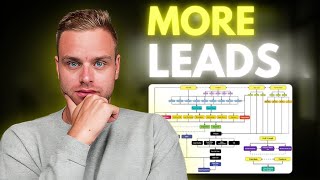
Matt from 1000X Leads breaks down how to build multiple targeted lead magnets that solve specific customer problems. Use a three-part structure with repeatable sections covering overview, quick wins, things to avoid, and action steps to build authority and drive hires.
Chapters
Hey there, everybody. It is Matt from 1000X leads here. And this video is going to be all about lead magnets. So what they are, what you need to do, why you need to do it, and how you should do it. And I'm going to give you some very actionable advice here. So probably take some notes or watch the full video. It's not going to be that long. And lead magnets are an interesting topic because it's not very sexy or exciting to talk about them or create them. It's a lot of work and it's very boring. But these are the things that are essentially going to act as the bridge from the top of the funnel to the bottom of the funnel. So we have our top of funnel up here, we have our middle of funnel here, and we have our bottom of funnel here. And lead magnets are going to be the glue that holds the two together. If you don't have any lead magnets, you're just going to get a lot of traffic and that's going to be about it. So it's very, very important. The lead magnets are part of the middle of the funnel along with the thank you page and the email flows. So I'm going to get right into it basically right away. So if you, let's say, are running Facebook ads or you're doing content you might put in your bio or on your channel, if it's YouTube, like download my free trainings or something like that, those are your lead magnets. It's you trading in exchange for their name, email and phone number. Everybody has downloaded a lead magnet at this point and lead magnets are a big part of the overall funnel. So I have a few little diagrams here that I think will be good. So the lead magnets and their purpose are to basically build authority, automatically overcome objections and act as like a little advice for them to then take their first steps to say, like, okay, this works. And then if you successfully do this and you get them their first quick wins, they are going to be hiring you. And that's just how it is. A lot of people are nervous. They say if I give away all the information, they're just going to do it themselves. Not really true. It's only true if you don't do it right. So if you have a big training and a big lead magnet, they're going to view you as the expert and they're going to want to hire you to do it. A lot of people don't want to do it themselves and they don't even want to know how to do it themselves. They just want to know that you know it. So if you're watching this video, put your heart and soul into your lead magnet and you're going to get a lot more clients that way. The method that I use to come up with lead magnets, because you're going to see in here there's a lot of spots for lead magnets, and that is by design. And I'll show you why that's so important in a sec. But this is how I come up with those lead magnets. Because it's not enough to have one lead magnet, we want to have a bunch of them. So what I do is I break down my service into categories. So category 1, 2, 3, 4, 5, 6, 7, 8, 9, 10, however many there are. There could be one, there could be a hundred, but hopefully there's not a hundred because that's gonna be a lot of lead magnets. So if you take my program, which is a thousand x leads, that's basically what I'm selling. I have different lead magnets for all of these categories. So what are some of these categories? We have cold email, we just have the overall funnel. We have our partnerships, we have our prospecting, we have a lead magnet about how to create lead magnets, funny enough, we have the newsletter, we have standards and culture, we have offers, we have productivity, paid ads, content and conversion mechanisms. So if you go back to the drawing over here, that's what our lead magnets are. And it's very important to show you both, to hopefully help you understand if you are having a hard time visualize that, but also to show that we practice what we preach around here. And if we're going to tell you to make lead magnets, you should be doing that as well. So let's get further into this. The reason that we want to do lead magnets are, you know, our lead magnets are solving their problems. That is how we should be visualizing this. Someone wants to generate more leads or something. That's a problem. Someone wants to start making YouTube videos but doesn't know where to start. That's a problem. Someone wants to know how to make a good newsletter. That's a problem. So what our lead magnets need to do, and let's go to this YouTube example, they need to solve these problems and make it easier and kind of hopefully overcome objections. So if someone was going to start a YouTube channel for their agency or B2B business or, or whatever, bunch of different problems or objections with doing that, they gotta know how to set up their camera and their lights. They gotta know how to make good titles. They've gotta know how to make good thumbnails and do YouTube SEO and read their analytics and set up their channel in the first place and speak on camera and come up with ideas and then scripts and all of that kind of stuff. And that might be overwhelming. That might be. You know, it's probably not even worth it for them. That's what they're thinking. But you as the expert, know how to do all of this. You know how to write scripts and come up with ideas and so on. That's why you're in business as a YouTube agency in this example. So what you want to do is make lead magnets to solve all of these problems. So then they go through all of them. They say, okay, like, this is great. This person clearly knows what they're talking about. And they come to the conclusion that they might as well just hire you. That simple. Like, in a nutshell, that's what we're trying to do here. It's a lot of work. We have to create a lot of these lead magnets, but that's what we're trying to do. The problem with creating just one lead magnet is you might be solving one of their problems, and that's great, but the other problems still exist, and they're still lingering in their mind, and that's still a reason for them not to buy from you. So you might have solved their camera problem in this case. But there's two problems with that. One, there's going to be a percentage of the target market who just doesn't have problems with their camera. They either know how to set that up, or they don't even have a good camera to set up, or they don't believe it's important, or they don't even know that you need to have a good camera. Whatever, that's fine. But there's a much bigger percentage of the target market who is going to have a different problem just statistically. And if we just have that lead magnet on, all of these other problems are not being solved. And then that brings us to our second problem. You might have solved one of their problems, and that's great, but the other problems still exist, and they're still acting as hurdles for them to even get started. So they're not being like, wow, Matt, thank you so much for helping me set up my camera. They are still just stressed and wondering who can help them with the other stuff. And that's the situation. A lot of people find themselves in when the conversation sounds good, but then they go cold or they ghost you. It's really like this. They're talking to you, but you never, you know, didn't do the right thing, it didn't solve all their problems. So they're looking for someone else and they can show you how and it's easy and they're going to choose them instead. Not what we want, is it? No, it's not. So that is why it's just so important to have all of these lead magnets in the first place. And it's why it's important to basically do a little brainstorming at the start and get them to, you know, get yourself to come up with these categories and then make lead magnets around them. So the next thing that we want to do is we want to basically break the lead magnet down into multiple parts and that's kind of the next step in this process. If we want to scroll in here. So what we want to do is we want to think of the lead magnet in three parts, the intro, the setup and the sections. So in the intro it's very important that we like hook them in and treat it like a video because we got to understand when typically when they're someone's going through our lead magnet, we're not talking to them. Right. They are going to have to self serve, so to speak. And all of the written text and stuff has to be there. So you really need to get them like a little hook that's very easy to consume, grabs their attention, they that kind of stuff. So the next thing I have is the headline and slides only and this should act as a highlight reel. And then we want us to do a 60 minute or 60 second timer and read it because we only have one chance to make a first impression. So if we go here and we do, let's go a 60 second timer, 60 seconds. So this is what you want to do and then we actually read it. So my name is Reese and this is the process we use to raise over 100 million and generate 2 billion impressions for crypto and Web3 startups in the past three years. Our agency Lumina Web3 focuses on fundraising, community management and go to market strategy for tier 1 crypto and web 3 startups all over the world. Here's our exact process that we have used to launch and scale over 45 funded startups since the middle of 2021. So that was 30 seconds. So I'm actually making this lead magnet right now and I could make it a lot More, more in depth. Because typically the logic behind this is we want, because we need to hook them in like a video. We only want to have the headline and some pictures because it's just very easy to go through quickly. And it's kind of like the snowball effect. The more they read of your prod or your lead magnet, the more they're going to want to keep reading. It's like building momentum, so to speak. And we want these headlines and slides to make as like a highlight reel because that's what's going to make a good hook and that's what's going to make us look really good. Because we only have about 60 seconds to make a good first impression and we only have one chance to make that first impression. So we want it to be good. So hopefully that makes sense so far. The next is going to be the setup. So this is kind of what the bridge is between the lead magnet intro and the lead magnet, like main content or the main sections. So what you want to do is have a thing that's about me or about us. So this is the one about the company. So what is the company then? What is the founders names? Right? And then if we go back to it, we want to do like what is the result they're going to achieve? Where is the table of contents and what is the proof that they should be even reading this? Like, does this even work? So we're going to have some case studies like that. We're going to keep adding more and more. We're going to have why businesses choose us with some sort of like intellectual property or graphics or frameworks. And then, you know, why choose us again? You have one chance to launch your token. You got to create fomo. You have to do all that kind of stuff. And then here is the table of contents. So everything they're going to learn here is up here the table of contents, proof that it works and about us. You don't need to just put it in this order. You can think for yourself a little bit and use your best judgment. But realistically, the setup of the lead magnet is going to have all of these parts. So it doesn't necessarily need to be that black and white and that structured, but it should have all of that stuff. And then in the next part is going to be the sections and what I like to do and I'm going to show you the sections, we want to have at least these parts in all of the sections. So we want to have the overview, some important information, some quick wins that they can take and run with right away to like, you know, I think this is kind of bullshit, this lead magnet. There's no way this works. Okay, but here's some quick wins, you know, whatever. I'll just try that. And then you start knocking out these quick wins. And then basically like, oh, my God, what Matt is saying actually works. I'm just gonna book a call and get him to do it. Then we wanna have things to avoid. We wanna have an example and then some action steps. So keep it detailed, but simple enough. And you don't have to use this format. But this is the format that I choose to use because in my opinion, you know, the overviews, like an introduction, important information, could be as much or as little as you want. It doesn't really matter. Quick wins, you know, three quick wins is going to be enough. And think of these as things they can do within the first 48 hours. Things to avoid is also very good and very important. An example like, okay, this is. Sounds good, but is this bullshit? Okay, here's an example that what Matt is saying is done by this big company or, you know, this brand did that and they got this result. Some example. Think of proof, too. And then some action steps. You want to make it very clear what the action steps are. And then with your major categories that we talked about earlier, you know, that's what you would have as your table of contents and each section. So in this case, it's a crypto agency. So the categories are fundraising, acquiring users, community messaging, crypto culture, building trust, and so on. So that would be part one, fundraising. Okay, here, here's the overview. Important information, quick wins, things to avoid, example and action steps for part one. Okay, here's part two. Acquiring users, the same thing, and all the way down the lead magnet. You really want this lead magnet to be big and, like, just huge. Because part of it is you want to, like, make it so good that you're so clearly an expert. And they're so intimidated by how much you know and how you know in depth it is that they just have to hire you. Okay. It'll just be easier to hire Matt to do this for me type thing. And that's really the different parts of the lead magnet stuff we have. If we zoom out again, we have the intro, the setup and the sections. We want to find our lead magnet categories based on breaking down our service, and we're going to have to use our brain for that. And then once we do this, we have so many different paths for our lead magnets. To go through. They could go an infinite number of ways based on what is most important or most appealing to our target market. And then when they download any of our lead magnets, they're going to be added to our flows and start getting our newsletter and be more likely to see our content. And you know, our appointment setter is going to reach out, might join our community and then just you're off to the races. So if you don't have this kind of stuff, you know, like let's just say we didn't make any lead magnets. Like it just wouldn't really make sense. Like people would be viewing your YouTube and then like that's it, there would be no more. There'd be no contact information captured to be on the email flows. There would be, you know, no thank you page to see. Like it would just wouldn't work. So that is why you need the lead magnets. That's exactly how to think of the topics and categories and that's how I would be constructing them. So I hope this video was very helpful and I will see you in the next one. Take care.
More from Matthew







Everything I Would Change About This Ecom Email Marketing Agency (3 HOUR LIVE AUDIT)

Everything I Would Change About This Meta Ads Training Business (3 HOUR LIVE AUDIT)


