Do This To Make $1 Million Per Year
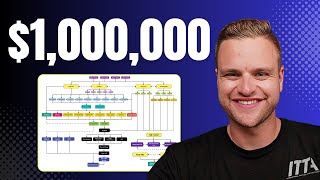
Matthew Larson walks through 10 habits for service business owners to hit $1M+ annual profit: set a major definite purpose, wake at 5-6am, protect sleep, focus on three high-leverage tasks daily, work three uninterrupted morning hours, charge $250+/hour, and aim for a 30x ratio between customer lifetime value and acquisition cost.
Questions this video answers
Between 5:00 and 6:00 AM (typically 5:00 AM).
$250 per hour (effective rate).
Aim for a 30× LTV to CAC ratio (he suggests at least 10× to scale; 30× ideal).
Five 60-minute deep-work cycles per day (including a three-hour morning stack done first).
About 550 clients per month (he states this as his typical clientele count).
Chapters
Hey there everybody. This video, I'm going to go over the 10 changes that I think you should do to take your business from where it is now to a place where you can make $1 million or more in take home profit every year. So I'm just going to go through these 10 things on my screen. There's not going to be anything fancy in terms of editing or scripting or visual effects. It's going to be very classroom style content. So hopefully you can stick through it, take some notes and implement what you learn. So I always start my videos with this, which is the 1000x leads marketing funnel. So this is a great funnel that you can implement yourself to get as many leads as you possibly can for any B2B business, whether that's an agency, something like an accounting firm or an insurance brokerage or anything like that. And I start my videos with this because most of the context of my videos are in service of building this. So it's very important to give you that kind of context. So as you can see here, I have a bunch of different things on the screen, different cards to go over and I'm going to go through them one at a time. And there's always going to be some sort of learning from it is what I'm meant to be doing here. So this video is going to show you what I believe to be the 10 most important habits and lifestyle changes you need to make $1 million per year. And there are some requirements of this. The first is that you need to own a business. This is not going to cover the employee route, if that's what you want to call it, to $1 million. The second is that you have to be willing to work and more importantly than work, improve. And if not, this video is not going to work. And the third is you're going to have to already have basic skills like writing, sales, delivering a service, that kind of stuff. It's not going to teach you how to do any of that. Like I don't think you can make a million dollars a year if you have no skills. So these requirements are just kind of important context that we need to go over. I'm going to go over a variety of different points like I showed you and if there are things that I need to show you, like context or links to certain stuff, I will go to those. I have them already open up here. And like I said before, it's going to be classroom style content with no editing. It's just going to be the facts, just the things that you need to know. So about me if you've never watched one of my videos before, My name is Matthew Larson and I work with 550 clients per month, mostly agencies and B2 business owners and I help them build out their lead generation system. So this funnel I have made over $1 million per year in take home income six of the past eight years with the only exceptions being 2020 and 2021. And this is kind of a list and the accumulation of things that have really helped me so you can judge for yourself which you think are good and which you think are bad. I'm not really going to try to convince anyone to do anything in this video. I'm going to just show what's worked for me because I know everyone and every business model is different. So these are going to be the changes to get it out of the way early. The first is we're going to hone in a specific goal. I'm going to refer to it as a major definite purpose and we're going to perform auto suggestion multiple times per day. If you don't know what auto suggestion is, basically repeating something over and over to yourself until you begin to believe that it's true. I think auto suggestion is more of a strategic and focused version of just affirmations, but they are very similar. The next is going to be waking up between 5 and 6am the third one is going to be implementing a health protocol to ensure that we don't get sick and we're all full of energy and full of vitality and full of life. The fourth is using the rule of three, which I'll explain to identify your highest leverage tasks and then delegating or deleting the rest and only focusing on those three. The fifth is to create a three hour work stack of your most important tasks that you do first thing in the morning before anything else. You wake up, leap out of bed, run to your computer and start doing these three timed hours. The sixth is kind of connected to the five, but it's working for at least five timed hours per day with a form for accountability. Seven is designing a great offer that can be delivered at $250 per hour or more in terms of an effective hourly rate. So if you're delivering something for 5,000amonth, it's got to take you 20 hours less, including your team. The eighth is setting up your metrics to see what your LTV to CAC ratio is and trying to get it to 30 to 1 or higher. The ninth is creating video and written content and the tenth is running ads, doing outreach, and forming partnerships. So these are the things that I've really focused on in what would that be since 2016 to now, 2024 that have allowed me to get a good income. $1 million per year in income is better than almost everyone else on the planet. Certainly nothing compared to like the top hedge fund managers or something. But that's what they say. Comparison is the thief of joy. So let's get right into it. And I kind of want to have this disclaimer before going into it. The only way for this to work is by selling products that are needed or useful. So if you don't have one of these, you don't have any products, you don't have any service. The rest of this video is pointless because at the end of the day, you make money by selling a product or service. It's the only way. These changes and habits are just things that will help you sell more products and services. And this is an important piece of context as I don't believe your success financially business wise doesn't depend on your age or IQ or anything like that so much. But who can find the best product or service with the highest margins and sell the most of it. And I believe this because some of the dumbest people that I know are the most successful financially due to this fact and that it is what it is. They found a product that people want, they've figured out some way to get it to the market, and they just keep selling more and more and more of it. That's just how life works. That's how business works. We don't need to get mad at it. We just need to focus on finding the best product or service and selling it over and over and over again. It's just one of those things that if you just have the best product or best service and it has good unit economics, you can just make so much money. And it's kind of frustrating to see if you let it get to you people, that you don't think as smart as you making that much money. But getting mad shows a lack of understanding of how this stuff works, in my opinion. So let's get into it. The first thing is that specific goal, that major definite purpose. Some people call it a definite chief aim. Some people call it their one big thing, goes by many names. And the first thing we need to do is make this specific goal of making $1 million per year, determining the math, and then coming up with a plan to achieve it. So in the book Think and Grow Rich, which In my estimation is one of the best business books of all time. It's right here on the screen. The author, Napoleon Hill, goes through what is called your major definite purpose. He calls it a definite chief aim as well in some of his books. But the steps involved are a clear goal. So define exactly what you want to achieve. Be specific, like measurable outcomes, dollar amount, in this case include a time bound deadline. So an example I put here is I will earn $1,000,000 by December 31, 2026 through my digital marketing agency. That's kind of a little bit of a plan, that's a clear goal, all of that kind of stuff. The next thing is what you'll give in exchange for that goal. Because there is nothing in life as something for nothing. Unless you like get lucky on a crypto pump or something. But that's not exactly a reliable way to get rich. So I will dedicate 60 hours weekly to mastering marketing, building relationships and improving my team skills. That's a mini example that I put there. It's not necessarily very complete. If you were doing this, you'd probably have a more, much more fleshed out plan than that. Hopefully the deadline is something that usually going to be a date that lets your mind focus. If I wanted to make $1 million by the year 2096, that would be a lot different in terms of actionable steps and trying to make a million dollars by the year 2026. And it's just very important step in my opinion. The next is the plan. So create a specific roadmap actionable steps to achieve your goal and then break that down into smaller milestones to track progress. A lot of people just say I want to make a million dollars per year and it seems daunting to them. But if you break it down and say, okay, I need to make 83,000amonth. Okay, I charge $4,000 a month for client. Okay, I need 21 clients. Okay, to get one client, I need to send 3,000 cold emails. Okay, I need to send. What would that be? 30 or 63,000 cold emails per month. Maybe if I mess that math up you can forgive me. And then we want to do this and turn it into a written statement in a clear positive present tense language as if we have already achieved it. One of the best quotes from Napoleon Hill is whatever the mind can conceive and believe the mind can achieve. And that is kind of this written statement here. This programs your subconscious mind for belief and action. So I am earning a thousand dollars annually by December or a million dollars annually by December 31, 2026 through my digital marketing agency. I achieve this by providing exceptional service, dedicating 60 hours per week and continuously improving my skills. And I would print this out or write it out and read it twice daily to reinforce my commitment to this. And you'd probably make a better major definite purpose here. And one of the things that I found online as I was doing this is Bruce Lee's definite chief aim. So Bruce Lee is, if you don't know who he is, he is a martial arts movie star, that kind of stuff back in the day. So I, Bruce Lee, be the first highest paid oriental superstar in the United States. In return, I will give the most exciting performances and render the best of quality in the capacity of an actor. Starting 1970, I will achieve world fame. And from then onwards till the end of 1980, I will have in my possession $10 million. I will live the way I please and achieve inner harmony and happiness. Signed Bruce Lee, January 1969. And I would say he did that, so he achieved that goal here. It's just one thing that don't let yourself get psyoped or you know, poo poo on affirmations. It's they're one of the most important things and we take the affirmations which are kind of like, can be a little bit cringy, can be a little bit meaningless, and taking those and turning them into auto suggestion instead, which is essentially the same thing but with a clear goal, a clear plan and a deadline to achieve it. I think those are the two main differences between them. The second thing that really helped me is waking up between 5 and 6am, usually at 5am, but if I got to bed a little late, 6am and I believe this is so important because there's something very spiritually and mentally powerful in my opinion, about knowing that you are up and working when others are sleeping. You begin to believe that you're better than them, which is unironically a large requirement of becoming successful. You believe that you deserve to achieve more and more and then you actually start to achieve more. This time, before Everybody wakes up, 5 to 6am is also some of the only time that you can work without any interruptions, whether that's from clients, your family, you know, whatever, emails. And in my view this is far superior to being a night owl, which you can get some uninterrupted time from like midnight to 3am if you want to. But waking up early is better in my view as it follows a natural circadian rhythm, natural business hours and you're up working on the most important tasks when you're fresh and rested, instead of having to do your most important work after a long day. I tried to be a night owl in the past, and it's almost, for me at least, like you're in a constant state of anxiety as you go throughout your traditional workday knowing that, okay, I got to do all these meetings and all this client work, and then I actually have to do this work that matters. And for me, at least, a constant state of anxiety and worry that never ends well in terms of getting up early, because I know a lot of people have trouble with that. The things that I do are go to bed on time, which duh. But most people don't do that. If you're going to bed at midnight, you're not waking up at 5am you got to go to bed at 9 to 10pm the next is use a sunrise alarm like this one. So what this does is you set your alarm for 5am for example, and then set a time that you want the sunrise alarm, you know, 10 minutes before, 20 minutes before, 30 minutes before. And what it will do is it will light up before the alarm goes off. And this is meant to mimic the sun going up, for example, where you're honestly going to wake up usually before your alarm goes off. And you're going to know that your alarm is about to go off because this thing's on. And it's just a much better way to do it than kind of, you know, a fight or flight response with a crazy alarm, you know, waking up from a dead sleep. In my opinion. I always keep my phone and electronics turned off and out of my room when I sleep. Or I just start, you know, waking up in the middle of night and check my phone. This solves that problem. I also tape my mouth shut. I use a nose strip and use earplugs with a white noise machine when I sleep. This makes me breathe a lot better. It stops the dry mouth, for example, and the earplugs on the white noise machine drown out all the noises that wake me up. And it's just so much better for me in terms of the quality of sleep and the quantity of sleep. I feel like the white noise machine is also very good because after you fall asleep to the white noise machine for, I don't know, the amount of days, but for a while you begin to be conditioned, like a Pavlov response, that when that white noise is on your time to sleep. And I really believe that I find it Difficult to sleep without white noise now, which could be good, could be bad, but I fall asleep almost as soon as my head hits the pillow. The next is to keep a water bottle beside your alarm across the room and try to drink 1 liter of water as fast as possible. Most of the time you're not really tired. In my experience, you're just dehydrated. And if you're drinking a lot of water, you're gonna have to go to the bathroom and can't go back to bed type thing. And then sex is what I like to do is exercise immediately, start sweating, you know, getting the heart and the blood flow going. And what I do is I go on a treadmill at 8% incline or 8 degree incline at 3 miles per hour. It's challenging enough to make me sweat and wake me up, but it's not so challenging. I just say I'm gonna skip that and go back to bed. That's what I do. I think the waking up early is truly the one habit that elevates all other habits. Every single thing in my life goes better when I wake up early. If you are someone who likes to go to dinner late or likes to watch TV at night and you don't want to go to bed at 9 to 10pm, in my opinion, those are just trade offs that you have to make if you want to be successful. So go to go to dinner at 6pm, watch TV from 8 to 9, and then go to bed. If you really want to make it and you really want to make all this money, you got to do something about that. So the next thing is the health protocol. And I really like doing this because without one and working so much, I tended to get sick or have a low amount of energy or both. And that all changed when I followed this. I take a huge supplement and vitamin stack. I do 15 minutes of stretching when I wake up using the Bend app, although the app is kind of irrelevant, just download a stretching routine. But I like the Bend app. I go into the sauna or hot yoga multiple times per week. I'm training Muay Thai multiple times per week. I'm lifting weights and running multiple times per week. I am at least six days per week sticking to a 9pm bedtime. I'm using that mouth tape, nasal strips and earplugs when I sleep. I'm getting quarterly blood work to ensure I don't have any deficiencies. And this is a great way to find those deficiencies and then kind of either change your diet to fix it or take some Supplements. If you're low on something and then no Uber Eats and fast Food. I think that Uber eats and fast food just makes you feel so much worse because I believe that I've heard a lot that, you know, your gut is your second brain, gut health is brain health, that kind of stuff. And until you really change your diet and think this is true, it's hard to believe. But I now believe through my own experience and through testing that that is absolutely the case. And Ubereats and fast food, especially if you live in America, the seed oils, the artificial dyes, all of that kind of stuff really almost makes you depressed in a kind of way. And your life changes immeasurably. Even if you order, quote unquote, healthy things from Uber Eats and fast Food, if you just cook it yourself, it doesn't take that long, you're going to get such higher quality of life in my view. In terms of vitamins, I take quite a few. I take B12, C, D, K, Omega 3s, selenium, zinc and iodine. What I did is I took my typical diet, I put into chat GBT and said, what are the deficiencies that I'm most likely to have? And it came up with these because, you know, I don't eat the best diet. And then by taking these and I just buy them like this, either capsules or tablets or gummies or both, and just take them every day. And I've never felt better before in my life. Like I said, I stretch for 15 minutes per day using the Ben app and I go to the sauna and hot yoga three times per week, as well as Muay Thai three times per week. I lift weights and run four times per week. And the difference in energy and vitality alone is truly amazing and allows me to work more while feeling better doing so. I remember before I really followed this vigorously. And this is a step by step, this is like a process of addition over time. You know, I didn't just one day do these 10 things. The just the way you feel throughout the day, instead of that fatigue and that kind of stuff, you feel like ready to go, your testosterone level becomes higher, you sweat more, you just feel happier. And the difference between that, because I've went through periods where I'm grinding, you know, 12 hours per day, maybe more, not doing any of that stuff, and you get fat, you get unhappy, you get tired, all that kind of stuff. Whereas if you just carve out two hours per day, you know, before or after your workday or even to break it up, you know, by going to the gym or something, it's just so much better in terms of the results you get. And that's really how I feel about it. The next is going to be the rule of three. And the rule of three is from an author named Brian Tracy. He's also a business coach. And, and basically what the rule of three says is no matter what you do each week, whether it's ten things or two things or a thousand things, 90% of the value you get is going to be generated by three tasks. And I really believe this is true based on my personal experience. So it's kind of like the 8020 rule on steroids where what we want to be doing is finding our three biggest and most important tasks focus all of our time and energy. So if we did those for one hour before, we're going to do those for eight hours now and delegate, automate or eliminate the rest. So what we want to be doing here is we want to list all of our responsibilities and write down everything we do regularly. If it was something like a one time thing that you do once per year, probably don't need to add it to that list. The next is to identify the three most impactful things. And when we do that, we want to ask ourselves, if I could only do three things all day, just a hypothetical exercise, which ones would create the most value. Those are going to be your three things. The next is to prioritize and plan these tasks as your first priority every day, both to ensure that you do them and to do them as your best work. Because when you at the start of your day, similar if we're going back to that 5am thing versus working at night, when you're well rested, when you're motivated, you're going to do your best work, then we want to eliminate or delegate the rest. So whether that's automation, whether that's we hire someone to do it, or whether we just don't do it at all. And you'd be amazed how many things you can just not do at all that make zero difference. When you try this, we're going to have to get rid of everything so we can focus on these three things. So for an example, when I was doing this right now in my life, my three things are making YouTube videos, writing the book I'm writing, and improving my products and programs which I sell thousand X leads and 10k per month. Those are the only three things that I can be doing that get 90% of the results. And I've really tested this kind of Thoroughly. Back when I had my marketing agency previously, my three things were making better ad creatives, making content, YouTube and newsletters specifically, and then training employees. There's no way I'm going to be able to make 200 landing pages per month solo like I'm doing. And there's no way I'm going to really be delegating. Making content and the ads are just kind of my expertise and I knew what I was doing more so than hiring any agency or anything like that, I need to do those three things. So I had a $7,000 per day ad funnel which I'll go over later in this video. I just used made YouTube videos and newsletters to kind of convert leads who came in from the ads to clients. And then I had to do a lot of employee training because I had over 75 employees part time, you know, full time United States based overseas. And they were the ones who did a lot of the work. So training managers, training employees, individually, making SOPs, making employee trainings, that is the kind of stuff that I had to be doing. And no matter what business you are in, you are going to have these three things. And probably one of the most important things that you can do is find those. So the three hour stack is kind of related to the next one where something that has really helped me is the concept of waking up, doing the 15 to 30 minute morning routine, the stretching, making the bed, taking the vitamins, brushing the teeth, all that kind of stuff, but then running to the computer and doing three hours of timed work before anything else. So when I do this properly, I finish these three hours and my rule of three tasks by 8:30am not only does that ensure that I get them done every day, as they're literally the first things I do and I don't stop until they're completed, but I have found that it makes the entire day so much more relaxed knowing that I already did these three things. And after my three hour stack is done, I will go break up the day, kind of go to the gym, lift some weights or go for a run and then I'll go down to the cafe where I live and get some coffee and some breakfast, lunch as a mini reward. And that kind of reinforces it because I really enjoy going to the cafe, looking at the beach, you know, sitting in the sun and getting that. I like cappuccinos personally and it's almost like a dopamine habit loop, feedback, reinforcement there. The three things in my rule of three are responsible for nearly 100% of my income Right now. And they cannot be skipped like that. Even one day per week. I do these three things, seven days per week, these three hours. But on the weekends I will stop working after these three hours are done. Whether in, in the week, I'll work for 8 to 12 hours per day on them. It's just one of those things that I believe that you should be doing this three hour stack, seven days per week, both to the habit, the momentum, the compound effect of improving and doing it over and over. And I think that based on my experience, like the difference between doing it in five versus seven days per week is almost feel like you get twice as much done in seven days per week. And for me, I have a bad character trait or habit or whatever you want to call it of I can really string together days and tasks and stuff really well. But the second I kind of break is the second it just everything goes to shit for me. So for example, if I'm not doing that Uber Eats thing or not ordering fast food, and I've done that for six months straight, the second I actually get fast food, I'll just eat it like five times in a row after I don't. I've never been able to break that bad habit of mine, bad character trait or whatever you want to call it. So it's kind of similar here, but the inverse. Or you could, you could view it as the same thing. I could string together three hours of this work for six months straight, but the second I take a weekend off it kind of resets it for me. And you could say to me that you just got to get over that. But then I agree, but I've been in business for 12 years and haven't gotten over it. So it is what it is for me. The next thing is five timed hours per wor of work per day. And the three hours are included in this five hours. But I like to do another two. I would argue that the best productivity hack that I've ever come across is the concept of working with a timer and a form, Google form. I would argue that this is something like natural Adderall and it is truly profound how well this works. And it is completely free and comes with the bonus of not putting body and mind altering chemicals or drugs into yourself. Amazing. So basically what you want to do is deep work in 60 minute cycles. So we're going to get a timer, something like this one. But just any timer is going to work. I have mine right here as proof of concept and I prefer to do it with a physical timer. Instead of timing it on your phone or computer as if it's on your phone or computer, you're just more likely to get distracted, in my opinion. And I like to work with my phone outside of my office when I'm doing these timers. So what we want to do is the 60 minutes. So we set it for 60 minutes. I don't know how well you can see this, but There we go. 60 minutes, 30 seconds. We will turn it on and we will train ourselves to literally keep working and not stop until those 60 minutes are up. And then we will go to Google Sheets, for example, or Google Forms, for example, rather. And we will have, you know, what date is it today? So it is December 9th, and this is hour two. I filmed my YouTube video to earn 1 million per month by December 31st, 2026. That's my goal. So that's basically what I do. And I would submit that. And I have it set up where my mother, my business partner, some of my friends, my girlfriend all achieve or receive that notification and kind of prove to them and myself that it's working. Some extra accountability. And you do this for at least five 60 minute cycle per day, including that three hours that you do right at the start. This is one of the best things that I've ever come across. I know a lot of people talk about it now, but I've been doing that for about, I would say nine years at this point. And I'm not the one who created it. It's just a timer, you know, like that kind of stuff. But my first mentor was really big on this, but he would write it down in a book. So it was kind of crazy how much he did. I was at his house one time and he had this big bookshelf, like, well, multiple bookshelves. But this one and all had a bunch of black books that are pretty much the same. And this is when we were working and I was kind of complaining about the timer and saying, is that really necessary? And then he told me, like, go pick out one of those books. And I did. And then I picked up one of the books and he opened it up, or he told me to open up rather. And it was what he was doing hour by hour. And I think it was either in 1989 or 1999, I can't remember for sure. But regardless, he's been doing that for, you know, 25 to 35 years, writing down this kind of stuff every single day. So never really questioned it again at that point. And I think it's very Fun if you do it like that, to kind of go back and review what you've been doing over time. Like, think of it, he's been doing that for 25 to 35 years or more, depending on when he started. Imagine being able to, when you're 60 years old, go back to where you are today and see exactly what you were doing. It's kind of interesting, in my opinion, and it keeps you on the right track. The next thing is to think about creating offers and services completely differently. And I now think of them as kind of back to front and meaning I started the end result that I need to happen, which is to be able to deliver my service at $250 per more instead of in terms of an effective hourly rate. And then I go back and decide what I can provide that fits that criteria and what would need to happen for the operations. So that means if I am selling something for 5k per month, I need it to take myself and my employees 20 hours or less for it to be a $250 effective hourly rate. The reason for this is that after you take customer acquisition costs out, labor out, finance out, legal out, taxes out, and software out, you kind of don't have a lot of money left if you're only charging $100 per hour or $50 per hour, or even $150 per hour. So there's not much money left if you're doing under 250 per hour. And there's certainly not any money to scale. And this is one of the biggest changes that I made that led to great results. And the easiest way that I think this can be achieved is simply to raise the prices. I think that I first learned about this, or someone first told me this through a YouTube video years ago, and I didn't really understand it at the time, but just kind of. I thought about this one day and said, okay, that actually makes sense. Like out of the blue, almost like the universe was trying to tell it to me. And it made a tremendous difference to me ever since. In terms of the raising prices, let's say you found out you were selling something for 2,500 per month. That takes you 20 hours, which is 125 per hours. That doesn't fit the criteria. And we need to raise it to 5,000. If we had 20 clients at 2,500 per month, and we raised our services to 5k per month and half of our clients churned, we would now have 10 clients at $5,000 per month. Most of those are $50,000 in revenue per month. But the labor and the customer acquisition costs are cut in half. Think about that. It's the same thing. You need less team members, you need less software seats. You don't have as much ad spend or however you're getting customers. You don't have as much billable hours for labor. It's just so much easier. And the reason that most people don't do this is they're just scared to charge more. But if you don't know this, you don't realize that you don't think about it. No one's ever explained it to you, like why would you be charging $250 per hour? So let's say you have a Facebook ad agency and you make people 10 creatives per month. And that's your basic, basically your service, your deliverable with the script writing, with the editing, with the filming, with the whatever you else you do like, all of that has to take 20 hours or less. If you're charging $5,000 per month, following this logic, it would be better to charge more than $250 per hour. And that's where you really get the big scale and the big money. That's why software companies are so good. You know, you just build the software and it's infinitely scalable. But when you're selling a service business, you really have to do that kind of stuff, in my opinion. It's just so important and you're not going to be able to grow and scale to the point where you can make $1 million per year. If you don't do that, the next thing is to have an LTV to CAC ratio of 30x and I kind of first started paying attention to this and learning about it 12 months ago or so. I learned about it in a book called Rocket Fuel and I watched some YouTube videos about it. It's easy enough to understand, I think, why this is important. But I work with about 550 clients per month and I would estimate precisely zero accurately measure the stack and probably 1% measure it at all. So the higher you can make this number, the more money you're going to make and the further that you can scale. So ideally you would have a 30x LTV to CAC ratio and that probably seems wildly unrealistic to most. So LTV is lifetime value. It's the amount of money you get per customer over the course of a certain time period. There's no such thing as LTV without a time period. That's kind of something that people don't understand, it's a six month LTV, it's a one year LTV, it's a three year LTV if you're something like Starbucks, like a 30 year LTV. But if you don't have a time frame, it doesn't really exist. So if you wanted to stick to this 30x LTV to CAC ratio, there's two ways to do it. You could increase the LTV or you could decrease the CAC. So if you were selling something that at a $2,000 customer acquisition cost, you know, your ad spend, your appointment setting fees, your closing fees, that kind of stuff, your onboarding stuff with hr, if you do that, you would need to have an LTV of $75,000 or more. That is probably unrealistic to a lot of people, but the fact of the matter is that it is a lot easier to try to find ways to decrease the customer acquisition cost than it is to try to increase the ltv. But both are important. If you can do both, you should do both. If you don't have an LTV to CAC ratio of at least 10x, you can almost forget about growing your business in a substantial way. You might be able to get it to 1 to 3 to $5 million per year in revenue, but you're never going to make enough to take home $1 million per year in personal profit. An example of how I did this at a agency that I used to have before I exited, I sold landing pages and CRO services to e commerce stores. So the way I had it set up and the reason I was able to scale so fast is I technically had an infinite LTV to CAC ratio as my CAC was zero. And this is what I mean by finding ways to do this. So that might sound like a lie, I guess, but just stick with me here on the front end. Instead of running my ads to a call forum or something like that, to a sales team, I ran all of my ads to landing page templates, templates built in webflow. So you see, these were basically the ones I was using, but there's a bit more now, but these were the ones I was using. Bunch of different landing pages that they could basically download, put into their own webflow account and tailor to their own business and then launch. It just made it a lot faster, a lot easier. So I was selling these landing page templates and there was a hundred of them at the time. I was selling them for $97. And basically with Facebook ads, the customer acquisition cost that I had was let's say it's $50 or $70. And it increased over time like all customer acquisition costs do. The amount of money that I got from the $97 in sales was more than I had to pay in ads. So basically I was breaking even while acquiring these customers. And then over time in the six month period and I actually measured this six month LTV right, 2.1% of the customers who bought these templates would convert into custom landing page builds with my team at 2,500 for one or 5,000 for each. And that was basically a $3,300 average order, you know, based on who choose 2500 and Choo choose 5000. It was blended was 3,300. Most people chose one. The cost to acquire them was already paid for. So basically I was getting a $3,300 LTV with a 0 CAC and it is easy to convert them. And I paid almost no commission to the salespeople I had on these as these people were already customers and they're already in my pipeline. They already bought something for me and a lot of the times they would just check out on my website with a link and then fill out their onboarding form and I would build the landing page almost like a factory because I was able to have an infinite ltv. This basically let me scale my ad spend higher and higher. And I peaked at $7,000 per day which if you take that 2.1% conversion rate from these templates to this, I got to about 60 clients per month just from my ad funnel. Then I had cold emails, I had content, I had partnerships, all of that kind of stuff. On top of it, the partnerships angle is pretty interesting to talk about because I did white label partnerships. So I would cold email which is very cheap and very cost effective. A bunch of different ad agencies and they would pay me in a white label partnership because their clients need landing pages. $5,000 per month for me to make unlimited landing pages for their clients, which is usually 6 to 8, sometimes less. That has no customer acquisition cost either. And I was able to get about 77 was the peak ad agencies paying me $5,000 per month which is 385k mrr to do this for them. And the only cost there because there's essentially no customer acquisition cost on that. The only cost was labor and it was very, very profitable. Almost a 70% profit margin on the work. And it's just you gotta find ways to get clients that have a very low customer acquisition cost. If you are an enterprise SaaS or like your Oracle or something, and your average ticket size is millions of dollars. Yes, you can basically afford to pay a high customer acquisition cost, but if it's an agency service or an accounting service or something like that, we just can't, you know, realistically increase our LTV like that. So we have to find ways to lower our cac. The final two points I'm going to go over in this video are content and then ads, outreach and partnerships. And I put content separately just because I believe it's the most powerful, and then the rest over there. The only four ways we can get clients and reduce our customer acquisition cost if we want to build on the last point are producing content, running paid ads, doing outreach, and forming partnerships. So if we want to make a million dollars per year, we're going to have to find a way to make five YouTube videos per week, write five newsletters per week, three posts per day on Twitter, LinkedIn, Instagram, and Facebook, and one short form video. I put per week here. I meant per day for reels, TikTok and shorts. Let me change that. If you have to rearrange your entire life to do this, so be it. If we want to make a million dollars per year, we're gonna need sales. And these are the only ways we can get sales. We want to do this all the time. We want to make every single one better than the last. And we want to keep piling on and on and on until we achieve just insane amounts of lead flow. The final one is the ads, the outreach, and the partnerships. And to give you a list of deliverables, three new ad creatives per week. We don't need any more because we probably don't have the budget to test like that. One new landing page per week or one new split test or variation to try to make our ads more effective. 1500 plus cold emails sent per day to potential clients. 500 plus cold emails sent per day to Potential Partners. 60 minutes per day of manual prospecting. Either hire a publicist or do it on your own to try to get you on podcasts and YouTube channels to grow your audience, and then hire an agency to try to get you to speak at events. These are the 10 changes that I made to basically get all of that income over the past six to eight years. And I think it's something that anybody can do. Like I said before, if you don't have a business and you're not currently selling something, this is not going to work for you. These are just 10 changes to help you get more work done, get more sales, and ultimately increase your income. So if you like this video, comment, like and subscribe and I will see you in the next one.
More from Matthew







Everything I Would Change About This Ecom Email Marketing Agency (3 HOUR LIVE AUDIT)

Everything I Would Change About This Meta Ads Training Business (3 HOUR LIVE AUDIT)


