How I Built and Sold My $900k Per Month Marketing Agency
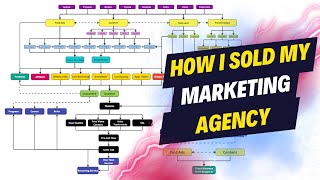
A founder walks through building a productized landing-page agency to $900k monthly revenue in one year, then selling it. He covers the business model (cold email, partnerships, recurring revenue), what made it sellable (systems and diversified leads), and how to negotiate the deal.
Chapters
This is going to be the story of how I sold my agency. I made a video on how I grew my agency, but now it's how I sold it, the process, what I was thinking, what kind of came out of it, things I had to deal with and so on. This video is going to be part story and part guide because I'm going to go over what I did personally and what worked for me. My advice to you, if you sell or have desire to sell one day and what you should look out for. So I think you should watch this entire video because it could save you a lot of money and stop you from making some mistakes that I know a lot of people personally have made that I'm friends with and kind of got screwed over. And it could also make you a lot of money by doing it the right way. So I've broken it down into phases. My past experiences, building it up, making it sellable, starting the process, getting offers, negotiating and completing the sale. I put this past experience in it because it is very relevant to the rest of the things here. And it kind of gives context to how I knew what I wanted to do beforehand, like all of the skills and stuff because I've been doing this for 12 years. I built up and sold an agency in about a year, just under. But I had, you know, 12 years of experience prior to that. So it's not without that context. It kind of seems like an overnight success, a sensational story when it's a. It's a good story but you know, it's many a long time in the making, let's just put it that way. And I've done. I've been a part of two agency exits before. So it's not like I was going in blind. So it's just important context to begin with. My past experiences, I believe to try to make this, view this video as realistic and honest as possible. So you can see I put a lot of notes and I broke it up and have some images that are going to be important, but I'm going to go through one like all of these individually and maybe make some more notes on each. So my past experiences, I was a part of two agency sales before and it wouldn't be super accurate to say I sold two agencies before because I was a part of them. I was a minority shareholder, I was a partner, I was a co founder in all of them. But I definitely was not the boss in the first one I was lucky to be there. I would say the second one I was more experienced, but still not the one in charge. I was the junior partner in both. I was the apprentice and working with the master, I guess you could say. So I've never also, I've also never bought a company before, as in, you know, purchased a company. So I have no experience on that side. So this is strictly going to be about selling an agency. And I think a lot of what is in here is going to be applicable to any business, not an agency. But I also have no other experience selling businesses that aren't agencies. So I hopefully it's useful even if you don't have an agency, but I'm not sure. And then a lot of what you see in this video will be things I learned from my past partners and mentors in the previous exits. And the problem with this video or any story, not just me, but any story in general, is it definitely condenses 12 years of stuff into 40 to 60 minutes. So lots of time, lots of boring and uneventful time spent learning and developing skills and knowledge that's definitely going to be glossed over. Lots of tests, lots of things that didn't work. But it is a story. So let's just kind of try to keep it as realistic as possible. So I built and sold it in one year, but like I said, 12 years of previous experience. So it's adds a lot of context to the story to try to keep it as honest as possible. So let's get right into it. I just wanted to make note of my past experience before I even started this agency, before I even thought of starting this agency. 12 years of experience. I started an agency in high school when I was 16 and I'm 28 now, almost 29. So that's where that comes from. Definitely humble beginnings in the start for you know, how bad it was. My first agency, or not even an agency, first freelance work was posting stuff for people because that was kind of the time Instagram and Facebook started to be used for business. So like that's what I was doing back then, if you are interested. So building it up, the first phase I knew going in that I was aiming for a $3 million profit range because that's where I wanted to go for an exit. I knew what I was going to do before even starting. I knew I wanted to exit it because I'm personally not the type of person who likes doing agency work and providing services so much that that's what I wake up loving to do every day and want to do for the rest of my life. I'm solely doing it to make Money, it fits my skill set probably the best of all business models. So I'm here to make money, not to do this for the rest of my life. So I knew I wanted to exit and then I knew I wanted to do productized services. So what that means is, let's go with an example here. Definitely don't want to be a type of agency like the full stack agency that'll do email, SEO, ad, creative, ad management, email marketing, web dev, it goes on. The reason that I don't like that type is one. There's three reasons. One, it becomes very difficult for people to refer to you because instead of you being there like you just are everything to everyone. Whereas if you have a productized service or focus on one service, it's very easy to be like oh let me introduce you to my ads guy or my operations guy or my SEO guy or my landing page guy in my case or whatever. Versus it's very hard in people's mind to refer to you if you do it all in my opinion. The second way reason I like product high services is because all of the ads content, cold emails systems, etc. Can be built around this. So all of your marketing is very focused and in my view that lets you build up the kind of following and attention that you want, not just everything. Instead of trying to post content about every single thing you possibly could, no way you could be an expert in everything. In my opinion. It just becomes about your main productized service and, and all of your systems, all of your hires, all of your everything can be built to try and making that more efficient and the results you get for people to be better. And thirdly, the reason I like this is because it's a lot more profitable in my opinion and experience. If you can say you're a full stack agency and you offer 10 different services, no one you're going to hire is going to be able to do all 10 different services. You're going to need so many more employees to kind of fulfill all those different services and that's going to really, you're gonna have to manage them all and it's going to eat into your profit margins quite a bit. Before like here, this is a great book to read in my view, Built to Sell. So it kind of is a, it's essential reading for anybody in my opinion who has an agency or is going to make an agency. I read this when I was like 18 years old. I think I says, well it's put on Amazon at least on December 24, 2012. I don't know when it came out, but I read this probably five to 10 times over the years, probably closer to 10. And when I knew I wanted to make this agency like I was, because I kind of like waded into it in terms of like freelance for a bit. But when I knew that I really wanted to make this into an agency, I reread this. And it was the basis of building it up. So building it up, you have to set up the funnels and assets. So I, although a thousand X leads, my current consulting program didn't really didn't. Well, didn't exist then. The concept of the funnel that I wanted to create definitely did. So this is the basis with some additions that I decided to do for my entire agency. I knew I wanted to acquire customers through paid ads because that's what I was good at previously. Content was going to be a new one for me, but I knew I had enough knowledge to make unlimited content. And outreach was one that I hadn't done in a long time. But I knew it existed well, obviously. And I knew that you could get a lot of clients this way. But I definitely knew that if I was going to do that I needed to hire some help. And I eventually did with that someone to teach me how to do it, which I will probably go over later in the video. And then partnerships was one that obviously I've gotten referrals before and stuff and white label stuff, but I really wanted to kind of institutionalize partnerships and getting and building partnerships into it, which is what I did. So setting up the funnel and assets, I knew what someone looks for and what makes an agency valuable is multiple ways to acquire customers, multiple ways to acquire leads, which is lead magnets, in this case some sort of pre recorded training funnel or webinar or case study. Different offers and different revenue streams for people at different levels of the market. A lead nurturing system, sales assets. And going into this I did have 130,000 person or subscriber newsletter. So if you count that as cheating, we can count that as cheating. But again, I want to keep this as honest and realistic as possible. So multiple ways to acquire customers is this is what I plan to do and this is more or less what I ended up doing. I had a paid product funnel where I had a landing page agency that upsold them into conversion rate optimization. I guess that's important context for this. So I had a paid product funnel selling a hundred pre made landing page templates on webflow for $97. So great value like for people who Couldn't afford the main service or wanted to do it themselves. Great way to get them into it. So like I would advertise this, you know, I put Facebook ads out there. Someone would buy the pack and about if I remember correctly. And this is kind of a function of comparing who bought this versus who became a client. And like their email address is in my CRM versus Stripe account and PayPal account too. About 3% of people who bought this originally became a client. Someday. I don't know the time frame, I don't really have that data, but someday. So that's like an interesting thing to keep in mind because if I got, I ended up getting about a hundred at the peak, at least about a hundred of these sales per day. So you could think of it, my ad spend would get 100 sales per day. And the money from, I got from this, like the revenue generated because it is a paid product, would kind of COVID the cost of ad spend. But then the real money is made when you upsell them into your service. So if I sold a hundred a day and 3% upsold three, which is like three people, obviously easy math there times $2,500 at least for landing pages like as a service basically making like 7,500 per day just from this stuff at the peak. Of course, the peak. Nothing lasts forever. There's only so many people who can buy landing page templates in like the market for that. But it's important. Newsletter funnel. I ran ads to lead magnets and got them on my newsletter. So by the time I was done this 130,000 person newsletter, it wasn't like completely full of people who were in my target audience, maybe like 50%. But by the time that we sold I the number 397,000 like active subscribers opened within the last 30 days rings a bell. Like that's the number I have in my mind. So like that is, I'm pretty sure how many people were on this. And that was people who are receiving my newsletter Monday to Friday. And this is one of the number one tools to acquire customers is your newsletter. Of course you have to get them on your newsletter through paid ads and content usually. But once they're on there, like you have to do that Twitter content. I posted a bunch about landing pages many times per day and repurposed that content for LinkedIn. The same stuff. I made two landing page videos every single day. And I kind of, I don't know if this was a good idea or not. No way of knowing. But I kept most of These as unlisted videos and promoted them in my newsletter. So it was kind of like to access these videos you had to be on my newsletter and you couldn't unsubscribe. So I don't know if that was a good idea or not. That's what I did. No way of really knowing, but that's what I did. Cold email SYSTEM Eventually I joined a community called Client Ascension, which taught me about cold email. Had everything else down. I was already doing, if I remember, about 300k Canadian dollars per month before I joined. But I really wanted to learn cold email because I knew it was very good and it worked out well for me. But I did not know how to do it and they set me up straight. If you are, you know, looking, if you're kind of in the 5-30k a month range and want to like get past that, like Client Ascension is a great thing to do in my opinion. And it's also like a degree of, you know, they're going to help you implement the basics for those who you know, are starting and want to really get from. Let's say they're starting doing 40k or 4k and you want to get to like 30k. Great community. So I set up my cold email system with their help and I eventually at the peak, had 480 cold email domains and was sending about 20,000 cold emails to E commerce stores per day. Not great metrics for what I achieved, at least in terms of response rate and like positive response rate. But the amount of volume that I was sending kind of just overcame that and I was getting like 60 to 80 landing page clients per month. This was like for three months because I didn't set it up at the start, but definitely at the end. 60 to 80 clients per month through this prospecting system. I always spent an hour a day like actually going on Twitter, LinkedIn, Instagram, Google and searching for people who thought I thought would be a good fit for my service and kind of getting to know them and not trying to manipulate them, but getting to know them so that if they ever needed a landing page, I was the one they talked to. Referral partners and white label partners. Very important. So I started my cold email system with obviously going after clients and never stopped doing that. But there came a point where someone mentioned something to me off the fly, like just random comments. And that's usually how like the real breakthroughs come from someone just randomly mentioning it and they said that I should start emailing white label partners. So in the context who Needs landing pages besides the brand. The agencies that serve the brand need landing page clients or landing pages that convert for their clients. If the landing page is terrible, their ads aren't going to work and they're going to get fired. So I eventually put a lot of my cold emails to developing referral and white label partners who would pay me to in like in place of the brand instead. Multiple revenue streams is something that I know just makes your life better as an agency owner because most agencies, their only revenue stream is client services. And let's say they have 10 clients that pay, you know, 5k a month and one leaves, that's like. Or to leave, that's like 20 or 10% of your 20% of your revenue. Got to do math here. And that's that can be the difference between making payroll and losing money. So having all of this stuff I knew was going to be very important to me. I tell people they should always have a program. I didn't have a program until right at the end and not that many people went through it. So I would, for all intents and purposes I would say it didn't exist. But I had three different paid products. I had landing page like the templates I mentioned. I had AI copywriting prompts that like were specific for each type of landing page. And then I also had paid ad templates that didn't really work too well. To be honest I figured that if their ads are working they had good ad templates that they might need landing pages. And I guess I was proven wrong. But people still bought them. They just didn't convert into clients. Affiliate revenue in all my lead magnets in my marketing and my content, I stuffed affiliate links, webflow, click funnels, unbounce, replo, not really replo to be honest Jasper AI convert.com, which is an A B testing tool ended up building a lot of MRR based on this. Because you put 7k per day in ad spend through your funnel you have an email of almost 400k. People like you could generate some serious affiliate revenue. Referral fees I always referred people in astrophyse. Some people don't like that and you should do it out of the goodness of your heart. Not me. It's just how it works. My in terms of these relationships like these relationships referrals like aren't with aren't like me and them friends they refer to me, I gave them a fee. If they were I refer to them, they gave me a fee and I was referring about 50 people per month. Don't really have exact numbers but if you get 500 or a thousand dollars each, that's you know, quite a bit of money over time. I had a course for people who couldn't afford or wanted to learn to do landing pages themselves couldn't afford my services. And that was $997 sold a decent amount but it's not really the purpose. And this is where like these are the two most important parts because I'm talking a lot about landing pages here. But I also like my main service that I wanted to sell them was recurring website CRO which stands for conversion Rate optimization. I I started out charging 8k flat for that per month. And as I became more confident you could say and you know, kind of could prove that I knew what I was doing with like past results like other clients and stuff. I eventually made that to 15k a month very difficult I found personally and makes sense to charge someone 8 to 15k a month and eventually I had a 6 month minimum when that's the first time working with them. So like the landing pages are my one time service, super essential to get them in the door for something like $2,500 is what I charged prove that I could do it and then much easier to sell them the recurring CRO after. So this is basically building it up. Like this is what I did to build it up. I really 90 let's go 85. Let's go 80% of this. I knew like that was the plan before I even started and the other stuff I kind of figured out along the way if you want to view it like that. But I definitely knew what I wanted to do going into it and what makes an agency valuable to a potential buyer and just what makes a good agency regardless. So making it sellable. Not every like this is the second phase. Not every agency can sell like if it's not big enough. If it's like when your entire client acquisition is built on referrals, it's very hard to sell. When your entire client acquisition is based only on like a personal brand, especially the founder, it's very hard to sell because if someone's buying it, the founder is not going to work there forever. Right? They might work there for a period of time if that's what you agree on. But if your entire agency or business is built on your personal brand, it's hard to sell in general. But if you, even if you, if you do sell it like it's not impossible, you're just going to get a lower multiple in my experience and opinion the agency needs to have value. And I'll go with, you know, what is value? So more revenue, typically the higher multiple you're going to get. I'm not going to go over specific multiples and like levels for revenue in this because it just depends too much. But it typically, you know, once you cross the million dollar profit mark, you can typically get a better revenue multiple. And that's just, well, just think about it. If a business like Microsoft has a lot of revenue, obviously their products are a fit for the market. Much less risky for a buyer to buy something that's doing a billion dollars in revenue versus something that's doing 100k. If it's doing 100k, that kind of implies the business is not mature, it does not know what it's doing, it's not proven. So like that's kind of what I'm trying to say here. Less risk is also a higher multiple. And there's a few ways that you minimize the risk. And I kind of went over them. More ways to acquire clients. There's more ways to acquire clients like not really 100% relying on referrals or personal brand that reduces the risk for the buyer and they're going to pay more money. More revenue streams, for example, like I went over before, having all of these different revenue streams leads to a more stable and profitable business. As opposed to just having your one time service. If you just have the. Or your main service. If you just have your main service, you're going to get a lower multiple because there's higher risk. If all the clients leave, the business is worthless. Right. But if you have a bunch of different ways to monetize that are recurring revenue like products and affiliate and stuff, you are going to get a, there's less risk, you're going to get a better price and that's basically how it goes. Less risk or this is one that worked, worked against me and I'm going to go into this later in this video of how this kind of almost derailed the entire thing. But a proven track record. So if your business is doing $3 million a year for five years, as opposed to $3 million a year for one year, it's less risky. You know, it's proven that you can do this over time. And because I built this agency and sold it so fast, this really, really hurt me in the process of selling it because there's always an element of okay, you did this for one year, but how long could it last? Can you keep it up? And this really hurt me in the in the sale. And I got less money than I probably could have if I was running it for three years at the level I was running it. But that's life and I'm going to go over this later. This could also. There's a, there's a certain point where too much track record can work against you. Like let's say you've been doing a million dollars a year for 12 years or something like that's not the best. Either it's this guy doesn't know what he's doing, or this business is maxed out and can't grow. And I don't have, like, we can't grow it. It's not going to be worth as much. It's more risky. Like, there's an element of that too. So it in general, like this hurt me, but what are you going to do? And then growth like this helped me. Faster growth equals more desirable. If you're growing at 50% a month, like I was for a few months anyways, or if you're growing 50 a year, that's a good sign for someone buying it. They're going to pay more money because obviously the, the purpose of them buying it is to make more money, not just to do you a favor. And if you're growing and you're gobbling up more of the market, that's more value for them. Right? So the next thing I want to talk about is creating systems. Like, for example, you need systematic ways to get clients. If you're just relying on referrals, it's not really going to sell. It cannot be reliant on you. That's the number one thing. Because if you're the founder or the owner and they purchase it, you're not going to work there forever. So it cannot rely on, on you. Or that introduces a lot more risk, I guess you could say. And then you want to have employee training and your processes and just your systems for fulfillment. And if you don't have all of these, like, it's going to be like, it's going to be more risky. So before you want to sell or if you're thinking about selling, you kind of gotta get these in place, so to speak. And I had systematic ways to get clients. Like I said, it wasn't relying on me because very few, well, a decent amount, but a very, I would say less than 15, 20% of my clients are based on, you know, the content I was posting. And the content is basically going to be like a situation where it's reliant on the founder so that wasn't really a problem for me. And I've always struggled with operations and hiring. Like that would be my weakness if you like had to say I have a weakness. So I really got some help with nailing down the processes and the employee training and how we fulfilled this many landing pages per month. Lawyer or I'm sorry, getting help. So you're obviously going to want a lawyer. Hopefully that's self explanatory someone because chances are you don't know what all that legal stuff is. I know I didn't. A banker. It's an interesting one to like get an investment banker. An M and a banker. Mergers and acquisitions. There's positives and negatives. I think lots of positives. The thing here is, you know, the banker usually is going to get paid off like percentage of the sale value. So if you're going to do this, you want to get, I was told $3 million is like the minimum that they want to see. Because if they're getting, I don't know, let's say 2% of the sale value. And this can vary. You know, if 2% of the sale value of 100k, that's $2,000, like why would they be interested in that? Whereas, you know, 2% of $3 million, if I can do math and hopefully don't embarrass myself is oh my God, I'm gonna do the math here. $60,000 if they put in, you know, 20 to 30 hours of doing it for your business, could be good. If they charge more, even better. But some good advice that I got was just the fact that you. This is really good advice I think that I got was having a banker. Even if he doesn't, if nothing else, it kind of implies there's competition for your business like other people trying to acquire it. And I think that is some of the best advice that I got and the main reason I did hire a banker to do this. A banker is kind of like a sports agent if you want to think of it, that there's an inherent power in having someone negotiate for you and represent you, I think. And that's kind of what a banker does. They're going to probably ask for more money than you'll ask for yourself. Maybe not, but usually. And they cost money. Typically they get paid on a percentage of the deal size. But I'm sure that, I'm sure there's at least one instance that you know, isn't like that. So I'm not going to say always. So typically they're going to cost like a percentage and that's something you'd agree on. But the amount of money more that they're going to get you just by existing is in my opinion like always going to be more than the percentage that you pay them. So I would recommend getting a banker. Like I said, they typically want $3 million deal size, which is what I was told at least. But so if you're under that then I guess you can't. It's going to be harder to get a banker. But banker implies competition and that's some of the best advice that I got. And I leaned. My entire life has been built on mostly the good advice of others and then 90%, the good advice of others, 10% things I figured out on my own. So. And then you want to get someone you can trust that who knows something about this, like lawyers, bankers, hopefully you can trust them. But if you have, and I had, you know, family members that I could trust in this process who know about selling businesses. So I would recommend someone you could trust. Hopefully you can find someone about that and then starting the process. So reasons to sell, like in my opinion there's only two reasons to sell. One, you can kind of tell it's going down or even if it's not visible to others yet. Or two, you just have a business that could, you have a different idea that could make more money. In my case that was number one. Some context for this, like landing pages in CRO in the e commerce market was super like it was a, it was the hot thing when I started this agency. And that's part of the reason that I did it. When I started there was me and one other like reputable agency that was doing it and no one else. And by the time I was getting ready to sell like everybody and their mother had started a landing page agency and just a rising tide lifts all boats and it was kind of the peak of the market. So I thought it was going down. So that's why I was selling. Making the decision, like once you, you gotta make the decision to do it or you're wasting everybody's time. And wasting everybody's time is gonna get you a bad reputation and picking the most opportune time. I wouldn't say I sold at the peak of that like trend slash craze, but pretty close to it. So what you want to do is you want to get all your data and finances, make sure they're readable and like actually formatted and formulated into something. And basically I was the owner of my business. You Know, I hired mostly contractors and my, my accounting system was my stripe account and my brain not. But obviously you can't or you don't want to show them your stripe account and they can't look inside your brain. So you have to formulate that all into, you know, real profit and losses and a spreadsheet and accounting software if you use one. So I had to pay someone to do this before I really could put like sell it and stuff. So listing it on like the first thing I did before I got a banker, I got a banker like a few weeks after this. But I listed like, I listed it on different marketplaces and brokerages for sale. I'm not going to go over the exact listings I did or anything, but Barney is like one that's specifically for agencies. And I'm not telling you to use these or not. I'm just showing you that they exist. Acquire.com is selling startups. There's tons of them. And then there's different brokers that you can hire that do this. Like this is their job. So it's just picking which ones you want to use if you want to do that. And I did a lot of these marketplaces and brokers have, I think too high of fees personally. So I put it on there when I started it, but I quickly kind of took it off. So. But just showing you all of the things and options in this video. Getting offers. So this is step four out of six here. So getting as many offers as possible, obviously for leverage and negotiating purposes, but to just see like what people are valuing your business at because you can guess all you want, you can make projections, you can fill out forms that say your business, this is worth X amount. But in reality your business is worth what someone will pay for it. And that's the truth. Most of these offers will be and lowball you. So it's just to be expected. Get as many offers as possible. Most offers will be choose the best ones. Right? So this part of the video is something that I really want to get into it and this will take the most of the time. So currently I'm 32 minutes into this video. But I think this, these two will take or these three will take a, a lot of time. So I don't know how long this video is going to go, but this is this most important part. If you're kind of dozing off on this time, like this is the most important part. So the two numbers that matter in the sale are your multiples. So you always hear people saying, you Know, you know, I'm getting a 5, I'm getting a 3x multiple on profit. Sure. Like that's, that is important but that doesn't really. So like let's say you were doing $1 million profit. You know, 3x multiple would mean that your, your sale price would be $3 million. And yes like important number of course. But this doesn't sell tell the entire story because a lot of the time like there's going to be terms and conditions or earnouts they're called or you know, whatever. So especially in the agencies because it's a service business and a lot of the time it's built off the brand of the founder. And this is why it's so important that that's not too, too hard the case like this is where a lot of my friends got screwed over. Like they have what's called an earn out. So I know someone who I'm very close with sold their business for 9.2. 9 point. Yeah, I'll just go with $9.2 million. And that sounds like very, that sounds very impressive. Right. And that is like, that's a great accomplishment. But he only got $1.5 million in cash on this like upfront cash. And the rest like the other 7.2 million is, will only go to him if X, Y and Z conditions are achieved, met. So this is like a very, very important thing that you really got to realize and know if you ever want to sell a business, I'm sure in every business but an agency like in my opinion, your cash is your sale price because 7.2 million is going to go to him. But that's like, and you know, you got to really understand what you're signing here because like let's say that 7.2 million cash. I'm not going to go over his specific details but let's say that you know, every year, so let's just divide 7.2 into four years. So every year he's going to get $1.8 million only if certain profit levels are achieved. There's lots of stuff that you can do with accounting that can kind of show that they're not achieving 1.8 million or X, Y and Z profit levels. And then legally like he signed this, this is in a contract, they don't have to pay you your earno because that profit level didn't, wasn't achieved. Let's say that profit level was $5 million. And it's like this is probably an extreme example. Let's say they've made $5 million going into December. And now they just, now they don't want to pay them out. So they spend $3 million on upgrades or ad spend or something like that. Now they're making $2 million profit. That's not the $5 million that they have to in order to pay him. So he gets nothing. Like, this is a very important thing that you have to do. And my friend got super screwed over one of my very close friends. I'm not going to say his name or the company or the details, but these are the real amounts, but not going to say anything else than that. So in, when you're doing this, consider your cash. Like, consider the cash your actual price and don't count on it. For example, I got 83% cash in my exit and the 17%, 83.333% and the 16.66% I haven't gotten. Well, it's not, it's not the time period where I would have gotten anyway. But I'm not counting on it. I was comfortable with the 83% cash. But in my friend's example, where he got, I don't know what the percentage, 1.5 divided by 9.2. Like he's going to be lucky if he sees anything other than this. Unfortunately, the thing to like, understand is there's no, like the deal could be whatever you want if you want to. If they want to sell, like you need to give them 50 pink elephants. Like, that's a ridiculous thing. But the deal is whatever you want. There's no one looking out for you and going to help you avoid getting scammed. If you don't understand the deal, like if they, if they, they like you could. It literally is between you and the buyer. You can structure it every, any way you want. And that is why it's so important that not only you understand what you're signing, but you have a lawyer, maybe a, like a lawyer. For sure. A banker would be good too. And someone you trust who knows this stuff or like, you know, there's no one looking out for you in terms of, you know, what's just and what's not. The deal is the deal that you agree to. And it could be literally anything. So just very important. So this is what I want to talk about. Who is buying your agency. And there's going to be differences between the two. So typically, I'm not going to say this is always going to be the case, but your agency is going to be bought by another agency that's like a strategic buyer. It's like kind of the investing term or the finance term or a holding company slash investor. So a holding company is someone in my. And this is what, this is who bought mine. So the holding company is very much. It's more similar to like a professional investor than they are another agency. They're of course going to know about agencies and have their people for that, but much more closely to like a Wolf of Wall street type than another agency that provides the same service that would buy your agency. So mine was a holding company and the first thing that I thought was like who the hell would want to buy a company of agencies? I have one agency and that's bad enough to run, but who would want. And they said they had like 25 plus agencies. I've never in their like company in their roll up, roll up if you've ever heard the term is a good term for this. They said they had 25 plus. I never verified that, but I don't see no reason to not believe them. So who would want that? And the reason that they would want that is for example, I sold landing pages to e commerce stores. They have agencies in their profile that portfolio that have Facebook ads, stores, SEO, email marketing, influencer. Like those are just examples. So I'm getting tons of clients for my landing pages. They can cross sell services with the, you know, I was getting 200 plus clients per month at my peak and I sold landing pages in CRO but they have tons of other agencies serving e comm brands so they could sell Facebook ads, Google Ads, SEO, email influencer, web design. So these 200 clients a month at the peak instead of being $2,500 each, a percentage of them might be worth like 50,000 each after they sell all these other services. So that is why like because I was like who would really want to make a portfolio of agencies? And I kind of found it hard to believe. Not hard to believe, but skeptical. And this is like, this is what makes it very, very lucrative for them because instead of you getting $10,000 out of a client, they might be able to on average squeak $50,000 out of them. So that's where they're making their money. Because I was skeptical like in this whole situation, go to negotiating. It's very important. I touched on it last, but it's you versus them in a negotiation. They're trying like they're a normal person. They have a family, they want as much money as they can. You're a normal person, you want as much money as you can. They're not your Friend here. It's like it's you versus them. You're both trying to get the best deal. It's not necessarily implying that they're a scumbag or anything but you're trying to get the best deal for themselves. You're trying to get the best deal for yourself. So important to reiterate no one in terms of like the government or some kind of legal system is watching out for you. It's you against them. Know what you're signing and if you've done all of this, like this is why I have these pictures here, these graphics. Like the, the four problems that I say like all agencies have to try to get you to buy my consulting program. A thousand x leads. They're not made up. Like I'm like make content around this. So you buy my service and my consulting program, of course. But it is true, you know, two or more things can be true at the same time. So if you don't have enough leads, you know, no one knows who you are. All your clients come from referrals. 99% of leads are unqualified for you. Like that's going to hamper you in the cell. That's going to really, really hamper your negotiating power and your asking for a higher price if you haven't solved all these problems. And the funnel here is how you solve all these problems. You're gener I'm generating tons of different ways to acquire customers, multiple revenue streams. I'm growing at a super fast pace and I'm incorporating a lot of leverage. I have content, I have a big newsletter, my ad funnel. For every $1 in two or more dollars come out high demand, high pricing. You know, all my stuff is like, all my code and software is like automate the process. And I using a lot of overseas talent and have good training and partnerships. Like that is what gives you leverage and negotiating power in a sale versus usually they have most of the cards. Because selling your agency or any business is a big, a big deal in your life, right? You're going to get money, you're going to get prestige. If you want to think of that. It's a sense of accomplishment and they know this all too well. So if you're going to sell, you want to have something like that up. So the, the table tips in your favor so to speak. And it was in mine. Like I got a lot of offers, I'm not going to say how many, but it was more than 20 and I could basically pick and choose because I had all this stuff proof That I had all this stuff I had, I was holding most the cards, so to speak. So I had a very good situation. So things that impact the exit, of course I kind of went through all of these. But your track record, and I mentioned this earlier, but it really hurt me because obviously I was only doing it for a year and I got a lot of offers. But a lot of the time once they really found out that it was only like less than a year old, Most of these 20 plus offers fell through for me. And even the person who eventually bought or the group that eventually bought, like this was the number one objection, if you want to call it for them. Like this almost derailed the entire thing many times. And I had to like explain why it's not a problem like X, Y and Z multiple times. And like I had to do a bunch of things to kind of ease their concerns too that I didn't have before. And this really impacted it. And one, I got probably less money than I probably could have if I ran it for three or years or so. But it also just derailed a lot of stuff altogether. The next thing is the growth rate. Of course, if you're growing faster, you have a lot of negotiating power. You know, like that Biggie Smalls song, I think you know, yesterday's price is not today's price. If you're, if they're stalling because the classic tactic, because I've been through this twice before, is they, like I said, they know it all too well that this is a huge event in your life that could be life changing, right? If you make a few million dollars for a lot of people and it's probably your first time doing it, they know that all too well. So what they'll do is a lot of the time they'll give you not a great offer and then, you know, fake withdraw or just draw out the time process. So you just eventually give up and just accept their lower offer than you probably should get. When you have a high growth rate, this kind of becomes inverted there. They want to close the deal as fast as possible. And if you're going to exit, I think your funnel will be the best negotiating tool in service of a big growth rate. You want to, it's kind of like buying hot or selling high, buying low. You know, you want to sell at the peak of the market. Use that stock crypto analogy versus, you know, selling when you're desperate. The thing that makes an agency valuable is the intellectual property, for lack of a better term. So the newsletter, the cold email system, that actually get work, like actually working at clients, the ad funnels that actually work and get clients all of the content where the that's like social media content or just internal content systems and processes like this is what is going to make the agency valuable and someone wanting to buy it. If you don't have this stuff like to some degree, why don't they just start an agency on their own, you know versus just buying stuff because you have it. I went over the risk earlier. Like the less ways you have to acquire customer, the less intellectual property, the worse or less like worse or at least less long term, the track record, the growth rate, you know, growth rate equals less risk. Longer track record equals less risk. More intellectual property equals less risk. Like these are things that are gonna give you negotiating power as opposed to if you don't have these things like low growth rate, low track record, no intellectual property, more risk for the buyer. You got to put themselves yourself in their shoes. So makes sense, right? So tactics that the buyers are going to try to use earn out terms. I kind of went over these. So I'm not going to go into it again with my. But my friend, you know, I don't know if he didn't know what he was signing or he just assumed people wouldn't screw them over. But people are going to use earn out terms if they can get away with it. And I mentioned delaying in until you give in. They know it's the biggest moment of your life. Especially if they're the professional investor type. Assume they that implies they have a lot more money than the average agency who would be buying you would do it. So they can afford to use these tactics. They know it's the biggest moment of your life. They're going to delay, if they can, until you give in. So you really got to make sure you're growing fast to counteract that. Completing the sale, make sure you know what you're agreeing to. Like I said before, just self explanatory but super, super important. And make sure you know the terms that you're agreeing to. Because like I said, the terms could be absolutely anything. Like I made the ridiculous example like you have to give them 50 pink elephants. Like terms could be anything. So you just got to know what you are agreeing to before you complete the sale. Because once you complete the sale, there's no going back. So this is like a combination like before I finish, like this in a nutshell is leverage. And so let's go here. When you have more leads and this is why Legion and why I do the Thousand X leads consulting program. More leads means you're less needy to get clients and to, you know, sell your business. Less needy means easier to sell. You don't have to put up with nightmare clients. When it's easier to sell, you're going to get more clients in general, which means more referrals, which means more leads. Now you've inverted the concept of supply and demand. There's more demand for you than there is supply. So you can charge higher prices, which means more profit margins, because more prices for the same amount of fixed cost. You can invest in better hires, Less time spent working, more money, and time to reinvest in growth, which means more leads. And this is an example of a positive flywheel for lead generation that gives you a ton of ton of growth rates, you know, intellectual property, negotiating power. So you want to sell your agency when these things are in your favor, because the opposite is also true. Less leads, you're more needy, makes it harder to sell. You're gonna have to put up with nightmare clients. You're gonna get fewer clients in general, which means less referrals. The supply and demand is now against you, which means you have more supply, less demand. You might have to lower prices, which means less margin, which means worse hires, which means you're gonna have to spend more time fixing stuff and babysitting and no money or time to reinvest in good growth and lower leads if you're going to sell. You want to make sure this situation is in your favor before you ever consider something like this. So that is my story at least, and what I think you should look out for if you want to sell. So I hope it was interesting, and I'm going to end the video here, and I'll see you in the next one.
More from Matthew







Everything I Would Change About This Ecom Email Marketing Agency (3 HOUR LIVE AUDIT)

Everything I Would Change About This Meta Ads Training Business (3 HOUR LIVE AUDIT)


