How I Got 397,000 Email Subscribers For My B2B Agency
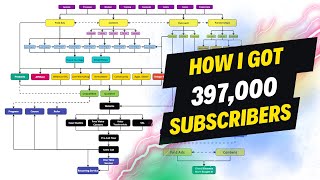
A B2B agency grew to 397,000 email subscribers in 11 months using Facebook ads and multiple lead magnets. The strategy relied on cheap leads (under $1 each), automated email sequences, and converting just 0.1% of subscribers into paying clients for significant revenue.
Chapters
Here's the story of how I grew my agency newsletter to over 397,000 active subscribers and how about 0.1% of these became full paying clients over the course of about 11 months. So in this, like I'm going to talk about my agency, how to do this with Facebook ads, and maybe even how you can copy a similar strategy for your own business and really get the benefit from it like I did. So let's go over some necessary background stuff. So I had an E Commerce landing page and CRO agency agency and I was targeting Shopify stores who are doing over a million dollars per year in revenue. My overall strategy was to kind of get them in the door, if you want to describe it that way, with $2,500 custom landing pages and then I would upsell them to $8,000 to $15,000 a month CRO, which is conversion rate optimization. About 8% of the people who bought a landing page eventually upsold into monthly CRO. So if you take you, you know, 397,000 times 0.1% conversion rate times 0.08, which is 8%. We'll go over the math later, but I'll show you exactly how much money this actually revenue this actually equaled for me. So 95% of this was through Facebook ads. Those 397k subscribers Facebook ads. I got some with content and other stuff too, but definitely negligible compared to, you know, Facebook ads. I had nine lead magnets covering different parts of my service and I would run paid ads to these. So I got it eventually as low as under $1 per subscriber in a USA based audience and even less than that for Australia, UK, Canada, New Zealand, those type of countries. So the overall strategy is different what I did. So a lot of people will do ads to book a call. My strategy was to just get them in my ecosystem, get them to learn about me for as cheap as possible and then convert them over time and you can copy this exact thing for your business. And I'm going to show you step by step on how to do that. So maybe you should watch the entire thing. The first step is always to make the lead magnets and make them good. It's very important. You want to make your lead magnets better for free than what people charge money for. Then I'll show you how to set up your landing pages, your email flows, your conversion mechanisms and your offers. And the final step is to create and run ads and try to get $1 cost per lead, which is really you know, $0.70 cost per click or less or 70% opt in rate or more is what you're going to need to do that at scale. And I'll show you exactly how I did that anyway and hopefully you can apply that to your business. So here are my lead magnets when I was doing this to make lead magnets you want to take your main service or your main offer and you break it down into the big subcategories or parts or objections and then you want to make a mast class type document that completely understands or completely explains, you know, what to do to the reader, why they should do it, how they should do it, everything you could possibly imagine taking them from beginner who knows nothing to an expert by the time they consume your lead magnet. That is my philosophy. And then you want to distribute these lead magnets, you know, as many people as possible, content, paid ads, etc. And that's this, that's the essence of lead gen and that's the essence of this strategy. So my categories were site speed, above the fold offers hero images, headlines, copywriting, analytics, AB testing psychology. I actually had 12 or 13, but these are the ones I chose for this video. I had stuff like, you know, general images example ab tester on, but whatever. So let's keep going. These are my lead magnets that I use to get the 397,000 people. So the rules of creating lead magnets, there's three there's value, actionable and readable. So let's go here. The question you really want to ask yourself when you're making these lead magnets, would I pay $50 for this? Even if it's free, would I pay $50? And if the answer is no, it's probably not good enough because the understanding, the logic behind it is that people can't read your mind. If you half ass the lead magnet and it's super basic, they're going to think you and your knowledge and your skills are basic. This is where almost everybody goes wrong when they say I'll just give them a taste or a little bit and then they'll hire me. It's not actually how it works in reality. You need to kind of intimidate them into buying from you because it's just so thorough and so good and so complex that you know, they view you as an expert and they view it that they couldn't do it themselves and they need you to help them. Like that is really what you want. So even though the lead magnets are free, we really need to make them so good that it's simply impossible for someone who reads them not to view us as an expert. They should be too good to fail, if that makes sense. The next part is actionable. So we want to intentionally make them so good. Like I said, they're intimidating and overwhelming. But we also want to have at least one section in the lead magnet that simplifies it. We want them to take our advice inside the lead magnet because if they, you know, we have a, you know, five part plan and they do steps one through five and they get some quick wins, they're going to think, wow, this really works. And they're more likely to hire us, not less. So we always want to make sure there's an exact step by step plan that they can implement within 24 hours to get a few quick wins. And then readable. Is there one idea and is there one image for every slide or headline? If there's no slides, it doesn't matter how valuable or readable the lead magnet is. If it's just a huge wall of endless text, no one is going to read that. And if they don't consume our lead magnet, it's basically like we have no lead magnet at all. All of our hard work and effort and dedication and time will be all for nothing that we put into these lead magnets, making them as good as possible. So the two ways to do maximum readability is one idea and one image per slide or headline. Very, very important. So let's keep going. Once we have our lead magnets here or we know what to do to distribute them, you know, this is really how it would go. They would click on an ad, they would, you know, be redirected to our landing page. They would see it, they would submit the form, and then they would receive an email with the lead magnet. It's not very complicated to generate leads. These are pretty much the four parts that would happen and a lot of people over complicate it. The specific details are very, very important. However, when we are making this, it's not just the lead magnet. It's just not. It's not just the ads, it's everything. It's how it works together. And we need to kind of go backwards. We need to have the lead magnet and then we make our email flows based on the lead magnet and then we make our form based on the lead magnet and then we make our landing page based on the lead magnet and then the ads, we can't make the ads first without the lead magnet. We got to go backwards. It's six Steps. And I'm going to go through each and every single one of these steps here. So step number one is to create the lead magnet. So following the rules, the value, the actionable, the readable rules, this is actually how what I do to make these videos, lead magnets, etc. So I use Gamma Docs and make the graphics in Miro board. What I'll do is, let's say I need 50 slides or something, or who knows, any number of slides. I will break it up into parts. First, make the headline for each slide, you know, before anything else. Then I'll go back and add the content for each slide until I'm done with the content. Then I will go back and add the graphics to each slide. So I use Gamma, I use Miro, and this is really what works for me. And it's fast, it's easy, it's efficient, and you get really good at doing this kind of stuff if you just practice for a while. The next step is to make our 60 minute email flows. So we have two separate email flows in this funnel. The email flows that send in the first 60 minutes after they sign up for a lead magnet versus email flows that sent, you know, send the first 30 days. So basically, you know, after the 60 second or 60 minutes ones are up, then we have a different one. There's four emails that we need to send to them within 60 minutes of signing up. And the goal is to get them to know and remember our offer. Four emails in 60 minutes might sound like a lot, but them not remembering who you are or what you do is 100 times worse than them unsubscribing, trust me. So we'd have our lead magnet email, which is basically delivered immediately. We'd have our email about the problems we solve after the first 20 minutes. So I provide landing pages that increase revenue per session. You know, that's the problem I solve. You know, email about why they need to solve the problem now and now is important. It's one thing to, you know, solve the problem, but why should they take action now? So after 40 minutes, you know, this will allow them to lower their paid ads CPA and you know, if they're profitable, if they're unprofitable right now, like this will save their business. If not, they're going to go bankrupt. Like that's really the essence of it. And then email about how we solve the problems. So it's one thing to say what problem you solve and why they need to do it, but if they don't believe how you can do it. Like that's a big problem, right? So after the 60 minutes, so you know, I did the top three parts of a great landing page. That is how I solve these are, is I focus everything on the site, speed getting the first contentful paint to, you know, load in less than two seconds, which is a benchmark that Google really wants you to go with. Design the above the fold because that, that's the first impression for the landing page and up to 70% of people don't even scroll down at all. So we really need to have all of the important information in the above the fold and then the offer. The it's a single highest leverage thing. If you have a great offer, the rest of the page really doesn't, you know, matter. And I make offers that both increase conversion rate and average order value. And that's how I solve these problems. Like this is. You want to get into it here. It's not like, you know, some generic stuff. So this is an example of, you know, my website back in the day. So step three is to create the 30 day email flow. This one's a bit different. So in the 60 minute one they know what you do and why they need to do it now and how you're going to do it when so many others failed. But now you want to send them an email every single day for 30 days. And each of these emails will be dedicated to either one frequently asked question or one objection. And you just keep overcoming these preemptively day by day for 30 days. And then hopefully by the time 30 days is complete, there will be no more objections left. So some of my examples, like I'm gonna read some of these, I might read most of them. You know, why do I need a landing page as a like I'm just not gonna differentiate from FAQ and objection. I'm just gonna read them off here. So why do I even need a landing page? Why would I hire you instead of someone else? I've tried landing pages before. They didn't work. What are some key components of a successful landing page? How do I ensure the page loads fast when you know other people's pages don't? How do I make a good offer? Is the design even important? What are some examples of pages you've done? Are there different types of landing pages? What are they? What type of landing page work best for my business? What are the best platforms to build a landing page for my Shopify store? Why would I pay you instead of $100 to someone on Fiverr? You know, $2,500, which is my price is way too much. How can I justify that? Do I have to write the copy myself? Do I give you instructions? What do I have to do? What assets do you need? Will the page be optimized for mobile? How will we even measure if this works or not? You know, will this be on our Brad guidelines and stuff? And I just listed 30 here. I think you probably get the point. But this is like literally what you'd make your emails about. So very important. The next step is to create the form. So I just have some important notes. Don't turn double opt in off. You don't want that. That's going to, you know, reject 30 to 50% of people make sure they get added to the email flows when they submit the form. Kind of obvious, but easy to forget, I guess. Make sure the form redirects on submission to your conversion mechanism page, which I'll go over later. Very important. And make sure the form asks for only email if you're doing for paid ads with this strategy. Because the more form fields you add, like let's say you asked for, you know, email or let's go name, email, phone number, you know, website, and then revenue. Every field you ask for like increases your cost per lead by 50% plus. So you could really 2, 3, 4, 5x your cost per lead with compounding by asking way too many form fields. So it'd be something like this, you know, this would be your headline, your sub headline, your logo and then your form field and then just, just the email, very, very important. And then you want it to automatically redirect when they submit. So they have their, you know, email here, they click the button and I'll erase that. And you want them to go to whatever your conversion mechanism page is. So there's webinars, there's live workshops, there's groups, there's paid products, there's all of these different ways. And the purpose of the conversion mechanism and is to determine who's qualified or not. So we do this in a couple of different ways, right? To join the group here, we might ask for their phone number, their site and their revenue, for example, and that would be added to the CRM. So even if you only get the email here, you can still get it when they join whatever conversion mechanism that you do. It's a very important step. It's very important to help you determine who's qualified and who's not. And without this, you don't have a way to basically collect the information you didn't get here. So it's a very good opportunity to do that. Step five is create the lead magnets. First of all, they have to be good. Like I said before, the thing you want to burn into your mind is people can't read your mind. If your lead magnet's basic, they're going to think you're basic and they're not going to hire you. Follow the 50% or $50 rule in depth. Too good to fail buzzwords here. Remember them. You need to have 6 to 12 lead magnets to address and overcome all of the different parts. And they need to be the correct parts or steps. If you misidentify the 6 to 12 parts or steps, you know, not only are you going to waste your time making the wrong lead magnet, but that objection that you didn't make because you misidentified it, you know, that's gonna still exist. So whatever service you offer there, it's gonna be problems. So if we did, let's take it from my landing page agency, because I talked about that earlier, but what about a YouTube agency? What are the problems? You know, production value, how do I set up my lights, camera, microphone, how do I make titles, how do I make thumbnails? How do I come up with ideas or scripts or even set up my channel? These are all, you know, objections, parts, steps, subcategories of success with YouTube. And it's very hard to someone who's not a professional YouTuber, you as the expert, you know how to solve all these problems. That's why you're in business to begin with. You know, you need to make a lead magnet to solve all of these. So this is what it would look like. You solved every single one. You're just slinging lead magnets left and right. And then it just becomes very natural. You know, you've solved all their problems. You're obviously an expert. Just becomes very natural for them to say, well, I might as well hire that guy or girl. If you only make one lead magnet, you'll solve one of these problems, but the other problems don't get solved. And you'll end up with a situation kind of like this, where in this case, you've helped them with their camera and their lighting, but all of these other problems still exist. And they're not happy with you. They're not grateful. They don't even remember you. And the fact that you, you know, solve their camera, lighting, and microphone problem, they're wondering who can help them with this. Different lead magnets also gives us more chance to Generate leads. Very, very important to have all of these or you're going to end up in a situation like this where you know they downloaded your lead magnet but they're not satisfied. Now they're asking someone else who can help them. It's very, very real. Very, very important to understand this. The next step is to create the ads. So one of the most important things is your ads should appeal to your target audience, but only to your target audience. You want to make them specific and pointed and you don't want random people downloading your lead magnet because that's going to clog up your email list of people who will never buy as well as your pixel data. Right? Every lead, every subscriber you get, you know your pixel data is going to reflect that. Okay, unsubscribe or unqualified person number one just signed up. They might want this. I'm going to find more people like this person who is unqualified. So your ads really need to be pointed towards your target audience. You want to test messaging like crazy before you worry about design. When you first start out, you're guessing and there's no way about it. You have no history or data to fall back on. Test tons of different messaging and angles before investing time and money in good looking ads, so to speak. The headline is always going to be about 80% of the effectiveness of the ad. And if you're testing, test the headlines the most often. There's three ad formats that I use that are easiest when getting started. They don't require a designer. You can make them in a minute or less. And they're the Note app, the Note app ads, the sticky note ads, and the video with text overlay ads. So here are some examples from when I was doing this with my landing page agency. You know, do you want to build a landing page that converts at 4% plus you need this free landing page. Masterclass doesn't say landing page but free masterclass. Build and optimize above the fold. If they're, if they don't want to build a landing page that converts at 4%, they wouldn't buy this, right? Going back to my point of you only want it to make your be attractive to your target audience. This is clearly kind of for e commerce because you know 4% will be a terrible lead gen conversion rate. So you know, they'd probably be disgusted if they read Legion and they heard that. Build and optimize above the fold. Make your page load faster, create a no brainer offer and then 17 different psychology hacks download it now. It's 100% free. And I have this emoji here because the button is like right there in the actual feed. Here's a sticky note. One, build a landing page that converts at 4% with this free masterclass, the kind of the same bullet points. And then we'll just pretend that this is a video. But because embedding a video, it won't play on mural board. But we'll pretend this is a video. This is just like seven second stock background footage. Want to lower your cost per acquisition with Facebook ads? Build a landing page that converts at 4% with these free or with this free masterclass. These are real examples of real ads that I ran that spent hundreds of thousands of dollars on. So it's not just, you know, theory. I know for a fact these ads work. So next we want to create our campaign. So at this point we've created the lead magnet, the email flows, the all of the other stuff, the ads, the landing page, that kind of stuff. Now we're really getting into Facebook here, setting up the campaign. We want to use broad targeting, no interests. And the reason you don't want to use interests is let's say your interest was ford trucks, for example, 33% of people who are tagged with that will like Ford trucks. 30%, 33% will hate Ford trucks. They're just tagged that way because they're talking crap about ford trucks. And 33% of people might have been mistake. They liked a meme or something or said the word Ford and they're talking about Henry Ford or something and they just got mistagged. So basically, rely on the Facebook ad algorithm, they're going to know who's best for you. Don't interfere. Using interests is interfering and getting in the way int interests int interfere. That's how you should think of it. We want to focus on the creative. The creative will, if done right, call out the audience that we want it to. So we don't need to target it because of that. And we want to let the pixel learn and optimize. You know, if Matt here, if I'm interested in the landing page masterclass, I download it. It's going to find other profiles that have the same interest, age, location, all that kind of stuff that are similar to me. That's essentially how it works. And the more data, the more leads, the bigger sample size that you feed your pixel, the better it will be able to narrow down exactly who is going to become a client. So this is an example of what you might have where you have ad campaigns for every single one of your lead magnets. This is not from back in the day. This is when I just made a preparation from this video. But these are the thousand x leads, lead magnets. So it's just an example there because I don't have one from back in the day. So you want to do three things. Let's go with the actual creative. We want to make the habit of creating one new ad per day. Use the sticky note, use the notepad app. Use the video overlay when you're first starting. Don't need a designer. Those work just fine. And they're simple and take one minute to make. Have a mix of different photo and videos because each have different placements in the Instagram and Facebook feed. I know it probably all looks the same when you're scrolling, but they have different, you know, different ads go in different spots and that's just how it is. So you want to have a bit of both for the ad copy. Keep it simple. The ad creative is far more important. We want to call out the target audience in the first line and we want to keep it short as possible because if we. There's going to be a spot, if you ever looked at a Facebook or Instagram ad where it says read more or see more, we want our main message to be short enough where you can see the whole thing without having to click that. And then the headline will only show on Facebook most of the time. There's certain situations where it shows elsewhere. Make it very simple. Just literally what the lead magnet is. And the creative and the ad copy are far more important than this. This is like in order of importance here. So this is where you know something where you'd upload your, you know, whatever it is you have your creative. This is like where you'd do your ad copy. So like my first line, want to scale Your agency? Get 12 free trainings better than most courses you paid thousand dollars for. And see, I just did exactly what I told you not to do. See how it's cut off here with Seymour? It should say 100% free, but it's cut off. So I just did what I told you not to do. How hilarious is that? And then your headline, right? And it's only going to show. You see, it doesn't show here. It doesn't even show here. So it's the least important. But it's really good to like gem your headline with your keyword because that helps Facebook's algorithm target, you know, agencies as a keyword for Example, that's going to be a good data point. So let's go to the math and the goals. So the goal is to get people into the funnel for as cheap as possible and aim for a dollar or less. With USA audiences. With Canada, uk, Australia, you know, some place in Europe you get cheaper. But USA is the benchmark. To basically get this, you have to get a 70 cent cost per click or less and a 70% opt in rate or more. It's just pure arithmetic. If you don't get this, you're not going to get $1. And that's just how it is. So I achieved every single one of these in this process at scale, which is $2,500 per day. I had a landing page that converted at over 70%. Even though I was spending a lot. I had ads good enough that they got 670 cents or less per click. So what I did was I got over 397,000 subscribers this way, about 0.25%. So about 1 in 400 would book a call. I would close about 40% of these. So that implies, you know, 300 or 0.25 times 0.4 is 0.1. Right. So I had a 0.1% total conversion rate times 397,000 subscribers. So I got about 397 clients from this ad funnel. There is a couple of content subscribers in there too, I'm sure. But if you take my average order value on my landing pages at this time during this period, 397 clients times $3,300. AOV is 1.3 million in revenue and I had about a 70% margin. So this was about $917,000 in gross profit. And this took me, you know, 397,000 times $1 cost per lead, about 400K to grow the list. I had about $517,000 profit from the landing pages, from the strategy. And then you could kind of go further to this. And if you say, you know, 397 clients times, you know, 8% upsold into CRO, you would get my CRO clients times whatever the value is. But this was, I didn't want to include that because this is just the front end funnel and this is literally how it works and how you can do it for yourself. And this is how I got 397,000 subscribers and ultimately what revenue and profit that it led to. So I hope this video was valuable and I'll see you in the next one.
More from Matthew







Everything I Would Change About This Ecom Email Marketing Agency (3 HOUR LIVE AUDIT)

Everything I Would Change About This Meta Ads Training Business (3 HOUR LIVE AUDIT)


