How to Build an 8 Figure Business in 25 Minutes
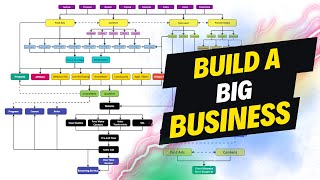
A concise, pragmatic framework for scaling a services business to eight figures by maximizing four types of leverage (media, capital, labor, code) and building a full funnel ecosystem. Key ideas: drive awareness with four traffic sources (paid ads, content, outreach, partnerships); use multiple ad funnels (webinar, newsletter, group, paid product) and aim to break even on ad spend within 14 days; produce high-frequency, platform-tailored content and graphics to provide media leverage; scale outreach via cold email with strong lists, offers and short scripts (target cold-email promise land: ~5,000 emails/day and ~500:1 email→lead ratio); form partnerships to access other organizations’ labor and audiences; create 6–12 high-value lead magnets and thorough email flows to answer objections; provide multiple conversion mechanisms to qualify leads automatically; monetize unqualified traffic with low-cost products, affiliates and referrals; use profitable one-time offers to pay acquisition costs and convert into high-margin recurring services. Practical targets and tactics are emphasized throughout (content cadence, metrics, offer price ranges, email volume, funnel counts).
Chapters
This will be a video going over everything you need to build an eight figure business in undetermined number of minutes. I'll fill that in later. So this video is meant to be a simple overview about the things that you need to grow a business to eight figures without getting too far down the rabbit hole on any of them. This will all be a quick bird's eye view and it's not meant to be super in depth or long. I make those videos in the past. I'm going to be making a lot more of those videos in the future. But my goal with this particular video is that you'll come back and reference this while building your business. This document will be linked in the description. You could also get my 12 free trainings as well. So the first thing that we need to know and understand that to build a big business, we need to incorporate as much leverage as possible. So there are four types of leverage. And shout out to Ravel Navi Khan for this that you need to incorporate media leverage, capital leverage, labor leverage and code leverage. And I'll get into each of these things briefly. The more leverage we can implement, the bigger the company will grow. Without leverage, we will never break through a certain point. So let's get into the top of funnel. The top of funnel is where we drive traffic with paid ads, content, outreach and partnerships. Problem number one of the four main problems that businesses face is people don't know who they are. This is by far the number one problem because it precedes all of the other problems. Not enough people know who you are or people don't know who you are. In general, you don't promote yourself, you don't get any attention. If there's one big business problem, this is it. And if they don't know from you, they cannot buy from you. It's really that simple. What you need to do to overcome this problem is have these four different sources of traffic. The paid ads, the content, the outreach, the partnerships. If you have all of these running, people are going to know who you are. You. It's really as simple as that. But most people just don't do it. All four of these things work together and we need to have all four of these to build a big company because each of them make the other ones more effective. Most people will tell you just focus on one and just master one thing. That might be fine if you want a little company, but if you want a big one, you need to do them all. An example of how they all work together, if someone follows you, watches your YouTube videos has seen your ads, they're much more likely to respond to your cold email as opposed to if they've never heard heard from you before. There's infinite possibilities with how these four things work together, but that's just one of them before we move on. Paid ads. Paid ads are at the top of the funnel circled here. Paid ads are so important because they implement capital leverage in your business. So capital leverage is when you make money work for you. If you're able to spend $1 on paid ads and you get $2 or more in revenue in return, that is an example of incorporating capital leverage into your business. You'll not build a big business without incorporating all four types, including capital. And this is no excep. There's four types of ad funnels that really matter. The webinar funnel, which is when you have a specific training or a case study or a presentation that you show them to convince them to buy from you. This is the process they go through. A newsletter funnel, which is great when you have a very high priced service with a long sales cycle or you sell a service that's only needed in an emergency like a, you know, business or no, personal injury lawyer, you know, emergency plumber, that kind of stuff. A group funnel is when you sell a service, they need to get some information and see some results for themselves before they fully trust you. And that's a group funnel. So let's say you're a sales trainer and they just don't really know if you're full of shit or not. You interact with them, you give them some feedback, you tell them to do X, Y and Z for free in the group. They do it. It works, you know, you're golden. The paid product funnel is one of the best for beginners because it's a lot more like selling a e commerce product than you know, the other funnels, the other ones have a lot more nuance and you know, technical stuff where paid product. If you sell a paid product for $50 and it costs you 25 in ads, you know, that's pretty good, right? It's very easy to understand these types of funnels. The webinar, the newsletter, the group and the paid product funnel also work together just like the four top of funnel traffic sources. So if someone has watched your webinar, for example, and they're active in your group, they'd be much more likely to buy your paid products than someone who is not. You'll always have your most dominant or main or most important of these funnels. But over Time, you should probably add all of them because each build more and more and more capital leverage. The paid ad promised land, and there's going to be a promised land section for each of these things is the absolute ideal situation, is that you get one or more funnels that break even on ad spend in the first 14 days or less. This will allow you to recover your ad spend quickly, which will allow you to scale with confidence. If you know for a fact that when you run an ad and you're going to get your money back in 14 days or less, there's essentially no risk to just spending more and more money, growing larger and larger, and by definition incorporating more and more capital leverage into your business. For example, if you spent $10,000 a day and got $20,000 back, that's better than spending $100 a day and getting $200 back. That's, you know, almost $10,000 more. And this is, this is the ideal situation. Next is content, and this is right here in the funnel. Content is so important because it's media leverage. And because it appears at every point in the funnel, you have your content driving traffic in the top of funnel. Content is also a very good tool to convert people who already know about you into clients. Let's say they come in at paid ads, they download a lead magnet, they read your flows, and all of a sudden they find your YouTube channel and binge watch 10 videos and then convert. It's an example of it right there. And then they are also good. Your content's also very important because it helps you retain clients. When clients see you're grinding out the content, they consume it. They become more bought in to you and your company and your service. They're less likely to give you attitude, more likely to follow your advice, less likely to be annoying, and less likely to churn. So content's so important because this media leverage happens at every single stage in the funnel and the process. If you create a piece of content which is media, like this YouTube video you're watching right now, and it gets thousands of views, that is media leverage. You are creating it once and more than one person will see it. You're getting out way more than you put in. If this video got 5,000 views, for example, it's not like I had to hop on a zoom call with every single one of the 5,000 people that watched it and essentially, you know, give them this presentation one by one. I made it once, and more people will see it. And that's why media is a form of leverage. And you'll need to use it to build a big company. You can and should post the same things on Twitter, LinkedIn, Instagram, etc. Because different types of people tend to gravitate to those different platforms and it's not necessary to make original content for each. You can use a tool like hypefury, rate your Twitter posts and then cross post it to the other platforms. You want to make two threads per week, which are long form for Twitter. And then when you cross post these to LinkedIn and Instagram, they will show up as carousels, which are the most popular forms of content on those platforms. So number one, you want to focus on the hook, get people to stop scrolling and read it, provide actual good value. Would you pay $5 to read this? Provide actionable advice. Can they implement this within 24 hours? And then make it very readable and focus on good, clear writing. In addition to this, make two graphics per week for all these platforms. So create them in Miro board or another platform. And the goal is to take complex concepts that have to do with your service and simplify them to a vis. So the ability to do this effectively and quickly opens up 100 times more possibilities with your content and therefore media leverage. So try explaining the 1000x leads funnel without a graphic. And I tried to do this for a few weeks before I made this. It's not very easy, almost impossible. And that's why we need to take the ability to basically condense what's in our mind into a graphic that can be understood by anyone. You want to have five FAQ tweets per day, so think of these as addressing common FAQs or objections. You want to keep posting these on Twitter, LinkedIn, Instagram, Facebook until there's no more objections left. That's the goal with these. One YouTube per day, like a video like the one you're watching, with dry, you know, technical content with no editing or all that superficial stuff. Even if these don't get a lot of views, they're crucial to convert people. The content promised land is that you have content on Twitter, LinkedIn, Instagram, that gets a lot of views and helps you capture emails with your lead magnets. Then you have a bunch of highly technical, really good YouTube videos that people will eventually find that help prove you know what you're doing so they feel comfortable paying you. Next is the outreach part. So this is right here in the funnel and outreach is a form of code leverage. If you're doing it right, you can scrape tens of thousands of email address and contacts per hour and send out thousands of emails per day automatically with software. A few years ago, if you wanted to send 5,000 emails per day, you'd have to hire 10 to 20 employees to find the email addresses, send the emails and reply. Now you can do this with one to two people. This is a form of leverage. You're getting out a lot more than you're putting in. Cold email is going to be the most scalable form of outreach for you. You can send far more cold emails and you can do cold calls and you can do far more volume to the point where you know as a percentage, cold calls might be more effective, but you're just sending so many more cold emails that it just negates. That just becomes the best thing to do. The three most important parts of success with cold email are the list, the offer, and the script. And if any of these things are not good, cold email will not be very effective. The list is very important because if you're not sending the emails to your target audience, obviously it's not going to work out very well. Typically you want to use the following, you know, filters, job title, you want to target the right person, location, which means country, city, state, whatever number of employees. And if relevant, like if you're targeting shopify stores, technology is used, you can export a very accurate list with these combination. The biggest leverage point of outreach, or really in any part of the business, is going to be the offer. The more and better you can offer them in a cold email and actually deliver, the more responses you will get and the more people will get on a call with you when you're doing cold email. The best cold emailers lead with value. They give before they take. If you're just blasting people long walls of text asking them to get on a call, it will not work out very well. And finally, the script. The script should be short and to the point. If you nail the list and you nail the offer, the script becomes more about not screwing it up than it does making it amazing. 75 words or less. Focus on a call to action that provides value. Don't do fake personalization and make them make it about them, not you. They never asked to be emailed. They don't give a shit about you. They care about them. Focus on them in the script. The two most important metrics for cold email are time to response, which is how long it takes you to reply to people who are interested, and your email to lead or call ratio. You can kind of prefer choose which one you prefer. For example, If I send 500 emails to get a lead or a thousand emails to get a call. That's the ratio. Every other possible metric is a waste of time and you should be optimizing for these two. The Cold Email Promise Land is one where you're sending at least 5,000 cold emails per day, Monday to Friday, and getting an email to lead ratio of 500 to 1 or better. If you had a 500 to 1 ratio here, you'd be generating at least 10 leads per day at this volume. Not all calls, but leads for sure. This will allow you to scale linearly in a very predictable fashion, which is kind of the opposite of content and ads. In a way, this will give you much needed stability in terms of client acquisition as you grow. So very nice as you if you want to. If your target audience is big enough, you can send way more than 5,000 cold emails. Partnerships. This is right here in the funnel on the very right. And partnerships are so powerful because they utilize labor leverage. So think about it. If you have 100 partners, for example, you're benefiting from the resources, time and labor of 100 businesses in addition to your own. You're getting out a lot more than you put in. You should always be reaching out to people who need your services, who are not your clients, but they are people who serve your clients. So for example, if I was doing landing pages for E commerce brands, who else needs them? The paid ad agencies that serve E commerce brands. You can make partnerships with these people and they can start feeding you business. In similar fashion, you should also be reaching out to the people who have the attention of your target audience. You know, youtubers, podcasters, newsletters, blogs, speaking at events, you know, that kind of stuff. You can essentially leverage their audience for your own purposes. In addition to, or instead of building an audience for yourself, it can be really, really strong. And joint ventures. You can also brainstorm and seek out partners who will create joint ventures with you. And together you can create something that is better than either of you would be able to create on your own. You'll benefit from their marketing clientele, resources and they'll benefit from yours. You can get a lot more done by working together and combining your efforts. The partnership promise land is you'd have 100 plus partners feeding you leads business in a predictable way as well as a predictable way to get more partnerships and treat your partnership acquisition as seriously as you treat your client acquisition in the middle of the funnel. We have a few problems. Number one, or the second problem of the big four is you don't have enough leads. So the second problem, you know, it's one thing to solve the first problem to do paid ads, to do content, to do outreach, to do partnerships. That's great. That's going to solve problem number one of no one knows who you are, but that doesn't necessarily mean, you know, these people who now know who you are will become leads. They're connected, but they're still two separate problems. If you solve problem number one and problem number two, you're kind of by default going to be solving problem number three, which is all of your clients come from referrals. If you are getting attention and capturing leads, you're kind of, you know, not all of your clients are going to be coming from referrals anymore. You're kind of solving this. So that's a very, very, you know, important thing to realize. So the middle of the funnel is here. It encapsulates our lead magnets, our thank you page, and our email flows. We need to have a lead magnet for every problem. That is how we're going to capture leads. We want to take the top 6 to 12 problems or steps within our service and make basically free masterclasses for each. These lead magnets should be better for free than courses that cost thousands of dollars. That is how you succeed in capturing and nurturing leads. Email flows should be there with the primary goal of answering every single possible FAQ or objection. If your email flows do Nothing but answer FAQs, that's going to be good enough. Write out 10 to 50 FAQs or objections that you hear frequently on sales calls or you know, from experience or whatever and make a 10 to 50 part email flow and answer one objection every single day. You want to make these emails a bit bare bones so people, you know, focus on what you need to focus on, which is the objection and how you're going to overcome it. And if you just format them the proper way, you'll do very well with this. You'll also want a thank you page to push them down funnel. So when anyone submits any form, they should be redirected to a thank you page. This thank you page should have a VSL or something that shows your face and voice, whatever. Then it should also promote one of the following conversion mechanisms which we'll get to in a second. Your webinar, your live workshops, your paid product, your group, your content, your unique mechanism or whatever. You push people further down the funnel by getting them to sign up for any of of these. The middle of the funnel promise land is you have 6 to 12 lead magnets that are 10 times better than most courses that cost a bunch of money. And you have a full email flow that does a perfect job of answering every single possible objection or reason someone has not to buy. When they sign up for a lead magnet, they'll be automatically added to this flow and they'll automatically be redirected to a thank you page, which promotes your most important conversion mechanism. Let's get to the bottom of the funnel. Now, this is the bottom of the funnel, and these are your conversion mechanisms. When we're doing all of this, we are doing the four main traffic sources. We are capturing all these leads. We're going to have way too many leads. So we need to automatically qualify these leads at scale and sort out and filter who could potentially become a client versus not. So if we want to build a big company, we're going to need to do this automatically. There's going to be too many leads to do this manually. So we have eight different conversion mechanisms. These eight are, you know, different opportunities to qualify leads at scale, and you want to have all of them because different things appeal to different people. We have our paid product, our webinar, our live workshop, our newsletter, our group, our appointment center, our content content, our unique mechanisms, like each one of these things will apply or be appealing to a different person or a different type of person. And if we only have one, we're going to miss out on a certain percentage of the market. The goal is to get them in every single one of these conversion mechanisms. We want to think of our entire business and funnel as an ecosystem. We want to get people to interact and take advantage of our paid products, our webinar, our group, all of the above. Because the more they do so, the likelier they will be to get a client. We can use these conversion mechanisms to qualify our leads and sort out whose might buy versus who might not buy in two different ways. To sign up for the conversion mechanism, let's say they want to sign up for your webinar. They must give you their name, email, phone number, website, revenue, etc. So you have all this information to make a decision if they're qualified or not. In addition to that, if your webinar, for example, really resonates with them, they can essentially qualify themselves by booking a call with you. Without these conversion mechanisms, you simply wouldn't have the information you need to qualify them. And they wouldn't be pushed far enough down the funnel to, you know, qualify themselves. They would just be stuck in the Middle of the funnel there, the bottom of the funnel. Promised land is when you have all of those conversion mechanisms set up and they're all good. The content for each should be unique and not the same. So there's a reason to sign up for all of them. For example, you wouldn't want your newsletter and your group content to be the same every day because then there's not a reason to sign up for both. And let's go to the website. The website is here in the funnel, so if they're qualified, they're going to go to the website. You want to have a video sales letter on your website to explain what you do and to show them your face and voice. That builds a lot of trust. That is it. No one is going to buy based off this vsl. But they need to know what your offer is and what you look like and sound like to trust you enough to move forward down the funnel. Case studies are important not because anyone is actually going to look at them. It's a lot like having a passport when you travel. They're important because of what they imply. When you're going through customs, when traveling to another country, no one is doing a complete background check on you. They see your passport as proof of that, that you are who you say you are, you're not a criminal, et cetera. Case studies are the exact same thing for business. They're like mini background checks. Video testimonials are similar to case studies. Almost no one is actually going to watch them, but the fact that they exist implies that you've gotten results for others to the point where they're willing to get on camera and give you a testimonial. And that is very, very important. Finally, you want to have some free video content and it's an awesome idea to essentially make video trainings of all of your lead magnets and embed them on the homepage of your website. This will separate you from competitors. You with 10 plus hours of free video content, showing your face, voice and ideas with your competitors. With none of that, the website promised land is you have a ton of, you know, logos, case studies, Testimonials, at least 12 videos of free content and have a great VSO. Well, let's go to offers now. Problem number four is 99% of leads that you generate with content. Cold email, paid ads, all of the above are going to be unqualified and there's nothing that you can do about that. The problem becomes with you don't have anything to offer these people. You're essentially wasting 99% of your target market because of your lack of offers. So you need to have something to offer everyone. If you're not monetizing 99% of your audience, which is unqualified, that's like having $101 bills and lighting 99% of them on fire, just because that's the exact same thing. So this is going to be in two parts, unqualified and qualified. So these are the offers that we want to sell to our unqualified leads. If we determine through our conversion mechanisms they're not a good fit, we want to refer them away, sell them a course, a program, you know, get them to use our affiliate links, or sell them our products. So paid products should be between 10 and $100. And ideally we want to have about four of these that are all great quality. The best way to think of these and create them is if the lead magnet tells them what to do. The paid product makes it faster. So if a lead magnet taught them how to make a great ad, the paid product is editable. Ad templates. We want to have affiliate links and be stuffing them in all of our lead magnets in emails. So if they click on it, we can build up a lot of monthly recurring revenue very passively. Even if they don't buy from us, we'll still be getting commission for probably at least 12 months based on what tools they use. Referral fees. You want to have partnerships with people bigger and smaller than you. If someone can't afford you, refer them to the smaller partner and collect a fee. If they're too big for you to handle, which does happen, refer them to the bigger partner and collect a fee. You want to also have these type of relationships with people who provide other services to the same clients. So if you were an ad agency, you should have these relationships with the landing page agency and email agency, as those are both things that can affect ad performance. There always be a percentage of the market who wants to learn to do it themselves. And if you don't have a course, you're missing out on these people. In addition, there's always going to be, you know, competitor type people in your funnel and ecosystem. If you do landing pages, there's always going to be people who also do landing pages to sign up for. You know your stuff. And if you don't mind educating them and creating competition for yourself, maybe you do, maybe you don't. If you don't, you can sell them a course. If you do, don't. This will always make up about 15 to 25% of your target market and funnel. There's always going to be a percentage of people in addition to this who want to do it themselves but want you to teach them so they can do it either themselves or you. Teach them to do their team in house. This provides a great opportunity for you to teach them and act as a coach or consultant. This group will usually between be between 5 to 10% of your overall market. The absolute ideal situation for your unqualified leads is you have all of those offers and part of your funnel. And when you determine someone is not qualified, it should automatically trigger email flows and appointments that are seen sequences to try to get them to take advantage of those offers. Now for those who are qualified productized services, this is right here at the very bottom of the funnel. Our one time and our recurring service. The strategy is that if you have a high priced recurring service that's like 7k or 10k or 20k a month or whatever, it can be very difficult to sell that to people when it's their first time working with you. And that's just inevitable. Although it can be done, it's usually better to get them in the door with a low priced one time offer, do a great job for them, earn their trust and that will make it a lot easier to sell this high priced offer in the future. So the goal and mindset you should use to create your one time service is to both earn their trust and pay every single one of your bills. So the profit from this one time service should be a minimum of 2,500. This hopefully will cover your customer acquisition costs, the labor, the cost of non revenue producing roles such as HR, finance, etc. Even if you don't have them yet. It's good to plan for the future because you can't build an eight figure company without that stuff, taxes and other miscellaneous costs such as software. If you can do this, your one time service pays the bills for your entire business. Then your recurring service becomes the main profit center. When you have the rest of this in place, your recurring service, which is likely what you're already doing, becomes way, way way more profitable. Which means you can reinvest in growth and get more clients. The ideal situation is that you have both one time and recurring service focused on a specific niche and you don't deviate from this. All of your systems become tailored around these two services and so does your marketing and you become the go to person for these. Your one time service should be profitable enough to cover all the costs. So your main recurring service becomes over 50% profit at a minimum. And that's the end of this video. That's everything you need to know. I hope you enjoyed it. And I'll see you in the next one.
More from Matthew







Everything I Would Change About This Ecom Email Marketing Agency (3 HOUR LIVE AUDIT)

Everything I Would Change About This Meta Ads Training Business (3 HOUR LIVE AUDIT)


