How to Build Up & Sell Your Business in 2024 (Free Course)
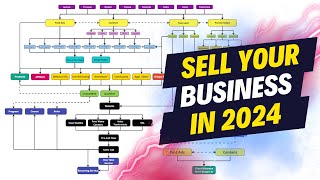
Live 45–60 minute workshop by Matthew Larson (founder, 1000x Leads) on how to build a B2B/agency business so it becomes sellable and valuable. He outlines five parts: the sellable-business mindset (reduce buyer risk, diversify revenue), four customer-acquisition channels (paid ads, content, outreach, partnerships), multiple revenue streams (low-ticket products, courses, affiliate/referral partnerships, intro offers), four types of leverage (media, capital, labor, code), and common exit mistakes—especially earn-out structures and valuing cash upfront. The talk uses concrete examples from his prior agency (0→$900k/month peak) including ad spend, cold-email volume, newsletter size, partnerships, and exit terms to illustrate each point.
Chapters
Hello and welcome to all 117 of you, it looks like. So this is going to be a live workshop about how to build up and sell your business in 2024 or 2025 or 2026. That part doesn't really matter too much because the principles and the fundamentals are going to stay the exact same. So even if you are basically just starting your business or whether you are kind of in the middle of it or if you have a big business, this is going to apply to you because this is what you should be shooting for in my head. So today we're going to focus on how to set up the business to make it easy to sell one day. You don't build wealth through having a hike, through making 50k or 100k or 200k a month. You get taxed, you spend it, you do all kinds of stuff with it. You really built a lot of personal wealth by creating a business that has equity and selling it. This is in my view a fact of life that a lot of people get wrong. 99% of businesses aren't set up or functioning in a way that is sellable. So for most people, even if they have a successful agency or they have a successful B2B business, it really is nothing more than a high paying job. My name is Matthew Larson and I'm the founder of 1000x leads and a little bit about me before we really dive into it. I'm from Calgary, Canada. I've been in the marketing agency space for 12 years. At this point almost 13. And what I'm going to show you is going to apply to any agency or B2B business in any country. In English. Don't let yourself living beliefs get in the way. This will work for you if you apply. I sold three agencies before, including one last year that was 900k per month in revenue. So this live workshop is coming from experience, not what I read in a book somewhere. And I've never been screwed on an exit like many people I know because I knew a lot of this stuff ahead of time. So the goal of this live workshop here, and it's going to last between 45 to 60 minutes, there's three primary goals. Make you understand what makes a business valuable and sellable. Give you a list of goals or objectives to achieve to make your business valuable and act as a warning in terms of what not to do and what to watch out for. And if I can do all those three things, I think it'll be a pretty successful 45 to 60 minutes. There's going to be five parts in here. Number one is the mindset that you need to take with building your business. Number two is different ways to acquire customers. Number three is different revenue streams. Number four is leverage. And number five is, like I said before, what to watch out for, mistakes to avoid type of thing. So this slide workshop can make you a ton of money one day and save you some very, very costly mistakes. A lot of my friends and people that I know, one thing before we get started, that this is a live video, live workshop. It's not pre recorded or scripted or edited. So it's the raw truth. It's not, you know, it's meant to be more like a classroom type or presentation type and less like a Hollywood movie script. Like a lot of these videos you see where they're meticulously planned out for hundreds of hours before it ends. So in a few moments, I'm going to switch over to Miro board, which is what I'm going to be using for the rest of this live workshop. I have a few notes and a few bullet points, but that's going to be about it. So let's get started. I'm going to share my entire screen here. I'm going to get over to Miro report, so hopefully you can see this. All right. You should see it. All right. But there's five parts here. So we have our mindset, we have our different ways to acquire customers, we have our different revenue streams, our leverage and our mistakes to avoid. So inside a thousand X liens or anything like this is the marketing funnel that you should be building. And this marketing funnel, if you had all of this stuff I have on the screen, would make your business sellable and very valuable. And I'm going to go over that a few times. The second thing is leverage. I'll be going that over that in part number four, who knows how long each part is going to last, to be honest, but leverage is going to be very important. So let's get started right at part number one, which is the mindset. So it's very important to understand that the same things that make it valuable to a buyer are the same things that make it valuable to you as the owner. That's why they would want to buy it. If it wasn't valuable, why would they buy it in the first place? So these things are obviously revenue, profit, acquiring clients, generating leads, having different offers, all of that kind of stuff. So the key here, if you're watching this, is to think of it. The number one thing that makes it valuable or the opposite makes it not valuable is that it has very little risk. So what does that mean? Types of risk that's involved with a B2B business, a marketing agency type thing. So for example, if all of your clients came from referrals, that is very risky for a potential buyer. If people are referring to you personally, they buy your company and eventually they buy your company, you're going to leave. Are they ever going to get any more clients? Again, very, very risky. That's why even if your business is being built on referrals and it's growing and that's great, referrals indicate that you're doing a good job. Still very risky in terms of building equity and trying to get rich. Very, very risky. Another thing that is pretty risky too, but not as risky as referrals is. Let's say you hear a lot of these guys who talk about all they talk about they like a broken record is building a personal brand. Very good way to acquire clients a little bit separate from referrals. I'm not saying it's not a great way to acquire clients, but if it's the only way that you acquire clients, your business is not sellable. You know, all of the client acquisition is built based on you, just like the referrals. So I'm not saying don't do this, it's one of the best things you can do. But I'm saying don't only do this. So let's go back to our mindset thing. So what do we want here? The first thing we want is more than one way to acquire clients. Do not rely solely on referrals and personal brand. What's the second? Let's go back to our derive. The second way is a lot of people, 99%. Let's say their only way they make money in their business is their recurring service or whatever, their main services. So that is the situation for most and that makes sense, right? Like your main service is why you are in business. It's what you sell, all that kind of stuff. However, this comes with risk. You know, if you have, let's just say 10 clients and they're all $10,000 a month, just make super round, that's a hundred thousand dollars per month. If it's a hundred thousand dollars per month and that's 1.2 million per year. If at 30% profit margin, that's 400k per year, let's just say that's true. For a sec it's 360k. But let's say there's $400,000 profit per year and a 3x multiple, that's $1.2 million is what that business may be worth. If we just two clients churn at any given point, our revenue is going from $100,000 per month to $80,000 per month. 20% of our money is gone. And this is bad for us, but it's also bad for the buyer because the number one rule of business is every client churns eventually. You hear these people say, well, my clients stay for five years. I'd probably say that's not true. But even if it was, it's everybody always churns eventually. So what we can do to eliminate a lot of this risk or reduce it as much as possible is to have different offers for different levels or different revenues of, of our overall market. The fact of the matter is, when we're doing legion, like basically 99% of all of the leads we generate are going to be unqualified to afford this main recurring service. And that's just the situation for 99% of businesses. So we can kill two birds of one stone. We can make a lot more money and profit, but we can also reduce the risk by having a bunch of different offers like our low ticket digital products, $10 to $100 range. We can stuff our lead magnets and email flows with affiliate links. We can form referral partnerships with other agencies. Let's say someone comes to us and they need it, but they just can't afford it. We can refer it to someone cheaper and collect the fee. Or if we had a Facebook ad agency, for example, we could refer them to other services like Google Ads or SEO or email marketing or whatever. Or we could have a course for people who want to learn to do it themselves, which is always going to be 10 to 15% of the market or a program. So that way when we essentially, our main recurring service only becomes a small part or not a small part, but only becomes 50% of our revenue. For example, instead of 100% now, we're doing twice as much revenue because we have all this other stuff from the example before where it was 1.2 million a year, we can call that 2.4 now. And if two clients leave, that's going to be 240k per year. That's less than 10% now, instead of over 20% of our profit. So it will lead to a much more resilient, much more stable business. So we'll write that down here. More than one revenue stream. Way to monetize the Target market and in brackets will click beyond just the typical me service. And then there's going to be one more thing. And I don't need to go back to the drawing there is, but I will. And that is your total revenue, your total profit. The lower your revenue is, the lower your value is going to be. Same with profit. It's inherently less risky to buy a company that would be worth a billion dollars than a company company that's worth 100k just because the offer is so proven. And it's just so much more, you know, product market fit is proven. We'll just leave it at that. So you always want to be doing more than 1 million per year in profit or else your or else the risk is going to be higher. So these are some things that we would want to consider, if you want to call it that. When we are building a company, we want to get as much revenue and profit and all the kind of stuff that you'd expect. But the main thing we want to do is reduce the risk for the buyer as much as possible. Just like you'd reduce the risk for a potential client. You know, make them an offer they care for fees. We also want to do the exact same thing for the acquirer of our agency. So let's move on. That's the number one mindset. So let's go to the different ways to acquire customers. Here at the very top, a lot of people will have just referrals or something of this nature. And that's not even on here anywhere. You see referrals in the partnership section. But that's much more about like a formalized referral partnership with a different agency or a different act or stats than it is randomly getting referrals from your friends or clients. So there's four main ways that we can acquire customers. We can do it through paid ads, we can do it through content, we can do it through outreach, and we can do it through partnerships. The more of these that we have that are working, the less risk there will be. In addition to that, we want to do all of these. We don't just want to build a personal brand, or we don't just want to do cold email, or we don't just want to run ads because each of these will make the other ones more effective. So let's do a couple scenarios here. If someone has seen your paid ads and clicked on them and downloaded your lead magnet, or someone follows you or watches your videos or does anything like that, they're much more likely to spot your cold email than if someone has never heard of you before. That's just going to be the fact of the matter. Another situation is if someone is seeing your Facebook ads, for example, and they click on your profile and they see a bunch of valuable content there, they're going to be more likely to follow you, to click on the link to take the action you want to sign up than if your profile was just there. Another on the flip side of this, if someone's watching your YouTube videos all the time and you're just doing valuable content, that's great. They know you, they like you, they trust you. But if you start running paid ads on your own videos at a time, or just other people's videos too, now, they understand your offer a lot more. So all of these are going to work together and make it much more effective. So let's go down to our different ways to acquire clients. Here we want to do all four of the main customer acquisition methods. Each one makes the others more effective. More ways to acquire customers, like we said before, equals less risk to the buyer and quite simply, more leads and clients and money for us. So it's important to watch this live workshop, I would say, with the point of view that, you know, we don't necessarily have to sell the business if we don't want to. We can just keep it for ourselves and just make it more valuable for ourselves too. It's all about options. It's better to be able to sell it if you wanted to and choose not to, than you not being able to sell it at all. So let's go back to my previous agency. I was able to build it from 0 to 900k per month in under a year. And like, these are some of the things that I add for it. So I was setting 20,000 cold emails per day. That's obviously going to get a lot of phone calls. Very good way to acquire clients. I am my peak at least. And this doesn't happen all at once and it doesn't last forever. But I was spending $7,000 per day on my paid ads, very profitably through a digital product funnel where I sold landing page templates. So at $7,000 per day spent, you know, $100 for the templates, $70 customer acquisition cost. I was getting 100 sales of my paid products per day, plus whatever came organically, which was not much in the grand scheme of things. So this would be like acquiring leads, you know, very good qualified leads because they've shown that they are willing to spend money, they're showing that they Have a credit card that they'll pay a hundred dollars. It's like acquiring leads for free basically. And then I would upsell these people eventually to my mate services. That's an example of that. So think about that. If you had a proven way to do paid advertising that eventually gets clients very, very good in terms of selling your business. Because paid advertising does not require me. You know, I wasn't really even in the ads. They can just use my face, use my ads if they wanted to. It's not dependent on me like a referral or even a personal brand. So very adds a lot of value to the business. I touched on it before but same with cold email. Other than my name like at the bottom of the cold email doesn't rely on me at all. Anybody could be reading cold emails, could use my name if they wanted to and just basically grow the business that way. In addition to that I had a bunch of white label partnerships. So a good way to think of these partnerships is at my last agency I sold landing pages in Sierra, which stands for conversion rate optimization. So these were two Shopify stores and e commerce brands. So basically who needs, who needs landing pages besides the brands themselves? Well the Facebook ad agencies that service the landing page isn't good. They're screwed too, right? They're going to lose their clients. Their ads are not going to work. So what I did was put a portion of my cold emails to Facebook ad agencies and eventually I had 77 Facebook ad agencies, not overnight of course, but I had 77 at the very peak, paying me $5,000 per month to, to basically do unlimited landing pages for their clients each month on retainer, which is like six at the very most. In reality unlimited sounds a lot better, but it was like six a lot of people. It was like a couple. So we can see there that if you have a lot of these different ways to acquire clients, you know, very minimal risk for the buyer. My business is not built on referrals, not built on my personal brand. It was stuff that could run without me and therefore very valuable to a buyer. We talked about the different revenue streams already but most people will go upwards of 99% only sell their main service that is 100% of their income. This is 5 and 2 we expected. But if clients leave churn, it really reduces the value of your business. And then we could add something. Here is we should also have the following offers or revenue streams too. We should have paid products that are ten to a hundred dollar range, you could say one to a hundred dollar Range hundred dollars is kind of the cutoff in my opinion because that's when someone doesn't know impulse buy it anymore. Affiliate links inside lead magnets and email flows to build mrr. Let's make this a little bit bigger so it's on one line course for people who want to learn to do it themselves program for people who want to do it themselves but want a little extra help. Referral partnerships with cheaper agencies and or agencies who sell will go with adjacent services. You do Facebook ads for example. They'd be the Google Ads and SEO, that kind of stuff. And then a one time service intro offer that gets people to try you out for cheaper and then you could always upsell them to you the main stuff over time. It's not mutually exclusive. We don't need to draw any false dilemmas here. Someone can buy your product, someone can buy your course and then down the line they can buy your service. It's not something that you know we have to choose one or the go. So this here and I'm going to put it here, this will massively increase. We're going to go with the word. The resilience and stability of your business. If one or two clients, sure it doesn't have a huge impact like it would otherwise. This is one of the best ways to reduce risk and get a higher multiple for your business. Very nice. So we've gone through parts one, two and three here. So now parts four and five I think are going to be longer, I guess you could say these ones. I don't know what you're thinking as you're watching this, but some of these might be a bit more on the obvious size side where these two are stuff that you can't really find anywhere on the Internet. Which is part of why I'm making this live workshop. So let's go to leverage and we need to define first. Leverage can be defined as the difference between what you put in versus what you get out. So we'll go over that in a minute. Leverage is what makes your business very, very, very, very valuable. Most people have precisely zero leverage and that is why they are having a rough time to say the least. So let's go to leverage. This is from. This is a nice little picture from someone named Raval Navacant. And if you don't know who that is, you can Google them yourself. But in the context of a B2B business agency or anything other than that, anything that deals with leads that sells services to clients, it doesn't really even necessarily have to be B2. There are going to be four types of leverage that really matter. So there's media leverage, there's capital leverage, there's labor leverage, and there's code. So let's go back and write that down. So let's go to media leverage. We'll put that first, we'll do capital leverage. Second, we'll do labor leverage. Third, we'll do coded leveraged. Fourth. So essentially the difference between what you put in versus what you get out. So let's do it with an example first. YouTube is a form of media leverage. I record film a video one time, post it, and a couple thousand people typically watch it. So an example is I don't have to get on a zoom call and basically recite the exact same video to every single one of these couple thousand people. I record it once, and however many people see it, that's the difference between what you put in and what you get out. And the more bigger the difference, the more leverage you have. It's one example of media leverage and why content is so important. At my previous agency I sold, I had a newsletter with over 397,000 people in the e commerce niche reading it and 397,000 people active within the last 30 days. Not just a huge list of dead people, for example. Not dead people, but cold cherries, you know, people who don't read it. Dead subscribers, I guess we could say so that it was very valuable for my business. This alone probably got me between one and two million dollars in my exit. Just by having. This is a pass that this is a form of media leverage that can be transferred. I don't need to be the face of my newsletter anymore. Anybody could just take it over. It added a lot of good stuff to my business. So for capital leverage, let's do another one. An ad funnel is a form of capital leverage. If you can spend $1 on ads and get $2 or more out of it, that is huge leverage. So if you can spend $1,000 per day on ads and get $2,000 per day in sales, or even if you could spend $1,000, great ads and get $100,000 per day in sales, like unrealistic. But that's just an example. This is a form of capital leverage. You don't need to do anything. You need to make the ads work once and then you scale them up. Like I said before, at my previous agency that sold, I was spending over $7,000 per day at the peak. Not the whole time, but not forever. Profitably. This is a Form of huge capital leverage that made my agency very valuable. So let's go to the next part and there's a few different ones here. So let's go over a few of them. So hiring overseas. Oops, can't spell here. Labor is a form of labor leverage. You are paying less to get the same thing in return in terms of work slash output. Now that is a form of capital leverage. Another one is making partnerships is a form of labor leverage. If you have 10 partners, for example, you are just one person and you are getting, getting, benefiting from the time, labor, resources, etc of the lemon businesses. 10 partners plus zero. That's a form of great capital labor leverage. Another thing, if, if you are really really good at training people, that is a form of labor leverage. In this context. If you can hire someone for 60,000 per year and train them up and they will be providing you $150,000 per year in value, you are getting a lot more out than you put in, for example. So like I said, at my previous agency I sold I had 77 wine label hardwares paid me $5,000 per month. @ my previous agency I sold, I had a team of around 75 at any given time and 60 out of those 75 were overseas talents. We'll go with talent here. Overseas talent and labor. This saved me a lot of money. In comparison to hiring Americans and Canadians, I hired quite a few Canadians as well. So and then at my previous agency I sold, we had a lot of templates, training videos and things like that to get the most out of our employees. So my previous agency I was taking advantage of a lot of this kind of leverage. So that made me grow very fast. 0 900k a month in less than 12 months. And it also essentially made it very valuable and easy to sell. I got 26 plus offers in like a week and then kind of narrowed it down. Most of them were shit, but narrowing it down. So code leverage if, let's say if you could use a cold email software and lead scraper as opposed to having to hire a ton of people to manually scrape and send the emails, that is a form of code leverage. Anything software or code that can save you time as a form of code leverage. So I did just that. At my previous agency I sold I was sending over 20,000 cold emails per day. This is way too many, don't do it kind of overkill. But you can learn from my mistakes here. Just sending 20,000 up per day just kind of blows through. Know you're a tighter target market really really fast global emails per day and I was getting about one client per 5,000 emails sent. So I was getting about one phone call per 1,000 emails sent and then closing 20% of them after accounting for no shows. For people who are just completely unqualified, for people who just didn't do it, 20% from cold emails, not a bad close rate at all. So you're saying there, you know, if this is the case, I am getting four clients per day Monday to Friday with an average of, we'll just go 4.33, 21.5 business days per month. That is 86 clients per month from just cold, deep, very good form of code leverage. And this is 100% true. I was getting over 200 individual landing page clients per month, which is my one time service. So with my between my partner shifts, between my paid ads and outreach and content and newsletter and that kind of stuff, we were getting over 200 individual one time service clients per month. That's just very valuable. The more clients get, the more value it is. So if you are the one watching this and let's go back. Building leverage in your business is amongst the most important things you can do. You can have different, you can have, how would I explain those different types of leverage, Code capital, labor and media. But you can also have different degrees of leverage. So for example, if I go up to the drawing here, you know, if I'm able to spend $1 on ads and get $2 out, if I was able to do that at $100 per day, so if I could had an ad funnel that I was spending $100 per day and getting $200 per day out, that's a form of good leverage, of course. But we can also have two different degrees, right? If I was able to spend 100k day, get 200k out, you know, that's still capital leverage, but the degree is just so much more. If I was at a YouTube channel that had a thousand subscribers and got, you know, 100 views of video and that's a form of media leverage, I'm not going to deny that. But if I was like Alex Humozi, you got millions of subscribers, that's just more media leverage and that's a lot better. So let's go into the final mistakes to avoid. And you know, you should probably pay the most attention to this part because it will save you a lot of heartbreak. So let's get right into some examples. The number one problem, slash thing to watch elk for is things such as earn notes or terms So a lot of my personal friends have gotten wrecked with these. So what this means basically is when you are selling, when you are looking to sell, you know, especially a B2B business, there are two numbers that really matter. Your multiple, which is kind of what everybody understands, but also like the earn out terms and conditions. So let's get into an example. It is not uncommon for someone to say they sold their business for $10 million for example, to just keep it an easy to understand round number. But in reality they, they sold, they got like 500k upfront and they only get the other 9.5 billion if certain terms and conditions are met. So this is very, very common. So the next time that you tell people or if someone tells you, or you hear a success story about someone selling their company, think of what I'm most tell you here. So you know, the less risk there is, the greater your multiple will be and the more power you will have in negotiations. We're going back to the multiple ways to acquire clients, the different revenue streams, the leverage. The more you have of that, the greater your position would be in negotiations. When you have greater power in negotiations, you do not have to accept any BS terms and conditions. The problem with this is a lot of the time they will say we will pay you XYZ if X, Y and Z conditions are met, but they will intentionally screwing you over. So for example, and classic example of one of my friends, you know, let's say he got 500,000 up front because I'm not going to reveal his numbers. And then 9.5 million across three years, we will pay you 3.16 million. After year one, if we make 3 million in profit, we will pay you 3.1 6 million. After year two, if we make 3.5 million in profit, we will pay you. And this is sounding robotic after year three, if we make 4 million in profit. So this is like, sounds reasonable. Like they should have to, you know, your business is already doing $3 billion for your profit. If you're getting 10 million for it, know they should be growing, all that kind of stuff. Sounds fair, right? Well, it's not fair because many, you should never assume everyone is honorable and a good person. A lot of people are absolute edibles and will screw you over. So for example, maybe, you know, it comes, you know, the last month of the year, we'll just call it December and they're going to, they're at 2.8 million. What they might do is just spend a lot of money there to get it under $3 million per year in profit. So they can say, well we didn't make $3 million a year. Or even if it's based on a revenue, not profit, they can intentionally do something like not collect their accounts receivable, not collect any pay until January just so they finish under the $3 million per year in revenue. Never assume everyone is honorable. People smarter and more capable than you have gotten screwed over. Don't downplay or be arrogant about this. There is no regulating authority washing over you and keeping you from being screwed. And that's just the reality of it. The deal you make is the deal you make and you need to understand what you are doing. The deal can be whatever you want. If they asked you for, you know, we're not paying you unless you give us 200 pink elephants. Like if you agree to that, that's the deal. And it sounded stupid, but the number one cause of this is not understanding what you are signed and you're going to get screwed over. For my agency I got 83.33% cash in my exit and 16.67% earn out which I actually will probably get this July unless they, you know, do something of the above, intentionally screw me over. So when you are selling, you should always take your cash value as your exit value. Meaning if they, in this situation where I said they got 500k and I put 5 million, mentally you should say I'm selling this for 500k because there's no guarantees that you're going to get this. What if they go out of business? What if they're actually just stupid and run the business into the ground? They're not even intentionally screwing you over, they're just really stupid. Like things do happen. So you should always take your cash value as your exit. And I had a ton of power in my negotiations as I was growing so fast with my ad funnels, cold emails, partnerships, etc and had all of the different revenue streams. I didn't have a program so I had a ton of power. Instead of, you know, me begging people to sell or to buy my stuff, it was them begging me to sell it. Basically I had over 26 offers in the first week and could kind of pick and choose which ones I wanted to do and play them up against each other. This was not the case in the first two agencies I sold because I didn't know all this stuff to build a great agency back then, but certainly was the case in the last one when you have all the leverage, you know, the code, the capital, the media, the labor et, Cetera, you know, you have essentially flipped the script. You know, a lot of the times they will lowball you and then delay, delay, delay until you get fed up with it and just accept their lowball offer. No one knows better than that that selling your business is, you know, one of the top, if not the top, most important things you've ever done. And they plan. Why wouldn't they if you were on the other side and you play against it too. So a lot of the time will low volume. So in my case, it was the exact opposite. I was growing very fast because I did everything that you've seen in this live workshop and video so far and stored very fast. And they were desperate to close the deal as fast as possible because the longer they wait, the more the price goes up. So if you are going to sell, obviously try and do so when things are going well and you are growing. Do not sell when they are plateaued and you don't know what to do. So I will also be sending you the recording of this. But this is really. If you want to sell a business one day and you want to set it up from the start so you can do it the right way type thing, this is what you should be doing. You should always be thinking in the terms of setting stuff up so there's as little risk as possible. And then even if you don't sell, little risk for you as possible is a good thing. You always want to have different ways to acquire clients because you're just going to get more clients in general, but it's going to be less risky. If all your clients were an SEO and Google changed the algorithm, you're screwed. If all your clients are from Twitter and Twitter change the algorithm, you're screwed. If all your clients are from Facebook ads and there was kind of like a glitch or the performance dip, you're screwed. If all your clients are from cold emails and you know, it makes it a lot harder to, you know, more saturated, more hard to get out of calls, you're screwed. We want to have different options. We don't want to put all of our eggs in one basket, so to speak, say with our revenue streams. If 100% of your revenue is from your main service and clients churn or job edence, then you're screwed. We want to have all of this other stuff as well where here leverage. We want to have as much many different types of the four leverage as possible, but also as much leverage of each type as possible. It will help us grow faster, easier, will make Our business more valuable and all of that kind of stuff. Building leverage is the most important thing. And I'm good at take out the word of moats because in my opinion it is the most important thing that you can get. And then different types of leverage, all that kind of stuff. And then assuming you take all this advice and it actually goes well, you know, three, four, five years from now, maybe come back to this video and when you're doing it, think of these things, you know, your multiple is important. Everybody obsesses about the multiple. But like listen me to see now this, this is more the reality for 90% of people who you probably admire who have sold their business. They get 5%, 10%, maybe 20% up front but still go all over claiming that they got, you know, $10 million for it. In this situation, when they really got like 500k and then are about to get screwed and don't realize it, it's just the name of the game. That's life. And the more leverage you have, the less risk there is, the higher your multiple will be and the more favorable terms and conditions you will get. If you are really, really good, you might not have to accept an earn out or terms and conditions at all. I got 83.3% and I probably could have got 100% but I was only running the business for a year, a little under a year. And that's kind of risky in and of itself because it's not. How, how long could this person keep it up? Is something that, you know, it's a form of risk. If I was running it for three or five years, okay, this business has legs, it can run for three to five years. So that's the only part I got. Ding. Being, you know, the, the fine balance in line here though between okay, this is a proven business versus okay, this guy's been stuck at a million dollars per year for 10 years. Like that's not great either. So there's a fine line. So this workshop has lasted 45 minutes so far and I'm going to wrap it up here. I hope this was very valuable to you. I'm going to be doing more live workshops on different topics Monday to Friday and I'm going to be sending you the recordings. If you want to sign up for the other ones, you basically sign up for them the same way you're going to do it now. So thank you for watching and I will see you in the next one. Take.
More from Matthew







Everything I Would Change About This Ecom Email Marketing Agency (3 HOUR LIVE AUDIT)

Everything I Would Change About This Meta Ads Training Business (3 HOUR LIVE AUDIT)


