How to Get Agency Clients Using a Group Funnel
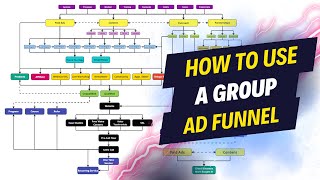
Build a group-based funnel to sell agency services: run ads to a low-friction lead magnet, invite people to a Facebook group or Discord, deliver five quick wins in the first hour, then use daily exclusive content and 1:1 outreach to move members toward sales calls. Works best when you have multiple offers, from low-ticket products to recurring services, to monetize people at different stages.
Chapters
In this video, we're going to go over how you would operate a group ad funnel. So an ad funnel that uses the group or the community as the primary conversion mechanism. So it's important to know that we have to either be using a webinar VSL or a live workshop or a newsletter or a community as our main focal point in our funnel, or it's not going to work properly. This is what most people do with their paid ads. They just run their paid ads and they try to get them to buy the recurring service on a call. So there's a few problems with this. Super high call, super high cost per call. Let's go with that. They did not go through the funnel, which means it's unclear what you do to them. And because they didn't go through the funnel, little to no rapport on the call equals a much harder sale. So people do this all the time and it must work or else people didn't do it. We can kind of extrapolate that to every part of life. But these three problems, in my opinion, just kind of disqualified this method in something that I would do. And it's much better, in my opinion, to do a webinar/vsl, a live workshop, a newsletter, or a community. So this is kind of the path that it would take. And we can. The nice thing about setting something like this up is that we can use it in our content funnel too. How this works typically is you run a paid ad through a lead magnet and you'd use a lead magnet instead of going to the community, just because you'd get a much lower cost per lead, as if you. And by giving a free guide or checklist or whatever away instead of trying to run ads directly to the community. So that's the reason you'd also put this in your Instagram posts or Twitter posts or YouTube description or TikTok bio or LinkedIn poster bio. Like it all works towards the same end. So how it would go is you would go something like this to a lead magnet. You get something like this to the actual, you know, for your lead magnet to opt in. Once they've done that, they would get something like this. But we'd probably want it to be a little bit more built out than this. So that's an example of the thank you page. And if they go onto the thank you page, they will get invited to the school or whatever you're using to do for your group. So the thing to understand here is when we're running through paid ads, we want to Only ask for the email just because that is the lowest friction. If you ask for email name, phone number, company, website and revenue, the exact same person, exact same ad, exact same landing page outside the extra form fields, you probably get a three to five times higher cost per lead or cost per acquisition. That's not good, of course, but the thing to understand here is because when you're doing content, people kind of trust you more. It's. It's cold traffic, but it's not as cold as paid ads or outreach. You can probably just get away with sending them straight to the group landing page instead of going through a lead magnet. It's all up to you. But the thing to really keep in mind here is yes, I just said we get this for the lowest friction, but to actually get to the conversion mechanism, whether that's a webinar or live workshop or group or whatever you're using, you typically want to ask for all of the information because that helps you qualify them, which is the purpose of your conversion mechanisms, after all. But it also enriches your data. We're a lot less qualified. We don't know who we're talking to if we just have their email, but if we get their name, phone number, website, and perhaps revenue or whatever you choose, we are going to get a lot more data in our CRM. So let's get to it. This is one of the four funnels that you could really the standard funnels that you could run, you have your webinar, which is really best if you have a specific training or case study or presentation that you want to show them to convince you to buy from you. A newsletter funnel is great if you have either a high priced service with a long sales cycle or you sell a service that is only needed in an emergency. For example, let's say you're a corporate lawyer. People probably not going to hire you based on a webinar or join your group or buy a paid product. I don't even know what you'd buy for a paid product. They're only going to hire you when they need a lawyer. So a newsletter is a great one to go because you can stay in touch over time. A group funnels when we're talking about now, and that's really good for when you sell a service where they kind of need to see some results for themselves before they fully trust you. A great example would be a sales trainer. How do we know which sales trainer is full of shit and which one's not? We need to get some tips from them and Some stuff. Before we really trust them, we need to get something from them that we can try ourselves. And that's the only real way to determine if it's good or not. And then a paid product, this is the best one for beginners. You can sell a front end product that naturally leads to your main service. The thing to understand here is it's as much as this video is about a group funnel, it's even better. If you have all of these funnels, you're kind of naturally going to have a newsletter funnel just because they're going to be on your email list. But you could also have a live workshop or a VSL or a paid product funnel or a webinar, whatever you choose. And the thing is, they work together much like paid ads. Make content more effective, make outreach more effective, make partnerships more effective, and so on. Each of these funnels make the other one more effective too. For example, if who would you think would get more sales? If they're in your community, on your newsletter, have attended a live workshop and seen your webinar, they'd probably be much more likely to buy your paid product than if they were on none of those things. Same if they've bought your paid product before, they're probably more likely to join your community, or if they've been on a live workshop, they're more likely to watch your prerecorded webinar. Or if they're on your newsletter, they're more likely to sign up for all of them. They all work together, but we don't. In the interest of not making this video six hours long, we're going to go over the group funnel for today. We're going to have videos on all the other funnels as well. So let's get to it. I've kind of made each step, if you will, part of the group funnel, what I think you should do. And then I've also made a sales trainer example, like I said, because we need an example to fully drive this home. So this is what the kind of the standard group funnel would look like. I'm sure there's infinite variations, but I usually start with this and then try to do it based on the results. I see. So the thing to, I think an important thing that you'd want to note here is this is a video about ad funnels. Ads are one thing, contents another. But if you are using Facebook as your primary ad, you know, Facebook ads, Instagram ads, it makes a lot of sense to use a Facebook group as the platform for it. There's Lots of platforms. There's discord, there's school, there's circle, there's whatever. But think of it, you're trying to get as low cost per lead as possible and as low activation as possible. Because a good, a good conversion rate between someone who signs up for your lead magnet and actually joins your group is 30%. And if you're making them sign up for school or circle platforms, they don't have an account already. They may not trust. They may not. Then they have to learn it as well. Versus people are coming from Facebook. They obviously have a Facebook account. They obviously, at this point, 10, 15 years down the line, know how a Facebook group works. It's just very, very easy to get them to do. It's a lot easier to get them to activate from lead magnet to group. So that's just a very important part. So from our ad, we want to get our email and opt in page. If you want to do a phone number, that's up to you. I put it in here. But I typically will just do an email and the thank you page is going to promote the Facebook group. So either like this or you could have it promoting the group directly. The two options, like let's say in this one I'm only asking for their email or let's just pretend this page asking for only their email. At the start. If I was asking for their email name and phone number here, I would just use this page to promote the group. But because I want to get their full name, their email, their phone number, their website, I would make them separate. And I hope that makes sense here. If you are just promoting the group, you can actually add a piece of code that will show the group or show the page for like let's say you wanted to show this page for 5 seconds after, after 5 seconds it would automatically redirect to the Facebook group sign up. That's kind of just an advanced trick that you know, is worth noting. Let's say if you collect the phone number, you want to send an sms, you know, with the group invite link, you know, one or two sentences right away, but within five minutes. We also want to have email flows to the group because we have to kind of activate them from just lead magnet to the actual group. But. But we're all going to wind up at the same place. They can either go there directly through an email or through an sms and those are kind of the options. The purpose of getting them to this group is not just for fun, right? We're not just making complex funnels that Take a while to set up and running ads and testing for fun. We're here to make money, right? And if we want to make money, we need to get them on a sales call. So we're going to do that once they join the group through a few different ways. We're going to post content in the group daily. And it's very important that this content cannot be accessed anywhere. It's not. You're sending them videos you posted on YouTube or stuff like that. This stuff has to be exclusive to the group or there's no reason for them to be engaged in the group. They can just watch it on YouTube or look at it on Twitter or see it on your site. It has to be unique and it has to be daily. And that is one of the downsides or the cons of a group funnel. It's the most work ongoing out of any of these funnels. But if you want to make a lot of money, that's life. So no excuses. So content daily and the content will have call to actions to a sales call or whatever you're choosing to do. We need to have retargeting ads. So if someone is on our group email list with our CRM like someone's done here, we, we would export that audience into Facebook ads and, or TikTok ads or whatever and we would, you know, promote the group. So they'd see that when they're on Facebook, your email flows that they've been automatically added to will also promote the group. Maybe send them five to seven different things that are essentially promoting the group. Five to seven different emails. And if, if you're very advanced or you just want to do that, you can kind of have list A is your lead magnet and list B is your group. And if they signed up for this, it would be automatically removed from group A and be on group B. So that's just something there. But the most important part, and I'm going to change my pen color here, is a lot of the actual sales calls are going to be dependent on your appointment setter or you or some employee going in the group and messaging people. And there's no real way around that. So if you cannot post content daily, you don't have an appointment setter. This group might not or this ad funnel might not be for you. It's one of the most effective ad funnels when done properly. I would say it's the number one most effective one when done properly. But it's also the worst when done improperly. And if you it can go from Best to worst really quickly if you don't have a good appointment setter and you don't post content daily because those are just the two most important steps here. So here are some notes. So the group funnel is best for niches where you need a bit of proof. Like I said the example earlier with a sales trainer, you just need some tidbits or some ideas or some actionable advice to really trust them. Like why would you buy their sales training or sales course if you don't even know if it works or not? Close contact with your ideal customer so this is going to be the highest trust type of funnel because you're a real person in the group. It's not like you're just a prerecorded webinar person or a faceless newsletter or a paid product that probably doesn't even have your name on it. In this one you are the highest trust out of any type. So if you are in a niche or you sell a service that requires a lot of that, a group is very important. Like I said, you must post unique and exclusive content. They need to give them a reason to join and stay engaged. They need to have a reason to open up the group once a week or once a day. If you're posting the same content you post everywhere else, there's no reason for that. A caveat or another con of this funnel is the higher up the market you go, the worse this funnel gets. For example, you can do it and you can tailor it to vetted high level people if you want. But if you're running this from ads, probably not feasible. CEO executive types are not going to be joining this and engaging in a mass market low level group. It's just not going to happen. So if you are someone who sells to Enterprise or Fortune 500 companies, this one might not be for you. And another con are most of your calls will come from manual conversations. You need an appointment setter for this or it's not going to work. And the final pro is it's very good for agencies that have do it yourself done with you offers in addition to done for you because you can get just mass market or broad amount of people in there and if they can't afford your service, you sell them your course, you sell them the program, you sell them info products or whatever. It's just a very versatile funnel that you can have a lot of different offers and call to actions inside. So like I said, if you're running primarily Facebook ads, you want to choose the Facebook group for less friction. If you're primarily going to promote this group via content. I know this is a paid ad funnel video, but I would use discord just because the chat feature is the most important. I think these are going to be the two best ones for every single thing. And if you don't know what you're doing or you're a beginner, choose either of those two. If you do know what you're doing, there's a lot of different options. But for you so getting people in the group, like I said, paid ads run to a lead magnet. The group is going to be on the thank you page of the so whatever the lead magnet page redirects to, that's the thank you page. You could have content and you could either run it to the lead magnet, but if you're doing content and they trust you a bit more, might as well just run it to the group directly. Either your choice. Outreach is a very good for like cold email or cold DM if they say they're not interested or you, you say let me send you a loom or something. You know, saying my offer when you're in the email or the cold DM when you're delivering whatever you're promised in the cold email. If you include the group link, that's a very good thing to do. And then your appointment setter will probably be a pretty good source of people from the group because let's say your appointment setter is up here, right here and they're just. Let's just say they're not ready. Or the appointment setter either doesn't know yet if they're qualified or not, they can't tell, or they're just not ready for a sales call yet. It's just not going to happen yet. Then the appointment setter can send them to the group as well as the live workshop and webinar via cell stuff. But it's very, it's a like a. You could almost contact people twice as much when you have all these conversion mechanisms because instead of just every Monday or Thursday, you're trying to get them to see if they buy like Mondays you could get them to a different conversion mechanism. More conversion mechanisms equal more chances for you to convert them. And then Thursday is the traditional follow up. So it's very easy for your appointment setter. It gives them a very. Gives them another option as opposed to hey, are you ready to buy yet or do you want to do a call? So appointment setter is going to send them to the group if they're not ready to schedule A call. Yet there's two very important time frames. Let's. Or that's. Well, three, but two very important time frames. So let's divide the entire group funnel into three categories. The first 60 minutes that they join, the first 48 hours they join. And then from 40 hour, 49 to forever, let's just say ongoing. So I broke down exactly what to do in each of these time frames because it's very important that people are going to determine largely how good this is based on the first 48 hours. And they're going to only go through the first 48 hours. And instead of just joining and never opening it again, if the first 60 minutes are good. So it's kind of. It's kind of important. So you got to get the first 60 minutes to kind of get them to, you know, think the first 48 hours are good. That's just human psychology there. And you need to have the first 48 hours good so that they make a habit of joining permanently instead of kind of just churning or never opening it ever again. So in the first 60 minutes, we want to get them at least five wins, very rapid fire. So things to do are they're getting access. That's one win. They're going to get some frameworks or some assets for some templates. Whatever you have to do, just make them get them at least five wins. That will really get their attention and make them want to join the group. The second one is we need to get them to bookmark the group and in their browser. You see my bookmarks up here. If they're bookmarking it on their browser, on their phone or whatever, much more likely, obviously, to come back to the group. So we want to have a pin. We want to have the PIN post in whatever platform we're using, plus a video introducing yourself, showing them how to pin, how to bookmark, et cetera. The first 60 minutes. We should also be trying to get them to sign up for a different conversion mechanism because they're never going to be more engaged than they are in the first 20 to 60 minutes. And this is a great thing to do where if you can have multiple PIN posts, but get, let's say they signed up for this, the phone number here, in addition to the one within five minutes getting them to sign up for the group, we also want to push them to, let's go, let's say, oh, by the way, we're doing a live workshop in the group every Tuesday or something like that. So we're getting them to go from the Community to either a pre recorded webinar or a live workshop or a unique mechanism if you have one. And that's just the whole thing. Like we need to get them in every part of our ecosystem because the more conversion mechanisms they're viewing, they're a part of whatever you want to use to describe it, the more chances that they're going to convert. And then the last thing we need to show your, we need them to get them to remember your name, see what you look like, your face and hear your voice as many ways or as many times as possible. So we want to have videos for everything. So you know, all the templates, assets, frameworks, access are pinned posts, you know, all of that kind of stuff. Put your name in every appointment, setter, sms, email, et cetera. And bonus points if you can get them to follow you on social media profiles. Because it's kind of a lesser. They're following you on, say they came in through ads, now they're following you on Instagram. They can come into different lead magnets, or they're following you on Twitter or now they're subscribed to your YouTube channel or whatever. Now the funnel instead of here, we go back to the top and now we have more ways for them to come in. It's, it's how it all works together and it's how the ecosystem is. It's not one thing. We need to have every single thing in the entire funnel. So that takes care of the first 60 minutes. And the whole purpose of this is to get them coming back, get them some wins, get them coming back to the group because it's bookmarked, get them into another part of our ecosystem or conversion mechanism and get them to remember our name, what we look like and our voice using video. The first 48 hours, like I said. And I'm going to change my pen color here. People judge things largely based on the first 48 hours. So what you want to do here is, is have a personal message from you, the founder. You can do that yourself or you can have one of your team members on your profile, but it has to come from you. And it should not be copy and pasted. It should be kind of personalized as much as you can. You can do that very efficiently, but it should be personalized. A seamless onboarding sequence. We kind of already went through that hopefully. And then we want to get them involved in the community, like a welcome post to get everybody to welcome them, get them involved with a private chat with three others. You can use a lot of software for this. Or you can do it manually. If you, let's say you had, you know, an E commerce agency, an SEO agency and an ad agency that all served ecom brands. If you get them in a chat that gives them peer to peer like connection. It gives them, you know, reasons to join. If one of them keeps talking the community, the other, they'll keep talking to the other ones about it and stuff. Just gives them another reason to join the community. Get them five more wins now, just the same concept as the other one and get them to hit at least three activation points. So an activation point is think of it as, you know, what makes them more likely to buy your service. Like a thousand X leads. If they have a newsletter, they have lead magnets, they have a cold email set up or something, they're much more likely to buy my program than if they had none of those things. So in the first 48 hours as an example, I would try to get them to set up all of those things with written and video instructions and a reward. The reward is very good because you know, if you do X, Y and Z, you sign up for a newsletter, cold email and make your lead magnet ideas within the first 48 hours. I will give you this $4,000 course for free or something like that. An incentive because people love incentives. We need to get them to do all four of these things, get them to involved, you know, get them a personal message from you some more wins and hit some activation points. And to some extent you can use these wins to make the activation points easier. Like I could in my example give them a newsletter framework, an idea on or a tutorial on how to come up with lead magnets and you know, cold email script. Like your wins could be subtly activation points as well and then ongoing. You want to post exclusive content daily, not reused, not posted anywhere else. Host a weekly live call in the community. You can kind of think of this as a mini live workshop or you can think of it as a full live workshop. Whatever you want. You know the best way to do a live workshop is to either do FAQ or like how to do X. So best way to, you know, plan the live workshop is it's a trial version of your main offer. Like if you sell sales training like in this example that we're going to go over soon, you know how to live workshop will give you a sneak peek of it or something. Get your appointment setter to talk to everyone at least once per week and that's individually, not as a group. Then you're going to have email flows retargeting ads and get them to do other conversion mechanisms like that is the point. So posting exclusive content, answering questions, talking to them one on one. And then your email flows retargeting will probably try to get them to another conversion mechanism and or remain active in the group. So that's like these are the parts that you really want to think about. You know, we went over the funnel, we went over some important parts, pros and cons, choosing the platform, getting people in the group the first 60 minutes after they join, the first 48 hours after they join, and then just forever after that. Like those are the things we want to do. So let's kind of go over it a little bit. So change my marker here. They've been to paid ads to our landing page. Just to recap like this one. Their landing page shows the group on the thank you page as well as the email flows. They go to the community and the email flows will also go there. Hopefully we'll be able to qualify them in the community one way or the other because they're on our email list. We'll also have them on our newsletter by default as a conversion mechanism. And because we have their phone number, name, etc. Our appointment setter will also be there. So to some degree we're gonna by default have them on three different conversion mechanisms just by getting them to the actual group part. In addition to that, as long as we're posting YouTube and Twitter and LinkedIn and Instagram and TikTok content, we have another way to convert them. Because people, a lot of people will find out who you are through one of these. You can see content here, but also at the top content is a top of funnel and bottom of funnel thing. Someone could see come in through paid ads and then start seeing your content on Twitter or LinkedIn or YouTube and they can convert that way. It does happen. So this is not part of the funnel, but it's just something we should be doing. And hopefully our community, our newsletter and our appointment setter combined as a team can get them either to a live workshop in the community or elsewhere. You could just do a live workshop in the community. That makes it easy once a week and then hopefully to our webinar as well. And maybe you could sell paid products in the community too. So I really like this funnel because it has a very diverse, very. Yeah, diversified, like a stock market. A diversified way to get people to other conversion mechanisms too. Because if we have, if we have all of these people are converting Trust me, it's just a fact of life. So let's get to an actual example right now. So I actually did a sales trainer example because I've referenced it but and if I'm going to reference it, why not? So a sales trainer example using a group funnel. I just thought of a few lead magnets here because we want to run ads to multiple lead magnets of course. So I thought of four just to for the sake of argument kind of thing. So let's just. That's kind of how it's going in this one here. So lead magnet ideas for a sales trainer, a sales script framework, a cold email framework, a sales presentation framework and a pre call flow of frameworks like to get people to be on the call. So those are the four lead magnets I probably in addition to others. But for the sake of argument for an example, these are four lead magnets I promote with paid ads. I would just make the ads look like this because I could test a lot of different versions of copy and once I find the ones that work the best I could make some design versions if I wanted to. I didn't make any ad examples for this, but this is just the format I would use and my headlines because I thought about a little bit. My close rate increased by 58% with this sales call script. Get anyone to respond to you with this free cold email script. Close 44% more deals with this free sales presentation framework and never suffer through no shows ever again with this free pre call sales flow like those are headlines I thought of in about 10 seconds each. You can determine if they're good or not. But those are kind of the ads I would do. Landing page would be very simple, just like the one we are doing. You don't need to make the landing pages complicated at all. In some ways making it any longer than the one you see on screen is actually going to hurt you, not help you. And then obviously it would automatically redirect from the landing page to the thank you page. I would include the group link in the email that delivers the lead magnet, I would include the group link in the SMS and I would run group retargeting ads based on the emails in my CRM. And the purpose of this would to get them to activate from just a lead magnet person to a full on group person in the first 60 minutes. Here's what I do specifically for this hypothetical sales trainer. We want to tag them in a welcome post, set it up automatically, get an employee appointment setter to message them and for their Five quick wins. Give them the lead magnet that they signed up for, give them some training videos, give them all the other lead magnets. So whatever one they signed up for, I would just give them all of them inside the group no matter what. Invite to free live workshop in the community and I would probably have something like a free rm, free CRM setup training because salespeople need their CRM. So access to all of these with clear video, written intuitive instructions are example of how I would get their five free wins. We give them ties to the community. You could argue that getting a welcome stuff and an employee messaging them could be wins as well. So tie them to the community, start opening a conversation and give them a bunch of assets is what I would do in this example the first 48 hours and if you remember the first 48 hours we need to get them involved, we need a personal message, five more wins and activation points. So I would do all of this because I think these are some activation points all in one. So personal message from the founder is a win. Get them involved in the private chat with others like I said up here, get them to hit at least three activation points and they would kind of double as wins in this case wins. Get them some cold email contacts, you could have like a full on list of them and then get them to get in them into their group mess thing is considered an activation point in my mind. And then get them to generate their own unique sales framework with the, with the unique mechanism like on the other side here. So that really takes care of like all of these different conversion mechanisms. That's what I would do in the first 48 hours. And then ongoing, just exclusive content. Exactly what I said at the top content, weekly live calls, appointments that are email flows, retargeting ads and get them to do other conversion mechanisms. And I rounded off here with these are the different offers because if you look at 1000x leads funnel there's a bunch of different offers, aren't there? And this is the difference between you know, success and the opposite of success. Failure is having different offers. So let me just delete some of these just to make it look a bit cleaner. So we're using this group, we're going to determine them to be qualified or unqualified. If they're qualified they're going to go through our sales process and we'll sell them a one time service or a recurring service or eventually both. If they're not, we're going to sell them low ticket products or refer them to someone who can help them for cheaper and collect a referral fee or sell them a course or sell them a program. So these are the offers and then also I guess affiliate in lead magnets is kind of another revenue stream. I don't know about offer, but we'll call it an offer here. So this is where, this is what I'm talking about now specifically for the sales trainer. So for a product we could have a sales call checklist, you know, list of things to say, you know, maybe top 10 lines, comments or whatever. Closes for affiliate. We could have links to CRMs dialers, whatever tools that sales trainers use for the course. Top 8 things you need to get more sales. This is a do it yourself program. The same thing but maybe done with you one time service. We could go in and create a custom sales process for their company and recurring service. We could review company sales calls weekly. So whether you agree that these are good offers or not, not really the point. It's just to show you that these are the different offers that you would have. And in many situations, 95% having these offers versus not having them is the difference between your ads being profitable and not. For example, if you didn't have, you know, all of these different offers. Like there's a. In many cases, if this is all you have and 99% of people are unqualified and only 1% are being monetized, which is what's going to happen if you don't have these. This is almost always the difference between your paid ads being profitable versus versus not profitable. So although it's a group funnel and this is about ads, we need to have all of those different offers, which is why it's worth mentioning at the end of this video. So I hope this was helpful. This is an example of how you might make a group ad funnel. It's one of the four types of funnels. Choose which ones you want to do for yourself. I'd recommend having every type of funnel, but I know you got to start somewhere. So thank you for watching and I'll see you in the next one.
More from Matthew







Everything I Would Change About This Ecom Email Marketing Agency (3 HOUR LIVE AUDIT)

Everything I Would Change About This Meta Ads Training Business (3 HOUR LIVE AUDIT)


