How To Get Tons of Clients With Prospecting
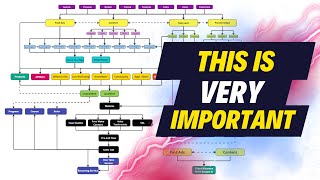
YouTube video (speaker: Matt) explaining a manual prospecting strategy as a permanent, high-ROI part of a marketing funnel. Matt defines three audience segments — social proof list (broad followers who vouch for you), potential client list (10–500 prioritized prospects who have consumed your content), and dream client list (high-value logos/targets for long-term brand building). He recommends 60 minutes per day of manual prospecting (half new prospects / half re-engagement), recording contacts in a spreadsheet, prioritizing platforms where your clients are (example: Twitter lists), engaging potential clients about once per week, and expecting about a 90-day lag before results. Emphasis: do not sell unless the prospect asks (“So what do you do?” / “How can you help me?”).
Questions this video answers
60 minutes per day.
Social proof list; Potential client list; Dream client list.
About 10 to 500 people (prioritized; typical focus is 100–500).
About once per week (e.g., ~20 people/day for a 100-person list, Monday–Friday).
About 90 days.
Chapters
This is a video on the topic of prospecting. And prospecting is unlike any other part of our marketing funnel because with the other parts we're kind of trying to automate them or systemize them or use technology or use ads or schedule or whatever, some sort of tool to make it more efficient. But there's nothing that will quite keep your pipeline full like 60 minutes per day of just manual old school prospecting. So prospecting in the context of this funnel is one of the forms of outreach. And this is not cold email, this is not cold dm because these two are going to be automated or very well should be automated or we got big problems versus prospecting is manual. You might email someone manually or DM them manually as part of prospecting. But we shouldn't confuse the two things here because prospecting is going to be part of your outreach for getting clients as well as kind of your outreach for getting potential partners. So it's very, very important. And there are tons of reasons to do prospecting, but the number one is nothing is going to keep your pipeline as full and protect you against downswings, just like prospecting will. And there are a few different things that we need to know. And I'll show you my prospecting strategy, I'll show you exactly what I do for it, all of that kind of stuff. So let's get right into the video. So the first thing we need to know that in this full funnel here, like we have something called a social proof list, a potential client list and a dream client list. And I've never really talked about these in any of the videos yet. So now is the perfect time. So these three lists are not real lists, although they are in the terms of prospecting. But basically just by going through this funnel, you're kind of building these three segments and we can kind of replicate these three segments when we're actually doing our prospecting, even though we don't necessarily need to. So let's keep, let's get right into my strategy here. So let's go over the three different lists that you need to know about. And these are different segments of the market. The first one is your social proof list. These are a bunch of people who know who you are, might vouch for you, but probably are not ever going to buy from you or be your customer. And that's fine because these are the type of people that are going to tag you on posts, be your followers, bring you up in chats and communities that they're in, give you reviews, and all of this Stuff is going to lead to increased visibility, media opportunities, search engine results, all of that kind of stuff. So when your prospect is looking for someone who does what you do, this guy I know tagged Matt on my post. Everyone seems to like Matt. That must be for a reason. This guy I recommend really trusted Matt. Although these people are not probably ever going to buy from you for one reason or the other. Price fits, they do it themselves, they have someone, they just don't need it. These people are very valuable. And it's kind of the whole situation where we go back versus, you know, the qualified versus unqualified. Your social proof is going to be almost always like 100% in the unqualified section. You can monetize them with products, with affiliate links, you can refer them away, you can sell them a course, you can sell them a program. But they'll also act as a form of social proof that will help the people who are qualified. And that's the main reason a lot of people will just get mad or not pay any attention to this segment. But it's very good for you. It's very good for your social proof. Hence the name of the list. The second list is your potential client list. This is the most obvious of the three. This is the people that you are actually selling to right now. It's going to be the people who actually buy your services, of course. But the difference between this group, when the 1000x leads funnel versus not. It's much easier to sell someone when they've gone through your lead magnets, seen your content, been on your email list, been on your webinar, seen your live workshop, in your group, you know, taking advantage of all this stuff than it would be if you had none of this. So that is like the value of this for your potential client list. It won't necessarily, you know, directly help you, but it will indirectly help you. Because if they've been reading your newsletter, they've checked out your webinar, they follow you, see your ads, they see all these people in the social proof list love you. And it's going to be a lot easier to sell to this list than it would be otherwise. And that is a perfect example of how this entire funnel works together. It's not just, you know, it's not just prospecting to a sales call like this is not how you should do it. This is not the funnel. This is the funnel because this is going to help your prospecting versus just doing something like this, right? Very, very important to know all of this stuff because it's all relevant. And then there is the, the situation where you know, and I can kind of agree with this, I think it's about 50% self limiting belief. 50%, you know, a valid concern. But there's always a, like a question like if, if someone who follows me for example and sees these videos and they sell like 100k minimum service or they sell to enterprise clients or Fortune 500 clients or whatever. Like they always say like there's no way a CEO of a Fortune 500 company is gonna click on an ad, download a lead magnet or see a LinkedIn post, download a lead magnet or whatever and you know, sign up for a webinar and read a newsletter and you know, watch content and join a community. And like I said, I believe this is about 50% self limiting belief. This happens all the time. You know, I've spoken to either five or six nine figure CEOs who booked a call from these YouTube videos, the ones you're watching right now. So it does happen. But let's say it is a valid concern. Like this is how it would kind of play out in a larger company or enterprise level or Fortune 500 or whatever the concern is, whatever the target audience of this group of people is, they'll say something, the boss will say something and the boss will be the CEO, you know, hr, head of marketing, whatever. We need someone to help, we need to find someone to help us with lead generation and the employees are, you know, Matt has one of the best webinars I've ever seen. This is the lead gen newsletter I always read. We should reach out to Matt who writes it. Matt has a ton of followers. I follow Matt. We should hire Matt and the boss who gave them the instruction. I guess I'll have to reach out to Matt. This list is all about building internal champions. Like in the situation above, name recognition doesn't really matter if the CEO is going to do this. If you just have extreme name recognition from putting themselves through a funnel like this one. Over time you're going to build a great brand and past experience. Like a lot of the time this person, you know, a good example. Let me paint the picture with an example. Someone works at an E commerce brand as a media buyer and then they get a few years goes by, they get experience, they get hired away from someone to a new brand who makes them the director of marketing. Now they, you're kind of helping them. You have a relationship with them when they were small. Now they have, you know, the influence to make these buying decisions and you know, they're in charge. You have past experience with them. They're much more likely to hire you as opposed to some other agency. And this is a long term play. This is kind of the three things that build a brand. If you want to turn your agency into a real brand. And I'd highly recommend that because that's a competitive moat and you can sell it one day and it's just much better. But everything else here will help with prospecting. Like, you could just, you could kind of say a form of prospecting is just making 200 cold calls a day. Would you rather do that or would you rather call warm leads, develop relationships with all this stuff, you know, prospecting to someone who has gone through all of this stuff to some degree or another. And it's kind of, you know, an obvious decision in my estimation. So here are the prospecting, you know, here's what I view as good prospecting. And there's no easy button. Like, this is really gonna suck. 60 minutes per day of manual prospecting is gonna be one of the least mentally stimulating things you'll ever do, one of the most tedious things you'll ever do. But that's the price you pay if you wanna make a lot of money. So you wanna spend 60 minutes per day. You can spend one half on clients and one half on partners. Like that is an option if you really wanna get into heavy partnerships. But regardless of how you break it down between clients and partners, I typically will spend half my time on new prospects and half kind of engaging with current people on my prospecting list. You really want to choose your dominant platform? Like for me, I'm trying to get Twitter is my dominant platform. Not that I have a crazy amount of followers or anything, but a lot of my clients are going to come from Twitter, so. So do like, if, you know, like a lot of your clients are on LinkedIn or Instagram or TikTok or Twitter or whatever, like make it easy on yourself and choose the platform that you are going to be either your most dominant on right now or you want to be like assuming you have, starting from scratch, you have nothing. Like, if you want to be big on Twitter, like that would be great as well. And then you want to record all of your stuff in a spreadsheet. And I made one here. So this spreadsheet is going to be, you have a place for their name, a description of them, their preferred contact method, their website, their email, their Twitter, their LinkedIn, their rating, their likelihood of them ever becoming a client out of 10, you should be definitely honest with this the last time you engage with them, and so on. So let's talk about the size of these lists here, because your social proof can be unlimited, but it should be thousands of people, like really anyone who would hypothetically follow you, vouch for you, that kind of stuff. Your potential client list should be much smaller, you know, 10 to 500 people at most. And this will be the list you kind of, in my view and the way I do it, this will be the list you prioritize in your 60 minutes per day. So you kind of want to do your potential client list first, then your dream client list, then your social proof list, just in that order. And make sure that, you know, with a hundred to five hundred people on there, kind of want to. What I do is I try to engage or like or comment or talk to them, you know, once a week. Maybe you can try to do it more, you can try to do it less, but once a week is a sweet spot for me. So if I have a hundred people on here, I. Let's just say I do this Monday to Friday. I basically have to engage with 20 people per day per business day. So If I have 30 minutes to re engage with people, I can do these 20 people, you know, pretty quickly, right? And I could do these the dream client list even quicker. And then the rest of my time would be engaging with the social proof list. So that's kind of how it breaks down. Down. It's very like that's, that's essentially at its simplest form, something that you could follow if you're going to implement this. And then we want to record it all in a spreadsheet because we need to stay organized. We need to make sure we don't forget anybody. We need to make sure we keep contacting everybody and so on. The strategy that I use and the reason that I typically prefer Twitter for this is you can make something called a list. So let's just call, you know, example list. Let's make it private so people don't know they're on it. And now we can kind of go through people like if my, if my, you know, let's just say my prospect was Elon Musk, we could add and remove Elon Musk to the example list. Now when we go to back to our example list. Might not have. I might not have done it. Right. Classic. Where are you, Elon? Add them to the list and save. This is kind of making me sad here. So now we have one member on the list. The point of doing this, let's just say, let's just say Bill Maher, whoever. Let's just keep adding some people onto the list just to hopefully get some stuff going. Or let's just add people from my home feed on the list. You know, eventually when they go on the list here, they're gonna show up, their posts are gonna show up. So let me just go on to some list here and show you what I mean. This is, you know, someone's list that they added me to. And everybody on this list, you're gonna see like a nice feed or a nice, well, yeah, feed is a good part, a nice amalgamation, a nice list, hence the name of, you know, the people who are on it. So it'd be very strong. If you're prospecting specifically through Twitter, you could make a social proof list. You could make a potential client list and a dream client list and you could really, you know, see which ones you want to engage with and do that very, very quickly type thing. And that's the main benefit of doing it like this. And then when you have to, like I said, if you have to do, if you have a hundred people on your potential client list and you want to reach out to 20 of them per day, that's when you do it like this. That's going to take like a few minutes at most instead of however long it takes a lot of people to do that. Right. So that's kind of the value of doing it on Twitter. There's nothing as far as I know on other platforms like, like LinkedIn, like Instagram, that kind of give you the same, that kind of give you the same, like, efficiency as that. So that's really why I prefer Twitter to do that. So that is the strategy for that list. We want to prioritize this. So let's just, you know, say this is the priority. So priority number one, just say this is priority number two. And let's just say this is priority number three. When you're actually going through your 60 minutes and engaging with people, you know, because you spent half the time on that. So what I would do is when I'm starting, you know, I would either basically go through this and identify 100, let's just say 100 to start, people who are on my potential client list, I would identify a few dream clients, like these dream clients, because I haven't explained it yet. These are clients that you'll probably never work with, but if you do, that would look really, really strong as a case study. A logo on your site, all that kind of stuff and you can't really just if your dream client was Microsoft, we can't just try to sell it to Bill Gates. Right? We have to find people who work at Microsoft and work our way up essentially. So you'd have contacts for many people as you possibly can in that organization. So you can build like this kind of scenario with your dream client list. So let's talk about, you know, what are we going to do. So if we build the list with efficiency, we need to be able to get with 100 people per hour in this situation. So it's very easy to do that if you're spending, you know, if you only need to do 20, you could probably do that in five minutes. Like I said, you see an interesting post, you just comment, you message them, you do whatever you want. But we also want to be a normal person here, not a sales rep. If you just go and like say, hey, I'm Matt, I have a lead gen program that's completely different relationship with them and it's not going to work like that. We want to think of prospecting as a long term permanent strategy that's focused on getting our network bigger as opposed to, you know, just trying to sell people. This is not the place to sell people. We're already selling people in our ads, with our content, with our cold email, our cold dms. We don't need to add another channel to sell to people because this is done manually and that will lead to a worse result and a worse ROI for our time. We never want to sell unless or until or unless they ask for it. And if we break this rule, it's going to ruin our prospecting. The magic words are so what do you do or how can you help me? As soon as you hear those words, like or read those words, you can start selling. But if you never hear those words, you never sell. And then, then these people just essentially become on your social proof list and then that's just fine, you don't need to cry about it or anything. And this is a long term strategy that will la, that will lag about 90 days. So for everything you do today, you're probably not going to see any results for about 90 days into the future. And that's just another thing that we're going to have to live with. And that's why it's so important to do this permanently as opposed to, you know, temporarily or give up after a week if we're not seeing any results. So this is the prospecting strategy. I use 60 minute timer every day, block off an hour, you know, 8 to 9am or something in your calendar and, and you're going to be very pleased with the results of this. It's going to be extremely boring, tedious, mind numbing, but it's the price you pay if you want to make a lot of money. So hopefully you enjoyed this video and I'll see you in the next one.
More from Matthew







Everything I Would Change About This Ecom Email Marketing Agency (3 HOUR LIVE AUDIT)

Everything I Would Change About This Meta Ads Training Business (3 HOUR LIVE AUDIT)


