How to Improve Your Sales Process And Increase Business
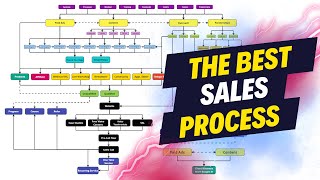
Matthew Larson breaks down a four-part sales process: warm prospects through ads and content, ask qualifying questions at booking (include price), act as an advisor not a closer, and follow up systematically over 90 days. By the time someone books a call, they should already be sold.
Chapters
This video will help you set up a sales process that will make everything so much easier and set you up for success, both you and your employees, when you eventually get so many leads that you have to hire a sales team. So this is my preferred process here and you can really break it down to four main parts. The first part is you make it easy on yourself and set yourself up success with your marketing funnel. Number two is you ask the right questions before and during the call. Number three, you don't need to use heavy sales tactics when you have one and two and you want to position yourself or act like an expert advisor to them, not really a sales rep. There's a very big, there's a very fine line between acting as an expert advisor and being one of those cringe people who try to take like the doctor approach and they try to diagnose your problem. So this is my sales process. This is what I prefer to do. I'm sure there are dozens or hundreds of different ways you can approach a sales process, but this is what's worked for me and this is the one that fits my personality and my style. So let's get right into it. So why this video is important. When you have a funnel like this in a thousand x leads or if you build it yourself, eventually you're going to get so many leads that you're not. It's not going to be possible to take all of these calls yourself. And you're going to have to get a team, some sales reps, some closers, whatever you want to call them. And the thing to keep in mind is your sales team is never going to be as good as you at sales calls. This is your company you care the most. You're the biggest expert at the product and the service you're selling. And most of these people in your sales team probably are not going to be sharks or killers. You know, that would be nice. We're trying to hire those if we can, but we need to set, we need to have this stuff set up so that you set your sales team up for success as much as possible. And I'm going to show you how to do that in this video. So let's just say you have all of the funnels set up. You're running paid ads to all your lead magnets, you're posting content, you're running cold emails all day. You're going to be generating a ton of leads. Let's just finish drawing quick here. So your leads are going to go to your email flows and your thank you page. And they're going to do whatever funnel that you choose, whether that's webinar, live, workshop, newsletter, community, or a combination of them all. They're going to get qualified or unqualified. If they are unqualified, you're going to send them away to different offers that you should have as part of a complete marketing funnel. And for those who are qualified, they're going to eventually make their way to a sales call down here. So they're going to go to your website, see all your stuff, go on the sales call. So a lot of people, their marketing funnel is going to be more like, let's just take some stuff out here. It's going to be more like this, where they do outreach to cold email to a sales call. And they wonder why they have no rapport or why it's so difficult or why the person they're talking to on the sales call is so skeptical. And it's not difficult to see why because they don't know you the first time they ever heard about you. And you're is through cold email. You're still a faceless person, so to speak. You can replace cold email here for ads like whatever content is a little bit different because if they're reading or watching your content, they somewhat know who you are. But for ads and cold email like this is going to be the sales process that 99% of people have and wonder why it's going to be so difficult versus this. The value in having this and how or why it sets you up for success is, can be described with this picture. So you're in a sales call here and, and the prospect has been reading your newsletter, they've checked out your webinar, they follow you on social media, watch your content or read your content. They see your ads all the time. This is much easier. This is essentially you're selling the same service to the same person as you are here. But because they've gone through all of this, they've seen your content. Senior ads receive cold emails, downloaded lead magnets, senior email flows, maybe watched a webinar, a newsletter, joined your community or whatever. It just becomes much easier to sell to them. There's no. It reduces the skill to sell to them to where you don't have to memorize any lines or memorize any sales tactics or do that kind of stuff that so many people do or worry about maintaining frame or you know, the classic sales stuff, which is true. Like this, it is stuff you do for a reason. But we want to set ourselves up and our sales Team up for success by putting them through this funnel before you know, however they get to the sales call is going to be dependent on them. But by setting them up for success they are going to get a bigger, better close rate. They're going to become more confident and then they're going to have a positive flywheel of getting you more and more and more and more sales. So they say you're they of course, who is they? But an average close rate from like cold traffic in this, in this scenario might be 20% and it's not uncommon for if they go through a funnel like this, 30 to 40% with the same, exact same person in each scenario, the exact same sales rep. So let's break it down because I broke, I made a bunch of stuff here. So I have the website, the off website stuff, the pre call flow, the actual call and the follow up. So I have a bunch of different things to go over and I'm going to go through them one at a time because they all, they are what makes up a complete sales process, so to speak. So I'm going to kind of break this up so you could, I'll get my marker here. You can think of this as one thing. This is like the pre, pre, pre stuff. You can think of your website as something else and I messed up the thing there. You can think of the pre call flow and then the sales call and then the follow up of the sales call. So these are like the big sections or categories I made the. This part is like what you do in a thousand X leads and or you what you build on your own. Either one, it's just about building the stuff, generating the leads, warming them up, getting them qualified or not qualified and onto a call. So let's go to the first part which is your website. On your website you definitely want to have case studies, as many as possible. You want to have free video content. So what do I mean by that? Just think of YouTube videos you made or training videos you made. Just embed them in the website, you know, try to do at least six, maybe more. The reason you do that is just free value, of course, but it's important that they spend time with you. The more time they spend with you, I. E. Watch your videos, the more likely they are to trust you and book a call or convert. So more likely trust you and then they see your face, they hear your voice, they're more likely to remember your name. Like these are all very, very important steps in the sales process. Video testimonials are much better. Than written ones just because they are harder to fake. A VSL at the very top where it shows your face and explains a little bit of what you do and or the results you've gotten. The difference between having a VSL and not is astronomical. Even if they don't watch the vsl, just having one makes you look so much more professional and it's another opportunity to get them to see your face and hear your voice. Which are just two extreme trust building things. Regardless of what is said in the vso, off website is an interesting one. So you kind of like in addition to what you have on your website, you kind of want to have good off website results. So if someone googles you your name or your company name, you have media appearances, you have third party reviews, you might have a Google search ad at the very top just to be sure and then content across your social media profiles. So if you Google Matthew Larson here, Matthew Larson, there's a lot of Matthew Larson's apparently and unfortunately. But if you Google Matthew Larson marketing, you'll see my LinkedIn, you'll see my book, you'll see my Twitter, my YouTube, you'll see some blog posts I've done, you'll see that's about it. So I'm telling you to do this but I've not done an extremely good job myself of doing this. Even with the successes I've had over the years, I'm going to build that up a lot more. So that is what I mean by off website because we when if it's going to and it's. It's not. You can't measure how much it's going to hurt you. But if they google you and nothing is, nothing is here so to speak whether it's for you or your company, probably your company. If you have a sales team by then it doesn't really help to have it for you. It should be your company and the results your company gets. But you need to have like as much stuff as you possibly can get on the first page or the first few scrolls of Google. It's very important part of the sales process that really has nothing to do with selling. So YouTube or the funnel, the website and off website stuff basically have nothing to do with the selling in terms of getting on the call but they are equally as important as any other part of the process. So the next thing we want to do is our pre call flow. So I made an example here using calendly. So this is the information first that you should collect on your pre call flow. So I'm going to go over it here. Your name, your phone number, your, your email of course your website. Kind of self explanatory. You want to get their revenue just so you know who is qualified and who's not basically and what kind of person you're talking to, what kind of level of client. People don't generally lie about their revenue on the calendly. They might do it on a form like on your website to get a lead magnet but generally if they're booking a call with you, they are going to be honest because if they're not, you're going to find out anyway on the call. Something that I really strongly believe in, especially with a sales team because typically they're going to be less experienced, less confident than you is tell them the price right on the calendly booking page. So this is the one for a thousand x leads. I'm still taking all the calls for this but I tell them our program is 4k right now and it's meant to last 120 days but you'll get support for one year. Are you okay with this? We're not trying to scam old people here or sell a business opportunity to B2C consumers here. We're dealing with. We're selling high priced or you know, B2B services for thousands of dollars. We don't need to trick them here in my view. Some people will disagree with me. I don't. This pre qualifies them. If they're not okay with this, they're not going to book a call. So your sales calendar is not going to get clogged up. It's not going to be as uncomfortable for you if you find it uncomfortable to bring up the price and so on. If you, if it depends like our program is 4K right. But let's say, you know, you sell a service that depends on what they need. You would do. Our service starts at 4k and usually goes up to 15k or something like that. The average person pays around 8k. Are you okay with this? Because if they pay 4k they're going to be pleasantly surprised because the average person pays 8k. If they are going to pay. If you code them 12k at least they kind of know that ahead of time it's easier, you know, it's not as much of a shock and so on. If they pay 8k that's what the average person pays. I strongly, strongly believe in this. I never in the past few years never gone without this on the form. It's just make sure people who are able to pay don't book a call because if they see that and they think it's too expensive, they're not a good fit anyway. You don't want to have conversations with people who can't pay. And so the next one is that I also really love and someone told me to do this, but I have no idea who told me to do this, but it was years ago. Is on your form ask how familiar are you with our stuff on a scale of 1 to 10. So this is a great thing to ask because it will really push, you know how you do the sales call. If they're a 1 out of 10 familiar, that's good information with you because they got us like you're going to do the call differently than if they were a 7 or an 8 or a 10 or a 9 or a 10 out of 10 familiar with what you do. And then I always put you'll be redirected to a page where you can read all about it and I'll show you that after. And then I ask what would be an ideal outcome for this call? As in like a, a written answer. I really love this too because you can just, you'll instead of guessing, they're just going to tell you. And I like to phrase it, what would be an ideal outcome for you instead of what are you looking to get? What do you want? How can I help you? Because a lot of the time those are lazy questions in my opinion. A lot of the time they don't know what to like, what you can help them with. So what would be an ideal outcome for you is the way better thing to ask? Because you can really get inside their mind that way. And then always have text or ask their phone number to get text message reminders. You need to send those and I will show you after. So in your calendly when they submit this, you want to have a redirect link. I didn't open the inside of my calendly to show you, but when you schedule a call with me, you're going to be redirected to this basically presentation that I'm currently editing right now, just adding to it a bit. So myself and my partner here with links to our YouTube channel and Twitter and we're gonna have a VSL here that I'm gonna film today. So why do you need this? This is, this is like the type of presentation that you would send someone in. Like a proposal or screen share on an actual sales call. So the four things that kill your agency, the four problems These agency killers have nothing to do with specific revenue numbers, how to solve them, why you need to solve them. And then obviously our program is positioned how it's like the is but it built to solve them. That's what you want to do here. And then you know how it works, the cost, frequently asked questions, et cetera. So all of these things are super, super important. These ones are kind of obvious, but I really love these three that I noticed a lot of people don't do. And then I'm just a picture of it here that I took as well, but I ended up showing you the actual live version. So calendly when the is where we're going to book a call. And if you don't use calendly, just do this with whatever you use. I know other people use different programs that are not calendly but that and then I showed you there is what the redirect page. So the purpose of the redirect page is to make your offer crystal clear. Looks like too big a font to cut off there. But you want to do you know the f the who, what, when, where, why how who you when now where at your desk. Like you don't need to go over those. But what, why and how are very important. So in this page or document that you redirect them to, you want to do a few different things. You want to have one idea per slide. Like you notice in mine, I don't have more than one thing in per headline, per slide. You want to have one image per slide because having one idea and one image makes it so much more readable. And you can make the concepts a lot easier to digest and understand when you have an image. And that's why the ability to make images like this is a skill that should be practiced so daily and really needs to be hammered home. Especially if you can use mural board because it's easy to draw. So for example, why you need to solve agency killer number three, which is all of your all of your clients come from referrals. Because if you don't like regardless of this text, this is your marketing strategy. If all of your clients come from referrals, it's a very nice visual. And then for my example, the fifth hidden agency killer is yourself. So things like, you know, I'm just going to start, start and build a thousand excellence one step at a time. It's on, you know, the classic bell curve meme. But you know, it's kind of to mock them and bully them in a way. You know, I don't have time. I'm so busy, I need to hire so many employees. Now is not the right time. I got to do other stuff first. I already know how to do this anyways to kind of just to mock them in a way that's a little bit light hearted if this is their problem. And then you want to have at least three videos which is the last step that I have here. And you want to have one at the top and then you want to have one for essentially that go. You want to have one that essentially goes through this document like you speaking going through it just for clarity purpose, one for the program or the offer, like showing you how to do it and one for different like going over the cost, the details and stuff. And something that I really like to do is there's always going to be a cost, right? But there's also a cost of not solving the problems. There's a cost for your solution, whether that's money and or time. But there's also a cost of not solving it. So that is something that I really like to put in there. And a fourth video if you want to is going over the FAQs. I just like to put the FAQs in there because why not? If they have these questions they're not gonna a lot of the time they're gonna either ask you or just not ask you and then not convert and you're gonna wonder why. So might as well just put the FAQs in there. So this is an example like I didn't open the inside but in calendly you just redirect to an external site and put the address in there. The purpose for the phone numbers that I said was so important down here get phone number and send text messages to is to get reminders. And the reminders are just important because people forget they need to be reminded, hence the term reminders. So I only do SMS reminders because they're more effective. People are much more likely to read a text than an email in pretty much any scenario. And I'm also going to be sending out pre frame emails anyway. So we don't need to send email reminders as well as texts. So I do 24 hours before, two hours before and 30 minutes before. I've tested this. A lot of time. This is just my preference. 24 hours before, obvious reason. 2 hours before. Well let's go to. A lot of people will do an hour before and 15 minutes before but I have found that 15 minutes is almost not enough time if they're really like caught up in something to finish it. So I like to do 30 minutes before and then an hour before. 30 minutes before would be too close together. So I just do two hours before. Which is the reasoning behind that. Not the most scientific reasoning, but I have tested it quite a bit in my life. So. So the third thing, when they book a call at Calendly, they should be automatically enrolled in some sort of workflow or email sequence, whatever. You'd use Zapier or make.com or your CRM like close.com to do this. And these are what I at least refer to as the pre frame emails. And I like to send three of these. So I have email one, we have email two and email three. Let me just remove that that line and just make them a different color instead. So let's make these different colors just to break them up because there's different pieces of each. The first one is your propaganda. Email. And the propaganda in my case is, you know, these agency killers. If my whole propaganda, my whole messaging is like, these are the four things that will kill your agency, which is true, I'm not lying or you know, saying something that's not accurate. But these are the things that I want them to believe. If these are the four things that kill your agency and you need to solve these, if they believe that, they're much more likely to buy 1000x leads than if they're not. Right? So the top one to four things you want them to believe should be logical and believable and part of your service. So when I say that the top four things that kill your agency, these aren't just random things that make no make sense. No one knowing who you are, not enough leads. All your clients come for referrals and 99% of your leads are unqualified. Those are believable and or logical things that would someone would say, okay, yeah, these things could kill my agency. It's not just something random that makes me or you, if you misapply this look stupid. And then these things are obviously should be part of your service. Email number two, case studies, testimonials, examples and more propaganda. You'll notice the same propaganda should be in all of these things because repetition is important. And then email number three, I like to send them different YouTube videos of myself or just videos in general because that is so important in my opinion. Plus a little propaganda bonus points if your YouTube videos also spew the propaganda. So the difference is like night and day to let's just compare having this to not having this without this they might not even fully understand what you're selling them. Very important. Without reminders they might not show up. And without these pre frame emails, they're not going to believe what you want them to believe as well as they're not going to see your social proof and be confident that you know what you're doing. And they're not going to be able to see some YouTube videos further showing that you know what you're doing. So you gotta think of this as when they're talking to a sales rep because you're gonna be generating so many leads through this funnel that you're not gonna be taking these calls. So you kind of have to set up this system, like I said, probably a few times so far to give the your sales team the best chance to succeed. You don't wanna just give them a shit chance to succeed and then say oh these guys suck and fire them and hire a new one. That's a waste of time, money. And you want your sales team to succeed. If they succeed, you make money. So very important pre call flow. So so far we've gone over the off their website, the off website and the pre call flow, just deleting some of the stuff always go back to this. Like when they go through the funnel it's going to be a lot easier to sell them when you have off website stuff such as media appearances, third party reviews, search, ads, content, et cetera. And on your website you have case study, your free video content, your video testimonials and your vso. In many cases like the goal of this, if you want to dispel this into one sentence, is by the time they book a call they should already be sold and the call is just to close the sale. It's not, you're, you're not selling them on the call. That's a very important distinction to make versus in this scenario like you would have to even explain what you do on the call and sell them on the call. And that's why this works at half the rate of this. So let's go to the next part which is the actual sales call. So I kind of just touched on this. They with your funnel, your website, your pre call flow, it makes it 10 times easier on you and your sales team because they trust you. From the funnel you have all the information based on the good questions you asked that you need and they know exactly what the offer is and what you are hopefully confident that you can do it. So this is before like the sales call even takes place. So when before the sales call takes place. Just make it a standard in your company that your sales reps do at least 15 minutes of research. Like a lot of sales reps will go one call the next and they don't even know what the website and stuff is because they get off one call at 2:00pm and then the next call at 2:01. Always make sure your sales reps have like 30 minutes in between their calls to view their website. Read the ideal outcome from the calendly question because that is in the call booker's own words what the ideal outcome was. You're not guessing. And then review the 1 to 10, like how familiar are you out of 10 so you can guide the call. Very, very important. So next let's go to the call structure. So the first thing that I believe everyone should be doing is starting the call by bringing up the ideal outcome that they said in the actual booking. It's an easy place to start. You don't have to do any guesswork. It's going to get them to talk for maybe five, 10 minutes before you get into it. And you can, if you just bring this, you can, if you bring this up, you can really just get them talking and you listening. And that will give you information on how to do the rest of the call. After this period is up, you want to review the presentation that we made. So in my calls I'd go over this or I will, because this is a work in progress. You want to tell them exactly how long this will take because that kind of sets you to go back from the stuff I said at the very beginning called that sets the frame, sets expectations, etc. So you tell them how long it will take, tell them that you're going to tell them what the problems are, why they need to solve them and then how you will solve them again to set expectations and the frame. And then after this, what you want to ask them, you don't have to ask them verbatim, I guess you could say. But like the thing to determine after you go through your presentation is do they believe what you said will solve their problem and you are the person to solve it. And you can ask this very bluntly or you could ask it with a little bit of finesse. That is up to you. I'm mostly a blood sales style person, so I can kind of ask him, like, what do you think? Do you think this is the right thing? And do you think I can do it? How like, and then if they say yes, they say ask how interested they are from 1 to 10 the same concept. And it's just such a good question. Same reason you do that is for here, because if they don't close there, you can kind of ask them. A lot of the time they're going to say, you know, if they say 10, they're ready to start now. And so you want, that's how you want to like position s. Like how interested are you in Moving forward from 1 to 10, 10 being I want to start like right after this call or one I know I don't want to start. This isn't for me at all. It's just a, just a amazing question to ask. And then like let's say they say 7, 7 out of 10, the next logical question. And it's very easy to ask them. You ask them what you'd need to do to get them from seven in this case to a 10. So then what you want to do is you want to open a document, screen sharing right there. And this is what I do is figure out, you know, what they need. Because a lot of the time they're going to tell you and sometimes it's going to be stuff that you can tell them. Sometimes it's going to be some stuff like, you know, they need to figure it out. So you want to help them like write down what they need to do to figure it out. And then you share this Google Doc. Google I'm just gonna put, just not spell it out there. Share this link with them after the call you can see when they view it, you can see, you can edit it, et cetera. And then what you want to do in this document. Because let's say there is 7 out of 10 and you shared the steps to hopefully get them to 10 out of 10. Pros and cons are very good here. If you can just lay out the pros plus cons. That has worked so well for me in the past because there's always going to be cons. You might as well address them so they don't think you're stupid or trying to lie to them. In this document, make sure to precisely tell them what will happen in onboarding after they close. Because an example of this. So in this one you can pay, right in this document if you wanted to. In that thing it'll tell them like once you pay, you will automatically receive an email from Matt at conversion pages subject line this or the sender. The subject line will say onboarding email. In that email you'll receive four things. One of them will be your slack invite. One will be an onboarding form. One will be an onboarding video and one will be a calendar link to book your onboarding call within 48 hours after you do the other three that can really. That paints a very clear picture in their head that eases concerns, gives them certainty if because people don't like uncertainty and doing this if they doing this can really like help you close them in and of itself because it just gives them so much certainty. It shows that you are kind of the expert so to speak. And it looks like my camera froze so we'll see about that in the bottom right or bottom left there and oh looks like it is back now. So it just helps you go like get them to such a better degree for certainty aspect and it really could help you help them close. So very, very important that in my view you follow this sales process perfectly. This is what I like to do. This is how I've closed I would say anywhere between 2 and 3,000 people in my life like personally not including sales teams or companies because I used to do all the sales for myself for a long, long time. And this is the process that I've refined over however long I've been doing it. So that is the sales call. So we've gone over the sales call, the let's go. We've gone over what to have on our funnel, the website, what to have off website, the pre call flow and now we've gone over the sales call. The final part is the follow up. Of course like they say the money is in the follow up. So there's three things that you want to do here, automated follow ups which is you want to do manual follow ups and you want to do like things that are external so that have nothing to do with following up. The automated follow up should be like a zapier or something to a post call flow that follows up every once every three days. The easiest way to do this is make These short answer 1 FAQ or objection very plain English in each and then show proof. So two part thing, 90 day flow which will have 30 emails in total and if they're not going to buy after 90 days like we don't need to keep emailing them in this fashion. We can just follow up manually or they're just not interested. Right. So the two things I like to do with manual follow ups are number one, I follow up myself once a week but I also have an appointment setter or someone else to also follow up with them once a week to invite them to my conversion mechanisms is what I refer them to So I have someone also messaging them. Matt is doing a webinar on Monday. You know, you want us, you want us to add you to it or Matt's or join Matt's group where he posts stuff every single day or join Matt's live workshop on Friday because these also give you another path to conversion and you want them to connect with you and be learning from you and seeing you in as many places as you possibly can. And the value in doing like having someone else reach out, whether it's an assistant or appointment setter, is it's not coming from you. Like obviously you're the one telling them to do it, but it's not coming from you. So it's less, it's just like different in their mind, in my opinion. And then external things. So the external things, these are things that have nothing to do with the follow up, whether automated or manual. So you, during this process keep posting content, especially on YouTube and especially with that shows client wins and successes. If they've talked to you, they're on your website, the algorithm's going to show them this stuff. Maybe you want to run revenue retargeting ads live workshop retargeting ads group retargeting ads for the same purpose of your appointment setter or your assistant trying to get them to other stuff. More places, more offers, more reasons to connect with you, equals more chances to sell. Ah. And then the final thing is you want to write your newsletter three to five times per week, which is also right here. So different conversion mechanisms. Keep doing those. Those have nothing to do with following up, but we need to keep doing them. We need to try to get people on these things as much as we can because they'll be much more likely to convert. So that is it. This is what I consider to be the number one sales process. I'm sure tons of people would say their sales process is better, but it's all about setting yourself up and asking the right questions so that you don't have to use any heavy sales tactics. And you're seen as an expert advisor more so than a sales rep. It's very important because you're not going to be able to do all these calls yourself. You're going to have to have a sales team that will never be as good as you. Just how the way it is, most of these people probably won't be sharks or killers, so to speak. And you need to have all this stuff set up for them. So you have, you set them up for success as much as possible. So I hope that makes sense. I'm going to be making a lot of videos like this, and I'll see you in the next one.
More from Matthew







Everything I Would Change About This Ecom Email Marketing Agency (3 HOUR LIVE AUDIT)

Everything I Would Change About This Meta Ads Training Business (3 HOUR LIVE AUDIT)


