How to Make a Cold Traffic Funnel (That Actually Works)
Learn how to build a cold-traffic funnel that converts strangers into customers through paid ads. The guide covers lead magnet design, landing pages, email sequences for the first 60 minutes and 30 days, and the math to project ROI.
Chapters
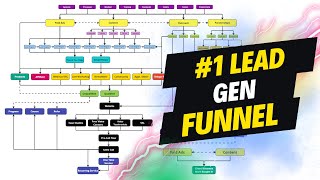
So here is how to make a cold traffic funnel that actually works. Now that is the question, right? It's one thing to try to make one, it's another thing to have it actually work. So this on the screen here is what a really successful one will look like. So the difference for this video and I guess for any video or reality between a cold traffic funnel and a warm traffic funnel is, you know, warm traffic would be like your referrals, you know, your networking, people you meet at events where they more so know like and trust you and are open to hearing what you have to say, where your cold traffic funnel or your cold leads are, people who might know about you, might have signed up for a form and that kind of stuff, but they're not really people who are giving you any consideration, you know, in terms of giving you money at this point. So this whole video, and this is going to be a how to video, like, you follow along, you make notes, you implement this into your own business. It's going to be how to make a cold traffic funnel that will take someone who just learned about you, who has no real intention of ever giving you money. You know, getting them to know you, to like you, to trust you, to view you as an expert to the point where they're going to give you thousands and thousands of dollars. That is what this video is about. So let's get right in. So this video is specifically for ads and content because this cold traffic funnel will work for both of those. It would not be used for outreach like cold email, except in some super niche specific cases. Cold email funnel is going to be different in and of itself. So as you're designing this, you really have to realize that both ads and content will deliver cold traffic, but the cold traffic from content will be considerably less cold as they know you and trust you a lot more from watching your YouTube video or reading your LinkedIn posts or whatever than someone who randomly clicked on your ad to download something. So as such, we're going to design the funnel in this video as if it was from paid ads only because that is the, what do we say, the lowest common denominator, the weakest link. I don't know how else I would describe it. Probably those aren't perfect analogies, but I can't think of anything better because what works for paid ads will always work for content, but the opposite is not always true. So part number one is this funnel I'm going to teach you here will flow through lead magnets. And the best cold traffic funnels always do so, so top of funnel traffic is driven by the paid ads and content and we collect their email address at minimum on a form in exchange for something which is usually called a lead magnet. Once that happens, they get our lead magnet, they're added to our email flows, they get nurtured and pushed down the funnel towards our conversion mechanisms, which we will talk about very shortly here. This video is not about the classic book a call funnel. So going through lead magnets is always going to outperform book a call or submit an application funnel in virtually every scenario. The problem with these funnels and what I mean by this is you run an ad, the landing pages, they book a call or they, that's it, right? The problem with this is they don't even know you or what you do. A lot of the time they don't trust you. You only capture the email address from people who book. So if 100 people go to the page and 5% of them book, you're only going to collect that contact information versus lead magnets. You can get upwards of 50 to 70% if you are running good ads, have a desirable lead magnet and a good opt in page. So in my view, there are two types of people who run book a call funnels. The first is idiots who don't know what doing this is going to be. The 95% of these and the 5% are people who have a $1 to $5,000 productized intro offer and then a high ticket or recruiting upsell that they could feasibly sell to the customer within 90 days of the initial booked call on top of the intro offer. That is very specific, it sounds like very niche. And this is the only situation where booked call funnels can compete with funnels that flow through lead magnets. So the thing about booked call funnels, and people typically will do them when they're first starting or you know, just do them in general, is that they get calls faster. You know, if you have a sales team that needs calls now, you know it can be very easy to justify doing this, right? It's going to get calls faster and more predictably than lead magnet funnels. And there's no denying that. But if you have any foresight whatsoever and you plan to stick for the long term and build a brand, then lead magnet funnels are much better. So the secret that you have to understand behind these book call funnels, so when you see people like Tai Lopez, Sam Ovens, like anybody who has scaled the shit out of their book call funnels, that you just can't get away from them over the years. You need to know that in 99% of cases they don't actually make any money when they sell you that course. In many cases they break even. In many cases they might even lose money. But they come out with multiple courses over the next six months, year, two years, etc. And they sell those courses to existing customers at a huge profit. The customer acquisition ad cost was already paid on, you know, the first course they sold, sale number one. They don't have to pay that again because you already know about them, you already trust them, you're already on their list, et cetera. And now they can sell their future products, courses, whatever, at 80% plus margins, even taking into account commissions, labor, etc. Like, this is fine, I'm not bashing them, it's good for them. But for you to get into paid ads and not understand this and copy that strategy without understanding this is going to. It's a recipe for disaster that's going to lose you thousands of thousands of dollars with almost nothing to show for it. So lead magnet funnels build brand, for lack of a better word. You can get people into your ecosystem to learn about you for much, much cheaper. It's not impossible to pay a dollar cost per lead or less for a USA based subscriber with a little skill, with a little testing and a little optimization. This gets people into your funnel to learn about you, into your ecosystem to engage with your brand, even if they're not paying yet for very, very cheap. You can win your trust with their lead magnets by really helping them, demonstrating you know, what you know. You have a ton of knowledge, a ton of skills, and you can demonstrate this automatically through your lead magnets at a very high level. You can overcome their objections, answer questions you know, give them their first few quick wins, and push them down the funnel with your email flows. Then you determine whether they're qualified or not with your conversion mechanisms like your paid products, your webinars, your live workshops, your groups, etc. And if they are qualified, you can get them on a call with the advantage of they've already downloaded your lead magnet, consumed it, read your email flows, you know, gone into your group or something. They already know who you are, what you do. They already trust you because you've given them in advance and so on. Far superior than the booker call funnel. Now we want to get into like this is the overview section of the video, but what really happens and what really needs to happen for the rest of the video is the cold traffic Funnel has to be simple, like when you're scaling it and you need to be, you're spending thousands of dollars per day and you're capturing leads and nurturing them and doing financial projections and budgeting and bookkeeping and testing creatives and you know, testing landing pages and qualifying leads and, you know, making new offers. It becomes complicated enough on its own, right? We don't need to add complexity and make it more complicated at the start. It will be plenty complicated if you manage to get it right and scale it. Trust me, that one. So the first thing I want to talk about is the content. And content shows up three different times, two times in the actual customer acquisition phase, and once after you get the customer. So the content is very important because it shows up at the top to drive top of funnel traffic. But it also is one of the best conversion mechanisms in your funnel. So these are the conversion mechanisms at that stage. It's not at all uncommon for someone to see a paid ad down, download your lead magnet, be added to your email flows and stuff, find your YouTube videos or your LinkedIn content, for example, you know, read them or watch them for 15, 30 days and then just convert. This does happen far more than anybody would let you to believe. And then content is actually good after because when someone buys from you, they follow you on LinkedIn or Twitter or you subscribe to your YouTube channel and they see this content over and over, training them and giving them more value. They become more bought in to your service and you in general more likely to do what you say, less likely to be annoying, less likely to churn. So it really is important because it helps you get customers in two ways, but it also helps you retain them as well and have a better experience. So content should be posted on LinkedIn, Twitter, Instagram, Facebook, YouTube, TikTok, you know, @ a minimum, not really sure any other platforms, but you might have a blog and that kind of stuff. You should have your links in the bio to your lead magnets, the descriptions, the post, etc. You shouldn't be going for the call in your content. All of your stuff should be, you know, how do I get them to download my lead magnets? Because in general you want to grow your email list, you don't want to go for the call because you could get probably 20 to 50 more people on your email list through lead magnets than you could for one call. And those people will convert over time. It just takes a little time, a little delayed gratification. Let's say paid ads is up here. In the funnel. It's also one of the top of funnel traffic sources. And this is going to be the most scalable. When you do it right, when you do it wrong, it's going to be the worst. When you do it right, it's going to be the best. So the paid ads will all be centered around signing up for a particular lead magnet, with the primary goal of growing the email list for as cheap as possible. So the ad creative, the copy, the landing page, all of that kind of stuff will be centered around promoting the lead magnet. So, you know, the ad would be like, download my free checklist or something like that. A little bit more salesmanship and, you know, grace than that. But that's what it would be like. In many cases, you'd actually work backwards, starting at the lead magnet, because if you don't have the lead magnet created, you don't know what it's called, the idea, like, it's going to be a hard time making the ads for it right. So Facebook ads are typically going to be the best for this type of funnel. You know, Twitter ads usually have low quality subscribers and bad targeting. LinkedIn and YouTube, you know, have the right quality, but they're just far too expensive to make it work. And the Target audience on TikTok is typically not the best for this. So Facebook and Instagram ads are typically what you want to use. The lead magnets are here. So you'd send your paid ads to your lead magnet, your content to your lead magnets. You might have multiple lead magnets and you might have multiple campaigns, but I'll go over that later. So the best way to make the lead magnets and come up with ideas is to talk or to brainstorm six to 12 main subcategories of your target market and then make lead magnets to completely address or solve or whatever you want to call it, these subcategories. So the lead magnets should be basically free, super amazing courses on a particular subject that are better than people charge thousands of dollars for. At its core, that is what a lead magnet is. People cannot read your mind. This is the most important thing in the lead magnet section of this video for you to remember. People can't read your mind. And if your lead magnet is basic and half assed, they will think you are basic and half assed and they won't hire you. Your lead magnet should be so in depth and valuable that people really have no choice but to view you as an expert. Just it should be so good that they can't view you in any other way, it should be simply too good to fail. That's the mindset. So it's very, very important that when you're doing this, you make your lead magnets and your subcategories interesting and desirable to your target market, but only interesting and desirable to your target market. And an example, if you were like me in the past and you were trying to attract e commerce stores to your landing page and Xero service, let's go with Xero here. You might offer, you know, a checklist of a B test to run for their store. Beginners won't even know what the term zero stands for or means, so they're kind of disqualified. Zero is conversion rate optimization if you are a beginner here. Dropshippers typically move from product to product and store to store. They don't care to do zero. People outside of E commerce typically won't have any idea what zero stands for. But people who are doing over a million a year and have an E commerce store will know what this is and will want it. That's a perfect example. In comparison, if we ran something like free Facebook ads for this, you know, beginners would want these. Dropshippers would want these. People who have not even started a store would want these. People who aren't even in E commerce might download these as well. The problem with that is your list and your pixel data start to become clogged up with people who aren't even in your target audience and will not buy from you. And that's one of the worst things that can possibly happen. If people are downloading this, that sends a signal back to Facebook that, you know, that's someone who wants this. It starts to look for other people who have similar profile attributes, interests, age, gender, location to that type of person. And if you're sending data back who is basically the wrong person, like that is going to take you in the opposite direction that you're trying to go. The landing page is the next part. So basically we'd post content or run, you know, paid ads to a website URL, which will be the landing page. It has a form and if they sign up for the form, that is, they're going to get the lead magnet, basically. So what's important to understand is less is more. And it can be as simple as something like this, you know, headline, sub headline, a benefit or two. And the form, it does not need to be, you know, super long, super in depth, super elaborate. That actually typically performs worse than something simple. You should also have different landing pages for content and Paid ads, even if it's the same lead magnet. So for example, this is a content one. Here you can ask for more information in your content 1. So the name, the email, the phone number, the website, the revenue, et cetera, you can do this because people are inherently warmer, like I said before, from content than they are from ads. And they'll be more willing to give you that information than someone who just clicked on your ad and doesn't even know you yet. It also doesn't matter as much because you know you're not really paying anything to get them to sign up. The content is free or very cheap to produce, but with, you know, paid ads, you have to pay a lot of money for that stuff. So it's a little bit different when you do the landing page for paid ads, you want the exact same landing page in terms of the lead magnet, the headline, the sub headline, etc. But if possible, and as a general rule of thumb, there are exceptions, but as a general rule of thumb, you never want to ask more than the email. So for example, this one asks for five fields, this one just asks for the email. So the reason for this is you want it to be as low friction as possible. As a general rule of thumb, you know every form field you add is going to increase your cost per lead from ads by about 50%. So if you have five fields instead of one here, you know, you can expect a three to four times higher cost per lead with, you know, the compound effect as opposed to just the email address. You can and you will get their name, their website, their email, etc. Anyways later as part of the conversion mechanisms. That's why the full funnel is so important. The next is the email flows and they're right here in the funnel. So paid ads or content to the lead magnet in the form form is connected to your email flows which start to trigger. You'll need two different types of email flows here. You can divide them into two categories. One would be the first 60 minutes. So what email flows go in the first 60 minutes. And the second category is what email flows send in the first 30 days. In the first 60 minutes you're going to want to send them a minimum of four emails, but as many as you want. That makes sense. The first one is you're going to deliver the lead magnet and the following ones are going to be able to communicate your offer, what it is you do, what problem you solve, how you solve it, why someone would buy from you. It's much more important that you communicate your Offer to them. Them not knowing or remembering who you are is far, far worse than them unsubscribing. Trust me. Much more important to essentially spam them. You don't have to spam them. You could make these emails very good if you wanted. Much more important to spam them and have them remember you and what you do than them unsubscribing. Very, very important mindset to adopt. In the first 30 days after this, you know, the other flows here. You're going to want to send them one email per day. And each of these emails will, you know, the purpose will be to overcome and address a common objection or FAQ that have to do with you or your service. And you don't have to just do it that plainly like, you know, FAQ in brackets. And then here's the answer. You could use stories, logic, no emotional copy examples, etc. Or you can just, you know, do it black and white FAQ. In this 30 days, you want them to remember what you do as well as, you know, tackle every single possible objection. The conversion mechanisms are down here. So basically you want your paid ads and your content to drive traffic to the lead magnet. When they submit the form, they're going to be redirected to your thank you page and be added to your email flows, which will promote your conversion mechanism of choice. And the purpose of this, I'll go over in a second here. The final part of the funnel is the conversion mechanism and you choose to use. So typical ones will be the paid ads, the webinar, vsl, the live workshop, the newsletter, the community, whatever, whichever one makes the most sense for you and what you're selling in your business is the one you should use. There's a lot of different options. You can also have different ones and multiple, but you're always going to promote one of these as your primary one. The conversion mechanism fulfills two different purposes. Number one, it allows you to enrich your data by asking for more information. The name, the phone number, the URL, etc. You ask this when they want to sign up for it. And this is a great way to enrich your data and to compensate for the fact that when your paid ads landing page, you only ask for your email. So that's what I meant, you only got the email there, but you can get the other information here, so it doesn't really matter. And the second way, or the second purpose of a conversion mechanism is to help you determine who's qualified and who's not. So you'll do this you know, partially from the data you collect, the name, the phone number, the revenue, etc. And partially for them self qualifying. If they're watching your webinar or reading your newsletter or they're in your group and you know, they decide that this is for them, they'll just book a call. So that is an example of self qualifying. Next is the lead magnet. So the overview kind of went over this. Now we're going to get into the actual specifics of this stuff. I kind of went over them, you know, one or two slides, but here are the specifics. The nitty gritty. Because you're going to have to understand how all of this works in you know, a granular sense and a great detail if you want to make this work. This is not, you know, something you watch a 20 minute YouTube video up, which is the time we're at now and you, you know, you magically have it here. So like I said, brainstorming lead magnets. The best ways to think of these subcategories, I used to sell E commerce landing pages. So my subcategories in this stage were site speed, the above the fold section, the headline the offers the hero image analytics, testing, copywriting, design as well as some few others like that is an example of what it would look like when you break it down. These were extremely in depth and from the point of view of my target market, my knowledge and skills were in depth. Remember, no one can read your mind. If you spend 200 hours making 10amazing lead magnets, you're set for life. And if you spend, you know, five hours making 10 lead magnets, you're actually hurting yourself because people think your knowledge is basic and superficial and you don't put a lot of effort in the things that you do. So the mindset that putting in 10 times the effort to achieve a thousand times the result is the correct one here the bar isn't set very high. So if you put in 10, 20, 30, 50, 100 hours into your lead magnet, it's going to pay off 10 times from that. You want these lead magnets to be so good and complete that they intimidate people into working with you. That's tongue in cheek, but not really. None of the people you that could potentially hire you want to do this work themselves. Give them every single secret, don't hold anything back. They just want to know that you know how to do it. And if you can convince them with that, with the in depthness, it's not a real word. The knowledge, the effort, everything in Your lead magnet, they will hire you. And if you do it half ass, and you know, it's kind of insulting that they even spend the time to download it, they're not going to hire you. The rules when making lead magnets are what we call at a thousand x leads the VAR formula. So value, even though the lead magnet's free, would you honestly pay $50 for that? If not, not good enough. You gotta improve it. A stands for actionable. Is there an exact step, step by step plan that they can implement within 24 hours to get their first quick wins? If they do this and they get their first quick wins, they'll begin to see results. They'll trust you more. It's not just because we're being nice. We're providing a step by step plan for our own purposes. And then R is readable. Is there one image and idea per slide? That's for maximum readability. Nobody wants to read a big wall of content. It doesn't matter how valuable and actionable it is if it's not readable and no one actually consumes it. Very important. Part 3. Here is the opt in page. So this is the page you know, this is the link and the page that your ads would go to, your content would go to, etc. So simplicity is key. We don't need any fancy designs or graphics or videos or to show truckloads of social proof. Maybe one or two would be good. But get to the point. The main leverage point, like the thing you can improve is your offer, which is what your lead magnet is. And to some degree that's going to be the 8020 rule here. So the main metric we want to track here is opt in rate, which is, you know, the form submissions or leads divided by the total clicks times 100. So we want to aim for an 8 or 70% opt in rate from Facebook ads specifically. It might vary from content and other ad platforms, but when we're talking about Facebook and Instagram ads, 70% is what we're looking to shoot for. Anything below 50% is just flat out not good enough. But we're aiming for 70%. The offer and desirability of the lead magnet is going to be the main thing that determines our success or failure. Some, you know, lead magnets are more desirable than others, you know, some are boring, some are sexy, some are flashy. And we want to prioritize the sexy and flashy ones while still maintaining the value and the quality. We're not just clickbaiting them, but the desirability of your Lead magnet compounds at every step of the funnel. The more desirable it is, the higher percentage of people will click on your ads, which means you're getting traffic for cheaper. Higher desirability will also mean a higher opt in rate, which means you're getting more leads in addition to cheaper traffic and the lower cost per click. And higher opt in rate means a lower cost per lead, which all things being equal, means lower customer acquisition cost. The opposite is also true. A lamer or less desirable lead magnet means higher cost per click, lower opt in rate, etc. And there's a very fine line between testing and optimizing your results versus deciding your lead magnet is just not that desirable. And you should make a new one very fine line. I'm going to leave that one up to you. The headline will be 80% of the effectiveness of your opt in page. Let's see if we can find a example here. So the headline is going to be what most people read and that's where you should put most of the effort. David Ogilvy, the founder of Ogilvy, one of the best advertisers in history, used to say that once you've written your headline, you spend 80 cents of your advertising dollar. And that's correct. We don't want to get too fancy with our headlines. We want to match our headline to the message in the ad. So think about it. Someone's clicked on your ad, they're interested in that messaging or they wouldn't have clicked. Why would you change the messaging on your opt in page? You want to keep it consistent and coherent in terms of your headline. Sometimes the best copy to sell a horse is horse for sale and it's no different with your lead magnet. Here the form should be email only for ads. For content you can do a lot more, but keep it to six fields or less. And you can create this form in your email marketing software or CRM and you want to embed it in the landing page. So this would be embedded here. Finally, like a decent way to get a 10 per 20% boost on your conversion rate or your opt in rate is to include bonuses and these can increase the perceived value quite a bit. Should be related to the lead magnet. But you know, if they're not, that's not going to be very helpful I guess. But it really can help that 10 to 20% extra gain that you could make all the difference. So it's something to consider. Part four is the conversion mechanism. So you're going to want to choose your most important one. If we remember Our conversion mechanisms, we have our product, our webinar and vsl, our live workshops, our community and that kind of stuff. So we might have all of these things right, but we want to choose the most important or the primary or the most dominant one. As you know, for our primary conversion mechanism when we go to ads, this is the one where all of our email flows and thank you page and retargeting ads and that kind of stuff will try to get people to engage with. So I strongly prefer a group conversion mechanism because you can develop real relationships with people, you know, you know, in the weeds I guess you could call it. But it also takes by far the most work. You know, a webinar, you know, paid products, that kind of stuff is kind of automated once you set it up the first time, where a group is a lot of ongoing work. So a group is going to be the best if you do put in the work, but if you don't, it's going to be the worst. You're going to have to decide which one of these conversion mechanisms is going to be best for your business. And most of the time it's going to be quite obvious. So the first thing you want to do is promote on your thank you page, which if we scroll in is right here you have your email flows and your thank you page. So when they submit the form, like let's say they submitted this form, it should automatically redirect to a page and that will be your thank you page. So when they submit the form, you know, use the thank you page to promote your conversion mechanism. Think of this thank you page as the sign up page for your conversion mechanism. A good rule of thumb is to shoot for 30% of people who to convert from lead magnet to conversion mechanism. Not all of them will, it's just a fact of life. Because it's not their intention to sign up for your group or your webinar or whatever their ad is about the lead magnet and they clicked on it with the intention or purpose of downloading the lead magnet. So this is extra, this is bonus. So you can get people to sign up for your conversion mechanism through your thank you page and email flows. So for a thousand x leads we use a group as our primary one and this is the sign up page for that to gain access to the conversion mechanism, whether it's a group, a webinar, whatever you, you would want to get them to put in more than just their email. It's a higher perceived value they've already committed to you. Once you can get Away with this a lot more. So I'd recommend asking name, email, phone number, revenue and their URL. At a minimum, these will be the five general ones. If you know that there's something more specific for your particular business or industry, you know, change it to whatever that is. But this should give you more than enough information to determine whether they're qualified or not, assuming they're telling the truth. Right? It's great because you can get this information still with your conversion mechanism, even if you only ask for the email on the original opt in page. And this is what makes it possible to only ask for the email here. If this wasn't possible, if you didn't have this in your funnel, you'd be screwed here because If I put matt123mail.com like, great, I'm on your email list, but that doesn't give you any indication whether you know who I am, what my company is, if I'm qualified or not. So this is necessary because this is what makes it possible. Without it, it wouldn't be possible. So you might ask stuff like membership questions to join my group. What is your email? You know, basically confirm this with hopefully they use their business one, maybe not. What's your phone number? You'll be denied if you don't fill out a valid phone number. And what is your monthly revenue for school, which is my group platform. Unfortunately, you can only ask three membership questions, but you'll see their name, you know, when they join the group, so you don't have to ask that. And all you're really missing is their website, which you know you can get with your appointment center. The email flows here, so lead magnet delivery email is the first one in the first 60 minutes, so ideally take three. You want to do three things with this. In addition to obviously delivering their lead magnet, you want to get them to reply to the email that will help the deliverability. Click a link will also help the deliverability and move it from their junk to main inbox if possible. This should have as few words as possible because the more words it has, the less likely they are to see the part prompting them to say yes. So in my subject line, you know, reply required. That kind of primes them. Reply yes as soon as you've received it so that I know it went through. If I had a big wall of text here, like that part might get lost. And then here's the link that they click, which is the lead magnet link. The three emails after this explain your offer and they should be in rapid succession within 60 minutes of signing up, preferably within 20, because you're never going to have their attention to the same degree, their full attention, like you will within the first 20 to 60 minutes after they sign up. And these emails should explain your offer. So think of these as three ways. And it's way worse for them to not remember you and to not know what you do than it is for them to unsubscribe. So email number two, you know, the lead magnet one was number one. So you know, this one will be what problems your offer solve, why they need to solve them now, and how you solve them. Like these would be an example of, you know, what you would do in these emails after that, you know, in your second flow, the 60 minute flow is kind of done now. You would do one email per day for 30 days, like I said before, and each should answer or overcome or address an FAQ or objection about you or your service. So after these 30 days are up, you just, this is where your newsletter kicks in. And that's how you convert people with your ongoing, you know, broadcasts, newsletters, single emails, whatever you want to call it. So this is what it might look like, you know, FAQ here, you know, down here on the side, tons and tons of different FAQs and objections. Part six is the content, because we're working backwards because like I said, we kind of need to have the infrastructure up before we ever set up the ads or do the content. So you want to, here's a strategy for Twitter and LinkedIn and Instagram. Post three FAQ tweets per day on Twitter. These would be the same like, you know, addressing FAQs and objections in different ways, storytelling examples, you know, just how to, whatever. Post two threads on Twitter per week. These are just longer versions of the same thing. Post three images or graphics on Twitter per week, taking complex concepts and simplifying them. Post one auto DM on Twitter per week, which is, you know, comment and like and retweet this and I'll send you X, Y and Z and then post one tweet promoting your services every day. It all starts with Twitter. And then you cross post the exact same thing to LinkedIn and hypefury so you don't need to keep making original content for each. This is the perfect strategy and it's also very quick to execute and to make sure you're posting on all platforms. Platforms. You also want to post one unedited, highly technical, long form YouTube video per day. Kind of like the one you're watching now for Proof of concept. This is one of the top three things that I've ever done. No script, no edit, maybe a presentation, a mural board, a Google Doc, whatever, and actually try to teach people something. Pretend you are a professor and actually trying to help someone with no expectation of, you know, you getting anything in return. Because that's the kind of quality and mindset that actually leads to getting things in return. Most YouTubers are heavy on the editing and retention tricks and light on the substance. Do the opposite. Short form video the easiest way to come up with this is to take your most liked tweets. You know, you're posting five, six, seven tweets a day on LinkedIn and stuff too. Sort by engagement. Take the most liked or most, you know, viewed tweets and turn them into short form video ideas. If people like your tweets, that's an indication they like the content and the topic. So why wouldn't people like the short form video as well? So you want to post this on, you know, YouTube shorts, TikTok, Instagram and Facebook reels, that kind of stuff. And this is going to also help your paid ads because if someone clicks on your Facebook or Instagram page after they see your ad and they see a bunch of short form videos that they can watch, they're going to trust you. They're going to be much more likely to click and download your lead magnet as opposed to an absolutely bare profile. So doing this also helps your ads and finally the ads here. So do not run ads without all of this. Without a lead magnet, your ads are going to suck opt in page, you know, self explanatory. So without the 60 minute flow explaining your offer, like they're going to get confused. Without 30 day email flow with all those FAQs, they're, you know, going to have too many objections. Without the thank you page promoting your conversion mechanism and your conversion mechanism not capturing and enriching all that data. Don't run ads. It's all or nothing here. If you don't have these six things, it's not going to work properly. It's like if a train track was missing. Just, you know, pieces of rail fall apart pretty quickly. Your ad creative is the most important part of the ads. And something I believe very, very strongly is in the idea that the ad makes the audience. So what this means is, you know, what you promote in your ad, the copy, the imagery, whatever, is, you know, there should be no reason for someone who's not in your target audience to click on the ad. And that's What I mean, you don't need any targeting or tricks. Your ad will call out and only be appealing to your target audience. And over time, the algorithm will see who opts into your lead magnet and find more and more people who have similar profiles and show the ad to them. And even if you start at scratch within three months and a few thousand leads, the algorithm does a very, very strong job targeting who you're trying to target when you're starting. There's three different formats that are very basic and templatized that work well for all businesses and all lead magnets. Their notepad app, note apps, ads, sticky note ads, and video with text overlay ads. These are obviously not the only way to do it, but they're very good for beginners and you can make a ton of ads in a short time without any designer or creative ability. So this is an example of a notepad app. So you just do this on your iPhone and screenshot it and crop it and send it to yourself and put it in your ad account. This is a sticky note ad. You just buy a sticky note pad and hold it up and maybe have a background and put some text over it. You could even write this with a pen, like actual on the sticky note if you want. This is edited after the fact and this is a video text overlay. Like just pretend this is a video. The video doesn't play in the document, but you know, you'd have a hook at the top and you know the offer at the bottom with some stock footage or if you have your own footage in the background, no real editing, it's just eight second background video. Just to turn it into a video instead of an image. Because there's different placements for images and videos on Facebook ads. Like I said before, the headline will be 80% of the effectiveness. And that's what you'd want to test the most. Like in these bullet points here, you'd be getting a lot more bang for your buck just writing different headlines and keeping these constant. I'm not saying don't test them, but it's just the reality. Same with this here and same with, you know, the top part is going to be the part you want to test. The lead magnet is going to be the focal point of the ads. If you kind of see that, you know, you know, try out the system. In this case, the system's a lead magnet and you know how you word or sell. The lead magnet in the ad is going to play a big role in the effectiveness of the ad. You could Say free email deliverability guide. Or you could say, make sure emails never go to spam again with this deliverability masterclass. Same lead magnet, different way to phrase it, way different result. So don't use targeting when you're doing this. It'll make your ads worse. And the reason for this, because not a lot of people grasp this concept. If your interest you chose was Ford trucks, for example, a third of the people in that audience would like Ford trucks. 33% would hate Ford trucks, but would still be in the audience because they're interacting and talking shit about ford trucks. And 33% would be mistagged and indifferent. So if you have interests like this, you know 66% of the potential people who are interested are not going to be showing the ad. And that's just as simple as that. Keep it broad. Let the algorithm do the work for you. Facebook's a trillion dollar company because of their algorithm. It can target a lot better than you. Trust me, you want to call your audience out in the copy. So this is important because like I said before, we only want our target audience to be interested enough to click. So do you want more leads for your agency? Download these 12 free trainings. If they don't have an agency, like why would they do it? And secondly, when you have, you know, your keywords here, your target audience in the copy in the headline, like that's another indication for Facebook to go and find that person to know who your target audience is. So the final part here I believe is going through the math. So what would this actually look like? So the funnel would go something like, you know, you're running paid ads to a lead magnet. They hit your thank you page, they join your group, your email flows, etc. And you use that data in addition to them self qualifying to determine if they're qualified or not. If they are, they'll go to your website, book a call, sales call. So what does this actually look like? So one of the most important metrics will be your cost per subscriber. We should make note that I'm using the word subscriber instead of leads. A subscriber is anybody who opts into your lead metric. Magnet. It's not accurate to call this group of people leads because 99% of them will not be qualified. And at this stage we won't know who is and who is not. That's why we need our email flows and conversion mechanism. 99% of these are not going to be qualified due to fit price. They have an agency already. They do it for themselves. Whatever, doesn't matter. So because of this, we need to get our cost per subscriber as low as possible. We want to aim for $1 for USA audiences and settle for 2. Anything higher than that, it's kind of too much to be honest. And it's just the way it is. That's why we're shooting for that 70% opt in rate. Because if we get 70% opt in rate and we get a 70 cent cost per click, that is $1 subscriber. It's not just random numbers that I throw out for the video. Both of these are achievable and that's how you would actually get a $1 subscriber. The next metric we want to track is our activation rate. So this is basically what percentage of people who sign up for a lead magnet join our group or sign up for a webinar or whatever. I said before, a good benchmark is a 30% activation rate. So if we got $1 cost per subscriber and 30% of those converted to our group, for example, that would be $3.33 per group activation. And the final thing we need to track is the conversion rate from our conversion mechanism to clients. So what percentage of people who join the group end up being full paying clients? For example, we got $1 cost per subscriber and 30% of people join the group. That's $303.33 per activation. If one in every 200 people who joined the group became clients, that would be 200 times 333, which is a $666 cost per acquisition. So once we have that number and you, you know, a large enough sample size, we can accurately track our ROI and project future earnings. So we want to plan and budget for a 90 day sales cycle in terms of ad spend because you know, it might be shorter than that, but it might not be. If it's shorter than that, great. If not, at least you're prepared. So 95%. Now remember this, 95% of people downloading your lead magnets, maybe 100% are completely cold. They've never heard of you before. They don't have the goodwill that your current audience does. You know, that's completely irrelevant to them. So it's like a full consideration cycle. To improve the funnel, we can do one of three things. We can. And improving the funnel basically means getting a lower customer acquisition cost can get a lower cost per subscriber, a higher activation rate or a higher conversion rate. So if instead of $1 cost per subscriber, we got 50 cents. You know, our customer acquisition cost would be cut in half if we got 40% of people to activate from lead magnet to conversion mechanism. You know, our cost per lead would go down by 33% I believe. Hopefully that math's not wrong. If we got one in every hundred people who joined the group instead of one in every 200 people, our customer acquisition costs would go in half. So these are when you ask a question how you improve your ads, like this is what it is. So if you want to improve your cost per subscriber, higher landing page opt in rate or lower cost per click, which is a higher click through rate. This is broken down granularly. You want to get a higher activation rate, you give them a better incentive to join or you make a more persuasive thank you page. Or you get a higher click through rate in your emails which promote it to get a higher conversion rate. There's tons of things you could do. Post better content to nurture them, be better at appointment setting, be better at sales, make a better offer, have more proof that your stuff works, and 20 other different things. But when you ask the question, and I get this question many times per day, even on the weekends, how do I make my ads better? Like this kind of question implies to me that the person has no idea what they're doing and is in way over their head. You shouldn't run ads at all without understanding how you actually make them better. So if you want to improve your ads, you need to do these specific things. Like these are the only things you can do to improve your ad. And it's important to understand that 90% of the things you can do to improve your ads have nothing to do with the ads, the creative, the copy themselves. And that's a truly epiphany level thing that you need to understand when trying to do this. And if you don't understand this, you're gonna get crushed. You know, what percentage of people join your group has no relation to what ad creative you're running. How many people convert from you know, group to paying client has nothing to do with your ads. The ad is the least of your worries. And what comes after is what you should focus on. Everything that comes after the actual ad is going to have a higher impact on your ad performance in terms of real revenue than anything you could ever possibly do to your ad. And you have to understand that this is, you know, how you make a cold email funnel that actually converts. I hope this was a very useful video and a good use of your 46 minutes. Thank you for watching, and I'll see you in the next.
More from Matthew







Everything I Would Change About This Ecom Email Marketing Agency (3 HOUR LIVE AUDIT)

Everything I Would Change About This Meta Ads Training Business (3 HOUR LIVE AUDIT)


