How to Scale Your Agency Faster Than Ever Before
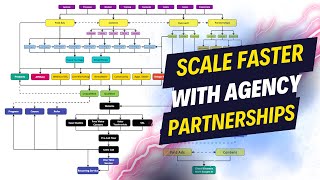
YouTube tutorial explaining why partnerships are the highest-leverage client-acquisition channel for agencies compared with paid ads, content, and outreach. The creator defines four partnership types (white label, referral, media, joint venture), four forms of leverage (media, capital, labor, code), and gives practical tactics for finding, pitching, and structuring partnerships using an e‑commerce email-marketing agency as a running example.
Chapters
This video is going to teach you the most important or the highest leverage, rather way to get clients out of the four paid ads, content, outreach and partnerships. And as you can see, it is partnerships. So there's going to be four main types of partnerships that I'm going to go over. There's going to be white label partnerships, there's going to be referral partnerships, there's going to be media partnerships, and there's going to be joint venture partnerships. All of these are different, but they're all forms of partnerships and they're all very high leverage. And what do I mean by leverage? I mean that there's four types of leverage that you could have. That leverage will take you, you know, help you go bigger, faster and with less effort. When the difference between the people you see who are going from 0 to 900k in under a year or even, you know, know 0 to 500k in a few years, or they get to a 30 or 40 or 50 or $100 million agency, it's because they have more leverage in their business and not the kind of leverage that you do to trade crypto or buy stocks. But there's media, there's capital, there's labor, and there's code. And leverage is basically the difference between what you put in and what you get out. Right. This is an Alex Hermosi chart here. So if you can incorporate more media leverage, more capital leverage, more code leverage, and more labor leverage, you're going to grow a lot faster because there's, you're going to get way more out than you put in. So example of media leverage would be like the YouTube video you're watching right now. I create it one time and thousands of people over its lifetime are going to view it. Instead of imagine me trying to explain this to a thousand people or 10,000 people, however many people end up viewing this video over time. Imagine me doing that one on one 5,000 times instead of just making this video once and putting it on YouTube. That's a good example there. A good example of capital leverage is an ad funnel that's profitable. If you put in $1 in ad spend and you get $2 or more out, that's a great example of capital leverage, code leverage. If you can use AI or software to automate a lot of your stuff, that's an example. There's. And then we're talking about labor leverage. So sometimes a labor leverage is maybe you're very, very good at training employees and you can just train anyone into a superstar. That's one form you could use VAs or overseas talent. Or in this video, you can use partnerships. See, how is that labor leverage? Let's say you have five white label partners, you have five referral partners, you have five media partners, and you have five joint venture partners. That's 20 partners instead of just you and all of your efforts, you're essentially benefiting from the efforts of yourself plus other people. So you're one person. You're benefiting from 20 people, 21 people's labor. That's an example of labor leverage. And that's why partnerships are going to be so powerful for you. So partnerships, like I've said, extremely high leverage. If you get one client, you get one client. But if you get one partner, you could get 5, 10, 50, 100, even more clients over time. We're taking advantage of other people's labor. Their audience, their clients become your clients through partnerships. And partnerships will give you an aura of legitimacy and status. Kind of. If you have a good ad funnel, that's one thing. You're great at content, that's another thing. You are absolute God at outreach, that's one thing. But if you have hundreds of people partnered with you, that's like a very big network that is going to help you grow faster than anything else. So let's get into the types of partners, because I mentioned it at the kind of the first minute of the video. But what are these types of partners? So there's white label, there's referral, there's media, and there's joint venture. So white label partner would be they're paying you to do work for their clients almost in like a silent partner or a subcontractor arrangement. For example, one thing I used to do, I had a landing page agency. I partnered with media buyer agencies because they need landing pages for their clients. And they would pay me $5,000 a month to essentially make unlimited landing pages for their clients. And it was unlimited, but it was basically up to six, because each one takes a couple of weeks. You can only do three at a time in that arrange. But that's besides the point. Referral partners is probably the most easy to understand because you have probably people referring to you, you've referred to other people. But it's doing this not as like a friend or, you know, one of or every now and then. It's more of like having it as an institutionalized marketing channel in your business that you take as seriously creating. You take as seriously creating these referral partnerships as you would content or paid ads or cold email or fulfilling Your service media is kind of like if you get on someone's YouTube channel or you get on their podcast, or you speak at their event, or you do a guest post for them, or you're featured in their newsletter, you're essentially taking or leveraging their audience to for your own purposes. The partner gets interesting content. Maybe you have some name value, maybe not. And you get all of those eyeballs on you for basically free or a very good price. And you kind of get the, the goodwill that they have with their audience just kind of transferred to you. So it makes it even better. And a joint venture is you combine with your partner to make an offer that's greater than any. Anything you could do on your own. For example, with a thousand X leads, my consulting program that obviously helps you get more leads by the title or the name of it. Us partnering with someone who trains appointment setters is a great joint venture because if we generate a ton of leads, they're going to need an appointment setter to turn those help turn those leads into calls. So that would be an amazing joint venture opportunity. So let's go to the examples that I didn't kind of forgot that I had here, but. Media buyer agency hires landing page agency or a media buyer agency refers clients to Landing page agency. Landing page agency owner goes on ecom podcast. Landing page agency owner partners with media buyer agency to make a customer acquisition course. That's. That's examples for a landing page agency that you could do for partnerships. The most important thing. Well, there's three very important things when you're trying to make these partnerships. Because maybe at this point sounds good, but like how, right? The devil is always in the details. There's three things that you really want to think about or incorporate into your pitch. Number one, what's in it for them? Number two, and this is gonna be the most important. How do they know you're not gonna embarrass them if they recommend you or put your, you know, hire you to do white label or bring you on their podcasts or whatever? How do they know that you're not gonna screw them over and it's gonna be good quality, you know, permanently? And then the third thing is how can you make it easy for them or their clients to say yes? And I'm gonna go through all of these in a deeper sense for the rest of the video. But basically what I've done is because I feel like people would benefit from, you know, an actual example instead of a theory. I've chosen an E Commerce email marketing Agency as the example. And I've put together like what they might do for each of these partnerships. So all of these are going to be built in mind with these three things. What's in it for them? How do they, how do they know you want to embarrass them? How can you make it easy for them to say yes? So let's get started. The thing about white label and referrals like these two types of partnerships is you're going to approach them the same way. The same type of people approach the same way. It's more of a preference of how they want to work with you, whether they want to keep it, you know, the contact, the relationship with the client purely with them and they would white label you or if they just want to refer the client to someone, then they would do a referral. So in this Ecom email marketing agency I've listed a few different types of partners because when we are, when we are building these things, you know who sells to the same ICP as me but is not competitive with me. That is the only question you need to ask yourself to decide like who you should be partnering with. Because a lot of people will sell to E commerce stores. You know, there's tons of different services that E commerce stores do hire for and not all of them are email marketing. There's web development, there's landing page builders, slash apps for landing page building. There's media buyers, there's Apple SEO, there's user generated content, there's ad creative, there's influencer marketing, there's actual email softwares that they use that could send you leads, perhaps in referrals send Lane and Clavio. There's apps that use email that aren't necessarily email apps. But if you don't know anything about E commerce, I just listed a few like Skio, postscript, subscription apps like things that work off of email that their clients would probably need someone to do for them if they weren't looking to hire. These are all different ways to do it. So how would you contact these partners? There's a few different ways. Prospecting is when you just go out and look for these partners, whether it's on LinkedIn or Twitter or whatever, networking, probably self explanatory. So I'm not going to go through it too much. But for cold email what you can do, what I used to do is you can go like E Commerce Agency or something like that. Punch Co is the website and now you have a list of all of these firms and then you just either hire someone or if you know anything about scraping, you can scrape all of the emails from this and then validate them and then that becomes your cold email list. You can do that for basically anything in terms of this kind of partnership, anything. Media buying. So let's do this. 4,983 firms, you can either, you can even go like if you know that you want to do it in the United States, sort by budget, sort by E commerce and then get to it. Like that's how you would scrape a list for this. For cold email prospecting you would just go LinkedIn, Twitter, try and find it. But that's basically the things then going to events, meeting people in real life, just networking is always a good option. So this is how you would find these partners. Hopefully you've been in the industry long enough or you would know these people that you're probably going to partner with or at least know people who could introduce you. But that's kind of not part of this video. So the first thing we want to do once we found these people is we want to make them an offer. And remember what I said earlier, what's in it for them? How will you ensure you don't embarrass them? And how will you make it easy for them and or their clients to say yes? So the important thing here is what's in it for them? It cannot just be, I'll give you 10% lifetime commission. That's not, it's not good enough. And it's not going to work at scale. Anybody will offer them 10% commission almost if someone is going to give them leads. There's no difference between you and anyone else when you're doing that. But we got to think like what's in it for them? And I've put media buyers as an example because it's going to be different based on who you approach. Right. So what is in it for them? What do media buyers want? They want lower customer acquisition costs. They want better performing ads, which is kind of the same thing. What else do they want? They want to increase their retention, their lifetime value. So our email or our welcome flow that we do for our email marketing will help you get a lower CPA on your ads because it's going to convert better. It's in a seven day window that your ad attribution is, it's going to look better for your client because CPA or CAC cost per acquisition or customer acquisition costs, the same thing is their most important metric and you're helping to lower their cpa. That is what is in it for them in addition to the referral fee? Because you probably should give them a referral fee too. But not just this. Everything, both of them. What's another one? You could offer email as part of your agency which means you'll have higher retainers and maybe that will equal lower churn. Because now they do media buying email and the client, if they were going to fire them would have to replace both instead of just one. So it might be too much effort and they might get more leeway. That's what's in it for them. Not just a 10 recurring retainer or something you notice. I'll cover. I color code coded these just to make it obvious. So how will you ensure that they you won't embarrass them. So number one, case studies, testimonials, any kinds of review or social proof so they can check you out. This is why partnerships are typically like if you're just starting and you have none of this, typically you go outreach first because it's free, I guess easiest. Then once you learn stuff, you make content, once you get money from content and outreach, you do paid ads. And then once you've got to this stage you probably have a decent amount of track record and case studies. So now you can start part partnerships. But it's very hard to get someone to partner with you if you don't have any of these things. So let's get back to where I was. One of the number one problems that I found, and this is through trial and error is like especially if you have a lot like a recurring service that they're referring or white labeling to you is how are you going to ensure like that you're not just going to leave that you're here for the long term. That's. I didn't think of that before I started doing this in at scale but something that is definitely to consider because especially if they're white labeling your services, if you're not really committed, you're still figuring it out and you change your offer and stuff or whatever. And how do they know you're not going to quit in two months and now they're charging their client for this retainer for your white label service and you're gone in the wind. So always touch on this I think. And then the last thing here is a combination of both. How will you ensure you don't embarrass them and how will you make it easy for them to say yes, this is the, the smartest thing that I have found. I guess you could say free work doesn't have to be extensive, but it should be something one time fee. If you do free work, your partner is off the hook. You're not going to embarrass them because the client didn't pay anything until verifying you know what you're doing and then it's their decision. Your client is completely off the hook and free work makes it a lot easier and less friction for them to introduce you to their client and their client to say yes. Introduce hey, this is my landing page guy Matt. You guys take it from here or hey, this is my landing page guy Matt. He'll build you a landing page for free and you only pay if it's 10% better than your original. In an A B test you talk about offers and making offers to your clients and their clients or your partners and their clients are, you know, higher leverage than even making offers to the general market. So in this case with the welcome or the email marketing agency I had make a new version of their welcome flow for free and a B test it against the current one and if it outperforms over a 15 to 30 day period then you hire us. If not, we, we don't deserve it, then you don't. So that's a very good way to do it. And if you are scared of that because you're gonna have to do work and you might not get paid well, there's a degree if your stuff's not gonna be better, you don't deserve to get paid. So maybe you should if this worries you or something like that, consider why it worries you. And probably if you be honest with yourself, it's because you don't really believe your service is good enough. So I have pictures of Clutch Co. There's some other ones Upcity where you can look at. It's my, my agency there old one where you can look number one ranking where you can go on there and search a lot of these things. I don't know of any other sites that you could do it as easily as Clutch Co and Upcity just because it's pretty easy to scrape or you can if you don't know how to pay or if you don't want to scrape or you don't know how and you want to pay. You can also pay for the list if you want. Let's go to media partnerships. So it's important to understand if media partnerships that you. It's kind of obvious what you're getting out of it. You are leveraging their audience to get more eyes. But what are they getting out of it? They are getting interesting content for their audience. And that's very important to remember and understand because there's two factors that really have to do with media partnerships. Number one, you are someone worth talking to if you want to get a bunch of podcast appearances and YouTube appearances and whatever speaking engagements. Number one thing is being someone worth talking to or being someone worth having speaking at your event. And if you're not, then maybe we got some work to do. Maybe we need to learn some more, you know, get a little bit more confident. No more stories. I don't know what you want to call it. It's like it's not unrelated example. But back when Andrew Tate was first really getting into the scene and really going viral, he's doing the podcasts and the YouTube appearance as a favor. It's not the other way around. He's getting more eyes on himself. But the amount like they're getting way more views for their channel and people learning about them in that period. So it's a two way street or two way street, sorry. So you are someone worth talking to. Whether that means you have great content or you have a great track record or you did something impressive or you whatever. But this is not completely necessary, I guess you could say. But it's going to make getting these media appearances a lot easier than not. And then number one, you have the balls to do it. If you're gonna get on someone's podcast or YouTube would be shy and boring and stuff, it's probably worse than not going on it at all. If you're. If your entire goal is to get clients. So what are some examples here? We have podcasts, videos, guest posting on their blog, guest posting in their newsletter, speaking in real life at an event, doing like a webinar or something for someone's community, doing pr public relations or doing interviews. So these are kind of what I determined for this video are going to be the big ones here. And you would just search, you know, e commerce or DTC podcasts, e commerce, YouTubers, e commerce, blogs, newsletters, et cetera. So what is our pitch? Because our pitch was a bit, a bit different back then. It's for here we want to ensure, we want to embarrass them. What's in it for them? Make it easy for their clients to say yes. There's no clients this case and we're hopefully not going to embarrass them. So what's in it for them? And it's always going to go back to this here. So Our pitch, it's going to be extremely impart or difficult to export a list cleanly in cold email for this one. And to some degree the same with cold dm it can be done. But if you are kind of not an expert at cold email list building and cold DM list building, I would stick with prospecting, which is just manually finding and reaching out to people that you think you would like to do something with. So when you're pitching these people, how is this going to make them more money? And more money for these types usually means like more eyeballs on their podcast or newsletter or video because a lot of them make most of their money in sponsorships. So if there's more views, they'll help them make more money. And this is kind of your ability to draw viewers like I said when that in that Andrew Tate example, because it's not business related and whatever. Some people don't like them, but it's just such a good example of the, you know, they're getting interesting content for their audiences type thing. So like that helps them grow their channel. So this is like the same thing by being me, being on the podcast or whatever, you are going to get more money. So somehow you know, you are helping them build track record or portfolio to some degree. And this is going to be more probably if this is your first podcast ever, it's not going to be good. But let's say you're Alex Hero, for example, and someone got you to speak at their event. That event becomes a lot more legitimate just by the fact that he's there and other speakers are want to go to it as well type of thing like case study, but the other way around. And then you'll promote it to your own audience as well. If you have your own YouTube channel or newsletter or whatever, just tell them that you're going to promote it to yours as well and your people are going to find out about them, their people are going to find out about you and it's going to be mutually beneficial for everyone. So for this E commerce hypothetical E Commerce email marketing agency, I have D2C podcast, which is like probably the biggest one, I'm not sure but this is one I don't know. There's a few like there's chew on this I think it's called. There's just a few different ones that you could presumably go on or even pay to go on. And you can pay to go on, you know, podcasts, YouTube channels, speaking. It definitely works out for you in a lot of ways. If you do it. And then there's guest posting. If you've got post on the Shopify, you know, website or whatever. This is just examples. And the last one is joint ventures. So what is a joint venture? It's when you combine with your partner to create something that's better than either of you could create on your own. So in this case, email marketing agency for E Comm stores. It's kind of the same, same crowd as the referral and white label partnerships. So a, a good thing to do here might be you combine with a developer or a landing page guy and a media buyer, SEO, ugc, AD Creative Influencer. And you combine to make a very comprehensive E commerce course or school where you're all experts on your content and you all make content based on your expertise and then sell it. None of you could have made that course or whatever by yourself. But by combining your knowledge and skill sets, you can make something very good for the market. That's just an easy example of what we're talking about here. So let's go back to here. Partnerships are so important because they utilize labor leverage. If you have 100 partners, you're utilizing the efforts and the labor and the hours and the time of 100 other partners, including yourself. So you're only one person, but you're getting out the labor equivalent of 100 plus people. It's very good because it's so high leverage because of that and because let's say you partner with someone who has 50 clients instead of having to go get 50 clients on your own. You partner with one person, one time, kind of the same amount of effort and they can refer you 5, 10, 15, 25, 50 clients over time. So it's just, it can take a little bit longer to make partnerships and get people to trust you, but sometimes not. If you have friends already who do the same thing and you just have not considered the idea to partner before, then that's a good thing to do because it's just so, just so extremely high leverage. You take advantage of other people's time and labor and it gives you a big aura of legitimacy and self confidence when people are willing to partner with you. So this could be a shorter video than normal, but I hope it was helpful. And partnerships are one of the best things you can do. And I'll see you in the next one.
More from Matthew







Everything I Would Change About This Ecom Email Marketing Agency (3 HOUR LIVE AUDIT)

Everything I Would Change About This Meta Ads Training Business (3 HOUR LIVE AUDIT)


