How to Sell Better than 99% Of People (1 HOUR GUIDE)
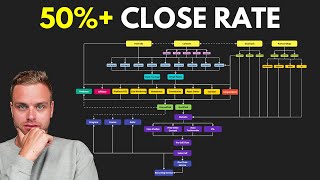
A sales system built on discovery questions, pre-call research, and a five-question framework to uncover what buyers actually need. The guide covers email flows, onboarding sequences, and a short presentation designed to handle objections before they come up.
Chapters
Hello, everyone, and welcome to today's video. It's going to be about how to create a full sales system from scratch. Because a lot of people will look at some kind of sales system or they're going to read a sales book or something like that, and they think that, you know, I don't really need something like this. And that might be true for them. When you're doing, you know, I don't know if there's a dollar amount, but let's say you're doing under 100k or under 200k per month and you're the founder and you do all the sales and you know your stuff inside out. You've been in the business for however long, you probably don't need something. And I don't think that's a good attitude to have, but it's an attitude I've had in the past and it's an attitude that a lot of people still have, and I hope that makes you feel good. You know, you're the man. You're the best salesman ever. Congratulations. But if you ever want to grow your business to any serious level of revenue, you're going to need salespeople, you're going to need sales reps, you're going to need appointment setters, and they're not you. They have not been in the business for 10 years. They don't know it inside and out. They don't have the inherent authority and reputation that you do as the founder. And what works for your sales reps will always work for you, but what works for you is not necessarily going to work for your sales reps. It's kind of like the another version. What works for ads will work for content, but what works for content might not always work for ads. In terms of your funnel, it's kind of like that. So because they don't typically have a lifetime of experience and you know, that inherent level of competency, they're going to need a process that they can be plugged into and see good results relatively fast, or they're going to leave your company or blow all of your calls and you're just going to lose a lot of potential revenue. So what I'm saying is, before we think that we're some sort of sales God, we need to look at it through the point of view that I'm describing and do exactly what I'm saying. In this process, I'm going to draw it all out on the iPad. And I think the number one thing that you read in all the sales books you've Seen all the sales videos or that you don't see, rather is instead of the techniques, instead of trying to get better at sales, make your sales process so it's easier to sell. And it's a key distinction. So when you do this right, you're not going to need too much hardcore sales training with all that tonality and you know, ask this at this time and make this joke at this time, you're just going to have the system and it's going to make it much easier for the average sales rep to succeed than other jobs they had in the past. And what I really want to get get through your mind here is we want a. Let me turn on my pen here. We want a process. Oh my God. Want a process. We do not want a system or a script rather. So script, no. Process, yes. And it's a very, very important distinction here. So before we get into the actual stuff here, I want to talk about one of my favorite salespeople that I've ever come across. And I bought their course. They're named Bowtied sales guy on Twitter. So if you have Twitter or X whatever you call it, maybe look him up. But he says in all of his things, and I could not agree more, the three most important qualities in a sales rep are empathy, competence and indifference. And I really like what he says there because I have noticed that in the past and it's kind of the exact same thing for a lot of things in life. Just dating, you know, relationships, all of that kind of stuff. You need to have empathy when you're doing this because you have to actually understand what your prospects care about and they really want you to feel like you get them, you know, you understand their problems rather than you're just trying to shove a product down their throat. Right? So what do we do about that is like number one, we're gonna ask real questions, not just some generic crap. So you know, generic crap would be like, what are your 12 month goals? And the real question is like, you know, what exactly are you trying to solve? Like what have you done about this in the past? Like real questions here. Because if we ask the real questions and you're like, you have something that you know, seems like you actually care, they are going to feel heard and they are going to trust you much more than other thing. And trust is an essential part of the sales process in terms of the competence, like if you don't know what you're talking about. And it's very easy to just see one of these sales reps who does not know what they're talking about. Like, why is anyone going to trust you to deliver the products? Because the rep is a kind of a personification of the company. I've been on a lot of sales calls on both sides and there's a couple that I can think of recently where the sales rep was actually so dumb that I was joining the call basically to buy and the sales rep actually talked me out of it. The key thing that I think we should remember here is competence equals confidence. So what do we do about that? The first thing that I do in when I hire a sales rep and I probably hired and trained 75 in my life. Mixed results of course, but the number one thing that I do is they go through a 14 day onboarding period that's paid but shows like every single part of what they're selling. I treat it kind of the same way as I would treat someone who's like being hired to do the work. So if you were an E commerce email marketing agency, for example, you treat it almost like you're training someone to do email marketing. And this period really, really helps in the sense that like they just learn the product so much better and more streamlined than anything else. And what really happens when this occurs is like, you know, objections are easily handled and, you know, explain it properly in a way that actually makes sense and they come across as an expert instead of a dope that, you know, you just hire to try to sell stuff. If they can't clearly explain like what you're selling and what you're doing and all of this kind of stuff, you're basically like dead in the water in terms of sales. And it just doesn't make really any sense. And the third thing is indifference, and this is a very important one that kind of ties it all together, like you could say. And a lot of people will preach empathy, a lot of people will preach competence because those just make sense, right? But the indifference really just puts it on steroids. You could say, so we do not want to be needy. That's very bad. People can smell neediness. It's kind of the same concept in dating. Like the needier you are, the more you want a girlfriend or the more you want a boyfriend. People can sniff that, like instantly feel the ick. And it's the same thing in sales here. We do not want to be needy, so we want to basically act like they're the prize. And there's a few things that basically you can do as the owner to help this. The first is tons of Leads, the next thing is, you know, great results. And the other one is like the competence aspect. So the competence aspect kind of leads into this where, you know, they're confident, they know what they're doing, they're getting tons of leads, there's no shortage, they don't need to close. And then your company gets great results. You are the prize. Like all of that kind of stuff and the way that it really comes together, you know, empathy equals trust, competence, like you know what you're doing, you are doing. And then, you know, indifference. Let's. Oops, kind of right on my stuff a little bit here. It's not so easy to make these iPad videos. I'm learning, you know, you are the prize. That's a very, very powerful position to be in. And all three of those things can be trained, in my opinion. The next thing buzzword we want to do is congruence. So basically, if you don't know what the definition of a congruence, like, basically, it means everything's in agreement, everything's in harmony, everything's compatible. And this basically, like, means from the second they click on the ad to the second they finish their onboarding, everything is a straight line and consistent. So the parts that will usually be there. So ads, content, let's maybe put outreach as well. My writing is just not good. We're going to do the landing page, we're going to do the vsl, we're going to do the calendly, we are going to do like the, let's call them recall, flow, recall emails. We're going to do the first part of co, and then we're going to do the first part of onboarding. And sorry about not being on the screen there. It's not so easy, you know. So we want to be very congruent in here. And all of the great sales books, all of the great sales trainers, like, really focus on congruent. I've noticed that Alex Hiramozi is really focusing on it lately. So basically what this means is everything has to be the same because when it's not, you get an uneasy subconscious feeling in your stomach that can derail the entire process. That is the deep reason. But on a, you know, on a, what do you call it, surface level, it just makes sense, right? People have clicked on their ad because they're interested in the message. Why would the landing page say something different? And then why would the VSL say something different than the landing page? If they've made it through all of these steps, they're clearly interested in what we are saying to them, why would we change it? So everything must be congruent. It's very important. So now that we have kind of the, what we'll call the prelude of making a process and we have the three qualities that make a great salesperson and we have congruence. The now is the time where I will go through the actual process. And the first step, usually what I call step zero to be honest, step zero is pre framing. And this is going to be very, very important because when we pre frame correctly and we're just going to call it pre framing here and that's just it, I'm not going to call it anything else. Some people call it different names, but whatever they're going to be, you know, show rate is going to go up, they're going to be more likely to know what you're talking about type thing. So I don't know how you would describe that. We'll just go quality up. And they're also going to know the price ahead of time because you pre frame them. So price, you know, we're just going to go check mark. Okay. Because they wouldn't be on the call if they don't know the price. Like I don't know why people really do not show the price like that. Just because getting any kind of call volume, you're getting eight sales calls per day, for example. When you really get all this going, like why would you want to talk to someone who doesn't know the price and you just wasted 30 to 60 minutes depending on your calls for someone who has no intention of paying, it doesn't really make sense. So the different things that we're going to do in a pre framing system. So number one is going to be a pre call flow. So basically that is going to trigger when they book the call and that's going to send them a bunch of emails. So as a rule of thumb you want to send them more emails than you might think. I will usually do a couple emails per day, maybe four emails per day. And you really want to basically set this up so they're gonna, their call is gonna be within 48 hours and then you have all these emails in them. Jamming them to, you know, just makes sense. You know, case Studies, industry insights, FAQs, how it works, kill some objections ahead of time, all that kind of stuff. The second is going to be retargeting ads. So that does a few things. It makes them, you know, more likely to show up to the call. Cause they're seeing you even More often. But it also is a good opportunity to show them like very specific objection handling ads. Like you might make specific ads for this short form, you know, longer form, whatever you want. And it's really going to get a lot of stuff out of the way. So an example of that for my agency, I had a landing page in CR agency. So some of my retargeting ads were education based on. So basically I split it to three kind of main objections, three case studies and then three industry insights. So I had nine different retargeting ads in this system. So the case study ones are like basically different types of businesses in different countries too. Because when you're doing E commerce, an inherent objection is I don't think this will work for my product or niche. I don't think this will work for my country. So like by showing all these case studies in different countries and different things, like kind of overcome that objection inherently. The second one is like, why are your landing pages better? And I did. We focus on the top three things that make an important landing page. The above the fold section, the offer and then the site speed. And then you just keep going through that and you can really get quite a bit of good stuff. Industry insights, you know, we need our landing page to load in under two seconds because according to Google, the conversion rate steeply falls off the first contentful paint fcp if you know page speed stuff is greater than that. Just random stuff, but not really random. Like interesting stuff that they have clicked on your ads before. They know what you look like. If they see you in the feed, they're probably gonna watch these or in the story feeder in the explore page or on YouTube, that kind of stuff. The third one is going to be our YouTube videos. Perhaps the number one thing that you can do as the founder to help your reps out is by posting YouTube videos consistently. I was on a sales call, like I was the one selling. And then one of the prospects who I didn't actually close said something there was like, if you ever heard of that phrase. I think we all have at this point. Like the average person takes seven touch points to convert. And if you believe that kind of stuff or not is irrelevant. I don't really think it can be that simple. But he brought something to my attention which is a new research. And now it's the. I believe he said 4, 20 and then 7. So he. I can't remember what he said. But now he said now There's. It requires 20 touch points over four different channels and seven hours of time spent with you because the markets are sophisticating and trust is at an all time low. Whether that's true or not, and whether you can boil it down like that or not, I think is irrelevant. But it only makes logical sense that the more time you spend with someone, whether that's in real life or in a YouTube video, because even though you're not there, you're like still spending time with them, the more they trust you and the more likely they are to buy. Right. So it only makes sense to do that and post as many YouTube videos that are high quality as possible. With these YouTube videos, you want to make them useful. In my opinion, like that's the number one thing. You kind of want to treat your YouTube videos like you get them good results ahead of time for free. So now they want the good stuff. They want you to actually help them one on one. You've heard people say, you know, give the theory away for free and sell the implementation, something like that. I think that's a good basic way to put it. And the fourth one is going to be the posting plus cross posting. So what I do for this is I will typically make all of my written content for Twitter, then my VA or I'll use a tool that will cross post it to LinkedIn, Facebook, Instagram, turn it into a like video reel for Twitter. I use a tool called Repurposed Pie for that. And this is kind of like you have content on every platform because most people will favor one or more platforms, but you want to be on all of them. Because if they've been on your site, they've seen your ads, they booked a call, they are much more likely to be served that kind of content with the algorithm. And it's just another opportunity to nurture them even more. So basically when we have these four systems right here, it's going to be basically, oh, that was a bad circle. It's going to be basically night and day difference as to if we just had none of them. We want to make it as easy as possible for our sales reps. And this is basically a way that we can do it right. This is the epitome of making it easier to sell for our sales reps as opposed to try to make them better at sales. So the next thing that I want to talk about, and I kind of viewed that as phase zero and we can actually think of that as phase zero A. There's actually a phase zero B2 which is going to be the recall questions. So the things that you put on the Calendly and this is actually very important for a few reasons. Based on the data that I have like obviously better prepared if you know all of this stuff. But also based on the data that I've seen, more effort they put in on the calendly questions equals more likely to show up, which is a good one, right? Like it makes logical sense, loss aversion. Why put in all that effort if you're not going to show up? And as well as you know, the people who are not as serious are not going to put in all that effort. So it just makes sense. Basically you're going to want to be asking all these questions on a calendly or if you have a type form, which procedure calendly like that you disqualify people with a type form. And then the calendly's on the next page. You only really have to ask these once because you wouldn't really ask them twice. It's just unnecessary friction. So I'm going to go over the questions that I ask. There's eight of them and all of them really give some data that's good for you as well as information that you can use to help your comb. So the first one is going to be the name. Nothing crazy there. I'm just going to go through a couple of them. Name, email, phone and then website. The next one I do is what is your revenue? But I do it as multiple choice. So I'm going to put MC here. And the reason I do multiple choice, like 0 to 10k a month, 10 to 50k, 50 to 250k, 250k to 1 mil and 1 mil plus or whatever it ends up being for you. The reason I do that is because when you do it multiple choice, it really sinks into your CRM and your email flows a lot nicer because if you just have like a short answer like they can say whatever they want and let's say they're doing zero. For example, some people will say the number zero, some people will say the number 0 with the dollar sign. Some people will put nothing, some people will put zero the word. And just there's so many crazy combinations of people people put at every revenue level that it really makes it hard to sort in your CRM effectively. So that's just why I do it. And you don't really need to know their exact revenue like that either. The next thing I put, and I'm going to put these in red because I wouldn't say they're not basic. So I'm going to Put the cost and depending on what I'm selling, it might be a range. So like if the cost is 4k, like the cost is 4k, but if it's 4k to 10k, I'm going to say our offer costs between 4,000 and $10,000 a month. Are you okay with this? And they got to say yes or if they say no, they're basically not going to book the call. Right. So it's a way to disqualify people. I like to do the range anyways, because if they, if you do it and the price is 4k and they thought it was going to be 4 to 10k, they're going to be pleasantly surprised. You know, it's cheaper than they might have expected. But if the price is 10k, at least they are prepared. Right? The next step is, you know, the learning. Where did you learn about us? And then I'll have in brackets like YouTube, newsletter, Twitter, et cetera. Just a good way to one, gauge what's working for you. And then two, also, you're probably gonna activate differently on the sales call. If someone comes from YouTube, for example, versus TikTok ads, you, you know, like one is going to be significantly warmer than the other and you really want to know what it is that they're coming from because you're going to probably alter your calls a little bit differently. And the last one is how long have you known about us? And this is a very, very good one as well. It's good for your own information just because you can see like how long your fill cycle is basically. And then it's also good because if someone has known about you for a year, like you can weave that into your conversation. You know, if they, you know, came from YouTube and they've known about you for a year, they probably watched a lot more videos and they're going to be a lot more warm. But it's just really, really good because these six to eight questions, depending on how much you do, are going to like arm your sales reps with some essential, like things that they need to have. So like what are those? So you know, the prospect is going to know the price again, the. Or the like, the prospect is going to know the price ahead of them. Your sales rep will know where they came from. I'll just call that the source. And then the prospect or your sales rep is going to know like how long they've known about you. And that's very good to have all of this information. And it really makes them a lot more confident than you know, if they had none of it. And when you do this on your calendly or your Typeform it's very seamless. Like the customer don't even know or the leads don't even know what you're really doing to be honest. And like all of that kind of stuff. So if we go to it and I'm going to change this again, we're going to go to phase zero still but phase zero C, my God, just changing all of that kind of stuff which is going to be the pre call research. To me it's kind of crazy that people just don't do any pre call research. It's going to be like 90% of people don't do anything besides maybe read the calendly form. And that's just crazy. If you're presumably trying to sell them this pre call research is so good that the average normie is going to call it a life hack. When in reality it should be like basic common sense. If you are prepared to, you're naturally going to be more confident and if you're more confident your sales reps are going to close more sales. So they're going to be armed with the information we went over before like all of those questions but we should also be going for some other ones for sure. So in addition to the calendly questions like we need to have the first thing, you know, a company overview and you probably will want to have a sheet for this to be honest. So what the company does. Wow, that would be nice. You know who is their target audience or customers. Wow, amazing. You know, do can you find any key metrics like they have X amount of revenue, they've served X amount of customers. That kind of stuff. Just stuff that you probably be asking anyway but you can just find just to save time and actually look like a professional instead of someone who doesn't do any research. You look really stupid when they don't. The next one is going to be the like team members. So basically you know, let's say Tim Donalds books the call from Ace Manufacturing, some random ass name. We're gonna go to LinkedIn and see like is Tim the founder. Is Tim like a head of marketing? Is Tim just some random assistant. It's very important to know like who is going to be on the call. The second thing we want to do like so I'm gonna write who booked here. My writing is just terrible. The second one would be like other stakeholders. So let's say Tim is the CEO and this is a marketing thing and Tim has a CMO and a chief revenue officer like or a co founder like will these be influencing the decision? We need to know that ahead of time. And then also like kind of the. What do we call it, like org structure, the structure of the business. Because how you sell is going to be a lot different. If they have a 30 person marketing team for example, versus like they're just a founder. The next thing that I would really do is like, I don't know how you would say it, maybe like offer positioning. So like how you solve their problem. So let's say if they are, I don't even know if they are looking for more leads. How you would do that? You got to know that information before you know what makes your offer unique in comparison to the alternatives. And this is kind of more to do with you than them. But you have to, you have to do this like as it relates to their company, if that makes sense. And then how your offer kind of aligns with their goals. So if their goals are to generate more consistent lead flow and you have a cold email offer like that is going to be important to know. Might be obvious but you can learn a lot of stuff by just going to their websites. The next thing you want to do is you want to have social media proof. And this basically is again like the offer positioning. It's related to you but in the context of them. So I always will have relevant case studies like basically case studies of similar clients. If I see on the calendly form this person does YouTube, I'll have some YouTube, you know, case studies of people who owned YouTube videos that we had. Same with the testimonials that are relevant in terms of niche and size and that kind of stuff. And then other just results or you know anything that builds credibility and you want to have that ready. And some of this will be applicable to everything, some of this will be only applicable to them. Like if you just have a bunch of case studies that are completely different from their niche, like they're a manufacturing company and you just have a bunch of you know, online business case studies. It's not going to be as powerful if you find something that relates directly to their niche. So the pre call basically research is going to be very, very important. And if you don't have this like why would you be confident? Why would you be closing deals? It's so crazy how lazy people are and to do this. And you would be amazed at how your actual rate is going to double both from you're going to be more professional to them as well as you're going to be more confident, and that's going to carry through to everything you do. So now we're finally out of phase zero and we're in phase one. And this is introduce yourself, or basically your sales rep will introduce themselves. It's not so easy to write on this iPad. I thought it'd be easier. So the thing that we want to understand is the main thing that will hold our reps back is, you know, they do not have the inherited inherent level of authority and credibility that you do as the founder. And there's nothing that you can really do to change that. Your reps are not you. Right. So because of this, we need to make a great first impression to kind of compensate for that. So we want to make a great first impression. And this first impression should do a couple of things for them. So number one, let me try to put my. Try to put my iPad down on the desk a little to get some, you know, less shit writing. So the first, it's going to do a couple of things. It's going to, you know, frame and it's going to basically put them in the driver's seat. Oh, yeah, that's much better. I don't know why I was doing that from the start. So a good thing to remember is the person who is asking the questions is the person in control. And a lot of people, especially newer sales reps or people who, you know, have not have a system like this, they really get fucked up by this. Like, they just turn into like kind of a. I hate to use this terminology, but it's kind of perfect terminology. The prospect becomes the alpha on the call and they become the beta when, realistically, we want it to be the other way around. So what we need to do is we need to give them something kind of like a framework or something to do that achieves this for them. And the easiest thing to do is follow, like, kind of the following script. So my name is X. My name is X. You know, I am from Y company. So basically my name is Matt. I'm from A Thousand X Leads. My background is, you know, in lead generation. So, you know, put ABC here. And I've been working with the founder or, you know, working with Leo, my partner, very closely for over 12 years or something like that. So, hey, my name is like, hello, welcome to the Call. My name is Matt from A Thousand X Leads. I have a background in lead generation, which is specific to, you know, what you're trying to do here. I've been Working closely with Leo for 12 years. And I would love to know, you know, what resonated with you the most about Matt's or Leo's YouTube videos. And that's where the pre call questions come in very, very handy. Because if they're coming from YouTube, you can relate this statement to YouTube. If they're coming in for ads, you can relate to it with ads. So basically what we want to do is introduce ourselves, say we're from the company that they booked a call with, convey their background very efficiently. So let's go name company background, how it relates to them, you know, working with founder, founder for X time and then like ask them, you know, what resonates the most and then that's where you tie in the calendly questions. Like so like I said before, if they said they come from YouTube, then they come from YouTube. So basically they're going to say something after here like they're going to say like whatever they're going to say, right? Then the next thing we want to do because the person asking the questions is the one in control. So we're going to say like, you know, purpose of this call is to, you know, see if you qualify for our offer. And that's basically going to keep them in control because they're going to be the one asking the questions and we're kind of flipping the script on them. So instead of them being the beta, like they are the alpha, they're the prize. And it's really going to be very effective at this entire process at basically transferring the inherent credibility and power that you have as a company to them. The sales rep, you're basically kind of leveraging the company and giving it to them. So the purpose of this call is to see if you qualify for our offer. Like not really. Everyone qualifies for the offer again and it's based on, you know, these three factors or these five factors or however many factors there are. And then basically that's a very easy transition into phase two, which is kind of what I call the five questions. But we'll get that to a sec. So when you do this. So let's go through the top. Like hello, my name is X and I'm from company Y. I have a background in abc, which is specific to whatever they do. I'm working closely with the founder for however many years and I would love to know why you booked this call or what resonated with you the most about his YouTube videos or what caused you to click on the ads and then they're Going to tell you and then you like. The purpose of this call is to see if you qualify for our mastermind. Not everyone does and it really is based on these factors. So like, and just for example, you know, revenue, time, ambition, you know, business type, you know, whatever it is. So when you ask them if they can basically, you know, these things, they're going to say yes. You know, mind if I say, mind if I ask you a few questions to see how you compare to our most successful clients is a good one. And then they're going to say yes. And then you basically now you are going to phase two. And phase two is going to be, you know, questions. I build this part of the sales process based on the five questions that that sales trainer I talked about earlier says to do. And these are, you know, five great questions that in his words, you know, move the sale forward instead of sideways. And that's a very important like distinction. A lot of people waste time. They just ask some random questions that are half assed and don't have the empathy that you need. They don't actually move the question forward to, you know, we're trying to get them to a buying decision, not trying to chat here. And when you ask these questions, a few different things take place. When you ask these questions, you're kind of building on the momentum and the advantage you got in phase one. And we're basically asking people for two reasons. The first is going to be, you know, information, which is always nice. And the other one is going to be what we're going to call admitting it. And you'll see what I mean here. But we, of course we need information, but a lot of the time we need them to admit out loud that there is a problem. So these questions are going to be, so let's put the numbers here, so why are we here today? Or something like that. Why? Interested in solving for whatever problem. The third one is going to be like, why is that a problem? Which I would consider to be much different. The next is going to be, you know, why now? Like Y is now the right time. And then the other one is going to be like, why not X? Why not do it yourself? Why not hire someone else? Why not hire in house? And that might seem like a weird final question, but we need to get them to admit it out loud. So let's go through these one at a time and I'm going to change to red here. So let's go through like, why are we here today? This question is going to be very similar to the Very first one, like what resonated with you the most but a little bit different. So why are we here today is like basically the most easy way to judge why they're actually want to talk to you. Because if they're even on the call, like they are interested in your offer, they've already know the price from the call, the questions, they've seen your stuff, they've gotten a lot of your emails. If they're here, they're interested and we want to find out why they're interested. And the nice thing is when you tell or when you ask this question, 80% of the time they're just gonna tell you like why it is they're there and you can take it at face value basically. The other 20% of the time they're gonna basically tell you some bullshit and you gotta poke and prod a little bit. Maybe some bullshit, maybe some half truths, maybe some surface level garbage. And you can just be like, okay, you can, once you do enough calls, you can kind of tell that that's not the real thing. So a big theme of here is like I said before, we want to get that information, but we also want them to admit it out loud. So let me go through a couple of examples. When they are admitting it out loud, they can't deny it to yourself or themselves later when you're in the closed section of the call. So even if these answers are probably obvious, like you're a cold email agency and you know, they probably why are they here today? Because they want to run cold email, we really need to ask it still because we need to have them say it out loud type thing. So when you ask this, like some examples that realistically you could get, you know, we're here because our lead flow has dried up and we need a better way to bring in consistent opportunities or some shit like that. Like that is a common response you're going to get. Or we're looking for a more scalable solution. What we've been doing just isn't working anymore and we want to grow or our ad spend is not actually translating into an roi. We need to figure out why. Like you're going to get a lot of versions of this and most of them are going to be true. And the thing that you need to do and thing you need to communicate to your sales reps is they're going to have to decipher that. Like you basically are always going to know what they're saying, but they need to decipher if that's the real answer. Or some bullshit. And it's very, very important. Once we go onto. Let's get that off the screen. Once we go into like, okay, they've told us why we're like, what they're trying to solve. Why are you interested in solving for this problem? Again, it's going to be obvious a lot of the time, but we need to get in the information they tell us. But more importantly, we need to get them to say it out loud. So that is why I refer to this more as a process, as in term instead of a script. Because there's no way that you can account for every single possibility in a script. And it becomes painfully obvious when your sales rep is reading from one and trying to stick to it. So let's go to the same examples. Why are you interested in solving for more leads? You know, we want to unlock the potential of our sales team and they don't have enough high quality leads to close. There's an example. Or we've got aggressive growth goals this year, we just raised money and we need to actually get users. Or we know that there's like a huge market, you know, this is a great time, we're first to market, we don't want to waste the opportunity. Something like that. They're pretty much going to tell you the honest answer here and it's up to you to decipher it and tell you, like, is that the truth? Is there a deeper meaning? And that kind of stuff. And we really can do that with the third one quite well. So why are you interested in solving for X? And why is X a problem? Are two very similar sounding questions, but they're not really the same. There's a very subtle difference. And the way that I think is a beautiful way to think of it is that basically why are you interested in solving for X? Is kind of like their motivations for doing it. And then why is that a problem? Is kind of like the consequences, if that makes sense. So the main focus here is again to get them to admit this out loud. And you're gathering the information as kind of a secondary benefit. So by asking this question after the previous one, you're going to get a much more complete answer. So I always tell all my sales reps to ask this no matter what, even if they think they're satisfied with the previous answer, you know, do this as well. So for example, like if we don't figure this out, we're going to keep missing revenue targets and that's going to hurt our company long term. Like that's an actual consequence. Missing revenue targets. That's a lot better answer than we want to like unlock the potential, you know, now it's pain. Another one. Like our competitors are gaining traction and we're losing ground. Like, oof, there's a consequence. Or if we can't fix this problem, it's going to burn our sales team out. We have to go recruit more people, like all of that kind of stuff. Or our investors are breathing down our neck and like I'm going to get ousted as a CEO. That would be a very aggressive one, but you know what I mean? The next one is very good as well. And is why now? Like, why do this now? Why is now the right time? Any variation of that. Timing is everything in sales. You cannot create urgency for a lot of different things that you're selling unless you have like a price increase or something. It's not like E commerce where you have a discount or a Christmas sale or anything. So you can't really create urgency like that. You can only discover if it exists or not. So an idea that I really like is the goal of marketing and sales is to stay top of mind so that when someone is ready to buy, like they immediately think of you. Like someone might have been interested in this for a long time, the consequences might be true. But now is the right time and we need to discover that because it will be very important when we determine how salesy and how hard to push them if need be. If now is not the perfect time, like we might ease up a little bit to stay in their good graces. So like I said before, when it's the perfect time, they think of you. But if now is the perfect time, then it's closing time. It's sales tactics time. Right? So an example, like we just raised a funding round, so now's the time to invest before the market gets more saturated. Now that's time to close. If they say some shit like that, our board wants results this quarter so we can't wait any longer. We're in the. We're in the money here. Or like we're launching a new product soon and if we don't figure this out, the launch will be shit. Or we just finally figured out our operations. Now we need more leads. Like you're going to get a lot of good information here and you're going to basically figure out how hard to sell. Basically the final one is why not alternatives. And this kind of has to be inserted properly, but it will be very good as both information gathering them, admitting it and then Transitioning to the next phase. So basically we need to do a few things here. Number one is like, you know, we want to figure out what they don't like about other stuff. So if we have something like that, we can basically not talk about it. And if we do have like something that's different than that, then we'll talk about and say yeah, like that shit wouldn't work for sure. Like this is why ours is better. Something that I really, really like here as well is, you know, why not do any. Why not do nothing is a good one. Because that's kind of like if they really haven't admitted why they need to do it in the previous questions, like why even do this at all type thing. And then another one is why not do it yourself? And these are kind of not going to give you any good information, but they're going to be very important for like getting them to admit it to themselves. So like examples, you know, why not do it yourself? Like we've tried doing this but we don't have the expertise or something. You know, why not do it yourself? When we tried it, it hasn't worked. You know, something like that. Or we've looked at other agencies but they don't seem to actually deliver on their promises. Or we tried with X Tool but it just is too slow. We need it to be fast, something like that. So when you do it like this, it's very, very easy. Like, cause remember we frame them properly, it's very, very easy for them to say like okay, like based on these results it sounds like you're quite similar to our most successful clients. And you might name a couple. So do you mind if I show you a few slides with our offer and then like what we can do for you? They're obviously going to say yes, that's why they're there. And now we are on phase three, which is going to be the screen share presentation. How exciting. Screen share presentation. So basically our screen share presentation should be a few different things. I usually plan, if it's a 30 minute call for it to take five to seven minutes because we want plenty of time after to, you know, come over with objections and close them. And then the other one is going to be like, we need to prevent objections even more so than answer and overcome them. We're going to do that as well. Presenting or preventing objections is even better. Like you know, instead of having diabetes and having to change your diet and you know, get surgery perhaps or have insulin, it'd be better if you just didn't get that overweight, where you get that kind of diabetes in the first place, it's the same thing. Instead of overcoming objections, it's a lot easier to just prevent them to begin with. And I'll show you exactly what I mean. So basically what we want to think of with this presentation is it's a big FAQ destroyer. So there's going to be a lot of things that people are going to be worried about or have questions out. And if you've done 10 sales calls, you're going to pretty much know all of these things. And instead of being dumb and kind of ignoring them or preventing the, you're like treating them as if they don't exist. It's better to get in front of them and just like, just destroy them. If you don't do this, they're going to think one of two things. One, they're going to think about like that you're sneaky or trying to hide it from them and they're not going to trust you. Or two, they're going to think you're just stupid and don't know that these objections or concerns exist to begin with. And neither of those things are good for you. I'm not sure which one is worse, but neither of them are good. So basically a good format to do that in terms of, if you want a framework is going to basically be. What I do is like intro, highlight, reel. And what this is is usually like 60 seconds of the first 60 seconds of your slides. And I actually recommend, you know, putting up a timer and reading your first 60 seconds out loud to see where you get to. We want to just have like, you know, examples, awards, case studies, you know, results and that kind of stuff. Just hammer it on a. So you know, we are a thousand X leads. We've helped over 550 agency owners who do a combined 315 million per year in revenue on average increase their lead flow by 28% within 120 days of joining. We have over 600 client wins on our website, screenshots of them in the, in this intro. Go through it very fast. And we have over 25 case studies that have to do with, you know, X, Y and Z, something like that. The next thing we want to do is like what we do, what we do, what we offer, that kind of stuff. So it's crazy to me. I review a lot of these sales presentations, like how many of them don't actually even say what you get or what, like what you do. So we really want to have this, what we do is we help people set up their cold email system and then run it. Like it can be as simple as that. It's only going to be 1, 2, 3, 4, maybe 5 slides. So like what you do in plain English, no jargon, you know, 100% clear. And then, you know, don't go overboard. If you're a cold email agency, you don't need to have like 200 bonuses. Just say what you do. Like, come on, I'm getting angry kind of doing this video. The next thing is going to be like, basically why someone like them needs it. So like, okay, we do cold email. Like a business like yours needs cold email because you know you're going to have more consistency in lead flow. That's going to make you more confident to increase your fixed costs. When you increase your fixed costs, you know, now you have more employees and now you can scale further, like whatever. These are just examples. And then the final one is going to be how you do it. So very specific stuff like things like step by step, an exact roadmap and timeline and then deliverables. Very, very important to have it there. The next thing I think everyone should have is examples. So you know, demo what you can do, show, don't tell if possible. If you're an e commerce email marketing agency, it's just show a bunch of designs and stuff. The next one is the actual offer and the what you're going to get. So this is like a summary of what they're going to get. The next thing is going to be the price, slash, cost, you know, typically, you know, monthly retainer or if they commit, you know, annual or quarterly discounts type thing. The next thing is going to be FAQs, just brief ones. Like if you know that these 10 FAQs are going to be the most important. Like I don't think this is going to work for my brand. I don't think this will work for my product, my country. Will you write these emails in my brand voice? Like, you know, you're going to have 5 to 10 FAQs that always come up and just put them here as short as possible. You know, just make sure you have it. And then the final thing is going to be next steps. And this is an often overlooked one, but a very, very important part of it. You know, let's go, let's use the word excruciating detail about what will happen between payment and lunch. I really got to make my writing better. But very, very important detail. After this call, within five minutes, I am going to send you a follow up email. In that follow up email, there's going to be X, Y and Z. There's going. To be.
More from Matthew







Everything I Would Change About This Ecom Email Marketing Agency (3 HOUR LIVE AUDIT)

Everything I Would Change About This Meta Ads Training Business (3 HOUR LIVE AUDIT)


