How to Use a Free + Shipping Book Funnel to Get Clients
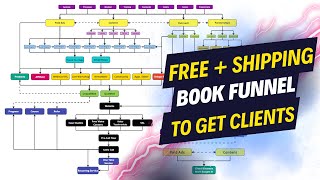
Learn how to use a free+shipping book funnel to acquire clients. You pay for ads and shipping, the reader gets a free book, then a one-click upsell targets $100 AOV. The funnel funnels people into an email sequence and a community group where the real activation happens.
Chapters
I'm going to show you about one of the most effective types of ad funnels that you can possibly run today, and that is a book funnel. So obviously the caveat of this is you have to have written a book, but it's not as hard as you might think. And this is how an actual funnel would work to help you get clients. So a book funnel is a type of paid product funnel where you, you are running it to try to sell the book. Additionally, you can also do it through content if you want, through your lead magnets and put it on the thank you page or in your email flows or whatever. But typically you're going to run it straight from Facebook ads or something like that. So this video is not going to go over how to write a book. That's the obvious caveat with this is you have to have a book or to run this type of funnel. But it is very worth it to write one no matter how long you think it might take. Because there's no greater authority builder than someone reading your book. There's no single thing you can do to show your expertise and get someone to trust you. Quite like having them read a book you wrote. And you can write a very good 30,000 ish word fluff free book by writing 500 words per day for two months and then self publish it. A lot of people over complicate it where if you did that for two months and 500 words per day, which probably take about half an hour, you would have a book. And if you're going to do this in the rest of this video, the free plus shipping is the model that you would want to use to do this. So let's get into it. A lot of people will run their ad funnel just like this where they have their paid ads to a call and a recurring service. This is not very good for a lot of reasons because it's a super high cost per call, the highest cost per call you probably could ever get with your ads. They didn't go through your funnel. So they've never seen your content or your lead magnets or joined your group or read your newsletter or senior webinar or senior content or anything like that. So there's just a very little. One thing is it's kind of unclear to them what you do in a lot of cases and you get a lot of bad calls and a lot of time wasted. And then two, because they've never seen this stuff, there's little to no rapport on the call and it's a much harder sale. So you have to say some crazy things to close them and that leads to a lot of problems. So there's four types of funnels that actually work a lot better. We have our webinar VSL funnel, that's like your webinar, your case study, your training, that type of stuff. You have the newsletter funnel, which is a longer term funnel that you know is great for high priced services or services that you only need in an emergency, like a plumber or a, like a personal injury lawyer type thing. The group funnel is my favorite. It's the best funnel when done right and probably the worst when done wrong. But you get them in a group and then you build trust in the group with content appointment setters, retargeting ads and email flows to get them on a sales call. And then there's the paid product funnel, which is the best for beginners I would say, because it's much more, it's much closer to selling an E commerce product than it is, you know, the other types of funnels where there's a lot of nuance and technical details that you have to know. Where you have a digital product for 10 to $100, you try to sell it and if you can get a purchase for less in ad spend than you get from revenue from the sale, then you break even and you can upsell them from there. So the paid product funnel is kind of the general one, but a book funnel is like a version of the paid product funnel. So let's go here, let's delete just a couple of these just to make it easier to zoom in on it. Because we don't need to see all of them, we just need to see some of them. So book funnel is good because it's one of the biggest authority building funnels there is. But you might, you must have a book to do it. So of course this is how it would work. So if you have a Facebook ad and you'd go to a free plus shipping, so the book's free, but you got to play $9.99 for shipping or something like that. And what you want to do is you want to have the shipping fee cover the cost of printing the book as well as shipping. And you can ship these with media mail if you're in the United States, which is a subsidized version of shipping for specifically for media stuff, books, journals, I think music like that kind of stuff, where it's just a lot cheaper. So $9.99 for a shipping fee, for example, would cover the cost of both shipping and the book. So you're basically breaking even from the, from the shipping fee. Then what you'd want to do is you want to have a one click upsell or one time upsell funnel that helps you get to 100 AOV. Because although the shipping fee is going to cover the cost of shipping in the book printing the book, you still have to think about your ad spend. So the purpose of the upsell funnel is to just sell some stuff to try to get breakeven on our ad spend. The best way to go about that is after they buy and whether they take the upsell or not, we want to get them in a group as fast as possible. So we have our thank you page promoting the group. Our email flows promoting the group inside the book. We probably have a webinar link and lead magnet links that all go to the same thank you page that also promotes the group. And what I mean here is you might put after each chapter in the book, you might put a link saying download my free xyz. And that's a great way to get people to go to your landing page from your actual book and join your email list that way. So I've done out all of the different parts here and I'm going to go over each of them because each is very important. So you could think of this as the thing about the paid product funnels. Let's delete the lead magnet version. Because a lot of the times you're just going to run ads to a landing page that tries to sell your book. And the problem with this or the thing you need to know about this if you're trying to get clients, is that in our funnel, the lead magnets, basically their purpose is to overcome objections and educate and prove that we know what we're talking about. But if we're going right to a product book, they're obviously not going through the lead magnets. So this is somewhat of a problem. Your book will kind of take the place of it, but it's not guaranteed they're gonna read your entire book where there's a much more likely chance they read your lead magnets. So what you want to do is this is very important because let's say we're have, we're a YouTube editing agency or something like that. There's a lot of problems that have to be addressed before someone makes a YouTube channel. They have to know how to set up their camera and lights and make titles and make thumbnails and do SEO and read the analytics and make scripts and all of that kind of stuff. So our lead magnets are basically meant to solve these problems. We have a lead magnet that solves every problem and it just becomes very natural for someone to hire us. But because we're not going through the lead magnets, we, we might have, you know, our book might solve one problem, but the other problems still exist. And that is why we need to make sure that we address these things as well. Or else we're going to sell a lot of books, but we're not going to get any clients out of it. So the best way is to either package up your lead magnets as bonuses for buying the book and that will make your conversion rate higher as well as, you know, solve this problem. So that's what typically what I will do when I'm running a funnel like this, because like I just said, higher conversion rate, you are getting the same effect that you would have if you're doing the lead magnets just repackaged and repurposed in a different way. And that is what is important because it doesn't matter how many books we sell, if we don't overcome all of the objections via our lead magnets or the equivalent, then there's no way to push them down the funnel. So this is basically how it would go in this case, paid ads to product. You could kind of think of the lead magnets going back up here as like a bonus. Lead magnets and all that stuff go to the thank you page and in the email flows and the thank you page and email flows tries to get them in our group or community. That's basically the funnel. And then we use our community to sort out who's qualified and who's not qualified. If they're unqualified, we just try to sell them more products or we refer them away or we have a course or a program or something of that nature. If they are qualified, we'll probably try to sell them our intro offer and then if we do a good job on that, our recurring service. So that's basically what we're going for here. So I've broken it down. The ads, the landing page, the upsells, the email flow, the group, the links inside the book, the lead magnets, and the goals and activation points. So let's get right into the ads part and I also want to open up another Miro board on my other screen to show you, like, what the math looks like in this kind of stuff. So our ads, when we're doing this free plus shipping it, comes with the obvious benefit that we can include the word free in our ads and that is going to increase our click through rate, lower cost per click and just get a lot more clicks than. And if we didn't have the word free. It's just kind of how it goes. And then we want to also include the fact that we're doing, you know, seven free bonuses, four free bonuses, five free bonuses, whatever. And those bonuses are going to be packaged up as the lead magnets in this case. So that's going to increase our click through rate even more. We want to put our book cover in the ad just to make it clear that this is a book and we want to call out the audience like so, for example, Shopify store owners. This book is going to do X, Y and Z. It's free, just pay shipping and you're going to get these bonuses. And there's a picture of the COVID We don't want to make it unnecessarily complicated because making it unnecessarily complicated, it's going to ruin the ads quite a bit. In terms of our landing page, the actual sales page, we want to mirror the language we use from the ads just to maintain consistency. So if the headline in the ad is xyz, we want the same headline for the landing page. We want to make it simple and we want to list out the free bonuses, like free bonus number one, free bonus number two, three, four, five, six, seven. And however many there is, we want to list it out just to ensure that they realize all of the other value that they're getting in terms of the upsell. Because if you remember, we want, we're getting them in at break even here, hopefully. But we want to upsell them as much as we possibly can in terms of value so that we can break even on all of our ad spend. Because if we break even on all of our ad spend, we have is infinite scale. There's no risk. If we're breaking even on our ad spend, we can just spend as much as we want per day and generate a lot of leads. Bigger, faster and just more so. We want to aim for the upsell to be 100 average order value. So $97 or something like that. And that just for. The reason for that is we want to get as much leeway as possible. For example, if we sold something for $25, that means we can only spend, you know, $25 to get a customer. If our cost is $50 to get a customer this way, to get one conversion, then we're losing $25 but if we get it to 100 AOV or something like that, it's going to allow us to really have as much wiggle room as we possibly can. And the best type of upsells here are going to be templates, assets, frameworks. And what I like to do is even though the group in this case is free, you want to do annual access to the group and just assign like this group is $497 for the year. You know you're gonna get it included for free. And that just the better we can make the offer, the more sales and higher average order value we're gonna get. It's not like unlike making any offer, it's just what can we do? And templates, assets and frameworks are typically the best, plus some sort of group. And the thing here is we wanna make it simple. But we already got their credit card on file with their initial purchase because they had to pay for shipping. So now it's basically like, do you want this? And then it's just the yes or no. They don't have to put their credit card in again. So if they click yes, then they're going to be charged and it's going to be all good. If no, that's okay too. So what we want to do with the email flows is we want to get them into our group as fast as possible. We want to send them as many emails as we possibly can in the first 20 minutes. Because that is about the. In the first 20 minutes. Like we, they, we have their full attention. And the more we email them, the more we repeat, like the group is the key to doing xyz, the more likely they'll join the group because the group is very key. It's one thing for them to buy our product and download our lead magnet bonuses, but if they just do that, like, here's what it, here's kind of what it looks like. Let me just delete some of this stuff. If they just buy our stuff, our paid product, like it just ends here. So remember, the group is what you use to determine whether people are qualified or unqualified. People can buy your $9.99, you know, shipping fee for your free book. But if you. Doesn't necessarily mean they're qualified or interested to buy your $7,000 service or whatever you sell. And that's why we need this stuff. A lot of people go wrong where they think, you know, they just think lead magnets and paid product is what you need to do to make sales with ads. Whereas like just think of it. We need to get down to here somehow. And right now there's a big diff distance between, you know, where we are in our funnel which is the they've downloaded our lead magnets added to the thank you page and email flows. There's a big distance, there's a big gap that has to be filled. And the best way to fill it, in my opinion, is via the group or the community. I like the group in the community because it's very easy to promote all of the other things and other lead magnet conversion mechanisms inside the community. For example, in our community we have their name and phone number and stuff. Our appointment center can reach out to them. We can promote our own content in the community and get more eyeballs on it. They're gonna have, if they have their email, we're gonna be added to our newsletter by default. We can host live workshops in our community. We can promote our webinar in our community. So it's very easy to for a community to promote all of the other different types of conversion mechanisms we have. Whether if we're using a webinar, for example, it's hard to promote a live workshop, a community and content in a webinar like that versus it's very easy to do so from a group. And that's just why I prefer a group if, if I have a choice. See, because once they're in the group, they can go all through other directions and then you have even more ways and even more paths for them to follow to determine if they are qualified or not. So that's why the group is so key. Because if you don't have the group, even though at the risk of sounding like a broken record here, if you don't have the group at all and you're just running to the paid product, for example, the book like you, that would be pretty much where it ends. It would just be a matter of, you know, okay, we sold the paid product, which is the book and it just ends there. So that's just why we need the group. And it's kind of a long winded explanation. Probably could have been more slick and efficient. But it's very important to understand with success from ads that you need these stuff. If you don't have one or more of these things, like your ads aren't going to work, the actual ad and the opt in page and the lead magnet is just the start, it's not the end like it is when you're running e commerce and they either buy or don't buy very Very important. So the email flows. Basically, you know, they're here doing whatever possible or whatever is necessary to get them in the group. That's their only function in this case. So paid ads and content your opt in, they buy the product, you have the group link on the thank you page in the lead magnet delivery email in an email explaining what the group is, why they should join, how to join. Maybe if you have an sms, you send them a group link in there again should be inside the lead magnet bonuses and so on and so forth. And you should reference the group in the ad and on the original sales page we need to have a little bit of, you know, keep repeating that they need to join the group and the group is key, you know, over and over again, like six plus times within the first 20 minutes after they buy from you. And you should plan for extra in case they don't open it. What if they don't open this email? What if they don't see, what if they don't read it in the ad copy? What if they don't, you know, what if they don't click on the thank you page and they're not going to unsubscribe? If you do this properly, if you add value to it, if you don't, just make it begging to join the group type thing. So for the group, like I said before, we want to use it as kind of a command center because it's very easy once they're in the group to promote them and send them to a variety of different places. You can promote your other conversion mechanisms such as a webinar. You can promote your first low ticket introductory offer in the group. That's less risk for them, cheaper. They can test out your services and you can upsell them later. Your appointment center can run rampant in the group messaging, everybody trying to book sales calls. And you should post and schedule daily content that's exclusive to the group. And exclusive is the keyword there. Because if you just repost stuff that you're posting on YouTube or in your emails or Twitter, LinkedIn or Instagram or something, there's no reason for them to open the group every day to see the content because they can just get it elsewhere. It's kind of insulting almost that you are posting something that they can just get anywhere else. So it should be exclusive and you should be posting every single day. You can schedule it ahead of time if you need to. So there's a few more things. There's just three parts left. And the thing we want to do is Inside the book. Because we can't forget that this whole thing is centered around a book. At the end of each chapter, we can put a link to a lead magnet or something like that where, you know, get, you know, X, Y and z at link after end of each chapter. And that's a very popular way for authors or book writers to build their email list. So we use this email list, and we want to add the group link at the end of every chapter. You could do lead magnets, you could do paid products, you could do the group link. But I would always say that the group link is going to be the most important because for obvious reasons, we need to get them into the group. Right? So the thing is, if you do the group link or you do any link for that example, you. We gotta make sure you don't change that link. Because the book is printed, it's physical, you can't change it. And if it's going to the wrong link, not going to be good, is it? So inside the lead magnets, slash bonuses. Because remember, the bonuses are just lead magnets, I guess, framed as bonuses. So we want to have links to the lead magnets from inside the book. We want to have email flows, and we want to have links inside the group. Because this is kind of like in reverse, because let's just say they're in our paid product. They're now in the group. We kind of got to go backwards and promote all of the content through the email flows, like the opposite way. Because this is the stuff that the content is what's going to overcome each objection to the point where they feel comfortable enough to buy from you. So it's kind of like an inverted situation once they get in the group, where you got to make sure that they have all the lead magnets and they have all the bonuses and they've opened them because. Because just sending them the bonuses doesn't mean they're gonna use them. So a great way to post the content in the group all the time is to basically take your lead magnet content and put it in the group. Maybe rephrase it a little or make it tailored to the group. Because we need to distribute all of our lead magnets if we want to actually get clients out of this. Because everything is very necessary and everything works together. If we don't, we can get a lot of paid products, we could sell a lot of books, and we can get a lot of group members and email subscribers, I guess. But if we're not overcoming all of the objections, which is the purpose of the lead magnet. In a situation like this, we kind of have something that's more like this where we might have, they might have seen one lead magnet but the rest of the rest of the objections still exist. And if they still exist, they're not buying, they're wondering who can help them with the rest of the. So that's kind of in one picture, what I'm trying to say here and then goals and activation points. So like this is what we need to be doing. Like these are the levers, the areas of focus, the what we need to do. So selling the book, obviously step one, we need to get good at selling the book in terms of our ads and our landing page and our cost per acquisition. After that we need to focus on, you know, getting as many people to take the upsell as possible with the offer, with the price, with the bonuses, etc. And then we need to get them into the group. So it's one thing to invite them to the group, but we need them to activate, we need them to get in the group. Very important. So 1, 2 and 3, these are our three highest priorities and they're in that order for obvious reasons. We can't get them in the group if they don't buy the book. We can't upsell them if they don't buy the book. You know, that kind of stuff. So these are in, you know, order of operations. Next we want to sign them up for our other conversion mechanisms. We want to get them to sign up for a webinar, sign up for a live workshop, they'll automatically be added to the newsletter because we have their email and we'll just zapier it over. But we want to get them to actually read it. Very important. And we need them to view our content, specifically our long form YouTube videos and then you know, five, once they do all of this, we can get them to buy our intro offer. So it's very important because these are what is going to make things better or worse. Like if, if you get a 50% lower, you know, cost per acquisition, selling the book, you had a break, breakthrough. Everything else is going to be 50% more too. You're going to get 50% more people taking the upsell, 50% more people in the group, 50% more people reading and signing up and watching and then 50% or more people. So it's best to do these in this order because let's say this is the same, but you did this by 50%. Let's say, you know, did this by 50% but that's not as. That's not as impactful because as this being 50%. Because this is the first step and this is kind of like the top of funnel, where this is like the middle of funnel here and this is the bottom of funnel. We want to make gains in all of the areas, but if we make gains at the top 50%, that's just 50% more people going through each step as opposed to. By the time you get to this step, 50% better is a bit more minor than at the top. So hopefully this video was valuable. This is how you'd run a book funnel, and I'll see you in the next one.
More from Matthew







Everything I Would Change About This Ecom Email Marketing Agency (3 HOUR LIVE AUDIT)

Everything I Would Change About This Meta Ads Training Business (3 HOUR LIVE AUDIT)


