I Sent 20,000 Cold Emails Per Day. Here's What Happened
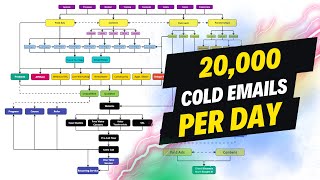
A founder sent 20,000 cold emails daily for his e-commerce agency targeting Shopify stores making $500k+. He guaranteed a 10% revenue lift in 30 days or refunded $2,500, used Loom videos in short emails, and hired 24/7 VAs to reply within five minutes. The real wins came from list quality and offer design, not email copy.
Questions this video answers
480 cold-email domains.
20,000 cold emails per day.
Shopify store owners doing roughly $500k or more per year (initially US, later expanded to English-language stores in Canada, UK, Australia, New Zealand, Germany, Dubai, Italy, France).
"I'll make you a landing page for $2,500. If it doesn't beat your current page by at least 10% in a 30-day A/B test, I'll give you a full refund and put it in a legally binding contract."
Reply rate rose from about 1.5% to about 8% (reported overnight).
Chapters
I sent 20,000 cold emails per day for about five months and here is what worked. So I did this for an e commerce agency and this video is going to go over what I did, how I did it, what worked, what didn't work and what you can learn from my experience. It's my story, but I want most of this video to be about you and how it can help you. I was targeting Shopify store owners, doing 500k or more per year in revenue and I was doing a lot of other things in addition to the cold emails. So just an important note, take from that what you will, but I was also doing ads, content partnerships and so on. Cold email proved to be an invaluable piece of the overall puzzle and it is my goal to show you what I did so that you can try to make it work for your business. So let's do that right now. I had to have quite a lot of infrastructure and tech to pull this off. So here's what I had. I had 480 cold email domains. I had one address for all of those domains for 480 as well. I had an instantly AI enterprise account or whatever it's called. I don't think it's called enterprise account but the most expensive one. I had an Apollo IO account. I had a scraper which was just a website I used to scrape leads. I had three inbox managers at any given time in this thing. So I had one in South America which was usually Colombia or Argentina. I had one in South Africa, very underrated place to hire, you know, remotely. They speak English, their first language and it's not super expensive. And then I had one in the Philippines and I'm going to go over that later. For my CRM I had close dot com. I had lots of friends and acquaintances that I could swap cold email list to to save time and money. And then I had various automations connecting my cold email tool to my CRM to my standard email marketing, to all of that kind of stuff. I don't really know how to set those up or anything. I got someone to do that for me so I'm and include that in this video. So before we really get into it, I do not recommend doing this at all. And by this I mean sending 20,000 cold emails per day. I was a complete amateur, never did it in my life before. You know, I started this five month period and although it sounds obvious, I didn't understand that if you send 20,000 cold emails per day you just burn the entire market in a week. And it's very unnecessary, completely unnecessary to do this unless you, you know, target audiences, 20 million people. And it's just stupid to do so because if you burn through it in a week and just keep emailing over and over, it's gonna piss them off. I guess you could say I would Recommend sending about 1500 cold emails per day while testing and finding a script and offer that works. And I like this 1500 number because usually no matter how bad you are or not, no matter how bad you are, but if you have at least decent skill level, let's say 5 out of 10, usually you could get at least one interested person every 1500 you send. So that's the reason it's not really random. But once it works, once you find the script and you get the offer that works and you have a bunch of people to contact, then you start buying more cold email domains and addresses and warming them up. And maybe then you go to 20,000, who knows? But sending 20,000 at the start was stupid. So no point in doing that until it's worked. So I failed pretty hard while learning and the biggest thing that hindered me was arrogance, was ego. I made a video a while ago, maybe a couple days ago actually, depending on when I'm going to post this video on, you know, self limiting beliefs. And one of them was, you know, I already know how to do this. That was definitely my self limiting belief when it came to this. I thought that just because I was spending about 7k per day on my ads, I had a lot of partnerships referring to me. I had some pretty good content as well that I would just automatically be good at cold email by default. And you know, you learn the hard way that this is not the case and there's no shame in it. The only shame is thinking you're too good to learn. I guess you could say all skills are different. Some may help others. Like you could say that if you know how to do good ads and you know how to get content, you probably have the skill of writing and you know, making a decent offer. And that may help the cold email, but it's still not, you know, one to one transferable. And that's an important thing to understand cold email. It's a skill that needs to be learned just like anything else. And if you're not getting the results you desire, you should take that as feedback that you don't know what you're doing and you're not good at it. And that's probably not a pleasant, you know, conclusion, but it is the real conclusion that you should come with, I was so bad at cold email. And it's kind of funny, like making this video. I was so bad at it that when I started it was actually embarrassing. And I only got one client in the first 10 weeks, which was over a hundred thousand emails sent. So if it's not obvious to you, if you don't know anything about cold email metrics, that is actually like horrible. That might be 20, 25, maybe more times worse than, you know, the average. I guess you could say it was humbling but necessary. And the one client I did get in this first 10 weeks was, you know, just so obviously in the market for a landing page, like, you know, 10 out of 10 looking for it. And it was more luck than anything else that I actually sold it to them and contacted them the first part in cold email. And what I did and what anybody has to do is make the list or get the list. Although this should go without saying, you know, this is one of the main reasons people fail. They're emailing people that are not in their target market and are not relevant to their offer. And if this is the case, you're not going to get many leads, calls or clients this way. So the first thing I did with this particular company because I was providing landing pages and CRO services to clients who use Shopify as their website and e commerce platform. So I set my target location originally to the United States only, but eventually I had to open it up to Canada, the uk, Australia, New Zealand and some countries like Germany, Dubai, Italy, France. Like as long as their stores were in English. I opened it up but, but this is a screenshot of just what it would look like to go in Apollo and you know, basically target by location. So there's 61 million email addresses for, you know, the United States. The next filter I used was by technologies used. So I filtered by, you know, their technologies are Shopify and Shopify Plus. So this would only show me contacts that have their website built with Shopify, which is in this case scenario perfect. But it's not always that simple just to target using technologies. But for me, lucky me, it was in this case. So you'll see down here when you go, because remember I said 61 million people before, but when you keep going now you filter by technologies, you can see that's 1.7 million people. Now the third one is by employee count. And I use my brain, you know, wow, I know, novel concept and try to think of a way to filter it down to the people most likely to buy based on revenue. And the revenue feature on these platforms such as Apollo is not really super accurate. I have found, you know, through trial and error. Again, as far as I've been told by people who work at Apollo and some other of these platforms, this number is. They estimate this number by applying your web traffic, you know, using similar web or the same concept. They multiply that by an industry average conversion rate which could be wildly inaccurate for a specific store and then an industry average average order value. And that's how they come up with the revenue number. It's not a great way to do it. It can work a little bit in general, but there's a better way and this is by employee count. So I know from my experience in the e commerce industry that they do not that you know, if the store does not manufacture their own product, which most don't, and if they don't ship it themselves, you know, most will outsource that, a fulfillment center, A3PL, you know, that kind of stuff, then you could really build a 500,000 to, you know, $20 million per year e commerce store with just a few employees that would actually have a company email address. You know, you'd have your founders, maybe your cmo, your marketing, maybe some customer service, maybe you know, a designer or something like there's in this range, assuming you don't do all of this stuff yourself, the manufacturing and fulfillment, you know, you can really make a good sized e comm brand with three to 10 employees. Less than three will be too small. And you know, all of the stores that basically placeholders or no longer exist, you know, and it just hasn't been refreshed or updated yet, will basically have no revenue. So we don't want to do less than three because that'll be people who can't afford you, you know, dead stores, et cetera. And at the start at least I did 10 because I figured more than 10 probably already has some landing pages built, which is not necessarily true, but I didn't know that at the time. And if you, you know, this is 112,000 Shopify stores. So let's go back. It started at 61 million people are in the United States, 1.7 million people in the United States are using Shopify and Shopify plus and now only 112,000 of those have between 3 and 10 employees. And that's not necessarily mean, you know, 160 ish thousand people or what was it, 1.6 million stores exist. But you know, if a store has, if a store is doing a billion dollars a year. They might have, you know, 100 employees who have a company email address and this kind of clogs it up. So the last thing I used is job title. So at this, specifically the CEO, the founder, the marketing type roles, marketing director, director of marketing, just marketer in general. So obviously a customer service rep or tight role would have an email address, but that is not the type of person who is making a decision to whether they're going to buy a landing page or not. So I don't really want to be emailing those type, right. So I did CEO, founder, co founder, CMO, director of marketing. And this narrowed it down to 17,000 total people. So obviously that's not a lot of people. And if you're going to send 20,000 cold emails per day, that's one day worth. So you'll probably think of that's very stupid to send 20,000 cold emails per day. And that is very correct. So although I wasn't sending 20,000 cold emails per day from day one, it wasn't long after day one, you know, day 30, day 45 that I was. And it was stupid, but I survived. I just started emailing these people more and more. Instead of three to 10 employees, I chose, you know, three to 100. I also opened it up to WooCommerce, Magento, BigCommerce, like other e commerce platforms and I also added the other countries like I said. So it was about 200,000 contactable people. Eventually when I was doing it, the second thing, and this is in my view, like kind of assuming that you are emailing the right people. The offer is the most important part. So this has to be the biggest thing that you have to learn and understand if you want to be successful with cold email. Because when I first started, you know, I obviously knew about offers with ads with, you know, just services. I was big on offers. But I, you know, it made sense that you'd have a cold email offer, but I didn't actually do it in practice. You know, I, I knew that in theory, but theory and reality are different things sometimes. So I did what everyone else did. I sent a big long message trying to be clever like a, you know, with good sales copy and get them to agree to a call with me. And you know, at the start I said I only got one client in the first 10 weeks, so you can probably guess how this went. Not good. So I eventually, you know, gave my head a shake and, you know, you gotta create a good offer and you have like the reason that nutmeep struggle with cold email, especially if they've built their business off referrals and word of mouth. Like you have to understand that referrals and word of mouth are as hot or perfect leads as you can possibly get. Right? They trust you inherently. You know, they need your service. You know, they're almost always going to show up for the call. That's not the case in cold email. These people never ask to be contacted by you. They might not even be in the market for what you do. They don't know you, they don't trust you. So your offer has to be, and it's not really an exaggeration to say 100 times better than it would be for a referral. Right? And this, that's what I didn't understand the first 10 weeks, or at least I didn't, you know, practice it in reality. And this is the biggest thing you need to understand if you want to be successful with Colemo. So this is the first offer that I did that actually worked. So I failed for a while 10 weeks and then, you know, a few more weeks to finally figure this out. Failing less during that process. But this is the first one that I would consider actually good. So here's what it was. I will make you a landing page for $2,500. If it doesn't beat your current page, meaning the page that they are currently running their ads to by at least 10% in a 30 day A B test, I will give you a full refund and I'll put this in a legally binding contract with no funny business. Like this was the essence of my offer and basically the essence of my script. So this did something like bring my reply rate because that's a metric that people often track in cold email from about 1.5% to about 8% overnight. And a lot of those were positive replies that actually led to calls. So let's compare that. You know, I'm the best at landing pages ever. You know, this is what I've done. You know, this is my stuff. Please get on a call with me and buy from me versus this one. And it's kind of easy and obvious when you see the two side by side to know which one works better. But until someone points this out and that's what it hoping I'm doing with this video, it's hard to kind of, you know, learn that. I don't know how else to describe it. So this offer worked well for me in my opinion because it implemented a guarantee, but it did. So the right Way you hear a lot of people do it, like my landing page will help your brand or you don't pay type guarantees. And that is the same concept, the same line of thinking, but poorly applied. So the guarantee was specific, better by at least 10% in a 30 day a B test. It had a risk reversal, I'll give you a full refund. It also had a risk reversal enhancer. And I've never used this term before, but I had to think of something for this video. So not only will I give you a refund, but I will put this in a legally binding contract with no funny business because a lot of people inherently know that you know, or I'll give you a full refund. There's going to be terms and conditions and they have to jump through hoops and you're just going to throw the contract in their face and they're not going to get their money back. So this is kind of to clarify that that wasn't the case. I think this is a great start. And it worked for me like this on its own would be successful enough for cold email, but the first offer got me results literally overnight. But I had the taste of it now and I've always been, you know, big on a B testing, big on optimizing. I have a background in ad funnels so I obviously get the concept. So it's very keen to, to try to make it even better. And I tried a few variations between the first offer and the second offer that worked, that didn't really do anything or actually made it worse. And I'm not going to talk about those because they didn't really last too long. But the next big breakthrough was after a completely non related conversation that I had with one of my close friends who also does marketing about removing friction. This is not a cold email conversation, it's just a general one. But this is why it's so important to read, to talk to people. Because no one really, it's, you know, very low percentage of the time, like people are actually going to show you what to do. But 95% of like breakthroughs are just going to be some throwaway line in a conversation that you're talking to your friend or you're in a group or at an event and like that changes the game for you. It's kind of how it works in my experience. So I thought to myself, what are things that would get in the way of them saying yes? Because that's really what friction is. So number one, they don't run ads. So not really much I could do about this. Like they, if they don't run ads, there's no reason they would really need a landing page. So nothing to be done there. Just not a good fit. Number two is a real one. They maybe don't know how to run an A B test. You'd think they would, but I have too much experience with E comm brands in this revenue range. And you'd be amazed a lot of them don't actually know how to set up and run an A B test. The third one is they don't believe I will refund them even if it doesn't work. And I say it's legally binding. So basically even though I said there's no funny business, they still don't believe it. The fourth one is they don't have a good offer for their ads and kind of like I said before and you know, this is the offer for this video, if they don't have a good offer, it's not going to work well. They think running directly to product pages is better, which is a separate issue on its own. They think that even if I give them a refund, the decrease in performance if the ads are a lot worse when running to my landing page versus what they're using now will still cost them a lot of money. And this is something that the re like the guarantee people in my view really don't understand. Like if you running Facebook ads and you say, you know, we'll do X, Y and Z and if it doesn't work we'll in three months we'll give you your money back. You may give their 20k back or whatever you charge for 3 months but they can't afford their ads not to work for three months. They're probably going out of business. So like this is a situation where this has happened. There's always even if you give their refund, there's still damage to be done. Another one is they tried landing pages before and they failed or were worse. Their current copy and images, et cetera, aren't working well and they don't know what to do. That's a big one. If they're currently failing on ads and they're like down about it and they don't know what to do, like why would they invest in this? Right? So I settled on a few different options. I would mention the fact that I'll set up the A B test. I'll mention the fact that we can actually split the traffic. We don't have to do it 50 50. We can do 90% to the current 10% to the new landing page to minimize the risk in case it goes very bad. And if the landing page performs better or about the same then we can Change it to 50 50. Just a way to minimize the financial risk. Mention the fact that I create offers and I will create them one that would help their conversion rate and aov. Mention the fact that it's completely done for them because I didn't mention on the last page. But one of the problems are like do I have to tell them what to do? Do I have to write the copy? Like what is involved with this? So it's completely done for them. And mentioned the fact that landing pages tend to outperform product pages using a case study or a testimonial or example. So I didn't mention all of these in the cold email script. Some was just like in the pre call flow, some were in the presentation and the loom I sent and I'll get in that later. But I took some great advice also and started using the loom video strategy and centering all the scripts around this. But I'll get to that later. So I got about 20% better result in terms of email sent to booked call ratio which is the main metric I was tracking when I started talking about the following things in the script or I guess in the offer. Really the script is a bit different. I'll create their offer for them which will increase their average order value and conversion rate so they get more margin per order and they can spend more on ads. Now that's an offer, that's a desired result. They don't have to do any of the copywriting or wireframes or anything like that. All they have to do is give access to the folder of images and I will do the rest and then I'll set up the AB test for them. So this just mentioning these things and it's not necessarily like going super in depth, 20% better results basically overnight. And when you're sending this many emails, 20% is like insane. That's like sending an extra 4,000 emails per day for at my volume at least the third offer that worked the best, but I actually abandoned it. So you could probably argue that it wasn't the best. It was the best in terms of conversion rate, amount of clients, amount of booked calls, etc. But it wasn't the best for me and my business. So this is an interesting example because it's kind of shows the thing that the offer must be good for them, but it also must be good for You. And if it's not good for both, it's not a good offer. So the big change was with the payment and the guarantee. So, you know, I basically did. I will do, you know, this for 2,500. And if it doesn't, win by 10%. That part was all the same, but I only required a $500 down payment instead of the $2,500, and they only paid the rest. If it worked, I thought this would be really, really good. And it was. It got about 40% more calls on top of the already 20% more calls here. But the problem with this is at least 50% of the time, they either just didn't pay, you know, what are you going to do? Or they didn't even run the A B test. And them not running the AB test was something of a regular occurrence, you know, the other way as well. But in that case, it didn't matter because, you know, I already got paid. So my landing pages didn't beat the original 100% of the time either. It's just name of the game. Typically between 50% and 75% of the time my landing pages beat the original. And that was mostly based on which employees were making them. So if you multiply like the 50% of the time I didn't get paid due to, you know, these two things by, you know, a 50% success rate. I only got the money 25% of the time when I was. I only got paid 25% of the time outside the $500 down payment. So, like, this is not necessarily bad. If I got 10 times the number of jobs in comparison to the old way, you know, that would be just fine. It would be worth it. But this only got me to about 30 to 40%. I'm pretty sure it was closer to 40% more clients than the previous one. But I got paid 50 to 75% less. So you do the math. This was really good. But I did abandon it after about three weeks because people just, you know, I don't want to do the test, or you just wouldn't respond, or they just wouldn't sign up for the tool or whatever. And then they just didn't pay because they're like, why would I pay if I didn't run the test? That was the deal. Which is fair enough, I guess. So the final and standard offer I was doing was something like this. So I'll make you a landing page that will get you a higher conversion rate and AOV for your paid ads. And if my landing page doesn't beat the one you're currently using by 10% revenue per session, they would know what that means. That's a function of AOV and conversion rate. In a 30 day AB test, I will give you a full refund and I'll put this in a legally binding contract with no BS or funny business. I'll also set up the AB test, make your offer and do it all for you. All you need to do is the images. So that was the offer. So that kind of sounds like a script on its own and kind of is a script, right? But it's not quite the same thing. So the script, in my opinion is the least important of the three parts. The list, the offer and the script. If you're emailing the right people, like you have the right list and you have the right offer, like as long as you don't absolutely mess the script up, like that's good enough. Most people have this backwards and they spend hours like trying to make the perfect script, but becomes far more about not screwing it up than creating something amazing when you have a great offer in the list. So one big breakthrough that I got from a suggestion from a friend whose community I was in was to center my cold email scripts around a video which was a loom. So this comes with a few advantages. They see your face and hear your voice, which are, you know, big trust building things. You're not just some random anonymous person. You can do a lot more explaining in a loom than over email. Like to explain like if you had a three minute loom, like that would be, you know, a thousand words in an email script. But you could have, you know, 100 words in your email script and the rest in the loom. And sending over the loom is a softer call to action, so to speak, than do you want to get on a call. So you're going to get more applies. It's also good to filter out qualified versus unqualified because really if they don't watch the loom, they're not interested. If they do, you can put them in a follow up sequence. So I would really recommend this strategy for those reasons. But you always want to ask permission to send the loom over because they don't, they didn't ask to be emailed and you don't want to put links or images, but in this case links, which loom is in your initial cold email because links make it go to spam way too often. So when they reply, however, like they say they want the loom, you know, yes, send it over. Sure, whatever. You know, now you're by default in their trusted senders because they replied to you and it doesn't matter if you send links at that point, it'll always go to the inbox as part of the email thread. Also, something really good to do is to make sure the loom is in the email with a custom thumbnail like embedded instead of just a link. So when they receive the email, your face will show up like you have a thumbnail and that makes them much more likely to watch the video. So the rules of a script are not hard and fast rules. There's always exceptions, but here are some things that I really think you should do. Keep it to 75 words or less. If it's more than that, it's probably bloated and you can trim it down. Not an ounce of fat. In your cold email script is the mindset that you should adopt. Avoid links and images till the reply centered around a softer call to action with less friction like loom. Do not insult their intelligence with fake personalization or pretending you care about them. Hey Matt, I love what you're doing with a thousand x leads. It's so awesome. By the way, I'm a video editor. Like does makes people angry, less likely to respond. And don't worry about the subject line. Just use quick question or you know, landing page question as a subject line and that's going to be good enough. Part four is inbox management and the goal with cold email is to reply within five minutes. And by far the number one metric you need to track and improve is how long it takes you to reply to people who are interested and reply to you. The biggest gains that happened for me outside of the offer was when I started to take this seriously and I made a goal to reply within five minutes. And that sounds unrealistic probably, but if you really want to be serious about it, if you really want to get clients at scale, there's always going to be a price to pay. And this is the price. You don't have to do it, it's fine. But the faster you apply, the more clients you'll get and the it tails off very dramatically the longer it takes. So like I said before with my tech stack and infrastructure, I had a bunch of different VAs or inbox managers as they're often referred to themselves as and people refer them. So they're from South America, South Africa and the Philippines. None cost more than $10 per hour and their entire job was to basically, you know, send the pre made responses. The Canned messages that contain the looms and other stuff when people replied as fast as they could. You can use subsequences for this but they're not fantastic and they have their own issues. So if you can hire and you are serious about it, do this. So when I hired in these three time zones like South America is over here, South Africa is like the center of the world on a map and Philippines obviously the east. So hiring in these I essentially, you know, had 24, 7 coverage. And there's always someone to reply to those who are interested as fast as possible. Something that not a lot of people think about. But equally important are what I call non email related games. So they're just as important as these lists, the offer and the script. But most people including myself don't take it seriously or think about it. So it took me a long time to understand this. And it like long time. Not just the five months that this video covers was that what's happening outside cold email is just as important as what's happening inside. So the main scenario where this is true is they'll get a cold email from you kind of be interested. They won't reply, they'll google you, find your website, look at your stuff and then make a decision where they'll apply that way. So number one, your cold email domains better redirect to your main domain. So if I had a cold email domain that was try a thousand XL leads. Com it better redirect to a thousand xleads. Com or people will type it in, you know, get an error like this website doesn't exist and that is sketchy. Right. That will kill any chance they have of replying. The second one, your website better show up in Google. So this absolutely killed me. Like my domain during this period of this video covers was one that you know, unless you typed it in exactly other companies would show up way like it wouldn't even be on the top 10 pages. And this was true because you know, unless you googled the name exactly, big landing page apps like Unbounce or blog posts like top 10 landing page tips or all of that kind of stuff would show up well before my domain would. And it sucked. And there's not a lot I could do about it. I didn't really even try. So very important here and this really still annoys me to this day. Your website better have a vsl, which is a video sales letter, a video showing your face, voice building trust, clarifying your offer at the top of your homepage. Very important. You better have some Third party reviews, public relations testimonials, et cetera. I didn't do any of that stuff really and that sure hurt my cold email. So I learned this stuff the hard way, let's say. So what I would do differently and that was kind of a slide on what I would do differently. But number one, definitely don't send 20,000 cold emails per day at the start. Not a good one. Spend money for PR and backlinks so that you show up in Google and you know, if someone types in your domain name, there's a bunch of different stuff about you that they can read and builds a lot of trust. I think that if I invested 10 to 20k in some PR, which was a drop in the bucket at the time, and invested in the SEO contractor, I really could have done a lot better. Collect more client testimonials and interviews. So I have heard that one of the best things for cold email is collecting video testimonials and client interviews and putting them on your homepage. That makes perfect logical sense. But like I said before, logical sense doesn't mean you actually do it. And I didn't do any of that. Collecting third party reviews on websites like Clutch Co, UpCity, Google Business, Trustpilot or whatever is, you know, the relevant one for your industry. Like very important. I had under 10, you know, under 10 total of these, like between all of those. So this probably went against me if they could even find these at all. Like, because like I said, my domain name was kind of wrecked by the landing page builders. And this is the end of the video. Like this is my experience with cold email and if you want to do it, like these are some of the things that you should do to make yourself more successful. So appreciate you watching and I'll see you in the next one.
More from Matthew







Everything I Would Change About This Ecom Email Marketing Agency (3 HOUR LIVE AUDIT)

Everything I Would Change About This Meta Ads Training Business (3 HOUR LIVE AUDIT)


