If I Wanted To Get Agency Clients With Paid Ads, I'd Do This (Step-By-Step)
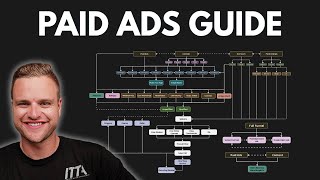
A step-by-step YouTube tutorial explaining how agencies can attract higher-quality clients with paid ads by fixing messaging, offers, and language. The speaker uses a home-services pay-per-lead client case study (7–8 calls/week → 20–30 higher-quality calls/week after changes), provides concrete ad-angle examples, shares six reproducible exercises (define ICP, one big idea, language, likes/dislikes research, list of problems/outcomes, daily ad-writing practice), and closes with a CTA to book a call.
Questions this video answers
Over 600 calls per week.
About 7–8 calls per week.
About 20–30 calls per week.
$105 per appointment (average).
7.2% conversion rate.
Chapters
Have you ever tried to run paid ads for your agency only to generate the lowest quality of leads you've ever seen, or worse, lose all of your ad spend without even getting one booked call? We book over 600 calls per week for our agency with paid ads. Some of those are bad, some are okay, some are good, and some are even Fortune 500 companies. So today I'm going to show you three things. Number one, why most people never get a single client with paid ads. Number two, why a few people get booked hundreds of calls per month. And three, the five step process you need to book calls for your business. So to start, let's go over an example of an actual client of mine who runs a pay per lead agency in a specific home services niche. So when this client first started working with me, they were doing about seven or eight calls per week through paid ads. They're not exactly a beginner, but certainly not enough calls to build a real sales team and scale up their business. Their real problem that they were facing was their messaging. The messaging is what determines the success or failure of your paid ads in 2025 and beyond. It's no longer about the editing or the targeting or the settings you do in your ad campaign or anything else. All that matters is the messaging. The problem that my client had is the same problem that pretty much everyone who fails with paid ads has. And it's their messaging was completely whack, it's completely off, it doesn't match who they're trying to get in their target market. So let's go over a few points. The first point is they didn't have one big idea or piece of propaganda that all of their campaigns were built around. Number two, they just don't have the type of offer that actually appeals to the level of client they're trying to attract. Number three, they just don't use the same type of language that their ideal client uses to describe certain things or certain problems in their business. And they don't research the things that their ideal clients like or don't like. And that's a very big part of the process. The final thing that I would say, and this is the big one, but it's kind of the result of all of those things is they didn't incorporate enough pain based problems, outcomes and circumstances into the ads or the messaging as a whole that simply cannot be ignored if you actually want your ads to work. And it's the number one difference between success or failure. I think most people instinctively know that they need to write good ad copy that resonates with their clients. But I always see a few key problems that completely tank the performance. And this client suffered from all three. The first is they don't speak to the right level of their target market. They're going for big businesses, let's just say a million dollars or more per year. But all of their language, messaging, offers, et cetera, are essentially targeting lower level businesses in the same overall niche. And that's usually 100% by accident. The second thing is what I alluded to earlier. They don't use the same language that their target market uses. With this people suffer from the same problem as they do in problem number one. They technically say stuff that targets their target market, but they speak to lower level problems and use lower level language than they need to resonate with the type of clients that they want to attract, which is the high level ones. They don't center their ads around the type of problems, outcomes and circumstances that those higher level clients have. And many of the topics that their ads and most people ads do are centered around low level home service owner operators who are still working in the business and not the, you know, private equity ready enterprises that they're actually trying to attract. So to kind of explain this point, let's take a Look at their 4 most popular ad campaigns. Before we started working together they were, you know, stop relying on referrals, stop waiting for the phone to ring, stop losing customers to businesses down the street, and stop having big ups and downs in your business. And those I wouldn't say are terrible by any means. They're just ads that see and speak to low level businesses that have less revenue. You know, for example, what do I mean by that? Do big businesses who can buy a lot of leads really only rely on referrals? Probably not, right? Are big businesses just sitting there waiting for the phone to ring? It seems unlikely or they wouldn't be big businesses. Are big businesses really just losing customers to other businesses like that? Probably not. They are probably the leaders in the markets they serve. Do big businesses really have huge ups and downs like that or are they just methodically planning their marketing budget, salesforce and lead generation quarter by quarter? When you break it down and you view it like this, it's easy to see what I mean by their messaging is for low level business owners. The solution to this, and this is the good news, is that the solution is easy enough. We just need to change the messaging to appeal to bigger businesses in the same niche. I'm going to tell you the details of how you can do this for yourself later. But let's go through what we came up with because here are some of the ads we came up with. Are you struggling to keep your sales team calendars full? Are you looking to diversify your lead sources? Are you planning to shop your business to private equity in the next 24 months and need to increase your lead flow? And the final one is we help home service companies over 1 million on a pay per appointment basis. Across all of our clients, we charge an average of 105 per appointment. Those convert at 7.2%, leading to a customer acquisition cost of 1,458 with an average job size of 8,215. So let's talk about the difference between these angles and the previous ones. We went over the previous ones and how they speak to lower level businesses, but how do these do the high ones? So for example, if a business is struggling to keep their sales team's calendar full, it implies they have a sales team and only bigger businesses with higher revenue have sales teams. If a business is looking to diversify their lead sources, it implies they have other lead sources and are big enough to where diversifying is a problem that they're looking to solve. If a business is looking to sell to private equity at all, it implies they're bigger. And if a business even resonates with those metrics I said in the ad angle or even tracks their metrics, it implies they are bigger and more sophisticated. So these ad angles are infinitely superior to the other ones in terms of how well they speak to the level of client they want to attract. It's not really surprising to me that the 7 to 8 low quality calls per week turned into 20 to 30 significantly higher quality calls per week in very short order once we made these changes. So like, how would you replicate this for your own business? There are six key exercises that I think you need to do. These are all one time things and will be the foundations of your paid ad campaigns and frankly, everything you do with your marketing for the rest of your life in business. So exercise number one is determining your icp, your ideal customer profile in one line, one sentence. This is basically a general description of your ideal client. So you need to be able to do this in a single line. For example, mine is male agency owners between 25 and 35 years old doing between 500k and 5 million per year. It really needs to be that simple. And I strongly advise you to do this based on your average client and actually use data that you see in your business. No one is stopping female agency owners from working with me. No one is stopping agency owners under 25 or over 36. They're free to join and they do. However, that's not my average client. That's not my icp. It is best if you can do this based on actual data like I said, and you should quickly kind of try to do it that your ICP is about 80% of your total clients. You're never going to get it to like 100% of my clients fit in this bubble, but you can really do 80 a lot of the time. And what do those 80 have in common? Exercise number two is determining your big idea or propaganda. And every single piece of your marketing, and especially your paid ads need to be centered around one big idea. So for me in Lead Generation Academy, the big idea is that every problem in your business can be tied back to you not generating enough leads. Once you have this big idea, which you should, it should be true and relatable, not just something random. Everything becomes tied back to that. So what I like to do is to write down five to 10 different options. And when you do this, there's always going to be one that just jumps off the page and that becomes your big idea. So essentially you'll have a different angle for each of your ads. That angle will be tied back to your big idea. Your offer will be the solution to that big idea and that will be the structure of all your ads going forward and basically your entire marketing system in general. Exercise number three is going to be determining the language your ICP uses. Because one of the most powerful and most important things you need to be do is to use the same language your ICP uses and to describe their problems using the same language they do. This is so important because the mere fact that you're describing problems they face in the way they describe it is a very subtle form of social proof that signifies you've been there before, you've done it before. In my opinion, that is more powerful than all of the case studies, reviews and testimonials combined. A good example in the E commerce industry is that high level e commerce players do not talk about things like roas like low level players do. They talk about contribution margin and incrementality. Every industry has their version of this. It's kind of pretentious, but it's very important. Using the correct language indicates you've been there before and it will resonate much better with high level clients and will jump off the page of them. This is for them Exercise number four is determining what the ICP likes and doesn't like. And you need to use call recordings as well as research on sites like trustpilot. Read reviews to find what people like and don't like. This is very important because you can make ad angles for both. For example, I've been an auto insurance affiliate marketer for about nine years. I used to be small and medium sized, but now I'm the group I'm in is part of the biggest in the world. When I was small, all of my ads were based around get a better price for your auto insurance, right? Which is sounds logical. Who wouldn't want to pay less? But a few years ago I eventually did actual research instead of randomly guessing and making up what I thought was a good idea. And when I scraped trustpilot reviews of all of the big auto insurance companies, I quickly found that price or paying too much was not even in the top 15 things that people mentioned. The top ones were all about getting screwed, getting lowballed on a claim, taking forever to pay out, and so on. And once I changed my ad angles to be based around these, I went from a small time auto insurance marketer to a big timer almost overnight. And it unlocks so much more spend, much better cpo, et cetera. Exercise number five is to determine the problems, circumstances and outcomes that your ICP faces. This is an exercise that I stole a few months ago from Jeremy Haynes. There used to be only five exercises, but now there are six. So simply put, you want to think of 25 different problems, circumstances or outcomes that your ICP faces. I like to use call recordings, Manus research on Reddit, Quora, trustpilot. You need to identify problems they face in their own words. And these problems need to be relevant or specific to the level of customer you're trying to get. If we go back to what I was saying, my ICP is agency owners between 505 million per year. These problems, circumstances and outcomes need to be things that agencies in that revenue range need to face, right? I would never make an ad angle about getting your first client or how to start an agency because those wouldn't make any sense. I don't have any product or service designed for that niche and that's why I make content and ads targeting the problems that I do. And exercise number six is going to be an ongoing thing. So every single day of the week, the first thing you should do each day is write four ads. You do this seven days and then you can film 28 ads once per week. And get it all done. This daily practice is going to make your ad copy a lot better. Make sure every ad you write is better than the previous one. If it's not obvious how it's better, it's not good enough and you're not making enough progress. I don't like to use AI to write any ads, but I love to use AI for feedback on the ads that I've written myself. So what you want to do is you want to create a Claude project, upload the 15 most popular copywriting books and ask for feedback on your ads and like you are the best copywriter of all time, give me feedback. Do that a few times, keep implementing it and you can get some great ads. So basically those are six exercises and how are all of those going to make you more money? Well, I would say if you are running ads, it should be obvious. These six exercises are the key difference maker that separates successful agencies with paid ads who get clients and those who don't. You need to understand who your target market is. Write ads that resonate with them and very, very importantly, only them. If you can do so, you'll never be poor again. If you like my help, book a call with Lead Generation Academy. The link is in the description and I will tell you if you qualify.
More from Matthew







Everything I Would Change About This Ecom Email Marketing Agency (3 HOUR LIVE AUDIT)

Everything I Would Change About This Meta Ads Training Business (3 HOUR LIVE AUDIT)


