Lead Generation #1: The Full System
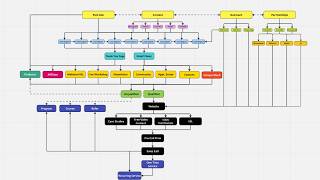
Matthew Larsen breaks down a lead-generation system for service businesses: a funnel that captures leads through a high-value magnet, nurtures them via email and webinars, then qualifies them for sales calls. He maps four traffic sources (outreach, content, ads, partnerships) you need in order, explains why 97% of prospects aren't ready to buy yet, and shows how to stack offers to monetize them anyway.
Chapters
Welcome. Today we are going to talk about lead generation. This is going to be video number 1 in a long series of different lead generation concepts. And this one is going to be the very important one because it's going to talk about what is the theory of lead generation, what kind of system should you build for your business, and how you would actually implement this to any business that sells services And with the main kind of conversion mechanism being a sales call. So that's going to be most of them. It's going to be the higher price retainer services, the performance-only models, the rev-share models, and that kind of stuff. This is not really going to apply to anything to do with e-commerce. It's not going to apply to anything that sells, you know, direct to checkout, like $97 a month SaaS subscriptions or anything like that. So let's get started. On the screen, I have probably the best lead generation system in existence, and it is the one that you should always aim to build for your business, whether that means you're an agency, like a lot of the channel viewers here are, or whether that means you're a B2B SaaS, or you're an accountant or a lawyer, or whatever. The things that you'll do in terms of the content, the terms of the messaging, the terms of everything will be the same— or will be different, rather. But the strategy of the overall lead generation funnel will be the same. So let's get started with a little bit of an overview from each part. So a lot of the time you're going to hear people talk about 3 stages: the top of the funnel, the middle of the funnel and the bottom of the funnel. That's going to be a very important thing to kind of talk about or thing to remember, because when they talk about a funnel, really they're talking about this kind of shape where at the top you put in— we'll put in attention, and at the bottom you turn out clients. And then basically there's different parts of the funnel. We're going to go T, we're going to go M, and we're going to go B. Those are top, middle, and bottom. And basically as each stage occurs, you're going to get fewer and fewer people until the bottom where only a very few amount of clients come out. So to quantify this as an example, maybe you have 10,000 units of attention. We'll call those impressions. Maybe 1,000 of those make it into the top of your funnel. See, we'll talk about that kind of stuff later. And then maybe 100 of them progress deep in your funnel. And then 10 of them get to the very bottom and then one of them becomes a paying client. Like that is really what they're talking about when in the overall theory in getting a funnel. But let's talk about what this looks like. In, we'll call it practice for now. So here we have our top of the funnel. That's all of our traffic methods. Those are our paid ads. Those are content on Instagram, Twitter, YouTube, TikTok, LinkedIn, wherever else. Those are outreach. So cold DMs, cold emails, cold calls, that kind of stuff. Those are our partnerships, our white label referral media and joint ventures. So Media partnership would be like you're talking at an event or you're doing a YouTube collaboration or whatever. Those push down to the middle of the funnel. Basically, let's just say you have someone who watched a YouTube video like you right now, and then you clicked onto the link in my bio to get my free trainings. That would be what we would consider to be a lead magnet. When you do that lead magnet, what's happening is I'm going to give you a piece of value. You are going to put your name, email, phone number in there. And when you do that, you're going to start receive my email flows. And you're going to see my thank you page, which gives you more information. That would be the middle of the funnel. That is where you're capturing, nurturing, and qualifying the leads. We push you further into the funnel. You might go to my website and watch my VSL for my software or my training program. And you might either say, this is for me, or this isn't for me. What you'd happen there is you might go to basically fill out an application and that application would qualify you based on, you know, the things that are important to me, who I determine are qualified. That would be like revenue range, you know, willingness to spend, you name it. If you were qualified, then you're going to go to the bottom of the funnel. You might watch my VSL, check out some case studies. Et cetera, and you might book a call. Booking a call here is really what we're talking about when we talk about the bottom of the funnel and everything else is to basically take all of the market, you know, the market is up here and how do we attract the market? How do we capture and qualify the market? And then how do we basically get the market to book a call? And then on the sales call, we will, you know, determine if it's the right fit Try to sell them. And that is essentially the overview of how you would get clients. So this funnel is specifically designed to solve 4 problems that every service-based business, every business that deals with leads is going to face. The first of these problems is they just don't get enough attention. And they say that attention Is the new oil these days. Could be. Who am I to say? Basically, when we build this lead generation system, this lead generation funnel, there's 4 ways to get that attention. There's paid ads, there's content, there's outreach, and then there are partnerships. No matter what business you're in, those are always the 4 ways that you're going to get customers. Those are the 4 big buckets. So what are those nowadays? You know, paid ads, the Facebook ads, Google ads, LinkedIn, maybe TikTok ads, depending. Maybe you're sponsoring a newsletter or sponsoring a YouTube channel or, you know, whatever, right? Doesn't really matter, but there's always going to be paid ads. The platforms, the tactics will change, but at the end of the day, you are paying money to receive attention. Paid ads is pretty good because it's the most scalable. Oftentimes it's the most effective. But at the same time, it costs the most money out of any of these methods. So there are trade-offs. The second is content. So, you know, the YouTube channel, like you're watching right now, Twitter, you know, Instagram, Facebook, TikTok, LinkedIn, your newsletter, maybe you're live streaming, you know, who knows, right? Content is great because typically you're going to get the warmest leads from that. Because content, you know, you watch someone's YouTube video for an hour, that's going to be a lot better in terms of quality than something like a paid ad or something like outreach where they don't really know much about you. They're not really bought in. They just got that and saw it. And now they're going deeper. Content is great because other than the time, and maybe you're going to pay a content team, it doesn't cost as much as paid ads and the leads are more qualified. But the drawback of content is that it's very, very unpredictable. A lot of the leads you'll get from content, a lot of the revenue you'll generate is going to either take a lot long time, as in like they watch 5 or 6 of your YouTube videos before they end up buying, or it's going to be reliant on getting those outliers, those viral contents, because a lot of the time in content on any platform, You'll be posting, but unless the video or the post is really good, unless it— we call it breaking out to cold audiences. So people who don't know about you, people who aren't following you, it's kind of hard to get additional attention. But when you get it, it's probably the best way to generate attention, capture leads, nurture them, qualify them, and push down. So the next thing here is outreach. So outreach is the cold emails, the cold calling, the cold DMs, you name it. Outreach is bad in the sense that it's the lowest authority. You have the generating the lowest quality or the coldest leads, but at the same time, it can be very cost-effective to do. And it's also very stable and it's very linear. You have your content, which is like very ups and downs. You have your paid ads, which starts slow, but when you figure it out, it can go exponential. Outreach is very like slow and steady. You know, if you wanted to 5 times the amount of calls you booked from outreach, you could really just do 5 times as much outreach and it would probably be pretty similar. The next thing is going to be partnerships and partnerships are when you are essentially partnering with someone who sells to the same audience that you sell to. But you don't sell competitive services or you don't sell the same one. There are 4 types of partnerships. White label means they're essentially going to pay you to be kind of a subcontractor. Referral means they're going to refer your clients to you. Media means you're going to get in front of their audience and more people are going to learn about you. And joint venture is you're both working on something together. Partnerships could be good, but they're more like this where You know, they're kind of what we call a hockey stick graph, if you know what that is, where basically nothing happens until something happens all at once. So like, these are kind of the 4 ways to get attention regardless of your business. And they all have different pros and cons. Something that I am, feel very strongly about is that you need to be doing all 4 of these things at any given time. If you're just starting out, you're usually going to do outreach first, then you're going to do content, then you're going to do ads, and then you're going to do partnerships. The reason for that is when you're first starting out, you do outreach because you don't necessarily have the proof to get someone to trust you, to partner with you. You don't have the money to do paid ads and you don't have the industry expertise to do content. And then, but when you do, you're going to start doing outreach. You're going to learn some stuff while you're getting clients. Then you can make some content. Now you have content to nurture your outreach. And you're starting to earn some more money and then you can do ads. And then eventually you're going to have a lot of clients, a lot of case studies from all the clients you got from ads and content and outreach. And that's going to give you the credibility to form partnerships. So I'm very, very passionate about that. You have to do all 4 of these for at least 2 reasons. The first reason is that a lot of people will master and put all their time on one platform. Let's just say it's ads. Actually, I'll do an example for each. Let's say it's ads and then their Facebook page or their ad account gets banned, or, you know, something happens to them and they're basically at zero. You do outreach through cold email and you eventually, your cold email domains get cooked or some, you know, ISP filtering changes and now everything goes to spam and you're at zero. Or content, you know, your algorithm changes, you just kind of drop off and now you're at zero. And then partnerships is partnerships. So the first one is you don't want to put all your eggs in one basket because if something changes, your whole business is going to be kind of destroyed, so to speak. The second reason that I'm very passionate about all four of them is that each of them actually work together when you're doing them to make the other ones more effective. An example of this is if you're doing outreach and content, someone who has seen your content and then happens to get, you know, a cold email from you is going to respond more favorably at a much higher rate than someone who you're cold emailing and has no idea who you are. Another example of if you're running ads and someone clicks on your Instagram profile, there's a bunch of helpful content on there. And in comparison to that account being bare and like nothing is, they're much more likely to click on your link or take whatever action you want to do than otherwise. Same way someone, you know, clicks on your ads and they go to your website and they see you're partnered with all these people. That's a good way to build a lot of trust. Right. And then similar, one great way to get partnerships is by doing outreach. So all of them work together to make the other ones more effective. I wouldn't necessarily say or recommend you do all of them like today and do, you know, 30 minutes on each of them. I would definitely start by mastering outreach. Then once you do that, you delegate it and then start doing content and then paid ads and then partnerships. The thing I think a lot of people miss is you're supposed to figure it out and you're supposed to build a system around it and delegate it so you can go and figure out the next. You're not supposed to be doing all of these at once. So having all of these will give you a big stream. That's very stable, you know, very exponential in the case of paid ads, has the possibility to go viral here, stability with outreach, and then kind of those home runs with partnerships. And when you do all of these, you're going to get this attention at a much higher rate than ever before. The second problem. People have is they really have no way to capture, nurture, and generate, or, you know, qualify the leads. So we're going to go capture, nurture, and then qualify the leads. CNQ. I never called it that in my life before, but we're going to do that here. So what happens here is a lot of people will, you know, put effort into paid ads, put effort into content and that kind of stuff. But they don't really have anywhere to go with it, right? So I could post 100 YouTube videos, but unless I have a way to capture their email, phone number, name, maybe their website, nothing really is going to happen here. So if someone clicks on the link in my YouTube bio here, for example, we could estimate, or we can reasonably, you know, say that they're somewhat interested in learning more, right? Or else they wouldn't have done that. But interested in learning more doesn't necessarily or any way mean that they're interested in paying you. They're interested in learning more. And I think a lot of people get that wrong. I think a lot of people will basically, if we go over here, let's just say content. We'll just put con there and they don't have any of the rest. So it's basically content to sales call. Like, this is really what more people's funnel will look like than this. And that can still get clients. It can work, but you're leaving a lot of people on the table and a lot of money on the table doing that in comparison to if you would actually build a great funnel. So what happens if you do this correctly? Paid ads, content outreach, you name it, they're going to go to your bio. They're going to click on your link to your landing page. You're going to have a form on there in exchange for a guide or a course or an ebook or something. They're going to give you that contact information. They're going to get what they came for. And then the— that is the capturing part of the C and Q. The next is the nurture though, isn't it? So a lot of people don't do number 2 at all, but a lot of people will just do part of 2. You know, a lot of the capture, if you don't have the nurture and the qualification, that doesn't really work either. So this lead magnet here is very, very important because people don't know how good or how bad your service is until after they buy it from you. Correct? Of course. But a lot of people don't understand that. They'll just be like, oh, we have the best service. We, you know, that's whatever. They'll just make claims like that. And might, what may well be true. Oftentimes it's not true, but people don't know you and people can't judge that without paying for you. And most people don't trust you enough to do that. So the lead magnet should be kind of like your magnum opus. It should be your life's work. It should tell everything you need to know about generating or being successful with your service. And it should take them from an absolute beginner who basically knows nothing about you or your service other than they saw some content or they saw a paid ad and they were interested enough to click to becoming basically a master at it. This goes contrary to what a lot of people will do. And a lot of people will think in terms of their thought process because they like are worried that if they give it all away, people will just steal it and not hire them. And that's really very far from the reality. That you'll find when you do this, because people will not really even want to do it themselves or be interested in learning. They just want to know that you know how to do it. And if you could convince them of that, they're going to hire you. If you can't, they're not. So people will either put no lead magnet at all, or they'll put a very kind of shit lead magnet that is very basic. And remember, when you have a shit lead magnet. That is what you're going to be judged on. You're judged on the quality of your free content. If your lead magnet sucks, they're just going to assume that your service sucks. On the contrary, if your lead magnet's the best thing they've ever seen, they're going to think your service is the best thing they've ever seen. So it's very important that you put a lot of effort into this and you get it right. In depth, you name it, because the purpose of this nurture phase is to convince people that you know what you're doing. Nothing else. When we get their information in exchange for our lead magnet, two things should happen. It should go to our thank you page, which has a video of us talking about our service and our knowledge and you name it, but they're also going to have their email because they put in the form and we're going to send them a lot of email flows. Now, these email flows should occur over 30, 60, 90 days. I like to send a lot of emails, but it should be further demonstrating your expertise, answering questions, overcoming objections preemptively. To know, or to basically show people that you know what you're talking about. Then you should also have other things in the process, such as, you know, you should be having that webinar or VSL on your website. You should be doing live workshops weekly, or at least once a month. You should be writing newsletters. You should have a community. You should have a representative from your company, usually known as an appointment setter, reaching out. and you should continue to make content, right? This is part of the nurture process because they got our lead magnet. That was their introduction to us. Now they're getting our emails every day and they probably are going to be reading a lot. That's going to further nurture them and make them even more interested than they were when they originally clicked from whatever our attention source was. They're going to join our community. Our person's going to reach out to them. They're going to keep consuming our content. They're going to maybe attend live trainings that we're putting on, and they're going to watch our VSL. That is, you know, how we're going to nurture them. We're going to hit them on very, you know, a lot of different angles, a lot of different types of content that each is building more and more. Our attention level content should be the most basic and the most mass market. Our lead magnet should get more specialized. Our in addition to our email flows. And then this is kind of our bottom of funnel content and our bottom of funnel conversion mechanisms that really force them to make a buying decision. Like they've gotten this far, they need this service, whether they're going to hire us or not is one thing, but two things are going to happen. Either they're going to self-qualify, you know, I've watched this guy's stuff. I've, you know, I've determined this is for me. And they're going to book a call. Let's just say that happens from the workshop in this case, or to sign up for the workshop, to sign up for the community. You can ask them a lot more questions because they're deep in your funnel. Now you might get their revenue range, and now, like, you have that information and you've determined they're qualified, and then your appointment setter can reach out to them, you know, and that kind of stuff. Either way, They're going to end up going to a form on your website. That's going to basically put them through a questionnaire that determines if they're qualified or not. And that's basically problem number 2. People don't have this process. So attention driving and number 2, capture, nurture, and qualifying leads. Problem number 3 is that all of their clients are going to like, are coming from referrals and maybe networking. There's nothing inherently wrong with getting referrals or networking. Actually, the, the exact opposite. That's an amazing thing, an amazing sign. But there is a problem with that being the only way you get clients, because when that's the only way you get clients, number one, your business is not necessarily in your own control. You can't scale referrals. You're always relying on someone else to grow your business for you. And that makes it so your revenue is very unpredictable and you're not really confident enough to reinvest in the business and hire and train and grow because you don't know when your next client's going to come. And two, if you ever want to sell your business or do something like that, or really get out of, you know, operations and where you're really— so you can kind of relax a little bit. It's not really possible because all of the clients are coming from referrals and it's just not a good situation to be in. The nice thing about that is if you get in a system to drive attention or generate attention, and you have that system to capture, nurture, and qualify leads, you have solved this problem completely. You know, you generate your own attention, you capture, nurture, and qualify leads. You just are not getting all your clients from referrals anymore. It's almost like a byproduct of solving the first two problems, but it just doesn't exist anymore. And that's great. So really, if you solve problem one and two, you solve problem number three, but you have to solve problem one and two, or else it doesn't really work. You can't just solve problem number one. You can't just solve problem number two. You have to do them together. The fourth problem that people have is And we're going to put it down here is that really, let's delete this too. They're getting a lot of attention. They're capturing, nurturing, and qualifying leads. But the problem number 4 is that no matter what happens, about 97% of the market is not going to be in the buying like cycle. That could be a few reasons, you know, number one, they can't afford it in the sense they're unqualified. Number two, they do it in-house. Number three, they're already working with someone else to do it. Number four, like they're just not ready. Like who, what doesn't really matter what the reason is, but the number that you want to remember is that about 3% of people are in the market to buy your service at any given time. Which means 97% are not. And where people leave a lot of revenue on the table is they have absolutely nothing to offer this 97% of their target market. When this target, 97% of the target market, they have their attention, they've captured, nurtured, and qualified them, but really they're kind of just getting stuck here because they have nowhere to go. Most businesses will basically only have their main service, and that is gonna be their recurring service at the bottom here. We can scroll down. So most people's business looks more like this than what I'm about to show you and what should happen. So these 97% of people are unqualified for whatever reason. There are many, and they're basically just going nowhere, right? And that isn't necessarily a big problem. You can still get a very good business scaling up your recurring service, but you're leaving a lot of money on the table for people who want to buy from you, but can't. You want to sell to these people because one, you want more revenue, duh, but two, when you sell something else to these people, eventually when they are ready to buy a recurring service, You oftentimes don't need a sales call to them. You can just send them an invoice or a payment link and they'll buy it because they've already bought from something from you, had a great experience, and now they are ready for it. So what happens here is 3% of people are going to really be eligible for your recurring service, but there are other things that we could sell them. If they are unqualified, we could sell them a low-ticket digital product, maybe some templates, maybe something else to tide them over. We could also have different affiliate links, especially in our lead magnets that have all of the different tools or software that they might need or might use. And we can generate some recurring revenue from that. Or if we find out that they don't need our service, they need something else, we can refer them away, or we could refer them to someone to do it cheaper. We could also sell them a course or have them join a community. Or we could sell them some consulting, basically. It should be noted that these revenue streams are very, very profitable as well. You sell them a digital product or do affiliate or refer them away or sell them a course or a program's a little bit lower margin, but a lot of these here are going to be, you know, 100% margin, maybe some software, maybe some payment processing fees. So you're not only leaving a lot of revenue on the table with these 97%, but it's very, very high margin revenue. That you could also reinvest into stuff like ads, getting more attention, or a better system to capture, nurture, and qualify leads, or you could just pay yourself more or whatever you want. It makes your business worth more. It makes your business more stable. And it really, really is an important part of the process in almost anything that people sell. So the fourth problem is basically solved by having different options. I like to have a default of 7: the affiliate links, the products, the referrals, the course, the consulting. And then you should also, for the people who aren't necessarily ready to take this step, you should have a lower-priced one-time intro offer that they can kind of test you out quicker at a lower amount of risk in comparison to your main service. Then if you do a good job, it becomes a very, very easy upsell. So like, that is the 4 problems that people have and This funnel and this marketing system is how you solve it. So in a lot of cases, we can call it top, middle, and bottom of the funnel like that. But really how I like to think about it is traffic, conversion mechanisms, and then offers. Again, you can think about it however you like. It's a free society, a free world forever. But I find that when you think of it in that way, especially to the average person or the person who's not a super high-level, in-the-weeds performance marketer, it makes a lot more sense. So at the top we have our traffic sources. I'm going to put a T in the middle. We have our conversion mechanisms and at the bottom we have our offers. And that's a very good way to think about it, in my opinion. So now that we know the theory of all of this. And why we should do this system. What I like to talk about are a couple of things. How would we actually build something like this? Where can we use AI to help us do that? How should we build a team around this? And then how do we remove ourselves from this process so we can get back to working on the business? Because a lot of the time at the start of your business, you are bottlenecked by operations and fulfillment, then you hire someone to get out of that. Then this is usually where you're gonna spend the most of your time building this. So what we need to do when we build this is I will typically build it in reverse order, similar to how you would build a house. Like, this is the top, this is the middle, this is the bottom, right? You wanna build the bottom first because the same way you would Build the bottom first here, the same way you build a house. You wouldn't start at the top. That would be like trying to build the roof of the house before the walls and the foundation are built. Doesn't really make a lot of sense. And it's the same thing here. So chances are, if you were in business, you're always gonna have your recurring service, right? Like that's what we've been selling all along. That's kind of how it works. It can be recurring in the sense that it's a subscription or it could be reoccurring. As a sense that, you know, kind of like a restaurant. It's not necessarily a subscription, but you might go there a lot and over and over again. Once we have our recurring service, and I'm going to put a check mark there because really, if you've ever been in business, you're going to have your recurring service. You're going to have your sales call. You're going to have your website already. So I'm kind of going to like go with the assumption that we have all of this done already. We should. The next step I would want to do is my one-time service. So what you want to do with your one-time service, in my view, and this is going to be a full lecture in this curriculum all on its own, but you want to have something, you know, $2,500 to $5,000 that naturally goes into the recurring service that they can use as kind of like a paid trial where you get that. So for example, I had a landing page and SEO agency that I exited in 2023. My recurring service is CRO, stands for conversion rate optimization, charged $8K a month for that 6-month minimum. It's not exactly low friction or low risk for someone. So to counteract that, I sold them landing pages for $2,500. And if my landing pages did a good job for them, very easy to sell my recurring service to them. That's a good example of this. The next thing I would do is I would build the full funnel here. I would basically build this, put my pre-call flows, my website. I would build my email flows here. I build my lead magnet here, and I would choose at least one of these conversion mechanisms. I will typically always do an appointment setter and a VSL to start with. And then a newsletter. Those are the best bang for your buck, in my opinion. And when you do those, like, your funnel is going to be at least have the outskirts or the skeleton of it. And then finally, I will start with the outreach, like I said earlier, then I'll get to the content, then I'll do the ads, and then I'll do the partnerships. That is really the order that I would build this in. But I'm not going to teach you how to do all of that in this particular lecture. What I'm going to do here is talk about and go over the things that I think it is possible to use AI for. And what I mean by that, the things that it's possible to use AI for that it's going to use AI and it's not going to be terrible output. So I would never use an AI to come up with any of my offers. That's something that you need to use your big, beautiful brain for. Because those are the highest leverage and your offer is going to basically determine every other part of your business. So that's definitely not. Also, we're not really going to use AI to do our sales call. That doesn't really make a lot of sense. And we're probably not going to be able to use AI for our case studies or our testimonials because a real person has to do that. Where we can use AI down here. Is we can use AI to build our site. Let me get the green text here, the green thing here instead. We can use the AI to write our VSL, assuming we give it some details and same with the pre-call flow. We can use AI to write the newsletter and to write the VSL up here. I don't think, or I would probably put, and I'm going to put kind of like an orange thing here. Might be possible to use AI to do a live workshop. Might be possible to use AI to do your bottom of funnel content. Although I necessarily wouldn't recommend that. Not possible to do AI on your appointment setting. Not possible to use AI for your community. Is possible to use AI on your thank you page and your email flows. Also possible in some ways to use AI on your lead magnets. But again, I'm going to put a question mark because I'm not sure how much I'd recommend that. Is possible to use AI on your paid ad scripts and your content. Somewhat possible to do it to write your email flows, but I probably wouldn't use AI to do partnerships either. So like, this is very clear how we can use AI in some degree. Although what I would recommend is that you learn to do it yourself first and do the basic skills and use AI to speed it up and use AI for feedback and, and opposed to actually using AI to do all of it. Because when you use AI to do all of it, you're going to get AI results and you're going to get AI. People are very good, especially in a business-to-business service sense of seeing what is AI and what is not. But it's just one of those things where you have to gauge how much time you want to spend versus effort. I would never recommend outsourcing all your thinking to AI to where you are a mindless drone and a mindless robot, because if you are doing that, you're gonna get the same results as everybody else who does that. We need to make our funnel good. A lot of this is a one-time setup and a one-time thing. It's very good and very important to put all of the time and effort into that, but you are gonna do what you wanna do. The next thing that I want to talk about is how you would build this all out in terms of the team. So really, there's going to be a lot of things here, and I'm going to mark those as one-time versus recurring. And I would really recommend you are the one who builds this out in the one-time sense, and then your team can do the recurring version if you need. So the recurring service, the recurring stuff, the pre-call flow, all of this kind of stuff here. The website, etc. The thank you page, the email flows, all of that kind of stuff, the lead magnets. We'll put checkmarks on these. The red checkmark here is stuff that's one-time that I would really recommend you do yourself. The other things, the green, are going to be the things that you can a little outsource to your team. Oops, sorry for that. Webinar, affiliate, and product are also there. But there are some question marks here as well, or some things where we'll say, like, you can partially use your team. The live workshop is almost always going to have to be you. You're the authority figure here. You're going to be the one doing that. Case studies, This kind of stuff can go to your team. The content, your team might help you prepare it, help, might help you edit it, might help you come up with ideas for it. But really, as the business owner and the face of the brand, it's going to be very hard to have someone better than you at doing this. You are the one who is the expert. You are the one who's the face of the brand. You're the business owner. You're the one with the authority. Very difficult to delegate or outsource content completely. You in a lot of cases might be able to make source material for content, and then your team can turn it into the Instagram, the LinkedIn, the Facebook, the Twitter posts, but really wouldn't either let your team or AI, you know, kind of go ham and do it all themselves without any of your input. Similar to the live workshop, you might have your team do the technology side and set it all up for you. But as far as getting them to do it all for you, I don't know how realistic that is until you are at a, a very, very big business level where you can pay someone hundreds of thousands of dollars per year to do that. But anyway, that's what I would do with the team. So realistically, the final thing that I'm gonna talk about in this lecture today is once you build it and once you do a good job of systemization and delegation, Your job as the business owner really becomes making content and doing live workshops. If you choose a live workshop route, it's not necessarily you have to do that. Then you could put maybe 20, 25 hours per week into content creation. And the everything else is either built or delegated to your team. And that's how you have this whole system. So I hope that you learned something in this lecture. What you really are going to want to do is build it first, systematize it, and then try to do more and then try to do it better. I don't really think there's anything else that you can do outside of this that really will make sense for your business. It's an all-in-one system that really works for any business who sells leads. If you like this lecture, subscribe, and I'll be posting more in the lead generation series on a weekly basis.
More from Matthew







Everything I Would Change About This Ecom Email Marketing Agency (3 HOUR LIVE AUDIT)

Everything I Would Change About This Meta Ads Training Business (3 HOUR LIVE AUDIT)


