Lead Generation #2: Messaging (Important)
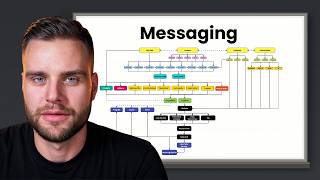
Matthew Larsen breaks down how to build messaging for lead generation. Start with a precise Ideal Customer Profile using real customer data, then mine reviews and forums to find the exact language your audience uses. Create 25-30 distinct ad angles from their problems, and repeat that same messaging everywhere: ads, emails, landing pages, bios. Consistency signals expertise and gets algorithms to show your offer to qualified people.
Chapters
Today, we're gonna talk all about messaging. And messaging is the, as the name suggests, what message you are trying to convey in all of your lead generation material. And I would honestly say that messaging alongside of the offer are the two most important things you could ever do in terms of your lead generation. I'm often reminded by a quote that I believe is attributed to Abraham Lincoln. Who knows? But he said that if he had an hour to cut down a tree, he would spend 55 minutes sharpening his axe. And this is how I feel about messaging. In our last lecture, we talked about this lead generation funnel. We had our paid ads, our content, our outreach, our partnerships at the top. We had our lead magnets, email flows, webinars, VSLs, newsletters, et cetera, in the middle. And then we have our offers and our sales process at the bottom. If you don't have the messaging on point, we— what's gonna happen is we are going to attract the wrong type of person into our funnel. And the wrong type of person is a person who is unqualified. And therefore we're not really able to sell them a service. I've worked with so many people over the years who, you know, they say their ads don't work, their content doesn't work, their outreach doesn't work. And it's because there's nothing wrong with those things, but it was because their messaging really, really screwed them over. They did it very, very improperly. So today we're going to talk about this exact messaging flow. So it's on the screen here. We're going to start at the top and then we're going to work our way down with examples of what to do and what not to do for each. So the first thing that we need to do when we are talking about our messaging is we need to talk about our ICP. Your ICP, if you don't know, is your ideal customer profile. There's other terminology for this. There's your avatar, your target market. You can use those interchangeably if you'd like. We're going to refer to it in this process as our ICP. So our ICP for our purposes is going to be the similarities. It's going to be the makeup of about 80% of our customers. So what we want to do is we need to look at our customer list. If we've been in business for a long time, we could either do the last 3 or the last 6 months. Because things change over time and we want it to be up to date and accurate. What demographics, what character traits, what everything can we make and spot patterns that basically represent 80%? And we can put 80% in the buckets based on these. It's never going to be 100%. It's never going to be perfect just because there's always outliers on the extremes. But in almost every business, you can really narrow it down to 80% of our customers fit in this exact bucket and that bucket becomes your ICP. So for example, we have a lot of different things to choose from. We have the age, we have the gender, we have the race in some situations, we have the location, we have the language, like those typically are going to be more on the obvious side, but very important. We have either the revenue if it's a business or the net worth/personal income if it's a consumer. We have the tech stack they're using at the business. For example, e-commerce stores use Shopify. We have the job title, like we're targeting CMOs or CTOs or CEOs, or sometimes we'll target head of growth, you name it. The other one is going to be employee count, which I find to be a much better signifier of revenue in the instance you're actually trying to build a list around it. So for example, I'm gonna do here throughout all of step, every step of this process, how to do this properly and then how to do it improperly. Or I actually might change that in reverse for this lecture. We'll do it improperly first, and then we will do it properly so we can spot the difference. So we're gonna do improper in this kind of red pen, and then we'll scroll a little and do proper in the green pen. So let's just take myself for an example. I have had a lot of different businesses. A lot of those were exits. Some of them were complete failures and shut down. But the thing that I've historically done this kind of content around is agency owners, right? That would be about 80% of my target audience. So let's just go over here. What I would do if I was going to do this wrong. Is I would say that my target market, my ICP, is agency owners. And this is what a lot of people do. You ask them their niche, you ask them their avatar, you ask them whatever, and they'll just tell you something like agency owners. Could be roofers, could be financial companies, could be, you know, moms, you name it, but They're going to tell you something like this, and this is an example of doing it wrong. Not that they're, you know, 180 degrees completely in the wrong direction, but that is wrong in the sense that it's actually too broad. It's not narrow enough. And you'll see what I mean as we go through this when I do wrong versus right. But if you were just going to stop at this part, which I would estimate 95% of businesses do. If they've even gone through some of this exercise at all, you're going to get a lot of wrong people in your marketing funnel. And that's going to be bad for a few reasons. The first reason is that's a waste of time. Obviously that's a waste of money is number 2, but the third reason that is so bad is because it'll actually allow you to delude yourself into thinking that something like paid ads or something like content or outreach doesn't work for you. And that is where you're really going to give up and it's going to cause permanent damage to you. It's going to put a lot of self-limiting beliefs. It's going to do X, Y, and Z. You'll understand what I'm saying if you talk to anybody, usually below you in business in terms of skill or success or track record. When you're talking to someone lower than you, you can spot their self-limiting beliefs instantly. They just really just come up in conversation within 5 seconds and usually it's nonstop. And to, but when you're at someone's same level or someone's above you, it's really hard to spot. But let me tell you, the amount of people who I've come in interaction with across the years, whose root problem was bad messaging, but that led their ads to not working, that led to their content to not working. And then they just gave up altogether is very significant. And it's a big shame. So let's get back to it. If we're going to do this right, I would still first put agency owners because that is who it is, but that's the wrong in the sense that it's incomplete. So basically my target market, historically 80% of my customer base has been agency owners between 25 and 35 years old who are males, who are the founder, who do between $500,000 per year and $5 million in revenue. So if we have them both on the screen, the right versus the wrong here, They somewhat actually look similar, agency owners, but there's a lot more details that you're, that we're missing here because these details are going to determine all of our messaging and the targeting that comes with it. So is there anything stopping from someone, you know, 24 years or younger or 36 years or older from buying from me? No, they could do it and they do. Is there something stopping females from joining? No, but they typically joined at a much lower rate, whether that's just my personality or who knows. Is there something stopping a COO or, you know, a head of marketing from joining? No, but they're usually not the decision maker and the founder's almost always involved. Is there something stopping someone under $500K from joining? Maybe a little bit. Probably the price of it. And is there something stopping someone from over $5 million from joining? No, but if they are doing $20 million, they're clearly doing something right and they probably don't need me to help them with their lead generation. So this is why it's like that. There's certainly people who are not in this range who buy, many of them, but as a percentage, it's less than 20%. This right here is an example of my ICP. And that's an example of how you would do this properly. This right here is far too surface level. There are tons and tons of agency owners in there. There's people who are under $10K per month. There's people who haven't even started an agency yet, or haven't even got their first client. There's people who, you know, are 30 or 60 years old who I probably wouldn't enjoy working with because even teaching them how to do this technology-wise is going to be tough. Um, there's honestly nothing stopping people who aren't even agency owners from joining, but the bulk of them are agency owners because that's where my track record is and that's kind of where my messaging comes from. So like, this is the cornerstone of it because if you don't do this ICP, everything else I'm about to show you, and for reference, that is the likes and the dislikes, the language they use, the problems they face, the circumstances they find themselves in, and the outcomes they desire. Are all different, and we'll go through that in a minute. This is also very important in determining your offer, because if you don't have this done, you're probably going to have an offer that doesn't appeal to the level of person that you're trying to attract. I can't tell you how many people who I've consulted with who have e-commerce email marketing agencies whose offer is, we'll set up your email flows for you. And they're trying to target big successful e-commerce brands. What successful e-com brand that's 7 figures, 8 figures, 9 figures, even above, wouldn't have their email set up for them? It doesn't even make sense, right? And then they run ads, they post content. Nobody ever signs up for my offer or pays me. I wonder why. Right. So we really need to do this. And this goes back to the quote that I opened this video with. If I had an hour to cut down a tree, I would spend 55 minutes sharpening the axe. Once you have this, the rest of it will in many cases fall into place, and you could even do a lot of the rest using AI, but you need to actually go through your customer list, try and narrow it down here, actually interview your customers, be like, hey, how old are you? Or, you know, hey, what's your revenue? Or, you know, you probably know what gender your customers are, to be fair. But you really need to do this. And if you don't do this, everything else is going to go astray. And everything that I teach you in these lectures and the following lectures is not really going to matter here. It really is that important. You build this entire machine and it's going to someone who is unqualified or not in your ICP. That is probably the biggest waste of time and most useless thing that you could possibly imagine. So now that we have our ICP, I'm going to put a smiley here because we did it successfully. We're going to go to the next part. These are all individual parts, but they're all related. So likes, dislikes, and language. So I'm going to give separate examples. I'm going to lump likes and dislikes into the same example here. Because a lot of the times, maybe 75% of these will just be the inverse of one another. You know, I like to be treated well. I don't like to be treated poorly. Like, it's not really what we're going here for, but a lot of them will have that kind of overlap. But let's go into it and show what we're gonna do. And again, we're gonna go right and wrong. So what I'm gonna do is I'm gonna drag this up a little bit to give us some more space. And maybe I will redraw this line up here to just indicate that. We'll just, there we go. So let's go to the likes and dislikes first. And I'm gonna put this with the example of an insurance company I'm a partner in who sells home and auto insurance as a bundle to consumers in the United States. It's great because every single person on earth needs auto insurance. If they have a car, it's usually legally mandated. So it's great. But an example of this that is kind of profound in my opinion, and something that when we fix this, we completely changed and 3 times ad spend literally overnight and probably 20 to 30 times ad spend from where we currently were at. But likes and dislikes, I basically said that they hate paying a lot for car insurance and what they really like is, you know, lower monthly fees. And that makes a lot of sense in my opinion. It's not similar to the agency example. It's not like, it's not like in this example, we completely don't even know what our niche is, but it's just incomplete. This is an example of one where I just thought that makes sense. You know, they pay $200 a month. Why wouldn't they want to pay $100? Right. But it was not until I actually started reading the Trustpilot reviews of some of the customers that we sold these leads to, or like sold these policies to, that, that Lower fees, when we did analysis of all the insurance companies and their negative reviews, wasn't— or negative and positive reviews— wasn't even in the top 15 things that were mentioned. So in what we really did is we found it, and the things that they disliked are as follows, and there are many things. So all of our ad messaging was around those 3 things. And we had good results, to be fair, but nothing probably like we wanted. So the things they hate are being lowballed, basically high deductible. They hate being, you know, they pretend to be your friend and then they fuck you once you actually have a claim. A very long claims process. And then also, what was the other one in this example? I'll think of it. Don't rush me. But they basically hate— I think that will do that for now. You can see when we do the likes and the dislikes here. I thought when I was a much younger and more experienced man, they hate high fees, and I'm sure they do, right? Who doesn't hate paying more? But what they really hated, what they really liked and disliked was they disliked getting a lowball offer. Their car's worth $30,000, they get in an accident and they offer 'em $10,000. They hated, you know, having to pay a a $2,000 deductible if they had $1,000 of damage. They hated people who are so nice and so responsive during the process, and then once they actually need their help, they're nowhere to be found. And they hate when they file a claim and it takes 6 months or a year and they have to pay it out of pocket. As you can see, doing this research process is going to be and lead to a very different level of messaging in both the funnel, the ads, the content than it would be in the wrong example. Oh, you want lower fees, man? You want lower fees? We have the lowest fees versus, you know, are you sick and tired of your insurance agent being so nice, so responsive, and so friendly when you sign up and you're all happy that you think that you are protected. And then the second you get a claim, They ghost you for 6 months and you're forced to pay it out of pocket. Like, this is what I mean by messaging. One is very, very specific. One is based on what real people actually reviewed, and one is just based off what someone thinks. And there's infinite variations of people just writing their ads, people building their funnel, people creating their offer based on just what they just kind of made up. And that was certainly the case for me in this example for 3 years before I actually used my brain and researched this. But it's a very, very big problem. And this is what I mean by likes and the dislikes here. We need to do some research. If you have the ICP, a lot of this can be done with AI tools such as Manus. I would scrape Reddit threads, Trustpilot reviews, you know, Quora.com, any of the above. But you want to get these likes and dislikes based on not what you think, but what people actually say in the way that they describe it. And that leads us to the next point. So the next point we're going to go over is a point about language. We're going to use a different example here. We're going to use an e-commerce example. A lot of people in e-commerce will use terms like ROAS, will use terms like CPA, will use terms like scale. And similar to the other stuff, these aren't that far off. ROAS, return on ad spend, very, very important in any kind of advertising metric, e-commerce or not. CPA, cost per acquisition, also very commonly used. And scale, like, oh, who wouldn't want to scale, right? But what happens here is if you have a high-level ICP in the 8 and 9-figure range, they don't typically refer to it as this because they just have a lot more advanced and more accurate ways to describe it. If you're talking like, you know, we're going to double your ROAS, in many ways in high-level e-commerce, that is a surefire indication that you are low-level and don't really know what you're talking about. Even though it's important and even though it's correct. A lot of this stuff might be a mindfuck. An example of what people do talk about is CM, which stands for contribution margin. They talk about incrementality. They talk about revenue per session, revenue per visitor. And again, these things are not exactly the same. I'm not going to pretend that they're just the same thing to describe it, but ROAS becomes contribution margin, scale becomes incrementality or incremental gains, CPA comes, you know, revenue per session. Or revenue per click or revenue per visitor, whatever. And if you don't know this, you are kind of just giving it away that you are not a high-level e-commerce operator. If you are a Facebook ad agency trying to get clients for your Facebook ad agency of e-commerce brands, for example, and that's why it's so important. The describing it is, you know, we have these, like, even in your case studies, the incremental results of this campaign, you were this, you know, they had this revenue per visitor, they had this contribution margin. It's a very subtle and very powerful, powerful, like pseudo status signal that you've been there before, you know what actually matters and that kind of stuff. So this is where language comes in and there's always going to be this kind of lingo in every target market. And it's your job if you want to get higher level customers to know what it is. And that is like really the likes and the dislikes. So you can kind of see even now, even in the first one-third of this process, the likes and dislikes and the language in my example for someone who's looking to get their first agency client versus someone who's trying to scale past 5 mil per year are going to be very different. And if we don't go through this process, we don't talk about the things they like and they don't find the ICP so we can find the things that ICP likes and dislikes and then use the language they use to describe it. Our ads, our content, our funnel, our outreach is going to be so much less powerful than it could be. And quite frankly, it needs to be if we want to scale. So once we have that. We really want to find out the problems and the circumstances that people in that ICP have. And let's do this with my example again. We'll do 3 of them. Oops, this should be wrong. Just going to put a W from now on for wrong. Let's go and oops. Put this somewhere else. So wrong. And then we're going to put this as right. So let's just do it. So let's just say I say agency owners, the, the problems is, you know, I can't get my first agency client. Problem is, um, you know, I can't get past $10K per month. I don't know what tech stack to use. Like, if you just said my agency target market is agency owners and you tried to use AI or even did it yourself and you would probably get problems, circumstances that are like this. And if you did that, or if I did that in this example, because this is about me, I'm basically going to end up with no one in this ICP and I'm going to get no clients. A side note about this is I get maybe 1,000 views on an average video. And I guarantee you that I make, at least a few people I know, 5 to 10 times more revenue and profit from my YouTube videos than people who get 100 times my views. Because if you, this is the same thing with content and we'll go over that in a minute. In content, the actual content does the targeting, the content and the topic and the idea is going to determine who who it gets served to in the algorithm. Facebook, YouTube, trillion-dollar companies for a reason, right? Because they transcribe it automatically. They match it to who's likely to in that target niche and they send it to you. So it's like so important to understand this. I would never make a video on how to get to $10K per month. I would never make a video on how to get your first agency client. I would never make a video on How to set up your Facebook Ads Manager or what tech stack to use, because that are not problems or circumstances my ICP finds themselves in. So let's just say for this one, I'm stuck at $300K per month. This is an example of a good one. A second one is, you know, every time I scale my ads past $1K per day, my CPL skyrockets, or I'm looking to sell my business in the next 12 to 24 months. And I don't know what I don't know. These are all problems and circumstances, but as you can see, one will really attract my ICP and one will get a bunch of shit that I could never possibly sell something to, nor would I ever want to. So when people run their ads, And when people create the content and they get nothing but unqualified leads through, this is the reason, because they're not doing this part properly. In paid ads, it's, you know, the script or the hook is not right. In content, it's usually the topic or the idea isn't right. Outreach too, if you're, you know, doing a low-level offer to the wrong person. So once we have these, and I would recommend You know, thinking of dozens of these, we can move on to the next step. And I'll show you that in a sec. We're going to want to come up with dozens of these because then we can narrow it down and we want to narrow it down to, you know, problems and circumstances times 25. You can even do more if you want. The reasons for this. Is number one, it will let us expand our reach. If I, even if I did all this correctly and I just, let's just say I only, my only ads were, are you sick of every time that you try to scale your ad spend past $1K per day, your cost per call skyrockets. Let's just say that was my only ad, right? That's right for my ICP. And it's a great example of doing it correctly, but there are going to be a lot of people in my ICP. If we go back up here, who just, you know, they don't have that problem. There's a lot of people, $500K to $5 million per year who are not running ads. There's a lot of people who aren't stuck at $300K a month. There's a lot of people who aren't looking to sell the next 12 to 24 months in there, right? So you want to do that for expand to whole market. If you can think of 25 unique problems and circumstances, you know, everyone, you're going to have something for everyone. Some people have content problems. Some people have finance. Some people have ad problems. If you have something that sounds right here, you're going to appeal to everyone at different levels, as opposed to ignoring someone. The second one is fatigue. So eventually, if you only have one angle that works, there's going to be a limit, both theoretical but also very real limit on how heavy you can scale, just because you're going to eventually run out of people who have that problem. But if you have these 25 different problems and circumstances here, you're going to target a lot of people, and then you're also going to negate or heavily remove yourself from ad fatigue a lot of the time, or at least minimize it as much as possible. It's going to allow you much more room to scale without having a dip in performance. So if we go back, we have these top 25 ad angles and hooks. So each ad angle would be a hook in this case. So, you know, are you sick of every time, like, are you an agency owner and every time You're spending more than $1K per day, your CPL skyrockets. Or are you an agency owner who's looking to sell their agency in the next 12 to 24 months? Are you an agency owner who's tired of being stuck between $100K and $300K per month? Are you an agency owner who can't get out of operation? Like, whatever. I'm not going to think of 25 on here, but then it becomes very natural for you to have that ad angle and the hook. And then all of your advertising, all of your content, all of your email flows, all of your whatever, positions it so you and your product are the solution to get that outcome they desire. So let's just say the outcome they desire, they want to scale to $5 mil and they're currently at $2 mil. Okay. Now they see your ads. Now they get your email flows. They see your VSL. Oh, you're clearly the solution to getting that outcome they desire. And that is how it comes full circle. In the messaging. You can think of this as kind of the hook. You can think of you and your product as the body and the solution, and the outcome is like the sales call. Like, that's how you round out your advertising. So when you do this successfully and correctly, you're going to go from someone who's very discouraged because everything fails that you touch, when really the solution is simple, but a lot of people I guess they don't know what they don't know, and they just don't know that this is the solution to that problem. So let's do a recap on messaging. Messaging is going to show up at every single part of this process. It's going to show up from the ground for the offers. The offers that you actually do is going to be based on your ICP. It's going to show up in your VSL. It's going to show up in your pre-call flow. It's going to show up in your webinar and live workshop topic, your newsletter content ideas. It's going to show up in your community in the vetting process. Show up in your email flows. It's also gonna like, it's gonna show up everywhere. You literally cannot separate messaging from the overall process. It's just like a society's culture. Like they're so ingrained and it's so deep around them that they don't even know they're in it. It's like a fish doesn't even know that it's in water because it's like that. And if you don't do this intentionally, which I would say most people don't take an intentional approach to this, you're going to be leaving it up to chance and leaving something up to chance usually doesn't lead to the outcome that you want. So let's go from the very start. The first step is getting that ICP, probably the most important part of this process. Well, I don't know why I even said probably, guaranteed the most important part of this process. We want to get that dialed with as much specificity without just being needlessly restrictive for the purpose of being needlessly restrictive. Like, I, an example of what not to do on the other extreme is, you know, I serve e-commerce brand owners in France between 25 and 50 employees. The CMO, that's only a woman, but over 40 in the beauty industry like that. That's not necessarily what we want either. We want it to be specific. I would say to have at least 3 of these things, but you don't want to go absolutely ham unless there's a a purpose to doing that. Once we have that, it's very easy to manually do it or do it with AI. I'd recommend asking AI. I'd recommend using Reddit reviews, you know, testimonials on any, or reviews on any platform. Quora.com, very good. Facebook groups, any niche stuff. So you find out what your target market likes and dislikes and the language that they describe that in. That will go down to the problems that they face and the circumstances they find themselves in. And you're going to want to make a list of all these things and eventually narrow it down to 25 to 30 ad angles and hooks. These could also be repurposed as content ideas. Like if you just had 30 ideas, you could just make a YouTube video about them every day and then just rinse and repeat and do it better. When we have these ad angles and we have our ads made, Those are going to be the hooks to draw people in and target the right people. And then we're going to present ourselves and our product as the solution to their problems. So that's the basically, you know, basically this is the hook, this is the body, and the solution is we'll solve this for you. You book a call and on the call, this is how we're going to get you your outcome. That's how this works on a very granular level. And when you do this, You're going to be much, much more wealthy than you are now in comparison. What we can also have to do before we wrap up here is we want to talk about something called congruency. Once we come up with this messaging, it should show up everywhere, show up in our bios on the social media platforms, in our cover images. It should show up. Hopefully our domain name is related to it. Wouldn't change it if you already have one, but fine. All our ads, all of our lead magnets are on that. All of the pages in our funnel, every single email flow, every webinar or VSL we run, our newsletter we put out, our community or appointment center. We solve this problem for this audience, and then this is how we do it. And if you can do that, you'll attract the right type of people. You'll, like, based on the actual ad targeting and the content targeting, The algorithms will serve it to the right people. It will stop them and it will resonate with them and it'll make them click and it will help you nurture them faster, qualify them easier, book calls at a higher rate, and close them in comparison to do it all. So that is going to be the end of this lecture. If you don't know about the funnel, go back to the previous lecture. It's called the full system. Thank you for watching, and I will see you in the next one.
More from Matthew







Everything I Would Change About This Ecom Email Marketing Agency (3 HOUR LIVE AUDIT)

Everything I Would Change About This Meta Ads Training Business (3 HOUR LIVE AUDIT)


