The Agency Hiring System To Get To $10 Million Per Year Team
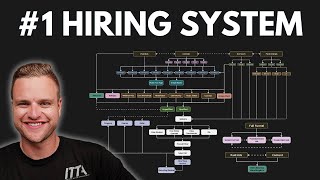
Spoken guide for building a hiring and onboarding system to scale an agency to $10M+ per year. Key recommendations: prioritize hiring a small number of high-quality people (pay up to attract them), make job descriptions explicit (hours, language, pay, video intro, portfolio), source broadly and auto-disqualify low-effort applicants, interview 10 quickly, give paid standardized assignments to top 3 with ≤48-hour deadlines, then run a 30-day onboarding including a three-day culture immersion and SOP-based live training and verification.
Chapters
If we want to get to $10 million per year or more, we're going to have to have some good people on our team. And I feel like hiring and training is something that a lot of people get extremely stuck on, both in terms of when to hire someone, which is not going to be the point of this video, but also how to hire someone and how to get the best candidates. Because a lot of people similar to lead generation just rely on kind of hope and luck hiring just like they rely on hope and luck marketing. Sometimes that actually can work out. And you know the saying, a broken clock is still right twice per day. But if we really want to get to 10 million per year or more, we need to have a system to hire a great lead generation team. And this system can also be used for operations and fulfillment and all of that kind of stuff too. But we make lead generation focused videos here. So this is the funnel that we want to build to get to $10 million per year. And we have to hire people to help us build and run it. Run it for sure. We have our paid ads, our content, our outreach and our partnerships to drive top of funnel traffic. We have our lead magnets and our email flows and our webinars and VSLs and newsletters and community and appointment setters in the middle and bottom of funnel to capture, nurture and qualify leads. All that traffic is driven to our website where they get on a call with us, where we can sell them our service, refer them away, sell them some products or information or whatever they can afford. Now this is obviously a large full scale marketing system and no one, not even me, can operate it all on my own. So we need to be able to hire. Before I get started in the actual system, I really want to say that you're going to save yourself a lot of time and effort and failure and mental stress by just paying 50% more for someone who is five times better and just letting them do it. One good person can do more than five to ten shitty normal people. And the amazing thing is you don't need to pay them five to 10 times more than that. Not even close. You can pay them 20% more, 30%, 50%, maybe even double to get five to 10 times better result. And I don't really have regrets. I try to not view life in that way. But this is one thing that I learned about eight years too late. And if it's one of the few things that I really, really, really wish I learned earlier and don't just view as, oh, it's a Normal part of the process. I've been told this many times and I kind of ignored that advice for the first eight or so years of my business career and really caused a lot of problems. And since I've actually followed the advice given to me by earlier mentors and even parents and even just, you know, books. And it doesn't really take a genius to understand this could have saved a lot of problems. The first step is the job description. And I like to make it extremely clear in terms of working hours, language, time zone and pay. So I am, if it is an job that can't be done asynchronously. So it's not like an editor or a thumbnail person or, you know, a graphic designer or something if you have to coordinate with them to do their job. I never hire someone within three hours, like more than three hours. Time zone difference. You know, they say, especially if you're hiring overseas, that they can work overnight in their time zone for nine to five, but just never really works out in my opinion. And this is very, very important because you need your team to be cohesive and you need everybody to be available to actually do the work. The next is I prioritize English speaking and not just can they speak English, like can they speak English properly and eloquently, preferably without an extreme accent, especially if they're client facing. But even for the internal cohesion of the team, substitute English with whatever language if it isn't English. And I also like to put the pay on there. I like to just put the pay on everything, just like I like to put the price on anything that I'm selling. There is literally no reason to not put the pay up there. If you're trying to attract top people. Just like talking to potential clients who can't afford it or are not willing to pay a certain amount. There's no point in going through the interview process hiding the, hiding the pay. And all of a sudden, you know, you get to the end and they're just not going to accept your offer. It's a waste of your time, It's a waste of their time. The thing that I like to do in my job description is to make sure that they record a video, two to three minutes introducing themselves. If you're talking about hiring salespeople specifically, I like the 2 to 3 minute video to specifically be about their funniest story. Because charisma and just communication is going to be pretty good and pretty important for sales. And the best sales reps that I've ever hired, I was laughing out loud 100% of the time at their video that they said. And I also like to do a portfolio and proof of past work. Even if that's vague. It's just gonna filter out the people who, you know, say they can do X, Y and Z when they've never done it before. Like, okay, if you're a media buyer, you can just send me some fake screenshots if you want to. At least you know how to get the fake screenshots and what they are. It's not like you can tell anyways, but it's really, really important because it DQs like 50% of people who are applying without any skill set whatsoever. And sometimes those people get through the interview process and trick you. The goal here is to find a way to automatically disqualify 90% or more of people. And most people are too lazy to record a video. Most people don't have any portfolio or proof of past work. So this does a good job on its own. We want to disqualify people who are low quality and or people who cannot or will not follow basic instructions. It's not a lot to ask, but the bar has never been lower, so to speak. The next is to post this job description and job on all platforms. I like to prioritize hiring from personal branding assets like my YouTube channel and my Twitter. If you have them, they're going to be more knowledgeable or up to speed and will admire and look up to you more because they are your fans and followers. If you don't have a personal brand, just post on every possible site, such as LinkedIn. Indeed, you know, all of them. The point is we want to get about a thousand application quickly, as fast as possible. And we don't want to have them apply through each of the platforms like that. We want to try to put a link in the description to consolidate them into one thing like a Typeform or a Google form or whatever if you can. But not all platforms allow you to do that, but that's what I do. So we want to get those 10 or those thousand applications quickly, automatically dequeue 90% of them and then we want to go to the next step, which is to choose 10 to interview. If you interview 10 people, in my experience, you're quickly going to know who's an idiot and who actually knows what they're talking about. I think it's very important that you understand that you need to rush and do this as quickly as possible. Don't post the job and then wait three weeks a Players like they're called and top people can get a new job anywhere quickly. You don't have time to just screw around. As business owners, we need a players a lot more than a players need us. There's an infinite number of businesses to work for and a finite number of really, really good people. So we need to move fast or we are going to lose them. When conducting the interviews, put emphasis on selecting people who you learn something from in the interview. If you aren't learning something from them, even if it's small, they're probably not the right candidate and you know so much more about the job than they do. It's probably not a good thing in general. As the founder, you probably should know a lot about every area of your business. That sounds like being a responsible and knowledgeable founder. But if you are that far ahead of someone you're hiring, probably not going to be a good fit once you've done those 10 interviews as fast as possible. We want to give a paid assignment to three of them. So select our favorites and give them a paid assignment at whatever their rate would be. If they're getting paid 200k a year, for example, that's about $100 per hour. A four hour paid assignment would be $400. We want to prioritize the assignment for quality as well as timeliness. Set a clear deadline no more than 48 hours out. I think it's very important to have a standardized assignment so that you can compare it to the other ones. You just have three assignments, okay, go write this ad copy based on this creative brief or something. Then you can compare and see who put effort, see who has the best ideas, the most creativity and all that kind of stuff. We want it to be standardized, but we don't want it to be like too, you know, laid out for them because we want to see how they think, choose the winner and offer them the job. Don't DQ the other people yet because if there is more than one assignment that comes back that is adequate, we might even consider hiring them too if we're scaling up. Or we might have them in the wait list in case the first person does not accept. Once we have hired this person, we want to do a 30 day onboarding course. So I like to have this course that goes over things such as standards, culture, access, responsibilities, SOPs and all that kind of stuff. And I like to host it in any online course platform. I use Thinkific personally, but Kajabi Circle, I'm sure there's tons of them during the first three Days of this I like to have the culture part as a full time course, eight hours per day. One of the best quotes that I ever heard, and I think it was from Dave Ramsey actually, but I'm not sure, is that you have to force your culture onto them. They don't get to bring their culture with them to your company. And that's the purpose of this first three days. After the first three days, they should go over, you know, one to two hours per day to teach them your systems how to do the actual deliverables, let's call them for their role. And to do so without you having to manually like spend hours per day teaching them. It should just be a video course that they're learning about how to do the role at your company during the first 30 days. I also think that you need to have a daily one on one with them. If you're at a bigger company and you're scaling, you might have their direct superior or their manager do this. This could last as little as 15 minutes. Could also go more during the first 30 days. I think you should have or they should have a one on one with every member of their team. Can even last five, 10 minutes as well as their direct superior. I think that a lack of clarity for new hires is obviously terrible. And when you're hiring great people, you need to make a very good first impression on them. The same way you'd want to make a great first impression from a client. And you can think of this in the same way as you would do client onboard, employee onboarding. You need to set a great first impression with your A players because first impressions last. So the final thing that you would do is for all of the important deliverables or tasks. If this is an ad person, how to write ad copy or how to, you know, edit, or how to film or how to set up their lighting or whatever. You do it for them in front of them on zoom or in person. If it's an office using only the checklist and then they switch around and do it for you using only the checklist. If you have to use some exterior information or something's not in the checklist, the checklist is not complete and you have to add it. That is the key to making good checklists and SOPs. So once you do it in front of them and they do it in front of you using all the checklist, then they are effectively trained in that area or that deliverable and you just repeat this as many times as necessary for their different responsibilities. The golden rule to Wrap this up. And I think I heard Alex Hermosi say it. If you have to start making up stupid rules, you have to hire the wrong people. I had a situation in business once where one of the partners agreed to a 50% revenue share in perpetuity with a referral partner. You know, 50% of top line revenue. I. That was so stupid that I didn't even think to just say, hey, like, don't, you know, just don't give away 50 of revenue. Right. Like, I had another situation where, you know, instead of building a landing page, one of the people just randomly took down the site that was getting 70k of ads sent to it today. You know, oh, sorry. I should have specifically told you not to take down the site. Right? Or don't watch Netflix when you're working. I don't know. Always stick to that rule and be ruthless with it. With business partners, with employees, with contractors. If you have to start making up stupid rules, like you have to tell me what you did every hour. You've hired the wrong people. And you're going to go and start this process again with someone you hired elsewhere. Hope this was valuable. And I'll see you in the next one.
More from Matthew







Everything I Would Change About This Ecom Email Marketing Agency (3 HOUR LIVE AUDIT)

Everything I Would Change About This Meta Ads Training Business (3 HOUR LIVE AUDIT)


