The Best Agency Training On The Internet (FREE 6 HOUR COURSE)
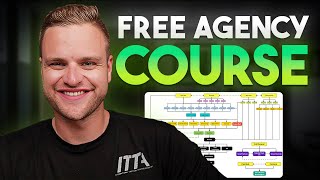
Matthew Larson’s webinar explains a repeatable marketing funnel and agency growth system (the “1000x Leads” funnel). He frames agency success as three linked pillars — offer, funnel, and founder — and promises to solve the top problems agencies face: (1) not enough leads, (2) over-reliance on referrals/networking, and (3) unqualified leads. He teaches four types of leverage (media, capital, labor, code) and four top-of-funnel drivers (paid ads, content, outreach, partnerships). The funnel uses multiple lead magnets (designed by the VAR formula: Valuable, Actionable, Readable) feeding conversion mechanisms (webinars, live workshops, newsletters, communities, appointment setters) and enrichment (collecting phone, revenue, website). He recommends building a low-ticket paid product front-end (example: 100 Webflow landing page templates at $97) for ad scalability, and shows practical examples and numbers (AOV, CPC, conversion rate math). He details email flows (day‑1: repeat core messaging 6+ times within 20 minutes; day 2–120: daily activation emails with one activation point, video link, FAQ/objection, CTA), lead magnet distribution (ads + content + thank‑you pages + master welcome flow), paid-ad benchmarks (goal: <$1 CPL, 70% opt‑in rate, 30% opt‑to-conversion-mechanism), and a full sales process (pre-call flow, calendly qualifying fields incl. price, redirect pre-frame page/VSL, call script with 1–10 interest scale, shared docs for next steps, 90‑day automated follow up plus manual outreach). Emphasis on monetizing the 99% unqualified leads with products, affiliates, one‑time services, and referrals to make ads profitable and scalable.
Chapters
Hey there, everybody, it's Matt here. So let's put in the chat if you can both hear me and see my screen, and then we'll get started very shortly here. Looks like to me that everyone says, okay, so I am just going to start this in about two to three minutes, just to give whoever isn't here a chance to go. But at its core, this webinar is going to show how I scaled my agency from basically just starting out at zero to just under 1 million mrr in under 12 months. And it's going to do that instead of me just listing what I did, you know, I did this and this and this, which has its place, but that's kind of boring. This webinar is going to really show you how you would overcome the top three problems that 99% of marketing agencies face. And these are, number one, not enough leads, which is easy enough to understand. Number two, all of the leads and clients come from networking and referrals, so, so no cold traffic. And then 3 of 99% of leads you do get are unqualified to work with you, whether that just be them personally or price or fit or whatever. And lastly, this webinar will come over the fourth and final piece, which is themselves. That's in my view, these three things plus themselves are the top four things that people face in terms of problems. So I hope everybody can see this. I can't really make the size of the writing bigger and still have it fit in one screen, but this is the marketing system, the marketing funnel that I used in my agency and that one that we teach in the 1000x leads program to really help you solve these three problems. I know it might look just like a mess looking at it right now, but this actually does solve not enough leads. All your leads coming from referrals and your leads being unqualified. So let's really dive into it. So we have the top three problems that most agencies face. Of course, we've just gone over that. And I really want to talk about why themselves kind of get in the way. Because I view the whole thing of building a marketing agency in three different parts. You have your offer, you have your funnel, which is what we have here, and then you have you. And you or yourself can be a big constraint if you don't have the systems, the habits, the mindset, the desire, the work ethic, the ability to focus, and so on. And this is important because you can think of these three things as the rungs of a ladder and your success as an agency. Is always only going to ever be at the level that all three ladders are at. So that's not a great way to explain it. What I mean here is, even if your offer and your Funnel are a 10 out of 10, if you your ability to focus, your skills, your habits, your knowledge is only a 2 out of 10, that means your entire agency is going to be a 2 out of 10 at best. This funnel works because it really uses and incorporates a lot of leverage. And I don't mean the type of leverage that you would use when you're buying meme coins or GameStop stock. I mean four types of leverage that really let a business grow faster, bigger, and with less effort. Your media leverage, your capital leverage, your labor leverage, and your code leverage. And we're really going to talk about those things in a bit. So I won't go too far into them. And it's important because most of us have probably heard the quote from Archimedes, an ancient Greek philosopher, give me a lever long enough and a fulcrum to place it, and I will move the world. And this is really the case with your agency. Big agencies use these four types of leverage, and that's why they get so big. And it's very important to realize that the difference between the top 99.9% and the top 99.99% in terms of agencies is exponentially larger than the difference between the top 99.9% and the bottom 1%. There truly is an abyss between even the top 99.9 and 99.9% of agencies when you have this. They're just not the same thing in terms of revenue, profit, client acquisition, and so on. So let's go back to the actual funnel and I'll show you kind of how it works. So something that we all have to realize when we're doing this is there are four main ways to drop drive top of funnel traffic and get clients. And those are paid ads, content, outreach, and partnerships. You hear a lot of people say, and mostly they're going to be people trying to sell you something, that you should just pick one thing and really go all in on it and master it. And that's absolutely the wrong way to think of it. And the reason for this is because each of these methods, by incorporating it into your funnel, make the other ones more effective. For example, let's take two scenarios here. Who do you think would perform better? Someone who just sends cold emails to people and tries to get their business in terms of outreach, or someone who sends cold Emails. But people have seen their content, they follow them on social media. People have seen their ads, they might have downloaded a checklist or a guide or bought a product from them, or viewed their webinar like you're doing now. The difference between these two people and the results that you're going to get in terms of, let's say positive replies is 10 to 1, 20 to 1, 100 to 1. It's just two different realms and two different stratospheres, if you want to call it that. So we always have to make sure that we have all four of these client acquisition, top of funnel traffic drivers in place. We might be better at some than others, they might have varying degrees of effectiveness, but we always have to make sure that all of them are going to be a part of our funnel. So we can think of a funnel because a lot of us have probably heard the terms top of funnel, middle of funnel, and bottom of funnel. We can think of these pay, these paid ads, these content, these outreach and these partnerships as what drives top of funnel traffic. Your paid ads would be your Google Ads, your Facebook ads, your TikTok ads, Twitter, LinkedIn content, Instagram, Twitter, YouTube, TikTok, LinkedIn as well. Outreach would be your cold emails, your cold dms, your old school manual prospecting. And your partnerships would be white label referrals media joint venture. So referrals, kind of obvious white label would be if you, for those who don't know, would be something like a paid ad agency pays a landing page agency a set fee per month to make landing pages for their paid ad agencies clients white labeling the service. Hopefully that makes sense. I'm not going to go any deeper into that. And then media partnerships would be like, you know, you're doing a guest post on a blog, you're doing an interview on a podcast or YouTube channel. Anything where you're leveraging someone's audience to, you know, reach them is something to consider as a media partnership. So this funnel is not reliant on TR on fads or trends or what's hot or any new technology or methods. The this would work, you know, 100 years from now, just as it worked 100 years in the past, just as it works today. The only difference would be the tools and the technology that you would use to do this. Right? So I'm going to show you real examples of how I do this and how other people are doing this. So you're not just thinking that I'm just making this up because that's very important to me. You go On a lot of these webinars you buy a lot of these courses and the person teaching it doesn't actually do it. So it's very important that you know to me anyways that I show you how this works. So I want to start with the paid ads and they're going to be four main types of paid ads. And this is going to make sense after as we go through the funnel. So in terms of. In its most basic form, there's four main types of ads. I have five here, but one of them is a type of. So we have a group funnel. So this really revolves around. You're running ads to an email and phone number, opt in and on the thank you page or automatically it'll redirect you to a group. Then you send, you know, sms, you send emails to get them in a group, let's just call it Facebook group for this example. And then in the group you're talking to them one on one, you're running retargeting ads, you're sending them email flows, you're posting content, you might even do a live workshop or something, all with the point of getting them to a sales call. A newsletter funnel, another type of funnel where you're running an ad, you are collecting their email address, you are sending them three to five newsletters per week over time to either book a call, get on a webinar or something. And that's how that one works. A webinar and a VSL funnel is kind of like the one that you are on right now. So surprise. You see an ad, you probably download a lead magnet, you get notifications and emails and SMS to sign up for a webinar and then the webinar introduces the product or offer. And then finally a paid product funnel. If you are a beginner and we got to take our egos out of it, if you are not currently generating 5, 10 even more clients per month through paid ads, you are a beginner and convincing yourself or pretending otherwise is not going to hurt me, not going to hurt your competitors, not going to hurt anybody other than you. So a paid product funnel is where I always recommend people start because it's the easiest to understand whether the group, the newsletter, the VSL webinar funnels have a lot of nuance. A paid product funnel is easy to understand because it's much like selling an e commerce product where if you come from a drop shipping background or you've owned an e commerce store or you serve e commerce clients in your agency, it's a lot easier to understand. So an ad would go to a product that ranges from 10 to $100. And that price range is basically what you want to do because after $100 people are not really just buying it then and there. You want to have an upsell funnel that gets the AOV to 100 plus dollars or more. And that's just simply to make sure you're covering the cost of your ad spend. You'd redirect to a thank you page where you make them aware of your high ticket offer. You have email flows, you have an appointment setter, you post content, you run retargeting ads and so on, and then you eventually upsell their product. So let's take a look at some of these funnels, shall we? To make you realize that these do happen in the real world. So I've pulled up a ton of different links here and this is an example of a group funnel. So let's just pretend we saw an ad, now we're in a group funnel. Taylor Welch, if you've ever heard of him. So I put my name, you know my. I don't want to really sign up for this because I'm gonna get blasted, but let's just go mattoogle.com and it redirects to a Facebook group where you join and he probably does everything that I said to you where he has all of that stuff and you essentially convert to his offer eventually. The next one I want to go over is a newsletter funnel. So here's an example of an agency called Pilothouse which is a very big they do creative for e commerce stores. They own DTC newsletter direct to consumer newsletter if you know what that is or you're subscribed to it. So basically they drive traffic to your this newsletter. They build credibility. They become the go to name if you're in DTC niche in your mind. And then when you open their newsletters, you know, they filter you by business email. If someone is seems like a good fit, they would probably contact you directly. And here is an example of, you know, a webinar funnel like the one you're on right now. Someone would see an ad whether that's how you got here or not. They would click sign up for the webinar and they would go and then you be on this webinar just like you are now essentially getting pitched a service. So those are the type of paid product funnels. A bonus one is the classic free plus shipping book funnel where you have a Facebook ad. I think probably everyone on here has seen one of these, at some point you get their book for, you know it's free, but you got to pay $9.99 for shipping. The important thing here is the fee covers the cost of both the shipping and the book. So it's essentially a wash. And then they're going to try to upsell you a hundred dollar AOV product which helps them break even on their ad spend in the exact same way it does with a paid product photo. Then you go to their thank you page, you get email flows, they become a great authority in your mind. And there's no better way to become an authority or to get someone to view you as an expert than them reading your book Cover to cover. The downside of this funnel is of course you have to have a book and that's obvious, but a great funnel if you manage it. And before we move on to the next thing, I want to just show you some type of paid product funnels and I have a few pulled up here. So here's one where the main service is, this lady named Amelia will go into your business if you use notion and build like custom systems templates, whatever you want to call it for you. So on the front end she's basically making pre made templates, selling them for $43 plus whatever upsells and a certain percentage of people are going to eventually convert to the main service. Another example Here is a $7 0 checklist by this conversion rate agency. So if you know what conversion rate optimization is, it's basically, you know, you make two versions of a page on your Shopify store or any website and you send 50% of the traffic to version A, the original and version B the one you made. And if hopefully version B will perform better in terms of conversion rate than version A and you'll make more money by implementing version B as your original from now on. So this checklist, there's however many, you know, tests that they say you should run and if you pay $7 for this, you like their tests, you might hire them to do it for you. The final one I'm going to show is this is an AI company that will make kind of the same thing as this Amelia girl will make, but using ChatGPT to make custom internal tools for your agency, their front end product, their paid product funnel centers around pre made bots that you can run and you see the quality, you see how it helps your business and you know, you might hire them for this custom work. So these are examples because it's very important to me that you See these working in the real world and it's not just me telling you or preaching without, you know, these things not existing. In terms of content, I think most people will know what Instagram, Twitter, YouTube, TikTok, LinkedIn content is going to look like. Same with outreach. You get cold emails, you get cold DMs, et cetera. So I'm gonna move on to what I would consider the middle of the funnel here, which would be your lead magnets. So a lead magnet, if you don't know, is something where you know, checklist guide, masterclass templates, swipe files where they put in their, usually their email, they're added to your list and you send them the value. Lead magnets are very important to convert, if you want to call it that, this top of funnel traffic into middle of funnel subscribers on your email list that know who you are and you can begin to market to them with email flows and so on. It's very, very crucial that we make not only multiple lead magnets, but also high quality lead magnets. And the two reasons for this are if we have one lead magnet. Let's go back. First, each of these lead magnets should solve a problem to do with your service. So I used to have a landing page agency, so let's think of the problems or the subcategories that have to do with landing pages. So you have in the overall context of a landing page, you have your site speed, you have your main headline, you have your hero image, you have your offer, you have social proof, you have just general copywriting and general images, you have how to read the data, you have how to do AB testing. So these are all different subcategories and problems and components that together make up a successful landing page. So I would make a lead magnet that follows a certain formula called the VAR formula for each. So essentially when you're creating a lead magnet, you want to think of it and run it by these three things. Number one, is it valuable? And the question to ask yourself is, would you honestly pay $50 for this lead magnet even if you're giving it away for free? The same thing applies because when, if you make a half ass lead magnet, someone downloads it and it sucks. It's not like they really mentally just oh, this sucks, whatever, they actually hate you. They this scenario of having a bad lead magnet that they feel is a waste of time is worse than having no lead magnet at all. It's kind of like having a bad product. It's just not good. So we need to run it through the value test, would we. And maybe we'll send to a couple of friends, would they pay $50 for it? And hopefully you have some friends that will tell you the truth. Number two is actionable. So what it means here, is there an exact plan in this lead magnet that they can implement most of the value within 24 hours? Because we want them to follow our advice. When they're following our advice and overcoming these objections, they become one step closer to becoming our client. And then number three, is readable. If your lead magnet is a wall of text and no one's going to read, it doesn't matter how much value and how actionable it is, they're not reading it. Might as well not even have downloaded it. So the way that we want to build our lead magnets is to have one idea and one image per slide. And I'm going to open one of my lead magnets here to prove to you that I actually practice what I preach here, because I'm going to probably sound like a broken record of that by the end of this. But as you can see, going through, every single slide has one idea and one image. And there's no exceptions to that. It just makes it so much more readable, so much more easier to consume. And again, if they don't read and consume your lead magnets, there's no point in even doing this. Let's go to an example here of why we want to create different lead magnets. So here is an example that has to do with starting a YouTube channel. There's a bunch of different problems. How do I set up my camera and lighting? How do I make good titles? How do I make good thumbnails? How do I do YouTube SEO? How do I come up with scripts? How do I come up with ideas? These are all examples of what I said before about the different categories. Instead of a landing page in the example I used previously, these become a YouTube channel. We'd want to create a separate lead magnet to solve all of those problems and to bring it full circle. We'd want to do that because not everybody in your target market is going to have the same problems. For example, in my landing page one from before, if we only have a site speed lead magnet, a certain percentage of the market is not going to have a site speed problem. They're either going to not even know that's a problem to begin with. They're going to know how to solve it. They're going to maybe have a web dev background. So if I only have this one lead magnet I'm missing all of that part of the target audience. I'm not capturing those leads. I'm just going to be having less leads in general. But the same people that have a don't have a problem with site speed might have a problem with headlines or copywriting or creating an offer. So that is why you'd want to do this. So I'm going to bring up the marker here and show you how this actually works in the real world and show you that it works with me. So starting at paid ads, I might have a campaign for each one of these. Right. So let's put the marker over here and let's go to each of these lead magnets. And just like this. So this would kind of signify you're going to all of the lead magnet landing pages. So here's. I pulled up six of my landing pages to just show you, you know, here's one, here's another, here's another, here's another, here's another, and here's another. So, and then here are the corresponding lead magnets. They're kind of large and slow down my computer quite a bit. So I'm not going to, you know, dive too deep into them here. I might actually exit out of these after I show you, but I just want to show you that this is actually how it is. So let's go back here. So I've created all these lead magnets to solve different problems related with the 1000x leads problem. You know, there's one for paid ads, there's one for content, there's one for outreach, there's one for partnerships, one for lead magnets, one for conversion mechanisms, which is this section that we'll go over after. One for your website, one for your offers and so on. For now, we can just take my word for it. But let's say they've hit one of these pages and they download the lead magnet. So I'm going to download this lead magnet for just for illustration sake. So now they've downloaded this lead magnet. Oops. Let's exit that out because there's sound. They've now hit my thank you page. Actually, let's open that up because that is the thank you page. They've now hit my thank you page and they're automatically added to all my email flows like this. Let's just go here. Let's finish this up as quick as can. So now they hit my thank you page and they're added to my email flows. In my case, the one I'm doing here, the thank you page. And the email flows promote the webinar that you're on right now. So that would be an example of going down to here and going down to here. And that is where we are in real time in this funnel because of course we practice what we preach. And here is an example of let's we've watched the webinar. People are going to be either qualified or unqualified and that will be kind of a mix of your decision and my goal is to identify who is which. The qualified people will go to my website, they will see my case studies free content testimonials and my vsl and they will book a call, presumably. Right. But let's go back to the other ones because this is an example of a webinar funnel for from before. But the same thing happens with a group funnel, with a newsletter funnel, with a paid product funnel. But let's just do a little example here. So let's say you're running paid ads in a group funnel. I'm just going to do it to one lead magnet just for the sake of time. They're going to your thank you page, they're going to your email flows, but now they are going to a community instead, where in the community, through all the tactics I set in here, you're going to determine whether they are qualified or unqualified. And that's how that works. It's the exact same thing with a newsletter funnel. Over time you are going to run ads to a lead magnet and I'm just going to do one here just for the sake of saving time. And your newsletter is going to be the tool to basically determine who is qualified versus unqualified. Now let's move. This is the middle of funnel process. But now these are examples of our conversion mechanisms. Our biggest bottom of our funnel here. So our webinar, our live workshops, our newsletter, our community and our appointment center. So if you don't know what an appointment setter is, that's usually an employee or a contractor, sales, development reps, SDR is the same thing where they go through people who are leads. They contact them, phone them, email, sms to try to get them to try to determine whether they are qualified or not. And if they are, book a call. If not, something else. Right. So the important thing to know and to understand is not only do these conversion mechanisms move them down the funnel, so to speak, get them to know, like and trust you more, help qualify them whether they're qualified or unqualified, but they also enrich your data and what Do I mean by this? So to sign up for a lead magnet, let's go to the right tab. To sign up for a lead magnet, you just capture their email address mostly and that's just to reduce friction as much as possible. You could do their name, email, website, revenue, phone number, where they live if you wanted to. But when you're running ads we want to get people on our list as cheap as possible and the more fields you have, the more friction the will be. But it's important when you with your conversion mechanisms, when you give them group access or access to something better or access to your webinar, you, this is a great spot to, you know, get their name, get their email, get their phone number, get their website, not one and get their website and get their revenue. This is an example of enriching your data. So now instead of just guessing basically who is qualified and who's not, you're going to have their name, their phone number, their revenue, their website. So your appointment setter knows who to contact and who not to. Your appointment setter can't just contact your entire list via email. That would be very time consuming and not very effective. But now they have names, they have phone numbers, they have email, they have website, they have revenue. So they can really zero in better on who to contact and who not to to just do this entire thing more effectively. So one thing I want to talk about is a, what's going to be called here is a unique mechanism. So a unique mechanism, judging by the name is unique or something that only you could provide. So this is extremely, extremely effective and I'll show you what I mean here. So for example, this person here has a, the main product is a $15,000 basically mastermind for Shopify, for drop, shipping, etc. So your unique mechanism kind of is built from the back through reverse engineering. So let's just say, or let's just think of it this way, if someone is going to buy a $15,000 mastermind, what has to be true for them to buy it? So for example, if they don't have a Shopify store, they're not buying the mastermind. If they don't believe that they can be successful, they're not buying the mastermind. If they don't see you as the mastermind owner, as someone who knows what they're talking about and is an expert, they're not buying it. If they can't afford it, obviously they're not buying it. So they have to make some money ahead of time. If they don't have basic design, copywriting, sourcing, image skills, they're not buying. If they don't know how the technology even works, they're not buying. And if they don't know how to run ads, they're not buying. So this is what I mean by reverse engineering. What are some things that have to be true to get them to buy? And if all of these things, and this is just an example I made, I don't know the inner workings of this person's business, they're not buying. There might be other ones. So what you'd want to do is instead of, you know what we're doing here, instead of a checklist, our unique mechanism in his case is he will build a store for you using AI. It's not going to be decent, but it's going to get you to take that first step. So this is an interesting business model because obviously to have a Shopify store, you have to have a Shopify account. So I've signed up for his. I would get his emails, texts, phone calls. I can choose what I want to do here. And obviously this is what I'm talking about. To get access to this store, you have to have a Shopify subscription. And we have his special bonus. And you'd be using his affiliate link and generating some serious affiliate revenue. And that's kind of a hack for this funnel. And you can tell this person has really got it going on. This is actually on the main Shopify website. He's probably their biggest affiliate. So you can really tell that this is effective. So the free store takes care of the reverse engineering part of now they have a Shopify store and you've done them a favor. They view you as an expert. If you actually signed up for this funnel, you would get blasted with emails promoting a $49 workshop that will teach you the basics of copywriting, design, running ads technology, and get them their first successes. So this is an example of how his offers, his ads, his lead magnets, his unique mechanisms really knock out a bunch of objections automatically that make you become more likely to buy his main product. An example of this in the, you know, for an agency might be, you know, here's an email marketing offer. What are the main roadblocks? There's lots of agencies, they don't trust you. They have to do at least, let's say 30k a month. They think they can do it better themselves. They've had negative experiences of past contractors and so on. So you have to take a bunch of steps to kind of get them across or kind of overcome these objections on yourself. So you might start at the top with a paid ad that goes to some kind of guide. Let me change the color of my marker here. Paid ad that goes to a guide. You know, now they get email flows and they're on the thank you page to your unique mechanism. And your unique mechanism. Let me find the one I was just looking at is going to. You know, maybe we can build something in chat GPT using make.com that will write them six different email flows as an example. You know, if you're an E commerce, you'd have a welcome flow, a browse abandonment flow, abandoned cart flow, win back flow, post purchase flow, sunset flow, etc. And if you don't know what those are, these are just typical flows an E commerce store might have. You give them the written example using ChatGPT. Like you might have something like this and then you would say here's the result, here are the emails I wrote for you. They don't need to know that it's automatic. I will turn these into beautiful branded designed emails for you for one time fee of $2,500. Then you do a great job for this $2,500. They're very pleased with you. Now you upsell them into your typical main e commerce email marketing service for $3,500 a month to manage everything, send emails and so on. So one of my friends who's actually on this call right now made this as what I would consider to be a unique mechanism in this situation. So this is for an offer that sets up cold email infrastructure for people. So what are the things they need? They need domain names to buy because you'd never send cold email with your main domain because if it gets reported as spam, you know you are going to burn your domain and then you need scripts. These are by far the two main things that main, main objections that would get in the way of you selling someone a cold email setup. So you go through, you know, using chat GPT, you know, fill in the blanks, fill in the form and it would send you something like this. So you know, here are your domain names that you should buy for cold email. You can choose whichever one here you can set them up all the DNS records that are necessary with a loom showing you how to do it. And then here are your scripts to try whether or not they try it. Some people might set it up on their own, some people, and if that's the case, they could use your affiliate links and you could start building affiliate Revenue. But beyond the fact that would just impress someone who there's hundred cold email agencies out there that would just impress someone so much more who is in the market and who doesn't know which agency to go with than someone who's just saying, yep, pay me and then I will set it up for you with no real clear plan, no example, etc. And you can make this stuff very, very strong messing with it yourself. Don't get too caught up in the fact that it's chat, GBT or an AI. If you hit the prompts properly, you feed it examples, it will make a good result. So that is an example of the unique mechanism. Unique mechanism serves the same purpose as these conversion mechanisms. Are they qualified or not? And go on. So as we know, or as we went so far, three are main problems. Not enough leads. Doing what I've gone up to this point will generate more leads and it will do so from cold traffic. But what about the third problem? All of these leads are unqualified and well, it is true that in any given target market, only about 3% of people are looking for a solution to their problem at any given time, actively looking. And of these 3%, only about 2 of those 3% are going to spend maybe 100, $200 to solve this problem. Where that leaves 1% who would actually be a good fit for your main recurring service. So the importance and the reason why this is relevant is because if we only have our main recurring service, we are essentially excluding 99% of the market. And with this 1%, that doesn't mean 1% of the market is going to buy from you. The majority of those don't even know you exist. And of the ones that do, they have options. Lots of people provide your service. Right? So let's solve this problem and we're going to go to this problem right here. So we have different options. I said in this example, you know, with our paid ads, with our lead magnets, we should be filling them with affiliate links. In my last agency, landing page agency like I suggested, my paid product was 100 free webflow or not free. 100 webflow landing page templates for a hundred dollars. Good value. Something you build once and then you can sell over and over forever. I was doing 7k per day at my peak on ad spend to this offer and doing it 100% profitably. So if I'm selling landing page templates for a hundred dollars and it costs me less than $100 to acquire a customer through Facebook ads, let's say I can essentially scale this offer up as much as I want. So let's just say $7,000 per day ad spend and $70 CPA, that's essentially 100 new paying customers per day. Into my funnel, these people have a credit card. They, I have all their name and contact information. They indicated that they are willing to spend money to solve their problem by buying this. And of course I also had they're using webflow, so if they don't have a webflow account, they use my affiliate link. So not only was I spending 7k a day profitably in info product revenue, I was also building affiliate revenue MRR through my affiliate links and I eventually got about, about 115k MRR for 12 months in affiliate revenue. Very, very important to realize here that these are very profitable when you're doing info products and you're doing affiliate very high margins that act as another revenue stream for your business that makes it more stable. But let's go back to the subject of are they qualified or unqualified? This judgment is going to be different for every business, right? Every business is going to have different criteria. But we can essentially solve this problem here by having different offers that address different types of people and levels of the market. So you see a lot of the time where this is the average marketing plan. A lot of people, they have content, maybe on Twitter that goes to the recurring service, that's the only option. Or they have SEO, goes to their website, buy their recurring service, that's their only option. They send cold emails, they do their recurring service, that's their only option. Or a lot of the time, you know, they just are sitting there waiting for referrals and that's their only option. So you can kind of think of this, you know, this is the chad funnel and this is the beta funnel, the sad funnel that this is 99% of people you hear stupid stuff about how agencies don't scale. It's not a good business model when their entire funnel looks like something like this. If you want to scale, you want money, you gotta have a chad funnel. And trust me, the money printer will just be on 24 7. So what does that mean in this context? An example for you, you know, if they are unqualified, you might have a, you know, use Charge $5,000 for Facebook ad management. They can't afford that, they're unqualified. You might have a thousand dollar course that will teach them to do it themselves. That is an example of revenue that you can capture that you simply didn't get. Before if this course doesn't exist, you cannot capture that part of the market. Perhaps that's even too expensive for them. You just send them away to the same info products you sell in your ads. Maybe they don't want to do it yourself. Course they might have a little bit more money than that. Maybe you essentially have a program that teaches them kind of like a coaching program or let's say they want someone to do it for them. They don't want a course. They don't want a program that teaches them they want someone. Maybe you send them to someone you know who does the same service but they're willing to do it for cheaper and you collect a referral fee. This is an example of one of the biggest problems. One of the three problems is people get mad. They don't when they get generate leads with paid ads or content because they say these are all junk, they're not qualified. And that would be true. They would not necessarily be incorrect. But the problem isn't in the fact that they are not qualified. The problem is the fact they have nowhere else to send them to monetize them. If you're running ads and you know they're not a good fit, maybe they're good fit for your info product. Maybe they could refer them away. Maybe you could get sell them your course or your program. These are all revenue streams that you simply didn't have before. And this leads to a much more stable, consistent business where it's not, you know, feast or famine. It's not. If one of your, if you're one of your 10 agency clients leaves, your business is 10% less revenue and profit. Now this is where you have a course is 100% profit. Referring them is 100% profit in this instant. Your info product is 100% profit because you're not paying for ads and your program might be 90% profit. This will ultimately lead to more revenue and a more scalable stable business that someone would be a lot more interested in acquiring down the line than someone who. Its only revenue stream is client revenue. So let's go, let's assume now that they are qualified because that is a completely different scenario and different path. So they are qualified and they're going on our vsl. They're going, you know, they're seeing all of our stuff. They've decided to book a call and now let's assume that they've booked a call. In this example, a lot of people, same problem. They only have the recurring service and a lot of the time this is high Price and there's nothing wrong with this. In my landing page agency I sold landing pages $2,500 for one or $5,000 for three. And I also sold high ticket recurring zero services for 8,000 to $15,000 per month. Very difficult and a very different mindset to try to sell $15,000 a month services that have a six month minimum contract to people who know who you are, but maybe still skeptical. They don't know you know about you. They're not sure, they might have heard from your friend. They're good, but we've all probably got a bad referral from a friend at one point. Much easier to sell them. In my case a $2,500 landing page as a one time fee and then doing a great job proving myself, letting them see with their own eyes that it is, you know, I know what I'm doing and then upselling them the recurring service afterwards than it is just selling them the super high commitment, high priced recurring service on its own. So this is a very important step that a lot of agencies miss. And of course if they're down, you know, I'm not going to stop anybody from buying my high priced service the first time they talk to me. And then if we get on a sales call, they're qualified but just not for you. We might do the same thing and refer them to someone else. Or maybe they need a different service and they were wrong. Or you know, they are qualified but they want to learn to do it themselves. Sell them to the course, they want someone to help them do it themselves program. So there's tons of different options in this funnel that you know you can do. Let's go over to the outreach in the partnership section because that's not getting much love so far. So you're doing cold DMs, you're doing cold email, you're doing prospecting. A lot of the time you can just promote either your lead magnets in your cold email and that will get a much more positive response. And now you have another entry point into this side of the funnel. Or you could go direct to a sales call or your website or you could and one of my favorites is promoting this unique mechanism in the actual cold email. So in that email flow example, hey, you know, we'll write you six email flows for your e commerce store. Just as, you know, pleasure like thank you for talking to us. Much more compelling than just say let's get on a call. I would never these days do a cold email where the whole point is, you know, Get a call with me. People just do people just receive too many cold emails for that to work these days. So I would always either promote a lead magnet, promote my unique mechanism or, or try to get them to the website if possible. This path here that I just did is not really something you might promote, but a lot of people will see your cold email and just google your website. So it's not something like hey, go to my website. But a lot of people will follow that path automatically. One could argue that more people will follow this path than even reply to you. You know, they see Matt at 1000X Leads has email them. You know, they might search 1000X Leads to see if it's even legit or not. In terms of our partnerships, we, it's really important that we have all of these other things because similar to which one do you think would get more responses? Someone who's seen your ads and your content before. The same thing happens with partnerships. People are going to partner with people who they've seen their content and their paid ads a lot before. So that is just something that we are going to have to, you know, realize for this example. Now one of the biggest objections that I get when I sell this program to people is, you know, I sell websites for 250k. You know, our services start at 25k a month. You know, we sell to big clients, Maybe not necessarily Fortune 500 companies, but big clients. And I don't believe that someone who's in a decision making power, whether it's a CEO or a director level person is going to be scrolling Facebook or scrolling Instagram, see my ad or post and download my lead magnet and go through all of this until they eventually buy. And two parts. One, that's not true. And that's mostly coping more than anything. But let's just say this is a true objection because there is some merit to this. Just by building this funnel, you are going to be building three different lists. And I don't mean literal lists. These are more hypothetical lists or theoretical or metaphorical lists that kind of, you know, are an easy way to think about it. You're building your social proof list, your potential client list and your dream client list. So I made some illustrations about the difference here. So your social proof list is, you know, people are downloading your email or your lead magnets, they're on your email list, they're following you, they're engaging with your stuff. This is what is a social proof list where all of these people probably aren't ever going to buy something for you or from you, but they still vouch for you, they still are useful to you in some way. Because when someone is, you know, asking their friends or posting in a group chat or posting on Twitter or LinkedIn, these people will tag you in posts, they're going to bring you up in chats. There are going to be more followers for you. Having more followers leads to increased visibility and media opportunities and access social proof, and you get more reviews and stuff. So this is a list that, although let's say someone like a CEO might not be doing this stuff, they're going to see these people and their people that work for them are going to see these people. And you know, this guy I tagged this guy I know and I trust tagged this guy on a post, asking, when I asked if anybody knows anybody every month must seem to like this person for a reason. This guy I recommended or this guy I trust recommended him to me. Like, these are all scenarios where these people aren't going to be useful for you, you know, monetarily, but they're going to be very useful to you as a form of social proof. When you are marketing to and trying to close clients that are a good fit. Your potential clients list is what everybody has. You know, what everybody has. If you're in business, you know who your potential clients are, you know, but it's much easier to sell to these people when they have been reading your newsletter and checked out your webinar and see your ads and see your content and receive your cold emails all the time and bought your paid products. Much easier to sell them on this than it would be without this entire funnel. You know, yes, we can do this for you now. And then you just go through the sales process and this is kind of the list where your dream client list is clients that you might not be necessarily likely to work with. But if you had, if you did, if you had their logo and testimonial and their case study on your website, that would look really good to both your other dream clients, you know, other potential clients as well as your, you know, social proof list. So this is an example of how this actually works to get high value enterprise clients. Because the CEO, the boss, is going to say something to their team, we need someone to help us find, we need to find someone to help us with lead generation. But because you've been marketing this whole time, because you've been building all of this, you know, their employees say, Matt has one of the best webinars I've ever seen. Or I read Matt's newsletter all the time. Matt has a ton of reviews and followers. I follow this guy Matt, you know, we should hire Matt. And then all of a sudden, he's blown back. Wow, I should probably reach out to this guy. So this list is more about building internal champions, name recognitions, past experience. For example, maybe someone was an employee when you worked with them at a company. Now they got hired as a director of marketing. They have past or prior experience with you, and they're going to bring you up to their boss. And that's how. That's the value of this. So these aren't really, you know, actual list that we are literally building, but this is three segments and three functions of this funnel that you are building. So again, let's go back to this. Do we want the Chad funnel or do we want the crying Virgin funnel, where we're just basically waiting for people to, out of the goodness of their heart, send people our way? If this is our funnel, like, this is essentially our marketing strategy. And that is trying to be funny, but also very true at the same time. And we do not really want this to be, you know, our marketing funnel. A good exercise is try to look at someone like Teddy Roosevelt seriously, face to face and say to him, the future of myself, my wife, my husband, my kids, all of my hopes and dreams rely on someone else, you know, out of the goodness of their heart, referring someone to me. That is also meant to be, you know, kind of a reality check for what a lot of people are doing. And I don't think, you know, we can't just. We just can't do this and leave our entire future to, you know, referrals. Referrals are great, a positive indication, but we need to be able to generate leads, convert cold traffic, and have different levels of our offer ourselves and not relying on someone else. So this is an example of when you do this system, this is what happens. You get more leads. Because you get more leads, you become less needy inherently. And when you're less needy, it's easier to sell. When you have more leads, you can say no to nightmare clients. You don't have to take them. And when you get more leads, you're obviously going to get more clients. More clients means more referrals. And we go back to the top because we have such an influx of leads. We can also raise our prices, which means more margin, which means we can hire more competent, better people instead of having to settle. More competent people means less time working, whether that means more vacations or more time spent improving this funnel and optimizing it. And because we're making more money, we can reinvest in growth, whether that's ad spend or better people or a content editor, and which will get us more leads. And this is a very, very effective cycle that is always happening, whether you realize it or not. And the thing to understand about this is it's happening either for you or against you. There's no middle ground, because the opposite is also true. If you have less leads, you become more needy, which makes it harder to sell, which means you're going to have to settle and take on nightmare clients. You're going to get less clients in general, which means less referrals, less. You might even have to lower your prices, which squeezes your margins, which means you're going to have to settle for worse hires, and you're going to have to spend more time babysitting them and doing work yourself, and you won't have as much money for growth, which leads, less leads. So this cycle is going to work one way or another, and if you are smart, you're going to implement this funnel and make it work for you. So this funnel is very important to implement, and it's very important to understand that it is all or nothing. This funnel is a lot like a, you know, a NASCAR or a Formula one car, or any vehicle for that matter. Even if you have every single piece of the car, if it's missing a steering wheel, it essentially becomes useless. You can have every piece of the car. If it's missing its brakes, it's essentially becoming useless. If you can have every piece of the car, if it's missing a spark club, spark plug, it's not going to turn on. It's useless. And it's the same thing with this funnel. If we take out any part of this funnel, it just does not function properly anymore. And to do this, we need to have our systems in place, our processes, the right mindset, employee training, high standards, good habits. And we need to be able to focus and be productive. If there's a hundred parts of this funnel, and I haven't counted them, but if there's a hundred, having five of 50 of them doesn't mean you're 50% of the. You know, you have a 50 effectiveness. If you have even 90, it's not 90 effectiveness. It's either you have a hundred percent or you have nothing. And it might seem overwhelming, it might seem like a lot, but we've all heard the phrase, you know, how do we eat an elephant? One bite at a time. You know, day one we got to do set up our Instagram, day two, our Twitter, day three, our YouTube, day four, our, our TikTok, and so on and so forth until we get the entire thing done. So if you are on this call and you are looking for help, we have a program called A thousand X leads where every single piece of the funnel, every bite of the elephant, elephant is laid out for you from day one to day 120. You don't have to think, you don't have to sift through a bunch of videos, you don't have to ask for help or do any of that stuff. Every single piece is laid out for you. And you know, by the end of this program, day 120, if you follow day 1, 2, 3, 4 all the way up, you will have this funnel. So there's no discounts. It's a flat rate of $5,000 one time right now, there's no discounts, there's no limited time bonuses, there's no fake scarcity. But as I showed you, we have this entire funnel generated for ourselves. We are generating hundreds of leads per week and, and other people who do the same service as you are joining. So if they're joining and after four months they have this funnel and you don't, we can do the math. They're going to be generating all this stuff, swallowing up market share and you are not. So everybody is free to make their own decisions, but one bite at a time. Our program is day one to day 120 and by the end you will have this funnel, comes with the slack community, comes with calls every single day. So if that sounds interesting to you or just about to wrap up on the hour and I will be available to talk anytime this week at the link that you will be sent after this. So thank you for joining. I hope it all made sense. And I'll be at that link to answer any questions. This is going to be an extremely important, important video to take notes on and watch if you ever struggle with generating leads. Because that is what it's all about when you do this right, you can probably generate 100, 200, 500, even a thousand times more leads than you would have without the system. So it's very important that we understand every single part of it. So I have the 1000x leads funnel here and I circled lead magnets because that's what we're going to talk about in this video. A lot of the time you hear the term top of funnel, middle of funnel and bottom of funnel. The lead Magnets are an example of the middle of funnel. So the top of funnel traffic goes to the lead magnets and they bridge the gap and are like the first contact point in your email subscribers. To get to the bottom of the funnel, of course we need the traffic at the top and we need to convert them at the bottom. But if you are building a skyscraper or something, you can't build the first 33 floors, skip the second 33 floors and build the top 33 floors. Doesn't work like that. So we have to get these middle of funnel lead magnets here. So let's get into it. What are lead magnets? So top of funnel traffic. Like I said, ads, content, outreach, partnerships point towards middle of funnel lead magnets. These are things like master classes, PDFs, checklists, guides, cheat sheets, documents, ebooks. We've probably all downloaded at least one of these before. It's where you go to something like this and you put in your email address for whatever sort of value they are promising for you. So the thing that lead magnets do are they're essentially bribes that you give in exchange for their contact information. Typically in paid ads, at least this will be only the email address because that's just the lowest friction. But when you're promoting your lead magnets with content, typically people inherently trust you more because they've read your content and like you. So they're much more willing to give up their name, phone number, website, et cetera. But for paid ads, I would recommend only doing the email address. The thing that we want to do or achieve with our lead magnets is we want to make them a complete solution to a narrow problem. And we want them to. We want to use these complete solutions to narrow problems to overcome objections automatically at scale. Build these. You're going to distribute these lead magnets through ads and content to build a list. Because our email list is directly proportional to, to revenue. So let's take that back. Let's say we had a bunch of different. Let's say we were doing YouTube editing as a service. We could have master classes, PDFs, checklists, guides, cheat sheets, documents, ebooks, etc. To solve the different problems that have to do with a YouTube channel in general. That could be editing, of course, that could be thumbnails, that could be titles, descriptions, scripts, video ideas. So these are all objections that have to like that take that occur when you're starting a YouTube channel. How do I set up my lights and camera? How do I make good titles? Thumbnails, SEO, watch time descriptions is this even set up right. What do these numbers mean? The analytics scripts, et cetera. So these are the narrow problems, if you want to call it that, and that's what we are calling it, that you want to provide solutions for in your lead magnets, typically masterclasses. You get the picture. So you, as the expert, know a lot more than you probably think you know. Probably don't give yourself enough credit. There's going to be a small percentage of people who give themselves too much credit, but that's the 80, 20 rule. So you know how to solve all these problems and you want to create a lead magnet to solve every single one of these problems. So you've completely solved every single fear. Objection, worry so completely that it just becomes very natural that they hire you. They've solved all your problems. You might as well hire this guy or this girl. This is why creating so many lead magnets is so important and why when you make one, you really are kind of screwing yourself over a bit. If you just make one in this case, to set up the camera, the lights and the mic, you might have captured a lead like this. You might have kept generating an email subscriber. But all of these other problems still exist. And they're not going to hire you. They're going to wonder. They're not going to be grateful to you or remember your name or hire you. They're going to wonder who can help them with all these other problems. And your competitor is going to do what you should have done and show them how to do it. In addition to that, I would say more lead magnets equals more chances to generate leads. If we think of it like this and go back to this, there's always going to be a certain percentage of the market who doesn't struggle with that problem. So if you, if you just have this lead magnet, this sole, single lead magnet that helps them solve their camera and lighting and microphone problems. There's also, in addition to you not getting any clients, there's going to be a percentage of the market who doesn't need that or doesn't struggle with that. They know how to do it. They even have it. They can't afford it. They don't believe it's necessary. And if you only have a lead magnet for that, you're going to miss out on a big percentage of the audience. So that is what we kind of mean, the bribe. The. Well, the bribe is this stuff. Here's an opt in page. The lead magnets that completely solve a narrow problem and then doing this right, overcomes objections automatically at scale. So this is an example here of a, a sales caller conversation where you don't have any lead magnets. You know, we do X, Y and z. We do YouTube editing. That sounds like a no brainer. Everybody. People don't like to tell you the truth or telling you that they don't want your service. They're just going to say, that sounds like a no brainer. But since you didn't solve all of these objections at scale with your lead magnets, you know, in this situation, Objection. One, how do I make thumbnails? Number two, my scripts are terrible. Number three, I have no ideas. It's one, it's you're not going to be able to or no one's going to hire you to edit their videos if they don't have any videos because they don't have any script ideas or video ideas in general. And that's an example of what's going on here versus when you do this properly. We do X, Y and Z. And it's awesome. We have a, a script lead magnet, we have a idea lead magnet, and we have an editing lead magnet. And they sound, and they say, this sounds like a no brainer. This time it's the same words that they're saying, but it's actually true. They're thinking, you know what you're doing, you finally found the right ones, that's great. And they're going to close the deal. So that is the what of Lee Magnus. I like to do who, what, when, where, why, how. Of course, who, when and where are pretty obvious. Who, you, when, now, where at your desk. So we usually stick to just the other ones. So we land on what and why you need lead magnets. And this is basically the reason. So let's go to how do you actually make these lead magnets? I like to do a formula called the VAR formula. So V stands for value. A stands for actionable. Our stands for readable. And even though the lead magnets are almost always going to be free in terms of value, you have to ask yourself honestly, would I pay $50 for this lead magnet? And maybe you can ask some friends too, and hopefully they tell you the truth. People honestly won't say that they would pay $50 for this. It's kind of an indication to you that you have to make it better. Because the thing about this, if your lead magnet's not good, it's not really a situation of they're just going to shrug their shoulders and say, oh, well, and move on. They're actually Going to hate you. You wasted their time. Even though they didn't pay you anything, they still gave you their name, email, phone number. Sometimes they took 20, 30 minutes out of their day to sign up for it and download it. And if they make $100 an hour, I don't know, that's $50 in, you know, lost time. They're actually going to hate you. It's good. It's even worse than not having any lead magnet at all. Having a bad lead magnet. If you have a bad lead magnet, even one out of these, you know, in this example, if even one of these is bad, it's going to cause a serious blow to the trust they have for you. So it's kind of a situation of you have to make these lead magnets too good to possibly fail, Give away everything. You know, they, nobody actually really wants to do it themselves. They just want to know that you know how to do it. A lot of people have the fear of if they give all away all the information, why would they hire them? Not true at all. People are busy. This guy's probably a busy business owner in this example. He doesn't want to edit his videos, he just wants to make videos, have someone take care of it. And you use these lead magnets to prove that that person is you. Actionable is the second one. And I always recommend putting an exact plan for them to implement within 24 hours. So this is important because even if they don't finish it, you causing behavior change or causing them to take action is a very good authority building thing that will cause them to remember you, trust you. Because if they get a couple quick wins, even if it's only in 10 minutes, you know, what you say to do is actually working. And it's just such an important part if it doesn't matter how valuable it is, if it's just theory and there's no actionable part to it, and the last one is readable. So one image and one idea per slide. And if there's a second idea, it's a second slide. So here are my 12 lead magnets that I have for a thousand x leads. Just to show you that I actually do this stuff too. I know a lot of people tell people to do stuff that they have never done or don't do themselves. So these are mine. I didn't, I opened a few here. I didn't open all of them just because they're very big file sizes that just cause my computer to be very slow. So here's an example of one of Mine where. And I'm showing you the one idea, an image per slide thing here. See, you can see one idea, one image per slide. If you're, if you're writing a newsletter or something, or you're not using Gamma Ducks, one headline per idea. So this was just like there's obviously no slides and stuff, so you just put one headline in per idea. So just to break it up, make it a lot more readable and just show you a couple more just to show you that this is true. The images do such a great job to make it more readable as well. They're very good to convey complicated concepts that you would have a hard time explaining just through written text. Make it easily digestible and understood to even the dumbest people reading it. Because you don't want to assume everybody has the exact same experience or brain power that you do. So the format that I like to use in all lead magnets is just a five step format. Not too complicated or anything. Part one, introduction. I usually give background on myself, put my face, put a video of myself, put my offer and put like, like the reason I'm making this lead magnet type thing. Part two, what they need to do, part three, why we they need to do it and part four, how they can do it step by step and then part five examples. And if you notice that's kind of what we're doing in this video. Just to prove that I do this, I have what, why, how, and then we're going to get two examples after. So spoiler alert. But it's a good format that I use for everything. Lead magnet, video, newsletter, whatever. And easy to wrap your head around. And it has all the important parts. The who, what, when, where, why, how, five W's and an H. Saying or thing is a thing for a reason. It's all the important information. So you just basically like if we open a gamma doc here, what I like to do is I'll have like the title slide of course, lead magnet title. And what I really like to do to start is to do something like this and you don't have to make it that like blunt like what you need to do, why you need to do it. You could put some little showmanship on it if you'd like to how to do it, part five examples. And then you'd have like in. You could argue in how, like how would be the actionable part. But you could have like conclusion, step by step checklist which is just like very, which is very, just direct like a summary type thing. So I Always like to when I'm doing this to. Because you're going to have obviously maybe quite a few slides, right. So what I really like to do is break up each part into maybe you have. Let's just put five slides per part. The having like the different colors and this is just part of making it readable which is why I'm showing you just like breaks it up very nicely. Like this is what I have on the screen here is just a nice lead magnet format in general and you can have a lot of bonus points in my view by going the extra mile. And like once this lead magnet is done, you've put one headline or one idea, one headline, one image per slide and you have these parts make like a five minute video for each part and embed it like, like right here. Like that's just you going over the part. That's just because in addition to that being making it more valuable. Seeing your face, hearing your name, knowing what your voice sounds like are three of the biggest trust building things just in human nature that have to do with just that's basic common sense. If you know someone's name, know what they look like and hear what their voice sounds like, you're much more likely to trust them as if they were just anonymous or, or whatever. Like my Matthew Larson here, that doesn't really, isn't really memorable versus them watching videos of me, them reading all my stuff, them hearing my voice, me saying my name in every video in each part is very, very strong. And you don't have to make it like a 30 minute video if you have five slides. Just go over and kind of treat it like an audiobook type thing where you just go through them. It's just very important in my view. So let's go to the next part which is brainstorming. So there's three things that we need to think about when we're making these lead magnets. Number one, we need to figure out what the objections are. We need to find a desirable way to format the lead magnet and we need to decide the best way to sell the lead magnet in ads and content. And that's something that I had to learn the hard way when I first started in agency ads marketing is it doesn't really matter in addition to, you know, I said it doesn't matter how valuable and actionable it is if it's not readable. It does not matter how valuable, actionable and readable it is if the ads don't sell it hard enough and no one downloads it. So that's what I mean when I say the, you know, find out a desirable way to format the lead magnet and then the best way to sell it in the ads. So I'm going to do an example here like I said. So what I'm going to do here is figure out what objections there are at the top row, find out a desirable way to format the lead magnet and then decide the best way to sell the lead magnet in the ads. And we're going to do this in, in real time. So you can see that it is very possible to do. It's not like someone like me took three hours to think of it beforehand. So let's go. Because I have experience with landing page service so I know the objections of site speed is one above the fold design the offer the main headline, the hero image, which is the main headline or main image at the very top, general copywriting. So not really the headline but just the rest general images, ab, oops, AB testing as well as social proof. So you can argue that these are not the main objections, but this is my video and this real example that I did when I had my last agency. So these are the main objections. I'm going to make this one pink and this one green just to signify and match them up down here. So we've found the main objection. So now we have to find a desirable way to format the lead magnet. So for site speed I might just do a site speed checklist A to Z. Because I feel like a lot of people do not care about how the back end of Google ranks pages based on all of the factors and page speed insights and stuff like that. So for the average person who would actually become my client, a checklist will do just fine. Similar to this above the full checklist plus swipe file of perfect above the folds. I might actually just do the swipe file. No, I like the checklist too, but the swipe file like if you could see like what would be. Let me see if I have any here. So the above the fold if you don't know and just to give context to the lead magnet, that is like the area that you could see based on like if you click on an ad, it's this the area that the first part of your page like that you can see without scrolling. And this is important in the context of landing pages because it's your first impression. And it's also the fact that if you put a heat map on where you can see how far people scroll, like large percentage of people don't scroll past the above the fold. So you really have to put all the information there. So a checklist of things to include like, like star rating, headline, hero image, bullet points button as well as a swipe file. Examples of perfect above the folds would be a good one there. For offer I'd probably do a masterclass or something master class because offer is too in depth plus swipe file of winning offers. An offer is too in depth to do a checklist or a cheat sheet or a doc or a PDF. So I think I would do a master class for something like that. For the main headline I would probably do a swipe file of winning headlines for them to choose from. Because headline writing is an art in and of itself. There's too many variables and factors for me to really do a checklist or give masterclass or obviously not big enough to write an ebook. So I probably would do a swipe file of winning headlines. For hero image I would put something like what would I do here? I would do something like top eight things you need to include in your hero image. Actually that's more of how I would sell that in thing. So I would do a checklist that's a preview for what comes later. I would do something like a, you know, a landing page copywriting rulebook or something. Something that sounds good and you know, here's the do's and the don'ts of it. A little bit more than just a checklist, but a little bit less than a master class I would say for this because it's kind of similar landing page image rulebook and then we're going to see after on basically how to frame these in the ads. Because this is sounds like a little bit underwhelming, you know, site speed checklist. But when we set, when we sell it in the ad or the content post, it's going to sound a lot better. So a B testing I would do a setup guide in case they don't have it. And then plus 25 winning a B test, call it a checklist, whatever for them to try. I think that's a very good one. And then social proof, I would do probably like the top five, you know, checklist of five main ways to include social proof. You know, you have your star rating, you have the ads featured in logos, you have testimonials and reviews from clients. You might have a celebrity or something or someone famous with name value and then you might have just customer photos. So those could be like the five main ways. So those are some examples that you know, we might do for this Minor like the examples I have here for a thousand X leads are all basically master classes just because that is kind of the nature of the offer. I'm selling a little bit more knowledge based. So that's the reason I do it like that. So site speed checklist. So let's try to get some sensational headlines. You know, top five things you need to avoid when top five things that slow down your landing page and ruin its performance. You know, checklist. So if I was. Let's go to my canva here and let's just go to like let's actually I wasn't planning on doing this but let's do it in a sense that we're actually making these ads so we do something like this. And I like the notepad thing because it's very. It's very easy to get started. There's no design really. It's all copy based. So you can text or you can try a bunch of different ideas at the same time. And I'm not going to do this for every single lead magnet on here, but I will for the biggest one. So I might do something like a headline. These eight things were slowing down my landing page and ruining its performance or something like that. It's always an option because it's how you sell it in the headline that or in the ad that matters. Checklist of things to avoid. Check list 7 things to implement. Of 8 things that slow down your 8 things. Things to avoid that slow down. I have to think about how I would do this. Seven things you need to implement right now. How site speed affects conversion rate. And then I would do something like this. Make sure your site never gets slowed down again or something like that. People have increased their conversion rate 10%, 10 to 15% by implementing this. It's definitely one of the worst misspellings of the word implementing I've ever seen. But it is what it is. You'd have to increase conversion rate 10 to 15% because you want to. In this kind of head, you don't want to just. You want to make it spaced out like this for a reason. This is basically an Apple Notes template that need to stop doing so you do something like this and you might have, you know, five different headlines because you don't really know what's going to be the best way that people responded to it. And so these four like bullet points and sign up now or actually let's put, you know, download now instead of sign up now. But you'd never really know like what people are going to respond to the best. So when I'm first launching a lead magnet like this, I typically am going to make five different headlines. And I'm just showing you this one time. I'm not going to do it. For every lead magnet in this video, my Shopify conversion rate increased 13% overnight after downloading this checklist. But free in there too. If you're going to make claims like that, you probably got to put it in brackets just because then it's not really a claim in the same degree. Just take this free because we just, we want to make it on one line like that or three lines like that just for spacing and readability issues. Because readability matters here too. Download this free site speed checklist, which increase your conversion rate 10 to 15%. See what I'm doing here, though? It's the point is not to say download my site speak checklist. It's the result that you're trying to get for them. So like you could even take this a bit further. And maybe I should have done that. Is like, why, like, ask yourself why. Like, what do these lead magnets do instead? It's one thing to just say they do X, Y and Z. You have a setup guide. But why do they do this? The purpose of site speed is to increase conversion rate because slow site speed equals lower conversion rate. Higher site speed equals higher conversion rate. The above the full design is higher conversion rate. The offer is higher conversion rate and average order value. You'll notice a theme here because this is the nature of, well, conversion rate optimization and landing pages, higher conversion rate. Ahead. So like maybe you need to do this as part of it if you're doing this because that will give clarity as to what you should promote in its of course, landing pages. The main thing is to do is to increase conversion rate and lower their ad costs because the conversion rate's higher. So maybe, and this I should have done this because it's a good idea now, I didn't think of it before, is to have a step in here, like why? Like whether it's the purpose of the lead magnet and then that will give you clarity as to what you need to promote in the ad. So lower, faster, faster site speed equals lower cost, customer acquisition cost. Download this free checklist or something like that. And you're probably going to strike out with a lot of these headlines and ads at the start. That's why I like the notepad ads, because you can just make tons of different copy variations quickly and then find which ones work and then make a really nicer design ad. But don't think too much about what you're doing here. It's a matter of make it as good as you can, but don't worry too much. My slow site speed was ruining my conversion rate until I found this checklist, something like that. So this is an example of like, I just wanted to show you. I'm not going to do it for all of the examples in this, but I just wanted to show you like, it doesn't matter how valuable it is, how actionable it is, how readable it is, if it sounds lame, is not focused on a benefit in the ad or content and no one downloads it. So it's very important part of this process that I wanted to go over. So let's review what we got so far. We have, you know, where the lead magnets come into play, generate more leads, move them further down the funnel, get them on our email list. We've done the what like what are lead magnets so far and like, why you need them. Two different scenarios. We've gone in more in depth on why you need them and the process and examples of how it is. We just did some examples and I'm not going to do any more. I just did the example of the ad and you just make a landing page. You don't need to make it crazy. A lot of people will just have crazy long landing pages. Like even this here is not necessary. You can just have a landing page that's basically like this. And that's it, very simple. Just build it on webflow or click funnels or whatever. And then we've gone over the ads and like why you need to focus on a benefit which should seem obvious but tons of ads don't. So now let's wrap it up here because I have wanting to show you that I actually do this. I've showed you a little bit, but you see the original one, there's only nine lead magnets. And that's just to get the point across that you have to make multiple. Like 9 could be 9, could be 6, could be 5. However many problems there are, that's how many you are. For a thousand x leads, we have 12 lead magnets. And I kind of extended the photo here to show you what I mean, because to implement the 1000x lead system, what are the different problems or parts or steps? There's paid ads, of course content, there's cold email, there's a newsletter, there's prospecting, there's partnerships, there's conversion mechanisms which are these. There's Standards, because you have to have pretty good standards, habits, that kind of stuff to be able to implement this. There's training for your employees, there's creating all these different offers, there's creating lead magnets up here. And of course to get it all done, you have to be productive. So these are the main problems that they need to know more information about or systems they need to implement. And that's what my lead magnets for a thousand x leads are. So you see here is the proof, of course, the high level training, the newsletter, the lead magnets, the prospecting strategy, the partnership strategy offers standards and culture productivity system, cold email conversion mechanisms, content and paid ads. So I have a document that houses them all. But if you clicked on all of these links, of course you'd be taken to the individual ones. I'm not really going to do that because that would probably crash my video just because they're all like huge file sizes because they're so long. But you can take my word for it. So that is why we need to see, I just have four open and it's almost slowing my computer down. So to go back to the picture, the lead magnets are super important because without the lead magnets, the top of funnel traffic does not become email subscribers. And without becoming email subscribers, we have no way to push them to down funnel. The bigger your email list gets, the more money you're going to make. There's virtually no exceptions to that rule. I'm sure one in every million people don't make more money as their email list grows, but the other 999,999 do. So it's very, very important. And if you're struggling with leads, this is going to be the reason why when you do this, you're going to get more leads than ever before. Of course, and it's really good if people download multiple lead magnets because that's like multiple micro commitments to you. They're gonna trust you more, they're spending more time with you, even if that time is reading your lead magnets. And it's also going to capture different parts of the market. For example, like I said before, some people just don't have problems with setting up their camera and mic. In that YouTube example, they already did it. Some people might not have a problem with site speed like that we went over in this example with the ad. So if we only have one lead magnet, we're missing out on a lot of the market. So make as many lead magnets as you can. Make them good valuable actionable and readable and you're going to simply get more leads than you ever got before. And that's just the almost no exception to that rule. So I hope this video was valuable and I'll see you in the next one. Be a very, very long YouTube video on exactly how you would make content for your personal brand in service of your business. So how to get clients with it. It's not going to be a video on how to make prank videos or make viral shorts. This is how you would make content if you have a service based business to attract clients to it. So before we get started, I also have some trainings and stuff in the description. So if you think this is a good video, you're probably going to like those trainings. So just check out those links. So we got to take a look at our big picture here. Our entire marketing fun. So this is our entire marketing funnel, or it would be if you are in the a thousand X leads program and content is right at the top as one of the four main ways you can get clients. So we can kind of think of content as important for three different things. You could of course drive traffic and get awareness. Make people know who you are with content. It's very important as well to as a conversion tool, there's people who might know about you but are on the fence or undecided and then they watch or read a bunch of your content and they eventually take the leap and they buy whatever it is you're selling. And then third, it's also important for your current clients. This is one that not a lot of people realize. Posting content with your current clients, they're going to see it. If they follow you, they're going to begin to understand why you're doing what you're doing. They're going to become more bought in, so to speak, give you less attitude, doubt you less, less likely to churn. So it's important for three different parts of our entire marketing funnel if we want to talk about it like that. So let's go down here. It's going to be very, very important to become that go to guy or go to girl in whatever niche you're in. If you're not going to post content, it's going to be hard to be the leader in that. It's just the way it is. We don't need to debate it or fight it. It's just like gravity. If you throw something in the air, it's going to come down. Same thing here. If you want to be the best, if you Want to be the go to person, you're going to have to post content. And content is very important because whoever in large part posts the best content, builds the best personal brand, will make the most money, while people who don't do that will fight for the scraps. So hopefully that is a compelling enough reason. Content is very important to post as well because it makes the other client acquisition methods more effective. For example, if you posted on Twitter, Instagram, YouTube, TikTok, LinkedIn for a year and then you cold emailed someone and they were a follower of yours or something like that, much more likely you're going to get a response in general and much, much, much more likely that response is going to be a positive one as opposed to just if you didn't have any content, you just started cold emailing people. Similar to that, if you're running paid ads and they see your ad, click on your profile and it's bare, much less likely to trust you, follow you, become an email subscriber than if you have a bunch of stuff on your profile. So it's important to get the eyeballs, get the attention, convert people, retain your clients and then I guess it also makes the other ones more effective. So that's four compelling reasons to do this in my opinion. So I'm going to show you the exact content strategy to use to actually get all of this done every single day, every single week, every single month, every single year, in 30 minutes, maybe an hour. And how to actually do it properly. Before we do that it's very important to understand that business to business selling services, just a much smaller market because people aren't going to view that kind of stuff the similar the same way they're going to view a Mr. Beast video. No one is going to be scrolling through their phone at 3am and watch a 45 minute extremely in depth technical video about how to do something with web development. Like they're good people don't just, they just don't do that, right? They're going to be watching cat videos or some other shit. So getting one high quality B2B view is like similar to getting 500 or a thousand views for like that are purely entertainment videos or prank videos or something like that. So the point of this is to understand that so you don't get discouraged. If you're not getting you know, 15 million views on a YouTube video you made and you're only getting 100, the right people are going to find it. Just focus on making good content for Instagram, Twitter, YouTube, TikTok, and LinkedIn first and foremost. And if you focus on that and you don't get discouraged and you do it for a very extended period of time, the right people are going to find you. You just have to be confident in that. So let's get into it because it's a two part situation here. First, I'm going to do how to actually come up with these ideas that are not only, you know, volume of ideas you need to post every day to keep up, but also to like, what to post about, because those are two very important things to get right. And then after that, I'm going to show you how to speed up this process and ensure you post on every single platform. So let's scroll over and let's get to the very start. It all starts with Twitter. Twitter is great for business. It's a great place to post and just figure out what works and what's not and practice your writing skills and network. If you're not on there, I think you should, because there's lots of people on there that are in business. So for this video, because we got to pick something, we're going to choose a YouTube growth agency as the example. So this hypothetical growth agency will do things like editing and, and promoting and growing your YouTube channel or someone's YouTube channel, maybe they're, whatever, it doesn't really matter, right? So how do we grow this YouTube channel agency with content? So essentially what we want to do is make content that attracts people to hire our agency, presumably for them to make more money with their business by making YouTube videos and attracting clients. So it all starts with Twitter. Let's get right into it now. It all starts with Twitter. And here is what you are going to do. You're going to post three single tweets per day. And a single tweet is probably what you would expect when you are thinking about Twitter or you hear Twitter or whatever a thread is. If you don't know it's like a collection of single tweets. You can only post 280 characters per tweet, but if you want to do more than that, you can like schedule them all at once together to make what's called a thread. You're going to be doing three of these per week. You're going to make three pictures or images or stuff to clarify your point. Like this would be, you don't have to do something like that. But like, this is a very good image. This would be an example of a graphic for our Twitter strategy. Or this even. You're going to do one video per week and post it on Twitter, and you're going to do one promotional post per day. So promotional post is like actually plugging your service or like saying, you know, we don't just want. If we just keep tweeting valuable stuff, that's great, that'll get us followers, but we need to sell those people because we pay for our bills, our mortgage, our rent, our cars, our food, our family with money, not with followers, Right? So it's very important. So what we want to do and the basis of our content strategy is we want to take our main service, in this case, this YouTube growth agency, we want to break it down into a bunch of subcategories that are basically the big objections or hurdles or problems with our service. So I'm going to do this and show you what it means. So to succeed on YouTube, you have to have a great idea. You have to have good thumbnail, you have to have a script, right? Presumably, you have to do editing. You have to set up your camera plus lighting, plus mic properly, you have to set channel, set up your channel properly. You have to learn how to write a title, you need to learn how to write a description, and you need to learn how to do YouTube SEO, because the better your YouTube search engine optimization is, the more views you will naturally get. So these categories, there's nine of them in this example, probably represent the nine biggest hurdles or objections that have to do with starting a YouTube channel. So let me just pull it up on my screen here. I got some other stuff right here. So when someone's starting a YouTube channel, like in the example we're doing, let's wait for this to load. Like, these are the problems with starting it. How do I set up the camera? How do I make good titles? How do I make good thumbnails? How do I do SEO? Is this set up right? Is it a good description? I don't have any ideas, et cetera. Right? So the thing that we need to keep in mind is these are all very real objections that if every single one of them isn't solved, not just one or two, like, they're not buying your YouTube service, so they think it's hard. You are the expert in this case. Like, you are the one who operates this hypothetical YouTube growth agency, you know how to solve all these problems. So we need to make content and lead magnets that kind of overcome and address all of the objections and problems and things they need to know so that when we do this properly, when we do a good enough job hiring Us just becomes natural. If we just focus on like in this example, creating a lead magnet, writing content that, you know, how do I, we might solve the how do I set up the camera and lighting and microphone problem. But these problems all still exist and therefore they're not hiring us. They're wondering who can help them with all of these other problems they still have. In this case, they probably won't even remember our name. They're going to just go to someone else. How do you do all these things? It's easy, they can show you. So we need to really keep in mind like this is how it works. Unless we do all, unless we overcome and address and help them with every single one of these problems, they are not going to hire us. And it's not so much like people with this kind of get concerned, if you will, like if I give all the answers away, they don't need to hire me. And that's definitely not true almost whatsoever in most cases, like they're running their business, they don't have time to do all of this stuff. They don't want to do it themselves. They just want to know that you know how to do it yourself. And if you can prove that like this, they might as well just hire you. I might as well just hire this guy or this girl. So let's get back to it. So that is what we are really doing with all of this content. And I'm just gonna put some arrows here so we know what we're doing. You know, you love some organization. So all of our content should be about like solving these objections. So unless you're like this things, this sounds fine, right? But unless you're a real professional, full time content creator, like this seems like a lot. So how do you do this? The number one way to do this is going to be you have the categories, that's the number one thing. But then now we have the categories brainstorm 20 to 40 ideas or let's go FAQs to do with each category. So let's move this over because I'm gonna do something else thereafter. But we want to brainstorm 20 to 40 FAQs like with for each of these nine categories in this case. Because what we'll do there is like that is essentially how we're going to solve the objections. There's going to be the same few subcategories of the subcategory, like how do I come up with ideas, how do I know if an idea is good, etc. And we just want to answer that FAQ if you will, with as many different ways as possible. So to brainstorm all of these FAQs, we want to do three different things here. So let me just organize it a bit. We want to first use our brain and a common sense like that is crazy. I know, but that's going to be the first thing we want to do. The second we want to do is use chat GPT, which I'll show you how to do that. And the third thing we want to do is go on Quora, because Quora is a basically like a website where people can answer quorum or ask questions and answer them. So instead of trying to brainstorm all of these, we can just go to the source and, you know, find out the answers for ourselves. So for our brain, of course. And we probably want to get these in like a Google Doc. So you'd have a Google Doc of. Let's go all of these subcategories. So let's call it FAQs here. So FAQs. And let's make that S smaller. Just because. Just because. Because I don't need to explain myself to you. Just because. So what we want to do here is we have our subcategories. Let's maybe get a little checkbox action going on. So idea, script, lighting, mic, camera. What were the other ones? SEO title, description, setup are the other ones. I'm already forgetting editing and SEO editing. So how many is that? That's missing one. I believe we're missing one. Ah, thumbnail. So we have our categories here now, like, let's keep it bold, but let's also. So we want to do. Let's see, what is that? That is 8, 9, 10, 11, 12, 13, 14, 15, 16, 17, 18, 19, 20. So we want to basically have it like this, where we can have space for all of these FAQs. I just ruined it. Completely classic. So you'd have to do these one at a time. But we'll have, you know, actually brainstorm FAQs. Like we have nine categories here times 20 FAQs. I don't need a calculator for that. I'm just showing you improving it. But that's 180 ideas for content. And that's like you could post all of those, you know, five to seven of those for a month. Let's just say six per day on average, 180 ideas, that's your content for an entire month. And then you can just recycle that same ideas because people aren't going to see it. People aren't going to remember and if they do see it and they do remember, repetition is still important. So let's go here. So let's just do a couple with our brain. How do I come up with content ideas that would be like an FAQ that this video solves. How do I know if an idea is good? Should I copy my competitors ideas? Let's unbold this. If that's a word, what be another one? Should I post the same idea multiple times? How do I know what my ideal clients want to see? That is an example of your brain. How long should a script be? How strictly should I stick to the script? How can I be reading this script while looking natural at the same time? Kind of teleprompter action going on there. So these are examples of using your brain to actually do this and definitely use your brain first and come up with as many ideas as you possibly can. Here's like, what type of light should I get, what type of microphone should I get, what type of camera should I get? I get, how do I set these three things up, etc. Right. So now I'm not gonna spend any more time doing this. This is to show you an example. But what I'm going to do is go into ChatGPT and kind of do it. Like what are some FAQs that have to do with writing a YouTube script? Could ask for 50, you could ask for 100, you could not ask for any and it will should have been more specific. Let's go, what are 50 FAQs? Don't explain them, just show me the FAQ. There we go. There we go. Like here's another way to get it. We could get tons and tons and tons of stuff just like this. A good thing to ask. And it kind of depends on like what you're doing. But you can ask it for certain, certain categories, certain objections. That kind of stuff is like it's very good to ask it. What are some self limiting beliefs that have to do with whatever the category is? It doesn't work all the time, but it can be very, very good. So let's just wait for it to go here and then we'll ask it the self limiting beliefs to see if we are doing it. So this is like pretty decent. I'm not creative enough to write an engaging script. That's a very real objection, very real thing that you need to convince them they are. You might make an entire Twitter thread about that or a video about that. No one will find my content interesting. My ideas are too basic and common. I'm not funny or entertaining enough. My script writing is too slow. I can't write well under pressure within deadlines like these are. This is a situation where these self limiting beliefs do get a very, very strong, you know, outputs from chat GPT with very little effort. So there we go. Now let's go to Quora, YouTube, let's just go YouTube just to show you. So instead of, you know, ask relying on chat GPT or using your own brain, you could just actually go on to quora, type in YouTube script. Because to stay in line with what we are currently talking about in this example, wait for it to load. That's weird, kind of ruining my video here. But let's just go back to YouTube and say like here are some of the, here are some of like these are questions that people are asking and these are like huge, like 1500 answers, let alone how many views, let alone how many, etc. So these are very real answers that you could take. Like you could use these questions that people are actively asking and use them for your video. That's. So those are the three ways that we'll really get, you know, all of these stuff. So we want to brainstorm and make a document 20 to 40 different, 20 to 40 different FAQs. And then our entire content strategy just becomes answering these FAQs. So we do, you know, five to seven tweets per day when you include the single tweet, the promotional tweet, the video, the graphics and threads. And that is going to be like how we come up with ideas for content, how we post content and that kind of stuff. So I'm going to go to my hype Fury here, which is the tool I use to schedule Twitter posts. And I'm going to show you like these are my posts that go out every day. So my categories, my main objections are paid ads, content outreach, partnerships, lead magnets, conversion mechanism, offers and websites. And I have my 20, 40, 100 however many tweets scheduled based on all of the FAQs. So you see 20 tweets posted for all of these and some or less I work on it every day and these will go out at that time. And you want all of your tweets to go out on the same day to keep in line with the same subject selection. Like, like two scenarios for someone sees my paid ad tweet they're very interested in. I don't want to wait until the next day to post the paid ad tweet. I want to just keep hammering the paid ad tweets that day because they're more likely to see my posts with the algorithm they're interested in that they might have followed me and be on my profile. So they want to see more of the same thing versus if I said like every day I'm going to do one paid ad, one content, one outreach, one partnership, one lead magnet, one conversion mechanism, one offer, one website. So that's just something Hype Fury is this tool. If you want to use it, it's pretty good. So let's go down here, you know, 2240 FAQs for each. Let's just make some lines here. I won't make all the lines. Maybe I will make all the lines just to keep it nice and keep it kind of like a step by step situation we got going on here. So you make 20 to 40 FAQs about the how to come up with ideas, how to come up with like how to do thumbnails, how to do scripts, how to do editing, how to do like set up your camera, lighting stuff, how to set up your channel, title description, SEO. Hopefully at this point you get the gist of that. So 20 to 40 FAQs for each. Make content. Answering all the FAQs now you don't have to, you don't have to do this like literally like put the FAQ at the top of your tweet and then answer it. You can just, you know, have a little finesse or just, you know, use different tactics like storytelling, like that kind of stuff. So you're going to be doing, you know, there's going to be 20 or what is that? 180 to 360 FAQs and you can reuse, recycle and then repurpose. Those kind of might sound like the same thing, but this is my video and I will call them one what I want. So that's what we're going to do. So like let's recap here. We're making a hypothetical YouTube growth agency. We've come up with some ideas here. We can just have tons of different ideas with chat GPT if we really wanted to. So these are the script ones. So let me just, let me just delete this quick just to show you like you don't really have to use your brain at all if you don't want to. That's copy and pasted a little big in there, but that's okay. I will un unbolt it to make it not bold, whatever you want to call it. So here are all of my FAQs now. So now I could Just literally go through this list if I wanted to and just. Okay, I made a tweet. Oh, check off. I made that tweet. Check off, check off, check off. But you do this for all of these things on the particular day, right? So now I would consider like how we're going to come up with ideas and the strategy we're going to use in terms of our subcategories and answering the FAQs. I would feel like I've done a good job of explaining those so far. But now I'm going to get into the second half of the video. How do you, how would you like repurpose this? How would you speed this up? Because we don't want to. This, this could take a decent amount of time. We don't want to be doing that for every single platform. Right. So let's get back to it. So we've, we're at content, we've, you know, Instagram, Twitter, YouTube, TikTok and LinkedIn. We want to post on all of these platforms. But we just went over Twitter for now. So let's go. Twitter posts five to seven per day with a combination of our single tweets, our video, our promotional, our graphics and our threads. So 5 to 7 tweets per day. So what we're going to do is take these exact tweets and we're going to turn them into carousels to post on Instagram and LinkedIn because carousels are the most popular type of format on those platforms and we can get better bang for our buck if we post in the most popular format. Why would we make it hard on ourselves? Right? Then we're going to go into our hype fury or whatever and we're going to go to our analytics. And we're going to sort all of our tweets by number of likes and then we're going to make, we're going to take the, the best, like the best tweets, the best tweets that get the most likes, slash, engagement, etc, and we're going to use those as the basis for our short form content, our reels, our TikTok and our YouTube shorts. So we might post one. So if we're posting five to seven per day on Twitter and then LinkedIn and Instagram with the carousels, we might take the best performing one of the day and turn it into a short form video and posted on reels, TikTok and YouTube shorts. So this would take some time, maybe 30 minutes per day. But we can hire a very cheap virtual assistant or someone on fiverr to do this for probably $5 a day, maybe less. And we'll have that covered once we know what the subject that people want to hear is. We can film this video in 5 minutes or less and post it ourselves. And then we're going to also do the same thing we did there with the best performers. And we're going to turn that into a newsletter. So a newsletter like your email list what you send to people, long form written content. So we want to do that as well because the more we send a newsletter, the more clients we're going to get. Email marketing is the number one most effective tool to convert. Ads and your outreach and stuff like that. But once they're on the list, email marketing newsletter is the most valuable one. And then we're going to use that newsletter as the basis of a script for a long form YouTube video. So as you can see, this might have taken 30 minutes, but we can hire someone to do this. And for $5 a day, maybe less, we take the best idea that we have the most engagement, what people are responding to instead of guessing and turn that into a 60 second or less video. Not going to take very long. And then we use the best thing to and write a 400, maybe 500, 1000 word newsletter based on that. Shouldn't take too long if you are an expert in what you're selling. And then we're going to use that as that newsletter as the basis, as the basis for a script on our YouTube video. So you can post all of these in 30 minutes to an hour per day. And you just gotta like three things. Do it consistently. Don't get discouraged based on likes or view count. It doesn't really matter for B2B. Like if you get 500 views on a YouTube video, you're gonna get a client or two. And then the third is get health. Like if you are, if you're turning all of these into carousels yourself, either use a software or get some help. Like you could get some help writing the outline of the newsletter and then you can do it like that's going to cost another $5 a day. And then you know, use an app to edit the short form like subtitles. Don't we have to focus on making great content first and foremost, not editing tools. Until you've posted like a thousand short form videos and written like a thousand tweets, never hire or, or even get help. You got to learn to do this yourself. And editing is going to mask like if you're using editing to increase watch Time and engagement and retention on this kind of stuff, which are usually what people refer to those as like, as like the metrics. You are developing sloppy habits. People should be watching and reading your content because it's good and it solves a problem for them, not because of some editing hacks that have taken over their goldfish brain. So to recap, because this video is going to be over in just a couple minutes, content is very important to get new people to learn about us, to convert people who already know about us, to retain clients because they'll be more bought in. And then it makes paid ads, outreach and partnerships more effective. It's very important. You're gonna have a very hard time becoming the guy or the girl in your niche if you don't post content. The person who posts the best content is going to make the majority of the money, while everybody who doesn't is going to be fighting for scraps. It all starts with Twitter. I want to post based on the schedule every day and every week. I want to come up with the six to nine subcategories which represent the major objections, groups of objections. So in this hypothetical YouTube growth agency, coming up with ideas, the thumbnail writing, a script, editing, camera, lighting, channel setup, title description, SEO are going to be the main groups, buckets of objections. Then we're going to use our brain, ChatGPT and Quora to come up with 20 to 40 FAQs for each. And our entire content strategy is to make content answering the FAQs until there's no more FAQs, there's no more objections, they're just going to hire us. And this could take one day, 30 days, 60 days a year, doesn't matter. You just got to stay consistent. We want to reuse, recycle and repurpose all of these things we post on Twitter to other platforms so we don't have to make original content for every single platform. Turn our tweets into carousels for Instagram and LinkedIn. Take the tweet that got the most likes and make it short form content about it. The tweet that got the most likes and make a newsletter about it. And then use that newsletter as a newsletter, of course, but also the script for a long form. So if you made it to this one video, I'm glad. Congratulations. You want to subscribe to me, obviously want to check out the description to see all of the downloads that are in there and you can download and take advantage of them. And if you are looking to, to generate more leads and looking to hire Someone to help you do so. Check out my company at Thousand xleads Calm and I will see you in the next one. Thank you. Hello. There it is, Matt with a thousand X leads. And this video is going to be probably a pretty long paid ad training video. Exactly how to run paid ads and to make it actually work because there's lots of content and there's lots of people who talk about it, but it doesn't really work for them. So this is not going to be an E commerce video. This is strictly going to be legion for any kind of service. Mostly focused on B2B services. But this will work for absolutely everyone. So let's get into the video. In every kind of business there's, there's going to be four main problems and then maybe sometimes a fifth bonus problem. No one knows who you are or not enough people know who you are. You don't generate enough leads. You don't or all of your clients are from referrals, meaning you don't generate any of your own clients. You just kind of sit there and wait for people to give you clients. Referrals are good, but relying on only referrals is dangerous, let's just say. And then 99% of leads are unqualified. So that means they can't afford it. They're not a good fit. So if you generate a hundred leads through paid ads, 99 are unqualified. So I'll show you how to fix this problem. So this is what our marketing funnel should look like. And paid ads are at the very top. Let's get a color here. Paid ads are at the very top as one of our top of funnel ways to drive traffic, if you've ever heard that term. With content, outreach and partnerships being the other ones. So it's very important that we're running paid ads, that we have a complete funnel if we're missing like this is kind of how it goes. Our top of funnel drives traffic. Our middle of funnel lead magnets capture leads and then our bottom of funnel conversion mechanisms schedule calls to where they are going to buy or not buy. So this is kind of how it works here. We have our top of funnel paid ads purposes to drive traffic. Middle of funnel, we have our lead magnets and their purpose is to overcome objections and capture leads. Our thank you page and our email flows promote our offer and bridge the gap between the top of funnel and the bottom of funnel. And then at bottom of funnel we have our different conversion mechanisms, we have our webinars, our live workshops, our newsletters. Our community, our appointment center and so on. So the purpose of these are to enrich the data. I'll talk about that later. Qualify the leads and book calls. And then people are, when they go through this stuff, they're going to be either qualified or unqualified and they're going to get on a sales call. And that's basically how it works. If we want to split it into top of funnel, middle of funnel and bottom of the funnel. Very important that we have all of those like I said or it just is not going to work. So let's go up here. Paid ads. Where do our paid ads go? It looks like our paid ads have two directions. So I'm going to go over the four main types of funnels that you really can make in Legion. This is an example of what does not work. Like lots of people. Like it sounds ridiculous because no one will see a paid ad and buy recurring Facebook monthly, Facebook management for $7,000 off like a straight checkout link. It just doesn't happen. But a lot of people will run their ads as if it does happen like that. And if that's you, I'm sure you can tell it's not working. And I guess that's why you're on this video. So there's four main types of funnels that are kind of out of, out of, like off the shelf, out of the box, you know, very easy frameworks to follow and understand. And these are the four types of funnels that a beginner would probably start with. And when I say beginner, like beginner at paid ads, you can be successful, you can do like lots of revenue. But if you're not getting clients consistently each month through paid ads, you are a beginner at paid ads. And you just have to put the ego aside. That's people's biggest problem. They think they're too smart to learn even if they're successful in other areas of, of marketing and client acquisition. If you are not getting clients right now through paid ads, you are a beginner and that's fine. Just treat yourself as such because then you can learn. So we have a webinar funnel is the first one. And this is a very good type of funnel where if you have a specific training or case study or presentation that you show them to convince them to buy from you, a webinar funnel is a great bet. A newsletter funnel, if you have a very high priced service with a long sales cycle, like let's say you sell, sell something that costs like a hundred thousand or two hundred thousand or even more takes like the, the decision making process includes multiple people a long time. So you might send them, get them on a newsletter, send them a newsletter three to five times per week, keep educating them, keep building a relationship with them through this newsletter until the point where they feel comfortable to buy from you. Another like another instance where a newsletter funnel might make sense is let's say you're like a plumber or a personal injury lawyer where something that they only like contact you in an emergency situation like when they need it. No one, just no one is going to join a plumbing group or watch a plumbing VSL or webinar or something like that, right? So if like you would, might, if you're a plumber, you might make a newsletter about your city or something and your promotion and your name and face and phone number is in every issue. So three months down the line or six months or 12 months or five years or 10 years down the line, they've read your newsletter so many times they know you are the plumber that they should contact. So instead of asking for someone who, if they know anyone or going to Google, they just know and remember that you are a plumber. Like that's another situation where this would be pretty good a group funnel is, this is a good one where like let's say you're a sales trainer or something where someone like you sell a sales training for 10k hypothetically. This is like a group funnel is very good where they need to see some results for themselves before they're fully trusting you. So you might get them into a group, offer them feedback, offer them like tips that they can try in their sales job or whatever they do. And then when they see those work like then they'll trust you. Like this is a good type of funnel to turn that like for that situation. And then there's a paid product funnel. And this is the one that I always recommend beginners start with. And that could be like you're just starting your business or you're a beginner at paid ads. Remember ego thing. And I'd recommend this because it's the most nuanced, the less technical one where this is a lot like selling an E commerce product where you have a digital product ranges from ten to a hundred dollars, you run an ad to it, they buy it and then you try. You might have other digital products that are an upsell. So we want to get over $100 AOV, which stands for average order value, which is like the average checkout like value. So the key here is of course, like if you have your service, you want to have a front end or info product or low ticket product. This goes by many names that is a natural relation to your main service. In a previous agency that I had, I sold landing pages, right? That was my main service or main services. So my front end product was a hundred landing page templates for $97. So I would, you know, that's appealing to everybody from a beginner to even a established brand founder might buy that because it's just good value where those are built in Canva and Figma where they could just edit them themselves. So that would be an example of something that kind of naturally goes together. And then the point of this is you. It's gonna be hard to sell $7,000 a month Facebook ads off of an ad, right? That doesn't make sense. It doesn't work like that. But you could sell, you know, 100 templates and then they're happy you reach out to them because you know, they have a credit card, they're willing to spend money, you know their name and phone number and stuff. And then you can reach out to them to try to sell them your main product or service later. So that's like how that would work. So let's go into, let's go back to this because you'll notice that the type of funnels here are all here Webinar vsl A live workshop is the same as a webinar, just live instead of pre recorded. You have the newsletter funnel and a community which is the group group funnel. And then you have an appointment setter which I will talk about later. So basically what we need to talk about before we move on is our lead magnets. How do we get from here down to here? Right? It's going through the lead magnets, it's going through the thank you page and email flows. If you remember, we, we talked about the types of funnels which are mostly going to be the bottom of funnel and we talked about top of funnel paid ads that drive traffic. But we need to put the middle of the funnel funnel here or so it would be like building a skyscraper that's 100 stories. You build the first 35, 33 stories and then the last 33 stories. That doesn't make sense. Right? That wouldn't work because you need the 33 stories in between. So lead magnets here and I drew some pictures down here for them. So your lead magnets. What you should do is you want to brainstorm the top 6, 9, 12, however many problems or Objections that there are with your service, then you want to make lead magnets, which are free checklists, guides, tutorials, masterclass, any PDF free value that teaches them to solve these problems. Let's go. An example that I made here is a hypothetical YouTube editing agency where you edit videos to get people more views and more views, makes them more money. Like, that's the point problem. That's the gist of it. There's very real problems with starting a YouTube channel. They have to know how to set up their lights and camera and microphone. How do they make good titles, how do I make good thumbnails? How do I do YouTube SEO, maximize watch time, blah, blah, blah, blah, blah, blah, blah. How do I, you know, make good scripts? How do I come up with ideas? I don't like, how I talk, sound and talk. It's very difficult for them, right? It's hard. So that is like the objections, the resistance they have to starting a YouTube and channel in general and by extension buying your service. Now, you as the person, like, presumably, you know how to solve all these problems. You should be good at what you're selling, right? You know how to solve all of these things. So what you'd want to do is make a lead magnet, a type of free value, let's just call it PDF for this, for our purposes here, that solves every single one of these problems for them. You can think of it as overcoming objections at scale, because when you only have one or two leads a week or a month, you can talk to them, like, solve these objections. But when you're doing hundreds of leads a week, or thousands of leads a week, or however, tens of thousands, you don't have time to just go back and forth anymore. So you have to overcome objections at scale automatically using your lead magnets. So we want to make a lead magnet for every single one so that eventually, just then, all of their fears, all of their objections, all of their problems, all of their worries are solved. So it just becomes natural, okay, I might as well just hire this guy or a girl. They've already solved all my problems. I. A lot of people will think, like, when you make these lead magnets you want, you're like, if. If you give them all the answers, they have no reason to hire you. When in reality, like, that is the opposite of, of how it works. A business owner, let's just call them an agency owner, does not have time or desire to make titles or thumbnails or come up with scripts or come up with good videos or set up their stuff or Learn they're busy. Like, they just want to know that you know what you're doing. And if you can convince them that you know what you're doing with all these lead magnets, then they will hire you. And that is how it works in reality. So if that was kind of a thought or worry you had, hopefully that puts that worry to rest. And then you'll notice like that we have tons of different lead magnets here. Why would we need tons of different lead magnets? Because if we only make one lead magnet, like a lot of people do, we solve the first problem. But all of these other problems still exist. And because these problems still exist, you know, they are not buying your service. They're wondering who can help them solve these other problems. You're not going to get any goodwill or respect if you just solve one of their problems. And when they download one lead magnet from you, they're probably not even going to remember your name. They're just going to see it and move on. But if they download all of these lead magnets and they solve and you solve all of their problems like that, you can bet that they're going to remember you and probably hire you. So that is the danger of only making one lead magnet. And why that's not good enough. The second kind of sub reason with this is let's say you made this lead magnet that helped them solve up their like or set up their camera and their microphone and their lighting. There's also going to be a certain percentage of the market who does not struggle with this. They already have that covered. They either know how to do that or they watched a video or someone showed them already. So if you're only advertising this lead magnet, you're missing a large percentage of the target market who, who does not struggle with this problem, if that makes sense. So they're just not going to download it. And you're not going to capture those leads when you do it like this and you only have one lead magnet. They're wondering, who can help me with this. They're going to look for someone else, your competitor, and your competitor is going to do what you should have done and help them solve all of their problems. So let's go back to the top because hopefully that makes sense for what to do with these lead magnets and why we need them. And if you're wondering like, okay, that's great, what do I put in it? We want to follow three rules. A formula, var value, actionable, readable. So when you make your lead magnet, it's going to be free. But it should be so good that if you ask yourself, would you pay $50 for this lead magnet? Or maybe you ask some friends and hopefully you have some honest friends, the answer should be yes. If it's not, we might want to make it better. In each lead magnet, we also should have a plan for them to implement some sort of, you know, tip or plan or value within the first 24 hours, like we have to, in many ways. Like, we want them to implement a little advice, even if it's just a small amount from each one, because that's gonna get them some quick wins and prove to them that we know what we're talking about and that makes them more likely to hire us. And then readable. Doesn't matter how valuable or how actionable it is if it's just a wall of text, not readable at all. So we want to have one idea per slide and one image per slide. Or you could replace the word slide with headline. So an example of this is one of my lead magnets here. Like you can see, in each and every single one, there is a one. One headline, one idea and one image. There's not five different ideas and five different images in each slide. It's very much more readable. The difference in readability is like a thousand to one. And again, it doesn't matter how valuable or actionable it is if they're not reading it. So keep this in mind when you are creating these lead magnets. So let's go back to the top because we have our we know what lead magnets are, we know what our conversion mechanisms are. We know the purpose of this is to, you know, see who's qualified and who's not and to make money. And we know our funnels, and we've kind of seen where these funnels can be in the grand scheme of things. We kind of looked at our middle of funnel and know what we need to do for our lead magnets. So let's put this into action with your webinar, with your live workshop, with your newsletter, with your community funnels. Your ads will always be to lead magnets on your front end. So let me just draw this just so we all are looking at the same thing here. Try to draw it a little faster. So your ads are all to lead magnets. So I've opened a few of my own lead magnets here just to show you. So I have a bunch of lead magnets and such for my offer, my service and my service. You can check it out in the description there's going to be, you know, you can download some trainings, you can see the first month of my program free. Here's how you can learn about it and buy if you want to give me money to help you. And then here's, you can see the first month for free. So this is just my service. So my lead magnets around this service solve the problems and objections with buying this service which. So I'm promoting my service because I like money and I want you to buy it. But. But I'm also showing you like, because all my lead magnets are around that service. So I have my landing page for each that gets an email. So let me just put my own. Let's put a fake email in here just because I don't want to receive my own emails. So they've clicked my ad, they've got through my lead magnet so we can signify. And this would be my thank you page, if you'll notice. Like, the thank you page promotes my webinar. We could go webinar slash live workshop depending on what I do here. And my email flows would do that as well. So this is the type of funnel I'm using and the type of funnel that you are in right now as a proof of concept. You might have got here from ads, but you might have seen my Instagram or Twitter, Twitter or YouTube content or TikTok or LinkedIn content and you might be in it that way. This the nice thing about it is with paid ads and content, the flow is the same. So by building your paid ad lead magnets and flow, you're kind of building your content flow by default. So this is likely the path you have taken. Like right now, let's say YouTube to lead magnet to thank you page to email flow. And then you are, you know, here right now, if you're watching this on a webinar, you might be watching this on YouTube and then, you know, you go somewhere else, that's fine. But I'm just showing you like how this works in reality. But I might also be running a. Let's go over here. I might be running a different funnel. I might be running a community or group funnel. And it would look something like this. And I'm going to show you all of these things in like real examples of how they work in the real world. So you're not just thinking that I'm making this up or I'm just doing some random stuff on a screen. Maybe I go through a different lead magnet and now I'm in The newsletter funnel, like there's all different choices or maybe and this is an example of like those three, those three funnels go through Lead Magnets. Your paid ad funnel will not go through through at Lead Magnet. It will go over here through to your products. But the important thing is like this process is just not to create work for ourselves or just random. Like this process eventually is going to determine who's qualified and who's not to purchase our service. So there's different methods to get there. Webinar product, live workshop, newsletter, community site, slash group. But the end results, like the end goal is the same. It's how do we determine who's qualified or not qualified to buy our stuff. So let's go through some examples of how this actually works in the real world. So I've shown you the webinar and the live workshop one. So I'm not going to do that again. But let's do a newsletter one here. So this is a pretty good sized marketing agency, 180 people, which probably like I don't know how much revenue but to be able to afford 180 people, quite a bit. So they use a newsletter funnel. This agency owns Direct to consumer Newsletter which is a pretty big newsletter in the Ecom D2C space. So they'll run ads to get you to sign up for this. And in each newsletter they promote the the company. Right. So people like their newsletter, like to receive their newsletter, get value from it, read it and then a percentage of them, if are qualified, are going to submit a form or schedule a call or whatever. So that's an example of how that one works. Let's go to some other ones here, here's one where it's Taylor Welch. If you are in the online marketing space, you might know him. I wouldn't say he's probably mainstream famous, but he's pretty well known in the online marketing space. So if you click on his ad, you know, you download his Lead Magnet. Now you're on his, you know, give me access to the group. So let me just go through this just to show you how it works. I'm not going to use, you know, sorry to whose ever phone number this is and now you are in his Facebook group. And then just like I said with that earlier, like you're on like webinar, you download Lead Magnet, you're on the thank you page, you sign up for the webinar newsletter, you go to the thank you page, make them aware of your offer. Three to five newsletters per week. The group you're in the group now. You post content, you have people reaching out to people in the group. You run retargeting ads, email flows, all to eventually get them on a sales call. Like that's the point. The paid product is you sell them the product, make them aware of your offer and then you eventually get them on a call. So these are all examples of like how it works in the real world. And then let me show you some good examples that I don't know if they're doing this, but it could be a good, you know, good product or funnel to run. Like this is a, an example of if your main service was like you do custom notion implementations for companies to notion is like a, like a content app where you have all your files and stuff that companies use. So if you basically had that as a service, you might do a low ticket, a templated version of a notion where they buy it, you break even on the front end as your intro offer and then upsell them to the full service later. Here's another one where it's kind of like these people do CRO, which stands for conversion rate optimization. So that's like an 8 to 15k a month service. Very difficult or impossible to sell in ads, right? But if they have, they're selling a $7 like checklist. Here are some pre made tests to run. And if they buy this and they find good experience with that and it works, they might hire them to do it for them. Right. So those are examples of paid products and how they work. So let's do a few things because for this to fully make sense, you know, like the three problems here. So the ads will kind of solve no one knowing who we are. Our lead magnets will capture the leads. You know, kind of a byproduct of these two things means you're going to get clients from cold traffic. But what about the, you know, what about this one? Because that's not obvious. So let's go to that right here because we're kind of at a stage now where we've gone through all of this, showed you some examples, but now we're at qualified versus unqualified. And the problem that lots of people face is if they get 100 leads or 100 subscribers with paid ads, 99% are unqualified. And kind of like I said before, there's nothing that you or I or anyone else can do to change this. It's like gravity. You know, we can't change gravity, we can't fight against gravity. We're not going to solve this problem. But what we can do is make stuff around this problem that indirectly solves it. See, in this funnel, the proper funnel that I help people make and I have for myself, if people are unqualified, they can go to, we can sell them products. We could refer them to someone who could do it for cheaper. We could sell them a course, we could sell them a program. Like these are all things that we can do with this, these 99 out of 100 people. But the program problem that most people face is like, you know, this stuff just doesn't exist for them. Like people who are unqualified, 99 of 100 people just stop here and that's the end for them. And the one person who's qualified goes through the rest like normal. Like this is a very big problem for people. And this is why, like they suffer from this problem. It's not that this is a problem per se, like it's just a fact of life. It's more of a, of a matter of they're not set up to handle this problem. They don't have, they are not able to refer to someone who can do it for cheaper and they can collect a fee. They cannot. They don't have a course to sell them. They don't have a program to help them through it. They don't have these low ticket, front end digital products. So if you don't have these, this is a big problem. But if you do have them, like, it's not really a problem at all. You still have four other ways to make money, let's say. And these are very, very profitable. Like you could argue with products and course and referrals and program. Like, the only real cost is the payment processing fees. So let's just call it 95% margin. If you sell a thousand digital products for a hundred dollars over the course of a year this way, that's almost $100,000 profit. If you refer a hundred people a year and you get $1,000 each on average, it's another hundred thousand, right? If you sell a hundred copies of your course that costs a thousand dollars, that's another a hundred thousand. If you sell 25, you know, coaching programs that are, you know, 25 of them, $4,000 each, that's another hundred thousand dollars per year. Like you could see how this would add up. And $400,000 a year profit is a lot. You would. It's not like your services where you got to hire people to do them. These are kind of automatic and passive. But just, just imagine like and it's not too hard to imagine because 99% of businesses don't. Maybe more like it doesn't exist. The difference between these offers existing and not is the difference between solving this problem and a lot of the cases. The difference between these existing and not is whether or not you are successful with paid ads. Like, you have to have this stuff if you're going to run paid ads at, in any kind of serious volume. So what do we do now? Like, we have solved all of these problems. Basically, people are finding out who we are with paid ads. We're getting leads as a byproduct of these things. We are, you know, all of our clients are not coming from referrals anymore. And by having these offers, we have solved the unqualified problem. But where do we go from here? Like, we still have to do a few things. So, you know, next is going to our website. But before we do that, I really want to talk about the email flows and the appointment center. Because these two things in addition to everything else, like they're all pieces of the puzzle. And if we don't have pieces, every piece of the puzzle, we cannot complete the puzzle. Imagine having a. Even if we have, let's just say there's a hundred pieces of a Formula One car. Even if one piece is missing and we have 99, that car is not going to work properly. It's the same thing here. If you have 99% of it, it's not 99% as effective. It's like 20% as effective. So we got to go through this appointment setter or a sales development rep. An sdr, like all names for the same thing, is usually an employee or a contractor who's going to reach out to all of these people manually. Much greater percent chance you're going to qualify them. And then if they are qualified, get them on a call if you have an appointment setter. So then the thing we want to do and like a very key part to our, you know, conversion mechanisms because up here when we're doing it, we just want to get as many people on our email list as possible into our flows and learn about us. So we only ask for the email. Email, subscribe. Right. But that's not exactly useful. Useful. You don't have enough information to call them. You don't have their phone number, you don't have their name, their website. So part of the thing you want to do with the conversion mechanisms is not only do that, like get them on it, but ask for more information. For example, to sign up for my webinar. You now you don't just have to put your email, you got to put your name, last name, phone number, website. So now my appointment setter has a lot more information. Now they can call them, email them, reach out, you know, reference their website, et cetera, score them from 1 to 10 on how likely they are versus if we didn't have, you know, ask for this information in our conversion mechanisms that wouldn't be available. And then furthermore, if we don't have an appointment setter, we're just gonna miss out on a lot of potential business because people might just not even. It sounds crazy, but a lot of time people don't even know your offer when you download this. And even if they go through the whole thing, they just don't know. So your appointment setter like reaches out to them, calls them, texts them and kind of shows them your offer if they don't know. And like get pushes them along, moves them along to down the process where they are going to go here. So let's talk about the email flows because this is a very like, it's not obvious to a lot of people what to do here. And it's the difference between having this done right and not done right can be the difference between success and failure. So let's go over here. To start out, we have to get what is our messaging right? We have to like essentially view ourselves as spewing some propaganda, if you want to talk about it like that. And that might sound a little grotesque, but we don't have to lie or manipulate. But one of the things in propaganda is repetition. We got to repeat our message many, many times as quickly as possible so they believe it as true. And that is called the mere exposure effect, also called the familiarity principle. The more someone hears something, the harder it becomes comes for them to disagree with it. Like one man's beliefs is another man's sales copy is unfortunately a very true thing in the, in the world. So you like when you hear people say like, oh, it takes seven times for someone to see something before they buy. That's kind of like a lazily applied idea from the mere exposure effect. So when we're doing this, we don't. We're not lying to people, right? It's we things that we can do or already do as part of our service, they should be believable and perfectly logical because if they're not, we are going to sound like an idiot. And that is going to be sounding like an idiot is counterproductive to selling our service. So here's an example of an e commerce email marketing agency that serves just say stores that do a million a year in revenue to $5 million a year. So what you do and position yourself, you know, for E Comm stores who do 1 to 5 million a year, who want to do 10 to 20 million a year, these are the three things you need to do with your email marketing. Because email is not new, it's not sexy, it's 40 years old. Everybody doing a million to 5 million a year is going to have email set up. So we can't sell them on the idea they need email. They know that they have that. So we gotta sell them on, you know, one to four things like what do we want them to believe that they have to do with email marketing? And then we position our service as solving a lot of these things. So for example, if, because this is what I'm doing to you in some degree, or people who join my stuff, I want them to believe. And it's not like I'm lying because this is actually like true. I want them to believe. The top four problems that everyone has is, you know, no one knows who they are. They don't get enough leads. All their clients come from referrals and 99% of leads are unqualified. If I get you to believe this, 1000x leads, my program is the natural solution to this. And that is a good example of what we're trying to do. We're trying to get them to believe three things and let's not lie to them. We don't. This doesn't necessarily mean you do have to lie to them or manipulate them. They should be true and again, believable and logical. So if we get them to believe these three things, then position ourselves as our email marketing service does all these three things, very likely to hire us, right? And we do that through this flow. So when they opt in, and we've done that before, I'm not going to go back, but they opt in for a lead magnet. We have about 20 minutes of their flow, full attention, like they're never going to be more engaged with us or pay more attention to us than in these 20 minutes. We want to take advantage of the mere exposure effect as much as we can and get them to read our point or our thing. We're trying to get them to believe six plus times in this 20 minutes because that makes it very difficult for them to challenge this. If they hear it over and over, it makes it's believable, makes logical sense like why wouldn't they believe. Leave it. Right, so our paid ad goes to our opt in and I'm going to show you that I do all of this. So you're not just thinking that I'm randomly making this up because that is always my biggest. Not fear but biggest thing I keep in mind with these videos. I don't want you anyone to think I just am like one of those guys who says stuff but doesn't actually do it. So on our thank you page is the first time. Let's go back. You're going to see it in the ad. I know that you're not going to see my ads and I'm not going to show you because I don't want to get copied. But you'll see it in the ad. You'll just take my word for it. You'll see it on the original opt in page down here. These are the four main problems. You'll see it on the thank you page once you download that. Here's my webinar by the way. Here are the four main problems. You'll see it in my lead magnet delivery email which is, you know. Here are your 12 trainings by the way. P.S. here are the top four problems businesses face. So we have it there. You'll see it well you'll see it in the what email. So who, what when, where, why, how you know who, when, where. Those are kind of self explanatory. Who you when, now, where at your desk. So we don't need to have any email but we should have a what email? A why email? A how email. So in my case, what are these four main problems businesses have? Expanding on that a little bit. That's my right here. What are these problems? We have our why like why we need to solve these problems. Another email here, why you need to solve problem 1, 2, 3, 4 etc. And then how, how do we solve problem 1, 2, 3S, 4, etc. So like there we go here in this case I don't have, I don't collect their email address or their phone number here. So I don't send them an sms. But you'll see it in the original ad and you'll see it inside the lead magnet. So top four problems all agencies have. So there I've proven to you that I actually do this stuff. And you would apply all of this in the first 20 minutes. You know, you'll see the thank you page immediately. You'll get that email immediately. The what email comes after 5 minutes. Then why 10 minutes then how 20 minutes when they delete, when they open the lead magnet, they'll see it again. They've already seen it in the ad before and the landing page before they even started this process. So we want to build in, you know, six times in the first 20 minutes. We want to plan for a little bit extra. So we have nine here in case, you know, they don't, maybe they don't open the lead magnet, they don't have our phone number and they don't or they don't open this email, therefore they don't open the lead magnet. Then we still have six ways that they do it. So it's little redundancy and a lot of people are going to be something along the line of oh, I'm going to annoy them or they're going to un, unsubscribe one. If they're unsubscribed or annoyed, they're not going to buy your service anyways. And these emails like, and all this stuff should be good. Like it should be like these aren't annoying spam emails. These are good informational, educational emails that really tell them what problem they have, why and how to solve it. And the lead magnets are good as well. Like we're not bothering them if these are good. We're spewing our propaganda and taking exposure of the taking, taking advantage of the mere exposure effect while actually improving their lives and business. It's not, you know, we're not lying to them, we're not spamming them. We are doing them a favor, but doing it for our purposes of course. So that is the email flows. Where are we here? Back to the main picture. So the email flows taken care of now. So I'm going to wrap this video up maybe five, ten more minutes. I have no idea with what do we do. If people are qualified, they're going to hit our website and we need to have a vsl, a video sales letter showing our face and us talking video testimonials of clients, free content and case studies of clients on our website. No one is really going to do deeply into this. Like no one's going to watch all these case studies and stuff in my opinion. But it's kind of like a passport when you travel the just by having them implies, like implies you've gone undergone a background check in your passport. Just by having this stuff implies that you have gotten results for clients and you have got clients in the past and you're not just some random person. That's basically the value of this. The Difference in amount of clients you'll get in college, you'll booked. Having these things where it's not having them is like a hundred to one. So it's. I don't mean to gloss over it, it's a very important part in this process. But I'm going to leave it at that. And then our pre call flow, so our pre call flow, I have something for it. Our pre call flow. Like they're in a calendly, they schedule a call, they get a confirmation. We need to kind of educate them and send them a lot of content and stuff about ourselves and our offer and service we provide. So they're like kind of sold by the time they get on the call and they know exactly what we do. So we should tell them the price in my opinion, ask them how familiar they are with us and make it clear what we do in like the calendly questions there. Because we don't want to spend any time on our call like explaining ourselves or introducing ourselves or telling them what we want to do. We're there to make sales. And it's very important when you go through, when just they've gone through this so they kind of trust you already. And this will show them like what exactly you're offering, what you're talking about. And we want them to be sold by the time they get on the sales call. Not we have to, you know, introduce ourselves and going through our entire background. So that's very important on a sales call. Like an example in a previous agency I had like that example I showed you wasn't my agency with the CRO stuff, but I sold the same service where 8-15k a month, 6 months minimum contract. Very difficult to sell someone especially first time meeting them on that. Like it's just even if they've gone through this, it's a lot of money and a lot of commitment and therefore like a lot of risk. So I sold them one time project, $2,500 landing pages where it's kind of like a miniature or a lesser version of that where if this worked, you know, much easier to sell them, they already saw it with their own eyes that I could get the result thereafter. So why wouldn't I be able to do it in the recurring service? So it's always a good idea, especially when running paid ads to have this one time service. And then if we find out on the sales call like they are qualified but they want to learn to do it themselves. Maybe send them to your course they are qualified but they want to you know, work with you, maybe a program, maybe they don't need the service that you provide, but they're qualified. You might refer them to someone else and get a fee or let's say they're qualified but they're too big or too small for you. You know, refer them to someone bigger or smaller and get a fee. So that is how like the entire thing works together versus just, you know, just this, which is like a lot of what people have. This will never work. This will work every single time. It's just a matter of building it. So let's, you know, review a little bit, just go through this maybe again our top of funnel, the purpose is to drive traffic. We drive the traffic and we capture leads and email addresses and email subscribers and overcome objections with our lead magnets. Our thank you page and our email flows are going to promote the offer that we're trying to do, whether that's webinar, live workshop, newsletter, community, etc. And they bridge the gap between the top of the funnel and the bottom of funnel. And a lot of people, when you don't do this right, this doesn't work. You have to have the middle of funnel. Obviously we're going to choose which one works best for us like live workshop, webinar, newsletter community and your appointment setter. We're going to enrich our data, get their name, email, phone number, website, etc. Qualify the leads and get calls booked. And those calls are, let's back up. Are going to be unqualified or qualified. If they're qualified, we send them to a sales call. If they're unqualified, we send them to the other stuff. And that's how it works. You need absolutely all of this, without all of this, it's not going to work properly as you can see here. And a lot of people say, oh, paid ads don't work. And this is their, this is their paid ad setup. So if you want some help with this, you can go to the description, see free trainings or join my program, whatever you want to do. But this is how you do paid ads for service based businesses. I hope it was helpful. And I'm going to be posting more content like this all the time. So subscribe and I'll see you in the next one. Hello. This is going to be a cold email training video. So how do you do cold email? How do you actually make it effective? How do you get clients with it? Because I'm not going to go over how to set it up. You can look for videos like that on your own. That's the easy part. If you can't do that, you're probably, it's probably over for you. But this is how you actually do the difficult part and actually get clients for it. And to give you the full value, I really needed to choose an example to do and I chose a hypothetical E commerce email marketing agency targeting E commerce stores between 1 to 3 million dollars per year in revenue. Because without choosing something like that, a lot of you're not going to get the full picture because some of this stuff you just have to have something to show in the example. So outreach and cold email are part of the overall 1000x leads funnel here. So it's the outreach is the main category and cold email is the subcategory. And when you're doing cold email there's four things that are very important. So there's four parts that you've got to focus on. And this does not include like the actual sales call. This is mostly a video on how to get people interested in your offer, not really how to get them on the phone, how to do the traditional follow up, how to do the traditional sales call. That's not going to be in this video. Nor is anything about setting it up going to be part of this video. It's meant to be a high level tutorial that is somewhere in between, you know, beginner and you know, enterprise sales team or something like that. So nothing about setting up, nothing about taking the actual calls, but everything in between is going to be here. So there's four things that I view as very, very important for cold email. One is the offer, what you're offering in the cold email. Not a lot of people think about that, but that's by far the highest leverage. The most important part, number two is the list. Obviously if you need a targeted and relevant list and if the list is wrong or not part of your ideal clients, it doesn't matter how good the rest is because you're targeting the wrong people. The script I always center my scripts around a loom or a unique mechanism and I'll go into both later in this video and the script in my view is very important. But it's less so than number one and number two, which is offer and list. If you're emailing the right people and you have an amazing offer to give to them, you can almost say anything you want in the script as long as you avoid a few key things that I talk about in this video. And then I have one called non outreach related gains. So that's what I'm referring to it as this. But a lot of the time when you do cold email or anything, they don't actually reply to your cold email. They'll put you into Google or something like this and see what comes up. And if nothing comes up, you know, good website, good search results, personal brand, that's going to decrease the effectiveness of your cold emails. I always say, you know, this is why ads, this is why content are so important for cold email, even though they have nothing to do with it, because they both make cold email more effective. If they Google you or your website and you have a thousand videos or a hundred podcasts or 15 articles about you, much more likely to respond, much more likely to respond positively than if they Google you and you basically don't exist. So this has absolutely nothing to do with the cold email. This is the peripheral stuff for, for. Because I can't think of a better word. This is the stuff that has nothing to do with it but makes an impact. So your offer is obviously very important because better offer equals more replies. And the number one thing that people go wrong, especially if they've built their business on networking and referrals, is the messaging. Like what you say to referrals is not going to work on people who are cold traffic, who don't know you, who haven't come from a referral or an introduction, who you never met in real life at an event. It will never work. And that's why a lot of people who've built their business through referrals and there's nothing wrong with that, I'm not trying to bash them too hard indicates you're doing a great job, of course. But what works on referrals will never work. In cold email. You really got to step up your game like 10 times. And I'll show you how to do that in this video. Obviously the list needs to be targeted and relevant. If the list is wrong, we're screwed here. So let's get into it. We really like before we do this. And I'm. It's very surprising that to me that more people don't just, you know, do some actual math. Because here's some actual math. If I, and I'm not going to. This is an example, I'm not going to say you should be getting one call per thousand emails. I have no idea. It's going to depend on your skills, your market, whatever. But if you got one call per thousand emails and you closed 20% of them, one in five, you would need to send 5,000 emails per client. If you wanted 10 clients per month, you need to send 50,000 cold emails per month. If you want to send 50,000 cold emails PER month, and I have that twice, there's 20 business days in a month, Monday to Friday. That means you got to send 2,500 per day. You can send 50 emails per domain per day. So you need 50 domains. It is that simple. And that's why I personally like cold email, because it's very linear. If you determine you can get one call per thousand emails based on some results and you just want to get to 100 calls a week, you can basically just buy that many more domains and start emailing. It's very linear. That is nice for predictability and for stability, but obviously if you're looking for exponential gains, probably not what you're after. But stability is underrated. The only two numbers that matter in cold email are your email to lead or email to call ratio, whichever you choose. For example, I need to send 500 emails to get a lead or I need to send a thousand emails to get a call. Like you can do either one. If you do lead, you just gotta kind of decipher how many, like what percentage of leads turn into calls. And obviously the lower the better if you got one email. If you could get a call for every cold email you send, that would be ideal, not realistic. Probably 500 to 1,000 emails sent and the time to respond. So what this means is you're cold emailing someone, they respond, the time that you take to respond is going to make or break you. You really like. Seriously though, need to respond immediately or within five minutes. And the, the data on this is just so clear, the faster you respond, especially within five minutes, the more likely you are to close them as a client. And it just goes, it just craters from there. So you, for every hour you take, it goes down every two hours, three hours, four hours, and then eventually it goes down to basically zero. Anything besides these two numbers are vanity metrics at best. In my opinion. Open rate doesn't matter. It actually I don't track open rate at all because it hurts deliverability with the, with the little image it adds. Don't care about reply rate. Not really. Don't even care about positive reply rate. Really. It's are they going to get on the call with us or not? And anything else is just secondary. So to work on your positive or work on your time to response, you either need appointment setters or inbox managers as like team members for you. At my previous agency I had three of them. I had one in Columbia, one in South Africa and one Philippines. So 24 7. You know, those time zones don't overlap. There's someone there to respond. But if you, if that's not in the cards for you, maybe you're can't afford it yet or maybe you just don't want to do that. You're probably going to have to use subsequences which I will go over after. So let's actually make a title here called subsequences. I'm going to get to that probably after, but let's just put something there for now just to remind myself because I did not put that in there in preparation for this. So let's get into the actual example because it's a E Comm email marketing agency targeting stores between 1 to 3 million per year and this is the part where we actually need to choose something to do as an example. So it all starts with our messaging. This should be three things. Number one, things you can actually do or are already part of your service, what you do. These things should be believable and logical and we don't want to sound like an idiot. And that's a very, very important. And you know, sounding like an idiot can have two different things because if you misapply this and you say I help ecom brands grow with my four part email acquisition matrix or something stupid like that, some something you're trying to make sound smart when you just sound stupid is a great example of misapplying this. So it needs to be believable and logical. Things you actually do and you know, don't sound like an idiot, talk like a real person. You're not sick. You know your 14 step closing system, like that's stupid. Okay, that's an example of something stupid. So here are three points that I made for this video. Like these are three things that are probably part of what you already do are believable and logical and they don't sound like an idiot. So for E commerce brands who want to increase their email marketing like these are three things they can do. They can a B test their welcome flow two times per month because the welcome flow is something everyone would see and it will help them lower their cost per acquisition. They rate emails so good based on like people open based on the sender, not the subject line. Like let's say for myself, my Matthew Larson is my name if I wrote emails to you, if you're on my email list so good that you just eventually you'll just start to open them because they're from Matthew Larson me. You don't even care about the subject line. It doesn't matter, just whatever. If you just open it because it's me and that's like what you could do for a brand. Like that's how you could pitch them. And then putting 90% of the emphasis on the hook, the first sentence of the email to get people to read the rest. I'm not going to argue with anybody in this video on if these three things are amazing or the things that ecom brands need in their email. I think they're pretty good. I think they're all believable and logical. But if you're going to do this and it's already part of what you do, don't call this your three step email marketing master system or something stupid. Just say these are the three things that we do. Okay? It's very important because if you don't do this and you're targeting people who aren't 20 year old kids, you're going to get people, they're just going to shake their head at it type thing. And I think we've all seen enough people do this or hopefully that you know what I'm talking about or you've received bad cold emails in the past that just have crazy claims or you sound stupid or like you just whatever. So hopefully there's four parts, right? We went up over here so list building, making the offer, writing the script and the non outreach related gains and then I'm going to go over subsequences after because subsequences is going to probably be what most people use. Let's get into list building for this example. So first thing we got to do when you're building a list is we've got to figure out who is the correct audience. So you'd use Apollo or list Kit and you'd go in there. Apollo IO here is what I'm using and you go to search because we are targeting and we got to use our brain here because we're targeting E commerce brands, probably Shopify stores. Let's just go to Shopify. And because we are targeting Shopify stores in the 1 to 3 million dollar range, we would have to use our background knowledge of E commerce to know that Shopify plus is probably not like they have to do quite a bit of revenue to make that worth it. And it might not be our target audience so we could include that but we might exclude it. So that's the first step. Second step is in my view, you only want to target the United States just because presumably you speak English. Presumably you might live there. You know, some countries, Canada, uk, Europe have a lot stricter laws and regulations about cold email and we don't need to get in trouble. Countries like Canada have a, or Australia or New Zealand have a really tough exchange rate when you're selling in US dollars. So that's another reason we want to do like we got to use our brain when we're doing this. Because I'm from an E commerce background, both agency and brand and I know that for example we want to use the employees thing because a lot of like a lot of people will have used revenue. But in my view this revenue thing is a guess at the very best. The private versus public company is useful if you want to target public companies. But to actually put in, you know, an amount. Here is a guess by Apollo or whatever tool you're using at best. Typically how this actually works is they'll use their like monthly page views like using similar web or whatever technology they scrape it with. They'll multiply it by an industry average conversion rate and multiply it by an industry average average order value. So hopefully you can see that that's probably not going to be accurate. But I know for a fact, because I'm from E commerce background that you can build a pretty good sized E commerce store with just a few people. If you have a c. If you have a third party logistics center to ship your items and you you don't manufacture like the third 3 to 10 employee range is going to be good. Anything under than three, Anything under three. Sorry, can't speak properly, it might be too small. Anything over than 10 would probably have someone doing their email marketing. So I think this would be a great example for what we're doing here. And then job titles is what the final one I would use here. Like obviously the founder, the CEO types. Maybe co founder, Let's go director of marketing, maybe cmo, maybe marketing director. I'm not going to put any more job titles here. You could really get just put anything you think of here. But the. I'm not going to go any further into that. So technology, Shopify, founder, CEO, marketing ones, three to 10 employees and United States in our Apollo. I like to use Apollo or list Kit. It's my two favorite tools. So the thing we want to do here is we want. Because it's going to. You see right here there's 18,237 people in this category. It'll show you, you Know their number of employees, their brand, like their title. The thing we want to do here is we want to. There's. You see 1 to 25. There's going to be 25 on a page. We want to open up all of these. I'm not going to do that for this, for this video, but I'll just open up a few. And we want to actually manually go through these like this, some duplicate website there. But we'd want to manually go through all 25. And we want to see. Because there's a degree of if. If you go through these 25 and in my opinion, let's say 80% are good, then you'd export it. Export the entire list. It's kind of like you're playing the odds here. If 80% are good, that's probably good enough for you. And then you'd export the entire list. If at least 20 out of the 25 aren't who you would guess or infer that are in your target audience. Like I would probably say these are definitely in the 1 to 3 million dollars range. If I had to guess, then you would change the targeting. It's very important. If 80% or more are good, then you're good. If not, you probably need to mess with the targeting a bit. So what you do is you would select all people or select your entire list or save it and you'd export it. Not going to go over that in this video because if I went over all of this little stuff, it would just be four hours long. So what you do after is you clean it in million verifier or whatever you want to use. So once you export it, you would get a CSV file which that's obviously an important step. You'd upload the CSV file and I'm not going to do this for this video, but just do what I'm doing. So you'd upload a CSV file and it would go here and you would click clean it. Then it would give you something like this where. Because the thing like the reason you have to do this is because not all of these are going to be active anymore. Like there was the bokeh one. Like bokeh flower here. See the get to the site easily. You see that bokeh one like this store is gone now probably the email is gone. So that's what I mean here. That's why you have to do what's called cleaning the email list because it's not updated every hour in real time. I'm not sure how often it's updated or whatever, just in some degree. Like they probably can't even detect this. Right. So you need to click clean your emails because we don't want our emails to bounce because bouncing will hurt our deliverability. Bouncing is when it doesn't exist. When you upload your CSV file here, it's going to show you something like this. It's going to show you a good report, a risky report and a bad report. Obviously the good report's good, the bad report's bad. Never do that one, the risky one. If you don't know exactly what you're doing and you be the judge of that, I'd probably not do the risky one. If you do know what you're doing and you know how to verify this and you're actually like a very good cold emailer who knows this kind of technology, then it's up to you. But if you are watching this, just do the good one. Just keep it simple. So it's important that we got our, we got our list now in this case and it should be pretty targeted. We found the correct audience, 80% look good and we've cleaned the list. So now we got to go on to making the offer which will be our highest leverage point. And we kind of got to do it in this order because need our list, of course, because our offer is going to be determined on who we are targeting. So the offer here. So a lot of like this is going to be the highest leverage point with cold email. And this is what I'm mainly what I'm referring to when I say what works with referrals and network traffic and stuff like that is never going to work with cold. And this I mostly mean, you know, offer needs to be 100x better here and I'm going to show you a couple of examples. So we need to lead with value. We don't want to just say let's get on a call because that doesn't work. We've all done cold email or we've all received cold emails at the very least. And we know how bad most of them are and most of them say let's get on a call. Very big commitment, big commitment. Asking a lot of them. Remember, they don't know you, they don't give a shit about you. Big, big ask. We need to, because most people do that. We need to differentiate ourselves with our offer and make it easy for them to say yes. And typically I will try either a loom or a unique value mechanism. And I'm going to show you Both of these in the context of a hypothetical E commerce email marketing agency. So the loom is good because it will show your face, it will let them hear your voice and you can kind of explain it a lot better than you would be able to over text. The important thing is to when you're writing your campaigns here you want to embed the loom into the email so they can see your face and they can it's like a thumbnail on YouTube instead of just like instead of just having a loom.com link like this you can embed it. So it just embeds it into the email and shows like your face and a thumbnail and that's just makes them way more likely to open it type thing. So that's just a very thing and then see face without clicking link is the note I had. So an example here is you know something I've instead of asking for a call I've made a loom about the top three most important things e commerce brands doing 1 to 3 million have to do to get to 10 to 20 million with their email. Like these were the three things you'd be referencing and it doesn't have to be three things. Could be one thing, could be probably not 20 things. That might be a bit much, a bit excessive but you get the point. Or you could do a unique value mechanism. I'm going to go through that now. So here's like something like what your script might look like because we want our script and this probably would be better over here. But yeah, let's just go over that now. So a second thing we could do is what's called a unique value mechanism. And this is something because I just randomly called it this one day like no real thought in it doesn't mean anything hidden. It's unique, it's value, it's a mechanism. So it's not really too philosophical. Something that is over the top valuable can be fulfilled with AI very quickly naturally leads to your one time service. So for context and to like help you visualize a bit better if you're having trouble visualizing is we can go back to our thousand x leads funnel diagram. Let's delete this stuff just to make it clean. Basically what you be doing here and what we are doing we're not like and a lot of people are going like this is what a lot of people try to do. They go cold email to sales call and we all know how that works because we probably get tons of cold emails per week and don't respond to Any of them. So for the loom strategy, it's more. Would be much more similar to the loom is like your pseudo lead magnet here versus the unique mechanism is mostly. It's kind of like a. Takes the place of a conversion mechanism because it's just so it's the same function so valuable. And then they would you decide if they're qualified or unqualified based on what they say. Whereas the lead magnet will typically, you know, go to. It's not a perfect diagram, but when you send them the loom and they say yes, usually in the second email, which I'll go over later, you would send okay, by the way, I'm doing a live workshop or here's my training webinar, like for this which goes into more depth. So it's not a perfect illustration on the actual funnel here, but that's like kind of what you'd be thinking about. So here is what I mean. Let's say like this is an actual. Let's go to open the ducks. Look at how unprepared I am. So this is an example of something that I have done. I have seen my friend made this with me or he probably made most of it. To be honest, I didn't do much except tell him what to do. So like, this is an example because very briefly, I sold cold email setups because I had a bunch of cold email domains that were basically doing nothing. When I sold my old agency and very brief period, I was like, I will set up your cold email for $3,000 for you. So basically instead of just trying to say that instead of, oh, I'll sell this, you know, put your. I'll sell this for you. Just get on a call with me and pay me, right? What I did was I made a unique value mechanism. So this is all chat, gbt, OpenAI in make.com. if you know APIs, you know, Python, stuff like that, you could do that instead. But I just don't know that. So I did make dot com. So basically, if they fill out a form, they would get all of their domain names they need for their cold email. They get all the DNS records and you get all the setup guides. And then it would automatically base build 5 cold email scripts based on what I think works or what I've had success with in the past, formulate it all into a Google document and then email it to them. And as you could probably imagine, I will write you six or I will write your entire cold email system for free. And then if you like it, you can decide whether you want to pay me or not. Performs a lot better than let's get on a call. So this is like the example of what all with AI not involved in it whatsoever. But this is exactly what would come of it. They'd have their setup guides, they'd have my affiliate links in it, they'd have Here are the a hundred cold outreach domains that you can buy. Here's exactly how to add the DNS records with a with a loom or a video showing doesn't have to be a loom, the DMARC record, the spf, the dkim and here are your cold email scripts and subject lines to test. As you can imagine, like much more impressive to someone who you're cold emailing the first time than trying to get on a call. This is an example of an amazing offer in your cold email. They don't need to know that it's automated. They might have their suspicions. They might even not. Because trust me, this provides an amazing output like just as good as any human I've ever seen would do. And you need to take time to kind of mess with the inputs, of course, but if you want to make a lot of money, you got to put time and effort. That's just the way of the world. So for this one, this hypothetical e commerce email marketing agency, I said we will write you six flows. Six email flows. Because in e commerce if you don't know, there's a welcome flow, the post purchase flow, the abandoned cart flow, the browse abandonment flow, the win back flow, and then I was thinking a sunset flight flow. So if you built this thing like this, but it just made all their flows for them much more compelling offer than I do email marketing. Please get on a call with me. This is what I mean by high leverage offer. So what you want to do is choose one of the two. Probably start with a loom because it'll take you time to build the unique value mechanism. If they reply yes, they want you to send it over and I'll give to the script after you want to reply within 5 minutes either manually or subsequences. If you're doing a loom, it's very good to just like send the loom and then say hey, I'll write your. You'll do your stuff after with a unique value mechanism. Or you could just go right for it with the unique value mechanism. In this example, we'll write these six flows for you. If you like these flows and you want to try them, we will turn them into beautifully Designed emails for you because you're just writing the text. We'll design these emails, put them in your account for just $2,500. Like that's an example of what I say where it's over the top valuable, can be filled with AI very quickly or instantly and it naturally leads to your one time service. You know, if you like these flows that I wrote for you, why not design them? And if they love the flows, then, you know, you pitch them on your main recurring service. So this is an example of an offer that's actually good as opposed to get on a call with me please, where they get 100 or 200 of those a week, especially in E commerce. So that is what I mean. You would have to determine what's right for you. But value, offer leverage. Yeah, let's move on. So when you write the script, do I sound. And I mean that quite literally. People use. People start using random words that they would never say in real life. Like our bespoke, you know, marketing system. Never heard someone use the term bespoke unironically in my life. I don't know about you, but don't just write it like you're talking to someone normally. Don't use some weird words. Comprehensive bespoke. No one says stuff like that in real life. Talk to them like they're a normal person. Okay, so we want to make our initial script 50 words or less. And we want to do that because sending a huge wall of text will actually destroy us. No one reads big walls of text whether it's cold, email or otherwise. So just keep it 50 words or less. We want to get our propaganda, those top three things across in 50 words or less. So we want to call out and frame it for your icp. The call to action will be the loom or the unique value mechanism. And don't just send it preemptively. Number one, when you send links in your cold email, it much more likely to go to spam. And two, no one likes unsolicited stuff even if it's good. Once they reply to you, you're kind of in their trusted sender list so you don't have to worry about going to spam. And you have their blessing. They want it, they're expecting it from you. So it's very important. So this is how you might do it. I've made a loom about the top three most important things email. Email marketing related things that can help brands in the 1 to 5 million revenue range. Should have said 1 to 3 million to get to 10 million. The three things are AB testing welcome flow two times per month. Writing emails. So good focusing on the hook. Do you mind if I send this over? Like, let's count, let's see how many words this is here. You might need to. And 50 is just to get the point across that it's not 500 or something. You could definitely see this is 56 words, for example. Would I change it just because it's 56? No, but not 500 words. Short and sweet. And obviously there'd be more words because, you know, I put et cetera here. That's what, just bear with me here. You just want to make it short, readable, to the point. Don't do any fake personalization that insults their intelligence. Don't write a huge or any intro on yourself. Just be, be cool. Be cool. Remember, do you talk like this in real life? 50 words or less. We'll change it to 75 words or less just to be nice to you. Gets the propaganda across frames. It asks for permission. The delivery of this is very important. We need to embed our loom with thumbnail. Like I said before, if they reply, we need to follow up within five minutes or less. And if you are choosing the loom route and you reply, you say, you know, this is the loom, by the way, you know, I do a webinar every Thursday. Here's the link if you want to sign up. And the bonus points if the conversion mechanism is a natural continuation of the loom. For example, you know, I made a video of these top three things, by the way. I do a webinar every Tuesday or Thursday or whatever. You know, really showing you examples of how these things work. Very good, very good. So here's an example of one of mine. This stuff at the top here, like random. And then there's a bunch of different things. This is called spintax. So basically it will choose at random, hence the term random, one of these things. And the reason you'd add this is to make your emails more unique. If you have a bunch of different versions plus their first name, there's almost zero chance that every single email will be. There's almost zero chance that any two emails will ever be the same, versus if you just send the same thing every time. And that's just important for spam filters. You, you know, Google Gmail sees that you're sending the same email a million times, you're probably going to get screwed. But all these emails would be unique if you use this, you know, good ways to do it you're like sign off thing or your name, your company, you know and then this hello and then keep the rest the same because the rest is kind of important but very important to do that. So we've gone through the list building the making the offer, writing the script now the the non outreach related gains. I'm going to go through this quick and then I'm going to go through subsequences and then the video will probably be over over. So the things that we need are we got to make sure all our cold email domains are redirecting to our main site. So for example this is an old account but I have a thousand x leads boost, a thousand x leads demo, a thousand x leads growth, a thousand x leads help. Very important that in your godaddy or wherever these domains are you automatically redirect them to the actual domain. So a thousand x leads and the reason for that is if they google a thousand xboost.com or they put it in their search bar like it does like nothing, nothing's going to show up, right? That looks sketchy. Let's just go with that. We also want to have like stuff in Google and I'm working on this myself personally but if they Google a thousand x leads and nothing shows up like also looks sketchy, right? So trust Pilot. You know I don't know why it says 4.2 it should said 6 they're all all five star but you know your site, your content, stuff like that all good if you can pay for PR like if you're featured in Forbes or something. Also very good. You want to have content to know your social media profiles. It's going to look very strange let's say if you are if someone's searching for you and they click on your let's go with Twitter and you have no content or it's going to look a lot better if you do have content than not because they might look through it and you don't want your profile to be bare. You want to have a VSL on the website, a video sales letter so you know something at the top that shows your face, gives them some value maybe presumably should be good. Of course case studies, free videos on your site, video testimonials, PR at Google, all of that stuff is going to contribute to the non outreach related gains department. So those are the four things here very important. So we want to build our list properly, we want to make our offer really good. We want to write a script that makes sense, doesn't sound stupid Is short enough and then we want to set ourselves up success with all these non outreach related games. Now the, the final thing I want to talk about is subsequences. So subsequences if you have and I'm just in instantly here be the same with everything. But you see you have your sequences which is your email flows but you have your subsequences. So let's go to add new here. So the thing that's important is the triggers here. That's like step number one because triggers you'll typically the, the. The pros of. The pros of this are you know, very fast sl instant response time because the response time matters so much. But there nothing is all pros in Life right? It's 100% reliant on trigger properly working. So typically there's going to be two types of triggers. One is going to be you know based on their tag so in instantly and it will work the same for pretty much every software. You know, if AI tags interested trigger trigger fires let's say subsequence starts. The drawback of this is, you know, if AI doesn't tag properly or miss tags the wrong thing is going to happen. So obviously if you're a human you got to pay them, they got to be watching it. But this is not going to do it incorrectly because they're going to use their human judgment. But if you're using subsequences it's based on technology, it's based on AI let's say based on the response. It doesn't tag them as interested, it just doesn't tag them at all. Or it tags them is not interested, those people are not going to receive it. And you're not gonna know that because you're thinking it's working properly. The other option is replying with text. Like you could say like based on yes, based on please based on sure, based on send it the you know, based on. Based on words in reply. Obviously this is good because in general like the you know, good way and I would use both by the way good way to make sure it fires. But at the same time the drawbacks of this are the drawbacks are you have to make sure every possible response is accounted for. And the second drawback is sometimes it misrecognizes it. An example of this too if you don't because that's kind of vague. I would say you know, yes, yes please, they want it versus you know, please stop emailing me. If the trigger was the word please like it could it would trigger for both. And one is obviously good, one is obviously bad. So if you're going to do it like instead of please, you'd say please send it over or yes please. Like you can't just got to be a little bit more specific and you got to build a list of words that and I guess you divide it by semicolon and instantly my mistake, not comma. But you got to really take the time and effort if you're going to do it like this to kind of drill down to every possible scenario. So that is basically the what we need to do. So typically we want to go through a loom or a unique value mechanism. The four things we really need are good offer, the right list, a script that just doesn't shoot ourselves in the foot. It doesn't have to be amazing because the offer and the list are more important and then none outreach related gains because when they Google us or go to our site we need to be a great first impression, easy to run the numbers with cold email and project what you need only two numbers that matter are your lead to call ratio or email to lead slash call ratio and time to response. Those are the two leverage points. Everything else is just noise. We gone through the like. Our example here was an e commerce email marketing firm. We've built the list for this, we've made the offer for this, we wrote the script script for this and we've done our non outreach related gains. I've gone into subsequences and the pros and cons of what you're doing there. And if you can't get a full time employee to do this, I would recommend using subsequences. So I hope this video was valuable and I'll see you in the next one. So let's get started right away. How to make a digital product for your agency. An info product, front end product product, a low ticket product. These are all different words to describe the same thing that we're talking about because everybody says that you should get a a low ticket offer, a front end offer or whatever, including myself. I say that frequently. But what does that actually mean? It's not very helpful when they just say that but they don't give you any instruction. So that's what I'm going to do today. So I'm in the, I'm in the funnel here. This is a an example of a complete and full marketing funnel. We have our paid ads, our content, our outreach and partnerships as a way to drive traffic for context. If you're Seeing this, you're right here in YouTube. But when we're doing paid ads, we can do a bunch of different funnels. There are webinar funnels, newsletter funnels, group funnels, and then there's paid product funnels. So I'd always recommend paid products product funnels for someone who is a beginner. And that means a beginner at this paid ads, not beginner at entire business. Like relax, if you're a beginner at paid ads, I would always recommend a paid product funnel. And the reason for that is because it's the most, it's the easiest to wrap your head around where these group funnels, these newsletter funnels, these webinar funnels kind of have some, some nuance and some specific technicalities. A paid product funnel is a lot like selling an E commerce product where if it costs $70, you're just trying to get them to buy it for as cheap as possible. The cash flow is immediate. You know, if you spend $70 to get one purchase, you're going to get money back from that purchase right away. So it's a great way to start. So the other funnels, the newsletter funnel and the group funnel and the webinar funnel would kind of like take the path of this where they're going through a lead magnet, they are going to see a thank you page be added to an email flow and then you try to get them to whatever funnel is your primary one webinar Live workshop would be the same as webinar except live instead of prerecorded newsletter and then community, which is group. But in this case these, those three all go through a lead magnet. But in this case a paid ad funnel that does a product, a low ticket, a front end, an info, a digital same thing goes through here. So it doesn't go through a lead magnet, but that's how it would work. The value of this is when you're getting people to buy a paid product, you know, presumably they have a credit card they are willing to pay to solve their problem. You have their name, contact, email, phone number, location, etc. From their billing details. So it's very good way to, it's very good offer to get clients. It's. You can't just run paid ads to, you know, a sales call to try and buy Facebook ads for $10,000 or something. It just doesn't work. A lot of people operate their business and their paid ads as if that does work. When it doesn't. But when we're doing this for our agency, we kind of Got to think more like a guru selling info products than we do as a common agency owner. We One of my favorite quotes is by Jay Abraham, he's a business consultant. And then it's like what's as common and what is as common as dirt in one industry can set another industry on fire if, if they don't know it. And this case it's very intuitive for someone who does sells info products or is a guru type person to run a front end offer and then upsell them later. But it's just not that common in a lot of other businesses like an agency. So we want to think like a guru here. It's too much to ask for them to buy something for 5 or 10 or 15 or $20,000 the first time they ever heard about us. So we got to get them in the door somehow. And an info product is a good way to do that. So that is where it goes. So the thing that I'm showing you, these four funnels and the thing to keep in mind or to understand is like these aren't necessarily mutually exclusive. You could have multiple of these running. You could have all four at the same time. And in fact that is usually a good thing because two scenarios here, you know, you just have your paid product funnel running or you have a paid product funnel, a group funnel, a webinar funnel and a newsletter funnel running. If someone is on your newsletter, if someone's seen your webinar, if someone has is in your group, I would say it would be 10 to 20, maybe even more times more likely that they would buy your paid product than if they didn't have any of these. So like a lot of these will, if you choose to do them all, work together and make each one more effective. Like likewise, if someone buys your paid product, way more likely to join your group, way more likely to stay subscribed to your newsletter and open it waste it's they do work together. Like it's a great like system like that. So the thing that we really have to understand, and I was not sure where I want to put this in the video, but I'm going to do this right here, is to do with these lead magnets. As I said, these three or these four different types of ad funnels run through lead magnets where the paid product does not. And it's very important. Like this is good, this is important background information for you to know, but also because it's going to be relevant later in the video. So I'm going to say it now. So with lead Magnets. You see, we have 1, 2, 3, 4, 5, 6, 7, 8, 9. Here. A lead magnet is usually like some kind of value, a checklist or a guide or a master class or a swipe file or a PDF. They give you their email address, you give them their lead magnet, and that's how you get subscribers. So let's do a. And I've used this example in a previous video, but let's do starting a hypothetical YouTube agency that does editing and stuff or grows your YouTube channel does it all. So these are the big problems or objections that have to do with YouTube. They need to know how to set up their lights and camera. How do they make good titles? How do they make good thumbnails? How do they do SEO? How do they make a good description? Is it even set up right? What do all these numbers mean? Should they post long form or short form? How do they make a script? How do they come up with video ideas? They don't like, how they sound on camera. These are all very, very real objections. Like, if every single one of these is not addressed, like, they're not buying from you as they're not becoming a client. So you as the expert, whatever niche or service you provide, you know how to solve all these. This is what you do. This is what you've dedicated your career to, right? But people don't. You do. Other people don't. So what you need to do is create a lead magnet. Whatever format you choose is up to you. But you need to make a lead magnet to solve all of these different problems and objections. Because if you don't, like, they're not buying from you. When you solve all of these just like this, and there could be one or two or three or a hundred objections, it doesn't matter. You need a lead magnet for all of them. When you solve all of these like this, hiring you just becomes the. The natural next step. Well, if he's already solved all my problems or she has already solved all my problems, might as well just hire them. That's actually how it works in the real world. Whereas a lot of people will make one lead magnet, if they make any at all. Like, they'll solve the camera and lighting problem in this instance, but all of these other problems still exist, and they're not hiring you. If these problems still exist, they're wondering who else can help them with it, and they're looking for someone else, probably your competitor, who will do what you should have done. So it's very important, and this is very important background information about this digital product, because you'll notice that it doesn't go through lead magnets. And that is a very important detail because in many ways, because it's not going through these lead magnets, a lot of these objections won't be inherently solved by your paid product. So you have to offer them up as bonuses. And I will show you exactly what to do later in the video. Just drawing here so you see it. So this is what we're doing. This is where we are. This is where the other type of funnels go through. Just to clarify. So if you think like a great way, because people always ask, like, what do I even do for this? Like, how do I come up with an, with a product to sell? And that is a fair question. So if a lead magnet, you know, solves the problem, shows them what to do, a paid product will either, like, the best way to do it, the best way to think about it is the paid product will just make that, solving that problem faster. So in this situation, if you had a, you had a lead magnet about thumbnails, you have a digital or, let's go. Paid product of thumbnail templates. So instead of teaching them how to make a good thumbnail, or in addition to teaching them how to make a good thumbnail, let's say in your lead magnet, we'll just make thumbnail. The make. Well, make making good thumbnails easier by just having a paid product full of thumbnail templates. That is a, that is going to be the easiest way to come up with ideas. So if you, you know, if, let's say there's, you know, you're an email marketing agency, your paid product could be a chat, GPT prompts or AI prompts on how to write great emails or a swipe file of winning emails or whatever, something like that. Or if you are, you know, a lawyer, this is going to be a weird example, but if you're a lawyer, you could have a, you know, $100 product where they can ask you questions, unlimited questions, within 24 hours for however many months. Like something like that. Not a perfect example, but I want to show you that it is possible for lots of different industries, not just an agency. So the thing that we need to do, mission critical here is need $100 plus AOV. This is a need. So we need this because our cost per acquisition will probably be high. We need, like, if AOV equals 100 plus, we can spend $100 on, you know, to get a customer and hopefully it would be easier than that. But who knows? Right. Like we want to give ourselves, you want to set ourselves up to be as best as we possibly can. So let's say we got a two dollar cost per click and we had a hundred dollar aov. That would kind of mean like just to do some math. Because a lot of people, I don't know, like, I don't know if anybody's explained the math to you before, but this is like pure, pure arithmetic. That means we could get like that would mean one in every 50 people must buy to break even. So if you have $100 in value and $2 cost per click, that means one in every 50 people have to buy for you to break even. Right. And 1 in 50 people means you have a 2% conversion rate. And this is a 2% conversion rate would not be out of the question. Like that's not astronomically high. Like a lot of these people when they are experts at this, will get like 3, 4, 5, 6% conversion rate. So I'm not setting you up for something here that's not achievable for the average person if you consider yourself average. So like this is why it's so important. So if we had another scenario and let's make this, this sticky note here. Well, it's not really, it's not the best color red, but according to Miro board that's if we had a $50 AOV and it costed us $2 per click, That would imply that 1 in every 25 people must buy to break even. And that would be a 4% conversion rate. You know, 100 divided by 25 is 4%. A 4% conversion rate is going to be much, much more difficult. I would say that the average person is, who's not an expert at this, would have, would struggle with getting a 4% conversion rate. So unless we're going to get a lower cost per click, which is possible, but just call it $2 cost per click for now. We need to get that average order value up or this becomes a lot harder for us. So we don't want to make it hard on ourselves. Right. We want to make it as easy as we possibly can. So there's going to be different schools of thought or strategies for doing this. Like for example, some, some people have a low AOVA first product, then they upsell multiple products to raise aov. So some people, like, for example, you know, they might have, you know, example for like $27 and then they'll have multiple upsells. If you ever like have been through one of those click Funnel type things that get them, you know, order bumps, you know, post purchase, one time upsells, that kind of stuff or, and then some people will, some people, and this is my preferred one, will just price it at 97 to begin with. And then these upsells become more like bonuses, become more like bonus extra, not super necessary. So hopefully that makes sense. There's different, like a lot of these schools, different schools of thought are valid. Like a lot of different things will work and you'll see a lot of different things if, if something doesn't work, people wouldn't do it. Like you could really extrapolate that to every part of life like relationships, you know, fitness, whatever. And it's no different than this, whatever you'll see like on the Internet when you see these ads, like all of it does work. It's a matter of to what degree it works for that person. So let's get to it because I want to build an info product or at least like show you what you would do. And I've been doing this my entire adult life. So I've had, I don't know, let's say 50 info, low ticket digital product, front end offers in my life. But the one that I have done most recently to most success was at my previous agency and it was a landing page agency. So when we're making this offer, like let's do a few things should be interesting to all levels of the market. And what I mean by that? Well, I wouldn't say should be. Ideally it would be let's go, let's go with that. So for example, it would be as interesting to an absolute beginner as it would be to someone who's kind of intermediate as to someone who's super advanced. It should be, you know, inherently desirable. And that might sound like the first one, but I'm going to take it as separate here because some people just make stuff that no one wants. Like give the people what they want, give the people what they, they need. Right. Ideally $97 price. Because something to keep in mind here is the lower the price, the less likely they become a client later. So if you charge $7 or something, or 27 or 17, like lots of people do, it's all right, it works. But the higher the price of the initial product, the more likely they are to become a client sometime later in my experience. And that probably makes sense, I would say because they're spending more money, they're showing that they have more money and willing to commit more. Like there's a big difference between someone spending 97 and 17, in my opinion, because 17 is. Yeah, we'll just leave it at that. So it should be like super, super, super, super good value, better value equals higher conversion rate. It's not unlike anything in life where if you're offering them something, an offer they can't refuse, so to speak, it's going to make it more effective. It's not, it's not unique to digital products. It's just everything. And the final one is going to be, you know, you cannot be involved in the delivery. Like no low ticket services or something like that. Like a lot of people in my view, when they're just starting out, they'll say like, I will just make this. But like for $97, I'll make you five image ads or something. No, no, just no, you, it has to be a product that's automatically delivered, that you do not have to do anything. Because trust me, once you start doing this, you can get a lot of sales per day and you cannot be doing that anymore. So for a landing page agency, and this is an actual example that I ran for quite some time, I put about maybe I would say between 500 and $600,000 of ad spend through this. And like I, it was profitable over that period of time. So at least that much in sales. But the, in most cases this is like making profit. That would be good, right? Why not? But in most cases, like you just try to break even, maybe squeak out a little profit. Because the main way you're going to make money through this is by selling them your services later. So what I did was I had 100 webflow temp landing page e commerce. Let's go webflow e commerce landing page templates so it doesn't sound so dumb. Page templates for $97. So let's go through this and see if, let's make it green here. So this, would it be ideally or would it be interesting to all levels of the market? I would say yes. A beginner would want that. Someone who's, you know, two out of five would want that. Someone three out of five at intermediate would want that. Someone relatively advanced would want that. And I would say if the CEO of a 9 figure, 10 figure E commerce brand saw this ad, I wouldn't put it past them to just buy it. It's $97. Why not send it to their team? Inherently desirable. Like people need landing pages to convert. Because the cost of ads are rising and rising each and every year. It's becoming more and more competitive. We need or people need landing pages to help them grow their business. $97 was my price and that is in my view, a hundred predetermined landing page templates. And I'll show you Not all 99, but these were like some of them. And these were, you know, basically copied from other brands, if you will. Like just hired a, a freelancer to, you know, clone the pages. So super, super good value for $97. 100. You could like, if you wanted to go on fiverr to get someone to make you 100 landing page templates. That would cost you $10,000 at a minimum. And it did cost me $10,000. So I'm not just kind of spitting random stuff out here. I know that for a fact. And then I was not involved in the delivery. Like these are just standard templates. When they buy, they basically get a link to where they can download it in the webflow, like made in webflow Store, if you ever know what that is. So that was a, a good example. So I actually have a landing page template here and I am going to probably not make the entire page, but I'm going to show you like what you would actually do and what are going to be the most important parts. And I kind of just ripped this page off like the webflow template library and kind of just changed everything to Lorem Ipsum. So I didn't kind of dox the person's original page. So that's, you know, I'm so considerate. I know. So let's go through this. So basically, let me get that up there. Basically the most important parts of your info product, your digital product, your low ticket, your front end page, are the headline, the offer and the above the fold. So the above the fold refers to the, the space or what's visible. Like when someone loads the page, like when they click on your ad, what's immediately visible, like on their iPhone or whatever they use. That is the above the fold without scrolling down. And this is very important because this is like the first impression you make. Like, you know how important first impressions are in real life. This is like a digital first impression. And two is a lot of people won't scroll. And that sounds weird. And I would admit that the people who are eventually going to become your customers and buy this are going to scroll. But if you put a heat map, it's called where you can see like who scrolls past. Like it's called a scroll depth chart and it'll like show you who scrolled past here, for example, sometimes 70% of people won't scroll at all. And that's why it's important. I would admit that the people who eventually become customers are going to scroll, of course, like they can't do it without it. But we want to design the page to be appealing to as many people as possible. We don't want to have a bad attitude, be like, oh, if they're not going to scroll, they're not going to buy. Like, we want to do it as good as possible. It's called taking pride in what you do. So the headline right here, the offer, like what you're offering the actual product, the better the offer. Let's. That would be nice, right? And then the above the fold. So let's go here. The headline should always be the main or end result that they're going to get. And then the sub headline is how they would get the result. So what my headline was when I was really running this and I'm not running this anymore because you can only run these for so long. There's only so many people who are going to buy landing page templates. 2 times the rev. My lent 2 times the revenue for 1 10th of the work was my headline. And I think that's pretty good. If you don't think that's good, I don't know. There's no. Really there's. I don't know. Like that's your opinion, I guess. But this really worked well for me. I put 500 to $600,000 of spend to this page and this was my headline for all of like the whole time. So this headline like might not make sense or it might not seem like it's related to landing pages. Like if you just glance at it. But they, they know it's landing pages based on the ad, right? Like they just, they clicked on it with the understanding these are landing page templates. And then we've go back. The sub headline should be how they will get the results. So I can't remember the exact one I would do, but it was based around we have made 100 fully editable high converting landing page templates in webflow. We have sales pages, listicles, advertorials and more. Like that is, you know, edit these in a few minutes instead of hiring a designer, developer, copywriter and more. So like this was not exactly what it is. But two times the revenue for 1/10 of the work basically implies, like this is going to save them time and make them more money. Which are the two easiest ways to sell. This is going to make you money. It's going to save you time, bonus points if they do. If it does both right. And then the sub headline is how they will get the results. Like bold claim. You're going to say I'm going to make more money with less. Like not like one tenth of the work. How is that possible? So we've made a hundred fully editable. Like that is I would say a key part of your fully editable high. Converting landing page templates in webflow. There's three types of landing pages in E commerce if you don't know they're called sales pages, listicles and advertorials. Sales page would be like a bundle page, like a traditional sales page. A listicle would be something like you know, top five reasons that you should buy X, Y and Z. And then an advertorial. I don't have an example of it on the screen, but that's like those long form, like they look like blog posts, an advertisement, editorial advertorial combination of the words. So like this is kind of an important detail because it implies like we know what we're talking about. Edit these in a few minutes instead of hiring a designer, developer, copywriter and more like I think, I think this does a good job of describing how they are going to get the result and then you know, the call to action, buy now or buy these templates. So one thing to do here is like at the top here like product hunt number one product of the day. This came with the template I downloaded from the store. But you could do like a lot of stuff. You could do a trust pilot like rated, you know, 100 stars on trust pilot or whatever. But I think something like this above the fold that implies like this is some good stuff is important. So if you're going to do it. And then I know this template has like, you know, based on the reviews, you know, trusted by brands like and then you could put their logos. I always recommend. And this is not a video I would use for the landing page. I just put one of my YouTube videos in here as a placeholder. But in this video, what I would do if I was doing this and what I did is first off I show my face talk. If they know your name, you know, know what you look like and they know what you sound like. These three things combined like are you huge trust building as opposed to just you're some random faceless person that they don't know if they can trust. So in my video I would like do a little like 15 second intro. Hi, my name is Matt. Like that kind of stuff. And these are my landing page templates, kind of like, I'm Johnny Knoxville and this is the, you know, in Jackass Funny. And then I would actually go through each of the templates and show how they are editable here, just like I'm doing now. And this, like, call it a video sales letter if you want, but it's kind of like a demonstration and that's super important in my view. Then you might hear what might be a good spot, like introduce yourself. And then you might have stuff like I might put an image here, like showing them a bunch of different templates. But let's go back to this stuff. So one of the best things that I believe you can do when you're selling a digital product is showing, show them what they will get. Because a lot of people, like, you don't want them to guess. If you show them one much more likely to buy and two, much less likely to want a refund or do a chargeback, they kind of know what they're getting ahead of time. So if I, like, in that example I said I showed you the video, right? Like, that's one way I might like have a bunch of different templates, like images here, and then I might put some links here, like, for example. And I don't want to show you these templates too much because they're just like random brands. Like, I don't want to dox them too much, but like, if I just put the, if I just put the, all of the links here, right, they can actually go and see the links and, you know, decide for themselves if they want this page. You know, we're not playing games here. We don't need to, we don't need to trick anyone. Like, check out the, the templates for yourself. Like, we don't need to do anything fancy. We need to make a good offer, make a good headline and, you know, show them what they're buying, in my opinion. And a lot of people will use hardcore sales tactics and be a bit of a guru grifter because they don't know any better. So let's just say like, so we've shown, we might put an image here. We might have a video showing them. And hey, like, check out these links for yourself. And then in this kind of stuff, like, objection handling or like three things not to do, you know, you could have ask yourself which, like, what would you rather do, spend $10,000 in six months making these templates or just buy them right now? Like, that kind of stuff Here, here, here. I'm not gonna really tell you what to write like in each of these boxes, like, because I don't know what you would write for years. And that would just make the video like four hours long. Right. So we always want to show them the video, the links and the photos, in my opinion. And this part is so important because. And that's why I told you at the beginning of this thing about, you know, about lead magnets versus what we're doing, because we are. Let me change the color of my thing here because we are going through this. We're not overcoming objections with the lead magnets in this situation. Like we are in this situation with the other types of funnels. We're just not doing that because we're like we're selling a product. Right. Hopefully it's obvious, but we're not doing this. So because of this we need to kind of do this. Exactly. We are not not overcoming objections because our ads go right to the offer instead of lead magnets. So this is an important thing. Because of this, we need to find a way to overcome these objections or they won't end up becoming clients. And like maybe this headline would suggest the best way to do this is to offer modified versions of. Of the lead magnets as bonuses. This will ensure you get the same effect and therefore get clients. These bonuses will also increase conversion rate because they make the offer better. Amazing, isn't it? So we get two birds with one stone. Not only does this make sure we get clients because essentially the bonuses will take the place of these lead magnets, but it will also like their bonuses. They'll make a better offer. We'll get a higher conversion rate. So what would we do? Like let's. So let's go back to where we were. So this might. This might take a bit. So landing pages. Landing pages. And I. This is from experience here. This is not really theory at all because these are mostly my bonuses. I prefer to do six bonuses. Not too much thought has been put around that. But take do without what you will, I guess not that much thought but it's always worked for me. So let's. We gotta just quickly before we move start like to make these bonuses make sense. So we need to think of our main objections or pieces that have to do with landing page. So we have site speed, we have above the fold. We have a headline. We have our hero image. We have our offer, we have our AB testing. We have our just general copywriting, not the. Not necessarily the headline but like the rest of the page. We have general Images like not the hero image but the rest of the page. And we have social proof. So these are what I when I was doing this back when this was my like what I was doing. I had lead magnets to solve each and every one of these problems and I would distribute them through content, through paid ads, etc. I can't use these lead magnets in the digital product because that would just kind of be. Kind of be, you know, too much. Too much. So I have to think of how I'm going to overcome these objections basically like in a light version or a miniature version. So site speed. I would just mention these templates are optimized for speed. Mention these templates are optimized for mobile above the fold. Because just like mentioning that, mentioning these two things like for someone who is advanced or knows a bit about landing pages that instantly adds some authority. Headline Swipe file of 150. Like okay, bonus number one. Swipe file of 150 winning headlines. There we go. That would be bonus number one. So you can see like you don't have to essentially create a real bonus around each but you got to address these. Bonus number two seven part checklist to making an amazing hero image. Bonus number three E Commerce offer creation Master class. I think mine was eight parts. A B testing bonus number four list of 25. Oops, 25. Zero tests to try on your landing page. Zero stands for conversion rate optimization. If you don't know. Bonus number five. What was it? It was AI copywriting promise. But how did I word it? AI copywriting prompt sequence for sales page, listicle and advertorial. So each type would have its own. I don't. I did not have a bonus for images, but let's just say I did. Bonus 6 Master Guide on how to select images for landing page. Let's just kind of divulging from what I actually did. But this could be better than what I originally did, right? Bonus number seven. What would we call it? Like checklist on how to, you know. Let's go 15 different ways to add social proof to your landing page cheat sheet. There we go. There we have it. So in many ways like there's two parts of these. These should actually. These could be like full size lead magnets. But we gotta. There's two parts of it. You gotta make the lead magnet or the bonus good but you also gotta like make it sound good and desirable because that was a lesson that I learned the hard way when I was a younger person earlier in my career where you got to make it sound a little bit sensational. Like, you know, a hundred, you know, examples of a hundred. Like headline guide or swipe file of 100 winning headlines. It's like an example of. You got to make it sound good as well. So these were the bonuses to replace the lead magnets. So where you put these bonuses, like in this page that I actually have here is you might have like an actual. You might do two things. You might have an actual section like let's just say right here, for a limited time, you will get seven. Oops, free bonuses. Damn, my computer, my keyboard. When you purchase, you could probably make it. That's kind of cringe for a limited time. You don't need to insult people's intelligence. But let's just go with that. And then you'd have the bonuses here. And you also, like might put the bonuses here. Like the first two, you know, this would be 100 winning landing page templates. You know, bonus one and then, you know, bonus two, bonus three, bonus four, bonus five, bonus six, bonus seven. Like you might do something like that. Let me just replace this so I don't dox this person. So you might do something like that. So your bonuses, let's go to your guarantee and your social proof in general. In general, you will get 10 times better results with a strong guarantee. No doubt about that. So this was my guarantee when I was running this. So get these 100 landing page templates. Well, let's not do it in a sticky note because it's going to be kind of hard to read. It's just going to get very convoluted. So my guarantee was something I stole from someone else. Not in the same industry, but you're not selling the same thing. But I really liked it and I took it. That's what you got to do when you really like something, you just take it. So make the decision to buy these 100 free or 100 landing page. My God. Typing today for $97 right here, right now. You will either increase your conversion rate and lower your cpa, which is cost per acquisition in E commerce or anything but E commerce, that's like the metric they use. Or you will get a full refund. Both of these options are risk free. The only thing guaranteed to guaranteed not to help is to do nothing. If at any point in within 30 days you are not completely satisfied, just send us a message and we will refund you same day. I think that was exactly what my guarantee was. Could be worded a bit differently, but this was no, I'm pretty sure this is exactly how it was written. Make the decision to buy these landing page templates right here, right now. You'll either increase your conversion rate and lower your CPA or you'll get a free refund. Both of these options are risk free. The only thing guaranteed not to help you and your brand is to do nothing. If at any point within 30 days you're not completely satisfied, just send us a message and we will refund you the same day. Compare that to what was the, what is the guarantee on this template? Like 114 day money back guarantee? Like which one do you think is going to be more effective? I know it's the one I have and I know that because I've tried both. Everything I tell you not to do in these videos I've already done myself. Trust me. So I have a section for pricing here. So in general, the higher the price you charge, the more likely they will become a paying client someday. All digital products should be priced between $10 and $100. I prefer to price them at 97 personally. Do with this what you may like. The lower the price of your product, the higher the conversion rate will be. If you price it at $97, the conversion rate will probably be less than if you price it at $27. But in my view, because I do this not to make profit or money like with this product, I do it to get clients. And you're going to get more clients if you price it higher. It's kind of as simple as that. So upselling them to the main service like that is what we are trying to do here, is it not? So I like to do a few things. One, I like to make them aware of the main service and I'll scroll in a bit on the landing page and I think this page and I does a good example of this. Like you could get 90 or you could get a hundred webflow templates or you could make you. Or I could make you a landing page. So basically my landing pages are $2,500. This provides contrast because 97 is cheaper than $2,500. Price anchoring is another term for that. But it still like makes them aware that it exists, right? And because we should have at least put our face and stuff, they should hopefully remember our name and our company name maybe like if they ever need this in the future. This is the first time we planted the seed. Seed, so to speak. Another example of what you could do, like if you don't want to do this is you could do something like $107, you know, webflow templates plus access to my landing page community for one year. One year access, get real time feedback, seven day per week support. And this is a different school of thought basically like so instead of you trying to like you would want, you would basically like give your webflow templates here like 97, but you would just make the value of this. You could do like 147, even make the value of this one so much more just like so much more valuable that they would buy this one. Just it's kind of like a trick, you know, why spend 97 for 100 web or landing page templates when I could spend 107 and get a year access, real time support, weekly live calls. And you might even like put these bonuses only here just to make it so much better. And you might say like, you might be wondering when I say that $10 difference. But it just makes the whole idea seem more better. $97, you know, that's what they're expecting to Pay. But for $107 they can get 20 times the value. It just makes it seem so much better when you're doing this. Something I really like to do here is, you know, give community access. Like this is an actual example of what I did like not just making this up. So one year access, get real time feedback, seven day per week support, weekly live calls. It's better value, of course, but then it's, you can upsell them and you have a personal relationship because they're in their community and you see them and you know them. So like that's an example of what you could do, try to get them into a community, add that into your offer as an upsell. Because it is easier to upsell them to service if you have a relationship with them. And basically it's going to be your email flows are going to do most of the heavy lifting. Like with this, with that being said, Aggressively upsell people to your main service via email in the first seven days and then back off a bit. Because if they're going to do it like them purchasing this product indicate they have a landing page problem right now, right. So presumably they want to solve it right now. So you'd really aggressively market to them and try to upsell them in the first seven days. And if that doesn't work, like probably not gonna do it. So then you just kind of back off and just they will be on your newsletter and maybe in your group and then just convert over time. So that's how you would Upsell like at least the, the basics onto your main service. So I've gone over a lot of this stuff. I've shown you the most important parts. Like I showed you how to like come up with the idea like why you need to get $100 plus AOV, the different schools of thought. I've also showed you an actual example of what I used to do at a landing page agency. I don't do this anymore. So if you want to steal it and you're on it, be my guest. But I've pretty much gotten every ounce of juice, every drop of juice out of that. So this is how you make bonuses. And you need to make bonuses to replace lead magnets because this funnel does not go through lead magnets, it goes directly there. And if you don't solve all these objections, they're not going to buy from you. So some of these objections you kind of mention like you don't need to make a full bonus around them. You probably could, but at some point having like a hundred bonuses doesn't do anything. So keep it at like four to six, maybe nine. But you have all the bonuses. Make sure you word them so they sound like sensational a little bit. Your headline and sub headline. Your headline is going to be the main results that they're going to get and sub headline is going to explain how they get that result. Don't be shy, we don't need to trick anyone here. Show them videos of what they're good, links to what they're going to get or examples or to examples and photos of what they're going to get. We want to stack these bonuses to like I said, take the place of lead magnets and this is going to take the place of lead magnets and get the same effect. But it's also going to increase your conversion rate because. Because now it's a better offer with the bonuses. Have a strongly worded guarantee. Don't do any of that lukewarm 14 day satisfaction stuff if you can help it. Pricing, the higher the price, the more likely they're going to become a paying client. And then upselling to the main service. Make them aware if you can to provide that price anchoring too. Well, I showed you earlier in the video, I changed it to a different example. Try to get them in a community as one of the bonuses or an upsell. But your email flows are going to do a lot of the heavy lifting to upsell them. Do so aggressively in the first seven days and then back off because if they're not going to do it the first seven days, probably not. And then your newsletter and your group and your webinar and the rest of the pieces of the funnel, like the other stuff will convert them over time. So I hope this was helpful. I'll be making new videos every day, so subscribe and I will see you in the next one. This video is going to show you how you actually make a good email flow or email flows for your agency, for any B2B business. Because they're not quite the same as an e commerce email flow, which those kind of get a lot more attention in the market. So if we have the 1000x leads funnel here, email flows are right in the middle. We have our top of funnel traffic, our paid ads, our content, our outreach, our partnerships, and we have our middle of funnel lead magnets. Thank you. Page and email flows and then our bottom of funnel, sales call stuff, conversion mechanisms, et cetera. So I've made videos about paid ads, content, outreach, partnerships, lead magnets, conversion mechanisms, but now kind of been missing this one, the email flows. So how do we do that? What do they do? What's the best way to do it? What kind of content should I write? How do I structure them? These are all questions that will be answered in this video. So let's get right into it. The importance of email flows are this. Probably nothing is going to convert leads into customers more than your email flow. Email flows help nurture your whole list at once. So it's a very efficient way. And email flows help you get people to take the next step. Because. Because people don't just buy services impulsively. You don't just go to a stripe link and buy Facebook ads for $7,000. There's a sales cycle. It's not a product, it's a service. There's a sales cycle. Do I trust this person? Do I need this is now the right time, et cetera. And without email flows, you can drive a lot of traffic in your top of funnel. If you want, you can capture a lot of leads. But without email flows there's nothing to get the leads that you capture to take the next step. That's very important. People need information and people need time. And your email flows can basically give them more information and keep in touch with them over time. So it's kind of solves both problems there. So I typically sort my email flows into two parts. I have two different ones. One is the day one email flow and the second type is day two to 100, day two to day 120 and both of these. The primary goal, if you want to boil it down into one second, is to convince people that the status quo is not an option. Because a lot of people don't do this properly. They tell them about their service, they tell them what they need to do. But it might even sound good in theory to the person reading it. But you have to create the emails with the idea in mind that we have to convince them that the status quo is not an option because then that will make them much more likely to convert into clients. And both need to be extremely readable. What do I mean by that? There's a lot of people who write emails and it's just like big potential, like a book. You need headlines, you need line breaks, images, different sections should be very, very easy to read. Because if it's not easy to read, the content is meaningless. So very important. Before we make our email flows, we got to do something very important and that is messaging. What do we want to get them to think? Because remember, we have to get them to essentially think that the status quo is not an option. And obviously to do that, we have to convince them why it has to make sense, it has to be all that stuff. So our messaging should be things that we can actually do, are already a part of our service, logical and believable, and we should not sound like an idiot. So very, very important here. So I did an example here. So the example is an E commerce email marketing brand targeting brands that are doing between 1 and 5 million dollars a year revenue. And the messaging is how to set up your email to set them up to get to 10 to 20 million dollars a year revenue. So three things that you could do, A B testing your welcome flow twice per month because that will lower your customer acquisition costs and allow you to scale your ad spend. Writing email is so good, people open based on the sender, not the subject line. Like if my emails were so good to you watching it, Because I know a lot of people on these videos are on my email list. If they were so good that you just open them because it's from me. Matthew Larson. The subject line, the preview text is all irrelevant. That's what I mean here. And then putting 90% of the emphasis on the hook, the first sentence to get people to read the rest. These things in my opinion, are very believable and logical. You don't sound like an idiot and they're things that are possible for an email marketing agency. So let's go to the don't sound like an idiot part. This is A perfect example of how to sound like an idiot so you don't. A lot of people will go on Twitter, go on LinkedIn for go on Instagram for five minutes, look at some bios and you'll see probably 10 things like this. I help E commerce brands grow my grow with my three step conversion matrix system. Stupid. Sound like an idiot. No one who's actually been in business is going to be impressed by that. It's confusing, it's stupid. Versus you have something like this that's logical and believable. You help e commerce brands doing 1 to 5 million a year get to 10 to 20 million with these three steps and you just explain the three steps. Anybody who's doing 1 to 5 million dollars a year would agree that these are believable and logical. There's no crazy claims, there's no, you know, stupid stuff like this. They are believable, they are logical and they probably would help. So that's what I mean by messaging. And this messaging is going to be the core for all of the rest of the entire video. So it's kind of important that we go through it right now because it's going to be hard to show you an example of the rest of the video without it. So let's go over here because this is, this is the messaging that I do for 1000x leads. If I can convince people their problems are no one knows who they are, not enough leads, all their clients come from referrals and 99% of leads are unqualified. That would be my messaging. If people believe these are true and the status quo is not acceptable, they're much more likely to buy the ones 1000x leads program and should be like noted that we're not lying. Two or more things can be true at the same time. You could be making money from if they buy from you and these things could actually be their problem. And in this case they are. If no one knows who you are, they're not buying from you. You don't get enough leads, you have no one to sell to. If all your clients come from referrals, you're putting too much reliance on others and you can't scale and 99% of your leads are unqualified, you're wasting a lot of money. So two or more things can be true at the same time. It's kind of the day you realize that is the day you become an adult in my opinion. And not too many people are adults out there. So let's go to the day one email flows what should this look like? There's three, three objectives, let's call them. One, you want to pound your core messaging six plus times. You want to tell them what, why and how. Like what the problem is, why they need to solve it, how to solve it. That was kind of an easy way to think about it. And then introduce your offer and then you've, you've told them the problem six times, you've told them why they need to solve it and how to solve it. And wow, there you are with your offer that's specifically designed to solve it. What a coincidence. So this is a flowchart of what this would look like. And to understand some of these terms, we got to go to the mirror exposure effect. So this is a psychological phenomenon as it describes it in Wikipedia, by which if people, if you, you hear something over and over, you become more familiar with them and you're just more likely to view them as true. A lot of people have heard the phrase, probably people have to see something seven plus times before they buy it. I would say that's either a lazy application of this or an oversimplification at best. But the concept is very true. Once you start telling people over and over again that these are their main problems here, or the example, they start to believe it over and over and over. It's the basis of propaganda repetition. We can use our propaganda for good in this case because we are trying to help them and we're going to make them more money. But that is the basis of it. So what does this actually look like? And I'm going to show you some of what I do. So we have an opt in. On an opt in page right here you see the four main problems businesses have. My messaging is on this opt in page. We want to. Once they opt in, we need to repeat this message as many times as possible in the first 20 minutes after they opt in. Because for 20 minutes you truly have almost their undivided attention. After 20 minutes their attention starts to wane and they're never going to be as engaged with you ever again as they are in this first 20 minutes. That is the basis of the mirror exposure effect. We want to repeat our point six plus times within 20 minutes. And because we do this or when we do this, it becomes very difficult for them to challenge what we're saying because they've seen it over and over. They've registered in their brain very, very quickly too. And even over time, as they kind of digest it, they see it more, they think about it for themselves. It's going to become even more of a problem. So like, how does this actually work? So you're running from paid ads or content to an opt in page. And let's go through it in mine. The first thing they would see is they would see that those four points in the ad. I'm not going to show you my ads but you can take my word for it. They would see these four things in my ad. They would see it on the original opt in page like I showed you. So here's the opt in page. That's twice already. They would see it on the thank you page. So this is my thank you page. It's the sixth or the sixth slide right here. They would see it in the lead magnet delivery email. Where should I open one of those? I did not open one. Apologies. Just bear with me for 10 seconds. Seconds here. Yeah, it's in the, it's in the lead magnet delivery email. I can't open it right now. It's inside the actual lead magnet. So if we open one of my lead magnets. Oops, that's the wrong one. Got to be more prepared here. But if we open one of the lead magnets, it's very close to the top. My computer is just going crazy here. Yeah, right here, very close to the top. We're just having a meltdown here. So it's inside the I don't collect sms. So in this case it's not. But then it's also going to be in three emails called the what, the why and the how email. Because I reference, you want to tell them what, why and how. So these three emails, so here's mine, here's the what's their problem? You know the top four things that will kill your agency right at the top. Why These four things will kill your agency right at the top again and then why you need to solve them. And then, then the how email. How to solve these four agency killers right at the top again and then how to solve it. So these are all of the ways that I get them to see the message over and over again in the first 20 minutes. We want to get them to read it at least six times in that time frame. So keep repeating the main point within 20 minutes. And the point here is I say six plus times but there's actually nine opportunities for this them to see it. Maybe eight if you don't collect the phone number. So this is good because what if they don't open the lead magnet delivery email? They won't see it in the lead magnet. Still six times that they're going to see it. Or let's say they do open those, but they don't open one of or two of the emails. That's still the same thing. They're going to see it in the original ad and on the opt in page. It's not really possible not to, but we want to plan for some extra in case they don't see some and they're not going to unsubscribe or get offended. If these are actually good, valuable emails, like these are very, this is good information. They might not even know what their problem is. They just know they have a problem that diagnoses it. They need to learn why they need to solve these problems and what's happened if they don't and then how, like it's not really spamming them. If it's good information. It's very important to understand that. So that kind of wraps up the, the day one email stuff because we've sent them, wait, we've sent them more than enough emails for day one. We've got all of our, all of our, we got our messaging across. We have, we've told them what, why and how. We've introduced our offer. We have, you know, repeated it six plus times to try and get them to remember it. And now we have to go to our day two to 120 emails. So this is the difference. So you'd have two, like, you can think of them as two completely separate things. They're in the same email account, same email address. But when we're constructing them, we want to think of them as two separate things. So what do these emails do and why? 120 days. If we send them an email every day for 120 days and they don't buy, they're not buying. That's basically it like, but it's better to send them more emails than less. One email per day is not gonna, you know, offend them, especially if it's good. And we can kind of try to help them get in a habit of opening these emails and listening to our advice. So these emails should all do three things. Give actionable advice with an exact plan, promote video content, and then answer FAQs and objections. And that's it. This is a very easy way to create an email that doesn't take hours and hours or an ex an extraordinate amount of creativity. So we want to give actionable advice what, why and how promote our video content. Because video content is the most important for getting clients. And we want to answer FAQs and objections because people don't buy until every objection is taken care of. So the first thing we want to get to an activation point, we're just going to put AP because it's hard to write in a marker. So an activation point. This is the actionable advice here. So let's go. Actionable advice, activation points. So an activation point is a certain thing that someone does that makes them more likely to buy. For example, in a thousand x leads. If someone set up their CRM and they set up their ad account, they set up their newsletter, much more likely to buy 1000x leads than someone who has not done any of those things. So in your email flow, if you get people to do those things one at a time, they're ever closer to buying from you. So very important, certain things that people need to do, if you get them to do these things via email, much more likely to buy. Keep it short, but tell them what, why and how you're sending them emails every day. They don't have to be, you know, a thousand words each. They could, but they don't have to be. Get them quick, easy wins in each email and make it readable. And design what I mean by desirable. Like when you're telling them what to do, focus on the result or the benefit they're going to get. Don't just tell them what to do, you need to. If you tell them to sign up for a CRM or something, if they don't have one, you know, you tell them why in the context of this is going to help you make more money by X, Y and Z. That's what I mean by activation points. The second one is consume your videos. Always link to a long form video of yours. And of course this implies that you have long form videos and you should. And that's just that I'm not going to make any excuses, not going to tell you that you don't have to do it. You do have to do it. And if you don't, you're going to be missing out like crazy. Imagine like these are my long form videos that you're watching now. If I didn't have these, I'd probably convert 10% of the people that I do now and then answer FAQs. So we want to make, and we want to make like kind of a spreadsheet of we can put our actionable tips or activation points and our FAQs in here. So what we want to do is brainstorm all of the objections. We want to get the categories. So in mine there's stuff like paid ads, there's content, there's outreach, there's partnerships, there's website offers, like basically all of the main categories that people need to know about before they buy a thousand X link leads. What we want to do is brainstorm 20 to 50 objections or FAQs for each. We'll narrow that down to maybe the 120 most important ones of our list and we put it in here. We would answer one objection or FAQ per email and eventually when we answer enough, they will buy. And that's just how it is. People have different objections. Usually they just have a few. If you send them an email every day for 120 days answering objections, getting inside their head, it's a very good signal to them that you understand their pain points, you are working to overcome them and it just makes them trust you and willing to get started a lot more. So this is kind of what the email template would look like. You might have tried this idea today. You know, you need to have an SMS number in your CRM because you can text clients and texting clients, there's a 90% open rate within 10 minutes for text and there's a 30% for email. So you need to go into close.com right now and apply for a phone number. Simple enough, actionable tip of the day, top links, put your video here, FAQ answer, overcome objections here, and then a call to action and that's it. See what I mean by it's very readable. There's dividers, there's headlines, all of that kind of stuff and you just go all the way down. I'm actually currently making this for myself right now, so it was a good time for the video, but this is all you would do. So emails, very important. I wouldn't say extremely complex if you know what you're doing, but I guess if you didn't know that it's important, you do it into two parts. How to make your messaging, you know how your day one flow should look like and your day, if you didn't know that, I guess it is complicated. So hopefully this video kind of simplified that email marketing, very, very important. You're going to close a lot more clients than if you didn't do this or you did a poor job. Hope this video was helpful and I'll see you in the next one. So it's one thing to agree that it's a good idea to make lead magnets and to even make these lead magnets, but now we have to learn how to distribute them. Or else it doesn't matter if we build them. And they're very good, they're very valuable, actionable and readable if no one ever sees them. Right? That would make sense. So in the past, in the past video, I went over what are lead magnets, why we need them and how we make them. I'm just going to go into maybe a 30 second to one minute reminder here. So lead magnets are what we call the middle of funnel. We drive top of funnel traffic to the middle of funnel lead magnets. And these are usually something like checklists or guides or PDFs or cheat sheets or docs or ebooks or something of the matter where they give you their email in exchange for some piece of value. These lead magnets are bribes that you give in exchange for their contact information. Because if you don't give them anything, there's just no reason for them to sign up. They are a complete solution to a narrow problem and they automatically overcome objections at scale. So in this video we're going to go over, we distribute these lead magnets through paid ads and content to build our email list. And our email list size is going to be directly proportional to our revenue. Let's just go up here why we need lead magnets, because there are a lot of different problems or objections that have to do with a service. So a YouTube channel. There's a lot of objections. How do I set up my camera and lights, making titles, making thumbnails, doing SEO, video ideas, scripts, I don't like how I talk, sound. These are all very real objections that someone would not. If someone didn't overcome these, they would not start a YouTube channel for their business. And YouTube is very difficult for this person in their mind. But you being the expert, you know how to solve all of these problems. And you need to put that knowledge from your brain into written form and video form in a lead magnet. And if you have a lead magnet that solves every single possible problem or objection, it becomes very natural for them to just say, well, I might as well just work with this guy. It's very natural. Or girl, of course. So that is the situation that you want to do by making all of these lead magnets. But if you only make one, which lots of people do, that's great. You solved their problem of setting up their camera and lighting in this example. But all of these other problems still exist. And they're not buying from you, they're not grateful to you, they don't even remember your name. Probably they're looking for someone who can help all of these other problems. And that someone could be your competitor. More lead magnets also means more chances to generate leads. Because, for example, there's going to be a percentage of the market that doesn't have a particular problem. Like maybe there's going to be, let's say 30% of people in this example, if they don't have the problem of setting up a camera and lighting, they're not going to be interested in this and we're not going to capture that percentage of the market. We always want to follow the VAR formula when we make our lead magnets. Ask yourself when you make them, would I pay $50 for this? Is there an exact plan for them to implement within 24 hours to get their first few wins? And is there very readable? Is there one idea and one image per slide only? Doesn't matter how valuable and actionable it is if it's not readable. And we all have seen those big walls of text type thing. So the format of this I always do introduction. What they need to do, why they need to do it, how they need, how they can do it. Exact step by step and then examples. Just a nice easy way to think about it. The who, what, when, where, why, how, where, who is obvious. You, when, now, where at your desk. So we don't need to do that, but we can do the other stuff. So you need to figure out which objections there are. That's step one in this example. Like this would be step one. We need to figure out a desirable way to format the lead magnet. And then in this video, when we go over how to distribute it in ads and content, we need to think of the best way to sell it because that really matters. There's an old story about how a book was not selling any copies. They change the title and it becomes a best seller. I'm sure there's lots of cases of that. And it's the same with your lead magnet. So I just went over an example of how to do do this in the last video on my channel. I'm not going to do that now because that's not what this video is about. Let's get into it. How do we distribute our lead magnets? How do we get them in front of people so they actually download it? How do we get them to a page like this where they see it, Put their email address in and join our list. That is what this video is going to be about. So circle the lead magnets and we distribute them through paid ads and content. Typically sometimes you can do it through cold email, but you kind of gotta have a very specific strategy for that. So I'm not gonna go over that in this video, but I drew this one here with all these lines to signify the correct thinking. Because you should be promoting every single one of your lead magnets at all times. Or if you're gonna. If you don't. If you just. Because it's very easy to check which campaign's doing the best and just only run that campaign in Facebook. But if you do one or even two, you're going to end up with this kind of situation. When you want to end up with this kind of situation, eventually you want people to view each and every single one of your lead magnets. So that is why I drew it like this, to signify, you know, the content going to each one and then the paid ads going to each one, and then they all end up in the same place. That's not as important. But what is. Oh, that was a terrible line there. What is important is that we promote all of them at the same time. It doesn't necessarily have to be 100% evenly, but it has to be where we actually do all of them. So what we need, like, this is the stuff you need in order to do this. So we need to have our lead magnet. That would be nice. We need to have our landing page. That is what we need to do. We need to have a thank you page. So an example of a thank you page. I'll go over in a sec. We need to have a flow that delivers the lead magnet. Let's not put the check marks here yet. We need to have a flow or an email that delivers the lead magnet. We have to have a master welcome flow which begins to nurture them once they're already on the lead magnet, where they have downloaded the lead magnet. We need a conversion mechanism signup page. In a lot of cases, these will be the same page. Not always, but in a lot of cases, we need an ad account and a content scheduler app. So Facebook ad account. And then something like hypefury, for example, for content. And then we need our ad creatives. So let's go right into it. So let's go here and let's let me open this lead magnet. Probably should have done that before the video was started recording, but that's life, I guess. So this is the lead magnet that is referenced in this image here. So this would be the landing page. And this is the. This page. I took pictures of some stuff I could open stuff but that's fine. So they would. This is my lead magnet. It follows the VAR formula quite well. It's valuable, it's actionable, and there's very readable. You see, practicing what I preach, one image and one idea per slide. Not all together. It's very important. Very important. So we have the lead magnet. We have the landing page. So what would the thank you page be be? Let's say they put their email in here and click download. This is not my thank you page, but this is an example of a different thank you page that Taylor Welch does for his Facebook group. So this would be an example to. Let's go. Let's just use this one. Let's. Let's delete some stuff here just so we can draw the sequence. Like what are we doing here? So let's get a pen. So this would be an example of. You're going to this lead magnet. They've downloaded the lead magnet or they signed up for it. They're added to the flow. Now they're redirected to the thank you page. And remember what I said about the thank you page and the conversion mechanism page often being the exact same thing. Because when they download this, they're going to be redirected to this page. And that is an example of a community or a group funnel. Oops, wrong one here. So basically this is how it's going from here. Group. And then in the group, you would decide whether they're qualified or unqualified. If they're qualified, of course, you'd eventually get to a sales call, hopefully. So that is an example of what I'm doing right here. You're at a paid ad to my content lead magnet added to the email flows. And on the thank you page, it promotes the conversion mechanism, which is a community in this case. And that community is the tool you would use to build a relationship, talk to people, see who's qualified and unqualified. So let's do thank you page and also conversion mechanism sign up page. Now we need a lead magnet delivery flow. So I just took a picture of my ConvertKit because it's just. It's not hard. But you need to set it up right. So you'd have something like this. And this would be in any email service provider, you'd set up something like this. But this is ConvertKit. So you'd have your form. Right. So this is a very specific form. This is content form in my ConvertKit. So this. Okay, let's do it on the proper one. This is content form. So basically what this means is if they sign up for this form, they will sign up for a specific email flow that delivers the content. Let me just open her up here. Or a sequence, I guess it's called. So if they do that, they're going to be in this flow right here. So, hi, it's Matthew Larson here. I'm emailing you to deliver your free content plan. Very important that you write this down. In these emails, we want them to do three things, at least two, maybe three if. But the three is kind of like in a specific situation, one, we want them to click a link, any link, but in this case the lead magnet delivery link. And this will open the same thing here you can see the URL is the same. We want them to reply to the email because they reply to the email. That's a very good deliverability domain authority indicator for Google and Microsoft and Yahoo, the things like the spam filters. And then if, if it goes into their email we want or if it goes into their spam or junk, we want to, to get them to put it into their main folder. So those are the three things we want. Very simple. Don't go crazy because the longer the email is, the less likely they're gonna see like this thing and reply to it. And replying to it is very, very strong for multiple different reasons. So that would be like this. So it just connects it to one simple email sequence that has one email in it. But then, so let's go here we've got the lead magnet delivery flow, but. And the reason we do this to back up a little bit is because we can't just put all of the lead magnets in a single email, right? We only want them to get the one they signed up for. And we can't have like 12 different links in this one because that's just weird. And we want them to go through this process and sign up to all of them because the more they go through a process and the more downloads they do. There's a big difference between them getting everything at once and them going individually multiple times to do it from a psychological standpoint. So what we have to do here is we have a different flow or a different visual automation, it's called in ConvertKit is if they sign up for any form at all. So I have 12 lead magnets. If they sign up for any single one of these forms, they're added to the master sequence. But the thing is it's just delayed one hour to account for the, you know, they have delivered the lead magnet type Thing. So this would be delivered immediately, this would be delayed an hour and then the master flow would start. And that's how that would work. It's very, it's just a technical part of setting it up, but it has to be done. So for our Facebook ad account, like this is what we need. And we'd also need Hype Fury or something HYPEFURY can post on Twitter, LinkedIn and Instagram and Facebook for you. So it's just a nice scheduling tool. So let's just say we have that and then we need ad creatives. I made some ad creatives here and I think these sticky note type ad creatives that you could do on your iPhone are a great way to start just because they stand out well in the feed. They're, you know, you don't need a designer for them. You can make them very, very quickly. You can make, you know, 60 of these in an hour. It doesn't take more than a minute to make each one. So we need to add creatives and we need to think of it as on the, on the headline it's you know, either a testimonial based headline or a desired result. So the, the headline is what grabs the attention and gives them like what the result they're going to achieve. And the bullet, bullet points will tell them how they're going to achieve the result. So the thing to understand here is we need ad creatives for every single one. So if you see here, I have 12 lead magnets for a thousand x leads program and I have 12 campaigns. I have one for every single one. I'm practicing what I preach here and each one goes to a landing page of its own. Like this for example. Hopefully I remember my URLs, but you know, I could open them all up like this and they would all have their own landing page. So you can see the text is different. You can see everything's different. So each one of these would go to their own landing page and each one of them has their own visual automation connector thing. So we need to make ads for each of them. And the thing is that I like to do is even if you're an, a veteran advertiser, you don't really like when you're first starting out, you're kind of guessing at best as to what is going to work and what's not. So what I usually do is choose my bullet points and they're all going to be the same mostly. But then I just do make like five or six different versions of my headline for Every single lead magnet. So If I have 12, that's going to be 72 ads total. And I just do that for the purpose of, of, you know, you never know what's going to work you when you're starting, put in five or six different ones and see which one gets the most and then build off that one instead of just doing one at a time and hopefully you get the right one. So in terms of the actual, you know, ad creatives here, what I typically is going to do is I only target the United States with ads English speaking. Sometimes I'll target men only because just that is kind of who my target audience is. That's typical. There's not really many girls at a thousand x leads. Some, some of our. And I might also do like 25 plus. But it all depends on what you want to do. It's your target audience. The thing that I don't do is any targeting for interest because I don't really believe in that, so to speak. The thing about interests is take, let's do something to the effect of Ford trucks. If you target the interest of Ford trucks, 33% of people will like Ford trucks who have that interest. 33% of them will hate Ford trucks. They're tagged on it because they just talk trash about Ford trucks or whatever. And then 33% are probably indifferent or mistagged. So in my opinion, and people can disagree or agree when you are using interests like that, it's a matter of, you know, in my view, you're not getting the full, the full target total addressable market, the whole estimated audience size. Because let's just say there's like 85 million people here and you did Ford Motor Company, it's gone down to 20 million people. You can't really tell me personally that there's 60 million people. Like if that 60 million estimated audience size that decreased that not one of them likes Ford trucks in there. Like that's just my how I think of it, how my opinion and the algorithm on Facebook in particular is so good that you run your pixel, it'll find the right people over time. First month or two might be non ideal, but as you get, you know, a thousand, two thousand, ten thousand subscribers through this, it's going to have pretty laser focused targeting in addition to that thing I believe in quite heavily is that the ad will make the audience or the ad will determine the audience. For example, let's go something like this. Which one should we do here? Look, let's go deeper into our thing here. Let's Try to zoom in here. So this is what I mean by this. Oh, zoomed in way too much. If, if you, oh my God, I gotta zoom out a little bit. Hopefully you can see it. If you don't have any interest in building a personal brand or creating videos or coming up with content ideas or turning followers into clients like addressed in this ad here, it's not attractive to you, it's not appealing. There's no reason for you to download it in many ways. And you can even get more granular than this in calling out your target audience. You could be, here's the number one strategy for E commerce stores doing 1 to 5 million a year to get to 10 to 20 million a year. In that situation, if you are in a thousand X leads and you're running ads like there's no reason for someone who's not a Shopify store to download it. There's no reason for someone who's not in the 1 to 5 million dollar range and so on. You can really get very detailed in calling out your target audience and really, really do that. Because to some degree with personal brand, if you don't want to get 15 clients in the next 30 days, like there's no real reason to, to do that. Right. That's what I mean by the ad makes the audience. So we got all of the stuff we need for now. We need our lead magnets, our landing page, our thank you page, our lead magnet delivery flow and our master welcome fl and that is the eight steps we need for paid ads. So if we go back over here, like this is like this is what we have done basically in this example here we have gone like this. Let me kind of duplicate this so because I can show you with content after. So let me just kind of ruining it here. Okay, I. Embarrassing, Embarrassing. So this is what we have done here. Basically we have a campaign to each and every single one of our lead magnets. Our lead magnets are filled with affiliate links to try and get us some revenue. And we have a situation where we're advertising to all lead magnets, they're added to our flows. They are on the thank you page which both promote a community in this example, even though these are two very separate things, not this, not both mine and this is completely different. Like that is an example of how it would work. So the thing that you really want to keep in mind with like the conversion mechanism signup, like let me pull up this page. I can't remember, I think it's this page. Whereas when you're Doing your paid ads and this is going to be different from content. That's why I'm pulling it out or bringing it up here, like this subscriber form, right? You're running paid ads, so you only want to ask, in my view, for the email address because you want it to be as low friction as possible. You are spending money to get leads, right? You need, you don't. For every field name, phone number, website, your cost per lead is going to basically double. Like if this was getting $1 cost per lead for just the subscribe form, It'd probably be $3 if you ask for name, email and phone number. So because it's paid ads and we need our economics to be right in some ways, we need to have as low friction as possible. So the thing that like that's fine, right? But to qualify people, we kind of need their name, their website, their revenue, that kind of stuff. So to counteract the fact we can only get our email address here, or we only should, like, you would ask for this, most of this stuff to get in the group. So that's how you would come over. That's how you would basically overcome your lack of data by, you know, doing it in two different steps instead of asking for it in the front. They've already committed to you. You know, they want the more extra value in the group. You know, they might as well do that, right? So it's very, very important. So I think at this point we've covered the paid ads part and we've covered like why you need to do this and stuff. So now we have to focus on the content part. So I'm going to change my, change my color here just to make it obvious. Maybe I'll change that back and circle this just so we can see we know what we're doing here. So the difference between content and paid ads in this purpose is things like paid ads, content, cold or outreach are all cold traffic, top of funnel traffic. But content is a little less cold, so to speak, than outreach. Because if they've, if they're going to your lead magnets based on your content, they've probably watched a video or seen a LinkedIn post, or seen a Twitter post or maybe multiple or maybe Instagram posts. So they're a bit warmer, so to speak, than they would be in paid ads. And because of this we have to do, we have to keep in mind a couple of things. The first thing is that where are we here? We can ask for more information because they are warmer, but because they want stuff from Us. But if we're gonna ask for more information, we should probably give them more too, instead of just the, just the one thing that they're trying to get or whatever. Let me zoom out a little bit on this. Instead of just one of these things, why don't we give them all 12 on the content part, but we're gonna ask for their name, email, phone number, website and revenue or whatever you detect, determine. Right. And the reason why we want to do that is because it's very easy to. Well, it's very reasonable for us to just make these 12 campaigns and distribute the traffic easily. But when we're posting stuff, we have to. Like when someone's looking at your content, right? They are. There's no guarantee they're gonna see every. Like if you, you'd have to rotate through, through these lead magnets is what I'm saying, with your content. And there's no guarantee someone is going to see all of them and click on all of them over time. That would take a lot of different, like a lot of content, a lot of luck for them to see it all and a lot of, you know, them going to your site and downloading it over and over and over. And there's no guarantee that they will do that. But we need them to do that or else we're going to run into this kind of situation here. Right. With, with our, with our paid ads, it's very easy to just make a campaign for all of these. But with the, with the content, it's not that straightforward. We're relying on people to see it, the algorithm to show it to them, them caring enough to take action. So we need to make sure they get all of the lead magnets or we're not going to get any clients from it. So the easiest way to do it is to just add, to just give them all of it like we're doing here, like we're doing on this page. Not that page, this page. But we're going to ask for more stuff because they're willing to give their name and email and phone number and website and revenue or whatever you put on the form to a much larger degree because they trust you more than they do from paid ads. From paid ads. It's just kind of an ad for here they've read your thoughts or your content or senior profile or whatever. So there's a much bigger degree of trust that is there when with paid ads, not really the case. And we also have to do this out of necessity because we need them to get all of Our lead magnets. So we don't have a choice is what I'm basically saying here. So what you might do to promote this stuff is like, you put stuff in Hype, Fury, or whatever tool you use, and you might promote all 12 of these every single day. So I made 12 trainings that you know are better than $10,000 courses you pay for, and you might just promote the link to all of them every single day. So in that case, it might be this link, and this link would have its own separate delivery email. And if you want to see mine, because I always like to prove that I do what I say in these videos instead of just telling you to do it. Here's mine. You know, literally, here's my. Here's all the lead magnets I have just in case. Like, because this button seems to not work for people. That's why I have it, like, there. So they have the lead magnet for every single one. And that's how I distribute it through content, that kind of stuff. If you. Because you're probably watching on YouTube and if you've joined my list, like, a lot of the time I've made people come on it from YouTube. I've made 12 full trainings better than most courses right at the top of the description. And I put it in the pinned comment as well. And there's an example of it in the wild, because we need to show that we do what we preach, right? So there's the lead magnets, there's the video, there's a content, and a lot of people, maybe even you, you know, find out about me personally. Let's choose a different color, like from YouTube, at least right now. And then YouTube goes to that thing which gives them all of the lead magnets, and then it just keeps going. Let's just draw there, even though it should be obvious, but who knows? So that is, like, how YouTube works for me in my particular funnel, the video that you're watching right now. So let's wrap up the video with one thing, and that is our paid ad metrics. Because it's fine to tell you to make lead magnets, it's fine to tell you to run ads for them, but what are we going for here? So in my view, and this is to clarify before I get into it, this is email only from Facebook ads we need to get. And you probably won't get it at the start, to be honest, because it's. It's simple. It's not easy. If everybody was doing it, then it would get, you know, then Everybody would be rich, right? But you want to get $1 or less cost per lead goal using Facebook ads. And what I would do is I would completely try new concepts until you find something that's maybe $2 cost per lead or better. And then optimize. If you launch your campaigns and it's just like you're getting like a $7 cost per lead, it's just there's no way to improve or optimize from $7 down to $1. So you should just try something completely different is what I'm getting at. We want to get a 70% opt in rate. So for every 100 people that go to this landing page, we want 70 of them or more to opt in. And if that's, if you're not getting this, try adding like social proof. Try adding a new headline. Try doing X, Y and Z. It's very possible, trust me, it's not. I'm not telling you to do anything that's not realistic or not unrealistic here. So we to get this like as a function of just basic, basic math. If we want to get a 70 cent cost per lead and we have 70 opt in rate, we need to get a 7 descent or less cost per click. A lot of people will tell you to ignore cost per click, especially e commerce people. And it's. That might be easier to some degree in E commerce but for this it is mathematically impossible to get $1 less cost per lead and a 70 opt in rate. If we have a $25 cost per click. It's just, just math. So let's just take my word for it. If it's not less, it's not $0.70 or less than it's not going to give you a $1 cost per lead. We want to get 30% or more. Let's go 30% plus subscriber to conversion mechanism rate. So in this case, the amount of people who sign up for this to who actually activate and enter the group in this situation, we want that to be 30% or more because it's not going to be 100%. Trust me, 30% is a good benchmark because you can really, if you convert like 2% that's just really advanced math that I'm not going to do here. So if one in every 500 of these people become clients that would indicate and it's a dollar cost per lead each that would basically indicate you have a 500 cost customer acquisition cost or cost per acquisition. So if you can do this at and it's very stable and you can, you can ignore the $500 CPA. If you can do this over time and collect data and, and say with confidence that you're getting X cpa, you can scale your ads quite a bit. Because if you know that you're getting $500 CPA and your, let's just keep it simple. Your gross like lifetime net margin is $5,000 lifetime value, net margin, lifetime value or something like that. Let's just say that is, that's indicating a 10x return on ad spend, right? It's not going to be, you know, instant because there's, it's not like E Commerce, not instant, like Ecom, but there. Because there's a sales cycle, of course, but it still is true. It's just sales cycle, 30, 60, 90 days or even more. So you would have to project cash flow, of course, because you don't want to bankrupt yourself. But this is a, this is how you scale ads for an agency. You gotta get a funnel like this. You gotta find out, you gotta get a low cost per lead. You got to find out like, what is the actual conversion rate of people who sign up for something like this to who eventually become clients. If that's a thousand dollar, if that's one in a thousand and it's $2 cost per lead, then you have a $2,000 CPA. In this case, that might be fine because you have $5,000 net margin. This is an ideal scenario and you're probably not going to get it the first time, but stick with it. You can make progress really quickly in paid ads. So it's just a matter of doing it. And then let's go back to, let's do two things here just to illustrate the doing this. Let's not do that, actually. So doing this. So overall, let's do this quick. The content will get clients, which lowers your blended CPA, right? If you had a $500 or one in 500 become clients, $500 CPA, but one in every 500 who come in from content also become clients. That basically lowers your CPA to 250, and it makes it more reasonable because content typically doesn't have a cost. You need to do content. You need to do content as well, not just paid ads. Content makes paid ads more effective. And what I mean by that is if you run paid ads and you have a blank profile and they click on it, they're less likely to trust you than if they click on a blank profile or click on your profile from your ad and they see tons and tons and tons of content or your email flow directs to your YouTube. Like, the content is a very big part of the paid ads. Even though a lot of people will tell you inaccurately that you should just pick one and focus on. It all works together. If you, if we take out the marker, paid ads and content make each other more effective. If you're running paid ads and content, you start reaching out manually to the same person, whether that's through cold email or through like an appointment setter type thing. That makes it even more effective. We need it all. It's not, you know, the paid ads is the drums, the content is the guitar. The outreach is the singer. The partnerships is the bass player. You can make each of these great on their own, but in real life the band plays together. It's not how good each part is, it's how they work together. And it's very, very important that you have all of this as well. So in this, the last thing I want to do is make sure to have an appointment setter to reach out to all of these leads that you're getting. Because you have their, in this example, like, and in the group one, you have their name, their phone number, their email address, their website, their revenue. There's no reason you can't have an appointment. Appointments that are emailing them, texting them, calling them to do it. Like, these three things are going to make your ads 100% or not even 100 times more effective than if they weren't there. So hopefully this video was helpful. I'm going to make more videos like it every single day. And I'll see you in the next one. This is just one of the most important videos that you're going to watch on this channel or at all, because it's one on that. If you don't understand this and you don't have every single part of this implemented, you're just not going to be able to scale your business. And it's just pretty much that simple. You're never going to be able to do paid ads effectively or profitably. Your content is going to suffer, your outreach is going to suffer, your partnerships are going to suffer, and every single part of your business is going to suffer. So it's important that you watch this video all the way through. So. So we have two different funnels here. We have the 1000x leads funnel and we have what most people have, which might even be generous compared to what most people have. And the difference between the two here is you see that the 1000x leads funnel has products, affiliate program, course referral and recurring service, or one time service rather versus the average person only has their recurring service. And this, this, like I said, might be a little bit generous because most people's marketing funnel will look something more like this, not even quite like this. They might post content on Twitter or they might do SEO or they might do cold email, or a lot of people might not do anything at all. And their funnel is just wait for referrals. And this is basically their marketing strategy. So to go back to, to it, the important thing is that we have all of these offers because no matter what we do, whether it's paid ads or content or outreach or whatever, 99% of the leads we generate are going to be unqualified. And there's nothing that I or you or anyone else is going to do to change that. It's one of the four problems that most businesses have in addition to no one knows who they are, they don't get enough lead leads and all of their clients come from referrals to solve these other problems. You know, obviously if you run ads, you do outreach, you do content, people are going to find out who you are. If you have lead magnets, people are going to get or people are going to become leads. And if you solve these two problems, you're kind of going to solve the problem of all of the people coming from referrals as a byproduct, by default. This right here is the only problem problem that we don't solve. By actually solving the problem, there's nothing that we can do to change the fact that 99% of leads are unqualified. However, we have to solve this problem by proxy or by doing something adjacent to it. And that is having all of these other offers. When we have a referral offer, a course offer, a program offer, we're including affiliate links in our stuff, we're selling digital products and we have a one time service that is what solves this problem. So it's very, very important to understand this. So I've done a lot of different things here. I've kind of made a ton of different scenarios to show you why with actual numbers, actual examples how this might work. Because it's very important that you know of it. So you become, you don't become one of these people. People in the midwit meme, smart people and dumb people tend to come to the same conclusion, usually for different reasons, but the same conclusion. The absolute dumbest people out there are going to have different offers for different levels of the market. And so are the smartest ones. It's everyone in between that this is a problem for that they cry and they whine and say 99% of my leads are unqualified. And they take it as kind of a pseudo. So it's like when people have a bad result that they take pride in so much that they enjoy it in some sick weird way. And that is what we're going to solve here. Their top five things that we really need to know is having offers, like I said, is the solution to this problem. And these other offers are going to account for about 40% of our revenue in my experience. But they're going to be a lot more profitable because when you are referring someone away to someone and collecting a fee that's 100% profit, affiliate payments, 100% profit, digital products, 100% profit, courses 100% profit, programs a little bit less and one time service a little bit less. But we can make more revenue, of course by doing this. But we're going to get this revenue that we're generating is almost 100% profit, maybe more, minus some payment processor fees. Having all of these things is going to make your business more stable. And because of that, it's going to make your business more sellable. If you put your shoes in the, put yourself in the shoes of a potential acquirer, what would you rather have? A business where 100% of the profits and revenue comes from just client services or a business where they have all of these different revenue streams and so much less risky if you have all of these things. So you're going to get a higher multiple if you sell and you're going to get a higher percentage of cash as opposed to an earn out. And the thing that I really want to stress in this video specifically, all of these things are important, but we need to stress this is having these offers is almost always the difference between your ads working or not, between your ads being profitable and being able to scale them versus them not being profitable or them capping out. This is almost always the difference. A lot of the time it has nothing to do with the ad itself. It has nothing to do with the lead magnet. It's nothing to do with the email flows. It has nothing to do with X, Y and Z. This is going to be the main thing that stops you from scaling paid ads not having these offers. And I'm going to go to actual math here. So for example, and this is just based on my experience and experience of my friends who I asked in preparation for this video. But if you're running an info product funnel, you can kind of consider a 2% conversion rate to be good. And then you can kind of consider 2% of these people to be qualified for your main service. So it's kind of a 2% thing. I don't think this really matters for what I'm about to explain, but I really wanted to put this in, in while I was doing research or putting together this mural board for this video. So, so this is kind of how it might work. It might look like somebody goes from a paid ad to a lead magnet. Let's go for a different one. Just for chart purposes. They go, they're added to your email flows, your offers on the thank you page, they might attend one of your conversion Mechanisms, your newsletter, etc. And you will use these to determine if they're qualified or unqualified. So basically you know something like if you don't have this one time service, your close rate for your recurring service is going to be about 20%. And that's why this is so important to have your one time service in addition to your recurring service. Let's just say you're like me. When I had an agency, my recurring service was 8k a month to 15k a month. Even if they go through this entire process, it's very difficult to sell someone 15k a month, 6 month minimum commitment the first time they're ever engaging with you. You might have a 20% close rate at best in that scenario. But if you have a one time service, that's cheaper, cheaper, that's less risky that they can kind of use to test out your services. I sold Landing pages, which is kind of like a miniature version of complete site wide CRO for 2500. Now instead of a 20% conversion rate, I might get something like a 40% close, twice as many deals for the one time service. And then if I do a good job, presumably I will, I can much easier upsell to the recurring service as opposed to just going directly for it. And of these 40% of people, maybe 33%, a third of them might get this instead of 20% or less, that type of thing. To be clear, we can still sell them our recurring service if that's what they want. You don't need to sell them the one time first, but it just gives you a lot of different options because there's going to be a certain percentage of people who are qualified who have money but don't, just don't trust you enough to go for your high ticket service right off the bat. And that's where an additional offer of this one time service can really play a big role and really help you succeed. So the thing about this is, you know, this is what happens when most people do it. This is what we should do. This is what happens when most people do it. As you'll see, they don't have the products, affiliates, other offers, one time service, etc. So 99% of people essentially just get stuck here. And that leaves 1% potentially becoming a client. That doesn't mean they're booked a call, that doesn't mean they even know about you. It's just 1% of your market needs your service and can afford it. A small percentage of them will book a call and you might, you know, you might close 20 to 25% at most. This is what most people are doing and I have some math on beneath these to show you the kind of difference because I have one here and then I have another one here that shows you what you should be doing because it's very important. So I hope this makes sense. Just having an extra stuff here. I really wanted to focus on the one time service for this purpose. Particular drawing. Having this one time service can just act as a nice stepping stone and a nice paid trial offer as opposed to only having your main recurring service like so many people do, which is basically this is their marketing funnel. Compare just what looks better on paper, this or this, and we can kind of answer that. Obviously this will look better. So this is the marketing funnel for most people, assuming they have the rest in terms of just offers. And this is being generous, like I said, because most people won't have even 10% of this, but let's just say they did, but only with one offer because we gotta have the sake of argument for here. So a hundred thousand total subscribers, email subscribers over the course of a year is basically what. Let's just assume that that's the case. They got through their paid ads, through their content, through their outreach, through their partnerships, through whatever they got. A hundred thousand email subscribers. So if 100,000 email subscribers, and remember only 1% are qualified, that is about a thousand qualified people. And that's just qualified people, people who can afford it, people who are looking for it right now, people who don't do it themselves or have someone doing it for them. That's who this is. But not every one of these people are going to book a call. Most of them don't even know who you are. And of those people, not everyone's going to book a Call. I gave, in my opinion, a somewhat generous 10% of these people will book a call, which means 100 calls over the course of a year. I gave a somewhat generous 25% close rate on cold traffic, which means 25 clients. If we had a $10,000 net margin per client in the lifetime value. And we got to choose some numbers here, I know some people are going to say, oh, mine's much higher than that, but we have to choose some number here. This is a video and an example that's $250,000 profit just by having this one number. A good income for a lot of people in almost anywhere of the world. I'm not disparaging that, but it does leave a lot of potential on the table. And what I want to do with these videos is help you realize your potential. Sounds motivational, you can decide for yourself. So let's do the hundred thousand email subscribers with the all of the offers. Now we have affiliate, now we have products, now we have programs, courses, referrals, one time service in addition to a recurring service. Before I get started, the thing to understand here is we're not doing anything different at all by having these offers. We're still running the same ads to the same lead magnets, to the same conversion mechanisms with the same email flows, the same content, etc. But the only difference is now we have these offers. 99% of people will be unqualified before, 99% are going to be unqualified now. But before these people just didn't do anything. They're just, they're just there. There's nowhere for them to go. They just exist in your email software and are not monetized in any way. But now if they are unqualified, meaning they can't afford our service or whatever the reason, we can send them to the products, the digital products. Maybe they're worth a hundred dollars in this example. We also will stack our lead magnets and our email flows with affiliate links and start to build affiliate mrr. This is very, well, completely passive, you know, but it's a lot of money if you do it right. We could, if they're unqualified, we could refer them to an agency or freelancer that does the same thing that we do but for less and collect a fee. We could sell them a course, which we have. Good way to think of the course is you made this course for your internal training and you might as well sell it as well. For those who want a little extra, the program is the course, but plus a little bit of coaching calls or guidance or feedback. So these are all different offers that we now can be adding to our funnel. We're not doing anything different. It's not like we're changing everything. These just are a way to monetize the 99% that already existed as a byproduct of this funnel. And now we're making a lot more money. And I'll show you because of this, we have still have 1% of people are qualified a thousand calls. But because we have different stuff now, we've put them through different offers and stuff, we can kind of say that more people are going to book a call this time than the other way. And that just means we now have. Let's say we're only promoting our 8. Let's say we're only promoting our 15k hypothetical sales service before people who know they can't afford that have no reason to book a call. But now we have a $2,500 landing page, a larger percentage of people are going to book a call. And I've reflected that and now it's 15% instead of 10%. So this means we're going to get 150 calls from the same sample size instead of 100. But now because we have this other offer, it's less risky. They can try out our service, whatever our one time service is, and then if they like it, they can be upsold to the recurring service. So now our close rate kind of doubles. Instead of $15,000 a month in this example, with a six month commitment, they can pay $2,500 and try it out. Now instead of 25 clients with a 10% book a call rate and 25% close rate, we have 60 clients. Cause we're booking more calls and closing more of them. I was trying to be very fair here and say we have a $7500 net margin per client instead of 10,000 just to account for the one time service. Not everybody's going to upsell, of course, and that is $450,000 profit instead of 250 just by doing nothing but adding the offers in. Hopefully you agree and at least understand my exact logic here. But we're not doing anything different. We're just monetizing them in a different way. Now we have a one time service and this reduces the risk and it helps us book more calls because we have a lesser version of our main service. So this is just taking into account, you know, this down here, not even this stuff yet, but we've already almost added, you know, not quite Double our profit, but I think that's 80% if that's. You can make fun of me in the comments or DMs if that's not. But I'm gonna move on. But we also have other stuff now. We also have our products, right? If we have a hundred thousand email subscribers and 1% of them convert over a course of a year is not difficult to do, trust me. And the AOV is $100, that's a hundred thousand dollars in revenue and it's going to be all profit minus the payment processor fees. We also have affiliate links now in all of our email flows and our lead magnets. If just 1% of people sign up for anything and we might have different affiliate offers, that means a thousand people have signed up. If the average payout is $25 a month. So let's say you get them to sign up for a software that's 90 or $100 a month to, to keep it easy and it's a 25% commission. That's where this number comes from. Some tools might pay higher, some might do lower. But we have to choose some number for this example and let's just say they stay three months on average. Because some people will stay for a year, some people will cancel after a week. Let's just say three months. To be conservative here, in my opinion that's $25 times three months is $75 per user, times a thousand people is $75,000. Almost all profit. Now we have referral partners as well, don't we? Let's say we have a bunch of people who aren't qualified, but they still need our service. We could refer them away to a freelancer, another agency. Let's say we do a hundred of these a year which will have should be 0.1, but sorry about that, that's 100 referrals per year, times a thousand dollar referral fee each. That's another hundred thousand dollars. If 1% or if only 100 people out of the hundred thousand buy our course and it's $1,000 each, that's another hundred thousand dollars. I just combined the program here just to show you conservatively what is possible. So now instead of 250,000 or even 40, 450,000 just by putting the one time service, now we have 820,000 total profit. And it's very important to remember that we're not doing anything different. The marketing is the marketing, the leads are the leads. All we're doing is giving them another option to those who are qualified A lesser option to reduce their risk and maybe close to more people who have money, but not quite that much money. And we're also monetizing the 99 that aren't qualified just by having these offers. Same ads, same content, same outreach, same partnership, same email flows, same conversion mechanisms, same sales process, same content, same lead magnets. Nothing has changed. This is the power and this is why it's so important. If we go back to the very important thing I said earlier about this is you usually going to be the difference between your ads working or your ads not working. It's so true. People have an ad funnel that looks something like this and they wonder why the ads don't work. It's kind of obvious why the ads don't work when we think of it in this context. If 99% of people we're running ads to are not qualified, how are they going to be profitable? I typically call people and people do do this, so I'm not gonna make too much fun of them, but people do frequently run ads like this. They run it to a page, maybe as a VSL booking to their booking, a call to their recurring service. And if you know someone who says ads don't work, this is usually why it's cause instead of this entire thing with all of these different offers, like this is their funnel. I typically jokingly refer to this as the FT funnel because the cost per lead is going to be super high cost per call. They didn't go through all your marketing and email flows and stuff, so they don't really know what you do. And because they haven't done that, they haven't seen your content, they don't trust you, there's little to no rapport on the call and that makes it much harder to sell. And because of this super high cost per call, you need to sell quickly to recover your ad spend. If you're spending 5k a day on ads, not saying you have to do that right away, but one day and you need to sell right away. Or if you're going to bankrupt yourself, you or your closers are going to say crazy things to get them to buy. And over time that's going to catch up with you. The FTC is going to get on you. And that's why I call it the FTC funnel. Jokingly, but not. Let's go back. So the difference between and I have up here, the difference between profitable ads versus not profitable is having these offers. When most people are doing it, they just go to here where it's just 99. If 99% of people who click on your ads and stuff can't buy anything or be monetized, it's hard to expect them to work versus you have something like this with all of these different offers. A cohesive marketing strategy, a cohesive unit. It's very easy to get your ads profitable. And not just profitable in the sense of, you know, you're getting 1x or more return on ad spend, but extremely profitable to the point where you can make a lot of money. If you have all of this, you have this whole funnel, you have all of these offers, you're doing this, it's not going to be, and I don't want to miss, minimize it, but it's not going to be impossible or even extremely difficult for you to be, you know, you don't need to be a paid ad God or anything to make it work is mostly what I'm trying to say. It's all how it works together, it's all part of the whole system. Don't run ads until you have a marketing strategy that looks exactly like this. When you do, you are going to get the ability to do unlimited scale because your ads are going to be so profitable. You can get as many leads as you want, many calls as you want, because you have now inverted the principle of supply and demand in your favor instead of against you. You can raise prices, which means higher margins, which means you can reinvest in more ads, content, higher level employees to help you scale the business and so on, versus the FTC funnel. And I don't want to present that as a joke because this literally is what happens to people who run this funnel. If you see people get investigated, that's why. So once we. Because this video, the offers are important, right? Like I don't want to say anyone should do this even if they don't run ads. But this is so much more important if you do run ads because there is a degree of, you know, if you do cold email or outreach, if you do content, it would work without it. But it's just, you know, when you're running ads, you are risking real money, right, that you have to presumably get back. You just can't lose money on your ads indefinitely versus content. It's not that much big of a problem. It's not as necessary to have all of this stuff, even though why wouldn't you? But when we're running ads like we have to, we have to have this stuff or it's not going to work. So that's why I have a Projecting ad spend. Example here, if you are wondering why. So this is purely example math. Like don't think too much into it. You got to have making a video like this, you got to have some kind of math. But eventually through your data and analytics, you determine through number of calls divided by ad spend spend that you pay $100 to get a call booked. Because your funnel is so good and you have different offers. I said, you know, you might get a 40%, 40% close rate on the one time, but let's just be conservative. After bad fits, unqualified people and no shows with the calls, you get a 20% close rate. So that basically means if you're paying $100 a call, one in five people, 20%, you know, buy, that's $500 customer acquisition cost on your service. If you had $5,000 lifetime gross profit, again, this is just an example. 5,000 divided by 500 customer acquisition costs is 10 times return on Adspin. But this is not E commerce. And that's another mindset that will kill you. There's a sales cycle. We all know that people don't just see our lead magnet and then buy. Let's just say for this example there's a 90 day sales cycle on average. Could be more, could be less. Typically the more expensive or niche your service is, the greater it's going to be. But let's say we have a kind of affordable mass market option. You need to pace yourself here. If you don't have a big line of credit or money in the bank, you can't just go absolutely nuts on the ad spend because you're going to have to wait to give it back. This is not E commerce where they see your ad, decide whether or not to buy checkout and the cash flows instant. You just have to pace yourself. It's not scary or super complex, but you have to pace yourself. So my formula, when I do this, assuming that I don't have money in the bank, which I do, so I'm trying to make this for everybody, not me personally, I, when I started it, let's say I spent 1/3 of my 90 day LTV on ads and multiplied that by the number of clients I wanted per month. And I do that because, you know, there's 30 days in a month, 90 days total, you know, 1/3 of 90 is 30 days. It's not magic or anything. So let's say my gross lifetime value is 5,000 and I divided that by three for 30 days. So I would be spending $1666 per month. On ads. And you can divide that down today. But I multiplied by the number of clients I want. So if I wanted five clients, I would do, you know, times five. I think I have that math here. So let's say we want to get five clients per month. You know, five times 5,000 divided by three is 8,333amonth on ad spend, which is 277 per day. Take it slightly slow at the beginning until you can afford it. And always start from scratch at $50 per day and prove it works. Once you, once it's proven to work, you can always increase the ad spend. If it's not working, there's no reason to spend more than $50 a day. If it's not working at $50 a day, it's not going to work at 277. In this example, it's not going to work at a thousand or five thousand. Like, a lot of people really worry about this and say, how much do I have to spend on ads? Or usually takes a question of that shape or form. And the answer is always start at $50 a day. Because $50 is affordable to pretty much anybody who's gonna attempt to paid ads. And it's gonna like $5 a day. Just takes forever to do testing and to get calls. Because if you get $100 a call, for example, and you'd spend $5 a day, like, you might not get a call for 20 days. Like, that would be the math on that. Right? So let's go and finish this off with some, basically how to make these different offers and then some examples, because I made a couple of examples. So to recap, this is what I'm talking about. I'm talking about 1, 2, 3, 4, 5, 6. So assuming we just had the recurring service, how do we make the other offers? So here are some examples. So for products we want to make, you want to charge 10 to $100 for these. And the best way to think about it is they make stuff faster. So landing pages, if you had a lead magnet telling them how to do landing pages, you might sell landing page templates. And that would be a good example of how to make it faster. Affiliate links, you know, stuff that your target audience or ICP or market uses. Just include those in your lead magnets. And email flows course, a 99, $997 course that teaches them how to do X, Y and Z. And the number one thing is because you always like, well, when I explain this to people, I 33% of the time, let's Say often say well I don't want to be a course seller, I don't have a course or I don't want to make a course. The course should be the exact same thing as your internal training. Just make internal training and sell it as a course or vice versa. And it's great to test the value or the effectiveness of the course because if you put your people that you're hiring and training through it and you can see the results for yourself whether it's good or not. Program will just be a more expensive version of the $997 course but you might put a weekly call or slack channel or something. So for the one time service it'll be I did not change this, so let's change this. It will be a lesser version and or natural stepping stone to your main service and I have some examples below so we'll get into that. And then the main service or your recurring services, the main high ticket recurring service that you already have. If you're in business you mostly have a service like that. So I'm not going to get into that. So I did a couple examples. One of a sales trainer and one of a landing page agency. So the product here could be sales call checklists for $97, top 10 lines, comments, closes, etc. For affiliates you could have CRMs dialers. Whatever tools that salespeople use for course top 10 things you need to get more sales. Same with the program. One time service could be you go into their company or their sales team and make a custom sales process for their team. And a recurring service is you recur. You review the company sales calls weekly and offer suggestions and coaching to their team. Like that's. It's not overly complicated let's say but that's an example of some offers that you would make Landing page agency. I know this one from experience so this will be a lot more specific because this is just what I did. So 100 webflow templates for $97, very good value. Appealing to all levels of the market from absolute beginner to probably established brand. Like if a CEO of a decent brand sell that $97 why not affiliate Webflow? Click Funnels Jasper AI Convert.com, which is an A B testing tool course top 12 things for a high converting landing page program. Same thing. I didn't have a program when I did this exact example, but I could have one time service was one landing page for 2500 or three for 5000 and it was about 5050 for who got which and then If I did a good job, the recurring service was 8,000 to 15,000 recurring sitewide CRO every single month. When I say 8 to 15,000. I started at 8,000 when I first started. And as my confidence grew, I eventually raised it to 15,000. Not real too much thought or reasoning behind it. So this in a nutshell is why the offers are so important. And if you don't have them, you are kind of screwed. In my honest opinion, you're gonna have an unstable business that's solely on client revenue. You're. You're not going to be as profitable as you should. Nothing to do with the 99% of leads that are unqualified. You're just going to get frustrated. Your ads are not going to work because you don't have any way to monetize the 99% and you're not going to be able to scale because you need paid ads to scale. And that's just how it is. So hopefully this video is valuable and I'll see you in the next one. This video will help you set up a sales process that will make everything so much easier and set you up for success, both you and your employees, when you eventually get so many leads that you have to hire a sales team. So this is my preferred process here. And you can really break it down to four main parts. The first part is you make it easy on yourself and set yourself up success with your marketing funnel. Number two is you ask the right questions before and during the call. Number three, you don't need to use heavy sales tactics when you have one and two and you want to position yourself or act like an expert advisor to them, not really a sales rep. There's a very big or there's a very fine line between acting as an expert advisor and being one of those cringe people who try to take like the doctor approach and they try to diagnose your problem. So this is my sales process. This is what I prefer to do. I'm sure there are dozens or hundreds of different ways you can approach a sales process, but this is what's worked for me and this is the one that fits my personality and my style. So let's get right into it. So why this video is important. When you have a funnel like this in a thousand x leads or if you build it yourself, eventually you're going to get so many leads that you're not. It's not going to be possible to take all of these calls yourself. And you're going to have to get a team, some sales Reps, some closers, whatever you want to call them. And the thing to keep in mind is your sales team is never going to be as good as you at sales calls. This is your company you care the most. You're the biggest expert at the product and the service you're selling. And most of these people in your sales team probably are not going to be sharks or killers. You know, that would be nice. We're trying to hire those if we can, but we need to set, we need to have this stuff set up so that you set your sales team up for success as much as possible. And I'm going to show you how to do that in this video. So let's just say you have all of the funnels set up. You're running paid ads to all your lead magnets, you're posting content, you're running cold emails, although you're going to be generating a ton of leads. Just finish drawing quick here. So your leads are going to go to your email flows and your thank you page. And they're going to do whatever funnel that you choose, whether that's webinar, live, workshop, newsletter, community, or a combination of them all. They're going to get qualified or unqualified. If they are unqualified, you're going to send them away to different offers that you should have as part of a complete marketing funnel. And for those who are qualified, they're going to eventually make their way to a sales call down here. So they're going to go to your website, see all your stuff, go on the sales call. So a lot of people, their marketing funnel is going to be more like, let's just take some stuff out here. It's going to be more like this where they do outreach to cold email, to a sales call, and they wonder why they have no rapport or why it's so difficult or why the person they're talking to in the sales call is so skeptical. And it's not difficult to see why, because they don't know you the first time they ever heard about you. And you're is through cold email, you're still a faceless person, so to speak. You can replace cold email here for ads like whatever content is a little bit different because if they're reading or watching your content, they somewhat know who you are. But for ads and cold email, like this is going to be the sales process that 99% of people have and wonder why it's going to be so difficult versus this, the value in having this and how or why it sets you up for success is could be described with this picture. So you're in a sales call here and the prospect has been reading your newsletter, they've checked out your webinar, they follow you on social media, watch your content or read your content. They see your ads all the time. This is much easier. This is essentially you're selling the same service to the same person as you are here. But because they've gone through all of this, they've seen your content, senior ads, received cold emails, downloaded lead magnets, senior email flows, maybe watched a webinar, a newsletter, join your community or whatever, it just becomes much easier to sell to them. There's no. It reduces the skill to sell to them to where you don't have to memorize any lines or memorize any sales tactics or do that kind of stuff that so many people do or worry about maintaining frame or you know, the classic sales stuff which, which is true like this it is stuff you do for a reason. But we want to set ourselves up and our sales team up for success by putting them through this funnel before you know, however they get to the sales call is going to be dependent on them. But by setting them up for success, they are going to get a bigger, better close rate. They're going to become more confident and then they're going to have a positive flywheel of getting you more and more and more and more sales. So they say you're they. Of course, who is they? But an average close rate from like cold traffic in this, in this scenario might be 20% and it's not uncommon for if they go through a funnel like this, 30 to 40% with the same exact same person in each scenario, the exact same sales rep. So let's break it down because I broke, I made a bunch of stuff here. So I have the website, the off website stuff, the pre call flow, the actual call and the follow up. So I have a bunch of different things to go over and I'm going to go through them one at a time because they all, they are what makes up a complete sales process, so to speak. So I'm going to kind of break this up so you can take it. I'll get my marker here. You can think of this as one thing. This is like the pre, pre, pre stuff. You can think of your website as something else and I messed up the thing there. You can think of the pre call flow and then the sales call and then the follow up of the sales call. So these are like the big sections or categories. I made the, this part is like what you do in a thousand X leads and or you what you build on your own. Either one, it's just about building the stuff, generating the leads, warming them up, getting them qualified or not qualified and onto a call. So let's go to the first part which is your website. On your website you definitely want to have case studies, as many as possible. You want to have free video content. So what do I mean by that? Like just think of YouTube videos you made or training videos you made. Just embed them in the website, you know, try to do at least six, maybe more. The reason you do that is just free value of course, but it's important that they spend time with you. The more time they spend with you, I. E. Watch your videos, the more likely they are to trust you and book a call or convert. So more likely trust you. And then they see your face, they hear your voice, they're more likely to remember your name. Like these are all very, very important steps in the sales process. Video testimonials are much better than written ones just because they are harder to fake. A VSL at the very top where it shows your face and explains a little bit of what you do and or the results you've gotten. The difference between having a VSL and not is astronomical. Even if they don't watch the vsl, just having one makes you look so much more professional and it's another opportunity to get them to see your face and hear your voice. Which are just two extreme trust building things. Regardless of what is said in the vso, off website is an interesting one. So you kind of like in addition to what you have on your website, you kind of want to have good off site website results. So if someone Googles you, your name or your company name, you have media appearances, you have third party reviews, you might have a Google search ad at the very top just to be sure and then content across your social media profiles. So if you Google Matthew Larson here, Matthew Larson, there's a lot of Matthew Larson's apparently and unfortunately. But if you Google Matthew Larson Marketing, you'll see my LinkedIn, you'll see my book, you'll see my Twitter, my YouTube, you'll see some blog posts I've done, you'll see that's about it. So I'm telling you to do this, but I've not done an extremely good job myself of doing this. Even with the successes I've had over the years, I'm going to build that up a lot more. So that is what I mean by off Website because we when if it's going to and it's. It's not you can't measure how much it's going to hurt you. But if they google you and nothing is, nothing is here so to speak whether it's for you or your company, probably your company. If you have a sales team by then it doesn't really help to have it for you. It should be your company and the results your company gets. But you need to have like as much stuff as you possibly can get on the first page or the first few scrolls of Google. It's very important part of the sales process that really has nothing to do with selling. So YouTube or the funnel, the website and off website stuff basically have nothing to do with the selling in terms of getting on the call but they are equally as important as any other part of the process. So the next thing we want to do is our pre call flow. So I made an example here using calendly. So this is the information first that you should collect on your pre call flow. So I'm going to go over it here. Your name, your phone number, your email of course your website. Kind of self explanatory. You want to get their revenue just so you know who is qualified and who is not basically and what kind of person you're talking to, what kind of level of client. People don't generally lie about their revenue on the calendly. They might do it on a form like on your website to get a lead magnet but generally if they're booking a call with you they are going to be honest because if they're not you're going to find out anyway on the call. Something that I really strongly believe in especially with a sales team because typically they're going to be less experienced, less confident than you is tell them the price right on the calendly booking page. So this is the one for a thousand x leads. I'm still taking all the calls for this but I tell them our program is 4k right now and it's meant to last 120 days but you'll get support for one year. Are you okay with this? We're not trying to scam old people here or sell a business opportunity to B2C consumers here. We're dealing with we're selling high priced or you know, B2B services for thousands of dollars. We don't need to trick them here. In my view some people will disagree with me. I don't this pre qualifies them if they're not okay with this they're not going to book a call. So your sales calendar is not going to get clogged up. It's not going to be as uncomfortable for you if you find it uncomfortable to bring up the price and so on. If you. If it depends, like our program is 4K right? But let's say, you know, you sell a service that depends on what they need you would do our service starts at 4k and usually goes up to 15k or something like that. The average person pays around 8k. Are you okay with this? Because if they pay 4k they're going to be pleasantly surprised because the average person pays 8k. If they are going to pay you quote them 12k at least. They kind of know that ahead of time. It's easier, you know, it's not as much of a shock and so on. If they pay 8k, that's what the average person pays. I strongly, strongly believe in this. I never in the past few years never gone without this on the form. It's just make sure people who aren't able to pay don't book a call because if they see that and they think it's too expensive, they're not a good fit anyway. You don't want to have conversations with people who can't pay. And so the next one is that I also really love and someone told me to do this, but I have no idea who told me to do this, but it was years ago. Is on your form ask how familiar are you with our stuff on a scale of 1 to 10. So this is a great thing to ask because it will really push, you know how you do the sales call. If they're a 1 out of 10 familiar, that's good information with you because I got a call like you're going to do the call differently than if they were a 7 or an 8 or a 10 or a 9 or a 10 out of 10 familiar with what you do. And then I always put you'll be redirected to a page where you can read all about it and I'll show you that after. And then I ask what would be an ideal outcome for this call? As in like a a written answer. I really love this too because you can just, you'll instead of guessing, they're just going to tell you. And I like to phrase it what would be an ideal outcome for you instead of what are you looking to get? What do you want? How can I help you? Because a lot of the time those are lazy questions in my opinion. A lot of the time they don't know what to like, what you can help them with. So what would be an ideal outcome for you is the way better thing to ask? Because you can really get inside their mind that way and then always have text or ask their phone number to get text message reminders. You need to send those and I will show you after. So in your calendly when they submit this, you want to have a redirect link. I didn't open the inside of my calendly to show you, but when you schedule a call with me, you're going to be redirected to this basically presentation that I'm currently editing right now, just adding to it a bit. So myself and my partner here with links to our YouTube channel and Twitter and we're going to have a VSL here that I'm going to film today. So why do you need this? This is. This is like the type of presentation that you would send someone in. Like a proposal or screen share on an actual sales call. So the four things that kill your agency, the four problems, these agency killers have nothing to do with specific revenue numbers, how to solve them, why you need to solve them. And then obviously our program is positioned how it's like the is, but it's built to solve them. That's what you want to do here. And then you know how it works, the cost, frequently asked questions, etc. So all of these things are super, super important. These ones are kind of obvious, but I really love these three that I noticed a lot of people don't do. And then I'm just a picture of it here that I took as well, but I ended up showing you the actual live version. So calendly when the is where we're going to book a call and if you don't use calendly, just do this with ever whatever you use. I know other people use different programs that are not calendly but that and then I showed you there is what the redirect page. So the purpose of the redirect page is to make your offer crystal clear. Looks like too big a font to cut off there. But you want to do you know the f. The who, what, when, where, why, how who you when now where at your desk. Like you don't need to go over those. But what, why and how are very important. So in this page or document that you redirect them to, you want to do a few different things. You want to have one idea per slide. Like you'll notice in mine, I don't have more than One thing in per headline, per slide. You want to have one image per slide because having one idea and one image makes it so much more readable. And you can make the concepts a lot easier to digest and understand when you have an image. And that's why the ability to make images like this is a skill that should be practiced so daily and really needs to be hammered home. Especially if you can use mural board because it's easy to draw. So for example, why you need to solve agency killer number three, which is all of your. All of your clients come from referrals. Because if you don't like regardless of this text, this is your marketing strategy. If all of your clients come from referrals, it's a very nice visual. And then for in my example, the fifth hidden agency killer is yourself. So things like, you know, I'm just going to start, start and build a thousand excellence one step at a time. It's on, you know, the classic build curve meme. But you know, it's kind of to mock them and bully them in a way. You know, I don't have time, I'm so busy. I need to hire so many employees. Now is not the right time. I got to do other stuff first. I already know how to do this anyways to kind of just to mock them in a way that's a little bit light hearted. If this is the problem. And then you want to have at least three videos, which is the last step that I have here. And you want to have one at the top and then you want to have one for essentially that go. You want to have one that essentially goes through this document like you speaking going through it just for clarity purpose. One for the program or the offer, like showing you how to do it. And one for different like going over the cost, the details and stuff. And something that I really like to do is there's always going to be a cost, right? But there's also a cost of not solving the problems. There's a cost for your solution, whether that's money and. Or time. But there's also a cost of not solving it. So that is something that I really like to put in there. And a fourth video if you want to is going over the FAQs. I just like to put the FAQs in there because why not? If they have these questions, they're not gonna. A lot of the time they're gonna either ask you or just not ask you and then not convert and you're gonna wonder why. So might as well just put the FAQs in there. So this is an example. Like I didn't open the inside but in calendly you just redirect to an external site and put the address in there. The purpose for the phone numbers that I said was so important down here get phone number and send text messages to is to get reminders. And the reminders are just important because people forget they need to be reminded, hence the term reminders. So I only do SMS reminders because they're more effective. People are much more likely to read a text than an email in pretty much any scenario. And I'm also going to be sending out pre frame emails anyway. So we don't need to send email reminders as well as texts. So I do 24 hours before, two hours before and 30 minutes before. I've tested this. A lot of time. This is just my preference. 24 hours before, obvious reason. Two hours before. Well, let's go to. A lot of people will do an hour before and 15 minutes before. But I have found that 15 minutes is almost not enough time if they're really like caught up in something to finish it. So I like to do 30 minutes before and then an hour before. 30 minutes before would be too close together. So I just do two hours before. Which is the reasoning behind that. Not the most scientific reasoning, but I have tested it quite a bit in my life. So. So the third thing, when they book a call in calendly they should be automatically enrolled in some sort of workflow or email sequence, whatever. You'd use Zapier or make.com or your CRM like close.com to do this. And these are what I at least refer to as the pre frame emails. And I like to send three of these. So I have email one, we have email two and email three. Let me just remove that, that line and just make them a different color instead. So let's make these different colors just to break them up because there's different pieces of each. The first one is your propaganda email. And the propaganda in my case is, you know, these agency killers. If my whole propaganda, my whole messaging is like these are the four things that will kill your agency. Which is true, I'm not lying or you know, saying something that's not accurate. But these are the things that I want you to them to believe. If these are the four things that kill your agency and you need to solve these. If they believe that, they're much more likely to buy 1000x leads than if they're not. Right. So the top one to four things you want them to believe should be logical and believable and part of your service. So when I say that the top four things that kill your agency, these aren't just random things that make no make sense. No one knowing who you are, not enough leads. All your clients come for referrals and 99% of your leads are unqualified. Those are believable and or logical things that would someone would say okay yeah, these things could kill my agency. It's not just something random that makes me or you if you misapply this look stupid. And then these things are obviously should be part of your service. Email number two, case studies, testimonials, examples and more propaganda. You'll notice the same propaganda should be in all of these things because repetition is important. And then email number three, I like to send them different YouTube videos of myself or just videos in general because that is so important in my opinion. Plus a little propaganda bonus points if your YouTube videos also spew the propaganda. So the difference is like night and day to let's just compare having this to not having this. Without this they might not even fully understand what you're selling them. Very important. Without reminders they might not show up. And without these pre frame emails they're not going to believe what you want them to believe as well as they're not going to see your social proof and be confident that you know what you're doing. And they're not going to be able to see some YouTube videos further showing that you know what you're doing. So you got to think of this as when they're talking to a sales rep because you're going to be generating so many leads through this funnel that you're not going to be taking these calls. So you kind of have to set up this system like I said probably a few times so far to give the your sales team the best chance to succeed. You don't want to just give them a shit chance to succeed and then say oh these guys suck and fire them and hire a new one. That's a waste of time money and you want your sales team to succeed. If they succeed, you make money. So very important pre call flow. So so far we've gone over the off their website, the off website and the pre call flow, just deleting some of the stuff always go back to this. Like when they go through the funnel it's going to be a lot easier to sell them when you have off website stuff. Stuff such as media appearances, third party reviews, search ads, content etc and on Your website, you have case study, your free video content, your video testimonials and your vsl. In many cases like the goal of this, if you want to dispel this into one sentence, is by the time they book a call they should already be sold and the call is just to close the sale. It's not, you're, you're not selling them on the call. That's a very important distinction to make versus in this scenario like you would have to even explain what you do on the call and sell them on the call. And that's why this works at half the rate of this. So let's go to the next part which is the actual sales call. So I kind of just touched on this. They with your funnel, your website, your pre call flow, it makes it 10 times easier on you and your sales team because they trust you. From the funnel you have all the information based on the good questions you asked that you need and they know exactly what the offer is and what you are hopefully confident that you can do it. So this is before like the sales call even takes place. So when before the sales call takes place, just make it a standard in your company that your sales reps do at least 15 minutes of research. Like a lot of sales reps will go one call the next and they don't even know what the website and stuff is because they get off one call at 2pm and then the next call at 201. Always make sure your sales reps have like 30 minutes in between their calls to view their website. Read the ideal outcome from the calendly question because that is in the call booker's own words what the ideal outcome was. You're not guessing. And then review the 1 to 10, like how familiar are you out of 10 so you can guide the call. Very, very important. So next let's go to the call structure. So the first thing that I believe everyone should be doing is starting the call by bringing up the ideal outcome that they said in the actual booking. It's an easy place to start. You don't have to do any guesswork. It's going to get them to talk for maybe five, 10 minutes before you get into it. And you can, if you just bring this, you can, if you bring this up, you can really just get them talking and you listening. And that will give you information on how to do the rest of the call. After this period is up, you want to review the presentation that we made. So in my calls I'd go over this or, or I will because this is a work in progress. You want to tell them exactly how long this will take because that kind of sets you to go back from the stuff I said at the very beginning of the call that sets the frame, sets expectations, et cetera. So you tell them how long it will take, tell them that you're going to tell them what the problems are, why they need to solve them, and then how you will solve them again to set expectations and the frame. And then after this, what you want to ask them, you don't have to ask them verbatim I guess you could say, but like the thing to determine after you go through your presentation is do they believe what you said will solve their problem and you are the person to solve it. And you can ask this very bluntly or you could ask it with a little bit of finesse. That is up to you. I'm mostly a blood sales style person so I can kind of ask them like what do you think? Do you think this is the right thing? And do you think I can do it? How like, and then if they say yes, they say ask how interested they are from 1 to 10, the same concept. And it's just such a good question. Same reason you do that is for here because if they don't close there, you can kind of ask them a lot of the time they're going to say, you know, if they say 10, they're ready to start now. And so you want, that's how you want to like position us. Like how interested are you in Moving forward from 1 to 10, 10 being I want to start like right after this call or one I know I don't want to start. This isn't for me at all. It's just a, just this amazing question to ask. And then like let's say they say 7, 7 out of 10, the next logical question. And it's very easy to ask them. You ask them what you'd need to do to get them from seven in this case to a 10. So then what you want to do is you want to open a document screen sharing right there. This is what I do is figure out, you know, what they need because a lot of the time they're going to tell you and sometimes it's going to be stuff that you can tell them, sometimes it's going to be some stuff like, you know, they need to figure it out. So you want to help them like write down what they need to do to figure it out. And then you share this Google Doc, Google. I'm just going to put just not spell it out there. Share this link with them after the call you can see when they view it, you can see, you can edit it, et cetera. And then what you want to do in this document. Because let's say there is 7 out of 10 and you shared the steps to hopefully get them to 10 out of 10. Pros and cons are very good here. If you can just lay out the pros plus cons. That has worked so well for me in the past because there's always going to be cons. You might as well address them so they don't think you're stupid or trying to lie to them. In this document, make sure to precisely tell them what will happen in onboarding after they close. Because an example of this. So in this one you can pay, right? In this document if you wanted to in that thing it'll tell them like once you pay, you will automatically receive an email from Matt at conversion pages subject line this or the sender the subject line will say onboarding email. In that email you'll receive four things. One of them will be your slack invite, one will be an onboarding form, one will be an onboarding video and one will be a calendar link to book your onboarding call within 48 hours after you do the other three that can really that paints a very clear picture in their head that eases concerns, gives them certainty if because people don't like uncertainty and doing this if they doing this can really like help you close them in and of itself because it just gives them so much certainty. It shows that you are kind of the expert so to speak. And it looks like my camera froze so we'll see about that in the bottom right or bottom left there and oh looks like it is back now. So it just helps you go like get them to such a better degree for certainty aspect and it really can help you help them close. So very, very important that in my view you follow this sales process perfectly. This is what I like to do. This is how I've closed I would say anywhere between 2 and 3,000 people in my life like personally not including sales teams or companies because I used to do all the sales for myself for a long, long time. And this is the process that I've refined over however long I've been doing it. So that is the sales call. So we've gone over the sales call, the let's go. We've gone over what to have on our funnel the website but to have off website the pre call flow and now we've gone over the sales call. The final part is the follow up. Of course, like they say, the money is in the follow up. So there's three things that you want to do here, automated follow ups, which is you want to do manual follow ups and you want to do like things that are external so that have nothing to do with following up. The automated follow up should be like a zapier or something to a post call flow that follows up every once every three days. The easiest way to do this is make these short answer, one FAQ or objection, very plain English in each and then show proof. So two part thing, 90 day flow which will have 30 emails in total. And if they're not going to buy after 90 days like we don't need to keep emailing them in this fashion, we can just follow up manually or they're just not interested. Right. So the two things I like to do with manual follow ups are, are number one, I follow up myself once a week, but I also have an appointment setter or someone else to also follow up with them once a week to invite them to my conversion mechanisms is what I refer them to. So I have someone also messaging them. Matt is doing a webinar on Monday. You know, you want us, you want us to add you to it or Matt's or join Matt's group where he posts stuff every single day or join Matt's live workshop on Friday because these also give you another path to conversion and you want them to connect with you and be, you know, learning from you and seeing you in as many places as you possibly can. And the value in doing like having someone else reach out, whether it's an assistant or appointment setter is it's not coming from you. Like obviously you're the one telling them to do it, but it's not coming from you. So it's less, it's just like different in their mind in my opinion. And then external things. So the external things, these are things that have nothing to do with the follow up, whether automated or manual. So you during this process keep posting content, especially on YouTube and especially with that shows client wins and successes. If they've talked to you, they're on your website, the algorithm is going to show them this stuff. Maybe you want to run revenue retargeting ads, live workshop retargeting ads, group retargeting ads for the same purpose of your appointment setter or your assistant trying to get them to other stuff. More places, more offers, more reasons to connect with you equals more chances to sell. Ah. And then the final thing is you want to write your newsletter three to five times per week, which is also right here. So different conversion mechanisms. Keep doing those. Those have nothing to do with following up, but we need to keep doing them. We need to try to get people on these things as much as we can because they'll be much more likely to convert. So that is it. This is what I consider to be the number one sales process. I'm sure tons of people would say their sales process is better, but it's all about setting yourself up and asking the right questions so that you don't have to use any heavy sales tactics. And you're seen as an expert advisor more so than a sales rep. It's very important because you're not going to be able to do all these calls yourself. You're going to have to have a sales team that will never be as good as you. Just how the way it is, most of these people probably won't be sharks or killers, so to speak. And you need to have all this stuff set up for them. So you have. You set them up for success as much as possible. So I hope that makes sense. I'm going to be making a lot of videos like this and I'll see you in the next one.
More from Matthew







Everything I Would Change About This Ecom Email Marketing Agency (3 HOUR LIVE AUDIT)

Everything I Would Change About This Meta Ads Training Business (3 HOUR LIVE AUDIT)


