The Best Content Strategy To Get Clients in 2024
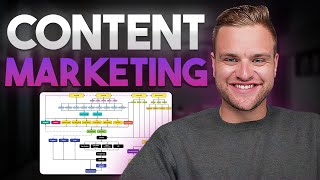
Matt from 1000X Leads breaks your service into categories, generates 20+ FAQs per category, then schedules frequent posts across LinkedIn, Twitter, and Instagram using Hypefury. Use analytics to find what works, repurpose top posts into long-form content like YouTube videos and newsletters, then nurture leads through email to convert more calls into clients.
Chapters
Hello everybody, it is Matt here from 1000X leads. This will be a video on how you can make a lot of good content for your B2B business without having to spend, you know, 50 hours per week doing it. You can do it in maybe two hours, maybe three, maybe four, and still get all of the effect as if you were a full time content creator. So this video is going to be the what, the why and the how. So watch to the very end. If you are struggling to make content, or if you just want to take your content to the next level, I'm going to show you what to do, why you need to do it, and then leave you with some action steps. So if you never watched one of my videos before, this is the 1000x leads funnel and that is a program that I run that teaches you how to build all of this. We're going to be talking about content today, but there's a lot of other parts to it. So content will show up at the very top of the funnel to drive traffic, and it will show up at the bottom of the funnel to nurture the traffic. And it will also show up basically after someone's become a client, the more the content that you post, the more they will consume and they'll become more bought in and less likely to give you attitude and overall less likely to churn. So content is going to be so powerful because it's one of the main types of leverage that you can put inside any service based business. And it's going to be media leverage. So think of it, you can make one YouTube video like the one you're watching right now. I spent however long this is gonna end up taking, I recorded it, I put it on YouTube and hundreds, if not thousands of people are going to watch it. So I didn't have to get on a zoom call individually with all of you watching it right now. I just had to do that once and I got out a lot more than I put in. I put in one video's worth of time and I, I'm going to get out, you know, 500, 1,000, maybe 2,000 views. Whatever this ends up getting could get more fingers crossed. But without leverage inside your business, you're not really going to be getting anywhere. And of the four types of leverage, media, labor, capital and code, content will fall into media. Unless you can train people to make content for you, then that could be labor leverage. Or if you have some kind of code that will allow you to make content either faster or better for the same amount of effort or Time or money, that would be good too. But let's show you the strategy that I use and the strategy all my clients use to basically get clients through content. So let's go down here. So like I said before, we have content at every step of the funnel. And even after the funnel at the very top, it's going to drive traffic. So you can post a YouTube video or something on Instagram or LinkedIn or Twitter or wherever, and that's gonna get views and that's gonna get people to know about you in the middle of the funnel, where you might have some sort of content that they have to sign up for a form or something like a lead magnet to get, that's another form that will capture the leads. Then you have your email flows which will further nurture the leads once they're captured. And then you might have your bottom of funnel content, your newsletter, more YouTube videos, webinars, that kind of stuff. And then finally, even after they purchase, although it might seem weird, your current clients are the ones who are going to watch and consume your content the most out of anybody. Disproportionately. They're going to be watching your YouTube videos, reading your newsletters, reading your posts on Twitter and LinkedIn. And that gets them more bought in and less likely to churn, as opposed to you not doing any of this at all. So I have made a nice little, we'll call it a flowchart here, for lack of a better word. And I'm going to go through each piece of it one step at a time and show you exactly what you need to do. So the first thing that we want to do here is we want to break down our service into a bunch of different categories. And this is mostly a mental exercise and it will help us think about it in a better way. So if I was to do, let's say, let's just do my own business, which is a thousand x leads, and that's a program that helps you build a lead generation funnel. What are the different categories of a lead generation funnel? We got our paid ads, our content, our outreach, our partnerships, our lead magnets, our email flows, our conversion mechanisms. We have our appointment setting, we have our website, we have our sales, we have our offers. Like, those are the different categories and there's no set amount of categories that you might have. Like, it could be a little, it could be a lot. It's up to you. You know, you want to break it down as much as possible, but you also don't want to just force it and make up categories just for the sake of making them up. So it's a balancing act. But what you want to do after that is basically what you want to do is once you have all of these categories like the ones I just listed, you want to come up with 20 plus good FAQs for each frequently asked questions. So these could be common questions, objections, any reason that someone has not to buy from you, or any reason that someone might, you know, think that doing X, Y and Z is too hard for them, that would be a good candidate for this. So for example, inside a thousand X leads, like I said, our categories are paid ads, content outreach, partnerships, lead magnets, email flows, paid product conversion mechanisms, newsletters, appointment setting, webinars or websites, sales offers. So what I've done here is I put all of this in a spreadsheet and let's see if we can zoom in a little bit just to show you put all this in a spreadsheet here. And these can be like my basically FAQs in my example. This is very much similar to the situation I said before, where we want to make it broad, but we don't want to just force stuff that basically we don't want to force it either just to have more stuff or more topics. So like, for paid ads here, how can I measure the ROI of my paid ad campaigns? That would be a good one. What are the most effective platforms? How can I allocate my budget? How can I target high quality leads with my ads? What metrics should I focus on? How often should I optimize my ad campaigns? These are all very good FAQs for different posts on Twitter and LinkedIn and Instagram and that kind of stuff. And that's where our categories flow through. They all flow through our FAQs. And then our entire content strategy becomes just answering all of the FAQs we come up with in different ways, like storytelling examples, you know, quick hacks, things to avoid, whatever you want. And once we have that spreadsheet, we're going to go into a tool called hypefury, which is a scheduling app. And we're going to go to recurrent posts. And then what we can do is create a content schedule like this. We could break it down either by category or just type of tweet, where we have like our short tweets, our visuals, our long tweets, like anything. And what we do is we go to manage categories and we just start posting them in here and we make our tweet over here. Hopefully you can see that on the Screen might be a little bit cut off, but we just want to make our tweets over here and then we can schedule them to cross post on Facebook and Instagram and that kind of stuff. And then we'll have content for every single platform and that makes it so we can save a lot of time and we don't have to just make new content all the time. And then what we want to do is basically keep doing this over and over and over again with a minimum of five times per day across LinkedIn and Twitter and Instagram, because that is going to be a lot of our middle of funnel content that answers all the FAQs, gets rid of all the objections to the point where they feel comfortable enough to book a call with us. And then what we want to do here is when we are doing this, we're going to get a lot of data as to what is interesting to the target audience, what's not, all of that kind of stuff. What we can do is go down to analytics here, Let me zoom in on the screen a little bit and see if I can, you know, zoom in. Let's see. And what we can do at the very bottom, if you can see that is we'll sort it by number of impressions or by engagement or anything else really number of likes. And what we can do basically is anything that gets an abnormal amount of likes for us on Twitter and LinkedIn and Instagram, we can say like, generally speaking, the target audience must be interested in that. So that might be an interesting topic to make a long form YouTube video or a short TikTok or a newsletter. Because these will be a lot better at kind of being at the bottom of the funnel, building trust. They can see your face, listen to your voice. You're not just an anonymous Internet scammer If you're posting YouTube videos and stuff. And that can really build a lot of trust to the point where they are going to book a call. So these content types work together where at the very top you have your kind of mass market content that pushes them towards a lead magnet and email flows and newsletter. And then at the bottom where you have your YouTube videos that really teach them something hopefully like this is teaching you right now. Then they book a call and then they buy. And funnily enough, these are the kind of people who are gonna watch your YouTube videos and read your newsletter and follow you on the platforms more so than anyone. And the difference between having this stuff versus not is night and day in terms of churn, they're gonna trust you more, defer to you as the expert, give you less attitude or p, and it's going to be a much better experience for you and them. So this is the simplest content strategy that you can use. If you have an agency or any B2B business, you're going to be building a lot of media leverage, which is arguably the most important type of leverage in an agency or B2B business. Labor is very important too. Capital and code would be nice, but media is what is going to separate people in this business model over time, and it's just so important. So I hope this video was helpful, and if you thought so, subscribe and I will see you in the next one.
More from Matthew







Everything I Would Change About This Ecom Email Marketing Agency (3 HOUR LIVE AUDIT)

Everything I Would Change About This Meta Ads Training Business (3 HOUR LIVE AUDIT)


