The Best YouTube Strategy For Businesses in 2024
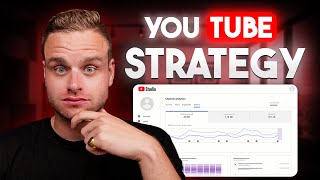
This is a how-to YouTube video (July 15, 2024) explaining a step-by-step strategy for businesses to use YouTube for lead generation and sales. The speaker (creator of "A Thousand X Leads") shares practical advice: treat videos like spending time with prospects to build trust, adopt a ‘professor’ mindset, iterate frequently ("10,000 iterations"), use a spreadsheet of topics + title formats, create thumbnail before filming, produce screen-share assets, script and film the first 30-second hook separately, use an "unfinished loop" and "singularity" in the hook, practice dry runs, edit (CapCut/Adobe or simple tools), and use analytics (retention, CTR, AVD) to improve. The talk emphasizes that most growth comes from occasional viral hits and that videos should drive opt-ins via description/pinned comment.
Chapters
Hey everybody, this video is going to go over the best YouTube strategies for businesses in 2024. So I don't have an insane amount of subscribers or anything looking on my other screen right here, I have 11,916, which is not so bad for a very specific business related channel. It's not like I'm a Mr. Beast style entertainer where tons and tons and tons of views and subscribers are the goal. Because you get money from sponsorships or ad revenue. When you're doing a business related channel, like 99.9% of your income is going to come from product or service sales. And I looked at my analytics before hitting record here and I've just got 300,000 views, I just crossed that mark and have made over 550k tracked this year in revenue specifically from my YouTube channel because we use a specific link for that and that's just my YouTube channel and not total revenue by any means. So there is a lot of potential. If you have a B2B business and you're going to make videos for it, you're going to show that you're just not some anonymous Internet scammer. Your face, your name, your voice is all out there. You're able to help people at scale and all of the money, and there's tons of money to be made comes from basically you building trust, you showing you know what you're talking about to.
The point where they book a call.
And buy something for you. So I'm going to go over the exact strategy or the exact process that I use to make my videos. And if you have an agency or a consultancy or a B2B business, or even a lot of business to consumer models, I think that you could benefit from watching this video. So let's get started. So this is what I'm going to call the best YouTube strategy for businesses in 2024. So if you've clicked on this video and you want to like learn how to make prank videos or something, probably not the video for you. But if you have a business, an agency, a consultancy, any kind thing that deals with leads to sell services, this.
Is probably a good video for you.
So why do you need to make YouTube videos? There's a few reasons that I'm going to cover here. The first is it's like spending time with you. So I don't think anybody would deny that the more time you spend with someone, like all things being equal, the more you trust them, right? And that's the case with business too. And the reason why it's so Important to make these videos is that when people see your face and hear your voice, they're much more likely to trust you. And when they spend more time watching your videos, that's like spending more time with you personally. And videos are great because of this. Because, like, let's say you wanted to get 100 clients in a year or something, you wouldn't have to spend 10.
Hours or 20 hours or 100 hours.
Or however long it takes, just hypothetically, with each client, you could just make the video, post it on the Internet, and then, you know, it'll kind of take care of itself. Assuming you did, you made a good video, right? You just need to do it once. And then you get the entire effect of having explained each concept individually to every single person who watches it. You don't have to get on Zoom Call and just explain to it over and over again. You don't have to see them in real life. It's just kind of like an automatic.
Way to spend time with someone.
The second reason is that it separates you from everyone else. And if we're honest with ourselves, there's probably hundreds of people at least, who provide the same service as us and can do just as good a job as us or better. And one of the main benefits, especially or not especially, but you know, solely before that happens, is that our YouTube videos show our face. They hear our voice. And when we make these videos, we immediately separate ourselves from the rest of the target market. We're not just some nameless, faceless corporation. We're not some anonymous Internet scammer. We're a real person. And that's what I would say. No small achievement or no small thing. And it's very, very important that we achieve this effect. And we're not going to be able to do that without YouTube videos. The third thing is that it develops a network for you. And this is something that I never considered or expected before I started making YouTube videos. I would consider myself to have a very good network. I have been in business for 12 years, done right by people, for the most part, 95, 99% of the time. And I had a good network before. But making YouTube videos on just my small channel here has built a better network for me in terms of quality and quantity than the past 10, 12 years combined. And that's pretty, pretty crazy to me. But when you make good YouTube videos, people want to talk to you. They become friends with you. And this has led to a lot of good opportunities for me outside of just making more money. The next reason is that when you make YouTube videos, the tables are turned. The usual dynamic between you and your leads is kind of reversed because your YouTube videos shift the power from the client or the potential client on sales calls to you. You've separated yourself from the rest of the target market. You've provided value and help them in advance. You've elevated your status. So instead of the usual crap that you have to deal with, you know, chasing the clients, chasing the leads, following up, you know, being an order taker, so to speak, and I think everybody who's in this kind of business knows what I mean by that. They come to you, they want to buy from you, and it's a total shift in the dynamic between you and your target audience. Before you get started making these YouTube videos, there's a few things that I have found helpful. And the first is to kind of think of yourself as a professor. And that's a pretty good mindset to go. And recording your first videos is very tough because there's no doubt that they're going to be terrible. And everyone, including you, me, we all know that. We all know that about ourselves. And it's kind of to be expected. But I think that stops a lot of people. You know, my video is going to be terrible. I'm going to embarrass myself. Probably, probably. I'm not going to lie. But I found it that it was much easier to get started and to keep it up and maintain this. If you simply think of yourself as a teacher or a professor. I'm a professor of lead generation. I'm a professor of cold email or accounting or whatever it is that you do. Insurance. And if you think of yourself that way, takes a lot of the pressure off in my experience, because I didn't always. And some people might think I don't make good YouTube videos now, but I think they're pretty good. And I didn't always make good YouTube videos.
The first few were pretty bad.
And I tried a few different things. And it wasn't until I started to just let go and think of myself as a teacher that it just became a lot easier. The next thing that I'm not mastered and I'm trying my best, and I think trying to makes it worse, so to speak, is to pretend that you're talking to a friend when you're speaking on camera. And I have a long way to go in terms of like speaking naturally on camera and stuff, but I'm a hundred times better than I was when I started. And talking to a camera just feels inherently different. Than talking to another person. There is no denying that. And it is a skill that has to be developed. So something that helped me is to try and pretend that I'm just talking to one person that could be a friend, that could be an employee. And like you're kind of going in the mindset that you're recording this training for an employee or something like that. And it's been very useful for me. The next thing that I think is super important that I'm gonna try to implement for myself a lot more is the 10,000 iterations rule. So something that I heard recently is something to do with the 10,000 hour rule. And if you've ever read the book Outliers by Malcolm Gladwell or just heard of it basically means or states that to become an expert in anything, whether that's, you know, a world class athlete or painter or whatever, you need about 10,000 hours of practice. And I've always known that rule. I've read that book and I've heard that over the years. But the thing I heard recently that I really liked that I'm going to adopt for myself is, and I'm going to try to, well, I've tried to do that with this video and especially the ones going forward is not view it as 10,000 hours of practice, but 10,000 iterations. So it doesn't matter how bad your videos are at the beginning, focus on making every video better than the last. And what I'm going to try to do myself when I am doing this from now on with YouTube videos, my newsletter, some other things as well, try to write down five things to improve on before I record the video. So for this one, trying to sound more natural, trying to have a better presentation that flows better, trying to have some examples, trying to have a better thumbnail and then just trying to use the word like, you know, those filler words, you know, less frequently. Kind of failing so far, but trying. So the next one is like if you are super, like you just don't have the confidence and it's in your head that you simply cannot record videos. Something that I found from, I can't remember somebody on Instagram or YouTube is the random word generator method. So go torandomword generator.com. so I just pulled it up here. So we want to choose a word you can sort by, you know, whatever kind of verb. For example, so tour and then just take your phone like this, obviously my phone here and you know, hold it like this or put it on a tripod or something. Make an unscripted five minute YouTube video talking about the word just winging it, just improv style. And if you do this for 30 days or 30 videos, or even a.
Few videos, to be honest, your confidence.
And your ability to just speak like I'm speaking now, I don't have a script, I'm talking over, you know, some slides here, but it's not like I'm reading word for word. Your confidence, your flow, your just ability to think and talk on your feet is going to be 10, 20, 30, 100 times better. Just, you know, if you do this for a week, let alone 30 days. So if you're really having trouble, I think this is a good option for a lot of people. The final thing here is that I'm of the opinion that when you're first starting, you should not have an editor and it should be full length, just raw footage. The reason for this is I think that you have to learn how to make interesting content and speak in a way that's watchable or captures the audience's attention. Before you rely on the fancy editing tricks and retention strategies and heavy script and all of the visual aids. I guess you could say, I don't know how you want to put it. And the reason I believe this is if you just start with super fancy editing, which undoubtedly works, that hooks people's attention, keeps them more interested, all of that kind of stuff. But if you rely on that too soon and in some ways you're kind of building a sloppy foundation, you're building sloppy habits. And if you rely on all that stuff, you may never, you may never develop the skills, the speaking ability, the ability to make interesting content, the ability to be a good teacher properly. And that will be a limiting factor for you down the line. It's kind of like taking steroids. You know, if you go to the gym and you start steroids from day one, you might not even need to learn how to use proper technique, how to train to with the required intensity, all that kind of stuff just because you are enhanced. And I feel, I really view that getting an editor at the beginning is kind of like that. So you need to be able to talk to people properly first. You need to be able to make good screen share assets, good presentations, whatever style you choose. And once you can do this, then you can use the editing tricks and that will be like pouring gasoline on the fire. I'm not arguing for steroids in this video, but let's get some good natural physique first before you ever think about taking steroids type thing. 90% of the growth, sadly, is from going viral. Like, if we go to my channel here, I had one video that got 130,000 ish views, and the rest get like 1,000 to 5,000. There's a few outliers, but that's just kind of how it is. And I've talked to a lot of people and that seems to be the same for everybody. So most of your growth, most of the subscribers, most of the money you make, most of the views, all of that kind of stuff is going to come from going viral. And the only way to go viral is to make a great video. So if we go back to that 10,000 iterations and making every video better than the last, we can't control the algorithm, we can't control what people watch and what they don't. We just got to focus on making the best and most useful and most actionable and most watchable and consumable videos possible, and try to do it as frequently as possible while maintaining that quality to give ourselves as many chances as possible to go viral and get that growth. So here is going to be the process that I use to make my videos, at least, and these are the things that I'm thinking about. I've talked to a lot of people who are big on YouTube in both business and just more of the entertainment style, as well as YouTube agencies and that kind of stuff. And here is the stuff that's worked for me. You know, some of it's been advice from others, some that's just worked for my personal style of videos, my personality, my interests, my workflow. And it's going to be a combination of all of these things. So take from this what you will like. You don't need to follow this exactly. Just take bits and pieces and tailor it to work for you. So step zero, kind of the step before you even get started is that the idea is the most important part, and you're gonna do a lot better on YouTube if you just have ideas that people want to watch. It's kind of like, you know, it just makes sense that that would happen. People on TV watch stuff because it's an interesting topic to them. People listen to podcasts because it's an interesting topic to them. Doesn't matter how smooth you would be in terms of your speech, how good your editing is, all of that kind of stuff. If it's not interesting to the type of person that you're in your target audience, they're not going to watch it. And we can never forget this fact if we want to really make it.
Big or get a lot of sales from YouTube.
The first thing that I do is make a spreadsheet. So if you've watched back to my previous video is about creating FAQs and objections and if you've, if you've watched that, like this will look familiar, but it's a different spreadsheet. So the process is kind of going to be the same, but it's different in a number of ways just to get those ideas and formats that are inherently more watchable. So let's open this. I already have it open here, but just clicking this link. So the gist or the important thing is that whatever you know you're selling, whatever service or product you're providing, there's going to be a lot of different subcategories involved. So my business is called A Thousand X Leads. It's basically a program to help you build your lead generation systems. So in the essence of a full lead generation funnel, there's a bunch of different parts. There are paid ads, there's content, there is outreach, there are partnerships, there are lead magnets and email flows and paid products and conversion mechanisms and all the way down the line. So if you want to build a full lead generation funnel, like these are things that you would talk about, so these are different videos that you would make as well. So here are some example titles at the top. So this is what I mean about the idea is most important, like you could just make the title lame, like content strategy, you know, or something like that. I would say that's a lame title. Or you could make the title slash idea a lot better, a lot easier, a lot more clickable, if you want to think of it that way. So, you know, full paid ads course, you know, 12 years of brutally honest paid ads advice. 55 minutes of the best paid ads training you're ever going to find. 12 years of paid ads advice in 15 minutes. Paid ads are hard until you do this. You know, the best paid ads training on the Internet, these, you know, the content could be the same in these videos as any other video, but the way they're formatted, the way the title is, will just get a lot more clicks and be recommended to the right people via the algorithm a lot more than otherwise. So the first thing that I would do is make a spreadsheet like this with your different topics and subcategories and then you can just make, you can just choose like 10ish title formats and do the same kind of title but for every topic. So if you had in this Case, let's go scroll over there. I have 16 topics and I have, well, let's just say I had 10 titles. That's 160 videos worth. That's probably going to take a year to make for the average person, maybe even longer. So it's kind of like that, where you don't need to come up with ideas all the time. You just need to have 5, 10 formats, 10 styles of videos that are proven to work, and then make one for each of your different subcategories. So I kind of talked about all of that. So step two would be brainstorming those 10 styles, then plug and play each subcategory into those styles. And then for these videos, like, these videos are going to be 25, 30, 50 minutes, an hour, who knows how long, and you're going to combine a lot of different topics into those videos. So if you've watched my previous video about the coming up with a bunch of FAQs or objections for each of these subcategories, you would combine a lot of those into this. Because if there could be 20 different questions about YouTube for business, and I've.
Combined all of them into this video.
And that's what you would be going for. So starting with the title and idea is always the most important part, because a better style and title and idea can get you 2 times, 3 times, 5 times, 10 times as many views and watch time and therefore sales as the exact same content in a worse style, even if the content and the actionable advice is essentially the same. The next is to create the thumbnail before. So I'm not a master of thumbnails by any means, but here's my friend Nick, you can check out his channel too. So I always create the thumbnail before the video just because, you know, it kind of sets the tone. Get the same shirt in the thumbnail as the video, get the same background, all of that kind of stuff, just because you want, I would say continuity. If they click on the thumbnail, they're interested in that.
So what they saw in the thumbnail, they should see on the screen type thing.
The next step is to create the screen, share assets. So I created this, these slides that I'm showing you right now, ahead of time. Usually I can get them done in an hour. So I'll set aside an hour in the morning to make the slides or the mural board in some videos and then record the video in another 30 minutes to an hour and then get it posted. And that might seem like a lot of time to people, but this is the work. This is what is going to build your business. The busy work, the meetings, the all that kind of stuff is not going to get you where you want to go. You need to set time to prioritize this stuff every single day or else you're not going to grow your business in the way that you want to. The next step and what I do first is I film The 32nd Hook, or however long your hook is. So similar to how we want to format our title and thumbnail to get clicks and to make it clickable and interesting, we also want to focus more on the first few seconds and then the first 30 seconds as a whole. Because if we can really nail the first 30 seconds, this is based on a lot of YouTube data and all of that kind of stuff, we can really nail the first 30 seconds of the video. The amount of people who watch the full thing is going to be a lot more. So if you want to go into your YouTube analytics or if you don't have a YouTube channel and you go to 30 seconds, you can break it down by new and returning viewers as well, where you can see what percentage of them made it to the 30 second mark. And YouTube has all that data. YouTube's a, you know, as part of Google's billions and billions of dollars and probably billions of videos at this point. And they know what works and what doesn't. So they're gonna like if they say the 30 second retention time is very important, that is what you want to be focusing on. And this is both what I would say an art and a science.
So better.
More people watching at the 32nd mark means more views. And it's very, very important. The first line of the video should be scripted and recorded on its own. So basically if I pull up here, this is what I'm doing for this video. So I'm kind of practicing what I preach.
This is literally what I do.
So the first line here is, looks like about seven seconds and oops, you can't see my screen it seems. There we go. So if you look at this, this is me editing the video. So I've recorded my first line here, it's about seven seconds. And then I recorded the rest of my 30 second introduction, if that's what you want to call it. And then after I'm going to upload the video that I'm filming right now and put it here and then export it. And that's kind of all there is to it. It's not overly complicated, especially when you're making business Videos that, you know, don't need to compete with the goldfish brain of people who just want to be entertained. One thing that I think is very important that I heard from a YouTube strategist is that you want to estab singularity in the first 30 seconds. And what he means by that and what I mean by that here is not a dictionary definition of the word singularity, but what we're trying to convince them in the first 30 seconds that we are the singular source for this information anywhere. Like they can't get what we're going to give them anywhere else. And if we can convince them of that in the first 30 seconds, like they're going to watch the video, they're not going to click away, try to find another one. And subtlety is your friend here. Like if you're trying way too hard, it's kind of like manipulation at that point. And if they notice the manipulation, that's not going to be good either. But establishing singularity will make all of your competition and all the other videos irrelevant. And you are the only source of.
This information that they are looking for.
The next things from the same strategist is to create an unfinished loop. So if we can create an unfinished loop in the first 30 seconds and what that basically means is, you know, teasing them, not teasing them, but presenting a something that invokes and creates curiosity. So to get the answer to that or to get closure to that or whatever, they simply must watch the rest of the video. And that's something that I think is a good piece of advice too. If you can establish singularity and an unfinished loop in the first 30 seconds, that's all you need to do really in my opinion, especially for these business to business style videos. Next we're doing what I'm doing right now. I've recorded my 30 second hook, now I'm recording the rest of the video. You can see that on my screen maybe if I am able to change to it, which I'm not, but trust me, I'm recording this right now. So you're going to have somewhat of a script if you have a video like me where you're screen sharing over an asset like this. So it's not like you're just winging it completely, but it's not like you're reading from a teleprompter word for word either. So it's largely unscripted, unedited and filmed in one take one go, whatever you want to call it. And something that has really helped me, even if you don't do the full thing is if you can and you have the time, practice like making this video as a dry run beforehand, where you just go through your slides, go over your Miro board and speak it out. And if you do this two times, maybe three times before, depending on how long your asset is, your video is going to be 10 times better from your ability to speak and do it naturally. So I've done this. I've read this video twice out loud before I'm doing it. And regardless of what you think of how I'm speaking right now, this is way better than if I didn't do it at all. So. And you'd almost be shocked. Your brain will become more familiar with what you're talking about, you're going to stutter, are less sound, more relaxed, and it will be a lot better. And remember the 10,000 iterations, if a video is just 10% better than it would have been, it can get five times the views. And it's worth it to do this if you have time. Step number eight is edit the video. So if we go back to my other screen. Oh, not like that. If we go back to my other screen right here, not like that again, okay, we're just not going to go back to my other screen. All you got to do is put the first line, the 30 seconds, and then the rest of the video. And it's really that simple. But it's worth filming the first 30 seconds separately just because of the disproportionate or outsized role that plays on the success of retention and the video. So you can use capcut free, Free to do, free to use. It's made by ByteDance, which is the same as TikTok, or you can use Adobe, you know, or whatever you want. Doesn't really matter. But there's a lot of free tools and you can learn pretty quickly. You don't need an editor to splice three videos together. You can do it yourself, trust me. Next is posting your video. After the video is fully filmed and it's edited together, the next step is obviously to post it, right? But before you do, make sure it passes the title test, the thumbnail test, the hook test, and the description and pinned comment test. I'm going to get into these. So the title test. Your title must give them a reason to click. If it doesn't, it's not a good idea. It's not a good title. So, you know, 12 years of brutally honest paid ads advice, you know, that's gives them a reason to click. 12 years worth of advice. It's brutally honest. Very good thumbnail test. If it doesn't give them a reason to click, it's, you know, not a good thumbnail either. A lot of people won't read the title, they'll just kind of scroll until they see a thumbnail that appeals to them. Your thumbnail must give them a reason to click, just like your title would. For the hook test is does the.
First line tell them what the video is about?
Do you establish singularity in the first 30 seconds? And do you have an unfinished loop? And that's the 32nd hook test. And then the description and comment test is, you know, if you're doing business related videos, you're going to have some sort of opt in or lead magnet that you want them to download. So do you have this in the.
First line of your description so people can see it without having to click more?
And then do you have this pinned.
In your top comment? And it's just kind of a matter of yes or no at this one, but it's really going to get you more opt ins and get you a lot more business than you would have otherwise. For your analytics and feedback once you've been posting videos for a while, I.
Think that analytics and this stuff is.
Important, but you know, take all analytics with a grain of salt and not because the analytics are wrong, usually the exact opposite. But the problem with a lot of data and analytics in YouTube and just any part of life is that there's a huge potential for user error. So 10 people can look at the same data and come to 10 different conclusions and it's really insane to think about that a huge percentage of the time. User error is so bad when you're reading analytics and data that the reader of the data comes to the exact opposite conclusion as they should.
So use the analytics, learn to read them.
But pair analytics with common sense and you can never go wrong when you do that. It's when you don't pair analytics with basic common sense that you get into trouble. This is the retention graph that I was talking about. So if you go into your YouTube channel, and I did that before.
If.
You really want to like, a worthy goal to aim for is we want 60% of new viewers to make it to the 32nd mark and 75% of returning viewers to make it to the 32ND mark. Returning viewers are always going to make it further as a general rule, just because they are probably subscribed to you and watched your videos before and these metrics will sound absolutely insane and unrealistic, especially to YouTube strategists and gurus, but it is a worthy goal to shoot for. So, for example, this one was about 55% for returning and 50% for new. I'm not there yet, I'm getting there. But we got to have a worthy goal to shoot for. And if you can really nail your hooks to get these metrics. And it's impossible to achieve something that you don't aim for, isn't it? Of course you are going to really, really get good on YouTube. And the skills and the type of person you need to be to achieve these metrics is going to be one of, you know, great charisma, great editing, great scripting, great thought process, a great teacher. So it's not. Well, it is about the metrics, of course, because these are going to be positive indicators for the algorithm, but it's also more about who you're going to have to become in terms of skills and the ability to think to achieve these metrics. That's important. At the start you're probably going to get like 30% of people watching, you know, at the 32nd mark. I know that's what I did when I first doing it. But part of the learning process the next is the thumbnail click through rate. And your thumbnail matters a lot because if you go to YouTube just scroll through your homepage, there's hundreds of videos that are all competing for your attention. So you obviously want to get your thumbnail click through rate as high as possible. This not a good thumbnail, 4.6%. And it should be noted because something.
That I understood but kind of get.
Overly excited about when you shouldn't, is that day one or even the first few hours, your thumbnail click through rate is always going to be higher because at that point your video is only showing to your subscribers and your subscribers are going to see it and click on the video almost no matter what your thumbnail is. So after all of your subscribers have clicked on it and the video is showing to new viewers in the feed, your click through rate is going to go down quickly to what it truly is, so to speak. And that's just something important to note in my opinion. The next is average view duration and this is one where it is important, but averages are very dangerous in every area of life. So if you have a 60 minute video and a 10 minute video, the average view duration of the 60 minute video is obviously going to be longer than the 10 minute video because of all the people who watch the entire 60 minutes, right it's just going to add a lot of watch time and average view duration is views divided by or total hours watched divided by views. So if you have someone watch if 10% of people are watching all 60 minutes, that's six minutes on average plus whatever the other 90% are watching versus if 10% of people watch 10 minutes on average, that's one minute plus. So average view duration is a great metric to gauge the quality and watchability of two videos of the same length. But I wouldn't say that average view duration is the be all end all of metrics because you have to have this context in mind. I'm going to finish the video off with some ideas and example titles. So we want to make these clickable titles. Every title should give them a reason to click and the format and that.
Kind of stuff is.
That's boring. They're not going to do though.
It's going to get a fraction of.
The views even if the actual video is the exact same. So a good one is why your ex isn't getting results. You know, why your cold email campaigns aren't getting you X clients per month. The simple step by step process to achieve whatever how this thing gets me. You know my dream outcome X is hard until you see this YouTube videos are hard until you watch this video you're watching right now. That would be a title the best YouTube strategy for business in 2024 Proof of concept There is the exact title of this video. The new way to make YouTube videos for business in 2024 the only YouTube for business video you'll ever need in 2024 how to make YouTube videos for business free slash full course full YouTube for business course for 2024 if we're just applying the title of this video YouTube for business complete tutorial the easy way to make YouTube videos for business that get a ton of leads. You get the picture. And these are just some title formats that have proven to work well that I've seen in the business niche and that people have sent to me and that I've used before. So if we go to the too long didn't read version, the basic summary of this video, the idea is the most important part and just starting with a better idea is going to get a better result. Make every video better than the last. No matter how bad you are when you first start, every video should be better. Talk like you're talking to a friend as best as you can. Focus on the content and making good content that's valuable and useful and actionable and makes people trust you don't focus on the editing. And YouTube is going to help you stand out and from the hundreds of people that do the same service as you and probably the same quality. And it's going to turn you from that nameless, faceless corporation or that anonymous Internet scammer to a real person that people can trust. So if you like this video, like, comment and subscribe and I'll see you in the next one.
More from Matthew







Everything I Would Change About This Ecom Email Marketing Agency (3 HOUR LIVE AUDIT)

Everything I Would Change About This Meta Ads Training Business (3 HOUR LIVE AUDIT)


