The Four Types of Ad Funnels You Need To Master
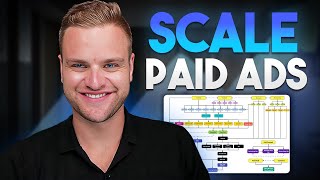
Matt from Thousand X Leads breaks down four ad-funnel architectures for B2B customer acquisition: webinar/VSL funnels that book calls, newsletter funnels that nurture with email, group funnels that build trust in gated communities, and paid-product funnels that self-liquidate before upselling. He walks through examples like DigiCeptual and Pilothost with practical tradeoffs for each.
Questions this video answers
You should not assume more than a 20% close rate from booked calls sourced via ads.
Chapters
Hey there everybody. It is Matt here with a thousand X leads. And this video is going to be about the four ad funnels that I think you should know about if you run a marketing agency, a B2B business, any of that kind of stuff. So I'm going to zoom in on the 1000x leads funnel here and just talk about ads a little bit. So ads are one of the four main ways that we can realistically acquire customers alongside content, alongside outreach, alongside partnerships and then paid ads. Everything that we can really do as an agency or a B2B business is going to fall into one of these four main buckets. And I'm not going to go over the content or the outreach of the partnerships too much in this video. I'm just going to go through the ads and there's going to be four types of ad funnels and I'm going to go through each and I'm going to go through a situation or two where we might use each of these ad funnels. So if you'll notice here we have paid ads right here. We could send paid ads to lead magnets and down through our email flows and stuff like that. We could send paid ads to a digital product and then we could also send paid ads to any kind of VSL or webinar or community or anything like that. So we have different options. And before I like really get into it, don't really let me or anyone else tell you like what the best ad funnel is. The best ad funnel is the one that's going to get you the most customers at the lowest cost per acquisition. That's like the reality of it. So I have my own preferences but that's what works for me. And there's a few differences between the ad funnels. So I made some pictures down here, so let's zoom out a little bit because you can't really see that. So the first is going to be the webinar VSL funnel. Whether you're gonna do like a pre recorded or live webinar setup versus just have a VSL on your page. Like this is a very valid type of ad funnel. So usually what this will go to either add to lead magnet such as sign up for my top five tips to acquire more customers. That would kind of be the lead magnet. Sign up for the email, get redirected to the thank you page, the thank you page will have the VSL on it or redirect them to the webinar and then they're going to be, you know, kind of converted or you know, pushed along the funnel through the direct signup as like if they're just going to view it right then and there, like that's fine. But it's also going to be in the emails the appointment setter is going to do it. The it might be in the link, in the bio, in the description of the content. And then you might also have some ads, either, you know, prospecting ads or retargeting ads, all to get to the VSL or the webinar and then that will sell a productized or intro offer. You will hopefully do a good job on that and then it's going to go and upsell them to your main recurring service. That's realistically how it would work. And these are best when you have a specific training or case study or presentation that you show people to convince them to buy from you. If you're just someone who can make a great VSL or a great training or great case study, this might be a good option for you. Typically the goal of this is to get them to book a call and the webinar, the VSL is kind of what pushes them over the finish line and gives them enough information to do that. So here's an example of a pretty good one business called DigiCeptual. I think they do, you know, fashion brands based on what they see here. So if you click on the ad, like their ad is basically a VSL type ad. If you go to their landing page, you know, here's a VSL in the VSL webinar funnel and there's the book a call button. And then just a matter of how cheap can we get calls and then what do we convert them at? So in my experience, in my opinion, like you don't really want to assume you're going to get more than 20% of booked calls to close. And that does take into account people who don't show up, people who are just not qualified, all that kind of stuff. Because when you're doing this or any ad funnel, the webinar or vsl, the cold traffic is not going to convert like a referral would. And a lot of people who don't do ads like kind of don't understand that and expect it to. And I'm here to tell you that it won't. So it's normal. If you think you have like a 70% close rate from referrals, you very might. You very well might. When you get to ads that's gonna go down significantly. It's just important to know that so you don't think something is wrong. The that's the con of running ad funnels. But the pro is you can scale it infinitely if your ads and your landing page and your offer are good enough. So very nice. The next is my personal favorite and this is again what works best for me. And it's a newsletter funnel. So the purpose is to have ads to get people to sign up for your newsletter as cheap as possible. And then you might get them into a co registration pop up which is beyond the scope of this video. But we'll just move on. On your thank you page you make them aware of your offer and then you send them a newsletter three to five times per week and then maybe try to get them to a webinar or something like that or get them to book a call and then the same productized or intro offer do a good job and then upsell. So a agency called Pilothost does this really well. They own D2C newsletter direct to consumer newsletter. And basically they are a creative agency that sells pretty high ticket I guess or higher ticket than normal. And the newsletter funnel is great if you have either a high priced service with a longer sales cycle or on the very like other end of the spectrum like let's say you are what would be a good example. You're like a cyber security firm who like cleans up people's mess when they get hacked and they just have seen you in the newsletter instead of like oh I remember that from the newsletter, let me do that, something like that. So what this goes is the ad to a landing page usually has a lead magnet to lower the cost per acquisition. And then inside the newsletter you're going to see like links to the basically the company who owns it. You if you choose this. And it's very important because I don't say this a lot but it's an important part of the step. I've talked about this in a lot of my other videos. So if you never watch one of my videos before, like that's perfect. This is important. You need to take your entire newsletter list and put it inside like Apollo or somewhere where you can enrich the data and you're gonna get a lot better result. If you like get people's, like get people who are in your newsletter who have company emails and reach out to them instead of just passively waiting have your appointment setter reach out to that group of people basically as if they were just leads in your CRM. And then if you go here you can see DTC newsletters, field by Pilot Hosts, I guess, just to prove that. And then Pilot House is a performance marketing agency. So that's an example of a newsletter funnel in the wild. Very nice, very nice. It's my personal favorite. But the thing about the newsletter funnel, that it doesn't work for a lot of people because it only works if you have like the entire 1000x leads funnel. And obviously thousandx leads is like my business, so I call it that. But you have to have a full marketing funnel one way or the other. So a lot of the time I don't know why my computer's being so fucked up here. A lot of the time they're going to come in cheap through newsletter and they're just going to die there or they're just going to stop. And then over time, you know, they might start watching your content more and download a different lead magnet. And then they might, you know, do cold email and get some kind of, you know, offer from it. And then they might sign up for your webinar. Like people don't just sign up for your newsletter and then like convert on the thank you page. And that's like something you have to understand. Like newsletter funnels are not going to be right for you in my view. If you don't have like every single part of this working. I'm going to fix my computer after this. It's kind of ridiculous, but it's not going to work without that. So keep in mind the next is a group funnel and this is the one that we use at a thousand x leads. So group funnel is great where you sell a service where they need to get some tips or see some results before they fully trust you enough to basically join. So you're running an ad to an email and a phone number and on the thank you page will promote the group. You could use a Facebook group. You could use really whatever, but. And then we want to. I have Facebook group here, but you can use whatever. Like when you get them to sign up, you want to have a, like a SMS flow inviting them to the group and an email flow just to make sure they join. And then inside the group you're going to have some content appointment setters, retargeting ads and email flows. And the thing to understand about a group funnel is that this is the best one, but only if you put a tremendous amount of effort into it. If you just don't have time to do that. And that's valid, like it's not an excuse really, if you just don't have time to put hours per day to the group. It's going to be the worst out of these four. So if you do the best, if you don't the worst. And stuff like this, like if you're a sales trainer where you need to give them a tip or two before they like trust you enough to buy your course or your consulting or something like that. That's where a group funnel is very good. So at a thousand x leads we'll basically have an opt in page like this and then the thank you page is going to be sign up for our school group. And then it's very good because you can get their email and phone number up here. But then you could also get more stuff here like and enrich your data a little bit on the membership questions. And then you basically have to message people inside the school. If you don't message people, you don't post in it, you don't have email flows like it's not going to work. And then you sync everybody who joined your group to your CRM kind of like this. And then you, you know, there, there you go, you're good to go. So it's a very good type of ad funnel, but only if you put in a tremendous amount of effort. So that's the catch, the pros and the cons. The final one I want to talk about today is going to be the paid product funnel. And this is the best for beginners in my view because the problem with the other three is like you're basically spending the ads or spending money on the ads and hoping that it's gonna work. And when you're a beginner just getting into that like probably going to screw it up and it's natural, right? So if you want to, and especially if you come from an E commerce background, it's very good to try to sell a digital product or something of this nature that is like 10 to $100 with the purpose of if you selling something for $97 and you can get one purchase through ads for $90, you're breaking even, there's no risk or there's no delay like there is for the other types of funnels. So if you can think of a paid product and usually like templates are great. Like if you're an email marketing agency, some email marketing editable templates, if you're a YouTube agency, some thumbnail like assets that you built in Canva or something. So you do the ad to the sales page, try to get some upsells in there to get a hundred plus AOV 100 plus AOV just to basically give you enough margin or room for error when you're first starting with your ads to get that cost per purchase. That's break even on ad spend. Usually like if you heard the term self liquidating offer. Like if you're selling something for $20, it's going to be hard to get $20 per purchase on your ad spend. But if you're selling something for 97 or something, it's going to be a lot easier. Then once they buy the product, you want to make them aware of your offer and then try to get them to something like a prerecorded webinar or a VSL using an appointment setter. You know, content ads. Like I saw you signed up for my email marketing templates. I have an agency that you know does that. Probably put it a little bit more eloquently than that, but I have an agency that does that. Watch my VSL about the top 5 things that E commerce brands need to do to double their email revenue, something of that nature. Then you have a nice productizer intro offer and then you upsell them to recurring. So like realistically those are the four types of ad funnels that you can do. And here's a before I get started, like here's you know, 135 of the best performing email marketing templates. Here's the landing page and then you basically just sell them. It's like this one's a lot closer to E commerce than the others. And I feel like based on what I've seen, people who come from an E commerce ads background really shit the bed when they try to do it for lead gen because they just think it's the same thing. It's like look at how low my cost per lead is. But in reality, capturing the lead is the easy part. It's what comes after the offer, the email flows, your appointment setting, your ability to close. Like those things contribute to your ads a lot more than the cost per lead itself. So ads in the ad funnel. Very good stuff. Very good stuff. Lots of different ways that we can go about it. Hope this video was helpful and I'll see you in the next one.
More from Matthew







Everything I Would Change About This Ecom Email Marketing Agency (3 HOUR LIVE AUDIT)

Everything I Would Change About This Meta Ads Training Business (3 HOUR LIVE AUDIT)


