The Only Video You Need To Fix Your Agency's Close Rate
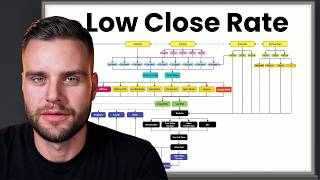
In this instructional video, Matthew Larsen walks agency founders and sales leaders through a comprehensive three‑part framework for dramatically improving low close rates, especially for cold‑traffic leads. He first stresses the importance of diagnosing whether the problem lies with the founder’s personal closing ability or the sales team’s performance, then outlines three levers: 1. Offer Optimization – develop a high‑demand, low‑risk intro offer, define a precise Ideal Customer Profile (ICP), and craft messaging that mirrors the prospect’s language, likes, dislikes, and desired outcomes. He demonstrates this with an auto‑insurance example, showing how to use demand, ICP traits, and Alex Hormozi’s Value Formula to create a compelling one‑liner and pricing. 2. Funnel & Pre‑Call Flow Enhancement – design a “book‑a‑call” funnel that includes a VSL, application form, thank‑you/FAQ page, rapid appointment‑setter outreach, selfie video introductions, high‑frequency pre‑call emails (every 4 hours), and aggressive retargeting ads (30‑50 variations). He explains how these steps pre‑warm cold prospects, build rapport, and surface objections before the call, making the sales conversation far more efficient. 3. On‑Call Sales Tactics & Training – implement a repeatable sales call plan (not a script) consisting of: a 30‑60 second highlight‑reel introduction to transfer authority, a transition question about the ideal meeting outcome, five standardized qualifying questions, a concise 5‑7 minute presentation, a rating‑scale check, objection‑handling cheat‑sheet with multiple responses per objection, and a structured close (recap, ROI promise, payment link, onboarding steps, and next‑meeting booking if payment isn’t immediate). He stresses consistency across reps for diagnostics and scalability, and provides guidance on handling common objections, low‑stress closing styles, and follow‑up automation for up to 90 days. Throughout, Larsen emphasizes the “rising tide lifts all ships” principle: improving the offer or funnel by ~25 % yields comparable gains across every rep, often more effective than trying to make each individual closer 25 % better. He also notes the extra challenges of cold outreach versus paid‑ad traffic and suggests using AI to accelerate implementation. The video concludes with a recap of the three parts and a call to action for viewers to apply the framework.
Chapters
This is the first video in our series called Business Problems, and it's going to be how to overcome and improve a low close rate. So the background situation is you are generating leads and you just are not closing a very high percentage of them. For context, a few things matter here, and there are some things we need to know. Different sources are going to have different close rate. Something like referrals, something like content, something like partnerships. Those are always going to have a much higher close rate than stuff that is predominantly cold traffic, like paid ads and outreach. So there is some nuance that we need to keep in mind there. So for the context of this training, we are going to talk about the close rate especially numbers-wise as it relates to cold traffic, because what works on cold traffic will always work with warm traffic, but what works with warm traffic doesn't always work with cold traffic. So the secondary information here is we need to understand, and we need to differentiate whether this close rate problem is the founder or the sales team. Because the founder will typically always close, if they're any good, at up to 50% higher than the average closer. So if your average closer is closing at 20%, founder will often close at 30% or higher. The sales team's closing at 30%, the founder will often close at 45% and so on. But there comes a time in every founder's business life that they don't want to do sales anymore, or there comes to every, like, basically too many sales calls for them to take. So we really need to get this sales process down pat. So essentially speaking, there are 3 parts to go over if we want to improve the close rate. The first is going to be we need to improve the offer. That is a very high leverage meta step. And then the other parts are we need to improve the funnel and set the sales team up for success. And then there is always the on-call sales tactics and training. A very good line to remember, in my opinion, is that instead of trying to make every closer 25% better, make your offer 25% better and your funnel 25% better. And that will basically increase every sales rep's results across the entire business. It's kind of like a rising tide lifts all ships. So it's one of those things. So when we are going and booking these calls, let's just predominantly say these are going to be from paid ads for the rest of this video. A paid ad comes in. Let's just say we're doing a classic book a call funnel. They come in here. They might go and watch our VSL. Then they're going to go to an application phase, right? And then they're going to go to qualified. They're going to get on our website, maybe watch the VSL again, pre-call flow, and they're going to get to the sales call. And then the salesperson is going to either try to sell them an intro offer or sell them recurring service. The intro offer is going to be much easier for anyone to sell. Than the recurring service, and that is completely by design. The intro offer is meant to be a one-time, lower-priced, lower-risk, lower-commitment offer that they can buy to essentially try you out. And then if you do a good job, it's very easy to just upsell them to the recurring service. The first mistake when you have a huge problem with close rates across your entire sales team is that one, the intro offer just doesn't exist. Or the offer just isn't good enough in general. This is by far the first place I like to start. And you're going to know your offer is really good if you also don't close at a higher rate as the founder. We're always going to start here. If you close the intro offer at like 70%, and then your team is trying to sell the same offer at like 20%, that's an indication of the funnel might be wrong or the on-call Sales stuff might be wrong, but if everyone is struggling to close, we're probably going to assume that it's the offer here. So we're probably going to have to turn this into a little bit of an offer training here. But the first thing we want to do is we always want to sell something that has high demand or strong demand already. I'm going to probably spend 5 minutes on this. If you go into our lead generation series, there's a training called Offers. I'd probably cross-reference that training with this, but this is predominantly going to be a sales training to improve the close rate. So essentially speaking, we want to have a strong offer with something that's already in demand. If we don't have that and we need to educate them or even convince them why they need to buy our product in the first place. That's putting us at a disadvantage already. So something they— with strong demand that they must already buy. A great example that we used in the Offer training is auto insurance. In that training, we found out there's about 875 million auto insurance policies active at any given time in the United States. Whether that's the exact number, who knows, but it's hundreds of millions of policies. Think of all the drivers. Think of all the people that have multiple cars, multiple family people in the car. All of the corporations that have an insurance policy for their entire fleet, tons of different auto insurance policies. That's a good example. Then we want to go back and find the ICP, and we wanna narrow down our ICP and who it is to make up about 80% of the target market in terms of the character traits, age, gender, uh, race in some cases, location, employee count. Revenue or household income, if it's a consumer, the industry, the job title, the tech stack, and we want to basically go and find those people. So basically in auto insurance, that is age 25 to 60. That is homeowners. That is people with 2+ cars and homeowners and 2+ cars. 2+ cars obviously makes it more valuable. Homeowners is often— home insurance is often bundled with auto insurance. So that's why that's the ICP. And age 25 to 60 is who converts the most with that. Over that, they typically don't have a car as much. Under that, same problem, or they're on their parents' insurance still. So like, that's why we have this range here. The next thing we want to do, and this is very important for your overall funnel as well as the sales training part, we need to find out the things that they like and dislike and the language that they use to describe it, because if you have these built into your funnel, built into your pre-call flow and built into your on-call sales presentation, it's going to resonate a lot more. They're going to feel like, you know, their problems more than anything else. So in this case, the problems are I've been paying faithfully and then they either ghost me when the— I do to make a claim or the claim takes 6 or 8 or 12 months, or they lowball me or they just deny the claim altogether. Those are the likes and the dislikes and the problems and the circumstances they face. So essentially that's what you would have in your ads to even book these calls. Then you basically want to put yourself and your product as the solution to their problems and get the outcome they desire. So in this case, you know, the outcomes they desire are fast customer support, fair claims, speedy claims process, and good communication. Right. And then you go here and that's where that intro offer is. The intro offer should be $2,500 to $5,000 instead of, you know, you're trying to sell your main recurring service that is tens of thousands of dollars with a recurring commitment. Very hard to sell that. Then you can run it through Alex Hormozi's Value Formula, and then you have your one-liner, you have your elevator pitch, and you have your full offer. This is a training in and of itself, and we did this training already, but it's Something to consider that if you really are failing at a high degree and everyone is failing at a high degree, including the founder or the most experienced sales reps, it probably is a situation that your offer is not good enough and you need to go through this process. Moving on, we need to go to the second step, which is the Average Booker Call Funnel. So this is the highest level marketing diagram. This is what the system that you should be striving to create, but we're talking about a strict book a call funnel, which most people run. This is really what's going to happen. So we have our ad, we have our content, we have our cold outreach, we have our partnerships here. When we do the ad, they're going to see our landing page with the VSL. They are going to apply. They're going to go through the form and they're going to receive the welcome flow, the series of emails, because we just collected their email. If they're qualified, they're going to have a chance to book a call. And then they're going to be redirected to the thank you page, which has a bunch of FAQ videos showing your face, answering the most important questions, going over the things we did from our offer, the likes, the dislikes, the problems, the circumstances, and the offer they actually want. Very, very good thing. We're going to have our appointment setter or our closer reach out as fast as possible when they book a call. Like, hey, it's Matt from X insurance company. I saw you booked a call with us. We have 3 options. The first is we, I can call you right now and we can do the call. Or second option is we can do the call at the time we booked. Or third, you can text us here and we can sort it out or message. Let me know which one you want. A lot of the time they will respond and they will tell you when you do it like that, especially if you send it from an iPhone and it's a blue text message, because that means they're less likely to think it's just automated spam. People are very prejudiced against people who don't have an iPhone in the United States where most of these offers will take place. The next, before the call, we definitely 24 hours before the call or on the day, the closer should send a selfie video, basically holding up their phone like this, recording like this. Like, hey there, Matt, it's Matt from XYZ Insurance Company. I'm looking forward to booking our call. I just wanted to send you this video to put a face to a name. On the call, we're going to go over some information from you, then I'm going to show you what we have to offer. We can answer any questions you may have, and then we'll make— decide if it makes sense to work together. And then you send it to them. That builds a lot of rapport. It indeed puts a face to a name and it makes them much more likely to show up and be much more educated about the process when they do. You're also going to force-feed them a bunch of pre-call emails before the call. I send an email every 4 hours. A lot of these have insanely high open rates, and basically those are going to become overcoming the objections, the problems, the circumstances they have, and educate them based on your offer. A lot of people will be resistant to this. They'll say, I, that's spamming the clients. Like someone did that to me. I would never talk, like just cancel the call. And that does happen 5, 10% of the time, but those people aren't really up to date with how it works in the modern form of sales funnel. They booked a call because they're interested. You're gonna go over that information anyways, so you should force feed them an email every 4 hours from the time they book a call to the time the call takes place. Giving them as much information, educating them as much as possible so that when they show up to the call, you don't have to do that. It's more about, are you ready to close versus what are we even offering? The next is when they book a call, presumably from ads in this case, they are going to receive a bunch of retargeting ads. So these are 30 to 50 different retargeting ads, 60 seconds in time where you're just holding up your phone. You're starting the video with an FAQ. Then you're going and answering it. You can really get them to watch, especially if they came from ads on Facebook, you get them to watch this 10, 20, 30, 40 times before the call takes place. And a combination of all these things, they're going to go from the coldest, least educated, least rapport person ever to coming onto the call, knowing almost everything there is to know, already knowing what the closer is going to look like, already having these questions answered. And the sales call is going to go completely different as opposed to if you didn't have this. This is what I mean when I say you can make the funnel 25% better or 50% better or 100% better, and that will help everybody. This is an example of that where basically a lot of the time people will just not even have— they'll just basically have ad to book a call, maybe a confirmation, and then the call takes place and nothing here actually happens. And that's why there's very little rapport. That's why it's very hard to do sales calls to people who don't do it properly. I said at the start of the video that content and outreach are always going to be harder to sell than— or ads and outreach than content and partnerships. But the reason that cold outreach is— can be very difficult is They are not going to a page to watch the VSL. They're not filling out a form. They're not really even booking the call themselves. Your, your outreach team is basically booking the call for them. They're also not on the page, so they're not going to be redirected to all of this stuff, like the thank you page. They're also not going to, in many cases, see the retargeting ads because they came from outreach, not Facebook. So that's why it's going to be a bit harder when you're doing that. But it's still very important if you're gonna do outreach that they get the manual reach out, they get the selfie video, they get the pre-call flow, and that will still do a lot better than what most people do. So if you find yourself with a low close rate, whether that's for yourself or your closers or both, you need to really implement all of this kind of stuff. It might take you 100 hours of total work at the very high end, probably 50 hours if I'm being honest, especially if you use AI to supplement you in some of the places. But this is an example of a full sales funnel that will actually make a big difference for you. So we've got over the 3 parts to go over. We did the offer already. We did a little bit about the funnel. Now we basically have to do the on-call sales performance, right? And that's probably what most people think about when they're talking about sales. So let's go to our diagram for this. So essentially we're going to have it like this here. So we're going to start at the point where they booked a meeting on the very left-hand side. So they booked a meeting. They should be going to that thank you page and seeing those videos and getting that pre-call flow and stuff like that. But eventually, like, we're going to make that easy as possible for our team to close doing that. But eventually they're going to have to be going on the sales call, right? And this is where all the money is made. We can set them up for success, just like we can lead a horse to water, but we can't force the horse to drink. We need to have a sales call plan for them. And a big mistake and a big reason for low close rate is that people just let their reps, or even if they're doing themselves, they have no plan. They just kind of do whatever they want on the sales call. And this leads to, you know, several problems. The first is if you're just doing whatever you want, you don't have a real sales call plan or sales call flow. Number one, you're going to get very inconsistent results if you're running a very inconsistent process. And number two, if everyone's not following the same plan, it becomes very difficult to diagnose why people are failing in the event that certain reps are failing and some are succeeding. There's not really any chance for comparison between reps and between successful call recordings when you're doing that. And it makes it very, very difficult to do that. You're going to see on the screen here, it's called a sales call plan. It's not called a sales call script. It's called a plan. We don't want them to recite a script word for word, but we do want them to follow a very specific plan, a very specific flow, a very specific series of events, because if we don't do that, like I said, it's going to be very inconsistent. We're gonna have a hard time comparing, and they're not gonna get all of the information that they necessarily need to get to make a good decision. So when we do it like this, remember, these people are going to be warmed up or they're going to be pre-framed. Pre-framed is a common terminology. You can call it whatever you want, but think of the difference between going through this process before you get a call versus you just booked a call, got a confirmation, maybe a reminder or two, and you don't know anything about the process. You've watched these videos, you've received and read all the emails, you seeing the retargeting ads, answering questions. You've got a manual reach out. You've even got a selfie video of the sales rep you're trying to talk to. Versus the call versus you just booked the call and now you're kind of going on. It's night and day, but still our people have to seal the deal, right? It's far from a sure thing, but we've set them up for success as much as possible. So let's book, let's dive deep into the sales call plan. Our sales call plan and the ones I recommend you follow on the most basic level go to 4 or 5 different parts. So the first part is going to be the highlight reel introduction. The highlight reel introduction is where your sales rep should immediately take charge of the conversation. And in this phase, they should do a bit 30 to 60 second highlight reel that essentially does their best to transfer your authority or your company's authority to them as the sales rep. Because the reason that the founder closes at such a higher rate than the sales reps is because they have all the authority, they have all the frame, they have all the experience, they have all the reputation, they're the face of the brand. We have to be cognizant of that and do the best chance that, or the best job that we can of transferring that over here. So an example of that is like right here. So, you know, okay. Hey, you can hear me. Great. Let's get started. Okay, perfect. Okay. Well, so my name is Matt. Over the last 12 years, I've sold 3 marketing agencies that have done $72.5 million in combined revenue. Now I work with about 80 clients at a time to help them acquire more customers. My main belief and the reason I do consulting like this is because instead of done for you is because I believe that people need to learn to do it themselves primarily. I'd be doing people a disservice by doing it for them, cuz they're never actually gonna learn anything and build all of their X, Y, and Z. So that basically overcomes an objection why they do it. Like, why, why don't you just do it for me? And why it's in this format, it builds authority and that kind of stuff. We can do it like that. If it was my closer, it would be something like, my name is Jake, which is one of my closers. I've worked with Matt over the past 8 years and I'm responsible for this much revenue and myself, or I'm responsible for these results myself. And Matt has sold 3 marketing agencies and done $72.5 million in combined revenue. Like that's an example of how he would go and get his authority over to me. The next part is we want to transition to the next step of the meeting. We don't just want to randomly do something, so we want to Do this with a question because the one who is asking the questions is the one who is in control. So before we get started, what would be an ideal outcome for this meeting? And they will quite honestly tell you, and you're actually going to know what is important to them. You're going to do all of this within the first 3 minutes on a standard 30-minute call. You're going to, you know, greet them, pleasantries. You're going to do that 60-second highlight reel, and then you're going to ask them what would be an ideal outcome for the meeting. And then you're going to do the transition into the 5 questions. Before we dive deep into this, this is just an example, but you need to have a sales call plan. This is the one that we use, 75 Closers, works well for us. So when we have the sales call plan, it's going to be consistent. We're going to make sure they have all the information. We're going to set our closers up for success. And if we ever learn something that is better than we is right now, we can either add it to the sales call plan or we can change something and improve it. Or we, if something we said, we learned it's actually stupid and makes people not want to buy, we can stop doing that. And so on. Basically how this is going to work. If you ever read Jordan Belfort, the Wolf of Wall Street book, Straight Line Selling, it's kind of not fully applicable, but he said every sales conversation should go on a straight line like this. And that's basically how our shit is. You know, it will always go off course. For example, they'll ask something, it's the closer's job to answer that and then get it right back on course as fast as possible. So sometimes they'll get more off course than others. Sometimes they'll only be a little bit off course, but we're going to want to, without being weird and without like just ignoring them and moving on, for example, we want to get it as close to this line as possible, straight from the start to the finish of the call. Very, very important that we know that before we move on to the call or the next part of the sales call plan. Let's see if we can delete some of this. It's going to be hard to delete that. I'll do it after. So the next part is the 5 questions, and these are 5 standardized questions that do a few things. Number 1, the person who's asking the questions is the person who's in control of the conversation. And we want to be in control. Number 2, it's going to just lead to a lot of good information that we can use in the call later. And number 3, these are a little bit rhetorical questions, but a little bit not. And what I mean by that is half the value of this, like we, we know it, like why they're on the call, they're on the call to buy. We don't need to like do all that shit in theory. But getting them to admit the answer to themselves out loud is a very instrumental part of getting them to close for just motivation intrinsic for them, but also to make it so they can't deny that these things exist later. So let's go to those 5 questions. So before we get started, what would be an ideal outcome for this meeting? They'll tell you what it is, whatever the answer is. Be like, okay, great. So transparently. 'Like, this isn't a good fit for everyone. And about 60% of the people on these calls get turned away for whatever one reason or the other. So before we get started, do you mind answering a few questions to see how you would compare to our best clients?' And they'll say, 'Sure.' So basically the first thing is, and this is what we do, you can ask whatever questions you want, but what would need to happen on your end and our end for it to be clear that implementing the solution was successful and justified the investment. So that does a few things. It actually tells you what, like, like quite literally what they would consider to be a success. And that's information that you can use later. And it also sets it up that this is probably gonna be expensive and an investment. So let's just say. If I got the full funnel that you teach to be set up, okay, sure. Perfect. So why can't you do this today? And they're going to tell you, you know, I'm lacking motivation. I don't know how, and that is good information for you, but it also sets it up in their mind that they need you to do this. Right. And then be like, okay, like, so maybe you asked on the form how they learned about you or how long they knew about you. So it says when you booked the call that you've known about me for 12 months before you booked this call, why did you book it now? Like, Why now? What happens if you wait? Like, why didn't you book it before? Any combination of these, and they're gonna tell you, okay, like we really, we wanted to do this. We always thought it was a good idea, but now we finally got ourselves out of operations and now I have time to work on this. For example, another thing is like, let's say it's a, a venture-backed cap, like company, software company, you know, why now? What happens if you wait? If we don't get our lead generation stuff up soon, our investors are going to be mad and we're not going to be able to raise another round. Like, that's an example of a different one. Okay. Okay. That's interesting. So what is it about this that you believe is right for you? And they'll say, you know, I really liked your methodology. I really respect you. I saw that you have this guarantee and I really think that's interesting. Whatever it might be. That's good information for you. And they're also saying out loud that, you know, convincing themselves in real time that they're doing it. You should be taking notes. So like, we've gone here, we've gone here, we've gone here, we've gone here. And then finally, you get it out of the way early. So we say the investment range to work with us is anywhere between this much to this much, or if it's just a number, you can just say that number. Do you have any issues with those? And they shouldn't, because you should have disqualified people who aren't willing to pay that based on their revenue or based on their literal signifying they're willing to pay before they ever booked on the call. But it should be on here because you don't want to waste your time. If they're not going to do that, basically, then you can just, you know, cut the call here and save your closer's time. Can be very good here to say that you have a range, like let's just say $5,000 to $25,000, because even if it's $5,000, when you just say it like that, you're gonna be able to know what their upper range is. And then when you come in lower earlier or later, it'll be cheap and they'll be relieved. But. That's kind of, I would say, a case-by-case basis and not really intuitive. So the next step is, you know, you'd say something or you'd have a transition like, okay, like those answers sound good to me. Um, I think this would be a good fit to you. You mind if I show you a little presentation? And they'll say, yes, of course. And this is where your presentation will basically be whatever it is you're selling. Mine, I go through. You know, some graphics first and explain a little background why the problem is it. So the problem is the infinite cycle of lead generation. The funnel, or the 4 problems that exist for every agency. The funnel is the solution to these problems. And then the offer is making the funnel as quick and painless as possible. And then, you know, here's how, like, that is an example of what I would do for my consulting service. This would always be different from everything, but this should take between 5 and 7 minutes in a standard 30-minute call. And this presentation should be made probably by the founder, to be honest, or the head of sales. And you really want them to come away with at least 3 learnings or 3 action steps in there. Stuff that they didn't know before, that whether they buy from you or not, like they'll go away basically taking these and running with it. The reason for that is even if they don't buy from you, they might learn and try out and come back later. Or they might tell someone, or they might just have a positive opinion of you and so on. It's very, very important. The next step is going to be, so if we go back to the top, that was our thing here, and now our sales presentation is done. If they have any questions on it, remember we bring them right back to the plan as effortlessly as possible. So the next part is going to be, you're going to Basically take this presentation, it's going to be over. You're going to stop sharing your screen. And then you're going to say something like, well, that is our solution to the problem. Like you can say whatever, this is what we do. So I'm curious, how much do you like that on a scale of 1 to 10? And they're going to tell you, let's just say 7. Okay, well, 7 out of 10, that's actually pretty good, right? So you clearly like some things about it, right? So what are those things? And they'll list the things for you and further be convincing themselves. Then, okay, 7 out of 10 is pretty good, but like, what are some things that could happen right now or in the next 24 to 48 hours, for example, to get that 7 to an 8 or a 9 or even a 10 out of 10? And they'll help you. And this is essentially a good transition to the next phase where the objection handling part goes. So now we're in the objection handling phase. No matter what, if you did any significant amount of sales calls, not even that much, maybe even as little as 100, you're going to know the 6 to 12 objections that always come up and you're going to have in your sales call plan a cheat sheet. So there's going to be like, I just have 6 on the screen here. I like to have 3 ways to overcome every objection. I like to have a metaphor for it. I like to have an example or a story or a case study for it. And then I ha— like to have what I call other, and it could just be literally whatever. The reason we have these in front of them, and they can just be one line, is if you just have one answer to every objection and the way they ask it or the situation doesn't— it's kind of just like doesn't line up perfectly. It can sound a bit forced and awkward, but if you have 3 to choose from, They can effortlessly do it. Okay. So like the price example, this costs a bit too much for me. The example. Yeah. We hear that quite often. Actually, there was a guy who not quite in your industry, similar to you. It's, we can say this website, he came in at, I think the exact same revenue level as you did. And he, I remember clear as day having a conversation just like this. He ended up doing it. And with the first module in the course where we, it's 5 Quick Wins, he actually did this, this, and this to his funnel, and he basically got back the price he paid in lifted performance within 48 hours. And then everything else was bonus on top of that, you know? So it's just kind of like that. And you just have your objections and you have a different answer to all of them. Basically, you're going to just keep doing this until there is a lull in the conversation or it's clear. That there are no more questions, and then you're going to go to the close phase. Typically, you're going to have— do two things. You're going to— well, two to three things. You're going to say, so let's— okay, let's recap that all for you. When you sign up, you're going to get an ROI in the first few days based on the first, you know, X, Y, and Z quick wins. Then on top of that, you're going to explain the deliverables. And then you're going to explain the next steps. So the process, how it works is I'm going to send a payment link to your email and phone number. Pay it and you're going to automatically start the onboarding process. And then between now and the onboarding call, make sure you finish the systems, messaging, and personal. It'll likely take you this much, but it'll probably be the most important thing you've done in the past 12 months. And then on the onboarding call, we're going to give you this. In this case, it's a 14-day sprint. You're gonna say, "Sound good?" And then you should probably have 3 different ways to close. So as simple as, "So you ready to make a ton of money?" You know, "Yes." "Okay, perfect." However you close is your business. I like to do low stress closes because not everybody's comfortable with the high stress ones on both the closer side and the other side, but you do what you have to do. If for any reason they don't want to pay on the call or pay shortly after, or they don't want the invoice, it's very important that you book the next meeting right there. I can sense that you're a little hesitant to do it. So why don't you think about it for the next 24 hours or maybe 48 hours, and we'll book a call on Thursday at the same time. You want me to send you the calendar invite? And then they'll say, sure. And that is a very, like, kind of the final step of the sales call. The rule that you need to follow is if they're not going to pay right there, or like basically when they get off the call, you always need to book the next meeting for them. Sometimes suggesting to book the next meeting will push them over the edge and they'll just say, okay, fine, just send me the invoice now. And that's fine, but we always need to either get the payment or get the next call. And that kind of concludes the sales process. So to recap, up to this point, we had to fix our offer a little bit if everybody was kind of failing. If just certain people were failing or the, the founder was doing a great job, but the sales reps are failing, we need to make sure we implemented the full funnel. And then on a case-by-case basis, but also with the whole team, we need to have that sales call plan, both for consistency and for comparison. There are situations where you just hire an idiot closer who has all this and still can't close. And because, you know, he's doing the same thing as everybody else, it's his or her fault and you can get rid of them. So that's going to end this part, but in the book a next meeting, then we're going to have the follow-up call. Either way, we should have either manual or automated follow-up flow that follows up for 90 days if they don't pay. And we're going to get the close one way or the other. And then we can choose to upsell them or not. But this is the solution to the overall problem that we discussed together today, which was we have a low close rate for either ourselves or our whole team, and we need to do something to fix it. So I hope that was valuable. I'll see you next time.
More from Matthew







Everything I Would Change About This Ecom Email Marketing Agency (3 HOUR LIVE AUDIT)

Everything I Would Change About This Meta Ads Training Business (3 HOUR LIVE AUDIT)


