The Secret To Creating Ad Campaigns That Print Money
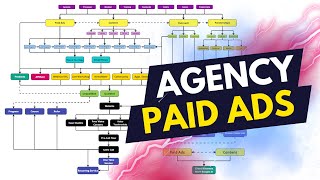
YouTube presentation by Matthew Larson (Jan 2025) explaining a repeatable system for lead-generation ad campaigns. Covers full funnel design (lead magnet, book-a-call, digital product), offer framing (intro offers), ad creative/testing workflow (hooks, VSL bodies), landing page → VSL → email flows → appointment setting → sales calls → follow-up, troubleshooting metrics, and ancillary trust-building channels. Emphasizes volume, iterative testing, and operational execution (rapid follow-up and heavy appointment-setting).
Chapters
This is gonna be a video about the secret to creating ad campaigns that print money. Because wouldn't that be nice? So in this video I'm gonna go over the exact funnel and the ad testing format that you should use to get new clients. So this is gonna be a lead generation ad video, not an E commerce ad video. Just to clarify before we get started about me, like, I have been spending $300 million per year in Facebook ads over the past 12 years and 20 million of that is my own money for my own businesses. So I had an agency that did this very much for E Commerce, for lead generation, for Fortune 500, all that kind of stuff. But unlike a lot of people, I've actually spent over $20 million of my own money promoting my own products, promoting my own services and that kind of stuff. The video or the ad strategy in this video is going to be the one that I teach to more than 500 clients per month. And it's very fundamentals based, it's very general, and then you take it and you put it into your own business. So I hope in this video that I can provide you with the best information and strategy that you've seen for this. But I also think there are no secrets, no shortcuts and no hacks. And I'm going to highlight that there in many ways, especially when you're starting and you don't have any ads that work yet, you are guessing, learning and optimizing. And it requires a large volume of ads, landing pages, offers and that kind of stuff. And that takes hard work. So I'm going to highlight that too. Volume and hard work. If you're not willing to do that, it's not really going to work and ads are not for you. So if you don't know who I am and why, you should listen to what I have to say. My name is Matthew Larson and I consult with about 500 to 550 clients per month. And I've had three agency exits of my own in 2017, which is a Facebook ad agency, 2018 as an Amazon ad agency, and 2023 was a landing page and CRO agency. And I make videos about this stuff every single day. Here are some reviews from my clients just to show you that I actually do this for people. So you know, one of the best things, this guy joined our stuff at 3 or 670k per month and he wish he found it earlier because it took him two years of trial and error on his own. Amazing. Easily 100k of value in my previously 4k program. And this person has spent 25k on courses in the past 2 years and this is the only course they exceeded their expectations. I do a lot more than just courses, but relax. So in terms of this video and in terms of what I'm going to talk about, I have a few things here. So I'm going to break it down and I have all of it on the screen and you can listen to this if you wish. Most of it's going to be audio and if you need to look at the screen, I'll probably say that. So I'm going to talk about the entire funnel you need to do. I'm going to talk about quality issues with a lot of the leads and how you can fix them. I'm going to talk about the offer, the different parts of all of this, the ideal targets you're shooting for. I'm going to talk about a system for creating ads, example hooks and example bodies and example finish ads as part of that system. And then I'm going to talk about troubleshooting if it's like going very poorly for you, like what to focus on and then some other things that affect your ad performance that may not have anything to do with the ad themselves. Because this is very different than E commerce. In E commerce you basically have the ad, they click on it and they buy your product or they don't. In terms of Legion, the ad is the start of a very long process. So there's a lot of other things involved. If you want to work with me, I have three different offers. One is called the 5 mastermind and that's best for those doing 500k per year. It's one on one with me. If you are doing between 10k and 50k per month and struggle really with lead generation. I have one called A Thousand X Leads and if you're just starting out and you're under 10k per month, I also have a school community called 10k per month. So let's get into the secret that we need to create ad campaigns that print money. So the first thing we want to talk about is the entire funnel. And I've talked a little bit about it in terms of E commerce versus lead generation. So like I said, E commerce, you have your ad and landing page and product. Your landing page is pretty much set. You might do some tests, your product is definitely set, but you really sell the product in the ad, you frame it and they either go to your site and they buy it there or they don't. Not the case in lead generation. They go to your site, they might opt in, they might start receiving your emails, they might forget about this, they might find your YouTube videos randomly or they might see retargeting ads. Then they might learn some more. Your appointment center contacts them. They may or may not get on a call. Might be a two call close, a three call close. A lot different than just E commerce where the ad is basically the most important thing. In this case, the funnel matters a lot more than the creative because the ad is just one part of a very big process. So it usually goes ad funnel, landing page, the form that they have to fill out, the thank you page that they get redirected to, there's a VSL on there and then an offer, they're added to your CRM from the form. They start receiving email campaigns, they might receive some newsletters, they might look at your VSL or your webinar or join your community. You know, 10 minutes passes, they might get a call from your appointment setter. You know, they might not even be qualified to buy whereas products, you know, most people are qualified to buy a hundred dollar product, you know, you're selling expensive services. And then this is why it's more than just the creative. Because you could have a very bad creative and everything else is good and you're probably going to be okay. But if you just focus on your ads like you did in E commerce and none of the other funnel exists, you're not getting any clients from it, not a single one. And that is why it matters so much. There are a few different types of funnels and I'm going to add a third one in here that I did not really consider when I was making this document but going to add it in there. There are three types of funnels and they all are similar but they all have a. They're basically three different paths to the same result. And they're a lead magnet funnel, a call booked funnel and a digital product funnel. So a lead magnet funnel is usually like you're offering a free guide. You're going to get very cheap email subscribers this way and you're going to convert them over time. This is my favorite, but it doesn't really work for everybody unless you have the rest of the funnel and you're really firing on all cylinders. The call booked is probably the best one for beginners. You basically have a VSL ad with your offer. They go to a page and they schedule a call and they don't. It's kind of like an E commerce that you're going to get the result or you're not and then you can very just optimize it based on that. It's going to be very easy to tell if it's not working. And then the final one is a digital product funnel where in the case of my previous agency, I had a landing page and CRO agency and my digital product was 100 webflow landing page templates. And if they are interested in buying those, there's a fair shot they're interested in hiring someone to make a landing page for them and they would eventually hire me. So those are the different type of funnels. A lot of them have pros, a lot of them have cons. The pros of a lead magnet funnel, are you going to get the most? How about funnel traffic for the cheapest and long term it's going to be the best. The cons are typically not the fastest calls and you're going to have to float a lot of ad spend in the meantime to convert with that 60, 90, 120 day cycle. Pros of the call funnel is it's the fastest way to get calls. Cons are the calls are very hard. There's no rapport, there's no really anything. It's a lot more expensive to get someone to learn about you in comparison to a lead magnet funnel and that kind of stuff. In terms of the digital product, the pros are like, it's kind of like E commerce where you're selling a pack of templates for a hundred dollars. If you can get your cpa, the cost per acquire customer, the cost to get someone to buy these templates for less than a hundred dollars, then it's free. You're getting customers for free and it doesn't even matter if you can convert them over time. It's just no stress. The cons of this are, you know, typically it's not a perfect overlap between who would actually buy a service versus a digital product. So you kind of choose your campaign carefully. If you're watching this and you don't, if you don't really know what you're doing and you don't have a digital product already, I would probably recommend the call booked one just because you can set it up fast, you know, not that many moving parts. So the next thing I want to talk about is quality issues with the ads. There's a lot of people, and this is true, will run ads and 99% of the leads were not qualified. The first thing I am going to say is that's just how it goes. That's like complaining about gravity. When you throw up a ball in the air and it comes down, that's the way life is. If you are going to run ads, you are going to be targeting broader and broader traffic in comparison to someone like if you only sold to your YouTube channel, just how it is. That being said, there are things that we can do to try to improve our ads to get better quality. And the first thing we want is we want it to call out our target audience specifically. So for my ads for this mastermind, are you an agency owner doing over $500,000 per year? That is very. Can't really call out the target audience in the first line any harder than that. Right. The second thing is not only do we want it to be interesting to the target audience or call them out specifically, we also want it to be uninteresting to people not in the target audience. Because the way this stuff works is every successful lead you capture, every call booked, every registration, however you have it set up, is going to give feedback to the pixel. So we don't want people who are not in our target audience booking a call or even submitting the form. So we want it to call out our target audience specifically. But we want it to. If someone not in our target audience sees it, they just keep scrolling. So I think my example is pretty good. Are you an agency owner that's doing over 500k per year? Very good to the target audience. So check mark there. But if someone is not an agency owner doing 500k per year, why would they even click on the ad and extrapolate? Why would they fill out the form? Why would they book on a call? It's in the ad. 500k per year on the landing page, on the call booked calendly questions. Your pixel data, if you have it, like this is going to learn over time, like very, very well. Maybe at the start it's going to be crap, but after you get a hundred people through it, 200, 500, a thousand, it's going to get laser focused. And you'd be amazed. There's a reason why Facebook, YouTube, these things. Well, Google, I guess. Alphabet and Meta are trillion dollar plus companies because their algorithm works. And like I said before, the leads you have in here are going to be a lot more unqualified by nature than someone who's watched 20 hours of your YouTube and books a call. But you're going to make up for this with way more volume. You can't really scale YouTube stuff unless you're going viral all the time. You're Going to have a finite number of calls that are largely out of your control. But if you have an ad funnel that's working and you just 10 times the budget over the course of six months, you are going to get a lot more calls. So with an ad funnel you're buying attention and you can buy more attention to something that already works with YouTube you're forced to create better and or more content and it's not always that scalable. The next thing I want to talk about is the offer and in your book a call funnels specifically you are going to want to have an intro offer. And what I mean by that is a lot of people have a, you know, very high priced recurring service that is a huge commitment and that doesn't really work that well in ads. So the strategy is to sell them your intro offer in ads and that's a one time thing that's a lot less risky, a lot less commitment where they can try you out, you can do a great job and then you can upsell them later into your recurring service. This is always going to be a better strategy than trying to sell your recurring service. Like I do e commerce email marketing in my ads, right Versus I will do your ads for free for one month or I will do your email campaigns for free for one month and if you love it you can pay me after much more compelling than you are going to please pay me 5k a month for e commerce email. Trust me, it works. Intro, offer, convert them, get them in the door, upsell later. The offer, similar to just the messaging at large should be attractive to your ideal customer profile, your target market and no one else. So if you were selling these e commerce email marketing you got to say that in the thumbnail or the scroll stopper because you can upload that separately. A lot of people don't know that on Facebook you got to say that in the headline in the primary text which is the ad copy and in the ad. Someone does not need E commerce or email marketing for their e commerce brand. You do not want them to even click on the ad realistically. And the next thing I think that a lot of people overlook but that is super important is we want it to be attractive to all levels of the market. So a good thing to a good example of that is when I was selling my landing page templates, a hundred webflow templates, you know, landing pages, some sales pages, some bundles, some advertorial, some listicle that is very attractive to all levels of the market, that is attractive to beginners who don't have a landing page. That's attractive to someone who's running ads, who wants a landing page but doesn't have one, that's attractive to middle sized companies who do landing pages and they just want to have more. That's even attractive to the CEO of a hundred million or billion dollar e commerce company who sees that says why not spends the $97, sends the templates to their team. The magic is when you have an intro offer that's attractive to your ICP and no one else, but is also attractive to all levels of the target market. So that example where I'll do your email campaigns for free for one month or I'll make a variation you can split test it is very attractive to everyone. Even the top, top, top of the market. If someone's doubting their e commerce email team or has an agency that they're doubting and you say you'll do it for free for one month if they qualify and that kind of stuff, it's going to be very good to the target market. Now we're going to kind of get into the meat of the stuff like the actual tactics. This, that was kind of the theory. Here's the actual, the good stuff. So the different parts that I'm going to go over at least are the ad creative, the landing page, the thank you page with the video sales letter, the email flows, the appointment setting, the sales calls and the follow up. So the ad creative is self explanatory. If you're trying to book calls, video ads are going to video ads with your face like talking like I am here are going to outperform static image ads or ads without your face by a factor of like 10, maybe 20 to 1. It's really the only option if you're going to do book a call ads and then when you go to the landing page normally from ads, you're going to center it around something like a case study, like a training, like a just informational video. And to do that you're going to want to get there, you're going to want to have a form because a lot of people are not going to just book a call there because they don't really know you or anything about you, right? But if you put the ads to a landing page with just a form like watch the E commerce email marketing training in this example and they fill out the form now you have their name, their email, their phone number, that kind of stuff and then you can market and call them and do email flows to them over time. To nurture them and bring them back versus if you just do it to a call calendar, like book a call, if you know 90% plus of people are not going to book that call versus 50% of people may opt in. And you're just going to lose so many people. The people who would have booked the call are going to fill out this form anyway. And the people who wouldn't have booked a call are going to fill out this form and now you have their contact info. It's very, very important. When you go to the landing page from the ad and you fill out the form, you want to redirect them to a thank you page which has a video sales letter. And that's where you have the button to book a call. The VSL is going to be different depending on what it is. It could be a direct offer, it could be a training, it could be a case study, it could be whatever. Whatever you want to do to get them that you think has the best chance for them to book a call is what you should do. And that VSL should be embedded with something like Wistia or Vitalytics. So it will autoplay and it can show you a lot of analytics on who does it. You don't really want to embed a loom or a YouTube for a couple of reasons. The first is then they can just see it's a link and they can click off your site. And secondly, it doesn't automatically play like a lot of those softwares like Wistia and Vitalytics will. And you want it to automatically play. It looks a lot better in terms of the email flows because now they've submitted that form and you have their email address. What you really want to be doing is brainstorming the 30 biggest FAQs or objections that have to do with your service and you and your company. And you want to basically send them one email per day dispelling or overcoming or addressing all of those until hopefully there's none left. Because people will really only have, you know, let's say a few, like two, three, maybe even less objections that would prevent them from booking a call. So let's say you have this 30 day email flow. On day five, you've taken care of objection one. On day 11, you took care of objection number two just by chance, right? Because you know the objections and they're, they've just gotten these. And on day 25 you took care of objection number three. You now there's no more objections and they're booking a call like that's how nurturing really works in terms of lead generation. The next part is appointment setting and this might be, you know, kind of, I don't know what the word is. Not unbelievable, but like overwhelming advice. But you really want to have an appointment setter that calls them six times per day for 30 days within five minutes of them opting in. If you do this, you're going to print money. You're going to get results that are 10, 20, 50 times better than not doing this or what everybody else does. A lot of the time. Like I was doing consulting here and there was a missing piece that I know, like, why are my clients not getting some of the results that I get from my ads? This goes the same for cold email as it does for ads in my agency. We called them three times per day and you could do a lot more for 120 days. I had people who would just call them, they opt in, they respond to a cold email, they just get called and this is going to be a lot better. And you don't really want to do this yourself as the founder. You want to have appointment setters. But this is the difference between success and failure In a lot of ad funnels. If you don't do this, you are not going to get as many calls as you could. And if you do, you're going to be having so many more calls for the amount of ad spend you do, it's almost going to feel illegal or like it, like it's too good to be true. So important. Have multiple appointment setters if you want, if you need, and just keep calling. Give them 5% commission on a sale. It's going to be worth it. Call, text, email. The difference between calling versus just texting versus just emailing is so insurmountable. You could make every part of your ad funnel 10 times better and it wouldn't even compete with just calling them. The next is the sales call and normally you want them to at least know what you do and have watched a video or two before you get on the sales call. That's why the YouTube videos in addition to the ad is so important and the email flows. But a good close rate on the sales calls from ads specifically is going to be 20 to 25%. And a lot of the time where you normally could have a one call close from a basically like if they watched your content first and came organically, you're going to have a lot more to call closes with ads. But aim for that 20 to 25% if that's you Know if you're getting a lot better than that, great. If you're getting worse than that, bring it up. But if you are getting that 20 to 25% like you could probably make a bigger impact working on your creatives landing page VSL email flows appointment setting than you could actually just trying to be better at sales. Your sales team is naturally going to get better at this because when you have an ad funnel like this, they're going to just have 10 times as many calls. So I wouldn't really worry about that too much. Just go the same process that you always do and you're going to learn that. Okay, because they haven't watched so many of my YouTube videos. There's this, this and this aren't clear. And then you can have a separate sales presentation and sales strategy on the calls from content as you would from paid ads. Just because there's going to be a lot more to go over. The next is the follow up and similar to the appointment setting, I wouldn't Recommend Calling them 6 times per day here but I would recommend, you know, contacting them email, text, phone at least three times per week, minimum of two but I'm going to say at least and do this Monday, Wednesday, Friday, that kind of stuff. They are going to be a lot more on the fence than content based leads and you need to follow up, need to follow up on anything anyways, but especially with your things. The more time that passes. And this goes in a graph like my camera's mirrored here, but let's go over here. Like likelihood to close falls up steep if they don't close within 14 days. So you need to just jam them 14 days and if you don't you're going to leave a lot of money on the table and you're going to misdiagnose this as your ad creatives aren't working instead of you're not following it up enough. Remember this is all going to affect your CPA in your ad account more so than the actual ad creative itself. All plays a role and a lot of people who start or come from an E commerce ad background don't understand that and they probably struggle more with ads in terms of lead gen than someone who has never run ads before, funnily enough. So I'm going to go through some ideals here and these are basically ideal metrics that we can shoot for. So for the ad creative this is going to depend. So if you're doing a lead magnet ad for example, or a digital product, if you have a $5 cost per click. Like it's never going to work based on that math. But if you have a book a call ad at $5 cost per click or even $10 cost per click and 10% of people opt in. So $5 cost per click times 10% of people do it, that's $50 per call. Let's say half are qualified, that's $100 per qualified call and you close 20%. That's $500 CPA, very good. See, so that's why I have it depends here. For a landing page for the opt in rate, you're going to want 50% or more people to fill out the form. And that's true if that's a landing page or a lead magnet or a book of call ads. The next thing for the thank you page for a lead magnet you don't really have any people booking a call because they're going to be nurtured and book a call over time as they find your YouTube you're getting people in top of funnel for cheap. But for a book a call, which I want to center this based off of a 10% like person who sees your thank you page. So opt ins versus booking a call is kind of what you should shoot for. In my opinion. Anything less than 5% is way too low. But 10% is a worthy ideal. The email flows are going to be FAQ based and normally you're going to want to shoot for like at least a 40% open rate. But open rate's tough to track and click rate, it's hard to say like this is something where it's again it depends where you know if 1% of people are clicking. But those are the people that book a call. Like maybe that's better than someone 5% people booking but less calls. So that really depends. For appointment setting, calling within one minute is the ideal. And maybe you've seen situations in yourself when you're looking for, you know, to buy a coach or something and you go to a bunch of different furniture stores online, you're going to buy from the one who responds the fastest. It's no different with this here. They're probably having a lot of people contact them for sales calls. You're going to want a 70% show up rate. So people who don't know show will be 3 in 10, 7 out of 10 people show up. No one is ever going to show up all the time. And then a 30% close rate would be ideal. And then for follow up call six times per day for 30 days, very unnecessary. But you would close a lot more stuff if you did this. I'm going to change this basically here to I'm going to put this here, apologies for this. And then I'm going to put follow up 3 times per week for 120 days is what I'm going to put here. And I changed my mind on that when I was making this. I would say you could just keep following up, but not really like that. And when you follow up, try to be useful. Don't just say, please buy my stuff, please. The next is my system for creating ads. So basically this is going to make it the most efficient as well as good quality as possible. So there are a few different things we need to keep in mind. Mind here we have a scroll stopper. So think about this. When you open up Instagram, if you want proof of this, but you can upload a custom thumbnail that's different from your actual ad. Same with YouTube. And the split second that it takes for someone to scroll on Facebook or on Instagram past your ad because it doesn't look interesting enough, really, really matters because it's still going to charge you, it's still going to count as an impression. But they just didn't even stop scrolling. So that is a scroll stopper. So you normally are going to want something that's could be anything really, but something that grabs attention. Think of it as a thumbnail on YouTube. The next is the hook, which is generally thought of as the first three seconds of the ad, at least if you're using a Facebook in ad manager metric for that. But realistically, first one to five seconds or the intro, whatever, then there's the body. So the scroll stopper, the hook and the body. And you could say like add copy and headline play a role in this. And they do, but less than the rest. So what we want to be doing is we want to film two bodies at a time, which will be VSLs. And we want to film 10 hooks. So the first one to five seconds we want to edit those 10 hooks on each body and that will create 20 ads total. Because we have 10 different hooks. Two ads, two times 10. Yeah. So the reason why we want two bodies is that. So we can always be optimizing the body of the ad. But it is not really practical to record 10 to 20 different VSLs. You know, that's very time consuming. But you just not really, you know, there's not really anything to talk about for 10 to 20 different VSLs like that. The reason why we want 10 different hooks is because the hook is what gets people's attention and the performance of the hook plays an outsized role on the performance of the ad. It's very easy for us to film 10, 20, 100 different hooks that are 1 to 5 seconds and then edit them onto our bodies as opposed to film the only thing you know from scratch. And this is very good because they're short and they're easy to record en masse and we can just edit them and make really a bunch of different ads. It's like writing a book and then, you know, having 10 to 20 different covers and titles of the book. Exact same thing here. For an analogy, here are some example hooks because I like to give you some real like in the weeds kind of shit. So these are some that actually worked well for me when I was at my last agency before I sold. So do you want to double your desired outcome on platform and business? This is how you do it. So for me, do you want to double your conversion rate on your Facebook ads? This is how you do it. You know, number of questions that business title get asked all the time. Top seven questions my landing page builder gets all the time. Something like that. So customer niche, here's something I bet you didn't know. E commerce owners, here's something I bet you didn't know. This is why your Facebook ads aren't converting. That's another good hook. You know, top 10 sites I use to save time as a business or niche professional. Top 5 sites I use as a landing page professional. If they're, you know, wanting to do landing pages at the time, you know, that might be interesting to them. You know, seven landing page tricks you didn't know were being used on you and you just keep going. Here's some really important that every business owner should have been taught in school. Here's a quick hack that'll get you fast results if you are, you know, their profession. Listen up. The number one thing I tell every customer is this. And I'm not going to go through any more of these hooks because quite frankly, I'm stumbling over my words and you get the point. But these are some hooks that you can use very, very well in terms of a body. Normally the two things I'd recommend are having one as a 3 minute VSL that is basically like a demonstration of your service and the number and then another 3 minute VSL that focuses mostly on hard proof, case studies, that kind of stuff. Those seem to be the best options and the best mix that you can add and edit these hooks onto and it's just really good because it's very easy to do a demo. It's very easy to focus on proof, case studies, reviews, you know, client videos, that kind of stuff. So when we have these example ads and they're finished, we're going to have a body that is the 3 minute VSL. That's a demo in 10 different versions with all the hooks on top of it. Just like we're going to have the 3 minute BSL focusing on hardproof with all of these. These are going to be 20 different ads and we could just test them in our ad campaigns and then we can compare it. So let's just say we have two campaigns, right? One will be, let's say the demo and it'll have all the hooks and one will be the VSL with the hard proof. We have two campaigns. We can look at a campaign level and see which one is performing better, you know, and because of that, because the hooks of both of them are the same, we can kind of infer on a campaign level that this VSL is better, whether that's the demo or the proof. Then we can break it down into the ad set and the ad and see which ones are getting the lowest cost per click, the lowest or the highest click through rate, the best cost per lead, that kind of stuff. We can say, okay, that hook is the best. Then the next thing we'll do is One of our VSLs becomes the winning one and one or two or three of the hooks become the better ones. We film more hooks like those and then we film a VSL that is just a better or a different demo, different messaging. And then we just keep doing that process over and over and over again. Whoopsie daisy there. So the next thing I want to do is troubleshooting. So like, before I get into this, I really want to preface this with if your ad is booking calls and getting sales, that is the only thing that matters. So if your ad's working, screw everything else, right? If you have an ad with terrible metrics all around, but you're getting profitable sales, do not touch the ad. But if you have terrible metrics and you're getting no sales, here are some things that we might want to consider. If our ad creative gets a hook rate at less than 30%. So if we put a custom metric in Facebook Ads Manager that less than 30% of people are watching.3 seconds. That's probably a very bad indicator. Like likewise, if we have the metric and less than 10% of people are through playing the ad. So that is a metric of the percentage of people who either watch 15 seconds of an ad or the amount of people who watch the entire ad. If it's less than 15 seconds, like if it's seven seconds or something that's less than 10%, it's probably a problem. Likewise, if you have a low quality score on your ads or your outbound CTR is less than 2%, these are all indicators your ad creative is not compelling enough. So if you're having problems and these are true for you, it's a great place to start. The next place is on the landing page. So if your ad was good and these you passing all these metrics, it might be your landing page. So if it's less than 50% opt in rate, you could probably make your landing page better. And in some cases, if you have an ultra high bounce rate, that's more indicative of a, you know, tech error than anything else. Which if you have a tech error on your landing page, that's obviously a big problem for the thank you page. With VSL, less than 10% of people are booking a call on the thank you page. Like that's going to be, you know, you're going to have to get that call booked rate up fast enough, whether that's vsl, whether that's the text, whether that's whatever. If More, less than 10% of people are unmuting the VSL because it's going to automatically play and it's going to be muted. If less than 10% of people are unmuting it, it's probably not compelling enough in the first few seconds. And then your headlines probably whack and that kind of stuff. If you have low VSL retention. So if you're in your Wistia and Vitalytics, it will show you like what percentage of people the average person's watching. If that's very low, we might want to refilm the BSL for your email flows. If they're less than 40% open rate. And again that's kind of hard to track with Apple updates and that kind of stuff. But good rule of thumb, if you are doing no appointment setting or low volume, that's a big red flag. And if you're taking more than five minutes to call the leads, those are areas of improvement that you need to work on for sales calls. If you have less than a 70% show rate, we're going to put 60% here because this is a minimum. And if you have less than a 20% close rate, you probably need to get your sales process and your close and your sales script better. And then if you're doing for follow up, if you're doing low or no appointment setting or following up less than two times per week, that's an area of improvement. And if you take this list and you go through it and every single one of these is bad, it's probably an offer problem. So try to improve everything at least four times in my opinion. But if it's still bad, you probably have the wrong offer and you've gone through all that work for nothing. But you're not going to know that until you do it, because a lot of people give up when they have the right offer. So there's no easy way around this in terms of other things here. So let's do that. There's other things that have nothing to do with the funnel or the ad themselves that play a big role in the performance of your video. So having YouTube a lot of people will opt into your ads, see your emails, and watch 10 hours of YouTube before they buy from you. Your email newsletter is a great way to beam information from your brain into theirs. And it's very intimate, it's very high converting. If they see your ad, they click out, they google you and the search results are good, it's going to be a lot better than if the search results are bad. If you have a VSL on your website, if you have 3rd party reviews and case studies, these things are all ancillary things that will impact how good your ads perform. I guarantee it. And it's very, very important. And a lot of people don't think about those. That is it for this video and if you want more from me, you can join my mastermind. If you're at 500k per year or more. If you're between 10 to 50k per month and need more leads, join my 1000x leads. If you're under 10k per month, join my school group, connect with me on Instagram, Twitter or LinkedIn and finally subscribe. Like Comment Suggest video ideas thank you for watching and I will see you in the next one.
More from Matthew







Everything I Would Change About This Ecom Email Marketing Agency (3 HOUR LIVE AUDIT)

Everything I Would Change About This Meta Ads Training Business (3 HOUR LIVE AUDIT)


