The Step By Step Strategy To Create A $1 Million Content Marketing Strategy
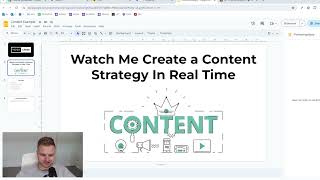
Matthew Larson walks through building a B2B content system using nine subcategories and FAQ-driven ideas. Start with a niche like YouTube agencies, generate 50 FAQs per category, narrow to 20-30, then post 5 times daily on social, one short-form video daily, and three YouTube videos weekly. Repurpose top performers into multiple formats.
Questions this video answers
Thumbnails; Ideas; Scripts; Titles; Analytics; Camera & lighting; Microphone & audio; Speaking well on camera; Editing.
About 50 high-level FAQs per subcategory, then narrow to ~20–30 good ones.
~5 social posts per day; 1 short-form video per day; 3 YouTube videos per week; 3 newsletters per week.
Hypefury.
Chapters
In this video, I'll be creating a B2B content marketing strategy in real time. If you've never watched one of my videos before, my name is Matthew Larson and I'm the founder of 1000x leads. So content is very important because it shows up in the top of funnel to drive traffic, middle of the funnel to capture and nurture leads, bottom of the funnel to convert those leads into clients, and even helps reduce churn. As your current clients see your content, they consume it and get more bought in. So what we're going to do is nine things. You might even expand this a little bit further, but nine things. To create our content strategy, we're going to find out our subcategories. Based on our service. We're going to make a spreadsheet of these subcategories, find some FAQs for each, narrow it down to the good ones, create a posting schedule, analytics, short form, YouTube newsletter, all of what you might expect. So for this video, we're going to do a YouTube agency as the, I guess you could say the niche or the service because we have to choose something. If we don't have something, then it's not really going to work. So when we talk about finding our subcategories, what we mean is what are the different steps or parts of succeeding on YouTube in this example that you know, contribute to your success? What would people have to know how to do? So, so some of these things are thumbnails, ideas, scripts, titles, analytics, you know, camera, lighting, microphone, audio, speaking. Well, on camera. Let's go here a little bit. So what is that, six? That's eight. Let's go and resize these a little bit. Resize those a little bit too much, A little bit, but that's fine. So we're just making this spreadsheet here because that's where our content is kind of going to be going to be housed, if that makes sense. Or that's what we're going to use to determine if this is what we need or not. So what would the last one be? We could do editing or something of this nature. So there we have nine subcategories and anything else like these are going to be the most common things that we have to think about. So our thumbnail, our idea for the video, our script, our titles, our analytics, our camera and lighting, our microphone and audio speaking well and editing. So now what we want to do and our content strategy is based on just thinking about FAQs, frequently asked questions or stuff like that, and basically answering those in different ways. On Twitter, LinkedIn, Instagram, YouTube, TikTok newsletter, all that kind of stuff. So what we'd want to do is if we can think of, like I said before, we can get 50 FAQs for each that are high level, that are good, that will make interesting content. We can kind of narrow them down to 20, 30 good ones. And we have nine subcategories in this case. We basically need to just brainstorm these FAQs once and then we'll have content plan forever. And once we've cycled through all the 200 questions or whatever it ends up being, we can just restart type thing. So what we want to do is what are 50 high level FAQs for YouTube thumbnails? I don't want any basic questions that can be found with a simple search. What are these 50 ideas? Do not explain them, just list them. This will be chat GPT4, So it's going to give you 50 FAQ. So we'll be doing that for nine of them. And I'm actually, I'm gonna do that in this, in this video. So it's gonna take a little bit to list them out. So if you were in a rush like me on this video for example, you might just open chat GPT nine times. So that's what that is. Seven times, eight times and then nine times. And what you would do is basically copy this and just replace it. So we have ideas. And then the next one we have scripts. Got a copy and paste that question though. And the next one is titles. Next one is YouTube camera and lighting. YouTube microphone and audio. YouTube speaking. Well on camera, YouTube editing. What was the last one? What did I miss? YouTube Analytics. So we want to get 50 here because not all of them are going to be good. Just that's the nature of the game. Some of them will also be, how would you say too related to other ones, if that makes sense. So they're just too related to each other that you know, you might get an FAQ for thumbnails that would be better for titles or something of that nature. So let me just do the spreadsheet here. Where's the format wrapping? We'll go clip. Let's see. Some of these should be done here. You got to make sure the FAQs are on the right ones because I kind of put them out of order a little bit. It's the camera and lighting one. Yep. And then I'm going to. What I'm going to do is I'm not going to go through every single one and narrow it down. I'll do a few just to show you, but I think most people would get the idea. So what you do, put them all the same size, same font. Usually you clip them or you'd wrap them. Whatever makes it easier to read. So for thumbnails, how do different click through rates vary with different color schemes? I would say that's a good one. And you can make the good ones green or you could just delete the bad ones. It's kind of up to you. What are the effects of thumbnail personalization on viewer engagement? Don't really know what that means. Maybe if I was a YouTube expert I would know what that means, but I would delete it. How do facial expressions and thumbnails influence viewer emotions? I don't know about viewer emotions, but let's just leave that for now. It's good enough. What role of text. What is the role of text placement in thumbnails for viewer retention? Good. How do thumbnails trend vary across different YouTube genres? What are effective thumbnails? Good. How does thumbnail consistency affect branding? Good. What are the impacts of culture differences on thumbnail effectiveness? It's borderline. How do changes in thumbnail style affect long term subscriber behavior? Good enough. How can machine learning be used? That's a decent one. What legal considerations. Kind of boring. How do thumbnails influence the credibility of a video? What are the best practices for using custom thumbnails on live streams? Kind of niche. How can thumbnails be optimized for mobile viewing? That's good. What are the psychological triggers? Good. How can thumbnails be designed to reduce bounce rate? Good. What thumbnail features can mislead viewers and how to avoid them. Good. And this is what you'd actually be doing for every single one until you have, you know, like I said before, maybe about 200 total that are good. And that's just how you would do it. It's boring. It's. But you do only have to do it once and then you have a content system for, you know, ever, basically. So keep going, keep going, keep going. So now that we have that content strategy, what we'd have to do is of course get it narrowed down. But then what we want to do next, if we go back to our plan, is we want to create a posting schedule in hypefury. So hypefury is a tool that you can use to post on Twitter and then cross post to LinkedIn, Instagram, Facebook and so on. More features are being added all the time. So what you would do here, and I'm not going to do it completely on mine, but you do it. What you do here so is you'd make a category for each one. You go to recurrent posts, you can go to manage categories, Make a category for each one. You'd have to make it here. And I'm just going to keep adding them all. Microphone, audio, speaking. Well, on camera. What were the other ones? Analytics. So, 1, 2, 3, 4, 5, 6, 7, 8. What was the one I'm missing here? I think scripts. Scripts. And then this is how you'd have your content posting schedule. So you'd go in here, you'd have your stuff here, you'd have. Let's just pretend for now that I have all of these narrowed down to the ones that are good, right? So now I have all of my categories in hypefury. And what I do is I am writing a tweet, answering an FAQ here, blah, blah, blah, blah. And what you do is, you see, it's. This is a tool to post on Twitter or X at this point, right? But you click this little button here and you can cross post it to LinkedIn, Facebook and Instagram as well, and it will basically just do that for you. So this is very effective because you get a good content strategy. Answering FAQs and making content that people want to actually see or read or stuff they actually need to know. But you also get to post it on all of the platforms at once because different types of people are going to go on Twitter versus LinkedIn versus Instagram versus Facebook, so there's very little overlap. If that makes sense, then what you want to do. And I already have mine here, but I'll just show you right here, for example. Or I could show you down here. So Mondays you would post maybe about thumbnails and you'd post about whatever. Tuesdays you post about ideas. Wednesdays you post about editing. Thursdays you post about titles. Friday you post about speaking well on camera. Saturday you post about scripts. And then Sunday you post about microphone and audio and camera and lighting and that kind of stuff. So what you do is you stack all of your stuff on each day. Because the way the algorithm works, like if they liked your thumbnail post at 9am for example, they're probably gonna want to know more about that and more about thumbnails. So they're more likely to see your second thumbnail post as opposed to just, how would you say posting random content each day, right? So this is what you do, and you want to post these like Five times per week maybe, or five times per day, maybe as much good content as you can. And I think a great way to think about it is, is this actionable, is this useful? You know, can they take this tweet or LinkedIn post or Facebook post or Instagram post and actually do something with it? I think that's a very good mental test to ask yourself as you're writing it. Because a lot of people will just post random like shit posts or something and doesn't really get you clients or anything. So very, very important, once you start posting these and you're going to post five of them per day. Five of these per day. What we're gonna go do is go to our analytics down here, we're gonna go scroll to the bottom and sort by number of likes or bookmarks or profile clicks. All of those kind of indicate that people are interested in this topic, right? And if they're interested in this topic, you make a short form video to expand on it, and then you make a long form video to expand on it, and then you make a newsletter that's kind of like a written version of the YouTube video. And you just keep doing this over and over. So for the schedule, five tweets today per day, cross posted to LinkedIn, Instagram, Facebook, one short form video per day based on one of top performing tweets. Three YouTube videos per week based on one based on three of your top performing tweets, three newsletters per week that are essentially written versions of your YouTube videos. And that's it. Important notes are, you know, this strategy balances efficiency with effectiveness. Once you get good enough, once you practice it a few times and do it for a few weeks, you can do all of this in just a few short hours per week. When creating content, think fans, not followers. It's tempting to try to get likes and make, you know, videos that have gone viral for other people. But we need people to pay us and to do that, they need to be our fans, not our followers. And there's a subtle distinction, but a very important one when you're making content. So to summarize, get your subcategories, take your main service and then what are the individual parts of it? And just make a spreadsheet like this. I made it in about five seconds, right? Go to ChatGPT, ask for 50 FAQs, put them in here, and then narrow them down to maybe 20 to 30 good ones. There's no set number, however many good ones you can get. Like, do that, but hopefully 20 to 30 range, then you'll have about 200 topics for to post on. And after you've posted on all of them, you can kind of just restart. Next is you want to put those same categories into your hypefury account like this and then schedule them, you know, have a day for each one of them. So Monday's thumbnails, Tuesday is ideas, Wednesday is editing. In this particular example, after you start posting, go to your analytics down here and sort by number of likes. And then that's if people are liking it like that, it's a good sign that people, people are interested in that topic. And you would basically just make those into short form videos as well as YouTube videos and then make a newsletter that's based on your YouTube video. So I hope this was helpful and it's really that easy. Doesn't take, you know, you don't need to hire a consultant or take hours and hours and hours of work. I just did it in about 17 minutes up to this point in the video. Of course, if I had to actually sort through these, it would take a bit longer. But you can get this done in an hour to two hours and then you'd have your content strategy forever. So I hope this was helpful and I'll see you in the next video.
More from Matthew







Everything I Would Change About This Ecom Email Marketing Agency (3 HOUR LIVE AUDIT)

Everything I Would Change About This Meta Ads Training Business (3 HOUR LIVE AUDIT)


