These 9 Assets Made Me Over $1 Million So Far In 2024 (Copy This)
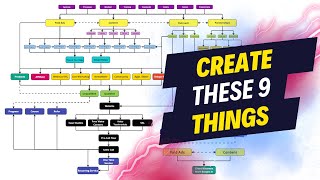
Matthew Larson broke down nine marketing assets that generated over $1M in 2024: 30 long-form posts with graphics, a sales letter, value stack, paid trial, low-cost product, partnership offers, and two 24-touchpoint flows for appointments and follow-ups. Built for agencies, B2B, consultants, and SaaS.
Chapters
Hello there. This is a video about the nine different assets that have contributed to over a million dollars so far in revenue in 2024. And I'm showing you these so you can kind of make the same thing for your business. Because these are going to be applicable to any agency, any B2B business, you know, any course, any consulting, even a lot of SaaS. This is going to be applicable to. So if you've never watched one of my videos before, my name is Matthew Larson and I'm the founder of A Thousand x Leads. So let's get into the video. The purpose of this video is to show you like I use all of these things for a Thousand x leads and a couple of my other businesses. So you can find all of them online with a little Googling. Go to my Twitter, to my website, you'll see for yourself that I actually do this stuff too. I'm not just trying to tell you that you should do it, but the purpose of the video is to show you everything that you should be creating for your marketing and sales, tell you why you should be doing it, and then giving you a little bit of an idea on how and showing you an example. So this is going to be the list. 30 long form posts, a graphic or framework for each post, a sales letter, a value stack, an intro offer, a paid product that costs anywhere under $100, let's just say partnership offer to create white label and referral partners, an appointment setting flow and a follow up flow. So I'm going to go through these basically one at a time. I'm going to show you the what, the why, the how, and then I'm going to show you an example. So I've included, and you'll see in a minute, I've included a picture as the example. But I might go to the particular site that I had in mind as well. We'll see. Depends on which one we're doing. So the first one is going to be 30 long form posts. So you want to basically brainstorm 30 of the most important or 30 different topics for your target market. So for A Thousand X leads we do B2B consulting. So things for me it'd be like paid ads, Twitter posts, LinkedIn posts, cold email scripts, exporting cold email lists, you know, being, being productive, making a lead magnet, making a newsletter, making email flows, making offers. You get the idea. So whatever industry you're in, you should be able to come up with 30 different ideas and then you want to go super in depth on each of them, focusing on useful actionable. Advice is this useful? Can they do it within 24 hours of reading it? You know, think your Twitter threads, your LinkedIn posts, your newsletters, your blog if you have one, that kind of stuff. These are a very good way to demonstrate your knowledge and get attention. Specifically on Twitter and LinkedIn, the long form posts are one of the types of content that goes the most viral or gets the most impressions. And the reason for that is this type of content is very savable and shareable, which is really how you grow an audience. You know, if their content's good enough, people are going to save it. People are going to send it to their friend. That's kind of what I mean when I say saveable and shareable. And that's kind of like word of mouth marketing for your content type thing. You normally think about word of mouth marketing, but for your business, in this case, it's for your content. So how would you do this? So you'd want to go into a spreadsheet or a Google Doc. We'll go sheets new here and you'll just say, you know, the idea, the link, you know, completed, something like this. And I'm just showing you I'm not actually going to do it because a lot of this stuff is really that simple. It's just the people don't do it and not going to comment on that. You know, that's is what it is. But it's just one of those things where now look, we have 30, we'll go 31 here. I'm going to insert a checkbox. Now the idea, Facebook ads, like I'm doing it for myself here, Twitter posts, LinkedIn posts, and then you just go, it's just really that simple. And when you're doing this, especially with the, the written stuff, because these are written posts, they're not videos usually or have any photos attached. They might have photos attached if you really want to. And I'll get to that in the second point. But we need to focus on the very first line and the hook to draw them in. If we're going to make a long post, we need to make the first line just capture their attention and that kind of stuff because that is going to get people to read the rest of the post, right? And then we want to create one of these for 30 days. If you just, you know, 8:00am to 8:15am you write one long form post. By the end of a month you'll have all 30 and then you can just basically reuse them if you wanted to. Here's an example of one I did actually today. So this is the stuff. I made it in a canva file. So if you just go. And not this one. You know, I kind of modeled it after some other dudes I saw that I really liked. So here it is. I just, you know, made this into a post. I put it on the blog, I made it, put it in the newsletter, all of that kind of stuff. It's very, very simple to do. The next thing we want to do is related to the first thing and we want to have a framework or graphic for each post. If we do this, it'll be like a summary or I can simplify complex concepts and it should be organized and easy to read because almost nothing builds more authority and makes you look more like an expert than having graphics and frameworks that make sense to people. There's no better way to penetrate the mind of your target market than having frameworks and graphics that take complex stuff, simplify it, make it easy. And these do so well for kind of building on the last reason where I said saveable and shareable. These do so well because it kind of takes that to the next level. The moment you realize that 99% of people literally cannot think or do absolutely anything at all without an example or framework, like, that's when it all changes for you. So if you're very serious about growing your business, very, very important. So what I do is I use mural board for this. You've seen that in the videos before. You can create anything you want and it is very awkward. And you like really suck at it at first, but you suck at everything at first. Just keep going. Put in five hours of practice and you'll be just as good as me, if not better. When you're, when you're first starting and you're presumably not good, you know, don't do anything fancy. Just keep it very simple. As you progress, you can do more. And it's just kind of that it's going to be that simple. So here's something that I had, so let's see if it still shows up. But I had a. Basically I had a tweet that, you know how to work 12 hours per day. And these were all of the stuff, these were all the different long form posts in the thread. So I just made this graphic. Not complicated, but you know, next time I post it, it'll do even that, even the, like, so much better. Just one of those things. The next thing is going to be a sales letter. So a sales letter. How would you describe what a sales Letter is. It's kind of what it sounds. It's a, you know, a document or a web page that you write that really answers every relevant question that has to do with your service, just in plain English, so that someone can read it and understand. And you want it to be as simple, as plain as possible. You don't want it to be complicated or have any fancy designs or anything that's distracting, you know, them from reading, basically. So you need this because you want to make it clear what you're offering and the details around it. You can really, you know, use some persuasive language, some, you know, language that leans on their pain points a little bit, that causes them to take action. And the most important thing you need to do is to convey why they need to do it. Now, it's one thing to convince someone that they need to do something. You know, everybody's gonna agree with something, but, you know, oh, I'll do that in a month or three months or next quarter or eventually. There's two, like, main things. Convincing them why they need to do it and then adding the word now on the end, because that's what's really gonna get you a lot of sales. So my sales letter to show you that I actually do this as well, it's just on a thousand X leads. This is kind of the intro to it. That makes it pretty readable, in my opinion. And then here's the actual sales letter. Easy enough to read, not too long, you know, just like that. So when you're doing this, if you only answered the following questions in as few words as possible, you would probably have a pretty good sales letter. What are you trying to do? Like, how is this usually done? Or what does the average person do? And, like, why doesn't that work? Why is your way of doing it, your approach, different? And why will that work when others fail? How will this change their business? Like, so what if. Let's say it all goes well, so what? Answer that question. What are the risks or the objections or that kind of stuff. How much does it cost? How long will it take? And then, you know, what are you measuring? Like, what's the end goal? Or KPI or metric? Very simple. But a very effective sales letter can be written just based off these ones here. And then this is the live page, but I just had a screenshot in there. Next is the value stack, and it's very important. So, like, you wouldn't want to just say, I do email marketing or whatever you're doing. Lay out each part of your service to allow you to correctly convey everything you do. Because a lot of the time when you don't do that, it gets overlooked, taken for granted, et cetera. When you have a full value stack, it just makes your service seem more valuable. And the benefit of that, I would hope, is obvious. So the truth is that people are usually buying something for like one, maybe two reasons. So if they see those one or two reasons in the value stack, like everything else seems like a bonus. So if someone was joining a thousand x leads just because they want me to give them feedback, you know, I have a value stack of, let's see how many things here, 15 different things. I did. I know that, but I just wanted to make sure so they don't look dumb. If someone's like, all they want is for me to give them feedback. Like, they see it here and that's good enough for them. The other 14 things seem like a complete bonus. If someone's main thing for joining is accountability, and, like, that's kind of what they're after. Everything else seems like a bonus. If someone wants to, you know, learn how to train their employees, and that's. Or let's say they want two things. Learn to train their employees, and they want to help with their offer, great. Everything else is still a bonus, and that's the value of a value stack. So the goal in the value stack is to make everything seem like it's worth the price of admission on its own. So a thousand x leads is $4,000. You know, let's assign a value to each and every part of the funnel and back it up in a way that's true, logical, makes sense, all that kind of stuff. So for the funnel, Is it worth $532,000? No. In a study of 55 clients, we found that on average, they added 44,355 per month. So, you know, if the average person's doing that, of course some people are going to probably add zero because they failed. Some people are going to add way more than that. But on average, you know, 44, 355 per month in, you know, 12 months or whatever, like it is possible or, you know, someone could see how that could be worth this much. You know, offer creation, the exact plan, you know, it might take you 1500 hours to do it with our, with us, you can do it in 120 if you take home just $40 per hour. And that's hopefully conservative because most people who may join our program might be doing more than that. So it seems Even more amplified. You know, you're saving $60,000 worth of time. Seems like it's possible that this is true. Right, right. And that's the point of it. So if you can't logically argue or use evidence or persuade them that, you know, in this case, 1000x leads is $4000. If you can't very logically justify why a certain part isn't worth $4,000, then you should leave it out of the value stack or try to combine it with something else. And that's a very important psychological thing to be doing here. This is a good example from someone named Davey Fogarty. He has like an E commerce mentorship thing. So has his website. You know, it's a very nice way to lay it out here. Very nice as well. You know, this is worth 80,000 per month, but you get it for 1790. Very nice. The next is going to be an intro offer. So it's very, very important that you don't just have the main recurring service. Like if you were doing an email marketing, I don't just do, you know, recurring email marketing. You want to have a lower price, lower commitment, intro offer. So like this offer is going to be kind of a paid trial, get your foot in the door type thing. Once you do, you can sell them to the main service later. It's going to be a lot less risky from the buyer's point of view and because of that it'll be much easier to sell. And trust me, if you've never experienced this, it can be hard to believe, but you're going to get five times as many leads and have a 50% higher close rate just by having this and then you can upsell them later. So if you're going to do this like there's kind of two different scenarios. One could be just like a mini version of your main service and the other is like you sell something that's not really a mini version, but it naturally leads to your main service. You wouldn't want to have your intro offer like wildly unrelated to your main offer. That would defeat the purpose. So in my previous agency I had a CRO agency sense for conversion rate optimization. Cost 8k to 15k per month with a six month minimum contract. It's, it is difficult to sell that, especially if someone doesn't know you that well. So what I did is I sold them $2,500 landing pages that they would run their paid ads to as my intro offer. And if my landing page performed, it was almost a layup. Very, very easy to sell them to CRO afterwards because I've proven myself. You know, it's even if it was a, like a referral and you know, they trust their friends, then that only goes so far realistically. So until they see it with their own business and their own eyes like it is what it is. So it's basically a get my foot in the door, you know, paid trial. If it went well, very easy to sell and I use that to scale pretty good. The next is going to be a paid product that costs between 10 and $100. And a paid product can serve two different purposes. One like if you know, most people in the market are just not going to be able to buy your service from a price point of view. So it's a great way to like it's a great thing to sell to those people, to monetize them in some way and help them in some way. So you get the money up front with you know, if it's you know, $100 templates or something, you get some money for your revenue stream. But you know, who knows, they're like your customer now basically. Even if it's only a hundred dollars a year from now, two years from now, when they're ready and they can afford it, they'll be thinking of you. And it's also can be a very effective method to qualify leads and get them to move further down the funnel. So it's, there's two options for it and you know you can use the same thing for both. So it's just a very valuable asset that you should have for your business. Really so very, very strong as well. And I should have put this in the what here but I have it in the why. If you can make a paid product that's $97 for example, and you have a landing page for it to check out and you run ads to it and you get you know, ninety dollar or less CPA after you take into account like you have to spend $90 or less on ads CPA to get one customer cost per acquisition, cost per acquiring a customer. You know, there's stripe fees or software fees etc, but if you can like let's say you have 90 margin there. If you get your CPA to $90 or less then you're essentially breaking even and getting customers and leads for free. Then you upsell some of them down the road and there's no because you already got it's, it's a lot more like selling an e commerce product where you just got the money back right away and Then if they buy, they buy great. And the easiest paid product if you're going to do something like this is will always be templates. So I used to sell 100 Webflow landing page templates for $97 at that agency I've been referencing. So create the templates, package them up in terms of like how you're going to send it to them, if it's an email flow or whatever, or they have to log into something, whatever, make a landing page for it and try some ads. So as you can see here, like these were the templates that I used to sell. So for if you want actual numbers here, like I sold over 14, 500 units. Ish. I gave away some of them for free, probably under a hundred. But I don't have access to that data anymore. So let's just say 14,000. We'll just go with that. So I have the. When I compared the stripe like or how many like an actual paying customer for 2, $500 to the people. So the percentage of people who bought this before they did that, about 2.1% of people who bought the templates ended up, you know, hiring me to do a custom landing page down the line and then to give you some, you know, tangible numbers for the upsell from the intro offer, which is this to the recurring offer or recurring service, that was about 8%. So just to give you some idea, I don't know if that's good or not. I'm sure it'll be different for every business because in some ways, some, most people who can afford a landing page still like don't even need CRO. If you don't have a $5 million or $3 million, let's say per year Shopify store, you don't probably not worth it to get zero. So that might skew those numbers a bit lower in terms like you might want to have a higher or you might end up having a higher conversion rate from intro to main on like a better offer. But it's just one of those things. Just trying to fill in some blanks for you, give you some real numbers. Based on my experience. The next is partnership offers and specifically white label and referral. And one of the best ways to grow is to partner with people who sell to the same people that you do. So I had a landing page in CRO agency who also sells to Shopify clients, you know, email marketing, SEO influencers, agencies, paid ad agencies, all of the above. Right. So you can either white label each other's service or refer back and forth and you need to do this because you already both did the hard work and got the client. Everything seems easy on the Internet, but getting a client is no small feat. You're getting someone to pay you thousands of dollars, usually over zoom or a phone call. It's not, it's not as easy as, you know, the people make it seem on the Internet. It's just one of those things. So you already did the hard work and got the client. You might as well refer people back and forth so you can grow faster. If you got five clients and your friend got five clients and your other friend got client five clients and your other friend got five clients, and you each sell a different service, you could probably each get five extra clients referring each other back and forth. You know, not everybody's gonna take it, of course, but you know, it's just a numbers game. Why would, why would you, why would you want to make it harder on yourself when you could make it easier? So it's, when you do this, there's pretty much zero customer acquisition costs. Maybe you'll pay a fee, maybe you won't like a referral fee. You know, it's a fraction of the effort, but you still get all of the gain. Why wouldn't you want to do this? So to do this, you want to make a list of, you know, the types of people who are going to sell to the same customers. You do create a one page offer that you know goes into depth. And this is very important. If you're going to do this and you're going to create this partnership offer, you will really want to focus on something beyond just a referral fee. And I'll show you an example in the next slide. You want to focus on something, how it benefits them beyond a referral fee. And then you want to also focus specifically on how you're going to ensure you don't embarrass them. They refer to you and you fuck them over completely. Like that is going to lead to very big consequences, negative consequences for the person that referred them. So always make sure like 50, maybe even 75% of this offer is how you're going to ensure you don't embarrass them. Then you want to do is you want to create an offer of free work for their clients and that makes it easier, less friction, less stress for them to introduce you. And it reduces the risk on your end if you, they offer, if you give free work to their client and the client accepts, you know, there's no financial consequences, they've accepted it the blame if it goes wrong is passed on to the client type thing. Instead of, you know, I refer someone to my friend, they screw it all up. You know, the client paid them $10,000. That's kind of like my fault in some ways in terms of the clients. But if you're doing the free work, it's going to make it so much more effective because it essentially removes that. Then you want to cold email people probably cold email 1500 potential partners per day. I know when I was doing this, so let's go to my example here. So my previous agency I sold landing pages said it a few times at this point. Who else needs landing pages? The ad agencies that sell to e commerce stores. Why? If a Facebook ad agency is running their ads and the brand's landing page sucks or they don't even have one, the ads are not going to work. And if the ads don't work, the agency will get fired. This is what I mean when how does it benefit them beyond just a fee? You still pay the fee if that's what you agree on. But it's going to go a lot better for you if you, you know, what's in it for them? So what? Always make sure it passes the so what test or the what's in it for me test. So when I was doing this I was scraping a few websites but clutch co upsity upcity is a good one. Just there's going to be a lot of sites but I was scraping these for you know, basically Facebook ad agencies. So let's just show you. So just here there's 22,000 companies. Narrow it down quite a bit but that's what I was doing. Next thing is a appointment setting flow 24 parts. And the 24 parts is somewhat arbitrary. It's twice a week for 12 weeks but you want to have a team member called an appointment setter manually reaching out to every opt in, you know, via email, SMS and call if they're comfortable or that's what they do, you hire them to do that. You're just going to get way more calls booked by doing it this way. So and like it really is like 3 to 1, 5 to 1, sometimes 10 to 1 if you have a really good appointment setter. So in your CRM make these 24 pre made templates that you can kind of click on and have it populate the pre made message and then click send. You do this because it's just way more efficient but it also with the efficiency comes a lot of quality. You know, you're Sending the same high quality message instead of copy and pasting some shit one. And you want this to be separate from your nurturing flows and to come from a team member, not you. Because then it's like instead of coming from me it'd be, you know, from Yannick. One of my team members, Matt is wants to know if you want to do X, Y and Z. It's just different, a lot better way to do it. So this is something where you have in your CRM, you click the drop down here and you'd have all the messages 1 through 24 appointment or the follow up flow is the exact same concept as the appointment setting flow. But it's going to be to follow up for people who you've talked to on the phone but have not bought. And the vast majority of people contrary to, you know, random ass sales videos and sales trainers do not pay in full on the call. I don't, you know that really only exists at scale in the mind of a sales trainer. But the per, the point of that is you need to follow up. If they're not paying on the call or right after, you're going to have to follow up. So making 24 pre made templates will ensure that they get all of the information. You can still tailor the messages if you want to. Like they're going to be pre made but you can just, you know, okay. Hello Brian, I was thinking about what you said on the call, blah, blah, blah, blah blah, you know, whatever, right? It's not like you, they're set in stone. You can still have these templates and then tailor them as necessary. But it's going to save you a lot of time, be more efficient, save it in your CRM and in this you want to focus on case studies, results, wins, value, stack items, etc. So you might have something like this where you have all of the follow ups. So you'd see that you sent follow up number one to them, then you do number two, then you do number three. You know, if you follow up Monday and Thursday for example and then if they don't go after 24 times, you probably just recycle them to marketing at that point. It's just not meant to be. So you'll see that this is the end of the video. There are no more slides here, so I hope it was valuable and I'll see you in the next one. Take care of.
More from Matthew







Everything I Would Change About This Ecom Email Marketing Agency (3 HOUR LIVE AUDIT)

Everything I Would Change About This Meta Ads Training Business (3 HOUR LIVE AUDIT)


