These Three Email Flows Will Get You 10x More Agency Clients
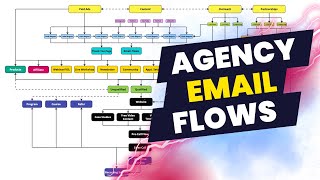
Matt from Scale Your Agency breaks down three email sequences for agency owners: Welcome (warming leads with four emails in three hours), Pre-call (handling objections before the meeting), and Follow-up (closing after the call). The full sequence runs 43 days before switching to a newsletter, with specific rules like booking calls within 72 hours and sending 12 to 18 objection-focused emails depending on timing.
Questions this video answers
Four emails in the first 3 hours; three emails over the next 3 days; three emails across 7 days targeting top objections (sent day 5, 7, 9); then two emails per week for 30 days (total initial sequence ≈43 days).
No more than 72 hours (three days) out.
A 12–18 part pre-call flow total; if the call is ≤24 hours out send 4–6 emails; 2 days out send 8–12; 3 days out send 12–18.
Chapters
Hey there everybody. It is Matt with skill, your agency. And this is an email marketing training for agency owners. And the reason that this is important is because we need all of the proper flows set up to nurture and pre frame our leads. And if we do this, we can expect to have more sales calls every month with leads that know what we do. And if we don't, we can expect to have fewer sales calls with leads that are far less trusting and have far less rapport with us. So it's pretty important. If you don't know who I am, my name is Matt. And all we do on this channel is talk about scaling an agency to millions of dollars per year. This is exactly what I did when I scaled my previous agency to over 900k per month in the E commerce space. And this is exactly what I do when I teach over 550 agency owners every month in my program. Most of the stuff that we talk about in this video is going to apply to businesses of all types, at least those that sell services or deal with leads, and not just agencies. But this is mostly an agency focused channel. So this is the agency funnel that we're going to talk about today. So at the top we have our ways to drive traffic, our top of funnel, our paid ads, our content, our outreach and our partnerships. Then we have our middle of funnel to basically capture and nurture leads. We have our bottom of funnel to I guess you would call it further nurture and then qualify leads. Then we have our sales calls and then like once you get past sales calls, this is money if you do it right and if you fumble the sales call, it's not. So really what we're going to zero in on is about right here in the funnel and then right here in the funnel and then after the sales call when you know, if they don't buy one of these things, we're probably going to just pretend there's something here that says follow up. So that's like where we're really going to focus in the funnel today for this video. So what we're going to do is talk about just the flows in general and then we're going to talk about each of the three flows individually. The welcome flow, the pre call and the follow up flow. So let's get started. We want to have our flows and they're very important because we're going to nurture our leads, we're going to get them prepared for the call, we're going to get them to show up and then we're going to follow up like crazy until they pay. So this is kind of the most basic agency funnel you can create with your ads and your content. Going to a page with a vsl, a form to, you know, qualify versus not qualify, you know, they book a call, get to the thank you page, get on the call and then they pay. So basically when we are with our ads and our content and whether we send them to an opt in page or just to the sales page or not, that's up to us. Then they'll click the apply button, they'll click on the form and then depending on what they say to their form, they'll either be booted out or they'll go to basically a qualified page where they can book a call. Whether they come into this basically with an opt in or they come with a form, they'll be added to the welcome flow. That's the first of the three floats and we have it right here in green. Then if they end up booking a call, they will be in the pre call flow that will basically take place between the time the call is booked and when the sales call take place. And then after the sales call, assuming they don't pay on the call or five seconds later when you send them the invoice, which most people are not going to, we are going to put them in the follow up flow. So that gives context to what this video is all about. I don't know which one's the most important. They're all equally important. They're all things that have to be done so we can't fumble it is what I'm trying to say. If we don't nurture them enough with the welcome flow, they're not going to get on a call. If we don't have the pre call flow, they're not going to know what we're even talking about on the call and they'll view us as an authority and an expert. And if we don't follow up, we're going to miss on a huge percentage of sales. So they're all very important. I'm going to go through them one at a time. I made a little graphics here for us. I know, I know. And it's free for now until you obviously join my program. But let's start with the welcome flow. I actually kind of stole a version of this from Alex Hermosi and it worked really well for me. And then I just tweaked it or just added some stuff into it based on on my own sauce and experience. So the welcome flow and triggers to basically Anyone who fills out any form or application on our website, landing page, wherever. And the purpose of the welcome flow is to get them the information they need and progressively warm them up to the point where they feel confident to book a call with you, or I guess you could say take whatever action that you want them to take. So the thing that I took from Alex Hormozi, he called it a 3, 7 and 30 and he was specifically talking about the follow up. I changed it around a little bit and made it the follow up, but also made it to the welcome flow. But I also added this four in the front. So if we go back and step up, the four means four emails in the first three hours, which gets them all of the information they need. It is a bit aggressive, but those emails are going to have 50 to 80% open rate. If anybody tells you, oh my God, they're going to unsubscribe. Like, come on. If they unsubscribe, they're not going to buy from us anyway. Relax. Then the three is going to be one email per day for three days showing them the best of the best of what you have. I'll go into that later. Then the seven is three emails across seven days. Destroying the top three objections, those would be the objections you hear on sales calls the most frequently. If you do 10, 20 sales calls, you'll probably know what those are. And then 30 is two emails per week for 30 days, alternating between case study and industry insight. So I'm basically going to go through all of these right now. So basically the welcome flow triggers on any form or application, you're going to want to send them an immediate email and an immediate sms. So what you're going to say is kind of going to be dependent on how they got in. If you have a form on a landing page with a lead magnet, you're going to send them the lead magnet in that email. And sms, if they submit an application, you're going to say we've received your application in an email, in sms, like answer your phone when we call you. One hour later you're going to send them an email with what you do, the hour after that, why you do it and then how you do it. These are often overlooked. Three emails that most people don't send. Most people take for granted how interested people are in them or they really overestimate it. Most people, even if like you have an e commerce email marketing agency and they kind of need that, they don't really care that much about you. You really got to make Them care. And these three emails do a good job of telling all the information as well as kind of telling a story and kind of humanizing you a little bit in my view. So that is four emails across three hours. Because they're never going to be as hot again as when they first sign up for stuff. They're never going to be as likely to open emails and we want to front load them as much as possible. When we go from the how we do it email going to go to the second phase which is the three emails across three days, 24 hours after they sign up or apply our best case study, 24 hours after that and 48 hours total. Our biggest transformation. So a big case study. My biggest case study is I believe 498 million to 963 million. It's a big company. That would be the big, the best case study. But the biggest transformation is like okay, some someone worked with me at 20k per month revenue, now they do 3 million a month. That would be the biggest transformation, the biggest percent gain. And then after 72 hours your biggest industry insight, the one hack that in your vast deep expert experience can change their agency or whatever your target market is if they implement it right now after those three emails we're going to go to the next one. So that is the seven. It's the three emails across seven days. I'll usually do these day five, seven and nine. So kind of like a Monday, Wednesday, Friday. These are just going to all be the top three objections. So I know in my old agency it was always like are you going to make this fit my brand? Another one would be like, I believe this would work for supplements but I don't think it's going to work for home products. And another one would be like, okay, I bet you this sensationalized marketing works on Americans. But I live in Germany and we don't respond like that. I don't believe any of those are true anyways. People are people, but if someone has an objection, it's true to them. And it might not be true, but it is your problem to solve. And that is what the purpose of these emails is. After those are done, we're just going to put them in a 30 day sequence, maybe like Monday and Thursday, but alternating between case study and then industry insight, your best client results and your best tips basically. And you're going to keep doing that, you're going to keep going do, do, do. This will take 43 days. If they go through the whole thing. What I would say is if they Book a call and get put in the pre call flow that is your next flow. I'd probably take them out of this but it is up to you. And then once the 43 days are up we're going to go to the NL phase which stands for newsletter. Sending a newsletter is one of the most important things you can do as an agency owner in any service based business whatsoever. And you should be sending them that anyways right here so you'll, they'll be picked up in that. So basically this email flow is standardized for the first 43 days but then they're just going to get your email flows or your newsletters three to five times per week anyways. And that is the welcome flow, probably one of the most important flows. A lot of people, I'd say the majority of people that I've ever worked with do have this flow that are any that are actually serious business owners. That is they will have this flow but they will not have it done very nicely is my experience. So once we have the welcome flow in place, we're going to go to the pre call flow. It's a little different but it's kind of the same. The pre call flow is essentially how would you describe it? You would want to. What you want to do is jam as much information before the call. So a lot of their questions are already answered and taken of before the call. So they're pre framed and then you can kind of control the narrative a little bit. Oops I pre framed and you can control the narrative instead of like them saying okay is this people, is this company ever even reputable? You can just send them case studies and blast them with a bunch of proof and stuff. And then you're basically telling them you're reputable instead of them having to think about it. So there's a few things that we want to do in this pre call flow. So first off I set my calendly no more than 72 hours in the future. No show rates drop off a cliff after that point. And the thing that we all need to keep in mind this applies to us getting calls booked as it does everything in life. If they wanted to they would. If they really were serious about working with you, they would be booking the call 14 days or 21 days out. And that's just the truth of it. 72 hours in the future you could put business hours too is more than enough. And you need to have it like that because you need to have your no show rate healthy. This flow is going to trigger when they book A call. So if they're in your CRM from your welcome flow, maybe tagged like welcome flow or whatever you want. Now they booked a call zapier from calendly to the whatever email service you're using, ConvertKit, ActiveCampaign, HubSpot, you name it and then it also trigger in the CRM2 call booked. So what you want to do in this flow is you want to determine the 12 to most important FAQs or objections. If you've taken any number of sales calls, it's going to be what you heard on a sales call all the time. Common sense plus your past experience should basically let you know what these going to be are. But then there's a couple of things that we need to do. We want to arrange this in order of importance, you know, the most frequent or the biggest objections first so that we can basically send four to six days, four to six emails per day and then cut it off when the call happens. So basically this is going to be a 12 to 18 part flow. If the call is going to be 24 hours or less, we don't want to probably send them that many emails. 4 to 6 is fine, but if it's 2 days out then we can send them 8 to 12. If it's 3 days out we can send them 12 to 18 type thing. We'd set that up in calendly. So call starts, zoom, zapier, remove from pre call flow, remove from sequence. It's easy as that. So what we want to do is basically go here and we want to create the email that absolutely destroys the objection. Like basically if you want to know how hard you have to destroy it, you know, search the USA versus Granada War. Like that's how hard we want to destroy this objection. We want to just absolutely make it sound stupid that that's even objection. So what we want to do in every email is we want to reference the upcoming call. So basically, hi, it's Matt. We have a call at X time and you can insert that dynamically with, you know, from calendly reference how they learned about you. I always ask in my calendly, like where did you hear about me from? So basically it would be, you know, Facebook, Instagram, YouTube, paid ads, cold email. I have other. Nobody really puts other to be honest. But it would sound really awkward if you say you learned about you, you learned about me originally from other but doesn't really happen to me. It's mostly for me. YouTube or paid ads or referral and then you want to have some Sort of proof that's applicable to this. So let's say a good objection. You know, I don't believe this will work in my country. Yes, there was, I don't know, Hans from Germany said the exact same thing and now look where he is. So something applicable to that specific objection would be nice. Um, what would be another one? Jerry from Nebraska said that, you know, he didn't know if he could afford it. And I told him like, because you can't afford it is the number one reason that you should do that. And now he's made so much money that that $2,500 a month was. Sounds silly or something like that. Whatever you want to do. But that's what the format should be. So if we want to actually put this in actual steps. Hey, it is Matt from Scale, your agency. You found about me from YouTube. We have a call on Tuesday, April 15th at 8pm Eastern Time and then we want to go, we want to introduce or have an introduction to the objection. So I've heard frequently on this calls that I just, they just don't know if they have enough time to get this actually done. That's a very common thing for me to hear for my coaching program. And then you go into either an example or a story, whichever one makes sense for that one. I probably do a story about how someone said that and now they've saved time because this funnel's so efficient then the application. So that means like how you would implement this. So basically, you know, they. Jerry said he doesn't have enough time and now he's basically have so much time because he came into the program, I helped him with his systems, I let him use my AI tools and then I save him from making so many mistakes that would have cost him years. And here is the exact case study that we made from Jerry. I just wanted to let you know, like this is a very common objection. So you can, you know, kind of read this before the call. This calls at Tuesday, April 15 at 8pm and P.S. here's my thing where you can read over 200 client wins on my website, something like that. So that pre call flow is going to be, you know, 12 to 18 emails and depends how many are sent is going to be dependent on how far it's booked out. But this is one of the most important flows and it's going to be night and day difference in your show rate and the amount of how qualified or how knowledgeable they are about your service and how much they trust you on the call. The final One we'll talk about in this video at least is going to be the follow up flow. And in this one we're kind of going to do the same thing we did with the welcome flow because I stole this as a follow up flow and tailored it to the welcome flow originally. But we're not going to send the first four emails over the first three hours because they already know what we do. Like we already did the call. There are going to be some key differences in how these emails are written and sound between this and the welcome flow. These are going to sound more like an actual follow up would and more sales then the other ones are probably going to sound more marketing. So every email should reference the call in different ways like hey Matt or hey it's Matt from Scalia Agency, we had a call, I'm just following up or just building on our call. You might say that in a different way in every email. At the bottom of every email you should reiterate the next steps. So whether that's sign this contract, pay this invoice, whatever, each and every one of these emails should be a lot shorter and more human sounding and like how you would actually write it than the other ones. And every email should be valuable enough to stand on their own. So even if they don't buy it should not just be you begging, you know, buy my stuff. They should be kind of the same thing we did with the welcome flow where you basically talk about you know, what your best case study did, what your biggest confirmation did. You talk about all these case studies and the learnings and then all of these industry insights and you just kind of keep doing it until they hopefully buy. So I don't really need to go over this again. I don't think it's the three emails, one per day for three days showing the best of the best. Then it's going to be three emails for seven days of starting the top three objections again and then it's going to be two emails per week for 30 weeks. And if they don't end up in here, they're still going to receive your newsletter just like before. So that is basically a very important email. Training for agency owners goes over the welcome flow, the pre call flow and the follow up. I hope this was valuable. I teach all of you this in scale your agency program. I'd be happy for you to join. So I'll see you in the next one.
More from Matthew







Everything I Would Change About This Ecom Email Marketing Agency (3 HOUR LIVE AUDIT)

Everything I Would Change About This Meta Ads Training Business (3 HOUR LIVE AUDIT)


