Top 6 Skills You Need to Make Millions In Business
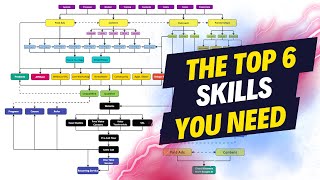
This is a transcript of a short instructional video outlining six skills the speaker argues are essential to business growth: effortless graphic creation, readable writing, producing work "too good to fail," speaking well on camera, daily planning/prioritization, and proper CRM use. The speaker connects these skills to solving three common problems—unclear thinking, poor planning, and disorganization—and recommends daily practice (especially via creating lead magnets) to develop them. The speaker also describes concrete practices and small routines (one graphic per day, one lead magnet workflow, CRM twice-daily checks) to build each skill.
Chapters
This video is going to go over the five most important skills that I think that you need to make it in business. So there's five main ones and then there's a sixth bonus one that's pretty applicable to if you're selling services. But the other five are going to be good no matter what. So the top problems that I see are people can't think clearly, they can't plan properly, and they can't stay organized. If this applies to you, I'm not telling you anything you don't know. You already know this. But the good news is these problems must be solved. But they also can be solved. And they're all a function of the lack of six specific skills that I'm going to talk about. Because if you had these six specific skills, the rest would fall into place quite easily. So this is the 1000x leads funnel and these six skills, I think, because I've been getting a lot of feedback, we have a lot of people going through the program, good results. But for the people who don't decide to do it, it's always because, in my opinion, they lack these six specific skills that I'm going to go over. Because if they didn't, it would look. It would. They would believe that they could do it. Because it's easy to look at this and think it's. Oh, it's overwhelming, it's daunting. But I think that is mostly a skill issue. So these six skills are how to effortlessly make graphics like I do in these videos. If you could do this, you'd have a ton of possibilities open to you. How to write in a way that is very readable, because a lot of people write stuff, but it has to be written clearly and in a way that's readable, or no one's going to read it and you're just kind of wasting a lot of effort. The third thing is how to make things that are too good to possibly fail. Like, I think these videos are good. The quality of them are too good for them. Not to get views, not to get me leads, not to get me clients. My lead magnets are too good. Not to possibly get people to sign up for my newsletter and stuff like that. You need to make things that are too good to fail. We don't need to focus on algorithms or hacks or the optimal time to do posts or something like that. I think that we need to focus on making stuff that are too good to possibly fail because they're just so good that people will find them. Might take a while but they will how to speak good on video or how to speak well on camera. You don't have to be an influence or anything, but at least being able to speak on camera is very important because you're going to be doing live sales calls, you're going to be pre recorded videos, prerecorded webinars, content, that kind of stuff. How to plan and prioritize each day and week is a skill that can be learned. A lot of people say they lack focus and that kind of stuff, and that's from the lack of the skill. And then the sixth one that I mentioned is how to use a CRM properly. So these ones are all like personal soft skills. I don't know about soft skills, but personal skills. But this one is just how to use a specific piece of technology, a customer relationship manager. So let's get right into it. So I made a little, a little thing here. Talk about making graphics effortlessly proof of concept. And I'm going to go over each of these things one at a time and then I'm going to go over at the end, how do you get better at each of these things, how do you improve them? How do you develop the skill, that kind of stuff. So let's go to the ability to effortlessly make graphics. These are very important because you need to be able to simplify complex concepts for those who can't visualize them. Not everybody knows what you know. Not everybody has the same background and the same experience. So you need to be able to make graphics that communicate this, but you need to make, be able to do it effortlessly. This whole thing probably took me 12 minutes to make as opposed to like if this, if this took you or took me three hours, I could make it. But that's not effortlessly making graphics. You should be able to over time take what's in your head that you're trying to explain and immediately put it into an image, a graphic, a symbol. Because there's a lot of power in images and symbols and graphics that just simply isn't there with written and effective words, or as effective with written words. Sorry. The ability to do this is going to open up a hundred times as many possibilities for you as you have now, like videos that you're watching here. I know a lot of people are subscribing right now and watching like more than one video. These videos are only possible in the way they are presented because of my ability to make these graphics or so it just wouldn't make sense. The entire format would just wouldn't even exist. Right. So this is also going to carry over to your lead magnets content, sales presentations and more. So without this ability to quickly and effortlessly make these graphics that are actually good. Of course that's a caveat. A lot of these opportunities you have to make content like this, to make videos like this, to make great lead magnets and sales presentations that convert are simply not available to you. And that is I think one of the things here, like you see these, all these lead magnets and you see all these webinars and you see all this stuff and if you, deep down you might not know the issue is that you don't know how to make graphics. But you know, there is a void, there's a skill issue somewhere. And this is in my view, what, what that skill, which issue is. So of course practice makes perfect, right? One graphic per day should be self explanatory. And we actually do daily graphic reviews for everyone inside the A Thousand Excellence program. So people put their thing, for example, not gonna, not meaning to be rude to Brad in here, but this is just a, a graphic that I gave him feedback. It just. What does this even mean? Type thing like it's too complicated. We need to make our graphics to effortlessly communicate what we're trying to say. And I want to do that with an example here. So in the thousand x leads funnel, we have our lead magnets here. So I could either in scenario A, just tell them you need nine lead magnets, right? And they, some people might just say okay, but 95 be like why or and what do I even do in them, right? And why do I need so many? So with these graphics. So I always explain it. The lead magnets are a way to open, overcome objections at scale, right? So there's a bunch of different problems with starting a YouTube channel. And I don't know why this one's so blurry. Hopefully you can read it. How do I set up my lighting camera? How do I make good titles? How do I make good thumbnails? How do I do SEO? How do I come up with ideas, scripts, etc. The prospect or the person who wants to start a YouTube channel thinks this is very hard. And you, the expert, know how to do all of these things. So this is you, you know how to solve all of these problems. You have the knowledge in your head to make all of these lead magnets and you need to make a lead magnet to solve every problem. So the. You've solved every single objection, every problem, and it's just natural for them to hire you versus if you Only made one. Like some people say, why do I need all of these? You might have solved the first problem, but all of the other problems and objections still exist. And they're not hiring you. They're wondering who can help them with the other problems and they're going to look for someone else that's not you. And they do what you should have done. And to create these lead magnets you just follow a three part formula. Value, actionable, readable. Would you honestly pay 50 for this lead magnet even though it's free? Is there a plan for them to implement within 24 hours that can get them their first quick wins? And is there one image and one slide per or one idea and one image per slide? So show you that I do this myself of course because we need proof in these videos that I'm not just randomly saying you see there's going to be one image and one idea per slide. If there was more ideas, it's broken up into the next slide. That's just an example. So to show you like to go back to my point, I could either tell them they need six to nine lead magnets and they would be wondering why or I could show them all of these graphics, right? That's an example of how these ability to make these graphics and these took me 10 minutes to make in the first time I did them and I've used them ever since in many different things. So a lot of the times like practice makes perfect when you make them, you're going to use them forever and you can like repurpose them and reuse them for additional content and lead magnets and presentations and videos, so on. So it's a good use of time and it just so much better communicates the. This step in the funnel as opposed to just me trying to tell them what to do with the. With the spoken word or the written word. It's very, very very important. So you want to do one graphic per day should be self explanatory. Like it. It should be easy enough to understand without like just pretend that you're not speaking or offering any background context. Like that's how clear we should try to make these graphics. And get. If you're not going to join a th000x leads to get feedback join or find a friend and do this together. The second one is going to be writing in a way that is readable. So readable means one image or one idea and one image per slide. If there's. If it's like a newsletter or something where you know there's no images really, or that would just be. Or there's no slides or something. We want to have one headline per idea. So instead of saying we need it to be readable, ability to think clearly, that kind of stuff, we break those up into two. So we want to check on mobile, not desktop, to see how readable, so to speak, it is before we send it. If it's a newsletter or something like that. And we should be able, you should tell a story with the headlines as well. So let's say you should be able to get like a too long, didn't read version of whatever it is just by reading the headlines. So of course you want them to read the sub headlines and the paragraphs. But this is what I mean. This is one of my emails. The four things that kill your agency. Do you believe these four things are a problem? If so, a thousand X leads is specifically designed to solve them. You'd get the gist of what I'm saying just by reading the headlines, without all of this stuff. This is an example of what's readable versus what's not. Imagine this was just all. No, imagine if there was just very simple, no headlines at all here, right? Just imagine the difference that makes. And that's an example of one headline per idea. Check on mobile, tell story with the headlines, etc. So the ability, writing in a way that is readable is very important because the ability to write clearly means the ability to think clearly when you're writing in a way that's readable. It's not really possible for you if you can't think clearly. So if you can't think clearly, you're not going to be able to do these graphics or write well. But practicing making graphics and writing in a readable way is how you develop the ability to think clearly. When you can learn to think clearly, just like with the graphics, a hundred times more possibilities open up for you. Your newsletters, your emails, your texts, love letters, et cetera. So that is, if we go back to the start of the video, the cannot think clearly is one of the top problems. And that is, in my view, a skill issue that you can practice and overcome by learning how to make graphics and learning how to write in a way that's readable because you cannot make graphics, you cannot write in a way that's readable unless you're thinking clearly. So it's kind of a good way to force yourself, in my opinion, making things that are too good to fill. The number one issue is for most people is Their stuff is just not that good. Think of all the emails you've read, lead magnets you've downloaded, copy or read, or videos you've watched. It's just not good enough. And that is a problem. And the skill of making things too that are too good to fail is a skill that can be taught and it can be developed. So the reason that most people's stuff's not good enough is they just don't have enough effort. They don't have enough knowledge to make it good. And it's not formatted in the proper way. So you can do all of these things by adhering to that same VAR formula. Value. Would you honestly pay $50 for this, even if it's free? Put some effort, learn some stuff, format it in the proper way so it looks valuable and it is valuable, actionable. You can really just increase the value just by putting a plan in place for them. A lot of people will watch like a video like this. One thing that I probably should do for you and I starting to do at the end of this video is putting a plan in place for you that you can start to implement within 24 hours. Because the more they get their first quick wins and implement your plans, the more likely they are to hire you. Trust me. And then readable value comes from being obviously value, but being actionable and readable. Like we go back with the graphics, the writing, the writing in a way that's readable. One idea and one image per slide. And every single one of my lead magnets, you'll see this. And I just opened up a few. Not all of them because gamma docs are have quite the file size and my computer is going to crash, but every single one, just look at them. I'm not just saying this stuff to you just because it's because I'm stuff that I actually do and stuff that is true. So look at this. Look at how much more readable this would be. You know that how a thousand X leads addresses all five agency killers. It shows you how in a list format instead of paragraphs, there's an image and there's a headline and there's one idea in this slide. There's not how a thousand X leads addresses all five agency killers. How it helps you, how it. How it's formatted, how all of that stuff, just how it one idea per slide or per headline. Very, very, very important. The ability to speak well on video is extremely important too. And I wouldn't consider myself have an amazing ability to speak on video, but much better than I used to and much better than most people. So you don't have to be an influencer or anything like I said previously in this video. But you must be able to speak well both live and on pre recorded, whether that's content or webinars or anything like that. And the easiest way to speak clearly and has really helped me is one I practice clear thinking with the graphics and writing. So that's naturally in my opinion, helped me to develop the ability to think clearly or to speak clearly, especially on video. Obviously I speak English. I've been speaking to people live all my life. You know, family, friends, know school, everything. But there is a weird thing when you start to make videos that even though it's the same thing, it just feels different for some reason. And I struggled that with that, I think when I started making videos. And something that you can is very good is to put the graphics and the writing that you have been practicing in the first two skill development as overlay, right? This video I would be speaking a lot less clearly if I didn't have something to go off of and something to speak on. So why make it hard on yourself? Practice the if you're going to make a video, practice making the video with the graphics, with the writing, with making the content too good to fail. And then practice speaking. You can do all of these things at the same time, this in service of the same task or end and then prioritize and plan each day. And a lot of people can't focus, they don't have any good work ethic. They et cetera, X, Y and Z is by far the most important or the biggest problem I think with most people, especially in business. So one of my favorite quotes is the fool with a plan is better off than the genius without one. And my version of planning and prioritizing each day is to do just choose one thing, what is the most important task? And then I want to break it down into at least seven steps. Because it's one thing to say I want to record this video today on these top six skills. It's another thing to break it down. So the first step is lay out the mural board in terms of the skills, then make the graphics, then put in the writing, then film the video, then make a thumbnail, then upload it. Like that's the same task. But when you break it down into steps and subtasks you kind of when you, you get more dopamine because you're breaking, you're checking off, you know, each task you're kind of Completing seven things plus the overall thing instead of one thing. And there's no mental block. You know exactly what you need to do. A lot of people, and it does make sense. I want to make five tasks per day, not one. But if you can't focus, you can't. It's not. It's going like going to the. From middle school basketball to the NBA. You gotta start somewhere, you gotta practice. Just try doing it once. And then it like breaking it down. Like this goes back to the importance of clear thinking. Breaking it down will make very clear what you do. And it's another way to practice clear thinking, big picture. And you can apply this to your goals or your life plans after or X, Y and Z, what is the thing I'm trying to accomplish. And then break it down into more achievable things. And you, in this case, this is doing it on a daily timeline. But you could do this on a monthly or quarterly or annually or lifetimeline as well. Because most of the lack of focus and productivity is the result of a lack of clear thinking. Like we've said before that with all of these problems and the things we need to do are they cannot think clearly, they cannot plan properly. So now, like these things have taken care of these two things and then we'll go to the last one after here. It's very important. So the last one is using a CRM properly. So a CRM is a customer Relationship manager. So like close.com is the one I use. This is a place where you have all of your contacts, your leads, your opportunities, all of your. It's like a database or a command center for your business if you don't know what that is. And first of all, we need to develop the habit of using one because a lot of people, even if they know what a CRM is or they even have one, a lot of people don't actually use it, I would say, because I've worked with a lot of people and done a lot of consulting. Maybe 5% of people who have a CRM actually use it properly. And that's not even including the people who don't have a CRM. So we want to do it a minimum two times per day. Once in the morning to start our day, to contact everybody we need to contact, and once at the end to update all our contacts, delete leads that we found out that are no good during the day, if that's so. And then we want to break down at least these six things in our CRM lead scoring because you're Going to get a lot of different leads in business. Scoring them 1 to 10 or whatever you choose to decide to do is going to give you a good idea of to project your pipeline to actually prioritize people who are a better fit. Of course if someone is looking now they can afford it, they have a big business, they're probably a 10 out of 10 lead. If someone is looking three months from now but they still can afford it and they have a big business, they might be a 5 out of 10 or 6 out of 10. Whatever you decide, this video is definitely not how to make a lead scoring system in a CRM. But this is something that should be in your CRM and something you will have to learn to do properly and efficiently. Pre call automations so when someone books a call we want to send them a pre call workflow or automation from our CRM prepping them for the call. I made another video about the sales process but you typically would send these from a CRM post call automations when it's when the call is over you want to send them from follow ups automatically and the important information they need and a plan for them to move forward and what will happen once they pay and onboarding, that kind of stuff. Like I said, you're going to keep all your contacts organized in your CRM so you never forget to about a lead, never forget to contact them. All of your stuff is going to be shown to you, okay, if you set it up where I have to contact everybody once a week, it's going to show you what you need to do today. So you're never going to forget. And if you have ambitions to build, to build this, to build a big business, you're going to have to learn to use a CRM eventually. Because it's one thing when you're a solo founder that you do all the sales and you do all the lead generation and stuff like that. It's another thing when you have 10 sales reps, a sales manager and that kind of stuff where they obviously can't read your mind. You have to have all of your stuff somewhere in a place and that is what your CRM is for. So even if you are, you know, you might think this doesn't apply to you right now but even if you are just starting or you're solo right now, maybe doing like 10k 5k a month, get in the practice of using it once because any like using it now because you're going to need it eventually and then whatever custom automations for your business. This is Just so important that you need to learn to use a CRM properly. And I'm going to wrap up the video with what do we actually do about it? Because I'm trying to take my own advice more with the actionable part. So what's an actual actionable plan to develop these skills? And I've come to the conclusion that you can practice every single one of these things on your lead magnet. So make lead magnets every single day, or at least work on them every single day right here. Lead magnets. Because you're going to focus on writing headlines and writing in a way that's readable. You're going to need a graphic for every slide or idea, and then you can record a video for every section of the lead magnet. So if you're. It's like part one, part two, part three, part four, part four, part five, you can record a video in practice. And you're going to have the graphics and the headline for. For like a. A mini script, so to speak. If you do this, you make graphics, you make readable content with videos, and it's good quality stuff. It's going to be too good to fail. So by practicing these three things, you're kind of practicing the too good to fail part. And then practice planning up tasks and subtasks for your lead magnet creation. No, I want to work on lead magnet for an hour today. Okay? I need to plan out the parts, and then I need to plan out the headlines for each. Then I need to go back and write each one, and then I got to go back and write the. Or create the graphics. Like, this is an example of how you could practice five out of the six every day just by making lead magnets that you're going to need every day anyways. You don't need to schedule 15 minutes to practice all of these. You can do them all at the same time by making lead magnets, such as I have here that are all very good quality, too good to fill. And the amount of leads we're generating and calls we're booking is, in my view, proof of that. I know you don't have internal business data on our operation, but you can take my word for it. And then with the CRM, practice using and improving the CRM. Make one CRM improvement every day. And you're gonna have to learn what's possible, because part of the problem is you don't even know what's possible. And this is part of the development of the CRM skill. Open up every day at the start of the day as a habit. Maybe you put a reminder in that in your phone or an alarm and open at the end of the day to update. If you do this, if you do these things which might take an hour per day and stuff you have to do anyways to get this funnel built and to get you you the business you dream of. Why not like just do this every business day for three months and I would be put a lot of money on your skills being a hundred times better three months from now than they are today. So that takes care of the, the top problems I see the inability to think clearly, they don't plan or cannot plan properly and they can stay organized. And these are all a function of those six skills that I've gone over. And if you develop these skills, these are no longer going to be problems for you. You're going to have each and every one of these skills and this will unlock a hundred times more opportunities including building this funnel. So we teach all these skills. We have a daily thing where we give feedback on every single one in a thousand X leads if you want to join. But that's going to be it for this video. I hope it's very helpful and I'll see you in the next one.
More from Matthew







Everything I Would Change About This Ecom Email Marketing Agency (3 HOUR LIVE AUDIT)

Everything I Would Change About This Meta Ads Training Business (3 HOUR LIVE AUDIT)


