Use This Newsletter Framework to Convert 10x More Leads
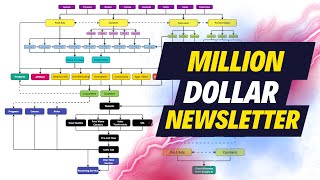
YouTube video (Mar 13, 2024) explaining a repeatable newsletter framework aimed at agencies to convert subscribers into clients. Key claims: the creator ran a newsletter with ~400,000 active subscribers (active = opened or clicked within 30 days) and shows revenue-conversion examples to illustrate value. Emphasizes three core newsletter qualities (VAR: Value, Actionable, Readable), recommends high frequency (minimum 3x/week, ideal 5x/week), and prescribes a reusable template with these sections: Summary (TL;DR + hook + read time + conversion link), Actionable Tip (one clear implementable step), Best Links (curated links, bonus points for linking to own content), Deep Dive (longer case study or training), How I Can Help (conversion links/offers), Poll (feedback), Referral Program (growth).
Chapters
If you have an agency, you're gonna want to watch this video because it's going to go over. One of the most effective ways to turn subscribers into clients, and this is with an email newsletter. At my last agency, I had almost 400,000 active subscribers on my email newsletter. And active meaning within the last 30 days, they've opened or clicked. So you think about that. If 400,000 people are on your list and 1% of them buy a product, that's $100, that's $400,000 in revenue. If you do that four times a year, that's $1.6 million. And that's just an example. Or if you have 400,000 and just 0.1% of them convert into clients each month, that's 400 new clients per month, or 400 calls, if you want to, say, 0.1% go into a call. So it's very, very effective. One of the only guarantees in life is that as your email list and newsletter get bigger, you're going to make more money. Very few other guarantees than that, you know, taxes, death, and you make more money if your email list gets bigger. So it's very, very important. So let's get to it right here. This is where the newsletter is in your funnel. It is a conversion mechanism, and it's a great way to determine who's qualified and who's not. And you can do that in a variety of ways. If you determine people aren't qualified, you can promote your products, you can refer them to other businesses. You could sell a course in your newsletter, a program, or you could, of course, do the normal stuff and eventually get them onto a sales company. Very, very, very, very effective. So how do you get people on the newsletter? Like, that's a question worth mentioning on. So you might run paid ads to a lead magnet. They fill out the lead magnet, put their email information in there, and now they're on your newsletter kind of automatically because they're on. You have their email address, and they're on. Your email flows. They're just automatically there. Or a YouTube video like this one, you know, you might have a form like this. If they submit this form, you know, they're also on your newsletter. So it's very important. Like, that's where these subscribers come from. It should be obvious, but it's not. Judging by the amount of messages and comments I get. Like, how could I make a newsletter if I have no subscribers? And I do just want to shake my head at those comments, but at the same time, I'm Going to answer the question, so what are the big details? Like this is what we need to have for our newsletter. It's the same as our, you know, rules for our lead magnets. The VAR formula. Value Actionable and readable. Even though the newsletter is essentially a free post that you're sending to them, would you honestly pay $50 to read it? Like that is something that you should ask yourself before you send every newsletter. Is there great content, is there great ideas, et cetera? The second thing is, is it actionable? And being actionable and being readable also are what like two of the three things that make something valuable in terms of the newsletter. So it's very important that you know when you are going for this $50 value thing even though it's free. You know, if you have a very good actionable plan inside and you've and it's very readable, like those are gonna help as opposed to just trying to make $50 worth of valuable content on your own. So an actionable newsletter has a plan that they can implement within 24 hours of reading. It doesn't have to be a crazy in depth plan, but some sort of plan, some clear steps to take. A lot of people think of the call to action as book a call or something in the newsletter. A great call to action is like take these next steps because your newsletter is not gonna be the only conversion mechanism they're part of. Like in some ways they're on your newsletter. You don't really even have to sell cause they're gonna be in your group, your appointment center's gonna be reaching out, they're gonna be seeing your long form content. Maybe you could cross promote a webinar or something in there. So the point of the newsletter in my view is not to like hardcore sell them. Newsletter's a very intimate way to get in the mind of someone and it's kind of like your speaking to them directly one on one through writing. It's like you're in their inbox. It's not like they're on YouTube or something. It's kind of very personal. Even though it's you're sending it in mass and then the last thing is readable and one headline per idea. And frequently use of divider lines or horizontal rule or whatever they're called in your specific email software. The reasons that newsletters fail for agencies the first big thing is they're not sent frequently enough. If you tell if I ask you like what are you doing for your newsletter? And you tell me you have one and then I say, okay, like, tell me about it. And you say, we send it quarterly. Like, that really just makes me fly off the rails. Like, I don't really care that much about your business, to be honest, unless you're a client of mine. But like, it's not gonna work if you send it quarterly or even monthly. It has to be at minimum three times per week. And I aim for five times per week, Monday to Friday, when you set it up properly. You can make newsletters in like 20 minutes. And they can be very valuable, actionable and readable. And I'll show you that in this actual, like in a couple minutes in this video. So we need to have it three times per week at a minimum, because if we have it any fewer than that, people are not really going to remember. And if you think of each newsletter as a touch point, and each newsletter or each touch point brings someone closer to a sale, you know, even once a week is 52 weeks for someone to, if the sales cycle was one year, or that you needed, you know, one year's worth of touch points, if you have that three times per week, you cut the sales cycle in thirds, et cetera. If you do it five times per week in fifths. And I know that's not a perfect way to explain it, but hopefully that makes sense. The second reason they fail is they're too hard to read. Massive walls of text, just no headlines, no horizontal line breaks, just like no bullet points, just kind of terrible. Doesn't matter how actionable and how valuable it is if it's not readable. And this is one of the main reasons that newsletters fail. And by fail, I kind of mean they don't get you clients for your agency. And the last one is they just suck. And that's self explanatory, little to no value, no actionable stuff, hard to read. You know, in many cases, when you first want to launch your newsletter, you want to kind of think of things that your target audience would want to see to make it easier on yourself. You want to make it. You want to make your newsletter format the sections in it, you know, the content you're writing about, inherently interesting because that will make it less likely that it just sucks. And if your newsletter just sucks, that's kind of a knowledge and a skill issue. If you don't know enough to write a great newsletter, it probably will suck. And there's no solution to that besides get better. Not exactly inspiring advice, but that is the truth. And if, in my view, if someone tells you something Different. Like you're going to have a newsletter course that you know, gets you from, you know, the best newsletter ever in 90 days. That's probably lying to you, slash unrealistic. So let's get into it because when I say like it's not frequent enough, like oh my God, how could I write that Monday to Friday? Or you know, how am I going to make it easy to read every single time, especially if I've been doing it too much? Or how am I going to come up with content every time so it doesn't just suck? Very good questions. Very, very good questions. And the way you make it not suck and the way you make it efficient is you come up with different sections for your newsletter. These are going to be pre made sections. The content is going to be unique for each, but they're going to be the same every time. So you just can duplicate. Once you've made this template or format, you duplicate it and just make the same format every single time. And this will speed up the process by 500% once you really get going. Because your writing methods, your Data collection methods, etc. Are going to be the exact same and can become very efficient. So let's get into each section here. The first section is going to be a summary section and to be clear, you probably wouldn't like, you can put the word summary there, but this is mostly just to differentiate between the sections. But whatever. So I in this email newsletter here, like I made an example for it. Cause you know it'd be better if there was an example as opposed to just telling you what to do. So this is for an E commerce email marketing brand that is, that are doing, you know, brands between 1 to 5 million a year or in. Yeah, a year in revenue. Sorry, I'm just thinking back to when I actually made this here. So this is the summary. The, the whole purpose of the summary, like let's just go get some sticky notes here, is to give them a TLDR version a too long didn't read where even if they didn't read it, they should kind of get the gist of it from the summary. The second reason is you want to hook them in and get them to read more. Similar to a hook on an ad creative or a hook on whatever. The summary will be the hook. And the more interesting the hook is, the more likely people will read it. And then in the summary you kind of want to tell them how quick plus easy it is to read. And in this case like my version of that is it'll Take approximately four minutes to read like people think. Oh, even if it always took four minutes to read. Like, it's not necessarily, you know, saying it has to be four minutes, even if it took four minutes. The fact that you say that is in my view and my experience because I've, I have big newsletters, trust me, I'm not going to go over them in this video. But just the fact that you're adding that really increases the overall, you know, amount of people that read it. You can track that. And the last thing your summary should do is at, you know, I'm not going to put at the bottom. But you put it at the bottom here. Promotes your conversion mechanism that you want to promote right now. So in this case, like the summary is at the very top of the email, right? Or the newsletter. There's no, how would you say, there's no guarantee that someone's going to read the entire thing because here's like the entire thing. We'll go after, go over it after. But if they open it, they are going to read the summary part. Like that is going to be visible unloading. So we just kind of want to make sure. And it goes back to what I said about your newsletter should mostly be used to promote your other conversion mechanisms and nurture them. Not really sales. So if you can promote your live workshops, you can promote your webinars, your community and group your content, etc. At the very top of each newsletter. This is why it's very valuable to send it, you know, five times per week instead of once. Because you can promote all of your conversion mechanisms every week instead of just, you know, take you a couple months to do that. If you did it once a month, once a week. It's very, very important to do that. And I really like to have my links like, like this, not the full link, not, you know, highlighting this to, you know, highlighting the whole thing like some people would do. But I like to put link and then in brackets. Or you could put click here as well. But I usually put link. So those are the four things that you have to do in the summary section. TLDR hook, tell them how quick and easy it is to read right here and then promote your conversion mechanism. So I just had a couple examples like this would be probably interesting to someone who owns an E Commerce brand. Amazing examples from Fashion Nova and Gymshark that probably make you want to read the rest of the newsletter. The number one thing that E Comm brands need to do to lower their cpa and that's probably another interesting thing that ecom brands would want to know. So let's get into the second section and this is going to be the actionable tip section because remember, one of the three things are, is it actionable or not? So what you want to do in this section, and I kind of, you obviously wouldn't put like this stuff in there. You probably have a different headline there. But I just do it, did it for the video. Like you want to tell them, you know something, what they need to do. So in this case is you know, the what they need to do. Always focus on the first paragraph and or sentence of your email newsletter for your brand. Why? Because that is, that is largely what will determine whether they keep reading it or not. How do these first three things do these three things in the first sentence of your email and then you'd fill it out, you know, thing number one, thing number two, and then thing number three. So you could make this a little bit less simple, right? It's kind of an overly simple way to do it. You could make this like preferably a paragraph, speaking proper English as opposed to broken up like this. But I hope you get the point. Very important that you have one actionable tip per thing because if, think about it, if they start taking your advice that's very authority building and if your advice can help them get a quick, some quick easy wins, they're going to trust you much more likely to become your client. This is one of my favorite sections and it's a section where it's called, I call it like the best links links of the day, you know, stuff of the day, whatever. And it's very, very important because you can make a very valuable newsletter by, you know, without having to like this is, you know, 1, 2, if you had 1 to 3 for each of these, let's just say 1, 2, 3. 1, 2, 1, 1, 2, 1, 2, 3. That's like 10 different things you'd have to write versus you can curate a little bit. You're not only curating it because you're going to still have original content that's your own and your actionable tips and stuff. But if you can do it like this, where you can say here's an amazing email design from someone else, check out my free email masterclass. This should link to your own YouTube. In this case, avoid these copywriting mistakes. Link to your own Twitter, 25 awesome email designs. Maybe you posted that on LinkedIn. So kind of the strategy here is to speed up the newsletter, like the time it takes to create with valuable content, that's number one. Second one is bonus points if you can link to your own content like on Twitter, on other platforms, that's very strong thing to do. Get followers on every platform that way. And then the third thing is this is something that people will love. If you can curate a great thing every single day or every time you send your newsletter, people are going to look forward to opening it. It's just a great section that gets high engagement and people love it. And think about it, a lot of people are going to click these links and that's going to. It might not, you know, it's not really the same thing as clicking a link to booking a call, of course, but the massive click through rate these kind of sections get are going to essentially, how do you say, you know, very much increase your deliverability and over time almost none of your emails are going to go to spam. Because if you're going to get, you know, 10 to 15% open rate with a section like this, which does happen, you're kind of off to the races in my opinion. So this is the best link section. Bonus points if you're linking to your own stuff. The deep Dive section is kind of some in depth knowledge, a case study, a training or whatever. It's kind of like something that you're writing about in depth. Of course, I guess that's kind of obvious with the title Deep Dive, but something that you're in, you're writing about that they're going to find valuable long form piece of content. This will probably be the thing that takes the most time. I didn't write any examples here, I just have some lorem Ipsum. But you want to make sure you make it readable still, right? You have H2 headlines in between pretty much every couple paragraphs or even fewer. Just make it readable. Like that's so important. If there was not these headlines and line breaks in here, no one is going to read it doesn't matter how good you write it. Always overput, overused headlines and stuff and line breaks as opposed to underuse them or don't use them at all. Just so, so important. And I think you should just take my word for it, it's going to make it a lot better. You know, just do it. The next section is a how I can help you section. So this is very good to promote all of your links. Remember you're promoting your kind of most important link here because that's the only thing that people are guaranteed to see. But down here is when you Promote like all of your stuff, you know, apply to work with my agency. You know, you can download my templates for $97, join my community, sign up for my webinar, just reply to this email and I made a typo there. So this is very important because if they like your newsletter, they read all every day. Like, this is just a directory of links that they can kind of be reminded of every single day. It's very important. The second last section is going to be a poll. Very important for feedback. So this can think of this as like, this is five stars, this is three, this is one. And it's very important to collect feedback. You want to get obviously as high as possible. As like, I love this, but you do want to get 70, 80, 90% to give you a real benchmark. And if you're getting less than that, probably need to work on the quality of your newsletter, especially when you get a bunch of subscribers. Because when you, if you have like 50 subscribers, like the sample size of this feedback is not going to be great. But once you get to like 50,000, which is very possible, trust me, especially over the course of six months or a year when you have this full funnel, like you're going to get pretty accurate feedback for how good each newsletter is. And this is going to vary per newsletter. So you kind of, if you have like 10 newsletters and you know, 80% or six of them have 80 to 90% loved it. You might like take that as feedback. What did I do in these newsletters that makes them so good? And try to replicate that. The referral program is so basically a referral program is like you can get people to refer your newsletter. And if like 10 people do it or three people do it or whatever you, you know, decide basically like you can give them an automated reward. So that's kind of like an incentive for them to help you grow. So here's like Beehive's referral program has a built in one. So, you know, let's see what we can find here. So like, if someone creates or someone refers three people to your newsletter, they'd have their own link that's tracked, they can get a newsletter and it would keep track of them in Beehive automatically or whatever. You know, if you don't use Beehive, I don't know how to set it up because I use Beehive, but keep track of it. And you can really get like, if you do this right and you. The key here is to make something that's inherently valuable and very desirable to your target audience. That's the main leverage point that makes this good or bad. If you've choose the wrong thing, it's not going to work that well. But if you choose the right thing, you can get like 25% of your total subscribers come from this referral program. So it's very, it's very important that you get it right. So those are the sections and this is what it will look like when it's all put together. You have your summary, you have your actionable tip, you have your best links, you have your deep dive, you have how I can help you, your poll and your referral program. So what you do is you basically duplicate this template every day and fill it out every day something new. If you are, you know, doing this Monday to Friday, probably have less links than if you were doing it once a week just because there's less work or it's more work to do, less new news because you keep emailing them every day. You know, there's only so many design copywriting, examples, offers and news in the case of this hypothetical email marketing agency for E Comm brands. So the more you do it, the less you'd have in each section. The more you do it, the less you'd have for your deep dive versus if you did it once a week, you'd probably make it a lot bigger. But everything is going to be perfect when you have this kind of format. It kind of combines all of the best formats and like sections from every newsletter into one and it's absolutely perfect for agencies. So I hope this video was valuable and I'll see you in the next one.
More from Matthew







Everything I Would Change About This Ecom Email Marketing Agency (3 HOUR LIVE AUDIT)

Everything I Would Change About This Meta Ads Training Business (3 HOUR LIVE AUDIT)


