Vodcast 329 : Listening is the Gateway to Asking Better Questions with Chedva Ludmir
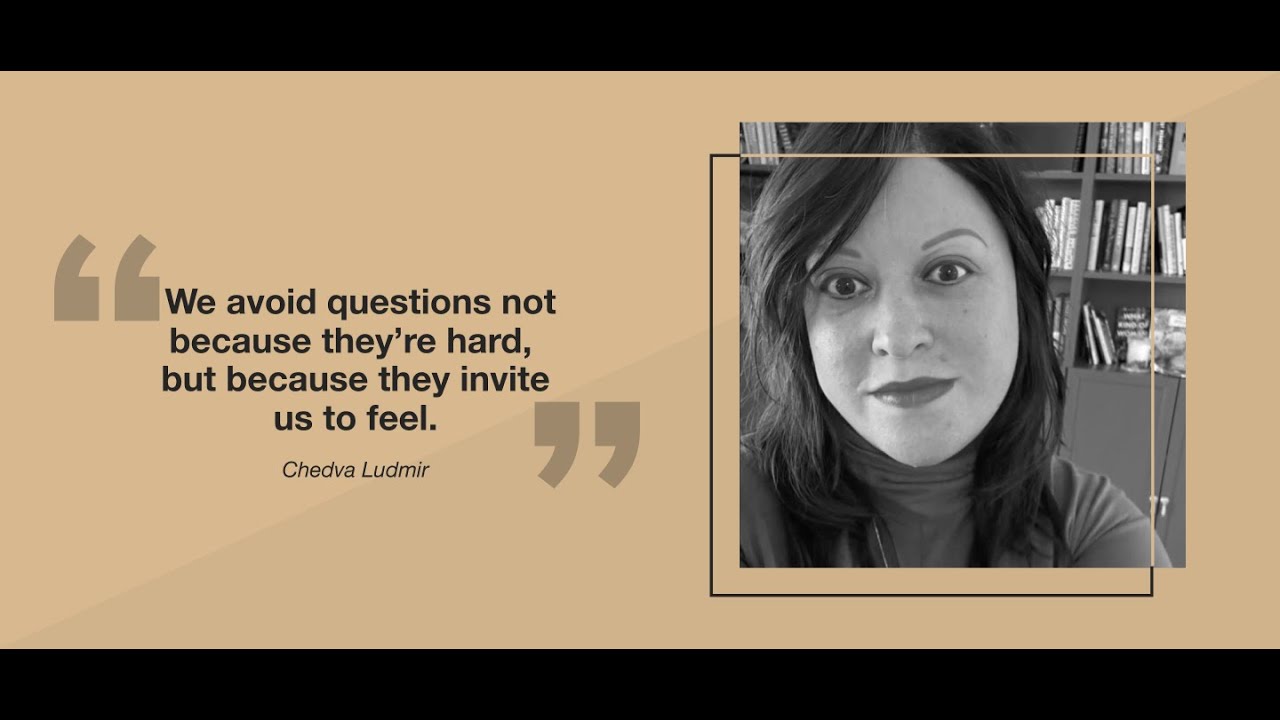
In this episode Myriam Hadnes interviews Chedva Ludmir, a facilitator, coach, and founder, exploring how deep listening and purposeful questioning shape personal growth, team dynamics, and leadership. Chedva shares her journey from high‑school counseling to building the HR‑tech startup Emerge, describing how she intuitively facilitated spaces before ever labeling herself a facilitator. They discuss the Satya Method’s eight levels of listening, the importance of pausing, reflecting, and breathing before responding, and how this practice deepens presence. The conversation introduces a question‑framework hierarchy: cornerstone (existential) questions, gateway (gentle entry) questions, and the STEP framework (Start, Test, Explore, Path) for coaching conversations. Chedva explains how “gateway” questions help navigate uncertainty, especially in high‑stakes contexts like executive decisions or personal crossroads. They examine the role of curiosity in Judaism, the tension between questioning and hierarchical religious communities, and how Chedva’s ultra‑Orthodox background informed her love of inquiry. The episode also covers practical tools: a GPT‑based question‑generator, non‑linear book‑club workshops using literary characters for safe introspection, and the need to set time limits (e.g., 75‑minute Clearway framework) to protect nervous systems. Throughout, both hosts stress safety, trust, humility, and the habit of holding space for others and oneself, concluding with reflections on advice to one’s younger self and the value of listening over knowing.
Chapters
Hadva, Vivi, welcome to the show.
Thank you so much for having me, Myriam. I'm so happy to be here.
And I'm excited about this conversation. As we explored, it was very clear that we'll talk about questions, one of my favorite topics.
Yay.
And you build products and businesses around it.
Right.
So I'm curious to hear more about your journey and what it means to ask questions in teams and as leaders. And before we get there, I always start with the same question. When did you start calling yourself a facilitator? And actually, do you?
I do not. I actually was just thinking about it. I'll give your listeners a spoiler that I heard this question from you already. So it actually stuck to my brain. It's such a good question. And I actually was thinking about it earlier today, because in the last 10 days, because of the current situation, I found myself facilitating so much. Not only my regular facilitation with teams and with my own team and with people around me, but actually kind of creating spaces and, you know, virtual, you know, Zoom meetups for people to be able to just say what's weighing on them and to get closer to themselves and their questions.
Mm-hmm.
Because questions can also— A, questions can be scary all the time, but especially in scary historical times. So kind of— yeah, so just get it out of your brain and your body and like put it into paper, into speaking. It kind of releases something, and then you can make friends with the questions. And kind of leaping ahead, but I was just suggesting in a community I'm part of for many years, of a retreat that I attended like 10 years ago, I suggested that I will hold this space in the next few days. And I was like, hey, Myriam is right, I am a facilitator. Like, and last week I did another meetup, and it's all like just— it's very natural to me. Like, it didn't require thinking, you know, it just like flowed out of me. So I was like, I am a facilitator, but I, I never thought to call myself that. I will maybe use it in a sentence like, I facilitate, you know, but It's not one of my titles, and maybe it should be.
Yeah, beautiful. Thank you for sharing that. And I— it just shows how precious this tool is, um, facilitation as a tool.
Yeah.
And holding space, um, in times of need, um, when community— yeah, when we need to come together as community and support each other. And Yeah, it's funny. I think one thing that all my guests have in common, whether they call themselves capital F facilitators or not, whether they put the label on their forehead or not, is everyone does facilitate.
Yeah, yeah. And like looking at my life and my work now and backwards, it's a very clear through line. Now that, you know, I'm kind of minded to that question of yours. I really see it ever since, you know, I was a, a counselor at, um, in high school. Uh, when I was in 12th grade, I was counseling, um, I think 9th graders weekly.
Mm.
Um, and it came very, very naturally to me. Um, kind of this unique I think a combination of storytelling, listening, really seeing people, holding space for them to be and to share, and then kind of weaving it into something that you can kind of feel connected to, right?
Yeah. Yeah. And I think the seeing someone and really listen is at least That's how I feel it, the prerequisite to ask the right question.
Yes, yes, yes.
That then is also perceived or received as a gift and makes the other person think, yeah, needs to be connected to them.
I think listening, first of all, listening and seeing someone is a huge gift. on its own merits. And then the question is kind of— it's important. It's like, I'm a big fan of questions. That's like my whole thing. But basically, the question is an opportunity to then listen and see them even more, or even better, let them listen to themselves and see themselves. So that's like, I think, the thing for me.
Yeah. And it just makes me think that there are 2 ways to see a question. Either it's a question for the person who asks, or it's a question for the person who receives it.
Yes. It's almost like with listening, you know, I'm a student at a coaching school these days after almost 2 decades of guiding executives and founders and working with business owners and entrepreneurs, you know, and teams. I really wanted more tools to, to do that. So I'm studying coaching in the Satya Method, which is a fascinating method that has a lot to do with breathing and with how things feel in your body.
Oh, interesting.
And they have 7 different levels of listening. And actually, it's not even 7, it's 8, because the most important level is level 0. Which is listening until the end and then a little bit more.
Okay.
And as someone who I always prided myself on being a good listener, I was always also told that I'm a good listener, but I was always a very active listener. You can see it in my expressions and my body. I would say, hmm, interesting, you know, stuff like that, because I want you to know that I am engaged. And suddenly you need to like shut up until the end and then take another beat, breathe, and only then say something. And then the first thing you say isn't even your thought. It's like a reflection of what the other person said. It's really— it's teaching me a lot. And it has to do with your question, because I think a lot of times we listen, and we are already thinking about our questions or about the smart thing that we're going to say. And giving ourselves the gift of just being there, just listening. You know, if you really need to release the tension from your body of like having this question or this thought that weighs on you, just write it down. It will help. I know I'm very ADHD, extremely. But it gives so much to the person that you listen to, but also to yourself. It's— it gives you this quiet, and it gives you like also the gift of knowing that you're actually doing it for them, which is the best, you know, feeling.
Yeah. And This giving it for them, as you said, you don't even start with a response or with a question. You first start with a reflection, which calms you down, basically creates this common ground.
Yeah.
Are we speaking about the same thing? Or this is what I heard, to give it a little bit of context and then ask a question. And what I, what I can know, what I think is frightening about that, if you haven't practiced it, is that you really need to trust that the right question and the right thing will come up.
Yeah.
And so you're also a podcaster, and I would be curious in your experience, because for me, the very first episodes, I had all these questions on sticky notes all around me.
Me too.
And I thought that I had to ask all these questions. And then I realized that my brain would go to the questions instead of staying present with what had happened. And then almost, I think the downside of that, of that level of preparedness is that you almost resent the guest for not saying what you expected because then you have to deviate from the script. And being fully present, listening, and a bit longer, then allows you to ask the question that wants to be asked. Yeah.
You know, do you ever have the experience of fighting with someone in your sleep or in your head? And then you meet them and you're already angry at them because of what they said in your head, or like, you're shocked that they're actually reacting in a different way?
Yes.
Yes. So it's a little bit like that. So it's interesting. And your question actually kind of opened a lot of different tabs in my brain. So I'll try to answer what you asked. Yeah. So when I began, I did have— I did prepare like a whole Google Doc of questions. But I will say that it was more of a crutch. It was more like a safety net. And I was very happy to go with the flow. I— because that's, that's just kind of— I'm very, that I'm very associative. I'm very intuitive. I was only worried that we will look back at it or listen back to it in case of podcasts, and it will be a little bit rumbly or not coherent, or that we'll get to like an hour and a half, and we won't be any close to like finishing. But I, so I think that came with time. Because you start to get a sense of the time and of like the overall kind of narrative arc, even if it takes you to a totally different place than you expected.
Yeah, the trust in the guest in the conversation that whatever comes up is the right thing to come up.
And also, I agree, the trust in the guest, but also the trust in yourself that whatever comes up, you will deal with it. And you will safely navigate, uh, it back to where it's relevant to your listeners.
Yeah, yeah. And the curiosity that comes up for me now, um, after you left a few breadcrumbs, um, the conversations that you facilitated at the moment, um, for your peers in Israel, um, The, and the, um, the woes you have had before working with executives, um, and building a business yourself and having a podcast. What are the— would you design questions differently, or are there questions that you cannot ask. So what is the danger of the questions in these different contexts?
I like that. That's interesting. So first of all, you mentioned curiosity, and that's one of my favorite things in the world. Years and years ago, a friend asked me— I don't remember why, but she asked me, how would you describe yourself in one word? And I said curious. I think it was 15 years ago, and I still stand by it. And actually part of my business is like CuriosityGPT, CuriosityLab. It's like, so I love that you said that. And I'm not surprised because, you know, that's, it's so tied to also to what you do and to this podcast. Are there questions that it's dangerous to ask? Yes. Yes. I don't think it's a specific set of questions that you can download and like kind of put on your wall and say, don't ask these questions.
Exactly.
I think the question is about questions. Sorry, I didn't mean the pun. Empathy and kindness, because questions and questioning can be extremely cruel and extremely harsh, both when we ask it to other people, but also even more than other people when we ask ourselves.
Mm-hmm.
And I talk about it a lot in the different things that I do. It's really part of my core kind of framework that I think a lot of us are walking around this earth with like a very big, looming, intimidating question that is weighing on us. And the natural thing for me to say would be, okay, so let's be brave and look at it. And that's not what I'm saying, not at all, because I think that's too extreme, and that's too cruel, and it could be dangerous, um, depending on where you are with your mindset, you know, mentally, all of that. So what I really, um, prefer and recommend is to actually look at what I call gateway questions.
Mm-hmm.
Smaller, gentler questions that are the gateway into even getting in the practice of becoming friends with our questions. I can, I can give you an example because it sounds like very big, right? So I remember I, I was a startup founder between 2015 and 2020. Um, my startup was called Emerge, and we were in HR tech, future of work, because before all of these were like these big, uh, buzzwords.
Before the pandemic.
Yeah, before the pandemic, exactly. And basically, uh, we wanted to democratize mentorship, but also peer-to-peer connection and learning inside big organizations. So just to give you an idea, after many years of trying to sell and nobody wanted to take a bet on us— speaking about trust— our first client was Facebook before they were Meta. And then we worked with Siemens and other like mid-market companies, and they would have like an internal Emerge platform for their employees where employees could ask questions anonymously, not only anonymously, nobody even saw the questions. And then our system would help them connect to other employees who volunteered their time and their knowledge. So this is all just background because we started, as I said, it wasn't a buzzword yet, it wasn't a trend, and I I have already been a serial entrepreneur, but not in the tech world. This was my first foray into tech. I was a very different founder in the kind of landscape of Israeli tech. I was an ultra-Orthodox entrepreneur. My co-founder was actually, she is still an amazing person, an amazing coder. She has like 30 years of experience in technology, but she was very shy. She was very, very introverted. Nowadays she's a little bit more extroverted. So So we were very different. We were like an ultra-Orthodox CEO and a gay CTO. And like nobody knew how to look at us and what to do with us.
No box.
And in Israel also, like whatever was in deep tech at the time was very different. And we finally, actually pretty quickly, I don't know, by some miracle I was able to pull, we got a pilot. program with the biggest employer in Israel, 10,000 employees. And it's a big tech giant in the entire world, which is also in Israel specifically. They have 10,000 employees. And we were ecstatic. And it fell through, Myriam.
Hmm.
It didn't happen. They were like, we love what you do. We want to do it in the future. But right now it doesn't fit our roadmap and we don't know We can't give you a time. Like, we— it's not like you can tell investors or other companies that it's going to happen in 2 quarters. And at that time, the big looming question was, I just gave this a year and a half. I'm living on my savings. No investor would even take a meeting with me. I can't get a client because nobody wants to take a leap of faith. Right, on this like weird startup. Uh, it was also a very like American concept at the time. It was like not a good fit for the Israeli market. And now this happens, and the big question was, should I close the startup? But I couldn't, I couldn't ask myself that. Was too big, you know, the sunk cost, the identity that was already tied in it, all of that.
Failure.
Yeah, yeah, yeah, exactly. Uh, and, and also it came from like— Emerge really emerged from a social need. It came from social good. Like, we believed that it could be, you know, a unicorn. It could be a $1 billion company. We really believe that. And I, I still think that it could have been. Um, but it came out of like— I only do things— I can't really do any business that I don't really believe in. And it came from that. It came from a— actually, from questions. This came from a survey that became viral globally. Maybe we can talk about it another time. Anyway, I couldn't ask myself, should I close the startup? It just— it wasn't available to me. I didn't have access to that question. But the question that did rise for me was, when it's time, will I know it?
Hmm.
And that question actually stayed with me. We later on signed Facebook, we signed Siemens, we raised close to $1 million. We were working until the pandemic. In the pandemic, actually, more people than ever used it. And I'm so proud, like, even though we closed the company because the funding that was supposed to come in in March 2020 fell through, I'm so happy and proud that we existed. for that first and second lockdown to be there for people.
Yeah.
But that question was really there for me. And it really served me because whenever there was something, I could fall back on that question. And at the right time, I got back to it. And I actually knew. So that's what I mean with gateway questions. And it could be— I help leaders connect to their own gateway questions with themselves when there's a fog and there's a decision isolation. Because a lot of times at the top, when so much depends on you, It's just too much responsibility and you have like this foggy brain.
Yeah.
And I help it. I help teams with it, with brainstorming. And also, you know, people with their managers or co-founders. And sometimes there's so many— there's like the situation can be so charged that you can't even see the questions. So we think about what is the question which isn't like, why are you stupid and aren't seeing it the way I'm seeing it? Yeah.
So basically stripping it away from Judgment, expectations, assumptions.
Yeah. And I think, I think sometimes you need to feel the judgment and the expectations and the assumptions. You have to voice it somewhere in order to then release it and not have it in the really important conversation, right?
So, and I I can very much relate to your big question. So I closed a community, just tiny compared to what you built, but still I built it over 5 years. I started in the pandemic.
Mm-hmm.
And then at some point I felt that it was time to close. And the question felt too big and overwhelming. So I pushed it away and I carried on maybe a little bit too long, but, and then the question came in a different disguise from, by a colleague of mine, and suddenly it was clear and everything fell into its place.
Wow.
And I, what I hear is the, that there are questions who release so many emotions and maybe grief on what could have been, what isn't. What will never be. Like, when you ask the question whether you want to close it, whether you should close it, and a moment before you were dreaming of becoming a unicorn, then you first have to grieve over this possibility that it will never become true once you close it.
Exactly. And I think when we ask other people questions, we need to have responsibility. Because we can't just— we can, but it's not responsible to just ask them a big question and leave them to deal with it. It could open so many drawers, and I'm all for openness and vulnerability. That's like basically what I believe in. But you need to be kind. So it's like a lot of times working through— it depends how much time you have with them. It depends how can you help them then deal with it, because if you're just leaving it with them, Mm-hmm. Then with it, it's better to start from like the gentler questions. And I really believe it's still effective and I really believe it's all stepping stones into the real deal. So I don't think it's less real or less important.
What I hear is humility, because so often we want to shine through our question.
Oh yeah, that's so true.
Because a question can be— with a question, we can also show that, oh, I get you. I know exactly what your problem is. So I ask you a question and then I'm the perfect coach.
Exactly. That's such a good way to put it. It's like the proof, right? I got you and I already got like the— I'm like ahead of you, right?
I ask you the question and then— but without, as you say, without the safety net, And the empathy or the care that it might actually be too big of a question. And I can, I can definitely see, yeah, the danger of opening, opening rabbit holes or Pandora's boxes.
Yeah, we need to make sure that we have enough space and enough padding, you know, Yeah. And also what you said, it's so true and you put it so eloquently. And it reminded me of reflection because I'm, as I said, I'm ADHD. I don't have like, I, I can have patience, but I can also not have patience. And it can sound to me like a waste of time. But part of the reflection is not only to reflect back to you and for you to hear your own voice and to create. There's a lot of things there that are very important. Part of it is also, as you said, the humility of like, I am not assuming that I understood what you meant by what you said. So I can either reflect back to you what you said in your exact words, but also I can say like, let me see that I understood what you said, and I'll say it in my words, or I'll summarize, but tell me how that makes you feel, and, and feel free to correct me.
Yeah. Yeah.
And I, I definitely, I will, I'll be the first person to say that I have always thought about myself as an amazing listener and as someone who analyzes people and is correct. And I think with age and experience, um, I'm becoming like, I, I'm acquiring more humility because it, no assumptions, like they just don't work even when they work. They work less than questions, I believe.
And I, I'm reading this book by Bo Lotto, Deviate.
Oh, did I hear about it from you?
Or maybe, maybe I speak about it a lot recently because it's just, it really makes me question everything that I have assumed. Um, so far. And what he basically says is that we have no— all of our realities are different because we make sense of it in a different way because of our past experience and how our brain functions. And the beginning of the end starts with assumptions.
Yeah. Yeah.
And assumptions actually avoid us to see different options and If we have too many, it's because of our assumptions that we just follow the boring path all the time.
I think also the word that you said, avoid, is so important because we want to avoid to be in uncertainty. And we want to avoid, like, not necessarily each and every one of us, but that's human nature. We don't want to be wobbly. We want to be— we want our comfort. zone is stability. So while we're curious creatures and inquisitive creatures, which is an amazing thing, we also, especially in times of uncertainty, we often crave certainty, stability, and then we avoid anything that can interrupt. And so we run into the assumptions for comfort.
Yeah.
Whether it's to, to quiet something within us or to try and quiet something that we are hearing or sensing in the other person.
And it's, and it's so counterproductive because by asking the question about the uncertainty, we help our brain create context to make it a little bit less uncertain.
And also we, we take the uncertainty out of like just this mass, you know, gray matter. And we, we say it, we hear it, it's quite something. It's not, you know, my friend, uh, Liron, uh, often quotes, uh, this, um, research. I'm sorry, I don't know who by, but that says that our, our brains are not built to contain so much. So once we give it words, uh, and we either tell about it to someone else or even we write it down, we scribble it. I sometimes write myself notes in WhatsApp or voice notes. It frees it up and, and then we can live with it more peacefully.
Yeah. It's like the CPU on a computer.
Exactly. Exactly. Yeah.
Yeah. And then from what you explained earlier, it sounds as if everyone sits with this big question, and I assume that the question might change over, over a lifetime. There are different big questions coming up. How do you, how do you know what your big question is, or is it just the big elephant in the room that you keep on avoiding?
It's interesting because you said elephant and it reminded me of the, this you know, folk story about different people in the dark kind of trying to decipher what this being is. And everyone, you know, one person feels the tail, one person feels the trunk. Yeah, one person feels the trunk. So I think a lot of times we know, we have an idea of what the big looming question is. And I don't think we have to know. I think a lot of times we know, we have We have some sort of an idea. Maybe we know it exactly. Maybe we know a part of it, like those people kind of trying to feel their way around the elephant. And I think there's, there's a reason sometimes that we don't know. And, and I think the, the kinder way is to get closer to ourselves. And what I do often with, you know, people, whether it's in workshops or in teams or just one-on-one, is just like, tell me whatever is on your mind, right? Whatever is weighing on you. Okay, just describe the dilemma, the situation, the he said, she said, whatever. And then just break it down into tiny, tiny, tiny questions. And they are already our stepping stones into whatever that is that matters. Will we Solve the big question in one day, in one month, in one year? Maybe, maybe not. But if we don't, maybe that's the better way. You know what I mean?
Yeah. Yeah. Because we basically make our sense-making machine, our brain, we put it at work by just asking these small questions. And if we don't have to answer them, they don't feel as scary.
Yeah. Yeah.
And still they give us just a perspective.
Yeah. And I always say, I think answers are really important, but they're not the most important part. I really view answers as the step to the next question. Um, you know, we're now a lot of people working with AI. We were just talking about AI transcription for podcasts, and there's like this big, um, kind of everyone is craving the perfect prompt, right, for AI, the perfect prompt to get you your next 5 Instagram stories, the perfect prompt for your L&D plan, whatever, right? So many different things. And my friend Jo, actually Jo Friedman, she's amazing. And she's, she's in the product world. And she's a CEO of a— COO of a startup, said something that I— only once she said it did I understand that this is actually how I operate with AI and how I operate with people as well. So she said, it's not about the prompt, it's about the conversation.
Hmm.
And I understand that for some people it works to find the perfect prompt and to refine it and finesse it more and more until it becomes more perfect and more perfect and then teach it. For me, even with AI, let alone with people, let alone with myself, it's about starting somewhere, finding, you know, just the end of the string you can pull on.
Mm-hmm.
And then going to the next thing and then going to the next thing. It's about a continuum. It's not just about a one-time one thing. And I really believe that also question asking and introspection is a habit, just like anything else. So for me, it's not like— A, I think it's good because it takes the stress out of like finding this perfect question, right? Or my friend who's in HR said like, we're always looking for the, you know, perfect interview question that will give you an indication of whether this candidate is the right fit or not. So it takes the weight and the stress out of it, but also it puts you— it creates a habit for you, uh, which you then apply more and more, and it's so much more valuable in my opinion.
Yeah, yeah, especially with AI. I have the impression that we have answers for everything nowadays.
Yeah, I really think— sorry, go ahead.
But we don't take enough time to actually ask the right question.
Yeah, I think I was just on a podcast in Israel about the skills of the future, um, with, uh, Shiraz Sagi. She's great, and she does a lot of things about different, you know, future skills going from very deep tech into like actually very, very human skills, which will be much more valuable when we have all the tech in the world. And this is exactly, exactly the thing. We have all the answers. What we don't have is the questions. And with AI, it repeats itself, right? There's a pattern there.
Yeah.
Even if when it's very, very sophisticated and it's less visible, there's still a pattern and a cyclical kind of mannerism to it. So coming up with questions, being curious, is what makes us human, and it's what differentiates us.
Yeah.
And this is what's missing, and this is what's gonna continue missing, uh, in a world of answers and exclamation points, I believe.
Yeah. And then there's, um, And then there's patience, because with questions, usually a good question leads to more questions.
Yeah.
Um, so how, what is the trick to help groups or individuals to actually sit with the questions a bit longer and to, to create this pa— or to develop this patience?
Yeah. I don't know if there's one trick. As you may have gathered, I think, you know, question asking is not just about asking questions, it's about placing question marks on everything. So is there one trick? I don't know. I think first of all, creating safety and trust, that is, that is key, right?
Mm-hmm.
Because there's an inherent discomfort in sitting with discomfort and uncertainty and all of that. So we have to somehow make up for it. And this is again where our humanness comes in. So trust and safety, and really communicating, communicating what they can expect beforehand. You don't have to tell them exactly what will happen because sometimes it's important that they come open enough, right? But communicating the important things about this being a safe space for vulnerability in the beginning of the meeting or the meetup, you know, whatever it is, saying this is what's going to happen and it might feel uncomfortable at times, but please trust me, I've done this, I'm here for you. you can say anything that comes to your mind, whether it could be something vulnerable, it can be, I hate this, that's also valid, you know, really, really providing that. And I think the beautiful thing that happens in my experience, I, I'm really curious to hear yours, um, is that it's a little bit uncomfortable at first, but then once people start sharing and asking or talking about the uncertainty, it becomes more and more natural. And what I see with people is so much relief.
Yeah. Yeah, I think there is a lot of, there are a lot of assumptions around, and then it's, it's interesting because Now I'm at the kind of, I'm at a fork in my mind. One is the, the questions we ask as coaches and facilitators to facilitate a journey. And then there are questions we ask as a moderator, an HR recruiter, where we, um, or as a friend.
Yeah.
Where we want to get answers, right? Um, and I think in both there are assumptions and in both there is I think what you said earlier, the care, the safety that has to come through.
Yeah, I think, you know, there's also context, right? So sometimes as a friend or in like a more softer setting of a workshop, Actually, the context of vulnerability can bring— can make the questions much more powerful, and I would be a little bit more timid with them, right? Whereas when there's more distance, when we're moderating a panel or it's an interview, there's already more distance. It's colder. So it also— it is, you know, we're speaking about humans, we're talking about personal stuff, but it can't break as much. So the, the potential, you know, is less breakable. So that's also interesting to keep in mind. But I wanted to tell you something because, uh, if you want, because that's like, as you were speaking, I was thinking about it. I was facilitating. So I, I started like this. This is like an idea that came to my mind like 2 or 3 years ago, and it just lived in my mind rent-free, as the youngsters say, uh, because I'm a very big bookworm. I love reading books, and I'm a big geek, and I always wanted a book club, but I always hated book clubs because you have to read the book in a specific timeline. And even though I'm a very quick reader, it's always made me stressed. So 2 or 3 years ago, I thought about this non-book club book club where you Basically use the book. You could read it before, you don't have to read it before, and we use the book as a portal and the characters as avatars. And the idea of the book club is not to be more knowledgeable about the book or its, you know, references or whatever. It's to get closer to ourselves and to do introspection work through the book.
Mm-hmm.
I put that aside. I, I did work on it. I had like a Google Drive folder somewhere. I put it outside. 2 or 3 years later, I was thinking about starting my current business, Consider, and suddenly it all clicked because suddenly I said, this is actually a great way to ask questions because what does all folklore do? If you look at all the big, all the great stories, from religions to mythology to King Arthur to the Brothers Grimm, it lets us learn about ourselves and get closer to ourselves through the— this aesthetic distance.
Mm-hmm.
Right? Even in the Bible with King David, there's this, you know, story of the prophet telling him a story about sheep in order to give him— actually tell him what you did is not all right.
Mm-hmm.
Because he couldn't just tell it to him, like, outright. Um, so I did a pilot run of this, uh, of this idea 2 months ago, just before going, uh, to New York and to Athens on conferences. And I was like, it was magical, it was beautiful. But I was like, okay, I learned a lot from doing this pilot. need to tweak the format. I'll get back to it in a few months. It's not a priority right now because I have other things that I'm launching. Last week, with the current situation in Israel and Iran, I was devastated like all of us, and we were all like, you know, sleep deprived and so disoriented, confused. angry, sad, like everything. And suddenly, it just came to me. And I wasn't looking for something good to do for the community. I wasn't in that headspace. I was like in the headspace of I'm tired, I'm scared, like, I need to see like how I take care of my son, of my dog, of my, you know, partner. But suddenly, it just came to me. And I said, like, wow, people need community now. And a way to unload, right? And I think maybe this could help. And right as I was thinking that, I was so ashamed. I was talking myself out of it. I was like, this is so detached. This is so delusional. Who are you to think about like such a, you know, frivolous thing in the middle of the war? Some people don't have shelters in their homes. They have kids at home. They probably can't concentrate. Some people lost their— many people lost their houses. Who are you? Like, this is the most detached and delusional and privileged thing ever that he came up with. Immediately shut it down and don't think about it. But then I asked myself a question of like, what if I don't decide that? What if I let other people decide that? So I just put it on social. And I said, listen, I, I, I put all the caveats. I put like, I know this might sound delusional. I'm telling this to myself. Okay? But you tell me if this could serve you right now. And it was incredible, Miriam, because immediately there was such amazing response. And yes, in the Zoom meeting, we were only 6 people, because of course, like, but it was so beautiful. And the thing is, I tweaked, you know, I only had like 2 hours with like a clear enough mind to tweak the format from in real life in my living room to Zoom to— and what I did was I sent each person a profile of one of the characters in the book. I think half, maybe two-thirds didn't read the book before. It was The Time Traveler's Wife, which is one of my favorite books. And I said, please describe how your character, based on this profile— like, some of them didn't know the characters more than that— would deal with this current situation.
Oh.
And I, I have tears in my eyes right now because there's some aesthetic distance that lets us get closer to ourselves.
Yeah. And the— oh, that's beautiful. Because the best advice that we give to others is usually the advice that we need the most ourselves. Yeah.
And it's not even like— and also, I think it lets them also talk about imperfect ways to deal with the situation. Because the characters are imperfect. We don't have the judgment on the characters like we have about ourselves. Like, even if we do have the judgment, it's not us. So it's less painful.
Right. Yeah. And gives us the freedom to also just play with it and see, okay, exactly, the other ways that I could, that I could deal with this situation, maybe if I wanted to. Yeah.
And it's also, you're more free to bring humor into it because you can laugh at the character. You know, it's not, it's not you. It's, you know, it's, and created some, because none of the people also knew each other. created also some closeness because we were in this experiment together. And then we talked about ourselves. Right. And I did bring some. So what I did was I happen to have it here. I have themes from the book that I just, you know, probably if you read the book, there will be other themes, or if I read a different book, there'll probably be some of these themes because they probably live in me.
Yeah.
But so then we just talked about those themes from the book. In terms of us, of our own experiences. And I did bring some references from other books as well, from poetry, philosophy, psychology, memoir. But the thing is, once we created that distance, Mm-hmm. It was so much easier to create, A, introspection, and B, which is what I think you actually asked about, and I'm answering in a very long way. Vulnerability, shared vulnerability in this space of these strangers to each other.
Yeah. Beautiful example. Thank you for sharing that.
Sure.
I can see how this plays out. And I'm just— I just looked at the watch and I don't know what time it is. Talking about The Time Traveler's Wife.
Yeah. By the way, I really believe, like, in the last few years I've been— one of my themes has been time traveling through life, just because a lot of things that we do— and sorry, I'm veering off course, but I think it's also somehow related because we're talking about people, right? Some people— some things that we do in life really make us encounter different versions of ourselves, right?
Yeah.
You just made me realize that Khedwa the facilitator could also be Khedwa the, the, um, 17, 18-year-old who was a counselor in high school. So it's interesting.
Yeah. And talking about these identities, there's something— there's one question that I'm really curious about, um, Because you also spoke that you used to be an Orthodox.
Right.
And when I think of questions and questioning and Orthodox religion, yeah, these two somehow don't go together.
Oh, I have a lot to say about this. We can be here for hours and hours.
And I would, I would be curious how this How you have dealt with all these questions inside of you while you were still in the Orthodox community.
Yeah, and so I— oh, sorry, go ahead.
Yeah, and how, how questions have shaped your, your view on religion in general. I think that's fascinating, at least for me.
That's a really good question. It's something we discuss a lot in our household because I have a teenager, an 18-year-old, and we both left the Orthodox world around 2 years ago. A little less, maybe even. So I have a lot to say here, so feel free to navigate me however you want. Like, I'm— I won't be mad. I'm also a podcast host. Um, I'll say a few things. So first of all, in Judaism, I really believe question asking is key to the religion, like really to the theology, the philosophy of the religion.
Mm-hmm.
And there are so many examples. One of the most accessible ones is the Seder, the first night of Passover, where you actually encourage kids with gifts and with silly games to stay up late at night. And the entire purpose of that is for them to ask questions, not for you to tell them stories, but for them to like— which is the— you're supposed to do that. But there's a specific stress on them asking questions.
So that they're curious and can actually absorb the stories.
So curiosity is key to Jewish thought. Having said that, Orthodox Judaism, like a lot of different, you know, more extreme and closed and hierarchical communities, is not very much in love with questions, as you well said. I was very, very fortunate in my childhood to encounter some teachers who were not afraid of questions and even encouraged them. But even if they didn't encourage them, at least embrace them, and who were also okay with saying, like, it's not about the answer, it's about kind of Even the fact that you're questioning, questioning is a connection. Uh, but that's not the norm. And, and for example, my son, that's the opposite of his experience in the same community. And I will say, even as a very young kid, even at 11, I had this very strong, um, knowledge, I would say. I don't know if that's the right word. notion that I am not going to continue being in the community only because I was born into it. It needs to be a choice, and I need to ask questions. And so what happened was that when I was 11 and 12, I was seriously thinking about becoming secular. And on the other hand, when I was 14 and 15, I was seriously thinking about being Going into a much more extreme Hasidic sect.
Oh, wow.
Yeah. And that's asking questions. You can't just ask it like you can, but that's not me.
You're asking yourself, are these the happy Jews who go around and sing songs? And then—
no, no, the saddest, sad existential Jews. I'm sorry. I love this. Whoops. Didn't do my homework. No, no, it's all good. But no, no, no.
Oh, the Hasidic, uh, the ultra-Orthodox?
No, Hasidic, you know, Hasidic, um, community in general, there are a lot of different types. There's also the happy Jews inside that.
Okay.
But specifically inside that, there are many, many, many different groups, and they're very different from each other. Okay. Uh, but you just made my day. So that was— that existed for me very early on. I knew that I had faith. I'm still very much a person of faith, um, which is another big conversation. I think for me faith is more general than just the specific God of the Jews, or, you know, but that's like a whole thing. Um, but I didn't— I knew that I needed to choose, and eventually I chose to stay pretty much where I was born to, out of choice, while being very outspoken about being a feminist, an LGBTQIA ally, Um, liberal, who's a peace activist. And those are all things that are not very common. And also making very bold choices with my career, uh, having only one kid, things that are very not common.
Hmm.
Um, but while being in my community, and when I was an entrepreneur, startup entrepreneur, A lot of people asked me, wow, it must be so hard. Your community must be giving you a hard time. And Myriam, that was not the case.
Mm-hmm.
So I'm very privileged. I come from a more modern ultra-Orthodox background, but still they were proud of me. They were saying that actually I'm doing the community a good service. Um, it, it was a positive experience for me within the community. Actually, I faced a lot of bias from outside of the community to the extent of it was easier for me to go go to Europe and to the US to raise money and to find clients, both because of the market but also because there was less bias. And also I'm privileged because I'm also American, so I have somewhat okay English, you know, all that. Um, but then, um, speaking of questions, when I decided to— not out of questioning the community at all, but out of my own life— I decided to divorce It seems like that was one question too far, even though it had nothing to do— I wasn't questioning the faith, I wasn't questioning the commandments or the practice of Orthodox Jewry. I was making a decision about my own life, but somehow putting a question mark on something that feels like very, um, foundational, I think, to the way of living. Mm-hmm. Um, was a bridge too far, and I was actually shunned by both my family and my community. And only following that did I actually decide to also stop practicing. Um, but, um, it's really interesting because sometimes— and, and what I heard from those people was not about the Jewish faith or the Jewish philosophy. It was about, this is not how we do things.
Hmm.
So this is kind of a structure that everyone, I think, can connect to if they grew up in a closed hierarchical, um, community, regardless of the faith or the philosophy. It was about that. It was about the societal part of it, not about faith, even though it was kind of Yeah. Made like the makeup of it was like the faith, but it wasn't that. So I actually really connect, like, I think a lot of my question asking and my obsession with that comes from Jewish thought. And you can see Jewish scientists and philosophers, both, you know, people who were religious to different extents and very secular. it's, it's not a coincidence there, there are so many of them who are Jewish or who grew up with Jewish texts, because I think it's a very natural, um, development from that. And, um, with that, I also take my, my own tendency to question, why am I doing this? Why am I here? Uh, this is something that always existed in me. And yes, it was a bit too much at some point for the community.
Thank you so much for taking the time to walk me and us through. And the— I loved how you phrase it, that was one question too far. And the way how I pictured that also with your concept of the foundational questions and the gateway questions.
Yeah.
Which is, in a house, you have those— you have the—
Pillars, right.
You have the pillars. What's the name of these bricks that are foundational, that if you put them away, everything collapses?
It's like kind of the cornerstone?
Yes, cornerstones.
Yeah.
So they're cornerstone questions.
Yeah.
And then there are gateway questions. And the cornerstone questions are the very dangerous ones, right?
Yeah.
That's for religion, that's for life, that's for leadership. It's all the same. They're so existential that—
So true.
If you ask the question, you cannot unask them, basically.
Yeah, yeah.
And that's dangerous.
That's very true. I didn't think about it like this, you know, in this in this, you know, context. Because again, if I'm looking at it just, uh, cerebrally, you know, logically, it has nothing to do with religion, but it has to do with the foundations of how that community works. And it was too foundational for them to ignore it, I believe.
Yeah. And I think the Same is true for us. If we are asking a question that is so foundational for who we are, what we believe, what we stand for, it can be very disruptive.
And especially if we do it to other people, right? As facilitators, as coaches, as managers and leaders. I'm not saying that you can't. Sometimes it's important, but you need to make sure that you've taken the measures, right? That you don't go into it abruptly, that you have the time and the space that you can make— you can create closure after that. Or you can create like a roadmap from there, like a path forward. So I'm not saying don't do that. Sometimes that's the right thing. But I wouldn't start there, and I would go there very cautiously. Yeah, very.
So what is your advice to come up with good gateway questions? So let's assume that we have this big, huge, brilliant question that we want to ask the person because we get them and we understand it all.
So first of all, write it down so it doesn't bother you in your mind, so you're not afraid of, of like forgetting it and losing it. And even maybe if you don't ask them, you can still like gaze at it, uh, adoringly before you sleep, and it's like, oh, I'm so smart. Sorry, but like, really, like, write it down. It's, it's good. Like, it, it really releases something, because I really, I really, um, relate to that urge sometimes.
Yep.
So, uh, my specific framework is called the STEP framework, but of course, I think there are many different ways you can approach it, but this is like, for me, what works. So it's STEP. It starts with where you are. Test the waters. What is the third one? It's something about the edges, like explore the edges. And then P is path forward. So first of all, it starts from listening, just telling the other person, okay, tell me what's going on. And if it's hard for them, you can say, okay, describe the dilemma. Or if there's no dilemma, tell me what you feel. What are you preparing for? Like, you know, just to get them talking, right? And then like, just let them talk and listen attentively, like we talked about, and make sure you understand them and let— give them even the opportunity to say, like, to say more things that they've Remember what— when you— when they hear you reflecting back. And then help them analyze with them together where they can start. Like, what's the easiest low-hanging fruit where they can just experiment, test the waters? Small thing. It's not a big thing. What if? How about, you know? Yeah.
And for them to test the waters. Yes.
Yeah. And you know what will be a question that will be testing the waters from what they said, right? The ideal situation, I would actually help them come up with a question. But sometimes you don't have the time, or they don't have access to that. Explore the edges. So looking at the whatever they shared, and not even at the core of it, like saying, oh, I see this. here, which is interesting that you mentioned it because it doesn't sound really connected. What, what's here, you know? And then like see what you can do there, what question you can ask there, and where would it take you. And then path forward, so questions about the future, about the next steps. And I try to start from 2 to 3 questions max, because you can— from each of those, you can sometimes create 10 questions.
And can be overwhelming.
Yeah, but just start gently and sit with it, or let them sit with it. And, um, yeah, and I, I really try to have people just exercise this. I have a GPT that I trained, and it's funny because the GPT, the AI, really wants to give solutions and answers. And when I was training it, I was like, don't give answers, only give 2 to 3 questions, Based on this, you know.
Yes, I can, I can feel the urge of GPT just, yeah, to solve advice and so, and solutions at you.
Yeah, so, so I have this GPT which people can use, it's free, um, but also just, you know, even like use these, these tips, or if you heard that and you said like, these are actually like, this framework sounds okay, but I have a better idea for just tiny, gentle questions to get closer to the act of asking ourselves and introspection, then that's okay too.
I love it. Maybe we can put the link in the show notes.
Sure, I would love that.
Yeah. What remains your facilitation challenge?
Time.
Yeah, never enough time.
Yeah, I just feel like even when there's enough time, we could do so much more with more time. You know, I was mentioning the Satya Method, which I'm studying. And one of the things that I really appreciate is that they have a time limit for specific formats. So not only for a session, for a coaching session, but they say like, if you're doing— if you're preparing someone for a tough call, they have a framework for that, which is Amazing. It's called the Clearway framework. You can only have up to 75 minutes of a meeting. If you need, you can do another meeting, but up to 75 minutes because it's too much for the nervous system.
Hmm.
And I, I really, as someone who can be very long-winded, I really appreciate that because it is— we need to think about our bodies inside this. But yes, I always feel like I can do more with more time.
Lovely. And I can relate to that. I'm just looking at the time like, where does it go? So I just want to ask my last question. What would be your advice to your younger self? What is it you wish you knew? Wow.
Speaking of time travel, I love that. I could be cliché and say like, I don't want to say anything and spoil it because I think like there's a path there that needs to be taken. I would probably just give her a hug, honestly.
Mm-hmm.
And I would say it's okay not to know. I think as a young person, I knew a lot of things. And I assumed that I knew a lot of things. Yes, I got it figured out. I got you figured out. I know what you meant. I don't even need to listen to the end of your answer. But also, I was very attached to knowing.
Hmm.
And I think, I wonder, maybe you'll relate to this. I think as facilitators, as coaches, as guides, I thought the value that I can bring to others was, was through knowing, was through— yeah. And the more experience I have, I understand that the value I have is not through knowing. I do know a lot of things, and I am an expert in some things, and sometimes there's value in that. I'm not like— I'm not one of the people who will say like, I'm not, I'm not going to frustrate you with never giving you an answer, right? But the real value is not there for me. The real value is in listening and learning. And really, when I'm looking back at everything I did, and I did very diverse things, very diverse verticals and industries, my key skill, whether it was when I was a blogger, a journalist, marketer, startup founder, Any marketing and strategy agency owner, or now with Consider, it was always asking questions and giving others the space to answer them and then asking more. And, and, and yeah, I really believe in that.
Yeah, thank you. Yeah, that the value doesn't come from not knowing. But holding the space for someone else to explore. Beautiful.
Yeah, and also holding the space for our own selves to explore, you know.
Sometimes more difficult.
Yeah, because nobody knows really. Even what we know, we can— it changes so rapidly, right?
Oh yeah. Miriam, thank you.
Thank you so much. This was so fun and so meaningful to me.
Yeah, really appreciate your time and openness.
Likewise, likewise. I enjoyed every minute. Yes, and I'm looking forward to speak soon.
Yes, I will be on your podcast soon. Yes, and we'll put, um, Looks Like Work Right, right. Podcast. And we'll put all the links to you, your business, your ChatGPT, um, in the show notes.
Thank you so much. I appreciate it. Yeah, I had such a good time, Miriam. I really, really appreciate it.
More from Myriam


Did Social Media Make Us More Unprofessional? Unprofessionalism EP 035 with Kate Raynes-Goldie

The Costume That Got Me Promoted with Moh Guissé - Teaser of Unprofessionalism Episode 28

Unprofessionalism Vodcast Episode 027: Why This Podcast Makes Us Uncomfortable with Myriam Hadnes






