Vodcast 338 : Trust, Nerves and Group Dynamics at 2,000 Feet with Josie White
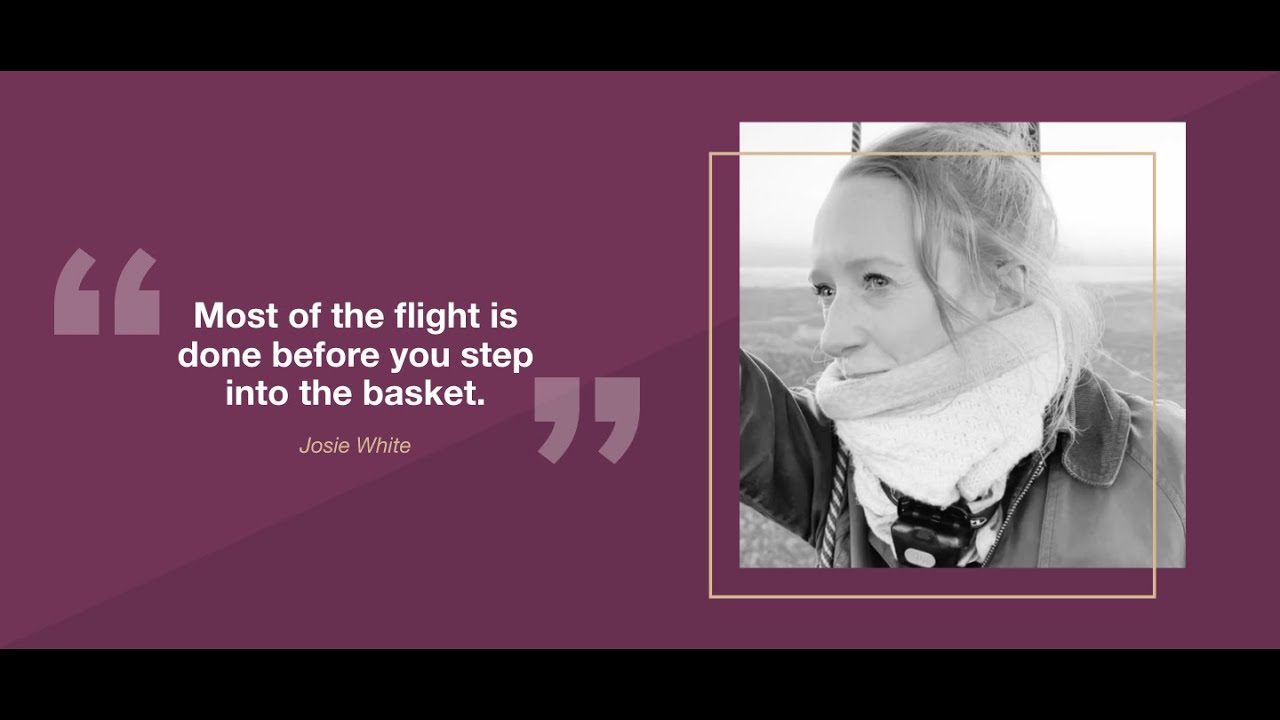
Josie White, a commercial hot-air balloon pilot, explains how she builds trust and manages group dynamics in a basket at 2,000 feet. She reads body language, co-regulates fear, and tailors communication for different personalities. Her strategies from hospitality work translate directly to facilitating groups in confined, high-stakes spaces.
Chapters
Josie, welcome to the show.
Hi, thank you for having me.
Thank you for joining. It was actually, um, a loyal listener who recommended, uh, me to reach out because, um, she thought you're such a niche and wonderful example of facilitation work in maybe one of the extreme cases that don't really come to our mind.
Oh, wow. Um, well, we'll see. We'll see if that, that is true. That's quite funny.
Yeah. Um, and when we had the exploration call, I was like, oh yes, absolutely, I agree. And to keep the tension a little bit up, the suspense for the audience, do you call yourself a facilitator? And if so, when did you? Or maybe not?
Um, I don't, no. Um, I You were the first person to call me a facilitator, and I have to be honest, when we first spoke, I had to take a moment to, to try and work out what, what one was. Um, but no, it's not something I've ever considered myself as being or doing. So yeah, it's kind of interesting to talk about it. So you made me think.
Yeah. So you are a hot balloon pilot.
A hot air balloon pilot. Yes, I am.
And, um, I would be curious because— and this is where the link is, and, um, that's where facilitation comes in. So maybe you don't call yourself a facilitator, but facilitation is part of your work.
It is. Yeah, absolutely. Um, yes, I Obviously work with lots of different people every time I fly, and lots of different groups of people, different ages, different backgrounds. And we all really need to work together for the flight to be successful. So yeah, in that sense, I am a facilitator very much when I'm in the air. Yes. Yeah.
And what I find fascinating, and maybe we start at the beginning before diving deeper into it, but what I find fascinating in the idea of facilitation in the context of hot balloons, hot air balloons, is that it's a very small space. There's no escape. There's usually, there are usually some nerves because you're up in the air. You'll tell us how high you're actually flying.
Yeah, absolutely. All of the above. So yeah, it's It is a very confined space, different people, different nerves. So, again, it's about how to manage all of that and gain trust very, very early on. So, yeah, we'll start the morning when I'm— I'll introduce myself to the passengers. And in that moment, I am not only introducing myself and trying to gain trust immediately, which is quite a tricky thing to do. I'm also trying to gauge the, the people who I have with me on that morning. So, um, not only, um, people who are excited, people who are nervous, but, um, yeah, it's kind of like a give and take. They're trying to suss me out, and I'm trying to, um, make an opinion on them of who they are and how to bring them together and how the morning's going to go. So yeah, it can be, it can be tricky. Um, but also how to, how to read people quite quickly. I think that's the key thing.
Yeah. And before diving into that, how did you end up there? Was it something that you have done all your life? Because there's a, the curiosity of reading people, and I guess it's not the curiosity for people that got you into hot air balloon.
No, I got into ballooning through, um, a childhood obsession. I was like absolutely obsessed with hot air balloons. Um, I just thought they were the most magical thing I'd ever seen. Like every birthday and Christmas had to have a hot air balloon present, otherwise I was not happy. Um, and make them out of papier-mâché. I was that weird kid. I'll take them into school with me and, um, my teacher will be like, oh, another hot air balloon. And I'm like, it's very different. It's different colors. Um, anyone who asked me what I wanted to be when I grew up, I'd be like, a hot air balloon pilot, obviously. Um, but I had no connection to it whatsoever. Um, I grew up in the middle of England. Um, yeah, there just was no hot air balloons in my family. Um, no. Um, yeah, I moved to Scotland. There was no— definitely no ballooning there. And then I moved to Australia and I saw them in the city. They fly over Melbourne quite often. And my passion for it had never left me. I'd grown up, but that stayed with me. And yeah, I just saw them and I thought, somebody is flying those things. And if they can, then I can. And so I did.
Wow. That is beautiful how a childhood obsession is manifesting. By some coincidence and some willpower?
Yeah, a lot of luck, um, but also I— yeah, it is a lot of willpower as well. Like, I've pushed it, um, I made it happen, but a lot of the stars aligning as well. Yeah, so yeah, I consider myself incredibly lucky.
Um, yeah, and often it's part of it, and often it goes hand in hand, right? So is Then the communication part, is it also part of the training? How did you learn that bit?
It's— it is and it isn't. Um, I mean, part of becoming a commercial pilot, we— I mean, most of commercial piloting, it is about passenger management. But, um, I spent most of my 20s, um, supporting my studies by working in a bar. And so by working in bar work, you're constantly dealing with people, and as the night progresses, you're dealing from the sober to the very drunk. And so you— it's again, it gets tricky, but you're navigating these different situations and different personalities. And I think having that— I spent about 10 years doing that, and it's really feeding in now into ballooning, of being able to, yeah, like navigate different personalities, but also— understand where people are at quite quickly and how to deal with that.
Do you think there is a similarity between when people are in the extreme situation of being drunk and in the extreme situation of being scared?
Yeah, they're kind of— we act differently. I think being scared, you kind of are a little bit more in control, but I mean, it, um, I've realized as well after, um, doing this, that yeah, fear manifests quite differently, and it can manifest in a way that people become over-chatty, or they don't want to admit that they're scared, so they will compensate. Um, I guess also like being drunk, you just start talking more. Um, or you can just— other people start crying, um, or they just go silent. And so And as you said earlier, when I'm in the air, I'm 2,000 feet up in the air and in quite a confined space. It's how to, how to deal with that situation without, without the— it's a situation that could escalate quite quickly and then bounce onto other people. So it's how to manage that and keep it confined without that person feeling like I'm singling them out and being like, oh, you're scared. It's, it's not about that. It's— This is a normal emotion to have. It's completely normal. And there is a way to move through it.
Yeah. Because emotions are also contagious. If one person starts, you don't want everyone to be in panic.
I've got an entire basket of very, very scared people, which is the last thing I want. So yeah, it's how to navigate that. And that does form part of the training for commercial flying of, we'll give each other scenarios. It's like, this has happened, how do you deal with it? But also, I think, Um, it's a part of— a part in me, I think a part of it comes naturally as well because of the bar work situation where it's, it's— yeah, it can be kind of similar.
Can you— what example comes to your mind when you say that?
I'm just, I'm thinking about when, um, you know, someone's had a little bit too much to drink and you're like, okay, that's enough, it's enough. And it's that situation where depending on my— the way that I handle it as as the person in control, it could go very bad. This person can get more upset, like, no, I want more, uh, I'm not going to listen to you. And if I rise to that, then it could get worse. But if I stay very calm and collected and I'm not reacting, it's just to have a conversation, then you kind of— you feed off that and the other person will then start to slowly calm down. And it's the same with dealing with fear. I'm not scared. There's no part of me is. I'm I make sure that my voice is always calm, always, always, and regardless of how I'm actually feeling on the inside. Sometimes I'm like, oh, I'm in a bit of a tricky situation, but I would never, ever allow that to feed into the tone of my voice.
Mm-hmm.
So, no matter what, I'm always very, very calm, and I keep that regulated, and I'm always smiling. And I've had passengers actually say that to me. They're like, oh, I was really scared, but I looked at you and you seemed so calm. and you were laughing. And I was like, well, yeah. Um, and that is regardless of how I'm actually feeling. And also personally, I could have had a really awful morning. I'd be like, you know, I've got things going on. I will never ever let that show when I'm flying. I am— I'm smiling, I'm happy, I'm calm, and I'm very aware of other people. Hmm.
And that's, it's fascinating. I want to Just double-click on what you explained with the drunk people and how you, how your behavior or your reaction actually either activates or calms them.
Yeah.
What comes to my mind is, um, the almost condescending or parenting, oh, maybe you had enough, isn't it time to go home? And then the person kind of reacts to that.
That's exactly it. Um, yeah, 100%. That's exactly what I'm explaining, is that's the opposite of what I, what I want and what I do. And it's the exact same thing in when in a balloon. So again, part of my, um, trying to gauge people when I first meet them, uh, I, I can see nerves, I pick up on it, and— but I'm not going to single people out. I'm like, oh, you're nervous. Like, because I don't want that to be like, oh, is it like she thinks that I'm really nervous, she thinks that I don't want to do this, or— and I don't want to single them out. I don't want— and also, I don't want to be condescending at all. Like, it's not in my nature to be condescending, but I don't want anyone to misinterpret anything that I'm saying. And so I will have picked up on nerves, but then— so it just means that I might just explain more. I explain what I'm doing anyway, but I explain a little bit more. And the person who's nervous, I'll keep them closer to me in the basket. So once I'm loading it, I'm like, you Could you come in? Actually, could you stand closer to me? So again, I'm not making it obvious. I'm not saying you are nervous and so I want you here. I'm just saying, actually, loading of the basket, can you come closer to me? And it just means that I can have a closer conversation with them as it goes on. And I'm not shouting to a whole bunch of people as well. I'm keeping my voice quite low, like I'm quietly spoken anyway. So it just helps that I don't have to then shout because It's harder than to control the tone of your voice.
Mm-hmm.
And then I just keep monitoring it. And usually they'll turn to me and say, I'm really nervous. And I'm like, okay. I'm like, that's absolutely normal. I'm like, it's totally normal. I think most people are. And so I'll say, well, I'll then explain everything that I'm doing. And as we leave the ground, I'll say, if you are nervous, just turn around and look towards me. And when you're ready, look past my shoulder and look at the horizon. And usually that works. If I can still tell they're quite nervous, then I'm like, just keep focusing on me. I'm going to go to this height. Are you, are you happy with me to do that? And by doing that, like, I'm going to go to that height because I usually need to, but it gives them an element where they think they have a bit more control of the situation.
Yeah.
And so then when they think they have that, they'll start to smile. Oh no, no, if that's what you need to do, you can go. Um, okay, well, this is what I'm doing and I'm doing it for this reason. And then if we do go like that, usually people have calmed down at this point. If there is still nervousness, I'll say, um, I'm like, look, I can land. I have ground crew, they're right below us. I can land, it's absolutely no problem. And that is the truth, it really isn't. I can always land. I'm like, I can land, um, you can go with the ground crew and then I can continue on. Would you like me to do that, or are you happy? And Every single time, like, no, I want to be here, I'm just really nervous. I'm like, that's fine, then we'll just keep talking. And, um, yeah, that's usually how the morning goes. And at that point, because I've got that person closer to me that we're now having a one-on-one conversation, the other passengers are enjoying the view and enjoying their time together. And so it's not like this person feels that they're being spoken to in front of a group. It's individual. Yeah.
And the entire group has a sense of agency. And so you're not doing something to them, but they're part of the process, and you get their buy-in as you move forward.
Yeah, absolutely. Yeah, yeah, yeah. And I think that's important for the group dynamic as well. Everyone's kind of aware, and then it becomes, um, everyone starts checking in, and the rest of the group are like, how are you feeling? Actually, I'm nervous. I'm nervous too. Like, can we be nervous together? And I'm like, yeah, go for it.
And you said that right from the beginning, so the people check in, if I understand correctly, most of the groups are strangers to each other.
Oh yeah, yeah.
So they sign up via a platform or something and then they join the trip.
Yeah, absolutely. Yeah, so you'll book a flight through the website and, um, you book your date and then we will tell you the meeting time and that's when we all meet at the same time. And so I'll do an introduction, like I'll obviously, I'll introduce myself And then I introduce the group. So, um, and it's so that I can put a face to name as well, because I like to use people's names, um, as we're setting up and also while in the basket. So, um, and but by doing that, I'm also introducing everybody to each other. So, um, yeah, it usually works.
So creating a little kind of group.
So yeah, exactly.
And so before we, we get to what happens within the group then and how you facilitate that conversation or experience How do you— I can— I'm only imagining because even from facilitating, there are teams walking into the room and then after the first few words, sometimes even before the first few words, you're like, ah, this is that kind. And you put your labels, your stereotype labels on them, whether you want it or not.
Yeah.
How do you— what are the categories that you would assess people on and Maybe for the— to remove the negativity of it, because I think there is a necessity in terms of safety measures. If you— if someone has the label nervous or unstable, I think you have your ways to deal with it.
Yeah, absolutely. I think in trying to work out quite quickly, and you're right, you can put labels on people when it's unwarranted. Sometimes it actually starts the night before because I will call my passengers the night before just to confirm the flight's going ahead, we're going to meet here. So in that moment, I have my first conversation with them and, um, and I'll say like, do you have questions for me? And some do, some like, oh, I've got so many questions, and others are like, nah, no, and like they don't want to talk. So I'm like, okay, I'm like, that's— so I'm already like, okay, they're quite interesting, like. They might be harder to work with. These ones seem really open. And so that's when I'm— and I'm usually wrong, actually. So I meet them and they're the complete opposite. They're like, oh yeah, no, I was just busy when I spoke to you yesterday. But— and I'm like, okay. So I'm like, okay, remove that. But then it is, it's again, I'll go up to them individually as people are gathering and I'll go and say like, hello. I was like, hey, sorry I spoke to you yesterday. I'm Josie. So again, and I look at how their body language, And how they respond. So sometimes I have people who, they let their partners do all the talking and they just won't say a word. I have others that will come and sign the paper and walk straight back out and have to round them back in. I'm like, okay. So then I'm like, all right, maybe you're going to be hard. I need to tell you more what to do as the morning goes on. Others who were right there and they're just asking me everything, and I'm like, okay, so you're, you need, you're more detail-focused. So I might need to explain a little bit more about the actual workings of the balloon to you. These people seem like they just want to, like, enjoy it, so I'll kind of keep them towards the end and they can enjoy it. This person wants to talk, so I'll keep them closer to me. So it's all—
it's—
and it's a lot of, um, I guess just feeling the vibe of somebody as well. I don't know a better way to put it. Um, but yeah, just trying to kind of read their personality just in an instant. And it's a— it's not an easy thing to do, but— Yeah, I try to, I don't know if I'm successful or not, but so far so good. It seems to be working. Yeah.
And so what are the different, how do you know what a person needs? So you mentioned that there's some who ask a lot of questions, so you know, okay, so they might need a little bit more information. And then You also mentioned earlier that some suppress the fear and others tell you that they're nervous. And I'm thinking of in a talk workshop, there are those who make jokes, there are those who play the cool.
Yes, um, I literally was just thinking that it's usually Uh, the quiet ones are usually— they will tell me, they'll turn to me and they'll whisper, and they're like, I'm quite nervous. I'm like, yeah, it's okay, I picked up on that, it's okay. It's the, uh, the super loud and making jokes at everything and being— yeah, being quite cocky. And I've— and it's— I didn't realize this, it took, um, I didn't realize this early on in my career, and I've learned it now, that that is a sign of nervousness.
Yeah.
The, um, being quite, uh, making jokes out of everything, being quite cocky. And I'm like, right, okay, I've got it now. You're covering for something. And, um, yeah, it took me a while to pick that one up.
And I find this fascinating because I can imagine that in an extreme situation, these things come out Naturally. So you cannot suppress it, how you deal with your own fear.
No.
And in, I think many facilitators, me included, we tend to, to see the quiet ones as the air quotes, more vulnerable ones, those who might need more attention, more care. Um, and the loud ones are the, they're taking care of themselves. They're taking too much space anyway. And now, as I was listening to you, I was like, Huh. It actually sounds as if the quiet ones, they know how to take care of themselves. They will ask for what they need. The loud ones, they're actually the almost unaware ones who might need some co-regulation.
Yeah, I, I absolutely agree with you. It's, um, it's the loud ones who are, who don't want to admit or don't want to show their emotion, where the quieter ones are like, I, I actually know how I'm feeling. I know, and I'm not, I'm not afraid to admit it. Well, yeah, you're absolutely right. It's the louder ones that— yeah, I try to just— and again, it's what I said earlier, you don't want to be condescending, you don't want to pick up on— you don't say, I think you are this. And I'm not going to label anybody either, but I just, I'm aware of it and I'm, I'm very, very conscious of it. So usually I'll keep them a little bit closer to me as well. And again, I just talk to them. But then if If they're louder, because I am quite quiet and because I don't think that they're— either they're aware and they don't want me to know, or they're not aware of their own, or I don't know. I will talk to them as a group. So instead of where the quiet people who stand next to me, I say, I'm going to do this now, is that okay? I'll turn to the whole basket and say, okay, everybody, I'm going to go to this height. We're going to stay here for another 5 minutes and then I'm going to go to this height. Is everybody okay with that? And it's just then it's, uh, I've clocked it. I'm not going to single anyone out, but I'm just making sure that every— and also it is really so everybody still has that feeling and, and feels included. Like, I do always like to, to say what I'm doing so everyone's got a picture of it in their head, so I'm not surprising anybody.
Yeah. To what height do you get?
Oh, um, depends on the morning. Um, So we use the— without getting too technical about how ballooning works, we do steer the balloon, but we use the wind to steer.
Mm-hmm.
And early in the morning, the wind layers are very separated, and so we use the altitude to change direction. So if I— I usually have a landing spot in mind or somewhere that I'm targeting, and so sometimes that will mean that I do need to go up to 4,000 feet to change direction. And then drop back down. But I mean, in the area I fly in on a passenger flight, I have gone up to 5,500, 6,000. But usually on an average morning, I would be going between 2,500 to 3,000 feet and below.
Wow.
Yeah. If I do go that high, I tell everybody, I'm like, we are going to do this. But to be honest, once we've gone up to 3,000, 4,000, people can't really tell the difference anymore. So, yeah, it's only if I tell them. And yeah, and sometimes I'll say, I'll wait. Again, if I know I've got a basket full of quite nervous passengers, I don't tell them how high we actually are at until we are back on the ground and we're having a glass of champagne. I'm like, okay, everyone, we actually went to 5,000 feet. And I was like, oh, I'm so happy you didn't tell me that at the time. And I was like, yeah, no, I got that. I clocked that.
Fascinating. And so I would be curious, as there are different, there are different personality types there and they arrive with different needs. And yes, so I can imagine that, and it is an experience and it's not cheap.
So no, it's not.
And I wonder, how do you cater for the different needs? Maybe someone rather wants to experience the awe quietly, others want to share all their experience out loud because that's how they process information. Um, yeah, how do you make sure that everyone gets something, whatever they need, out of this experience?
Yeah, it's a— that is A really tricky one, because you're absolutely right, though. It's managing those different personalities. And again, the louder ones, I get it's difficult because we have such limited space. But if somebody is in the basket and they just keep talking, keep talking, keep talking, and I realise that's their way of processing what they're experiencing, I will move people around mid-flight. And I'm like, hey, how about— I was like, how about you come closer to me? And we can talk about this because I'll start the morning and because at the very start of the flight, everybody is a bit nervous. So I do all of the talking. But after we're about 10, 15 minutes in, people want to experience the flight and they don't need to hear me the whole time. So that's when I let people— I go a bit quieter and I let people enjoy it. So then if I have that person talking, I'll say, how about you swap Are you happy to swap places? You can come closer to me and we can talk about this. And so it just contains it a little bit more, and then it means other people just can look out over the basket and be in their own little world, and I've taken that person kind of away so that it's all the focus on me at that point, and they can enjoy their morning.
Yeah, this makes a lot of sense. And then you need the sensitivity to really See, okay, how are people reacting? And I guess you can see a lot in their body language, whether they're turning away, rolling their eyes.
Yeah, you can— all of that, absolutely, you can see it. And honestly, I feel it as well. Like, I'm feeling what they're feeling, but, um, I'm in a position that I can't fix it. So yeah. Yeah.
And then what happens for the group as such? Are you Because again, I think you can enhance the experience with— you spoke about a glass of champagne. I don't know whether this is something you do or whether you have small things to enhance the experience, to make it more memorable, to maybe look at specific things or for them to reflect as a group or individually.
Yeah, absolutely. So I mean, part of being a hot air balloon pilot We're also like a tour guide for that area. So I'll point out, well, I'll point out local landmarks. But I also try to get a sense of who's local and who isn't. So, because it's a different experience for both people. So if they're local and they're really local, I'll say, oh, where— if they're literally, we're flying over kind of where they live, I'll say, oh, can you point out your house? And we'll try and fly over it. And so it makes it really special for them. And we do do that and they love it. And then other people who are visiting and it's like, oh, okay, well, this is like a mountain range where Ned Kelly had his— the last siege, for example. Like, I fly over there and we'll give a bit of a story. So they go like, oh, I know this story. I didn't realize it was right there. But it also, it's really good for the people who are local as well because they're like, oh, I see these mountains from the ground all the time, seeing them from up here. And they'll say to me, which is this mountain? I can point it out. And sometimes I do have to admit, sometimes when I say, who's local? And they all say yes, I'm like, oh, that means I really have to be very, very accurate with my facts. I can't make anything up. But yeah, it's interesting when you have a group of people, half are local and half not, because then they start sharing stories and say, oh, how long are you going to be here for? Have you tried this winery? I recommend this. And I really love that of Share that, um, yeah, the sharing of experiences at that point, which is really lovely.
Yeah, and I can imagine that the confined space and the shared nervousness, uh, oh yeah, assuming that everyone at some point gets vulnerable enough to admit that they're a bit nervous, or that they feel— at least when they feel relieved.
Yes.
And then they open up emotionally as well.
Yeah, they do. And it's really lovely to watch a group of people become quite close quite quickly. Like, we're in the air for an hour, and When we leave, everyone's hugging each other goodbye. They're sharing photos, so they'll be taking each other's numbers and like, I'll send you these photos. They've only known each other for a maximum of 2 hours at this point. So it's another really lovely thing about ballooning is that it brings all these people together very, very quickly. You get a sense of trust amongst each other, which, yeah, watching it happen, it's quite amazing. I love watching that happen. It's great.
Can you, can you point out what it is that makes groups either grow together within this hour they have or two? What are the components that make this happen?
I think being in a very, very small space. So you literally, you are like in a very confined space. And also the, the I kind of like the actual experience of flying. Like, it's, it's quite a magical, um, it's quite a magical experience that not— it's very difficult to explain. But I think being in this, like, it's a wicker basket, being in a wicker basket floating 2,000 feet above the ground, you just— it's that joint, that sharing that experience and being in it together. And again, it's, uh, being nervous, having that nervousness leave you, or sometimes you stick with it. But when you're back on the ground, it's then the adrenaline of like, oh, I just did that, we did this together. And, um, and yeah, so it's just, I think those elements just makes people, um, their boundaries, or they— yeah, you break down boundaries a lot faster and people are more open to talking. And I find that people, uh, also they'll start telling me very, very personal stories. Um, like, really, they let me know a lot about themselves that you wouldn't. I'm— I am essentially a stranger. They tell me their deepest, darkest secrets. I'm like, wow, wow. And, um, which—
Their lives are in your hands.
Yeah, exactly. Yeah. So it's like, I might as well tell you everything. Um, but that side of it as well, I'm always really amazed at. And sometimes it's, um, it's after we've landed and we'll be driving back to, um, to the start point together. And I'll get in the back of the car with them and we'll be chatting. And yeah, people just really start opening up and tell me like their deepest, darkest secrets. And I'm like, okay, okay. Yeah.
And I can imagine that there's still a difference between some groups. It gets maybe faster, more intense, or you feel this special magic. And with other groups it doesn't.
Yes. Yeah. And it's hard. It's hard work.
Yeah. Do you know what it is or what it could be that— and the reason why I'm asking, I recently read, I think it was in this month's Harvard Business Review, an article about the, every team needs a super facilitator. And these are apparently individuals who have this superpower of connecting others. Or so I was wondering whether You recognize that there's maybe someone in the group, or is it something to the group or something that you do? What are the components that facilitate it?
It's really, that's an interesting one. I don't think it's anything I do. It's the, again, it's, it's those different personality types. And when you get a group that feeds off each other, it really works. But then other days you get a group and they just don't want to talk. They want, they want to talk to each other. They don't want to talk to me. I'm often thinking, am I doing something wrong? Like, why am I not being like entertaining enough? Or did they not love this experience? And then I get sad because I love it so much that I'm like, what if they don't love it? Um, but yeah, it's just, it's hard work. And again, that's just— I think in those situations, I don't take it personally.
Mm-hmm.
And, um, it's recognizing that everybody, everybody's personalities are different. And some people want to talk. That's how— that's just how they want their morning to go. They're happy to sit and chat, and others don't. They just want to be quiet. They want to stay either there with a partner or a friend, and they just want it to be them. And again, I think my early days of doing this, I would take it very, very personally, and I keep pushing, be like, oh, what about this? And ask more questions. And now I've realized, like, they just don't want it, and that's okay.
Mm-hmm.
Like, um, it's okay for people to be quiet. And, um, so yeah, I just, I allow it. And again, I'll do the same thing. I'm like, okay, so we're going to do this next. This is what I'm doing. Um, this is what we're looking at. But I, I minimize it. I don't keep, keep going. And I just realize that they just want a quiet morning and to, um, enjoy, enjoy the experience in silence.
Yeah, yeah, you cannot force them. And then to, to learn to sit with that silence.
Yeah, that's the hard bit. Yeah.
Because, I mean, uncomfortable, you're carrying a lot of responsibility and you have to entertain them, air quotes, and fly at the same time. So I guess you're also nervous because you have many things in your head. And then if you're— yeah, I know it from the, from my facilitation work, I think in the, especially in the beginning, I hear it from many facilitators to sit with silence. Um, and to accept that it's not on us to push further can be quite nerve-wracking as well.
It is. It's, um, and that's, yeah, and that's the side of it where it may— it has made me nervous. I'm like, why, why are we in silence? But I'm in the fortunate position that I actually have so much other stuff going on that the concentrating on flying the balloon, that is really 90% of my of what my focus is on, and the 10% is talking and engaging. Obviously, like, some mornings are easier than others. Like, others, it's just, yeah, I can chat and fly, like, I can do both quite easily. Another morning, so I'm like, I'm actually concentrating for a little bit now. But again, I don't want my passengers to know that side of what I'm doing. So I will still be answering questions and listening, and I make eye contact, listen, and then— I was like, okay, just give me one moment, and look and do my thing, and turn back to them. I'm like, okay, I'll answer that in a second. I'll do this. But again, it's, um, yeah, because I'm, I'm literally multitasking when I'm up there.
Yeah.
Um, which I love doing, actually. I really like the technical side of ballooning and being on top of that, but it's— that's the exhausting part of it. So when I have had a morning ballooning, I am. It's, it's tiring. And I've spoken to other pilots about, about why it's so tiring. So when I fly by myself, like, I don't have the same level. I've realized, I said, it's, it's the, um, it's the talking. It's the talking side of it. And that's the bit that really is, is quite draining, but like draining in a good way. I really enjoy it. But because I'm taking it, like, takes— because I'm doing, doing the technical aspect of flying and I'm doing the social side of being with my passengers and I'm giving and giving the impression that everybody's getting equal, like equal parts to everything. Whereas the reality of the situation is I'm concentrating more on flying and in the side, keeping this group of people happy and together.
And it's interesting because when I think of an airplane pilot, it wouldn't even cross my mind that I would expect them to talk to me. But then we step into a hot air balloon and suddenly we expect this person to be our tour guide.
Yep, I'm chatting, I'm taking photos of them, and I'm flying the balloon. And I had someone actually recently say, it was a passenger, and he was like, oh, you're really doing everything, aren't you? He's like, you're on it. And I was like, I'd hope so. Yes, yes, I think I am. Yeah, I try to. Yeah, we do, we do do it all. But, um, it's also, it's that unique situation where you're literally in a basket with your passengers. The only time that, um, it's when I might say to people like, Um, actually, I need to concentrate right now is when I'm coming in to land. And that's the only time that I'll say, actually, if I can have 5 minutes, we're going to be landing soon. So any questions you have, let's, um, I'll answer them once we're on the ground. Yeah. But yeah, the rest of the time, I'm happy, happy just to chat.
I would be curious what, whether you have a strategy or how you learned to really Have this happy face, um, which I find it, um, because they— how do I explain that? On the one hand, you want them to look at you and feel relaxed and trusting, so it must be sufficiently authentic, right? If you're forcing a smile, everyone will know that you're nervous.
Yeah, exactly.
So you fake it so realistically.
Yeah.
So where did you learn it or how do you get your mindset to it? And how do you actually switch it off when you come home?
Oh, I can easily switch it off. Ask my partner. He's like, I don't get that side of you. I think part of it comes from the fact that I absolutely adore what I do. And when I'm up there, I'm in my element, and I'm very confident in my ability, and I know what I'm doing. I do a ton of safety checks. I've always— we, the other pilots and I, we always say that most of the flight is done before you step into the basket.
Mm-hmm.
We've checked everything, we've planned the flight. It's just that final 20% of turn the burners on and fly. But I know where I'm launching from, I know where I'm going to land, I know what the wind is doing. I've checked the balloon 3 times at this point, so all of that I'm confident. And, um, and then that talking to people and maintaining the, the smile even in situations that, like, maybe the wind has picked up, or I know it's going to be a fast landing. Um, it's things I'm like, oh, this is good. Yes, I'm gonna have to come in lower. I'm gonna have to really try and slow this thing down. We might— this might tip over, which is completely normal. Like, it's a small balloon if the wind picks up. But I'm like, oh, I need to Yeah, it's going to be a bit of a harder land, um, a trickier landing to Norma. So all that's in my head, but again, I'm not, I'm not really relaying, relaying, sorry, any of that, um, inner monologue to my passengers. So that side of it, again, I think comes from bar work. It comes from hospitality, of it does not matter what you're feeling on the inside. You smile and say— and it's not, and it's not a fake cheesy, it's, um, I mean, I'm English. I can't do cheesy. Sometimes it's more emotion, but it's also— it's kind of part what I'm generally feeling, which is I'm so happy to be up here and really love what I'm doing, and I'm not nervous at all. And the other part is I've learned to regulate my own emotion. And to be very aware. And this has come from hospitality. I've become very aware of my facial expression. And so, if I look angry, if somebody— when I was working in bars and restaurants, if I went to take an order and I looked angry, it'd be like, why are you so angry? It's like, oh, actually, I wasn't. I didn't realize that's what my face was conveying. And so, over the years, I've really learned that, and it's what I utilize now. It'd just be very— I'm very mindful. of, yeah, my facial expressions and to not look too stern, to not look harsh. But also what you said earlier hit a point that I also have to convey a level of authority because I'm also gaining their trust. So I can't be this, as much like, not ditzy, but bouncy, happy, like, oh, let's go and fly a balloon today. Yeah, it's— they need to take me seriously because what I'm doing is a very— I'm in a very serious position.
Yeah.
And I take it very seriously. So, it's also finding that balance of being able to joke with the passengers, but also, I'm not being a joker. I am joking, but I'm not a joker, if that makes sense.
Yeah.
So, we laugh along with each other, and I will, yeah, but also, it's quite clear that I'm also taking my job very, very seriously. So, it's a fine balance, I think. Yeah, again, it's something that I, I'm mindful of. I try to do it. I, I think, I think I'm successful in doing it. I hope I am, but also, who knows?
And I, I can totally relate to that because as a facilitator, we step into a space. We have usually the workshop is— most of the workshop is done before we started.
Yeah, nice.
Because we have an idea, we worked on the purpose, maybe we talked to the participants, we know where we want to go. And then if the wind picks up, yeah, exactly. We have to adjust and maybe we have to ditch the entire route, but we are still in charge of the process.
Yeah, exactly.
And if we have had a fight with our partner in the morning, nobody in the room cares. We have to show up. And so there is a lot of that that I do recognize.
Yeah.
Also with the joking, because there's a difference whether we say, oh yeah, let's see where we are going. And I prepared a few things, but what do you want to do? As opposed to, okay, I, I've prepared and now I step in and I wonder Where you're at, where do you want to go? Just by the change of voice.
Yeah, exactly. You're kind of saying the same thing, but it is, it's just the way you say it and yeah, the change of tone and it's completely different.
Yeah. And there's the, I think the calm voice and the lower pace that, um, often shows authority. And speaking of authority, uh, I assume, and I think you mentioned that in the exploration call, that there are not so many female hot air balloon pilots out there because it's a very physical— I mean, it's a huge thing, first of all.
It is. Yeah, it is huge. Yeah. Um, no, so commercially, which is the, the license that I have, um, don't quote me on this, but I think at the moment in Australia Um, I think it might be one of 3 or 4 female commercial pilots. So there's not many of us. Um, it's highly, um, it's very much male dominated. And, um, yeah, so there, there is that side of it of— I know that pretty much, I would say actually close to 100% of my passengers, when they book a hot air balloon flight, they think the pilot will be a man. And then they're met with me. And, um, I'm quite petite, so, um, and I'm softly spoken. So again, and I'm, I'm very aware of this, I'm very aware that they were expecting a man, and I show up and I'm half of most of these people's sizes. And, um, and so again, it's how to, how to get people's trust instantly, um, and show them that I know what I'm doing. And so again, I don't have to do that by, by shouting and, and being and trying to act more masculine. because it's not in my nature, but it's being very clear with what I'm saying without, um, without being coming across as being harsh. Like, I still have a softness to me, but it's also, this is what we're doing today. And I go through everything. It's like, okay, so my name is Josie. I'm going to be your pilot. This is my plan. I have decided this. And then I tell them, and it's— I tell them with authority, as this is it. And I continue with that as the morning goes on. And I'll say, I do need volunteers. It's like ballooning is a very— it's a hands-on activity. And then I'll make a joke and I'm like, look at the size of me. If anyone would like to help, please do so. So that's when people are like, oh yeah, I'll come and help you. And it's like, thank you. I'm like, these tiny arms, I can't push this over. But then once that's done, I go back into the authoritative mode of like, okay, now we've done this. this is what was going to happen next for this reason, and I need this to happen. And it's very, very clear. And, um, and when I do that, I gather everybody around me. And I'm also very aware that I can't raise my voice particularly well. I can't shout to a crowd, especially outdoors. So I'll go, I'll say, everybody, everyone crowd around me, and then I'm like, come closer. And then I make sure I, I make eye contact as I'm talking. I make eye contact with every single person. As I'm going through safety things as well. So as I do that, especially on the safety procedures, I really do, I'm very aware to make eye contact with every single one of them. And then after I finish, I then take a moment and I say, is everybody clear on that? And I wait for them to say yes. And if they don't, I just look and I'm like, are you? I was like, everyone's happy? Okay, we're good. So again, it's that, it's taking control of a situation. Without, um, without having to act masculine. I can still do it in a very feminine way.
And you don't need to brag because everyone will understand your authority by the— through the information you're sharing and how you share it.
Exactly, exactly. And, um, I have to admit, like, most, most of the people I meet, their first question to me is, how long have you been flying? Uh, every single time. And I know my male comp— colleagues do not get that question. And so, I mean, some do, but it's rare. I get it every single time. How long have you been doing this? How long have you been in the industry? And I tell them and I laugh and I say, it's absolutely fine, you can ask me that. And once I start telling them about my experience, because it comes out in conversation, they're like, oh, okay. It's like, I was like, oh, we kind of wanted to get your CV, but we didn't want to ask, but you've given it to us. But I tell them, I'm like, oh, well, I've flown in a world championship. I was on the Australian team. I've done this, I've been doing it for this many years. And so again, they're like, oh, okay, all right, so you've, you know what you're doing. Like, I can assure you I know what I'm doing. But also, once they watch me, um, inflate, I have a few people after the inflation, because that's when I stand the balloon up, I've, I've got the flames going and I have this huge thing standing up, and, and then they come over and they're like, okay, yep, you've got it. Like, yeah, we just saw what you, what you can do. And it's like, yeah. Okay, good. I'm glad we're all on the same page.
Amazing. And I, yeah, that even as, as someone who doesn't know anything about it, that you see the craft and the mastership and how you move and how you navigate. Yeah.
Yeah. And I think that really is what sets it in most people's mind where they'll come in again quite nervous, but then they start watching it and they're like, oh, This wasn't what I was expecting. And lots of people say to me that they weren't expecting it to be such like a hands-on experience, but they loved that it was. And they're like, we felt like we were part of it. And I was like, yeah, it really— it does make the morning. And because we're in it together at that point, and, and I explain exactly what I want them to do, but we're all at that point, we're all working together.
Yeah. What, uh, You spoke of safety measures, and I assume that they're similar to a plane flight. There's— if something happens, how do we, um, what do we need to do? Do you also have safety measures in terms of behavior, or what to do if someone panics? Has someone panicked?
I, I have had, um, I have had a panic. Well, I had— I've had tears. Which is fine, that's normal. I have had somebody who, who was quite— I realised that he was panicking, not panicking, but there was something internally going on. So yeah, I, I kept an eye on him. But yeah, we do, we do have procedures in place. I mean, if it's a full-blown panic attack, then yeah, it's, it's just you go into your training, and if it's really bad, you land, just land the balloon. Like, that is always an option. And, um, yeah, we take— obviously it's aviation, safety is taken very, very seriously. And, um, yeah, and each year we'll go through— well, not each year, even, um, regularly we'll talk through different, um, scenarios. It's like, okay, this has happened, what would you do? And, um, yeah, and we talk with our crew as well. So it's amongst pilots and our ground crew so that everybody is very aware that if I jump on the radio and say I'm landing straight away, it's You need to be— the crew needs to be underneath me and we need to work out. Luckily, I've never had to do that, but, um, the option's there. So yeah, and I would quite happily land the balloon 5 minutes into a flight if I think somebody is really panicking.
Yeah. How large is the crew?
It's just one person. Uh, one person.
Okay.
Yeah, so depending on the size of the balloon, um, if it's a really big balloon, we'll have 2. 2 members on the ground. Um, but yeah, I fly with, um, yeah, so I'm in the sky and then I have one person on the ground. We, and we have, um, constant radio connection, so we're always on the radio to each other and I'm on the radio to the other balloons in the sky as well. So all of us are always talking.
Okay. I had one question and now it disappeared. Anyway, what did you wish you had known before when you started really becoming a pilot, a commercial pilot?
What had I wished I'd known? I guess a lot of it is the different personalities so that you can only be told about it so many times because, as I said earlier, where we— sorry, I've lost my train of thought now. Yeah, so as we do commercial training, we talk about passenger management. But I think the actual realities of dealing with different people from all walks of life, I think part of it comes naturally to some people, and some other people really have to work hard on it. And because I'm naturally quite a quiet person, that side I found not the most challenging, but it was the most out of my own comfort zone.
Mm.
So I really had to step out of that to to be able to engage with a group of people. And the bigger the balloon goes, the bigger the balloon you fly, the more people you have to deal with. So, and so yeah, that bigger the group is, it becomes more different personalities that you're trying to deal with. And so I think if, yeah, having— I don't know if it's so much I wish I'd known it before, but more, I don't know, you can even give somebody more of a heads up on it, but more of a Yeah, it's definitely a job which is you're dealing with people. I think a lot of pilots, I suppose, especially you start to be in your kind of pilot career, you start as a private pilot. And so most people will just be flying just themselves in a tiny basket to build those hours up. And suddenly you go from flying solo to flying with— it starts with 4 or 5 people, up to 10 people, up to 16 people. So you go from this quite an insular experience to, oh, I've got to deal with all these people. And it's a steep learning curve, actually, that side of things.
I can imagine. Would you think that most pilots are introverts?
I think that they are, actually. Yeah. Maybe 50-50. The people who become commercial, they obviously, they're A lot of them are more— they like the showmanship side of things a bit more. But I'd say that, um, yeah, I think that the actually the realities of dealing with people, I don't think it comes naturally to, to most pilots. I think it's rare for it to be a natural side of ballooning.
Because I think when I think of the dream and you're working for it and putting the hours in, as you said, most of it is solo. So it's very lonely. It's you in the basket flying high. Um, and somehow, yeah, what came to my mind is this, uh, is a person who really enjoys this quiet time away from all the busyness.
That's exactly it. And I think it's a shock to the system. It's an absolute shock when you go from that and jump into a basket full of people. And I watch it happen. I watch it with other pilots that are coming through the system and suddenly going to that commercial level. And it's, um, trying to, yeah, then suddenly be like engaged with people on a personal level where it's not— it doesn't come naturally at all to, to most. And I do see people struggle with it, but I'm also impressed. Like, I'm always impressed when people push through that side and they Even though they're uncomfortable themselves having to do it, they, they, they do, and, and they're good at it. And like, um, yeah, I've got a good friend of mine, and he really— he's, he's an introvert, but he can, um, engage a crowd. He can take command of the crowd, and people love him. They love flying with him. And, and I know that he struggles with it. So when I watch that, I'm always really— I'm very, very impressed that he— That he does that.
Wow.
I guess the other side of kind of navigating all these different personalities, it's not only personalities, it's different backgrounds that people come from. So you can have widely different— you have Yeah, people who come from all walks of life and be— let's, um, an extreme example, it's a real situation that I've had. I've had a diplomat on board and someone who worked in the local supermarket.
Hmm.
So, obviously, very, very different backgrounds. And again, as the pilot, um, I cannot treat anybody differently. And that's not in my nature. I never would. I don't consider people's jobs. I don't think people are defined by their jobs. I don't— for me, especially in the balloon, we're all exactly the same. Every single person is exactly the same. And so, and that is a huge part of my job as well, is talk to everybody exactly the same. Nobody gets preferential treatment, even if they come on and they think that they deserve preferential treatment. They don't get it because they're not— when we're in that basket, we are all the same level. And even I take that further onto the ground. It's something, again, that actually just comes very naturally to me. I don't bow down to people because of where they come from or what their economic status is. To me, it doesn't matter. We're all exactly the same. And I've always had that. It's also the way I was brought up. And, um, so it really— that I'm very grateful for because that serves me very, very well in the position I'm in now that I don't, um, yeah, I treat every single person the same. We have the same conversations and I try to find common ground with everybody. So, for example, the supermarket, I was like, oh, actually, it's in— I was like, oh, I know which one it is. It gets really busy in the summer when at this time. I was like, how do you manage that? And so, so we can have that conversation. And the diplomat is like, oh, in that country, I've been to that country.
Oh yeah, that's amazing.
So again, it's finding It doesn't matter where they've come from, where their story is. I can find something that we can relate to. And then through that, they can start talking to each other as well and ask each other questions.
Yeah. So you build the bridge and create some curiosity that they then can pick up?
Yes, that's what I try to do. And again, that takes the attention away from me a little bit when I'm flying, because then I can go back to flying the balloon. And I know that they can turn and talk to each other if they want or turn away and have their own experience.
Yeah. And would you always do this so subtly, or would you also give them, oh, this is maybe a question that you can talk with each other about?
Or— I've never done that. I've, um, yeah, that's actually— it's another, it's another way of doing it. Um, but yeah, for me, I always— it's always quite subtle. I always work quite subtly. So yeah, but, um, I mean, if I was really— if I needed to, I would just say, hey, there's a question.
So And how do you— if there's someone who clearly acts as if they deserved a special treatment because of their status, their money, whatever, how do you notice it and how do you turn it down in a polite, nice, kind, or maybe not so kind way?
Yeah, um, I don't really engage with it. Um, they— like, people can be as demanding as they want and it's like, oh, okay. It's like, okay, well, we're gonna do this and this, and this is how the morning's gonna go. It's like, well, I want this. I'm like, well, we can talk about that on the ground, or if you have a problem with anything, we can talk to the office. But at the moment, this is what's going to happen. And we're all like, honestly, we're all the same. But we do— I've seen it. I see people who are like, yes, they think because they've paid for it that we work for them.
Mm-hmm.
And it's fine. Again, it's fine. It's understanding, again, those different personalities and not rising to it. of being like, okay, yep. I was like, that's like, okay, that's fine. Um, it's not gonna happen, but sure. Um, like, well, let's just keep like going through this and, and like go through the motions of it. But, um, again, I'm very aware not to, not to rise to it, not to get angry, not to say no, that's ridiculous, that's not going to happen. It's like, okay, I try to see it from their perspective of why they think that. Why do you think that you deserve more than this person? And I'm like, okay, that's interesting. Like, I try and work it out.
Mm-hmm.
But yeah, it is difficult, and usually it comes out at the end where we all help to pack the balloon away and those people won't help, and that's fine. I just say it's okay, you can stand back and just supervise the rest of us. And sometimes I'll feel awkward because they're literally standing back watching, like, a couple of people try to pack this huge balloon away, and sometimes they don't. They're like, well, I paid for you, I paid you to do it, so It just means that they have to wait longer for us to go for breakfast because it takes me longer to pack it away. But again, it's not something I'm going to demand that they help me. I appreciate it when they do, but I don't mind if they don't because that's how they want their morning to be and that's their personality and it's not for me to change.
Oh, it's beautiful to hear this. this grounded perspective and not taking it personally. Okay, you can have your expectations. It's not on me to live up to your expectations. That's what I hear.
Yeah, exactly. That's it.
And to be affected by it. And I can imagine that that's also something you've learned in hospitality where not everyone steps up to the bar.
Yeah, absolutely. Absolutely. Yeah. I mean, it is. I'm very grateful for my background. Like, I worked in high-end hospitality venues, so We'd absolutely get those people of privilege and demand things from you, which, um, it's, it's their right to do. I don't have to, I don't have to deliver or react if I can't. I mean, I always, um, I go out of my way to, to help in every way I can because again, it's part of who I am. That's my, my personality. I like, I like to help everyone. I like everyone to be happy. But there's also so much I can do, and I'm also very aware that like Sometimes I just can't, and, and that's okay. Yeah.
Fascinating. So much to learn and to, um, explore. I, I would be curious. I, I'm very curious about the technical side, but then I'm aware, okay, maybe the audience might not. Um, so the other angle that I'm curious about is the business side, actually. Do you own your balloon?
The business owns. So, yeah, the— so I work for a ballooning company. And so as the company, they own a fleet of balloons. And so depending on the bookings that come in, if we have a lot of people, then I might be put in a bigger balloon. If we have a small booking, just a small group, I'll go into a smaller balloon. So yeah, I'll be basically told which ones. There's only 2 that I fly at the moment. But then if we have an exclusive, then someone books out the balloon. And so it can be just 2 people. And so I'll be the pilot for that as well. And then it's very intimate and it's a different experience. And we'll have champagne on board and chocolates and it's a bit more boutique. But saying that, we try to make all of the experience for our passengers, more of a boutique experience. Because for me, ballooning is a bucket list item. And for me, I do it so often that it would be very easy for me to dismiss it and be like, it's just ballooning, and just be like, this is— it's a job, and get people in the basket, fly, get them down, see ya. Like, that's not how I operate. That's not how I would ever, ever want to operate. For me, I'm very aware that it's a once-in-a-lifetime experience. It doesn't matter that I've done it hundreds of times. The people I'm flying have— either they've never been in a balloon or it's something they've always wanted to do. It's a birthday present, it's an anniversary, it's a celebration, and they're probably never going to fly in a balloon again. And so this goes back to what I said kind of earlier on in our conversation that It does not matter what I'm feeling on the inside. I could— yeah, I could have had an argument with my partner. I haven't, by the way, but, um, I could have done. I could be feeling really rubbish on the inside. When I step into that balloon, all of that personal side goes, goes away. Um, it's not about me, it's about the people I'm flying and them having the most magical experience and the best experience that I can give to them. And I'll have mornings where the weather isn't as beautiful, like maybe it's overcast, so we can't watch the sunrise. I'm not going to say, oh, you should have been here yesterday when it was the sunrise. I'd be like, what a magical morning. I'm like, this is stunning. This is absolutely beautiful. Because it is. In that moment, it is still beautiful.
Yeah.
And for them, it is. It's this incredible experience. And so, and I find that really, really important. And that's why us as a company, we do treat every flight as a boutique experience. For us, it's not like, oh, this is a job, let's just churn people through. If anybody walked away from a balloon flight with us and that's the experience they had, we'd all be devastated.
Mm-hmm.
We're like, we are doing something wrong. And because we all care, and we all care passionately about what we do, and we want to share. And for me, the best part of ballooning is sharing the experience and sharing my love for it. And when I see other people walk away and they, they ask me more about ballooning, they're like, well, like, how do I do it again? Can I do it again? I'm like, absolutely, yes. And then we'll sit and have that separate conversation. And I love it. I love when that happens.
Yeah. Yeah. And I can see how your eyes start to shine when you speak about that.
Um, yeah.
Okay. One quick technical question because I've been to Melbourne. And what I find fascinating is how quickly the weather can change. So the temperature can drop by 20 degrees within an hour if the wind changes.
Oh yeah, that happens. Yeah.
And I can imagine that this has a massive impact on ballooning. So how do you deal with that?
We have very, very good weather information. So we are checking all of that. And again, going so early in the morning, the temperature— the weather is more stable early. So we go at sunrise for the reason that there's a lot more stability. You still have those separated air levels, like layers of air, so with the different wind directions, so we can still steer it. There's also— there's no— especially in the summer, it becomes more important. We want to be back on the ground before the thermals have started, so we will absolutely make sure we leave at sunrise, and we'll be back on the ground before the land starts heating up. And all of that is taken into consideration before we make a call on whether we're going to fly or not. So that all goes back to the fact that most of the flight is done before I step in the basket. I've already checked all of that. Like, I'm nothing— it's, it's— I'm not going to be getting surprises. Like, I know what's happening. I've looked at the, the weather system. I look at what's coming in over the next few days, so what's likely to happen. I look at the pressure system overhead. If I'm really still unsure, I actually— I'll phone the Bureau of Meteorology on the morning, which I did this weekend actually. Um, I just called them and said, hey, I'm, I'm here, I'm trying to fly, I want to fly, I'm really trying to work out what the weather's going to do in the next hour. Like, the weather model's not being particularly accurate this morning, it's difficult to read. Can you— and it's a particular aviation side of the Bureau of Meteorology— and I said, what are your thoughts? Give me the next hour, 2 hours. And, uh, and that was it. And that was my call. The information he got, I said, okay, that's really helpful, I'm not going to fly. That's it, canceled. And, um, so yeah, that's my— phoning the bureau is when I really— if there's something I'm unsure about. But I will never— I never take chances.
Yeah.
So I like to know everything that is— I like to know exactly what the weather will be doing, and, um, so I can be prepared for it.
And then I guess the group knows that all the people, when they book, that there is a chance that it might be canceled for their own safety.
Yeah. Yeah, absolutely. And I warn people. So this weekend, um, yeah, I, as I said, I call the passengers the day before, and I was— it was 50/50. I was unsure. I thought there was a good chance, so I said, look, I just tell people I'm honest and say there is a good chance that, um, it will fly. I want to fly, but there's also a chance that we won't, and these are the reasons why. So we, as— but I'd like to see it in the morning. Um, it's not enough for me to to base that opinion and make that call based on the weather information I have to hand at the moment. So let's go out there and we're going to have a look at it. And it's awful because I'm pulling people out of bed at ridiculous times in the morning, and there's some people, there's long drives involved. But, and there's a couple this weekend, they drove for 2 and a half hours to be there, and we got there and I said, I'm really sorry, but I'm going to have to cancel. But They were lovely, and people are usually very understanding because I'm not canceling because I thought it would be a funny thing to make people meet me there. I want people to have a great experience, and I knew that last weekend they would not have a good experience. It would be a terrible experience. And that's not— I don't fly for the sake of flying.
Mm-hmm.
I fly for people to enjoy it and have a great time. And I was like, you are not going to have a good time this morning. And so, And, uh, and I'm not going to risk it. I'm not— I would never put my want to fly ahead of safety. And also, like, none of us would. Um, we're very, very safety conscious. And so as soon as I had that conversation with them, yeah, with the expert in the weather, it was like, okay, that's decision made. And so I took them out for coffee and we talked, and, um, it was actually quite lovely. So side story, I was talking to the couple who actually came from Melbourne. So I fly 2 and a half hours or 3 hours from Melbourne. And they'd driven up from Melbourne in the morning and we were chatting, having coffee. And obviously I was very apologetic, but, uh, explained why and they understood and they're kind of eager to, to book again and try again. And, um, and then finding out that, um, the one of the, the women, she'd only just moved to Australia. She's only been here for 7 months. She didn't know anybody, but we live close by. So now we're going out for coffee.
Mm-hmm.
And I was like, okay, let's catch up in Melbourne. And so just having that moment. So we didn't fly, but we made a connection and we're going to meet up in the future. Yeah, unballooning related. But anyway, I just thought that was quite lovely. So regardless, you still make those connections with people and still make sure people have a good morning best you can.
Beautiful. Thank you. Thank you for sharing all this experience. With me. Okay, thank you for all this facilitation insights. And I'm, um, I'm just amazed how many parallels I could see, um, and how your perspective has actually, yeah, made me think about the womb and the personalities there in a different way.
Yeah, that's great. Um, Yeah, no, thank you for inviting me on. It was, um, it's interesting to talk about this because it's something that I don't— it's something that I'm not aware that I'm doing. And so it's only when you, when you've questioned me on it and it's made me think that it's like, oh yeah, yeah, it's something that I do. But, um, yeah, you've made me think as well, which is always a good thing.
Wonderful. So thanks to Wixt in Melbourne who connected us.
Yeah, amazing. Yeah, thank you so much.
And I will put your contact details and how to find you and maybe fly with you in the show notes.
Yeah, that would be wonderful.
Close to Melbourne.
Yes, please. Yeah, come and fly with me.
Thank you.
Thanks.
More from Myriam


Did Social Media Make Us More Unprofessional? Unprofessionalism EP 035 with Kate Raynes-Goldie

The Costume That Got Me Promoted with Moh Guissé - Teaser of Unprofessionalism Episode 28

Unprofessionalism Vodcast Episode 027: Why This Podcast Makes Us Uncomfortable with Myriam Hadnes






