Vodcast 344 : From Fear to Calm: Facilitating in an Age of Overload with Mike Parker
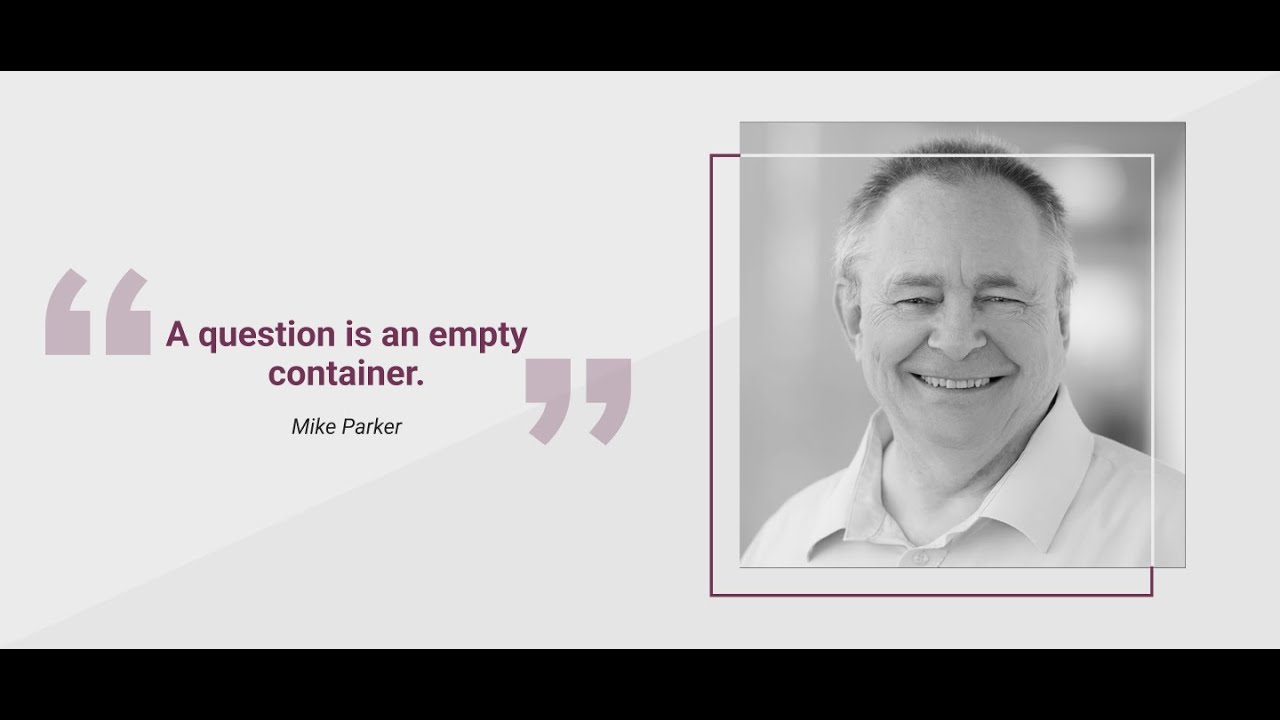
In this vodcast, host Myriam Hadnes interviews facilitator and liminal coach Mike Parker about the challenges of facilitating in a world of chronic overload and neurodiversity. They discuss what makes a good facilitator—empathy, deep listening, and creating safe, optional spaces—while highlighting common mistakes in accommodating neurodivergent participants, such as inflexible camera or breakout room policies. Parker references "The Canary Code" to illustrate how neurodivergent individuals can serve as early warning signals for organizational dysfunction. The conversation moves to the neurobiology of workplace stress, describing how fear, cortisol, and amygdala hijack shrink creative capacity, and they outline a simple stress‑checklist for early warning signs. A major focus is the distinction between traditional mindfulness/meditation and Parker’s guided relaxation (a liminal coaching technique) that uses non‑cognitive, metaphor‑rich narratives to bypass the conscious mind, making it more accessible for neurodivergent people. They explore the design of metaphors (the empty cup, water, forest path), their cultural universality, and ethical safeguards. Practical facilitation tactics—stretching, breathing, surprise, offering opt‑out options, and using orientation responses—are shared. The episode concludes with a 6‑7 minute guided relaxation script called "A Liminal Moment," followed by reflections on the facilitator’s personal challenge of balancing metaphor depth with session focus. Contact information for Parker’s liminal coaching is provided.
Chapters
Mike Parker, welcome back. I'm so happy to have you.
Thank you, Myriam. It's very kind of you to have me. It's delightful to speak to you as always.
Yeah, and I have the impression that every time we're speaking with each other unrecorded, it could have been a podcast. So I'm glad to finally have you back and to speak with you Yeah, also for the rest of the audience. Um, and if they are interested in how you started becoming a facilitator or not, they can listen back to our first recording, so you don't have to answer that one again.
Okay, that's, that's good, because I'd probably give a completely different answer and make a liar of myself in the past.
It would also be interesting, actually. Maybe it depends on the day, uh, whether we call— want to call ourselves facilitators or not. What makes a good facilitator for you, especially maybe in times like, air quotes, times like these, where end of 2025?
Yeah, I was actually thinking about this, been thinking about this a lot. I think the things I identified were empathy, deep listening, recognizing people's strengths and encouraging them, allowing things to emerge, creating a safe and supportive environment for diverse people. And that's really interesting to me because we've done a lot of work in the past year or so on neurodivergence and creating things to help neurodivergent people negotiate neurotypical realities without trying to— without, by the way, I should say, with a definite emphasis on not trying to make them behave as if they're not neurodivergent.
Yes. It makes me a bit sad that you have to emphasize that. It's terrible, isn't it?
But yeah.
What do you think What do you think are most people getting wrong about accommodating neurodiversity in a learning space or facilitated space?
Gosh, well, that's— I mean, yeah, I'm a bit stuck to know where to start. Let's see, I had a friend who's child was doing a cello course, and they were doing online practice, and they'd been diagnosed as ADHD. And the tutor actually said— and this is a very professional school, by the way— the tutor actually said, right, we're all ready to go now. Let's just hope we haven't got anyone in the class who's ADHD.
That's not very trauma-informed.
No. So I think they wrote a formal complaint about that, and there were some changes made. So that's an extreme example of what doesn't work. I think that tends to vary. I think people are a lot— tend to be a lot more sensitive, especially if they are doing something like facilitation. or education, because they should really be more aware of those considerations than, say, the average line manager might be.
Yes.
Although there's no excuse for line managers not to be aware. But I think mistakes can be just a completely innocent lack of making adaptations for people who may be neurodivergent in the setup of facilitation. So for example, even really basic things like, you're very welcome to this session. You don't have to be on camera if you don't want to. So you don't have to worry about that.
Yeah.
And if you don't feel like speaking or you don't want to go into breakout rooms, that's also absolutely fine. Let me know and I won't put you in a breakout room. You can just, you can do whatever you want. We can chat or you can just do nothing for a while.
Yeah. So to create options and the opportunity to opt out. Yeah.
Create the opportunity to opt out, but also make people feel completely comfortable about being who they are.
Yeah.
So one of the modules that we developed was actually focusing on different strengths, which are quite often interpreted as weaknesses in neurodivergent people. For example, very close focus on something, and that can be a superpower.
There's so much to unpack because I think what you describe as air quotes special needs for people who are in the neurodiverse space may also apply to— so I think everyone else would also benefit from that.
Well, I'm so glad you said that because I was about to launch into my favorite book of the year in the past year, which is by Ludmila Praslova and is called The Canary Code.
Mm-hmm.
And it's an absolutely brilliant examination of how adaptations that need to be made for neurodivergent people actually highlight the kind of culture and adaptability, which is necessary for the comfort of all kinds of different diverse people. So other minority groups as well.
So I assume that the title of the book refers to the canary bird that would go into the mines and die. So it's an early signal for everyone else. Right.
Her idea is that in a, in a workplace environment, neurodivergent people will give you early signals about things which are going wrong, which would eventually undermine everyone in the organization.
Yeah, because before hitting record button, we were speaking about overwhelm.
Yeah.
And what I notice Um, in the groups that I'm hosting training is, and with my clients and my colleagues and my friends, there seems to be more and more general higher levels of overwhelm, by which I mean there's too much going on, more difficulty to actually land in a session, stop multitasking.
Mm-hmm.
Responding to emails.
Oh, right. Yeah. Really? Wow.
So, um, I wonder, and this came also through, uh, by what you mentioned as what makes a great facilitator. What I heard was also slowing down and creating a space where people can actually calm down their nervous system.
Yeah. I actually do that. I've actually done that for several large organizations at the beginning of strategy projects and strategy days, which is to use some basic liminal coaching techniques and a short guided relaxation to calm everyone down, but also to open up their sense of what might be possible before they actually start. Yeah.
Um, and then a quick note to the audience that at the end of this episode, you will guide us through a relaxation.
Yeah.
Um, and we'll do this at the end so that everyone can be prepared and nobody is driving, because this could be dangerous. So Stay tuned to that, um, so that we get an idea of the work you're doing. End of bracket, end of advertisement. Um, what is the difference between the guided relaxation that you refer to and maybe mindfulness or meditation activities that many facilitators would start their sessions with?
Right. Mindfulness as the term, I think, first of all, I think it's important to identify that there are 2 different uses of the term mindfulness. So in the work of some people, mindfulness is used in the classical dictionary sense of being— of meaning to be mindful about something. So Dan Siegel, in his book on mindfulness, is actually talking about being mindful in that sense and being aware of what's happening in your body as being an index of what's happening with your emotions. And he talks about that as proprioception, the ability to feel what you're feeling inside. Which is a completely different thing to the practice of mindfulness, which is derived from vipassana meditation, was popularized by Jon Kabat-Zinn, as I'm sure you know. And that is an active cognitive activity. You have to actually focus and concentrate on that, and you have to do specific things with your mind while that's happening. And for a lot of people, that's— for a lot of people, especially if you're ADHD or something similar, neurodivergent in another way, that can actually be completely impossible.
Mm-hmm.
I'm not going to sit somewhere for like— no, not going to happen. Not happening. I'm not going to sit somewhere for 20 minutes thinking about my thinking about my thoughts and feelings? No, no, because it's just one big, huge, constant explosion of ideas and thoughts and images and stuff that happens anyway.
So this would lead to overwhelm and stress?
It can do. In some cases, mindfulness practice is counterindicated for particular kinds of people. And it can, because, well, it can lead to the emergence of like a very powerful subconscious material that they're not actually ready for or necessarily going to be able to handle easily. And so in its original setting, in the Vipassana meditation setting in Tibet, I think where it originally came from, there's a whole psychology around it and there's support around all those things that happen. And I think that you'll find that there is in Buddhism generally. I think I'm right in saying, and I know Jon Kabat-Zinn himself is actually concerned and somewhat skeptical about the commercialization of mindfulness.
Hmm.
So there's actually a great book called Muck Mindfulness written by Stephen Perser. I think it's Stephen Perser. The last name is Perser anyway, and it explores the way in which mindfulness can be deployed in Western, large Western organizations as a way of avoiding dealing with environmental and structural issues in the company itself. So you transfer the responsibility for dealing with the, say, the toxicity of a work environment to the individual.
Basically inviting them to surrender. Oh, if you're just mindfulness enough, you can push through the stress.
Yeah, something like that. It's like, um, I think he described it as being, uh, self-soothing. Yeah. So you're encouraged to, you're encouraged to absorb all the stress and negativity without there being any question about looking at its sources in the workplace environment and deal with it internally as an internal thing and use up a lot of emotional and psychic energy doing that.
And then it's basically silenced.
Effectively, yeah. And I don't think that that's— I think potentially, I'm not saying that it's not incredibly useful or incredibly helpful. Because it is for many people, and it's a great discipline if you can do it, I think. But the difference between that and guided relaxation that we use is the specific way it's set up and the instructions around it, which are basically— with guided relaxation, we say, okay, you now have a period of time where all you have to do is completely relax and drift and dream. You can think about whatever you like. You can follow what's being said if you want to, but you don't have to. And you can even have a nap and it will still work okay.
Hmm.
And, uh, I've had really a large number of people who have said to me, oh boy, I can't tell you what a relief it is to hear that and how great it is just to be able to know that I haven't got to worry about whether I'm following it or not following it or anything else. And then you find that in those circumstances, people get really, really relaxed.
True. It is. There's no obligation. And what we do is good enough. Because I think there's a lot of indeed forcefulness around meditation that, oh, you're not allowed to think, you're not allowed to judge. So there's a lot of nos.
Yeah, and there's a lot of interest. There's a lot of— I think there's quite a lot of commands as well, like you, you need to bring your thoughts back to your breathing again.
Yeah.
Or however.
Yeah.
Whatever.
Can I—
particular practices.
Yeah. I must say that I am a, I'm a Vipassana meditator. So, um, and it is the extreme form, but then to have the 10 days, um, really makes a difference for me. And at the same time, your guided relaxations, I think we started working together after our first interview.
Yeah.
And when I just started smoking again, and I'm now almost a year smoke-free, thanks to your work. And it is indeed remarkable. how quick we can then get the body to really relax and what it does to our nervous system. Yeah.
Yeah. And that's, that I think is the key thing. So the very deep relaxation without any cognitive demands being made is coupled with very carefully put together metaphorical stories or scenarios which the subconscious can relate to and work with directly. So we kind of bypass the conscious mind.
So it has elements of hypnosis?
Yeah, there are some similarities. I, I've, I am qualified in solutions-focused hypnotherapy. So there's, there is quite a lot of background there. But I— the, the difference is that the difference is in the very specific way in which the practice is described before we start it. So in, in hypnotherapy, you might— you wouldn't say the kinds of things that I say at the beginning of every session, and you might be quite directive. You might give quite direct suggestions about what somebody wants to do or how their thinking might change or their habits might change or whatever. We don't do any of that with liminal coaching at all.
Which would be dangerous as well to have it recorded and used without supervision, so to speak.
Yeah, you wouldn't do recordings here. Yeah, that's true. I thought that.
So what do you— what is the impact of this overwhelm at the workplace?
Really good question. I've been wandering around the place for a few years now telling anyone who will listen, hey, guess what? Your organization is probably running 75% on fear. How much do you think it might change your organization in terms of collaboration and productivity if we could reduce that by 40%? And it's a remarkably hard discussion to have because people will generally go, no, it's not. There's no fear in our organization. But actually, what I mean by it is that there almost certainly is, and most of the time people are making decisions based on raised levels of anxiety and heightened levels of cortisol, I think, in most workplaces. And that's only been increased by the current economic instability. The huge number of layoffs, especially in a lot of the creative industries, and a lot of the people that I meet, a lot of people that I've worked with have had pretty traumatic experiences with being laid off, quite often multiple times. And these are brilliant, really brilliant, first-rate people.
Yeah. And what I then see, and I've experienced this happening, the more pressure there is and anxiety to make a mistake, the more focused we are on getting things right. So the more tense we are, so the less spaciousness we have and the less space for creativity. So the more mistakes we make. And on top of that, we put on the mask to pretend as if we are flawless, and this creates distance.
That actually creates even more stress. And fundamentally, it's pretty simple what happens really. The amygdala identifies any threat to membership of the tribe as a threat to life.
Mm-hmm.
And that is so fundamental. It goes back probably, I don't know, millions of years, probably. To be cast out of the tribe was a death sentence in the past. Maybe not so much now because there's so many more of us and there's so many different types of, of situation that you can just about survive in. But still, that doesn't make any difference if you are embedded in an organization and it's your survival mechanism. It's everything really. It's how you eat, it's how you pay your bills and everything else. And suddenly that goes, then that is, that feels like a survival threat. And one of the problems is, I believe, that the majority of people in most organizations are nearly always, that's in the background of their mind. that I've got to make sure that I continue to prove my validity or I risk getting kicked out of the tribe, and then I'm going to die. And that's not what is consciously thought, but it's certainly what happens at a subconscious level with the amygdala. And that's a constant background. So the more insecure, the more you exacerbate that feeling, the more you create situations where that is activated and stoked, the higher the levels of anxiety are. And cortisol is a really, really interesting thing because it actually acts to shut down the higher brain and the solution creation centers of the brain. And it does it for a really good reason. It does it because the amygdala tells it to. effectively, the amygdala says, right, you're going to shut down a large part of or all of the higher brain because we are under a death threat. And I am going to take over and make sure we survive. Which is where you get the term amygdala hijack from. And so, yeah, but there are varying degrees. So people who are really stressed get brain fog and can't think too well. But it may not be completely like a complete takeover. In some cases, though, where the threat is perceived by the amygdala as being really extreme, it will completely and absolutely take over. Like if you run into a polar bear in the street, you're running before you've consciously thought about it.
Yeah. And I can see how the It's just a program the body kept on running. And nowadays, whether it's a tiger or an email, our bodily reaction is the same. So our brain interprets it the same. So it doesn't make a difference.
Yeah.
And I would be curious, A, how do we, how do we realize that we're in that state? So what are the early warning signs? And then obviously, what can we do? Against it.
Yeah. We have a little checklist we give to people which they can use for like a weekly check-in to see where their stress levels are at. And a few items from that would be things like, are you finding yourself reacting negatively to people who are otherwise normally you're okay with?
Lack of compassion.
Are you irritable at home? Do you feel like there's too much weight on you? Are you sleeping badly? They're pretty simple, pretty simple signs, but they're all there.
Yeah. And I remember, so that was a time last year when we spoke. I was not in a good place. I just started smoking again. I slept 10 hours and I have this smartwatch that measures my body battery when I wake up. After 9, 10 hours of sleep, I woke up with 56 out of 100.
Yeah.
So yeah, I can really relate to that. And I think what we observe then at the workplace and what I hear, I train a lot on feedback. How to give feedback and how to, um, how to go through conflictual situations or how to have challenging conversations. And I noticed that there's overwhelm, high degree of stress when there is no capacity to even consider that there might be another side to the story. So it's us against them.
Yeah.
They're not keeping the deadline, so, and that's why I have to do their work. So they're doing this intentionally to harm me. Whereas as soon as we relax, we got some good sleep and a good time with someone, we're relaxed, suddenly we can laugh about it, how silly this is, thinking that our colleagues would harm us or do something just to annoy us.
Yeah, a lot of the time it's silly, but sometimes it isn't silly. And occasionally you get a really toxic person in a, you know, quite a senior role, and they can do untold amounts of damage in a really short amount of time.
Thank you.
Professor Sutton has actually written about that at length. And he's from Stanford. And his book is quite well known. It's called The No Asshole Rule. Hmm.
Interesting. I like the title. And now I'm very curious.
It's how to survive a toxic workplace. And it has like some basic, basic things that you can do if you're, if you're in a difficult position.
Yeah. Hmm.
Hopefully, though, that doesn't happen so nearly so much as it did 10, 15 years ago. No, I still hear some pretty bad horror stories.
Yeah, yeah, it's true. And so when we are on this checklist and we're like, oh yeah, I'm maybe more irritated than I used to be, uh, maybe the weight on my shoulders feels a little bit heavier, and I do sleep enough hours but I still not relaxed, what can we do?
Well, I recommend for people to use a guided relaxation each night while they're going to sleep. And it doesn't have to be mine, but something similar, not necessarily a guided meditation, which is a different thing, as we discussed, that may require too much concentration, or people may feel like they've got to follow it, or they're being instructed to be in certain states or whatever. But your guided relaxation may actually just work to have soothing music on when you're going to sleep. But there's good peer-reviewed research out there which shows that doing that will increase the effectiveness of your own REM sleep by up to 4 times over.
Hmm.
So your natural REM sleep is when your default mode network becomes more active and it gets busy processing stressful memories, and it also gets busy helping to create solutions to very complex problems. It's also implicated in creativity amongst other things as well. So there's an awful lot happening when you're in your REM sleep.
Oh.
And it uses a huge amount of energy. So the more effective you can make it, the better. It uses a lot of energy to do that processing. So your brain limits the amount of REM sleep you usually get to around 20%. So you don't get too exhausted by it.
That is interesting. So it's basically a trade-off. Either I can process everything that has been potentially harmful throughout the day, and then I do sleep all these hours, but I— my body doesn't relax, but maybe my mind does.
What usually happens, if you— your brain will normally wake you up after you reach 20% if you try to exceed it. quite suddenly wake up, and then you have trouble getting back to sleep. But, um, if you do succeed in exceeding the 20% limit and you stay in REM for much, much longer, you can have 10, even 12 hours sleep and wake up the next morning still feeling completely exhausted because you haven't had enough D-wave sleep for— to do all the DNA repair and flush the bad chemicals out of your brain and stuff like that.
Yeah.
So actually making better— you being able to improve the effectiveness of the natural REM sleep that you get is really, really important. It's a really good, really good thing to do. And doing simple things like listening to something very relaxing while you're going to sleep, and even Writing down your, a little list of things which have been good during the day. And then what you would, what it would be like to wake up to a great day tomorrow morning. Just a short list of those things just before going to sleep. That can really help.
Yeah, I heard about that. Many brain scientists actually speak about the I put it in air quotes, law of attraction, because it's often used for woo-woo spiritual bypassing language. But that if we tell our brain very specifically what we want as an outcome, that unconsciously it will do whatever is necessary to actually achieve that.
Yeah, it changes all the filtering that happens at a subconscious level. So it starts filtering for all the opportunities to actually make happen what you, what you have visualized and focused on.
Yeah.
Really, I think I can't remember where I saw it, but there was a really good example of an experiment they did where they invited, they invited 2 groups of people to participate in an experiment. They told them to come for an introductory interview. The participants didn't know that the introductory interview was actually the experiment. But the participants had been preselected to, uh, for people who were like pretty positive and enthusiastic about life and people who were actually a little bit depressed or negative. Okay. And I think that they had actually left a $25 or $20 bill on the floor of the interview room.
Mm-hmm.
By the chair. And, uh, of the people who were who were like pretty positive about things, I think 75% of them noticed the bill and picked it up and got to walk out with it. And of the others who were suffering from mild depression and more negative, 25%, I think it was, actually noticed the bill was there.
No. So we don't— so when we're in this state, we don't even see the opportunities that life has for us.
We may not. Yeah, indeed, we absolutely may not. So it's really— it can make such a huge difference, such an enormous difference. Yeah.
Yeah, fascinating. And when working with— we're in our— we're drifting a little bit because in our exploration call we were talking about emptiness.
Oh, okay.
Yeah. There's too much of a shift.
It's not drifting. We're not drifting that far, really, because if you think about it, being able to, being able to empty out your accumulated stress is, is creating space for more positive possibilities.
Oh, yes, of course. Because thank you for the reminder, because I was so focused on the groups and the participants and the poor employees we are dealing with. who are so stressed and overwhelmed and forgot that we're actually also part of the group.
Yeah.
And what happens when we are overwhelmed and stressed? And maybe that's a good segue to, um, to get into the emptiness and focus on the facilitator, because when we are in a good state, um, and have a group of overwhelmed Participants, what is there that we can do?
Well, I think there's a lot that we can do, and a lot of it comes down to where you have got yourself tuned to. So if, if you are in a place where you're calm, and you're feeling okay about things, then it becomes very much easier as you can communicate that to the people in the group.
And you do see the $20 bill. Basically, you do see the golden nuggets that the group is laying.
Yeah. So I think, I think quite often we miss really simple opportunities in this respect. Like actually saying at the beginning of a session, you know, I know that a lot of us are under enormous amounts of stress, plus what's happening in the world around us as well, not just personal and work stuff. But I just want you to think of this space as being a place where you can, you really can just temporarily let go of that. You can make just— you can make the choice to just let go of that for a while. Give yourself a break for the next half hour or hour. And maybe start by taking a few deep, easy breaths right now. And just letting yourself think about breathing in calmness and relaxation and breathing out any stress or tension and just letting it go, letting it, letting it drift away from you. And then we can start from there.
Yeah, yeah, that's true.
So that's kind of a little example of, of what we might do.
Just the invitation then helps to shift gears. I started to open almost every session that I host with a collective stretch.
No, that sounds great. Yeah, that would be a good— that's a good thing to do.
Yeah, because some feel— I get the eye rolls if, uh, okay, so now we need to breathe again or meditate. And, um, I— and funny enough, I equally get the eye rolls when I— no, I don't get the eye rolls, I get the big eyes. What? Stretch? Um, but afterwards everyone feels better. Yeah, indeed. It helps. The little shift helps them to get in a different mode and forget for a moment everything around because they get into the body, maybe.
Yeah, I think that's true. And the important thing to remember is that when you get the eye roll is not to worry about it because it usually indicates that somebody's orienting response has been triggered. And it's like, I, I know, I know, I didn't expect this. Now I'm thrown. Now this isn't going, this isn't going according to the pattern that I was running when I walked into the room. So now I've got to change pattern. Oh, I've got to change pattern. But actually, they, 9 times out of 10, they do end up changing pattern for the better. Because when the orientation response is triggered, orienting response is triggered, you actually become a bit more suggestible. So if you as a facilitator, um, do something which is like a little bit unexpected at the beginning and then suggest that this is an opportunity to completely relax and let go of a lot of stress so you can get the most out of the session, it can be quite effective.
So to use the moment of surprise to plan the A powerful idea. I think we spoke about that in a different context.
We did, yeah.
Yeah, good reminder. Hmm, yeah. So then, yeah, starting with getting into the body, a little bit of change of the pattern, and then giving them options. And the opportunity to opt out.
Mm-hmm.
How would you— and I get, um, how do you respond if someone says, yes, but, um, if they don't have the camera on, then they, they cannot connect, and it's important for them to have the camera on so that we can have a collaborative session and communicate, and visual clues are important, and I think if somebody really, if somebody really feels like they, it's going to be for them overwhelming to be on camera, then we should just let them not be on camera.
Because otherwise, it's just, you're just adding to their stress. And a lot of people who are neurodivergent, for them, it's, for them, it's actually It can be really a difficult thing to be on camera, especially in, especially with, you know, another 10 people there.
Yeah. Yeah. And I, I find it very interesting, the almost the battle about between control and letting go. And for whom, for whom are we doing things? I think many of the rules that we, we as facilitators or trainers sometimes impose are more for ourselves and our comfort and for us to feel safe than for the group. And then it—
And I think that's actually true, isn't it, about, um, about seeding sessions and letting people actually run with it and standing back enough to allow things that are there to emerge, to allow people to really understand from trying things out themselves in a session rather than saying, okay, here's how this works, here's how that works, here's how that works. Um, rather more asking questions like, so what happens if you do this? What happens if you ask this question?
What becomes possible? And I think it's also, it's also linked to this overwhelm. I think we're getting so much information and everyone grabs for our attention. And then on top of that, we are forced to sit in a training or a workshop. Maybe we even signed up for it, but then there's even more information that comes in. And how possibly can we put that into our brains? How can we expect anyone to follow that?
I mean, 9 times out of 10, I don't think you can. I'm actually fairly convinced that in a 20-minute or half-hour session, for example, allowing for another 20 minutes of discussion at the end or whatever, effectively communicating 3 or 4 significant ideas which really land with people and allow them to see, allow them to see new possibilities or new ways of doing things is probably about the limit.
So this would mean too that we need to rethink the way we teach and communicate anyway.
I think so, because if you, if you think about it, we're in a— I think we're in an age now where having a vast store of what I call lexical knowledge, or like things that you could find in any ref— things that you could find in a reference book, things that you could look up in— now look up in a few seconds, having a vast store of that and trying to pass that vast store of accumulated ideas and knowledge across to somebody else is probably not really where we want to be going now in this period where we are. Because honestly, I think that the amount of, of knowledge and the amount of ideas and perspectives that we've created in just the past 30 years make it absolutely impossible for somebody to cover off a synthesis of all of it anyway. So what are— what is our purpose here in facilitating or teaching, if you like? I think it has to be methods of inquiry and methods of synthesis and ways of questioning which lead you to insightful conclusions. It seems to me I might be quite wrong, of course.
I agree 100%. And then again, think that in order to— because all of that, what you just cited, requires Spaciousness.
Yeah, that's right. That's where, for me, that's where emptiness comes in.
Tell me more.
Because it— let's just briefly make a point about the difference between nothingness, which is just a complete absence, say, and emptiness. Because to have emptiness, it implies that you have to have a container. Mm-hmm. So the container I think of as being, for example, a question, I think is a container, an empty container. And it can be, it can be filled with a large number of different answers that maybe may appear whole, they may be partial, they may come from a lot of different perspectives. But all of those answers will fit into the container of that question. And interestingly enough, it's the container that gives, gives an overall shape to all the answers that come in. So emptiness to me is really, is really an interesting, really an interesting idea.
I love that. And I would be curious, because when I hear the question is an empty container, and then a question can also be charged. So emptiness must not necessarily mean that it's neutral or not charged, or there is an art in creating emptiness, real emptiness.
Yes. Yeah, there is absolutely, I think, a tremendous art in what kind of container you suggest for the emptiness. I mean, I can give you an example from the metaphor that we're going to use later on in the guided relaxation we spoke about. is an empty cup.
Mm-hmm.
But the cup initially is full. And yet the cup is described, is basically, that's the container, that's the vessel. But during the guided relaxation, we actually give tacit definition to the shape of the cup and what it is that it contains. And so it's defined as being— it's defined as containing thoughts, feelings, assumptions, and beliefs. Okay. And then during the guided relaxation, you're given the opportunity to pour them out, to empty the cup out, to let them all just drift away so that there's now complete silence. emptiness and space around you. And in that space, lots of different things may emerge.
And it's interesting. So, um, I was suddenly thinking that it's creating the space that is usually assumed or expected from meditation. you have to be empty, but nobody is empty. So it's basically denying reality, but then facilitating the preparation of the container and the emptiness.
Well, I think the difference is that, the difference is that because you're saying this is a container which is, which is going to become empty, you've set some achievable bounds on it. Rather than saying you've got to be completely empty, which is absolutely impossible. It is, it is possible to allow yourself to detach and let go of assumptions, beliefs, and feelings, at least for a while.
Because there's a reason why we get attached to them. So at some part in our life, they were useful.
So normally when we do this exercise with emptying the cup, people are invited to think about something that they might like to actively let go of, a belief or a feeling or whatever. It might be something like, I'm not good enough, or I can never get what I want, or whatever. Could be anything, but they're invited to think of that as being something which might be in, in this cup.
And then it would also prepare for either creative session to see something, opportunities that maybe before we couldn't see because we are so focused on our one solution.
Yeah, absolutely. That's the idea. So there's a slightly— there's a longer one Um, which actually ties the— actually ties the metaphor of the empty cup together with a space of emergence where, um, having, having used the empty cup, we then describe a scenario where you can see patterns of, of thought and energy beginning to coalesce together. Which is done in such a way as to encourage whatever is latent in the subconscious in terms of, of solutions, thoughts, ideas, and frameworks to emerge into the space which has been created.
And what I love about that is that in facilitation we say that the room has all the answers already. And usually when a group needs a facilitator, Or an individual needs a facilitator. It's the assumption that everything is there already, but we don't see the patterns. We cannot put the puzzle pieces together, although it's all laid out.
Yeah, that's exactly— that is the core of the approach with coaching, is that actually it's based in some ways on solutions-focused brief therapy and the idea The, the person themselves is the best expert in what's happening with them and where they want to get to and what they want to do. So the whole thing is actually about empowering people's innate capabilities.
And then how do you choose the words or metaphors for these guided, guided relaxations so that the subconscious mind can do all the work?
I'm just going to say carefully. Well, that's where the— I think that's where a lot of the work is. A lot of the work and thought and skill goes into actually working out what's going to work for a particular sphere of thinking, a particular domain of interest. So to give you an example, it's well known in the field of hypnoanesthesia, hypnotic anesthetics, that by using suggestions which are an allegory, a metaphor for anesthesia, and it's glove anesthesia they call it, where you suggest to somebody that their hand is getting covered by a thicker and thicker glove. And the glove is getting thicker and thicker. So you can't actually feel anything on that hand at all. And after a reasonable amount of suggestion in a relaxed state, then you can stick needles into someone's hand and they won't feel it. So that's, that's how powerful metaphor is.
Yeah.
There's a hospital in Liège which specializes in hypnoanesthesia for people who are allergic to ordinary anesthetic and stuff like that. So the reason I mentioned that is because it's a very good example of how metaphor works. And what I spend an awful lot of time looking at, research from different areas and working out how I can apply that through carefully constructed metaphor. So, for example, creativity, creative insight as they call it, which is the ability to pick things out of a huge sea of possibilities which may be in your subconscious, creative insight is You have, I think, at least 3 or 4 different large neural networks are working at the same time for that to happen. It includes the cerebellar network, which is our sense of space and motion, the semantic network, which is like language and stuff, the default mode network, which is largely responsible for producing the huge amount of possible stuff, and the salience network, which is responsible for working out which parts of it are going to be useful. And they are all more active during creative insight. So I would take that research and create a metaphorical scenario or metaphorical journey in a guided relaxation, which specifically focused on activating those networks together at the same time in a scenario where somebody is actually picking ideas that will help them to solve the problems that they're working on out of a vast sea of possibility. So that's an example.
So, and I hear you say a vast sea of possibilities. So there would be water involved and there would be There's water involved in all of them. What is the magic of water? The fluidity? The—
It's probably, it's the, it's got, it has so much vast symbolic value, doesn't it? After all, we're 85%, I think 85% water as beings ourselves. Water flows. It's absolutely essential to every kind of life.
It disappears if it doesn't have a container.
Yeah, right. It takes the shape of whatever it's poured into. It's also, it's a symbol of fluidity. It's a symbol of the subconscious. It's been a symbol of the subconscious ever since, I think, for thousands and thousands and thousands of years, even before the term was invented. It was seen as being, you know, below the surface of the water. There are all these things, this whole sphere of life happening unseen beneath the surface.
That's also why the iceberg metaphor works so well for everything. Everyone uses it for their own ideas. How about the adaptability to different cultures? So would To different cultures, would a guided relaxation work and the metaphors that you're choosing, would they work as well for someone living in the UK or Netherlands as I am, someone in India or China or Russia?
Yes, mainly they would. Um, because they're pretty much, they're pretty much archetypal. So then, but I think I've worked with people from a large number of different backgrounds. Of course, I, you know, they are in English. So that's a, that's a limitation. I did have somebody who wanted to translate them into Spanish, but I don't think they ever got around to it.
Hmm.
That's a really interesting question. But actually, the metaphorical value, if the metaphor is understood at a subconscious level, then it's going to work.
Hmm.
So you might come from a country where you don't have a lot of oak trees, but that doesn't really stop the image of a forest of oak trees from working. Because you probably know what they are at one level or another. And if you don't, then you just latch on to tree. And tree is a— the tree as such is such a fundamental symbol that it goes back in every culture. You have the idea of the world tree, for example.
Yeah.
Interesting.
So they're globally, yeah, valid metaphors.
I think so, yes.
So it's related to nature, basically.
I think metaphor is global because I think I agree with Lakoff in his conclusion is that actually metaphor or pattern matching is the fundamental core of how we think and reason and understand anything. And I think that that's— I think it's like a universal language. Having said that, I think there would be problems with— I wouldn't be comfortable trying to work with somebody who didn't have a reasonably good grasp of English.
Hmm.
I don't think it would be fair, really.
And is there a risk involved? So if, um, either someone misunderstands the metaphor or someone misuses the metaphor?
A risk in what sense?
Risk of, uh, instead of calming the mind, agitating it, planting anxiety.
Oh, I see. Yeah, no, actually there isn't, because There isn't because it's so, it's so absolutely and completely non-confrontational and, and calming that there, there isn't a space for it. There isn't, you can't really take it and, well, I suppose, I don't know, could you make a Bluebell evil? I suppose you could. You'd have to work pretty hard at it.
Also with the, because the calm voice, music, all of that plays a role.
There are some, yeah, but there are some, there are some one or two people who have had like, oh, don't particularly like that, uh, or that's too intense reactions to one or two of them, but nothing which has been, nothing which is, uh, nothing which is worse than the reactions that somebody might have to a story. Yeah.
So you will guide us through a relaxation in a bit.
Happy to do that.
Yeah. Um, and maybe we can unpack it afterwards a bit. Would that make sense?
That too. But, um, as we're going to do that, I think it would be great if we could invite the audience to do a little bit of preparation or priming for doing the guided relaxation. So I've mentioned, as I mentioned before, perhaps they would like to write down a belief or a thought or a feeling that they would actually like to let go of before we start doing it and have that in mind when we do it. So let me know when you would like to do that, and I'll find the appropriate bit here.
It might be a good moment to just pause the recording. And not pause the recording. Thank you, Gordon. It would now be a good moment to pause the podcast. Write down something you want to let go of, then continue the podcast. And in case you're sitting in a car or being in a crowded place, it might also be worth to stop the podcast and to resume later when you're in a more relaxed environment. Is that correct?
Yeah, I think that's a very good idea, just to be on the safe side.
Yeah, I'm wondering that now. I want to write down something that I want to let go of.
Okay.
Right, since we're doing this. Which brings up a question beforehand. So when we speak of letting something go, would this be— how long does it last? Is it forever? Is it for the moment? Is it for the next day?
I think that's entirely up to you. It could be for as little or for as long as you like, I think. When I say it's up to you, I think what I mean is that it's, it's whatever happens. Yeah.
And does it also relate to how How committed we are to let go? Because I might have, and I think it's, so all of our numbing strategies or addictions might be a good, good example where we, we should let go of that, but maybe there's part of us that doesn't want to. Would it then still work?
It depends on how big a role that particular addiction is playing in helping you deal with whatever it's there helping you deal with. So usually those things are in place because at some point they have actually helped you to survive or helped you to cope or whatever.
Yeah.
So if they're no longer, if they're no longer helping cope, or the situation is not the same anymore, then it's probably okay to let go of them, and they'll probably feel okay about being let go of. If it's still— if something is still providing a function, a protective function, then maybe not so much.
Perhaps.
Perhaps to some extent, or perhaps it actually starts, um, an internal dialogue with that particular part of ourselves. So we can see that, yes, quite a lot of it went, but perhaps not all of it. And then think about, well, that's interesting, I wonder why that is. Then of course you can always go back, uh, to the same place, to the same imagined scenario, and do it again.
Mm-hmm.
With different things for as long as you like, as many times as you want.
So now you have the recording.
Yeah, there you go.
And if you want the real thing, I will put, uh, your contacts in the show notes.
That'd be great.
Because I think maybe one anecdote, and I'm— I don't have an affiliate link from Mike, just, um, I think the very first time we did a guided relaxation I remember that before we met, I was sitting on the balcony smoking a cigarette and thinking to myself, I only hope that he's not asking me to quit smoking because I don't have the capacity to it. And then we did the relaxation, and I remember afterwards smoking another cigarette and thinking, why am I actually doing that? And I think it was the last cigarette for several months, um, and then I got back into it because of, yeah, severe stress. And then we had another session where you actually applied, I think, more of hypnotherapy methods. And since then, not a single cigarette and not even the desire.
That's great. That's good.
Yeah. So yeah, so sometimes even if we don't want to It happens.
Well, I think at some level, in some level, you do want to, because at the deepest level, you know, and you sense and feel that it's not great, it's not good for you, and it's not really where you want to be. So what all of this work aims at actually connecting with, releasing that part of us that simply wants to be as whole as possible and as well as possible. And I think that at the deepest level, we all have a fundamental drive to being well and being whole.
Yeah.
So it's kind of tapping into that, really.
Yeah. Good. Enough distraction. Back to work. Okay.
Should I begin?
Yes, please.
Okay. This is called A Liminal Moment. It's just a, a moment in time, a few minutes, where you can completely and absolutely relax, let go, drift and dream. You don't even have to follow what's being said if you don't want to, though you can. You can think about whatever you like. You can even have a short nap and it'll work just fine. But maybe start just by relaxing every single muscle As much as you can. Take a deep, relaxed, easy breath in, breathing from your stomach, and slowly exhale and let all tension, stress, and anxiety just drift away from you completely. There's really nothing to do, just follow the drift. And you find yourself now walking slowly along a forest path, feet soft on the earth, trees opening around you. Soon you come to a rocky hill in the wood, still covered in trees, with the sunlight flickering down through the leaves. There are a set of 10 steps leading up the hill, and to one side of the steps A stream runs down and empties into the lake. You can see from where you are that the lake also has an outflowing stream on the other side. You can hear the soft tinkling of the water running down beside the steps, and you can smell the moss and the waterweed in the bed of the stream. You decide to walk up the steps. And I'm going to count the steps as you walk up them now, from 1 to 10. 1. On the first step, you feel lighter. 2. On the second step, you breathe in clarity. 3. On the third step, you let go of any tense thoughts and feelings.
4.
On the fourth step, You feel a lightness in your step.
5.
You notice how the sunlight seems more crystal golden here.
6.
On the 6th step, you're just drifting up the steps. You might even be flying a little.
7.
On the 7th step, you see leaves floating past on the stream.
8.
On the 8th step, you feel your whole body and mind is filled with freshness.
9.
On the 9th step, you feel deeply peaceful, content, and free.
10.
On the 10th step, you find you've come to an opening in a rocky grove ringed by trees with one large flat stone in the center. There's a spring coming from off to the right which feeds the stream running down the side of the steps, and on the huge flat stone there is a cup. The cup is extraordinarily beautiful. It's made of gold and crystal with many fine designs chased into both the gold and the crystal. You walk over and you pick up the cup. It is big, but it's not too heavy. You look into the cup, and there you can see many swirling figures like miniature people, and you can hear a great mixture of sounds and voices. And the sounds that you hear are assumptions, the voices are opinions, and the swirling figures are the emotions and feelings that shape and color those assumptions and opinions. And perhaps also you can see in that cup that thing that you would like to let go of now. And these opinions and assumptions—they could be yours, they could be other people's, they could be a mixture of both. Plus the thing that you would like to let go on. But the water in this cup bubbles and boils with the ferment of the thoughts and feelings and ideas that it holds. And you take the cup now, and you walk over to where the stream runs down the side of the steps, and you empty it into the stream. And all the voices and the swirling figures and the wild sounds are carried away into the distance, down to the lake, and from there down to the sea. And a great sense of quietness and peace descends upon the grove. You see clarity now as you gaze into the empty cup. You notice the beauty and the intricacy of the form, but you understand deeply the usefulness of the space within. And it occurs to you how wonderful it is that this cup can be endlessly filled and emptied Capturing and transmitting life and knowledge in a constant rhythmic flow. And here, in this place of stillness, you sense the capacity for the new. Breathing out to breathe in, letting go to take hold, forgetting in order to perceive anew. And you just let the calm, the clarity, and the silence fill you completely for the next little while. And now you just let your awareness return gently to your breath, to your body, to the space around you, drifting back from the grove now, taking all the time you need, but bringing that great sense of peace and quietness. and space with you, just drifting peacefully and easily back to ordinary waking, feeling grounded, spacious, and quietly energized. And as you come back from that, you might like to just stretch or clap your hands or clap your knees just to make sure that you're fully back and fully awake.
Yep, yep.
And that's it. That's, that's a 6 or 7 minute liminal moment.
Beautiful. Thank you. I didn't know how effective it is in such a short time.
I know. I was interested to discover that myself when we first started doing them, and we did it, ran a few focus groups, and a number of people said, wow, I didn't realize that we could get that deep in such a short time.
Yeah. And I can also see that it, even if we don't know what we want to put in the cup to let go of, all the voices and all the feelings, there's so much already suggestions in there.
Yeah. The thing is that all the voices and all the feelings is, it's, it's enough to indicate what kind of thing. Yeah. But it's general enough and not prescriptive. So it allows people to fill in what it is with whatever they need.
Yeah. And what I find fascinating, and this we, um, to come back to what you said earlier, the difference to guided meditation is, and especially for those who might have difficulty to have to visually think and imagine, the pictures are so abstract and sometimes so confusing, like, wait, what? Which really helps then the surrender to the relaxation, that the mind is like, I'm out of here anyway. I don't follow you. I cannot follow what you're saying.
Yeah, that's actually a That is a kind of slightly hypnotic technique. It's also used by lots of politicians and advertising people.
Hmm.
If you talk in a way which sufficiently disrupts the conscious mind, right, it will give up trying to censor it and then just let it flow in.
Which is beautiful for guided relaxation, which is very dangerous for political parties and advertisement.
It absolutely is. And you, your listeners might be interested in stepping back and observing from time to time whether politicians or whoever are using a lot of word salad and are actually deliberately not making sense. And then after a certain amount of time of not making sense, they will suddenly punch in something they want to say, like all our problems are immigration or something like that.
Wow. I mean, there's just one person that immediately comes to my mind using word salad and then throwing out very clear messages that are toxic.
I think they're probably quite I know a few people who do that, but it's an interesting thing to watch out for because it can really help you to stand back, step back, and have a little think about how you might be being manipulated.
Thank you for that warning and little homework.
You're very welcome. It's always a pleasure to speak with you.
Yeah. And I have always one question on the podcast is, what is your facilitation challenge?
My facilitation challenge is being passionately in love with my subject and in particular metaphor and actually doing like a group session, which is meant to be partly educational and partly experiential. Without disappearing down too many rabbit holes.
Yeah.
There's a very old English novel called Tristram Shandy, which I think— I can't remember when it was written, 1640-something or something like that. It has the concept in it of this guy getting on his hobby horse. And so I think that's something we all have to watch out for. Yeah, it's, you know, it's all— it's always well-intended. Oh, this is so interesting, I must tell you about this as well, and that, and this.
Guilty, guilty. Yeah, good one. Thank you so much. I had another question, but I forgot it, and I'm sure we'll have another opportunity. No problem. So I put your All of your contact details in the show notes. And it's liminalcoaching.com?
Yes, liminalcoaching.com. Yeah.
Wonderful. Mike Parker, always a delight.
Thank you so much. It's a delight to speak with you always.
More from Myriam


Did Social Media Make Us More Unprofessional? Unprofessionalism EP 035 with Kate Raynes-Goldie

The Costume That Got Me Promoted with Moh Guissé - Teaser of Unprofessionalism Episode 28

Unprofessionalism Vodcast Episode 027: Why This Podcast Makes Us Uncomfortable with Myriam Hadnes






